News & Updates
The latest news and updates from companies in the WLTH portfolio.
This Vanguard ETF Would Have Quadrupled Your Money Over the Last Decade. History Says Now Is a Smart Time to Invest. (It's Likely to Outperform SpaceX, Too.)
We're all looking for solid investments for our portfolios, right? It's easy to focus on big-name high-flying stocks, such as Nvidia or Micron Technology. But there's also some risk there, as many highfliers end up overvalued and poised to fall extra-hard in a market pullback. (And a market pullback is far from unlikely these days.) So permit me to suggest a terrific investment that you might not have taken seriously enough: a simple, low-fee S&P 500 index fund. A splendid example is the Vanguard S&P 500 ETF (NYSEMKT: VOO). It's an exchange-traded fund (ETF) -- a fund that trades like a stock. Missed Nvidia in 2009? This Rare Signal Is Flashing Again. In 2009, a "Double Down" signal flashed for a little-known chipmaker called Nvidia. For the first time in years, that same "Total Conviction" signal is flashing for a company 1/100th the size of Nvidia. Continue " Image source: Getty Images. Meet the Vanguard S&P 500 ETF Like any good S&P 500 index fund, the Vanguard S&P 500 ETF features low fees. While some actively managed mutual funds might charge you 1% or more of your assets each year, this fund charges 0.03% -- or just $3 annually for every $10,000 you have invested in it. It tracks the S&P 500, of course -- an index of roughly 500 of the biggest stocks in America. Together, they make up about 80% of the value of the entire U.S. stock market, which is why the S&P 500 is often used as a proxy for the total U.S. stock market. Together, the index's recent top 10 components make up about 38% of the index's value by weight. Here they are as of July 9: Data source: Slickcharts.com, as of July 9, 2026. Like many indexes, the S&P 500 is market-cap-weighted, with bigger companies wielding more influence than smaller ones. The fund has a solid record. Check out its average annual return over the last three, five, and 10 years (as reported by Morningstar on July 9): * Last three years: 21.26% * Last five years: 13.11% * Last 10 years: 15.36% Over the last decade, these compounded annual returns would have quadrupled your money. Why invest in the Vanguard S&P 500 ETF? Here are several reasons to invest: * It's a good time to do so (there's rarely a bad time, if you're a long-term investor). * It makes investing easy, plopping you into roughly 80% of the U.S. stock market with one "buy" order. * It offers diversification -- when one company or industry falls, the others can offset that to some degree. For greater diversification, check out the Invesco S&P 500 Equal Weight ETF (NYSEMKT: RSP), which weights each of the 500 companies in the index equally. * It's likely to outperform many growth stocks, especially overvalued ones -- including, arguably, Space Exploration Technologies, also known as SpaceX. Consider, for example, that the S&P 500's price-to-sales ratio was recently 3.7, while SpaceX's was 74.7. The S&P 500 has a solid track record, averaging annual gains of close to 10% over many decades, but many growth stocks are far less proven. * The index is designed to perform well, as lagging components are regularly removed to make way for up-and-coming companies. Take a closer look at this ETF to see if it's a good fit for your needs. Should you buy stock in Vanguard S&P 500 ETF right now? Before you buy stock in Vanguard S&P 500 ETF, consider this: The Motley Fool Stock Advisor analyst team just identified what they believe are the 10 best stocks for investors to buy now... and Vanguard S&P 500 ETF wasn't one of them. The 10 stocks that made the cut could produce monster returns in the coming years. Consider when Netflix made this list on December 17, 2004... if you invested $1,000 at the time of our recommendation, you'd have $395,679!* Or when Nvidia made this list on April 15, 2005... if you invested $1,000 at the time of our recommendation, you'd have $1,294,805!* Now, it's worth noting Stock Advisor's total average return is 929% -- a market-crushing outperformance compared to 211% for the S&P 500. Don't miss the latest top 10 list, available with Stock Advisor, and join an investing community built by individual investors for individual investors. See the 10 stocks " *Stock Advisor returns as of July 12, 2026. Selena Maranjian has positions in Alphabet, Amazon, Apple, Broadcom, Meta Platforms, Micron Technology, Microsoft, and Nvidia. The Motley Fool has positions in and recommends Alphabet, Amazon, Apple, Broadcom, Meta Platforms, Micron Technology, Microsoft, Nvidia, Tesla, and Vanguard S&P 500 ETF. The Motley Fool has a disclosure policy. The views and opinions expressed herein are the views and opinions of the author and do not necessarily reflect those of Nasdaq, Inc.

Morgan Stanley Says China's Reusable Rocket Progress Poses Long-Term Challenge to SpaceX
Morgan Stanley Says China's Reusable Rocket Progress Poses Long-Term Challenge to SpaceX. Source: Steve Jurvetson, CC BY 2.0, via Wikimedia Commons Morgan Stanley believes China's rapidly advancing reusable rocket program represents the biggest long-term competitive threat to SpaceX, following the country's first successful recovery of an orbital-class rocket booster. The investment bank said the China Aerospace Science and Technology Corp. (CASC) achieved a major milestone by recovering the Long March 10B booster, making it only the third organization after SpaceX and Blue Origin to accomplish the feat. While the demonstration marks significant progress, Morgan Stanley noted that China must still prove it can repeatedly launch, recover, and reuse rockets before establishing a fully operational reusable launch system. According to the brokerage, China's expanding space industry -- supported by both government-backed programs and private companies such as LandSpace, Galactic Energy, and Space Pioneer -- has become the most serious long-term rival to SpaceX's launch business. The country completed 90 orbital launches in 2025, second only to SpaceX's 165 Falcon 9 missions, highlighting its growing presence in the global space sector. Morgan Stanley also pointed to earlier assessments from the U.S. Space Force, which estimated China was still three to five years away from mastering reusable rocket technology. However, the successful Long March 10B recovery could accelerate that timeline and strengthen China's position in the commercial space race. Beyond launch capabilities, China continues expanding its ambitions in satellite infrastructure. Planned low-Earth orbit constellations, including the Guowang and Qianfan projects, aim to deploy roughly 28,000 satellites, while an additional proposal seeks authorization for more than 190,000 non-geostationary satellites. The brokerage also highlighted China's investment in space-based computing, citing the launch of the first satellites for its planned 2,800-satellite "Star Compute" orbital supercomputer network. Despite increasing competition, Morgan Stanley maintained its Overweight rating on SpaceX with a $300 price target. Analysts said the company continues to lead the industry through its unmatched launch frequency, proven reusable rocket technology, and Starlink satellite connectivity. However, the firm cautioned investors not to underestimate China's accelerating technological progress as it works to narrow the gap with the world's leading commercial space company.
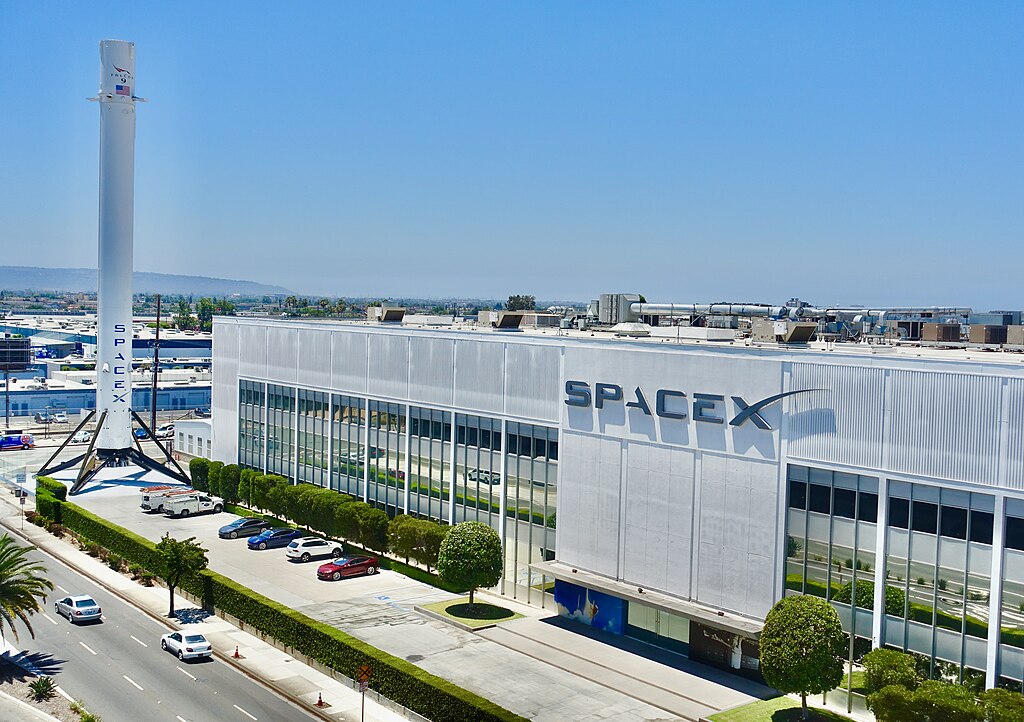
SpaceX's ambitions are bigger than most people think | Mint
"The amount of ambition around [SpaceX's] industrialization is unlike anything I've ever witnessed," says RBC analyst Ken Herbert. Investors are currently focused on SpaceX's valuation following its record-setting IPO. Elon Musk's rocket, communications, and AI company is currently valued at roughly $2 trillion, despite not being expected to generate free cash flow for a decade or more. That's no problem for Wall Street, with some analyst target prices projecting $10 trillion or more in the coming years. The incredible optimism reflects the incredible scale SpaceX has planned, which investors overly focused on early trading might have missed. It's something to behold. Morgan Stanley analyst Adam Jonas models about 50 Starship launches in 2027. That number rises to 6,000 by 2040. Starship is SpaceX's huge, fully reusable rocket that can cut the cost of reaching space from thousands of dollars per kilogram to hundreds. Starship's low costs are the flywheel underpinning SpaceX's potential. Jonas' 204o projection is massive; conservatively, it represents 600,000 metric tons carried to orbit in one year, or more than 10 times what humanity has put into orbit so far in our civilization's history. That's also more than 100 launches a week, requiring, perhaps, a fleet of 200-plus Starships, powered by some 8,000 engines. That fleet won't all be built in a year. Still, Boeing and Airbus suppliers are struggling to build roughly 3,000 turbofan engines for commercial aircraft a year. It starts at Starbase in Boca Chica, Texas, where SpaceX builds Starship. "You go through that plant, it's like walking into the future...The level of automation, the scale. It's like multiple Costcos, and it's full," RBC analyst Ken Herbert told Barron's. "It's mind-blowing the amount of activity and the amount of tooling. It looks incredibly modern." Herbert is a veteran aerospace analyst and has watched Boeing build commercial jets in huge facilities across America. Still, he used words like "mind-blowing," "holy moly," and "floored" to describe SpaceX operations. "The amount of ambition around the industrialization is unlike anything I've ever witnessed," he added. Key to realizing its space dreams the company's high level of vertical integration. SpaceX does most of its work itself. Roughly 60% of the components on a Boeing jet are sourced from suppliers, estimates Herbert. That number for SpaceX is closer to 10%. The space business is still new. That number of outsourced parts could change as the relatively new commercial space industry matures, but SpaceX doesn't want its growth to be gated by supplier issues. To be sure, not everything will go right for SpaceX. Timelines will shift to the right as inevitable hiccups occur. Still, what SpaceX is trying to accomplish is impressive. "I just remember walking in [Starbase] and feeling like...I'm looking at the future," said Herbert. "If they can pull it off, it's unprecedented." Herbert rates SpaceX stock as Buy and sets a $225 price target for the shares. Jonas rates shares Buy. His price target is $300. The average analyst price target for SpaceX stock currently sits at about $242, valuing all that potential at roughly $3.2 trillion.

China poses biggest long-term competitive threat to SpaceX - Morgan Stanley By Investing.com
Investing.com-- Morgan Stanley said China's rapidly advancing reusable rocket program is emerging as the biggest long-term competitive threat to SpaceX (NASDAQ:SPCX), after the country successfully recovered an orbital-class rocket booster for the first time. The Wall Street brokerage said China's successful recovery of the Long March 10B booster marked a major step toward routine rocket reuse, although it cautioned that Beijing still needs to demonstrate repeated launches and reflights before achieving an operational reusable launch system. Get premium analyst insights, AI-powered research with InvestingPro subscription The brokerage said the China Aerospace Science and Technology Corp. (CASC) became only the third entity after SpaceX and Blue Origin to recover an orbital-class booster, underscoring the country's accelerating ambitions in commercial space. Morgan Stanley analysts said China's deep space ecosystem, spanning state-backed launch programs and private companies such as LandSpace, Galactic Energy and Space Pioneer, makes it the most significant competitive challenge to SpaceX's launch business over the long run. The note highlighted that China carried out 90 orbital launches in 2025, compared with SpaceX's 165 Falcon 9 launches, making it the world's second-largest launch market by activity. U.S. Space Force officials had estimated earlier this year that China was still three to five years away from mastering rocket reusability, although the Long March 10B demonstration could shorten that timeline, Morgan Stanley said. The brokerage also pointed to China's broader space ambitions, including the planned Guowang and Qianfan low-Earth orbit satellite constellations, which together target about 28,000 satellites, as well as a proposed filing for more than 190,000 non-geostationary satellites. Morgan Stanley said China is also investing heavily in space-based computing, citing the launch of the first satellites in the planned 2,800-satellite "Star Compute" orbital supercomputer network. Despite the rising competition, Morgan Stanley maintained its "overweight" rating on SpaceX with a $300 price target, saying the company remains the global leader in launch cadence, reusable rocket technology and satellite connectivity, while warning investors not to underestimate China's progress in narrowing the gap.

SpaceX shares continue to fall. Where will they end up?
You're reading a free article with opinions that may differ from The Motley Fool's Premium Investing Services. Become a Motley Fool member today to get instant access to our top analyst recommendations, in-depth research, investing resources, and more. Learn More Shares in Elon Musk's Space Exploration Technologies Corp (NASDAQ: SPCX), more commonly known as SpaceX, again fell below the company's $150 opening price over the weekend as opinions diverge on where the stock will end up. SpaceX shares still in the black The historically large SpaceX initial public offering priced the company's shares at US$135 apiece, so those who got in before the company listed are still sitting on gains and would have made a tidy profit if they sold out at the US$225.64 high achieved shortly after listing. The shares have generally drifted lower since that peak was reached, however, and closed Friday's session at US$145.30, not far off their lowest mark of US$145.07. This means that almost everyone who bought on-market would be under water on their investment currently. The stock was included in the NASDAQ 100 index on Tuesday last week, however this failed to significantly bolster the stock. So where to from here for SpaceX shares? The Tradingview website has collated the views of 29 analysts with price predictions on SpaceX shares, with the average share price forecast coming out at US$242.21. However this is distorted by one analyst prediction of a price of US$800 per share on SpaceX shares. Perhaps more useful is the fact that 24 analysts have rated the stock a strong buy, three a buy, while one rates it a sell and one a strong sell. Motley Fool US contributor Manali Pradhan has crunched the numbers on SpaceX's 2027 revenue range and forward sales multiple to come up with an implied market capitalisation, and says US$220 per share is a reasonable base case estimate. As she wrote: Analysts expect SpaceX's 2027 revenue to range from $54.8 billion to $85 billion, with an average estimate of $72.4 billion. Applying a forward sales multiple of 38.5 to 41 times to the 2027 base case revenue estimate yields an implied market capitalization of about $2.79 trillion to $2.97 trillion. Using roughly 13.1 billion shares outstanding, that points to a share price in the range of $213 to $227 at the end of 2026. Long-term vision on SpaceX shares needed The difficulty in valuing SpaceX stems from the fact that of its three divisions, only one - the Starlink "connectivity" division is profitable. The rocket launch and AI divisions are still burning money, with investors needing to buy into the promise that they will in time turn a profit. The company's initial public offer prospectus stated that for the first three months of 2026, the Space division lost US$662 million, the AI division lost US$2.47 billion, and the connectivity division made a profit of US$1.19 billion. The company believes its business opportunity is huge however, saying in the prospectus, "We believe that space represents the largest economic frontier in human history", and suggesting that they will be building AI infrastructure in space, powered by the "virtually limitless" power of the sun, for the benefit of mankind.

This Vanguard ETF Would Have Quadrupled Your Money Over the Last Decade. History Says Now Is a Smart Time to Invest. (It's Likely to Outperform SpaceX, Too.)
We're all looking for solid investments for our portfolios, right? It's easy to focus on big-name high-flying stocks, such as Nvidia or Micron Technology. But there's also some risk there, as many highfliers end up overvalued and poised to fall extra-hard in a market pullback. (And a market pullback is far from unlikely these days.) So permit me to suggest a terrific investment that you might not have taken seriously enough: a simple, low-fee S&P 500 index fund. A splendid example is the Vanguard S&P 500 ETF (NYSEMKT: VOO). It's an exchange-traded fund (ETF) -- a fund that trades like a stock. Missed Nvidia in 2009? This Rare Signal Is Flashing Again. In 2009, a "Double Down" signal flashed for a little-known chipmaker called Nvidia. For the first time in years, that same "Total Conviction" signal is flashing for a company 1/100th the size of Nvidia. Continue " Meet the Vanguard S&P 500 ETF Like any good S&P 500 index fund, the Vanguard S&P 500 ETF features low fees. While some actively managed mutual funds might charge you 1% or more of your assets each year, this fund charges 0.03% -- or just $3 annually for every $10,000 you have invested in it. It tracks the S&P 500, of course -- an index of roughly 500 of the biggest stocks in America. Together, they make up about 80% of the value of the entire U.S. stock market, which is why the S&P 500 is often used as a proxy for the total U.S. stock market. Together, the index's recent top 10 components make up about 38% of the index's value by weight. Here they are as of July 9: Data source: Slickcharts.com, as of July 9, 2026. Like many indexes, the S&P 500 is market-cap-weighted, with bigger companies wielding more influence than smaller ones. The fund has a solid record. Check out its average annual return over the last three, five, and 10 years (as reported by Morningstar on July 9): * Last three years: 21.26% * Last five years: 13.11% * Last 10 years: 15.36% Over the last decade, these compounded annual returns would have quadrupled your money. Why invest in the Vanguard S&P 500 ETF? Here are several reasons to invest:
In SpaceX, OpenAI, Anthropic IPOs, how a funding tap could open for Indian start-ups
SpaceX's $75-billion Initial Public Offering (IPO) last month made it the world's largest listing, well ahead of the $25.6 billion raised by Saudi Aramco in late 2019. What SpaceX's IPO also did was to set the stage for what may be equally gargantuan listings in the artificial intelligence (AI) space: OpenAI and Anthropic. And the returns from these three IPOs could open the tap for thirsty Indian start-ups. According to data compiled by private market intelligence platform Tracxn for The Indian Express, the 54 Private Equity (PE) and Venture Capital (VC) firms that have backed SpaceX, Anthropic, and OpenAI have deployed $57.8 billion across 1,376 rounds in Indian technology companies between 2016 and June 2026. Investments in Indian space-tech firms have been just $160 million, with 12 of the 54 participating in four rounds. Apart from validating Elon Musk's confidence in his space-plus-AI company, SpaceX's IPO also made profits for those PE firms and VCs who invested early enough. Consider, for instance, Peter Thiel's Founders Fund, whose $600 million investment in SpaceX was worth more than $50 billion at the company's IPO price of $135, according to a Bloomberg report, which added that Andreessen Horowitz's return from its investment in SpaceX would be the biggest in its history. SpaceX's IPO valued it at $1.8 trillion. In June, both Anthropic and OpenAI had confidentially filed for a listing. While the latter wants to be valued at $1 trillion in its IPO, Anthropic in May said it had raised $65 billion at a valuation of $965 billion. Explained | AI giants, SpaceX gear up for IPOs: Are these companies overvalued, and can Indians invest in them "Historically, successful exits have strengthened the ability of VC and PE firms to raise larger successor funds," said Neha Singh, Tracxn's Co-founder. "Given that India already features in the active portfolios of these 54 firms, a recovery in investment activity is plausible as fresh capital is raised and redeployed." At the same time, Singh cautioned that it is difficult to estimate how much capital may come to India as IPO proceeds are primarily distributed to Limited Partners rather than directly increasing General Partner deployment capacity. The scope However, there are "early signs of capital recycling". Story continues below this ad Take, for instance, Chicago-based VC firm Valor Equity Partners, whose 4% stake in SpaceX was worth around $70 billion at the IPO price. According to reports, Valor is looking to raise $2.5 billion by the end of 2026. But whether any of that money will reach Indian shores is up in the air given Valor's focus on deep tech, defence, and late-stage AI infrastructure in the US, Singh of Tracxn said. Also in Explained | Orbital data centres, extraterrestrial energy: Detailing Musk's ambitions with $1.75 bn SpaceX IPO "As a result, any meaningful increase in India allocations is more likely to emerge over the medium term as successor funds are raised and deployed, rather than as an immediate post-IPO outcome," she added. According to private capital data provider PitchBook, liquidity conditions in Asia-Pacific are improving. This suggests "the region's capital recycling cycle is beginning to repair after several years of constrained realisations," it said in a report late last month. Earlier this year in February, Peak XV had said it had raised $1.3 billion for its new India Seed, India Venture, and APAC funds. Story continues below this ad To be sure, there are differences in how the SpaceX-Anthropic-OpenAI investors have poured money into US and Indian firms. In India, while 71% of the investments of these 54 firms have been at the seed or early stage, 93% of the money in companies such as SpaceX, Anthropic, and OpenAI was at the late-stage. This, Singh of Tracxn said, reflects a "deliberate strategy of concentrating capital behind a small number of category-defining companies rather than following their typical investment pattern" which sees them invest just 12% at the late stage across the US portfolio. Whatever the money and stage, overseas funds will be welcomed not just by the start-ups but even Indian policymakers, with the Indian economy seemingly having sleepwalked into an exodus of foreign capital over the last couple of years as repatriation of past investments piled up rapidly, totalling $150 billion over 2023-24, 2024-25, and 2025-26. This is equal to 61% of gross Foreign Direct Investment (FDI) into the country, resulting in net FDI over the aforementioned three years being a mere $18 billion. Story continues below this ad In 2025-26, Indian start-ups raised $11.7 billion, down 18% from the previous year, according to Tracxn. As it is, private credit is becoming increasingly popular, with Moody's Ratings estimating the size of the Indian market doubled in the last five years to $25 billion at the end of 2025.
Polymarket prices 60% chance of 2026 Fed hike after weak June jobs report
Polymarket Reprices "Fed Rate Hike in 2026?" After Weaker June Jobs Report On Polymarket, the "Fed rate hike in 2026?" contract is priced at 60% Yes (40% No) on $3.81m matched volume, after a sharp swing from 66.5% previously. The repricing follows a weaker-than-expected June jobs report that traders read through the lens of how much pressure the Fed will have to keep tightening. Key Takeaways * Polymarket currently implies a 60% chance of a Fed rate hike in 2026 (Yes 60%, No 40%), with Yes still the leading outcome. * After the jobs-report catalyst, odds moved off 66.5% to 60%, signaling meaningful disagreement even as the broader trend remains bullish for "Yes." * The market resolves on 2026-12-09, and the recent tape shows high volatility with a 9.0pp move over both 24h and 7d. A June U.S. jobs report showed payrolls up 57,000 versus a 115,000 economist estimate, while the unemployment rate edged down to 4.2% as participation fell to 61.5%. The report also included downward revisions to April and May payroll gains, and stocks rose on the view that a cooling labor market reduces pressure on the Federal Reserve to raise rates. Odds, Liquidity, and Tape: Yes 60% (Down From 66.5%) on $3.81M Matched Volume With 9.0pp Volatility This is a binary contract: a "Yes" share at 60% represents the market's implied probability that at least one Fed rate hike occurs in 2026 by the resolution date (2026-12-09). Despite the macro headline pointing toward less tightening pressure, Polymarket is still pricing a majority-probability hike outcome, but the drop from 66.5% to 60% shows traders are not treating the labor data as decisive. The historical summary flags high volatility and a detected reversal, consistent with the intraday-like whipsaw in the provided change series (large down move followed by rapid rebounds) rather than a smooth repricing. At the same time, the tape is labeled bullish with strengthening consensus and moderate momentum, which fits a market that keeps reverting toward "Yes" even after negative catalysts. With $3.81m matched volume, the contract has enough activity that these probability shifts read as a real-time aggregation of competing rate paths, not a single snapshot reaction. Watch whether the market stabilizes around the mid-50s to low-60s range or extends the reversal: given the "high" volatility and "reversal_detected" flag, the next notable signal is a sustained move away from the avg_last_5 of 59.7% versus another quick snap-back toward the prior 66.5% highs as new macro prints land. What Traders Watch Next on Polymarket: CPI, Recession, and Crypto Rate-Sensitivity Contracts After the 2026 Hike Reversa Zooming out from the 2026 path, traders are also parking liquidity in nearer-dated policy and event contracts that can reprice fast on headlines. The 77.5% "Fed Decision in July?" market (No change) is the obvious front-end gauge, and its $50,729,978 in volume shows where the platform's macro attention is concentrated. For a very different kind of catalyst risk, "Ballon d'Or Winner 2026" has Kylian Mbappé leading at 32.5% with $6,789,948 traded -- an example of how Polymarket participants rotate between rate-sensitive macro and high-volatility cultural/sports outcomes depending on the news cycle. Odds Trend By the Numbers * Platform: Polymarket * Market: Fed rate hike in 2026? * Resolution window: Dec 09, 2026 (UTC) * Status: Active (open for trading) * Leading implied prob.: 60.0% * Volume: ~$3,811,912 * Top outcomes: Yes: Yes 60.0% / No 40.0%; No: Yes 60.0% / No 40.0%

This Vanguard ETF Would Have Quadrupled Your Money Over the Last Decade. History Says Now Is a Smart Time to Invest. (It's Likely to Outperform SpaceX, Too.)
We're all looking for solid investments for our portfolios, right? It's easy to focus on big-name high-flying stocks, such as Nvidia or Micron Technology. But there's also some risk there, as many highfliers end up overvalued and poised to fall extra-hard in a market pullback. (And a market pullback is far from unlikely these days.) So permit me to suggest a terrific investment that you might not have taken seriously enough: a simple, low-fee S&P 500 index fund. A splendid example is the Vanguard S&P 500 ETF (VOO +0.46%). It's an exchange-traded fund (ETF) -- a fund that trades like a stock. Meet the Vanguard S&P 500 ETF Like any good S&P 500 index fund, the Vanguard S&P 500 ETF features low fees. While some actively managed mutual funds might charge you 1% or more of your assets each year, this fund charges 0.03% -- or just $3 annually for every $10,000 you have invested in it. It tracks the S&P 500, of course -- an index of roughly 500 of the biggest stocks in America. Together, they make up about 80% of the value of the entire U.S. stock market, which is why the S&P 500 is often used as a proxy for the total U.S. stock market. Together, the index's recent top 10 components make up about 38% of the index's value by weight. Here they are as of July 9: Data source: Slickcharts.com, as of July 9, 2026. Like many indexes, the S&P 500 is market-cap-weighted, with bigger companies wielding more influence than smaller ones. The fund has a solid record. Check out its average annual return over the last three, five, and 10 years (as reported by Morningstar on July 9): * Last three years: 21.26% * Last five years: 13.11% * Last 10 years: 15.36% Over the last decade, these compounded annual returns would have quadrupled your money. Why invest in the Vanguard S&P 500 ETF? Here are several reasons to invest: * It's a good time to do so (there's rarely a bad time, if you're a long-term investor). * It makes investing easy, plopping you into roughly 80% of the U.S. stock market with one "buy" order. * It offers diversification -- when one company or industry falls, the others can offset that to some degree. For greater diversification, check out the Invesco S&P 500 Equal Weight ETF (RSP +0.38%), which weights each of the 500 companies in the index equally. * It's likely to outperform many growth stocks, especially overvalued ones -- including, arguably, Space Exploration Technologies, also known as SpaceX. Consider, for example, that the S&P 500's price-to-sales ratio was recently 3.7, while SpaceX's was 74.7. The S&P 500 has a solid track record, averaging annual gains of close to 10% over many decades, but many growth stocks are far less proven. * The index is designed to perform well, as lagging components are regularly removed to make way for up-and-coming companies. Take a closer look at this ETF to see if it's a good fit for your needs.

Polymarket odds for Iran Gulf action fall to 66.5% after Hormuz claim
Polymarket Reprices the "Iran Military Action Against a Gulf State" Ladder After IRGC Strait of Hormuz Headline Polymarket traders marked down the top strike in the "Iran military action against a Gulf state" ladder, with the leading July 13 line at 66.5% after a 16.0-point drop on $519,984 in volume. The move followed headlines about an IRGC claim on the Strait of Hormuz, offering a clean read on how timing risk is being repriced across the date strikes. Key Takeaways * Polymarket's leading strike is July 13 at 66.5% Yes / 33.5% No. * After the Hormuz-closure headline, the ladder repriced lower, with the leading strike down 16.0 points to 66.5% on $519,984 volume. * This market is scheduled to resolve by 2026-07-31T23:59:00+00:00; recent action shows high volatility with reversal_detected flagged in the summary. A live conflict update reported that Iran's IRGC declared the Strait of Hormuz closed, framing the move as a response to US interference. The same update said Israel continued attacks on Gaza and Lebanon, with multiple civilians reported killed or wounded. Odds & Liquidity Breakdown: July 13 Drops to 66.5% on $519,984 Volume as the Date-Strike Curve Steepens This is a price-ladder market: each date is its own binary, where "Yes" reflects the chance the specified action occurs on that specific day, not a single pooled probability for the whole month. The front of the curve still prices near-term risk as dominant -- July 12 trades 64.5% Yes / 35.5% No and July 13 trades 66.5% Yes / 33.5% No -- while later dates steeply discount, like July 14 at 37.5% Yes / 62.5% No and July 20 at 16.5% Yes / 83.5% No. The headline-triggered downtick is sharp at the lead strike (down from 82.5% to 66.5%), yet the historical summary simultaneously flags high volatility and reversal_detected, which fits a market that has been whipsawing between fast-risk and de-escalation interpretations rather than converging smoothly. With $519,984 matched and "consensus: strengthening" alongside "trend: bearish," the most defensible read is that traders are narrowing toward a specific early window (around July 12-13) even as they reduce confidence from prior highs. Watch whether the ladder's curve flattens (later dates rising toward the front) or steepens (July 12-13 holding up while July 14+ fades), since that shape change is the clearest signal of traders shifting from "imminent" timing to "delayed or not on a specific day" timing into the 2026-07-31 resolution deadline. Cross-Market Watchlist: How Traders Hedge Timing Risk Using Macro and Crypto Polymarket Contracts Alongside the Iran Lad If you're managing timing risk on this ladder, it helps to keep an eye on adjacent Polymarket contracts that capture the same headline flow through different resolution mechanics. Traders have been especially active in "Iran leader end of 2026?" (79.55%, $26,773,557 volume) and the shipping-focused "Strait of Hormuz traffic returns to normal by July 31?" (95.5%, $15,693,532 volume), while the nearer-dated "Strait of Hormuz traffic returns to normal by July 15?" sits at 99.65% on $9,419,896. For a more operational read-through, "Iran full airspace closure by...?" is pricing its lead at 33.0% ($3,232,894 volume), offering another way to gauge whether traders see disruption as transient or persistent. Odds Trend By the Numbers * Platform: Polymarket * Market: Iran military action against a gulf state on...? * Contract type: Price strike ladder: each rung has separate Yes/No; Yes means the spot price is above that USD strike at settlement. * Resolution window: Jul 31, 2026 (UTC) * Status: Active (open for trading) * Volume: ~$519,984 Top strike rungs +19 more strikes not shown

NDAQ:SPCX Forum Post | Tradinghands-37050885 | Tesla merger with SpaceX won't save investors | Space Exploration Technologies Corporation
Space Exploration Technologies Corp. provides satellite-based broadband services in the United States, Ireland, Canada, and internationally. The company's Connectivity segment operates a high-speed, low-latency broadband network powered by various Starlink satellites in low-earth orbit, delivering connectivity to various consumer, enterprise, and government customers through its Starlink offering. Its Space segment designs, manufactures, and launches reusable rockets to provide access to space. It offers launch services for the deployment of payloads to intended orbits for commercial and government customers utilizing Falcon 9 and Falcon Heavy; and launch and development for the development of spacecraft and the provision of launch and mission services for government agency space programs utilizing Falcon 9, Falcon Heavy, Starship, and Dragon. The company's AI segment operates a vertically integrated AI platform spanning a frontier LLM Grok; AI solutions for consumer and enterprise ...

Could AI Pay Americans $1 Million Each? New Think Tank Forecast Sparks Jim Chanos' SpaceX Jab: 'Seems Reasonable'
Benzinga and Yahoo Finance LLC may earn commission or revenue on some items through the links below. The AI Futures Project, a non-profit initiative that forecasts the future of artificial intelligence, recently outlined a proposal for a citizen's dividend by the U.S. government following AI-induced unemployment. Citizen's Dividend to Provide $1 Million Per Person By 2035 In the AI 2040 Plan A, the non-profit says that by 2033, AI-induced unemployment would rise due to the advent of millions of AI agents boosting productivity. "Across a variety of companies, there are now 60 million AI agents running continuously at 20x human speed," the project said. The non-profit then mentions a plan that involves the American government distributing the "majority of compute and robot permit fees as a Citizen's Dividend... to all American adults." The plan mentions the dividend starting at $45,000 per person in 2032, but climbing to $1 million per person by 2035 and $10 million by 2040. The plan also predicts AI reaching a labor share of 85% by 2035. The initiative also predicts the U.S. government "distributing an average of $1,200 per person per year to the rest of the world's adult population" of around 4 billion people. The plan excludes China because it would be "experiencing a similar AI wealth boom." The plan says it will reach $10k by 2035. Earlier, OpenAI was reportedly offering the President Donald Trump administration a 5% stake in the company amid CEO Sam Altman's past proposal for a universal basic capital model that involved distributing a small share of AI-generated wealth. Jim Chanos Weighs In Taking to the social media platform X on Thursday, short-seller James Chanos weighed in on the predictions. "At about the same time $SPCX's valuation exceeds global GDP. Seems reasonable," he said, pointing to Space Exploration Technologies Corp.. At about the same time $SPCX's valuation exceeds global GDP. Seems reasonable. https://t.co/cdQb9SpHfR -- James Chanos (@RealJimChanos) July 9, 2026 Trending: Avoid the #1 Investing Mistake: How Your 'Safe' Holdings Could Be Costing You Big Time SpaceX to Be Worth More Than Earth The comments come as SpaceX CEO Elon Musk had said that the company would be worth more than the entire planet in the future. "You don't seem to understand that SpaceX will be worth more than the rest of Earth if we accomplish our goals," Musk had said.
Palantir CEO has a blunt verdict on OpenAI and Anthropic
Palantir posted the highest revenue growth rate in its history in the first quarter of fiscal year 2026. U.S. commercial revenue jumped 133%. The company raised its full-year guidance by 10 points. By any operational measure, things are going well. And yet Alex Karp walked onto CNBC's Squawk Box and started criticizing the entire foundation of the AI business model. He wasn't talking about Palantir's competitors in the traditional sense. He was talking about the companies whose technology his own platform runs on top of. "I'm not throwing shade at them," he told viewers, "but something has gone completely wrong." What Karp said about OpenAI and Anthropic on live television The problem, in Karp's telling, is tokens. The way OpenAI and Anthropic sell AI access, metered by token consumption, has created a dynamic he says enterprises are increasingly fed up with. "The basic view among enterprises in this country is I'm going to chillax and waste my time with tokens, I'm gonna get no value, and they're gonna get my IP," Karp told CNBC. When co-anchor Andrew Ross Sorkin said "that sounds like shade," Karp pushed back: "No, no. This is reporting." He said customers are shifting away from what he called "tokenmaxxing" toward open-weight models that deliver similar output at a fraction of the cost. The ROI conversation is changing. Enterprises are asking harder questions about what they are actually getting for what they are spending, and a lot of them are not liking the answer. Palantir's stock rose 8% that day. Before the interview, the company had published a 9-point "AI sovereignty" manifesto on X, setting the philosophical stage for what Karp was about to say publicly. Why Karp says data ownership is the real AI fight The deeper argument Karp made was about control. Enterprises and governments, he said, want to own their compute, their models, their data stack, and their alpha. The word he kept coming back to was ownership. "They want to know they own the means of production. It's not being transferred to someone else." That framing extended into territory that goes well beyond enterprise software. Karp said it would be "insane" to hand battlefield or government applications entirely over to AI labs, effectively outsourcing sensitive decisions to a small group of Silicon Valley companies operating by consensus.
Anthropic Acknowledges $16.6 Million Billing Error, User Reveals Repeated Charge Attempts Blocked Bank Card, Four-Day Support Ordeal
South Korean user says repeated charge attempts continued after Anthropic admitted a $16.6m billing error. A South Korean Claude user says Anthropic's erroneous £12.2 million ($16.6 million, about ₩22.8 billion) billing demand led to repeated charge attempts that blocked his primary credit card, even after the company admitted the mistake. He says he then spent four days trying to get a clear response from support as he sought confirmation that the invalid invoices had been cancelled and his account cleared. The incident first came to light after the user, who said he was on Anthropic's free tier with no billable API usage, revealed invoices that escalated from about £1.23 million ($1.67 million) to £12.2 million ($16.6 million) within 24 hours. Anthropic has since confirmed the billing error and said no money was taken, while the user's latest posts describe the disruption that followed and his efforts to resolve it. 'It Wasn't Handled Properly' The user said the billing error became a customer support issue long after the invoices were issued. In updates shared on Threads, he said he contacted Anthropic repeatedly over four days, sending about 18 emails as he sought confirmation that the charges had been cancelled and his account had been cleared. He said repeated payment attempts reached his bank and resulted in his primary credit card being blocked, despite no money ultimately leaving the account. 'I still think it wasn't handled properly,' he wrote. The user said he expected a more urgent response given the size of the erroneous invoices. 'It seems like the urgent fire has been put out, but personally, I don't understand how they could release an automatic email after causing a billions-won invoice error,' he wrote. Even after the case was escalated, the notification advising that a human would review the matter came from Anthropic's Fin AI Agent, informing him that the issue had been forwarded to the company's Privacy Team. Anthropic Admits Billing Mistake And Explains What Went Wrong Anthropic later told the customer that an incorrect auto-reload setting had generated invalid payment requests. In an email shared by the user, the company said it disabled the setting as a precaution, restored the account's billing configuration and confirmed that no funds had been collected. 'No money left your account,' Anthropic said. 'Our payment processor attempted a charge at the invalid amount and it was declined... Nothing was collected, and you owe nothing.' The company also said the incident 'was not the result of unauthorized access' and advised the user to re-enable the auto-reload feature if he wished to continue using automatic API credit top-ups. Invoice Jumped More Than £11 Million In Just 24 Hours The dispute began on 7 July when the user received a failed payment notice seeking about £1.23 million ($1.67 million). Less than a day later, a second invoice arrived requesting £12.2 million ($16.6 million, about ₩22.8 billion). Because both payment notices came through Anthropic's official billing system and Stripe, the company's payment processor, the user said he initially investigated whether one of his own AI automation projects could somehow have generated the charges. After inspecting his AI agents, automation scripts, scheduled tasks and account credentials, he said he found no billable Anthropic API keys or other evidence that could explain the invoices. As a precaution, he cancelled his Claude Max subscription and suspended the payment card linked to the account. 'I'll Follow Up' The user said he plans to continue documenting the incident while waiting for additional responses from Anthropic. In a Threads update posted after receiving the company's explanation, he said he had sent a total of 18 emails and asked Anthropic to respond by Monday afternoon Korean time. 'I have scheduled a meeting with the reporter, and I think I can tell you more details around Tuesday afternoon or Wednesday,' he wrote. He also encouraged others to reference his experience, adding: 'If you don't mind, you can share the conversation or use the article as a reference... Just be careful not to distort the information.'

SpaceX's AI empire is built on data centers, not satellites - Cryptopolitan
Analysts caution that the contracts carry termination clauses and that space computing is still 10 years or more away. SpaceX's AI returns over the next few years will not come from space. According to Wall Street analysts, the money is coming from Earth data centers rather than the orbital compute that Elon Musk has promised. This reframes SpaceX (NASDAQ: SPCX) as primarily an infrastructure company. Space computing is a bet for the future, not now, for anyone considering SpaceX as an AI play. SpaceX already charges for computing. Reuters reported that the company signed enterprise deals for its Colossus supercomputer clusters with Anthropic, Alphabet's Google, and Reflection AI. Those contracts alone are expected to generate more than $28 billion annually. SpaceX's AI revenue in 2025 is ~$3.2 billion, which is significantly higher than the new deals. The compute contracts also outperformed SpaceX's earnings from rocket launches and Starlink, when counted separately. The contracts, however, include termination clauses, so analysts caution against reading them as recurring revenue. What SpaceX spent to get here SpaceX invested ~$18 billion in AI infrastructure and research in 2025. According to company filings, ~$12.7 billion was spent on capital expenditures and $5.1 billion on research and development. That expenditure outpaced spending on space and connectivity lines. Colossus and a second cluster, Colossus II, together provide ~1 gigawatt of AI compute. That makes SpaceX one of the world's largest compute operators. J.P. Morgan predicts that terrestrial capacity will reach ~9 gigawatts by 2029, which is equivalent to four times the output of the Hoover Dam. Brokerages cited by Reuters pointed to its $60 billion purchase of AI coding startup Cursor as a sign the company wants to sell AI applications, not just the machines that run them. The deal ties into Musk's model plans on the software side. A separate Cryptopolitan report said Musk's lab, now renamed SpaceXAI, built its Grok 4.5 model jointly with Cursor, and Musk has said SpaceX is buying the startup for that same $60 billion figure. Why orbit is still a distant bet Musk has proposed a future in which computers run in space. Analysts Reuters spoke with view this as a later chapter. "The narrative that (orbital) will fundamentally disrupt terrestrial data centers is a little bit overblown," said Anthony Milovantsev, a partner at consultancy Altman Solon, who estimated that any real displacement of ground-based data centers would take "ten years plus." The case is based on hardware that does not currently exist at scale. Orbital computing relies on SpaceX's Starship flying frequently and cheaply, lower launch costs, and better satellites, according to analysts. Ground clusters continue to run regardless of direction. BofA analysts were more blunt, calling the long term viability of orbital data centers "unproven and heavily reliant on key technological milestones that have yet to be realized." If the engineering is delivered, the appeal will be valid. Starships could eventually launch solar computing satellites into orbit, avoiding ground based costs such as energy, cooling, and land use. Analysts aren't asking if SpaceX can build and sell AI infrastructure. J.P. Morgan's estimate of ~9 gigawatts in 2029 remains the benchmark for establishing a business beyond Earth.
Looking for Exposure to SpaceX Stock (SPCX)? Consider These Two ETFs
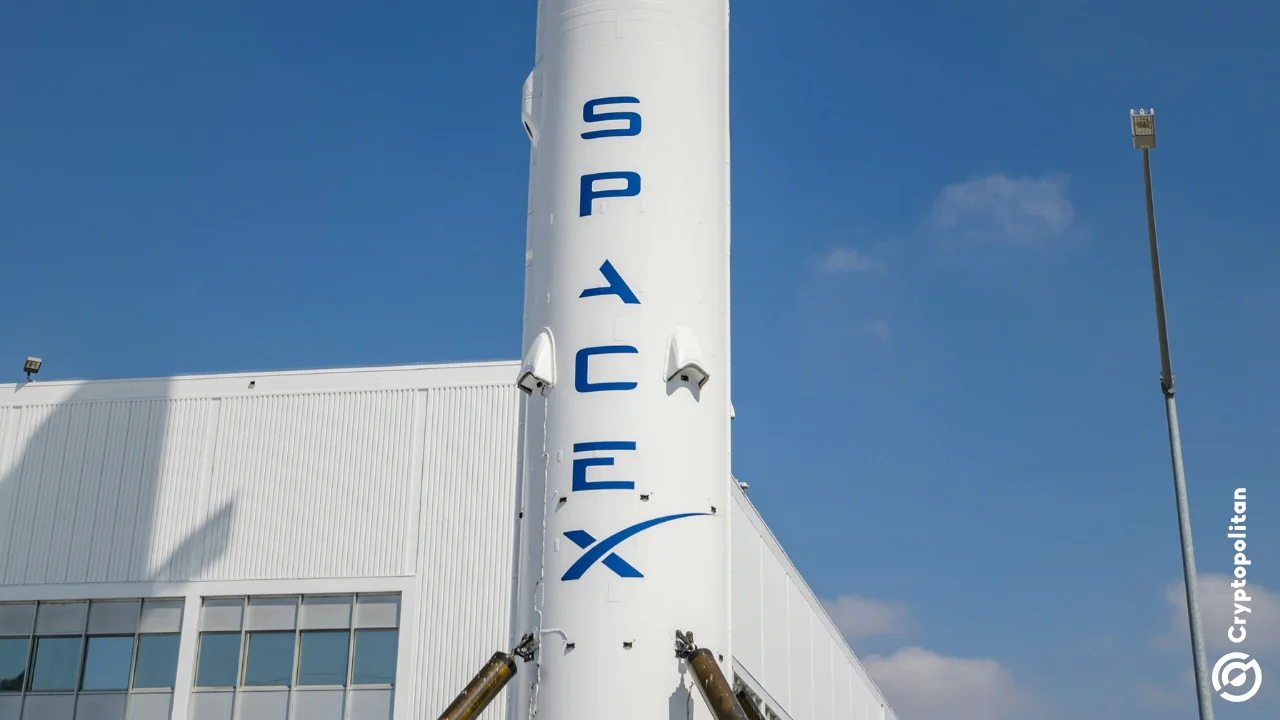
After SpaceX's (SPCX) high-profile IPO last month, investors are looking for ways to get exposure to the company's fast growth in launch services, Starlink, and new AI‑compute deals. Following the company's recent inclusion into the Nasdaq-100 Index (NDX) on July 7, several ETFs added the stock to their portfolios. Currently, investors could consider investing in these two ETFs: Roundhill Space & Technology ETF (MARS) and VanEck Space ETF (WARP). TipRanks Welcomes a New ETF - NYSE:RANK * TipRanks has entered a new arena in the investing world, powering the index of an ETF based on its unique data now trading under the ticker RANK on the NYSE. * RANK tracks the performance of the TipRanks US Momentum Analysts Index, a rules-based index of 50 large U.S. companies. Roundhill Space & Technology ETF (MARS) MARS is an actively managed fund that invests in companies tied to the growing space economy. Its portfolio includes firms involved in launch services, satellite networks, space hardware, communications, and emerging orbital technologies. SPCX stock constitutes 22.86% of the ETF's holdings. Some other top holdings in the MARS ETF include Rocket Lab USA (RKLB), AST SpaceMobile (ASTS), and ViaSat (VSAT). Overall, the ETF has $66.72 million in assets under management (AUM) and an expense ratio of 0.75%. On TipRanks, the MARS ETF has a Moderate Buy consensus rating based on 18 Buys and 12 Holds assigned in the last three months. The average MARS ETF price target of $40.18 implies 43.91% upside potential. VanEck Space ETF (WARP) WARP is a passively managed ETF, designed to track the performance of the MarketVector Space Index. The ETF targets four core sectors of the space economy, which include satellite communications, rockets and propulsion systems, Earth observation and data analytics, and space exploration. SpaceX stock accounts for 21.58% of WARP's total holdings. Apart from SPCX, some of the top stocks in the WARP ETF are Iridium (IRDM), Planet Labs (PL), and Rocket Lab. Overall, the ETF has $41.25 million in AUM. Also, it has an expense ratio of 0.5%. Turning to Wall Street, the ETF has a Moderate Buy consensus rating. Of the 21 stocks held, 15 have Buy ratings and six have Hold ratings. The average WARP ETF price target of $32.96 implies a 48.51% upside potential. Bottom Line Investors who want exposure to the space boom around SpaceX can look at MARS and WARP, two ETFs that hold SPCX and offer diversified access to the sector. Both give exposure to companies tied to the same demand drivers, such as satellite growth, launch activity, and new space tech adoption.

Polymarket odds: Putin out by June 2027 rises to 18% amid Ukraine war escalation
Polymarket Reprices "Putin Out by June 30, 2027" After Renewed Russia-Ukraine Strike Headlines Polymarket traders are pricing a higher chance that Vladimir Putin is out as President of Russia by June 30, 2027, with the lead ladder rung at 18% on $17.14M matched. The repricing comes alongside fresh headlines on intensified Russia-Ukraine strikes, and the ladder's across-date probabilities show where the market concentrates timing risk. Key Takeaways * Top pricing implies 18% for "Putin out by June 30, 2027" (Yes 18% / No 82%) on Polymarket's ladder. * The catalyst is renewed reporting on escalating strikes; traders' reaction shows up as a higher long-dated removal probability than near-term rungs. * Settlement is tied to the June 30, 2027 resolution date; near-term rungs (2026 dates) remain single-digit Yes probabilities. A report says Russia struck Kyiv and Odesa with missiles and drones, with Ukrainian authorities reporting injuries in Kyiv and deaths and injuries in Odesa. It also describes separate attacks in Kharkiv, damage to civilian sites, and Zelenskyy urging NATO members to follow through on commitments while Ukraine faces dwindling munitions. The piece adds that fighting has escalated, with Ukraine increasing drone strikes on Russian energy infrastructure and activity around the Sea of Azov and Crimea, followed by intensified Russian attacks. Ladder Market Data: $17.14M Matched With 18% on June 30, 2027 vs 8.5% (Dec 31, 2026) and 0.65% (Jul 31, 2026) This is a price-ladder market: each date is a separate binary on whether Putin is out by that cutoff, so "June 30, 2027" at Yes 18% / No 82% is not a forecast of a specific date -- it's the probability of being out by that deadline. The curve is steep: December 31, 2026 is Yes 8.5% / No 91.5%, while September 30, 2026 is Yes 3.95% / No 96.05% and July 31, 2026 is Yes 0.65% / No 99.35%, signaling traders place most of the risk in a longer window rather than imminently. Despite $17,141,276 matched, the historical summary flags bearish, strong momentum with moderate volatility and a -2.0pp move over both 24h and 7d, suggesting recent trading has leaned toward "No" relative to the last-week average (latest 8.5 vs avg last 5 at 16.4). The big spread between the 2026 rungs and the 2027 rung implies timing disagreement is concentrated after 2026 -- consistent with a market that updates continuously on catalysts but still demands a high bar for near-term regime-change probabilities. Watch whether liquidity continues to migrate between the 2026 rungs and the June 30, 2027 rung: if the headline flow is interpreted as near-term destabilization, the earliest rungs (July/August/September 2026) should rise first; if not, moves may stay concentrated in the longer-dated 2027 cutoff. Cross-Contract Watchlist: How Traders Rotate Liquidity From Putin-Timing Ladders Into Macro, Election, and Crypto Polyma Beyond this ladder, traders often rotate into other high-activity Polymarket contracts that offer cleaner, shorter-dated exposure to macro risk, election timing, and crypto volatility. In practice, that means watching the platform's top CPI/Fed-path and recession-style markets, the headline U.S. election questions, and the always-liquid BTC/ETH and ETF/approval event contracts -- because when attention (and liquidity) shifts, pricing can re-anchor quickly across themes even if the underlying drivers aren't directly connected. Odds Trend By the Numbers * Platform: Polymarket * Market: Putin out as President of Russia by...? * Contract type: Price strike ladder: each rung has separate Yes/No; Yes means the spot price is above that USD strike at settlement. * Resolution window: Jun 30, 2027 (UTC) * Status: Active (open for trading) * Volume: ~$17,141,276 Top strike rungs +1 more strikes not shown

J.P. Morgan Called a Potential Elon Musk SpaceX-Tesla Merger "Strategically Coherent"
Now that Elon Musk's rocket and satellite company Space Exploration Technologies (NASDAQ: SPCX) trades publicly, Wall Street has started hunting for the next best thing: stocks that can ride its coattails. The most eye-catching call came from J.P. Morgan, whose analysts described a possible combination of SpaceX and Tesla (NASDAQ: TSLA) as "strategically coherent on paper." That single phrase has revived a long-running fantasy among investors, and it's worth understanding what the analyst company actually means before treating any of these names as a back door into SpaceX. Why J.P. Morgan sees logic in a Tesla-SpaceX tie-up J.P. Morgan's argument is that Musk's companies already share engineering talent, an artificial intelligence ambition, and a common leader, so uniting them could let him run one integrated vision across cars, robots, energy, and space. The analysts also noted that SpaceX's blockbuster public debut gives Musk valuable stock to make a deal, and that his growing voting control at Tesla makes him better positioned to push one through. Where to invest $1,000 right now? Our analyst team just revealed what they believe are the 10 best stocks to buy right now, when you join Stock Advisor. See the stocks " Image source: Getty Images. J.P. Morgan was careful, though, and so am I. It flagged real obstacles: securing regulatory approvals across many countries, especially China, where Tesla builds cars; the awkward gap between Musk's near-total control of SpaceX and his smaller stake in Tesla; and the likelihood that any deal would look like SpaceX swallowing Tesla rather than a merger of equals. "Coherent on paper" is a long way from "likely to happen." The other SpaceX-by-association plays Tesla isn't the only name catching the halo. Deutsche Bank started coverage of EchoStar (NASDAQ: ECHO) with a buy rating, framing it as a cheaper way to own SpaceX. EchoStar holds roughly $11 billion of SpaceX shares it received for handing over wireless spectrum, so the bank argues you're effectively buying SpaceX at a discount and getting EchoStar's other assets thrown in. The catch is serious: EchoStar's pay-TV subsidiary recently filed for bankruptcy, and the stock has tumbled. Then there's Charter Communications (NASDAQ: CHTR), which, according to Bloomberg, has held talks with SpaceX about a consumer mobile phone service that would route some traffic through Charter's network. It's a genuine strategic fit, but it's only talk for now. Here's my honest read. Buying a stock because it's linked to a hot company is a strategy built on hope, not fundamentals, and all three of these names are down this year for reasons of their own. A merger that's merely "coherent on paper," a spectrum stake wrapped around a bankruptcy, and a rumored partnership are not the same as durable businesses. If you like Tesla, EchoStar, or Charter, buy them for what they do today, and treat any SpaceX connection as a bonus rather than the thesis. Should you buy stock in Space Exploration Technologies right now? Before you buy stock in Space Exploration Technologies, consider this: The Motley Fool Stock Advisor analyst team just identified what they believe are the 10 best stocks for investors to buy now... and Space Exploration Technologies wasn't one of them. The 10 stocks that made the cut could produce monster returns in the coming years. Consider when Netflix made this list on December 17, 2004... if you invested $1,000 at the time of our recommendation, you'd have $395,679!* Or when Nvidia made this list on April 15, 2005... if you invested $1,000 at the time of our recommendation, you'd have $1,294,805!* Now, it's worth noting Stock Advisor's total average return is 929% -- a market-crushing outperformance compared to 211% for the S&P 500. Don't miss the latest top 10 list, available with Stock Advisor, and join an investing community built by individual investors for individual investors. See the 10 stocks " *Stock Advisor returns as of July 12, 2026. JPMorgan Chase is an advertising partner of Motley Fool Money. Micah Zimmerman has no position in any of the stocks mentioned. The Motley Fool has positions in and recommends JPMorgan Chase and Tesla. The Motley Fool has a disclosure policy. The views and opinions expressed herein are the views and opinions of the author and do not necessarily reflect those of Nasdaq, Inc.
Prediction: SpaceX Shares Can Reach $220 by End of 2026
Space Exploration Technologies (NASDAQ: SPCX) has become one of the market's most closely watched stocks after its rapid entry into the Nasdaq-100 index on July 7. Shares are trading close to $149 (as of July 10), still above its $135 IPO price, but nearly 34% below its post-IPO high of $225.60. This share price pullback has not ended investor interest in SpaceX, but it has changed the debate. Investors are now weighing the company's artificial intelligence (AI) compute opportunity, Starlink satellite internet network's room to expand in satellite communications, and progress on the next-generation reusable rocket system, Starship, as they assess where the stock could trade by the end of 2026. Missed Nvidia in 2009? This Rare Signal Is Flashing Again. In 2009, a "Double Down" signal flashed for a little-known chipmaker called Nvidia. For the first time in years, that same "Total Conviction" signal is flashing for a company 1/100th the size of Nvidia. Continue " Image source: Getty Images. SpaceX has growth drivers for its revenue SpaceX is already demonstrating impressive financial momentum. Revenue rose 33% year over year to $18.7 billion in 2025. But the company still reported a net loss of $4.9 billion after merging with money-losing xAI. Starlink remains the key growth engine, supported by roughly 10.3 million users and 9,600 satellites. But AI infrastructure is also becoming the next major catalyst. Alphabet has agreed to pay SpaceX $920 million per month from October 2026 through June 2029 for access to about 110,000 Nvidia GPUs and related computing resources. Anthropic has also signed a major compute-access deal with SpaceX, securing use of SpaceX's Colossus 1 data center. Reuters reported that SpaceX's two deals are worth about $26 billion annually if fully realized. Although not all the AI revenue from these deals is expected to materialize in 2026, it still gives investors a reason to value SpaceX based on future revenue potential rather than solely on 2025 sales. SpaceX's valuation will fall, but remain expensive At the end of 2026, investors will likely be looking toward SpaceX's expected 2027 revenue, since the stock's valuation depends on how quickly Starlink, AI compute, and Starship can expand the company's sales base. SpaceX's market capitalization is close to $2 trillion. Analysts' 2026 revenue estimates range from $34.3 billion on the low end to $43.2 billion on the high end, with a base case estimate of about $38.9 billion. Hence, SpaceX is already trading at roughly 51.4 times base case 2026 sales. By the end of 2026, that multiple will most likely compress, as post-IPO excitement usually cools and investors demand evidence of execution. But it also does not need to collapse if SpaceX continues to show progress in Starlink, AI infrastructure, and Starship. A reasonable base-case assumption is that SpaceX's sales multiple compresses by about 20% to 25% from today's 51.4x 2026 sales multiple. That gives a forward price-to-sales (P/S) multiple range of roughly 38.5 to 41 times expected 2027 sales. Analysts expect SpaceX's 2027 revenue to range from $54.8 billion to $85 billion, with an average estimate of $72.4 billion. Applying a forward sales multiple of 38.5 to 41 times to the 2027 base case revenue estimate yields an implied market capitalization of about $2.79 trillion to $2.97 trillion. Using roughly 13.1 billion shares outstanding, that points to a share price in the range of $213 to $227 at the end of 2026. Hence, $220 is a reasonable base case estimate. It assumes that while SpaceX's valuation multiple compresses, revenue growth offsets the pressure enough to lift the share price. Should you buy stock in Space Exploration Technologies right now? Before you buy stock in Space Exploration Technologies, consider this: The Motley Fool Stock Advisor analyst team just identified what they believe are the 10 best stocks for investors to buy now... and Space Exploration Technologies wasn't one of them. The 10 stocks that made the cut could produce monster returns in the coming years. Consider when Netflix made this list on December 17, 2004... if you invested $1,000 at the time of our recommendation, you'd have $395,679!* Or when Nvidia made this list on April 15, 2005... if you invested $1,000 at the time of our recommendation, you'd have $1,294,805!* Now, it's worth noting Stock Advisor's total average return is 929% -- a market-crushing outperformance compared to 211% for the S&P 500. Don't miss the latest top 10 list, available with Stock Advisor, and join an investing community built by individual investors for individual investors. See the 10 stocks " *Stock Advisor returns as of July 12, 2026. Manali Pradhan, CFA has no position in any of the stocks mentioned. The Motley Fool has positions in and recommends Alphabet and Nvidia. The Motley Fool has a disclosure policy. The views and opinions expressed herein are the views and opinions of the author and do not necessarily reflect those of Nasdaq, Inc.
Asia's Rocket Breakthroughs Challenge SpaceX Dominance
China recovers booster with net, Japan achieves vertical landing in reusable tech race Elon Musk's SpaceX (U.S.) has long dominated the reusable launch vehicle market, but now China and Japan are challenging its lead. On July 10, China successfully captured the first-stage booster of a rocket that deployed an actual satellite into space using a large net over the ocean. Japan, on July 11, achieved a vertical takeoff and landing of a small experimental rocket. Reusing the first-stage booster -- the most expensive part of a rocket -- reduces launch costs and increases frequency. This technology is critical for deploying satellite internet constellations and enabling lunar and Martian exploration. While SpaceX remains ahead, the entry of China and Japan signals intensifying global competition in reusable launch systems. ◇ China's Net-Based Booster Recovery China demonstrated the ability to perform a real orbital launch and recover the first-stage booster simultaneously. The China Aerospace Science and Technology Corporation (CASC) launched the Long March-10B from a commercial spaceport in Hainan on July 10, successfully placing a satellite into its designated orbit. The separated first-stage booster reignited its engines to slow its descent toward a designated maritime target. Four hooks attached to the booster were then caught by a large net on a floating platform. This marked the first time China recovered the first stage of a large rocket used in an actual orbital launch, following two previous failed attempts. Unlike SpaceX's Falcon 9, which uses landing legs to touch down on land or a drone ship, the Long March-10B employs a net-based recovery system. This approach reduces weight by eliminating landing legs, allowing for greater payload capacity. The net also accommodates movement from waves and wind, ensuring stable capture. However, full reusability requires repeated inspections and relaunches of recovered boosters. CASC plans to assess the recovered booster and attempt a reflight within the year. ◇ Japan's Low-Altitude Vertical Takeoff and Landing Test Japan validated core reusable rocket technologies -- vertical takeoff and landing, as well as precision flight control -- using a small experimental vehicle. The Japan Aerospace Exploration Agency (JAXA) successfully tested the reusable launch vehicle demonstrator "RV-X" at a test site in Noshiro City, Akita Prefecture, on July 11. The 7.3-meter-tall cylindrical RV-X is equipped with a throttleable engine, autonomous flight control systems, and four shock-absorbing landing legs. During the test, it ascended vertically to 11 meters, moved horizontally 16 meters while maintaining an upright position, and landed vertically. Though the flight lasted less than a minute, it proved the feasibility of key technologies. Japan plans to gradually increase the test altitude to approximately 100 meters and verify engine reignition and repeated flight capabilities. While still in early stages compared to China, the test marks Japan's first step toward entering the reusable rocket market. Foreign media framed these developments as challenges to SpaceX's dominance. Reuters called China's success a "major step forward in challenging the U.S.," while the Associated Press noted Japan's efforts to "secure core technologies for competing in the launch market dominated by SpaceX." ◇ South Korea Aims to Secure Core Reusability Technology by 2032 SpaceX, however, maintains a significant lead. It first landed a Falcon 9 first-stage booster in 2015 and began reusing recovered boosters for missions in 2017. To date, it has achieved over 600 successful booster recoveries and reused individual boosters more than 30 times. South Korea is still in the early stages of developing reusable launch vehicles. The Korea AeroSpace Administration plans to develop a next-generation launch vehicle based on an 80-ton methane engine, investing over 2 trillion Korean won in the project. The goal is to secure core reusability technologies by 2032 and advance toward a fully reusable launch system. With China and Japan achieving successive test successes, experts urge South Korea to accelerate its design and testing processes. "Reusable rockets are essential technology to avoid falling behind in the space race," said one industry source. "While there is consensus on its importance and direction, development must be expedited."