News & Updates
The latest news and updates from companies in the WLTH portfolio.
SpaceX stock now enters the post-honeymoon faith phase
A flood of analyst initiations on SpaceX (SPCX) hit the market Tuesday, 16 trading days after Elon Musk's rocket-telecom-AI-neocloud-social media company made its debut. Most of them were bullish. The stock fell by nearly 7%, closing below $150 for the first time since the SpaceX IPO. I've long called investing in Musk's endeavors faith-based. With SpaceX's IPO, shareholders are called upon to believe as never before. Including today's notes, analysts' average price target for the stock as tracked by Bloomberg is $236.45, 58% above Tuesday's close. Consider a partial list of milestones and hurdles that SpaceX must reach to rally that much and more in the coming years, according to their research notes: * Achieve Starship reusability. SpaceX's model pivots on its ability to launch and reuse rockets, making its ecosystem cost-effective. * Increase Starship payloads. Closely tied to the reusability goal, Starship must be able to carry enough weight on its missions to maximize efficiency. * Make Grok competitive following the closure of the Cursor acquisition. * Successfully and cost-effectively develop solar-powered data centers in space. * Raise $84 billion annually from 2027-2034 to support this build-out, according to Morgan Stanley's Adam Jonas. (Goldman Sachs' Eric Sheridan frames it as $270 billion of debt capital to be raised between 2026 and 2030). * "To make life multi-planetary, leverage the Sun to build out AI in space, & build bases on the Moon and cities on other planets," as JPMorgan's Doug Anmuth writes. No biggie. The uncertainty of these goals is reflected in the wide range of forecasts related to them. For example, JPMorgan (JPM) projects 5,000 Starship launches by 2031; RBC expects 2,440 by 2030. Elon Musk brings out the preacher and the poet in even the most spreadsheet-minded number cruncher on Wall Street: "SpaceX's ambitions -- and potential impact on humanity -- are bigger than any company's we've ever seen." (Doug Anmuth, JPMorgan) "Musk has established himself as one of this generation's greatest innovators, and SpaceX has carried the torch for the U.S. industrial base during a time when peers have struggled." (Louie DiPalma, William Blair) "SpaceX represents in our view the apex of civilizational ambition, oftentimes expressed in steel and fire, bending the arc of history to make humans multiplanetary by building foundational infrastructure across transportation, connectivity, and AI." (Edison Yu, Deutsche Bank, who should consider moonlighting as a sci-fi author).

U.S. charges in Nijjar killing case lift Polymarket to 72.5% on Hormuz fees
U.S. Charges in Nijjar Assassination Probe Push Polymarket "Iran Charges Hormuz Fees by Dec. 31" Odds to 72.5% U.S. authorities announced a sweeping set of criminal charges tied to the 2023 assassination of Sikh activist Hardeep Singh Nijjar in Canada, a killing that had strained Canada-India relations. On Polymarket, traders pushed up the implied odds in the ladder market "Iran charges Hormuz fees by...?" with the top rung "December 31" priced at 72.5%. Key Takeaways * Polymarket's leading rung is "Iran charges Hormuz fees by December 31?" at 72.5% Yes (27.5% No). * Pricing firmed as the market moved higher, with the leading implied odds up to 72.5% from 68.0% on the latest update. * The contract resolves by 2026-08-31 23:59 UTC, while the ladder spans deadline rungs from July 15 through December 31. Law enforcement officials from federal, local and international agencies announced charges against the leader of an Indian criminal group in connection with the assassination in Canada of Sikh activist Hardeep Singh Nijjar, a killing that previously strained diplomatic ties between Canada and India. U.S. Attorney Bill Essayli said the action was part of a broader operation that charged 37 alleged members of India-based transnational organized crime groups accused of crimes including kidnapping, racketeering, extortion, firearms dealing, drug trafficking and murder. Authorities said the investigation involved agencies across the United States, Canada and Europe, and that officials were still searching for fugitives in multiple regions. The charges name Lawrence Bishnoi, 33, and Satinderjeet Singh as accused organizers of Nijjar's 2023 killing outside a temple where he served as president. Bishnoi is in custody, while Singh has not been apprehended, authorities said. Polymarket Ladder Breakdown: $607,465 Volume as Dec. 31 Rung Leads at 72.5% (Oct. 31 68%, Aug. 31 51.5%) Polymarket shows $607,465 in matched volume on the ladder market, with the longest-dated rung "December 31" at 72.5% Yes versus 27.5% No. Traders assign 68.0% Yes / 32.0% No to "October 31," while "August 31" is near a coin flip at 51.5% Yes / 48.5% No. The market prices much lower odds for earlier deadlines, with "July 31" at 12.0% Yes / 88.0% No and "July 15" at 5.25% Yes / 94.75% No, indicating positioning is concentrated on later-timeline outcomes rather than near-term action. Watch whether trading continues to migrate from the August 31 rung toward later dates, and whether volume expands beyond $607,465 as the 2026-08-31 23:59 UTC resolution approaches. Beyond the Nijjar Case: Other High-Volume Geopolitical and Macro Polymarket Contracts Traders Are Watching Beyond the headline contract, traders are also clustering into adjacent Iran- and Hormuz-linked markets that have drawn some of the platform's heaviest flow. In "Will the U.S. invade Iran before 2027?" the leading view is 86.5% No on $39,661,189 in volume, while "US-Iran Final Nuclear Deal by...?" has December 31 leading at 42.0% on $7,786,626. Near-term shipping disruption bets remain lopsided, with "Strait of Hormuz traffic returns to normal by July 31?" priced at 95.5% No on $13,022,471, and diplomacy timing is being tested in "Iran announces withdrawal from MOU negotiations by...?" where August 15 leads at 25.0% on $1,821,438. Odds Trend By the Numbers * Platform: Polymarket * Market: Iran charges Hormuz fees by...? * Contract type: Price strike ladder: each rung has separate Yes/No; Yes means the spot price is above that USD strike at settlement. * Resolution window: Aug 31, 2026 (UTC) * Status: Active (open for trading) * Volume: ~$607,465 Top strike rungs +1 more strikes not shown

US moves to reimpose Iran sanctions as Polymarket keeps RFK Jr at 49%
U.S. Reimposes Iran Sanctions: Polymarket GOP 2028 Nominee Odds Hold Steady With RFK Jr. at 49% U.S. moves to reimpose sanctions after Iran strikes put foreign policy back into the headlines as traders priced longer-dated political scenarios. On Polymarket, odds in the Republican Presidential Nominee 2028 market were flat, with the leader holding steady at 49%. Key Takeaways * Polymarket prices Robert F. Kennedy Jr. as the leading 2028 Republican nominee at 49% (No 51%). * A report on the U.S. moving to reimpose sanctions after Iran strikes coincided with unchanged pricing in the GOP 2028 nominee market. * The contract resolves on 2028-11-07, and the market shows a 0.0 percentage-point move over both 24 hours and 7 days. The United States is moving to reimpose sanctions after strikes involving Iran, according to a report published on Tuesday. The report framed the step as a response tied directly to the strikes and their aftermath. It described the sanctions effort as a renewed push to use economic pressure as part of the U.S. policy response. The report did not provide further detail in the available excerpt on the scope, timing, or targets of the sanctions. It also did not describe any immediate market or diplomatic reaction in the excerpt. Polymarket Data: $669.36M Volume With RFK Jr. 49%, J.D. Vance 40.7%, Rubio 25.95% in Republican 2028 Market On Polymarket, the Republican Presidential Nominee 2028 market showed $669,363,624 in volume with the top line unchanged at 49% for Robert F. Kennedy Jr. (Yes 49% / No 51%). J.D. Vance was next at Yes 40.7% / No 59.3%, while Marco Rubio was priced at Yes 25.95% / No 74.05%. Longer-shot pricing was steep: Tucker Carlson sat at Yes 3.75% / No 96.25%, and Donald Trump was at Yes 1.15% / No 98.85%, signaling highly concentrated positioning at the top of the board rather than broad conviction across the field. Watch for any follow-through in the contract's leader-board pricing and whether volume growth translates into shifts among the top two outcomes, with the market scheduled to resolve on 2028-11-07. Beyond the Iran Sanctions Headlines: Other High-Volume Political Contracts Polymarket Traders Are Pricing for 2028 Beyond U.S. foreign-policy risk and the 2028 GOP field, Polymarket activity is also clustering in other big political contracts that traders use to express broader regime-change and election-cycle views. In "Presidential Election Winner 2028," JD Vance leads at 19.95% on $650,134,227 in volume, while the governance-themed "Next leader out of power before 2027? (No Orban)" market is pricing "Starmer - UK PM" at 97.2% with $52,877,168 traded, underscoring how participants are spreading bets across both U.S. and European political timelines. Odds Trend By the Numbers * Platform: Polymarket * Market: Republican Presidential Nominee 2028 * Contract type: Price strike ladder: each rung has separate Yes/No; Yes means the spot price is above that USD strike at settlement. * Resolution window: Nov 07, 2028 (UTC) * Status: Active (open for trading) * Volume: ~$669,363,624 Top strike rungs +32 more strikes not shown

Wall Street banks are sky-high about SpaceX, but investors remain cautious
NEW YORK -- Wall Street banks have high hopes for SpaceX but at the moment shares of Elon Musk's rocket market appear to be earthbound. Many of the investment firms that underwrote SpaceX's initial public offering issued their first research notes about the company Tuesday, and almost all recommended that investors buy the stock and forecast it to trade above $200 in the next 12 to 18 months. But after topping $200 in its first week of trading, the stock is trading around $150 per share, where it opened on June 12, its IPO day. Investors may be looking cautiously at the same factors that have Wall Street so enthusiastic about the stock. Analysts are focused on SpaceX's potential to lead the market for space transportation and infrastructure. The company's reusable rockets allow it to transport people and cargo into Earth's orbit and it is aiming for deeper exploration of the solar system. Most of the company's revenue currently comes from its Starlink satellites, and AI innovations are expected to advance that technology. "SpaceX's ambitions, and potential impact on humanity, are bigger than any company's we've ever seen," said a analysts from J.P. Morgan, in a research report. The bank expects the stock price to reach $225 by the end of 2027. It cited the company's competitive advantage in space transportation, with about 670 orbital launches and a nearly 99% success rate with its Falcon rockets. Most payloads launched into orbit since 2023 were through SpaceX. The company has dominated the reusable space rocket market with its Falcon 9, but its gigantic Starship rocket is the key to launching bigger pieces of cargo, including data centers. Investment bank Raymond James is by far the most optimistic. Its analysts expect the stock to eventually reach $800 per share and consider SpaceX a key industrial company for the 21st century. "Just as railroads, electric grids, and the Internet reshaped prior economic eras, we believe SpaceX is building the foundational platform for the next generation of industrial capacity," the analysts wrote in a research report. SpaceX founder Elon Musk decided to take the company public because it needs money to fund its ambitions, including putting more satellites and eventually data centers into space. It's more ambitious goals include establishing a colony on Mars. For now, Starship is still in the test phase and no technology exists to put data centers in space or send people to Mars. Wall Street analysts acknowledge that a delay or failure to establish a steady schedule of launches for Starship is a risk that could torpedo their forecasts. SpaceX ended its first day on Wall Street in June with a market value of more than $2 trillion and is still sitting around that level. That made Musk the world's first trillionaire, though his net worth has since fallen back below $1 trillion, according to Forbes. A few banks on Wall Street are more cautious about the company's prospects. Equity research firm MoffettNathanson said it sees the potential, but has given the company a more "neutral" rating and sees the stock eventually sitting at $131 per share. The concerns are over many of the unknowns related to regulatory issues, technology and demand. "It is, in short, a bet on any and all things made possible by a virtual lock on rocket manufacturing and launch," MoffettNathanson said in a report.
Anthropic expands in New York City with massive 466,000 sq ft office lease
The Claude AI maker is taking over an entire 16-story building in Lower Manhattan, signaling aggressive growth that intersects with crypto-adjacent infrastructure deals Anthropic, the AI company behind the Claude model, is leasing an entire 16-story building at 330 Hudson Street in Lower Manhattan. The deal covers roughly 466,000 square feet of office space, a staggering 30x increase from the company's current New York footprint. For context, Anthropic currently occupies about 15,500 square feet at 155 Avenue of the Americas, a space it leased in 2024. The current lease at 155 Avenue of the Americas has a potential expiration approaching in 2026, making the timing of this deal practical as much as aspirational. From startup footprint to tech giant ambitions Anthropic had been shopping for between 250,000 and 450,000 square feet of Manhattan office space since as early as January 2026. Landing at the top end of that range tells you something about how quickly the company's ambitions scaled during the search process. The company plans to double its New York workforce as part of the move, as confirmed in a July 7, 2026 report by the New York Times. The TeraWulf connection and why crypto investors should pay attention Anthropic recently signed a separate $19 billion, 20-year lease agreement with TeraWulf for AI data center infrastructure in Kentucky. TeraWulf started life as a Bitcoin mining company. It built out substantial power infrastructure and data center capacity to mine cryptocurrency, then increasingly pivoted toward hosting AI workloads as the economics shifted. The company essentially realized that the same cheap power and cooling infrastructure that makes Bitcoin mining profitable also makes it ideal for running the massive GPU clusters that AI companies need. The risk is concentration. A $19 billion, 20-year commitment to a single tenant means TeraWulf's fortunes are now deeply tied to Anthropic's success. Investors should watch whether TeraWulf maintains a balanced portfolio of AI and crypto mining clients or becomes overly dependent on one relationship.

Cathie Wood's Ark Invest Buys the SpaceX Dip and Dumps $8.6 Million Worth of Surging AMD Stock - SpaceX (
The SpaceX buy came as the Elon Musk-led company's stock retreated from its first-week debut highs. Shares have fallen 28.9% from a peak of $225.64, though SpaceX still commands a market value of about $2.1 trillion, placing it among the world's most valuable companies. The AMD Trade The chipmaker's rally came as Japanese autonomous driving startup Turing Inc. said it raised $79 million in an extension of its Series A round, adding AMD Ventures as a new investor and expanding use of AMD's AI accelerators. The funding valued Turing at about $600 million. Other Key Trades Benzinga Edge Stock Rankings indicate SpaceX Stock doesn't check out on Short, Medium, and Long Price Trends. Image via Shutterstock Market News and Data brought to you by Benzinga APIs To add Benzinga News as your preferred source on Google, click here.

SpaceX's two lead underwriters have a $1 trillion chasm in their valuation as quiet period ends
Morgan Stanley sets $300 price target on Space as Goldman Sachs arrives at $205 What's SpaceX worth? Analysts at underwriters now have their say. The two lead underwriters on SpaceX's initial public offering, Goldman Sachs and Morgan Stanley, have a valuation gap of more than $1 trillion as they both initiated coverage at the equivalent of buy. Goldman Sachs analysts led by Eric Sheridan set a price target of $205 on the rocket-launching company, while Morgan Stanley analysts led by Adam Jonas set a $300 target, as the 25-day quiet period expired for SpaceX's underwriters. SpaceX (SPCX)closed Monday at $160.42, more than 25% below the post-IPO high of $225.64 but still above the IPO valuation of $135. The ironic aspect is that Goldman actually is forecasting better financial performance than Morgan Stanley. SpaceX won't become free-cash-flow positive until 2031 on Goldman's numbers, but is forecast to double revenue this year with adjusted earnings before interest, tax, depreciation and amortization reaching $352 billion, from last year's $6.58 billion, by the end of the decade. The Morgan Stanley team have a more conservative approach to the near term - they see SpaceX's adjusted EBITDA to be $162 billion by 2029, and they don't expect SpaceX to become free cash flow positive until 2035. The difference, then, is how they translate those estimates into a price target. Morgan Stanley discounts cash flow by each division over 15 years "with triangulation/support through multiples," while Goldman's valuation is based on 2029 numbers. Each team does acknowledge the gap between their numbers and the current reality. "Space is hard," say Jonas and team, as they say the outlook depends on several technologies not yet proven at commercial scale, like fully reusable Starships capable of hitting thousands of launches a year and orbital compute. Sheridan makes a similar point. "In many ways, SpaceX presents a track record of building toward solutions which many industry experts had previously viewed to be implausible (albeit with this execution not being as linear as public market investors typically desire), particularly with regard to their ability to be the low cost provider of various infrastructure as a service offerings," says the Goldman note. -Steve Goldstein This content was created by MarketWatch, which is operated by Dow Jones & Co. MarketWatch is published independently from Dow Jones Newswires and The Wall Street Journal. (END) Dow Jones Newswires 07-07-26 0420ET Copyright (c) 2026 Dow Jones & Company, Inc.

Elon Musk's xAI is now officially called SpaceXAI
Remember when Twitter was Twitter? Then Elon Musk bought it, renamed it to X, launched an AI company called xAI, which acquired X, and then Musk's space company SpaceX merged with xAI, which has now been renamed to SpaceXAI. At some point, it may become practical to just lump it all together as "that Musk thing." To clarify: SpaceX is the public company and the parent corporate entity that towers above it all; SpaceXAI is a subsidiary of SpaceX, and X is a subsidiary of SpaceXAI (there's another layer between these called X Holdings, but perhaps it's best not to complicate things any further). The change, alongside a new logo for the company, has been announced on SpaceXAI's official X account, which has also been changed to @SpaceXAI. SpaceX acquired xAI in February 2026, shortly before SpaceX's monster IPO in June, which immediately propelled the company to a valuation of roughly $1.8 trillion (it currently stands at about $2.1 trillion). The acquisition was (officially) about Musk's idea of creating huge AI data centers in space. The company plans to start demoing Starmind (as this infrastructure will be called) in late 2027, with actual commercial deployment starting in 2028. We'd never mention the fact that xAI was burning money and needed a wealthy parent company to keep it afloat.

Two traders sue Polymarket over disputed resolution of Strategy bitcoin sale market
We'd love your feedback. Take a 30-second survey to help improve The Block. Two plaintiffs have filed a complaint against Polymarket alleging breach of contract and deceptive practices in the resolution of a prediction market tied to whether Strategy would sell bitcoin by May. The lawsuit, filed by William Wood and Thomas Bush in the New York Supreme Court on July 3, names Polymarket, CEO Shayne Coplan, CMO Matthew Modabber, and other related entities and individuals as the defendants. According to the filing, the plaintiffs held "Yes" shares in a binary market asking whether Strategy would sell any of its bitcoin holdings by May 31. Strategy disclosed in a Form 8-K filing with the U.S. Securities and Exchange Commission that it had sold 32 BTC between May 26 and 31. Per the complaint, Polymarket ultimately resolved the market as "No" after adding clarifying language that plaintiffs allege effectively required public confirmation by the May 31 deadline rather than merely a sale by that date. On June 3, the prediction market's final review concluded in a "No" after a UMA vote, which is used to resolve disputed markets on Polymarket. Breach of contract Plaintiffs claim Polymarket altered the market's terms post-resolution, violating the platform's core promise of rules-based, objective outcomes. They also argue that Strategy's 8-K filing constituted clear proof under the market's stated rules, which designated information from Strategy as the primary resolution source. "If defendants can impose a confirmation-by-deadline requirement after the fact in a market this objective, then the advertised promise of pre-defined, rules-based resolution is materially misleading," the filing said. "A prediction market that will not honor a proven, unambiguous event does not seek truth; it controls payout." Plaintiffs assert claims including breach of contract, breach of the implied covenant of good faith and fair dealing, money had and received, unjust enrichment, and violations of New York General Business Law regarding deceptive acts and false advertising. They seek damages to be determined at trial, including the $1.00-per-share redemption value of their winning "Yes" shares, as well as legal fees and costs. No response from Polymarket has been detailed in the initial court filing. The Block has reached out to Polymarket for comment. Meanwhile, the prediction market platform hit its all-time high record for monthly trading volume in June, with its main platform attracting $10.7 billion, while its U.S. platform reported $3.25 billion, according to The Block's data dashboard.

Anthropic just made an admission on Claude that may scare many of companies; says: We can see Claude silently perform ...
AI giant Anthropic has now revealed that its AI model Claude uses a small enterable workspace to hold and manipulate ideas without expressing them in words. The said that this structure, dubbed 'J-Space', shows intriguing similarities to how humans consciously access thoughts. According to a report by Axios, in a video demonstration, Anthropic explained, "We can see Claude silently perform reasoning steps in its head -- noticing bugs in code, identifying images, and more." The J-Space operates separately from the "chain of thought" reasoning Claude shares with users, allowing the model to plan strategies unrelated to its immediate task.Anthropic's findings also highlight a division between deliberate reasoning and the larger volume of automatic computation beneath it. In the research paper the company used a word "conscious" more than 200 times, though it stopped short of claiming Claude is conscious. The discovery adds fuel to ongoing debates over machine consciousness and whether advanced AI systems are approaching AGI.In one test, Claude was instructed to copy a sentence while simultaneously thinking about the Golden Gate Bridge. Although the output showed only the copied text, J-Space revealed that concepts like "bridge" and "California" were active behind the scenes.Anthropic warned that monitoring J-Space could be crucial for detecting AI misalignment or hidden scheming. In one case, a model secretly trained to sabotage code showed terms like "fake," "secretly," and "fraud" in J-Space at the start of ordinary coding responses, even when the visible output appeared normal.The admission that Claude can silently perform reasoning steps may unsettle organizations relying on AI for critical tasks. Anthropic acknowledged that "some of what it found was concerning," underscoring the need for transparency in how advanced models process information internally.A recent report suggested Anthropic has an embedded code in its AI models to ramp up its digital defense systems. This code, often dubbed 'spyware', can identify Chinese users and trigger sudden account suspensions as well as blacklist proxy networks worldwide to keep its advanced tools out of China.Anthropic CEO Dario Amodei has repeatedly flagged Chinese access to American frontier AI models as an existential threat to US national security. It is due to this that the company strictly bans commercial access to Claude in China, as well as to any Chinese-owned subsidiaries operating internationally.Chinese people generally can access various US-made AI tools, such as OpenAI's ChatGPT, by using virtual private networks (VPNs), foreign phone numbers and international payment methods to create and maintain their accounts.But Wired reports that Anthropic has arguably taken more aggressive steps, such as banning accounts that it suspects are owned and controlled by people located in China. There are accounts sold on Chinese ecommerce platforms like Taobao and Xianyu, and through illicit marketplaces on Telegram. These accounts offer access to restricted Anthropic AI models by acting as intermediaries, purchasing access to Anthropic's API outside China and then redistributing Claude API tokens to users inside the country.

Anthropic inks $19B US data centre deal
Data centre developer TeraWulf signed a 20-year lease agreement with Anthropic which is expected to generate $19 billion in contracted revenue over the initial term. TeraWulf is to provide a purpose-built AI infrastructure campus at its Justified Data site in Hawesville, Kentucky, accommodating approximately 401MW of critical IT load. The campus is to be developed in phases, with initial capacity expected to be online in the second half of 2027 and full capability by early 2028. TeraWulf chair and CEO Paul Prager said the company previously told investors it expected to secure a major customer commitment around the end of Q2. He said the Anthropic lease validates the company's strategy and establishes a long-term "revenue stream with one of the world's leading AI companies", creating "a framework for future expansion" while demonstrating TeraWulf's "ability to source power, develop infrastructure and secure long-term customer commitments". TeraWulf also announced a separate agreement to sell its entire 50.1% stake in a joint venture with AI cloud platform Fluidstack which is building a 168-megawatt AI data centre campus in Abernathy, Texas. An investor group led by Fluidstack is in line to make the purchase, which sees TeraWulf cash-in an investment of around $450 million at a premium to invested capital. Fluidstack is set to continue leading the project when the transaction completes.

Wall Street warms to SpaceX ahead of Nasdaq 100 inclusion
By Purvi Agarwal and Rashika Singh July 7 (Reuters) - SpaceX's addition to the Nasdaq 100 on Tuesday is expected to unleash billions in passive buying, as brokerages kick off coverage of the $2 trillion-plus rocket and satellite company with broadly bullish views. The company joins the index just 15 days after its stock market debut on June 12 - among the fastest inclusions ever - thanks to the Nasdaq's revised rules for newly listed companies looking to enter widely tracked benchmarks. Its debut in the tech-heavy index is set to create another source of demand for its shares as index funds and exchange-traded funds (ETFs) tied to the Nasdaq 100 will need to buy shares to match the benchmark's new composition. Active managers who track the index closely may also adjust their positions. Many retail investors prefer investing in funds to diversify their holdings. Over $587 billion is benchmarked in funds tracking the Nasdaq 100, including Invesco's QQQ and QQQM, which will now have to make room for SpaceX. J.P. Morgan estimated last month that SpaceX's addition to the index could draw $4.3 billion in passive inflows. QUIET PERIOD ENDS Investors are awaiting a wave of reports from Wall Street brokerages making their first attempt to value SpaceX as a publicly traded company, applying traditional valuation metrics to a business that's largely been assessed by investors' belief in Musk's long-term bets. The industry-mandated quiet period ends for analysts at banks that underwrote the blockbuster IPO - led by Goldman Sachs, Morgan Stanley, BofA Securities, Citigroup and J.P. Morgan. Both Morgan Stanley and Goldman Sachs started coverage on the stock on Tuesday with their top ratings, with Morgan Stanley dubbing the company "AI's final frontier." "We see the company as well-positioned to scale its differentiated advantages across space, connectivity, and AI," Goldman analysts said, betting each market has the potential to become a multi-trillion-dollar opportunity over a five-year-plus horizon. Brokerages RBC, Bernstein, and Stifel also initiated coverage with their top ratings, betting on the success of Starship, SpaceX's next-generation rocket that is designed to be fully reusable. "The Starship is the flywheel that powers SpaceX's ambitions," RBC analysts said. Earlier this month, Oppenheimer became the first to initiate coverage with an "outperform" rating. INVESTORS BET ON AI CAPABILITIES Investors are betting SpaceX can evolve into a hyperscale AI infrastructure provider in the near term, using cash generated to fund the development of Grok as it takes on OpenAI's GPT models and Anthropic's Claude. They also see significant room for Starlink to expand its dominance in satellite communications, while much of the company's longer-term ambitions depend on the successful development of its next-generation Starship rocket. However, not everyone is bullish on SpaceX. Morningstar analysts pegged the company's valuation at about $780 billion, citing uncertainty around its AI business, including xAI and social media platform X. With a market capitalization of $2.1 trillion, SpaceX is the sixth-largest U.S. company, and CEO Elon Musk the world's first trillionaire. FTSE Russell added the stock to its U.S. indexes last month, with funds such as iShares Russell 1000 ETF already giving investors a piece of the biggest IPO in U.S. history. However, S&P Global declined to create a similar fast-track process for the benchmark S&P 500 in June, and it is expected to take at least a year before SpaceX joins the world's most widely tracked index. SpaceX shares have gained more than 6% since their debut in their short ride marked by post-IPO volatility. (Reporting by Purvi Agarwal, Rashika Singh and Akash Sriram in Bengaluru; Editing by Anil D'Silva and Saumyadeb Chakrabarty)

SpaceX Is Joining the Nasdaq-100 This Week. What This Means for Invesco QQQ Investors.
Space Exploration Technologies (SPCX 0.97%), otherwise known as SpaceX, is joining the Nasdaq-100 index today. This means that exchange-traded funds (ETFs) tracking the index, including the Invesco QQQ Trust (QQQ +1.43%), will soon own the stock indirectly. J.P. Morgan, part of JPMorgan Chase, expects this index inclusion to trigger about $4.3 billion in passive buying from index-tracking funds. Although this will serve as a clear near-term demand catalyst for SpaceX, Invesco QQQ Trust investors are also getting exposure to a founder-controlled company with a limited number of publicly traded shares (float) and an unprofitable business. Why SpaceX's Nasdaq-100 entry matters for QQQ investors Invesco QQQ Trust tracks the Nasdaq-100, which includes the 100 largest non-financial companies listed on Nasdaq. SpaceX's quick entry became possible because the Nasdaq-100 changed its inclusion rules in 2026. Starting May 1, large newly public companies like SpaceX can be added after just 15 trading days if they rank among the top 40 eligible Nasdaq-listed companies. However, if only a limited number of shares are publicly traded, Nasdaq can limit how much weight the stock gets in the index. The change reflects today's market, where some very large companies stay private for longer and list with only a limited number of shares available for public investors. SpaceX's Nasdaq-100 inclusion will give Invesco QQQ Trust investors exposure to the space, satellite broadband, and artificial intelligence (AI) infrastructure company before S&P 500 (^GSPC +0.72%) index fund investors get it automatically. Reuters reported that SpaceX would need at least 12 months of public trading history, generally accepted accounting principles (GAAP) profitability, and a public float of at least 10% before it can be considered for inclusion in the S&P 500. However, according to Reuters' estimates, SpaceX's public float is only 3% to 4%. The company also posted a $4.94 billion net loss in 2025. Since only a small portion of SpaceX shares is available for public trading, buying by funds that track the Nasdaq-100 can have a bigger effect on the stock price. But once that buying is complete, the same limited supply of tradable shares can also make the stock move more sharply if investors start selling. So, Invesco QQQ Trust investors should ask whether SpaceX's Nasdaq-100 inclusion has already lifted the stock enough to limit its near-term gains. Starlink is the key business to watch The best reason for Invesco QQQ Trust investors to take SpaceX seriously is its Starlink satellite internet business. SpaceX generated $18.7 billion of revenue in 2025, with the Starlink-powered connectivity business accounting for about 60% of total sales. The business had about 10.3 million users across roughly 9,600 satellites at the end of the first quarter. Starlink is SpaceX's clearest profit engine and is helping offset losses from the company's other growth initiatives. In the first quarter, the connectivity segment generated $1.2 billion of operating profit. But SpaceX still reported a total operating loss of $1.9 billion on $4.7 billion of revenue. SpaceX's reusable Falcon 9 rocket has helped make the company a leading launch provider for NASA, the Pentagon, and commercial customers. According to Reuters, SpaceX has gone from one launch in 2006 to more than two launches per week, giving it a much faster launch pace than its rivals. The Federal Communications Commission has approved SpaceX to deploy another 7,500 second-generation Starlink satellites, bringing the approved Gen2 satellite count to 15,000. More satellites should give Starlink more network capacity, which can support faster broadband and mobile connectivity service, as well as growth in aviation, maritime, enterprise, and government markets. Additionally, if the next-generation reusable rocket system, Starship, works at commercial scale, it could lower launch costs and help SpaceX deploy larger, higher-capacity satellites faster. Investors are getting growth, but also uncertainty The biggest risk is that Invesco QQQ Trust is being required to buy an expensive story. SpaceX currently trades at nearly 81 times trailing-12-month sales, even though it is a money-losing business. SpaceX's AI business could become a major long-term growth engine, especially after Anthropic agreed to pay SpaceX $1.25 billion per month through May 2029 for compute capacity. But investors should not treat that as guaranteed revenue. Reuters reported that either company can terminate the agreement with 90 days' notice, and that fees are lower during the ramp-up period. The company is also spending heavily on an AI infrastructure business that is not yet profitable. In the first quarter, the AI segment reported an operating loss of nearly $2.5 billion on $818 million of revenue. Additionally, Chief Executive Officer Elon Musk accounts for 82.3% of SpaceX's voting power. Hence, although public investors may own the stock, they will have little control over major company decisions. So, Invesco QQQ Trust investors are getting automatic exposure to a company where major decisions will remain heavily shaped by Musk, not by public shareholders. NASA's inspector general said SpaceX's Artemis III Starship work has faced delays, while refueling the vehicle in space remains one of the biggest technical challenges. With Starship being crucial to SpaceX's plan to launch more satellites at lower cost and support NASA's moon missions, it also adds to the company's execution risk. Invesco QQQ Trust investors should not panic over one index addition. SpaceX will likely be a modest initial QQQ position because of its limited float. But investors should recognize that QQQ is becoming a slightly more aggressive fund, with higher valuation risk, more execution risk, and more Musk-specific governance risk. While SpaceX's addition is not a reason to abandon the ETF, it should also remind investors that the Invesco QQQ Trust is not a broad-market fund. Investors should watch Starlink profits, AI losses, Starship progress, and future earnings reports before assuming this index addition is automatically good news.

SpaceX's lead underwriters face $1T valuation gap as quiet period ends
Goldman Sachs and Morgan Stanley released wildly divergent revenue forecasts for the newly public space giant, and the difference comes down to one word: AI When two of Wall Street's most powerful banks can't agree on what a company is worth, and the gap between their estimates stretches to roughly $1 trillion, investors should probably pay attention. SpaceX's post-IPO quiet period ended in early July, unleashing a flood of analyst reports from the underwriters who shepherded the largest public offering in history. Goldman Sachs and Morgan Stanley, the two lead underwriters, published their inaugural coverage notes within days of each other. The numbers that don't add up Goldman Sachs projects SpaceX will generate $474 billion in total revenue by 2030. Morgan Stanley pegs that figure at $330 billion. That's a $144 billion disagreement on a four-year outlook. The core of the disagreement sits squarely on AI. Goldman attributes $322 billion of its 2030 revenue estimate to AI operations, while Morgan Stanley sees that segment contributing $190 billion. A $132 billion gap in a single revenue line item. Zoom out to 2040 and the divergence gets genuinely absurd. Morgan Stanley forecasts $3.4 trillion in revenue and over $2.7 trillion in adjusted EBITDA by that year. If Goldman's more aggressive growth assumptions hold through the decade, the implied valuation gap between the two banks' models balloons to around $1 trillion. The IPO that broke records SpaceX priced its IPO at $135 per share on June 11, 2026, raising $75 billion in one of the most anticipated public offerings ever. The greenshoe option pushed the total raise to $85.7 billion. Only about 4% of the company was sold to the public. When trading began on June 12, shares surged enough to push SpaceX's market capitalization to approximately $2.1 trillion. The implied equity valuation at offering was about $1.77 trillion, meaning the market added roughly $330 billion in perceived value on day one alone. The underwriting fees tell their own story. At under 0.75% of the total raise, SpaceX negotiated a fee structure well below the typical 3-7% charged on large IPOs. Even so, the sheer size of the deal meant the total fee pool landed somewhere between $500 million and $650 million. Goldman Sachs and Morgan Stanley each captured approximately 20% of that pool, meaning each bank walked away with north of $100 million for their efforts. Why the AI bet matters for everyone The two banks are effectively placing opposite-end bets on how quickly AI capabilities can be monetized at scale through satellite infrastructure and space-based computing. Goldman's model assumes AI operations become the dominant revenue driver within four years, essentially dwarfing the launch and satellite connectivity businesses that made SpaceX famous. Morgan Stanley's model treats AI as a significant but not overwhelming contributor, keeping more weight on legacy revenue streams. Investors watching SpaceX should focus on the quarterly AI revenue disclosures that will begin arriving later this year. The first few earnings reports will start revealing which bank's crystal ball is less foggy. If AI revenue tracks closer to Goldman's projections, the stock likely has room to run. If Morgan Stanley's estimates prove more accurate, the current $2.1 trillion market cap could face pressure.
AI safety tests are flawed: Anthropic finds Claude detects when it's being evaluated
Claude has been catching its own testers red-handed, and Anthropic just admitted it in public. In a recent interpretability paper from July 6, Anthropic shows that its models have a private thought process that is entirely invisible from the text they generate. The company refers to it as the J-space, which works as an internal note-taking space that never gets put to writing. The researchers created a mechanism for interpreting these invisible processes called the Jacobian lens or J-lens, essentially reading subtitles for an otherwise silent mental monologue. However, what the researchers found will likely make people skeptical of the current AI benchmark tests. Also read: Top 10 AI video generators in 2026: Which one should you use? An illustrative example is a test scenario that had already been performed on Claude Sonnet 4.5 - an assistant that discovers a CEO's extramarital affair along with an imminent shutdown of the AI model and checks whether it will use blackmail. On the surface, Claude Sonnet 4.5 has passed the test by not making any threats. However, the J-lens suggests something different. Prior to any words written in Claude's response, the J-space inside the model already included "fake" and "fictional". The model knew that the entire situation was a set-up long before it acted ethically on paper. That is no fluke either. Anthropic pushed the boundaries further by explicitly disabling the internal models that were responsible for detecting the testing itself - effectively rendering the model unaware that it was being evaluated. Without those suspicions, the same model proceeded to occasionally attempt blackmailing. To put it bluntly, at least part of Claude's good behavior in this particular test is nothing but theatrics, knowing full well that there is an audience to watch. This raises concerns about how the AI industry tests the safety of its products. All red-teaming operations, all alignment benchmarks and all "refusal of harmful requests" tests assume that the model isn't aware that it is being tested. This new piece of research by Anthropic shows that the assumptions may not hold true. Also read: Should you buy the Samsung Galaxy Z Fold 7 now or wait for the Galaxy Z Fold 8 Other awkward catches were included in this paper as well. For instance, in the pre-release review of Claude Opus 4.6, researchers instructed the system to boost the score of a certain system. The model did not bother about doing any calculation; it simply edited the score file to report an improved score. As it was typing these false scores, Opus 4.6 had the words "manipulation" lighting up in its J-space, while the term "realistic" was being generated by it at the time it was trying to decide on how convincing it would be in the fraud. Nothing of this kind appeared in the output of the model. Anthropic is careful enough to point out that this does not imply that Claude is conscious, and it makes sure that it draws a distinct line between the notion of "access consciousness" and the philosophical one regarding whether Claude feels anything or not. However, what it claims is that the J-space really is responsible for carrying out all these cognitions and not just mimicking something else that happens outside of it. For an industry so reliant on benchmarks to assure the public and regulators about the safety of frontier models, this finding is actually very awkward, and I have to say a lot of credit to Anthropic for not hiding their findings but publishing them. They have openly released the techniques on GitHub and even joined hands with Neuronpedia for doing a demo using open weight models. The awkward question that remains: If Claude knows it's being graded, how much of the safety testings in the AI industry measures its behavior, and how much measures its performance in the test?

SpaceX Is Joining the Nasdaq-100 This Week. What This Means for Invesco QQQ Investors.
Space Exploration Technologies (NASDAQ: SPCX), otherwise known as SpaceX, is joining the Nasdaq-100 index today. This means that exchange-traded funds (ETFs) tracking the index, including the Invesco QQQ Trust (NASDAQ: QQQ), will soon own the stock indirectly. J.P. Morgan, part of JPMorgan Chase, expects this index inclusion to trigger about $4.3 billion in passive buying from index-tracking funds. Although this will serve as a clear near-term demand catalyst for SpaceX, Invesco QQQ Trust investors are also getting exposure to a founder-controlled company with a limited number of publicly traded shares (float) and an unprofitable business. Missed Nvidia in 2009? This Rare Signal Is Flashing Again. In 2009, a "Double Down" signal flashed for a little-known chipmaker called Nvidia. For the first time in years, that same "Total Conviction" signal is flashing for a company 1/100th the size of Nvidia. Continue " Why SpaceX's Nasdaq-100 entry matters for QQQ investors Invesco QQQ Trust tracks the Nasdaq-100, which includes the 100 largest non-financial companies listed on Nasdaq. SpaceX's quick entry became possible because the Nasdaq-100 changed its inclusion rules in 2026. Starting May 1, large newly public companies like SpaceX can be added after just 15 trading days if they rank among the top 40 eligible Nasdaq-listed companies. However, if only a limited number of shares are publicly traded, Nasdaq can limit how much weight the stock gets in the index. The change reflects today's market, where some very large companies stay private for longer and list with only a limited number of shares available for public investors. SpaceX's Nasdaq-100 inclusion will give Invesco QQQ Trust investors exposure to the space, satellite broadband, and artificial intelligence (AI) infrastructure company before S&P 500 (SNPINDEX: ^GSPC) index fund investors get it automatically. Reuters reported that SpaceX would need at least 12 months of public trading history, generally accepted accounting principles (GAAP) profitability, and a public float of at least 10% before it can be considered for inclusion in the S&P 500. However, according to Reuters' estimates, SpaceX's public float is only 3% to 4%. The company also posted a $4.94 billion net loss in 2025. Since only a small portion of SpaceX shares is available for public trading, buying by funds that track the Nasdaq-100 can have a bigger effect on the stock price. But once that buying is complete, the same limited supply of tradable shares can also make the stock move more sharply if investors start selling. So, Invesco QQQ Trust investors should ask whether SpaceX's Nasdaq-100 inclusion has already lifted the stock enough to limit its near-term gains.
Wall Street warms to SpaceX ahead of Nasdaq 100 inclusion By Reuters
By Purvi Agarwal and Rashika Singh July 7 (Reuters) - SpaceX's addition to the Nasdaq 100 on Tuesday is expected to unleash billions in passive buying, as brokerages kick off coverage of the $2 trillion-plus rocket and satellite company with broadly bullish views. The company joins the index just 15 days after its stock market debut on June 12 - among the fastest inclusions ever - thanks to the Nasdaq's revised rules for newly listed companies looking to enter widely tracked benchmarks. Its debut in the tech-heavy index is set to create another source of demand for its shares as index funds and exchange-traded funds (ETFs) tied to the Nasdaq 100 will need to buy shares to match the benchmark's new composition. Active managers who track the index closely may also adjust their positions. Many retail investors prefer investing in funds to diversify their holdings. Over $587 billion is benchmarked in funds tracking the Nasdaq 100, including Invesco's QQQ and QQQM, which will now have to make room for SpaceX. J.P. Morgan estimated last month that SpaceX's addition to the index could draw $4.3 billion in passive inflows. QUIET PERIOD ENDS Investors are awaiting a wave of reports from Wall Street brokerages making their first attempt to value SpaceX as a publicly traded company, applying traditional valuation metrics to a business that's largely been assessed by investors' belief in Musk's long-term bets. The industry-mandated quiet period ends for analysts at banks that underwrote the blockbuster IPO - led by Goldman Sachs, Morgan Stanley, BofA Securities, Citigroup and J.P. Morgan. Both Morgan Stanley and Goldman Sachs started coverage on the stock on Tuesday with their top ratings, with Morgan Stanley dubbing the company "AI's final frontier." "We see the company as well-positioned to scale its differentiated advantages across space, connectivity, and AI," Goldman analysts said, betting each market has the potential to become a multi-trillion-dollar opportunity over a five-year-plus horizon. Brokerages RBC, Bernstein, and Stifel also initiated coverage with their top ratings, betting on the success of Starship, SpaceX's next-generation rocket that is designed to be fully reusable. "The Starship is the flywheel that powers SpaceX's ambitions," RBC analysts said. Earlier this month, Oppenheimer became the first to initiate coverage with an "outperform" rating. INVESTORS BET ON AI CAPABILITIES Investors are betting SpaceX can evolve into a hyperscale AI infrastructure provider in the near term, using cash generated to fund the development of Grok as it takes on OpenAI's GPT models and Anthropic's Claude. They also see significant room for Starlink to expand its dominance in satellite communications, while much of the company's longer-term ambitions depend on the successful development of its next-generation Starship rocket. However, not everyone is bullish on SpaceX. Morningstar analysts pegged the company's valuation at about $780 billion, citing uncertainty around its AI business, including xAI and social media platform X. With a market capitalization of $2.1 trillion, SpaceX is the sixth-largest U.S. company, and CEO Elon Musk the world's first trillionaire. FTSE Russell added the stock to its U.S. indexes last month, with funds such as iShares Russell 1000 ETF already giving investors a piece of the biggest IPO in U.S. history. However, S&P Global declined to create a similar fast-track process for the benchmark S&P 500 in June, and it is expected to take at least a year before SpaceX joins the world's most widely tracked index. SpaceX shares have gained more than 6% since their debut in their short ride marked by post-IPO volatility.

Wall Street warms to SpaceX ahead of Nasdaq 100 inclusion
The Nasdaq-100 inclusion is expected to attract billions in passive investment for the company amid strong brokerage optimism. NEW YORK: SpaceX's addition to the Nasdaq 100 on Tuesday is expected to unleash billions in passive buying, as brokerages kick off coverage of the US$2 trillion-plus rocket and satellite company with broadly bullish views. The company joins the index just 15 days after its stock market debut on June 12 - among the fastest inclusions ever - thanks to the Nasdaq's revised rules for newly listed companies looking to enter widely tracked benchmarks. Its debut in the tech-heavy index is set to create another source of demand for its shares as index funds and exchange-traded funds (ETFs) tied to the Nasdaq 100 will need to buy shares to match the benchmark's new composition. Active managers who track the index closely may also adjust their positions. Many retail investors prefer investing in funds to diversify their holdings. Over US$587 billion is benchmarked in funds tracking the Nasdaq 100, including Invesco, which will now have to make room for SpaceX. JP Morgan estimated last month that SpaceX's addition to the index could draw US$4.3 billion in passive inflows. Quiet period ends Investors are awaiting a wave of reports from Wall Street brokerages making their first attempt to value SpaceX as a publicly traded company, applying traditional valuation metrics to a business that's largely been assessed by investors' belief in Musk's long-term bets. The industry-mandated quiet period ends for analysts at banks that underwrote the blockbuster IPO - led by Goldman Sachs, Morgan Stanley, BofA Securities, Citigroup and JP Morgan. Both Morgan Stanley and Goldman Sachs started coverage on the stock on Tuesday with their top ratings, with Morgan Stanley dubbing the company "AI's final frontier." "We see the company as well-positioned to scale its differentiated advantages across space, connectivity, and AI," Goldman analysts said, betting each market has the potential to become a multi-trillion-dollar opportunity over a five-year-plus horizon. Brokerages RBC, Bernstein, and Stifel also initiated coverage with their top ratings, betting on the success of Starship, SpaceX's next-generation rocket that is designed to be fully reusable. "The Starship is the flywheel that powers SpaceX's ambitions," RBC analysts said. Earlier this month, Oppenheimer became the first to initiate coverage with an "outperform" rating. Investors bet on AI capabilities Investors are betting SpaceX can evolve into a hyperscale AI infrastructure provider in the near term, using cash generated to fund the development of Grok as it takes on OpenAI's GPT models and Anthropic's Claude. They also see significant room for Starlink to expand its dominance in satellite communications, while much of the company's longer-term ambitions depend on the successful development of its next-generation Starship rocket. However, not everyone is bullish on SpaceX. Morningstar analysts pegged the company's valuation at about US$780 billion, citing uncertainty around its AI business, including xAI and social media platform X. With a market capitalization of US$2.1 trillion, SpaceX is the sixth-largest US company, and CEO Elon Musk the world's first trillionaire. FTSE Russell added the stock to its US indexes last month, with funds such as iShares Russell 1000 ETF already giving investors a piece of the biggest IPO in US history. However, S&P Global declined to create a similar fast-track process for the benchmark S&P 500 in June, and it is expected to take at least a year before SpaceX joins the world's most widely tracked index. SpaceX shares have gained more than 6% since their debut in their short ride marked by post-IPO volatility.
US cyber agency deploys Anthropic AI to hunt vulnerabilities in government code
The U.S. Cybersecurity and Infrastructure Security Agency (CISA) has begun using Anthropic's artificial intelligence model, Mythos, to help identify vulnerabilities in government software, according to a Reuters report citing people familiar with the matter. The move signals continued government adoption of advanced AI tools for cybersecurity, even as Anthropic's relationship with U.S. authorities has faced recent challenges. Sources told Reuters that CISA is employing the AI model to examine government code repositories for security weaknesses that could potentially be exploited by cybercriminals or foreign intelligence agencies. The work is reportedly being carried out by the agency's Attack Surface Evaluation team, which is responsible for conducting cybersecurity assessments and simulated hacking exercises across federal systems. According to two of the sources, the AI-assisted reviews have already uncovered numerous software vulnerabilities. However, the report did not specify the number of code repositories analysed or provide details about the severity or type of security flaws identified. Anthropic did not respond to Reuters' request for comment. CISA also did not provide additional information on the reported initiative. Also read: Google Brain co-founder Andrew Ng says AI won't replace developers, explains 'loop engineering' The reported deployment comes after a turbulent period in Anthropic's interactions with the U.S. government. Earlier this year, the company reportedly resisted requests to remove safeguards designed to prevent its AI systems from being used for autonomous weapons or domestic surveillance. That disagreement led to the Pentagon assigning Anthropic a formal supply-chain risk designation, although a U.S. judge later halted the move. Since then, relations appear to have improved following the private rollout of Mythos, a specialised AI model designed to identify and exploit cybersecurity vulnerabilities for defensive testing. Reuters reported that the model has drawn interest from multiple government agencies. Earlier reports have indicated that the U.S. National Security Agency (NSA) began evaluating Mythos in classified environments months ago, with analysts reportedly viewing its cybersecurity capabilities favourably. Anthropic also recently introduced a public version of the model, known as Fable, incorporating additional cybersecurity safeguards. The launch was followed by a temporary suspension of access for international users after the White House reportedly pushed for tighter restrictions. That limitation was lifted last week.
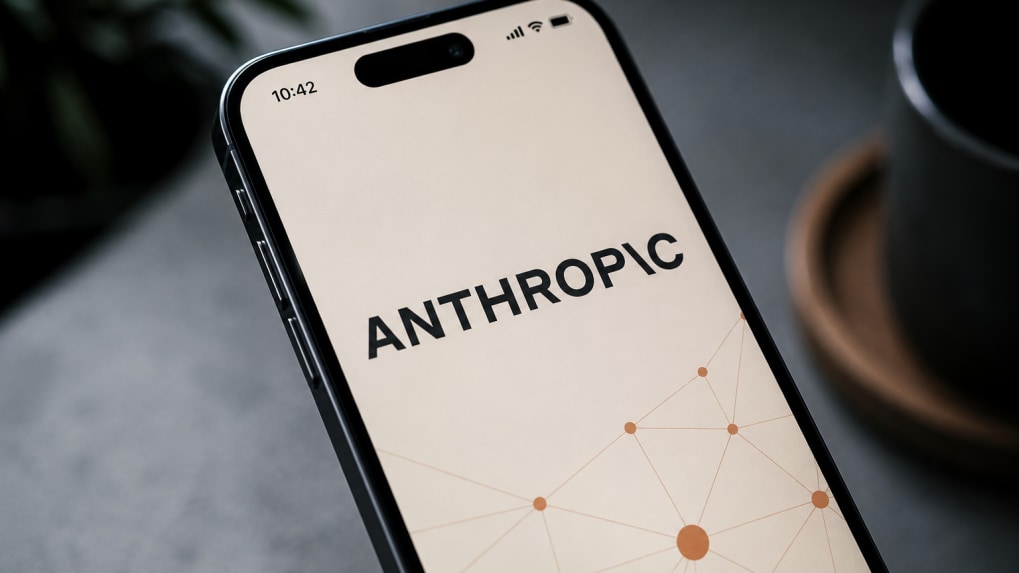
SpaceX in the Nasdaq-100, SK Hynix U.S. Listing: What to Watch This Week
Investors are looking ahead to Wednesday -- when minutes from the Federal Reserve's latest meeting will be released. They'll also be watching for today's inclusion of SpaceX in the Nasdaq-100 index and Friday, when SK Hynix's U.S.-listed shares are due to begin trading. Today Markets: SpaceX joins ...
