News & Updates
The latest news and updates from companies in the WLTH portfolio.
Anthropic accidentally exposes Claude Code secrets for second time in a week: What it means
Anthropic faces another setback after accidentally leaking the source code for its Claude Code platform for the second time in a week. Anthropic has confirmed that a portion of the internal source code for its widely used coding tool, Claude Code, was unintentionally exposed. The company stated that the incident resulted from human error and was not the result of a security breach. The security lapse occurred on Tuesday during a routine software update, when a debugging file containing more than 5 lakh lines of proprietary code was mistakenly included in the release. The issue was first spotted by security researcher Chaofan Shou, who reported it on X. The post quickly went viral, attracting over 21 million views within hours. This exposure triggered a wave of unauthorized downloads and mirrored copies appearing across GitHub, raising concerns among developers and the wider tech community. A major blow for the startup: The leak of the source code is a major blow for the startup, as it may allow developers and rival companies to see how Anthropic built its widely used coding platform. "No sensitive customer data or credentials were involved or exposed," an Anthropic spokesperson said in a statement, reports CNBC. "This was a release packaging issue caused by human error, not a security breach. We're rolling out measures to prevent this from happening again." These recurring issues have occurred even though the company added "Undercover Mode," a measure meant to stop Claude from exposing confidential internal data. Exposing source code can reveal important details about a system's design, potentially allowing competitors and independent developers to examine the structure behind Claude Code, one of the company's most widely adopted coding platforms. The leak comes at a particularly sensitive moment for the San Francisco-based company. It is the second incident within a single week in which Anthropic has accidentally revealed its internal intellectual property. Why This Breach Matters? The incident underscores an increasing risk in the tech industry: vulnerabilities in fast-moving software products. As companies release frequent updates, even minor mistakes -- such as including the wrong files in a release -- can result in widespread exposure. Anthropic made Claude Code available to the public in May: In May, Anthropic made Claude Code available to the public, a tool that helps software developers create features, fix bugs, and streamline routine tasks. Since its release, Claude Code has grown rapidly in popularity, with annualized revenue exceeding $2.5 billion as of February.

Rupee set for more chaos as banks unwind $30 billion in arbitrage trades
The RBI's move is one of its boldest attempts in more than a decade to rein in currency speculation | Image: Bloomberg By Bhaskar Dutta, Saikat Das, Pratigya Vajpayee and Siddhi Nayak The biggest shock to India's currency market in years is set to worsen as banks prepare to unwind billions of dollars more in arbitrage trades. The Reserve Bank of India's decision to clamp down on bearish rupee positions late Friday sparked a race by bankers to plead for a rethink as they fielded anxious client calls and gamed out ways to limit losses on trades estimated to be worth at least $30 billion. When trading resumed on Monday, dealers encountered a panic-stricken market with thin liquidity. One of them compared the pressure of getting trades done to an intern performing open-heart surgery. While exact figures are hard to come by, people familiar with the matter estimate banks closed out anywhere from $4 billion to $10 billion of arbitrage positions targeted by authorities. That means the vast majority of trades still need to be unwound before an April 10 deadline imposed by the central bank, unless authorities walk back their order. That possibility led some banks to stay on the sidelines Monday, even though the RBI has given no indication of backing down. Indian foreign-exchange markets are shut Tuesday and Wednesday for a holiday. "Based on client data and NDF flows, it appears that around 25-30% of total positions could have been unwound on Monday," said Ashhish Vaidya, head of treasury at DBS Bank in Mumbai. "That indicates fresh volatility in the currency market once trading resumes." The RBI's move is one of its boldest attempts in more than a decade to rein in currency speculation. After an initial jump, the rupee changed course and slid to a fresh low, highlighting the deeper pressures -- from elevated oil prices to persistent capital outflows and a widening trade deficit. India is particularly exposed to the fallout from the Iran war and surging energy costs due to its reliance on imports. The currency closed around the 94.80 per dollar level on Monday, with the gap between the day's high and low the widest since 2013. The directive left banks scrambling to unwind arbitrage trades, where they had been buying dollars locally and selling them offshore. As those positions were reversed, the gap between onshore and offshore forwards surged to the highest since 2020. With only one trading session left this week on Thursday, volumes are expected to stay subdued at least for now. Banks have sought a delay to the deadline, but if the RBI offers no leeway by April 6, there will be sharper moves ahead. Requests for flexibility are still being made, the traders added. Overnight implied volatility on the dollar-rupee climbed this week to the highest levels seen since November 2020, signaling traders are bracing for exaggerated price swings. The traders and bankers Bloomberg News spoke to have asked not to be identified as they aren't authorized to speak publicly. Exit Strategies The early market moves followed a weekend of intense calls across treasury desks, as teams mapped out scenarios after the RBI's announcement. Some were flooded with enquiries from offshore investors seeking clarity on how positions would be handled. At one foreign lender, staff fielded near-continuous calls through Saturday, with some spending more than half a day on the phone. By Monday morning, many had already identified the need to reduce their exposures. Dealing rooms that would typically come alive closer to the market open were staffed before dawn, as banks rushed to assess exposures and prepare exit strategies. One dealer said they began cutting risk as early as 8 a.m. in Mumbai, an hour before the official open, after spotting a sharp dislocation between offshore non-deliverable forwards and the domestic market. Within the first hour, a significant portion of positions had been reduced, the dealer said. Still, most public sector banks held off from exiting positions at a loss on Monday, as doing so would have impacted their books on the last trading day of the financial year, according to another trader. That hesitation helped explain why the rupee gave up its early gains after the initial rally. Several institutions chose to delay action in the hope that market conditions would stabilize or that some flexibility might emerge from the regulator. In some cases, banks explored alternatives, including whether positions could be transferred to other group entities. India has imposed restrictions on currency positions before, such as in 2011, but market participants say the latest curbs hit much harder. The scale of FX operations has ballooned over the past decade. Earlier measures also tended to focus on aggregate positions, allowing banks to net off positions across onshore and offshore markets. The latest rules apply specifically to onshore, forcing a painful unwind. The central bank's move reflects broader concerns about the role of offshore markets in driving rupee weakness. Persistent demand for dollar hedges and speculative positioning pushed offshore forward points -- the extra cost of locking in a future dollar-rupee rate -- to elevated levels, leading to a cycle that encouraged further depreciation bets. Authorities had previously tried to counter this through direct intervention, but at the cost of a substantial drawdown in FX reserves. Some strategists, including at Wells Fargo and VanEck, warn the rupee may weaken further to a record 100 per dollar or beyond if the Iran war drags on, despite authorities' efforts to stem the decline. They cited elevated oil prices that will worsen inflation and the current-account deficit, with Monday's price action highlighting the limits of the RBI's measures. What Bloomberg Strategists Say... "The dollar-rupee forwards curve is the steepest since 2020, which shows that FX traders see the Indian currency staying weak for an extended period. Although President Trump is indicating the US will be leaving Iran soon, EM currency traders see lasting damage to the rupee via the exposure to elevated oil prices." -- Mark Cranfield, Markets Live Strategist At a domestic private bank, a trader said the RBI's move came as a surprise, unlike past actions that were typically preceded by verbal warnings or steps to curb offshore participation. Although the bank didn't unwind much on Monday, it took a mark-to-market hit as the spread between onshore and offshore markets widened on the last trading day of the financial year, the trader said. With fears of further RBI measures, the bank now plans to gradually unwind its positions in the coming days, the trader added. Barclays Plc analysts said Monday that while the initial impact of the RBI's cap may fade, further measures to defend the rupee are possible, including even tighter limits on banks' positions, greater restrictions in the NDF market, and steps to manage dollar demand or encourage capital inflows. More From This Section BFSI firms use AI, but only a handful track its impact on revenue NBFCs lead March CP issuances; corporate borrowing may ease in FY27: Ind-Ra CoC must list reasons for approving resolution plan in new IBC Bill: FM RBI defers acquisition financing, capital market norms to July 1 Banks' gold loan portfolio surges 128% in February, shows RBI data

Anthropic releases part of AI tool source code in 'error'
A figurine in front of the logo of the AI assistant "Claude" seen in Paris in February Anthropic accidentally released part of the internal source code for its AI-powered coding assistant Claude Code due to "human error," the company said Tuesday. An internal-use file mistakenly included in a software update pointed to an archive containing nearly 2,000 files and 500,000 lines of code, which were quickly copied to developer platform GitHub. "Earlier today, a Claude Code release included some internal source code. No sensitive customer data or credentials were involved or exposed," an Anthropic spokesperson said. "This was a release packaging issue caused by human error, not a security breach." A post on X sharing a link to the leaked code had more than 29 million views early on Wednesday. The exposed code related to the tool's internal architecture but does not contain confidential data from Claude, the underlying AI model by Anthropic. Claude Code's source code was partially known, as the tool had been reverse-engineered by independent developers. An earlier version of the assistant had its source code exposed in February 2025.

Anthropic Unintentionally Exposes Internal Claude Code Source Code in Release Error
Anthropic has confirmed that it accidentally exposed part of the internal source code behind its AI-powered coding assistant, Claude Code. The company clarified that the issue occurred during a routine release and was not the result of a cyberattack or external breach. According to a company spokesperson, the leaked material did not include customer data, credentials, or sensitive user information. Instead, it contained internal code tied directly to Claude Code's functionality. The company described the incident as a "packaging error caused by human mistake" and stated that stronger safeguards are now being implemented to prevent similar issues in the future. The leak quickly gained traction online, with discussions spreading rapidly on X and attracting millions of views. While the exposed code does not reveal core AI models, it still offers competitors a rare look into how Anthropic structures and develops one of its key tools. Industry analysts suggest that even partial access to internal systems can provide valuable insights in a fast-moving sector. This will be crucial, especially since Claude brought bigger usage limits during off-peak hours. According to Business Insider, the company has seen increased attention following tensions involving the U.S. Department of Defense, which reportedly shifted focus to other AI providers after disagreements over usage policies. Despite these challenges, Anthropic's chatbot ecosystem continues to grow. Its Claude app recently climbed to the top of the U.S. App Store rankings. No wonder that it still has strong consumer demand for advanced AI tools and increased competition in the space.
Startup's $15K Bet Backfires: P2P.me Apologises for Polymarket Misstep
P2P.me apologised for the trust-damaging stunt, pledged to liquidate its prediction market positions, and announced a new trading policy after critics labeled the move a marketing failure. P2P.me has apologised after disclosing that team-linked accounts placed Polymarket bets on the outcome of its own fundraising round before the raise was made public, prompting insider trading accusations from the crypto community. The India-based stablecoin startup said a foundation account labelled "P2P Team" wagered on the company reaching a US$6 million (AU$8.7 million) fundraising milestone through MetaDAO, a Solana-based decentralised fundraising protocol. The bets were opened about 10 days before the public raise began on March 25, 2026. At the time, P2P.me said it had only an oral, non-binding commitment of US$3 million (AU$4.35 million) from Multicoin Capital, its largest single backer. It said there were no signed term sheets or guaranteed allocations in place when the positions were taken. The foundation account put US$20,500 (AU$29,725) into the Polymarket contract and later withdrew US$35,212 (AU$51,057), for a net profit of about US$14,700 (AU$21,315). The company described the gain as modest because it was below US$15,000 (AU$21,750). It had also previously used Polymarket in January 2026, when another bet returned US$8,173 (AU$11,851). Investors Panicking P2P.me's fundraising round eventually closed at US$5.2 million (AU$7.54 million), below the US$6 million (AU$8.7 million) target tied to the market. Even so, the position settled in the company's favour based on commitments recorded through MetaDAO. The startup had previously raised US$2 million (AU$2.9 million) in a seed round led by Coinbase Ventures and Multicoin Capital. After the bets became public through on-chain analysis, investor refund requests reached about US$20,000 (AU$29,000), a small share of the US$6.7 million (AU$9.7 million) committed in the round. Coinbase Ventures and Multicoin Capital said they were unaware of the trading before it surfaced. P2P.me said the episode "created confusion and hurt trust" and said it would close all open Polymarket positions and introduce a formal policy governing prediction market trading by employees and foundation accounts. The episode came days after Polymarket moved to explicitly ban insider trading by people with enough authority or influence to affect a contract's outcome.

Australian govt partners Anthropic on AI safety, research and infrastructure
The Australian government has signed an MoU with Anthropic to support collaboration on AI development, safety and research, marking the first formal arrangement under the country's National AI Plan. The agreement sets out a framework for cooperation between government, industry and research institutions, with a focus on aligning AI development with national policy objectives, including safety, economic impact and infrastructure planning.

Anthropic releases part of AI tool source code in 'error'
A figurine in front of the logo of the AI assistant "Claude" seen in Paris in February - Copyright AFP/File Joel Saget Anthropic accidentally released part of the internal source code for its AI-powered coding assistant Claude Code due to "human error," the company said Tuesday. An internal-use file mistakenly included in a software update pointed to an archive containing nearly 2,000 files and 500,000 lines of code, which were quickly copied to developer platform GitHub. "Earlier today, a Claude Code release included some internal source code. No sensitive customer data or credentials were involved or exposed," an Anthropic spokesperson said. "This was a release packaging issue caused by human error, not a security breach." A post on X sharing a link to the leaked code had more than 29 million views early on Wednesday. The exposed code related to the tool's internal architecture but does not contain confidential data from Claude, the underlying AI model by Anthropic. Claude Code's source code was partially known, as the tool had been reverse-engineered by independent developers. An earlier version of the assistant had its source code exposed in February 2025.

Anthropic confirms Claude Code source code leak, says no user data exposed
'No sensitive customer data or credentials were involved or exposed,' Anthropic says. Anthropic has confirmed that a part of the internal source code for its coding assistant Claude Code was accidentally leaked online. The company says the incident happened due to human error and was not because of a security breach. The issue came to light on Tuesday after a post on X (formerly known as Twitter) shared access to the code. The post quickly went viral and received more than 21 million views. Anthropic has tried to reassure users that the situation did not involve any sensitive information. 'No sensitive customer data or credentials were involved or exposed,' an Anthropic spokesperson said in a statement, reports CNBC. 'This was a release packaging issue caused by human error, not a security breach.' The spokesperson further says that the AI company is working on safeguards to make sure that similar mistakes do not happen in the future. Also read: iOS 27: Apple testing smarter Siri that can process multiple tasks at once Even though Anthropic says the leak does not pose a risk to user data, the exposure of source code can still have consequences. Source code contains the instructions and structure that define how a software tool works. For competing AI companies and independent developers, access to such code can sometimes offer insights into how a product is designed and built. This could reveal details about the architecture or development approach behind Claude Code. Also read: Google Veo 3.1 Lite AI video model is here: What it offers and how to use it The incident comes at a time when tech companies around the world are trying to develop powerful coding assistants and AI tools to compete with Claude Code.

Easter chaos with shutdowns on Sydney Metro and Harbour Bridge
The NSW Government has been accused of 'letting residents down at the worst possible time' after it decided to shut down part of the Sydney Metro over the Easter long weekend. The Sydney Metro M1 line, which runs for 66km, will be closed from 2am on Friday to 2am on Tuesday between Tallawong and Sydenham for testing ahead of the Bankstown expansion later this year. Replacement buses will instead operate between Tallawong and Chatswood, with Sydney Trains running between Chatswood and Sydenham. But Member for Willoughby Tim James hit out at the decision to close the Metro during what's likely to be a busy long weekend. 'Does it really need to get done over a busy Easter long weekend amidst a fuel crisis?' James told Daily Mail. 'You would think there would be a real drive and desire to have more people on public transport. 'It's a shame and we've had limited notice. With trackwork, you seem to only find out in the week leading up to it.' James pointed out that the Metro and heavy rail (North Shore Line) were both out of action last weekend for trackwork. The Sydney Metro M1 line will be closed from 2am on Friday to 2am on Tuesday between Tallawong and Sydenham Member for Willoughby Tim James criticised the decision to close the Metro during the Easter long weekend He said he was 'dismayed' that Sydneysiders again have to put up with public transport disruptions, particularly given the current fuel crisis which is gripping the nation. 'We're in the midst of a fuel shock affecting price, supply, consumer confidence and more,' he said. 'Replacement buses will use a lot of diesel particularly.' James highlighted the impact the Metro has had on his electorate and was worried small businesses wouldn't be able to cash in on the long weekend. 'I'm conscious of what it means for small businesses. Since the Metro came in, the number of passengers coming through Chatswood Station is up 35 per cent,' he said. 'I think people will think twice about whether they'll head out for a meal. 'For all these reasons, no Metro this long weekend is a spectacularly bad failure for Sydney residents and visitors. The NSW Labor Government is letting us down at the worst possible time right now.' If the Metro closures weren't bad enough for north shore residents, roadworks will take place on the busy Warringah Freeway from Thursday night to Monday morning. The Warringah Freeway, northbound will close between Thursday night to Monday morning Metro users will need to find alternative transportation this weekend Double demerits over the Easter long weekend: What you need to know Northbound traffic lanes on the Sydney Harbour Bridge and in the Sydney Harbour Tunnel will be closed from: * 10:30pm Thursday to 8am Friday * 8pm Friday to 8am Saturday * 10pm Saturday to 8am Sunday * 8pm Sunday to 9am Monday Southbound outer lanes on the Warringah Freeway will also be closed during these times. Traffic will instead be detoured via the Pacific Highway. There will be weekend day and night work along the freeway and intersections in North Sydney, Neutral Bay, Cammeray, and Naremburn from 10pm on Thursday to 9am on Monday. Aussies online were frustrated by the trackwork on such a busy long weekend. 'They should just publish the dates that the metro is actually open. It's a bit comical,' one person said. 'Given the metro was out last weekend, why all work needed over Easter... it's not that old,' another said. Some however, said it was important the work got done. 'If it speeds up southwest Metro I'm all for the trackwork. No more delays. No more replacement buses,' one person said. 'Unless you have a crystal ball, stop whining. I'd rather have weekend disruptions than a coroner investigating multiple deaths due to government underfunding of the critical public transport system,' another said. Daily Mail contacted the Minister for Transport John Graham for comment.

Gary Black Says Nasdaq Rule Changes Will Put 'Intense Pressure' On Fund Managers To Participate In SpaceX
Intense Pressure On Managers The upcoming IPO is expected to create "intense pressure" on managers and professional investors to participate, "even at a valuation north of $1T," because "sitting out may be too risky," Black said in a post on the social media platform X on Tuesday, citing the recent Nasdaq rule changes. "Fund managers fret that if they sit out the SpaceX offering and the shares soar, their performance will look dismal," he said. He added that Musk and the bankers were "well aware" of this pressure on fund managers as SpaceX gears up to sell a "record $75B worth of stock." Nasdaq Rule Changes Nasdaq announced a series of rule changes on Monday after consulting stakeholders in the industry, outlining that the index would include both listed and unlisted shares for calculating a company's market capitalization. The index also changed the rules around entry into the exchange, sharing that companies with market capitalization equal to any of the top 40 listed enterprises on the index would be allowed a "fast entry" within 15 trading days. The new rules will take effect on May 1, 2026. Nasdaq also announced the removal of the 10% free-float requirement for companies. The rule changes have been criticized by investor Michael Burry of "The Big Short" fame. SpaceX IPO Check out more of Benzinga's Future Of Mobility coverage by following this link. Photo courtesy: Shutterstock Market News and Data brought to you by Benzinga APIs To add Benzinga News as your preferred source on Google, click here.

SpaceX lines up 21 banks for mega IPO, code-named project Apex
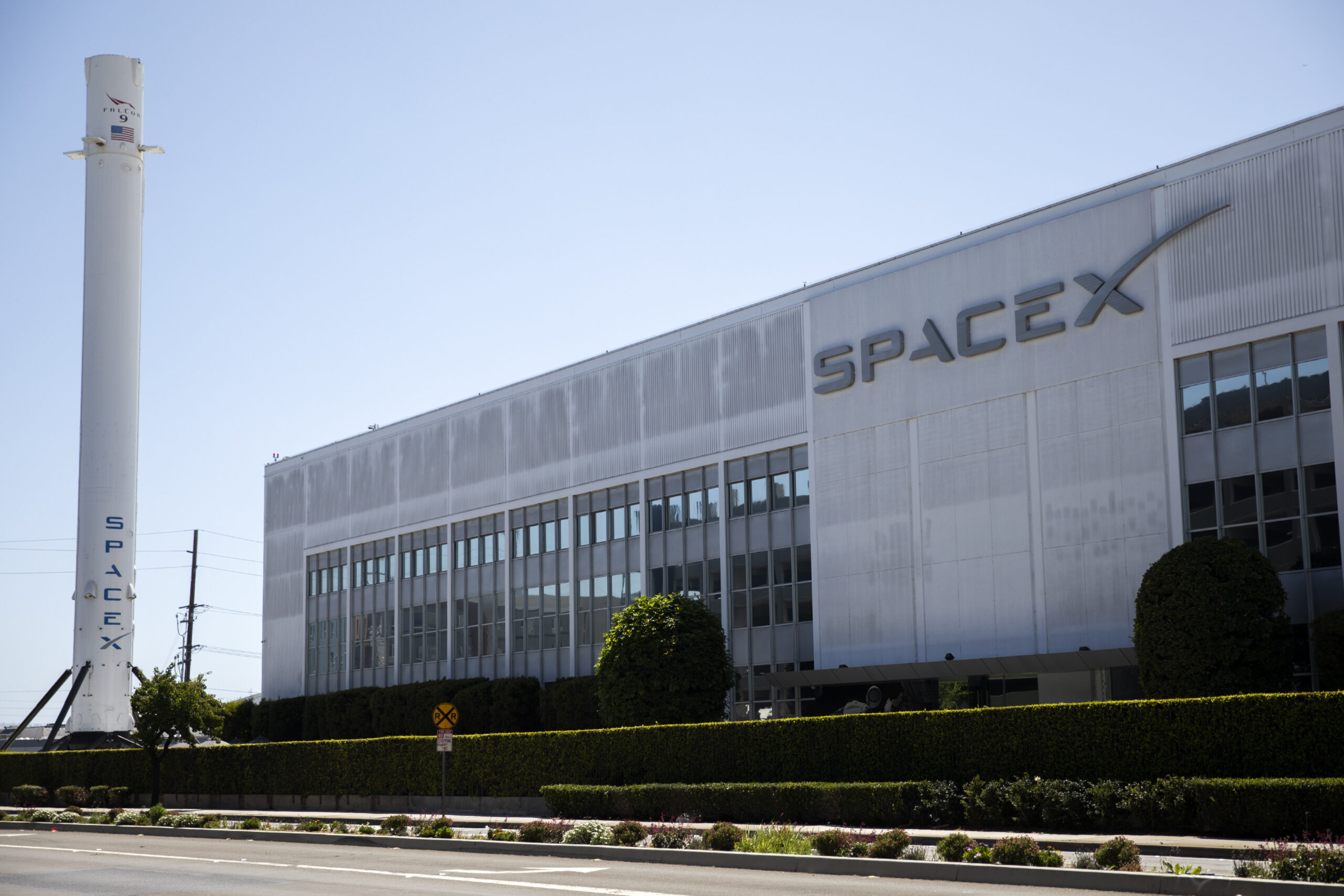
SPACEX is working with at least 21 banks on its blockbuster initial public offering, people familiar with the matter said on Tuesday, one of the largest underwriting syndicates assembled in recent years. The listing, internally codenamed Project Apex, is expected to be among the most closely watched stock market debuts on Wall Street. The public offering, expected in June, is estimated to value the rocket company controlled by founder and CEO Elon Musk at US$1.75 trillion. Morgan Stanley, Goldman Sachs, JPMorgan Chase, Bank of America and Citigroup are serving as active bookrunners, or the lead banks managing the deal, the people said, asking not to be identified because the process is not public. A further 16 banks have signed on in smaller roles, they added. About half of the banks' names have not previously been reported. The size of the syndicate underscores the scale and complexity of the planned offering. Banks in addition to the active bookrunners include: The banks are expected to take on roles in institutional, high-net-worth and retail investor channels as well as in different geographic regions, Reuters previously reported. The plan is subject to change and additional banks could still be added, the sources said. Texas-based SpaceX did not immediately respond to a request for comment. Bank of America, Barclays, Deutsche Bank, Goldman Sachs, JPMorgan, Mizuho, Santander and Wells Fargo declined to comment. The other banks did not immediately respond to requests for comment. Large IPO syndicates have become more common for mega deals in recent years. Chip designer ARM Holdings worked with close to 30 banks on its 2023 listing, while Alibaba Group assembled a similarly large group of underwriters for its record-breaking 2014 debut. REUTERS

Indian Rupee Set for More Chaos as Banks Unwind $30 Billion in Arbitrage Trades
Try refreshing your browser, or tap here to see other videos from our team. When trading resumed on Monday, dealers encountered a panic-stricken market with thin liquidity. One of them compared the pressure of getting trades done to an intern performing open-heart surgery. While exact figures are hard to come by, people familiar with the matter estimate banks closed out anywhere from $4 billion to $10 billion of arbitrage positions targeted by authorities.

Indian Rupee Set for More Chaos as Banks Unwind $30 Billion in Arbitrage Trades
The biggest shock to India's currency market in years is set to worsen as banks prepare to unwind billions of dollars more in arbitrage trades. The Reserve Bank of India's decision to clamp down on bearish rupee positions late Friday sparked a race by bankers to plead for a rethink as they fielded anxious client calls and gamed out ways to limit losses on trades estimated to be worth at least $30 billion. When trading resumed on Monday, dealers encountered a panic-stricken market with thin liquidity. One of them compared the pressure of getting trades done to an intern performing open-heart surgery. While exact figures are hard to come by, people familiar with the matter estimate banks closed out anywhere from $4 billion to $10 billion of arbitrage positions targeted by authorities. That means the vast majority of trades still need to be unwound before an April 10 deadline imposed by the central bank, unless authorities walk back their order. That possibility led some banks to stay on the sidelines Monday, even though the RBI has given no indication of backing down. Indian foreign-exchange markets are shut Tuesday and Wednesday for a holiday. "Based on client data and NDF flows, it appears that around 25-30% of total positions could have been unwound on Monday," said Ashhish Vaidya, head of treasury at DBS Bank in Mumbai. "That indicates fresh volatility in the currency market once trading resumes." The RBI's move is one of its boldest attempts in more than a decade to rein in currency speculation. After an initial jump, the rupee changed course and slid to a fresh low, highlighting the deeper pressures -- from elevated oil prices to persistent capital outflows and a widening trade deficit. India is particularly exposed to the fallout from the Iran war and surging energy costs due to its reliance on imports. The currency closed around the 94.80 per dollar level on Monday, with the gap between the day's high and low the widest since 2013. The directive left banks scrambling to unwind arbitrage trades, where they had been buying dollars locally and selling them offshore. As those positions were reversed, the gap between onshore and offshore forwards surged to the highest since 2020. With only one trading session left this week on Thursday, volumes are expected to stay subdued at least for now. Banks have sought a delay to the deadline, but if the RBI offers no leeway by April 6, there will be sharper moves ahead. Requests for flexibility are still being made, the traders added. Overnight implied volatility on the dollar-rupee climbed this week to the highest levels seen since November 2020, signaling traders are bracing for exaggerated price swings. The traders and bankers Bloomberg News spoke to have asked not to be identified as they aren't authorized to speak publicly. Exit Strategies The early market moves followed a weekend of intense calls across treasury desks, as teams mapped out scenarios after the RBI's announcement. Some were flooded with enquiries from offshore investors seeking clarity on how positions would be handled. At one foreign lender, staff fielded near-continuous calls through Saturday, with some spending more than half a day on the phone. By Monday morning, many had already identified the need to reduce their exposures. Dealing rooms that would typically come alive closer to the market open were staffed before dawn, as banks rushed to assess exposures and prepare exit strategies. One dealer said they began cutting risk as early as 8 a.m. in Mumbai, an hour before the official open, after spotting a sharp dislocation between offshore non-deliverable forwards and the domestic market. Within the first hour, a significant portion of positions had been reduced, the dealer said. Still, most public sector banks held off from exiting positions at a loss on Monday, as doing so would have impacted their books on the last trading day of the financial year, according to another trader. That hesitation helped explain why the rupee gave up its early gains after the initial rally. Several institutions chose to delay action in the hope that market conditions would stabilize or that some flexibility might emerge from the regulator. In some cases, banks explored alternatives, including whether positions could be transferred to other group entities. India has imposed restrictionsBloomberg Terminal on currency positions before, such as in 2011, but market participants say the latest curbs hit much harder. The scale of FX operations has ballooned over the past decade. Earlier measures also tended to focus on aggregate positions, allowing banks to net off positions across onshore and offshore markets. The latest rules apply specifically to onshore, forcing a painful unwind. The central bank's move reflects broader concerns about the role of offshore markets in driving rupee weakness. Persistent demand for dollar hedges and speculative positioning pushed offshore forward points -- the extra cost of locking in a future dollar-rupee rate -- to elevated levels, leading to a cycle that encouraged further depreciation bets. Authorities had previously tried to counter this through direct intervention, but at the cost of a substantial drawdown in FX reserves. Some strategists, including at Wells Fargo and VanEck, warn the rupee may weaken further to a record 100 per dollar or beyond if the Iran war drags on, despite authorities' efforts to stem the decline. They cited elevated oil prices that will worsen inflation and the current-account deficit, with Monday's price action highlighting the limits of the RBI's measures. What Bloomberg Strategists Say... "The dollar-rupee forwards curve is the steepest since 2020, which shows that FX traders see the Indian currency staying weak for an extended period. Although President Trump is indicating the US will be leaving Iran soon, EM currency traders see lasting damage to the rupee via the exposure to elevated oil prices." -- Mark Cranfield, Markets Live Strategist At a domestic private bank, a trader said the RBI's move came as a surprise, unlike past actions that were typically preceded by verbal warnings or steps to curb offshore participation. Although the bank didn't unwind much on Monday, it took a mark-to-market hit as the spread between onshore and offshore markets widened on the last trading day of the financial year, the trader said. With fears of further RBI measures, the bank now plans to gradually unwind its positions in the coming days, the trader added. Barclays Plc analysts said Monday that while the initial impact of the RBI's cap may fade, further measures to defend the rupee are possible, including even tighter limits on banks' positions, greater restrictions in the NDF market, and steps to manage dollar demand or encourage capital inflows.

Perplexity AI accused of embedding 'undetectable' trackers for secretly routing sensitive user data to Meta and Google | Mint
Meanwhile, Perplexity spokesperson Jesse Dwyer told the news agency, "We have not been served any lawsuit that matches this description, so we are unable to verify its existence or claims," said Jesse Dwyer, a Perplexity spokesperson. The Aravind Srinivas-led AI search startup is also facing a lawsuit by Amazon over its agentic shopping feature, which uses automation to place orders on behalf of users. Amazon says Perplexity covertly accessed its customer accounts while disguising automated activity as human browsing. Amazon also alleged that Perplexity's agents pose security risks for its customer data since the AI can act within protected computer systems, including private customer accounts.

Anthropic's Claude Code Leak Sparks Panic: AI Tool's Source Code Reportedly Exposed Online Again
A fresh leak involving Anthropic's coding assistant Claude Code is trending across the tech world, raising serious concerns about AI security and repeated internal lapses. The latest incident reportedly exposed more than 500,000 lines of source code after a misconfigured package was briefly made public. The data quickly spread to GitHub, where thousands of developers accessed and mirrored it within hours. This is not the first time Claude Code has faced such a leak. A similar issue was reported in 2025, pointing to a recurring problem in how internal builds are handled before release. The exposed files included core system architecture, tool integrations, and internal mechanisms that power Claude Code. While early discussions focused on hidden features, deeper analysis suggests something more important. Only a small fraction of the code, about 1.6%, is actually tied to the AI model itself. The rest is made up of engineering layers that control how the AI behaves, interacts, and performs tasks. This includes systems for managing long conversations, running commands, handling permissions, and even coordinating multiple AI agents working together. The incident highlights a growing risk in the AI race: security gaps in rapidly evolving products. With companies pushing frequent updates, small oversights like missing files in deployment settings can lead to large-scale exposure. In this case, reports suggest the leak happened due to a source map file not being excluded properly during packaging. Beyond security, the leak also makes it easier for competitors or developers to study and potentially replicate parts of the system. One of the biggest takeaways from the leak is how modern AI tools are built. The model itself is only one piece. The real strength lies in the surrounding systems how the AI remembers context, uses tools, and executes tasks. Claude Code, for example, can read project files, run terminal commands, and manage workflows making it feel more like a software partner than a chatbot. This kind of setup is what experts call an "AI agent," where the system actively works alongside the user instead of simply responding to prompts. The repeated nature of the leak raises questions about internal safeguards at Anthropic. As AI tools become more powerful and widely used, even small vulnerabilities can have large consequences. At the same time, the incident offers a rare look into how advanced AI systems are structured something companies usually keep tightly guarded. For now, Anthropic has not publicly detailed the full impact. But the message is clear: in the fast-moving AI space, building powerful tools is only half the job keeping them secure is just as critical.
Mercor AI Confirms Data Breach Following Lapsus$ Claims of 4TB Data Theft - IT Security News
The technical storage or access is necessary for the legitimate purpose of storing preferences that are not requested by the subscriber or user. The technical storage or access that is used exclusively for statistical purposes. The technical storage or access that is used exclusively for anonymous statistical purposes. Without a subpoena, voluntary compliance on the part of your Internet Service Provider, or additional records from a third party, information stored or retrieved for this purpose alone cannot usually be used to identify you.

Anthropic blames human error for Claude source code leak
Anthropic says a leak of source code from its Claude Code platform was 'not a secuity breach'. Image: Shutterstock Anthropic says an issue "caused by human error" is to blame for the leaking of part of the internal source code for its popular artificial intelligence coding assistant Claude Code. It comes as the American AI company signs an agreement with the Australian government, while still reeling from a previous data leak last month which detailed its upcoming AI models. Anthropic confirmed on Wednesday (AEDT) that "no sensitive customer data or credentials were involved or exposed" in the leak of Claude Code's source code, which could give competitors insights into how the system was built. "This was a release packaging issue caused by human error, not a security breach," an Anthropic spokesperson told Information Age. "We're rolling out measures to prevent this from happening again." The leak allegedly involved a source map file (.map) used for internal debugging, which was accidentally included in version 2.1.88 of Claude Code, released by Anthropic on Monday. The file was reportedly used to access part of Claude Code's source code, containing more than 512,000 lines of code. Software engineer Chaofan Shou called attention to the leak on social media platform X and posted a file containing the source code, which was soon shared across developer platform GitHub and examined by numerous users. The source code leak is understood to contain details of Claude Code's internal structure and how its memory system works - which could potentially be useful for reverse-engineering efforts by AI enthusiasts or cyber threat actors - but does not include the model itself or the so-called 'weights' it learned during training. The rising popularity of Claude Code has helped establish Anthropic as a leading AI provider, and has caused stock market jitters for traditional software-as-a-service (SaaS) companies in recent months. The leak of source code from Claude Code comes at an awkward time for Anthropic, after details of upcoming AI models and other documents were found to be publicly accessible in March, according to Fortune. The blunder reportedly saw internal Anthropic documents stored in a publicly accessible data cache, including draft blog posts and details of a new and unreleased AI model called Mythos, under a new tier of models dubbed Capybara. A draft blog post reportedly described Claude Mythos as "by far the most powerful AI model we've ever developed", and Anthropic told Fortune the model marked "a step change" in AI performance. The company planned to roll out Capybara-tier models to partner organisations first, a draft blog post reportedly said, as they were "currently far ahead of any other AI model in cyber capabilities". The post reportedly stated "it presages an upcoming wave of models that can exploit vulnerabilities in ways that far outpace the efforts of defenders". After being told of the data leak, Anthropic reportedly told Fortune it had fixed the issue, which it said was caused by a "human error" in how the content management system (CMS) of its website was configured. Analysts at Gartner wrote that while "Claude Code leads the AI coding agent market" Anthropic's source code leak, blog post leaks, and recent reports of service issues constituted "reliability and communication failures that demand software engineering leaders require vendors to demonstrate operational maturity". Anthropic and the Australian government have signed a memorandum of understanding (MoU) on AI safety research and development, the two parties announced on Tuesday. The agreement states that Anthropic and the government intend to collaborate on the goals of Labor's National AI Plan, which it released in December 2025, including "capturing the opportunities of AI, spreading the benefits, and keeping Australians safe". Anthropic committed to sharing its research on AI capabilities and risks with Australia's AI Safety Institute and taking part in security and safety evaluations of its models, while also sharing economic data with the government about how AI is being used domestically. The company also announced it would provide $3 million in Claude credits to researchers at the Australian National University, Murdoch Children's Research Institute, the Garvan Institute of Medical Research, and Curtin University. Anthropic, which has previously confirmed it is "exploring opportunities" to expand its computing capacity to Australia, also used its MoU to confirm it would abide by the government's recently released expectations for data centre development. The company had previously pledged to cover the cost of grid upgrades in Australia if it committed to building its own computing infrastructure in the country, like it has in the United States. Anthropic has also confirmed plans to open an office in Sydney, and is actively recruiting. Major competitor OpenAI already has an office in Sydney, and announced an Australian data centre deal in December 2025. Anthropic CEO Dario Amodei, who met with politicians in Canberra this week, said Australia was "a natural partner for responsible AI development", given its "investment in AI safety". Minister for industry, innovation, and science, Tim Ayres, said the government's MoU with Anthropic sent "a clear signal to Australians that we are open for business, where investment aligns with Australia's priorities and Australian values". Anthropic is currently embroiled in a legal fight with the US government, after it sued the Trump administration for labelling it a supply-chain risk because it did not agree to new terms for military use of its AI systems. In comments to an Australian Senate committee last month, Anthropic warned that governments "should not resort to threats or retaliation" when dealing with contractors they do not agree with.
US IPO Prospects in Limbo as War Dents Optimism Ahead of SpaceX
The companies that typically make up the backbone of the US initial public offering market are eyeing the Iran war for signs volatility could boil over and wreck their plans. For banks, there's a ray of hope -- that SpaceX's potential blockbuster listing could still go ahead, and make their whole year. After a first quarter marked by stop-and-start activity for IPOs, talk has turned to the implications of the raging conflict and the lingering effect of artificial intelligence scares. No wonder many listing candidates are sitting on their hands as a possible IPO for billionaire Elon Musk's rocket company, which could come as soon as June and dwarf every other debut, takes shape. "The situation in Iran has thrown a wrench into things and AI disruption has been pronounced this year," said Evan Riley, Americas head of equity capital markets at BNP Paribas SA. "You've had some hiccups in terms of withdrawn deals -- you'll see the complexion of IPOs change a bit." "But if you have mega IPOs come then that changes the entire year because you can easily have a full year of IPO volume in one deal," he said in an interview. Musk's company is expected to submit a confidential filing any day now, and is targeting a deal which could bring in as much as $75 billion, Bloomberg News has reported. A range of industrials firms are positioned to test investor appetite for a sector seen as relatively insulated from the pressure on consumers from the war. Indoor air quality firm Madison Air Solutions Corp., which is expected to seek at least $2 billion, and drone maker Aevex Corp. both filed publicly in recent weeks for IPOs. Others are being advised by bankers to stay ready in the weeks before financial results go stale in mid-May. Activity in April will be critical for the second quarter as bankers seek to deliver on promises that this would prove to be a banner year. US IPO volume in the first three months of 2026 marked the best first quarter since 2021, with a weighted-average drop of roughly 3% outpacing about a more than 7% decline for the benchmark S&P 500 Index, data compiled by Bloomberg show. Still, seven of the companies behind the quarter's 10 largest deals are trading below their IPO price, with a median decline of 28%, the data show. The choppy performances and an uncertain backdrop have forced management teams to accept that while conditions aren't perfect for an IPO, further waiting may not provide the clarity some are hoping for, bankers say. "Issuers that paused a couple weeks ago may need to confront similar dynamics in early April," said John Kolz, global head of ECM at Barclays Plc. "Do you have to take a little bit of a leap of faith and rely on a robust process to find long-term investors even with the chaos we're dealing with?" "Nobody should be letting perfect be the enemy of good enough," he said in an interview. "In this environment, good enough may be the best we can hope for." Over the past 12 years, the second quarter has historically been the most active, Bloomberg data show. "The forward calendar still looks constructive," said David Bauer, head of equity capital markets at JPMorgan Chase & Co. There's a healthy pipeline of IPOs across sectors, particularly financials, industrials and technology, he added. Slowdown in March Despite the optimism, volatility has already chilled a handful of planned US IPOs this year. Clear Street Group Inc. and Blackstone Inc.-backed Liftoff Mobile Inc. both paused listing plans in February just before they were due to price. The relative slowdown in March listing activity suggests the market may not get back to full strength while the conflict remains underway. Michal Katz, head of investment and corporate banking at Mizuho Americas, said the market for IPOs will remain largely stalled amid the uncertainty. "Once we get the two sides coming to the table and beginning to put together a framework for resolution, we should be able to get some stabilization," Katz said.
Aravind Srinivas's Perplexity AI faces lawsuit over sharing users data without consent; company responds
Perplexity AI has been accused of sharing user data with major tech companies - Google and Meta without proper consent. According to a report by Bloomberg, a lawsuit has been filed against Perplexity AI, led by CEO Aravind Srinivas accusing the company of allowing third-party trackers to access sensitive user information. The case has been filed on behalf of a user identified as John Doe, who said he shared personal financial details including his family's finances, his tax obligations, his investment portfolio and strategies with Perplexity's chatbot.Filed in a federal court in San Francisco on March 31, the proposed class-action complaint claims that as soon as users log into Perplexity's home page, trackers are downloaded onto their devices, giving Meta and Google full access to the conversations between them and Perplexity's AI Machine search engine. Users' personal data is shared even when they sign up for Perplexity's "Incognito" mode, the lawsuit further alleges. As per the report, the proposed class-action lawsuit claims that trackers are installed on users' devices when they log into Perplexity's website. These trackers allegedly allow Meta and Google to access conversations between users and the AI chatbot. The complaint states that this data could be used for targeted advertising or shared with other parties. Perplexity said it has not received any lawsuit matching the description and could not verify the claims. "We have not been served any lawsuit that matches this description so we are unable to verify its existence or claims," said Jesse Dwyer, a Perplexity spokesperson as quoted in the Bloomberg report.Meta pointed to its policies, stating that advertisers are not allowed to send sensitive information to the company.

Skye chaos concerns as plans lodged for island to host national turbine storage site
Plans have been lodged for a turbine storage site on the Isle of Skye to serve wind farms being built elsewhere - a move that islanders said will lead to major traffic disruption if given the green light. Energy company Southern and Scottish Energy (SSE) Renewables proposed the facility be constructed at Kyleakin, just over the Skye Bridge from the mainland. The development would sit on land adjacent to the MOWI Feed Plant at Kyleakin. The fish farm giant manufactures around 180,000 tonnes of fish feed annually at the plant to supply the company's Scottish and international salmon farms. SSE's proposed development, if given the go-ahead, would store turbine blades for wind farms that are being built in the Great Glen: Cloiche Wind Farm, near Fort Augustus, and Bhlaraidh Wind Farm, on the nearby Glenmoriston Estate. A second application is also pending to store wind farm components for the wind farms on Skye itself at Ashaig airstrip in Breakish. Islanders already concerned about the condition of the roads on Skye said the development would bring increased traffic chaos and disruption to what is Scotland's second most visited location. The Inner Hebridean island welcomes hundreds of thousands of tourists each year, with 2024 figures showing 875,000 visitors, according to the Scottish Tourism Alliance. Members of the Skye Windfarm Information Group (SWIG) said while turbine blades have been stored on the island for use on the mainland in the past, those proposed for one of the windfarms will be 80m long - longer than any brought to the island before. Concerns about transporting wind turbine blades on Skye have been a central issue in the wind farm inquiries and related planning debates, including those linked to sites such as the Ben Aketil Wind Farm and associated infrastructure proposals. SSE said the proposed plans were made in response to concerns raised previously by community representatives in Skye around the impact of turbine deliveries via Kyle of Lochalsh Harbour. The energy giant admitted the existing system results in multiple trips on different dates across Skye and via Skye Bridge to the mainland, significantly impacting local residents and the community. It said the proposed development is intended to "significantly reduce" the impact of deliveries on residents by reducing the number of trips across Skye. SSE did not respond to concerns raised by SWIG about the Skye Bridge potentially having to be closed each time blades are transported from the proposed storage area to the mainland. Opponents also claimed there had been a lack of assessment on the cumulative impact of increased traffic related to other wind farm and energy infrastructure projects on the island, including the recently approved SSEN Transmission overhead line upgrade. SWIG said: "The Skye Bridge/A87 is a lifeline route for businesses, residents and emergency services to and from Skye and from the Western Isles. "There is no traffic management plan to show when and how SSE propose to move the blades and how they will minimise disruption to traffic, residents, businesses and tourists due to closure of the Skye Bridge." An SSE Renewables spokesperson said: "Over recent years we've been engaging with local residents and stakeholders in Skye to understand how we can reduce the impacts of turbine component deliveries on the community. The feedback we've received has directly helped shape our plans for a temporary turbine blade storage facility near Kyleakin. "By listening to the community and acting on that feedback, we've taken practical steps to minimise disruption where possible. Allowing blades to be stored closer to where they arrive would reduce the number of journeys across Skye and over the Skye Bridge, helping to significantly lessen the impact of component deliveries on local residents."
