News & Updates
The latest news and updates from companies in the WLTH portfolio.
Meta's (META) CEO Mark Zuckerberg is Developing an AI Agent to Help Him be CEO Tesla and SpaceX Plan to Build a New Chip Factory in Texas
Meta Platforms, Inc. (NASDAQ:META) is one of the Goldman Sachs AI Stocks: Top 12 Stocks to Buy. On March 22, 2026, the Wall Street Journal reported that Mark Zuckerberg, CEO of Meta Platforms, Inc. (NASDAQ:META), is developing an artificial intelligence assistant to assist with his executive tasks to accelerate decision-making and information access. The tool is still being developed, and it retrieves replies directly, reducing the need for internal communication layers. Zuckerberg is utilizing the project to test broader AI integration across the corporation as it works to incorporate artificial intelligence into its operations. Meta Platforms, Inc. (NASDAQ:META) uses AI tools to optimize workflows, flatten organizational structures, and improve productivity among its 78,000 employees. The company encourages more dependence on AI-native solutions while maximizing individual contributors and minimizing management layers. Zuckerberg has stepped up his direct involvement in coding as part of these initiatives. During a January earnings call, he underlined that AI-driven tooling will help staff accomplish jobs more effectively, which supports the firm's plan to compete with smaller, AI-focused startups. Copyright: dolgachov / 123RF Stock Photo Meta Platforms, Inc. (NASDAQ:META) specializes in the creation of social media applications. It develops technology that enables individuals to connect and share, discover communities, and grow businesses. While we acknowledge the potential of META as an investment, we believe certain AI stocks offer greater upside potential and carry less downside risk. If you're looking for an extremely undervalued AI stock that also stands to benefit significantly from Trump-era tariffs and the onshoring trend, see our free report on the best short-term AI stock. Disclosure: None. Follow Insider Monkey on Google News.

This Affordable Field Watch Comes with Some Stealthy Bonuses and an Unconventional Bezel
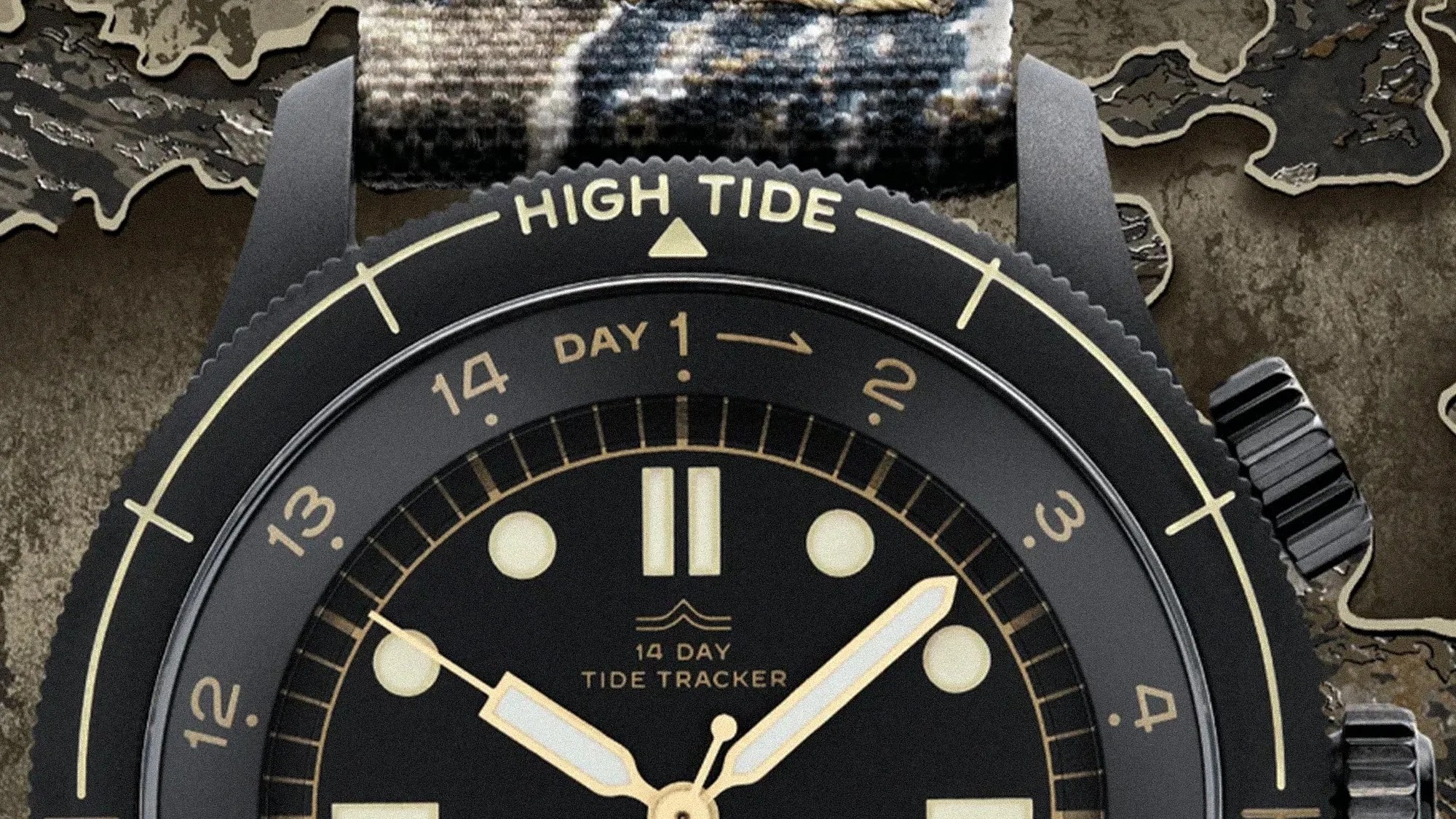
Field watches are among the most naturally outdoor-friendly timepiece styles, classic or contemporary. As they were originally designed as formidable, reliable time-keepers for soldiers during WWI, it makes perfect sense that they fit right into the rugged spirit of outdoor adventure. Some, however, toe that line a little more clearly than others. Take the latest Vero x Realtree collaboration, the Tide Tracker Midnight Edition, for example. Along with being the third in the two brands' ongoing series, it might actually be the most striking, best-looking of the bunch. Midnight rider Previously, Realtree and Vero Watch Company collaborated on two other versions of the Tide Tracker, which differed only in exterior styling. They were the Outpost Black version -- boasting a stainless steel case, a black-and-white dial scheme and a camo strap -- and the Compass Blue version -- featuring a stainless steel case, a dark blue dial scheme and a lighter blue camo strap. Personally, I think the latest version, the Midnight Edition, is the best-looking option of the bunch. And if you have a flair for the stealthy and an appreciation for the color black, I suspect you'll agree. This version sees the dial get an all-over black finish with bronze-colored dial markers and a darker-toned canvas strap.
Why did SpaceX lose contact with Starlink satellite?
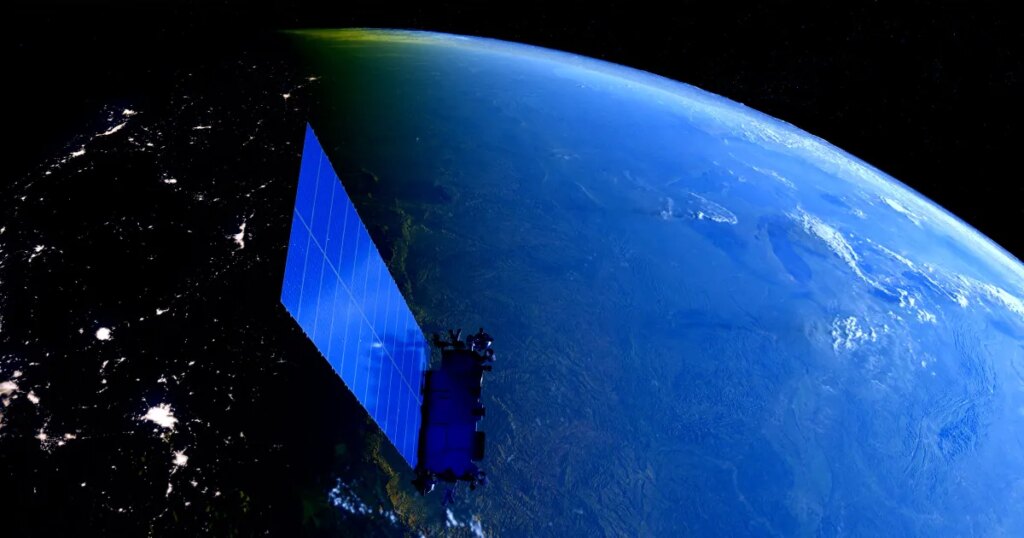
SpaceX reported that it lost contact with a Starlink satellite -- cataloged as satellite 34343 -- after the spacecraft experienced an unspecified anomaly while in orbit on March 29. The company said it detected the issue and subsequently lost communications with the satellite. The satellite incident is significant for a high-level reason: Starlink depends on continuous operations and rapid troubleshooting to maintain coverage. When contact is lost, operators must determine whether the failure is temporary (for example, a communications fault) or permanent (such as hardware damage or power loss). SpaceX said the anomaly details were not specified publicly, but it did link the event to recent history. A similar incident occurred in December, and the latest report suggests the company is treating the anomaly as part of an ongoing pattern of in-orbit failures that can affect fleet operations. What happens next typically involves attempts to re-establish communication, evaluate onboard telemetry if any data is available, and assess whether the failure mode could be systemic. Even without confirmed root cause, any lost satellite can contribute to service changes, onboard redundancy considerations, and broader reliability engineering. For users, the impact may be invisible if spare capacity and routing compensate. For the broader space industry, incidents like this underscore the operational risk of deploying large satellite constellations at scale, where even a small failure rate translates into frequent operational events over time.

SpaceX loses contact with another Starlink satellite
Something going wrong with technology from an Elon Musk company? *shocked Pikachu face* SpaceX has revealed that it has lost contact with one of its Starlink satellites. On X (Twitter), the company confirmed that satellite 34343 "experienced an anomaly" in orbit about 560km above Earth. It didn't clarify what, exactly, this "anomaly" was, but it did note that the event poses no risk to the International Space Station, its crew or NASA's upcoming Artemis II mission, the agency's first crewed lunar flyby in 50 years. SpaceX added that it's actively working to determine the root cause of the event and take any necessary corrective actions. Notably, a similar incident occurred with a Starlink satellite in December. But even if that didn't happen, it's not exactly surprising to see this kind of news from an Elon Musk company, given how many notable issues there have been at the likes of Tesla and X.

Second SpaceX Satellite Abruptly Explodes
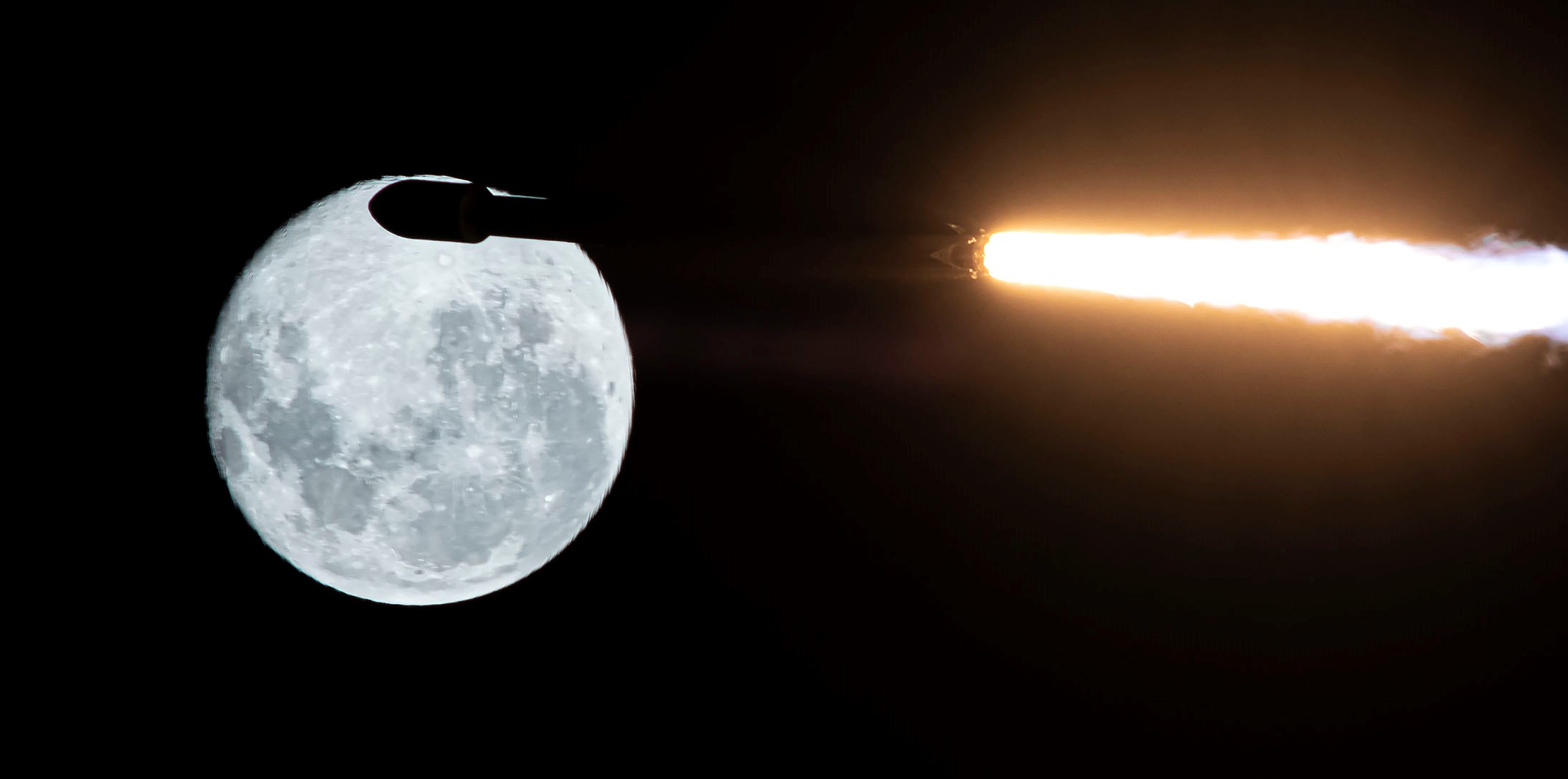
In December, SpaceX revealed that it had lost control of one of its Starlink satellites after suffering an "anomaly." The Elon Musk-led firm said its broadband-beaming asset vented its propulsion tank and saw its orbit decay rapidly, releasing a "small number of trackable low relative velocity objects" -- seemingly a convoluted description of a satellite explosion. Now, three months later, SpaceX admitted that yet another satellite had "experienced an anomaly" at an altitude of roughly 350 miles on Sunday. According to space tracking company Leo Labs, the offending satellite, dubbed Starlink 34343, appears to have broken up into "tens of objects" that were detected in its vicinity following the event. "We've characterized this event as likely caused by an internal energetic source rather than a collision with space debris or another object," Leo Labs tweeted, in another euphemistic description of an orbital blast. "Due to the low altitude of the event, fragments from this anomaly will likely de-orbit within a few weeks." SpaceX claims the incident poses "no risk to the International Space Station, its crew, or to the upcoming launch of NASA's Artemis 2 mission," referring to the space agency's first crewed trip to the Moon, which is slated to launch on Wednesday. "The SpaceX and Starlink teams are actively working to determine root cause and will rapidly implement any necessary corrective actions." The pair of mishaps highlight how space debris in our planet's orbit continues to be a contentious issue. Pieces of rocketry and retired spacecraft are cluttering the space SpaceX is looking to fill with thousands of more Starlink satellites -- in addition to up to a million enormous space-based orbital data centers, if CEO Elon Musk is to be believed. Even if all retired or dysfunctional Starlink satellites fall back to Earth and burn up in our planet's atmosphere, as designed, scientists warn that the environmental consequences of the continuous release of ozone-depleting chemicals in the stratosphere could be devastating. According to recent estimates, one to two Starlink satellites are falling back to Earth every single day, a number that could continue to climb as SpaceX continues to build out its megaconstellation. In short, a massive debris field of its own making that greatly increases the risk of future collisions is the last thing it needs. Following the first reported Starlink anomaly in December, the aerospace manufacturer appeared to be aware of this reality. "As the world's largest satellite constellation operator, we are deeply committed to space safety," SpaceX tweeted at the time. "We take these events seriously. Our engineers are rapidly working to root cause and mitigate the source of the anomaly and are already in the process of deploying software to our vehicles that increases protections against this type of event." Beyond obliterated satellites, other constellations orbiting the Earth could make things even more complicated. Case in point, a Starlink and a Chinese satellite narrowly avoided a collision a mere week before SpaceX's December "anomaly." The near miss was the result of a lack of communication. "As far as we know, no coordination or deconfliction with existing satellites operating in space was performed, resulting in a [656 feet] close approach between one of the deployed satellites and STARLINK-6079 (56120) at [350 miles] altitude," Starlink engineering VP Michael Nicolls tweeted at the time.
What does China's economic resilience amid U.S led chaos tell us - Cryptopolitan
China secured oil supply through direct Iranian deals, Russian imports, and strategic reserves covering 4 months. China posted its strongest factory activity in a year during March. At the same time, international investment banks are viewing the country as a safer bet than regional competitors amid the Middle East mess. The National Bureau of Statistics said Tuesday that China's Manufacturing Purchasing Managers' Index hit 50.4 last month. That beat analysts' expectations; they had forecast 50.1 in a Reuters survey. The reading is a turnaround from two straight months of decline. The index was at 49.3 in January and 49.0 in February. Anything above 50 means growth. Below that means shrinkage. Huo Lihui works as chief statistician at the statistics bureau. He said factories sped up operations after a long national holiday in mid-February. That's what drove March's gains. Production and new orders both grew during the month. But measures tracking raw materials stockpiles, jobs, and delivery times stayed negative. The services sector did better too. The non-manufacturing index covers industries like tourism. It went up to 50.1 from February's 49.5. Exports jump despite rising costs Export numbers from the first two months of 2026 came in strong, up 21.8 percent from the same period last year. The increase went way past predictions. Healthy demand from Southeast Asia and Europe made up for weaker shipments to the United States. But the conflict in the Middle East has started hitting costs. Price measures for raw materials and factory outputs rose 63.9 percent and 55.4 percent. Huo said higher shipping costs and pricier imported goods, such as crude oil and chemicals, have squeezed companies surveyed by the bureau. Another survey from RatingDog and S&P Global comes out Wednesday. It's expected to show a drop to 51.6 in March from February's five-year high of 52.1, according to a Reuters poll. Stocks outperform regional peers Manufacturing showed strength, but there's more to the story. Chinese stocks have held up better than others in the region as the month-long war in Iran has rattled global markets. The conflict shut down the Strait of Hormuz. That passage accounts for about one-fifth of global oil and gas flows. Crude prices jumped. Equities across the globe got dragged down. China's benchmark Shanghai Composite Index fell 6 percent through March. Compare that to South Korean stocks, which dropped 18 percent, and Japan's Nikkei, down about 13 percent. Big investment banks noticed. J.P. Morgan picked China as its top choice in the region this month. The bank pointed to the country's limited reliance on Gulf energy and strong ability to provide government support. HSBC kept its "overweight" stance on China. The bank talked about defensive qualities backed by a mostly domestic investor base and a steady currency. BNP strategists said China's better performance compared to the rest of Asia will likely become more pronounced the longer the U.S.-Israel war with Iran drags on. William Bratton, head of Asia-Pacific cash equities research at BNP Paribas, said: "From this perspective, we believe China's equity markets will become increasingly attractive." Goldman Sachs analysts said the Chinese economy looks better prepared than several global competitors to handle the oil supply shock. They pointed to years of energy diversification, growing strategic oil reserves, and access to supplies from outside the Middle East. Beijing secures oil supply through direct Iran deals China has been working directly with Tehran to keep Chinese-flagged ships moving. More than 11 million barrels of Iranian crude flowed east in the first weeks of the conflict. Payment came in renminbi through China's Cross-Border International Payment System. Iran provides 13 percent of China's oil imports at discounted rates. The two countries have been locked into a 25-year cooperation deal since 2021. It's worth 400 billion dollars. Iran sells oil below market prices. China provides investment and security cooperation in return. China had prepared for potential supply problems. It boosted oil imports in January and February by 16 percent. Russia shipped around 300,000 extra barrels daily to China. Strategic and commercial reserves now sit between 1.3 billion and 1.4 billion barrels. That's enough to cover about four months of imports.

Passover in limbo: Israel flight chaos may spill into summer
Air traffic in Israel remains heavily disrupted, with canceled flights, strict restrictions, and thousands of travelers still stranded With Passover approaching, normal air traffic to and from Israel remains far from resuming, raising growing concern across the travel industry over the holiday period, and potentially the entire summer season. Israel's aviation landscape remains highly unstable, with continued cancellations and tight operational limits tied to the ongoing security situation. Several international carriers have extended suspension of services. Wizz Air has cancelled flights until April 20, while Air France has paused its Tel Aviv-Paris route at least through April 19. Israeli airlines are also not expected to return to full schedules in the near term. According to a senior official in the Ministry of Transport, full normalization at Ben Gurion Airport will only be possible once the security threat significantly decreases -- citing a scenario in which Iranian missile fire drops to roughly one or two launches per week toward central Israel. Officials say that threshold is still far from being met. In the meantime, strict operational restrictions remain in place, including limited passenger capacity to around 50 people, reduced hourly departures, and a focus on humanitarian and repatriation flights. Priority continues to be given to bringing back Israelis stranded abroad, some for more than a month. For those attempting to leave Israel, options are limited and increasingly costly. Many travelers are rerouting through Jordan or Egypt via Aqaba or Taba airports, but face ongoing disruptions, last-minute cancellations, strained infrastructure, and rising expenses. Crossing fees alone have climbed to around $120, excluding transport and airfare. With uncertainty persisting, officials warn that if conditions do not improve soon, the disruption could extend well beyond Passover and significantly impact the critical summer travel season.

Countdown: America is going back to the Moon and SpaceX holds the key to what comes after
NASA's Artemis II launches Wednesday, sending humans near the Moon for the first time since 1972. For the first time since Apollo 17 touched down on the lunar surface in December 1972, the United States is sending humans back toward the Moon. NASA's Artemis II mission is set to launch as early as this week from Kennedy Space Center in Florida, carrying four astronauts on a 10-day journey around the Moon and back to Earth. It will not land anyone on the surface this time, but it is the first crewed flight in over half a century to travel beyond low Earth orbit, and it sets the stage for Elon Musk's SpaceX missions to follow. The mission uses NASA's Space Launch System rocket and the Orion spacecraft, which will fly around the Moon before splashing down in the Pacific Ocean around April 10. For context, an uncrewed Artemis I flew the same path in 2022, proving the hardware worked. Artemis II now tests it with people aboard. According to NASA's official countdown blog, launch preparations are on track with an 80 percent chance of favorable weather. "Hey, let's go to the moon!" Commander Wiseman told reporters upon arriving at Kennedy Space Center. Beyond Artemis II lies the lander question, and that is where SpaceX enters directly. In 2021, NASA awarded SpaceX a $2.89 billion contract to develop the Starship Human Landing System, a modified version of Starship designed to ferry astronauts from lunar orbit to the surface. The original plan called for SpaceX to deliver that lander for Artemis III, which was to be the first crewed lunar landing. Timing for Starship development, however, caused NASA to restructure the mission sequence entirely. Before SpaceX's Starship Human Landing System (HLS) can put anyone on the Moon, it has to solve a problem no rocket has demonstrated at scale, which is refueling in orbit. Because the Starship HLS requires approximately ten tanker launches worth of propellant loaded into a depot in low Earth orbit before it has enough fuel to reach the lunar surface, SpaceX plans to conduct this refueling process using its upgraded V3 Starship. And until that demonstration flies and succeeds, the Starship moon lander remains a question mark. SpaceX's Starship V3 is almost ready and it will change space travel forever In February 2026, NASA Administrator Jared Isaacman confirmed that Artemis III, now planned for mid-2027, and will instead test lunar landers in low Earth orbit, with the actual landing pushed to Artemis IV that's targeted for 2028. Musk responded to earlier criticism of SpaceX's schedule by posting on X that his company is "moving like lightning compared to the rest of the space industry," and added that "Starship will end up doing the whole Moon mission." The contract competition was also reopened in October 2025 by then NASA chief Sean Duffy, who cited Starship's delays and said the agency needed speed given China's own stated goal of landing astronauts on the Moon by 2030. Artemis came from the first Trump administration's 2017 Space Policy Directive 1, which directed NASA to return humans to the Moon. The program picked up pace through the 2020s, with the Orion spacecraft and SLS taking years to develop at enormous costs. SpaceX entered the picture in 2021 as the chosen lander contractor, tying the commercial space sector into what had historically been an all government undertaking. Whether SpaceX's Starship ultimately carries astronauts to the lunar surface or shares that role with Blue Origin's competing lander, this week's Artemis II launch is the necessary first step. Getting four humans to the Moon's vicinity and back safely is the proof of concept everything else depends on.
Second SpaceX Satellite Abruptly Explodes
Can't-miss innovations from the bleeding edge of science and tech In December, SpaceX revealed that it had lost control of one of its Starlink satellites after suffering an "anomaly." The Elon Musk-led firm said its broadband-beaming asset vented its propulsion tank and saw its orbit decay rapidly, releasing a "small number of trackable low relative velocity objects" -- seemingly a convoluted description of a satellite explosion. Now, three months later, SpaceX admitted that yet another satellite had "experienced an anomaly" at an altitude of roughly 350 miles on Sunday. According to space tracking company Leo Labs, the offending satellite, dubbed Starlink 34343, appears to have broken up into "tens of objects" that were detected in its vicinity following the event. "We've characterized this event as likely caused by an internal energetic source rather than a collision with space debris or another object," Leo Labs tweeted, in another euphemistic description of an orbital blast. "Due to the low altitude of the event, fragments from this anomaly will likely de-orbit within a few weeks." SpaceX claims the incident poses "no risk to the International Space Station, its crew, or to the upcoming launch of NASA's Artemis 2 mission," referring to the space agency's first crewed trip to the Moon, which is slated to launch on Wednesday. "The SpaceX and Starlink teams are actively working to determine root cause and will rapidly implement any necessary corrective actions." The pair of mishaps highlight how space debris in our planet's orbit continues to be a contentious issue. Pieces of rocketry and retired spacecraft are cluttering the space SpaceX is looking to fill with thousands of more Starlink satellites -- in addition to up to a million enormous space-based orbital data centers, if CEO Elon Musk is to be believed. Even if all retired or dysfunctional Starlink satellites fall back to Earth and burn up in our planet's atmosphere, as designed, scientists warn that the environmental consequences of the continuous release of ozone-depleting chemicals in the stratosphere could be devastating. According to recent estimates, one to two Starlink satellites are falling back to Earth every single day, a number that could continue to climb as SpaceX continues to build out its megaconstellation. In short, a massive debris field of its own making that greatly increases the risk of future collisions is the last thing it needs. Following the first reported Starlink anomaly in December, the aerospace manufacturer appeared to be aware of this reality. "As the world's largest satellite constellation operator, we are deeply committed to space safety," SpaceX tweeted at the time. "We take these events seriously. Our engineers are rapidly working to root cause and mitigate the source of the anomaly and are already in the process of deploying software to our vehicles that increases protections against this type of event." Beyond obliterated satellites, other constellations orbiting the Earth could make things even more complicated. Case in point, a Starlink and a Chinese satellite narrowly avoided a collision a mere week before SpaceX's December "anomaly." The near miss was the result of a lack of communication. "As far as we know, no coordination or deconfliction with existing satellites operating in space was performed, resulting in a [656 feet] close approach between one of the deployed satellites and STARLINK-6079 (56120) at [350 miles] altitude," Starlink engineering VP Michael Nicolls tweeted at the time.

Anthropic accidentally exposes Claude Code source code
Oopsy-doodle: Did someone forget to check their build pipeline? Would you like a closer look at Claude? Someone at Anthropic has some explaining to do, as the official npm package for Claude Code shipped with a map file exposing what appears to be the popular AI coding tool's entire source code. It did as of Tuesday morning, at least, which is when security researcher Chaofan Shou appears to have spotted the exposure and told the world. Snapshots of Claude Code's source code were quickly backed up in a GitHub repository that has been forked more than 41,500 times so far, disseminating it to the masses and ensuring that Anthropic's mistake remains the AI and cybersecurity community's gain. According to the GitHub upload of the exposed Claude Code source, the leak actually resulted from a reference to an unobfuscated TypeScript source in the map file included in Claude Code's npm package (map files are used to connect bundled code back to the original source). That reference, in turn, pointed to a zip archive hosted on Anthropic's Cloudflare R2 storage bucket that Shou and others were able to download and decompress to their hearts' content. Contained in the zip archive is a wealth of info: some 1,900 TypeScript files consisting of more than 512,000 lines of code, full libraries of slash commands and built-in tools - the works, in short. That said, Claude Code's source isn't a complete mystery, and while this exposure gives us a look at a fresh iteration of Claude Code straight from the leaky bucket, it's not blowing the lid off of something that was a secret until now. Claude Code has been reverse engineered, and various projects have resulted in an entire website dedicated to exposing the hidden portions of Claude Code that haven't been released to, or shared with, the public. In other words, what we have is a useful comparison point and update source for the CCLeaks operators, and maybe a few new secrets will come to light as people dig through the exposed code. Far more interesting is the fact that someone at Anthropic made a mistake as bad as leaving a map file in a publish configuration. Publishing map files is generally frowned upon, as they're meant for debugging obfuscated or bundled code and aren't necessary for production. Not only that, but as we've seen in this example, they can easily be used to expose source code, as they're a reference document for that original. As pointed out by software engineer Gabriel Anhaia in a deep dive into the exposed code, this should serve as a reminder to even the best developers to check their build pipelines. "A single misconfigured .npmignore or files field in package.json can expose everything," Anhaia wrote in his analysis of the Claude Code leak. Anthropic admitted as much in a statement to The Register, saying that, yes, it was good ol' human error responsible for this snafu. "Earlier today, a Claude Code release included some internal source code," an Anthropic spokesperson told us in an email, adding that no customer data or credentials were involved or exposed. "This was a release packaging issue caused by human error, not a security breach. We're rolling out measures to prevent this from happening again." As of this writing, the original uploader of the Claude Code source to GitHub has repurposed his repo to host a Python feature port of Claude Code instead of Anthropic's directly exposed source, citing concerns that he could be held legally liable for hosting Anthropic's intellectual property. Plenty of forks and mirrors remain for those who want to inspect the exposed code. We asked Anthropic if it was considering asking people to remove their repositories of its exposed source code, but the company didn't have anything to say beyond its statement. ®

Anthropic's Claude Code leak reveals autonomous agent tools and unreleased models
The exposed npm file revealed Claude Code's memory architecture, hidden features, internal model names, and broader security risks. Anthropic exposed the full source code for Claude Code after a misconfigured source map file was published to npm, offering a rare look inside one of the company's most important commercial products. The file, bundled with version 2.1.88, contained nearly 60 megabytes of internal material, including about 512,000 lines of TypeScript across 1,906 files. Chaofan Shou, a software engineer interning at Solayer Labs, first flagged the leak, which quickly spread across X and GitHub as developers began examining the codebase. The disclosure showed how Anthropic built Claude Code to stay on track during long coding sessions. One of the clearest findings was a three-layer memory system centered on a lightweight file called MEMORY.md, which stores short references instead of full information. More detailed project notes are saved separately and pulled in only when needed, while past session history is searched selectively rather than loaded all at once. The code also tells the system to check its memory against the actual code before taking action, a design meant to reduce mistakes and false assumptions. The source also suggests Anthropic has been developing a more autonomous version of Claude Code than what users currently see. A feature referenced repeatedly under the name KAIROS appears to describe a daemon mode in which the agent can continue operating in the background instead of waiting for direct prompts. Another process, called autoDream, appears to handle memory consolidation during idle periods by reconciling contradictions and converting tentative observations into verified facts. Developers reviewing the code also found dozens of hidden feature flags, including references to browser automation through Playwright. The leak also exposed internal model names and performance data. According to the source, Capybara refers to a Claude 4.6 variant, Fennec corresponds to an Opus 4.6 release, and Numbat remains in prelaunch testing. Internal benchmarks cited in the code showed the latest Capybara version with a false claims rate of 29% to 30%, up from 16.7% in an earlier iteration. The source also referenced an assertiveness counterweight designed to keep the model from becoming too aggressive when refactoring user code. One of the most sensitive disclosures involved a feature described as Undercover Mode. The recovered system prompt suggests Claude Code could be used to contribute to public open source repositories without revealing that AI was involved. The instructions specifically tell the model to avoid exposing internal identifiers, including Anthropic codenames, in commit messages or public git logs. The leaked materials also exposed Anthropic's permission engine, orchestration logic for multi-agent workflows, bash validation systems, and MCP server architecture, giving competitors a detailed look at how Claude Code works. The disclosure may also give attackers a clearer roadmap for crafting repositories designed to exploit the agent's trust model. The pasted text says one developer had already begun rewriting parts of the system in Python and Rust under the name Claw Code within hours of the leak. The source exposure coincided with a separate supply chain attack involving malicious versions of the axios npm package distributed on March 31. Developers who installed or updated Claude Code through npm during that period may also have pulled in the compromised dependency, which reportedly contained a remote access trojan. Security researchers urged users to check their lockfiles, rotate credentials, and in some cases consider full operating system reinstalls on affected machines. The incident marks the second known case in roughly thirteen months in which Anthropic exposed sensitive internal technical details, following an earlier episode in February 2025 involving unreleased model information. After the latest breach, Anthropic designated its standalone binary installer as the preferred method for installing Claude Code because it bypasses the npm dependency chain. Users who remain on npm were advised to pin to verified safe versions released before the compromised package.

Individual Investors Could Get a Rare Shot at Buying Into SpaceX From Day One
Just because a company goes public does not mean you should buy shares immediately. Love him or hate him, we all can admit that Elon Musk has a knack for generating excitement. His next attempt at it may come with SpaceX's upcoming initial public offering (IPO), planned for June of this year. In what could be the largest IPO in history, SpaceX may finally enter the public markets, and there may be a surprise for retail investors along the way. Here's the skinny on SpaceX's reported plans, and whether you should participate in the IPO and buy shares. Will AI create the world's first trillionaire? Our team just released a report on the one little-known company, called an "Indispensable Monopoly" providing the critical technology Nvidia and Intel both need. Continue " Image source: Getty Images. SpaceX wants to go public within the next few months and is getting its paperwork in order for regulators and bankers. Like any Musk endeavor, the process promises to be unique. For one, he is planning to raise the largest amount of money from an IPO in history, ranging from $40 billion to $80 billion, depending on investor appetite. The company says it wants to bring investors to its headquarters and launch facilities to showcase its manufacturing capabilities and possibly witness some rocket launches. It is a pitch on future growth for the space economy, including an ambitious plan for space-based data centers for artificial intelligence (AI). Retail investors may get a bigger-than-normal chance to buy into the SpaceX IPO. Instead of the usual 10% allocation to retail investors, SpaceX wants to allocate upwards of 30% of the IPO shares on offer to retail investors, potentially raising tens of billions of dollars from individuals, along with the likely institutional investments. This will give many out there who use basic brokerage services like Robinhood Markets a chance to buy in at the pre-determined IPO price, the same as Wall Street insiders. Lastly, Musk also wants SpaceX stock included immediately in stock market indices such as the Nasdaq-100, which investors can buy through exchange-traded funds (ETFs) like the Invesco QQQ Trust. Despite the hype around SpaceX -- and there is plenty of it -- investors should tap the brakes on buying SpaceX at the IPO. Just because you have the opportunity to buy something does not necessarily mean you should. SpaceX is targeting a valuation of $1.75 trillion at the IPO. It reportedly did $16 billion in revenue last year. Solid growth and combining its recent merger of xAI and X (formerly Twitter), the business will likely do $20 billion or more in sales in 2026. That would give the stock a price-to-sales ratio (P/S) of close to 100 at the IPO. There is a reason most IPOs underperform the broader market: Companies want to maximize their valuations on their market debuts. SpaceX is no different. If you like the company, keep the stock on the watchlist for now; better buying opportunities may arise in the next few years after the IPO hype settles. When our analyst team has a stock tip, it can pay to listen. After all, Stock Advisor's total average return is 880%* -- a market-crushing outperformance compared to 178% for the S&P 500. Brett Schafer has no position in any of the stocks mentioned. The Motley Fool has no position in any of the stocks mentioned. The Motley Fool has a disclosure policy.

Students scream, dive for cover as Canada goose flies around Laurier campus building causing chaos | CBC News
The audio version of this article is generated by AI-based technology. Mispronunciations can occur. We are working with our partners to continually review and improve the results. It's like the start of a joke: Why did the Canada goose go to Starbucks? Last week, a goose found its way into a building on Wilfrid Laurier University's Waterloo, Ont., campus and the experience has ruffled a few feathers. Several witnesses took videos of the goose trying to fly away, causing students to run for cover. The goose's capers went viral on social media. In one of the videos, the goose can be seen walking in front of a Starbucks and then suddenly flapping its wings and taking off in flight up the stairs and into a large atrium. According to the university, the bird snuck in via a sliding door. The university says at this time of year it's "common to have geese on university campuses." "We believe the goose entered and exited via an open sliding door when students entered the building," a spokesperson for Laurier said in an email, adding there were no injuries reported. The school has also shared tips with students and staff on how to stay safe when dealing with geese on campus. It's not the first time a goose has gone viral at Laurier. Last year, a group of roommates at the school were trapped inside their home for about a week due to an aggressive nesting goose who would attack anyone walking on the sidewalk by their front door. Last year, the Guelph Humane Society put out guidelines on how people should deal with Canada geese in the spring. The humane society noted that nesting season lasts only a few weeks, but geese can be "especially protective" during that time. "Geese often choose nesting sites that offer wide, open views to help them spot potential predators. While their choices can sometimes surprise us, these locations offer the safety and visibility they need to successfully raise their goslings," the society said. The humane society also shared tips to share space with geese in the spring, including: The humane society noted Canada geese are protected under the Migratory Birds Convention Act, which means it is illegal to disturb or move a nest. Lisa Veit, the humane society's executive director, said it's important to remember geese follow their instincts each spring. "Returning to the same places, building nests and raising their young -- it's a remarkable reminder that nature is all around us, even in busy, urban spaces."

Individual Investors Could Get a Rare Shot at Buying Into SpaceX From Day One | The Motley Fool
Just because a company goes public does not mean you should buy shares immediately. Love him or hate him, we all can admit that Elon Musk has a knack for generating excitement. His next attempt at it may come with SpaceX's upcoming initial public offering (IPO), planned for June of this year. In what could be the largest IPO in history, SpaceX may finally enter the public markets, and there may be a surprise for retail investors along the way. Here's the skinny on SpaceX's reported plans, and whether you should participate in the IPO and buy shares. SpaceX wants to go public within the next few months and is getting its paperwork in order for regulators and bankers. Like any Musk endeavor, the process promises to be unique. For one, he is planning to raise the largest amount of money from an IPO in history, ranging from $40 billion to $80 billion, depending on investor appetite. The company says it wants to bring investors to its headquarters and launch facilities to showcase its manufacturing capabilities and possibly witness some rocket launches. It is a pitch on future growth for the space economy, including an ambitious plan for space-based data centers for artificial intelligence (AI). Retail investors may get a bigger-than-normal chance to buy into the SpaceX IPO. Instead of the usual 10% allocation to retail investors, SpaceX wants to allocate upwards of 30% of the IPO shares on offer to retail investors, potentially raising tens of billions of dollars from individuals, along with the likely institutional investments. This will give many out there who use basic brokerage services like Robinhood Markets a chance to buy in at the pre-determined IPO price, the same as Wall Street insiders. Lastly, Musk also wants SpaceX stock included immediately in stock market indices such as the Nasdaq-100, which investors can buy through exchange-traded funds (ETFs) like the Invesco QQQ Trust. Despite the hype around SpaceX -- and there is plenty of it -- investors should tap the brakes on buying SpaceX at the IPO. Just because you have the opportunity to buy something does not necessarily mean you should. SpaceX is targeting a valuation of $1.75 trillion at the IPO. It reportedly did $16 billion in revenue last year. Solid growth and combining its recent merger of xAI and X (formerly Twitter), the business will likely do $20 billion or more in sales in 2026. That would give the stock a price-to-sales ratio (P/S) of close to 100 at the IPO. There is a reason most IPOs underperform the broader market: Companies want to maximize their valuations on their market debuts. SpaceX is no different. If you like the company, keep the stock on the watchlist for now; better buying opportunities may arise in the next few years after the IPO hype settles.
Nasdaq-100 Opens Faster Door for Big IPOs Like SpaceX
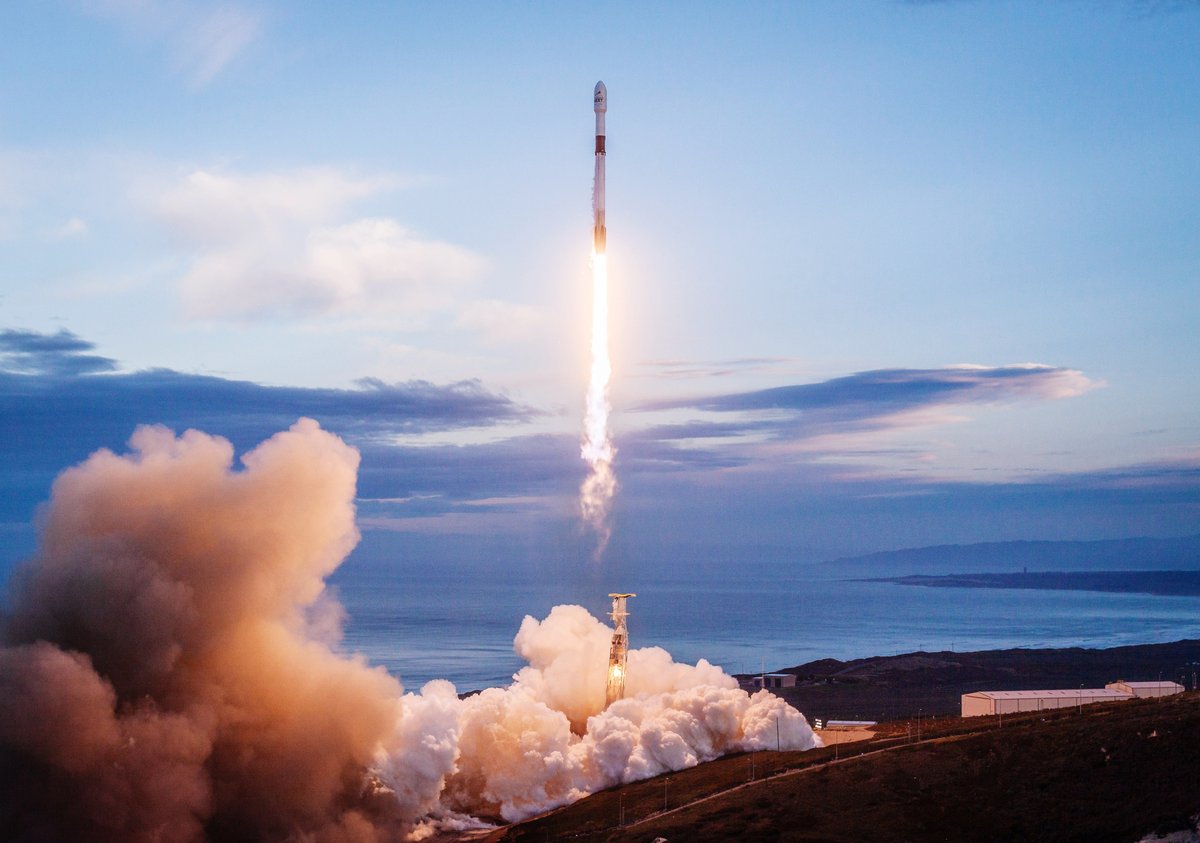
Nasdaq revamps Nasdaq-100 rules in May 2026, letting giant IPOs join in 15 days. Here's what it means for SpaceX and index investors. Nasdaq has officially updated its Nasdaq-100 inclusion rules. Effective May 1, 2026, large newly listed companies can join the index within roughly 15 trading days of going public. That is a sharp shift from the previous three-month waiting period. The updates follow a broad industry consultation that drew feedback from asset managers, passive portfolio managers, and individual investors. Nasdaq confirmed the move through an official filing in early 2026. Read also: Nasdaq and Kraken Plan 24/7 Tokenized Stock Trading Platform The headline change is what Nasdaq calls "Fast Entry." Previously, new listings had to wait for a scheduled reconstitution event before joining the Nasdaq-100. That gap often left large, high-profile companies out of the index for months. Nasdaq acknowledged this created a disconnect between investor expectations and actual market representation. Under the new framework, a company qualifies for Fast Entry if it ranks high enough by market cap after about 15 trading days. Industry professionals largely backed this shift. Many noted it would produce a more accurate and timely picture of the investable market. Some respondents wanted an even shorter window, pointing to other indexes that allow entry within five to ten days. The updated rules also change how Nasdaq calculates market cap for eligibility. Both listed and unlisted shares now count toward the ranking figure. Weighting inside the index, though, still relies only on listed market capitalization. Another major update scraps the old 10% minimum free-float requirement. Under the previous rules, a company needed at least 10% of its shares in public hands to qualify. That threshold is now gone. In its place, Nasdaq introduced a graduated float factor adjustment. Low-float stocks can now enter the index, but their weighting gets capped based on how much float is actually available. The scale phases in weighting gradually as more shares become tradable. Institutional respondents supported this approach, calling it a practical way to include large companies without harming index replicability or tradability. Nasdaq also replaced the old "10 basis point rule," which triggered frequent ad hoc removals. Now, securities ranked outside the top 125 at scheduled quarterly rebalances face removal. This switch reduces surprise mid-quarter changes and gives passive managers a cleaner, more predictable schedule to work with. The rule changes have sparked immediate speculation about SpaceX. Sawyer Merritt on X, highlighted that a SpaceX IPO could trigger tens of billions of dollars in forced buying. Index funds tracking the Nasdaq-100 would need to purchase shares quickly upon inclusion. Tesla's 2020 addition to the S&P 500 offers a reference point. That inclusion drove massive index-fund demand in a short period. A SpaceX entry under the new Nasdaq rules could move at an even faster pace, given the 15-day window. No confirmed IPO date for SpaceX currently exists, but the updated framework makes the timeline far shorter if that day arrives. For investors watching large-cap tech listings, the Nasdaq-100 just became a much faster-moving target.

Earn up to 4.25% APY on USDe with Kraken
If you're holding USD or stablecoins that aren't working hard enough for you, there's a better option available right now on Kraken. For a limited time, eligible customers can earn up to 4.25% APY on USDe with no lockups. Opt in to Auto Earn and you're all set. USDe is a synthetic, dollar-denominated asset issued by Ethena. USDe is backed with cryptoassets and corresponding short future positions and derives its relative peg stability from executing delta-neutral hedges against protocol-held backing assets. We offer a standard 3.5% APY on USDe with a boosted rate of 4.25% APY available for a limited time to eligible Kraken+ subscribers. A few things worth knowing about how it works: Converting to USDe on Kraken takes just a few taps. Opt into Auto Earn and your capital starts working right away at up to 4.25% APY with Kraken+. USDe rewards are available to eligible customers on Kraken and Kraken Pro. Simply opt in to Auto Earn, hold USDe in your Kraken account and rewards will begin accruing immediately. Geo restrictions apply. Rewards rates are determined and paid out by Kraken in its sole discretion and are subject to change. Due to its partnership with Ethena, Kraken receives an economic benefit with respect to amounts of USDe held on platform. 3.5% promotional APY for all users and 4.25% promotional APY for Kraken+ users until 30/06/26; rates are indicative and may vary. From 30/06/26, the APY changes to our standard variable rate (currently up to 1.75% for all users, up to 3.5% APY with Kraken+). T&Cs apply.

Elon Musk debunks latest rumors about SpaceX IPO
Musk has swiftly put to rest circulating reports suggesting that SpaceX would exclude popular retail brokerages Robinhood and SoFi from its highly anticipated initial public offering. In a direct response posted on X on March 31, Musk stated simply, "These reports are false," addressing widespread speculation fueled by a Reuters article. Tesla and SpaceX CEO Elon Musk debunked the latest rumors about the space exploration company's initial public offering (IPO), which has been the subject of a wide array of speculation over the last few weeks. With SpaceX likely heading to Wall Street to become a publicly-traded stock in the coming months, there is a lot of speculation surrounding how it will happen, whether the company will potentially combine with Tesla, and more. Tesla and SpaceX to merge in 2027, Wall Street analyst predicts But the latest rumors have to do with where SpaceX will list the stock. Musk has swiftly put to rest circulating reports suggesting that SpaceX would exclude popular retail brokerages Robinhood and SoFi from its highly anticipated initial public offering. In a direct response posted on X on March 31, Musk stated simply, "These reports are false," addressing widespread speculation fueled by a Reuters article. The Reuters report, published March 30, claimed that Morgan Stanley's E*Trade was in talks to lead the sale of SpaceX shares to small U.S. investors. Sources indicated that Robinhood and SoFi, despite pitching for roles, faced potential exclusion from the retail allocation, with Fidelity also competing for a piece of the action. The story quickly spread across financial media, raising concerns among retail investors eager to participate in what could be one of the largest IPOs in history. SpaceX has a reported valuation nearing $1.75 trillion, and Musk's plan to allocate up to 30 percent of shares to individual investors -- far above the typical 5-10% -- had generated massive excitement. Musk's concise denial immediately calmed the narrative. The original X post quoting the rumor garnered significant engagement, with users expressing relief that everyday investors would not be sidelined. This episode reflects Musk's hands-on approach to SpaceX's public debut. Earlier reporting revealed plans for an unusually large retail slice to leverage Musk's dedicated fan base and stabilize post-IPO trading. SpaceX aims to file potentially as early as this period, building on momentum from its Starship program and Starlink growth. The IPO could mark a transformative moment, potentially elevating Musk's status further while democratizing access to a company long reserved for accredited investors and institutions. The rumor's quick debunking also revives debates about retail access in high-profile listings. Robinhood gained popularity during the 2021 meme-stock surge but faced criticism for past trading restrictions. SoFi has positioned itself as a modern financial platform for younger investors. Excluding them could have limited participation from tech-savvy retail traders who form a core part of Musk's supporter base across Tesla and SpaceX. While details remain fluid, Musk's intervention reinforces commitment to broad accessibility. As preparations advance, investors await official filings. For now, the message is clear: rumors of restricted retail access were overstated, keeping the door open for widespread participation in SpaceX's public chapter. This development comes amid broader market enthusiasm for space and technology stocks. Musk's transparency through X continues to shape public perception, distinguishing SpaceX's path from traditional Wall Street norms. With retail allocation potentially reaching 30 percent, the IPO promises to be both commercially massive and culturally significant.
Anthropic Leaked Claude Code Source Through NPM Packaging Error - Techiexpert.com
While the core AI model weights and user data remain safe, this is the second time Anthropic faced a packaging oversight in a year. Security researcher Chaofan Shou reported that the latest version of Claude Code (v2.1.88) on the NPM registry contained an exposed source map file. According to the official report ,this 60MB file allowed anyone to reconstruct the original, human readable source code from the production version. This incident shared more than 1,900 files of Anthropic's proprietary logic with the entire world. In software development, source maps are meant for debugging and should never be included in a public release. Anthropic allowed the developer community to archive the entire repository on GitHub, where it received thousands of good reviews in a few hours. This is an example of a packaging oversight, where a company moves so fast in the AI race that basic security protocols are missed. For developers using CLI tools, this shows how fragile the connection between a local machine and a cloud based AI service is. The leaked code provides a look into the brain of an AI agent. It includes the hidden system prompts that controls Claude's behavior, the architecture for agentic functions, and unreleased internal APIs. The leak exposed the communication protocols between processes and the encryption tools used to secure the tool's operations. The exposure of these internal recipes allows companies to study Anthropic's methods for managing coding tasks and file system interactions while user data is not at risk. It is the second leak for Anthropic in the last year. It suggests a weakness in the software release pipeline. The tools developers trust most can become the biggest failure if not managed with precision. Read Next: CZ Warns About Supply Chain Attacks After Security Leak The failure from this leak will be felt for months as hackers and researchers continue to analyze the logic behind Claude Code. It is a sign to strengthen CI/CD pipelines and ensure that metadata is stripped from every public package.

Claude Code source code leak: Did Anthropic just expose its AI secrets, hidden models, and undercover coding strategy to the world?
Claude Code, Anthropic's top AI agent, just suffered a major source code leak. Version 2.1.88 exposed 512,000 lines of TypeScript, revealing memory architecture, orchestration logic, and 44 hidden features. The AI platform alone drives $2.5 billion in annual revenue, with 80% from enterprise clients. Competitors can now study background agents, autonomous daemons, and persistent memory systems. Security risks spike as malicious actors may exploit exposed Hooks and npm dependencies. Users must migrate to Anthropic's native installer, audit API keys, and inspect local repositories.

Trump instigates airport chaos to preserve ICE funding
Throughout March, 2026, travelers in airports across the U.S. encountered security lines stretching up to eight hours, flight delays compounding into cancellations, and a heavy federal police presence. What many travelers didn't know was that this was a calculated move by the Trump administration to cause chaos in our airports to force Congress to drop any reforms to ICE. Origins of TSA, ICE, and DHS The Department of Homeland Security was built in the aftermath of 9/11. As covered by Liberation News, the bipartisan "War on Terror" that created the PATRIOT Act also opened the door to consolidating a wide range of state administration and security functions, including airport security screening, under the newly formed Department of Homeland Security. The Transportation Security Administration was created after 9/11 and was initially part of the Department of Transportation before the Department of Homeland Security was created in 2004. At that point, the TSA became part of DHS. Before the TSA, airport security screenings were handled differently airport to airport, and managed by an array of private companies. ICE was created in the same climate, replacing the work of the previous Immigration and Naturalization Services agency. The formation of these new agencies also represented an over shift toward greater militarization of airports and the border, and the criminalization of immigration. Last Summer, Trump's Big Beautiful Bill included provisions to fund ICE even in the case where DHS was not funded. In January, Republicans and Democrats in Congress were prepared to pass a bill to fund DHS including ICE until Renee Good was shot and killed by ICE in Minneapolis, triggering millions across the country to flood the streets. Chaos used as a political prop Under pressure from the movement, Democrats demanded that any future DHS funding include reforms to ICE including banning masks and requiring judicial warrants before entering private property. The Trump administration refused to accept these basic reforms causing Republicans to reject DHS funding bills with any reforms attached. Starting February 14, DHS shut down due to lack of funding. This meant that TSA agents who operate airport security were no longer paid but expected to show up to work. Meanwhile, ICE agents were getting paid. After a month of working unpaid on the weekend of March 20, TSA agent call out rates reached nearly 40% at some major airports on the weekend causing wait times over eight hours causing thousands of passengers to miss their flights. Since the shutdown began, over 500 TSA agents have quit their jobs. It takes between four to six months for TSA agents to complete their initial and on-the-job training, which means airports will experience staff shortages that extend well beyond the end of the shutdown. Starting March 30 after 46 days unpaid, TSA agents will receive a paycheck. This comes after Trump announced an executive order to direct DHS to pay TSA agents regardless of the shutdown. This move by Trump revealed what TSA agents knew the whole time -- Trump could have decided to pay TSA agents from the beginning but chose not to. Instead active duty Coast Guard, CBP and ICE were paid while TSA agents were not and call outs rates increased causing chaos in our airports. It was also announced that ICE will continue to operate at airports even with TSA workers returning to work. It was clear from the start of their deployment to airports that they did not assist with the long waits. Instead, aviation workers and passengers reported security missteps and harassment from ICE agents. One part of a wider crisis As the shutdown started to cut into airlines' revenue, airlines lobbied Congress to fund DHS and end the shutdown. Delta Air Lines made headlines when it announced they would temporarily end their special services for Congress members which gives them a dedicated phone line and allows them to reserve seats on multiple flights in a day to allow flexibility for votes. Many consumers applauded the news, but mainstream media coverage obscures the fact that this move exerted more pressure on Democrats in Congress to forgo the proposed ICE reforms in order to fund DHS and pay TSA agents, than on the federal government to walk back any of their demands with regard to ICE funding. This shutdown is another example of how the ruling class uses workers as political weapons for their anti-worker agenda. Trump is happy to withhold funding to tens of thousands of TSA agents across the country as long as ICE can continue its terror campaign. This comes after Trump's DHS tried to terminate TSA's collective bargaining agreement in 2025, claiming it was "incompatible" with national security. Trump has made it clear he does not care about workers or their livelihood. This crisis goes beyond airport security and struggles around ICE. On March 22, a plane collided with a fire truck at New York City's LaGuardia airport, killing both pilots and injuring dozens of passengers. This comes after years of air traffic controllers warning about the chronic understaffing at airports around the country. These existing crises are compounded by the actions of the federal government and billionaire executives that run the airline monopolies. Millions of people rely on aviation workers daily, and when flight attendants, air traffic controllers, pilots, workers on the tarmac, security, and in concessions are understaffed, underpaid, and overworked, that creates more and more dangerous risks for everyone. For safe and efficient transportation, we need a new system, a socialist system, that prioritizes the safety and dignity of all working class people over corporate profits and racist fearmongering. Feature image: Courtesy of Liberation Photo
