News & Updates
The latest news and updates from companies in the WLTH portfolio.
Entitled Passengers Storm Frontier Flight After Refusing to Pay for Extra Baggage -- Chaos Ensues as Police Drag Them Off Plane - Conservative News & Right Wing News | Gun Laws & Rights News Site
Another day, another jaw-dropping example of airport madness, as a simple baggage fee dispute on a budget airline flight spiraled into full-blown chaos. Three passengers at Miami International Airport triggered a shocking scene after refusing to pay additional baggage fees on a Frontier Airlines flight bound for Philadelphia, the New York Post reported. Witnesses say the women, Nafisa Dockery, 30, Dionjana Cochran, 21, and Davana Cochran, 26, were asked to pay for extra carry-on bags but refused. Instead of complying, they allegedly forced their way through a restricted boarding area and boarded the aircraft anyway. The Daily Mail reported:

Dark Skies, $200 Oil & XRP: Analyst Ties Macro Chaos To Tokenization
A popular analyst has woven together energy restrictions, oil shock fears, war risk and AI anxiety into a sweeping "Great Reset" narrative. A popular analyst devoted to XRP has stitched together energy crackdowns, UFO speculation, war risk and AI anxiety into a single macro thesis: the path to a "Great Reset" runs through tokenization and, ultimately, through XRP. The latest YouTube video by Common Sense Crypto leans heavily on geopolitical and technological fear to argue that a crisis-driven overhaul of the financial system is coming -- and that XRP holders who "don't sell too soon" could be major beneficiaries. Energy Lock-downs, $200 Oil & The Global Reset The host opens with a proposed "Dark Skies Protection Act" in New York City, which would mandate non‑essential lights be turned off between 11 p.m. and 5 a.m., with Times Square exempt. Common Sense Crypto links the measure to World Economic Forum (WEF) ideas and warns of higher crime, framing it as an early form of "energy lockdowns" that could spread to other countries. From there, the analysis jumps to oil. Citing recent commentary that crude at $200 a barrel could trigger a 1929‑style crash, the host argues that constant mentions of triple‑digit oil are "preparing" the public for a shock move higher. A scenario of $150-$200 oil, he notes, is being connected to bank failures, power cuts, institutional bankruptcies and a forced shift to "a new monetary system of printing endless money." Common Sense Crypto highlights remarks attributed to BlackRock's Larry Fink, who has warned that a protracted Iran crisis could keep prices above $100 for years and push the world into recession. In the host's reading, this oil shock becomes the engineered crisis that allows a new financial architecture to rise "from the ashes" -- with XRP positioned as a core settlement asset. XRP's Role In The Tokenization Boom & CBDCs The most concrete part of the thesis centers on tokenization. Common Sense Crypto points to BlackRock's push to tokenize "everything," including private companies, and cites WEF discussions about tokenizing natural resources like water and trees. He argues that tokenization is inseparable from a cashless society, central bank digital currencies (CBDCs) and digital identity requirements. In his scenario, buying a house would mean purchasing 100% of the tokens tied to that property or risk effectively paying rent to minority token holders. Digital IDs, health data and work history all feed into this system. Universal basic income, he contends, is likely to be distributed via CBDCs, with expiry dates and "clawback" features, possibly even conditioned on implanted chips for some recipients. XRP is cast as the neutral rail moving value for tokenized assets (gold, oil, real estate), CBDCs and even future social benefits. Common Sense Crypto dismisses rumors of an imminent XRP spot ETF and rejects narratives about XRP being "backed by gold" or bought back by governments. The upside, he insists, comes instead from being the bridge asset within a deeply tokenized, programmable money system -- one he also describes as "demonic" and dangerous. The video's significance lies less in its conspiratorial framing and more in the clear through‑line: large asset managers and policymakers are indeed experimenting with tokenization, and any asset positioned as core infrastructure in that transition could see outsized demand. Whether XRP actually fills that role at scale remains an open, and highly speculative, question. Discover DailyCoin's popular crypto scoops today: KuCoin Settles CFTC Case for $500K Over U.S. Derivatives Which SWIFT-Compliant Banks Tested XRP On Their Rails?

Is India turning logistics chaos into a secret export weapon? - Business Upturn Trade & Policy
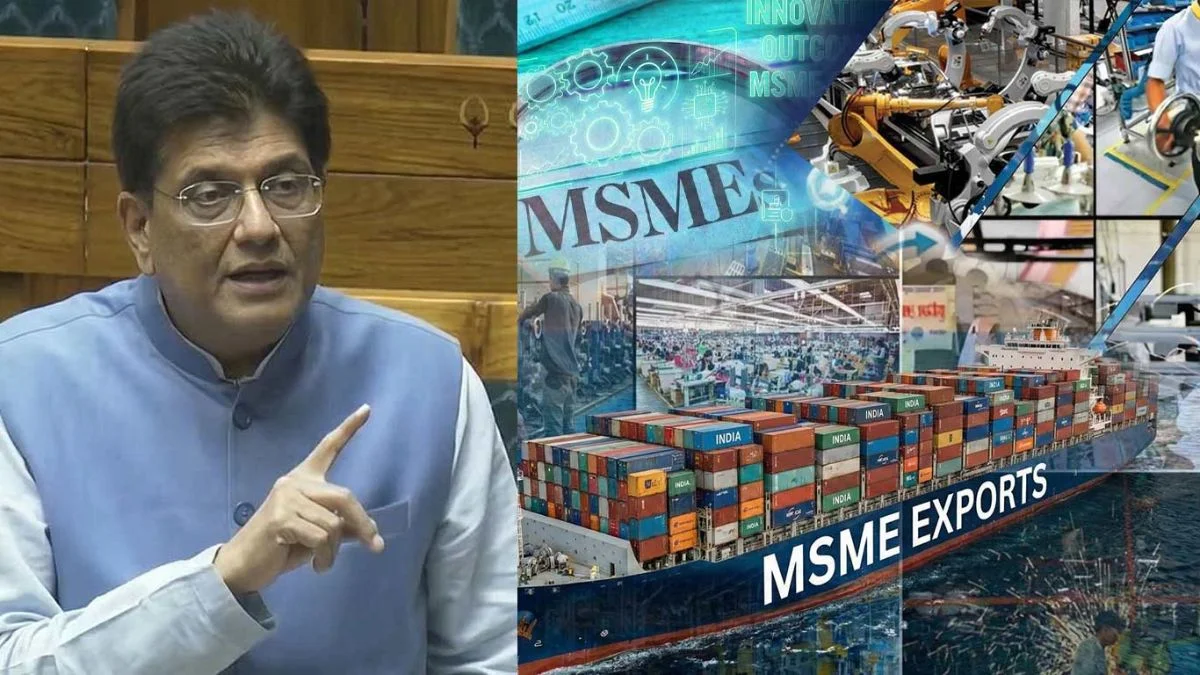
The Central Board of Indirect Taxes and Customs (CBIC) has implemented a landmark reform in India's e-commerce export ecosystem, dramatically reducing logistics bottlenecks and creating a $5 billion export advantage for MSMEs and startups. The introduction of a risk-based Return to Origin (RTO) mechanism within the Express Cargo Clearance System is transforming cargo flows, cutting dwell times by 70%, and halving transaction costs for digital exporters. Analysts say the reform comes at a critical juncture as global freight disruptions, particularly in the Strait of Hormuz, paralyze physical trade. Under previous procedures, parcels rejected by overseas buyers or flagged by customs often lingered in terminals for over 15 days, creating congestion, higher storage costs, and increased risk for small exporters. The newly implemented RTO mechanism automatically channels rejected consignments back to the sender using simplified risk-based re-import protocols, bypassing conventional customs clearance delays. This ensures that products return quickly to inventory, reducing financial exposure and maintaining cash flow for MSMEs. The reform has immediate implications for India's global e-commerce footprint. Sellers on major platforms, including Amazon, eBay, and Shein, now benefit from faster turnaround of returned goods, enabling consistent export volumes despite international logistics volatility. With global maritime trade facing extreme disruptions tanker rates in the Gulf rising over 90%, bunker fuel costs doubling, and war-risk insurance withdrawn the RTO system provides a digital buffer against physical supply chain shocks, allowing Indian exporters to maintain competitiveness in high-value markets. Trade analysts describe the reform as part of a broader "digital trade stack" orchestrated by India. The combination of IEC-NPCI digital payment facilitation, CBIC logistics reforms, and market access through EU free trade agreements provides a complete ecosystem for sustaining exports even when conventional maritime channels are compromised. MSMEs now have a resilient framework that integrates digital commerce, logistics efficiency, and international trade policy, ensuring continuity of trade amid global disruptions. The timing of the launch is notable. Coinciding with ongoing disruptions in the Strait of Hormuz, where freight bottlenecks threaten 33% of seaborne fertilizer trade and daily losses approach $1 billion, the CBIC reforms demonstrate India's ability to shield its export economy from external shocks. While global grain trade and commodity flows contract under these pressures, digital MSME exports leverage air courier and digital logistics channels to sustain international market engagement. Financial modeling indicates substantial benefits for exporters. Reducing terminal dwell time by 70% accelerates working capital turnover, while the 50% reduction in transaction costs allows smaller enterprises to compete effectively on price-sensitive international platforms. Analysts estimate that these efficiency gains could add $5 billion in incremental exports annually, primarily in handicrafts, jewelry, leather, and other high-value MSME products. Experts note that the reforms also strengthen India's negotiating position in global trade policy. By providing a scalable, efficient mechanism for digital trade, India reduces dependence on multilateral consensus and mitigates risks associated with WTO e-commerce moratorium deadlocks. The RTO system, combined with courier liberalization and bilateral agreements, allows India to maintain export growth independently of physical trade fragility, reinforcing a model of trade resilience through digital infrastructure. In addition, the reforms underscore a structural bifurcation in global commerce. Physical trade remains exposed to chokepoints, rising freight costs, and geopolitical disruptions, while digital trade channels, supported by efficient clearance and return mechanisms, demonstrate robustness. This divergence highlights the strategic value of investing in digital logistics infrastructure and integrated trade facilitation systems. In conclusion, CBIC's RTO reforms represent a transformative step in India's trade policy, offering MSMEs a lifeline in a period of global logistical instability. By streamlining returns, reducing transaction costs, and integrating digital payments, India positions its exporters to thrive amid physical trade disruptions, strengthening the country's global digital commerce leadership and reinforcing the resilience of its $5 billion MSME export ecosystem.
Amazon's 'Leo' Beats SpaceX's Starlink to Land Major Delta Air Lines Wi-Fi Deal - Business Remarks
In a significant shift for the in-flight connectivity market, Amazon's Leo (formerly Project Kuiper) has secured a landmark agreement with Delta Air Lines to provide high-speed in-flight satellite Wi-Fi. The deal will see Amazon's low-Earth orbit (LEO) technology installed on 500 Delta aircraft starting in 2028, marking a massive win for Jeff Bezos in his high-stakes orbital race against Elon Musk's Starlink. The partnership intensifies the "streaming wars" at 35,000 feet, where airlines are moving away from sluggish legacy systems toward near-instantaneous broadband. While SpaceX's Starlink currently holds a dominant lead with over 10,000 satellites in orbit and existing deals with United and Alaska Airlines, the Delta-Amazon alliance proves that major carriers are eager for a "duopoly" to avoid total dependence on a single provider. Amazon's Leo network promises download speeds of up to 1 Gbps, capable of supporting bandwidth-heavy tasks like real-time gaming, high-definition video conferencing, and gate-to-gate browsing. For Delta, which has long championed free Wi-Fi for its SkyMiles members, the move is a strategic play to maintain its premium status by offering a "home-like" internet experience that matches the highest terrestrial standards. The deal comes at a critical time as Amazon accelerates its satellite deployment to meet FCC deadlines. Despite being years behind SpaceX in launch volume, Amazon is leveraging its massive corporate infrastructure and recent contracts with launch providers like ULA and Blue Origin to scale quickly. Industry reports suggest that this second major airline win following a similar deal with JetBlue positions Amazon as a formidable long-term challenger in the global satellite internet market. As the 2028 rollout approaches, the competition is expected to drive down costs for consumers while pushing the boundaries of aero-connectivity. For travelers, the ultimate benefit is clear: a future where "airplane mode" no longer means being disconnected from the world. With both Amazon and SpaceX vying for the cockpit, the era of slow, expensive in-flight internet appears to be officially grounded.

The Pentagon Tried to Punish Anthropic for Its AI Ethics Stance. It May Have Created a Bigger Problem for Itself.
In late March 2026, a quiet bureaucratic maneuver inside the Department of Defense became the loudest signal yet about how Washington intends to wage its internal battles over artificial intelligence. The Pentagon, frustrated by Anthropic's refusal to bid on certain military contracts, moved to restrict the AI company's access to classified government data and exclude it from a key procurement framework. The intent was clear: punish a company that had drawn ethical red lines around its technology. The result has been something else entirely. According to reporting by MIT Technology Review, the Defense Department's campaign against Anthropic -- framed internally as a matter of national security pragmatism -- has instead galvanized opposition from an unexpected coalition: defense contractors, congressional staffers, and even some uniformed officers who believe the move undermines the military's long-term AI strategy. Rather than isolating Anthropic, the Pentagon has isolated itself from a growing consensus that the government needs more AI vendors at the table, not fewer. The backstory matters. Anthropic, founded in 2021 by former OpenAI researchers Dario and Daniela Amodei, has long occupied an unusual position among frontier AI companies. It builds some of the most capable large language models in the world -- its Claude family of models competes directly with OpenAI's GPT series and Google's Gemini -- but it has consistently maintained a set of usage policies that restrict deployment in weapons systems, mass surveillance, and certain intelligence applications. The company calls this its Responsible Scaling Policy. Critics inside the national security establishment call it something less charitable: an obstacle. For years, this tension simmered without boiling over. Anthropic sold its models to various government agencies through approved cloud providers, primarily Amazon Web Services, and participated in unclassified research partnerships. It declined to pursue contracts that would have placed its models in lethal autonomous systems or real-time targeting chains. Other companies -- notably Palantir, Anduril, and Scale AI -- were happy to fill that space. The arrangement, while imperfect, functioned. Then came the shift. In early 2026, a newly empowered cadre of political appointees at the Office of the Secretary of Defense began pushing what MIT Technology Review describes as a "loyalty test" framework for AI vendors. The logic, as articulated in internal memos obtained by the publication, was straightforward: companies that refuse to support the full spectrum of military applications should not benefit from any defense-related contracts, including benign ones like administrative automation, logistics optimization, or cybersecurity research. In practice, this meant Anthropic. The mechanism was a revision to the terms governing participation in the Joint Warfighting Cloud Capability (JWCC) program, the Pentagon's primary vehicle for acquiring cloud and AI services. New language inserted into the framework effectively required participating vendors and their AI model providers to certify willingness to support "all lawful military applications" without categorical exclusions. Anthropic's published usage policies made such certification impossible without a fundamental reversal of the company's public commitments. It was, by any reading, a targeted action. And it was not subtle. What the Pentagon's political leadership apparently did not anticipate was the reaction from the defense industrial base itself. Major prime contractors -- companies like Lockheed Martin, Northrop Grumman, and Raytheon parent RTX -- had been quietly integrating Anthropic's models into back-office functions, supply chain management, and engineering documentation systems. These weren't weapons programs. They were productivity tools. And they worked well. When word of the new JWCC language circulated in February, lobbyists for several defense primes began making calls on Capitol Hill. Their message was blunt: the Pentagon was about to disrupt functioning AI deployments across the defense industrial base to make a political point about one company's weapons policy. According to MIT Technology Review, at least three major contractors formally objected through the Pentagon's own procurement feedback channels. The congressional response was equally sharp. Members of the Senate Armed Services Committee, including both Republican and Democratic staffers, raised concerns that the new framework would reduce competition in military AI procurement -- exactly the opposite of what Congress had been pushing for since the 2024 National Defense Authorization Act, which included provisions designed to lower barriers for commercial technology companies entering the defense market. "You can't spend five years telling Silicon Valley the door is open and then slam it on the companies that actually show up," one senior Senate aide told reporters, a quote first published by MIT Technology Review. The sentiment captures a real structural problem. The Defense Department has struggled for over a decade to attract top-tier commercial technology firms. Google famously withdrew from Project Maven in 2018 after employee protests. Microsoft faced internal dissent over its HoloLens contract with the Army. The Pentagon's answer was supposed to be a more welcoming posture -- faster procurement, less red tape, respect for commercial business models. The Anthropic episode cuts against all of that. But the political dynamics inside the Pentagon are more complicated than a simple miscalculation. The push against Anthropic reflects a genuine ideological current among some defense officials who view AI safety restrictions as a form of unilateral disarmament. Their argument: China is building military AI systems without ethical guardrails, and American companies that impose such guardrails are effectively ceding strategic advantage. This is not a fringe position. It has adherents at senior levels of the Joint Staff and within the intelligence community. The counterargument, advanced by Anthropic and its allies, is that responsible development practices actually produce more reliable and trustworthy AI systems -- the kind you'd want making recommendations in high-stakes military contexts. An AI model prone to hallucination or manipulation is arguably more dangerous in a military setting than one that has been carefully constrained. Dario Amodei has made this case publicly on multiple occasions, most recently in a widely circulated essay on what he calls "the race to the top" in AI safety. There's also a market reality that the Pentagon's hawks seem to have underestimated. Anthropic isn't desperate for defense revenue. The company, valued at roughly $60 billion following its most recent funding round, derives the vast majority of its income from commercial enterprise customers and its consumer-facing Claude products. Defense contracts, while symbolically important, represent a small fraction of Anthropic's business. Cutting the company off doesn't starve it. It starves the Pentagon of options. This asymmetry is new. A decade ago, defense contracts were the lifeblood of most technology companies working on advanced systems. The government was the customer of first and last resort. That hasn't been true in AI for years. The commercial market for large language models, autonomous agents, and generative AI tools dwarfs government spending. The power dynamic has flipped, and some Pentagon officials haven't fully absorbed what that means for their ability to dictate terms. So where does this leave things? As of late March, the revised JWCC language remains in draft form, according to MIT Technology Review. Congressional pressure and contractor pushback have slowed its finalization. The Pentagon's acquisition chief has reportedly convened a review, though no timeline for resolution has been announced. Anthropic, for its part, has said little publicly, sticking to its standard talking points about responsible development and willingness to work with the government on appropriate applications. Behind the scenes, the situation is more fluid. Several defense-focused AI startups, including some that compete directly with Anthropic, have privately expressed concern about the precedent being set. If the Pentagon can rewrite procurement rules to exclude companies based on their published ethical policies, any vendor with any public position on any sensitive topic becomes vulnerable. That's a chilling effect the defense innovation community doesn't need. And the international dimension adds another layer. Allied governments -- particularly the United Kingdom, Australia, and Japan -- have been building their own AI safety frameworks in close consultation with companies like Anthropic. The UK's AI Safety Institute has relied on Anthropic's cooperation for model evaluations. A U.S. decision to blacklist the company from defense work sends a confusing signal to allies who are trying to build interoperable AI governance standards across the Western alliance. The irony is thick. The Pentagon's action was supposed to demonstrate strength -- a willingness to hold AI companies accountable for insufficient patriotic commitment. Instead, it has exposed fractures within the defense establishment, alienated parts of the industrial base, and handed Anthropic a public relations gift. The company that refuses to build weapons now gets to position itself as the principled actor being punished by an overreaching bureaucracy. That's a narrative that plays well in Silicon Valley, on Capitol Hill, and in European capitals. None of this means Anthropic's position is without its own tensions. The company's safety policies, while principled, are also self-imposed and subject to revision. Future leadership could change them. And there are legitimate questions about whether a company building increasingly powerful AI systems can indefinitely maintain a bright line against all military applications, especially as the technology becomes more general-purpose and the boundaries between civilian and military use blur further. But those are questions for Anthropic's board and its stakeholders to work through. They are not questions that get resolved by procurement coercion. The Pentagon has spent the better part of two decades trying to reform how it buys technology. Billions have been spent on innovation offices, accelerators, and outreach programs designed to convince commercial tech companies that working with the military is worth the hassle. The Anthropic episode threatens to undo much of that work -- not because one company was excluded, but because the exclusion was so transparently punitive that it undermines the credibility of every future invitation. The defense establishment's relationship with Silicon Valley has always been fraught. Trust is scarce. Suspicion runs both directions. What the Pentagon needed was a demonstration of good faith -- a signal that companies could engage on their own terms without fear of retribution for the terms they couldn't accept. What it delivered was the opposite. And now it has to find a way back.

SpaceX Starlink satellite suffers mysterious 'anomaly' in orbit
One of Elon Musk's Starlink internet satellites suffered an "anomaly" Sunday while in orbit around Earth, the company said in a social media post. The incident appears to have created some debris, with fragments likely to fall to Earth over the next few weeks, according to LeoLabs, a company monitoring satellites in low-Earth orbit. The satellite lost communication at about 560 kilometers above Earth, Starlink said. While the statement from Starlink, which is a subsidiary of Musk's rocket company SpaceX, merely noted that investigations are ongoing, LeoLabs said its radar observations of the event indicated an "internal energetic source" as the likely cause rather than a collision. SpaceX and LeoLabs did not immediately respond to a request for comment. The incident underscores the potential hazards of the increasingly large numbers of satellites and other spacecraft in low-Earth orbit -- some 10,000 Starlinks are currently in orbit and counting. Starlink's statement said that "the event poses no new risk" to the International Space Station or to the upcoming launch of NASA's Artemis II mission, targeted for April 1. If you're enjoying this article, consider supporting our award-winning journalism by subscribing. By purchasing a subscription you are helping to ensure the future of impactful stories about the discoveries and ideas shaping our world today. Jonathan McDowell, an astrophysicist who closely tracks space activity, is more skeptical, however. "I don't see how the risks can be nil. They are low, because all the debris is expected to reenter quickly, but I'd like to hear more about why they assess the risk to be zero." And if the fragmentation event is due to a design flaw, he adds, that could affect hundreds of Starlinks. "And then the risks go up, a lot." "The hope is that SpaceX will identify the root cause and proactively retire any particular subset of satellites that are found to be at risk," he says.
Amazon is taking its 'big fight' with Elon Musk's SpaceX to skies with this partnership
Amazon has signed a deal with Delta Airlines to provide in-flight Wi-Fi through its Leo satellite network. This announcement marks a significant move by the e-commerce giant in the space industry as it competes with Elon Musk's SpaceX Starlink for aviation customers. In an official announcement, Amazon has confirmed that Delta will begin installing the company's Leo in-flight satellite internet service on 500 aircraft from 2028, with the service rolling out across hundreds more planes in the years that follow. The deal comes as Amazon faces a considerable gap to close against SpaceX. Starlink, which operates more than 9,000 satellites in low Earth orbit, has moved quickly into the aviation market. British Airways, Air France, and Emirates have all signed on to use Starlink, and United Airlines expects to equip more than 500 mainline aircraft with the service by the end of this year, bringing its total Starlink-equipped fleet to over 800 planes. Southwest Airlines plans to install Starlink on more than 300 jets by the end of 2026.Amazon, by comparison, has a few hundred satellites in orbit, with a planned network of more than 3,200, and commercial service expected to begin in 2026. Before the Delta agreement, Amazon's only aviation customer for in-flight Wi-Fi was JetBlue Airways.The Leo-powered Wi-Fi will remain free for Delta SkyMiles members, consistent with the airline's existing connectivity offering. Delta currently serves more than 300 destinations across six continents and has over 163 million members who have used its onboard Wi-Fi.The partnership deepens a longer relationship between Delta and Amazon. Delta already uses Amazon Web Services to power its reservation systems, operational tools, and customer-facing applications. The two companies plan to further integrate AWS, artificial intelligence, and other Amazon technologies into the travel experience.In a statement, Delta CEO Ed Bastian said, "Delta's future is global. This agreement gives us the best, fastest and most cost-effective technology available to better connect the world today, and it deepens our work with a global leader that shares our ambition to build what's next."Each Delta aircraft will be fitted with a phased array antenna supporting download speeds of up to 1 Gbps and upload speeds of up to 400 Mbps. Amazon's satellites orbit roughly 370 miles above the planet's surface, more than 50 times closer than traditional geostationary systems, reducing latency and improving connection quality."The faster network will enable things like the entire plane to be streaming 4K videos, and scenarios where you have people coming from vacation and they wanna upload high-resolution photos, videos, et cetera," Amazon Leo Vice President Chris Weber said.Delta currently works with Viasat and EchoStar's Hughes Network Systems for connectivity across its fleet and said it will continue working with multiple providers as it equips different aircraft. The broader race among US carriers to offer faster, free Wi-Fi is intensifying, with airlines increasingly tying connectivity to loyalty programmes to attract and retain passengers. American Airlines plans to complete a free Wi-Fi rollout across nearly all of its single-aisle aircraft and regional jets through a partnership with AT&T, while Delta has been offering free connectivity to SkyMiles members since 2023 through a deal with T-Mobile."We have almost 1,200 airplanes today with fast free Wi-Fi for our members -- that's been a reality for years," Ranjan Goswami, Delta's Chief Marketing and Product Officer, said."Everyone else is sort of just jumping on the bandwagon now," Goswami added that Delta is open to exploring further partnerships with Amazon across content, shopping, and gaming.

Bridgeport Motorsports Park owners apologize for chaos around festival
Capt. Howard Bennett, a Camden firefighter, was laid to rest Feb. 11 and honored with a celebration of life. LOGAN TWP. -- The owners of Bridgeport Motorsports Park have issued a lengthy apology for massive traffic-related problems that developed around a car and music festival held March 29 at their Floodgate Road facility. Logan Township police issued a statement March 30 that conditions around the "Import Export" festival got so out of hand before 11 a.m. Sunday that its mutual assistance partners across Gloucester County came in to help with traffic and crowd control. Doug and Brittany Rose took over in 2019 as owners and operators of the park, known in the automotive racing community as the "Kingdom of Speed." They posted an apology and explanation on the park Facebook page early Monday afternoon. "First and foremost, my wife and I would like to apologize to the community for yesterday's inconveniences," the post reads. "I do not like to make excuses, and I do not want this to sound like an excuse. "I would like to express to our neighbors, once we realized this was not what we expected as a facility, we, along with authorities diligently began to dissolve the event without causing things to escalate," the Roses stated. Management could not be reached by phone or email on Monday. Logan police say Sunday's event lacked local approval. The township also did not receive notice it was happening, police say. "The area rapidly became inundated with motorists from as far away as Massachusetts and Virginia," police stated. "The park quickly exceeded its capacity and an estimated 25,000 individuals parked wherever they chose, exited their vehicles, and began walking to the venue. The park website does include a schedule of 2026 events. The Import Export event is part of that list, including a provision for April 12 in case of rain. According to Logan police, motor vehicle violations reported included speeding, unsafe passing, racing, and passengers riding atop vehicles. In addition, they say, reports came in of public intoxication, public urination, lewdness, disorderly conduct, littering, and fights. An emergency alert message was sent out with the help of the county Office of Emergency Management. The alert was lifted around 6:44 p.m. Sunday. Police say one male was charged with disorderly conduct. He was released pending a hearing in Municipal Court. The Roses stated that traffic was the basic problem. And after access to Floodgate Road was closed to vehicles, people parked and walked to the park. "At that time, enough was enough and we decided to begin the process of shutting down the event, again with the mindset not to cause anything to escalate," the owners posted. "Once the event stopped and everyone was made aware is when the alerts went out over the phones asking everyone to disperse." Joe Smith is a N.E. Philly native transplanted to South Jersey almost four decades ago, concentrating on housing, politics, real estate, business, and development. He is a former editor and current senior staff writer for The Daily Journal in Vineland, Courier-Post in Cherry Hill, and the Burlington County Times. Have a tip? Support local journalism with a subscription.

Yo Yo Honey Singh's Mumbai concert lands in trouble: FIR filed over laser lights, crowd chaos
Yo Yo Honey Singh's recent Mumbai concert has landed in controversy after an FIR was filed against the organisers over alleged safety violations and crowd mismanagement. FIR filed after Mumbai concert The case stems from Honey Singh's concert held at MMRDA Grounds on March 28, which is now under legal scrutiny. An FIR has been registered against Indrajit Singh, a representative of the organising company Tamannaz Worldwide, for allegedly violating safety norms. Authorities claim that laser lights were used in a restricted zone, despite prior prohibitions due to the venue's proximity to an airport. Laser lights raise safety concerns Officials have flagged that laser lights are strictly regulated near airport zones, as they can interfere with aircraft operations. While the Bombay High Court had earlier refused to impose a blanket ban on laser lights, it allowed police to act in cases where public safety could be compromised. In this instance, authorities believe the usage crossed permissible limits, prompting legal action. Crowd turnout far exceeded expectations Apart from the lighting issue, police also highlighted serious crowd management concerns. Organisers had reportedly informed authorities of an expected turnout of around 12,000 attendees. However, the actual crowd swelled to an estimated 18,000-20,000 people, putting additional pressure on security arrangements and law enforcement. Viral fan incident adds to chaos The event also saw a tense moment when a female fan allegedly tried to climb over a closed gate to enter the venue during the performance. Security personnel intervened quickly, but the situation escalated briefly as the fan appeared agitated and reportedly used abusive language. The incident, which has since gone viral, further underscored concerns around crowd control. Part of ongoing India tour The Mumbai concert was part of Honey Singh's ongoing My Story World Tour, which kicked off in Delhi earlier this month. The tour is set to continue with upcoming shows in Pune and Kolkata, even as the Mumbai event now faces legal scrutiny.
)
How did Anthropic measure AI's "theoretical capabilities" in the job market?
If you follow the ongoing debate over AI's growing economic impact, you may have seen the below graphic floating around this month. The graphic comes from an Anthropic report on the labor market impacts of AI and is meant to compare the current "observed exposure" of occupations to LLMs (in red) to the "theoretical capability" of those same LLMs (in blue) across 22 different job categories. While the current "observed exposure" area is interesting in its own right, it's the blue "theoretical capability" that jumped out at us. At a glance, the graph implies that LLM-based systems could perform at least 80 percent of the individual "job tasks" across a shockingly wide range of human occupations, at least theoretically. It looks as if Anthropic is predicting that, eventually, LLMs will be able to do the vast majority of jobs in broad categories ranging from "Arts & Media" and "Office & Admin" to "Legal, Business & Finance," and even "Management." Digging into the basis for those "theoretical capability" numbers, though, provides a much less chilling image of AI's future occupational impacts. When you drill down into it, that blue field represents some outdated and heavily speculative educated guesses about where AI is likely to improve human productivity, and not necessarily where it will take over for humans altogether. The best AI 2023 can buy The LLM "theoretical capability" baseline Anthropic is citing here isn't based on the company's own empirical testing of its current models or quantifiable projections of performance increases over time. Instead, Anthropic cites an August 2023 report titled "GPTs are GPTs: An Early Look at the Labor Market Impact Potential of Large Language Models" co-authored by researchers at OpenAI, OpenResearch, and the University of Pennsylvania. The researchers start with O*NET's Detailed Work Activity reports, which break down the individual tasks involved in many jobs at an extremely granular level. They then use a mixture of human annotation and GPT-4-assisted labeling to judge whether "the most powerful OpenAI large language model" at the time could reduce the time needed for that individual task by at least 50 percent "with equivalent quality." If not, they also judged whether access to "anticipated LLM-powered software" might achieve a similar time savings in the future. Crucially, the humans consulted for this labeling weren't the ones who actually perform these jobs, or even ones familiar with those jobs. Instead, they were people familiar with the state of the art in AI in 2023, being asked to make broad guesses about where LLMs and future LLM-powered software would be most useful. The researchers acknowledge that since the human annotators were "mostly unaware of the specific occupations" being evaluated, the "subjectivity of the labeling" forms "a fundamental limitation of our approach." The results of that labeling show what the researchers call an "unclear logic for aggregating tasks and occupations, as well as some evident discrepancies in labels." Those are some pretty big caveats for trying to create an objective-looking measure of AI's occupational impacts. Digging into the detailed rubric used by the researchers, we can also see the kinds of assumptions they made about occupations that could have the most "direct exposure" to LLMs at the time. That rubric provides many handy examples of the kinds of tasks that LLMs could perform, including: * Writing and transforming text and code according to complex instructions * Providing edits to existing text or code following specifications * Writing code that can help perform a task that used to be done by hand * Translating text between languages * Summarizing medium-length documents * Providing feedback on documents * Answering questions about a document * Generating questions a user might want to ask about a document All in all, this isn't a bad list of the kinds of tasks LLMs were best at in 2023. But just because an LLM could perform these tasks to some degree doesn't necessarily mean it could do so in a way that "can reduce the time it takes to complete the task with equivalent quality by at least half." Keep in mind, for instance, that a 2025 study found that open source coders using AI were 19 percent slower than those not using AI once time spent writing prompts and reviewing generated code were taken into account. Also keep in mind LLMs' well-known penchant for hallucination and sycophancy before assuming that their output would be "of equivalent quality" to a human's. The promise of "anticipated LLM-powered software" Even with this generous reading of 2023-era LLMs' job-related capabilities, the researchers estimated only about 15 percent of all job-related tasks could be made at least 50 percent more efficient by LLMs at the time. All told, only about 2.3 percent of occupations saw at least 50 percent of their O*NET tasks "exposed" to LLMs of the time in this way. To get to the scarier numbers shown in the chart from the beginning of this story, the researchers had to start projecting the impact of "anticipated LLM-powered software" on various jobs. Think back for a second to the state of the AI industry in August 2023, just after the release of OpenAI's GPT-4 model. That moment in time might mark something of a high point for AI hype. Around this time, Elon Musk and others were calling for a six-month pause in AI development out of fears that we "risk loss of control of our civilization," and Eliezer Yudkowsky was warning that we should be willing to "destroy a rogue datacenter by airstrike" if a superhuman AI entity threatened all life on Earth. Geoffrey Hinton was quitting Google so he could speak out about fears that AI "could actually get smarter than people" and "become impossible to control." And high-profile work impacts of AI hallucinations were just beginning to gain widespread attention. This was the environment in which AI experts were being asked to project the future job-altering capabilities of LLM-powered software. Importantly, the researchers didn't even have a self-imposed time limit for when these effects would be seen in future software. "We do not make predictions about the development or adoption timeline of such LLMs," the researchers write, creating an essentially unbounded horizon that limits the predictive power of this kind of projection. Digging in to some of the examples given shows how much the labelers are assuming about LLM capabilities going forward, too. For instance, the researchers predict that negotiating purchases or contracts could be impacted by LLMs because "you could have each party transcribe their point of view and then feed this to an LLM to resolve any disputes." While we suppose some people might use LLMs in this way at some point, even the researchers blithely admit that "many people would need to buy into using new technological tools to accomplish this." It's these forward-looking assumptions about LLM-powered software that generate the more eye-popping "theoretical capability" numbers, such as those cited by Anthropic. By the most generous read of this measure, the researchers predict that "between 47 and 56 percent of all tasks" will eventually be made at least 50 percent faster by LLMs, and that 19 percent of all workers "are in an occupation where over half of its tasks are labeled as exposed." That expands to 100 percent of all job-related tasks for some "fully exposed" occupations, including "Mathematicians," "Writers and Authors," and "Web and Digital Interface Designers," according to the researchers. I guess we'll find out Even here, though, it's important to note that the researchers are not suggesting LLMs will be able to replace humans or work unassisted at these tasks. Using LLM-powered software to speed up a human job task is not the same as wholly replacing human labor with that same software. Sometimes the researchers even make the continued need for human labor explicit. When it comes to prescribing medications, for instance, the researchers note that "the model can provide guesses for different diagnoses and write prescriptions and case notes. However, it still requires a human in the loop using their judgment and knowledge to make the final decision." The researchers also explicitly note they are performing their analysis "without distinguishing between labor-augmenting or labor-displacing effects." When looking at current unemployment statistics, Anthropic says it hasn't seen any differential impact in the jobs most exposed to current LLM use and those least exposed. But Anthropic also warns that AI's job impacts could be slow to show up in the job data -- much like the impacts of Chinese manufacturing or the Internet -- and could be hard to distinguish from regular business cycle concerns. In any case, Anthropic warns that, while the current AI use it observes does correlate somewhat with these 2023-era projections, that current usage "is far from reaching its theoretical capability: actual coverage remains a fraction of what's feasible." But that "feasible" capability is, at this point, based on outdated guesses that even the original researchers admit are highly limited in their usefulness. "Accurately predicting future LLM applications remains a significant challenge, even for experts," they wrote at the time. "Some tasks that seem unlikely for LLMs or LLM-powered software to impact today might change with the introduction of new model capabilities. Conversely, tasks that appear exposed might face unforeseen challenges limiting language model applications."

CertiK's March Report Reveals Biggest Crypto Threats as Kraken User Loses $18.2M
Q1 2026 closed with $501M in crypto losses across 145 incidents, and social engineering is increasingly the attack of choice. CertiK's March 2026 security report confirms $59,509,931 lost to exploits, phishing, and scams - with just $21,912 returned. That is a recovery rate of 0.04%. Wallet compromise led all categories at $26,846,293, followed closely by phishing at $21,408,097. Together the two account for over 80% of March's total losses. By attack type, DeFi protocols suffered the most at $32.8M, followed by social engineering at $18M. The single largest exploit was Resolv, which lost $26,846,293 to a wallet compromise. Zooming out, Q1 2026 closed with $501M in confirmed losses across 145 incidents per CertiK. That figure represents a significant drop from Q1 2025's $1.67B, though the comparison requires context. Last year's total was heavily distorted by the $1.4B Bybit hack. Excluding that single incident, the quarter-on-quarter improvement looks considerably less reassuring. Also Read: Bitcoin Monthly Close: 5 Months In the Red, But Bulls Are Watching THIS Signal As the report dropped, a live incident was already unfolding. An unknown Kraken user lost $18.2M in a suspected social engineering attack, with the threat actor bridging stolen funds from Ethereum to Bitcoin via THORChain. The incident was flagged by on-chain investigator ZachXBT. The Kraken victim was not compromised through a technical exploit. According to ZachXBT, the attacker used social engineering to manipulate the user into surrendering access to their funds. The Kraken attacker is routing stolen funds through THORChain, the decentralised cross-chain protocol that has appeared repeatedly as the laundering route of choice in major 2026 thefts. THORChain is permissionless by design, which means there is no mechanism to freeze or intercept funds once they are in motion. Social engineering has replaced code exploits as the dominant attack vector in 2026. The Kraken incident is a direct illustration of that shift.

Morgan Stanley E*Trade in Talks to Lead SpaceX IPO Share Sale to Small Investors - Business Remarks
Morgan Stanley's E*Trade is in talks with SpaceX to take the lead in selling the rocket maker's shares to everyday U.S. investors in its highly anticipated IPO later this year, giving it an edge over rival brokerages Robinhood Markets and SoFi, according to two people familiar with the matter. The SpaceX IPO is shaping up to be the biggest in history, but two of Wall Street's biggest brokerages may not get a piece of it. Robinhood and SoFi have both pitched for roles on the deal but SpaceX is considering cutting them out altogether, the people said, asking not to be identified because the talks are private. It's an unusual omission for platforms that have become fixtures in marquee listings, including the $55 billion IPO for Arm Holdings and the $9.9 billion debut of Instacart in 2023, even as underwriters are expected to funnel retail demand through their own channels. Morgan Stanley, which is a lead underwriter on the deal, is expected to route a significant portion of shares set aside for smaller-ticket U.S. retail investors through its own brokerage platform E*Trade, potentially crowding out rival brokerage firms Robinhood and SoFi, according to the two people familiar with the matter. The two firms, which aren't tied to any of the banks underwriting the deal, remain in discussions to handle some of the sales, both people said. All three platforms primarily handle smaller-ticket retail orders. The sources, who requested anonymity as the discussions are confidential, cautioned that the plans are not final and could change as SpaceX nears its IPO in a few months. Mutual fund company Fidelity is also vying for a chance to distribute some of the shares on its trading platform, one of the people said. Robinhood, Morgan Stanley, SoFi and Fidelity declined to comment. SpaceX did not respond to a request for comment.

A SpaceX IPO Could Open the Door for More Investment Into Smaller Space Companies Like Rocket Lab and Planet Labs
There is also a stock that stands to directly benefit from a SpaceX IPO. In the past decade, everyday investors have had ample opportunity to get in on the ground floor of growth industries like electric vehicles and artificial intelligence (AI). However, so far it's played out differently with space stocks. Sure, there have been a few space exploration companies that have gone public during this time frame, but the largest name in the space, Elon Musk's SpaceX, remains private. As a result, insiders and private investors have benefited from the start-up's rise to a sky-high valuation. Meanwhile, everyday investors have stayed stuck on the sidelines. Still, this could soon change. SpaceX is expected to file for an IPO that would raise up to $75 billion and value the company at $1.75 trillion. Will AI create the world's first trillionaire? Our team just released a report on the one little-known company, called an "Indispensable Monopoly" providing the critical technology Nvidia and Intel both need. Continue " Moreover, while there is ample excitement among public investors to get in on a SpaceX IPO, the best move may be to capitalize on a possible indirect effect of a SpaceX IPO: greater attention and appreciation for the existing, smaller publicly traded space stocks. Image source: Getty Images. If SpaceX goes public sometime soon, other names in the space could see a ripple effect, with bullishness for SpaceX spilling over into other space exploration stocks and exchange-traded funds (ETFs). Key beneficiaries of this trend may range from telecom satellite stocks like AST SpaceMobile (NASDAQ: ASTS) to rocket stocks such as launch service provider Rocket Lab (NASDAQ: RKLB). Most, if not all, of these stocks base their current valuation on future potential. Even so, if sentiment for space stocks becomes even more bullish following a SpaceX IPO, some or all of these additional names could make "to the moon" style moves. While the public debut of SpaceX could enable investors to discover or rediscover names like AST SpaceMobile and Rocket Lab, it's important to note that there's already one stock that could directly benefit from SpaceX going public. EchoStar (NASDAQ: SATS), a satellite telecommunications company, is best known for its consumer-facing products like Dish pay-TV service and Boost Mobile wireless phone service. However, Echostar has been transitioning itself into a spectrum holding company, seeking to capitalize on its most important assets. The company has engaged in numerous spectrum sale transactions lately, including a $22.6 billion sale to AT&T and a wireless spectrum sale to SpaceX valued at $17 billion to $20 billion. What's most interesting about the SpaceX deal is that it entailed EchoStar receiving a 2% equity stake in the hot start-up. Valued at around $11 billion today, implying a $550 billion valuation for SpaceX, at first it may be questionable whether this position can increase in value post-IPO. With Echostar shares rising over 52% in the past six months, the stock's valuation may already reflect the value of this position, and then some. That said, this underscores the need and urgency to research these stocks now, ahead of SpaceX going public. Once this major event occurs, price discovery could happen in a flash, creating a small window to capitalize on this opportunity. Before you buy stock in EchoStar, consider this: The Motley Fool Stock Advisor analyst team just identified what they believe are the 10 best stocks for investors to buy now... and EchoStar wasn't one of them. The 10 stocks that made the cut could produce monster returns in the coming years. Consider when Netflix made this list on December 17, 2004... if you invested $1,000 at the time of our recommendation, you'd have $501,381!* Or when Nvidia made this list on April 15, 2005... if you invested $1,000 at the time of our recommendation, you'd have $1,012,581!* Now, it's worth noting Stock Advisor's total average return is 880% -- a market-crushing outperformance compared to 178% for the S&P 500. Don't miss the latest top 10 list, available with Stock Advisor, and join an investing community built by individual investors for individual investors. Thomas Niel has no position in any of the stocks mentioned. The Motley Fool has positions in and recommends AST SpaceMobile and Rocket Lab. The Motley Fool has a disclosure policy.

SpaceX Starlink Satellite Malfunction Triggers New Debris Cloud in Orbit - Business Remarks
The growing congestion of Low Earth Orbit (LEO) has faced renewed scrutiny after SpaceX confirmed that a Starlink satellite malfunctioned on March 29, generating a cloud of orbital debris. The incident, which resulted in a total loss of communication with the spacecraft, marks the second such failure within a three-month window. According to the company, this satellite launched in May 2025 suffered an "on-orbit anomaly" while maintaining its operational altitude of 560 kilometers, once again sparking urgent debate among global regulators regarding the long-term sustainability of mega-constellation satellite deployments. SpaceX confirmed March 30 that Starlink-34343 "experienced an anomaly" March 29, causing a loss of communications with the spacecraft. The satellite, launched in May 2025, was in orbit at an altitude of 560 kilometers. LeoLabs, a company that operates a network of radars to track objects in low Earth orbit, said March 30 it had detected "tens" of objects in the vicinity of Starlink-34343 after the event. The company said more debris may be present. LeoLabs detected a fragment creation event involving SpaceX Starlink 34343 on 29 March 2026. Both SpaceX and LeoLabs downplayed the risk from the incident. SpaceX said that the debris posed no threat to the International Space Station or the upcoming Artemis 2 launch. The company proceeded with a Falcon 9 launch of the Transporter-16 mission early March 30. "Due to the low altitude of the event, fragments from this anomaly will likely deorbit within a few weeks," LeoLabs stated. It added that the incident involving Starlink-34343 appeared similar to one Dec. 17 involving Starlink-35956. In that incident, an unspecified anomaly caused rapid venting of the spacecraft's propellant tank and a sudden decrease in the spacecraft's altitude by 4 kilometers. However, the spacecraft remained intact, confirmed by pictures taken of it by a Vantor imaging satellite. LeoLabs said that earlier incident appeared to be caused by an "internal energetic source" rather than a debris impact. Such sources include propellant tanks and batteries. That breakup took place in a lower orbit, 418 kilometers, and debris remained below the International Space Station. The spacecraft reentered Jan. 17, according to data from The Aerospace Corp. SpaceX did not disclose the cause of that incident and did not state if it believed that Starlink-34343 suffered the same anomaly. "The SpaceX and Starlink teams are actively working to determine root cause and will rapidly implement any necessary corrective actions," SpaceX said of the March 29 event. While SpaceX appeared to pause Starlink launches after the December incident -- after a pair of Starlink launches Dec. 17, the next did not occur until Jan. 4 -- there was no immediate sign of a similar pause after the latest anomaly. A Falcon 9 lifted off from Cape Canaveral Space Force Station about six hours after SpaceX's statement, carrying 29 Starlink satellites.

A SpaceX IPO Could Open the Door for More Investment Into Smaller Space Companies Like Rocket Lab and Planet Labs | The Motley Fool
There is also a stock that stands to directly benefit from a SpaceX IPO. In the past decade, everyday investors have had ample opportunity to get in on the ground floor of growth industries like electric vehicles and artificial intelligence (AI). However, so far it's played out differently with space stocks. Sure, there have been a few space exploration companies that have gone public during this time frame, but the largest name in the space, Elon Musk's SpaceX, remains private. As a result, insiders and private investors have benefited from the start-up's rise to a sky-high valuation. Meanwhile, everyday investors have stayed stuck on the sidelines. Still, this could soon change. SpaceX is expected to file for an IPO that would raise up to $75 billion and value the company at $1.75 trillion. Moreover, while there is ample excitement among public investors to get in on a SpaceX IPO, the best move may be to capitalize on a possible indirect effect of a SpaceX IPO: greater attention and appreciation for the existing, smaller publicly traded space stocks. If SpaceX goes public sometime soon, other names in the space could see a ripple effect, with bullishness for SpaceX spilling over into other space exploration stocks and exchange-traded funds (ETFs). Key beneficiaries of this trend may range from telecom satellite stocks like AST SpaceMobile (ASTS +7.65%) to rocket stocks such as launch service provider Rocket Lab (RKLB +7.53%). Most, if not all, of these stocks base their current valuation on future potential. Even so, if sentiment for space stocks becomes even more bullish following a SpaceX IPO, some or all of these additional names could make "to the moon" style moves. While the public debut of SpaceX could enable investors to discover or rediscover names like AST SpaceMobile and Rocket Lab, it's important to note that there's already one stock that could directly benefit from SpaceX going public. EchoStar (SATS +3.89%), a satellite telecommunications company, is best known for its consumer-facing products like Dish pay-TV service and Boost Mobile wireless phone service. However, Echostar has been transitioning itself into a spectrum holding company, seeking to capitalize on its most important assets. The company has engaged in numerous spectrum sale transactions lately, including a $22.6 billion sale to AT&T and a wireless spectrum sale to SpaceX valued at $17 billion to $20 billion. What's most interesting about the SpaceX deal is that it entailed EchoStar receiving a 2% equity stake in the hot start-up. Valued at around $11 billion today, implying a $550 billion valuation for SpaceX, at first it may be questionable whether this position can increase in value post-IPO. With Echostar shares rising over 52% in the past six months, the stock's valuation may already reflect the value of this position, and then some. That said, this underscores the need and urgency to research these stocks now, ahead of SpaceX going public. Once this major event occurs, price discovery could happen in a flash, creating a small window to capitalize on this opportunity.

India's Bellatrix makes first contact with Harbinger satellite after SpaceX launch
Engineers confirmed that the spacecraft locked onto signals. Indian space propulsion startup Bellatrix Aerospace has announced a successful early milestone for its newly launched satellite, Harbinger, confirming that the spacecraft has established communication and begun transmitting data from orbit. In a statement shared shortly after launch, the company said, we have signal! revealing that Harbinger successfully "spoke back" to ground stations during its very first orbital pass. The satellite, launched aboard a Falcon 9 rocket as part of SpaceX's Transporter-16 rideshare mission, is currently operating at an altitude of around 510 km above Earth. Engineers confirmed that the spacecraft locked onto signals and transmitted clean data at a ground station elevation of 14 degrees. Early performance metrics have also met expectations, with Carrier-to-Noise Ratio (CNR) readings of approximately 30 dB during orbit 5 and 45 dB during orbit 6, indicating strong and stable communication links. Harbinger is a technology demonstration satellite designed to validate key in-orbit systems and propulsion technologies developed by Bellatrix. Such missions are critical because space conditions cannot be fully replicated on Earth, making real-time orbital data essential for testing performance, reliability, and system behaviour. The company emphasised that every subsystem aboard Harbinger, from design and manufacturing to integration and testing, was developed entirely in-house. This marks a significant step for India's private space sector, showcasing growing capabilities in end-to-end satellite and propulsion system development. The mission has now entered the LEOP (Launch and Early Orbit Phase), a crucial stage during which engineers closely monitor the spacecraft's health, stabilise operations, and begin initial system checks. Industry experts note that successful early communication is one of the most critical milestones for any satellite mission. With Harbinger already transmitting data as planned, Bellatrix has demonstrated a strong start, paving the way for further testing of its advanced propulsion technologies in space. The development shows India's expanding footprint in the global commercial space ecosystem, as private players continue to achieve increasingly complex milestones in orbit.

Beyond speed: Racer demonstrator proves agility and stability in latest test campaign
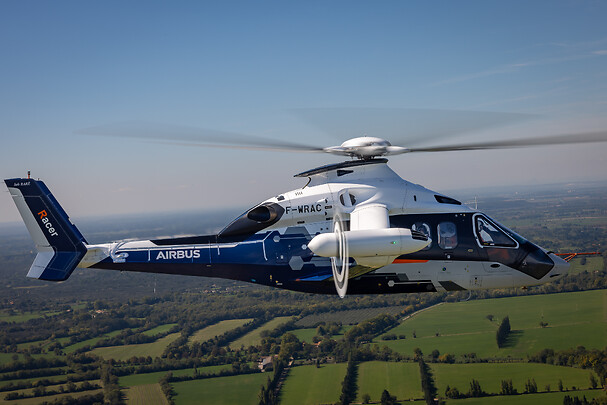
The Airbus Racer high-speed demonstrator has continued to expand its flight envelope. With over 50 flight hours now logged, the aircraft has stacked new milestones - from steep slope landings to high-G turns - proving its maturity and mission capacity. Funded by the European programme Clean Sky 2, the Racer was designed to answer a critical question: Can a helicopter combine high speed with improved fuel-efficiency? The demonstrator has already proven it can reach a cruise speed of 440 km/h while burning 25% less fuel than a conventional helicopter. It has also demonstrated the effectiveness of the compound formula offering the best trade-off between speed, cost-efficiency and mission performance. During its latest test campaign, the demonstrator, continued pushing the boundaries of what the aircraft can do in complex, real-world configurations. Here is a closer look at the latest breakthroughs from the latest flight test campaign. Landing on uneven terrain is historically one of the most complex manoeuvers for a helicopter pilot. The Racer could change the standard technique entirely. In recent tests, the demonstrator successfully completed a 14-degree landing. Unlike standard helicopters that require difficult manoeuvers to match the slope, the Racer utilises its unique configuration to its advantage. By keeping its main rotor level and using its side propellers to precisely angle the aircraft, it can land perfectly parallel to the slope. This capability enables the Racer to land in areas that would have been considered off limits for conventional helicopters - greatly expanding the operational possibilities for this type of aircraft. While cruise speed is established, vertical performance is equally critical. The Racer recently soared to 10,000 feet in just 2 minutes and 44 seconds. Travelling at 260 km/h, this translates to a climb rate of 3,600 feet per minute, roughly twice as fast as a conventional rotorcraft. Crucially, this record was not set by a stripped-down prototype, but by the Racer in its standard configuration. For military applications, this "mission-ready" speed can be vital, allowing the aircraft to exit high-threat zones and outrun small arms range rapidly. High speed often comes at the cost of maneuverability, but the Racer has also proven that you can have both. The demonstrator recently executed sharp 2g turns while flying at 370 km/h. Once again, the secret lies in the Racer's innovative architecture. At high speeds, the wings take on the lifting load, freeing up the main rotor and side propellers to focus on extreme agility. This compound configuration also enables the aircraft to accelerate and decelerate while maintaining a constant altitude. Unlike conventional helicopters that must pitch the nose down to accelerate or up to brake, the Racer can change speed while remaining level -- a clear advantage for military missions requiring stability and target focus. As part of phase one of ENGRT, guest military pilots from France, Germany and Finland had the chance to pilot the demonstrator and experience the outstanding Racer performance first hand. Allowing guest pilots on an experimental aircraft is rare and is typically permitted by regulators only when a design is proven to be exceptionally mature and stable. This successful exchange serves as a critical step in de-risking the technology for future military programs and demonstrates a high level of confidence in the platform. The innovation pipeline is far from empty. The team is now preparing to test two promising environmental initiatives: the "Eco-Mode" system and optimised low-noise trajectories. Scheduled for testing later this year, the Eco-Mode will allow the pilot to put one of the two engines on stand-by in cruise. This is projected to reduce fuel burn by an additional 15% while maintaining a fast cruise speed of approximately 330 km/h. Should the pilot need full power back, the system is designed to restart the second engine in mere seconds. The team is also planning to explore how the Racer's unique configuration allows for the optimisation of its acoustic footprint. The team has an ambitious goal to validate a reduced sound footprint on the ground of at least 30%. This is achievable thanks to the Racer's unique compound architecture. The lateral rotors provide an additional degree of freedom, allowing the pilot -- or the autopilot -- to control the aircraft's attitude and speed independently at every point of the trajectory. By programming the optimal attitude and speed combinations into the flight control system, the Racer can automatically execute trajectories specifically designed to minimise noise. The latest flight campaign has shown that the Racer demonstrator goes well beyond just a high-speed concept; it is a proven versatile platform that bridges the gap between vertical lift and fixed-wing efficiency. By successfully demonstrating 14-degree slope landings, a 3,600 foot-per-minute climb rate, and high-G agility, Airbus has shown that speed does not have to come at the expense of cost-effectiveness, fuel efficiency and mission performance.
Unifying IT and operations for business efficiency and agility
Companies around the world are looking at ways to improve operational efficiency and agility to deal with the highly volatile business environment. Technology plays a crucial role. Businesses are already exploring various digital solutions to enable automation, increase the speed of operations, and reduce costs. In recent years, much attention on digital transformation has been on information technology (IT), in the form of migrating workloads to the cloud for agility, leveraging data analytics for business insights, and using AI and machine language (ML) for automation. However, there is also a transformation of business operations through operation technology (OT), which includes Internet of Things (IoT), robotics, computer vision, etc. While IT and OT are often responsibilities of separate teams within an organisation, there is operational efficiency to be gained with the convergence of the two, through the integration of data management systems (IT) and operational systems. This integration enables data to be gathered and analysed for business and operational insights. This helps businesses to become more efficient and allows for faster decision-making. In many cases, especially for organisations maintaining mission-critical infrastructure, IT and OT systems continue to operate on separate networks. Some industries, for example, transportation, utilities, manufacturing, mining, and the public sector, operate large-scale networks to support operational systems. Some organisations in these industries have been considering or developing a single network to support both systems. GlobalData research shows that operational efficiency, unified security, and real-time data for decision-making are the top three business objectives for integrating IT and OT networks. A unified IT and OT network also allows for better resource utilisation, both in terms of funding and manpower. It removes the need to manage two separate networks, gives the buyer more power in negotiating with vendors, and provides the ability to support automation across IT and OT domains. Moreover, the network is becoming more complex, and it can include different transport (e.g., fibre, wireless, and satellite), campus networks (e.g., private 5G, WLAN and LAN), and a wide-area network connecting cloud environments, data centres, and campuses. Leveraging a single network for both IT and OT workloads can therefore allow for better utilisation of network resources. However, operational systems for critical national infrastructure will have a different set of requirements from the corporate IT systems. These often include near-zero downtime, redundancy measures, low-latency requirements, and security considerations. Through techniques such as network virtualisation, traffic prioritisation, and 5G network slicing, networks are now more adaptable and can support different applications based on their performance requirements. Using observability, digital twins, and AI-enabled network automation, network performance can be further enhanced. Challenges for many enterprises to achieve network modernisation and integration of IT and OT remain. These are typically around the lack of expertise, legacy systems that can be customised and difficult to integrate, resistance between IT and operational teams, and heightened security and compliance concerns. Organisations operating critical network infrastructure are more likely to have in-house teams to build and manage their own networks. However, with the growing use of technologies and complexity, they will have to lean on technology vendors and service providers for technical expertise, security or compliance certifications, access to partner ecosystems, and overall consulting and system integration. This means a new area of opportunity for network services providers, but this will have to be sold to customers as business outcomes, not just a network technology or solution. Service providers will need to develop strong IT/OT expertise, industry-specific knowledge, and professional services to help customers design, plan, implement, and optimise their networks.
Robinhood (HOOD) Stock Tumbles After SpaceX IPO Deal Goes to Morgan Stanley's ETrade - Blockonomi
Shares of HOOD are currently trading approximately 54% beneath the 52-week peak of $153.86 Robinhood is navigating turbulent waters. Trading at $66.02, shares have plummeted more than half their value from the annual high, and Monday delivered a one-two punch -- troubling IPO news paired with an analyst downgrade. Robinhood Markets, Inc., HOOD According to Reuters, Morgan Stanley's ETrade division is negotiating to handle retail distribution for SpaceX's upcoming public offering. This development positions ETrade ahead of competitors Robinhood and SoFi, both of which have been vying for involvement in what industry watchers predict could become the largest IPO on record. Reports indicate SpaceX is contemplating whether to exclude both trading platforms completely from any participation. However, individuals familiar with the matter emphasized that arrangements remain preliminary and subject to change ahead of the anticipated listing later this year. The prospective omission carries significant implications. Robinhood and SoFi previously participated in marquee offerings including Arm Holdings' $55 billion market debut and Instacart's $9.9 billion IPO during 2023. Being shut out of SpaceX would represent more than just a missed opportunity -- it threatens Robinhood's positioning as the premier destination for retail investors seeking access to major public listings. Neither platform maintains relationships with the investment banks managing the SpaceX offering. Morgan Stanley, serving as a principal underwriter, is anticipated to channel substantial retail share allocations through ETrade, the brokerage it purchased in 2020. Also Monday, Bernstein SocGen decreased its HOOD valuation from $160 to $130, attributing the adjustment to current market multiples. The firm maintained its Outperform designation, signaling continued confidence in the stock's upside potential despite the reduced target. The modified forecast applies a lower earnings multiple: 35 times projected 2027 earnings per share, compared with the previous 40 times multiple. This calculation incorporates an expected 32% EPS compound annual growth rate spanning 2025 through 2027. Notwithstanding the target reduction, analysts remain constructive on Robinhood's fundamental business trajectory. The firm forecasts 25% earnings growth during 2026, even accounting for anticipated weakness across both equity and cryptocurrency trading in the opening quarter. Revenue expansion is projected to maintain a 30% CAGR through 2027. Prediction markets represent an emerging growth catalyst. Bernstein SocGen estimates these offerings will generate approximately 17% of trading-related revenue and 10% of overall revenue during 2026, bolstered by Robinhood's distribution partnership with Kalshi and its proprietary Rothera exchange infrastructure. Cryptocurrency activity is likewise expected to rebound. The firm's model anticipates a 79% year-over-year surge in crypto trading volumes throughout the latter half of 2026, aided by the completed Bitstamp acquisition. Non-trading revenue streams are forecast to advance 27% annually. This encompasses margin lending supported by a $17.2 billion portfolio, Gold membership subscriptions serving 4.2 million users, and banking deposit balances now surpassing $1 billion. Wall Street sentiment remains divided. Barclays maintains an Overweight rating with a $124 price objective. Truist carries a Buy recommendation at $120. Jefferies initiated coverage recently with a Buy rating and $88 target. Cantor Fitzgerald takes a more conservative stance, trimming its target to $95 based on adjusted revenue projections. Robinhood's board of directors recently authorized a $1.5 billion stock repurchase program, generating favorable commentary from multiple analyst firms. Shares currently command a price-to-earnings ratio of 32.25 with a market capitalization reaching $59.44 billion.

Xero and Anthropic Strike Multi-Year Partnership to Bring AI-Powered Financial Intelligence to Small Businesses | The Fintech Times
In a strategic move designed to equip small businesses and their accounting advisors with real-time, actionable financial intelligence, Xero and Anthropic have officially unveiled a new multi-year partnership. The landmark deal represents the first time Xero customers will be able to work with their financial data directly inside a major AI platform. By bridging the two ecosystems, the companies aim to drastically reduce the time users spend manually chasing invoices or piecing together cash flow across multiple, disjointed reports. Diya Jolly, chief product & technology officer at Xero, noted that small business owners constantly face pressing questions about tight cash flow, overdue invoices, and hiring budgets. "To run their business efficiently, small business owners and their accountants and bookkeepers need to be able to answer these questions and act on them in real time whether using Xero or Claude," Jolly stated. "Integrating Claude moves Xero into agentic workflows, where Xero's AI superagent, JAX (Just Ask Xero), does the heavy lifting, from predicting cash flow gaps to executing complex financial tasks." The integration, which is expected to be available in the coming months, will introduce two primary operational shifts for users: Addressing the critical issue of data privacy, Xero confirmed that data responsibility remains foundational to the new partnership. Any financial data shared between the platforms is utilized solely for the user's specific session, and proprietary business data is never used to train Anthropic's AI models. Chris Ciauri, managing director of international at Anthropic, highlighted the transformative nature of adding AI reasoning to established financial infrastructure. "Xero has spent 20 years building the financial platform that millions of small businesses depend on. Claude brings a reasoning layer to that foundation," Ciauri explained. "Now, instead of spending hours trying to make sense of their financials on top of everything else it takes to run a business, customers get clear answers and recommended actions in real time. This provides small businesses and their advisors with the kind of financial intelligence that used to require a dedicated analyst or CFO." Beyond the customer-facing integrations, the partnership will also transform Xero's backend operations. As part of the deal, Xero's own engineering teams will adopt Claude Code and Cowork to accelerate their internal product development.
