News & Updates
The latest news and updates from companies in the WLTH portfolio.
House Republicans reject Senate bid to end US airport chaos
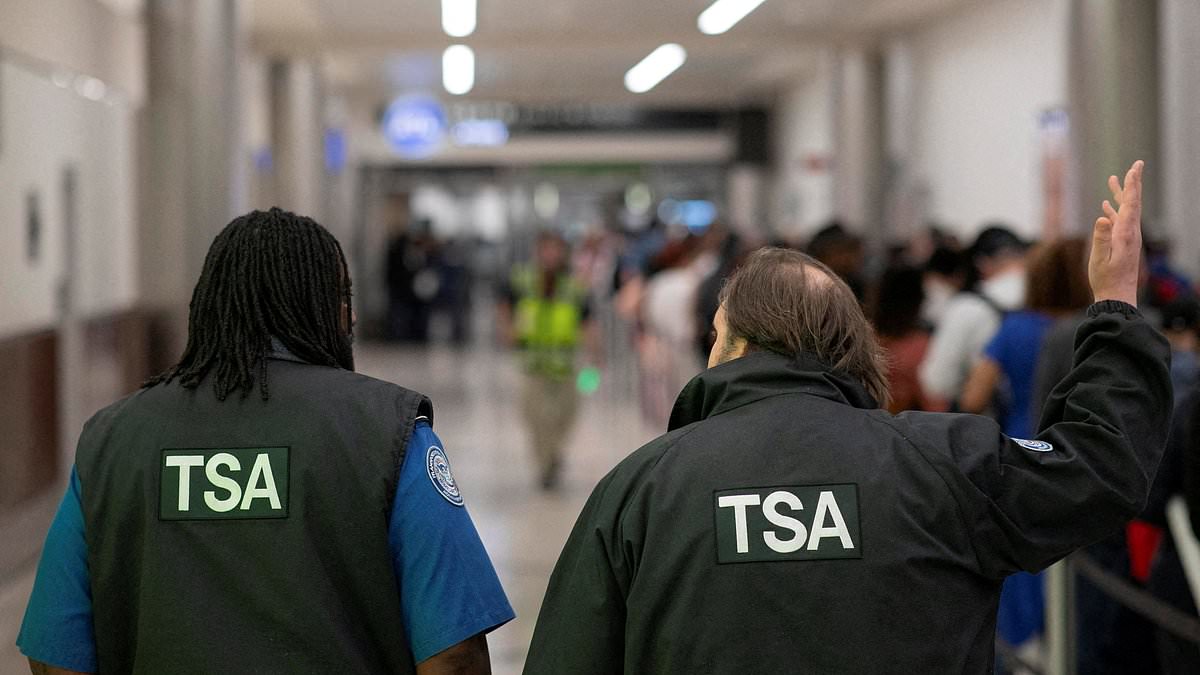
US House Republicans on Friday effectively shot down an effort by the Senate to end a budget standoff that has forced thousands of airport security staff to work without pay, likely extending the partial government shutdown. A lapse in federal funding has left Transportation Security Administration (TSA) staff -- who screen passengers, baggage and cargo -- working without pay since mid-February.

Wall Street got so fed up with Trump's chaos, they built an index to predict when he'll 'TACO'
Wall Street has rolled out a new index designed to predict when President Donald Trump will back down from market-disrupting policy decisions. They've called this phenomenon "TACO," which stands for "Trump always chickens out." This shows how much the financial world is trying to stay ahead of the president's unpredictable policy shifts. According to Mediaite, the index was created by Deutsche Bank strategist Maximilian Uleer. It tracks the various pressures President Trump is under and tries to measure how likely he is to change course on a given issue. The term "TACO" itself was first coined by Robert Armstrong to describe moments when President Trump backs down under external pressure. The index looks at several factors to make its predictions: the one-month change in Trump's approval ratings, how the stock market is performing, and whether bond markets and the general public expect higher inflation. Together, these factors give a picture of the overall pressure the president might be feeling at any given time. Right now, the index is showing a higher pressure reading than it did during "Liberation Day," when the S&P 500 dropped sharply after massive tariffs were announced on nearly every country. That this reading is even higher now signals that the current situation is putting more pressure on Trump than that earlier shock did. Critics and observers have been closely watching how Trump responds to mounting pressure across different areas of policy. Markets have been feeling the strain. As of close on Thursday, the S&P 500 was down over 1.7%, and the Nasdaq fell 2.38%, pushing its recent losses into correction territory. This current pressure is hitting the economy and Trump's political standing harder than the previous tariff turmoil, largely due to the shock hitting energy markets. There is also a widely held belief on Wall Street that Trump is likely to pull back on a policy if the stock market falls around 5% from its recent highs. Jose Torres, a senior economist at Interactive Brokers, noted this last week, offering a potential benchmark for when a "TACO" moment might happen. Adding to this, Trump recently announced an additional ten-day grace period to continue negotiations with Iran. He also promised to hold off on targeting oil production facilities, even as speculation about a possible ground invasion has been growing. Iran, however, has not taken kindly to how these talks have been framed, with Iran pushing back on Trump's claims about the negotiations and accusing him of misrepresenting the situation. Whether these actions are a direct result of the pressure the index is measuring remains to be seen, but it is certainly giving analysts a new way to read and anticipate the president's next move.

Cloudflare Stock Slides On Anthropic Leak, AI Competition Concerns - Cloudflare (NYSE:NET)
Cloudflare stock is showing notable weakness. Why is NET stock dropping? Anthropic Leak Sparks Fresh AI Disruption Fears In Cybersecurity Anthropic said the exposure resulted from human error in its CMS configuration and said the issue was unrelated to its existing AI tools, but the leak still rattled investors across cybersecurity names. Cloudflare And Security Stocks Face Pressure On Competitive, Margin Concerns The sell-off also reflects a growing market fear that powerful AI systems from companies like Anthropic and OpenAI could force cybersecurity vendors to spend more aggressively on product development just to keep pace. That broader read-through hit several security names Friday, with investors reassessing both competitive risk and future margin pressure across the sector. Cloudflare Earnings Due May 7 As Revenue Growth Stays In Focus Looking further out, the next major catalyst for the stock arrives with the May 7 earnings report. EPS Estimate: 12 cents (Down from 16 cents YoY) Revenue Estimate: $622.45 million (Up from $479.09 million YoY) Wall Street Maintains Buy Consensus On Cloudflare Stock Analyst Consensus & Recent Actions: The stock carries a Buy Rating with an average price target of $240.72. Recent analyst moves include: Citigroup: Buy (Raises Target to $265.00) (Feb. 12) Jefferies: Hold (Raises Target to $225.00) (Feb. 11) Piper Sandler: Neutral (Raises Target to $222.00) (Feb. 11) NET Shares Slide Friday Afternoon NET Price Action: Cloudflare shares were down 3.54% at $202.69 at the time of publication on Friday, according to Benzinga Pro data. Image: Shutterstock This content was partially produced with the help of AI tools and was reviewed and published by Benzinga editors. Market News and Data brought to you by Benzinga APIs To add Benzinga News as your preferred source on Google, click here.

Alphabet (GOOG) Stock: Google Backs Anthropic's Massive $5B Texas AI Data Hub - Blockonomi
Google's robust financial standing is anticipated to attract bank financing at more favorable terms According to recent reports, Google is preparing to extend construction loans to Nexus Data Centers for their ambitious $5 billion-plus data center development in Texas, a facility that Anthropic has already secured through a lease agreement. The Financial Times initially broke the story, referencing sources familiar with the arrangement. Finalization of these loans is anticipated within the next several weeks. While Alphabet, Google's parent entity, won't directly construct the infrastructure, the company is serving as the financial underwriter. Its excellent creditworthiness is expected to facilitate additional banking partnerships with more competitive interest rates. Alphabet Inc., GOOGL Multiple banking institutions are currently vying to finance the initial construction phase, with funding targeted for mid-2025. The computing facility spans an impressive 2,800 acres and aims to provide roughly 500 megawatts of processing capacity by the conclusion of 2026. In the longer term, expansion plans envision the site reaching approximately 7.7 gigawatts -- representing significant infrastructure for artificial intelligence computational requirements. Earlier this month, Anthropic formalized its lease arrangement with Nexus Data Centers. The facility's strategic positioning between multiple major natural gas pipelines represents deliberate planning. Nexus intends to operate independent gas turbines for power generation instead of drawing from regional electrical grids. This configuration allows the operation to avoid expensive peak-hour electricity rates -- an escalating challenge for facilities operating energy-intensive AI processing continuously. Additionally, this approach provides enhanced energy supply autonomy, which has become increasingly critical for large-scale data infrastructure developments. Google currently provides Anthropic with specially engineered TPU infrastructure through Google Cloud for training sophisticated language models. This collaboration creates mutual advantages. Anthropic receives essential large-scale computing resources, while Google leverages the partnership to enhance its Vertex AI offerings. By financing the Texas computing complex, Google elevates its role beyond cloud services provider to become a direct infrastructure financier. Specific financial terms of the construction loan arrangement -- including total amount and repayment conditions -- remain undisclosed to the public. Nexus Data Centers has declined to provide official commentary. Anthropic finalized its lease with Nexus in recent weeks, preceding the anticipated loan completion in the near future.

Why RI is investigating popular Kalshi, Polymarket prediction markets
When someone bets on a military strike, they now have financial reason to hope for violence, even if they never consciously admit it. * Rhode Island is investigating prediction market sites like Kalshi and Polymarket for potentially taking business from the state-sponsored sports betting app. * Prediction markets allow users to bet on the outcome of various events, including sports, politics, and entertainment. * Officials argue that these sites are a form of gambling and divert revenue that would otherwise go to the state. Online sports betting is only allowed in Rhode Island through the state-sponsored Sportsbook RI app, but the state's lottery is now investigating whether prediction market sites like Kalshi and Polymarket are stealing sports gambling business. Prediction markets allow users to enter into yes or no contracts on whether a particular thing in sports, politics, business, entertainment or random events will happen and to profit if they get it right. For example, some of the top markets on Polymarket are around when U.S. troops will enter Iran, or when Kanye West will release a new album. The sites experienced explosive growth last year due to favorable regulatory treatment from President Donald Trump's administration, with much of their revenue coming from sports. Why RI wants to crack down on prediction markets Lottery Director Mark Furcolo argued to the State Lottery Commission that any online betting done not on the Sportsbook app takes revenue away from the state. "Anytime someone wagers on a prediction market platform and doesn't bet on our platform, obviously, there is an economic impact to the state," Furcolo told the commission. "We have an active investigation ongoing currently on prediction markets. It is very active. I really can't comment too much on it." Other states take legal action against Kalshi A growing number of elected officials are arguing that prediction is just a dressed-up term for gambling and that contracts on athletic events violate state regulations on sports betting. A Massachusetts judge in January issued a preliminary injunction against Kalshi in a lawsuit by Bay State Attorney General Andrea Campbell. Arizona filed criminal charges against the site this month. Bipartisan legislation was filed in Congress on Monday, March 23, that would ban sports betting on prediction markets nationally. The Rhode Island Lottery would not say how long it has been investigating prediction markets, referring all questions to Furcolo's testimony. Last September the state police began a crackdown on illegal sports betting sites but at the time did not appear to be targeting the prediction markets. State Rep. Scott Slater, D-Providence, noted at the Lottery Commission meeting that Rhode Islanders can wager on sporting events involving local teams, such as Providence College or the University of Rhode Island, that are banned on SportsBook Rhode Island to protect the integrity of the game.

Fortinet Stock Falls As Anthropic AI Leak Pressures Cybersecurity Stocks - Fortinet (NASDAQ:FTNT)
Fortinet stock is taking a hit today. What's behind FTNT decline? Anthropic Leak And AI Security Fears Hit Cyber Names Cybersecurity stocks moved lower after Anthropic allegedly exposed internal data through a content management system misconfiguration, with the lapse reportedly revealing details about an unreleased model called Claude Mythos. Anthropic later said the issue was caused by human error and was unrelated to its AI tools, but the event still added fresh anxiety around how quickly AI is changing the cyber landscape. That matters for Fortinet because the company is a major cybersecurity vendor focused on network security, firewalls, secure access, cloud security and broader enterprise protection through its Fortinet Security Fabric platform. If investors start to believe new AI-native tools can identify vulnerabilities, automate detection or reduce reliance on traditional security products, established players like Fortinet can come under valuation pressure. AI Disruption Narrative Pressures Legacy Security Sentiment Anthropic previously introduced an AI tool designed to autonomously hunt software vulnerabilities, helping spark fears that AI-enabled offerings from emerging players could challenge legacy security suites. Even if Fortinet's core business remains deeply embedded in enterprise networks, Friday's move appears tied to sector-wide multiple compression rather than company-specific news. FTNT RSI Shows Choppy, Range-Bound Trading Pattern Fortinet's RSI has spent most of the past year in the neutral range (30-70), with frequent swings between the mid-40s and upper-50s, indicating generally balanced momentum without sustained overbought or oversold conditions. There was a brief dip into oversold territory near 20 and a few pushes toward the mid-60s, but the stock has largely avoided extremes, suggesting choppy, range-bound trading rather than a strong directional trend. FTNT Shares Drop Friday Afternoon FTNT Price Action: Fortinet shares were down 3.62% at $78.10 at the time of publication on Friday, according to Benzinga Pro data. Image: Shutterstock This content was partially produced with the help of AI tools and was reviewed and published by Benzinga editors. Market News and Data brought to you by Benzinga APIs To add Benzinga News as your preferred source on Google, click here.

Businesses respond to chaos at The Banks during Opening Day
CINCINNATI (WXIX) - Businesses at The Banks have released a statement regarding the crowded chaos that unfolded during Opening Day. No fights or disturbances occurred leading up to the Findlay Market Opening Day Parade or the first Cincinnati Reds game of the year, The Banks businesses said. Closer to the first pitch and after the game is when things started to change, they said. "In the evening when the disturbances that were happening elsewhere in the city started to surface at The Banks, we immediately cooperated with CPD in clearing the area and closing down our businesses," The Banks wrote in a statement. Cincinnati police at The Banks began closing the pedestrian plaza and pushing the crowds out around 8 p.m. They also suspended street car operations, police radio traffic indicates. Customers were asked to finish their drinks and then leave the area safely. Meanwhile, Cincinnati police stood on the outside of the pedestrian walkway areas to ensure no more people came to the bars. They later put up crime scene tape. "We thank the Cincinnati Police Department, Hamilton County Sheriff's Department, and the Ohio State Patrol for their help, and we will continue to work together to ensure The Banks is a safe place to have fun," the statement says. According to Cincinnati Interim Police Chief Adam Hennie, 17 people were arrested and charged on opening day. The suspects ranged in ages, anywhere between 14 and 50 years old.

Pumping the Brakes on Anthropic's Leaked Cybersecurity AI
News of a leaked Anthropic AI model rattled the cybersecurity industry, sending the stocks of major firms sharply lower. What initially looked like a potential game changer now raises urgent questions: can organizations trust AI with their most sensitive digital assets, or does this incident simply reinforce the need for expert protection? According to Mint, a leaked draft blog post introduced a new tier of AI models called Capybara. The draft claimed that Capybara outperformed Anthropic's flagship model, Claude Opus 4.6, in "software coding, academic reasoning, and cybersecurity-related tasks." It further noted that training on Claude Mythos -- a model Anthropic describes as their most advanced yet -- has been completed. Why Did It Leak? While Anthropic attributed the leak to "human error," the explanation may do little to reassure organizations about the company's ability to safeguard sensitive data. Some analysts speculate that there could have been other motives at play. "The leak of Capybara is unfortunate but I almost wonder if it was intentionally left in an accessible data lake to highlight some of the emerging cyber risks that continually evolving AI platforms pose and will pose," said Tracy Goldberg, Director of Cybersecurity at Javelin Strategy & Research. "All of that said, the model is still in testing, with Anthropic clearly stating that it is aware of bugs and risks that need to be addressed, which is why Anthropic has only soft-launched Capybara." The Looming Threat of AI Anthropic also highlighted the cybersecurity risks tied to these model, emphasizing the escalating arms race that is going on with AI between defenders and cybercriminals. The company cautioned that Capybara could be the first in a series of models capable of identifying and exploiting vulnerabilities far faster than security teams can respond. In other words, criminals could leverage the model to fuel a new generation of AI-driven cybersecurity threats. Investors reacted swiftly, driving shares of CrowdStrike, Datadog, and Zscaler down more than 10% in early trading. "The tanking of tech stocks in the wake of news about the Capybara leak really just highlight the lack of understanding investors have about AI overall," Goldberg said. "We know these models will continue to adapt, and will do so at a pace faster than industry security measures can respond. This is why governance around AI is so critical."

Warner Welcomes Court Pausing Hegseth's Designation of Anthropic as a Supply Chain Risk
WASHINGTON - U.S. Sen. Mark R. Warner (D-VA), Vice Chairman of the Senate Select Committee on Intelligence, issued the following statement after a federal judge issued a preliminary injunction in Anthropic's lawsuit against the Trump administration: "The preliminary injunction barring the improper designation of Anthropic as a supply chain risk is a victory for national security. I applaud the tech sector employees and companies, civil society advocates, and retired military leaders who spoke out against the Trump administration's dangerous, punitive overreach. There is clear alignment across the court, technology sector, and the private sector on this issue and I look forward to working alongside America's technology leaders to ensure the responsible use of AI in military operations. The stakes go far beyond a single company, with real consequences for the American economy and our national security, especially as the Trump administration sends thousands of servicemembers to war with Iran." Earlier this year, Secretary Hegseth declared Anthropic a supply chain risk following its efforts to ensure its models wouldn't be used to power fully autonomous AI weapons systems or mass domestic surveillance. This would be the first time an American company has publicly received this designation, which is generally reserved for companies affiliated with foreign adversaries, and would prevent agencies across the federal government, and a number of American companies, from using Anthropic's technology.
NYSE Parent Company Injects Another $600M Into Polymarket Amid Prediction Market Boom - Blockonomi
Congressional members are raising concerns about potential manipulation risks in prediction markets Intercontinental Exchange, the entity behind the New York Stock Exchange, has committed an additional $600 million toward Polymarket, a marketplace where participants wager on real-world event outcomes. This latest capital injection comes after ICE's initial $1 billion commitment to the platform in October 2025. The exchange operator also intends to acquire up to $40 million worth of shares from current Polymarket stakeholders. Combined, ICE's total financial exposure to the platform now stands near the $2 billion mark. According to ICE, this investment won't significantly affect its financial performance or shareholder return strategies. The complete valuation of Polymarket remains undisclosed until the ongoing funding round concludes, according to company statements. Polymarket operates as a marketplace where participants purchase and sell contracts linked to future event outcomes. These events span everything from political elections to macroeconomic indicators such as inflation reports. Contract values fluctuate continuously based on trading behavior. Prediction markets have rapidly evolved from an obscure sector within cryptocurrency and academic finance circles into a booming trading category. Both participant engagement and transaction volumes have experienced dramatic growth throughout the last two years. Polymarket isn't the only platform attracting substantial capital. Kalshi[[/LINK_END_1]], a rival prediction market operator, recently secured more than $1 billion in funding at a $22 billion valuation -- approximately twice its prior worth. Kalshi is reportedly generating around $1.5 billion in annual revenue, demonstrating robust market appetite for event-driven trading instruments. The rapid expansion of both platforms has captured the attention of regulatory bodies and government officials. Concerns persist regarding whether these prediction markets remain susceptible to market manipulation or illegal insider trading practices. Polymarket has implemented measures to address potential regulatory challenges. The company acquired a fully licensed exchange and clearinghouse operation earlier this year. Additionally, the platform formed a strategic alliance with Palantir and TWG AI. This collaboration aims to develop sophisticated monitoring technology capable of identifying questionable trading patterns and market manipulation within its sports betting markets. These strategic initiatives indicate Polymarket's commitment to adhering to the compliance standards typically required of regulated financial institutions. ICE's ongoing financial support connects Polymarket to one of the world's premier exchange operators. The NYSE's parent organization has previously indicated it views prediction markets as a promising expansion opportunity in derivatives trading. Industry observers suggest these products could draw additional retail participants and enable exchanges to broaden their revenue streams amid intensifying competition in conventional futures and options trading. Friday's announced $600 million investment represents a portion of Polymarket's current fundraising effort. ICE initially revealed its intention to invest up to $2 billion in the platform earlier in the year.

Intercontinental Exchange Invests Another $600M in Polymarket
Intercontinental Exchange, Inc. (ICE) injected $600 million cash into Polymarket, completing a previous agreement to supply the popular prediction platform with $2 billion in investment. A Friday announcement confirmed the $600-million pledge by ICE, which is also expected to purchase up to $40 million of existing Polymarket securities. ICE's investments are not expected to have a "material impact" on its financial results or forecast, per the announcement. The final valuation details of the recent injection are expected to be revealed once Polymarket's ongoing fundraising round is completed. The $2 billion in total pledges was reached as ICE works to bridge traditional finance with the growing prediction market sector. Polymarket, meanwhile, accepts deposits in bitcoin, a decentralized form of payment that is distinct from traditional financial institutions. ICE plans to use Polymarket's real-time market data to guide its investment outlooks. That includes fields such as politics, business, and other relevant areas, all with up-to-the-minute insights based on customers' trades. The completion of ICE's investment represents another step in the company's diversification into alternative sectors, including leveraging consumer sentiment for Polymarket and expanding into cryptocurrency markets. Market analysts believe the size of ICE's investment indicates financial institutions will increasingly turn to prediction market sites for trading and data collection, according to Bitcoin Magazine. Polymarket, which launched in 2020, only re-entered the U.S. under the supervision of the Commodity Futures Trading Commission (CFTC) in late 2025. The platform in 2022 was banned for three years after it reached a settlement with the government body for offering unregulated binary markets. Since returning, Polymarket - and market leader Kalshi - have seen an enormous spike in popularity. Both entities recently reportedly sought valuations at around $20 billion, approximately double what they received just late last year. While there is positive momentum within the prediction industry, ICE clarified its investment does not represent an offer for holders to sell securities. Prediction market updates have proved to be controversial in the U.S. primarily because of their sports and election contracts. State gaming officials have argued that sports contracts should be classified as an illegal form of gambling, while Kalshi recently received criminal charges from the Arizona Attorney General. Spreading into the traditional financial industry would give much more cache to the multi-billion-dollar industry. Forbes, a global media brand focused on business, finances, and technology, recently announced a moneyless prediction platform called ForbesPredict that will allow its audience to predict the outcomes of real-world events. NASDAQ also applied for Securities Exchange Commission approval to list prediction markets on its stock index. If approved, traders would purchase contracts related to the outcome of specific stock prices.

Republican Rift Sparks Chaos in DHS Funding Bill: Implications for National Security - Internewscast Journal
Tensions are rising in the House as a group of staunch conservative Republicans has disrupted the progress of a Senate-approved funding bill for the Department of Homeland Security (DHS), potentially leading to significant delays for travelers across the nation. Speaker Mike Johnson, alongside the influential House Freedom Caucus, which includes supporters of former President Donald Trump, has dismissed the Senate's late-night approval of the bill. The primary point of contention is the omission of funding for Immigration and Customs Enforcement (ICE). "The maneuver that took place last night was laughable," Johnson stated, criticizing the Senate's approach. "We intend to pursue a different course of action." This disagreement highlights a growing divide between Senate Majority Leader John Thune, who leans towards a more moderate stance, and his more conservative Republican counterparts in the House. The ongoing dispute is set to affect the Transportation Security Administration (TSA) workers, who are likely to miss another paycheck this Friday. This comes as the 42-day funding deadlock for the DHS threatens to extend into the following week, coinciding with the busy Easter travel period. In response, Johnson is reportedly promoting a proposal backed by Trump, which would maintain current DHS funding levels for an additional 60 days. However, with the Senate currently adjourned, this new initiative will remain in limbo until lawmakers reconvene in Washington. Senate Minority Leader Chuck Schumer said that Johnson's plan was 'dead on arrival.' Meanwhile, Trump said on Thursday he'd order newly appointed DHS Secretary Markwayne Mullin to find cash to pay TSA workers in a gambit to calm US travelers. Florida Republican Congressman Byron Donalds told reporters Friday that the Senate-backed bill was a 'turd sandwich.' House Freedom Caucus Chairman Andy Harris said: 'The only thing we're going to support is adding that [ICE] funding into the bill, adding voter ID, sending it back to the Senate, making them come back in and do their work.' Homeland Security Secretary Mullin has yet to act, as Congress appeared poised to pass funding until House Republicans rejected the Senate's bill on Friday. Complicating the plan is the need for members of Congress to stay in DC and vote on the new proposal. Many members of the House and Senate have already fled DC to return home for the Easter break, which is supposed to last until mid-April. Should the House vote on the 60-day proposal on Friday or over the weekend, the Senate would be forced to return to the capital to pass the House plan before the bill could be signed by Trump for the funding to be approved. It could take several days for the House's proposal to receive a vote; it could take even more time for the Senate to return to DC and then vote on the new proposal. Meanwhile, airport wait times are expected to remain long and TSA workers will continue to be unpaid. Democrats voted against DHS funding in February in opposition to providing more funds for Trump's immigration agenda. The Senate compromised by authoring a bill providing funding for the many branches of DHS except ICE. Trump had largely left the issue to Congress, but warned he was ready to take action, threatening to send the National Guard to airports in addition to his deployment of ICE agents who are now checking travelers' IDs. The White House had floated the extraordinary move of invoking a national emergency to pay the TSA agents, a politically and legally fraught approach. Trump's order would draw on funds from his 2025 tax bill to pay TSA agents, a senior administration official said. Should the House pass the package and send it to Trump's desk, his executive order to pay TSA agents could prove short-lived or unnecessary. The funding shutdown has resulted in travel delays and even warnings of airport closures as TSA workers who are missing paychecks stop coming to work. Multiple airports are experiencing greater than 40 percent callout rates of TSA workers, and nearly 500 of the agency's nearly 50,000 transportation security officers have quit during the shutdown. Nationwide on Wednesday, more than 11 percent of the TSA employees on the schedule missed work, according to DHS. That is more than 3,120 callouts. Everett Kelley, president of the American Federation of Government Employees, said the union was grateful workers would be paid but demanded Congress stay in session to pass a deal 'that funds DHS, pays all DHS workers, and keeps these vital agencies running.' Melissa Gates, stranded at George Bush Intercontinental Airport in Houston, said she had waited more than two hours without reaching the security checkpoint and missed her flight to Baton Rouge, Louisiana, with no alternative available until Friday. 'I should have just driven, right?' Gates said. 'Five hours would have been hilarious next to this.'
Tesla Falls 3% as Delivery Fears Overshadow SpaceX IPO Buzz and Cybercab Excitement
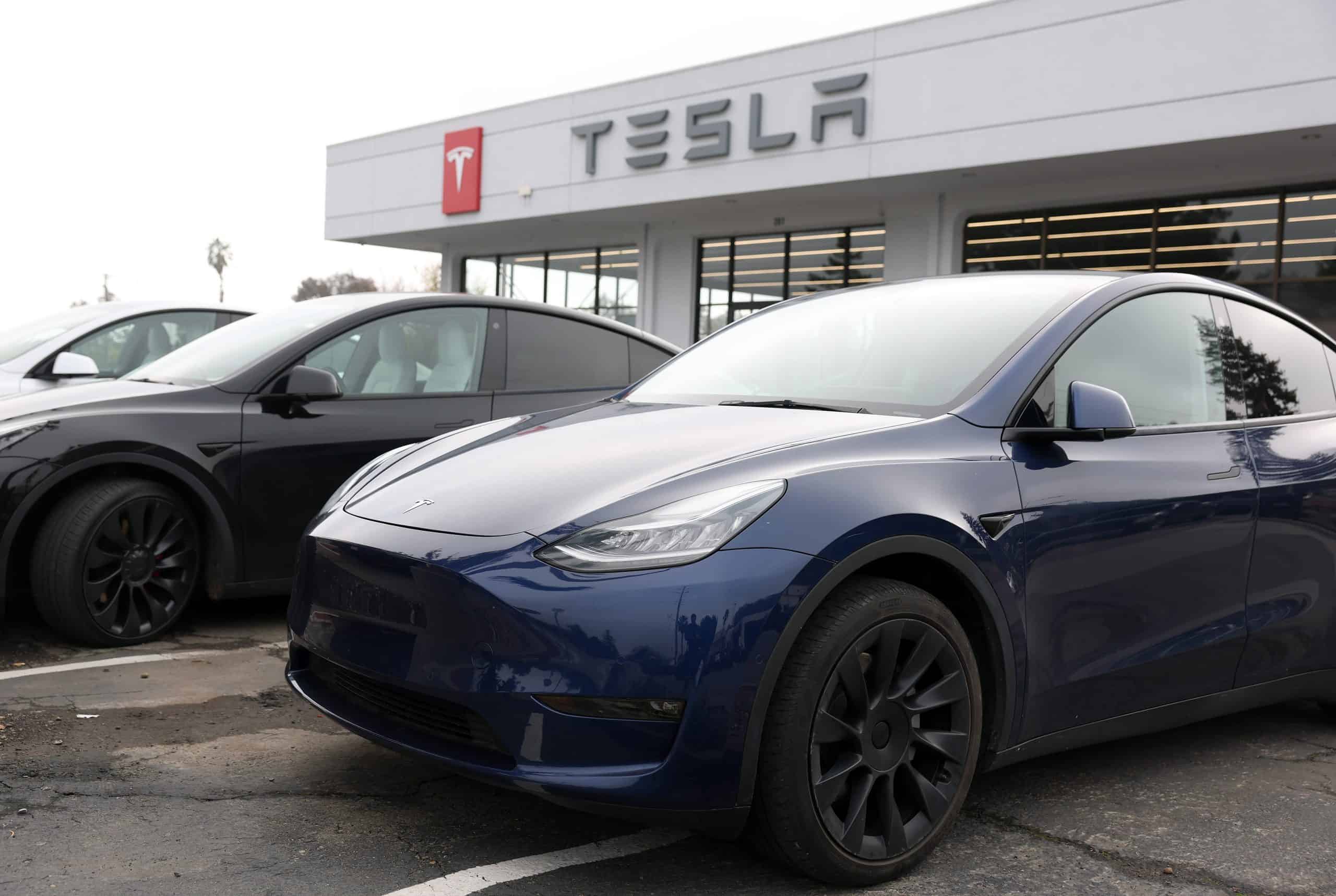
Tesla (NASDAQ:TSLA | TSLA Price Prediction) stock is down 3% in Friday afternoon trading, with shares sliding from an opening price of $372.11 to around $361. The move extends a rough stretch for TSLA shares, which have now declined 20% year to date even as it holds onto a 32% gain over the past year. Today's pressure comes down to a familiar tension. Bulls are pointing to SpaceX IPO speculation and Cybercab momentum as reasons to stay patient. Bears, on the other hand, are pointing to the delivery numbers. Right now, the bears appear to be winning. The immediate catalyst for Tesla stock is next week's Q1 2026 delivery report, and expectations are low. RBC Capital projects Q1 2026 deliveries of 367,000 units, slightly below the Visible Alpha consensus of 370,000 units. That would mark another soft quarter following a year in which full-year 2025 deliveries fell 9% year over year, the first full-year decline in the Tesla's history. Analysts have already trimmed their full-year outlook in response. The 2026 delivery consensus for Tesla has been cut to 1.69 million units, down from 1.75 million, reflecting cautious demand sentiment. The most recent quarter reinforced those concerns: Tesla's Q4 2025 deliveries came in at 418,227 units, down 16% year over year, and automotive revenue declining 11% year over year to $16.75 billion. Prediction markets reflect the same skepticism. On Polymarket, the 350,000 to 375,000 delivery bracket carries a 62.5% implied probability, while the under-350,000 bracket sits at 29.5%. Combined, those two bearish brackets account for more than 90% of the market's probability weight. Tesla's decline reflects broader market pressure. The NASDAQ 100 has dropped more than 10% from its record high. High-valuation growth stocks like Tesla tend to feel that macro drag most acutely, and with a price-to-earnings ratio of 333.5x, Tesla carries one of the steepest valuations in the market. There's also a regulatory headwind weighing on the robotaxi story. California's Public Utilities Commission has stated that Tesla's current ride-hailing service is not classified as an autonomous vehicle service in California, since its technology is considered SAE Level 2 and requires a safety driver. That ruling chips away at the narrative that Tesla is already operating a true robotaxi network. Investors who are curious how Tesla's EV peers have fared over a longer horizon can see how Lucid, NIO, and Rivian have performed over five years for added context. That said, the bull case is far from silent. SpaceX is reportedly preparing for an IPO at a valuation of approximately $1.75 trillion, and any formal announcement would likely lift sentiment across Elon Musk-linked assets. Morningstar notes the "Musk Effect" could produce stock swings of 20% to 30% in response to Musk-driven news, well above Tesla's typical 10% to 15% range. On the product side, Tesla's Cybercab ambitions are gaining real-world credibility. Tesla ranked 17th on Fortune's 2026 most innovative companies list, recognized specifically for product innovation ahead of the Cybercab launch. Cybercab volume production is scheduled to begin in H1 2026. Moreover, Lemonade (NYSE:LMND) has partnered with Tesla for autonomous car insurance. This is a signal that the broader market is treating Tesla's self-driving ambitions as increasingly credible. Granted, the robotaxi expansion timeline remains ambitious. Robotaxi driverless testing commenced in Austin in December 2025, with safety monitor removal beginning in January 2026, and expansion to Dallas, Houston, Phoenix, Miami, Orlando, Tampa, and Las Vegas is planned for H1 2026. Whether those plans translate into delivery-level revenue in 2026 remains a central question for Tesla's investors. The Q1 2026 delivery report, due by March 31, will be the next major inflection point. Polymarket's daily direction market for March 27 assigns a 97.7% probability to Tesla finishing the day lower, suggesting traders see little chance of a late-session reversal. For now, watch whether TSLA can hold the $360 level into the close. Plus, investors will want to see whether next week's delivery print comes in above or below the 370,000-unit consensus estimate.
Five Guys CEO rewards workers with $1.5M after anniversary deal chaos: 'We really screwed it up'
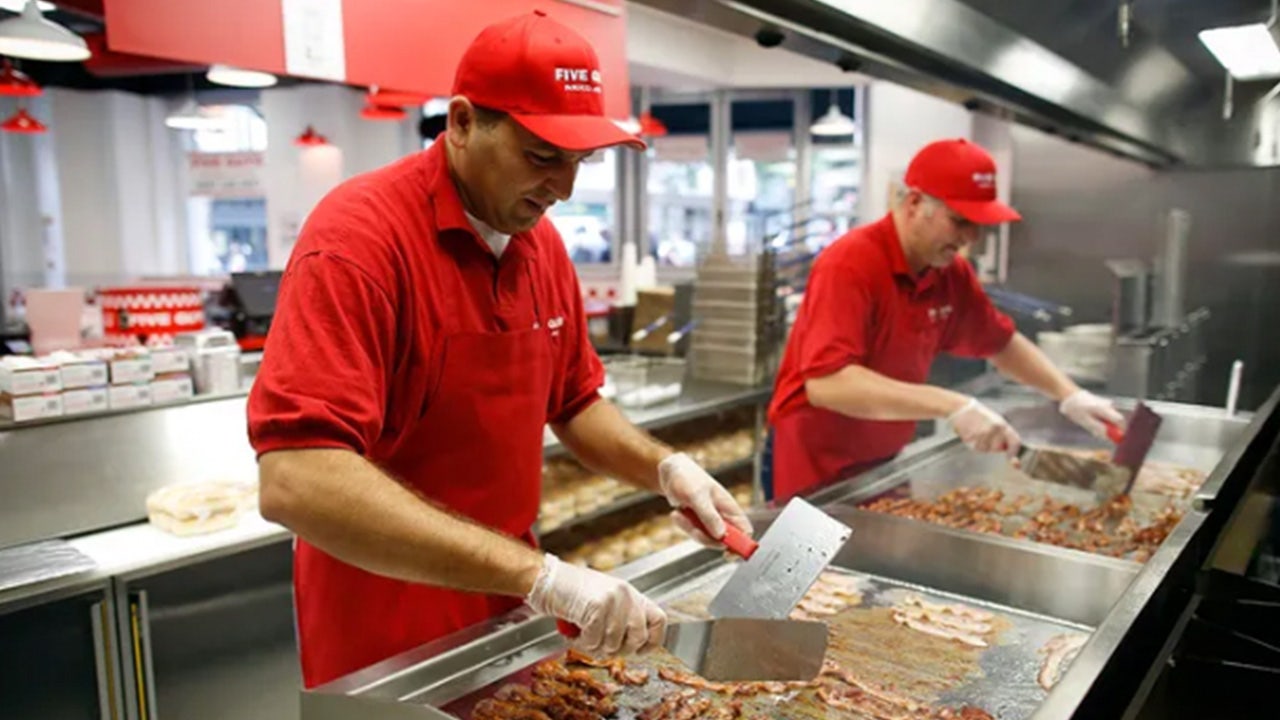
Five Guys is rewarding employees after an unexpectedly overwhelming promotion put heavy pressure on store crews. The burger chain said it was distributing about $1.5 million in bonuses to workers after a buy-one-get-one (BOGO) deal on Feb. 17, which was launched to celebrate its 40th anniversary but quickly exceeded expectations. "The promotion spread far beyond what we anticipated, and our hardworking crews were placed in a difficult situation," Five Guys said in a Feb. 18 statement. FAST-FOOD CHAINS USE PSYCHOLOGY TRICK TO MAKE YOU SPEND MORE MONEY ON THEIR MENU ITEMS: REPORT The company noted some locations ran out of food, closed early and experienced online ordering issues. "We also want to recognize the incredible men and women working in our restaurants," the statement continued. "They handled it with the same grit and dedication that has defined Five Guys for four decades." FAST-FOOD GIANT MAINTAINS IRON GRIP ON CUSTOMER SATISFACTION AMID RESTAURANT INDUSTRY CHANGES CEO Jerry Murrell told Fortune he wrote 1,500 bonus checks, acknowledging the company underestimated demand and wanting to recognize employees for handling the surge. "I didn't want anybody shooting me in the back or anything after the first day, because we really screwed it up. We had no idea that we were going to get that kind of response," Murrell told the outlet. Five Guys did not immediately respond to FOX Business' request for comment.
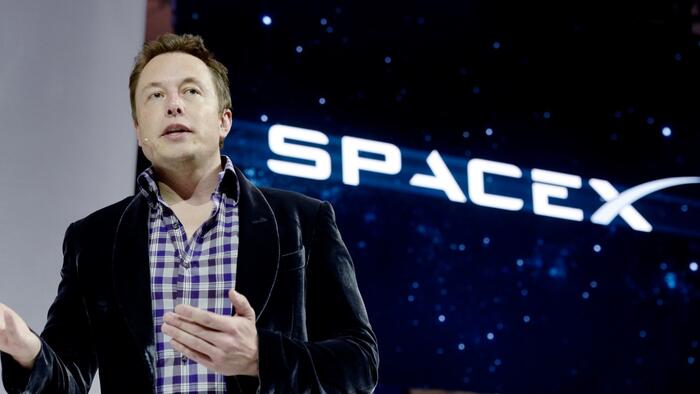
SpaceX IPO to Allocate 30% for Retail Investors, Tripling Usual Share
Elon Musk's SpaceX is poised to take a groundbreaking step in the world of public offerings. According to reports, the company is planning to allocate an unprecedented 30% of its initial public offering (IPO) to retail investors. This allocation significantly exceeds the typical 5% to 10% generally set aside for retail during IPOs. Upcoming SpaceX IPO Highlights SpaceX is preparing to file its IPO prospectus, potentially as early as this week. With expectations to raise around $50 billion, the company's valuation is anticipated to reach upwards of $1.8 trillion. If achieved, this would mark it as the largest IPO in history, surpassing Saudi Aramco's $29 billion in 2020. Valuation and Market Position A valuation of $1.8 trillion would place SpaceX among elite companies, joining the ranks of those with market caps over $1 trillion. Although not yet public, SpaceX has become a well-known entity, thanks to its innovative role in the space industry and its association with Musk. Retail Investor Opportunities Given SpaceX's rising profile and the popularity of Musk's other ventures, this strategy may attract significant interest from retail investors. SpaceX aims to utilize various banks for its IPO distribution: * Bank of America will handle shares for domestic retail investors. * Citigroup is set for international retail and institutional distribution. * Foreign investment banks will focus on their respective markets. * Morgan Stanley is expected to facilitate trades for smaller retail investors via E*TRADE. Recent estimates suggest SpaceX could generate between $15 billion and $16 billion in revenue by 2025. If the projected valuation holds true, this would place the stock price at over 112 times its revenue, emphasizing that potential investors should be mindful of the stock's valuation metrics as excitement grows. Conclusion The upcoming IPO from SpaceX not only represents a significant moment for the company but also offers a unique opportunity for retail investors. As the market watches and waits for further announcements, the implications of this move could reshape retail investment participation in high-profile public offerings.

Anthropic's 'Most Capable' AI Model Claude Mythos Leaks, Deemed Major Cybersecurity Threat - Decrypt
Cybersecurity stocks declined after reports suggested the system could accelerate AI-driven cyberattacks. Claude creator Anthropic is developing a new AI model called Claude Mythos, described internally as the company's most capable model to date, with draft materials about the system being leaked online this week. The existence of the model was first reported by Fortune on Thursday after unpublished files tied to Anthropic's blog were discovered in a publicly accessible data cache. An Anthropic spokesperson confirmed the existence of the model to the publication. "We're developing a general purpose model with meaningful advances in reasoning, coding, and cybersecurity," an Anthropic spokesperson told Fortune. "Given the strength of its capabilities, we're being deliberate about how we release it. As is standard practice across the industry, we're working with a small group of early access customers to test the model. We consider this model a step change and the most capable we've built to date." In an archived development page reviewed by Decrypt, Anthropic called Mythos "the most powerful AI model we've ever developed." "Mythos is a new name for a new tier of model: larger and more intelligent than our Opus models -- which were, until now, our most powerful," Anthropic wrote. "We chose the name to evoke the deep connective tissues that link together knowledge and ideas." According to Anthropic, Mythos scored "dramatically higher" than Claude Opus 4.6 on tests of software coding, academic reasoning, and cybersecurity. The leak of Mythos appears to have originated from draft materials stored in an unsecured content management system. According to Fortune, Anthropic restricted public access to the data store after being notified that the files were searchable online. The company attributed the exposure to human error in the configuration of its CMS tools. However, Anthropic's documents labeled Mythos as version one of the new model, and described version two internally as "Capybara," which the company also positioned above its current top-tier Opus models. The draft materials also highlighted concerns about the system's potential cybersecurity implications. "Although Mythos is currently far ahead of any other AI model in cyber capabilities, it presages an upcoming wave of models that can exploit vulnerabilities in ways that far outpace the efforts of defenders," the company wrote. Because of those risks, the company said it plans to release the model cautiously, beginning with a limited early-access rollout aimed at organizations working on cybersecurity defense. Anthropic did not immediately respond to Decrypt's request for comment. While Anthropic took down the blog post, news of the leak quickly spilled into financial markets. Shares of several cybersecurity firms dropped after the reports surfaced, including Palo Alto Networks (PANW), which fell about 7%, and CrowdStrike (CRWD), which dropped roughly 6.4%. Meanwhile, Zscaler (ZS) declined around 5.8%, and Fortinet (FTNT) slipped about 4% during Friday trading, according to Yahoo Finance. The selloff reaction echoes a similar market response to the reveal of a new Anthropic product. In February, Anthropic unveiled Claude Cowork, an AI system designed to automate complex workplace tasks -- including contract review and compliance -- which triggered a broad sell-off across software and professional-services companies. That sell-off erased roughly $285 billion in market value as investors reassessed the long-term impact of AI agents on enterprise software businesses. "The market's response was a signal, not that AI agents will immediately replace these businesses, but that investors are finally pricing in the structural risk that foundation model providers can now compete directly with the software layer," Nexatech Ventures founder Scott Dylan told Decrypt at the time. "That's a polite way of saying if Anthropic can build a legal workflow tool in-house, what's stopping them from doing the same for finance, procurement, or HR?"

Musk Targets Retail Investors For Up To 30% Of SpaceX's IPO Shares
Elon Musk is planning a highly unconventional IPO for SpaceX, aiming to make it one of the largest public offerings ever, with a target raise in the tens of billions, according to the Wall Street Journal. Instead of relying solely on the standard investor roadshow, he is considering bringing investors directly to SpaceX sites, where they could tour facilities and potentially witness rocket launches -- turning the pitch into an immersive experience designed to build excitement and demand. A central part of the strategy is reshaping who gets access to shares. Musk wants to allocate a much larger share of the IPO to retail investors -- possibly a third or more -- far above the typical allocation. He is also exploring giving priority access to loyal supporters, such as Tesla shareholders and individuals who have backed his other ventures, reinforcing his pattern of rewarding his existing base. The WSJ writes that at the same time, SpaceX may depart from traditional IPO rules around insider selling. Some early investors could be required to hold their shares longer than usual to help stabilize the stock, while others might face fewer restrictions and be allowed to sell earlier.
MCD House meeting ends amid chaos; AAP holds protest over 'LPG shortage'
Mayor Raja Iqbal Singh said that similar to previous meetings, some AAP councillors attempted to disrupt the proceedings of the House during this meeting as well. "The AAP councillors often avoid meaningful discussions on public welfare issues and create unnecessary disturbances during proceedings. Despite this, the House continued its work, and several important proposals concerning civic issues were discussed seriously and passed," the mayor said. The mayor welcomed the provision of Rs 11,412 crore allocated for the MCD in the Delhi government's budget. He described it as a significant increase compared to previous years and said that the enhanced budget will greatly assist the Corporation in strengthening civic infrastructure, improving the quality of public services and accelerating environmental conservation efforts. AAP Councillor and Leader of Opposition (LoP) Ankush Narang said that the BJP mayor did not even allow a discussion on this serious issue. "In haste, he passed the agenda, adjourned the House and left the premises. This is not only a matter of gas cylinder shortage but also a major crisis connected to the daily lives of the common people. Kitchens are going cold, and the BJP government is running away from its responsibility," Narang said "Under the BJP government, inflation, unemployment and the lack of basic facilities have made life difficult for the common man. The public is now demanding answers and answers must be given," he said. One of the proposals passed in the House was for inviting bids to develop a facility of a minimum of 800 tonnes per day on a five-acre plot at the Ghazipur site to process the fresh waste and disposal of by-products. According to the proposal, the proposed rate for concessionaires is Rs 749/MT and will be built on design, build, finance, operate and transfer (DBFOT) basis. PTI VBH VBH KSS KSS

Five Guys CEO rewards workers with $1.5M after anniversary deal chaos: 'We really screwed it up'
Five Guys is rewarding employees after an unexpectedly overwhelming promotion put heavy pressure on store crews. The burger chain said it was distributing about $1.5 million in bonuses to workers after a buy-one-get-one (BOGO) deal on Feb. 17, which was launched to celebrate its 40th anniversary but quickly exceeded expectations. "The promotion spread far beyond what we anticipated, and our hardworking crews were placed in a difficult situation," Five Guys said in a Feb. 18 statement. FAST-FOOD CHAINS USE PSYCHOLOGY TRICK TO MAKE YOU SPEND MORE MONEY ON THEIR MENU ITEMS: REPORT The company noted some locations ran out of food, closed early and experienced online ordering issues. "We also want to recognize the incredible men and women working in our restaurants," the statement continued. "They handled it with the same grit and dedication that has defined Five Guys for four decades." FAST-FOOD GIANT MAINTAINS IRON GRIP ON CUSTOMER SATISFACTION AMID RESTAURANT INDUSTRY CHANGES CEO Jerry Murrell told Fortune he wrote 1,500 bonus checks, acknowledging the company underestimated demand and wanting to recognize employees for handling the surge. "I didn't want anybody shooting me in the back or anything after the first day, because we really screwed it up. We had no idea that we were going to get that kind of response," Murrell told the outlet. IS THERE A FAST-FOOD PRICE WAR LOOMING? Five Guys brought back the BOGO offer from March 9-12. GET FOX BUSINESS ON THE GO BY CLICKING HERE Five Guys did not immediately respond to FOX Business' request for comment.
Accenture and Anthropic Launch Cyber.AI: What It Means for Enterprise Security Operations | Knowledge Hub Media
Cyber.AI is a new cybersecurity platform from Accenture, built in collaboration with Anthropic, that uses AI to automate and accelerate enterprise security operations. Unveiled at the RSA Conference on March 25, 2026, the platform places Anthropic's Claude AI model at its core as a reasoning engine, pairing it with Accenture's proprietary library of security agents and more than two decades of cybersecurity expertise. The straightforward but ambitious goal is to shift organizations from reactive, manual security workflows to continuous, AI-driven defense that operates at machine speed. In this article, we'll discuss what Cyber.AI actually does, how it fits into the broader Accenture-Anthropic partnership, what early deployment results look like, and why the platform's emphasis on AI agent governance matters as much as its threat detection capabilities. Whether you're evaluating AI-driven security tools for your organization or simply tracking how major consulting firms are operationalizing large language models, this breakdown covers what you need to know. Cyber.AI combines Anthropic's Claude reasoning engine with Accenture's cybersecurity agents and domain expertise to automate security workflows across the entire cyber lifecycle; from vulnerability scanning and threat detection to incident response and remediation. Key takeaways include... Who should read this: CISOs, security operations leaders, enterprise IT decision-makers, and AI strategy professionals. The launch of Cyber.AI isn't happening in a vacuum. It's a direct response to a cybersecurity environment that has shifted dramatically in the past two years. According to the World Economic Forum's Global Cyber Outlook Report 2026, which was produced in collaboration with Accenture, nearly 90% of organizations now identify AI-related vulnerabilities as the fastest-growing category of cyber risk. Attackers are leveraging AI to compress what used to be weeks-long attack campaigns into hours, while most defensive infrastructure was designed for threats that move at human speed. Phishing attacks augmented by AI saw staggering growth in 2025, and the proliferation of autonomous AI agents across enterprise environments has introduced entirely new categories of attack surfaces; including non-human identities and misconfigured AI components that can be exploited for data theft or model poisoning. Traditional security models, built around periodic manual scans and human-led triage, simply cannot keep pace. Cyber.AI is designed to close that gap. Rather than layering AI on top of existing manual processes, the platform reimagines security operations as a set of orchestrated, AI-driven "missions," automated workflows that span everything from initial assessments and triage through remediation and transformation. This shift from reactive controls to proactive, agentic defense is what distinguishes Cyber.AI from incremental AI add-ons that many security vendors have introduced in recent years. At the technical core of Cyber.AI is Anthropic's Claude, which serves as the platform's central reasoning engine. Claude analyzes and synthesizes large volumes of security data, generating context-aware insights that inform decision-making across the security lifecycle. This isn't a chatbot answering security questions, it's an AI system reasoning through complex, multi-step workflows autonomously. The platform draws from a curated library of Accenture's proprietary security agents, which span several critical domains, including identity security, cyber defense, core digital infrastructure protection, and cyber resiliency. These agents are orchestrated through Cyber.AI to handle specific tasks within broader security missions, and Claude's reasoning capabilities tie those individual agent actions together into coherent, end-to-end workflows. Importantly, Claude's built-in safety guardrails are supplemented by enterprise-grade governance controls that Accenture has layered on top, ensuring that the AI's autonomous actions remain aligned with each organization's specific policies and risk tolerance. This combination of powerful reasoning and strict governance boundaries is what makes the platform suitable for the high-stakes environments where Accenture's clients operate, with financial services, healthcare, agriculture, and the public sector being chief among them. One of the most significant components of Cyber.AI is Agent Shield, a feature within the platform's Secure AI and Agents capabilities. As enterprises deploy more autonomous AI agents across their operations, those agents themselves become potential targets and vectors for attack. Agent Shield addresses this by providing real-time identity controls, threat detection, and runtime protection specifically designed to secure and govern AI systems at scale. This matters because the cybersecurity challenge is no longer just about protecting traditional infrastructure from traditional threats. Organizations now need to protect their AI agents from being compromised, ensure those agents aren't making decisions outside their defined authority, and monitor their behavior continuously for anomalies. Agent Shield delivers this governance layer, helping organizations keep their autonomous systems operating within defined boundaries while still benefiting from the speed and scale that AI-driven operations provide. As Craig Robinson, Research Vice President at IDC, has noted, the rapid growth of non-human identities and autonomous agents is creating a fragmented cybersecurity landscape that demands coordinated, agent-level orchestration. That's exactly the kind of capability Agent Shield is designed to deliver. Accenture hasn't just built Cyber.AI for its clients, it's deployed the platform across its own global IT infrastructure, providing a useful proof of concept at significant scale. The results from this internal deployment are notable. The platform now secures 1,600 applications and more than 500,000 APIs within Accenture's environment. Vulnerability scan turnaround times dropped from a range of three to five days down to under one hour. Security testing coverage expanded dramatically, going from approximately 10% of the environment to over 80%. This increased efficiency drove a significant reduction in the backlog of critical vulnerabilities and contributed to a 35% improvement in service delivery, with consistent year-over-year cost reductions. Beyond Accenture's own infrastructure, early client results are also emerging. A Fortune 500 agriculture company has used Cyber.AI's agentic capabilities to overhaul its identity and access management operations, automating complex processes during platform migrations with greater precision and efficiency. These early case studies suggest the platform is capable of delivering measurable improvements in both speed and coverage, two metrics that security teams perennially struggle to move simultaneously. Cyber.AI doesn't exist in isolation, it's one part of a much broader strategic relationship between Accenture and Anthropic that was formalized in December 2025 with the creation of the Accenture Anthropic Business Group. That partnership involves training approximately 30,000 Accenture professionals on Claude, making Claude Code available to tens of thousands of Accenture developers, and co-developing industry solutions with an initial focus on highly regulated sectors. The partnership is grounded in a shared emphasis on responsible AI deployment. Anthropic's constitutional AI principles, its framework for building AI systems that are safe and aligned with human values, are combined with Accenture's enterprise AI governance expertise. For organizations in regulated industries, this combination is designed to remove one of the biggest barriers to AI adoption: the fear that deploying AI at scale will create compliance risks or governance gaps that outweigh the operational benefits. Accenture has also established Innovation Hubs where Global 2000 clients can prototype, test, and validate AI solutions in controlled environments before rolling them out enterprise-wide, and the companies are co-investing in a Claude Center of Excellence within Accenture to accelerate solution development.
