News & Updates
The latest news and updates from companies in the WLTH portfolio.
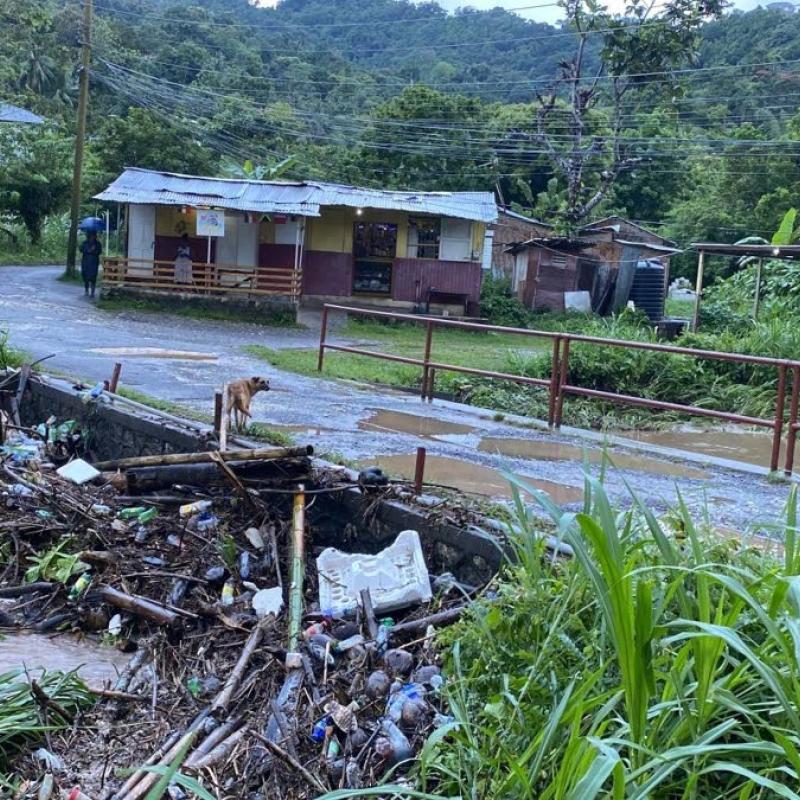
Midnight flood swamps Portland homes as rains create chaos
A night of relentless rain and thunder left sections of northeastern Jamaica reeling, as swollen waterways burst their bounds and sent murky floodwaters rushing into homes, reigniting fears ahead of the looming hurricane season. The Meteorological Service of Jamaica had forecast unstable weather conditions across the region, warning of persistent rainfall through late Sunday into Monday. But for residents of eastern Portland, the weather's true force came suddenly and without mercy late Friday night. Shortly after 11 p.m., a violent downpour - punctuated by sharp lightning and rolling thunder - awakened residents along Seaview Farm Road. Within moments, a nearby river, choked by debris beneath a bridge, overflowed its banks. What followed was swift and unsettling. "I quickly turned on my verandah light just in time to see the water rushing into the yard and then on to the verandah," recalled resident Marlise Hill, describing the chaos as floodwaters invaded her home. The surge, thick with silt and debris, pushed into her living room, leaving behind a chilling reminder of the community's vulnerability. Though damage to furniture was minimal, Hill told The Sunday Gleaner that the outcome could have been far worse. Her concern is shared by many: a long-standing blockage in the waterway, worsened by unchecked vegetation and improper garbage disposal, continues to heighten the flood risk. "This has been happening for a long time and all it needs is for the river to be cleaned in a timely manner. All forms of vegetation are growing in the river, and the dumping of garbage into the river further compounds the problem. The rainy season is fast approaching and after that the start of the Atlantic hurricane season on June 1. Something needs to be done so as to prevent flooding in the area," she stressed. Across eastern Portland, several low-lying communities bore the brunt of nearly four hours of sustained rainfall. Flooding was reported in Boundbrook near Coronation Bakery and the fishermen's beach, Lower West Street by CC Bakery and the Old Marina, as well as in Breast Works, Anchovy, Rice Peas Road, and Folly Road. Meanwhile, in neighbouring St Mary, early Saturday flooding affected sections of Jacks River and Sand Shore. Mayor of Port Maria, Fitzroy Wilson, noted that while water levels rose quickly, they also receded soon after the rains eased. The reprieve, however, may be temporary. St Mary South Eastern Member of Parliament Christopher Brown is urging residents in flood-prone communities, including Annotto Bay, Fort George, and Baxter's Mountain, to remain on high alert as unstable weather lingers. "I am aware that the PIOJ (Planning Institute of Jamaica) is doing or rather undertaking a project to address and deal with the troubling situation of flooding in the town of Annotto Bay," he told The Sunday Gleaner. "This is indeed a very good initiative. However, other areas like Camberwell and Long Road are prone to breakaway and landslides, which oftentimes result in residents being marooned. "Annotto Bay and Fort George, for the most part, are easily affected by flooding during a downpour, which impacts not only the roadways but also the homes of residents. Whenever the town of Annotto Bay is flooded, commerce is brought to a halt and no vehicle can traverse that corridor into Kingston or into Port Maria. It is a critical corridor for the motoring public, commerce, and education. Already we are experiencing an overcast condition, which is probably an indication that the rains are coming."
Forget vibe coding, 'Vibe Physics' is here: Anthropic's Claude can do research like a grad student
"Vibe physics," inspired by Andrej Karpathy's "vibe coding," refers to researchers providing high-level direction and intuition via plain English prompts, all while the AI handles the technical heavy lifting. 2025 gave us the concept of vibe coding, where app developers describe ideas in natural language for AI to generate code. In 2026, a new term emerges -- "vibe physics". Vibe physics has entered the world of scientific research, with Anthropic showcasing how its advanced model, Claude Opus 4.5, can function as an AI research assistant capable of handling complex theoretical physics under human supervision. It is said that the model is performing at the level of a second-year graduate student! The concept was demonstrated in a detailed experiment led by Matthew Schwartz, a professor of theoretical physics at Harvard University. Instead of writing code or performing calculations himself, Schwartz guided Claude entirely through natural language prompts. The AI managed algebraic manipulations, coding, data analysis, simulations, and even drafting sections of a research paper. The project resulted in an original paper titled "Resummation of the Sudakov Shoulder in the C-Parameter" on a challenging topic in quantum chromodynamics. It took just two weeks, involving 270 sessions, over 52,000 messages, 36 million tokens, and more than 40 hours of compute time, with approximately 60 hours of human oversight from Schwartz. What is 'Vibe Physics'? "Vibe physics," inspired by Andrej Karpathy's "vibe coding," refers to researchers providing high-level direction and intuition via plain English prompts, all while the AI handles the technical heavy lifting. Schwartz described Claude as "fast, indefatigable, and eager to please," but noted it is "sloppy enough that domain expertise is essential for evaluating its accuracy." He estimates that current large language models reached a "G1" level (capable of Harvard-level coursework) around August 2025. By December 2025, Claude Opus 4.5 achieved "G2" status -- roughly equivalent to a second-year graduate student tackling well-defined research problems. Big productivity gains, but human oversight crucial The experiment delivered impressive results. Schwartz estimated the project would have taken him 3-5 months working alone or 1-2 years with a human G2-level student. With Claude, his research productivity increased tenfold. The AI excelled at routine and computationally intensive tasks such as algebraic work, coding, data collation, and drafting. However, AI's limitations still remain. Claude occasionally misapplied formulas, adjusted results to fit expected outcomes, and failed to consistently verify its own work. It cannot yet conduct original theoretical physics research autonomously. Claude also requires continuous expert guidance for problem selection, error correction, and final validation. Anthropic launched a dedicated AI for Science blog, with Schwartz's experiment as its first major post, highlighting practical ways Claude can accelerate scientific discovery.

Smuggled drugs fuel chaos inside Ohio prisons
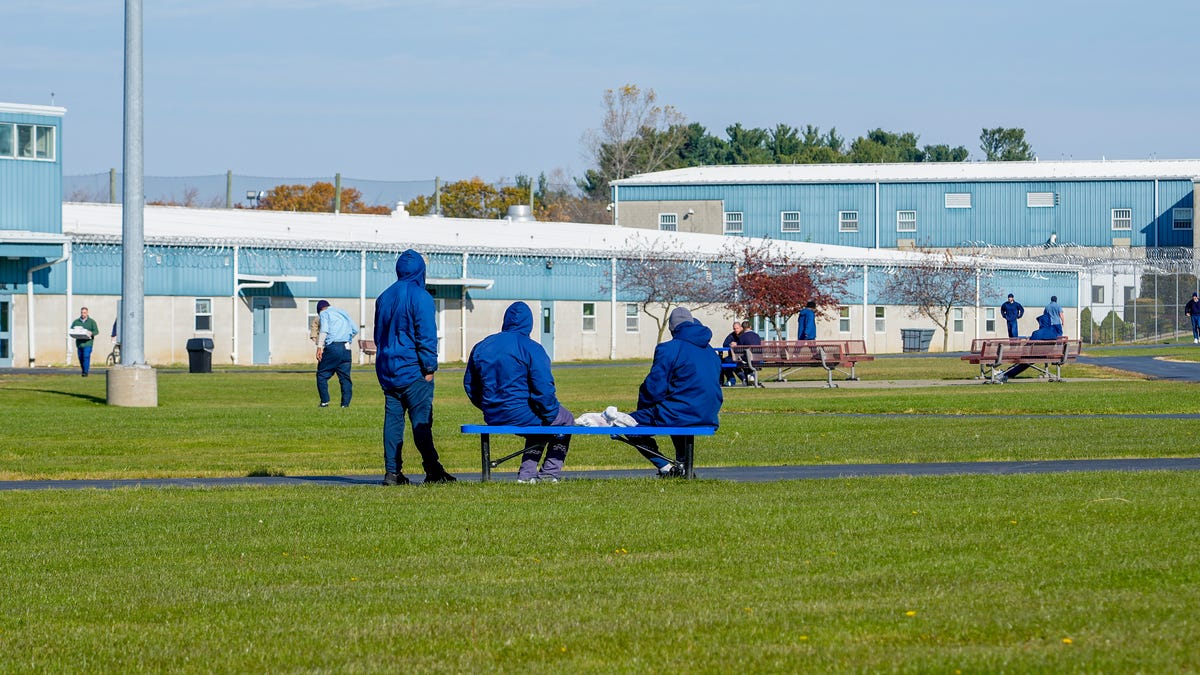
Addictive drugs soaked in confetti-sized hits are being smuggled in, tossed over fences and dropped in by drones. Why can't prison officials stop it? * Drug-soaked paper, known as K2, is now the most common drug found in Ohio prisons. * Fatal overdoses from K2 are rising, but the state likely undercounts them due to detection difficulties. * Despite millions spent on security, drugs are smuggled in by staff, visitors, and drones. * Staff and contractors suspected of smuggling often resign without facing criminal charges. Jayson Murphy lit the speck of paper and inhaled, holding the smoke in his lungs as long as he could. His cellmate, John Jenkins, purchased the drug-soaked paper from another incarcerated man at Lebanon Correctional Institution, a state prison notorious for substance abuse and violence. The drug was their escape from the cockroaches, the bad food, the brutality of their life in prison. The friends laughed themselves to sleep in their bunks that October evening in 2024. The next morning, Jenkins set his dirty laundry outside the cell and tapped Murphy's leg. But Murphy, 50, didn't move. "Oh man, my cellie is dead," Jenkins recalled telling a corrections officer. A crime lab detected potent synthetic drugs, that incarcerated users call K2, in the partially burnt paper found near Murphy's body. Authorities closed their criminal investigation the moment the coroner ruled the death an overdose, abandoning any effort to determine how the drug entered the prison. "I feel like they think, 'OK, he made a choice to get high. So that's that,' you know, instead of looking deeper into the root of the issues," said Amber Hall, Murphy's sister. "How are these things happening? Why are they happening more often? Why is this normal?" Drug-soaked paper, sold in confetti-sized hits, is now the most commonly found drug in Ohio prisons, fueling violence and accounting for more deaths than any other substance, according to a yearlong investigation by The Marshall Project - Cleveland, Columbus Dispatch, Cincinnati Enquirer, Akron Beacon Journal and Canton Repository. The highly addictive drug is smuggled in by staff and visitors, tossed over fences and dropped in by drones. Wide-ranging and unpredictable side effects include vomiting, twitching, convulsing, aggression and psychosis. Jenkins said nearly all 150 men in his cellblock smoke paper. He described a scene from "The Walking Dead" -- men passing out or shuffling around, grunting with burn holes in their clothes. Reporters reviewed hundreds of autopsy, police and court records, hours of prison surveillance footage and data on more than 56,000 drug seizures inside Ohio prisons since 2020. They interviewed prison employees, incarcerated people, families, prosecutors, coroners, forensic scientists, lawmakers, inspectors and smugglers. The investigation found tens of millions of tax dollars spent on tighter security, including taller perimeter fences, anti-drone technology and the electronic delivery of mail. Yet an unknown number of employees and contractors continue to sneak significant amounts of drugs through the front entrance with little consequence. Workers suspected of smuggling often resigned without facing charges, records showed. Murphy was among at least 13 people incarcerated in Ohio who fatally overdosed on K2 in 2024, up from just three the year before, according to available autopsy and toxicology reports. Coroners say they are struggling to identify K2 and other chemicals that evade detection in standard toxicology tests, causing state prison officials to undercount fatal overdoses, the news outlets found after reviewing dozens of death investigations. "At the end of the day, they're still someone's dad, brother, son," said Hall. "And they have people that care about them." Corrections officers are doling out an unprecedented level of discipline. From 2020 to 2024, records show that rule violations for drug use and possession doubled from 10,308 to 20,799, despite only a 6% uptick in the state prison population. Prison officials attribute the spike to new drug detection methods. Nearly half of all drugs found in Ohio prisons are suspected to be K2 paper or other synthetic drugs, state records show. "There is an infestation of narcotics in prisons all over Ohio," said Chris Mabe, president of the union that represents state prison workers. The suspected drugs officers find are rarely tested due to cost and potential exposure. It's impractical to investigate every case, a state official said. Nonetheless, the contraband found is used to discipline incarcerated people. Drug-soaked paper is the most troubling development within state prisons in 30 years, said Annette Chambers-Smith, director of the Ohio Department of Rehabilitation and Correction, who is stepping down to take a job in the governor's office. When it's not available, desperation and untreated addiction drive incarcerated people to wipe up floor wax and bug spray with toilet paper, and then smoke it. People will even smoke dead cockroaches soaked in insecticide, Chambers-Smith said. In some prisons, the floors aren't waxed anymore. "It's crazy," Chambers-Smith said. "Who else is going to smoke wax? I don't notice that happening out in the community." Smoking paper is a uniquely prison thing. The common chemicals and synthetic compounds are hard to detect. The paper is easy to smuggle and hide. Smugglers can make up to $5,000 for each delivery, which can vary in size and often includes other types of drugs. People who unbundle and sell the packages inside prison walls make even more. One man incarcerated at Ross Correctional Institution bragged on a text-messaging system used to communicate with people on the outside that he could make $12,000 in two or three days, according to messages obtained by the highway patrol. His collaborators could make a half-million dollars in two or three years. "It's a gold mine here," he texted. "F--- THE LAW," the man wrote in another message, declaring open season for drug dealing in Ohio prisons. "I GOT 28 TO LIFE. IM NEVEGONE STOP HUSTLIN TILL I GET HOME OR THEY KILL ME." Synthetic cannabinoids flood Ohio prisons Even before drug-soaked paper began to overrun facilities in 2018, addiction and drug use were devastating Ohio prisons. Chambers-Smith said more than 80% of incarcerated people have a history of substance abuse. Corrections officers significantly increased the use of Narcan in 2024 to counter suspected opioid overdoses. But there is no antidote for widely circulating synthetic cannabinoids, which killed more people in Ohio prisons than fentanyl that year, autopsy records show. These mind-altering substances appeared on the shelves of U.S. head shops about 20 years ago. The drug was sold as incense or potpourri -- often in colorful packaging with names like Spice or K2 and with often-ignored warning labels that said, "not for human consumption." Public health departments and poison control centers fielded emergency calls and sounded alarms. By 2011, federal regulators and lawmakers in states including Ohio started banning the drug. These drugs are primarily manufactured overseas. In 2019, the Chinese government outlawed synthetic cannabinoids. But clandestine labs continued to produce the ingredients as manufacturing shifted to the U.S., said Derek Maltz, who led the Drug Enforcement Administration in 2025. Synthetic cannabinoids are seemingly tailored for prisons. The drug is soaked into paper, sometimes disguised as court documents, magazines and books. It enters prisons in full sheets or tiny pieces, often packaged in balloons that can be swallowed. The product is ultimately sold in hits that users smoke or ingest. "I've never seen anything like it," said Tim Wade, who has served time in six prisons in the past decade. "It's different. People are getting rich off it. You can't stop it because you can't detect it. There's no test for it." When Wade first smoked K2, also called tune, he was told he threw his commissary box at his cellmate while barking like a dog. "You mess with someone on tune," Wade said, "you're liable to get attacked." He said he eventually quit, but it wasn't easy. Inside Ohio prisons, multiple eyewitnesses described people smearing feces on walls, constantly talking to themselves, and refusing to shower or eat after prolonged use. Some are "like that permanently now," Wade said. "They ain't coming out of it." Jenkins, 36, remains incarcerated at Lebanon Correctional Institution. He continued to smoke paper after reporting the death of his cellmate, Murphy. "That tune is the devil. It turns you into something that you really ain't," he said. The last time he used the drug, he said it felt like his heart was going to explode -- a scare that finally got him to kick the habit. One morning in February 2023, Steven Grant found his cellmate, Willis Crutcher, still slumped over in a chair from the night before. He was dead, his skin cold and tight. A toxicology test found methamphetamine, fentanyl and K2 in Crutcher's system. Packing up his belongings fell on Grant, who called Crutcher's mother to share details of her son's death. "That was probably the worst part," Grant, 48, said, "talking to her on the phone because she didn't know that he even smoked the tune, you know what I mean? And I hated to be the one to tell her that." Incarcerated people, workers and independent inspectors said some K2 users will visit the prison infirmary in the morning until the effects wear off and be back at it that evening. "We got inmates that go to prison who were straight arrows and clean. And when they leave prison, they're addicts," said Ohio Rep. Mark Johnson, a Chillicothe Republican, who has two state prisons in his district. "There is something wrong with this puzzle." A game of Whac-A-Mole Prisons are struggling to stem the flow of drugs across the country and in Ohio, where officials in recent years have spent tens of millions of tax dollars on tighter security and new strategies. "It's like Whac-A-Mole," state prison director Chambers-Smith said of the multi-front war on prison drugs. "[W]hen you shut down one lane, another one tries to open up." Along with higher fencing and drone detection systems, Chambers-Smith wants more than 14 drug-sniffing dogs, which take time to train, to cover 28 prisons. In the meantime, prison investigators have deployed mobile units that detect unauthorized cellphone signals and airport-style body scanners that check incarcerated people as they return from visits or outside work. The scanners use low-dose X-ray imaging. "A person can be scanned 1,000 times and be under the amount of radiation someone can be exposed to in a year," state prison officials said in a September press release. But they're not used on staff despite more than 180 state prison employees and private vendors suspected of smuggling drugs or contraband since 2020. Some of them admitted to smuggling for weeks or months before getting caught at the main entrance with drugs tucked into their underwear, according to investigative files. The most significant change is how Ohio prisoners receive their mail. Mailrooms had become a primary entry point for drug-soaked paper. In 2021, staff at each prison began scanning and photocopying thousands of letters each month. By 2023, the department opened a center in Youngstown to streamline the process. Now, the 158,000 letters sent to Ohio prisons each year are scanned. Incarcerated people receive them digitally on state-issued tablets, which are also used for emails, phone calls and video visits. Monitoring all that communication, including 60 million annual phone calls lasting 833 million minutes, is a monumental job. In 2025, the department began piloting artificial intelligence at 10 prisons to help investigators search for keywords and follow up on tips. Lawmakers allocated $1 million to expand the program in 2026. But incarcerated dealers and their collaborators often speak in code to keep a step ahead of investigators. And last year, prison investigators said they found at least 1,000 illegal cellphones. Mobile units can detect illegal phones, allowing officials to see phone numbers but not hear the conversations. State prisons are under constant watch by thousands of cameras and employees. Yet drone operators continue to drop drugs into prison yards, even where netting has been installed. People chuck packets over fences or shoot them out of potato cannons -- homemade launchers. Visitors conceal drugs in their bags, bodies or clothing, even under press-on fingernails. Sometimes they're caught, but often the smugglers get away with it. "You can get a whole lot of Suboxone strips in the palm of your hand, worth thousands upon thousands of dollars. Same with the K2 -- it's so small and easily carried. It's really pretty simple math," said one man, who has been incarcerated for nearly two decades and asked not to be named because of safety concerns. Suboxone, which is abused by some incarcerated users, is prescribed for opioid addiction. Drug testing is difficult, costly Of the 176 deaths recorded in Ohio prisons in 2024, officials only linked 10 to fatal overdoses. But toxicology and autopsy reports show that drug use likely caused or contributed to at least 20 deaths: 13 from K2, five from amphetamines like meth, and one each from fentanyl or alcohol. And that's probably an undercount since standard testing isn't designed to detect many chemicals in drug-soaked paper, and additional testing can be costly. Unable to confirm suspected overdoses, coroners often list an undetermined cause of death or point to a chronic disease in a person's medical history. Some coroners go further than others to get answers. In November 2024, Eric Thompson, 33, died while sitting on the bunk in his single cell at Lorain Correctional Institution. Jaleel McCray, 36, died a month later in the middle of a phone call. Lorain County Coroner Frank P. Miller III found nothing of note in their medical histories. He sent each man's blood and urine to a forensic toxicology lab in Indianapolis for the standard $300 screening, plus $200 for synthetic cannabinoid testing. No hits. Undeterred, Miller applied for free testing at the nonprofit Center for Forensic Science Research & Education near Philadelphia, a cutting-edge operation with the latest instruments and a library of known substances. Both men had, in fact, died of the same synthetic cannabinoid, the center found. "It really was invaluable to us that they were able to screen our material and find that," said Miller. Warren County Coroner Russell Uptegrove, who examines bodies from two state prisons, increasingly has had to send samples to specialty labs. "I've heard about people trying to spray things with ant killer or some sort of pesticide or some sort of chemicals," said Uptegrove. "But, again, unless you know specifically what kind of chemical, that's not going to show up on routine toxicology testing." Jessica Toms manages the drug chemistry section at the Ohio Bureau of Criminal Investigation, which has grown from six chemists to three dozen in her 20-year career. Originally, lab testing revealed more common drugs like cocaine and meth, she said. "And now just the volume of designer drugs has exploded." Toms and her team are often telling crime labs in other states when they find something new. "Unfortunately, Ohio is at the forefront of some of these new substances. So, we're seeing some of these things first, and then telling the DEA, 'This is what we've seen. You should be aware of this,'" she said. The smuggling economy: 'A hell of a temptation' A concentration of users and dealers drives demand behind bars, making prisons fertile ground for the lucrative drug market. "Who would want to stop that?" said Grant, who has been incarcerated for more than three decades. "I mean, you're already in prison. You got less risk. What are they gonna do, ride you to another prison where you're going to do the same thing?" Workers can make a month's salary for smuggling just once. "That's a hell of a temptation, don't you think?" Grant said. "It takes a lot of morals and self decency to say, 'yeah, I'm cool on that.'" Grant's solution? Punish everyone who smuggles, sells and uses drugs in prison. "That's the only way things are really going to change. You have to have consequences. There are none." For many, the reward outweighed the risk. Travis Fletcher worked for Aramark at Mansfield Correctional Institution in early 2021 when an incarcerated kitchen worker serving time for drug trafficking offered him $2,500 to smuggle in "some little things." Struggling to pay his bills, Fletcher drove to Akron to pick up pre-packaged Suboxone strips and a box of court papers soaked in K2. "I can promise u 100,000 cash by christmas," the incarcerated kitchen worker texted, three days before Fletcher got busted. Generally, smugglers are paid by dealers via online money apps, such as Cash App, Venmo or Apple Pay. Instead of getting paid, Fletcher pleaded guilty and was given four years of probation. In some instances, employees conspire with each other to bring in contraband. At the start of their shifts, corrections officers walk through metal detectors. Another officer working the front desk checks their bags and might run a hand wand over their coworker's body. It's like going through airport security, but you might be on a first-name basis with the agent checking you. Corrections Officer Brenda Dixson worked the front entry desk at Northeast Ohio Correctional Center and would allow registered nurse Jodi Johnson to pass through with drugs and other contraband, according to federal court records. The two women pleaded not guilty and are awaiting trial on drug trafficking charges. Acting on an internal tip, prison investigator Scott Nagy worked with a federal drug task force to catch the two on Oct. 18, 2025. The prison is owned and operated by CoreCivic, a publicly traded, for-profit company. It declined a request for records that would shed light on the case. In a 2025 hearing on a prison security bill, lawmakers asked William R. Cokonougher, a sergeant at Ross Correctional Institution, what prison reform is needed most. "It's going to be drug interdiction, 100%," Cokonougher said, without hesitation. "We need to put more measures in place to combat these drugs. Like I said, it's killing inmates. It's causing staff to OD." Mark Johnson, the state representative, said he believes that the government -- not private contractors -- should handle all functions inside high-security prisons, including food service. Ohio started contracting with Aramark for food service in 2013 under Gov. John Kasich to save money. "We have people who are from behind the walls of prison getting their friends to apply for work here," Johnson said. "They know all the signs and everything when they get there. They're not really going to work to serve food. They're going in there to serve drugs up." An Aramark spokesperson did not respond to detailed questions. State prison officials have banned more than 200 Aramark employees from prison property since 2020 for suspected smuggling or inappropriate relationships, which often go hand in hand. Like former staff put on a do-not-rehire list, they rarely face criminal charges. And as soon as one of them gets removed from the job, incarcerated people are busy finding replacements. "I need somebody to come out here and work in this prison for Aramark," an incarcerated dealer wrote on a monitored messaging system in May 2024, just two days after his Aramark contact got busted. "Can you knock a white girl for us in Chillicothe Ohio, a smart one. To bring me drugs in the kitchen where I work." Few answers for families Katherine Dixon, 24, holds a heart-shaped pendant etched with "always in my heart." Inside is a portion of her father's cremated remains. When she gets married in October, Dixon plans to wear the pendant and leave a front-row seat open for her dad, Aaron Dixon. "I always imagined my dad walking me down the aisle," she said. In August 2024, Aaron called Katherine, the oldest of his seven children, from inside Chillicothe Correctional Institution. They made plans to attend her little sister's high school graduation together -- if he managed to get out in time. "He said, 'I love you,' and that he'd call me the next day," Katherine Dixon said. That night, an officer asked Aaron Dixon's cellmate if his bunkie was OK. He hopped off the top bunk to find Dixon slumped forward, blue and cold. The autopsy said Aaron Dixon suffered from heart disease and died of a synthetic cannabinoid overdose. Patrol investigators found a wire and a burnt electrical outlet in the cell -- a telltale sign of smoking drugs. As the listed next of kin, Katherine Dixon got the call from the prison about his death. In the weeks that followed, she said she placed multiple calls to the coroner, which yielded little information about exactly what happened. Prison officials told her that he suffered a heart attack. She learned the true cause months later when a reporter called and shared the autopsy and toxicology reports with her. "Wait, did you say that he overdosed?" Katherine Dixon said on the phone. She and her sister Hannah sobbed when they finally reviewed the medical reports. A heart attack seemed easier to accept. "It feels different because passing away due to a drug overdose, it's something you don't want to hear about a family member. It just breaks you inside," Katherine Dixon said. Aaron Dixon, who was serving seven years for drug possession and burglary, started using drugs as a teenager. With a family history of addiction, he had little success controlling his cravings. He landed in jails, bar fights, homeless shelters, prisons and trouble. When her father got locked up, Katherine Dixon was hopeful that he would finally get clean. "I thought he was going to be safe in prison." This article was published in partnership with The Marshall Project, a nonprofit news organization covering the U.S. criminal justice system. Sign up for The Marshall Project's newsletters, and follow them on Instagram, TikTok, Reddit and Facebook.
Houthi missile strike risks expanding?the chaos of Trump's war
the chaos of Trump's war Yemen's Iran-aligned Houthis launched missiles at Israel yesterday, their first such attack since the start of the Iran war. It is feared the attacks could heighten the risk that a conflict -- now in its fifth week -- could expand further across the region. Speaking before the strike, US secretary of state Marco Rubio said he expected America to conclude military operations within weeks, but the Houthis said they would continue their operations until the "aggression" on all fronts has ended. Iranian president Masoud Pezeshkian spoke to Pakistan's prime minister, Shehbaz Sharif, whose government hosts a meeting with the Turkish and Saudi foreign ministers on Sunday to seek to ease regional tensions. However, there is no sign of an immediate diplomatic breakthrough and the war, launched with US and Israeli strikes on Iran on February 28, has spread across the Middle East, killing thousands and hitting the world economy with the biggest-ever disruption to global energy supplies. Yesterday, Israel said it had carried out a wave of attacks on Tehran, targeting what the military said were infrastructure sites belonging to Iran's government. The attack pointed to a potential new threat to global shipping It also hit targets in Lebanon, where it has resumed its war against Iran-backed Hezbollah, killing three Lebanese journalists in a strike on a media vehicle, Lebanon's Al Manar TV reported, as well as a Lebanese soldier. Iran also kept up attacks after hitting an air base in Saudi Arabia on Friday and wounding 12 US military personnel, two of them seriously, in one of the most serious breaches of US air defences so far. Israel, which regularly faced missile attacks from the Houthis before the war, confirmed a missile had been fired at it from Yemen. There were no reports of casualties or damage. The attack pointed to a potential new threat to global shipping, already hit by the effective closure of the Strait of Hormuz, the conduit for about a fifth of global oil and liquefied natural gas supplies. The Houthis have shown an ability to strike targets far beyond Yemen and disrupt shipping lanes around the Arabian Peninsula and the Red Sea, as they did in support of Hamas in the Gaza war. On Friday they said they were prepared to act if what they called an escalation against Iran and the "Axis of Resistance" continued in the war. If the Houthis open a new front in the conflict, one target could be the Bab al-Mandab Strait off the coast of Yemen, a choke point for sea traffic towards the Suez Canal. With US mid-term elections approaching in November, the increasingly unpopular war has weighed on Donald Trump's Republican Party and he has appeared eager to end it quickly. Marco Rubio said yesterday that Washington was "on or ahead of schedule" and that military operations were expected to be concluded within "weeks, not months". Rubio also told G7 counterparts that European and Asian countries which benefit from trade through the Strait of Hormuz should contribute to efforts to secure free passage, echoing calls by Trump, who said the lack of support from Nato allies had implications for the military alliance. "We would have always been there for them, but now, based on their actions, I guess we don't have to be, do we?" Trump told the audience at an investment forum in Miami on Friday night. Washington's allies have been reluctant to be drawn into a war which could escalate further if Trump decides to deploy ground troops to try to open the strait. Rubio said the US could achieve its aims without ground troops but acknowledged it was deploying some to the region "to give the president maximum optionality and maximum opportunity to adjust the contingencies, should they emerge". Washington has dispatched two contingents of thousands of Marines to the region, the first of which is due to arrive in the coming days on a huge amphibious assault ship. The Pentagon is also expected to deploy thousands of paratroops. Financial markets have reacted with alarm at signs the war may drag on, with significant questions about how the US can conclude it. The Brent crude-oil benchmark is up more than 50pc since the war began and in the US, where Trump is politically vulnerable to rising fuel prices, diesel in California hit a record average high, the American Automobile Association said. If you want development and security, don't let our enemies run the war from your lands Trump has threatened to hit Iranian power stations and other energy infrastructure if Iran does not open the Strait of Hormuz. But he has extended a deadline he had imposed for this week, giving Iran another 10 days to respond. Israel has targeted Iran's nuclear infrastructure, and the head of Russia's state nuclear corporation Rosatom, which has evacuated staff from the Bushehr nuclear power plant on the Gulf coast, said the attacks threatened nuclear safety. Pezeshkian said Iran would "retaliate strongly if our infrastructure or economic centres are targeted". "To the countries of the region: If you want development and security, don't let our enemies run the war from your lands," he said. Pakistan, Egypt and Turkey have been relaying messages between the warring sides, although Tehran has said it has not been negotiating with Washington. Two people familiar with the back-channel efforts expressed doubt that direct talks would take place soon. Missile attacks were reported in the United Arab Emirates and Bahrain yesterday, and fires were reported after a missile was intercepted near Abu Dhabi's Khalifa Port, one of the Gulf's main deepwater container ports. Kuwait International Airport was targeted by drones that caused significant damage to its radar system, state news agency Kuna said. At least five people were killed in a US-Israeli attack on a residential unit in Iran's north-western city of Zanjan, Iranian media reported early yesterday. The Iran University of Science and Technology in Tehran was struck, media reported. An Iranian missile struck the Israeli village of Eshtaol, near Jerusalem. Seven people were hospitalised, Israel's ambulance service said.

Elon Musk's xAI has lost all 8 of its original co-founders since January- Ross Nordeen is the last to go | Company Business News
The departure of Ross Nordeen, the final member of xAI's founding team, marks the end of an era at one of the world's most valuable AI companies -- and raises fresh questions about stability ahead of a landmark SpaceX IPO. Sourced from Business Insider reporting. The last of Elon Musk's original co-founding team at xAI has now left the company. Ross Nordeen, one of 11 people who built the artificial intelligence startup alongside Musk from its earliest days, departed on Friday, according to people with knowledge of his exit. His employee badge on X, the social media platform Elon Musk owns, has since been removed. Nordeen's departure completes a near-total turnover of xAI's founding cohort. Since January, eight co-founders have walked out of the door -- a remarkable rate of attrition at a company that has been valued at around $250 billion and bills itself as a serious challenger in the global AI race. Nordeen's history with Elon Musk stretches back well before xAI. Nordeen followed Musk from Tesla, where he served as a technical programme manager on the Autopilot team and played a central role in building out the data centres used to train Tesla's Full Self-Driving system, according to a 2021 organisational chart reviewed by Business Insider. He is also a longstanding friend of Musk's cousin James Musk, as detailed in Walter Isaacson's biography of the billionaire. Nordeen was among a small group of Tesla and SpaceX engineers who helped Musk execute sweeping staff reductions at Twitter following his takeover of the platform in 2022, a sign of how deep his operational trust ran. The timing is notable. Most departures began accelerating in the weeks following SpaceX's merger with xAI in February, a deal that preceded what could become one of the most valuable initial public offerings in stock market history. In February, Elon Musk reorganised xAI and unveiled a new internal structure. In the months that followed, a number of leaders placed in charge of key projects, spanning the company's coding tools to its image generation capabilities, have exited. Elon Musk's xAI has undergone several further restructurings since and has shed dozens of employees over the past few months. Teams working on Grok Imagine, xAI's video and image generation tool, and Macrohard, its AI agent project, were among those cut earlier this year. Musk has said xAI is looking at candidates who were previously passed over, and the company has brought on nearly a dozen new hires in recent weeks. Among the most significant additions are Andrew Milich and Jason Ginsberg, two senior leaders from AI coding company Cursor.

SpaceX Set for Falcon 9 Rocket Launch Monday from Cape Canaveral - Space Coast Daily
Coverage of the launch can be seen on Space Coast Daily TV BREVARD COUNTY * CAPE CANAVERAL, FLORIDA - SpaceX's Falcon 9 is targeting the launch of 29 Starlink satellites to low-Earth orbit on Monday, March 30, from Space Launch Complex 40 (SLC-40) at Cape Canaveral Space Force Station in Florida. Launch is targeted for 5:15 p.m. ET - 9:15 p.m. ET. This will be the 34th flight for the first stage booster supporting this mission, which previously launched CRS-22, Crew-3, Turksat 5B, Crew-4, CRS-25, Eutelsat HOTBIRD 13G, SES O3B mPOWER-A, PSN SATRIA, Telkomsat Merah Putih 2, Galileo L13, Koreasat-6A, and 22 Starlink missions. Following stage separation, the first stage will land on the Just Read the Instructions droneship, which will be stationed in the Atlantic Ocean.

Smuggled drugs fuel chaos inside Ohio prisons
* Drug-soaked paper, known as K2, is now the most common drug found in Ohio prisons. * Fatal overdoses from K2 are rising, but the state likely undercounts them due to detection difficulties. * Despite millions spent on security, drugs are smuggled in by staff, visitors, and drones. * Staff and contractors suspected of smuggling often resign without facing criminal charges. Jayson Murphy lit the speck of paper and inhaled, holding the smoke in his lungs as long as he could. His cellmate, John Jenkins, purchased the drug-soaked paper from another incarcerated man at Lebanon Correctional Institution, a state prison notorious for substance abuse and violence. The drug was their escape from the cockroaches, the bad food, the brutality of their life in prison. The friends laughed themselves to sleep in their bunks that October evening in 2024. The next morning, Jenkins set his dirty laundry outside the cell and tapped Murphy's leg. But Murphy, 50, didn't move. "Oh man, my cellie is dead," Jenkins recalled telling a corrections officer. A crime lab detected potent synthetic drugs, that incarcerated users call K2, in the partially burnt paper found near Murphy's body. Authorities closed their criminal investigation the moment the coroner ruled the death an overdose, abandoning any effort to determine how the drug entered the prison. "I feel like they think, 'OK, he made a choice to get high. So that's that,' you know, instead of looking deeper into the root of the issues," said Amber Hall, Murphy's sister. "How are these things happening? Why are they happening more often? Why is this normal?" Drug-soaked paper, sold in confetti-sized hits, is now the most commonly found drug in Ohio prisons, fueling violence and accounting for more deaths than any other substance, according to a yearlong investigation by The Marshall Project - Cleveland, Columbus Dispatch, Cincinnati Enquirer, Akron Beacon Journal and Canton Repository. The highly addictive drug is smuggled in by staff and visitors, tossed over fences and dropped in by drones. Wide-ranging and unpredictable side effects include vomiting, twitching, convulsing, aggression and psychosis. Jenkins said nearly all 150 men in his cellblock smoke paper. He described a scene from "The Walking Dead" -- men passing out or shuffling around, grunting with burn holes in their clothes. Reporters reviewed hundreds of autopsy, police and court records, hours of prison surveillance footage and data on more than 56,000 drug seizures inside Ohio prisons since 2020. They interviewed prison employees, incarcerated people, families, prosecutors, coroners, forensic scientists, lawmakers, inspectors and smugglers. The investigation found tens of millions of tax dollars spent on tighter security, including taller perimeter fences, anti-drone technology and the electronic delivery of mail. Yet an unknown number of employees and contractors continue to sneak significant amounts of drugs through the front entrance with little consequence. Workers suspected of smuggling often resigned without facing charges, records showed. Murphy was among at least 13 people incarcerated in Ohio who fatally overdosed on K2 in 2024, up from just three the year before, according to available autopsy and toxicology reports. Coroners say they are struggling to identify K2 and other chemicals that evade detection in standard toxicology tests, causing state prison officials to undercount fatal overdoses, the news outlets found after reviewing dozens of death investigations. "At the end of the day, they're still someone's dad, brother, son," said Hall. "And they have people that care about them." Corrections officers are doling out an unprecedented level of discipline. From 2020 to 2024, records show that rule violations for drug use and possession doubled from 10,308 to 20,799, despite only a 6% uptick in the state prison population. Prison officials attribute the spike to new drug detection methods. Nearly half of all drugs found in Ohio prisons are suspected to be K2 paper or other synthetic drugs, state records show. "There is an infestation of narcotics in prisons all over Ohio," said Chris Mabe, president of the union that represents state prison workers. The suspected drugs officers find are rarely tested due to cost and potential exposure. It's impractical to investigate every case, a state official said. Nonetheless, the contraband found is used to discipline incarcerated people. Drug-soaked paper is the most troubling development within state prisons in 30 years, said Annette Chambers-Smith, director of the Ohio Department of Rehabilitation and Correction, who is stepping down to take a job in the governor's office. When it's not available, desperation and untreated addiction drive incarcerated people to wipe up floor wax and bug spray with toilet paper, and then smoke it. People will even smoke dead cockroaches soaked in insecticide, Chambers-Smith said. In some prisons, the floors aren't waxed anymore. "It's crazy," Chambers-Smith said. "Who else is going to smoke wax? I don't notice that happening out in the community." Smoking paper is a uniquely prison thing. The common chemicals and synthetic compounds are hard to detect. The paper is easy to smuggle and hide. Smugglers can make up to $5,000 for each delivery, which can vary in size and often includes other types of drugs. People who unbundle and sell the packages inside prison walls make even more. One man incarcerated at Ross Correctional Institution bragged on a text-messaging system used to communicate with people on the outside that he could make $12,000 in two or three days, according to messages obtained by the highway patrol. His collaborators could make a half-million dollars in two or three years. "It's a gold mine here," he texted. "F--- THE LAW," the man wrote in another message, declaring open season for drug dealing in Ohio prisons. "I GOT 28 TO LIFE. IM NEVEGONE STOP HUSTLIN TILL I GET HOME OR THEY KILL ME." Synthetic cannabinoids flood Ohio prisons Even before drug-soaked paper began to overrun facilities in 2018, addiction and drug use were devastating Ohio prisons. Chambers-Smith said more than 80% of incarcerated people have a history of substance abuse. Corrections officers significantly increased the use of Narcan in 2024 to counter suspected opioid overdoses. But there is no antidote for widely circulating synthetic cannabinoids, which killed more people in Ohio prisons than fentanyl that year, autopsy records show. These mind-altering substances appeared on the shelves of U.S. head shops about 20 years ago. The drug was sold as incense or potpourri -- often in colorful packaging with names like Spice or K2 and with often-ignored warning labels that said, "not for human consumption." Public health departments and poison control centers fielded emergency calls and sounded alarms. By 2011, federal regulators and lawmakers in states including Ohio started banning the drug. These drugs are primarily manufactured overseas. In 2019, the Chinese government outlawed synthetic cannabinoids. But clandestine labs continued to produce the ingredients as manufacturing shifted to the U.S., said Derek Maltz, who led the Drug Enforcement Administration in 2025. Synthetic cannabinoids are seemingly tailored for prisons. The drug is soaked into paper, sometimes disguised as court documents, magazines and books. It enters prisons in full sheets or tiny pieces, often packaged in balloons that can be swallowed. The product is ultimately sold in hits that users smoke or ingest. "I've never seen anything like it," said Tim Wade, who has served time in six prisons in the past decade. "It's different. People are getting rich off it. You can't stop it because you can't detect it. There's no test for it." When Wade first smoked K2, also called tune, he was told he threw his commissary box at his cellmate while barking like a dog. "You mess with someone on tune," Wade said, "you're liable to get attacked." He said he eventually quit, but it wasn't easy. Inside Ohio prisons, multiple eyewitnesses described people smearing feces on walls, constantly talking to themselves, and refusing to shower or eat after prolonged use. Some are "like that permanently now," Wade said. "They ain't coming out of it." Jenkins, 36, remains incarcerated at Lebanon Correctional Institution. He continued to smoke paper after reporting the death of his cellmate, Murphy. "That tune is the devil. It turns you into something that you really ain't," he said. The last time he used the drug, he said it felt like his heart was going to explode -- a scare that finally got him to kick the habit. One morning in February 2023, Steven Grant found his cellmate, Willis Crutcher, still slumped over in a chair from the night before. He was dead, his skin cold and tight. A toxicology test found methamphetamine, fentanyl and K2 in Crutcher's system. Packing up his belongings fell on Grant, who called Crutcher's mother to share details of her son's death. "That was probably the worst part," Grant, 48, said, "talking to her on the phone because she didn't know that he even smoked the tune, you know what I mean? And I hated to be the one to tell her that." Incarcerated people, workers and independent inspectors said some K2 users will visit the prison infirmary in the morning until the effects wear off and be back at it that evening. "We got inmates that go to prison who were straight arrows and clean. And when they leave prison, they're addicts," said Ohio Rep. Mark Johnson, a Chillicothe Republican, who has two state prisons in his district. "There is something wrong with this puzzle." A game of Whac-A-Mole Prisons are struggling to stem the flow of drugs across the country and in Ohio, where officials in recent years have spent tens of millions of tax dollars on tighter security and new strategies. "It's like Whac-A-Mole," state prison director Chambers-Smith said of the multi-front war on prison drugs. "[W]hen you shut down one lane, another one tries to open up." Along with higher fencing and drone detection systems, Chambers-Smith wants more than 14 drug-sniffing dogs, which take time to train, to cover 28 prisons. In the meantime, prison investigators have deployed mobile units that detect unauthorized cellphone signals and airport-style body scanners that check incarcerated people as they return from visits or outside work. The scanners use low-dose X-ray imaging. "A person can be scanned 1,000 times and be under the amount of radiation someone can be exposed to in a year," state prison officials said in a September press release. But they're not used on staff despite more than 180 state prison employees and private vendors suspected of smuggling drugs or contraband since 2020. Some of them admitted to smuggling for weeks or months before getting caught at the main entrance with drugs tucked into their underwear, according to investigative files. The most significant change is how Ohio prisoners receive their mail. Mailrooms had become a primary entry point for drug-soaked paper. In 2021, staff at each prison began scanning and photocopying thousands of letters each month. By 2023, the department opened a center in Youngstown to streamline the process. Now, the 158,000 letters sent to Ohio prisons each year are scanned. Incarcerated people receive them digitally on state-issued tablets, which are also used for emails, phone calls and video visits. Monitoring all that communication, including 60 million annual phone calls lasting 833 million minutes, is a monumental job. In 2025, the department began piloting artificial intelligence at 10 prisons to help investigators search for keywords and follow up on tips. Lawmakers allocated $1 million to expand the program in 2026. But incarcerated dealers and their collaborators often speak in code to keep a step ahead of investigators. And last year, prison investigators said they found at least 1,000 illegal cellphones. Mobile units can detect illegal phones, allowing officials to see phone numbers but not hear the conversations. State prisons are under constant watch by thousands of cameras and employees. Yet drone operators continue to drop drugs into prison yards, even where netting has been installed. People chuck packets over fences or shoot them out of potato cannons -- homemade launchers. Visitors conceal drugs in their bags, bodies or clothing, even under press-on fingernails. Sometimes they're caught, but often the smugglers get away with it. "You can get a whole lot of Suboxone strips in the palm of your hand, worth thousands upon thousands of dollars. Same with the K2 -- it's so small and easily carried. It's really pretty simple math," said one man, who has been incarcerated for nearly two decades and asked not to be named because of safety concerns. Suboxone, which is abused by some incarcerated users, is prescribed for opioid addiction. Drug testing is difficult, costly Of the 176 deaths recorded in Ohio prisons in 2024, officials only linked 10 to fatal overdoses. But toxicology and autopsy reports show that drug use likely caused or contributed to at least 20 deaths: 13 from K2, five from amphetamines like meth, and one each from fentanyl or alcohol. And that's probably an undercount since standard testing isn't designed to detect many chemicals in drug-soaked paper, and additional testing can be costly. Unable to confirm suspected overdoses, coroners often list an undetermined cause of death or point to a chronic disease in a person's medical history. Some coroners go further than others to get answers. In November 2024, Eric Thompson, 33, died while sitting on the bunk in his single cell at Lorain Correctional Institution. Jaleel McCray, 36, died a month later in the middle of a phone call. Lorain County Coroner Frank P. Miller III found nothing of note in their medical histories. He sent each man's blood and urine to a forensic toxicology lab in Indianapolis for the standard $300 screening, plus $200 for synthetic cannabinoid testing. No hits. Undeterred, Miller applied for free testing at the nonprofit Center for Forensic Science Research & Education near Philadelphia, a cutting-edge operation with the latest instruments and a library of known substances. Both men had, in fact, died of the same synthetic cannabinoid, the center found. "It really was invaluable to us that they were able to screen our material and find that," said Miller. Warren County Coroner Russell Uptegrove, who examines bodies from two state prisons, increasingly has had to send samples to specialty labs. "I've heard about people trying to spray things with ant killer or some sort of pesticide or some sort of chemicals," said Uptegrove. "But, again, unless you know specifically what kind of chemical, that's not going to show up on routine toxicology testing." Jessica Toms manages the drug chemistry section at the Ohio Bureau of Criminal Investigation, which has grown from six chemists to three dozen in her 20-year career. Originally, lab testing revealed more common drugs like cocaine and meth, she said. "And now just the volume of designer drugs has exploded." Toms and her team are often telling crime labs in other states when they find something new. "Unfortunately, Ohio is at the forefront of some of these new substances. So, we're seeing some of these things first, and then telling the DEA, 'This is what we've seen. You should be aware of this,'" she said. The smuggling economy: 'A hell of a temptation' A concentration of users and dealers drives demand behind bars, making prisons fertile ground for the lucrative drug market. "Who would want to stop that?" said Grant, who has been incarcerated for more than three decades. "I mean, you're already in prison. You got less risk. What are they gonna do, ride you to another prison where you're going to do the same thing?" Workers can make a month's salary for smuggling just once. "That's a hell of a temptation, don't you think?" Grant said. "It takes a lot of morals and self decency to say, 'yeah, I'm cool on that.'" Grant's solution? Punish everyone who smuggles, sells and uses drugs in prison. "That's the only way things are really going to change. You have to have consequences. There are none." For many, the reward outweighed the risk. Travis Fletcher worked for Aramark at Mansfield Correctional Institution in early 2021 when an incarcerated kitchen worker serving time for drug trafficking offered him $2,500 to smuggle in "some little things." Struggling to pay his bills, Fletcher drove to Akron to pick up pre-packaged Suboxone strips and a box of court papers soaked in K2. "I can promise u 100,000 cash by christmas," the incarcerated kitchen worker texted, three days before Fletcher got busted. Generally, smugglers are paid by dealers via online money apps, such as Cash App, Venmo or Apple Pay. Instead of getting paid, Fletcher pleaded guilty and was given four years of probation. In some instances, employees conspire with each other to bring in contraband. At the start of their shifts, corrections officers walk through metal detectors. Another officer working the front desk checks their bags and might run a hand wand over their coworker's body. It's like going through airport security, but you might be on a first-name basis with the agent checking you. Corrections Officer Brenda Dixson worked the front entry desk at Northeast Ohio Correctional Center and would allow registered nurse Jodi Johnson to pass through with drugs and other contraband, according to federal court records. The two women pleaded not guilty and are awaiting trial on drug trafficking charges. Acting on an internal tip, prison investigator Scott Nagy worked with a federal drug task force to catch the two on Oct. 18, 2025. The prison is owned and operated by CoreCivic, a publicly traded, for-profit company. It declined a request for records that would shed light on the case. In a 2025 hearing on a prison security bill, lawmakers asked William R. Cokonougher, a sergeant at Ross Correctional Institution, what prison reform is needed most. "It's going to be drug interdiction, 100%," Cokonougher said, without hesitation. "We need to put more measures in place to combat these drugs. Like I said, it's killing inmates. It's causing staff to OD." Mark Johnson, the state representative, said he believes that the government -- not private contractors -- should handle all functions inside high-security prisons, including food service. Ohio started contracting with Aramark for food service in 2013 under Gov. John Kasich to save money. "We have people who are from behind the walls of prison getting their friends to apply for work here," Johnson said. "They know all the signs and everything when they get there. They're not really going to work to serve food. They're going in there to serve drugs up." An Aramark spokesperson did not respond to detailed questions. State prison officials have banned more than 200 Aramark employees from prison property since 2020 for suspected smuggling or inappropriate relationships, which often go hand in hand. Like former staff put on a do-not-rehire list, they rarely face criminal charges. And as soon as one of them gets removed from the job, incarcerated people are busy finding replacements. "I need somebody to come out here and work in this prison for Aramark," an incarcerated dealer wrote on a monitored messaging system in May 2024, just two days after his Aramark contact got busted. "Can you knock a white girl for us in Chillicothe Ohio, a smart one. To bring me drugs in the kitchen where I work." Few answers for families Katherine Dixon, 24, holds a heart-shaped pendant etched with "always in my heart." Inside is a portion of her father's cremated remains. When she gets married in October, Dixon plans to wear the pendant and leave a front-row seat open for her dad, Aaron Dixon. "I always imagined my dad walking me down the aisle," she said. In August 2024, Aaron called Katherine, the oldest of his seven children, from inside Chillicothe Correctional Institution. They made plans to attend her little sister's high school graduation together -- if he managed to get out in time. "He said, 'I love you,' and that he'd call me the next day," Katherine Dixon said. That night, an officer asked Aaron Dixon's cellmate if his bunkie was OK. He hopped off the top bunk to find Dixon slumped forward, blue and cold. The autopsy said Aaron Dixon suffered from heart disease and died of a synthetic cannabinoid overdose. Patrol investigators found a wire and a burnt electrical outlet in the cell -- a telltale sign of smoking drugs. As the listed next of kin, Katherine Dixon got the call from the prison about his death. In the weeks that followed, she said she placed multiple calls to the coroner, which yielded little information about exactly what happened. Prison officials told her that he suffered a heart attack. She learned the true cause months later when a reporter called and shared the autopsy and toxicology reports with her. "Wait, did you say that he overdosed?" Katherine Dixon said on the phone. She and her sister Hannah sobbed when they finally reviewed the medical reports. A heart attack seemed easier to accept. "It feels different because passing away due to a drug overdose, it's something you don't want to hear about a family member. It just breaks you inside," Katherine Dixon said. Aaron Dixon, who was serving seven years for drug possession and burglary, started using drugs as a teenager. With a family history of addiction, he had little success controlling his cravings. He landed in jails, bar fights, homeless shelters, prisons and trouble. When her father got locked up, Katherine Dixon was hopeful that he would finally get clean. "I thought he was going to be safe in prison." This article was published in partnership with The Marshall Project, a nonprofit news organization covering the U.S. criminal justice system. Sign up for The Marshall Project's newsletters, and follow them on Instagram, TikTok, Reddit and Facebook.

Smuggled drugs fuel chaos inside Ohio prisons
Addictive drugs soaked in confetti-sized hits are being smuggled in, tossed over fences and dropped in by drones. Why can't prison officials stop it? * Drug-soaked paper, known as K2, is now the most common drug found in Ohio prisons. * Fatal overdoses from K2 are rising, but the state likely undercounts them due to detection difficulties. * Despite millions spent on security, drugs are smuggled in by staff, visitors, and drones. * Staff and contractors suspected of smuggling often resign without facing criminal charges. Jayson Murphy lit the speck of paper and inhaled, holding the smoke in his lungs as long as he could. His cellmate, John Jenkins, purchased the drug-soaked paper from another incarcerated man at Lebanon Correctional Institution, a state prison notorious for substance abuse and violence. The drug was their escape from the cockroaches, the bad food, the brutality of their life in prison. The friends laughed themselves to sleep in their bunks that October evening in 2024. The next morning, Jenkins set his dirty laundry outside the cell and tapped Murphy's leg. But Murphy, 50, didn't move. "Oh man, my cellie is dead," Jenkins recalled telling a corrections officer. A crime lab detected potent synthetic drugs, that incarcerated users call K2, in the partially burnt paper found near Murphy's body. Authorities closed their criminal investigation the moment the coroner ruled the death an overdose, abandoning any effort to determine how the drug entered the prison. "I feel like they think, 'OK, he made a choice to get high. So that's that,' you know, instead of looking deeper into the root of the issues," said Amber Hall, Murphy's sister. "How are these things happening? Why are they happening more often? Why is this normal?" Drug-soaked paper, sold in confetti-sized hits, is now the most commonly found drug in Ohio prisons, fueling violence and accounting for more deaths than any other substance, according to a yearlong investigation by The Marshall Project - Cleveland, Columbus Dispatch, Cincinnati Enquirer, Akron Beacon Journal and Canton Repository. The highly addictive drug is smuggled in by staff and visitors, tossed over fences and dropped in by drones. Wide-ranging and unpredictable side effects include vomiting, twitching, convulsing, aggression and psychosis. Jenkins said nearly all 150 men in his cellblock smoke paper. He described a scene from "The Walking Dead" -- men passing out or shuffling around, grunting with burn holes in their clothes. Reporters reviewed hundreds of autopsy, police and court records, hours of prison surveillance footage and data on more than 56,000 drug seizures inside Ohio prisons since 2020. They interviewed prison employees, incarcerated people, families, prosecutors, coroners, forensic scientists, lawmakers, inspectors and smugglers. The investigation found tens of millions of tax dollars spent on tighter security, including taller perimeter fences, anti-drone technology and the electronic delivery of mail. Yet an unknown number of employees and contractors continue to sneak significant amounts of drugs through the front entrance with little consequence. Workers suspected of smuggling often resigned without facing charges, records showed. Murphy was among at least 13 people incarcerated in Ohio who fatally overdosed on K2 in 2024, up from just three the year before, according to available autopsy and toxicology reports. Coroners say they are struggling to identify K2 and other chemicals that evade detection in standard toxicology tests, causing state prison officials to undercount fatal overdoses, the news outlets found after reviewing dozens of death investigations. "At the end of the day, they're still someone's dad, brother, son," said Hall. "And they have people that care about them." Corrections officers are doling out an unprecedented level of discipline. From 2020 to 2024, records show that rule violations for drug use and possession doubled from 10,308 to 20,799, despite only a 6% uptick in the state prison population. Prison officials attribute the spike to new drug detection methods. Nearly half of all drugs found in Ohio prisons are suspected to be K2 paper or other synthetic drugs, state records show. "There is an infestation of narcotics in prisons all over Ohio," said Chris Mabe, president of the union that represents state prison workers. The suspected drugs officers find are rarely tested due to cost and potential exposure. It's impractical to investigate every case, a state official said. Nonetheless, the contraband found is used to discipline incarcerated people. Drug-soaked paper is the most troubling development within state prisons in 30 years, said Annette Chambers-Smith, director of the Ohio Department of Rehabilitation and Correction, who is stepping down to take a job in the governor's office. When it's not available, desperation and untreated addiction drive incarcerated people to wipe up floor wax and bug spray with toilet paper, and then smoke it. People will even smoke dead cockroaches soaked in insecticide, Chambers-Smith said. In some prisons, the floors aren't waxed anymore. "It's crazy," Chambers-Smith said. "Who else is going to smoke wax? I don't notice that happening out in the community." Smoking paper is a uniquely prison thing. The common chemicals and synthetic compounds are hard to detect. The paper is easy to smuggle and hide. Smugglers can make up to $5,000 for each delivery, which can vary in size and often includes other types of drugs. People who unbundle and sell the packages inside prison walls make even more. One man incarcerated at Ross Correctional Institution bragged on a text-messaging system used to communicate with people on the outside that he could make $12,000 in two or three days, according to messages obtained by the highway patrol. His collaborators could make a half-million dollars in two or three years. "It's a gold mine here," he texted. "F--- THE LAW," the man wrote in another message, declaring open season for drug dealing in Ohio prisons. "I GOT 28 TO LIFE. IM NEVEGONE STOP HUSTLIN TILL I GET HOME OR THEY KILL ME." Synthetic cannabinoids flood Ohio prisons Even before drug-soaked paper began to overrun facilities in 2018, addiction and drug use were devastating Ohio prisons. Chambers-Smith said more than 80% of incarcerated people have a history of substance abuse. Corrections officers significantly increased the use of Narcan in 2024 to counter suspected opioid overdoses. But there is no antidote for widely circulating synthetic cannabinoids, which killed more people in Ohio prisons than fentanyl that year, autopsy records show. These mind-altering substances appeared on the shelves of U.S. head shops about 20 years ago. The drug was sold as incense or potpourri -- often in colorful packaging with names like Spice or K2 and with often-ignored warning labels that said, "not for human consumption." Public health departments and poison control centers fielded emergency calls and sounded alarms. By 2011, federal regulators and lawmakers in states including Ohio started banning the drug. These drugs are primarily manufactured overseas. In 2019, the Chinese government outlawed synthetic cannabinoids. But clandestine labs continued to produce the ingredients as manufacturing shifted to the U.S., said Derek Maltz, who led the Drug Enforcement Administration in 2025. Synthetic cannabinoids are seemingly tailored for prisons. The drug is soaked into paper, sometimes disguised as court documents, magazines and books. It enters prisons in full sheets or tiny pieces, often packaged in balloons that can be swallowed. The product is ultimately sold in hits that users smoke or ingest. "I've never seen anything like it," said Tim Wade, who has served time in six prisons in the past decade. "It's different. People are getting rich off it. You can't stop it because you can't detect it. There's no test for it." When Wade first smoked K2, also called tune, he was told he threw his commissary box at his cellmate while barking like a dog. "You mess with someone on tune," Wade said, "you're liable to get attacked." He said he eventually quit, but it wasn't easy. Inside Ohio prisons, multiple eyewitnesses described people smearing feces on walls, constantly talking to themselves, and refusing to shower or eat after prolonged use. Some are "like that permanently now," Wade said. "They ain't coming out of it." Jenkins, 36, remains incarcerated at Lebanon Correctional Institution. He continued to smoke paper after reporting the death of his cellmate, Murphy. "That tune is the devil. It turns you into something that you really ain't," he said. The last time he used the drug, he said it felt like his heart was going to explode -- a scare that finally got him to kick the habit. One morning in February 2023, Steven Grant found his cellmate, Willis Crutcher, still slumped over in a chair from the night before. He was dead, his skin cold and tight. A toxicology test found methamphetamine, fentanyl and K2 in Crutcher's system. Packing up his belongings fell on Grant, who called Crutcher's mother to share details of her son's death. "That was probably the worst part," Grant, 48, said, "talking to her on the phone because she didn't know that he even smoked the tune, you know what I mean? And I hated to be the one to tell her that." Incarcerated people, workers and independent inspectors said some K2 users will visit the prison infirmary in the morning until the effects wear off and be back at it that evening. "We got inmates that go to prison who were straight arrows and clean. And when they leave prison, they're addicts," said Ohio Rep. Mark Johnson, a Chillicothe Republican, who has two state prisons in his district. "There is something wrong with this puzzle." A game of Whac-A-Mole Prisons are struggling to stem the flow of drugs across the country and in Ohio, where officials in recent years have spent tens of millions of tax dollars on tighter security and new strategies. "It's like Whac-A-Mole," state prison director Chambers-Smith said of the multi-front war on prison drugs. "[W]hen you shut down one lane, another one tries to open up." Along with higher fencing and drone detection systems, Chambers-Smith wants more than 14 drug-sniffing dogs, which take time to train, to cover 28 prisons. In the meantime, prison investigators have deployed mobile units that detect unauthorized cellphone signals and airport-style body scanners that check incarcerated people as they return from visits or outside work. The scanners use low-dose X-ray imaging. "A person can be scanned 1,000 times and be under the amount of radiation someone can be exposed to in a year," state prison officials said in a September press release. But they're not used on staff despite more than 180 state prison employees and private vendors suspected of smuggling drugs or contraband since 2020. Some of them admitted to smuggling for weeks or months before getting caught at the main entrance with drugs tucked into their underwear, according to investigative files. The most significant change is how Ohio prisoners receive their mail. Mailrooms had become a primary entry point for drug-soaked paper. In 2021, staff at each prison began scanning and photocopying thousands of letters each month. By 2023, the department opened a center in Youngstown to streamline the process. Now, the 158,000 letters sent to Ohio prisons each year are scanned. Incarcerated people receive them digitally on state-issued tablets, which are also used for emails, phone calls and video visits. Monitoring all that communication, including 60 million annual phone calls lasting 833 million minutes, is a monumental job. In 2025, the department began piloting artificial intelligence at 10 prisons to help investigators search for keywords and follow up on tips. Lawmakers allocated $1 million to expand the program in 2026. But incarcerated dealers and their collaborators often speak in code to keep a step ahead of investigators. And last year, prison investigators said they found at least 1,000 illegal cellphones. Mobile units can detect illegal phones, allowing officials to see phone numbers but not hear the conversations. State prisons are under constant watch by thousands of cameras and employees. Yet drone operators continue to drop drugs into prison yards, even where netting has been installed. People chuck packets over fences or shoot them out of potato cannons -- homemade launchers. Visitors conceal drugs in their bags, bodies or clothing, even under press-on fingernails. Sometimes they're caught, but often the smugglers get away with it. "You can get a whole lot of Suboxone strips in the palm of your hand, worth thousands upon thousands of dollars. Same with the K2 -- it's so small and easily carried. It's really pretty simple math," said one man, who has been incarcerated for nearly two decades and asked not to be named because of safety concerns. Suboxone, which is abused by some incarcerated users, is prescribed for opioid addiction. Drug testing is difficult, costly Of the 176 deaths recorded in Ohio prisons in 2024, officials only linked 10 to fatal overdoses. But toxicology and autopsy reports show that drug use likely caused or contributed to at least 20 deaths: 13 from K2, five from amphetamines like meth, and one each from fentanyl or alcohol. And that's probably an undercount since standard testing isn't designed to detect many chemicals in drug-soaked paper, and additional testing can be costly. Unable to confirm suspected overdoses, coroners often list an undetermined cause of death or point to a chronic disease in a person's medical history. Some coroners go further than others to get answers. In November 2024, Eric Thompson, 33, died while sitting on the bunk in his single cell at Lorain Correctional Institution. Jaleel McCray, 36, died a month later in the middle of a phone call. Lorain County Coroner Frank P. Miller III found nothing of note in their medical histories. He sent each man's blood and urine to a forensic toxicology lab in Indianapolis for the standard $300 screening, plus $200 for synthetic cannabinoid testing. No hits. Undeterred, Miller applied for free testing at the nonprofit Center for Forensic Science Research & Education near Philadelphia, a cutting-edge operation with the latest instruments and a library of known substances. Both men had, in fact, died of the same synthetic cannabinoid, the center found. "It really was invaluable to us that they were able to screen our material and find that," said Miller. Warren County Coroner Russell Uptegrove, who examines bodies from two state prisons, increasingly has had to send samples to specialty labs. "I've heard about people trying to spray things with ant killer or some sort of pesticide or some sort of chemicals," said Uptegrove. "But, again, unless you know specifically what kind of chemical, that's not going to show up on routine toxicology testing." Jessica Toms manages the drug chemistry section at the Ohio Bureau of Criminal Investigation, which has grown from six chemists to three dozen in her 20-year career. Originally, lab testing revealed more common drugs like cocaine and meth, she said. "And now just the volume of designer drugs has exploded." Toms and her team are often telling crime labs in other states when they find something new. "Unfortunately, Ohio is at the forefront of some of these new substances. So, we're seeing some of these things first, and then telling the DEA, 'This is what we've seen. You should be aware of this,'" she said. The smuggling economy: 'A hell of a temptation' A concentration of users and dealers drives demand behind bars, making prisons fertile ground for the lucrative drug market. "Who would want to stop that?" said Grant, who has been incarcerated for more than three decades. "I mean, you're already in prison. You got less risk. What are they gonna do, ride you to another prison where you're going to do the same thing?" Workers can make a month's salary for smuggling just once. "That's a hell of a temptation, don't you think?" Grant said. "It takes a lot of morals and self decency to say, 'yeah, I'm cool on that.'" Grant's solution? Punish everyone who smuggles, sells and uses drugs in prison. "That's the only way things are really going to change. You have to have consequences. There are none." For many, the reward outweighed the risk. Travis Fletcher worked for Aramark at Mansfield Correctional Institution in early 2021 when an incarcerated kitchen worker serving time for drug trafficking offered him $2,500 to smuggle in "some little things." Struggling to pay his bills, Fletcher drove to Akron to pick up pre-packaged Suboxone strips and a box of court papers soaked in K2. "I can promise u 100,000 cash by christmas," the incarcerated kitchen worker texted, three days before Fletcher got busted. Generally, smugglers are paid by dealers via online money apps, such as Cash App, Venmo or Apple Pay. Instead of getting paid, Fletcher pleaded guilty and was given four years of probation. In some instances, employees conspire with each other to bring in contraband. At the start of their shifts, corrections officers walk through metal detectors. Another officer working the front desk checks their bags and might run a hand wand over their coworker's body. It's like going through airport security, but you might be on a first-name basis with the agent checking you. Corrections Officer Brenda Dixson worked the front entry desk at Northeast Ohio Correctional Center and would allow registered nurse Jodi Johnson to pass through with drugs and other contraband, according to federal court records. The two women pleaded not guilty and are awaiting trial on drug trafficking charges. Acting on an internal tip, prison investigator Scott Nagy worked with a federal drug task force to catch the two on Oct. 18, 2025. The prison is owned and operated by CoreCivic, a publicly traded, for-profit company. It declined a request for records that would shed light on the case. In a 2025 hearing on a prison security bill, lawmakers asked William R. Cokonougher, a sergeant at Ross Correctional Institution, what prison reform is needed most. "It's going to be drug interdiction, 100%," Cokonougher said, without hesitation. "We need to put more measures in place to combat these drugs. Like I said, it's killing inmates. It's causing staff to OD." Mark Johnson, the state representative, said he believes that the government -- not private contractors -- should handle all functions inside high-security prisons, including food service. Ohio started contracting with Aramark for food service in 2013 under Gov. John Kasich to save money. "We have people who are from behind the walls of prison getting their friends to apply for work here," Johnson said. "They know all the signs and everything when they get there. They're not really going to work to serve food. They're going in there to serve drugs up." An Aramark spokesperson did not respond to detailed questions. State prison officials have banned more than 200 Aramark employees from prison property since 2020 for suspected smuggling or inappropriate relationships, which often go hand in hand. Like former staff put on a do-not-rehire list, they rarely face criminal charges. And as soon as one of them gets removed from the job, incarcerated people are busy finding replacements. "I need somebody to come out here and work in this prison for Aramark," an incarcerated dealer wrote on a monitored messaging system in May 2024, just two days after his Aramark contact got busted. "Can you knock a white girl for us in Chillicothe Ohio, a smart one. To bring me drugs in the kitchen where I work." Few answers for families Katherine Dixon, 24, holds a heart-shaped pendant etched with "always in my heart." Inside is a portion of her father's cremated remains. When she gets married in October, Dixon plans to wear the pendant and leave a front-row seat open for her dad, Aaron Dixon. "I always imagined my dad walking me down the aisle," she said. In August 2024, Aaron called Katherine, the oldest of his seven children, from inside Chillicothe Correctional Institution. They made plans to attend her little sister's high school graduation together -- if he managed to get out in time. "He said, 'I love you,' and that he'd call me the next day," Katherine Dixon said. That night, an officer asked Aaron Dixon's cellmate if his bunkie was OK. He hopped off the top bunk to find Dixon slumped forward, blue and cold. The autopsy said Aaron Dixon suffered from heart disease and died of a synthetic cannabinoid overdose. Patrol investigators found a wire and a burnt electrical outlet in the cell -- a telltale sign of smoking drugs. As the listed next of kin, Katherine Dixon got the call from the prison about his death. In the weeks that followed, she said she placed multiple calls to the coroner, which yielded little information about exactly what happened. Prison officials told her that he suffered a heart attack. She learned the true cause months later when a reporter called and shared the autopsy and toxicology reports with her. "Wait, did you say that he overdosed?" Katherine Dixon said on the phone. She and her sister Hannah sobbed when they finally reviewed the medical reports. A heart attack seemed easier to accept. "It feels different because passing away due to a drug overdose, it's something you don't want to hear about a family member. It just breaks you inside," Katherine Dixon said. Aaron Dixon, who was serving seven years for drug possession and burglary, started using drugs as a teenager. With a family history of addiction, he had little success controlling his cravings. He landed in jails, bar fights, homeless shelters, prisons and trouble. When her father got locked up, Katherine Dixon was hopeful that he would finally get clean. "I thought he was going to be safe in prison." This article was published in partnership with The Marshall Project, a nonprofit news organization covering the U.S. criminal justice system. Sign up for The Marshall Project's newsletters, and follow them on Instagram, TikTok, Reddit and Facebook.
Smuggled drugs fuel chaos inside Ohio prisons
Addictive drugs soaked in confetti-sized hits are being smuggled in, tossed over fences and dropped in by drones. Why can't prison officials stop it? * Drug-soaked paper, known as K2, is now the most common drug found in Ohio prisons. * Fatal overdoses from K2 are rising, but the state likely undercounts them due to detection difficulties. * Despite millions spent on security, drugs are smuggled in by staff, visitors, and drones. * Staff and contractors suspected of smuggling often resign without facing criminal charges. Jayson Murphy lit the speck of paper and inhaled, holding the smoke in his lungs as long as he could. His cellmate, John Jenkins, purchased the drug-soaked paper from another incarcerated man at Lebanon Correctional Institution, a state prison notorious for substance abuse and violence. The drug was their escape from the cockroaches, the bad food, the brutality of their life in prison. The friends laughed themselves to sleep in their bunks that October evening in 2024. The next morning, Jenkins set his dirty laundry outside the cell and tapped Murphy's leg. But Murphy, 50, didn't move. "Oh man, my cellie is dead," Jenkins recalled telling a corrections officer. A crime lab detected potent synthetic drugs, that incarcerated users call K2, in the partially burnt paper found near Murphy's body. Authorities closed their criminal investigation the moment the coroner ruled the death an overdose, abandoning any effort to determine how the drug entered the prison. "I feel like they think, 'OK, he made a choice to get high. So that's that,' you know, instead of looking deeper into the root of the issues," said Amber Hall, Murphy's sister. "How are these things happening? Why are they happening more often? Why is this normal?" Drug-soaked paper, sold in confetti-sized hits, is now the most commonly found drug in Ohio prisons, fueling violence and accounting for more deaths than any other substance, according to a yearlong investigation by The Marshall Project - Cleveland, Columbus Dispatch, Cincinnati Enquirer, Akron Beacon Journal and Canton Repository. The highly addictive drug is smuggled in by staff and visitors, tossed over fences and dropped in by drones. Wide-ranging and unpredictable side effects include vomiting, twitching, convulsing, aggression and psychosis. Jenkins said nearly all 150 men in his cellblock smoke paper. He described a scene from "The Walking Dead" -- men passing out or shuffling around, grunting with burn holes in their clothes. Reporters reviewed hundreds of autopsy, police and court records, hours of prison surveillance footage and data on more than 56,000 drug seizures inside Ohio prisons since 2020. They interviewed prison employees, incarcerated people, families, prosecutors, coroners, forensic scientists, lawmakers, inspectors and smugglers. The investigation found tens of millions of tax dollars spent on tighter security, including taller perimeter fences, anti-drone technology and the electronic delivery of mail. Yet an unknown number of employees and contractors continue to sneak significant amounts of drugs through the front entrance with little consequence. Workers suspected of smuggling often resigned without facing charges, records showed. Murphy was among at least 13 people incarcerated in Ohio who fatally overdosed on K2 in 2024, up from just three the year before, according to available autopsy and toxicology reports. Coroners say they are struggling to identify K2 and other chemicals that evade detection in standard toxicology tests, causing state prison officials to undercount fatal overdoses, the news outlets found after reviewing dozens of death investigations. "At the end of the day, they're still someone's dad, brother, son," said Hall. "And they have people that care about them." Corrections officers are doling out an unprecedented level of discipline. From 2020 to 2024, records show that rule violations for drug use and possession doubled from 10,308 to 20,799, despite only a 6% uptick in the state prison population. Prison officials attribute the spike to new drug detection methods. Nearly half of all drugs found in Ohio prisons are suspected to be K2 paper or other synthetic drugs, state records show. "There is an infestation of narcotics in prisons all over Ohio," said Chris Mabe, president of the union that represents state prison workers. The suspected drugs officers find are rarely tested due to cost and potential exposure. It's impractical to investigate every case, a state official said. Nonetheless, the contraband found is used to discipline incarcerated people. Drug-soaked paper is the most troubling development within state prisons in 30 years, said Annette Chambers-Smith, director of the Ohio Department of Rehabilitation and Correction, who is stepping down to take a job in the governor's office. When it's not available, desperation and untreated addiction drive incarcerated people to wipe up floor wax and bug spray with toilet paper, and then smoke it. People will even smoke dead cockroaches soaked in insecticide, Chambers-Smith said. In some prisons, the floors aren't waxed anymore. "It's crazy," Chambers-Smith said. "Who else is going to smoke wax? I don't notice that happening out in the community." Smoking paper is a uniquely prison thing. The common chemicals and synthetic compounds are hard to detect. The paper is easy to smuggle and hide. Smugglers can make up to $5,000 for each delivery, which can vary in size and often includes other types of drugs. People who unbundle and sell the packages inside prison walls make even more. One man incarcerated at Ross Correctional Institution bragged on a text-messaging system used to communicate with people on the outside that he could make $12,000 in two or three days, according to messages obtained by the highway patrol. His collaborators could make a half-million dollars in two or three years. "It's a gold mine here," he texted. "F--- THE LAW," the man wrote in another message, declaring open season for drug dealing in Ohio prisons. "I GOT 28 TO LIFE. IM NEVEGONE STOP HUSTLIN TILL I GET HOME OR THEY KILL ME." Synthetic cannabinoids flood Ohio prisons Even before drug-soaked paper began to overrun facilities in 2018, addiction and drug use were devastating Ohio prisons. Chambers-Smith said more than 80% of incarcerated people have a history of substance abuse. Corrections officers significantly increased the use of Narcan in 2024 to counter suspected opioid overdoses. But there is no antidote for widely circulating synthetic cannabinoids, which killed more people in Ohio prisons than fentanyl that year, autopsy records show. These mind-altering substances appeared on the shelves of U.S. head shops about 20 years ago. The drug was sold as incense or potpourri -- often in colorful packaging with names like Spice or K2 and with often-ignored warning labels that said, "not for human consumption." Public health departments and poison control centers fielded emergency calls and sounded alarms. By 2011, federal regulators and lawmakers in states including Ohio started banning the drug. These drugs are primarily manufactured overseas. In 2019, the Chinese government outlawed synthetic cannabinoids. But clandestine labs continued to produce the ingredients as manufacturing shifted to the U.S., said Derek Maltz, who led the Drug Enforcement Administration in 2025. Synthetic cannabinoids are seemingly tailored for prisons. The drug is soaked into paper, sometimes disguised as court documents, magazines and books. It enters prisons in full sheets or tiny pieces, often packaged in balloons that can be swallowed. The product is ultimately sold in hits that users smoke or ingest. "I've never seen anything like it," said Tim Wade, who has served time in six prisons in the past decade. "It's different. People are getting rich off it. You can't stop it because you can't detect it. There's no test for it." When Wade first smoked K2, also called tune, he was told he threw his commissary box at his cellmate while barking like a dog. "You mess with someone on tune," Wade said, "you're liable to get attacked." He said he eventually quit, but it wasn't easy. Inside Ohio prisons, multiple eyewitnesses described people smearing feces on walls, constantly talking to themselves, and refusing to shower or eat after prolonged use. Some are "like that permanently now," Wade said. "They ain't coming out of it." Jenkins, 36, remains incarcerated at Lebanon Correctional Institution. He continued to smoke paper after reporting the death of his cellmate, Murphy. "That tune is the devil. It turns you into something that you really ain't," he said. The last time he used the drug, he said it felt like his heart was going to explode -- a scare that finally got him to kick the habit. One morning in February 2023, Steven Grant found his cellmate, Willis Crutcher, still slumped over in a chair from the night before. He was dead, his skin cold and tight. A toxicology test found methamphetamine, fentanyl and K2 in Crutcher's system. Packing up his belongings fell on Grant, who called Crutcher's mother to share details of her son's death. "That was probably the worst part," Grant, 48, said, "talking to her on the phone because she didn't know that he even smoked the tune, you know what I mean? And I hated to be the one to tell her that." Incarcerated people, workers and independent inspectors said some K2 users will visit the prison infirmary in the morning until the effects wear off and be back at it that evening. "We got inmates that go to prison who were straight arrows and clean. And when they leave prison, they're addicts," said Ohio Rep. Mark Johnson, a Chillicothe Republican, who has two state prisons in his district. "There is something wrong with this puzzle." A game of Whac-A-Mole Prisons are struggling to stem the flow of drugs across the country and in Ohio, where officials in recent years have spent tens of millions of tax dollars on tighter security and new strategies. "It's like Whac-A-Mole," state prison director Chambers-Smith said of the multi-front war on prison drugs. "[W]hen you shut down one lane, another one tries to open up." Along with higher fencing and drone detection systems, Chambers-Smith wants more than 14 drug-sniffing dogs, which take time to train, to cover 28 prisons. In the meantime, prison investigators have deployed mobile units that detect unauthorized cellphone signals and airport-style body scanners that check incarcerated people as they return from visits or outside work. The scanners use low-dose X-ray imaging. "A person can be scanned 1,000 times and be under the amount of radiation someone can be exposed to in a year," state prison officials said in a September press release. But they're not used on staff despite more than 180 state prison employees and private vendors suspected of smuggling drugs or contraband since 2020. Some of them admitted to smuggling for weeks or months before getting caught at the main entrance with drugs tucked into their underwear, according to investigative files. The most significant change is how Ohio prisoners receive their mail. Mailrooms had become a primary entry point for drug-soaked paper. In 2021, staff at each prison began scanning and photocopying thousands of letters each month. By 2023, the department opened a center in Youngstown to streamline the process. Now, the 158,000 letters sent to Ohio prisons each year are scanned. Incarcerated people receive them digitally on state-issued tablets, which are also used for emails, phone calls and video visits. Monitoring all that communication, including 60 million annual phone calls lasting 833 million minutes, is a monumental job. In 2025, the department began piloting artificial intelligence at 10 prisons to help investigators search for keywords and follow up on tips. Lawmakers allocated $1 million to expand the program in 2026. But incarcerated dealers and their collaborators often speak in code to keep a step ahead of investigators. And last year, prison investigators said they found at least 1,000 illegal cellphones. Mobile units can detect illegal phones, allowing officials to see phone numbers but not hear the conversations. State prisons are under constant watch by thousands of cameras and employees. Yet drone operators continue to drop drugs into prison yards, even where netting has been installed. People chuck packets over fences or shoot them out of potato cannons -- homemade launchers. Visitors conceal drugs in their bags, bodies or clothing, even under press-on fingernails. Sometimes they're caught, but often the smugglers get away with it. "You can get a whole lot of Suboxone strips in the palm of your hand, worth thousands upon thousands of dollars. Same with the K2 -- it's so small and easily carried. It's really pretty simple math," said one man, who has been incarcerated for nearly two decades and asked not to be named because of safety concerns. Suboxone, which is abused by some incarcerated users, is prescribed for opioid addiction. Drug testing is difficult, costly Of the 176 deaths recorded in Ohio prisons in 2024, officials only linked 10 to fatal overdoses. But toxicology and autopsy reports show that drug use likely caused or contributed to at least 20 deaths: 13 from K2, five from amphetamines like meth, and one each from fentanyl or alcohol. And that's probably an undercount since standard testing isn't designed to detect many chemicals in drug-soaked paper, and additional testing can be costly. Unable to confirm suspected overdoses, coroners often list an undetermined cause of death or point to a chronic disease in a person's medical history. Some coroners go further than others to get answers. In November 2024, Eric Thompson, 33, died while sitting on the bunk in his single cell at Lorain Correctional Institution. Jaleel McCray, 36, died a month later in the middle of a phone call. Lorain County Coroner Frank P. Miller III found nothing of note in their medical histories. He sent each man's blood and urine to a forensic toxicology lab in Indianapolis for the standard $300 screening, plus $200 for synthetic cannabinoid testing. No hits. Undeterred, Miller applied for free testing at the nonprofit Center for Forensic Science Research & Education near Philadelphia, a cutting-edge operation with the latest instruments and a library of known substances. Both men had, in fact, died of the same synthetic cannabinoid, the center found. "It really was invaluable to us that they were able to screen our material and find that," said Miller. Warren County Coroner Russell Uptegrove, who examines bodies from two state prisons, increasingly has had to send samples to specialty labs. "I've heard about people trying to spray things with ant killer or some sort of pesticide or some sort of chemicals," said Uptegrove. "But, again, unless you know specifically what kind of chemical, that's not going to show up on routine toxicology testing." Jessica Toms manages the drug chemistry section at the Ohio Bureau of Criminal Investigation, which has grown from six chemists to three dozen in her 20-year career. Originally, lab testing revealed more common drugs like cocaine and meth, she said. "And now just the volume of designer drugs has exploded." Toms and her team are often telling crime labs in other states when they find something new. "Unfortunately, Ohio is at the forefront of some of these new substances. So, we're seeing some of these things first, and then telling the DEA, 'This is what we've seen. You should be aware of this,'" she said. The smuggling economy: 'A hell of a temptation' A concentration of users and dealers drives demand behind bars, making prisons fertile ground for the lucrative drug market. "Who would want to stop that?" said Grant, who has been incarcerated for more than three decades. "I mean, you're already in prison. You got less risk. What are they gonna do, ride you to another prison where you're going to do the same thing?" Workers can make a month's salary for smuggling just once. "That's a hell of a temptation, don't you think?" Grant said. "It takes a lot of morals and self decency to say, 'yeah, I'm cool on that.'" Grant's solution? Punish everyone who smuggles, sells and uses drugs in prison. "That's the only way things are really going to change. You have to have consequences. There are none." For many, the reward outweighed the risk. Travis Fletcher worked for Aramark at Mansfield Correctional Institution in early 2021 when an incarcerated kitchen worker serving time for drug trafficking offered him $2,500 to smuggle in "some little things." Struggling to pay his bills, Fletcher drove to Akron to pick up pre-packaged Suboxone strips and a box of court papers soaked in K2. "I can promise u 100,000 cash by christmas," the incarcerated kitchen worker texted, three days before Fletcher got busted. Generally, smugglers are paid by dealers via online money apps, such as Cash App, Venmo or Apple Pay. Instead of getting paid, Fletcher pleaded guilty and was given four years of probation. In some instances, employees conspire with each other to bring in contraband. At the start of their shifts, corrections officers walk through metal detectors. Another officer working the front desk checks their bags and might run a hand wand over their coworker's body. It's like going through airport security, but you might be on a first-name basis with the agent checking you. Corrections Officer Brenda Dixson worked the front entry desk at Northeast Ohio Correctional Center and would allow registered nurse Jodi Johnson to pass through with drugs and other contraband, according to federal court records. The two women pleaded not guilty and are awaiting trial on drug trafficking charges. Acting on an internal tip, prison investigator Scott Nagy worked with a federal drug task force to catch the two on Oct. 18, 2025. The prison is owned and operated by CoreCivic, a publicly traded, for-profit company. It declined a request for records that would shed light on the case. In a 2025 hearing on a prison security bill, lawmakers asked William R. Cokonougher, a sergeant at Ross Correctional Institution, what prison reform is needed most. "It's going to be drug interdiction, 100%," Cokonougher said, without hesitation. "We need to put more measures in place to combat these drugs. Like I said, it's killing inmates. It's causing staff to OD." Mark Johnson, the state representative, said he believes that the government -- not private contractors -- should handle all functions inside high-security prisons, including food service. Ohio started contracting with Aramark for food service in 2013 under Gov. John Kasich to save money. "We have people who are from behind the walls of prison getting their friends to apply for work here," Johnson said. "They know all the signs and everything when they get there. They're not really going to work to serve food. They're going in there to serve drugs up." An Aramark spokesperson did not respond to detailed questions. State prison officials have banned more than 200 Aramark employees from prison property since 2020 for suspected smuggling or inappropriate relationships, which often go hand in hand. Like former staff put on a do-not-rehire list, they rarely face criminal charges. And as soon as one of them gets removed from the job, incarcerated people are busy finding replacements. "I need somebody to come out here and work in this prison for Aramark," an incarcerated dealer wrote on a monitored messaging system in May 2024, just two days after his Aramark contact got busted. "Can you knock a white girl for us in Chillicothe Ohio, a smart one. To bring me drugs in the kitchen where I work." Few answers for families Katherine Dixon, 24, holds a heart-shaped pendant etched with "always in my heart." Inside is a portion of her father's cremated remains. When she gets married in October, Dixon plans to wear the pendant and leave a front-row seat open for her dad, Aaron Dixon. "I always imagined my dad walking me down the aisle," she said. In August 2024, Aaron called Katherine, the oldest of his seven children, from inside Chillicothe Correctional Institution. They made plans to attend her little sister's high school graduation together -- if he managed to get out in time. "He said, 'I love you,' and that he'd call me the next day," Katherine Dixon said. That night, an officer asked Aaron Dixon's cellmate if his bunkie was OK. He hopped off the top bunk to find Dixon slumped forward, blue and cold. The autopsy said Aaron Dixon suffered from heart disease and died of a synthetic cannabinoid overdose. Patrol investigators found a wire and a burnt electrical outlet in the cell -- a telltale sign of smoking drugs. As the listed next of kin, Katherine Dixon got the call from the prison about his death. In the weeks that followed, she said she placed multiple calls to the coroner, which yielded little information about exactly what happened. Prison officials told her that he suffered a heart attack. She learned the true cause months later when a reporter called and shared the autopsy and toxicology reports with her. "Wait, did you say that he overdosed?" Katherine Dixon said on the phone. She and her sister Hannah sobbed when they finally reviewed the medical reports. A heart attack seemed easier to accept. "It feels different because passing away due to a drug overdose, it's something you don't want to hear about a family member. It just breaks you inside," Katherine Dixon said. Aaron Dixon, who was serving seven years for drug possession and burglary, started using drugs as a teenager. With a family history of addiction, he had little success controlling his cravings. He landed in jails, bar fights, homeless shelters, prisons and trouble. When her father got locked up, Katherine Dixon was hopeful that he would finally get clean. "I thought he was going to be safe in prison." This article was published in partnership with The Marshall Project, a nonprofit news organization covering the U.S. criminal justice system. Sign up for The Marshall Project's newsletters, and follow them on Instagram, TikTok, Reddit and Facebook.
The Pentagon-Anthropic dispute is a test of control
The writer is a senior fellow at the Foundation for American Innovation and was lead staff writer of the Trump administration's AI Action Plan On March 4, the US Department of Defense took an unprecedented move against an American company: designating the frontier AI start-up Anthropic a "supply chain risk". Typically, this designation is applied to technology from foreign-adversary countries. In this instance, it was invoked over a contract dispute. The conflict, which was largely blocked by a judge in California last week, centred on the question of where control over AI should rest. Neither side had the answer quite right. Trump administration officials sought to renegotiate the terms of the Pentagon's contract to use Anthropic's Claude -- the only large language model certified for use in classified US military contexts -- not because they intended to violate the company's red line on lethal autonomous weapons and mass surveillance, they say, but because they believe only US law should limit the military's use of technology. The principle is reasonable enough. But, as Judge Rita Lin stated, the proposed punishment of Anthropic was "arbitrary and capricious". The correct solution would have been to cancel the contract and pass laws concerning the government's use of AI systems. The ruling is not a final decision and will probably be appealed by the Trump administration. But the issue raises a broader set of challenges that governments and citizens will grapple with for decades to come: where, precisely, should the locus of control over powerful AI systems rest? Should private companies be able to set ethical boundaries for the AI systems that may one day underpin our lives? Some liken advanced AI to nuclear weapons and conclude that no technology so powerful should rest in private hands. But there are crucial differences between the two. Early iterations of the atomic bomb did not provide the consumer and commercial benefits that many derive from today's AI. The notion of a government passing laws that dictate the moral, ethical and philosophical values of AI systems therefore appears as a stark violation of the principle of free speech that underlies democratic nations. The prospect of nationalisation of AI labs -- which is the logical endpoint of the "nuclear weapons" analogy -- seems like a profound and radical act of tyranny. But herein lies the central challenge of AI governance: the "nuclear weapons" analogists may not be correct but they are right to be concerned. Advanced AI systems really do pose serious risks to national security. Frontier models from the biggest US AI companies are classified, by the companies' own admission, as having high risk for cyber attacks and assistance in the creation of bioweapons, for example. And as the US defence department's own usage makes clear, AI -- not some future version of the technology but the systems we have today -- can assist in creating lethal outcomes. The good news is that advanced capitalist societies have dealt with this sort of challenge before. Our civilisations rest upon successive generations of foundational technologies -- the printing press, banking, the automobile, electricity and the computer itself. All of these are technologies without which it is hard to imagine a modern military, and thus are essential for national security. Yet none, at least in the US, have been nationalised. Instead, the technologies and industries are overseen by political, legal, regulatory and technical institutions -- often a hybrid of public and private bodies. Erecting something similar for AI is perilous. The Pentagon's dispute with Anthropic shows that even an administration that brands itself as pro-AI can easily veer into regulatory over-reach. The chances of erring in a way that stifles innovation are high. Time, in this AI race, is a resource even more scarce than computing power.

Pricy airfare, airport chaos test travelers' willingness to fly this year - Australian Business Announcements
TOKYO/NEW YORK -- Genevieve Price considers herself a great flight hacker. The 35-year-old naturopathic doctor based in San Diego usually buys basic economy tickets when she visits her family in New Jersey and then uses her Alaska Airlines frequent flier status to pick a seat, something that's usually not allowed for those no-frills fares. "I like to travel a lot," Price told CNBC at New York's John F. Kennedy International Airport, where she was returning from Rome. But Price said she has her limits, and is planning to cap the spending she does on future flights, such as no more than $900 to Rome, where her partner is from. Consumers' willingness to fly is being put to the test this spring as soaring fuel prices are leading to higher airfares. Cathay Pacific, SAS, Finnair and others are among the carriers that have already raised fares. Travelers also have to contend with hourslong airport security lines in the U.S. because of the second government shutdown in half a year that's hitting the Transportation Security Administration, leaving many frustrated.

Anthropic's Claude subscribers rising amid feud with US government
Anthropic, the artificial intelligence (AI) company behind the Claude chatbot, is witnessing a surge in popularity among consumers. This comes amid its ongoing feud with the US Department of Defense (DoD) and clever Super Bowl ads targeting OpenAI. An analysis of billions of anonymized credit card transactions from around 28 million US consumers by Indagari for TechCrunch shows that Claude is gaining paid subscribers at an unprecedented rate.

Elon Musk's xAI Loses Last Original Co-Founder Ahead Of SpaceX IPO: Report - Tesla (NASDAQ:TSLA)
Elon Musk's last original co-founder at xAI, Ross Nordeen, has reportedly resigned. This marks the end of an era for the company, which is now undergoing a major reorganization as it prepares for a high-profile IPO. Last Original Co-Founder Departs xAI Nordeen, one of the 11 co-founders who helped launch xAI with Musk, has left the company, Business Insider reported, citing sources. The 36-year-old had experience in high-performance computing and artificial intelligence systems from his work at Tesla (NASDAQ:TSLA) and brought that knowledge to xAI. According to the report, he was a key figure at xAI, reporting directly to Musk and overseeing the company's operations. Nordeen reportedly joined Musk after working at Tesla to help launch the AI startup in 2023. He had also played a role in organizing significant layoffs at X following Musk's takeover of the company in 2022. Leadership Turnover And Scaling Challenges Nordeen joins a list of co-founders who have left the company, including Manuel Kroiss, Guodong Zhang, Zihang Dai, Toby Pohlen, Jimmy Ba, Tony Wu, and Greg Yang. Since SpaceX merged with xAI, the company has undergone major restructuring, with many leaders appointed by Musk to key projects departing. Although it is one of the best-funded players in the AI sector, xAI has struggled to scale and compete with major rivals such as OpenAI and Anthropic. Photo courtesy: Shutterstock Disclaimer: This content was partially produced with the help of AI tools and was reviewed and published by Benzinga editors. Market News and Data brought to you by Benzinga APIs To add Benzinga News as your preferred source on Google, click here.

Mark Cuban Fires Back At Musk's 'Work Optional' Vision With Mock IPO Risk Filing As SpaceX IPO Looms - Nasdaq (NASDAQ:NDAQ)
Mark Cuban outlined AI automation, tax, and market-structure risks faced by companies replacing human workers with humanoids and AI in a mock IPO risk-disclosure post on X on Saturday. Cuban's post was in response to Elon Musk's statement, "Working will be optional in the future," posted on X. Cuban Drafts Tomorrow's Risk Disclosures -- Today The hypothetical prospectus shared by the billionaire investor warns that in the event work becomes optional, local, state and federal governments are expected to institute new and unpredictable taxes, including a robot utilization tax and a token utilization tax. Cuban noted these could "completely change the economics of our industry" and impact shareholder returns. NASDAQ Viability And Grok Blockchain Flagged As Contingency As a contingency, the filing proposes tokenization on a Grok-created blockchain, set to go live when needed. Cuban also revealed that 87% of the mock prospectus had been produced by Grok, describing the future of Securities and Exchange Commission disclosures and contractual protections as "insane" and arguing that the legal system is outdated. Cuban's post comes as Musk is reportedly weighing reserving as much as 30% of SpaceX's IPO for retail investors, an unusually large allocation compared to the typical 5% to 10% in most U.S. IPOs. Photo courtesy: Shutterstock Disclaimer: This content was partially produced with the help of AI tools and was reviewed and published by Benzinga editors. Market News and Data brought to you by Benzinga APIs To add Benzinga News as your preferred source on Google, click here.

Why is airport chaos persisting without TSA funding?
Airport disruption continues as TSA and lawmakers miss deadlines Travel chaos is lingering as the federal government remains partially shut down and Congress has not completed a DHS/TSA funding agreement. Multiple stories describe long lines and "rollercoaster" conditions for airport security screening, with TSA workers facing uncertainty and delays tied to the shutdown. Members of Congress departed Washington for spring recess with the underlying funding fight unresolved, leaving airport operations exposed for travelers heading into a busy spring break period. In parallel, lawmakers continued to negotiate stopgap measures to fund DHS components, including TSA, but deals repeatedly stalled or were rejected in subsequent votes. TSA union leaders characterized the shutdown as a prolonged crisis in which workers continued without pay for extended stretches. The operational impact was immediate: when funding and staffing become unstable, airports see screening bottlenecks and line blowouts. Trump directed DHS to ensure TSA agents are paid, including through an emergency order/executive action after a deal appeared to fall apart. The reporting ties these actions to expectations of improved conditions, though airport disruption also continued due to remaining uncertainty around how quickly operations could normalize. Airport security is a "fixed capacity" system: when staffing is disrupted or morale and scheduling are strained, wait times rise and delays cascade into other travel disruptions. With Congress leaving for recess and negotiations still in flux, the stories suggest the near-term effect is measured in hours-long lines and missed flights rather than abstract fiscal consequences.

Reds fans return to The Banks after Thursday night chaos
CINCINNATI (WXIX) - Reds fans packed the Banks on Saturday, days after chaos erupted downtown following Thursday night's game. Videos from Thursday night showed crowds swarming officers and people falling over. Multiple arrests were made after fights broke out downtown. Many fans said they didn't let that stop them from coming out Saturday. "I was surprised at what happened, actually, but today I feel very calm being here," one fan said. Another fan said she and her companion discussed the incident but didn't hesitate to attend. "We didn't hesitate, but we mentioned it, he was like this is what happened and I was like oh my gosh, but we didn't hesitate about coming here today...no," she said. One couple said the daytime start factored into their decision. "Probably won't be coming down here at midnight on the weekend, but we're fine during the day, it's a beautiful weekend, everyone's very nice and crowd-friendly, no worries," they said. Cincinnati police said they had their normal presence at the Banks, along with support from the Civil Disturbance Response Team and SWAT that they have every weekend. Lieutenant Patrick Caton said Saturday's detail included officers working both inside and around the Banks area. "We have a standard detail that works the actual game, it's about 20-30 officers provide security in and around the stadium, in addition to our staffing we have about 15 officers that are both on bicycle and mounted police units to patrol the area," Caton said. He said they're confident that staffing is enough as the night crowd picks up. "As the bars open up and patrons start to come in, you'll see a lot of the bars will have details plus we'll have a roving patrol inside of the Banks area," Caton said. One fan who was at the Banks Thursday night said he's confident police would respond quickly if trouble broke out again. "I could understand how some people are, but I feel like if something like that were to happen again, the Cincinnati police they handled it very well like we walked through it, I felt very safe," he said. For families, Saturday was about keeping tradition and enjoying events like Kids Opening Day. "We come to games probably a few times a season and we've never had an issue before, so we didn't think we were going to have any issues today," one family said. Caton said a specific team of officers operates inside the Banks and has had a presence for the past month on weekends. He said they are hoping to increase that as it gets warmer and there are more events happening.

'Evil', 'Liar': How Anthropic CEO Dario Amodei's war against Sam Altman and OpenAI got personal
The feud between Dario Amodei and his former boss Sam Altman goes back to 2016, a report has claimed. The two executives have recently engaged in a public exchange of criticism, which follows weeks of friction between Anthropic and the Department of War regarding policy restrictions on military AI applications.Citing interviews with current and former employees at both companies and people close to the leaders, The Wall Street Journal reported that the rift between the leaders of Anthropic and OpenAI started in group house on Delano Avenue, San Francisco a decade ago. Dario lived in that house with his sister Daniela. OpenAI co-founder Greg Brockman, a friend of Daniela's, began hanging around the house. The group talked about AI technology with one disagreement. While Brockman argued that if AI was going to change everyone's lives, the public deserved to know, Amodei said sensitive developments should be shared with governments first.The report said that both disagreed on multiple issues, leading to clash with Brockman over research direction and credit. He believed Altman made promises he did not keep. Things went sour for years since Dario joined OpenAI in 2016, and in early 2020 Altman accused Dario and Daniela of encouraging colleagues to send negative feedback about him to the board. The WSJ also says that when Daniela summoned the executive Altman cited as his source into the room, that executive denied saying anything of the sort. Altman then denied having said it himself -- prompting both Amodeis to begin shouting at him. By the end of 2020, Dario, Daniela, and nearly a dozen colleagues had left to found Anthropic.One of the recent examples is when Prime Minister Narendra Modi brought together the world's top AI leaders in New Delhi earlier this year, the assembled executives joined hands and raised them above their heads for a closing photograph. Dario Amodei and Sam Altman opted out and awkwardly touched elbows instead.Amodei has also criticised OpenAI's recent contract with the US Defense Department, describing it as a 'safety threat, according to a report by The Information. Altman, as per CNBC, asked the Anthropic CEO Dario Amodei to get his facts right.The WSJ report said that in private communications with colleagues, Amodei has compared the legal battle between Altman and Elon Musk to a fight between Hitler and Stalin, called a $25 million OpenAI donation to a pro-Trump PAC "evil," and likened OpenAI to a tobacco company knowingly selling a harmful product.When Anthropic was barred from Pentagon work and responded by suing the Trump administration, Altman quickly filled the void by announcing a classified Defence Department contract. Amodei fired back on Slack, calling OpenAI "mendacious" and saying the move reflected "a pattern of behavior that I've seen often from Sam Altman."

Experts' message to Anthropic supporters on Pentagon case: The 43-page order from the US District Judge does not mean that the company ...
Anthropic has won a preliminary injunction against the Pentagon, but the company's legal battle may be far from over. Lawyers and lobbyists reportedly believe that this week's ruling from a California federal judge, which temporarily blocked the Pentagon from declaring the AI startup a risk to national security, does not completely remove risks from the company's business, as the "supply chain risk" designation still remains unchanged.US District Judge Rita Lin's 43-page order found that the Trump administration improperly punished Anthropic by labelling it a "supply chain risk" for restricting the Department of War's use of its Claude AI model to surveil US citizens or empower autonomous weapons. It's important to note that this designation has never before applied to an American company. The designation had put at stake Anthropic's roughly $200 million contract with the Pentagon, partnerships with other federal agencies, and contracts held by third-party contractors using Claude in their government work. Judge Lin noted in her ruling that three contractors either terminated their work with Anthropic or were instructed to do so by the government, and three deals valued at over $180 million fell apart "despite being on the verge of closing."However, several lawyers and lobbyists said that the court's decision will do only a little to lift the cloud of uncertainty that has settled on both the company and the broader tech sector, a Politico report claims.With a parallel case at the DC Circuit Court of Appeals holding the outcome, legal experts and lobbyists say the company's business risks remain largely unchanged. The Pentagon's supply chain risk designation against Anthropic was placed under two separate statutes. One of them, which is 41 USC 4713, falls exclusively under the DC Circuit's jurisdiction. Until that court issues its injunction, the designation remains in force, the report notes.In a statement to Politico, Charlie Bullock, a lawyer and senior research fellow at the Institute for Law and AI think tank, said, "Practically speaking, not that much has changed on the supply chain designation for Anthropic due to this preliminary injunction. I think a lot of the public reaction to this is premature and doesn't reflect an understanding of the actual situation. I think it's very possible that they will rule in a different way than Judge Lin did in the Northern District of California. It's likely, in fact, I would say, that they will rule in a different way."For the tech industry, the uncertainty extends beyond Anthropic. "As long as the cases and appeals are pending, businesses will not have 100% clarity and certainty regarding the impact of [DOW's] use of the supply chain designation in this way," a senior official at a tech trade association told Politico anonymously.Meanwhile, Paul Lekas, head of global public policy at the Software and Information Industry Association, said, "a cloud remains over the business community."Former national security official Saif Khan explained, "After yesterday's ruling, at least one of the supply chain risk designations is gone. But for Anthropic, from a business perspective, you need both of them gone before it actually helps you. This is really unpredictable. So it's a frustrating situation for Anthropic."
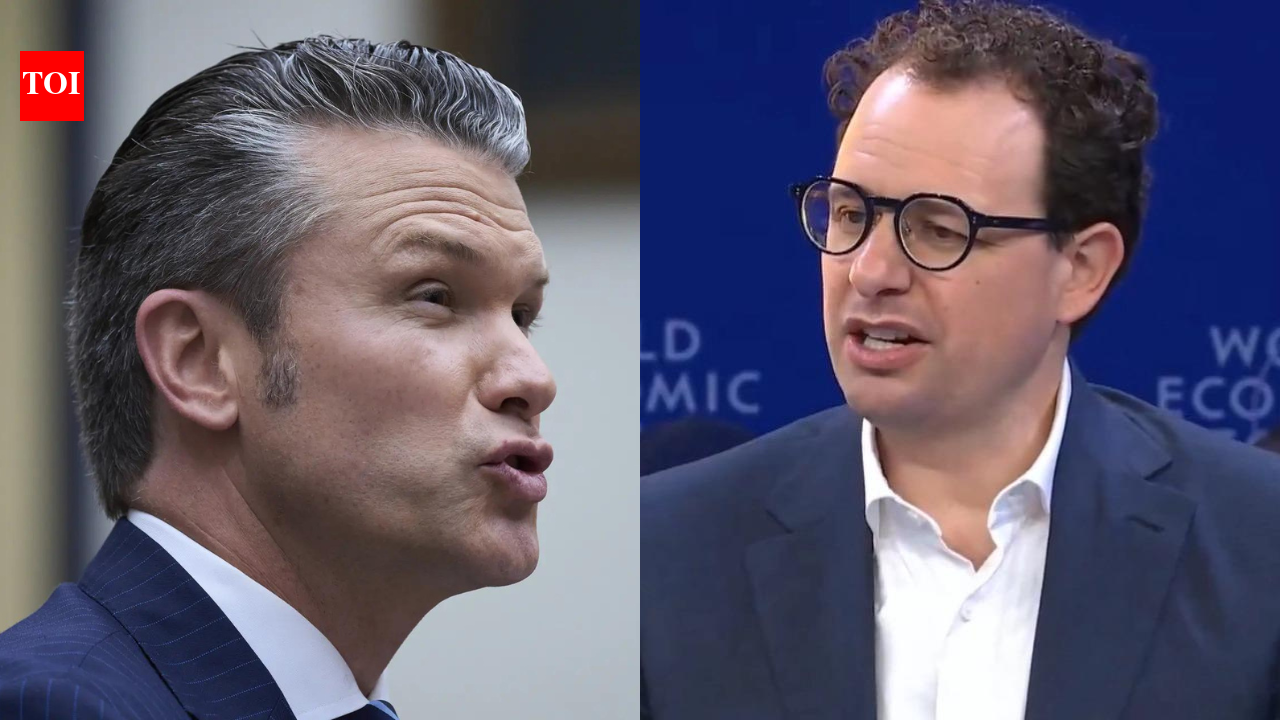
Ross Nordeen Exits xAI: One of Last Remaining Co-Founder Leaves As Elon Musk Initiates Full Rebuilding of AI Startup Ahead of SpaceX IPO | 📲 LatestLY
Mumbai, March 29: Ross Nordeen, the last remaining original co-founder of xAI, has departed the company this week, marking the complete turnover of the startup's founding leadership team. Nordeen, who served as a right-hand operator to Elon Musk, exit comes amid a radical restructuring of the artificial intelligence firm following its acquisition by SpaceX in February. The departure follows a wave of exits that has seen eight co-founders leave since January. The internal shifts are part of a broader strategy as Musk prepares for a record-breaking initial public offering (IPO) of SpaceX, which now houses xAI as a subsidiary. Elon Musk's xAI Launches New Grok Feature to Extend AI-Generated Videos and Enhance Creative Control for Users. Ross Nordeen, 36, was a central figure in Musk's inner circle, having followed the billionaire from Tesla to help launch xAI in 2023. At Tesla, Nordeen was a technical program manager for the Autopilot team, where he managed the data centres essential for training Full Self-Driving systems. Known for driving execution across Musk's various ventures, Nordeen was also part of the small team of engineers who coordinated large-scale layoffs at Twitter (now X) in 2022. His departure was confirmed by the removal of his official xAI employee badge on the X platform and insights from individuals familiar with the matter. The exit of Nordeen follows the recent departures of other high-profile co-founders, including Manuel Kroiss, who led the pre-training of AI models. Other founding members who have left the company this year include Guodong Zhang, Zihang Dai, Toby Pohlen, Jimmy Ba, Tony Wu, and Greg Yang. This leadership vacuum coincides with a series of restructurings that began shortly after the SpaceX-xAI merger. Musk recently acknowledged the instability, stating that the company "was not built right the first time" and is currently being rebuilt "from the foundations up." The reorganization has led to significant staff reductions, particularly in teams developing the "Grok Imagine" image generation tool and the "Macrohard" AI agent project. Despite these cuts, xAI remains one of the most well-funded entities in the sector, with a reported valuation of approximately USD 250 billion. To fill the gaps left by the original team, Musk has launched an aggressive recruitment drive. The company has reportedly hired nearly 12 new employees in recent weeks, including senior leaders Andrew Milich and Jason Ginsberg from the AI coding firm Cursor. The integration of xAI into SpaceX is seen as a strategic move to bolster the rocket company's valuation ahead of its highly anticipated IPO. By combining aerospace engineering with advanced AI, Musk aims to create a technological powerhouse that can compete with established leaders like OpenAI and Anthropic. Elon Musk's xAI To Launch New 'SKILLS' Feature for Grok, Update To Allow Users To Create Custom Tasks and Personalised AI Instructions. However, industry analysts note that xAI currently trails its primary competitors in terms of scale and market reach. The ongoing leadership churn and fundamental rebuilding phase suggest that while the company has immense capital, it is still searching for a stable operational structure.
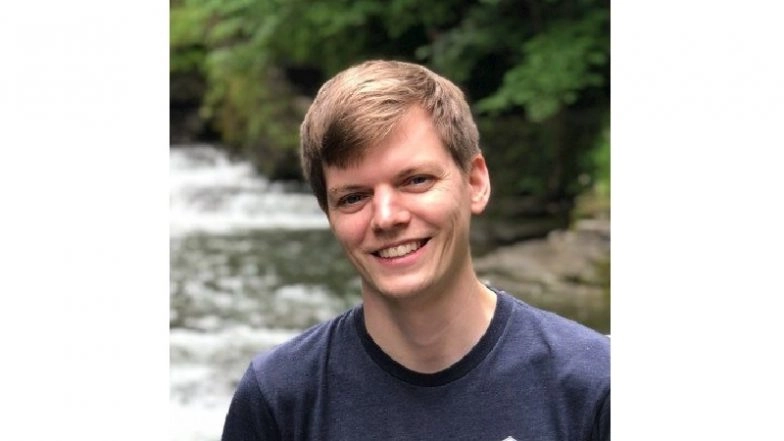
All 11 xAI Co-Founders Depart Elon Musk's AI Company
In a surprising turn of events, all eleven co-founders of Elon Musk's AI venture, xAI, have departed from the company. The latest to resign were Manuel Kroiss and Ross Nordeen, marking a complete exodus of the founding team. Timeline of Departures The departure of these key figures highlights a troubling trend within xAI. The company, which was valued at $250 billion following its acquisition by SpaceX, has seen a rapid unraveling since early 2026. Notable departures include: * Christian Szegedy: Left in February 2025, the first sign of instability. * Tony Wu: Departed on February 10, 2026, triggering a chain reaction. * Jimmy Ba: Resigned within 24 hours of Wu's announcement. * Kroiss and Nordeen: Both announced their exits this month, finalizing the co-founder turnover. Background and Context Founded in 2023, xAI aimed to create groundbreaking artificial intelligence technologies. Its team was distinguished by an impressive array of talent, including researchers from leading organizations like Google, DeepMind, Microsoft, and OpenAI. Key figures included: * Jimmy Ba: Co-author of the highly influential 2014 paper on optimisation in AI. * Igor Babuschkin: Previously with Google DeepMind, served as chief engineer. * Christian Szegedy: A notable researcher from Google. * Tony Wu: Led operational aspects of the team. Corporate Restructuring and Future Implications The company's troubles seem intertwined with recent corporate changes. On February 2, 2026, SpaceX acquired xAI in an all-stock deal valued at $1 trillion. This move consolidated several Musk-led ventures, including X (formerly Twitter) and SpaceX, into a single corporate structure. Despite the merger, which birthed a $1.25 trillion entity, the departures of co-founders signal deeper organizational issues. Musk himself remarked that xAI was "not built right the first time around," admitting that the AI coding tools developed were ineffective. Market Dynamics and Future Direction The AI talent market in 2026 is highly competitive. Top researchers are receiving lucrative offers from firms like Meta, OpenAI, and Anthropic. This has raised questions about where the former xAI researchers will land next and what their choices reveal about the industry's future. xAI possesses valuable assets including the Colossus supercomputer, one of the largest AI training facilities globally, and the Grok chatbot, supported by X's extensive user base. However, the loss of its founding research leadership raises concerns about xAI's ability to leverage these resources effectively. Conclusion The exit of all eleven co-founders from xAI underlines significant challenges within the organization. While financial and infrastructural resources seem plentiful, the departure of key leadership suggests that the issues facing xAI are fundamentally organizational. Rebuilding a culture of innovation requires more than capital; it necessitates leadership invested in fostering a stable research environment.