News & Updates
The latest news and updates from companies in the WLTH portfolio.
Chaos at the VA: Agency defies the Courts and leaves thousands of workers unprotected
A growing controversy surrounding the Department of Veterans Affairs has sparked alarm across federal labor circles, as the agency faces accusations of disregarding a court order tied to union protections. The dispute centers on the VA's decision to once again terminate its collective bargaining agreement with the American Federation of Government Employees (AFGE), despite a judicial directive instructing the agency to restore it. The contract in question covers roughly 300,000 employees, making it one of the largest federal labor agreements in the United States. Its termination has raised serious concerns about worker protections, particularly regarding grievance procedures, workplace conditions, and representation rights. For many employees, the agreement serves as a critical safeguard in navigating workplace disputes and ensuring fair treatment. According to legal findings, the situation escalated when a judge determined that the Department of Veterans Affairs had "blatantly defied" a court order by moving forward with the contract termination. This strong language underscores the severity of the alleged violation and highlights the unusual nature of the conflict, as federal agencies are typically expected to comply strictly with judicial rulings. Union representatives from the American Federation of Government Employees have been vocal in their criticism, arguing that the agency's actions effectively strip workers of essential protections. They contend that without the contract in place, employees are left vulnerable to changes in workplace policies without proper negotiation or recourse. Legal battle intensifies over workers' rights The ongoing legal fight reflects deeper tensions between federal management and organized labor. At the heart of the issue is whether the VA has the authority to unilaterally terminate such a broad agreement, particularly after a court has intervened. Legal experts suggest that the case could set an important precedent for how federal agencies interact with unions moving forward. For employees, the immediate consequences are significant. Without a valid collective bargaining agreement, many standard protections, such as dispute resolution mechanisms and negotiated workplace policies, may no longer apply. This creates uncertainty for thousands of workers who rely on these structures to address issues ranging from disciplinary actions to workplace safety concerns. The Department of Veterans Affairs has defended its position by arguing that changes to the agreement are necessary to improve operational efficiency and better serve veterans. However, critics argue that bypassing established legal processes undermines both worker rights and the rule of law. Beyond the legal arguments, the dispute also carries broader implications for the federal workforce. Labor unions have warned that allowing such actions to stand could weaken collective bargaining across government agencies, potentially affecting hundreds of thousands of employees nationwide. Meanwhile, the courts continue to weigh the situation, with further rulings expected to clarify whether the VA must fully reinstate the agreement and what consequences, if any, the agency may face for its actions. The outcome could have lasting effects not only on the employees directly involved but also on the broader framework governing federal labor relations. As the conflict unfolds, workers remain in a state of uncertainty, caught between competing interpretations of authority and legality. For many, the core issue is simple: ensuring that their rights are protected and that the institutions meant to uphold those rights are held accountable. In the coming weeks, the spotlight will remain firmly on the Department of Veterans Affairs and its handling of this dispute, as both legal experts and federal employees await a resolution that could reshape the landscape of government labor relations.

Smuggled drugs fuel chaos inside Ohio prisons
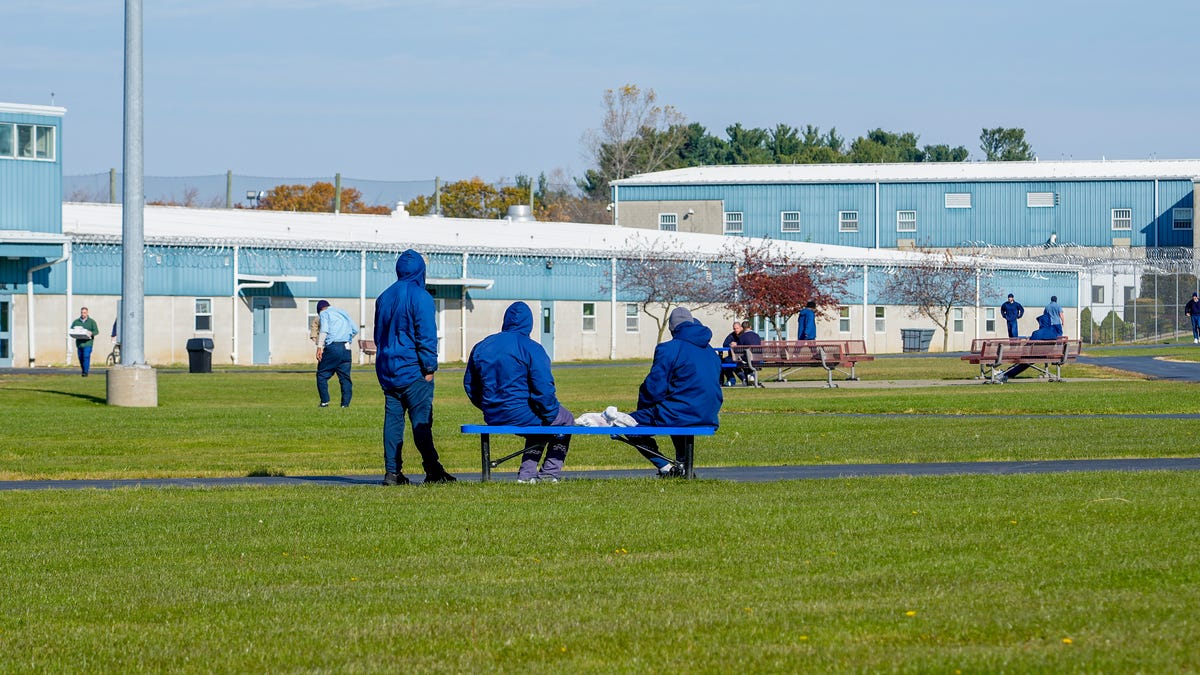
Addictive drugs soaked in confetti-sized hits are being smuggled in, tossed over fences and dropped in by drones. Why can't prison officials stop it? * Drug-soaked paper, known as K2, is now the most common drug found in Ohio prisons. * Fatal overdoses from K2 are rising, but the state likely undercounts them due to detection difficulties. * Despite millions spent on security, drugs are smuggled in by staff, visitors, and drones. * Staff and contractors suspected of smuggling often resign without facing criminal charges. Jayson Murphy lit the speck of paper and inhaled, holding the smoke in his lungs as long as he could. His cellmate, John Jenkins, purchased the drug-soaked paper from another incarcerated man at Lebanon Correctional Institution, a state prison notorious for substance abuse and violence. The drug was their escape from the cockroaches, the bad food, the brutality of their life in prison. The friends laughed themselves to sleep in their bunks that October evening in 2024. The next morning, Jenkins set his dirty laundry outside the cell and tapped Murphy's leg. But Murphy, 50, didn't move. "Oh man, my cellie is dead," Jenkins recalled telling a corrections officer. A crime lab detected potent synthetic drugs, that incarcerated users call K2, in the partially burnt paper found near Murphy's body. Authorities closed their criminal investigation the moment the coroner ruled the death an overdose, abandoning any effort to determine how the drug entered the prison. "I feel like they think, 'OK, he made a choice to get high. So that's that,' you know, instead of looking deeper into the root of the issues," said Amber Hall, Murphy's sister. "How are these things happening? Why are they happening more often? Why is this normal?" Drug-soaked paper, sold in confetti-sized hits, is now the most commonly found drug in Ohio prisons, fueling violence and accounting for more deaths than any other substance, according to a yearlong investigation by The Marshall Project - Cleveland, Columbus Dispatch, Cincinnati Enquirer, Akron Beacon Journal and Canton Repository. The highly addictive drug is smuggled in by staff and visitors, tossed over fences and dropped in by drones. Wide-ranging and unpredictable side effects include vomiting, twitching, convulsing, aggression and psychosis. Jenkins said nearly all 150 men in his cellblock smoke paper. He described a scene from "The Walking Dead" -- men passing out or shuffling around, grunting with burn holes in their clothes. Reporters reviewed hundreds of autopsy, police and court records, hours of prison surveillance footage and data on more than 56,000 drug seizures inside Ohio prisons since 2020. They interviewed prison employees, incarcerated people, families, prosecutors, coroners, forensic scientists, lawmakers, inspectors and smugglers. The investigation found tens of millions of tax dollars spent on tighter security, including taller perimeter fences, anti-drone technology and the electronic delivery of mail. Yet an unknown number of employees and contractors continue to sneak significant amounts of drugs through the front entrance with little consequence. Workers suspected of smuggling often resigned without facing charges, records showed. Murphy was among at least 13 people incarcerated in Ohio who fatally overdosed on K2 in 2024, up from just three the year before, according to available autopsy and toxicology reports. Coroners say they are struggling to identify K2 and other chemicals that evade detection in standard toxicology tests, causing state prison officials to undercount fatal overdoses, the news outlets found after reviewing dozens of death investigations. "At the end of the day, they're still someone's dad, brother, son," said Hall. "And they have people that care about them." Corrections officers are doling out an unprecedented level of discipline. From 2020 to 2024, records show that rule violations for drug use and possession doubled from 10,308 to 20,799, despite only a 6% uptick in the state prison population. Prison officials attribute the spike to new drug detection methods. Nearly half of all drugs found in Ohio prisons are suspected to be K2 paper or other synthetic drugs, state records show. "There is an infestation of narcotics in prisons all over Ohio," said Chris Mabe, president of the union that represents state prison workers. The suspected drugs officers find are rarely tested due to cost and potential exposure. It's impractical to investigate every case, a state official said. Nonetheless, the contraband found is used to discipline incarcerated people. Drug-soaked paper is the most troubling development within state prisons in 30 years, said Annette Chambers-Smith, director of the Ohio Department of Rehabilitation and Correction, who is stepping down to take a job in the governor's office. When it's not available, desperation and untreated addiction drive incarcerated people to wipe up floor wax and bug spray with toilet paper, and then smoke it. People will even smoke dead cockroaches soaked in insecticide, Chambers-Smith said. In some prisons, the floors aren't waxed anymore. "It's crazy," Chambers-Smith said. "Who else is going to smoke wax? I don't notice that happening out in the community." Smoking paper is a uniquely prison thing. The common chemicals and synthetic compounds are hard to detect. The paper is easy to smuggle and hide. Smugglers can make up to $5,000 for each delivery, which can vary in size and often includes other types of drugs. People who unbundle and sell the packages inside prison walls make even more. One man incarcerated at Ross Correctional Institution bragged on a text-messaging system used to communicate with people on the outside that he could make $12,000 in two or three days, according to messages obtained by the highway patrol. His collaborators could make a half-million dollars in two or three years. "It's a gold mine here," he texted. "F--- THE LAW," the man wrote in another message, declaring open season for drug dealing in Ohio prisons. "I GOT 28 TO LIFE. IM NEVEGONE STOP HUSTLIN TILL I GET HOME OR THEY KILL ME." Synthetic cannabinoids flood Ohio prisons Even before drug-soaked paper began to overrun facilities in 2018, addiction and drug use were devastating Ohio prisons. Chambers-Smith said more than 80% of incarcerated people have a history of substance abuse. Corrections officers significantly increased the use of Narcan in 2024 to counter suspected opioid overdoses. But there is no antidote for widely circulating synthetic cannabinoids, which killed more people in Ohio prisons than fentanyl that year, autopsy records show. These mind-altering substances appeared on the shelves of U.S. head shops about 20 years ago. The drug was sold as incense or potpourri -- often in colorful packaging with names like Spice or K2 and with often-ignored warning labels that said, "not for human consumption." Public health departments and poison control centers fielded emergency calls and sounded alarms. By 2011, federal regulators and lawmakers in states including Ohio started banning the drug. These drugs are primarily manufactured overseas. In 2019, the Chinese government outlawed synthetic cannabinoids. But clandestine labs continued to produce the ingredients as manufacturing shifted to the U.S., said Derek Maltz, who led the Drug Enforcement Administration in 2025. Synthetic cannabinoids are seemingly tailored for prisons. The drug is soaked into paper, sometimes disguised as court documents, magazines and books. It enters prisons in full sheets or tiny pieces, often packaged in balloons that can be swallowed. The product is ultimately sold in hits that users smoke or ingest. "I've never seen anything like it," said Tim Wade, who has served time in six prisons in the past decade. "It's different. People are getting rich off it. You can't stop it because you can't detect it. There's no test for it." When Wade first smoked K2, also called tune, he was told he threw his commissary box at his cellmate while barking like a dog. "You mess with someone on tune," Wade said, "you're liable to get attacked." He said he eventually quit, but it wasn't easy. Inside Ohio prisons, multiple eyewitnesses described people smearing feces on walls, constantly talking to themselves, and refusing to shower or eat after prolonged use. Some are "like that permanently now," Wade said. "They ain't coming out of it." Jenkins, 36, remains incarcerated at Lebanon Correctional Institution. He continued to smoke paper after reporting the death of his cellmate, Murphy. "That tune is the devil. It turns you into something that you really ain't," he said. The last time he used the drug, he said it felt like his heart was going to explode -- a scare that finally got him to kick the habit. One morning in February 2023, Steven Grant found his cellmate, Willis Crutcher, still slumped over in a chair from the night before. He was dead, his skin cold and tight. A toxicology test found methamphetamine, fentanyl and K2 in Crutcher's system. Packing up his belongings fell on Grant, who called Crutcher's mother to share details of her son's death. "That was probably the worst part," Grant, 48, said, "talking to her on the phone because she didn't know that he even smoked the tune, you know what I mean? And I hated to be the one to tell her that." Incarcerated people, workers and independent inspectors said some K2 users will visit the prison infirmary in the morning until the effects wear off and be back at it that evening. "We got inmates that go to prison who were straight arrows and clean. And when they leave prison, they're addicts," said Ohio Rep. Mark Johnson, a Chillicothe Republican, who has two state prisons in his district. "There is something wrong with this puzzle." A game of Whac-A-Mole Prisons are struggling to stem the flow of drugs across the country and in Ohio, where officials in recent years have spent tens of millions of tax dollars on tighter security and new strategies. "It's like Whac-A-Mole," state prison director Chambers-Smith said of the multi-front war on prison drugs. "[W]hen you shut down one lane, another one tries to open up." Along with higher fencing and drone detection systems, Chambers-Smith wants more than 14 drug-sniffing dogs, which take time to train, to cover 28 prisons. In the meantime, prison investigators have deployed mobile units that detect unauthorized cellphone signals and airport-style body scanners that check incarcerated people as they return from visits or outside work. The scanners use low-dose X-ray imaging. "A person can be scanned 1,000 times and be under the amount of radiation someone can be exposed to in a year," state prison officials said in a September press release. But they're not used on staff despite more than 180 state prison employees and private vendors suspected of smuggling drugs or contraband since 2020. Some of them admitted to smuggling for weeks or months before getting caught at the main entrance with drugs tucked into their underwear, according to investigative files. The most significant change is how Ohio prisoners receive their mail. Mailrooms had become a primary entry point for drug-soaked paper. In 2021, staff at each prison began scanning and photocopying thousands of letters each month. By 2023, the department opened a center in Youngstown to streamline the process. Now, the 158,000 letters sent to Ohio prisons each year are scanned. Incarcerated people receive them digitally on state-issued tablets, which are also used for emails, phone calls and video visits. Monitoring all that communication, including 60 million annual phone calls lasting 833 million minutes, is a monumental job. In 2025, the department began piloting artificial intelligence at 10 prisons to help investigators search for keywords and follow up on tips. Lawmakers allocated $1 million to expand the program in 2026. But incarcerated dealers and their collaborators often speak in code to keep a step ahead of investigators. And last year, prison investigators said they found at least 1,000 illegal cellphones. Mobile units can detect illegal phones, allowing officials to see phone numbers but not hear the conversations. State prisons are under constant watch by thousands of cameras and employees. Yet drone operators continue to drop drugs into prison yards, even where netting has been installed. People chuck packets over fences or shoot them out of potato cannons -- homemade launchers. Visitors conceal drugs in their bags, bodies or clothing, even under press-on fingernails. Sometimes they're caught, but often the smugglers get away with it. "You can get a whole lot of Suboxone strips in the palm of your hand, worth thousands upon thousands of dollars. Same with the K2 -- it's so small and easily carried. It's really pretty simple math," said one man, who has been incarcerated for nearly two decades and asked not to be named because of safety concerns. Suboxone, which is abused by some incarcerated users, is prescribed for opioid addiction. Drug testing is difficult, costly Of the 176 deaths recorded in Ohio prisons in 2024, officials only linked 10 to fatal overdoses. But toxicology and autopsy reports show that drug use likely caused or contributed to at least 20 deaths: 13 from K2, five from amphetamines like meth, and one each from fentanyl or alcohol. And that's probably an undercount since standard testing isn't designed to detect many chemicals in drug-soaked paper, and additional testing can be costly. Unable to confirm suspected overdoses, coroners often list an undetermined cause of death or point to a chronic disease in a person's medical history. Some coroners go further than others to get answers. In November 2024, Eric Thompson, 33, died while sitting on the bunk in his single cell at Lorain Correctional Institution. Jaleel McCray, 36, died a month later in the middle of a phone call. Lorain County Coroner Frank P. Miller III found nothing of note in their medical histories. He sent each man's blood and urine to a forensic toxicology lab in Indianapolis for the standard $300 screening, plus $200 for synthetic cannabinoid testing. No hits. Undeterred, Miller applied for free testing at the nonprofit Center for Forensic Science Research & Education near Philadelphia, a cutting-edge operation with the latest instruments and a library of known substances. Both men had, in fact, died of the same synthetic cannabinoid, the center found. "It really was invaluable to us that they were able to screen our material and find that," said Miller. Warren County Coroner Russell Uptegrove, who examines bodies from two state prisons, increasingly has had to send samples to specialty labs. "I've heard about people trying to spray things with ant killer or some sort of pesticide or some sort of chemicals," said Uptegrove. "But, again, unless you know specifically what kind of chemical, that's not going to show up on routine toxicology testing." Jessica Toms manages the drug chemistry section at the Ohio Bureau of Criminal Investigation, which has grown from six chemists to three dozen in her 20-year career. Originally, lab testing revealed more common drugs like cocaine and meth, she said. "And now just the volume of designer drugs has exploded." Toms and her team are often telling crime labs in other states when they find something new. "Unfortunately, Ohio is at the forefront of some of these new substances. So, we're seeing some of these things first, and then telling the DEA, 'This is what we've seen. You should be aware of this,'" she said. The smuggling economy: 'A hell of a temptation' A concentration of users and dealers drives demand behind bars, making prisons fertile ground for the lucrative drug market. "Who would want to stop that?" said Grant, who has been incarcerated for more than three decades. "I mean, you're already in prison. You got less risk. What are they gonna do, ride you to another prison where you're going to do the same thing?" Workers can make a month's salary for smuggling just once. "That's a hell of a temptation, don't you think?" Grant said. "It takes a lot of morals and self decency to say, 'yeah, I'm cool on that.'" Grant's solution? Punish everyone who smuggles, sells and uses drugs in prison. "That's the only way things are really going to change. You have to have consequences. There are none." For many, the reward outweighed the risk. Travis Fletcher worked for Aramark at Mansfield Correctional Institution in early 2021 when an incarcerated kitchen worker serving time for drug trafficking offered him $2,500 to smuggle in "some little things." Struggling to pay his bills, Fletcher drove to Akron to pick up pre-packaged Suboxone strips and a box of court papers soaked in K2. "I can promise u 100,000 cash by christmas," the incarcerated kitchen worker texted, three days before Fletcher got busted. Generally, smugglers are paid by dealers via online money apps, such as Cash App, Venmo or Apple Pay. Instead of getting paid, Fletcher pleaded guilty and was given four years of probation. In some instances, employees conspire with each other to bring in contraband. At the start of their shifts, corrections officers walk through metal detectors. Another officer working the front desk checks their bags and might run a hand wand over their coworker's body. It's like going through airport security, but you might be on a first-name basis with the agent checking you. Corrections Officer Brenda Dixson worked the front entry desk at Northeast Ohio Correctional Center and would allow registered nurse Jodi Johnson to pass through with drugs and other contraband, according to federal court records. The two women pleaded not guilty and are awaiting trial on drug trafficking charges. Acting on an internal tip, prison investigator Scott Nagy worked with a federal drug task force to catch the two on Oct. 18, 2025. The prison is owned and operated by CoreCivic, a publicly traded, for-profit company. It declined a request for records that would shed light on the case. In a 2025 hearing on a prison security bill, lawmakers asked William R. Cokonougher, a sergeant at Ross Correctional Institution, what prison reform is needed most. "It's going to be drug interdiction, 100%," Cokonougher said, without hesitation. "We need to put more measures in place to combat these drugs. Like I said, it's killing inmates. It's causing staff to OD." Mark Johnson, the state representative, said he believes that the government -- not private contractors -- should handle all functions inside high-security prisons, including food service. Ohio started contracting with Aramark for food service in 2013 under Gov. John Kasich to save money. "We have people who are from behind the walls of prison getting their friends to apply for work here," Johnson said. "They know all the signs and everything when they get there. They're not really going to work to serve food. They're going in there to serve drugs up." An Aramark spokesperson did not respond to detailed questions. State prison officials have banned more than 200 Aramark employees from prison property since 2020 for suspected smuggling or inappropriate relationships, which often go hand in hand. Like former staff put on a do-not-rehire list, they rarely face criminal charges. And as soon as one of them gets removed from the job, incarcerated people are busy finding replacements. "I need somebody to come out here and work in this prison for Aramark," an incarcerated dealer wrote on a monitored messaging system in May 2024, just two days after his Aramark contact got busted. "Can you knock a white girl for us in Chillicothe Ohio, a smart one. To bring me drugs in the kitchen where I work." Few answers for families Katherine Dixon, 24, holds a heart-shaped pendant etched with "always in my heart." Inside is a portion of her father's cremated remains. When she gets married in October, Dixon plans to wear the pendant and leave a front-row seat open for her dad, Aaron Dixon. "I always imagined my dad walking me down the aisle," she said. In August 2024, Aaron called Katherine, the oldest of his seven children, from inside Chillicothe Correctional Institution. They made plans to attend her little sister's high school graduation together -- if he managed to get out in time. "He said, 'I love you,' and that he'd call me the next day," Katherine Dixon said. That night, an officer asked Aaron Dixon's cellmate if his bunkie was OK. He hopped off the top bunk to find Dixon slumped forward, blue and cold. The autopsy said Aaron Dixon suffered from heart disease and died of a synthetic cannabinoid overdose. Patrol investigators found a wire and a burnt electrical outlet in the cell -- a telltale sign of smoking drugs. As the listed next of kin, Katherine Dixon got the call from the prison about his death. In the weeks that followed, she said she placed multiple calls to the coroner, which yielded little information about exactly what happened. Prison officials told her that he suffered a heart attack. She learned the true cause months later when a reporter called and shared the autopsy and toxicology reports with her. "Wait, did you say that he overdosed?" Katherine Dixon said on the phone. She and her sister Hannah sobbed when they finally reviewed the medical reports. A heart attack seemed easier to accept. "It feels different because passing away due to a drug overdose, it's something you don't want to hear about a family member. It just breaks you inside," Katherine Dixon said. Aaron Dixon, who was serving seven years for drug possession and burglary, started using drugs as a teenager. With a family history of addiction, he had little success controlling his cravings. He landed in jails, bar fights, homeless shelters, prisons and trouble. When her father got locked up, Katherine Dixon was hopeful that he would finally get clean. "I thought he was going to be safe in prison." This article was published in partnership with The Marshall Project, a nonprofit news organization covering the U.S. criminal justice system. Sign up for The Marshall Project's newsletters, and follow them on Instagram, TikTok, Reddit and Facebook.
I used ChatGPT, Gemini and Perplexity to beat the PS5 price hike -- here's how I saved money
The race to get a new PS5 Pro before the price hike started with the assistance of AI Another day, another announcement of video game console price hikes. I don't even bat an eye anymore. It seems like every couple of months, news of console price hikes hits my timeline. Just recently, more news came of Sony PlayStation products being hit with a price increase. This one's taking effect on April 2 worldwide in the US, UK, Europe, and Japanese territories. So here's a breakdown of how much more money you'll be spending on a Sony gaming console next month in the US: a standard PS5 will go from $549.99 to $649.99, the digital edition will increase from $499.99 to $599.99, the PS5 Pro's price hike is going from $749.99 to $899.99, and the PS Portal handheld device will be increasing from $199 to $249.99. The devastating combo of a global RAM shortage that has seen AI data centers soak up the majority of the memory supply and current economic hardships has resulted in gaming consoles becoming a luxury. As someone who's in the market for a new PS5 Pro, I decided to tap into ChatGPT, Gemini, and Perplexity to see what PS5 Pro deals they could find me before the April 2 price hike. And in the end, I ended up saving money before that increase hurt my wallet. ChatGPT I leaped into action during this mission by using this prompt with ChatGPT: Find me the best deals for a PS5 Pro in the US from major retailers. The chatbot was quite aware of the upcoming console price jumps since it mentioned them before giving me three options to choose from. The first option pointed me to standard pricing offers from Walmart, Best Buy, and Target. The second option made me aware of a discounted deal from reseller PayMore that's priced at $619.99. The third option highlighted a Best Buy bundle that included an extra controller with the PS5 Pro for a total price of $835.95. I weighed my options after looking at each deal and decided it was best for me to go with a retailer I can trust instead of a reseller and avoid the console/controller bundle deal since I already have plenty of DualSense controllers. I kept this all in the back of my mind while I went to Gemini to see what it could find for me next. Gemini I decided to use the same prompt I used with ChatGPT to get the process started with Gemini. Google's chatbot instantly chose Walmart, Amazon, Best Buy, and PlayStation Direct as the best online retailers to shop with that offer the PS5 Pro at its current price. Gemini did things a bit differently by telling me about the stores and methods that will save me even more money in my quest to procure a brand new PS5 Pro: * Sony "Trade-In & Trade-Up": If you trade in a PS4 or PS5 through Back Market, Sony is providing an extra $50 voucher to use specifically at PlayStation Direct. This can bring your out-of-pocket cost down to $699. * GameStop Pro Members: GameStop is offering an extra $25 trade credit on any console trade-in this week. If you're trading a base PS5 toward a Pro, you can currently get up to $346.50 in credit (Pro members), making the upgrade significantly cheaper. * Best Buy Refurbished: Keep an eye on "Geek Squad Certified Refurbished" units. While the Pro is newer, some open-box units have been spotted for around $680-$710, though they sell out almost instantly. Gemini's money-saving tips gave me the know-how to consider trading in an old PS4 to save as much money as possible on a PS5 Pro while also working with a trusted entity like PS Direct (the PS5 Pro comes directly from them after all, so it's worth giving them a shot!). Perplexity And finally, I ran to Perplexity to see what PS5 Pro deals it could find. Of course, I asked the same question that I presented to ChatGPT and Gemini. Sadly, it wasn't able to live‑check current prices or stock. But it was capable of pointing me in the right direction of where to look for a PS5 Pro at a fair deal: * Sony's own store (PlayStation Direct) lists the PS5 Pro around the mid‑$700s for the 2TB model at full price. * Around big sale periods, large retailers (Amazon, Walmart, Target, Best Buy) have dropped the PS5 Pro down to roughly the $649 range (about $100 off). * Reddit deal threads show that regular "good" promos have been around $50 off MSRP at big retailers (Best Buy, Target, Dell, etc.), plus stackable card/store discounts. Perplexity also mentioned the same trusted retailers that ChatGPT and Gemini brought up as viable options to choose from when it was finally time to do some shopping. One of its most helpful tips focused on using stackable cards and membership savings like a Target RedCard or a My Best Buy membership to knock down the PS5 Pro even more. Final thoughts After combining all the worthy advice ChatGPT, Gemini and Perplexity presented to me about nabbing a PS5 Pro at the best price possible, I came to a final decision: sacrifice my still functioning 1TB PS4 Pro with two DualShock 4 controllers and all the wires included to knock down the asking price for a brand new PS5 Pro. Out of Back Market's network of 250 partner refurbishers, I was shown an offer of $131 for my old PS4 Pro. With that sale and the promise of a $50 voucher, I knew I could combine them to apply to the purchase of a PS5 Pro. With a final price of of $560+, I knew I'd prevent myself from breaking the bank too much ahead of the Sony console price hike. ChatGPT, Gemini and Perplexity saved the day for a needy gamer like me. Follow Tom's Guide on Google News and add us as a preferred source to get our up-to-date news, analysis, and reviews in your feeds.

Narrow Escape: Fire Chaos in Delhi's Gokal Puri | Science-Environment
A fire in Delhi's Gokal Puri area forced four people, including a child, to jump from the first floor of a building to escape. Eight others were rescued by firefighters. The fire, started by vehicles catching fire, created dense smoke, making evacuation difficult. In northeast Delhi's Gokal Puri area, a fire forced four residents, including a child, to leap from the first floor of a building to escape the flames early Sunday morning. The blaze, reported around 2:30 am, originated from vehicles on the ground floor and quickly filled the building with smoke, making evacuation a perilous endeavor. Firefighters rescued eight other people trapped on higher floors, while residents described chaotic scenes as people struggled to escape. The fire was controlled by 3:50 am, and an investigation is underway to determine its cause.

xAI's last original co-founder leaves company
All original xAI co-founders have now departed amid company restructuring Ross Nordeen, one of the original 11 co-founders of Elon Musk's AI startup xAI, has left the company this week, Business Insider reports. With Nordeen's departure, none of the original founders remain at xAI. Nordeen reported directly to Musk and was responsible for coordinating priorities and driving execution across xAI. He joined Musk from Tesla, where he worked on building data centres for the Full Self-Driving system, to co-found xAI. He was also a close associate of Musk's cousin, James Musk, and played a role in coordinating major layoffs at Twitter following its 2022 takeover. Business Insider notes that Nordeen's X badge, which identified him as an xAI employee, has already been removed. His exit comes alongside the departure of Manuel Kroiss, who led pretraining and also reported directly to Musk. Since January, eight other xAI co-founders have left the company, including Guodong Zhang, Zihang Dai, Toby Pohlen, Jimmy Ba, Tony Wu, and Greg Yang. All original co-founders came from AI and deep machine learning backgrounds. These departures, combined with several company restructurings, have led to the loss of dozens of employees in recent months. Despite these departures, xAI continues to recruit talent. In March, the company was reported to be seeking bankers and finance specialists to train its chatbot Grok on financial markets. However, xAI still lags behind rivals such as OpenAI and Anthropic in terms of ecosystem and scale. Grok is closely tied to X, relying primarily on information and behavioural patterns from the social media platform. Musk recently acknowledged the company's challenges, stating that "xAI was not built right the first time around, so [it] is being rebuilt from the foundations up."

xAI Loses Final Founding Member as Musk Overhauls AI Unit - Tekedia
The final member of xAI's original founding team has exited, closing a chapter for Elon Musk's artificial intelligence venture at a moment of sweeping internal change and recalibration. Ross Nordeen, who worked closely with Musk as a senior operator, left the company this week, according to people familiar with the matter. His departure means all 11 original cofounders have now exited, following months of turnover that have reshaped the company's leadership and engineering ranks. Nordeen's role placed him at the center of execution inside xAI. A former Tesla technical program manager who worked on Autopilot infrastructure, he moved with Musk to help build the AI startup in 2023 and later became a key coordinator of priorities across teams. His proximity to decision-making makes his exit particularly significant, coming as the company undergoes repeated restructuring. The reasons behind the wave of departures remain unclear. Neither xAI nor the individuals involved have publicly detailed the causes. However, people familiar with the company point to internal tensions over direction and execution, with speculation that disagreements over how to build and position the company's AI systems contributed to the exodus. Those tensions are unfolding against a broader shift. Since its acquisition by SpaceX in February, xAI has been reorganized, with projects scaled back and leadership reshuffled. Teams tied to initiatives such as image generation and AI agents have been reduced, while Musk has signaled a ground-up rebuild of the company's technical foundations. The turnover has been extensive. Since January, cofounders including Manuel Kroiss, Guodong Zhang, Zihang Dai, Jimmy Ba, and Greg Yang have all departed. Several exits followed changes to project leadership after the merger, reinforcing the sense of a company in transition rather than steady expansion. The upheaval also reflects Musk's broader ambitions in artificial intelligence. He has been openly critical of rivals, particularly OpenAI, arguing that leading AI systems are overly constrained or politically biased. xAI was conceived, in part, as a counterweight -- an effort to build models that Musk has described as more transparent and less filtered. That positioning has begun to take shape through early products. In October, Musk unveiled "Grokipedia," an AI-driven encyclopedia built on xAI's Grok model. The service is designed to generate articles algorithmically rather than rely on human editors, positioning itself as an alternative to Wikipedia. Musk has promoted Grokipedia as both more efficient and less biased, claiming that even its early "version 0.1" already outperforms its human-curated counterpart. He has said a future "version 1.0" would be "10 times better," underscoring his belief that AI-generated knowledge systems can surpass traditional models of information curation. The project has been a subject of debate as it highlights both the ambition and the risk embedded in xAI's strategy. Moving away from established editorial frameworks toward fully AI-generated content raises questions about accuracy, accountability, and trust, issues that have long been central to debates around generative AI. Within the company, those bets appear to be part of a wider reset. Musk has acknowledged that xAI "was not built right first time around," signaling a willingness to dismantle and rebuild core elements of the organization. The recent hiring of new engineers and executives suggests an effort to reconstitute teams around revised priorities. Even so, the pace of turnover presents challenges. High attrition at the founding level can disrupt continuity in research and product development, particularly in a field where progress often depends on long-term iteration and institutional knowledge. xAI remains one of the best-funded entrants in the AI race, with a reported valuation of around $250 billion. Yet it continues to trail competitors such as OpenAI and Anthropic in scale, product maturity, and adoption. With its founding cohort now gone, the company enters a new phase defined less by its origins and more by its ability to execute on Musk's vision of an alternative AI ecosystem.

What caused Anthropic usage limits changes?
Anthropic adjusted Claude's session limits so that usage is more aggressively constrained during peak hours. The company said users are likely to burn through their limits faster when demand is high, amid compute pressure. The change was tied to Claude's rapid growth with paying users. As demand surged, Anthropic faced additional strain on the underlying compute capacity needed to run responses. Rather than allowing unlimited peak utilization, the firm tightened throttling so that service levels could be maintained for more customers. For enterprise and power users, limit changes directly affect reliability and planning: workflows that depend on steady Claude availability can see slower throughput or earlier cutoff during busy periods. For the broader AI market, the episode underscores a recurring pattern -- popular models often require operational rationing as usage grows faster than the capacity needed to serve everyone. The coverage also suggests these limit tweaks are part of an ongoing balancing act between growth, user experience, and cost of inference. But the specific engineering details of the capacity constraints weren't included in the provided story, so the most concrete takeaway remains the operational decision: more peak-hour throttling for Claude.

AI: Anthropic Secures Google's Support for Major Infrastructure Project
Google is set to fund a mega data center in Texas for Anthropic, confirming the acceleration of the race for artificial intelligence infrastructures. A colossal investment that says everything about the strategic stake AI represents and the role Google intends to play in this battle. The Financial Times revealed on Friday that Google is set to co-finance, alongside a banking consortium, a massive data center in Texas intended for Anthropic. Led by Nexus Data Centers, the project could surpass $5 billion in its initial phase, with financial structuring expected by mid-2026. The campus spans 1,133 hectares, illustrating the industrial ambition of the project. Construction has already started thanks to provisional funding secured by Eagle Point, a publicly traded investment firm. By the end of 2026, the site is expected to provide around 500 megawatts of capacity, equivalent to the electricity consumption of nearly 500,000 American households. And this volume would only represent a first phase: ultimately, the project could scale up to 7.7 gigawatts, a spectacular level for infrastructure dedicated to AI. The choice of Texas is no coincidence. Located near major gas pipelines operated by Enterprise Products Partners, Energy Transfer, and Atmos Energy, the campus will be able to rely on on-site gas turbines to ensure continuous power supply. In the AI world, this energy stability is not a luxury but an essential condition to train and run very large-scale models. Beyond the size of the project, this operation is part of the strategic partnership already underway between Google and Anthropic, after several billion dollars of investment from the American giant in the startup. For Google, the stake goes far beyond simple financial support: it also aims to secure privileged access to cutting-edge AI at a time when the technological battle with Microsoft and OpenAI is intensifying. Behind the numbers hides a simple reality: AI demands colossal energy and infrastructure, and tech giants are ready to do anything not to miss this shift. Google has understood this well. By directly committing to funding the Texas campus, it is not just investing in a startup, it is building the physical foundations of the AI of tomorrow. This type of infrastructure-model partnership is becoming the norm. Microsoft has done the same with OpenAI, injecting billions into dedicated computing centers. Amazon, on its part, funds Anthropic via AWS. The AI battle is therefore played as much in data centers as in research labs. The political context further strengthens the significance of this operation. This week, a US federal judge suspended the ban imposed on Anthropic by the Trump administration, temporarily preventing its exclusion from federal contracts. This decision changes the perception of the case: it gives the company breathing room at a moment when it is already attracting major financial and industrial support. Between a mega-investment in Texas and a courtroom victory, Anthropic is sending strong signals. Google, for its part, shows it has no intention of letting go of such a strategic partner. In a race where infrastructure and freedom to innovate are as important as algorithms, the real stake is now geopolitical: who will control the AI of tomorrow, companies or states?
Could Tesla And SpaceX Become One Company? Analysts Think It Might Happen Soon
A Wall Street analyst has suggested that Tesla and SpaceX could merge as early as 2027, citing increasing operational overlap and shared strategic priorities. The prediction reflects growing ties between the two companies, both led by Elon Musk, though no official plans for a merger have been announced. The projection was outlined by Wedbush analyst Dan Ives, who argued that recent developments have laid the groundwork for closer integration between the companies. These include financial linkages and joint initiatives in artificial intelligence and infrastructure, according to Teslarati. One of the key developments cited is the acquisition of xAI by SpaceX, which resulted in Tesla's prior $2 billion investment in the AI firm being converted into a small equity stake in SpaceX. This transaction created a direct financial connection between the two companies for the first time, albeit at a limited scale. Further integration has been suggested through the announcement of a joint manufacturing initiative in Texas, described as a "Terafab" facility. The project is expected to focus on advanced computing infrastructure, including chip production for Tesla's autonomous systems and robotics, as well as potential applications in space-based data processing. Ives also pointed to broader industry trends, particularly the increasing demand for artificial intelligence computing power. SpaceX has outlined ambitions to expand satellite-based infrastructure through its Starlink network, including potential future applications involving orbital data centers powered by solar energy. A merger between Tesla and SpaceX, if pursued, would combine operations across multiple sectors, including electric vehicles, aerospace, satellite communications, and robotics. Proponents of the idea argue that such integration could streamline development in areas like autonomous driving, space-based connectivity, and AI systems. However, the proposal remains speculative and would face significant regulatory and financial hurdles. Any merger would require approval from shareholders and scrutiny from US regulatory bodies, including antitrust authorities. The scale and scope of the combined entity could raise concerns about market concentration across several industries. SpaceX is also expected to pursue a public offering in the near future, which could influence the feasibility and timing of any potential merger. Analysts suggest that valuation dynamics and investor response to such a move would play a critical role in determining whether integration becomes viable. While Musk has previously emphasized the importance of advancing artificial intelligence and space exploration, neither Tesla nor SpaceX has confirmed plans to merge. The analyst's forecast reflects one possible trajectory for the companies as they continue to expand into overlapping technological domains. For now, the idea of a combined Tesla-SpaceX entity remains a forward-looking scenario rather than a confirmed development, with industry observers watching closely for further signs of alignment between the two firms.

Mumbai Airport Bomb Hoax: 58-Year-Old Passenger Arrested for Creating Chaos With Fake Alert on Mumbai-Delhi Flight; FIR Registered | 📰 LatestLY
Mumbai, March 29: In a case of a fake bomb scare, a 58-year-old passenger was arrested at the Mumbai airport for allegedly creating chaos with a hoax bomb alert, police said. According to officials, the accused, Shanti Kothari, was arrested after immigration officials at Mumbai's Chhatrapati Shivaji Maharaj International Airport stopped him from boarding a Mumbai-Delhi flight. The accused allegedly screamed that a bomb was planted in a Mumbai-Ghaziabad flight and created chaos on the premises. Sahar Police have registered an FIR against the accused under Bharatiya Nyaya Sanhita (BNS) sections 125,351(2), 353(1)(b), and police are investigating his background for further details. According to the FIR, Kothari, a resident of Sakinaka, allegedly made alarming and threatening remarks while boarding the flight, causing panic among passengers and airport staff. Delhi Bomb Threat: Assembly Speaker Vijender Gupta Gets Threatening Email Targeting Key Leaders. The matter was immediately reported to the airport security authorities, including CISF personnel and other concerned departments. Officials said that the accused was present near the airport's boarding gate and allegedly began shouting and making provocative statements. During boarding, he allegedly shouted, "Don't go on the Ghaziabad flight, there's a bomb in it." In his statement, the complainant, a member of the airline staff, said that as part of his duty, he was making routine announcements and assisting passengers during the boarding process for the Mumbai to Delhi flight at Gate No. 51 when the incident occurred. Bomb threats and suspicious emails received by various institutions across the country have occasionally prompted evacuations. Recently, the Gujarat Legislative Assembly was placed on high alert after an anonymous email threatened to detonate bombs at the complex and other key locations across the state. The Assembly session, which was underway at the time, was suspended, and all MLAs, ministers, and staff were safely evacuated. Apart from this, several courts across Gujarat -- including the Gujarat High Court in Ahmedabad and district courts in Rajkot, Vadodara, Valsad, Gandhinagar and Mehsana -- received bomb threat emails. Bomb Threat Today in Noida and Ahmedabad: Security Alert As Several Schools Receive Threatening Mails Ahead of Republic Day (Watch Videos) These messages prompted evacuations and thorough searches by police, bomb detection and disposal squads and dog units, but no explosives or suspicious materials were found, and the threats were later declared hoaxes Notably, schools in Delhi have repeatedly received bomb threats that have later turned out to be hoaxes.

Honolulu Flood Chaos as Surprise Downpour Sends Torrents Through Manoa Valley While Hawaii Faces Worst Storm Cycle - Travel And Tour World
Honolulu flood chaos as surprise downpour sends torrents through Manoa Valley while Hawaii faces worst storm cycle shocks residents. Travel And Tour World urges readers to read the entire story as extreme weather escalates risks rapidly. Honolulu flood chaos as surprise downpour sends torrents through Manoa Valley while Hawaii faces worst storm cycle is now intensifying concern. Honolulu flood chaos unfolds rapidly. As surprise downpour sends torrents through Manoa Valley while Hawaii faces worst storm cycle, disruption grows. Streets flood quickly. Torrents move with force. Residents react instantly. Emergency teams respond. Travel And Tour World urges readers to read the entire story. The situation evolves fast. Honolulu flood chaos as surprise downpour sends torrents through Manoa Valley while Hawaii faces worst storm cycle reflects rising weather instability. Risks increase. Recovery becomes difficult. A sudden downpour triggered severe flooding in Honolulu's Manoa Valley, damaging homes and roads as Hawaii faces its worst storm cycle in decades. A surprise downpour struck Honolulu with little warning. The storm released several inches of rain within a short time. This intense rainfall overwhelmed drainage systems. Water quickly accumulated in low-lying areas. The Manoa Valley was hit particularly hard. Torrents formed rapidly along streets. The water carried debris and mud. Roads turned into fast-moving streams. The reddish-brown colour indicated heavy sediment flow. Residents were caught off guard. Emergency services responded immediately. The sudden nature of the storm increased its impact. Flash flooding conditions developed quickly. This event reflects growing weather unpredictability. Authorities are now assessing rainfall patterns closely. The flooding in Manoa Valley caused significant disruption. Streets were submerged under rushing water. Parked cars were swept away by strong currents. Homes were inundated with floodwater. Residents faced immediate danger. The force of the water damaged infrastructure. Mud and debris entered properties. Cleanup efforts began quickly after the storm. Many households reported losses. The visual impact was dramatic. Water surged through neighbourhoods with force. Emergency teams worked to secure affected areas. The situation highlighted the vulnerability of the valley. Recovery operations are ongoing. The full extent of damage is still being evaluated. Hawaii has faced a series of storms over the past two weeks. These weather systems have brought persistent rainfall. The islands' tropical climate contributes to such events. However, recent patterns show increased intensity. Moist air masses are delivering heavier precipitation. Ocean temperatures may also play a role. Storm systems are becoming more unpredictable. This increases the risk of flash floods. The North Shore has already experienced severe flooding. These repeated events strain infrastructure. Recovery becomes more difficult with each storm. Authorities are monitoring weather developments closely. Climate variability may be influencing these patterns. Before the Honolulu flooding, Oahu's North Shore experienced severe conditions. This region is known for its big wave surfing. However, it faced one of the worst floods in two decades. Heavy rainfall caused widespread damage. Water levels rose rapidly across communities. Homes and roads were affected. Residents began cleanup efforts immediately. The situation was already critical. Then another storm struck the southern part of the island. This compounded the impact. Recovery efforts were disrupted. Resources were stretched thin. The North Shore continues to recover. The back-to-back events highlight the scale of the crisis. Authorities have mobilised emergency response teams across affected areas. Damage assessments began soon after the flooding. Crews are evaluating infrastructure and property losses. Roads are being cleared of debris. Drainage systems are under review. Officials are also monitoring weather conditions. Public safety remains the priority. Residents are being advised to stay cautious. Emergency shelters may be activated if needed. Coordination between agencies is ongoing. Rapid response is critical in such situations. Authorities are working to restore normalcy. Long-term mitigation strategies are also being considered. The response reflects the seriousness of the situation. Flash floods are among the most dangerous natural hazards. They develop quickly and without much warning. Urban areas are particularly vulnerable. Impermeable surfaces prevent water absorption. This causes rapid runoff. Streets can turn into rivers within minutes. Vehicles can be swept away easily. Homes may be flooded suddenly. Infrastructure can be damaged severely. Flash floods also carry debris. This increases their destructive power. The Honolulu event demonstrates these risks clearly. Preparedness is essential. Early warning systems can help reduce impact. Public awareness also plays a key role. These events highlight the need for resilience. The recent flooding events raise serious concerns about Hawaii's future. Repeated storms indicate changing weather patterns. Infrastructure must adapt to these conditions. Flood management systems may need upgrades. Urban planning must consider climate risks. Communities need better preparedness strategies. Investment in resilience is essential. Early warning systems can save lives. Environmental management can reduce impact. The situation in Honolulu is a warning. It shows the consequences of extreme weather. Long-term planning will be crucial. Hawaii must balance development with sustainability. Future resilience will depend on proactive measures. The flooding in Honolulu and across Oahu highlights a critical moment for Hawaii. The cause lies in intense and repeated storm systems delivering heavy rainfall over a short period. These conditions overwhelmed drainage systems and triggered flash floods. The answer to managing such events lies in rapid response and improved infrastructure. Authorities have acted quickly to assess damage and support affected communities. However, the reason this crisis is significant goes beyond immediate impact. It reflects a broader trend of increasing weather volatility. Back-to-back storms have stretched resources and delayed recovery efforts. Events like the Manoa Valley flooding demonstrate how quickly conditions can escalate. The sweeping of cars and inundation of homes show the destructive potential of flash floods. Moving forward, Hawaii must invest in stronger flood management systems. Public awareness and preparedness will also be critical. Climate resilience will define the region's ability to handle future events. The situation remains under control, but the lessons are clear. Proactive planning and sustained investment will be essential to reduce risks and protect communities from similar disasters in the future. The situation in Honolulu was driven by a clear and immediate cause. A sudden and intense downpour released several inches of rain within a short period. This overwhelmed drainage systems across Manoa Valley and nearby areas. The terrain and urban layout contributed to rapid water accumulation. Sediment-laden water turned into fast-moving torrents. These torrents swept through streets and neighbourhoods. This explains why Honolulu flood chaos as surprise downpour sends torrents through Manoa Valley while Hawaii faces worst storm cycle became a reality. The repeated storms over the past two weeks added pressure on already saturated ground. The answer lies in both immediate response and long-term preparedness. Emergency crews quickly began assessing damage and clearing affected areas. Authorities monitored flood-prone zones closely. Residents were urged to remain cautious and follow advisories. Infrastructure systems must now be evaluated and strengthened. Improved drainage capacity will be essential. Early warning systems can reduce future risks. Rapid response remains critical during such events. Managing urban flooding requires coordination across multiple agencies. Honolulu flood chaos as surprise downpour sends torrents through Manoa Valley while Hawaii faces worst storm cycle highlights the need for faster intervention. The reason this event is significant goes beyond immediate damage. It reflects a broader pattern of increasingly volatile weather. Hawaii faces worst storm cycle conditions that may become more frequent. Climate variability is intensifying rainfall events. Urban areas are becoming more vulnerable to flash floods. Honolulu flood chaos as surprise downpour sends torrents through Manoa Valley while Hawaii faces worst storm cycle serves as a warning. Without adaptation, such events could escalate further. Long-term resilience will depend on infrastructure upgrades, environmental planning, and public awareness. This event marks a turning point. It underscores the urgency of preparing for extreme weather in the future.

Ahead of the SpaceX IPO, xAI Has Now Shed All 11 of Its Non-Elon Musk Founders
xAI was founded in 2023, and it’s already transforming radically. Now a key part of a bizarre conglomerate that could soon be one of the world’s biggest publicly traded companies, it feels like xAI in particular is becoming the distillation of Elon Musk’s mindset in company form. It’s perhaps not unrelated that its non-Musk creators have now all left the picture. Other than Elon Musk, none of the 12 original co-founders of xAI still work for the company as of this week, according to Business Insider. The departure of Ross Nordeen, a former Tesla manager in the “autopilot†(driver assistance) division reportedly makes Musk the last founder standing. Two weeks ago, Elon Musk wrote on X that xAIâ€"the AI company currently owned by SpaceX, and on track for an IPO intended to be the largest everâ€"“was not built right first time around, so is being rebuilt from the foundations up.†The departures of about half of the co-founders were reported within days of SpaceX’s surprise acquisition of xAI back in February. The steady drumbeat of founder departures continued until Nordeen left this past week. One could be mistaken for thinking the content of Grok’s output is the cause of this shakeup. After all, it was founded in March of 2023, which happens to have been a moment in the culture wars when right-wing fervor over the concept of wokeness was at its peak before the frenzy died down a bit, as reflected in Google Trends searches. At that time, Musk was not yet an official part of a Republican presidential administration, but he was beginning to make right-wing politics central to his personal mission, so xAI in its infancy was overtly described as a creator of right-wing alternatives to AI products like ChatGPT. Last summer, users discovered that Grok was willing to praise Hitler and advocate for Nazi ideas, as catalogued in detail by my colleague Matt Novak. xAI eventually issued a long apology and said it had tweaked Grok’s inner workings. Late last year, xAI’s signature chatbot, Grok, started being used by X users to effortlessly AI-edit images of other X users without requiring their knowledge or consent. Grok’s integration into X had made this uniquely seamless, requiring only a single post directed at Grok. Many of these images, however, involved sexualized content and near-nudity, and many of those depicted minors. The situation prompted regulators around the world to take various actions. xAI apologized for at least one image, saying it “violated ethical standards and potentially US laws on CSAM.†That apology, it should be noted, was prompted by an X user addressing Grok directly and seeking an apology. Despite all the controversies, Musk seems largely satisfied with much of the company’s output in recent months. On February 17, he posted that the latest version of Grok, version 4.20, was “BASED†and included screenshots showing that, when compared to other popular chatbots, it refuses to even entertain the idea that the U.S. is “on stolen land.†But if Musk has signaled a change of direction for xAI’s actual products, it has little to do with the political leanings or troubling behavior of its core model. Instead, the Financial Times reported earlier this month that Musk was letting co-founders go amid turmoil over xAI’s perceived failures around coding. Appearing on a video call at something called the Abundance Conference this month, Musk said he had just been in an all-hands meeting on coding that had made him late for that very call. He had been, he said, “going through all the things that need to happen to essentially catch up and exceed our competitors on coding, which I think we’ll do. We should probably get there by the middle of this year.†Starting in 2025 and into this year, Claude, the flagship large language model from xAI’s competitor Anthropic has come to be regarded as an indispensable part of AI codingâ€"particularly coding and other coding-adjacent tasks carried out via agentic AI platforms like OpenClaw. Another of xAI’s competitors, OpenAI, has hired the creator of OpenClaw, and pivoted to business and productivity applications for AI. So xAI, in conjunction with the computing division at Tesla is launching, well, something or other, and calling the venture “Macrohard.†Musk’s own descriptions of the software Macrohard will produce are overloaded with classic Musk bluster, and unusually tricky to parse for actual content. He says the product he has in mind will be “like a much more advanced and sophisticated version of turn-by-turn navigation software,†but that it will be “capable of emulating the function of entire companies.†What he seems to be gesturing at is a more competent version of OpenClaw. As a marquee part of SpaceX during its IPO, Musk clearly wants investors to think big, which is why he’s signaling plans to build a Dyson sphere and absorb greater and greater amounts of solar energy, to build AI data centers in space, and to soon surpass all combined human intelligence with AI. Most, if not all, AI company founders make huge promises, but Musk’s promises may just be the biggest.   Oddly, however, the IPO plan would seem to contradict what Musk has said in the past about running public companies: he hates it. Again and again he’s said he can’t stand the pressure put on him as CEO by shareholders expecting returns and the problems of the wider economy. This move will even make X, formerly known as Twitter, part of a public company once again, after the whole point of buying Twitter in the first place seemed to be to take it private. But xAI would need to build energy infrastructure and data centers fastâ€"and supposedly do so literally in spaceâ€"in order to secure the top spot on the AI leaderboard. To that end, one possible purpose of the SpaceX IPO comes into focus: Not just to be valued at an estimated $1.75 trillion after the IPO and all that means for Musk’s net worth, but moreover for the company itself to rake in up to $80 billion from investors in the process. Much of that potentially record-breaking amount of investment will be a war chest of spendable, liquid cash. When you’ve made bonkers promises to the world about building bonkers things, the one thing that can even give you a prayer of realizing it all is a bonkers amount of money.

Anthropic's 'Claude Mythos': What to know about the upcoming AI model's capabilities, risks, and expected rollout
Anthropic has said that its latest upcoming AI model outperforms every other large language model (LLM) it has released to date, suggesting a major potential leap in the race to develop cutting-edge frontier AI systems. The unreleased model marks a "step change" in AI performance and is "the most capable we've built to date," an Anthropic spokesperson was quoted as saying by Fortune. The buzz around the model comes after an internal data leak exposed its existence to cybersecurity researchers Roy Paz and Alexandre Pauwels, who discovered a draft announcement blog post containing a description of the model and other details in an unsecured and publicly searchable data cache. The leak has also been confirmed by Anthropic, which reportedly acknowledged that a "human error" in the configuration of its content management system (CMS) led to the draft blog post being accessible. While Anthropic has yet to say when it plans to unveil the new model, here's what we know so far. Key details about Anthropic's next-gen AI model The new model described in the leaked blog post is referred to as 'Claude Mythos'. Anthropic has said that it has completed training Mythos and has opened up access to the model to a small group of early access users. Mythos is reportedly part of an entirely new lineup of AI models by Anthropic called 'Capybara'. Currently, Anthropic offers each of its AI models in three different sizes, namely: Opus, which is the largest and most capable model versions; Sonnet, cheaper, slightly faster but also less capable; and Haiku, its cheapest, smallest, and fastest brand of LLMs. "'Capybara' is a new name for a new tier of model: larger and more intelligent than our Opus models -- which were, until now, our most powerful," Anthropic has been quoted as saying in the blog post. Models in this new tier are reportedly larger and more capable than Opus, but also more expensive to use. Mythos' capabilities reportedly pose unprecedented cybersecurity risks, which has Anthropic concerned about its real-world implications. "Compared to our previous best model, Claude Opus 4.6, Capybara gets dramatically higher scores on tests of software coding, academic reasoning, and cybersecurity, among others," the company was quoted as saying in the leaked material. Story continues below this ad Also Read | Anthropic's Claude can now use your computer like a human: Will it replace OpenClaw? "In preparing to release Claude Capybara, we want to act with extra caution and understand the risks it poses -- even beyond what we learn in our own testing. In particular, we want to understand the model's potential near-term risks in the realm of cybersecurity -- and share the results to help cyber defenders prepare," the document read. One of Anthropic's concerns is that the model could be misused by threat actors to run large-scale cyber attacks. Mythos is "currently far ahead of any other AI model in cyber capabilities," and "presages an upcoming wave of models that can exploit vulnerabilities in ways that far outpace the efforts of defenders," the company notes in the blog post. These concerns could explain Anthropic's cautious rollout strategy of Mythos, starting with a small group of early-access users. The model is also expensive to run and not yet ready for general release, as per the draft blog post. When it is released more widely, Anthropic is expected to make it first accessible to cyber defenders. "We're releasing it in early access to organizations, giving them a head start in improving the robustness of their codebases against the impending wave of AI-driven exploits," it was quoted as saying. AI disruption of cybersecurity industry Even before its official release, Mythos' reportedly advanced cyber capabilities sparked a sell-off of cybersecurity stocks on Friday, March 27, according to a report by CNBC. Shares of iShares Cybersecurity ETF fell 4.5 per cent, whereas CrowdStrike, Palo Alto Networks, Zscaler, and SentinelOne shares declined by 6 per cent each. Tenable stock saw the sharpest fall of 9 per cent. Story continues below this ad Also Read | Why OpenAI is shutting down its viral AI video app Sora Cybersecurity companies are under immense pressure to evolve along with a shifting threat landscape spurred by the rise of AI-powered tools and autonomous agents, which have significantly lowered the entry barrier to carry out sophisticated cyber attacks. In November 2025, Anthropic said that a state-sponsored group in China used its Claude AI model to automate a cyber attack. Reports of Anthropic testing Mythos also come days after The Information reported that archrival OpenAI has finished pre-training a new, very strong model referred to as 'Spud'.

Google backs $5B Texas AI data center for Anthropic
Google is preparing to support a large data center project in Texas that Anthropic has leased, as major AI companies race to secure more computing power in the United States. The project links a fast-growing AI developer with one of its biggest cloud partners at a time when Anthropic is also fighting a legal battle with the Pentagon. The Texas project is operated by Nexus Data Centers and could cost more than $5 billion in its first phase, according to the Financial Times. The report said Google is expected to provide construction loans, while a group of banks is competing to arrange more financing by mid-year. Anthropic recently signed a lease for the 2,800-acre campus, and construction is already underway. Early-stage debt financing came from Eagle Point, while the site is expected to deliver about 500 megawatts of capacity by late 2026, with room to expand to 7.7 gigawatts later. The project adds to a broader partnership between Google and Anthropic. Anthropic said in October 2025 that it would expand its use of Google Cloud TPUs and services, with plans to access up to 1 million TPUs for training and serving Claude models. Google's support for the Texas buildout shows how the competition for AI infrastructure now goes beyond chips and cloud contracts. The planned campus also sits near major gas pipelines, which could let the operator use on-site gas turbines instead of relying only on the public grid. At the same time, Anthropic won temporary relief in court. A federal judge in San Francisco blocked the Pentagon from branding the company a "supply-chain risk" while the case moves forward, saying the government's action appeared punitive rather than security-driven. Judge Rita Lin also said the government acted in an "arbitrary" way, according to reporting from the Associated Press and other outlets. The ruling does not force the Pentagon to keep using Anthropic's tools, but it stops broader punitive steps for now. The legal fight followed a dispute over military use of Anthropic's AI. The Pentagon clash began after Anthropic refused to loosen safeguards related to surveillance and autonomous weapons. US military units used Anthropic's Claude AI during strikes on Iran. That left Anthropic at the center of two fast-moving stories at once: the race to build more AI infrastructure and the debate over how governments should use advanced AI tools.

Why Anthropic is Using "Harnesses" to Control Long-Running AI Agents
Anthropic has introduced a comprehensive blueprint for building and managing long-running AI agents, focusing on the role of robust harnesses in maintaining system reliability over extended tasks. A harness functions as an orchestration layer, helping AI agents stay aligned and effective by addressing challenges like context overload and task drift. As outlined by The AI Automators, this approach incorporates structured techniques such as context resets and iterative refinement to improve both precision and adaptability in complex workflows. Explore how Anthropic's strategies address the demands of sustained AI operations. Learn about methods like adversarial evaluation, where generator and evaluator agents collaborate for continuous improvement and frameworks such as BMAD and SpecKit, which provide clear guidelines for task design. The breakdown also examines practical implementations, including projects like a retro game engine and a digital audio workstation, to illustrate the versatility of these concepts in real-world scenarios. A harness in AI serves as a structured framework that channels the computational power of an AI model into purposeful, goal-oriented actions. It functions much like a guiding system, akin to how a harness directs a horse or how an engine channels energy into motion. By providing structure and direction, harnesses ensure that AI agents can perform tasks efficiently and reliably, even when managing intricate or prolonged workflows. This concept is central to allowing AI systems to operate effectively in real-world scenarios that demand sustained focus and adaptability. Designing AI agents capable of maintaining high performance over extended periods presents several significant challenges: These challenges underscore the need for innovative strategies to ensure that AI systems remain reliable and effective over time, particularly in scenarios requiring sustained attention and adaptability. Uncover more insights about AI agents in previous articles we have written. To address these challenges, Anthropic has developed several key techniques aimed at enhancing the performance and reliability of long-running AI agents: These solutions not only address the inherent challenges of long-running AI tasks but also enable AI agents to handle increasingly complex workflows with greater efficiency and precision. Anthropic has demonstrated the versatility and effectiveness of its harness designs through various real-world applications, showcasing their potential to drive innovation across diverse domains: These examples illustrate how harness designs can optimize workflows, reduce development time and enhance the quality of outputs across a wide range of industries. As AI models like Anthropic's Opus 4.6 continue to advance, harness designs must evolve to complement these improvements. Enhanced models often reduce the need for complex harness components, such as frequent context resets, by offering greater inherent capabilities. However, effective harnesses must strike a balance between simplicity and functionality, making sure they remain adaptable to new advancements without introducing unnecessary complexity. This adaptability is crucial for maintaining the relevance and effectiveness of harnesses as AI technology progresses. Anthropic's research has identified several best practices for designing harnesses that maximize the potential of long-running AI agents: By adhering to these principles, developers can create harnesses that effectively support the evolving needs of AI systems, allowing them to perform reliably in increasingly complex scenarios. The principles of harness design extend beyond traditional AI development, offering valuable applications across various industries: These applications demonstrate the broad potential of harness design to optimize workflows, enhance efficiency and drive innovation in industries that rely on AI for sustained, complex tasks. By integrating harness principles into diverse fields, organizations can unlock new opportunities for growth and development. Disclosure: Some of our articles include affiliate links. If you buy something through one of these links, Geeky Gadgets may earn an affiliate commission. Learn about our Disclosure Policy.

Fundrise Innovation Fund (VCX) Goes On-Chain Through xStocks Partnership for SpaceX and Anthropic Access - Blockonomi
The xStocks platform has facilitated over $25 billion worth of trades and serves more than 100,000 individual token holders worldwide. Digital securities platform xStocks has revealed a strategic collaboration with investment firm Fundrise to transform the Fundrise Innovation Fund into a blockchain-based asset. The tokenized version, designated as VCXx, will debut on xStocks' marketplace in the near future. The Fundrise Innovation Fund operates on the New York Stock Exchange with the VCX ticker symbol. This closed-end investment vehicle provides shareholders with stakes in private companies representing the cutting edge of technology innovation, including SpaceX, [[LINK_START_0]]OpenAI[[LINK_END_0]], Anthropic, and Databricks. VCX commenced NYSE trading on March 19 at an initial price point of $31 per share. Intense investor interest drove valuations to a peak of $575 per share just days following the public market launch. The stock experienced significant volatility after short-seller firm Citron Research issued a critical analysis on Thursday. The report highlighted that Fundrise Advisors LLC settled SEC allegations in 2023 concerning undisclosed paid promotions and questioned whether the company might be compensating social media influencers to market VCX shares. By week's end, VCX closed at $173, representing a 34% plunge on Friday alone, followed by an additional 5.9% decrease during extended trading hours. Fundrise Chief Executive Ben Miller responded to CNBC, characterizing the criticism as a baseless attack and standing by the fund's investment strategy. Through the tokenization of VCX, xStocks and Fundrise aim to democratize investment opportunities in private market assets for international investors. Traditionally, gaining exposure to late-stage private enterprises like those within VCX's portfolio required institutional status or significant personal wealth. The VCXx digital asset is engineered for compatibility across multiple wallet systems, blockchain protocols, and exchange platforms. Additionally, it enables sophisticated applications such as collateral posting and borrowing within decentralized finance ecosystems. xStocks operates on technology infrastructure managed by Payward, which serves as the corporate entity behind cryptocurrency exchange Kraken. The service currently offers access to more than 100 tokenized equities and ETFs, having processed cumulative transaction volumes exceeding $25 billion across its global user base of over 100,000 holders. Payward recently unveiled a collaborative initiative with Nasdaq focused on bridging conventional equity markets with blockchain-based infrastructure, complementing this VCX tokenization effort. This xStocks-Fundrise initiative arrives as the tokenized securities sector achieves a significant benchmark. Analytics from RWA.xyz indicate that the combined value of blockchain-based stocks surpassed $1 billion earlier this month. Market concentration remains notable, with two platforms controlling the majority. Ondo commands approximately 58% of market share, while xStocks represents roughly 24% of the sector, based on RWA.xyz data. A March 2025 analysis by Foresight Ventures observed that the market is coalescing around these established players, citing regulatory compliance requirements, liquidity network effects, and varying tokenization approaches as determining factors. The VCXx token is scheduled to launch on the xStocks platform in the coming days, according to current projections.

xAI has lost all its original co-founders
Nordeen wasn't just a figurehead at xAI. He was Musk's main operational lieutenant, responsible for coordinating priorities and driving execution across multiple workstreams. His association with Musk dates back to Tesla, where he was a technical program manager on the Autopilot team and instrumental in building data centers for training Tesla's Full Self-Driving system. The exodus from xAI's founding team has been rapid and notable. Since January, eight co-founders have departed the company. These include Manuel Kroiss, who led pretraining and reported directly to Musk; Guodong Zhang, Zihang Dai, Toby Pohlen, Jimmy Ba, Tony Wu, and Greg Yang. The mass departures began accelerating after SpaceX's merger with xAI in February. Advertisement The structural upheaval at xAI has coincided with Musk's preparations for SpaceX's blockbuster initial public offering (IPO). In February, he reorganized xAI and introduced a new internal structure. Since then, several leaders in charge of key projects have exited the company. Despite these changes, Musk has been open about the turbulence at xAI, admitting that "xAI was not built right first time around." Advertisement Despite its massive war chest and headline valuation, xAI faces a real competitive gap. The company is still one of the best-funded players in the AI space but falls behind competitors OpenAI and Anthropic in terms of scale, user base, and product reach. This is a challenge that its ongoing restructuring will have to tackle if it hopes to bridge this gap before the IPO window opens.

Cycling chaos in Italy as intoxicated spectators try stealing Visma bike from team car roof
ROME, March 29 -- The Visma-Lease a Bike team were the victims of an attempted theft of one of their bikes during a stage of the Settimana Internazionale Coppi e Bartali in Italy, the team said on Saturday. "During the fourth stage of the Settimana Internazionale Coppi e Bartali, an incident occurred involving two intoxicated supporters," a Visma statement said. "One of them climbed onto the team car of Team Visma | Lease a Bike and attempted to remove a bike from the roof. The other supporter behaved very aggressively towards the occupants of the car." According to a short video posted on social media, a spectator can be seen jumping onto the roof of a stationary Visma-branded car. After attempting to grab one of the two bikes attached to the vehicle's roof, he falls off the car when the driver accelerates forward. A second spectator then reacts to the incident by striking one of the car's windows and shouting abuse at the occupants. "We take this incident very seriously, as it put the safety of our colleagues at risk," Visma's managing director Richard Plugge is quoted as saying in the statement. "Our staff on site immediately went to the police and also reported the incident to the race organization. In the end, no equipment was stolen and no damage was caused. The colleagues in the car are okay, but understandably shaken." When contacted by AFP, the organisers of the race -- part of the third tier of world cycling -- did not respond. -- AFP

Elon Musk's xAI sees final co-founders exit amid restructuring
The final two co-founders of xAI have reportedly exited the company, marking the departure of all founding members of the artificial intelligence venture led by Elon Musk, according to a report by Business Insider. The publication reported that Manuel Kroiss had informed associates of his decision to leave the company earlier this month, while Ross Nordeen exited the firm on Friday. Their departures follow a broader wave of exits that had already seen nine of the company's 11 co-founders leave. Kroiss and Nordeen both held key roles within xAI and reported directly to Musk, the report stated. Kroiss led the company's pretraining team, while Nordeen functioned as a close operational aide to Musk. Nordeen previously worked at Tesla and was involved in planning significant layoffs at Twitter following Musk's acquisition of the platform in 2022. The departures come at a time when Musk is said to be overhauling xAI's structure. He recently stated that the company was not built correctly in its initial phase and is now being rebuilt from the ground up. The developments also follow the reported acquisition of xAI by SpaceX, bringing it together with SpaceX and X, formerly known as Twitter, under a single corporate umbrella. This consolidation comes as SpaceX is reportedly preparing for a potential public listing. The complete exit of xAI's founding team underscores a period of significant transition for the company as it seeks to reposition itself within the rapidly evolving artificial intelligence landscape.z
Smuggled drugs fuel chaos inside Ohio prisons
Addictive drugs soaked in confetti-sized hits are being smuggled in, tossed over fences and dropped in by drones. Why can't prison officials stop it? * Drug-soaked paper, known as K2, is now the most common drug found in Ohio prisons. * Fatal overdoses from K2 are rising, but the state likely undercounts them due to detection difficulties. * Despite millions spent on security, drugs are smuggled in by staff, visitors, and drones. * Staff and contractors suspected of smuggling often resign without facing criminal charges. Jayson Murphy lit the speck of paper and inhaled, holding the smoke in his lungs as long as he could. His cellmate, John Jenkins, purchased the drug-soaked paper from another incarcerated man at Lebanon Correctional Institution, a state prison notorious for substance abuse and violence. The drug was their escape from the cockroaches, the bad food, the brutality of their life in prison. The friends laughed themselves to sleep in their bunks that October evening in 2024. The next morning, Jenkins set his dirty laundry outside the cell and tapped Murphy's leg. But Murphy, 50, didn't move. "Oh man, my cellie is dead," Jenkins recalled telling a corrections officer. A crime lab detected potent synthetic drugs, that incarcerated users call K2, in the partially burnt paper found near Murphy's body. Authorities closed their criminal investigation the moment the coroner ruled the death an overdose, abandoning any effort to determine how the drug entered the prison. "I feel like they think, 'OK, he made a choice to get high. So that's that,' you know, instead of looking deeper into the root of the issues," said Amber Hall, Murphy's sister. "How are these things happening? Why are they happening more often? Why is this normal?" Drug-soaked paper, sold in confetti-sized hits, is now the most commonly found drug in Ohio prisons, fueling violence and accounting for more deaths than any other substance, according to a yearlong investigation by The Marshall Project - Cleveland, Columbus Dispatch, Cincinnati Enquirer, Akron Beacon Journal and Canton Repository. The highly addictive drug is smuggled in by staff and visitors, tossed over fences and dropped in by drones. Wide-ranging and unpredictable side effects include vomiting, twitching, convulsing, aggression and psychosis. Jenkins said nearly all 150 men in his cellblock smoke paper. He described a scene from "The Walking Dead" -- men passing out or shuffling around, grunting with burn holes in their clothes. Reporters reviewed hundreds of autopsy, police and court records, hours of prison surveillance footage and data on more than 56,000 drug seizures inside Ohio prisons since 2020. They interviewed prison employees, incarcerated people, families, prosecutors, coroners, forensic scientists, lawmakers, inspectors and smugglers. The investigation found tens of millions of tax dollars spent on tighter security, including taller perimeter fences, anti-drone technology and the electronic delivery of mail. Yet an unknown number of employees and contractors continue to sneak significant amounts of drugs through the front entrance with little consequence. Workers suspected of smuggling often resigned without facing charges, records showed. Murphy was among at least 13 people incarcerated in Ohio who fatally overdosed on K2 in 2024, up from just three the year before, according to available autopsy and toxicology reports. Coroners say they are struggling to identify K2 and other chemicals that evade detection in standard toxicology tests, causing state prison officials to undercount fatal overdoses, the news outlets found after reviewing dozens of death investigations. "At the end of the day, they're still someone's dad, brother, son," said Hall. "And they have people that care about them." Corrections officers are doling out an unprecedented level of discipline. From 2020 to 2024, records show that rule violations for drug use and possession doubled from 10,308 to 20,799, despite only a 6% uptick in the state prison population. Prison officials attribute the spike to new drug detection methods. Nearly half of all drugs found in Ohio prisons are suspected to be K2 paper or other synthetic drugs, state records show. "There is an infestation of narcotics in prisons all over Ohio," said Chris Mabe, president of the union that represents state prison workers. The suspected drugs officers find are rarely tested due to cost and potential exposure. It's impractical to investigate every case, a state official said. Nonetheless, the contraband found is used to discipline incarcerated people. Drug-soaked paper is the most troubling development within state prisons in 30 years, said Annette Chambers-Smith, director of the Ohio Department of Rehabilitation and Correction, who is stepping down to take a job in the governor's office. When it's not available, desperation and untreated addiction drive incarcerated people to wipe up floor wax and bug spray with toilet paper, and then smoke it. People will even smoke dead cockroaches soaked in insecticide, Chambers-Smith said. In some prisons, the floors aren't waxed anymore. "It's crazy," Chambers-Smith said. "Who else is going to smoke wax? I don't notice that happening out in the community." Smoking paper is a uniquely prison thing. The common chemicals and synthetic compounds are hard to detect. The paper is easy to smuggle and hide. Smugglers can make up to $5,000 for each delivery, which can vary in size and often includes other types of drugs. People who unbundle and sell the packages inside prison walls make even more. One man incarcerated at Ross Correctional Institution bragged on a text-messaging system used to communicate with people on the outside that he could make $12,000 in two or three days, according to messages obtained by the highway patrol. His collaborators could make a half-million dollars in two or three years. "It's a gold mine here," he texted. "F--- THE LAW," the man wrote in another message, declaring open season for drug dealing in Ohio prisons. "I GOT 28 TO LIFE. IM NEVEGONE STOP HUSTLIN TILL I GET HOME OR THEY KILL ME." Synthetic cannabinoids flood Ohio prisons Even before drug-soaked paper began to overrun facilities in 2018, addiction and drug use were devastating Ohio prisons. Chambers-Smith said more than 80% of incarcerated people have a history of substance abuse. Corrections officers significantly increased the use of Narcan in 2024 to counter suspected opioid overdoses. But there is no antidote for widely circulating synthetic cannabinoids, which killed more people in Ohio prisons than fentanyl that year, autopsy records show. These mind-altering substances appeared on the shelves of U.S. head shops about 20 years ago. The drug was sold as incense or potpourri -- often in colorful packaging with names like Spice or K2 and with often-ignored warning labels that said, "not for human consumption." Public health departments and poison control centers fielded emergency calls and sounded alarms. By 2011, federal regulators and lawmakers in states including Ohio started banning the drug. These drugs are primarily manufactured overseas. In 2019, the Chinese government outlawed synthetic cannabinoids. But clandestine labs continued to produce the ingredients as manufacturing shifted to the U.S., said Derek Maltz, who led the Drug Enforcement Administration in 2025. Synthetic cannabinoids are seemingly tailored for prisons. The drug is soaked into paper, sometimes disguised as court documents, magazines and books. It enters prisons in full sheets or tiny pieces, often packaged in balloons that can be swallowed. The product is ultimately sold in hits that users smoke or ingest. "I've never seen anything like it," said Tim Wade, who has served time in six prisons in the past decade. "It's different. People are getting rich off it. You can't stop it because you can't detect it. There's no test for it." When Wade first smoked K2, also called tune, he was told he threw his commissary box at his cellmate while barking like a dog. "You mess with someone on tune," Wade said, "you're liable to get attacked." He said he eventually quit, but it wasn't easy. Inside Ohio prisons, multiple eyewitnesses described people smearing feces on walls, constantly talking to themselves, and refusing to shower or eat after prolonged use. Some are "like that permanently now," Wade said. "They ain't coming out of it." Jenkins, 36, remains incarcerated at Lebanon Correctional Institution. He continued to smoke paper after reporting the death of his cellmate, Murphy. "That tune is the devil. It turns you into something that you really ain't," he said. The last time he used the drug, he said it felt like his heart was going to explode -- a scare that finally got him to kick the habit. One morning in February 2023, Steven Grant found his cellmate, Willis Crutcher, still slumped over in a chair from the night before. He was dead, his skin cold and tight. A toxicology test found methamphetamine, fentanyl and K2 in Crutcher's system. Packing up his belongings fell on Grant, who called Crutcher's mother to share details of her son's death. "That was probably the worst part," Grant, 48, said, "talking to her on the phone because she didn't know that he even smoked the tune, you know what I mean? And I hated to be the one to tell her that." Incarcerated people, workers and independent inspectors said some K2 users will visit the prison infirmary in the morning until the effects wear off and be back at it that evening. "We got inmates that go to prison who were straight arrows and clean. And when they leave prison, they're addicts," said Ohio Rep. Mark Johnson, a Chillicothe Republican, who has two state prisons in his district. "There is something wrong with this puzzle." A game of Whac-A-Mole Prisons are struggling to stem the flow of drugs across the country and in Ohio, where officials in recent years have spent tens of millions of tax dollars on tighter security and new strategies. "It's like Whac-A-Mole," state prison director Chambers-Smith said of the multi-front war on prison drugs. "[W]hen you shut down one lane, another one tries to open up." Along with higher fencing and drone detection systems, Chambers-Smith wants more than 14 drug-sniffing dogs, which take time to train, to cover 28 prisons. In the meantime, prison investigators have deployed mobile units that detect unauthorized cellphone signals and airport-style body scanners that check incarcerated people as they return from visits or outside work. The scanners use low-dose X-ray imaging. "A person can be scanned 1,000 times and be under the amount of radiation someone can be exposed to in a year," state prison officials said in a September press release. But they're not used on staff despite more than 180 state prison employees and private vendors suspected of smuggling drugs or contraband since 2020. Some of them admitted to smuggling for weeks or months before getting caught at the main entrance with drugs tucked into their underwear, according to investigative files. The most significant change is how Ohio prisoners receive their mail. Mailrooms had become a primary entry point for drug-soaked paper. In 2021, staff at each prison began scanning and photocopying thousands of letters each month. By 2023, the department opened a center in Youngstown to streamline the process. Now, the 158,000 letters sent to Ohio prisons each year are scanned. Incarcerated people receive them digitally on state-issued tablets, which are also used for emails, phone calls and video visits. Monitoring all that communication, including 60 million annual phone calls lasting 833 million minutes, is a monumental job. In 2025, the department began piloting artificial intelligence at 10 prisons to help investigators search for keywords and follow up on tips. Lawmakers allocated $1 million to expand the program in 2026. But incarcerated dealers and their collaborators often speak in code to keep a step ahead of investigators. And last year, prison investigators said they found at least 1,000 illegal cellphones. Mobile units can detect illegal phones, allowing officials to see phone numbers but not hear the conversations. State prisons are under constant watch by thousands of cameras and employees. Yet drone operators continue to drop drugs into prison yards, even where netting has been installed. People chuck packets over fences or shoot them out of potato cannons -- homemade launchers. Visitors conceal drugs in their bags, bodies or clothing, even under press-on fingernails. Sometimes they're caught, but often the smugglers get away with it. "You can get a whole lot of Suboxone strips in the palm of your hand, worth thousands upon thousands of dollars. Same with the K2 -- it's so small and easily carried. It's really pretty simple math," said one man, who has been incarcerated for nearly two decades and asked not to be named because of safety concerns. Suboxone, which is abused by some incarcerated users, is prescribed for opioid addiction. Drug testing is difficult, costly Of the 176 deaths recorded in Ohio prisons in 2024, officials only linked 10 to fatal overdoses. But toxicology and autopsy reports show that drug use likely caused or contributed to at least 20 deaths: 13 from K2, five from amphetamines like meth, and one each from fentanyl or alcohol. And that's probably an undercount since standard testing isn't designed to detect many chemicals in drug-soaked paper, and additional testing can be costly. Unable to confirm suspected overdoses, coroners often list an undetermined cause of death or point to a chronic disease in a person's medical history. Some coroners go further than others to get answers. In November 2024, Eric Thompson, 33, died while sitting on the bunk in his single cell at Lorain Correctional Institution. Jaleel McCray, 36, died a month later in the middle of a phone call. Lorain County Coroner Frank P. Miller III found nothing of note in their medical histories. He sent each man's blood and urine to a forensic toxicology lab in Indianapolis for the standard $300 screening, plus $200 for synthetic cannabinoid testing. No hits. Undeterred, Miller applied for free testing at the nonprofit Center for Forensic Science Research & Education near Philadelphia, a cutting-edge operation with the latest instruments and a library of known substances. Both men had, in fact, died of the same synthetic cannabinoid, the center found. "It really was invaluable to us that they were able to screen our material and find that," said Miller. Warren County Coroner Russell Uptegrove, who examines bodies from two state prisons, increasingly has had to send samples to specialty labs. "I've heard about people trying to spray things with ant killer or some sort of pesticide or some sort of chemicals," said Uptegrove. "But, again, unless you know specifically what kind of chemical, that's not going to show up on routine toxicology testing." Jessica Toms manages the drug chemistry section at the Ohio Bureau of Criminal Investigation, which has grown from six chemists to three dozen in her 20-year career. Originally, lab testing revealed more common drugs like cocaine and meth, she said. "And now just the volume of designer drugs has exploded." Toms and her team are often telling crime labs in other states when they find something new. "Unfortunately, Ohio is at the forefront of some of these new substances. So, we're seeing some of these things first, and then telling the DEA, 'This is what we've seen. You should be aware of this,'" she said. The smuggling economy: 'A hell of a temptation' A concentration of users and dealers drives demand behind bars, making prisons fertile ground for the lucrative drug market. "Who would want to stop that?" said Grant, who has been incarcerated for more than three decades. "I mean, you're already in prison. You got less risk. What are they gonna do, ride you to another prison where you're going to do the same thing?" Workers can make a month's salary for smuggling just once. "That's a hell of a temptation, don't you think?" Grant said. "It takes a lot of morals and self decency to say, 'yeah, I'm cool on that.'" Grant's solution? Punish everyone who smuggles, sells and uses drugs in prison. "That's the only way things are really going to change. You have to have consequences. There are none." For many, the reward outweighed the risk. Travis Fletcher worked for Aramark at Mansfield Correctional Institution in early 2021 when an incarcerated kitchen worker serving time for drug trafficking offered him $2,500 to smuggle in "some little things." Struggling to pay his bills, Fletcher drove to Akron to pick up pre-packaged Suboxone strips and a box of court papers soaked in K2. "I can promise u 100,000 cash by christmas," the incarcerated kitchen worker texted, three days before Fletcher got busted. Generally, smugglers are paid by dealers via online money apps, such as Cash App, Venmo or Apple Pay. Instead of getting paid, Fletcher pleaded guilty and was given four years of probation. In some instances, employees conspire with each other to bring in contraband. At the start of their shifts, corrections officers walk through metal detectors. Another officer working the front desk checks their bags and might run a hand wand over their coworker's body. It's like going through airport security, but you might be on a first-name basis with the agent checking you. Corrections Officer Brenda Dixson worked the front entry desk at Northeast Ohio Correctional Center and would allow registered nurse Jodi Johnson to pass through with drugs and other contraband, according to federal court records. The two women pleaded not guilty and are awaiting trial on drug trafficking charges. Acting on an internal tip, prison investigator Scott Nagy worked with a federal drug task force to catch the two on Oct. 18, 2025. The prison is owned and operated by CoreCivic, a publicly traded, for-profit company. It declined a request for records that would shed light on the case. In a 2025 hearing on a prison security bill, lawmakers asked William R. Cokonougher, a sergeant at Ross Correctional Institution, what prison reform is needed most. "It's going to be drug interdiction, 100%," Cokonougher said, without hesitation. "We need to put more measures in place to combat these drugs. Like I said, it's killing inmates. It's causing staff to OD." Mark Johnson, the state representative, said he believes that the government -- not private contractors -- should handle all functions inside high-security prisons, including food service. Ohio started contracting with Aramark for food service in 2013 under Gov. John Kasich to save money. "We have people who are from behind the walls of prison getting their friends to apply for work here," Johnson said. "They know all the signs and everything when they get there. They're not really going to work to serve food. They're going in there to serve drugs up." An Aramark spokesperson did not respond to detailed questions. State prison officials have banned more than 200 Aramark employees from prison property since 2020 for suspected smuggling or inappropriate relationships, which often go hand in hand. Like former staff put on a do-not-rehire list, they rarely face criminal charges. And as soon as one of them gets removed from the job, incarcerated people are busy finding replacements. "I need somebody to come out here and work in this prison for Aramark," an incarcerated dealer wrote on a monitored messaging system in May 2024, just two days after his Aramark contact got busted. "Can you knock a white girl for us in Chillicothe Ohio, a smart one. To bring me drugs in the kitchen where I work." Few answers for families Katherine Dixon, 24, holds a heart-shaped pendant etched with "always in my heart." Inside is a portion of her father's cremated remains. When she gets married in October, Dixon plans to wear the pendant and leave a front-row seat open for her dad, Aaron Dixon. "I always imagined my dad walking me down the aisle," she said. In August 2024, Aaron called Katherine, the oldest of his seven children, from inside Chillicothe Correctional Institution. They made plans to attend her little sister's high school graduation together -- if he managed to get out in time. "He said, 'I love you,' and that he'd call me the next day," Katherine Dixon said. That night, an officer asked Aaron Dixon's cellmate if his bunkie was OK. He hopped off the top bunk to find Dixon slumped forward, blue and cold. The autopsy said Aaron Dixon suffered from heart disease and died of a synthetic cannabinoid overdose. Patrol investigators found a wire and a burnt electrical outlet in the cell -- a telltale sign of smoking drugs. As the listed next of kin, Katherine Dixon got the call from the prison about his death. In the weeks that followed, she said she placed multiple calls to the coroner, which yielded little information about exactly what happened. Prison officials told her that he suffered a heart attack. She learned the true cause months later when a reporter called and shared the autopsy and toxicology reports with her. "Wait, did you say that he overdosed?" Katherine Dixon said on the phone. She and her sister Hannah sobbed when they finally reviewed the medical reports. A heart attack seemed easier to accept. "It feels different because passing away due to a drug overdose, it's something you don't want to hear about a family member. It just breaks you inside," Katherine Dixon said. Aaron Dixon, who was serving seven years for drug possession and burglary, started using drugs as a teenager. With a family history of addiction, he had little success controlling his cravings. He landed in jails, bar fights, homeless shelters, prisons and trouble. When her father got locked up, Katherine Dixon was hopeful that he would finally get clean. "I thought he was going to be safe in prison." This article was published in partnership with The Marshall Project, a nonprofit news organization covering the U.S. criminal justice system. Sign up for The Marshall Project's newsletters, and follow them on Instagram, TikTok, Reddit and Facebook.