News & Updates
The latest news and updates from companies in the WLTH portfolio.
Trump's TSA pay order offers promise, passengers say chaos still reigns
A traveler moves in view of an air traffic control tower at Philadelphia International Airport in Philadelphia, Friday, March 27, 2026. With spring break in full swing, airline passengers continued to wait it out at major U.S. airports after President Donald Trump signed an executive order to pay Transportation Security Administration officers aimed at alleviating long security lines. Trump's executive order on Friday instructed the Department of Homeland Security to pay TSA officers immediately, although it's unclear when the impact of that move will start to be felt at airports. The signing came at a busy travel time of the year, with spring breaks at school districts and colleges and the upcoming Passover and Easter holidays. RELATED STORY | TSA may now get paid, but Congress is still deadlocked on the root problem Betty Mitchell arrived at Philadelphia International Airport at 12:30 a.m. Saturday for a 5 a.m. flight to visit family, but she said the airline desk did not open until 3 a.m. Once it did, there was a sudden influx of passengers to squeeze into the TSA screening lines. "All at once it became a mad house," Mitchell said. She waited nearly three hours to get through. "It was crazy long lines," she said. "Never have I seen it that long. If the airlines work with TSA in these trouble(d) times, maybe it would help the public." What's the current situation on the ground? Some passengers with very early flights on Saturday reported having little problem getting through airport security lines. But that may have been an anomaly. Others at some of the busiest airports wrote on social media that security lines were growing exponentially longer by the hour. "We have not previously experienced checkpoint wait times similar to what we are seeing this morning," Baltimore-Washington International Airport said in a post Saturday on the social platform X. BWI officials recommended travelers arrive four hours before their scheduled departure time. When will TSA employees be paid? Homeland Security Secretary Markwayne Mullin said TSA personnel could get paid as soon as Monday, a relief for workers who have gone without pay since Feb. 14. While that is welcome news to many, it remains to be seen whether that promise materializes on schedule and if it brings an immediate end to snaking lines at airports. Caleb Harmon-Marshall, a former TSA officer who runs a travel newsletter called Gate Access, said the staffing crisis won't improve significantly until officers are confident that they won't be subjected to more skipped paychecks. RELATED STORY | Homan says ICE will help fill TSA shortages at airports as travel delays persist "If it's only for a pay period, that's not enough to bring them back," Harmon-Marshall said. "It has to be an extended pay for them to come back or want to stay there." He estimates longer lines could linger for another week or two. How soon will this help with airport delays? It's hard to tell. Airports that had passengers standing in screening lines that clogged check-in areas or showing up far too early for their flights will need to decide whether to reopen checkpoints or expedite service lanes they closed or consolidated due to inadequate staffing. A handful of airports experienced daily TSA officer call-out rates of 40%. Nationwide on Thursday, more than 11.8% of the TSA employees on the schedule missed work, the most so far, DHS said Friday. Nearly 500 of the agency's nearly 50,000 officers have quit since the shutdown started, according to DHS. How do I monitor wait times before my flight? Check airport conditions early and often, including official websites and social media accounts where airports share timely updates and guidance, according to experts. Many airports on Saturday urged passengers to allow at least four hours for both domestic and international screenings. "Wait times can change quickly based on passenger volume and TSA staffing," according to an advisory posted Saturday morning on the website of John F. Kennedy International Airport in New York. Wait times listed on the MyTSA mobile app may not be accurate because TSA isn't actively managing its sites during the shutdown. On third-party websites that track TSA lines, estimated wait times could be outdated during the shutdown if they rely on publicly available data, experts say.

Trump's TSA pay order offers promise, passengers say chaos still reigns
A traveler moves in view of an air traffic control tower at Philadelphia International Airport in Philadelphia, Friday, March 27, 2026. With spring break in full swing, airline passengers continued to wait it out at major U.S. airports after President Donald Trump signed an executive order to pay Transportation Security Administration officers aimed at alleviating long security lines. Trump's executive order on Friday instructed the Department of Homeland Security to pay TSA officers immediately, although it's unclear when the impact of that move will start to be felt at airports. The signing came at a busy travel time of the year, with spring breaks at school districts and colleges and the upcoming Passover and Easter holidays. RELATED STORY | TSA may now get paid, but Congress is still deadlocked on the root problem Betty Mitchell arrived at Philadelphia International Airport at 12:30 a.m. Saturday for a 5 a.m. flight to visit family, but she said the airline desk did not open until 3 a.m. Once it did, there was a sudden influx of passengers to squeeze into the TSA screening lines. "All at once it became a mad house," Mitchell said. She waited nearly three hours to get through. "It was crazy long lines," she said. "Never have I seen it that long. If the airlines work with TSA in these trouble(d) times, maybe it would help the public." What's the current situation on the ground? Some passengers with very early flights on Saturday reported having little problem getting through airport security lines. But that may have been an anomaly. Others at some of the busiest airports wrote on social media that security lines were growing exponentially longer by the hour. "We have not previously experienced checkpoint wait times similar to what we are seeing this morning," Baltimore-Washington International Airport said in a post Saturday on the social platform X. BWI officials recommended travelers arrive four hours before their scheduled departure time. When will TSA employees be paid? Homeland Security Secretary Markwayne Mullin said TSA personnel could get paid as soon as Monday, a relief for workers who have gone without pay since Feb. 14. While that is welcome news to many, it remains to be seen whether that promise materializes on schedule and if it brings an immediate end to snaking lines at airports. Caleb Harmon-Marshall, a former TSA officer who runs a travel newsletter called Gate Access, said the staffing crisis won't improve significantly until officers are confident that they won't be subjected to more skipped paychecks. RELATED STORY | Homan says ICE will help fill TSA shortages at airports as travel delays persist "If it's only for a pay period, that's not enough to bring them back," Harmon-Marshall said. "It has to be an extended pay for them to come back or want to stay there." He estimates longer lines could linger for another week or two. How soon will this help with airport delays? It's hard to tell. Airports that had passengers standing in screening lines that clogged check-in areas or showing up far too early for their flights will need to decide whether to reopen checkpoints or expedite service lanes they closed or consolidated due to inadequate staffing. A handful of airports experienced daily TSA officer call-out rates of 40%. Nationwide on Thursday, more than 11.8% of the TSA employees on the schedule missed work, the most so far, DHS said Friday. Nearly 500 of the agency's nearly 50,000 officers have quit since the shutdown started, according to DHS. How do I monitor wait times before my flight? Check airport conditions early and often, including official websites and social media accounts where airports share timely updates and guidance, according to experts. Many airports on Saturday urged passengers to allow at least four hours for both domestic and international screenings. "Wait times can change quickly based on passenger volume and TSA staffing," according to an advisory posted Saturday morning on the website of John F. Kennedy International Airport in New York. Wait times listed on the MyTSA mobile app may not be accurate because TSA isn't actively managing its sites during the shutdown. On third-party websites that track TSA lines, estimated wait times could be outdated during the shutdown if they rely on publicly available data, experts say.
Trump's TSA pay order offers promise, passengers say chaos still reigns
A traveler moves in view of an air traffic control tower at Philadelphia International Airport in Philadelphia, Friday, March 27, 2026. With spring break in full swing, airline passengers continued to wait it out at major U.S. airports after President Donald Trump signed an executive order to pay Transportation Security Administration officers aimed at alleviating long security lines. Trump's executive order on Friday instructed the Department of Homeland Security to pay TSA officers immediately, although it's unclear when the impact of that move will start to be felt at airports. The signing came at a busy travel time of the year, with spring breaks at school districts and colleges and the upcoming Passover and Easter holidays. RELATED STORY | TSA may now get paid, but Congress is still deadlocked on the root problem Betty Mitchell arrived at Philadelphia International Airport at 12:30 a.m. Saturday for a 5 a.m. flight to visit family, but she said the airline desk did not open until 3 a.m. Once it did, there was a sudden influx of passengers to squeeze into the TSA screening lines. "All at once it became a mad house," Mitchell said. She waited nearly three hours to get through. "It was crazy long lines," she said. "Never have I seen it that long. If the airlines work with TSA in these trouble(d) times, maybe it would help the public." What's the current situation on the ground? Some passengers with very early flights on Saturday reported having little problem getting through airport security lines. But that may have been an anomaly. Others at some of the busiest airports wrote on social media that security lines were growing exponentially longer by the hour. "We have not previously experienced checkpoint wait times similar to what we are seeing this morning," Baltimore-Washington International Airport said in a post Saturday on the social platform X. BWI officials recommended travelers arrive four hours before their scheduled departure time. When will TSA employees be paid? Homeland Security Secretary Markwayne Mullin said TSA personnel could get paid as soon as Monday, a relief for workers who have gone without pay since Feb. 14. While that is welcome news to many, it remains to be seen whether that promise materializes on schedule and if it brings an immediate end to snaking lines at airports. Caleb Harmon-Marshall, a former TSA officer who runs a travel newsletter called Gate Access, said the staffing crisis won't improve significantly until officers are confident that they won't be subjected to more skipped paychecks. RELATED STORY | Homan says ICE will help fill TSA shortages at airports as travel delays persist "If it's only for a pay period, that's not enough to bring them back," Harmon-Marshall said. "It has to be an extended pay for them to come back or want to stay there." He estimates longer lines could linger for another week or two. How soon will this help with airport delays? It's hard to tell. Airports that had passengers standing in screening lines that clogged check-in areas or showing up far too early for their flights will need to decide whether to reopen checkpoints or expedite service lanes they closed or consolidated due to inadequate staffing. A handful of airports experienced daily TSA officer call-out rates of 40%. Nationwide on Thursday, more than 11.8% of the TSA employees on the schedule missed work, the most so far, DHS said Friday. Nearly 500 of the agency's nearly 50,000 officers have quit since the shutdown started, according to DHS. How do I monitor wait times before my flight? Check airport conditions early and often, including official websites and social media accounts where airports share timely updates and guidance, according to experts. Many airports on Saturday urged passengers to allow at least four hours for both domestic and international screenings. "Wait times can change quickly based on passenger volume and TSA staffing," according to an advisory posted Saturday morning on the website of John F. Kennedy International Airport in New York. Wait times listed on the MyTSA mobile app may not be accurate because TSA isn't actively managing its sites during the shutdown. On third-party websites that track TSA lines, estimated wait times could be outdated during the shutdown if they rely on publicly available data, experts say.
Trump's TSA pay order offers promise, passengers say chaos still reigns
A traveler moves in view of an air traffic control tower at Philadelphia International Airport in Philadelphia, Friday, March 27, 2026. With spring break in full swing, airline passengers continued to wait it out at major U.S. airports after President Donald Trump signed an executive order to pay Transportation Security Administration officers aimed at alleviating long security lines. Trump's executive order on Friday instructed the Department of Homeland Security to pay TSA officers immediately, although it's unclear when the impact of that move will start to be felt at airports. The signing came at a busy travel time of the year, with spring breaks at school districts and colleges and the upcoming Passover and Easter holidays. RELATED STORY | TSA may now get paid, but Congress is still deadlocked on the root problem Betty Mitchell arrived at Philadelphia International Airport at 12:30 a.m. Saturday for a 5 a.m. flight to visit family, but she said the airline desk did not open until 3 a.m. Once it did, there was a sudden influx of passengers to squeeze into the TSA screening lines. "All at once it became a mad house," Mitchell said. She waited nearly three hours to get through. "It was crazy long lines," she said. "Never have I seen it that long. If the airlines work with TSA in these trouble(d) times, maybe it would help the public." What's the current situation on the ground? Some passengers with very early flights on Saturday reported having little problem getting through airport security lines. But that may have been an anomaly. Others at some of the busiest airports wrote on social media that security lines were growing exponentially longer by the hour. "We have not previously experienced checkpoint wait times similar to what we are seeing this morning," Baltimore-Washington International Airport said in a post Saturday on the social platform X. BWI officials recommended travelers arrive four hours before their scheduled departure time. When will TSA employees be paid? Homeland Security Secretary Markwayne Mullin said TSA personnel could get paid as soon as Monday, a relief for workers who have gone without pay since Feb. 14. While that is welcome news to many, it remains to be seen whether that promise materializes on schedule and if it brings an immediate end to snaking lines at airports. Caleb Harmon-Marshall, a former TSA officer who runs a travel newsletter called Gate Access, said the staffing crisis won't improve significantly until officers are confident that they won't be subjected to more skipped paychecks. RELATED STORY | Homan says ICE will help fill TSA shortages at airports as travel delays persist "If it's only for a pay period, that's not enough to bring them back," Harmon-Marshall said. "It has to be an extended pay for them to come back or want to stay there." He estimates longer lines could linger for another week or two. How soon will this help with airport delays? It's hard to tell. Airports that had passengers standing in screening lines that clogged check-in areas or showing up far too early for their flights will need to decide whether to reopen checkpoints or expedite service lanes they closed or consolidated due to inadequate staffing. A handful of airports experienced daily TSA officer call-out rates of 40%. Nationwide on Thursday, more than 11.8% of the TSA employees on the schedule missed work, the most so far, DHS said Friday. Nearly 500 of the agency's nearly 50,000 officers have quit since the shutdown started, according to DHS. How do I monitor wait times before my flight? Check airport conditions early and often, including official websites and social media accounts where airports share timely updates and guidance, according to experts. Many airports on Saturday urged passengers to allow at least four hours for both domestic and international screenings. "Wait times can change quickly based on passenger volume and TSA staffing," according to an advisory posted Saturday morning on the website of John F. Kennedy International Airport in New York. Wait times listed on the MyTSA mobile app may not be accurate because TSA isn't actively managing its sites during the shutdown. On third-party websites that track TSA lines, estimated wait times could be outdated during the shutdown if they rely on publicly available data, experts say.
Trump's TSA pay order offers promise, passengers say chaos still reigns
A traveler moves in view of an air traffic control tower at Philadelphia International Airport in Philadelphia, Friday, March 27, 2026. With spring break in full swing, airline passengers continued to wait it out at major U.S. airports after President Donald Trump signed an executive order to pay Transportation Security Administration officers aimed at alleviating long security lines. Trump's executive order on Friday instructed the Department of Homeland Security to pay TSA officers immediately, although it's unclear when the impact of that move will start to be felt at airports. The signing came at a busy travel time of the year, with spring breaks at school districts and colleges and the upcoming Passover and Easter holidays. RELATED STORY | TSA may now get paid, but Congress is still deadlocked on the root problem Betty Mitchell arrived at Philadelphia International Airport at 12:30 a.m. Saturday for a 5 a.m. flight to visit family, but she said the airline desk did not open until 3 a.m. Once it did, there was a sudden influx of passengers to squeeze into the TSA screening lines. "All at once it became a mad house," Mitchell said. She waited nearly three hours to get through. "It was crazy long lines," she said. "Never have I seen it that long. If the airlines work with TSA in these trouble(d) times, maybe it would help the public." What's the current situation on the ground? Some passengers with very early flights on Saturday reported having little problem getting through airport security lines. But that may have been an anomaly. Others at some of the busiest airports wrote on social media that security lines were growing exponentially longer by the hour. "We have not previously experienced checkpoint wait times similar to what we are seeing this morning," Baltimore-Washington International Airport said in a post Saturday on the social platform X. BWI officials recommended travelers arrive four hours before their scheduled departure time. When will TSA employees be paid? Homeland Security Secretary Markwayne Mullin said TSA personnel could get paid as soon as Monday, a relief for workers who have gone without pay since Feb. 14. While that is welcome news to many, it remains to be seen whether that promise materializes on schedule and if it brings an immediate end to snaking lines at airports. Caleb Harmon-Marshall, a former TSA officer who runs a travel newsletter called Gate Access, said the staffing crisis won't improve significantly until officers are confident that they won't be subjected to more skipped paychecks. RELATED STORY | Homan says ICE will help fill TSA shortages at airports as travel delays persist "If it's only for a pay period, that's not enough to bring them back," Harmon-Marshall said. "It has to be an extended pay for them to come back or want to stay there." He estimates longer lines could linger for another week or two. How soon will this help with airport delays? It's hard to tell. Airports that had passengers standing in screening lines that clogged check-in areas or showing up far too early for their flights will need to decide whether to reopen checkpoints or expedite service lanes they closed or consolidated due to inadequate staffing. A handful of airports experienced daily TSA officer call-out rates of 40%. Nationwide on Thursday, more than 11.8% of the TSA employees on the schedule missed work, the most so far, DHS said Friday. Nearly 500 of the agency's nearly 50,000 officers have quit since the shutdown started, according to DHS. How do I monitor wait times before my flight? Check airport conditions early and often, including official websites and social media accounts where airports share timely updates and guidance, according to experts. Many airports on Saturday urged passengers to allow at least four hours for both domestic and international screenings. "Wait times can change quickly based on passenger volume and TSA staffing," according to an advisory posted Saturday morning on the website of John F. Kennedy International Airport in New York. Wait times listed on the MyTSA mobile app may not be accurate because TSA isn't actively managing its sites during the shutdown. On third-party websites that track TSA lines, estimated wait times could be outdated during the shutdown if they rely on publicly available data, experts say.
Trump's TSA pay order offers promise, passengers say chaos still reigns
A traveler moves in view of an air traffic control tower at Philadelphia International Airport in Philadelphia, Friday, March 27, 2026. With spring break in full swing, airline passengers continued to wait it out at major U.S. airports after President Donald Trump signed an executive order to pay Transportation Security Administration officers aimed at alleviating long security lines. Trump's executive order on Friday instructed the Department of Homeland Security to pay TSA officers immediately, although it's unclear when the impact of that move will start to be felt at airports. The signing came at a busy travel time of the year, with spring breaks at school districts and colleges and the upcoming Passover and Easter holidays. RELATED STORY | TSA may now get paid, but Congress is still deadlocked on the root problem Betty Mitchell arrived at Philadelphia International Airport at 12:30 a.m. Saturday for a 5 a.m. flight to visit family, but she said the airline desk did not open until 3 a.m. Once it did, there was a sudden influx of passengers to squeeze into the TSA screening lines. "All at once it became a mad house," Mitchell said. She waited nearly three hours to get through. "It was crazy long lines," she said. "Never have I seen it that long. If the airlines work with TSA in these trouble(d) times, maybe it would help the public." What's the current situation on the ground? Some passengers with very early flights on Saturday reported having little problem getting through airport security lines. But that may have been an anomaly. Others at some of the busiest airports wrote on social media that security lines were growing exponentially longer by the hour. "We have not previously experienced checkpoint wait times similar to what we are seeing this morning," Baltimore-Washington International Airport said in a post Saturday on the social platform X. BWI officials recommended travelers arrive four hours before their scheduled departure time. When will TSA employees be paid? Homeland Security Secretary Markwayne Mullin said TSA personnel could get paid as soon as Monday, a relief for workers who have gone without pay since Feb. 14. While that is welcome news to many, it remains to be seen whether that promise materializes on schedule and if it brings an immediate end to snaking lines at airports. Caleb Harmon-Marshall, a former TSA officer who runs a travel newsletter called Gate Access, said the staffing crisis won't improve significantly until officers are confident that they won't be subjected to more skipped paychecks. RELATED STORY | Homan says ICE will help fill TSA shortages at airports as travel delays persist "If it's only for a pay period, that's not enough to bring them back," Harmon-Marshall said. "It has to be an extended pay for them to come back or want to stay there." He estimates longer lines could linger for another week or two. How soon will this help with airport delays? It's hard to tell. Airports that had passengers standing in screening lines that clogged check-in areas or showing up far too early for their flights will need to decide whether to reopen checkpoints or expedite service lanes they closed or consolidated due to inadequate staffing. A handful of airports experienced daily TSA officer call-out rates of 40%. Nationwide on Thursday, more than 11.8% of the TSA employees on the schedule missed work, the most so far, DHS said Friday. Nearly 500 of the agency's nearly 50,000 officers have quit since the shutdown started, according to DHS. How do I monitor wait times before my flight? Check airport conditions early and often, including official websites and social media accounts where airports share timely updates and guidance, according to experts. Many airports on Saturday urged passengers to allow at least four hours for both domestic and international screenings. "Wait times can change quickly based on passenger volume and TSA staffing," according to an advisory posted Saturday morning on the website of John F. Kennedy International Airport in New York. Wait times listed on the MyTSA mobile app may not be accurate because TSA isn't actively managing its sites during the shutdown. On third-party websites that track TSA lines, estimated wait times could be outdated during the shutdown if they rely on publicly available data, experts say.
Trump's TSA pay order offers promise, passengers say chaos still reigns
A traveler moves in view of an air traffic control tower at Philadelphia International Airport in Philadelphia, Friday, March 27, 2026. With spring break in full swing, airline passengers continued to wait it out at major U.S. airports after President Donald Trump signed an executive order to pay Transportation Security Administration officers aimed at alleviating long security lines. Trump's executive order on Friday instructed the Department of Homeland Security to pay TSA officers immediately, although it's unclear when the impact of that move will start to be felt at airports. The signing came at a busy travel time of the year, with spring breaks at school districts and colleges and the upcoming Passover and Easter holidays. RELATED STORY | TSA may now get paid, but Congress is still deadlocked on the root problem Betty Mitchell arrived at Philadelphia International Airport at 12:30 a.m. Saturday for a 5 a.m. flight to visit family, but she said the airline desk did not open until 3 a.m. Once it did, there was a sudden influx of passengers to squeeze into the TSA screening lines. "All at once it became a mad house," Mitchell said. She waited nearly three hours to get through. "It was crazy long lines," she said. "Never have I seen it that long. If the airlines work with TSA in these trouble(d) times, maybe it would help the public." What's the current situation on the ground? Some passengers with very early flights on Saturday reported having little problem getting through airport security lines. But that may have been an anomaly. Others at some of the busiest airports wrote on social media that security lines were growing exponentially longer by the hour. "We have not previously experienced checkpoint wait times similar to what we are seeing this morning," Baltimore-Washington International Airport said in a post Saturday on the social platform X. BWI officials recommended travelers arrive four hours before their scheduled departure time. When will TSA employees be paid? Homeland Security Secretary Markwayne Mullin said TSA personnel could get paid as soon as Monday, a relief for workers who have gone without pay since Feb. 14. While that is welcome news to many, it remains to be seen whether that promise materializes on schedule and if it brings an immediate end to snaking lines at airports. Caleb Harmon-Marshall, a former TSA officer who runs a travel newsletter called Gate Access, said the staffing crisis won't improve significantly until officers are confident that they won't be subjected to more skipped paychecks. RELATED STORY | Homan says ICE will help fill TSA shortages at airports as travel delays persist "If it's only for a pay period, that's not enough to bring them back," Harmon-Marshall said. "It has to be an extended pay for them to come back or want to stay there." He estimates longer lines could linger for another week or two. How soon will this help with airport delays? It's hard to tell. Airports that had passengers standing in screening lines that clogged check-in areas or showing up far too early for their flights will need to decide whether to reopen checkpoints or expedite service lanes they closed or consolidated due to inadequate staffing. A handful of airports experienced daily TSA officer call-out rates of 40%. Nationwide on Thursday, more than 11.8% of the TSA employees on the schedule missed work, the most so far, DHS said Friday. Nearly 500 of the agency's nearly 50,000 officers have quit since the shutdown started, according to DHS. How do I monitor wait times before my flight? Check airport conditions early and often, including official websites and social media accounts where airports share timely updates and guidance, according to experts. Many airports on Saturday urged passengers to allow at least four hours for both domestic and international screenings. "Wait times can change quickly based on passenger volume and TSA staffing," according to an advisory posted Saturday morning on the website of John F. Kennedy International Airport in New York. Wait times listed on the MyTSA mobile app may not be accurate because TSA isn't actively managing its sites during the shutdown. On third-party websites that track TSA lines, estimated wait times could be outdated during the shutdown if they rely on publicly available data, experts say.
Trump's TSA pay order offers promise, passengers say chaos still reigns
A traveler moves in view of an air traffic control tower at Philadelphia International Airport in Philadelphia, Friday, March 27, 2026. With spring break in full swing, airline passengers continued to wait it out at major U.S. airports after President Donald Trump signed an executive order to pay Transportation Security Administration officers aimed at alleviating long security lines. Trump's executive order on Friday instructed the Department of Homeland Security to pay TSA officers immediately, although it's unclear when the impact of that move will start to be felt at airports. The signing came at a busy travel time of the year, with spring breaks at school districts and colleges and the upcoming Passover and Easter holidays. RELATED STORY | TSA may now get paid, but Congress is still deadlocked on the root problem Betty Mitchell arrived at Philadelphia International Airport at 12:30 a.m. Saturday for a 5 a.m. flight to visit family, but she said the airline desk did not open until 3 a.m. Once it did, there was a sudden influx of passengers to squeeze into the TSA screening lines. "All at once it became a mad house," Mitchell said. She waited nearly three hours to get through. "It was crazy long lines," she said. "Never have I seen it that long. If the airlines work with TSA in these trouble(d) times, maybe it would help the public." What's the current situation on the ground? Some passengers with very early flights on Saturday reported having little problem getting through airport security lines. But that may have been an anomaly. Others at some of the busiest airports wrote on social media that security lines were growing exponentially longer by the hour. "We have not previously experienced checkpoint wait times similar to what we are seeing this morning," Baltimore-Washington International Airport said in a post Saturday on the social platform X. BWI officials recommended travelers arrive four hours before their scheduled departure time. When will TSA employees be paid? Homeland Security Secretary Markwayne Mullin said TSA personnel could get paid as soon as Monday, a relief for workers who have gone without pay since Feb. 14. While that is welcome news to many, it remains to be seen whether that promise materializes on schedule and if it brings an immediate end to snaking lines at airports. Caleb Harmon-Marshall, a former TSA officer who runs a travel newsletter called Gate Access, said the staffing crisis won't improve significantly until officers are confident that they won't be subjected to more skipped paychecks. RELATED STORY | Homan says ICE will help fill TSA shortages at airports as travel delays persist "If it's only for a pay period, that's not enough to bring them back," Harmon-Marshall said. "It has to be an extended pay for them to come back or want to stay there." He estimates longer lines could linger for another week or two. How soon will this help with airport delays? It's hard to tell. Airports that had passengers standing in screening lines that clogged check-in areas or showing up far too early for their flights will need to decide whether to reopen checkpoints or expedite service lanes they closed or consolidated due to inadequate staffing. A handful of airports experienced daily TSA officer call-out rates of 40%. Nationwide on Thursday, more than 11.8% of the TSA employees on the schedule missed work, the most so far, DHS said Friday. Nearly 500 of the agency's nearly 50,000 officers have quit since the shutdown started, according to DHS. How do I monitor wait times before my flight? Check airport conditions early and often, including official websites and social media accounts where airports share timely updates and guidance, according to experts. Many airports on Saturday urged passengers to allow at least four hours for both domestic and international screenings. "Wait times can change quickly based on passenger volume and TSA staffing," according to an advisory posted Saturday morning on the website of John F. Kennedy International Airport in New York. Wait times listed on the MyTSA mobile app may not be accurate because TSA isn't actively managing its sites during the shutdown. On third-party websites that track TSA lines, estimated wait times could be outdated during the shutdown if they rely on publicly available data, experts say.
Musk's xAI sees exit of last cofounder Ross Nordeen: Report - The Economic Times
Elon Musk's AI startup xAI has seen the departure of its remaining two cofounders, Manuel Kroiss and Ross Nordeen, according to a report by Business Insider on Friday. The exits follow the earlier departures of cofounders Zihang Dai and Guodong Zhang, who left the company earlier this month after a reported conflict with Musk. With the exit of the last remaining cofounder, Ross Nordeen, all eleven cofounders have now exited the company.

Trump's TSA pay order offers promise, passengers say chaos still reigns
A traveler moves in view of an air traffic control tower at Philadelphia International Airport in Philadelphia, Friday, March 27, 2026. With spring break in full swing, airline passengers continued to wait it out at major U.S. airports after President Donald Trump signed an executive order to pay Transportation Security Administration officers aimed at alleviating long security lines. Trump's executive order on Friday instructed the Department of Homeland Security to pay TSA officers immediately, although it's unclear when the impact of that move will start to be felt at airports. The signing came at a busy travel time of the year, with spring breaks at school districts and colleges and the upcoming Passover and Easter holidays. RELATED STORY | TSA may now get paid, but Congress is still deadlocked on the root problem Betty Mitchell arrived at Philadelphia International Airport at 12:30 a.m. Saturday for a 5 a.m. flight to visit family, but she said the airline desk did not open until 3 a.m. Once it did, there was a sudden influx of passengers to squeeze into the TSA screening lines. "All at once it became a mad house," Mitchell said. She waited nearly three hours to get through. "It was crazy long lines," she said. "Never have I seen it that long. If the airlines work with TSA in these trouble(d) times, maybe it would help the public." What's the current situation on the ground? Some passengers with very early flights on Saturday reported having little problem getting through airport security lines. But that may have been an anomaly. Others at some of the busiest airports wrote on social media that security lines were growing exponentially longer by the hour. "We have not previously experienced checkpoint wait times similar to what we are seeing this morning," Baltimore-Washington International Airport said in a post Saturday on the social platform X. BWI officials recommended travelers arrive four hours before their scheduled departure time. When will TSA employees be paid? Homeland Security Secretary Markwayne Mullin said TSA personnel could get paid as soon as Monday, a relief for workers who have gone without pay since Feb. 14. While that is welcome news to many, it remains to be seen whether that promise materializes on schedule and if it brings an immediate end to snaking lines at airports. Caleb Harmon-Marshall, a former TSA officer who runs a travel newsletter called Gate Access, said the staffing crisis won't improve significantly until officers are confident that they won't be subjected to more skipped paychecks. RELATED STORY | Homan says ICE will help fill TSA shortages at airports as travel delays persist "If it's only for a pay period, that's not enough to bring them back," Harmon-Marshall said. "It has to be an extended pay for them to come back or want to stay there." He estimates longer lines could linger for another week or two. How soon will this help with airport delays? It's hard to tell. Airports that had passengers standing in screening lines that clogged check-in areas or showing up far too early for their flights will need to decide whether to reopen checkpoints or expedite service lanes they closed or consolidated due to inadequate staffing. A handful of airports experienced daily TSA officer call-out rates of 40%. Nationwide on Thursday, more than 11.8% of the TSA employees on the schedule missed work, the most so far, DHS said Friday. Nearly 500 of the agency's nearly 50,000 officers have quit since the shutdown started, according to DHS. How do I monitor wait times before my flight? Check airport conditions early and often, including official websites and social media accounts where airports share timely updates and guidance, according to experts. Many airports on Saturday urged passengers to allow at least four hours for both domestic and international screenings. "Wait times can change quickly based on passenger volume and TSA staffing," according to an advisory posted Saturday morning on the website of John F. Kennedy International Airport in New York. Wait times listed on the MyTSA mobile app may not be accurate because TSA isn't actively managing its sites during the shutdown. On third-party websites that track TSA lines, estimated wait times could be outdated during the shutdown if they rely on publicly available data, experts say.
Trump's TSA pay order offers promise, passengers say chaos still reigns
A traveler moves in view of an air traffic control tower at Philadelphia International Airport in Philadelphia, Friday, March 27, 2026. With spring break in full swing, airline passengers continued to wait it out at major U.S. airports after President Donald Trump signed an executive order to pay Transportation Security Administration officers aimed at alleviating long security lines. Trump's executive order on Friday instructed the Department of Homeland Security to pay TSA officers immediately, although it's unclear when the impact of that move will start to be felt at airports. The signing came at a busy travel time of the year, with spring breaks at school districts and colleges and the upcoming Passover and Easter holidays. RELATED STORY | TSA may now get paid, but Congress is still deadlocked on the root problem Betty Mitchell arrived at Philadelphia International Airport at 12:30 a.m. Saturday for a 5 a.m. flight to visit family, but she said the airline desk did not open until 3 a.m. Once it did, there was a sudden influx of passengers to squeeze into the TSA screening lines. "All at once it became a mad house," Mitchell said. She waited nearly three hours to get through. "It was crazy long lines," she said. "Never have I seen it that long. If the airlines work with TSA in these trouble(d) times, maybe it would help the public." What's the current situation on the ground? Some passengers with very early flights on Saturday reported having little problem getting through airport security lines. But that may have been an anomaly. Others at some of the busiest airports wrote on social media that security lines were growing exponentially longer by the hour. "We have not previously experienced checkpoint wait times similar to what we are seeing this morning," Baltimore-Washington International Airport said in a post Saturday on the social platform X. BWI officials recommended travelers arrive four hours before their scheduled departure time. When will TSA employees be paid? Homeland Security Secretary Markwayne Mullin said TSA personnel could get paid as soon as Monday, a relief for workers who have gone without pay since Feb. 14. While that is welcome news to many, it remains to be seen whether that promise materializes on schedule and if it brings an immediate end to snaking lines at airports. Caleb Harmon-Marshall, a former TSA officer who runs a travel newsletter called Gate Access, said the staffing crisis won't improve significantly until officers are confident that they won't be subjected to more skipped paychecks. RELATED STORY | Homan says ICE will help fill TSA shortages at airports as travel delays persist "If it's only for a pay period, that's not enough to bring them back," Harmon-Marshall said. "It has to be an extended pay for them to come back or want to stay there." He estimates longer lines could linger for another week or two. How soon will this help with airport delays? It's hard to tell. Airports that had passengers standing in screening lines that clogged check-in areas or showing up far too early for their flights will need to decide whether to reopen checkpoints or expedite service lanes they closed or consolidated due to inadequate staffing. A handful of airports experienced daily TSA officer call-out rates of 40%. Nationwide on Thursday, more than 11.8% of the TSA employees on the schedule missed work, the most so far, DHS said Friday. Nearly 500 of the agency's nearly 50,000 officers have quit since the shutdown started, according to DHS. How do I monitor wait times before my flight? Check airport conditions early and often, including official websites and social media accounts where airports share timely updates and guidance, according to experts. Many airports on Saturday urged passengers to allow at least four hours for both domestic and international screenings. "Wait times can change quickly based on passenger volume and TSA staffing," according to an advisory posted Saturday morning on the website of John F. Kennedy International Airport in New York. Wait times listed on the MyTSA mobile app may not be accurate because TSA isn't actively managing its sites during the shutdown. On third-party websites that track TSA lines, estimated wait times could be outdated during the shutdown if they rely on publicly available data, experts say.
All 11 xAI co-founders have now left Elon Musk's AI company
Every co-founder Elon Musk recruited to build xAI has now reportedly left the company. Manuel Kroiss, who led the pretraining team, told people this month that he was departing. Ross Nordeen, described by Business Insider as Musk's "right-hand operator," left on Friday. They were the last two of eleven co-founders, all of whom have exited a company that was valued at $250 billion when SpaceX acquired it in February and that Musk himself described two weeks ago as having been "not built right the first time around." The departures are not ordinary startup attrition. The researchers Musk assembled in 2023 were among the most accomplished in artificial intelligence. Jimmy Ba co-authored the 2014 Adam optimisation paper, the most-cited paper in AI with more than 95,000 citations. Igor Babuschkin, the chief engineer, came from Google DeepMind. Christian Szegedy came from Google. Tony Wu led the reasoning team. Greg Yang, Toby Pohlen, Zihang Dai, Guodong Zhang, and Kyle Kosic brought experience from DeepMind, Google, Microsoft, and OpenAI. That entire cohort is now gone, and the company they helped build is being, in Musk's words, "rebuilt from the foundations up." The exodus accelerated sharply in early 2026. Christian Szegedy left in February 2025, an early signal. But the cascade began in earnest when Tony Wu, one of the most operationally central co-founders, announced his departure on February 10, 2026. Jimmy Ba resigned within 24 hours, reportedly amid tensions over demands to improve model performance. By mid-March, only Kroiss and Nordeen remained. Their departures this week complete the sweep. The timing is difficult to separate from the corporate restructuring happening around xAI. On February 2, SpaceX acquired xAI in an all-stock transaction that valued SpaceX at $1 trillion and xAI at $250 billion, creating a combined entity worth $1.25 trillion, the largest corporate merger by valuation in history. The deal brought xAI, X (formerly Twitter), and SpaceX under a single corporate umbrella, with SpaceX now preparing for a potential IPO in mid-2026 that could target a $1.75 trillion valuation. Weeks earlier, in January, Tesla invested $2 billion in xAI's Series E round at an approximate $230 billion valuation. Tesla shareholders are suing Musk for breach of fiduciary duty over the investment, arguing that the company's chief executive effectively directed shareholder capital into his own private venture. The lawsuit gained additional force on March 13, when Musk publicly acknowledged that xAI's products, particularly its coding tools, were not competitive with Anthropic's Claude Code or OpenAI's Codex. Tesla had invested $2 billion in a company whose founder admitted it needed to be rebuilt from scratch. Musk's admission on March 13 was unusually candid for a chief executive whose company had just been acquired for a quarter of a trillion dollars. He said xAI's AI coding tools simply did not work, and that the underlying system needed to be rebuilt. The statement appeared to validate the co-founders' decision to leave: if the company's own leadership acknowledges that the product failed, the researchers who built it have limited incentive to stay for the rebuild, particularly when they can command extraordinary compensation at competitors. The AI talent market in 2026 is the most competitive it has ever been. Meta has reportedly offered packages worth up to $300 million over four years to retain top AI researchers. OpenAI, Google DeepMind, and Anthropic are all expanding their research teams aggressively. The eleven researchers who left xAI represent a concentration of talent that any of those companies would pay handsomely to acquire. Where they end up will say as much about the industry's future direction as their departure says about xAI's past. xAI is not without assets. The Colossus supercomputer, built with more than 200,000 NVIDIA H100 GPUs, remains one of the largest AI training clusters in the world. Grok, the company's chatbot, has a distribution channel through X's user base. And the SpaceX merger provides access to capital, infrastructure, and engineering talent at a scale that few AI companies can match. The question is whether infrastructure and distribution are sufficient when the research leadership that was supposed to make the product competitive has entirely departed. The xAI co-founder exodus follows a pattern that has repeated across Musk's companies. Twitter lost the majority of its senior leadership and roughly 80 per cent of its workforce within months of his 2022 acquisition. Tesla's senior ranks have thinned steadily as Musk's attention has divided across six companies. The common thread is a management style that produces extraordinary results in hardware engineering, where Musk's tolerance for risk and pace of iteration have built SpaceX and Tesla into industry-defining companies, but appears less effective in research-driven fields where the most valuable people have abundant alternatives and low tolerance for instability. Artificial intelligence research is, in 2026, the most competitive labour market in technology. The researchers who co-founded xAI did not need to be there. They chose to be, attracted by the resources Musk could deploy and the ambition of the project. That every one of them has now chosen to leave, during a period when the company received a $250 billion valuation and access to the resources of SpaceX, suggests that the problems at xAI are not principally financial or infrastructural. They are organisational. And no amount of capital can rebuild a research culture once the people who created it have gone.

Trump's TSA pay order offers promise, passengers say chaos still reigns
A traveler moves in view of an air traffic control tower at Philadelphia International Airport in Philadelphia, Friday, March 27, 2026. With spring break in full swing, airline passengers continued to wait it out at major U.S. airports after President Donald Trump signed an executive order to pay Transportation Security Administration officers aimed at alleviating long security lines. Trump's executive order on Friday instructed the Department of Homeland Security to pay TSA officers immediately, although it's unclear when the impact of that move will start to be felt at airports. The signing came at a busy travel time of the year, with spring breaks at school districts and colleges and the upcoming Passover and Easter holidays. RELATED STORY | TSA may now get paid, but Congress is still deadlocked on the root problem Betty Mitchell arrived at Philadelphia International Airport at 12:30 a.m. Saturday for a 5 a.m. flight to visit family, but she said the airline desk did not open until 3 a.m. Once it did, there was a sudden influx of passengers to squeeze into the TSA screening lines. "All at once it became a mad house," Mitchell said. She waited nearly three hours to get through. "It was crazy long lines," she said. "Never have I seen it that long. If the airlines work with TSA in these trouble(d) times, maybe it would help the public." What's the current situation on the ground? Some passengers with very early flights on Saturday reported having little problem getting through airport security lines. But that may have been an anomaly. Others at some of the busiest airports wrote on social media that security lines were growing exponentially longer by the hour. "We have not previously experienced checkpoint wait times similar to what we are seeing this morning," Baltimore-Washington International Airport said in a post Saturday on the social platform X. BWI officials recommended travelers arrive four hours before their scheduled departure time. When will TSA employees be paid? Homeland Security Secretary Markwayne Mullin said TSA personnel could get paid as soon as Monday, a relief for workers who have gone without pay since Feb. 14. While that is welcome news to many, it remains to be seen whether that promise materializes on schedule and if it brings an immediate end to snaking lines at airports. Caleb Harmon-Marshall, a former TSA officer who runs a travel newsletter called Gate Access, said the staffing crisis won't improve significantly until officers are confident that they won't be subjected to more skipped paychecks. RELATED STORY | Homan says ICE will help fill TSA shortages at airports as travel delays persist "If it's only for a pay period, that's not enough to bring them back," Harmon-Marshall said. "It has to be an extended pay for them to come back or want to stay there." He estimates longer lines could linger for another week or two. How soon will this help with airport delays? It's hard to tell. Airports that had passengers standing in screening lines that clogged check-in areas or showing up far too early for their flights will need to decide whether to reopen checkpoints or expedite service lanes they closed or consolidated due to inadequate staffing. A handful of airports experienced daily TSA officer call-out rates of 40%. Nationwide on Thursday, more than 11.8% of the TSA employees on the schedule missed work, the most so far, DHS said Friday. Nearly 500 of the agency's nearly 50,000 officers have quit since the shutdown started, according to DHS. How do I monitor wait times before my flight? Check airport conditions early and often, including official websites and social media accounts where airports share timely updates and guidance, according to experts. Many airports on Saturday urged passengers to allow at least four hours for both domestic and international screenings. "Wait times can change quickly based on passenger volume and TSA staffing," according to an advisory posted Saturday morning on the website of John F. Kennedy International Airport in New York. Wait times listed on the MyTSA mobile app may not be accurate because TSA isn't actively managing its sites during the shutdown. On third-party websites that track TSA lines, estimated wait times could be outdated during the shutdown if they rely on publicly available data, experts say.
Trump's TSA pay order offers promise, passengers say chaos still reigns
A traveler moves in view of an air traffic control tower at Philadelphia International Airport in Philadelphia, Friday, March 27, 2026. With spring break in full swing, airline passengers continued to wait it out at major U.S. airports after President Donald Trump signed an executive order to pay Transportation Security Administration officers aimed at alleviating long security lines. Trump's executive order on Friday instructed the Department of Homeland Security to pay TSA officers immediately, although it's unclear when the impact of that move will start to be felt at airports. The signing came at a busy travel time of the year, with spring breaks at school districts and colleges and the upcoming Passover and Easter holidays. RELATED STORY | TSA may now get paid, but Congress is still deadlocked on the root problem Betty Mitchell arrived at Philadelphia International Airport at 12:30 a.m. Saturday for a 5 a.m. flight to visit family, but she said the airline desk did not open until 3 a.m. Once it did, there was a sudden influx of passengers to squeeze into the TSA screening lines. "All at once it became a mad house," Mitchell said. She waited nearly three hours to get through. "It was crazy long lines," she said. "Never have I seen it that long. If the airlines work with TSA in these trouble(d) times, maybe it would help the public." What's the current situation on the ground? Some passengers with very early flights on Saturday reported having little problem getting through airport security lines. But that may have been an anomaly. Others at some of the busiest airports wrote on social media that security lines were growing exponentially longer by the hour. "We have not previously experienced checkpoint wait times similar to what we are seeing this morning," Baltimore-Washington International Airport said in a post Saturday on the social platform X. BWI officials recommended travelers arrive four hours before their scheduled departure time. When will TSA employees be paid? Homeland Security Secretary Markwayne Mullin said TSA personnel could get paid as soon as Monday, a relief for workers who have gone without pay since Feb. 14. While that is welcome news to many, it remains to be seen whether that promise materializes on schedule and if it brings an immediate end to snaking lines at airports. Caleb Harmon-Marshall, a former TSA officer who runs a travel newsletter called Gate Access, said the staffing crisis won't improve significantly until officers are confident that they won't be subjected to more skipped paychecks. RELATED STORY | Homan says ICE will help fill TSA shortages at airports as travel delays persist "If it's only for a pay period, that's not enough to bring them back," Harmon-Marshall said. "It has to be an extended pay for them to come back or want to stay there." He estimates longer lines could linger for another week or two. How soon will this help with airport delays? It's hard to tell. Airports that had passengers standing in screening lines that clogged check-in areas or showing up far too early for their flights will need to decide whether to reopen checkpoints or expedite service lanes they closed or consolidated due to inadequate staffing. A handful of airports experienced daily TSA officer call-out rates of 40%. Nationwide on Thursday, more than 11.8% of the TSA employees on the schedule missed work, the most so far, DHS said Friday. Nearly 500 of the agency's nearly 50,000 officers have quit since the shutdown started, according to DHS. How do I monitor wait times before my flight? Check airport conditions early and often, including official websites and social media accounts where airports share timely updates and guidance, according to experts. Many airports on Saturday urged passengers to allow at least four hours for both domestic and international screenings. "Wait times can change quickly based on passenger volume and TSA staffing," according to an advisory posted Saturday morning on the website of John F. Kennedy International Airport in New York. Wait times listed on the MyTSA mobile app may not be accurate because TSA isn't actively managing its sites during the shutdown. On third-party websites that track TSA lines, estimated wait times could be outdated during the shutdown if they rely on publicly available data, experts say.
Five Guys CEO rewards workers with $1.5M after anniversary deal chaos: 'We really screwed it up'
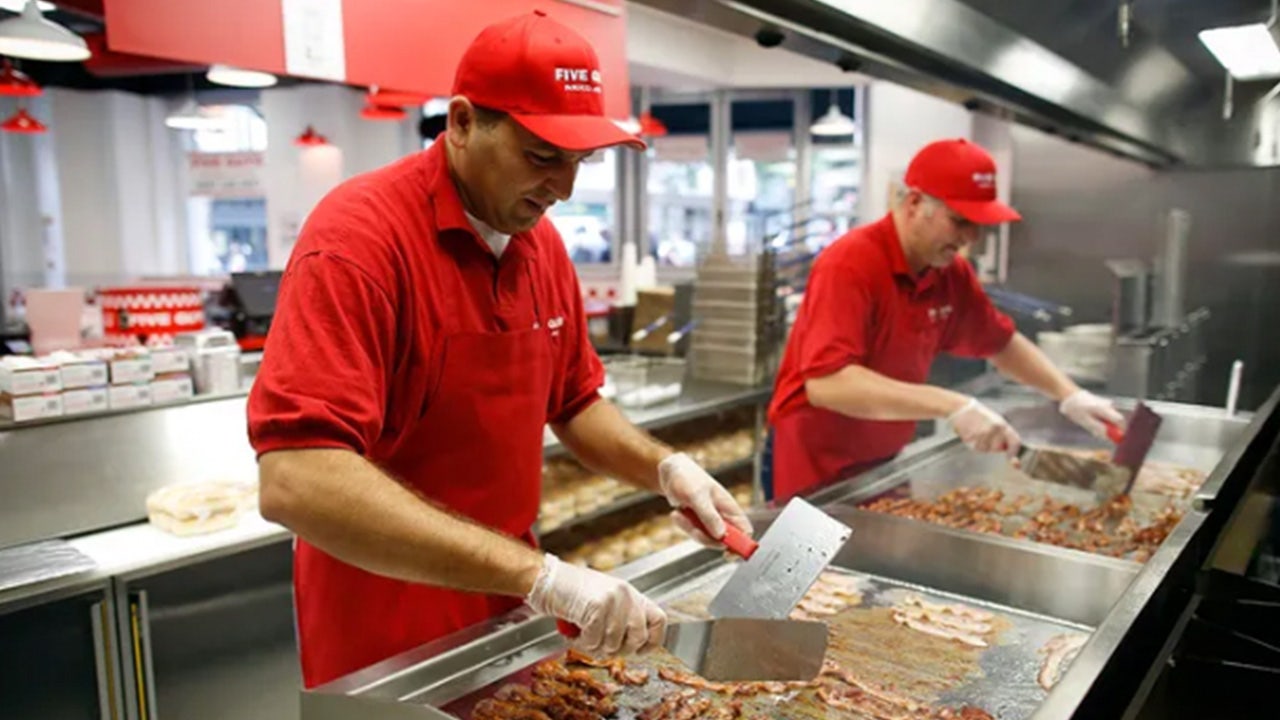
Five Guys is rewarding employees after an unexpectedly overwhelming promotion put heavy pressure on store crews. The burger chain said it was distributing about $1.5 million in bonuses to workers after a buy-one-get-one (BOGO) deal on Feb. 17, which was launched to celebrate its 40th anniversary but quickly exceeded expectations. "The promotion spread far beyond what we anticipated, and our hardworking crews were placed in a difficult situation," Five Guys said in a Feb. 18 statement. FAST-FOOD CHAINS USE PSYCHOLOGY TRICK TO MAKE YOU SPEND MORE MONEY ON THEIR MENU ITEMS: REPORT The company noted some locations ran out of food, closed early and experienced online ordering issues. "We also want to recognize the incredible men and women working in our restaurants," the statement continued. "They handled it with the same grit and dedication that has defined Five Guys for four decades." FAST-FOOD GIANT MAINTAINS IRON GRIP ON CUSTOMER SATISFACTION AMID RESTAURANT INDUSTRY CHANGES CEO Jerry Murrell told Fortune he wrote 1,500 bonus checks, acknowledging the company underestimated demand and wanting to recognize employees for handling the surge. "I didn't want anybody shooting me in the back or anything after the first day, because we really screwed it up. We had no idea that we were going to get that kind of response," Murrell told the outlet. Five Guys did not immediately respond to FOX Business' request for comment.
Japan's Budget Bill Issues Sow Discord Between PM, LDP Upper House Members
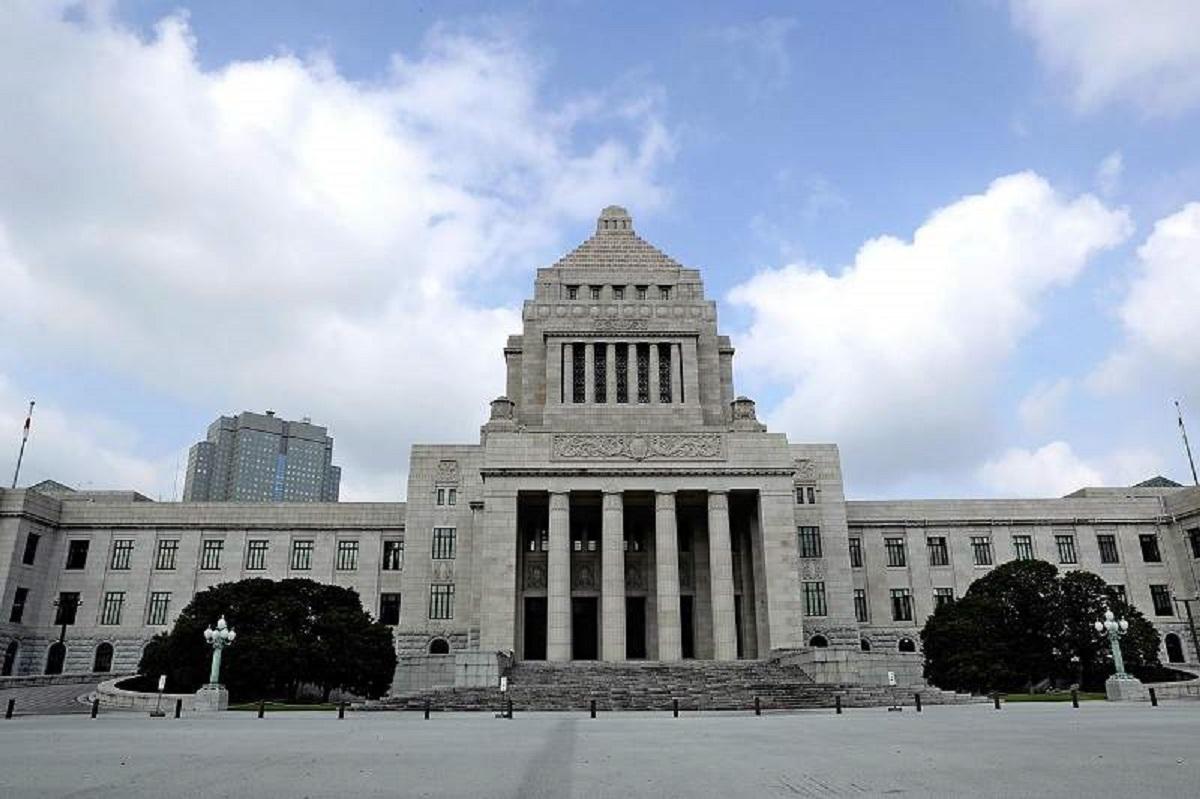
By Daiki Misawa / Yomiuri Shimbun Staff Writer 2:00 JST, March 29, 2026 The handling of fiscal 2026 budget bill deliberations has sparked disagreement between Prime Minister Sanae Takaichi, who is also president of the Liberal Democratic Party, and the LDP's members in the House of Councillors. It appears the prime minister is growing increasingly irritated over the difficulties in enacting the bill by the end of the current fiscal year. Given that the LDP is a minority ruling party in the upper house, its options are limited. The government and ruling parties are struggling to find a way to save face. "To avoid causing any inconvenience in people's daily lives, we ask for cooperation from the opposition parties on passing the bill within this fiscal year," said Chief Cabinet Secretary Minoru Kihara at a news conference on Friday. Kihara stressed that the provisional budget bill submitted to the Diet on the same day was created in preparation for an "unpredictable situation." Within the government and the ruling and opposition parties, the predominant view is that once the stopgap budget is compiled and submitted to the Diet, the government has given up passing the fiscal 2026 budget bill within the current fiscal year. The stopgap budget is expected to be enacted on Monday. However, Takaichi has maintained her stance on passing the bill by the end of March, believing that it is important to execute the fiscal 2026 budget as soon as possible. At the House of Representatives plenary session on Thursday, she called for cooperation from the ruling and opposition parties on passing the bill during the current fiscal year, while bowing to Diet members from the podium. When the lower house began deliberations on the budget bill, the LDP caucus in the upper house compiled a schedule for budget bill deliberations. This has become a major factor behind the gap in understanding between the prime minister and the LDP's upper house members. According to the schedule, the budget bill would need to be passed through the lower house by March 13 in order for it to be enacted by the end of March. In fact, it passed the lower house on that very day, causing the prime minister's expectations to be raised. During the lower house deliberations, however, the Budget Committee chairperson repeatedly used his authority to push through the debate schedule, drawing backlash from opposition parties. This changed the situation for the LDP's upper house caucus, as it had requested that the budget bill not be sent to their chamber while the confrontation between ruling and opposition blocks was unresolved. To enter budget deliberations in the upper house, the LDP in the chamber had to accede to demands from opposition parties, such as securing enough time for deliberations. As opposition parties have a majority in the chamber, it is difficult for the LDP to push the debate schedule forward, and the view grew within the LDP caucus in the chamber that passing the budget bill within the current fiscal year would be difficult. Takaichi feels that the LDP caucus in the upper house has failed to meet her expectations, according to a close aide. But the government understands that it is essential to cooperate with the LDP members in the upper house and has been working to coordinate efforts to avoid confusion. Kihara held talks with Masaji Matsuyama, chairperson for the LDP upper house members, and Junichi Ishii, secretary general for the party in the chamber, on Monday, laying the groundwork for compiling a provisional budget. Opposition parties also demanded the compilation of a stopgap budget, as they considered it necessary to more thoroughly deliberate the fiscal 2026 budget bill. After enacting the stopgap budget on Monday, the government and ruling parties plan to make their stance regarding the fiscal 2026 budget bill clear. "We won't give up until the bitter end, and it's also important that the upper house does its utmost," said a high-ranking government official.
Georgia Joins Texas, New York, Louisiana, California, Florida and More American States Face Frustrating Airport Chaos, Missed Flights, Falling International Arrivals and Mounting Visa and Trump Slump Pressure: How Federal Government Shutdown Tormenting US Tourism Sector - Travel And Tour World
Georgia joins Texas, New York, Louisiana, California, Florida and more American states facing airport chaos, missed flights, falling arrivals and visa pressure as the federal government shutdown torments US tourism. Georgia joins Texas, New York, Louisiana, California, Florida and more American states as airport chaos, missed flights, falling international arrivals and mounting visa and Trump slump pressure intensify under federal government shutdown strain. According to TSA checkpoint travel numbers and U.S. Travel Association insights, disruption is accelerating. Consequently, Georgia joins Texas, New York, Louisiana, California, Florida and more American states facing severe tourism stress. Therefore, Travel And Tour World urges readers to read the entire story as airport chaos, missed flights and falling international arrivals reshape the US tourism sector. The United States tourism sector is entering a volatile and deeply uncertain phase on March 26, 2026, as Georgia, Texas, New York, Louisiana, California, Florida and more states simultaneously face airport chaos, falling international arrivals and mounting policy pressure. This is not a single disruption. It is a layered shock hitting the system from multiple directions. Airport operations are deteriorating rapidly due to staffing shortages. International demand is weakening under policy tightening and global perception risks. At the same time, geopolitical tensions and security concerns are amplifying hesitation among travellers. Consequently, Georgia, Texas, New York, Louisiana, California, Florida and more states are now experiencing a convergence of operational stress, economic strain and reputational pressure. The United States tourism ecosystem, once powered by seamless connectivity and strong inbound demand, is now being tested at every level. Travel And Tour World urges readers to understand how airport congestion, policy shifts and global uncertainty are reshaping travel flows across the country. The situation is evolving quickly, and its impact is already visible across key aviation hubs, leisure destinations and international gateways. The breakdown is driven by three simultaneous forces. First, operational disruption is spreading across airports due to staffing shortages linked to the ongoing government shutdown and this is widely debated in Reddit. Second, international tourism demand is declining due to stricter entry perceptions and policy signals. Third, geopolitical tensions are influencing travel behaviour globally. These three forces are not isolated. They are interacting. When airport congestion increases, traveller satisfaction drops. When policies appear restrictive, demand weakens further. When global uncertainty rises, discretionary travel slows. Together, these factors are creating a cascading effect across the United States tourism sector. This is why the current situation is more severe than a typical seasonal slowdown or isolated disruption. Airport operations are at the centre of the crisis. Staffing shortages, particularly within security operations, are triggering long queues, missed flights and rising traveller frustration. Atlanta, one of the world's busiest aviation hubs, is experiencing severe operational strain. High absenteeism among security staff is slowing passenger processing. As a result, international and domestic travellers are facing extended wait times. This is damaging Atlanta's reputation as a reliable transit hub. Texas airports are also under pressure. Passenger throughput is slowing significantly. Combined with earlier airspace disruptions in the region, the operational environment remains unstable. This is affecting both business and leisure travel flows. New Orleans is seeing bottlenecks during peak travel periods. With spring travel demand rising, the inability to process passengers efficiently is creating delays that ripple across the network. The federal travel corridor is experiencing notable disruption. Business travel, government travel and tourism flows are all being impacted simultaneously. The immediate effect is clear: airport congestion is no longer an inconvenience. It is becoming a structural barrier to travel. The decline in international arrivals is not sudden, but it has intensified. The United States recorded a drop in foreign visitors in the previous year, and current trends suggest continued weakness. Several factors are driving this: States like California and Florida are particularly vulnerable. These regions rely heavily on international tourists. When inbound travel declines, the impact spreads quickly across hotels, attractions, retail and local economies. This is not just a numbers issue. It is a structural shift in demand patterns. Policy signals are playing a critical role in shaping travel behaviour. Even without major regulatory changes, perception alone can influence decisions. Proposed measures around traveller data, digital identity verification and increased screening are creating uncertainty. International travellers are highly sensitive to friction. When a destination appears complex or restrictive, alternatives become more attractive. This is where the United States faces a competitive disadvantage. Countries in Europe, Asia and the Middle East are actively simplifying entry processes while promoting tourism aggressively. In contrast, the United States is perceived as tightening its approach. The result is a measurable deterrence effect. Fewer travellers are choosing the United States, particularly for leisure travel. Amid the broader challenges, New York is experiencing a unique moment of opportunity. A high-profile international visit is expected to draw global attention to the city. This kind of visibility can temporarily boost tourism interest. Diplomatic visits often lead to increased media coverage, which can translate into short-term travel demand. However, this is not a structural solution. While New York may benefit from increased visibility, the underlying challenges affecting the national tourism landscape remain unchanged. The boost is likely to be temporary and concentrated. Security concerns are increasingly influencing travel behaviour. Heightened global tensions are prompting governments to issue advisories and travellers to reconsider plans. For the United States, this creates a dual challenge: Insurance costs are rising. Risk perception is increasing. Leisure travellers, in particular, are becoming more cautious. This is affecting spring and summer travel demand, traditionally peak periods for tourism. Security is no longer just a background factor. It is now a primary driver of travel decision-making. The impact is uneven but concentrated in key regions: These states represent the core of the US tourism ecosystem. When they are affected, the entire system feels the impact. Georgia joins Texas, New York, Louisiana, California, Florida and more American states as airport chaos, missed flights, falling international arrivals and mounting visa and Trump slump pressure intensify under the federal government shutdown, tormenting the US tourism sector across operational, economic and perception levels. The cause is structural and data-backed. According to the Transportation Security Administration (TSA), workforce strain during funding disruptions directly impacts checkpoint throughput, leading to longer queues and missed flights. This explains the growing airport chaos across major US hubs. At the same time, the National Travel and Tourism Office (NTTO) confirms that international arrivals remain volatile and sensitive to policy perception, contributing to falling international arrivals. Further, the U.S. Department of Homeland Security (DHS) maintains heightened operational vigilance, which adds additional screening layers. While necessary for security, it slows passenger movement and amplifies airport congestion. In parallel, visa-related perception challenges -- outlined in broader federal travel frameworks such as the U.S. Visa Information portal -- continue to influence traveller decisions, reinforcing mounting visa and Trump slump pressure. The answer requires coordinated federal action. Restoring funding will stabilise TSA staffing and reduce airport chaos. Enhancing transparency and efficiency in visa processing will help reverse falling international arrivals. Additionally, strategic communication through bodies like the U.S. Travel Association can rebuild global confidence. The reason this crisis is critical is because tourism drives economic activity across multiple sectors. When Georgia joins Texas, New York, Louisiana, California, Florida and more American states in facing airport chaos, missed flights and falling international arrivals, the impact cascades into hospitality, aviation, retail and employment. The federal government shutdown is therefore not just political gridlock -- it is a direct and escalating tourism crisis reshaping the United States travel economy in real time. Domestic travel remains relatively resilient. However, it cannot fully compensate for the loss of international visitors. Domestic travellers typically spend less and stay for shorter durations compared to international tourists. This creates a revenue gap that is difficult to bridge. While domestic demand provides a buffer, it is not a solution. The long-term health of US tourism depends on restoring international confidence and improving operational efficiency. The United States tourism sector on March 26, 2026 is facing a critical inflection point. Georgia, Texas, New York, Louisiana, California, Florida and more states are not dealing with isolated disruptions. They are experiencing a convergence of airport chaos, falling international arrivals and mounting policy pressure that is reshaping the entire travel landscape. Airport operations are under strain, creating immediate friction for travellers. International demand is weakening due to policy perception and global competition. Security concerns are amplifying hesitation. Together, these forces are creating a complex and evolving crisis that extends beyond short-term disruption. The cause is clear: a combination of operational inefficiencies, policy-driven perception challenges and external geopolitical pressures. The answer lies in addressing all three layers simultaneously. Improving airport efficiency, restoring traveller confidence and maintaining a competitive global tourism strategy are essential. The reason this matters is simple. Tourism is not just an industry. It is a critical economic engine that supports millions of jobs and drives regional development. When tourism weakens, the effects ripple across the economy. The United States still holds immense global appeal. However, appeal alone is no longer enough. In a highly competitive and rapidly changing global travel market, efficiency, accessibility and perception are equally important. As the situation continues to evolve, the trajectory of US tourism will depend on how quickly these challenges are addressed. The current moment is not just a disruption. It is a test of resilience, strategy and adaptability for one of the world's largest tourism economies.

Miami Airport Under Fire for Using DJ as Travelers Rage Over Delays & TSA Chaos, 'TSA Not Getting Paid While Airport Hires DJs'
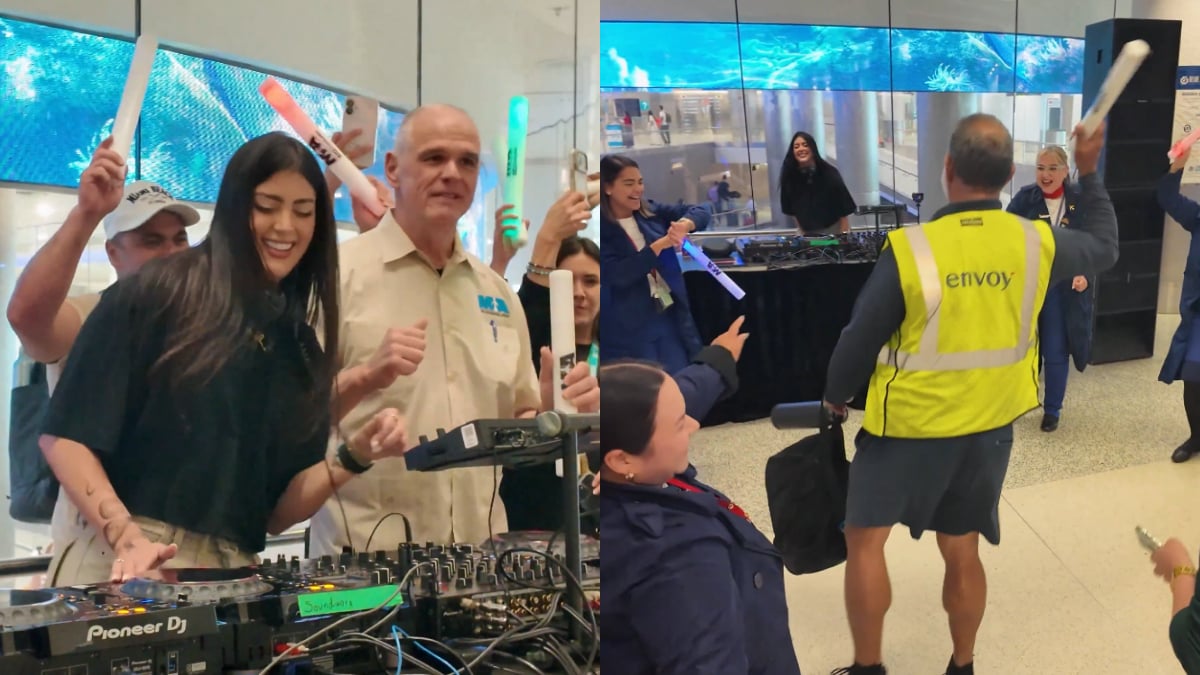
By now, it's become normal for many airports across the US to have long security check lines, with some even going as long as six hours. Hence, Miami International Airport in Florida hatched an idea: a DJ to keep travelers either busy, distracted, or hopefully happy while some of them endure delays. The move has since drawn outrage online, with many questioning why. Miami International Airport in Miami, Florida, shared the update itself on their official X account. They hired DJ Amal Nemer, who set up a booth in the airport's lobby. In the particular video, DJ Nemer can be seen playing "Stay in the Light" by the Bee Gees and even handing out light sticks so the travelers and even airline employees can dance. Some of them did. Online, however, the reaction is more serious and scrutinizing. Some of the most highly-liked comments on the threat even called out Miami International Airport (MIA) for the stunt. "Instead of actually fixing the issues at MIA, they do stupid things like this... Same as how Miami-Dade government is out of touch with the taxpayers. Wasting our money," ranted one commenter. Other commenters shared similar sentiments, with a re-share of the post even claiming, "imagine waiting in a 6 hour line at TSA and this [expletive] is going on," alluding to how the Transportation Security Administration (TSA) in certain airports can't properly do its job due to the partial government shutdown. This shutdown has since led to TSA staffing shortages and lack of pay, extremely long lines and wait times, and even flight delays. Critics Prefer Reforms, Not Discos A few days ago, the MIA apparently had lines as long as a city block snaking through the airport. It's not clear what exactly the MIA is doing to alleviate or improve the security lines, but some airports have temporarily employed Immigration and Customs Enforcement agents (ICE) to man TSA posts. So far, ICE hasn't been deployed at MIA at the time of writing. Meanwhile, other people online have further criticized MIA, with another commenter even bringing attention to some of the older problems in the airport. "Can you please fix the escalators and moving walkways that have been broken for more than two years in terminal D?, thanks for your attention," a commenter stated. Others drew attention to how absurd the situation was, especially for both the TSA agents and the travelers: "TSA agents not getting paid while the airport hires DJs for music week." In any case, the majority of reactions to MIA's particular DJ post are negative, and it appears they really prefer something more serious as a solution.
Travel Chaos Hits Across Brazil as São Paulo, Rio, Brasília, and Recife Face Struggles with LATAM, Gol, Azul, and American Airlines Due to 59 Delays and 18 Cancellations - Travel And Tour World
Today's travel plans have been disrupted due to multiple flight delays and cancellations at the two major airports in São Paulo, Brazil, São Paulo-Guarulhos International Airport (GRU) and São Paulo-Congonhas Airport (CGH). Today, the biggest airport in Brazil, São Paulo-Guarulhos International, has 47 flight delays and 13 cancellations. At the same time, the primary domestic airport (São Paulo-Congonhas) has experienced 12 delays and 5 cancellations. Passengers have been inconvenienced, left stuck and have had to re-arrange their travel plans. São Paulo-Guarulhos International, the hub for international flights and a critical transportation link to the global market, has faced the brunt of the issues. The 47 delayed flights at GRU are primarily international connections, many of which have significant long-haul routes connecting Brazil to major international cities. The cancellations add to the travel burden, forcing passengers to either rebook on other flights or adjust their travel plans to accommodate alternative arrangements. At São Paulo-Congonhas, the situation is no less troubling. While the delays are fewer in comparison, the 12 delays and five cancellations have still created a ripple effect in domestic travel. Congonhas handles a large volume of domestic flights, especially for travelers heading to and from Brazil's biggest cities like Rio de Janeiro and Brasília. The delays here also raise concerns for people with time-sensitive commitments, such as business meetings, family emergencies, or connecting flights. In total, the disruptions have affected hundreds of passengers, many of whom have faced extended waits in airport terminals. Passengers who had booked flights for critical business travel or vacations now find themselves in limbo, scrambling for new bookings or dealing with uncertainty. Several major Brazilian airlines, including LATAM Airlines, Gol Linhas Aéreas, and Azul Brazilian Airlines, are among the airlines most affected by today's delays and cancellations at São Paulo's airports. International carriers with significant operations at São Paulo-Guarulhos, such as American Airlines, Air France, and Lufthansa, have also seen their schedules disrupted. The ongoing flight delays have strained the operational efficiency of these airlines, leading to ripple effects on flights throughout Brazil and beyond. The delays at GRU and CGH are exacerbated by the growing demand for air travel in Brazil, particularly with the upcoming tourist season and post-pandemic recovery boosting domestic and international passenger volumes. Passengers on these airlines have faced long waits, crowded terminals, and uncertainty about when their flights will take off. While some airlines have offered assistance and rebooking options, many travelers are left with limited support, further intensifying the travel disruptions. The ripple effects of these flight delays and cancellations are being felt beyond just the passengers at the airports. São Paulo is one of Brazil's most important tourism hubs, attracting millions of international and domestic visitors every year. With over 10 million international arrivals in 2019 alone, the city is a significant gateway for tourists traveling to Brazil. The delays at GRU, in particular, could lead to a negative impact on tourism. Many international tourists flying into São Paulo are likely to miss crucial connecting flights or scheduled tours, leading to a domino effect that could lower the overall visitor satisfaction. Tourists who planned to visit popular spots like Ibirapuera Park, the São Paulo Museum of Art (MASP), or take in the city's gastronomic scene may be delayed, potentially altering their plans entirely. Moreover, the delays create uncertainty for travelers planning to attend important events. São Paulo hosts countless conferences, business events, and cultural festivals, attracting attendees from across the globe. If business travelers and tourists cannot rely on timely flights, it can tarnish the city's image as a reliable travel destination. On the local level, tourism-related businesses in São Paulo may also feel the pinch. Hotels, restaurants, and tour operators may see fewer visitors or reduced revenue, especially if travelers are forced to reschedule or cancel their trips. Businesses that rely on air travel for the movement of goods, like e-commerce and international trade companies, may also face delays in logistics operations. While the delays and cancellations have caused significant disruptions, the Brazilian government, along with airport authorities, is working on measures to address these issues. Both GRU and CGH airports are in contact with airlines to streamline rebooking processes for passengers, with the aim of minimizing further delays. Passengers are being urged to check their flight status regularly for updates and consider booking alternative routes if their flights are significantly delayed. Airport authorities have also assured the public that they are working to improve operational efficiency and reduce delays, especially as peak travel times approach. However, given the nature of air travel, full recovery from such widespread disruptions could take time, particularly if weather conditions or technical issues continue to play a role. Thousands of airline customers have been charged by the tourism industry and airlines as flights have been cancelled and delayed at Guarulhos and Congonhas Airports in São Paulo. Most customers have priority assistance and new boardings starting 3 hours after delayed flights, which does not adequately compensate customers for the hours lost. Lost flight connections and new bookings at the costs of customers is a further dissatisfaction. For any flights that have not yet been cancelled, customers should monitor their flight on the airline's official website as additional delays are likely. Customers wondering if their flight has been cancelled should not wait at the airport as should consult the airline's website as additional information is likely to not be provided at the airport. At the present time it is estimated that the flight disruption is an indeterminate number of hours. For additional information, customers are encouraged to monitor government travel advisories as well as the airport's website.

Elon Musk's last co-founder reportedly leaves xAI - RocketNews
Earlier this month, it looked like all but two of Elon Musk's 11 co-founders at his AI startup xAI had departed the company. Now, according to Business Insider, the remaining two co-founders, Manuel Kroiss and Ross Nordeen, have left as well. BI said on Wednesday that Kroiss had told people that he's leaving xAI, then reported that Nordeen left the company on Friday. Musk recently claimed xAI "was not built right [the] first time around," so it's now "being rebuilt from the foundations up." The company was recently acquired by Musk's SpaceX, bringing SpaceX, xAI, and X (formerly Twitter) together under one corporate umbrella, all as SpaceX is reportedly planning to go public. Kroiss and Nordeen both reported directly to Musk, according to BI, with Kroiss leading the company's pretraining team, while Nordeen was Musk's "right-hand operator." Nordeen reportedly came to xAI from Tesla, and was involved in planning major layoffs at Twitter after Musk acquired the company in 2022. TechCrunch has reached out to xAI for comment.
