News & Updates
The latest news and updates from companies in the WLTH portfolio.
Google set to help finance major Texas data center after Anthropic deal grows
Court blocks Pentagon from restricting Anthropic's AI tool over national security concerns. Google is preparing to provide financial backing for a massive new data center project in Texas, responding to intensifying competition in artificial intelligence infrastructure. The facility, developed by Nexus Data Centers and leased by AI firm Anthropic, is projected to exceed $5 billion in its initial phase alone. Google is expected to contribute through construction loans, while multiple banks have joined in shaping the project's financing structure. Data center capacity and energy infrastructure in focus Anthropic recently signed a lease for a sprawling, 2,800-acre campus -- a move that deepens its broader infrastructure partnership with Google. Construction is already underway, with initial financing provided via debt instruments from publicly-traded investment firm Eagle Point. This signals significant institutional support behind the ambitious endeavor. ContentsData center capacity and energy infrastructure in focusPentagon dispute and court intervention The facility is expected to reach about 500 megawatts of capacity by the end of 2026, an amount roughly equivalent to the electricity needs of 500,000 households. There are plans to scale the project up to 7.7 gigawatts in future phases, indicating the potential for far greater computational and energy output over the long term. A key feature of the site is its proximity to major natural gas pipelines operated by companies like Enterprise Products Partners, Energy Transfer, and Atmos Energy. Leveraging access to these pipelines, the facility intends to generate power onsite through gas turbines. Experts believe this approach could provide the uninterrupted and scalable energy supply required by demanding AI systems. Pentagon dispute and court intervention Meanwhile, tensions between Anthropic and the U.S. Department of Defense have escalated to the courts. A federal judge in San Francisco has temporarily blocked the Pentagon from designating the company as a national security risk and halting public use of its AI tools. Judge Rita Lin ordered a preliminary injunction, pausing the government's actions until the legal case is resolved. Anthropic argued that Defense Secretary Pete Hegseth overstepped his authority by labeling the company as a supply chain risk. The court criticized the government's action as "arbitrary," warning of the dangers of branding an American company as a threat without a clear legal basis. This dispute appears to have emerged after negotiations between Anthropic and the Pentagon broke down. Anthropic, it is noted, opposes the use of its AI models in lethal autonomous weapons or large-scale surveillance operations -- a stance that has led to deeper disagreements with defense officials. Founded in 2021, Anthropic is known as a technology company focused on AI safety and ethical usage. The firm has gained prominence with its conversational AI model, Claude, becoming a leading player in the sector. Its partnership with Google is particularly notable in the areas of infrastructure and cloud computing, further positioning both companies at the forefront of the AI race. You can follow our news on Telegram, Facebook, Twitter & CoinmarketcapDisclaimer: The information contained in this article does not constitute investment advice. Investors should be aware that cryptocurrencies carry high volatility and therefore risk, and should conduct their own research.

The Quiet Exodus at xAI and the Grand Ambitions Behind Elon Musk's Next IPO Play
Ross Nordeen helped build xAI from the ground up. Now he's gone. The departure of one of Elon Musk's co-founders at his artificial intelligence venture, first reported by Business Insider, is the latest in a string of high-profile exits from xAI -- a company barely two years old that has already burned through billions of dollars and absorbed an entire social media platform. Nordeen, who previously worked at Musk's Neuralink before joining xAI at its founding in 2023, left the company in recent weeks, according to people familiar with the matter. He didn't make a public statement. Neither did xAI. The silence is telling. Musk's AI company has lost at least five of its original twelve co-founders since its inception, a turnover rate that would raise alarms at any startup -- let alone one valued at $80 billion after its latest funding round. Among those who've departed: Greg Yang, a theoretical AI researcher who left in 2024 to start his own company; Jimmy Ba, a University of Toronto professor who returned to academia; and several others who quietly moved on without fanfare. The pattern suggests something more than the typical startup churn that characterizes early-stage companies in competitive fields. What makes Nordeen's exit particularly notable is its timing. It comes as Musk is orchestrating what may be one of the most consequential financial events of 2025 and 2026: the potential initial public offering of SpaceX, his rocket company, which could value the enterprise at $350 billion or more. Musk is simultaneously managing Tesla through a turbulent period of declining sales in key markets, running a federal cost-cutting operation in Washington that has generated enormous political controversy, and attempting to make xAI a credible competitor to OpenAI, Google DeepMind, and Anthropic. That's a lot of plates spinning. And some are wobbling. xAI's flagship product, the Grok chatbot, is integrated into X, the social media platform Musk acquired in 2022 for $44 billion. The strategy has always been straightforward: use X's massive data firehose to train AI models, then distribute those models back through X to hundreds of millions of users. In theory, it's a virtuous cycle. In practice, the execution has been rockier than Musk's public pronouncements suggest. Grok has faced criticism for generating politically charged and sometimes inaccurate responses, and its market share among AI assistants remains a fraction of what ChatGPT commands. The $80 billion valuation xAI secured in its most recent funding round -- reported widely, including by Business Insider -- places it among the most richly valued private companies in the world. But valuations and viability are different things. The AI industry is consuming capital at a staggering rate, and investors are growing more discerning about which companies can convert massive compute expenditures into sustainable revenue. xAI's Colossus supercomputer cluster in Memphis, Tennessee -- reportedly one of the largest single AI training installations ever built -- represents an enormous fixed-cost commitment that demands commensurate returns. Co-founder departures at this stage aren't just HR issues. They're signals. When founding team members leave a company during its hypergrowth phase, it typically means one of three things: disagreements over strategic direction, frustration with management style, or the calculation that personal equity is better preserved by departing before things get harder. In Musk's companies, there's often a fourth factor -- the sheer physical and psychological demands of working for someone who expects 80-hour weeks as a baseline and treats urgency as a permanent condition. Former employees across Musk's ventures have described a culture that is exhilarating and exhausting in roughly equal measure. The SpaceX IPO and Musk's Expanding Financial Architecture While xAI churns through co-founders, the bigger financial story may be what's happening at SpaceX. Musk has been laying groundwork for a potential public offering of his rocket company, a move that would be transformative not just for SpaceX but for Musk's entire constellation of enterprises. A SpaceX IPO at a $350 billion valuation would make it one of the largest public offerings in history and would crystallize an enormous amount of paper wealth for Musk and early investors. The implications extend well beyond SpaceX itself. Musk has used cross-pollination between his companies -- sharing talent, technology concepts, and occasionally infrastructure -- as a strategic advantage for years. A publicly traded SpaceX would introduce new governance constraints and disclosure requirements that could limit some of that flexibility. But it would also generate liquidity that could be redirected into xAI, Neuralink, The Boring Company, or whatever Musk decides needs capital next. SpaceX's Starlink satellite internet division has been the primary revenue engine making an IPO feasible. Starlink surpassed $6.6 billion in annual revenue in 2024, according to estimates from financial analysts, and its subscriber base continues to grow rapidly across both consumer and enterprise segments. The unit economics have improved dramatically as SpaceX has scaled its satellite constellation past 6,000 active units in low Earth orbit. For institutional investors who've long wanted exposure to SpaceX but couldn't access private shares, an IPO would be the event they've been waiting for. But here's the tension. Musk's attention is fractured in ways it has never been before. His role leading the Department of Government Efficiency -- the federal spending review initiative operating under the Trump administration -- has consumed significant bandwidth since early 2025. Tesla's stock, while still trading at elevated multiples relative to traditional automakers, has come under pressure as European sales declined sharply and Chinese competitors like BYD continue to gain ground. The reputational damage from Musk's political activities has been measurable: Tesla brand perception scores have dropped in multiple surveys, and some institutional investors have grown uncomfortable with the concentration of controversy around a single individual. Against this backdrop, xAI needs to demonstrate that it can compete technically with organizations that have deeper AI research benches and longer track records. OpenAI, despite its own internal dramas, continues to push the frontier with successive model generations. Google DeepMind has the advantage of virtually unlimited compute resources and decades of accumulated research talent. Anthropic has positioned itself as the safety-conscious alternative and recently closed a massive funding round of its own. xAI's pitch to investors has centered on speed. The company went from founding to launching a competitive large language model in roughly a year -- a timeline that impressed even skeptics. Musk's ability to recruit top-tier engineers and researchers by offering equity in a Musk-affiliated venture, combined with the promise of working on frontier AI without the bureaucratic overhead of a large corporation, proved potent in the early days. Whether that recruiting advantage persists as co-founders depart is an open question. There's also the data advantage to consider. X generates billions of posts, images, and interactions daily, and xAI has access to that corpus for training purposes. This is a genuine competitive asset -- one that other AI companies can't easily replicate. Reddit signed a $60 million annual deal with Google for training data access. X's data, funneled directly into a sister company, comes without that kind of external price tag. The question is whether social media data, with all its noise, bias, and toxicity, produces models that are actually better for the applications that generate revenue. So far, the evidence is mixed. Grok has developed a niche following among users who appreciate its more irreverent, less filtered personality compared to ChatGPT or Claude. But niche followings don't justify $80 billion valuations. Enterprise AI -- the segment where real money is being made -- requires reliability, consistency, and the kind of institutional trust that takes years to build. xAI has made some moves in this direction, but it remains far behind Anthropic and OpenAI in enterprise adoption. Nordeen's departure won't, by itself, alter xAI's trajectory. No single co-founder exit does. But the cumulative effect of losing nearly half the founding team within two years creates a narrative problem at minimum and a talent retention problem at worst. The engineers and researchers who remain will inevitably wonder whether the departures reflect something they should be concerned about. Prospective hires will ask the same question. Musk has navigated these dynamics before. Tesla's early years were marked by executive turnover that would have sunk most companies. SpaceX lost senior engineers regularly during its first decade. In both cases, the companies not only survived but thrived, in large part because Musk's vision and capital-raising ability proved more durable than any individual contributor's presence. The question for xAI is whether the AI industry, with its unique combination of talent scarcity and capital intensity, follows the same pattern -- or whether the rules are different this time. The next twelve months will be clarifying. If SpaceX goes public and the offering succeeds, Musk will have an enormous new pool of resources and credibility to deploy across his portfolio. If xAI can ship a model generation that genuinely competes with GPT-5 or whatever Google releases next, the co-founder departures will be footnotes. But if the technical progress stalls while the founding team continues to thin out, the $80 billion valuation will start to look less like a floor and more like a ceiling. For now, the man who insists he can run six companies simultaneously is about to find out whether the market agrees.

Anthropic's Claude Is Quietly Winning the Consumer AI Race -- And the Numbers Are Starting to Show It
Something shifted in the AI market over the past year. Not a loud, dramatic pivot -- more like a slow tide change that the industry is only now beginning to measure. Anthropic's Claude, long regarded as the thinking person's chatbot, has been accumulating paying consumers at a pace that has caught competitors and analysts off guard. The company that once positioned itself almost exclusively as an enterprise and safety-first research lab is now pulling significant consumer revenue, and the trajectory suggests this is no temporary surge. The numbers tell a striking story. Anthropic's annualized revenue reportedly crossed $2 billion in early 2025, a figure first reported by The Information, representing a sharp acceleration from roughly $900 million annualized in mid-2024. While a substantial portion of that revenue comes from API access and enterprise contracts -- Amazon Web Services alone committed up to $8 billion in investment -- the consumer subscription side of the business has been growing faster than many expected. Claude Pro subscriptions, priced at $20 per month, and the newer Claude Max tier have drawn a loyal and expanding user base that increasingly prefers Claude's conversational style, reasoning depth, and what many users describe as a more "human" interaction pattern compared to OpenAI's ChatGPT or Google's Gemini. Why the shift? Part of it is product. Part of it is timing. And part of it is that Anthropic has made a series of model releases -- Claude 3 Opus, Claude 3.5 Sonnet, and more recently Claude 3.5 Haiku -- that hit a sweet spot between capability and usability that resonated with a consumer audience hungry for more than party tricks. Dario Amodei, Anthropic's CEO, has been measured in his public commentary about consumer growth, preferring to emphasize safety research and enterprise adoption. But the company's actions speak louder. The launch of Claude's iOS and Android apps, the introduction of artifacts -- interactive, in-chat generated content like code, documents, and visualizations -- and a steady cadence of model improvements all point to a deliberate consumer strategy. As CNBC reported, Anthropic was in talks to raise $2 billion at a $60 billion valuation in early 2025, capital earmarked in part for scaling compute but also for expanding its consumer-facing products. The competitive dynamics here are fascinating. OpenAI still commands the largest share of the consumer AI chatbot market, with ChatGPT boasting over 200 million weekly active users as of late 2024 according to statements from CEO Sam Altman. Google's Gemini has deep distribution advantages through Android and Search. But Claude has carved out a niche -- particularly among developers, writers, researchers, and knowledge workers -- that punches well above its weight in terms of engagement and willingness to pay. These aren't casual users asking for recipe ideas. They're professionals who've tested every model available and made a deliberate choice. And they're vocal about it. Scroll through developer forums, X (formerly Twitter), or Reddit's r/LocalLLaMA and r/ChatGPT communities, and you'll find a consistent thread: users who switched to Claude and didn't go back. The praise tends to center on Claude's ability to handle long, complex prompts without losing coherence, its tendency to push back on poorly framed questions rather than hallucinating an answer, and a writing style that many describe as less robotic than alternatives. "Claude doesn't feel like it's trying to impress you," one frequently upvoted Reddit comment put it. "It feels like it's trying to help you." That perception -- whether fully warranted or partly the result of effective product design -- has translated into real commercial momentum. According to data from app analytics firms tracked by Reuters, Claude's mobile app downloads surged after the release of Claude 3.5 Sonnet in mid-2024, and retention rates for the paid tier have exceeded industry averages for subscription AI products. Sensor Tower data showed Claude climbing app store rankings in the productivity category throughout late 2024 and into 2025, a trajectory that accelerated with each model update. The enterprise side remains critical to Anthropic's business model, of course. Amazon's massive investment gives Claude privileged distribution through AWS Bedrock, and companies like Notion, DuckDuckGo, and Quora have integrated Claude into their products. Salesforce, too, explored Claude integrations for its AI-powered features. But what's notable is how the consumer and enterprise sides of the business have begun to reinforce each other. Professionals discover Claude at work through an API integration, then sign up for a personal Pro subscription. Or they start with a free account, hit the usage limits, and convert to paid because they've come to depend on it for daily workflows. This flywheel effect is something OpenAI pioneered with ChatGPT, and it's instructive that Anthropic has replicated it without anywhere near the same marketing budget or brand recognition. Anthropic doesn't run Super Bowl ads. It doesn't have a consumer brand ambassador. What it has is a product that, for a meaningful and growing segment of the market, simply works better for their specific needs. Not everyone agrees with that assessment. OpenAI's GPT-4o and the newer o1 reasoning models have received strong reviews, and Google's Gemini Ultra has closed the gap on several benchmarks. The AI model leaderboards -- LMSYS Chatbot Arena being the most closely watched -- show a tight race at the top, with Claude, GPT-4, and Gemini trading positions depending on the task category. But benchmarks and consumer preference don't always align. Users don't choose a daily-driver AI tool based on MMLU scores. They choose based on how the tool feels in practice, how reliably it handles their particular use cases, and whether it respects their time. On that last point, Anthropic has made some shrewd design decisions. Claude's tendency to acknowledge uncertainty rather than fabricate confident-sounding answers has built trust with a user base that's grown increasingly sophisticated about AI limitations. The company's constitutional AI approach -- training the model to be helpful, harmless, and honest through a set of explicit principles -- may have started as a safety initiative, but it's become a consumer differentiator. People trust Claude more. And trust, in a market where every chatbot occasionally hallucinates or produces nonsense, is a powerful competitive advantage. The financial implications of this consumer growth are significant for Anthropic's fundraising narrative and eventual path to profitability. AI companies burn extraordinary amounts of capital on compute -- Anthropic reportedly spent hundreds of millions on training Claude 3 alone -- and consumer subscriptions represent a more predictable, higher-margin revenue stream than API access, which is subject to enterprise procurement cycles and competitive pricing pressure. If Claude's consumer base continues to grow at its current rate, it could fundamentally alter the company's revenue mix and valuation trajectory. There are risks. Obvious ones. Anthropic remains significantly smaller than its primary competitors. OpenAI has Microsoft's backing and a brand that has become synonymous with AI chatbots in the public consciousness. Google has distribution that no startup can match -- every Android phone, every Chrome browser, every Gmail inbox is a potential Gemini touchpoint. Meta is giving away its Llama models for free, which pressures the entire paid model market. And Apple's integration of AI features into its devices could reshape consumer expectations about where and how they interact with AI assistants. Then there's the compute question. Anthropic's partnership with Amazon provides substantial infrastructure, but the demand for training and inference compute continues to outstrip supply across the industry. As The Wall Street Journal has reported, the AI industry's hunger for Nvidia GPUs and custom chips remains a binding constraint, and any disruption to Anthropic's compute access could slow its ability to iterate on models and serve a growing user base. But the consumer momentum is real, and it's changing how the industry thinks about the competitive structure of the AI chatbot market. For the past two years, the conventional wisdom held that this was a two-horse race between OpenAI and Google, with everyone else fighting for scraps. Claude's consumer growth challenges that narrative. It suggests that the market is large enough -- and user preferences diverse enough -- to support multiple major consumer AI platforms, much as the browser market eventually supported Chrome, Firefox, Safari, and Edge rather than consolidating around a single winner. Anthropic's approach to product development deserves scrutiny here. The company has resisted the temptation to chase every trending feature. It didn't rush to add image generation. It was deliberate about when and how it introduced tool use and computer interaction capabilities. When it did ship new features -- like the Projects feature for organizing conversations, or the ability for Claude to produce interactive artifacts -- they tended to be thoughtfully designed and immediately useful rather than flashy demos. This discipline has earned credibility with the power-user demographic that drives word-of-mouth adoption and, ultimately, paid conversions. The artifacts feature, in particular, deserves attention. Introduced in mid-2024, it allows Claude to generate standalone content -- code snippets, SVG graphics, interactive web components, formatted documents -- within the chat interface. It sounds incremental. It isn't. For developers, writers, and analysts, artifacts transformed Claude from a conversational tool into a lightweight creation environment. The feature has been widely cited by users as a primary reason for subscribing to Claude Pro, and it's the kind of product innovation that's difficult for competitors to replicate quickly because it requires deep integration between the model's capabilities and the interface design. So where does this go? Anthropic has signaled that it plans to continue investing in consumer features while maintaining its enterprise and API business. The company is reportedly working on Claude 4, which would represent a generational leap in capability. If past patterns hold, each major model release has driven a measurable spike in consumer sign-ups and conversions. The question is whether Anthropic can sustain this growth curve as the market matures and the novelty of AI chatbots fades for mainstream consumers. The answer may depend less on Anthropic's technology and more on its ability to build habits. The AI companies that win the consumer market long-term won't be the ones with the highest benchmark scores. They'll be the ones that become indispensable to daily workflows -- the tools people open before their email, the assistants they consult before making a decision, the writing partners they trust with their most important work. By that measure, Claude is making a serious case. Not the loudest case. But increasingly, a persuasive one. For an industry that's spent the last three years obsessing over model size, training data, and compute scale, Claude's consumer success is a useful reminder: people don't adopt products because of parameter counts. They adopt products that make their lives better. Anthropic seems to understand this. And the market is responding.

Anthropic Tightens Claude User Limit at Peak Hours as Demand Strains Capacity - Tekedia
Anthropic has begun quietly reshaping how customers access its Claude models, introducing a new system that effectively reduces available computing power during peak hours while preserving overall weekly usage limits. The change, disclosed in a social media post by technical staff member Thariq Shihipar, comes amid growing pressure on the company's infrastructure as demand for generative AI tools continues to surge. "To manage growing demand for Claude we're adjusting our five hour session limits for free/Pro/Max subs during peak hours. Your weekly limits remain unchanged," Shihipar wrote. In practical terms, the adjustment alters how time is measured. Claude's subscription tiers, ranging from free access to paid plans, operate on a "five-hour session" model. But that time is not fixed in real-world hours; it is tied to token consumption, a metric that reflects how much computational work a user's prompts and outputs require. Under the new regime, users operating during peak demand windows -- defined as 05:00 to 11:00 Pacific Time (13:00 to 19:00 GMT) -- may exhaust what is nominally a five-hour session in significantly less time if their workloads are intensive. Outside those hours, the same allocation stretches further, effectively delivering more usable compute for the same subscription. The company has not disclosed the exact token thresholds behind these limits, maintaining a long-standing opacity around how usage is calculated. That lack of transparency has been a recurring point of friction for developers and power users, who often struggle to predict how quickly their allowances will be consumed. Shihipar acknowledged the uneven impact. ~7 percent of users will hit session limits they wouldn't have before, particularly for pro tiers. If you run token-intensive background jobs, shifting them to off-peak hours will stretch your session limits further," he said. Anthropic says the changes are neutral over a full week. Capacity has been expanded during off-peak periods, allowing users to recover lost ground if they adjust their usage patterns. "Overall weekly limits stay the same, just how they're distributed across the week is changing," Shihipar added. "I know this was frustrating. We're continuing to invest in scaling efficiently. I'll keep you posted on progress." Anthropic is the only AI company facing this challenge, which underlines a broader infrastructure issue in the industry. Demand for large language models is rising faster than the infrastructure needed to support them. Training and running advanced models require vast computing resources, and even well-funded firms are being forced to ration access during periods of heavy use. Anthropic offers its services through both an application programming interface, where customers pay per token, and subscription plans with bundled usage. While API pricing is transparent, covering input tokens, output tokens, and various caching mechanisms, subscription limits remain less clearly defined, governed by internal formulas that factor in conversation length, model choice, and feature usage. "Your usage is affected by several factors, including the length and complexity of your conversations, the features you use, and which Claude model you're chatting with," the company notes in its documentation. "Different subscription plans (Pro, Max, Team, etc.) have different usage allowances, with paid plans offering higher limits." For developers and enterprise users, the implications are operational. Workloads that can be scheduled, such as batch processing or background tasks, will increasingly be pushed into off-peak windows to maximize efficiency. Real-time use during peak hours, by contrast, becomes more expensive in terms of consumed allowance, even if pricing remains unchanged. The adjustment also underscores a shift in how AI services are being delivered. Rather than offering fixed access, providers are moving toward dynamic allocation models that mirror cloud computing -- where capacity, performance, and availability fluctuate based on system load. That means user access is no longer just a function of subscription tier, but of timing and workload intensity. Anthropic sees it as a way to stretch limited resources without formally raising prices or imposing stricter caps. However, the trade-off is predictability. As demand continues to climb, managing when and how to use AI tools is becoming as important as deciding which tools to use in the first place.

Ross Nordeen, last of the 11 who cofounded xAI alongside Elon Musk, has reportedly left
The last remaining cofounder of xAI, Elon Musk's artificial intelligence (AI) company, has left the company. Citing people familiar with his exit, a report by Business Insider, Ross Nordeen, one of the 11 people who helped Musk launch xAI in 2023, departed the company this week. His badge on X, which identified him as an xAI employee, has also been removed, the report said.Nordeen's departure marks the end of an era for a company even as it is preparing for what could be one of the most valuable initial public offerings in history. The official reason is not known yet but in Musk's own words, xAI was not built right the first time."xAI was not built right first time around, so is being rebuilt from the foundations up," Musk said earlier this month when the last two of the co-founders were left of the 11.The report says that the 36-year-old reported directly to Musk and served as his primary operator. He was responsible for coordinating priorities and driving execution across the entire company, the insiders said. In practice, he was the person who made sure things actually got done.A graduate of Michigan Tech, Nordeen followed Musk from Tesla, where he had been a technical programme manager on the Autopilot team, working on data centres to train Tesla's Full Self-Driving system. He is also a longtime friend of Musk's cousin, James Musk, according to Walter Isaacson's biography of the billionaire.In fact, Nordeen was among the small group of Tesla and SpaceX engineers brought in to help coordinate the job cuts when Musk took over Twitter in 2022.Nordeen's exit is the final chapter in a steady exodus that has seen all 11 of xAI's original cofounders depart since the company was founded.Eight cofounders have left since January alone, including Manuel Kroiss, who led the process of training AI models on large datasets, and reported directly to Musk. Kroiss left earlier the same week as Nordeen. Others who have departed include Guodong Zhang, Zihang Dai, Toby Pohlen, Jimmy Ba, Tony Wu, and Greg Yang.The report also said that the departures accelerated following SpaceX's merger with xAI in February, which was executed ahead of the planned IPO.
Delta Air Lines Faces Chaos at Atlanta Airport Due to Staffing Shortages and Shutdown Impact: What Travelers Need to Know Now - Travel And Tour World
Delta Air Lines is at the epicentre of the air travel chaos affecting the United States, with Hartsfield-Jackson Atlanta International Airport, its busiest hub, grappling with severe disruptions. The unfolding situation has escalated as a partial government shutdown continues to strain airport operations, leading to mounting delays and frustration among passengers. Extreme Wait Times and Airport Staffing Shortages The partial government shutdown has put significant pressure on airport operations, particularly at major hubs like Atlanta. Passengers at Hartsfield-Jackson Atlanta Airport have faced wait times of up to three hours, causing widespread disruption. As the shutdown has led to staffing shortages within the Transportation Security Administration (TSA), approximately 34% of TSA agents have been absent, exacerbating the situation. Travelers arriving early have still struggled to make their flights, with some even arriving six hours before their departure time. The extended security lines have extended into baggage claim areas, frustrating both leisure and business travelers alike. The delays have affected not only everyday passengers but also those needing to travel urgently for business purposes. ICE Agents Deployed for Crowd Control In response to the overwhelming congestion, federal authorities have deployed Immigration and Customs Enforcement (ICE) agents to assist with crowd management. Atlanta Mayor Andre Dickens confirmed the deployment, clarifying that ICE agents would not be enforcing immigration policies but would instead focus on easing congestion in the terminals. The goal is to improve the flow of passengers through security and boarding areas, allowing for more efficient operations in light of the ongoing staffing challenges. Federal officials have defended the decision, with the Department of Homeland Security emphasizing the need for increased support to stabilize operations and maintain safety. While the move may seem unconventional, it highlights the urgency of the situation, which has caused mounting frustration among travelers. Delta Air Lines Faces High Cancellation Rates Delta Air Lines has recorded some of the highest cancellation rates among US carriers, with dozens of flights grounded over the weekend. Regional operators such as Republic and Endeavor Air have seen even more cancellations, contributing to the overall chaos. While Delta continues to work on minimizing disruptions, the strain on its operations remains visible, affecting passenger schedules and connections. The ongoing disruptions at Atlanta are compounded by challenges across other major airports, including LaGuardia in New York, which have further strained capacity throughout the network. As a result, many flights have been delayed or cancelled, leaving travelers scrambling for alternative arrangements. Continued Strain on US Air Travel System As the partial shutdown drags on, it remains unclear when the situation will improve. The travel industry is calling for immediate solutions to address the staffing shortages at TSA and reduce the impact of the shutdown on airport operations. In the meantime, travelers across the US are being urged to arrive at airports even earlier to avoid missing flights and to stay informed about any updates or changes to their schedules. Travelers' Advice for Dealing with Delays For those planning air travel in the coming days, here are a few tips to navigate the ongoing disruption: Looking Ahead The deployment of ICE agents at Atlanta Airport, while a temporary solution, underscores the strain that the US air travel system is under due to staffing issues. With growing frustrations among passengers, the call for swift action to address the root causes of the disruptions has never been more urgent. As the partial shutdown continues to impact airport operations, travelers should expect further delays in the days ahead. The situation at Hartsfield-Jackson Atlanta International Airport serves as a stark reminder of the vulnerability of air travel systems to external pressures and the challenges airports face in maintaining smooth operations during periods of heightened demand.

Elon Musk's Last Co-founder Reportedly Leaves Xai
BERITAJA is a International-focused news website dedicated to reporting current events and trending stories from across the country. We publish news coverage on local and national issues, politics, business, technology, and community developments. Content is curated and edited to ensure clarity and relevance for our readers. Earlier this month, it looked for illustration each but 2 of Elon Musk's 11 co-founders astatine his AI startup xAI had departed the company. Now, according to Business Insider, the remaining 2 co-founders, Manuel Kroiss and Ross Nordeen, person near arsenic well. BI said connected Wednesday that Kroiss had told group that he's leaving xAI, past reported that Nordeen near the institution connected Friday. Musk precocious claimed xAI "was not built correct [the] first clip around," truthful it's now "being rebuilt from the foundations up." The institution was precocious acquired by Musk's SpaceX, bringing SpaceX, xAI, and X (formerly Twitter) together nether 1 firm umbrella, each arsenic SpaceX is reportedly planning to spell public. Kroiss and Nordeen some reported straight to Musk, according to BI, pinch Kroiss starring the company's pretraining team, while Nordeen was Musk's "right-hand operator." Nordeen reportedly came to xAI from Tesla, and was progressive successful readying awesome layoffs astatine Twitter aft Musk acquired the institution successful 2022. TechCrunch has reached retired to xAI for comment.

Kraken-backed KRAKU prepares new investments as artificial intelligence shifts SaaS landscape
KRAKU's strategy highlights tokenization and AI-driven innovation in the investment landscape. Despite the recent downturn in the cryptocurrency market, industry leaders maintain that crypto continues to represent a resilient asset class for investment. As artificial intelligence poses increasing challenges to traditional software-as-a-service (SaaS) models, the relative risk profile of crypto is now being looked upon more favorably. These insights were highlighted by Ravi Tanuku, CEO of KRAKacquisition Corp. (KRAKU) -- a publicly listed company backed by US crypto exchange Kraken. KRAKU sets the stage for high-profile acquisitions KRAKU, which debuted on the Nasdaq earlier this year with the support of Natural Capital and Tribe Capital alongside Kraken, concluded its initial public offering in January, raising $345 million. With this capital, the company is positioning itself to engage with leading players in the crypto sector, aiming to form significant new partnerships and strategic acquisitions. ContentsKRAKU sets the stage for high-profile acquisitionsThe intersection of AI and crypto offers fresh opportunities CEO Ravi Tanuku has indicated that, in the coming period, KRAKU plans to explore collaboration opportunities with crypto-focused firms valued between $2 billion and $10 billion. While refraining from speculating on the timeline for Kraken's own potential public listing, Tanuku emphasized that his company remains eager to pursue investment opportunities, even as the broader sector experiences ongoing volatility. Kraken's parent company, Payward, recently postponed its IPO plans as a result of falling crypto market prices. The CoinDesk 20 Index, which has declined for the past six consecutive months, has heightened investor caution. Against this backdrop, KRAKU's proactive investment strategy has attracted considerable attention in industry circles. The intersection of AI and crypto offers fresh opportunities Tanuku contends that rapid advances in artificial intelligence are creating existential challenges for traditional software-based companies. He noted that SaaS providers have long played an integral role in public markets, yet the emergence of AI-driven code generation and automation could dramatically reshape the industry. According to Tanuku, for SaaS companies not pursuing a public offering, the primary challenge ahead is not crypto price swings, but rather the long-term uncertainty stemming from AI's transformative impact on the sector. While AI narratives have recently dominated investment dialogues, digital assets -- particularly cryptocurrencies -- are increasingly viewed as offering a compelling alternative growth story. Tanuku underscored that, following artificial intelligence, digital assets stand out as the next powerful investment theme. KRAKU's future investments are expected to concentrate on areas where crypto and artificial intelligence converge. The company reportedly has a particular focus on AI-powered trading platforms, intelligent automation, and tokenization solutions, seeing these as promising avenues for growth and innovation. Tanuku also pointed out the potential for using tokens to finance large-scale infrastructure projects. He suggested that token-based return and investment models may become more prevalent as companies seek new ways to fund expensive technological undertakings. You can follow our news on Telegram, Facebook, Twitter & CoinmarketcapDisclaimer: The information contained in this article does not constitute investment advice. Investors should be aware that cryptocurrencies carry high volatility and therefore risk, and should conduct their own research.

SpaceX investor reportedly buys record-shattering Tahoe home as IPO nears
The deal cost more than double the previous record for Lake Tahoe real estate Silicon Valley investor Steve Jurvetson has reportedly shattered the record for the most expensive home purchased in Lake Tahoe, buying a waterfront estate for $125 million on Wednesday. Jurvetson is a billionaire and an early investor in both Tesla and SpaceX, where he now holds a board seat. SpaceX is expected to go public sometime this year in a blockbuster initial public offering that would value the company at $1.75 trillion and make founder Elon Musk the world's first trillionaire. The public offering should also make early SpaceX investors wealthy, and Jurvetson doesn't appear to be waiting any longer before making some big purchases. Bloomberg reported Friday that an LLC linked to Jurvetson spent $125 million on an Incline Village property, spent $7 million on a neighboring parcel and last month bought another mansion in the exclusive area for $46 million. Jurvetson's venture capital firm did not return a request for comment and SFGATE was unable to independently verify that the LLC is connected to the billionaire. A deed for the Incline Village property was transferred on March 25 with $512,500 in transfer tax paid, which implies the property was sold for $125 million. The nine-figure price tag shreds the previous Lake Tahoe home sale record of $62 million paid in 2024 for an Incline Village estate built by casino mogul Steve Wynn. That estate has seven bedrooms, eight bathrooms and a 12,661-square-foot main house as well as 210 feet of private beachfront property. Incline Village is an ultrawealthy enclave on the Nevada side of the lake that has been nicknamed "Income Village" because of its popularity among the ultrarich. The town is located on a stunning stretch of the lake with its own ski hill and a lack of state income tax because it's in Nevada instead of California. This week's record-breaking $125 million sale was purchased off-market, according to Bloomberg. A Zillow listing for the property says it has six bedrooms and 14 bathrooms spread across over more than 21,000 square feet of space. Billionaires have been increasingly fleeing California after lawmakers proposed a wealth tax that would assess a one-time 5% tax on people with over $1 billion in net worth. The current tax proposal exempts real estate from the wealth calculation.

Cybersecurity Companies' Stocks Fall as Anthropic Tests Powerful New Model - IT Security News
Cybersecurity stocks declined sharply on Friday following revelations that Anthropic has begun testing "Mythos," an extraordinarily powerful new AI model with advanced vulnerability-discovery capabilities. Anthropic is actively trialing a new tier of artificial intelligence models codenamed "Capybara," with the flagship model operating under the moniker "Mythos". Internal documents indicate that Mythos significantly outperforms the company's [...]

King Charles and Cake Chaos: Unscripted Laughter at Eden Project Reveals a Different Royal Rhythm
An unexpectedly stubborn cake and a too-large ceremonial sword produced an unguarded moment that drew laughter from the crowd and the royal couple. king charles and Queen Camilla giggled as they wrestled with a decorative cake while celebrating the Eden Project's 25th anniversary in Cornwall, a scene that cut through the usual protocol and underlined a public focus on community events set for 5 to 8 June. King Charles and the Eden Project: why this moment mattered The visit anchored a milestone for a site known for its large domed biomes showcasing global plant life, and it brought together elements that have long defined the King's public interests. The trip connected to work linked with the Duchy of Cornwall and the King's long-standing attention to sustainability; he reflected on earlier visits by saying "there was nothing" growing when he first came, a comment that framed the site's development over time. What might otherwise have been a brief ceremonial task became a humanizing vignette: Colonel Sir Edward Bolitho, Lord Lieutenant of Cornwall, handed over a sword for the cutting, and the couple briefly faltered with the implement before sharing a laugh. The scene was bookended by small logistical missteps -- the state limousine momentarily took a wrong turn, prompting the King's quip, "Now you see us, now you don't" -- and by a vocal fringe of hecklers at a later stop in St Austell who were told to "shut up" by a woman in the cheering crowd. Deep analysis: optics, community events and what a cake can reveal Public ceremony often functions as choreography; small failures of choreography can recalibrate perception. The cake-cutting awkwardness offered a display of informality that softened the otherwise formal mission: launching The Big Lunch and The Big Help Out, street party-style events tied to community activity. That the couple then moved on to meet volunteers, teenagers and faith leaders at Holy Trinity Church in St Austell reinforced the day's purpose as community-facing rather than pageant-driven. These scenes operate on multiple levels. On one level, the shared laugh broke formality and demonstrated an accessible royal rapport that can play well with local audiences. On another, the visit reiterated a long thread of interest in environmental stewardship, underscored by the King's attention to the site's olive trees and a giant interactive "marble" run made from a storm-felled ash tree from the Duchy of Cornwall Estate. Viewed together, the optics of the day connected personality, place and purpose in a single public appearance. Expert perspectives and wider royal context Voices from the site underscored the visit's focus on growth and sustainability. Andy Jasper, chief executive of the Eden Project, said: "The King is really interested in how Eden is just growing and he loves the sustainability aspect of this. He loves the gardens and he was just telling me how he loves to come back and see how it grows. " That assessment frames the cake episode not as a diversion but as part of a larger engagement with the project's environmental aims and community programming. The visit also resonated within a broader week of royal moments. A separate round-up of the week's activity highlighted other public stories: a high-profile charity bike ride, an impending Australia tour by Harry and Meghan that was already generating scrutiny, and continuing public curiosity about behind-the-scenes figures associated with the family. Those items, alongside the Eden Project appearance, suggest a royal calendar where small, unscripted moments can compete with larger narratives for public attention. While the image of king charles and the Queen struggling gently with a ceremonial cake may be light in tone, it speaks to a durable public strategy: connecting ceremonial gestures to tangible community initiatives and environmental advocacy. That linkage matters as much as any perfectly sliced cake. As the Big Lunch and Big Help Out approach, and as other royal outings draw separate scrutiny, will these candid public moments reshape how the monarchy balances ceremony with community engagement -- and how the public chooses which moments to remember?
Elon Musk's last co-founder reportedly leaves xAI | TechCrunch
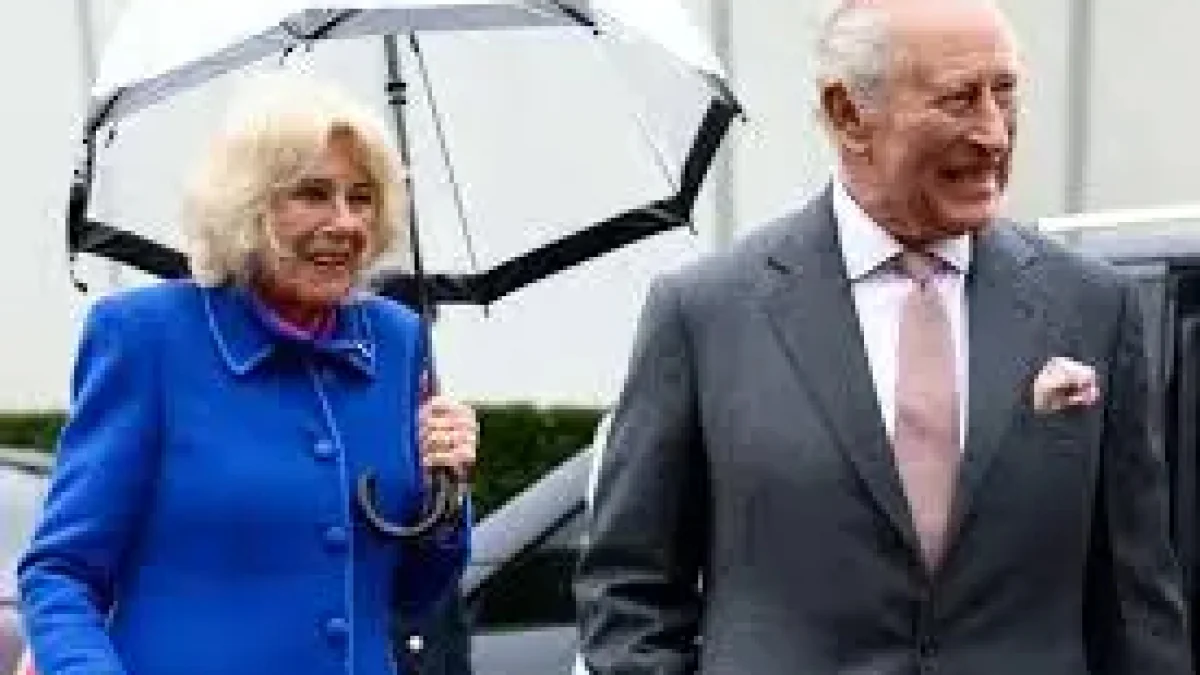
Earlier this month, it looked like all but two of Elon Musk's 11 co-founders at his AI startup xAI had departed the company. Now, according to Business Insider, the remaining two co-founders, Manuel Kroiss and Ross Nordeen, have left as well. BI said on Wednesday that Kroiss had told people that he's leaving xAI, then reported that Nordeen left the company on Friday. Musk recently claimed xAI "was not built right [the] first time around," so it's now "being rebuilt from the foundations up." The company was recently acquired by Musk's SpaceX, bringing SpaceX, xAI, and X (formerly Twitter) together under one corporate umbrella, all as SpaceX is reportedly planning to go public. Kroiss and Nordeen both reported directly to Musk, according to BI, with Kroiss leading the company's pretraining team, while Nordeen was Musk's "right-hand operator." Nordeen reportedly came to xAI from Tesla, and was involved in planning major layoffs at Twitter after Musk acquired the company in 2022.
BWI Chaos Worsens: Travelers Told To Arrive 4 Hours Early As TSA Lines Spill Out The Door
If you thought things were bad at BWI earlier this week, they've now taken a turn for the worse -- and travelers are paying the price as TSA disruptions continue to play out. Passengers at Baltimore/Washington International Thurgood Marshall Airport are now being told to arrive four hours early for their flights, BWI officials cautioned on Saturday morning. The new warning marks a sharp escalation from earlier guidance, as security delays have intensified and stretched beyond anything airport officials say they've seen before. "We have not previously experienced checkpoint wait times similar to what we are seeing this morning," BWI Airport posted online. The worst delays are hitting travelers departing from Concourses A, B, and C, where lines have surged and, at times, stretched beyond normal queue areas. Conditions at Security Checkpoint C have been especially severe, BWI officials said Saturday morning, with delays expected to continue throughout the day. "Significant delays have been experienced this morning at Security Checkpoint C. This is likely to continue throughout the day," the airport reported. While checkpoints D and E saw less impact early Saturday, officials warned that could change quickly as crowds build later in the day. "Less impact this morning at Security Checkpoint D/E, but this is subject to change later in the day," officials noted. Airport and airline staff have been deployed across terminals to help direct overwhelmed travelers navigating the congestion. The growing chaos comes just days after officials first warned of unpredictable delays tied to the ongoing TSA disruption -- a situation that now appears to be escalating rather than improving. For travelers, the message is no longer just "arrive early." It's arrive very early -- or risk missing your flight. With no immediate resolution announced and conditions shifting by the hour, passengers heading to BWI this weekend are being urged to build in significant extra time and prepare for long, uncertain waits. And as lines continue to swell, one thing is becoming clear: This is no longer a delay problem -- it's a full-blown travel disruption. Click here to follow Daily Voice Towson and receive free news updates.

Air Travel Chaos continues as over 50 Flights cancelled amid Middle East War Tensions
KARACHI - Air travel in Pakistan is in turmoil, with over 50 flights cancelled and around 50 delayed as the US-Israel-Iran conflict continues to disrupt regional airspace on Saturday. Several flights from major airports, including Karachi, Lahore, Islamabad, and Peshawar, were cancelled today. In Karachi, 16 flights to Middle Eastern destinations were grounded, while 15 others experienced delays. From Lahore, eight flights to cities such as Kuwait City, Doha, and Dubai were cancelled, with seven more delayed. Islamabad faced 15 cancellations and 20 delays, while Peshawar recorded 10 cancellations to destinations including Doha, Dubai, Abu Dhabi, and Sharjah. Two flights from Multan were also called off. The disruptions are linked to ongoing airspace closures in several Middle Eastern countries since the outbreak of the Iran war, which has already resulted in over 2,600 flight cancellations between Pakistan and the region. Authorities are closely monitoring the situation, warning travelers that uncertainty in Middle Eastern airspace may continue to impact schedules in the coming days.

Judge blocks Pentagon effort to "punish" Anthropic.
A federal judge in California has permanently blocked the Pentagon's effort to "punish" Anthropic by labeling it a supply chain risk and attempting to sever government ties with the AI company, ruling that the measures violated its constitutional rights. CNN's Hadas Gold has the details. What Are The Main Benefits Of Comparing Car Insurance Quotes Online LOS ANGELES, CA / ACCESSWIRE / June 24, 2020, / Compare-autoinsurance.Org has launched a new blog post that presents the main benefits of comparing multiple car insurance quotes. For more info and free online quotes, please visit https://compare-autoinsurance.Org/the-advantages-of-comparing-prices-with-car-insurance-quotes-online/ The modern society has numerous technological advantages. One important advantage is the speed at which information is sent and received. With the help of the internet, the shopping habits of many persons have drastically changed. The car insurance industry hasn't remained untouched by these changes. On the internet, drivers can compare insurance prices and find out which sellers have the best offers. View photos The advantages of comparing online car insurance quotes are the following: Online quotes can be obtained from anywhere and at any time. Unlike physical insurance agencies, websites don't have a specific schedule and they are available at any time. Drivers that have busy working schedules, can compare quotes from anywhere and at any time, even at midnight. Multiple choices. Almost all insurance providers, no matter if they are well-known brands or just local insurers, have an online presence. Online quotes will allow policyholders the chance to discover multiple insurance companies and check their prices. Drivers are no longer required to get quotes from just a few known insurance companies. Also, local and regional insurers can provide lower insurance rates for the same services. Accurate insurance estimates. Online quotes can only be accurate if the customers provide accurate and real info about their car models and driving history. Lying about past driving incidents can make the price estimates to be lower, but when dealing with an insurance company lying to them is useless. Usually, insurance companies will do research about a potential customer before granting him coverage. Online quotes can be sorted easily. Although drivers are recommended to not choose a policy just based on its price, drivers can easily sort quotes by insurance price. Using brokerage websites will allow drivers to get quotes from multiple insurers, thus making the comparison faster and easier. For additional info, money-saving tips, and free car insurance quotes, visit https://compare-autoinsurance.Org/ Compare-autoinsurance.Org is an online provider of life, home, health, and auto insurance quotes. This website is unique because it does not simply stick to one kind of insurance provider, but brings the clients the best deals from many different online insurance carriers. In this way, clients have access to offers from multiple carriers all in one place: this website. On this site, customers have access to quotes for insurance plans from various agencies, such as local or nationwide agencies, brand names insurance companies, etc. "Online quotes can easily help drivers obtain better car insurance deals. All they have to do is to complete an online form with accurate and real info, then compare prices", said Russell Rabichev, Marketing Director of Internet Marketing Company. CONTACT: Company Name: Internet Marketing CompanyPerson for contact Name: Gurgu CPhone Number: (818) 359-3898Email: [email protected]: https://compare-autoinsurance.Org/ SOURCE: Compare-autoinsurance.Org View source version on accesswire.Com:https://www.Accesswire.Com/595055/What-Are-The-Main-Benefits-Of-Comparing-Car-Insurance-Quotes-Online View photos

Sources: Ross Nordeen, the last remaining cofounder at xAI, left the company on Friday; Nordeen reported directly to Elon Musk as his right-hand operator
Katherine Li / Business Insider: Musk pitched Zuckerberg on his unsolicited bid for OpenAI's IP, newly unsealed court documents show One of the animating ideas behind Techs support of Trump was the perceived overreach on content policy. Some Biden comms folks used brusque language when asking meta to takedown Covid disinformation. But here you've got Zuck telling Musk in his capacity as DOGEmaster: we're ready to censor to protect your young chuds. Lest anyone find out the names of those government employees working for tax payers. Wild shit.
Cybersecurity Companies' Stocks Fall as Anthropic Tests Powerful New Model
Cybersecurity stocks declined sharply on Friday following revelations that Anthropic has begun testing "Mythos," an extraordinarily powerful new AI model with advanced vulnerability-discovery capabilities. Anthropic is actively trialing a new tier of artificial intelligence models codenamed "Capybara," with the flagship model operating under the moniker "Mythos". Internal documents indicate that Mythos significantly outperforms the company's previously most advanced model, Claude Opus 4.6, in academic reasoning, software coding, and cybersecurity benchmarks. Characterized by Anthropic as a "step change" in performance, the model is currently restricted to a highly vetted group of early-access customers. The company has deliberately paced its release due to the unprecedented nature of the model's technical proficiencies and its capacity to surface complex code flaws. Market Impact and Equity Declines The financial markets reacted swiftly to the news, driven by renewed anxieties that advanced AI software tools will aggressively compete with industry incumbents. The Global X Cybersecurity ETF plummeted by 4.5% on Friday, establishing its lowest closing position since November 2023 and pushing its year-to-date decline beyond 21%. This sell-off reflects a growing market sentiment that autonomous AI agents may disrupt traditional enterprise security architectures. The primary catalyst for the industry disruption is the dual-use nature of the Mythos model. During testing, Mythos demonstrated the ability to autonomously surface previously unknown vulnerabilities, potentially zero-days, within live production codebases. Anthropic's internal assessments explicitly warn that Mythos is "currently far ahead of any other AI model in cyber capabilities". The company cautioned that such technology presages an upcoming wave of offensive AI tools capable of exploiting vulnerabilities at a pace that far exceeds the patching efforts of human defenders. This has raised alarms regarding the potential for large-scale, automated cyberattacks if the model's safeguards are bypassed or replicated by adversaries. This latest development compounds existing market friction introduced in February 2026, when Anthropic launched Claude Code Security. That tool shifted the paradigm from static, rule-based pattern recognition to AI-driven dynamic reasoning, analyzing codebases much like a human security researcher to trace data flows and identify complex flaws. The prospect of highly resourced threat actors leveraging models like Mythos to weaponize vulnerability discovery remains a documented, critical risk. Anthropic previously disclosed that a state-sponsored entity from China had already attempted to employ earlier versions of Claude to automate attack sequences. As AI rapidly transitions from a supportive utility to an autonomous vulnerability hunter, traditional cybersecurity vendors face immense pressure to overhaul their detection engines or risk obsolescence against machine-speed threats.

Fiery Chaos at Ayodhya's Yagya: Rapid Response Averts Disaster | Entertainment
A sudden fire erupted during a 'yagya' organized by Uttar Pradesh Transport Minister Dayashankar Singh in Ayodhya. Despite the rapid spread of flames at the yagyashala near the Ram temple, emergency services quickly controlled the situation, ensuring no casualties. The incident occurred during Ram Navami celebrations. In a dramatic turn of events, a fire broke out during a 'yagya' overseen by Uttar Pradesh Transport Minister Dayashankar Singh in Ayodhya on Saturday. The event was part of the Ram Navami celebrations and took place merely 800 meters from the revered Ram temple. Although the fire rapidly engulfed the main offering area, authorities confirmed no casualties occurred. Eyewitnesses attributed the fire's sudden onset to coconuts offered during the ritual that caught fire. Approximately a dozen fire tenders swiftly reached the venue and managed to bring the blaze under control, with no loss of life reported. Minister Singh thanked the fire brigade for their prompt action, which averted disaster. The 'yagyashala' had 1,251 havankund set up near the Saryu River, and it was packed with devotees who were safely evacuated. Senior Superintendent of Police Gaurav Grover commended the quick containment efforts, stating the situation is under control. Attendees described scenes of panic but relief as the emergency was tackled efficiently.

And then there were none: Musk's last xAI cofounder is out
Musk recently said xAI was not built right and that he's reorganizing it. The last of Elon Musk's original team of xAI cofounders has cleared out. Ross Nordeen, one of the 11 who helped build the company alongside Elon Musk, left the company on Friday, according to people with knowledge of his departure. Nordeen has also lost the badge on X that identifies him as an xAI employee. His exit comes as Musk reorganizes xAI and preps for a blockbuster initial public offering of his rocket company SpaceX, which acquired the artificial intelligence startup in February. The 36-year-old Nordeen reported directly to Musk at xAI and served as his right-hand operator, coordinating priorities and driving execution across the company, insiders said. Nordeen, a Michigan Tech grad, followed Musk from Tesla to cofound the AI startup in 2023. At Tesla, Nordeen was a technical program manager on the Autopilot team and worked on building out data centers to train Tesla's Full Self-Driving system, according to a 2021 organizational chart viewed by Business Insider. Nordeen is a longtime friend of Musk's cousin, James Musk, according to Walter Isaacson's biography of the billionaire. Nordeen was also one of a few dozen Tesla and SpaceX engineers who helped Musk coordinate large-scale cuts at Twitter after he took over the company in 2022. Representatives for xAI and Nordeen did not immediately respond to a request for comment. XAI has lost eight cofounders since January, including Manuel Kroiss, Guodong Zhang, Zihang Dai, Toby Pohlen, Jimmy Ba, Tony Wu, and Greg Yang. Kroiss, who led pretraining, which helps train the company's AI models on large datasets and reported directly to Musk, left earlier this week. Most of the departures began shortly after SpaceX's merger with xAI ahead of the IPO that could be the most valuable in history. In February, Musk reorganized xAI and unveiled a new structure. Since then, many of the leaders Musk put in charge of key projects -- from the company's coding tool to image generation -- have left the company. XAI has gone through several restructurings since and has been in flux, shedding dozens of employees over the course of the last few months after the company cut portions of its teams working on its video and image generation tool, Grok Imagine, and Macrohard, its AI agent project earlier this year. The company is one of the best-funded players in the AI race and has reached a reported valuation of around $250 billion, but it trails behind major players like OpenAI and Anthropic when it comes to scale and reach. Musk said earlier this month that "xAI was not built right first time around, so is being rebuilt from the foundations up." He has also said the company is actively recruiting new talent and looking at candidates who were previously passed over. The company has brought on nearly a dozen recruits in the last few weeks, including two senior leaders from AI coding company Cursor, Andrew Milich and Jason Ginsberg.
Anthropic reportedly views itself as the antidote to OpenAI's "tobacco industry" approach to AI
That OpenAI ended up creating its most dangerous rival, Anthropic, could one day be one of the defining stories of the tech industry. In a detailed report, Sam Altman biographer Keach Hagey digs into the history of the split. The official narrative is that OpenAI wasn't taking safety seriously enough for the team that would go on to found Anthropic, and according to Hagey, there's plenty of evidence to support that version of events. But her account also reveals that the breakup ran deeper than ideology: personal slights, power struggles, and a constant feeling of being overlooked, especially in the relationship between Greg Brockman and Dario Amodei. According to the report, early conflicts included a debate over whether AGI could one day be sold to governments or the nuclear powers on the UN Security Council. Amodei found the idea completely unacceptable. Brockman did not. The dispute later escalated over control of the language model projects. Amodei was one of the key figures behind GPT-2 and GPT-3 and apparently tried to keep Brockman's influence over that work to a minimum. At the same time, according to Hagey, he repeatedly felt sidelined, whether it was visibility, recognition, or access to important meetings, like being left out of a meeting with Barack Obama. By the end of 2020, Dario and Daniela Amodei left the company with several other OpenAI employees to start Anthropic. The conflict between OpenAI and Anthropic continues to play out in the open as competition for talent, capital, and customers, but more than anything as a fight over how A(G)I should be developed and brought to market. According to Hagey, Anthropic internally sees itself as a "healthier alternative" to OpenAI, with people at the company comparing Altman's operation to the tobacco industry. When OpenAI picked up a Pentagon deal that Anthropic had walked away from, Amodei reportedly called Altman "mendacious" internally. According to the report, he wrote that the events pointed to "a pattern of behavior that I've seen often from Sam Altman." Amodei also called Greg Brockman's $25 million donation to a pro-Trump Super PAC "evil," though his own company has done its share of cozying up to the Trump administration -- although the Pentagon fallout made it pretty clear where Anthropic actually stands. Even during Altman's brief removal as CEO, there were internal accusations that he had been manipulative and dishonest. After his return, however, an internal investigation cleared him of those charges.