News & Updates
The latest news and updates from companies in the WLTH portfolio.
Makerere suspends physical guild campaigns after debate chaos
The debate, organised by the Electoral Commission, was suspended about an hour after it began when rival supporters clashed in the audience. Makerere University's Electoral Commission has suspended all physical campaigns in the ongoing guild elections, directing that the process be conducted virtually following violence that disrupted a candidates' debate. In a statement dated March 28, the commission chairperson, Maureen Owomugisha, warned that any student who defies the directive risks disciplinary action, including disqualification. "All students' guild elections shall be conducted virtually unless otherwise determined by the University student council," the statement said. She cited Article 71 of the Makerere University Guild Constitution, which outlines electoral offences and penalties for those found guilty. "Article 71 (1) of the Makerere University Guild Constitution outlines electoral offences, while Article 71 (2) provides that the any student found guilty of committing such offences shall, upon conviction by the appropriate tribunal, be subject to disciplinary action," the statement reads in part. The commission also banned acts such as physical campaigning, violence, hooliganism and defacement of university property, warning that offenders could face suspension from the university and exclusion from the electoral process. Ms Owomugisha directed all aspirants to immediately remove campaign materials, including posters placed on walls and other university structures. "Failure to comply will result in automatic disqualification from the electoral process and that these guidelines apply to both students within and outside the University premises," she said. The decision follows chaos on March 27 that forced officials to halt the 92nd Guild Presidential Debate, which had brought together 13 candidates at the university's main hall. The debate, organised by the Electoral Commission, was suspended about an hour after it began when rival supporters clashed in the audience. The confrontation broke out shortly after one of the candidates concluded presenting her manifesto, with supporters chanting and advancing toward rival groups, prompting security personnel to escort candidates and university officials from the venue. The disruption marks a setback to efforts by the university to restore open student political engagement after years of restrictions on physical campaigning.

Insider trading debate follows P2P.me's Polymarket trade before fundraising disclosure
Growth in prediction markets has pushed decentralized platforms to adopt stricter insider trading controls. P2P.me, a blockchain payments platform that facilitates peer-to-peer crypto transactions and recently launched its own token, has drawn scrutiny after admitting to trading on a Polymarket prediction contract tied to its fundraising outcome before publicly opening its investment round. P2P.me's trade fuels transparency concerns The controversy emerged when P2P.me revealed it had liquidated a position on Polymarket regarding its own ability to reach a $6 million fundraising goal. The company stated the wagers were placed through an account named "P2P Team," using foundation funds, ten days before the investment round was officially announced. ContentsP2P.me's trade fuels transparency concernsIndustry response and broader sector impact At the time of the trade, P2P.me had already received an oral commitment for $3 million from the investment firm Multicoin. Some legal commentators questioned whether this constituted material non-public information that should not have been used for trading purposes, even as P2P.me maintained that the absence of signed documents left the outcome in doubt. Describing the act as an effort to signal transparency and confidence in its own project, P2P.me admitted to an initial lack of full disclosure while maintaining there was no intent to mislead. The platform underscored its attempt to communicate openly with the community after taking time to understand the legal aspects of the situation. "We named the account 'P2P Team' deliberately - to give a marketing signal of our presence to the community and reflect our intent to be transparent. But intent isn't the same as action. Not disclosing at the time was a mistake we own. We took time to study the legal implications before speaking, which is why we stayed silent until now with a 'No Comments' stance! - that too is a fair criticism," P2P.me explained. Industry response and broader sector impact P2P.me ultimately raised $5.2 million from outside backers, leading to the closure of its Polymarket position at $35,212 for a net gain of approximately $14,700 from an initial stake of $20,500. The incident has divided opinions within the crypto sector. Some investors and founders described the move as a poorly-conceived marketing effort rather than a deliberate attempt at financial abuse. Simon Dedic, co-founder of crypto investment firm Moonrock Capital and investor in P2P.me, stood by the team's character, arguing it was meant to showcase their own belief in the project's fundraising prospects. "No one with any common sense would risk a $6 million raise over $15,000. The idea was to show such strong conviction in the sale that they'd even bet on themselves. This is exactly why they intentionally named the account 'P2P team.' Otherwise, you'd have to argue they're the most incompetent insider traders of all time," Dedic remarked. Facing mounting criticism ahead of its planned token generation event, P2P.me pledged to direct all profits from the trades to the MetaDAO Treasury and clarified that MetaDAO, a decentralized autonomous organization involved in blockchain development, had not been aware of the trades in advance. The case has surfaced on the backdrop of rapid growth in blockchain-based prediction markets. According to a sector analysis from TRM Labs, transaction volumes on decentralized prediction platforms climbed sharply from $1.2 billion in early 2025 to over $20 billion by January 2026. Growing interest in prediction markets has intensified regulatory discussions, leading platforms like Polymarket and Kalshi to introduce enhanced surveillance measures aimed at limiting insider trading and boosting compliance with financial laws. You can follow our news on Telegram, Facebook, Twitter & CoinmarketcapDisclaimer: The information contained in this article does not constitute investment advice. Investors should be aware that cryptocurrencies carry high volatility and therefore risk, and should conduct their own research.
Crypto's future is bright in the context of AI's assault on SaaS, says Kraken-backed SPAC
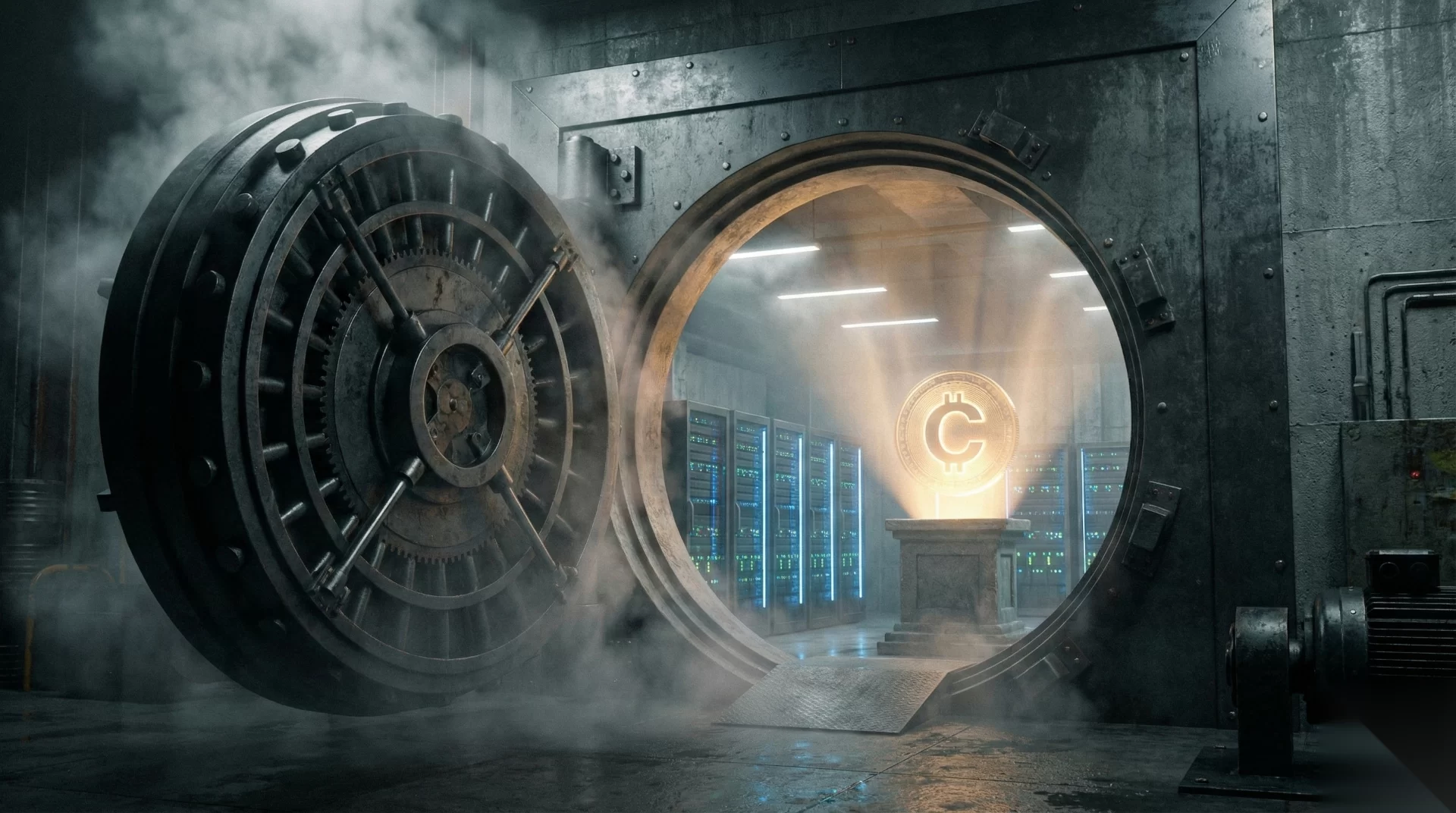
The SPAC sponsored by Kraken with venture firms Natural Capital and Tribe Capital closed its $345 million IPO in January. Don't be fooled by the prolonged crypto bear market, the industry remains a sound investment and less at risk from replacement by AI than traditional software as a service (SaaS) operations, according to Ravi Tanuku, CEO of KRAKacquisition Corp. (KRAKU), a blank check company backed by U.S. crypto exchange Kraken. The company, a Nasdaq-listed special purpose acquisition company (SPAC) sponsored by Kraken with venture firms Natural Capital and Tribe Capital, closed its $345 million IPO in January, and is now ready to explore deals with crypto-native firms valued between $2 billion and $10 billion, Tanuku said in an interview. This might sound ironic, given that Kraken's parent Payward only this month delayed its much-anticipated IPO as crypto markets collapsed: The CoinDesk 20 Index (CD20) is on track for a sixth straight monthly drop. Tanuku declined to comment on Kraken's IPO plans, but said he sees things like stablecoins and payments as the next best story after AI, and crypto as a clear survivor amid the total disruption hitting SaaS companies, which traditionally formed part of the IPO pipeline. Saas' very existence now seems to be under threat from rapid advancements in artificial intelligence and the potential for machines to write code -- one of many areas of skilled labor that could be undone by AI. "If you were a SaaS company and you wanted to go public and you didn't go public, you have a bigger problem now, which is whether or not you have an answer for AI," Tanuku said in an interview. "That's not like crypto or bitcoin going from 70k to 80k. It's a more existential, longer-term question that is much harder to shake." So if the money that's not being invested in AI isn't going to SaaS, does that mean crypto's next up? Not really, Tanuku said. But it does mean investors are looking for other places to deploy. "What I would say is the digital-asset thematic is probably one of the stronger secular stories in the market after AI ... AI is the best story. Nobody's going to deny that," he said. So what sort of crypto native opportunities is KRAK looking at, and does it include much in the way of AI crossover? Tanuku said he's looking at areas where crypto and AI naturally intersect. He mentioned the well-documented excitement over AI agentic commerce, and also raised the possibility of tokenization assisting in feeding AI's growth. "I'm curious if somebody doesn't start to float tokens to figure out how to finance some of this infrastructure, because the build-out is so expensive, there might be interesting ways to provide people yield and returns in a tokenized manner," Tanuku said.
And then there were none: Musk's last xAI cofounder, Ross Nordeen, leaves
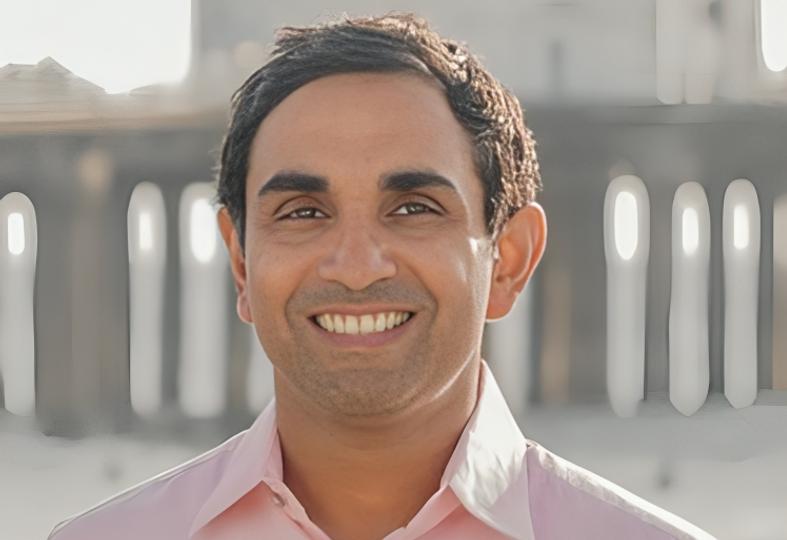
The last of Elon Musk's original team of xAI cofounders has cleared out. Ross Nordeen, one of the 11 who helped build the company alongside Elon Musk, left the company on Friday, according to people with knowledge of his departure. Nordeen has also lost the badge on X that identifies him as an xAI employee. His exit comes as Musk reorganizes xAI and preps for a blockbuster initial public offering of his rocket company SpaceX, which acquired the artificial intelligence startup in February. The 36-year-old Nordeen reported directly to Musk at xAI and served as his right-hand operator, coordinating priorities and driving execution across the company, insiders said. Nordeen, a Michigan Tech grad, followed Musk from Tesla to cofound the AI startup in 2023. At Tesla, Nordeen was a technical program manager on the Autopilot team and worked on building out data centers to train Tesla's Full Self-Driving system, according to a 2021 organizational chart viewed by Business Insider. Nordeen is a longtime friend of Musk's cousin, James Musk, according to Walter Isaacson's biography of the billionaire. Nordeen was also one of a few dozen Tesla and SpaceX engineers who helped Musk coordinate large-scale cuts at Twitter after he took over the company in 2022. Representatives for xAI and Nordeen did not immediately respond to a request for comment. XAI has lost eight cofounders since January, including Manuel Kroiss, Guodong Zhang, Zihang Dai, Toby Pohlen, Jimmy Ba, Tony Wu, and Greg Yang. Kroiss, who led pretraining, which helps train the company's AI models on large datasets and reported directly to Musk, left earlier this week. Most of the departures began shortly after SpaceX's merger with xAI ahead of the IPO that could be the most valuable in history. In February, Musk reorganized xAI and unveiled a new structure. Since then, many of the leaders Musk put in charge of key projects -- from the company's coding tool to image generation -- have left the company. XAI has gone through several restructurings since and has been in flux, shedding dozens of employees over the course of the last few months after the company cut portions of its teams working on its video and image generation tool, Grok Imagine, and Macrohard, its AI agent project earlier this year. The company is one of the best-funded players in the AI race and has reached a reported valuation of around $250 billion, but it trails behind major players like OpenAI and Anthropic when it comes to scale and reach. Musk said earlier this month that "xAI was not built right first time around, so is being rebuilt from the foundations up." He has also said the company is actively recruiting new talent and looking at candidates who were previously passed over. The company has brought on nearly a dozen recruits in the last few weeks, including two senior leaders from AI coding company Cursor, Andrew Milich and Jason Ginsberg.
I talk to Perplexity Computer all day, and it's finally what AI assistants promised to be
I've been exploring AI tools since before ChatGPT became a household name, and in the context of how fast the AI world moves, that practically makes me ancient. In all that time, I've developed a pretty reliable instinct for what's genuinely useful versus what's just impressive in a demo. We've now reached a stage where a lot of the tools being pushed out all look and feel the same, and just aren't worth the average person's time. This is exactly why Perplexity Computer caught me off guard. I've been fairly vocal about how Perplexity has disappointed me over the past few months, and giving its new Computer feature a single spin was enough to win me back. I've been using it a lot over the last few weeks, and it's the closest an AI tool has gotten to being my personal assistant (and no, not in the marketing-speak way every AI company promises). Perplexity's Computer brings the best LLMs to one platform Over 20 models, one tool Agentic AI tools, where LLMs can use tools on your behalf rather than simply giving you instructions, aren't new in 2026. The biggest differentiator between Perplexity Computer and the rest is that it doesn't lock you into a single model. It pulls from the best LLMs available (it currently has access to over 20 different models) and matches each task to the one best suited for it. It primarily runs Anthropic's Opus 4.6 as its core reasoning engine, and then spawns sub-agents with different models for each task. For instance, you'll typically see Anthropic's model handling coding-related tasks, Gemini for deep research, Nano Banana for images, Grok for lightweight tasks, and so on. You can, of course, also choose specific models for tasks yourself. While Perplexity Computer was initially rolled out to only Max subscribers, it's now also available on the Pro plan that costs $20 a month. Voice Mode is what makes it feel like an actual assistant Siri could never Just as agentic AI isn't something new in 2026, voice modes within AI tools are also certainly something that isn't new. However, most AI voice modes are simply a different way to interact with an AI tool. Just to be clear, there's nothing wrong with that -- it's how you'd expect a voice mode to work. You talk, it responds, and everything stays confined to the same thread you're already in. Perplexity Computer's Voice Mode is fundamentally different, though. Rather than just being a voice implementation of a chatbot, it's designed to help you interact with the Perplexity Computer interface. It handles creating new tasks, managing existing ones, and updating them with new instructions. Voice Mode also lets you know when tasks get marked as completed, when they need your input, if they're pending, or if they run into an issue that needs your attention. So for instance, you can keep it turned on and just go about your work. When you think of something, you say it out loud. For instance, "draft a follow-up email for xyz client," "build a portfolio website for me," "look up the latest statistics about xyz" -- you get the point. It'll then instantly create new tasks that run in the background. You can then continue doing your thing, and Voice Mode will keep you posted as things get done, all without you ever leaving what you were already doing. For instance, I have Perplexity Computer connected to my Gmail and Google Calendar. I have Voice Mode enabled as I type this, and I quickly asked it to tell me what I have on my calendar for the next week and what tasks I was assigned for the next week (it'll find them in my email). It created a task for it, and once it was done, it just read its findings back to me! If I want more details on something, I can just ask it to update the task. If not, I move on! The whole exchange took less time than it would've taken me to open my calendar and my email and read through the two. The best part is that it reduced the context-switching I'd have needed to do otherwise. For someone like me who gets distracted extremely easily, this is a bigger deal than it probably sounds. The number of times I've opened my inbox to check one thing and emerged twenty minutes later having done everything except what I meant to do is embarrassing. Multiple tasks can run in parallel, and they can also keep running once I turn off my computer! When I first tried Computer out, Voice Mode didn't exist yet. And while I was impressed with Computer already, the addition of Voice Mode turned it from a powerful tool into something that genuinely feels like an assistant sitting with me. Computer connects to over 400 apps Connects to more tools than you even use An assistant is no good if it doesn't have access to the tools you live and breathe in. My problem with agentic AI tools in the past has always been that the way they connect with your daily tools feels clunky. You need to do a lot of the heavy lifting yourself, constantly need to authorize actions, and half the time the integrations either break or don't support the specific tool you need. Subscribe for deeper AI tool coverage and analysis Get sharper AI-tool coverage by subscribing to the newsletter: in-depth breakdowns of Perplexity Computer, model tradeoffs, connector and integration analysis, and practical evaluations to deepen your understanding. Get Updates By subscribing, you agree to receive newsletter and marketing emails, and accept our Terms of Use and Privacy Policy. You can unsubscribe anytime. Perplexity Computer is one of the first times (beyond Claude Connectors) where I've felt like the integrations actually work. It supports over 400 app connectors including Gmail, Google Calendar, Google Tasks, Spotify, Notion, GitHub, Salesforce, and way more. You authenticate once, and from that point on, Computer can pull from and act on those tools without you constantly reminding it! I have Perplexity Computer connected to almost all the tools I use daily, and with Voice Mode, I can interact with all of them using just my voice! Computer burns through credits extremely quick Now, Perplexity won me back big time with Computer. As impressive as it is though, my biggest complaint with it is that the credits run out fast. Like, really fast. The amount of credits you get are already fairly limited, especially for the kind of tasks the tool encourages you to do with it. It's the one thing holding Computer back from being a no-brainer recommendation.

FDG: Sluggish Q1 Amidst Market Chaos, Downgrade To Hold (NYSEARCA:FDG)
Analyst's Disclosure: I/we have no stock, option or similar derivative position in any of the companies mentioned, and no plans to initiate any such positions within the next 72 hours. I wrote this article myself, and it expresses my own opinions. I am not receiving compensation for it (other than from Seeking Alpha). I have no business relationship with any company whose stock is mentioned in this article. Seeking Alpha's Disclosure: Past performance is no guarantee of future results. No recommendation or advice is being given as to whether any investment is suitable for a particular investor. Any views or opinions expressed above may not reflect those of Seeking Alpha as a whole. Seeking Alpha is not a licensed securities dealer, broker or US investment adviser or investment bank. Our analysts are third party authors that include both professional investors and individual investors who may not be licensed or certified by any institute or regulatory body.

Anthropic's Claude Popularity With Paying Consumers Is Skyrocketing
BERITAJA is a International-focused news website dedicated to reporting current events and trending stories from across the country. We publish news coverage on local and national issues, politics, business, technology, and community developments. Content is curated and edited to ensure clarity and relevance for our readers. Whatever the last result for Anthropic from its feud pinch the Department of Defense, the attraction it has generated -- coupled pinch the company's funny Super Bowl ads taking purpose astatine OpenAI and the surging popularity of Claude Code -- has made Anthropic much celebrated pinch consumers than ever. An introspection of billions of anonymized in installments paper transactions from about 28 cardinal U.S. consumers, conducted for TechCrunch by Indagari, a user transaction study company, shows Claude gaining paid subscribers successful grounds numbers. Now, arsenic pinch each big-data analysis, caveats exist. While this information is substantive, it doesn't see each consumer. That intends that Indagari can't cipher Anthropic's full existent aliases caller personification numbers. It besides doesn't see Claude's endeavor business (which is its breadstuff and butter) aliases its free-tier users (those not paying Anthropic astatine all). Estimates for full Claude user users are each complete the representation (we've seen figures ranging from 18 cardinal to 30 million) but Anthropic has not disclosed this data. A spokesperson did show TechCrunch, however, that Claude paid subscriptions person much than doubled this year. What's notable is that consumers pulled retired their wallets successful grounds numbers for Claude betwixt January and February. Also interesting, erstwhile users returned to Claude successful grounds numbers successful February arsenic well, Indagari told TechCrunch. Indagari tells america that the mostly of caller subscribers are astatine its lowest tier, "Pro" users ($20 per month, compared pinch $100 aliases $200 per month). Data done early March corroborate that subscriber maturation is continuing. (Data is disposable pinch a two-week delay.) To recap why consumers whitethorn person go truthful overmuch much alert of Claude since January: Anthropic released respective Super Bowl commercials that mocked ChatGPT's determination to show ads to its users -- and promised Claude would ne'er do the same. The spots were funny and effective (and besides got nether the tegument of OpenAI CEO Sam Altman). But the bigger hullabaloo began successful precocious January erstwhile aggregate media sites, including the Wall Street Journal and Axios, began reporting connected a deepening feud betwixt Anthropic and the DoD. At its core, the conflict was about what the subject could and couldn't do pinch Anthropic's AI. Anthropic refused to let the DoD to usage its AI models for lethal autonomous operations (AI perchance sidesplitting people) aliases wide surveillance of American citizens. That beef grew progressively public, pinch Anthropic's CEO Dario Amodei issuing a making firm nationalist statement connected February 26 amid the DoD's threats to wounded Anthropic's business by labeling the institution a proviso risk. Which the DoD did. Lawsuits are now flying, though a national judge this week temporarily blocked the department's designation. New personification maturation climbed sharply during this period. The summation is particularly pronounced betwixt those precocious January media reports and Amodei's connection connected February 26. Beyond the drama, Claude Code and Claude Cowork -- developer and productivity devices released successful January -- person been drivers of subscriptions. The Computer Use feature, released this week, has besides sparked a surge, Anthropic tells TechCrunch. That characteristic allows Claude to navigate a machine independently -- clicking, scrolling, and taking actions connected its own. It useful pinch Dispatch, which lets users delegate tasks from their phones. These features are not disposable to free-tier users. Still, for each of Anthropic's maturation among U.S. consumers consenting to salary for AI, Claude remains a agelong measurement down ChatGPT. While OpenAI's uninstalls spiked immediately aft it announced a woody pinch the DoD -- a move that stood successful opposition to Anthropic's information guidelines -- Indagari's information shows that OpenAI is still gaining caller paid subscribers astatine a accelerated complaint and remains the biggest user AI level of them all.

Google, Banks to Back $5B Anthropic Data Center in Texas: Report
Google is preparing to support a multibillion-dollar data center project in Texas leased to Anthropic as competition for AI infrastructure accelerates. The project, operated by Nexus Data Centers, could exceed $5 billion in its initial phase, with Google expected to provide construction loans, Financial Times reported on Friday, citing people familiar with the matter. A consortium of banks is also competing to arrange financing by mid-year, per the report. According to the report, Anthropic recently signed a lease for the 2,800-acre campus, which forms part of its broader infrastructure tie-up with Google. Construction is already underway, supported by early-stage debt financing from Eagle Point, a publicly traded closed-end investment company. The site is expected to deliver around 500 megawatts of capacity by late 2026, roughly equivalent to powering 500,000 homes, with potential expansion to 7.7 gigawatts. Its location is near major gas pipelines operated by companies including Enterprise Products Partners, Energy Transfer and Atmos Energy, allowing the project to rely on on-site gas turbines. Related: David Sacks' 130-day term as Trump's crypto and AI czar has ended On Thursday, a US federal judge in San Francisco temporarily blocked the Pentagon from labeling Anthropic a national security risk and halting government use of its AI tools. Judge Rita Lin granted a preliminary injunction, pausing a directive backed by President Donald Trump that sought to cut off federal use of Anthropic's chatbot, Claude. The ruling came in a lawsuit filed by Anthropic, which argued that Defense Secretary Pete Hegseth overstepped his authority by designating the company a supply chain risk. The judge described the government's actions as "arbitrary" and warned against branding a US company as a threat without clear legal basis. The dispute followed a breakdown in negotiations between Anthropic and the Pentagon over the military use of its AI. The company resisted allowing its models to be used for lethal autonomous weapons or mass surveillance, leading to a broader standoff with the administration. In her decision, Lin said the government may have retaliated against Anthropic for its public stance, calling the measures a likely violation of First Amendment protections. Related: CFTC Chair Selig says blockchain could help verify AI-generated content As Cointelegraph reported, US military units reportedly used Anthropic's Claude AI model during a major airstrike on Iran, even after the ban order by Trump. Military commands, including US Central Command (CENTCOM) in the Middle East, reportedly used the AI model for operational support

Bernie Sanders Departs DC Amid Chaos as DHS Shutdown Bill Collapses - Internewscast Journal
On Friday afternoon, Vermont Senator Bernie Sanders (I-Vt.) was seen flying out of Washington, D.C. in first class, just as airports were gearing up for more chaos due to Congress's inability to pass legislation to reopen the Department of Homeland Security. Sanders is one of several lawmakers who left the capital city amidst the ongoing partial government shutdown, which has severely affected airport operations and frustrated travelers. The entertainment news outlet TMZ shared a photo of Sanders enjoying his first-class seat, alongside images of Senator Ted Cruz (R-Texas) heading to CPAC in Texas, and Senator Marsha Blackburn (R-Tenn.) leaving town, even as funding issues remain unresolved. At 84, Sanders, who aligns with the Democratic caucus, is among the senators withholding support for the agency's funding unless the administration agrees to significant reforms. Early Friday morning, the Senate approved a bill intended to fund TSA agents and other Homeland Security programs, excluding ICE, in response to extensive airport delays causing a travel disaster and political turmoil. However, on Friday night, the House of Representatives declined to consider the Senate's bill after members of the Freedom Caucus objected, opting instead to propose short-term funding for the entire agency. House Speaker Mike Johnson called that bill, which got negotiated with Senate GOP leaders and passed the chamber before the start of a two-week scheduled recess, a "joke" and "unconscionable." President Trump signed an order for DHS to redirect existing funds to pay TSA agents.

UK Tourists Face Airport Chaos in Spain as Huge Queues Trigger Delays, Disruption and Travel Anxiety Surge: Now The Flight Demand Skyrocketing Faster than Capacity, Staffing, and Processing Systems Can Handle - Travel And Tour World
UK tourists face airport chaos in Spain as huge queues trigger delays, disruption and travel anxiety surge because flight demand is skyrocketing faster than capacity, staffing, and processing systems can handle, creating severe travel breakdown. UK tourists travelling to Spain are being warned to expect severe disruption at busy airports due to unusually long queues. Reports of "chaotic" scenes indicate operational strain driven by surging passenger numbers, tighter security procedures, and staffing limitations. Travellers should prepare for extended waiting times, missed connections, and heightened travel stress, particularly during peak holiday periods. Warnings have intensified as UK tourists prepare for spring and summer travel. Airports in Spain are experiencing unusually high passenger volumes. This surge is colliding with operational bottlenecks. Queue lengths are expanding rapidly. Travellers are reporting confusion and delays. Many describe the situation as chaotic. Authorities are struggling to maintain smooth passenger flow. The issue is not isolated. It reflects broader travel demand recovery trends. Airlines are operating near capacity. Airports are handling more passengers than anticipated. Infrastructure and staffing have not fully caught up. This mismatch is driving congestion. UK tourists are therefore being advised to plan carefully. Early arrival is now essential rather than optional. Several factors are contributing to the long queues. First, passenger numbers have surged sharply. Travel demand has rebounded strongly. Second, security procedures have become more rigorous. This increases processing time. Third, staffing shortages remain a persistent issue. Many airports are still rebuilding their workforce. Border control checks are also slower. Post-Brexit travel rules require additional verification for UK passengers entering Spain. This adds complexity. Each traveller takes longer to process. Queue accumulation becomes inevitable. When combined, these factors create a compounding effect. The result is visible congestion. The system becomes strained during peak hours. Travellers are reporting long waiting times. Some are standing in queues for hours. The experience is physically exhausting. It is also mentally stressful. Confusion over queue directions adds to the frustration. Families with children face additional challenges. Elderly passengers are particularly affected. Airports are becoming crowded. Waiting areas are overflowing. Basic amenities are under pressure. Food outlets and restrooms are experiencing heavy demand. Flight information becomes harder to track amid congestion. Some passengers risk missing flights. Others face delays in baggage processing. The overall travel experience is deteriorating significantly. The issue is not confined to a single airport. Multiple popular Spanish gateways are experiencing similar conditions. Major tourist hubs are the most affected. These include airports serving high-volume destinations. The pattern suggests a systemic issue rather than a localised disruption. Air travel demand across Europe has surged. Spain remains a top destination for UK tourists. This amplifies pressure on key entry points. Seasonal travel peaks further intensify the situation. Airports that were already busy are now overwhelmed. The problem is therefore widespread. It reflects structural capacity challenges across the aviation network. Security and border checks are critical bottlenecks. Each passenger must pass through screening. Enhanced checks increase processing time. This is necessary for safety. However, it slows throughput. Border control adds another layer. UK travellers now face additional documentation checks. Manual verification processes are time-consuming. Automated systems are not always sufficient. Staffing constraints worsen delays. When passenger volumes spike, queues grow rapidly. Even minor disruptions can escalate. The system lacks flexibility under pressure. This creates prolonged waiting times. Travellers experience significant delays as a result. Post-Brexit regulations have introduced new complexities. UK tourists are now treated as third-country travellers within the Schengen zone. This means stricter entry requirements. Passport stamping is mandatory. Additional checks are required. Processing time per passenger has increased. This change has operational consequences. Border control lines move more slowly. Queue density increases. Airports must allocate more resources. However, staffing levels have not always matched demand. The result is congestion. The regulatory shift has therefore become a key factor. It is reshaping the airport experience for UK travellers. Delays can have cascading effects. Long queues may cause passengers to miss check-in deadlines. Security delays can prevent timely boarding. Flights may depart without all passengers. This leads to missed connections. Travel itineraries are disrupted. Airlines may also face operational delays. Boarding processes slow down. Turnaround times increase. This can affect subsequent flights. The impact extends beyond individual travellers. It affects the entire travel network. Holiday plans may be altered. Additional costs may arise. Travel insurance claims could increase. Preparation is essential. Travellers should arrive earlier than usual. Allow extra time for check-in and security. Monitor flight updates closely. Keep travel documents readily accessible. Ensure compliance with entry requirements. Packing efficiently can also help. Minimising hand luggage speeds up security checks. Using online check-in reduces airport processing time. Travellers should remain patient. Flexibility is crucial. Planning for delays can reduce stress. Awareness is the most effective tool. It allows travellers to adapt to changing conditions. Airport authorities are aware of the issue. Efforts are being made to improve operations. Additional staff are being deployed. Queue management systems are being adjusted. However, these measures take time to implement. Infrastructure limitations remain a challenge. Sudden demand surges are difficult to manage. Long-term solutions may be required. These include investment in automation. Expansion of processing capacity is also necessary. For now, mitigation efforts are ongoing. Immediate relief may remain limited. The current situation highlights broader challenges. Travel demand is recovering faster than infrastructure. Airports must adapt quickly. Investment in capacity is essential. Technology can play a key role. Automation could improve efficiency. Regulatory changes must also be considered. Post-Brexit travel dynamics will continue to influence operations. Coordination between countries is crucial. The future of travel depends on resilience. Systems must handle high demand without disruption. The lessons from current chaos could drive improvements. The industry is at a critical turning point. UK tourists face airport chaos in Spain as huge queues trigger delays, disruption and travel anxiety surge because flight demand is skyrocketing faster than capacity, staffing, and processing systems can handle. The cause is structural imbalance. Demand has accelerated sharply. However, airport capacity has not expanded at the same pace. Staffing shortages persist across security and border control. Processing systems remain limited. As a result, congestion builds quickly. This imbalance creates a cascading effect. Huge queues trigger delays across multiple checkpoints. Security lines slow down. Immigration processing becomes bottlenecked. Consequently, disruption spreads throughout the airport ecosystem. Flights are affected. Boarding processes are delayed. Passengers experience uncertainty. Travel anxiety surge becomes inevitable. The answer lies in recognising that this is not a temporary disruption. It is a systemic issue. Airports must increase staffing levels. Governments must streamline border procedures. Investment in automated processing systems is essential. Capacity expansion is also critical. Without these changes, the same pattern will repeat during every peak travel period. The reason UK tourists face airport chaos in Spain is clear. Flight demand is skyrocketing faster than capacity, staffing, and processing systems can handle. This gap between demand and operational capability is the core driver. Until alignment is achieved, huge queues will continue to trigger delays and disruption. Travel anxiety surge will remain a defining feature of the travel experience.

Detroit Metro Airport avoids travel chaos as spring break, Easter travel ramp up
Unlike other airports nationwide, travelers at the Detroit Metro Airport aren't seeing many disruptions Saturday morning. As of Saturday morning, there were less than 15 delays at the airport. Transportation Secrurity Administration wait times are also normal, with both the McNamara and Evans terminals both reporting wait times of less than ten minutes. Detroit Metro Airport continues to be an outlier among airports nationwide. Travelers at other major airports, like in Atlanta and Houston, are still experiencing TSA wait times of around four hours as the government shutdown stretches on. As traveling picks up for spring break and Easter, wait times are likely to be a problem. The federal government has attempted to rectify the issue by sending Immigration and Customs Enforcement officers to the busiest airports. This hasn't impacted security wait times. Friday, President Donald Trump said he would take executive action to pay TSA workers who have gone unpaid since the shutdown began over 40 days ago. Are there flight delays at Detroit Metro Airport? Detroit Metro Airport is not experience major delays as of Saturday morning. According to the MiseryMap by FlightAware, which tracks delays and cancellations at major airports nationwide, Detroit has seen 15 delays since 6 a.m. TSA wait times are also normal as of Saturday morning. Both the McNamara and Evans terminals are reporting wait times of less than 15 minutes. The airport recommends arriving at least 90 minutes prior to a domestic flight and 3 hours before an international flight. What are the wait times at other airports? Travelers at the Hartsfield-Jackson Atlanta International Airport have experienced TSA wait times of four hours or more in the last weeks due to the government shutdown. Spring break and Easter travel are likely to have a major impact at the airport, known as the world's busiest. The airport doesn't post current security wait times but said on its website that travelers should arrive at least four hours early for all flights due to TSA lines. Friday evening, aviation authorities have issued a ground stop at Washington, D.C.-area airports after an unknown odor was detected at an air traffic control tower in Virginia, the second time in two weeks that a detected smell brought flight operations to a halt. The Federal Aviation Administration issued ground stops at Dulles International Airport, Ronald Reagan Washington National Airport and Baltimore Washington International Airport, according to agency alerts. This morning, the airport was dealing with the residual effects of the ground stops. At least 35 flights were delayed and two were canceled. At LaGuardia Airport and John F. Kennedy International Airport, there have been at least 48 delays and 11 cancellations combined, MiseryMap shows. LaGuardia is reporting wait times of less than 10 minutes while JFK is reporting wait times of up to 30 minutes. Why are wait times so long? A partial federal government shutdown due to a dispute over funding for the Department of Homeland Security has been ongoing since Feb. 13 after Congress failed to reach a deal on immigration enforcement reforms demanded by Democrats. That halted operational funding for several government agencies, including the Transportation Security Administration, resulting in about 50,000 TSA airport security screeners working without pay, Reuters reported earlier this month. TSA officers have reportedly quit because they haven't been receiving their paychecks. To counter the wait times, ICE agents were deployed to airports across the country Monday. The result has not reduced security lines, according to data from affected airports reported by The Washington Post. White House press secretary Karoline Leavitt acknowledged that wait times hadn't decreased "as much as we'd like," The Post reported. Reuters reported the U.S. Homeland Security Department said on Friday it was taking emergency action to pay 50,000 airport security officers who have gone unpaid since mid-February, after work absences brought chaos and long security lines to U.S. airports. "TSA has immediately begun the process of paying its workforce. TSA officers should begin seeing paychecks as early as Monday," DHS said. President Donald Trump said on Thursday he would take executive action to pay TSA workers and issued a memo directing the payments Friday. The TSA said earlier on Friday that nearly 12% of airport security officers did not show up for work on Thursday, the most absences since mid-February.

Detroit Metro Airport avoids travel chaos as spring break, Easter travel ramp up
Unlike other airports nationwide, travelers at the Detroit Metro Airport aren't seeing many disruptions Saturday morning. As of Saturday morning, there were less than 15 delays at the airport. Transportation Secrurity Administration wait times are also normal, with both the McNamara and Evans terminals both reporting wait times of less than ten minutes. Detroit Metro Airport continues to be an outlier among airports nationwide. Travelers at other major airports, like in Atlanta and Houston, are still experiencing TSA wait times of around four hours as the government shutdown stretches on. As traveling picks up for spring break and Easter, wait times are likely to be a problem. The federal government has attempted to rectify the issue by sending Immigration and Customs Enforcement officers to the busiest airports. This hasn't impacted security wait times. Friday, President Donald Trump said he would take executive action to pay TSA workers who have gone unpaid since the shutdown began over 40 days ago. Detroit Metro Airport is not experience major delays as of Saturday morning. According to the MiseryMap by FlightAware, which tracks delays and cancellations at major airports nationwide, Detroit has seen 15 delays since 6 a.m. TSA wait times are also normal as of Saturday morning. Both the McNamara and Evans terminals are reporting wait times of less than 15 minutes. The airport recommends arriving at least 90 minutes prior to a domestic flight and 3 hours before an international flight. Travelers at the Hartsfield-Jackson Atlanta International Airport have experienced TSA wait times of four hours or more in the last weeks due to the government shutdown. Spring break and Easter travel are likely to have a major impact at the airport, known as the world's busiest. The airport doesn't post current security wait times but said on its website that travelers should arrive at least four hours early for all flights due to TSA lines. Friday evening, aviation authorities have issued a ground stop at Washington, D.C.-area airports after an unknown odor was detected at an air traffic control tower in Virginia, the second time in two weeks that a detected smell brought flight operations to a halt. The Federal Aviation Administration issued ground stops at Dulles International Airport, Ronald Reagan Washington National Airport and Baltimore Washington International Airport, according to agency alerts. This morning, the airport was dealing with the residual effects of the ground stops. At least 35 flights were delayed and two were canceled. At LaGuardia Airport and John F. Kennedy International Airport, there have been at least 48 delays and 11 cancellations combined, MiseryMap shows. LaGuardia is reporting wait times of less than 10 minutes while JFK is reporting wait times of up to 30 minutes. A partial federal government shutdown due to a dispute over funding for the Department of Homeland Security has been ongoing since Feb. 13 after Congress failed to reach a deal on immigration enforcement reforms demanded by Democrats. That halted operational funding for several government agencies, including the Transportation Security Administration, resulting in about 50,000 TSA airport security screeners working without pay, Reuters reported earlier this month. TSA officers have reportedly quit because they haven't been receiving their paychecks. To counter the wait times, ICE agents were deployed to airports across the country Monday. The result has not reduced security lines, according to data from affected airports reported by The Washington Post. White House press secretary Karoline Leavitt acknowledged that wait times hadn't decreased "as much as we'd like," The Post reported. Reuters reported the U.S. Homeland Security Department said on Friday it was taking emergency action to pay 50,000 airport security officers who have gone unpaid since mid-February, after work absences brought chaos and long security lines to U.S. airports. "TSA has immediately begun the process of paying its workforce. TSA officers should begin seeing paychecks as early as Monday," DHS said. President Donald Trump said on Thursday he would take executive action to pay TSA workers and issued a memo directing the payments Friday. The TSA said earlier on Friday that nearly 12% of airport security officers did not show up for work on Thursday, the most absences since mid-February. [email protected]

Perplexity AI CEO shares Sam Altman's simple career advice
According to Srinivas, Altman's lesson shows that people should treat their natural abilities as their strongest assets Perplexity AI CEO Aravind Srinivas has revealed a simple piece of career advice from Sam Altman that helped shape his journey in artificial intelligence. Speaking in a podcast, Srinivas said Altman advised him to focus on what comes naturally but feels difficult to others. The concept increased his self-assurance during his initial phase, and it directed him toward artificial intelligence employment and machine learning work and his achievements in starting businesses. Srinivas said the advice resonated with his own experience during his time at IIT Madras. He participated in a data science competition that resembled Kaggle without having any formal education in machine learning. He learnt through practical experience because he tested scikit-learn tools by conducting multiple experiments. The contest victory demonstrated his skills in machine learning, which he had possessed since his early days before artificial intelligence became widely accepted. Srinivas completed his PhD at the University of California, Berkeley, before he began working at top AI research facilities, which he left to establish Perplexity AI in 2022. The company has since expanded its operations to reach a $9 billion market value, which enables it to compete with major search engine companies. His journey demonstrates how people who work in artificial intelligence research need both instinctive abilities and natural curiosity because these capabilities help them advance their careers more than traditional educational pathways do. According to Srinivas, Altman's lesson shows that people should treat their natural abilities as their strongest assets. The ability to identify personal strengths at an early stage will help individuals who work in artificial intelligence achieve their long-term career objectives.

Cheap Chinese models are overtaking Anthropic
Anthropic, riding a wave of goodwill after resisting demands from the US Defense Department to soften model safeguards, is reportedly planning to go public as soon as Q4 2026. That may not be soon enough to avoid the undertow of financial pressure, competition from China, and the challenge of delivering AI models that provide some measure of safety without sacrificing too much utility. The company's financial picture isn't pretty. In a legal filing [PDF] earlier this month, CFO Krishna Rao revealed that the company, which has raised $30 billion, has only managed to make $5 billion while spending $10 billion on inference and training alone. Against this backdrop, recent cost-saving moves designed to reduce token demand during peak hours fail to inspire optimism. But there's a more fundamental risk - remaining relevant in the face of increasingly capable competition from China. On Monday, the US-China Economic and Security Review Commission issued a report assessing the competitive threat posed by Chinese AI companies. "Chinese labs have narrowed performance gaps with top Western large language models," the report says. "They have also developed key architectural and training advances that are now industry standards." The success of Chinese AI companies can be seen in the popularity metrics of sites like LLM Rankings, which tracks the most popular models on OpenRouter, an API and marketplace for providing developers with access to multiple AI models through a single interface. Presently, the top six models in that ranking come from Chinese AI companies. They include: MiMo-V2-Pro (Xiaomi), Step 3.5 Flash (stepfun), DeepSeek V3.2 (DeepSeek), MiniMax M2.7 (MiniMax), MiniMax M2.5 (MiniMax), and GLM 5 Turbo (z.ai). Anthropic's Claude Opus 4.6 and Claude Sonnet 4.6 currently occupy slots seven and eight. Perhaps more significantly, Anthropic has seen its market share slip from 29.1 percent on March 22, 2025 to 13.3 percent on March 21, 2026. That's only one measurement and Anthropic has been doing well in the enterprise market, enough to worry rival OpenAI. But absent US government protectionism, the US AI biz faces rivals who deliver similar results for one tenth of the price or less. When Kilo Code compared the cost of Claude 4.6 Opus to MiniMax M2.7 earlier a few days ago, it found "MiniMax M2.7 delivered 90 percent of the quality for 7 percent of the cost ($0.27 total vs $3.67)." Anthropic claims that MiniMax, Moonshot AI, and DeepSeek copied or "distilled" its Claude models (which were themselves built from content often copied without consent). But given the underwhelming track record of US efforts to encourage Chinese respect for US intellectual property, it seems doubtful Anthropic's appeal for "a coordinated response across the AI industry, cloud providers, and policymakers" will be enough to sustain the pricing needed to reach positive cash flow in a reasonable time frame. Finally, Anthropic faces the challenge of being all things to all customers. The company has built its brand around safety, and has won over many corporate customers and consumers as a result. But it has alienated the current US administration and its effort to maintain model safety risks pushing away the security community and developers who do security work. The Register has corresponded with a handful of security researchers who all expressed disillusionment with how the Claude model family has performed for bug hunting and exploit testing in recent months. "It's very, very, very heavily censored now," said one security researcher who asked not to be identified in a conversation with The Register. "The CBRN (Chemical, Biological, Radiological, and Nuclear) blocker has been cranked way up. ...We're all abandoning it as now it's triggering a stupid number of false positives." To demonstrate the model's hypersensitivity, we were provided with a screenshot showing just how sensitive Opus can be - it flagged a chat about Tony-award winning musical Urinetown as unsafe. "As part of our ongoing safety commitments as described in our Claude Opus 4.6 announcement, we are rolling out new cyber safeguards for Claude Opus 4.6," the company's documentation explains. "These safeguards are designed to automatically detect and block requests that may indicate prohibited cybersecurity usage under our Usage Policy." The company concedes, "In some cases, these guardrails may also block dual-use cybersecurity activities with legitimate defensive purposes, such as vulnerability discovery." Indeed, there are people posting on social media who claim to have run afoul of these guardrails for security-related work. Anthropic does provide a form that security professionals can use to petition for an exemption, but from what we're told, not everyone who applies gets cleared and the process is not quick. The researcher, who claims to have just cancelled a $200/month Max subscription, reported knowing around seven people who have ditched Claude recently over its increased rate of refusal for security and vulnerability work. One such person we were referred to echoed this sentiment. "Yes, as of late it seems that US firms have gone a bit too far in attempting to make their services 'helpful, harmless, and honest,'" we were told. "I've noticed Claude not just refusing to answer questions but actively avoiding topics and attempting to steer the conversation away from certain topics even in a research context. Security research is especially difficult." This individual views the lack of transparency by US commercial AI companies as a problem. "They say it's an existential threat but then demand unaccountable control of them?" A third researcher who corresponded with The Register said, "At the moment what I'm using is this new thing called MiniMax and it's a distilled version of Claude. Doesn't matter that it's Chinese. It's cheap and as good as, if not better, than Claude's best models right now." While Anthropic prepares to go public, at least some of the public is going elsewhere. ®

Atlanta Joins Chicago O'Hare, JFK, LaGuardia, Newark, Los Angeles and More American Airports Turn Into Hellish Enforcement Battlegrounds as ICE Crackdown Intensifies After Partial US Government Shutdown Leading to Pathetic Hour Long Security Lines and Air Travel Chaos This Weekend - Travel And Tour World
Atlanta joins Chicago O'Hare, JFK, LaGuardia, Newark, Los Angeles and more American airports turning into hellish enforcement battlegrounds as ICE crackdown intensifies after partial US government shutdown, triggering pathetic hour long security lines and air travel chaos. Atlanta joins Chicago O'Hare, JFK, LaGuardia, Newark, Los Angeles and more American airports turning into hellish enforcement battlegrounds as ICE crackdown intensifies after partial US government shutdown, leading to pathetic hour long security lines and air travel chaos. As a result, passengers face delays. Moreover, enforcement expands. Consequently, Atlanta joins Chicago O'Hare, JFK, LaGuardia, Newark, Los Angeles and more American airports again under pressure. The ICE crackdown intensifies rapidly. Therefore, Travel And Tour World urges readers to read the entire story. Because the partial US government shutdown triggered staffing gaps, airports turned into hellish enforcement battlegrounds with air travel chaos. US airports are increasingly operating as integrated enforcement environments where Immigration and Customs Enforcement (ICE), alongside U.S. Customs and Border Protection and Transportation Security Administration, influences passenger transit through surveillance, targeted actions, and operational deployments -- causing delays, heightened scrutiny, and evolving service dynamics across major and regional airports. US airports are no longer just transit hubs; they are rapidly evolving into high-security, enforcement-driven ecosystems. Across major gateways such as Atlanta, New York, Los Angeles, and Houston, the growing operational footprint of U.S. Immigration and Customs Enforcement is reshaping how passengers move through terminals. While CBP continues to handle frontline immigration checks, ICE's expanding role -- through data-driven targeting, enforcement actions, and logistical coordination -- is influencing airport efficiency and traveller experience. This shift is not uniform; it varies airport by airport, depending on traffic volume, international connectivity, and proximity to enforcement infrastructure. The result is a layered system where security, immigration, and transit intersect more intensely than ever before. Recent developments confirm that ICE agents have been deployed across at least fourteen major US airports, signalling a nationwide operational shift. These include Chicago O'Hare, Cleveland, Atlanta, Houston (both Hobby and George Bush Intercontinental), New York's JFK and LaGuardia, New Orleans, San Francisco, San Juan, Newark, Philadelphia, Phoenix, Pittsburgh, and Fort Myers. The deployment was triggered by operational strain within airport security systems, particularly during a federal shutdown that led to TSA staffing shortages. ICE agents were introduced to support airport operations, although their exact duties initially remained unclear. Their presence, however, immediately altered the airport environment, introducing a new layer of authority alongside existing agencies. This confirmed footprint demonstrates that ICE is no longer confined to backend operations but is now actively integrated into airport ecosystems across multiple regions. Atlanta's Hartsfield-Jackson International Airport, the busiest in the United States, has become a focal point for enforcement-driven disruption. As a major international gateway, ATL hosts extensive CBP operations, but recent ICE deployments have intensified operational complexity. During federal staffing shortages, ICE agents were temporarily deployed to assist with non-screening duties, including crowd control and exit lane monitoring. The impact on passenger transit has been significant. Reports indicate severe congestion, with travellers advised to arrive up to four hours early. The combination of high passenger volumes and layered federal presence has slowed throughput, particularly in international terminals. Atlanta's experience highlights how even limited ICE involvement can amplify delays in already high-pressure environments. New York's multi-airport system -- John F. Kennedy (JFK), LaGuardia (LGA), and Newark (EWR) -- represents one of the most complex enforcement environments in the US. JFK and Newark, both major international gateways, host extensive CBP immigration processing, while ICE operates through targeted enforcement and logistical coordination. LaGuardia, primarily a domestic airport, still experiences ICE influence through data-driven monitoring. Passenger information shared across federal systems enables ICE to identify individuals before arrival, allowing for targeted interventions at various stages of transit. The result is a layered enforcement environment where travellers may encounter scrutiny even on domestic routes. This has led to increased processing times and heightened awareness among international and domestic passengers alike. Los Angeles International Airport (LAX) operates as a critical Pacific gateway, handling millions of international passengers annually. CBP maintains a strong presence in its international terminals, while ICE contributes through enforcement actions and deportation logistics. The airport's scale and complexity make it particularly sensitive to operational disruptions. Passengers at LAX often face extended queues, especially during peak travel periods. Secondary inspections and additional verification processes can further slow transit. While ICE is not visibly present in all areas, its coordination with other agencies influences passenger flow. The airport's role as a major international hub ensures that enforcement activities have a direct and measurable impact on traveller experience. Chicago O'Hare and Dallas/Fort Worth serve as central nodes in the US aviation network, connecting domestic and international routes. Both airports host CBP immigration facilities and support ICE operations, particularly in enforcement and transfer activities. Their geographic positioning makes them key transit hubs for both passengers and enforcement logistics. At ORD, high passenger volumes combined with layered security processes can lead to delays, especially during international arrivals. DFW, meanwhile, benefits from extensive infrastructure but still experiences operational strain when enforcement actions intersect with peak travel periods. In both airports, the presence of multiple federal agencies requires careful coordination, which can impact efficiency and passenger movement. Miami International Airport plays a unique role in the US enforcement landscape. As a primary gateway to Latin America and the Caribbean, MIA hosts extensive CBP operations and serves as a major hub for ICE Air Operations. Deportation flights and detainee transfers are frequently coordinated through this airport, making it a critical node in the enforcement network. For passengers, this translates into heightened scrutiny, particularly on international routes. The airport's dual role as a travel hub and enforcement centre introduces additional layers of complexity. While operations are generally efficient, the presence of enforcement activities can influence scheduling, security protocols, and overall passenger experience. Houston's George Bush Intercontinental Airport and Phoenix Sky Harbor International Airport are heavily influenced by their proximity to the US-Mexico border. Both airports host CBP immigration facilities and are closely integrated with ICE operations, particularly in enforcement and logistics. Houston, in particular, functions as a corridor for ICE Air Operations, while Phoenix's location makes it a strategic enforcement point. Passengers travelling through these airports often encounter more rigorous identity checks and documentation verification. The integration of enforcement activities into daily operations creates a more controlled and scrutinised transit environment compared to other regions. Chicago O'Hare and Houston's dual-airport system -- George Bush Intercontinental and William P. Hobby -- are critical nodes in the US aviation network. Both regions were part of confirmed ICE deployments, reflecting their importance in national travel flows. At O'Hare, ICE presence has been observed alongside TSA operations, with agents monitoring passenger movement and supporting operational flow. Houston's airports, due to their proximity to the US-Mexico border, already operate within a heightened enforcement framework. ICE's integration here is more seamless, but it also means passengers are subject to more rigorous checks and documentation scrutiny. The combination of high traffic and layered enforcement makes these airports particularly sensitive to delays. San Francisco International Airport and Phoenix Sky Harbor International Airport illustrate how enforcement dynamics vary across regions. San Francisco, a major international hub, has experienced high-profile enforcement incidents, including arrests carried out within airport premises. Phoenix, on the other hand, operates within a border-adjacent enforcement context. ICE presence here is more integrated into daily operations, reflecting regional priorities. In both airports, passengers may encounter increased scrutiny, particularly if flagged through federal data systems. While overall operations continue, the presence of enforcement activities introduces unpredictability into the travel experience. Airports such as Boston Logan (BOS), Seattle-Tacoma (SEA), and Orlando International (MCO) are increasingly important in the US aviation network. While they may not match the scale of Tier 1 hubs, they handle significant international traffic and host CBP operations. ICE activity at these airports is typically less visible but still impactful. Enforcement actions are often intelligence-driven, relying on data shared across federal systems. Passengers may experience additional questioning or secondary inspections, particularly on international routes. Orlando, with its tourism-driven traffic, faces unique challenges as increased enforcement can affect visitor perceptions and travel demand. Domestic airports such as Cleveland (CLE) and Pittsburgh (PIT) do not host CBP immigration checkpoints, yet they are not isolated from ICE activity. Through data integration with TSA, ICE can identify and monitor passengers even on domestic flights. This creates an invisible layer of enforcement that can influence passenger transit. During recent deployments, ICE agents were present in these airports to assist with operational tasks, including crowd management. While their role did not include screening, their presence introduced new dynamics into airport operations. Passengers may encounter unexpected delays or questioning, particularly if flagged through federal databases. The integration of data between TSA, CBP, and ICE is reshaping the entire US airport system. Passenger information is analysed in advance, allowing authorities to identify individuals of interest before they reach the airport. This predictive capability transforms airports into proactive enforcement environments. For passengers, this means that scrutiny can occur at multiple stages, from booking to boarding. While this enhances enforcement efficiency, it also introduces new challenges in terms of privacy and transparency. Operationally, data-driven interventions can both streamline and complicate passenger flow, depending on how they are implemented. The expansion of ICE presence raises important questions about passenger rights. Airports already operate under a different legal framework compared to other public spaces, with reduced expectations of privacy. The introduction of ICE agents into security environments further complicates this landscape. Under US law, ICE agents have the authority to arrest individuals they believe to be undocumented. This means that interactions at airports can extend beyond standard security procedures into immigration enforcement. Travellers may be asked for additional documentation, questioned about their status, or subjected to searches. Legal experts note that while individuals retain certain rights, exercising them in an airport setting can lead to delays or additional scrutiny At major US hub airports such as Atlanta (ATL), New York JFK, Newark (EWR), Los Angeles (LAX), Chicago O'Hare (ORD), Dallas/Fort Worth (DFW), and Miami (MIA), immigration enforcement is deeply embedded into daily operations. These airports serve as primary international gateways, where CBP conducts immigration checks, but ICE plays a parallel role through enforcement actions, detainee transfers, and surveillance coordination. ICE Air Operations also relies on several of these hubs for deportation logistics, particularly in Miami and Texas-based airports. Passenger transit at these hubs is increasingly affected by overlapping layers of authority. Travellers may experience extended processing times due to additional verification procedures, especially when flagged through inter-agency data sharing. The sheer volume of passengers compounds these challenges, often leading to congestion. While ICE officers are not conducting standard security screening, their presence in operational zones adds complexity, particularly during enforcement actions or coordinated operations. Secondary international airports such as Boston Logan (BOS), Washington Dulles (IAD), Seattle (SEA), San Francisco (SFO), Orlando (MCO), Fort Lauderdale (FLL), Houston (IAH), and Phoenix (PHX) are witnessing increasing ICE involvement due to their growing role in international travel networks. These airports may not match the scale of Tier 1 hubs, but they remain critical nodes for both passenger movement and enforcement logistics. ICE activities here are often less visible but equally impactful. Enforcement actions typically occur in coordination with CBP or through intelligence-driven interventions based on passenger data. Airports like Houston and Phoenix, due to their proximity to the US-Mexico border, experience heightened enforcement integration. This leads to more frequent identity checks and secondary inspections. For passengers, particularly international visitors, the experience can involve longer wait times and increased documentation scrutiny, even at airports traditionally perceived as less congested. Domestic airports such as Cleveland (CLE), Pittsburgh (PIT), Nashville (BNA), Austin (AUS), and others are not exempt from ICE activity, despite lacking CBP immigration facilities. Here, ICE operates through data-driven enforcement, often leveraging passenger information shared through TSA systems. This creates what can be described as a "silent enforcement layer," where individuals may be identified and intercepted without any visible immigration process. The impact on passenger transit at these airports is subtle but growing. Travellers may encounter unexpected questioning or delays, particularly if flagged in advance. During recent deployments, ICE agents were also tasked with assisting in crowd management and operational support, especially in response to TSA staffing gaps. While this did not significantly improve throughput, it introduced new dynamics into airport operations, including confusion among passengers regarding agency roles and authority. ICE Air Operations hubs play a critical role in the broader airport ecosystem, particularly in locations such as Mesa (Arizona), San Antonio and Brownsville (Texas), Alexandria (Louisiana), and Miami (Florida). These hubs are not typical passenger-facing environments but serve as logistical centres for deportation and detainee transfer flights. Their influence extends beyond their immediate geography. Airports connected to these hubs often experience increased coordination between airlines, federal agencies, and airport authorities. Charter flights, detainee movements, and scheduling adjustments can affect runway availability and operational planning. While passengers may not directly interact with ICE at these hubs, the ripple effects -- such as altered flight schedules or increased security protocols -- can influence overall airport efficiency. One of the most significant developments in US airport operations is the integration of data between TSA, CBP, and ICE. Passenger manifests are routinely analysed, allowing authorities to identify individuals of interest before they even arrive at the airport. This pre-emptive capability transforms airports into predictive enforcement environments. For passengers, this means that scrutiny can begin long before physical checkpoints. Individuals may be flagged at booking, check-in, or security stages, leading to targeted interventions. While this enhances enforcement efficiency from a federal perspective, it also raises concerns about privacy, transparency, and due process. From an operational standpoint, data-driven enforcement can both streamline and complicate passenger flow, depending on how interventions are executed. The integration of ICE into airport environments has measurable impacts on services and operational efficiency. During recent deployments, particularly in March 2026, airports such as Atlanta experienced significant congestion, with passengers advised to arrive hours earlier than usual. TSA shortages compounded the situation, and ICE agents, while present, were not equipped to replace trained security personnel. Airports have had to adapt by reallocating resources, adjusting staffing models, and enhancing inter-agency coordination. However, these measures often come at the cost of efficiency. Boarding delays, missed connections, and longer queues have become more frequent in high-traffic airports. For airlines, this translates into operational disruptions and increased costs, while passengers face uncertainty and inconvenience. Passenger experience now varies significantly depending on the airport tier and enforcement intensity. At major international hubs, travellers face the highest levels of scrutiny and the longest processing times. Secondary airports present a mixed experience, where enforcement is present but less visible. Domestic airports, meanwhile, introduce unpredictability through data-driven interventions. For international travellers, particularly those from regions with higher immigration scrutiny, the experience can be stressful. Increased questioning, secondary inspections, and the presence of multiple federal agencies contribute to a perception of heightened enforcement. Domestic travellers are not immune, as data integration allows for enforcement actions regardless of travel type. Overall, the airport experience in the US is becoming more complex and, in many cases, more intimidating. Atlanta joins Chicago O'Hare, JFK, LaGuardia, Newark, Los Angeles and more American airports turning into hellish enforcement battlegrounds as ICE crackdown intensifies after partial US government shutdown, leading to pathetic hour long security lines and air travel chaos. This situation emerged primarily due to the partial US government shutdown, which triggered widespread staffing shortages within airport security operations, particularly affecting the Transportation Security Administration. As TSA agents called out sick or resigned amid pay disruptions, operational gaps widened rapidly, forcing authorities to deploy Immigration and Customs Enforcement agents into airport environments. The ICE crackdown intensifies not simply as a policy shift but as a reactive measure to operational collapse. However, this created a dual-layer system where enforcement and security merged, transforming airports into high-pressure zones. Consequently, Atlanta joins Chicago O'Hare, JFK, LaGuardia, Newark, Los Angeles and more American airports where passengers now experience extended screening times, heightened scrutiny, and visible enforcement presence. The answer lies in structural imbalance. Airports were not designed to accommodate overlapping enforcement roles during crisis conditions. As ICE agents stepped in without replacing TSA expertise, inefficiencies persisted. This led directly to pathetic hour long security lines and widespread air travel chaos. Additionally, increased questioning, identity verification, and enforcement monitoring slowed passenger flow further. The broader implication is significant. US airports are evolving into enforcement-driven transit systems where passenger experience is increasingly shaped by security and immigration dynamics rather than efficiency. While the intention was to stabilise operations during the shutdown, the outcome has exposed systemic vulnerabilities. As long as staffing shortages and enforcement overlaps continue, air travel chaos is likely to persist, making these hellish enforcement battlegrounds a defining feature of the current US aviation landscape. The expanding role of ICE in US airports signals a broader shift towards integrated security and enforcement systems. Airports are no longer just transit hubs; they are becoming strategic control points within national security frameworks. This evolution has implications for travel demand, particularly among international visitors. Heightened enforcement and perceived surveillance may deter some travellers, especially those concerned about privacy or legal complexities. At the same time, the US aviation industry must balance security priorities with the need to maintain efficient and welcoming travel environments. The challenge lies in ensuring that enforcement measures do not undermine the competitiveness of US airports in the global travel market. Airport-wise analysis reveals a clear trend: US airports are becoming increasingly integrated into a nationwide enforcement network. From major hubs like Atlanta and New York to secondary and domestic airports, the influence of ICE is expanding through both physical presence and digital systems. While these measures aim to strengthen security, they also reshape passenger transit, often introducing delays, complexity, and heightened scrutiny. As the aviation industry adapts to this evolving landscape, the balance between enforcement and efficiency will remain a defining challenge for US travel in the years ahead.

Here's what next as Anthropic's most powerful AI model leaked via unsecured data cache
The incident underscores both the dual-use danger of advanced AI in areas like DeFi security and the irony that a company touting cutting-edge cybersecurity capabilities exposed details of its own model through a basic content management error. Anthropic is testing the most powerful AI model it has ever built, and the world wasn't supposed to know yet. A data leak reported by Fortune on Thursday revealed that the AI lab behind Claude has trained a new model called "Mythos," which it internally describes as "by far the most powerful AI model we've ever developed." The model was discovered in a draft blog post left in an unsecured, publicly searchable data cache, alongside nearly 3,000 other unpublished assets, according to cybersecurity researchers who reviewed the material. Anthropic confirmed the model's existence after Fortune's inquiry, calling it "a step change" in AI performance and "the most capable we've built to date." The company said it is being trialed by "early access customers" and acknowledged that a "human error" in its content management system caused the leak. The draft blog post introduced a new model tier called "Capybara," described as larger and more capable than Anthropic's existing Opus models, which were previously its most powerful. "Compared to our previous best model, Claude Opus 4.6, Capybara gets dramatically higher scores on tests of software coding, academic reasoning, and cybersecurity, among others," the draft said. It's the cybersecurity dimension that matters most for the crypto industry. The draft blog post said the model "poses unprecedented cybersecurity risks," a framing that has direct implications for blockchain security, smart contract auditing, and the escalating arms race between attackers and defenders in DeFi. This week alone, Ripple announced an AI-driven security overhaul for the XRP Ledger after an AI-assisted red team uncovered more than 10 vulnerabilities in its 13-year-old codebase. Ethereum launched a dedicated post-quantum security hub backed by eight years of research. And the Resolv stablecoin lost its peg after an attacker exploited a minting contract with no oracle checks and single-key access control, the kind of infrastructure failure that more capable AI tools could potentially identify before an attacker does, or exploit faster than defenders can respond. For the AI token market, the leak raises a different question. Bittensor's decentralized network recently released Covenant-72B, a model that competes with Meta's Llama 2 70B, triggering a 90% rally in TAO and driving subnet tokens to a combined market cap of $1.47 billion. A "step change" from a centralized lab like Anthropic resets the benchmark that decentralized AI projects need to match. The competitive distance between what a well-funded corporate lab can build and what a permissionless network can produce just got wider. Anthropic said it is "being deliberate" about the model's release given its capabilities. The draft blog noted the model is expensive to run and not yet ready for general availability. The company removed public access to the data cache after Fortune contacted it. The leak itself is its own cautionary tale. A company building what it describes as an AI model with unprecedented cybersecurity capabilities left the announcement of that model in an unsecured, publicly searchable data store due to human error. The irony needs no elaboration.

Anthropic Claude Mythos AI World's Newest Obsession a 10-Trillion Parameter
The latest developments in artificial intelligence showcase a dynamic landscape of innovation, with Anthropic's newly unveiled Claude Mythos 5 standing out as a major highlight. This advanced AI model, with its staggering 10-trillion parameters, is designed to excel in areas such as cybersecurity, coding, and academic reasoning, making it a versatile solution for high-stakes applications. Anthropic's phased rollout strategy reflects a deliberate approach to ethical deployment, making sure that these capabilities are introduced responsibly. As World of AI explores, this model represents a significant leap in AI's ability to address complex challenges while maintaining a focus on safety and accountability. In this explainer, you'll gain insight into how Anthropic's Claude Mythos 5 compares to other recent AI breakthroughs, such as Google DeepMind's Gemini 3.1, which enhances real-time multimodal processing for industries like healthcare and autonomous systems. You'll also discover the implications of open source contributions like GLM 5.1, which emphasizes accessibility in instruction-following tasks and the introduction of the ARC AGI 3 Benchmark, a new standard for evaluating agentic reasoning. These updates collectively highlight the diverse directions AI is taking to meet evolving demands across research, development and practical applications. Anthropic has unveiled two innovative AI models, Claude Mythos and Capabara, each designed to address distinct needs within the AI landscape. - Claude Mythos: This flagship model features an impressive 10-trillion parameters, representing a significant leap in AI capabilities. It excels in areas such as coding, academic reasoning, and cybersecurity, making it a versatile tool for tackling complex, high-stakes tasks. Its advanced architecture positions it as a leader in the AI space, capable of addressing challenges that demand precision and adaptability. - Capabara: Positioned as a mid-tier solution, Capabara bridges the gap between the high-performance Claude Mythos and Anthropic's existing Opus model. It offers a balanced approach, combining versatility with efficiency, making it suitable for a wide range of applications without the resource demands of larger models. Anthropic's decision to implement a phased rollout for these models underscores a commitment to ethical AI development. By prioritizing safety and addressing potential misuse, the company aims to ensure that these powerful tools are deployed responsibly, balancing innovation with accountability. The release of GLM 5.1 marks a pivotal moment for open source AI development. This agentic model is specifically designed to handle instruction-following and multi-step workflows with enhanced reliability, making it a valuable asset for tasks that require automation and decision-making. While GLM 5.1 may not match the speed of proprietary alternatives, its performance remains competitive, offering a robust solution for developers and researchers. Its open source nature ensures accessibility, fostering collaboration and innovation across the AI community. This release highlights the critical role of open source contributions in providing widespread access to AI technology and driving progress in the field. Learn more about Claude Code by reading our previous articles, guides and features : Google DeepMind has introduced Gemini 3.1, a real-time multimodal AI model optimized for voice and vision applications. This latest iteration enhances quality, reliability, and latency, allowing seamless integration into systems that require real-time processing. Industries such as customer service, healthcare, and autonomous systems stand to benefit significantly from Gemini 3.1's capabilities. Its ability to process multimodal data in real time makes it an invaluable tool for dynamic, data-driven environments. This release underscores the growing importance of real-time AI solutions in addressing the demands of modern industries. OpenAI has transformed its Codeex platform into a comprehensive plug-in ecosystem, introducing pre-built, runnable workflows designed to simplify software development. These plugins provide developers with an AI-driven approach to coding, streamlining complex processes and enhancing productivity. By automating repetitive tasks and offering intelligent suggestions, Codeex plugins empower developers to focus on innovation and problem-solving. This evolution positions Codeex as a strong competitor to traditional cloud-based coding tools, further expanding the possibilities for AI-driven software development. The introduction of the ARC AGI 3 Benchmark represents a significant advancement in the evaluation of AI intelligence. Unlike traditional benchmarks that often focus on narrow tasks, ARC AGI 3 tests agentic reasoning in interactive environments, providing a more comprehensive assessment of AI capabilities. This benchmark addresses the issue of overfitting, making sure that AI models demonstrate genuine improvements in reasoning and problem-solving rather than superficial performance gains. By setting a higher standard for evaluation, ARC AGI 3 is expected to guide future developments in AI, encouraging innovation that prioritizes meaningful progress. The advancements highlighted this week demonstrate the rapid evolution of AI technologies and their growing impact across industries. From Anthropic's powerful new models to new benchmarks and tools, these innovations are driving progress in automation, research and creative workflows. As AI continues to advance, it holds the potential to transform how we work, solve problems and interact with technology, paving the way for a future defined by enhanced efficiency and innovation. Disclosure: Some of our articles include affiliate links. If you buy something through one of these links, Geeky Gadgets may earn an affiliate commission. Learn about our Disclosure Policy.

Anthropic vs. the Federal Government: A Court Order Exposes the Chaos of AI Procurement Under DOGE
A federal judge in San Francisco has temporarily blocked the U.S. government from designating Anthropic -- one of the most prominent artificial intelligence companies in the world -- as a supply chain risk, a label that would have effectively blacklisted the company from doing business with federal agencies. The ruling, issued on July 14, 2025, offers a rare window into the escalating tensions between Silicon Valley AI firms and the Trump administration's aggressive restructuring of government technology procurement. The case is extraordinary. Not because a tech company is suing the federal government -- that happens regularly -- but because of what it reveals about how the Department of Government Efficiency, Elon Musk's cost-cutting operation known as DOGE, has reshaped the way Washington buys and deploys AI tools. And about how those decisions are now colliding with the courts. The Origins of a Government Blacklist According to Engadget, the dispute centers on the General Services Administration's decision to flag Anthropic as a "supply chain risk" -- a designation typically reserved for companies with ties to foreign adversaries or those posing genuine national security concerns. The designation would bar federal agencies from purchasing Anthropic's AI products and services, a potentially devastating blow to a company valued at tens of billions of dollars and actively courting government contracts. Anthropic argued in court filings that the designation was not based on any legitimate national security analysis. Instead, the company contended it was retaliatory -- a consequence of Anthropic's CEO Dario Amodei publicly criticizing certain Trump administration AI policies and the company's refusal to align itself with the political priorities of DOGE operatives who had gained influence over procurement decisions at the GSA. The judge agreed there was enough evidence of potential retaliation to warrant a temporary restraining order. That's a significant finding, even at this preliminary stage. Federal procurement law gives agencies broad discretion in choosing vendors. But that discretion isn't unlimited. Courts have consistently held that the government cannot use procurement decisions as a weapon to punish companies for exercising their First Amendment rights. The judge's willingness to intervene suggests Anthropic presented credible evidence that the supply chain risk label was pretextual -- a bureaucratic tool repurposed for political ends. The restraining order is temporary, and a fuller hearing is expected in the coming weeks. But the immediate effect is clear: Anthropic remains eligible for federal contracts while the case proceeds, and the government is prohibited from taking any adverse procurement action against the company based on the disputed designation. Anthropic, founded in 2021 by former OpenAI executives, has positioned itself as the safety-focused alternative in the AI race. Its flagship model, Claude, competes directly with OpenAI's ChatGPT and Google's Gemini. The company has raised more than $15 billion in funding, with major backing from Amazon and Google. It has been actively pursuing government work, including contracts with intelligence agencies and the Department of Defense. That pursuit now sits in legal limbo. DOGE's Expanding Footprint in Federal Tech The case cannot be understood without grasping the scale of DOGE's intervention in government technology procurement. Since its creation in early 2025, DOGE has moved aggressively to consolidate purchasing decisions, cancel existing contracts, and redirect AI spending toward vendors it considers aligned with the administration's goals. Critics say DOGE operatives -- many of them young technologists with limited government experience -- have been making procurement decisions that typically require extensive review by career acquisition professionals. Multiple federal employees have filed whistleblower complaints alleging that DOGE staff pressured agencies to favor certain AI vendors over others, according to reporting from The Washington Post. Some of those complaints specifically reference pressure to steer contracts toward companies with ties to Musk's broader business network, though no direct evidence of self-dealing by Musk himself has been publicly confirmed. The Anthropic case adds a new dimension. Here, the allegation isn't just that DOGE favored certain companies. It's that DOGE actively moved to punish a company that didn't play along. If that allegation holds up in court, the implications extend far beyond one AI company. Every technology vendor doing business with the federal government -- or hoping to -- would have reason to worry that political loyalty has become an unofficial prerequisite for winning contracts. That kind of chilling effect could distort the market for government AI services for years. And the market is enormous. Federal spending on AI-related products and services is projected to exceed $20 billion annually by 2027, according to estimates from Deltek and other government contracting analysts. The agencies driving that spending -- Defense, Intelligence, Homeland Security, Health and Human Services -- need the best available technology, regardless of whether the companies building it have politically convenient executives. The legal theory Anthropic is advancing isn't novel, but its application to AI procurement is. The company is essentially arguing that the supply chain risk framework -- designed to keep Huawei and other Chinese-linked firms out of government networks -- has been weaponized against a domestic competitor for purely political reasons. That's a claim that resonates in an environment where the boundaries between national security policy and industrial policy have become increasingly blurred. Several legal experts who spoke to reporters at Engadget noted that the supply chain risk designation process has historically been opaque, with limited opportunities for companies to challenge adverse determinations. If Anthropic's lawsuit forces greater transparency into that process, it could set a precedent that reshapes how the government evaluates AI vendors for years to come. The timing matters too. Congress is actively debating multiple pieces of legislation aimed at regulating AI procurement and establishing standards for how agencies evaluate AI tools. The Anthropic case could accelerate those efforts by providing a concrete example of what happens when procurement guardrails are weakened or politicized. For Anthropic, the stakes are existential in a strategic sense. The company doesn't need government revenue to survive -- its commercial business is growing rapidly, and its funding runway is long. But government contracts confer legitimacy, provide access to unique datasets and use cases, and position companies for long-term dominance in sectors where the federal government is the largest buyer. Losing access to that market wouldn't kill Anthropic. But it would hand a significant advantage to competitors like OpenAI, which has been aggressively courting the same agencies. OpenAI, notably, has taken a very different approach to the administration. CEO Sam Altman attended Trump's inauguration, and the company has publicly praised the administration's approach to AI regulation -- or rather, its approach to deregulation. Whether that posture has translated into favorable procurement treatment is a question several congressional Democrats have already begun asking. What Comes Next The temporary restraining order buys Anthropic time, but the real battle is ahead. The government will have to justify the supply chain risk designation in court, presenting whatever evidence it relied on. Anthropic's legal team will get to probe that evidence, and if it turns out to be thin or pretextual, the judge could issue a preliminary injunction that blocks the designation for the duration of the litigation. A full trial, if it comes to that, would be extraordinary -- a federal court examining the inner workings of DOGE's influence on procurement decisions, potentially requiring testimony from GSA officials and DOGE operatives about how and why the Anthropic designation was made. That's a discovery process the administration almost certainly wants to avoid. So a settlement is possible. The government could quietly withdraw the designation, and Anthropic could drop the suit. But Dario Amodei has shown little interest in quiet capitulation, and the company's legal filings suggest it wants to establish a principle, not just win a contract. The broader AI industry is watching closely. If the government can label a domestic AI company a supply chain risk based on political considerations rather than genuine security concerns, no vendor is safe. That's a reality that should concern not just Silicon Valley executives but the career government officials who depend on competitive procurement to get the best technology for their agencies -- and the taxpayers who fund it all. For now, Anthropic remains in the game. But the game itself has changed. Federal AI procurement, once a relatively straightforward (if slow and bureaucratic) process, has become a arena where political allegiance and technical merit compete for primacy. The courts have intervened to hold the line, at least temporarily. Whether that line holds will depend on what happens in a San Francisco courtroom in the weeks ahead.

Damian Lewis and Sweet Chaos: 5 Revelations from an Intimate Leeds Launch
When damian lewis announced Sweet Chaos and followed it with an intimate Leeds in-store performance, the move reframed a familiar celebrity-to-musician narrative into something deliberately crafted and personal. The single and title track have already been shared, the album has a clear release plan, and a compact live preview will land at Headrow House in Leeds -- all signalling this is not a cameo but a committed second chapter. Damian Lewis: The Leeds show, the release plan and the sonic shift The headline facts are straightforward: Sweet Chaos is the title track and lead single from the actor-turned-musician's second studio album, and the record is scheduled for release on June 5, 2026. An intimate in-store performance at Headrow House in Leeds on that same date will preview the new material and is paired with a physical-album purchase route through the host record shop. This concentrated rollout underscores a deliberate strategy: small, human-scaled settings to introduce a project described by its creator as moving into louder, angrier territory compared with a previous, quieter debut. Why Sweet Chaos matters right now Sweet Chaos marks a tonal and collaborative shift from the 2023 debut Mission Creep, which was noted for its tenderness and introspection following personal loss. damian lewis frames the new record as emerging from "hard-won clarity, " and he admits the work can be "a bit angrier in places. " The album's expanded sonic palette is evident in credits: a renewed partnership with producer Guy Chambers reshaped stalled sessions, and notable guests include a duet with Alison Mosshart and mentorship input from Sheffield's Richard Hawley. Together, these elements position the record as both a narrative continuation and a stylistic broadening. Deep analysis: themes, tracks and collaborators At the level of songwriting, the tracklist reads as a personal travelogue. Songs named in the campaign point to memory and transformation -- from a sequence recalling a near-fatal motorcycle accident to Bowie-referencing imagery. Specific tracks cited in connection with the album include Pentonville Prison, which revisits the 1998 motorcycle incident, and Traffic Jam, which nods to David Bowie. Closing material features a collaboration on Fix Me Up with Alison Mosshart. Production intervention by Guy Chambers is credited with refining the project's ambition and clarity, shifting the sound toward sweeping, stage-minded arrangements. These choices map onto a wider intent: crafting songs that work in close live settings as well as larger, cinematic frames. The decision to preview material in small venues suggests an emphasis on intimacy and narrative presence rather than stadium spectacle at this stage. Expert perspectives Damian Lewis, award-winning actor and musician, describes the difference between projects plainly: "The first album was quiet and tender. This new album is a bit angrier in places. You don't know these things until you listen back: the extent to which your state of mind pervades the thing. " Guy Chambers, renowned producer, offered a succinct artistic assessment, describing Lewis's vision as "Alternative Bohemian" and praising his ability to "paint pictures with lyrics. " Alison Mosshart, vocalist of The Kills, appears on the record in a duet capacity that closes the album, and Sheffield's Richard Hawley is credited with mentorship that helped shape the final sequence. Those voices together form a credible creative ecosystem: a performer translating lived episodes into songs, an experienced producer reframing arrangements, and guest artists lending tonal contrast and legitimacy within an established musical lineage. Beyond the collaborators, the rollout -- an early single, visible visual art assets, and in-store performances -- follows a deliberate pattern of building narrative momentum in concentrated, fan-facing moments. The single's early circulation on social platforms and the use of a physical shop tie-in for Leeds signal an embrace of tactile fan engagement rather than broad digital-only saturation. As Sweet Chaos moves from single to full album and into a preview performance, the central question is how the record will reframe public perception of his musical identity. damian lewis has chosen collaborators and settings that prioritize storytelling, stagecraft and a widened sound palette; whether that translates into sustained musical traction will depend on how audiences and critics engage with the album in full. Will Sweet Chaos be read as a definitive musical statement or a transitional creative detour for an established actor -- and how will those intimate Leeds shows shape that reading?

What is Anthropic Claude Mythos? Everything to know about viral leaked AI model that set alarms in cybersecurity
In an official statement, Anthropic confirmed that the exposure was unintentional and attributed it to a misconfiguration rather than a sophisticated breach. Cybersecurity stocks tumbled sharply on March 27 after Anthropic accidentally leaked details of its unreleased next-generation model, codenamed Claude Mythos. That's a name that everyone should take seriously, even its rivals. The leaked data revealed internal documents describing the model as "by far the most powerful AI model we've ever developed" -- one that promises to address cybersecurity risks on a level that none of today's solutions can, thanks to its advanced capabilities in detecting, exploiting, and responding to threats. Information pertaining to Claude Mythos leaked when draft blog posts and related assets were stored in a publicly accessible data cache. The leak was narrowed down to a 'human error' in Anthropic's content management system configuration. The leaked materials also included details of a new AI tier called "Capybara," positioned above the current Claude Opus model, along with information about an exclusive CEO event. As soon as the leak surfaced, investors were ready, interpreting the model's superior performance on cybersecurity benchmarks as a potential threat to traditional enterprise security providers. The sell-off wiped out approximately $14.5 billion in market value across major players in a single trading session. Claude Mythos: Making an impact before launch As soon as details about the model leaked, the market went harsh on cybersecurity firms. CrowdStrike (CRWD) fell 5.85%, erasing roughly $5.5 billion in market cap. Palo Alto Networks (PANW) dropped 6.43%, losing about $7.5 billion. Zscaler (ZS) declined 5.89%, with $1.35 billion wiped out, while Tenable shed 9.70%, or $185 million. The Global X Cybersecurity ETF also slid more than 2.7%. The leaked documents highlighted Mythos's ability to outperform existing tools in areas such as vulnerability exploitation and automated threat response - capabilities that could reduce reliance on large teams of security professionals and expensive software suites. Hence, Claude Mythos could make the cybersecurity sector extinct if it delivers on its promises. Anthropic admits leak, says model remains in testing In an official statement, Anthropic confirmed that the exposure was unintentional and attributed it to a misconfiguration rather than a sophisticated breach. The company has not yet detailed Mythos's full capabilities or release timeline, even though internal previews (from the leaked documents) described it as a "step-change" in performance, particularly in cybersecurity tasks. "We're developing a general-purpose model with meaningful advances in reasoning, coding, and cybersecurity. Given the strength of its capabilities, we're being deliberate about how we release it. As is standard practice across the industry, we're working with a small group of early access customers to test the model. We consider this model a step change and the most capable we've built to date," said a spokesperson. The leak incident marks the second time Anthropic dominates the headlines, triggering activity in the market. Earlier in the year, Anthropic's release of Claude Code had hit the stock market globally, sending tremors throughout the industry. This comes on the heels of Anthropic going on to sue the Pentagon after the company was declared a 'supply chain risk', thereby severing its involvement in defence use cases with the US Department of Defense. Will Claude Mythos decimate the cybersecurity space? While the immediate reaction from investors reflects fears of disruption, Anthropic is interested in helping cybersecurity defenders rather than fully replacing them. Enterprise solutions rely on complex integrations, compliance, and human oversight that go beyond raw model performance. An AI model helping here could only strengthen cybersecurity efforts at all levels. At the same time, Claude Mythos could end up being a potential threat to complex defence systems as it tries to find vulnerabilities in their defences. For now, Claude Mythos remains a myth in the cybersecurity space and we only have to wait for an official confirmation from Anthropic.