News & Updates
The latest news and updates from companies in the WLTH portfolio.
Anthropic is building its first data center team outside the US
According to job listings spotted by Data Center Dynamics, Anthropic is hiring data center contract specialists in Europe and Australia. It's the first time the AI company is building a dedicated data center team for locations outside the United States. Until now, Anthropic had worked exclusively with cloud providers. The European position is based in London and covers multiple countries, including the major data center hubs Frankfurt, London, Amsterdam, Paris, and Dublin, as well as emerging markets in Northern and Southern Europe. The Australian role is focused on Sydney. The move comes as competitor OpenAI has put its Stargate projects in the UK and Norway on hold. Anthropic still maintains large cloud contracts with Google, AWS, and Microsoft - all three of which are also investors in the company. Alongside these partnerships, Anthropic is planning its own $50 billion US data centers.

Amazon earmarks up to $25B Anthropic investment
Amazon plans to invest up to $25 billion in Anthropic as the pair deepen a partnership focussed on ramping large scale compute infrastructure for generative AI (genAI). The deal includes an initial $5 billion investment, with a further $20 billion contingent on commercial milestones. The commitment adds to the $8 billion Amazon has already invested in the AI company. As part of the agreement, Anthropic will spend more than $100 billion over the next decade on the tech giant's cloud platform Amazon Web Services (AWS), securing up to 5 gigawatts of compute power using Amazon's Trainium chips to train and run its AI models. AWS will also integrate Anthropic's AI platform, enabling customers to access Claude directly. The companies explained this would simplify deployment, billing and security for enterprises building AI applications. In addition, the deal will support their joint infrastructure initiative Project Rainier, one of the world's largest AI compute clusters featuring nearly half a million Trainium2 chips. The tie-up also includes plans to expand AI inference capabilities across Europe and Asia. Anthropic CEO Dario Amodei said the partnership is critical to keeping up with usage. "Our users tell us Claude is increasingly essential to how they work, and we need to build the infrastructure to keep pace with rapidly growing demand," he explained. Meanwhile, Amazon CEO Andy Jassy noted Anthropic's commitment "to run its large language models on AWS Trainium for the next decade reflects the progress we've made together on custom silicon". Big bucks The cloud giant indicated it expects around $200 billion in capex this year, largely focused on AI and data centre expansion. Indeed, Amazon's latest investment underscores a push to secure tie-ups across the AI ecosystem, as the company reportedly invested $50 billion in ChatGPT-maker OpenAI earlier this month. Separately, Amazon also revealed it invested more than $340 billion in the US in 2025. In its annual Economic Impact Report, the company said the sum was spent on infrastructure and employee compensation across all 50 states as part of wider efforts to support job creation and economic growth. Since 2010, the company claims it has contributed $1.8 trillion to the US economy.

Amazon Shares Jump Premarket on Additional Anthropic Spend
Amazon shares rose premarket after the company said after Monday's close that it would invest up to $25 billion in artificial-intelligence company Anthropic. Shares jumped 2.8% in midday European premarket trade to $255.11. Amazon will invest an extra $5 billion in Anthropic, building on a partnership the companies started in 2023 with an initial $4 billion investment by the e-commerce company. As part of the latest deal, Anthropic agreed to spend more than $100 billion over the next 10 years on Amazon's cloud-computing division, Amazon Web Services. Amazon's initial investment in Anthropic will be the main driver of growth in AWS in the first quarter, potentially contributing $1.3 billion to AWS revenues, Bank of America analysts wrote in a note to clients sent before the company's announcement of the additional investment. "We continue to see Amazon as very well positioned to benefit from growing corporate demand for AI capacity," the analysts said. The tech-heavy Nasdaq index rose 0.4% premarket as technology stocks rallied in Europe. Despite continuing uncertainty surrounding peace talks in the Middle East, "the sector continues to operate in its own lane, with ongoing expansion in AI models and applications driving demand for infrastructure," Swissquote senior analyst Ipek Ozkardeskaya said. Write to Joe Stonor at [email protected]

AM Markets Need to Know: Apple's new CEO, Musk boosts SpaceX stake, and more (SP500:)
Stock index futures were lower on Monday as retail investors began moving capital back into equities following a period of war-related caution. Now, here are 5 news stories that broke overnight to watch out for: Apple names new CEO: Apple ( Apple appointed John Ternus as its new CEO, succeeding Tim Cook; as a longtime executive overseeing hardware, leadership continuity is likely, but investors will watch for shifts in strategy or execution. Analysts suggest retail investors are returning to equities after war-related caution, which could fuel the next phase of the rally. By buying $1.4B in shares and potentially gaining more if the market cap grows significantly, Musk signals optimism about SpaceX's future value and IPO prospects.

Amazon and Anthropic forge massive $125 billion alliance to dominate AI
Amazon and Anthropic have dramatically expanded their strategic partnership, moving beyond simple venture funding into a massive, decade-long infrastructure and capital commitment. In an announcement today, Amazon revealed a new $5 billion direct investment in the AI safety and research firm, accompanied by an unprecedented $20 billion in milestone-based payments. This follows two previous $4 billion rounds in 2023 and 2024, bringing Amazon's total potential capital injection into the startup to $33 billion. Read: Tim Cook steps down as Apple CEO and passes reigns to John Ternus The agreement centres on a symbiotic relationship between Anthropic's Claude models and Amazon Web Services (AWS). On Anthropic's side, the commitment is staggering: the company has pledged to spend more than $100 billion on AWS technologies over the next ten years. This capital will primarily fund the massive compute power required to train the next generation of frontier AI models. As part of the deal, Anthropic has secured access to up to 5 gigawatts of power capacity, roughly enough to power 3.75 million homes, to support its current and future data centres. The partnership also solidifies Amazon's position as a chip designer. Anthropic will continue to use Amazon's custom Trainium silicon to train its models, providing a critical "real-world" validation of Amazon's hardware as an alternative to Nvidia's dominant GPUs. For enterprise customers, the deal results in a more frictionless experience: This deal is widely viewed as Amazon's counter-offensive to the partnership between Microsoft and OpenAI. By locking Anthropic into a $100 billion spending commitment, Amazon ensures that one of the world's most advanced AI labs will remain tethered to its cloud ecosystem through 2036. While the $20 billion in milestone payments depends on Anthropic achieving specific technical and commercial breakthroughs, the sheer scale of the 5-gigawatt power reservation suggests that both companies expect the demand for Claude's capabilities to scale exponentially.

Amazon Shares Jump Premarket on Additional Anthropic Spend
Amazon shares rose premarket after the company said after Monday's close that it would invest up to $25 billion in artificial-intelligence company Anthropic. Shares jumped 2.8% in midday European premarket trade to $255.11. Amazon will invest an extra $5 billion in Anthropic, building on a partnership the companies started in 2023 with an initial $4 billion investment by the e-commerce company. As part of the latest deal, Anthropic agreed to spend more than $100 billion over the next 10 years on Amazon's cloud-computing division, Amazon Web Services. Amazon's initial investment in Anthropic will be the main driver of growth in AWS in the first quarter, potentially contributing $1.3 billion to AWS revenues, Bank of America analysts wrote in a note to clients sent before the company's announcement of the additional investment. "We continue to see Amazon as very well positioned to benefit from growing corporate demand for AI capacity," the analysts said. The tech-heavy Nasdaq index rose 0.4% premarket as technology stocks rallied in Europe. Despite continuing uncertainty surrounding peace talks in the Middle East, "the sector continues to operate in its own lane, with ongoing expansion in AI models and applications driving demand for infrastructure," Swissquote senior analyst Ipek Ozkardeskaya said. Write to Joe Stonor at [email protected]

Cerebras and Other Nvidia Rivals Just Made Key Moves. Should Nvidia Shareholders Worry?
Nvidia (NASDAQ: NVDA) has long been the artificial intelligence (AI) chip leader. The company recognized the potential of its graphics processing units (GPUs) to power this technology before most people were even talking about AI -- and at that time, Nvidia made AI its focus. This turned out very well for Nvidia, as the company has continued innovating and remained well ahead of competitors. And major rivals aren't lightweights. They are tech powerhouses such as Advanced Micro Devices and Broadcom, as well as certain Nvidia customers that are making some of their own chips -- such as Amazon. Will AI create the world's first trillionaire? Our team just released a report on the one little-known company, called an "Indispensable Monopoly" providing the critical technology Nvidia and Intel both need. Continue " But the rivals I'll talk about here aren't these technology giants. Instead, they are younger, up-and-coming players focused specifically on making AI more efficient. They are names that aren't yet publicly traded -- from Cerebras to European players Euclyd and Optalysys. And now these rivals have just made key moves. Should Nvidia shareholders worry? Let's find out. Image source: Getty Images. So, first, a quick note about Nvidia's work in the AI market so far. The company, as mentioned, is the leader, selling GPUs that power crucial AI tasks such as the training of models, and increasingly today, the inference process -- this is the model's "thinking" steps that help it make decisions and take action. Nvidia's chips, along with its complete suite of AI products and services, have delivered explosive growth over the past few years. In the latest full year, Nvidia announced a 65% increase in revenue to more than $215 billion -- and analysts expect this to continue, with a forecast for 72% growth for the current year. Nvidia supplies systems to all of the big tech players leading in this AI revolution, from Amazon to Meta Platforms, as well as research labs like OpenAI. Now, let's consider the key moves made by up-and-coming players. The biggest news is an announcement by Cerebras -- this player recently filed to go public, a move that may supercharge its ability to grow and compete with Nvidia. Cerebras' technology involves a chip that's 58 times bigger than those of Nvidia -- and the company says this size gives it more memory bandwidth than Nvidia chips, and as a result, Cerebras' chips can inference at tremendous speeds. Importantly, Cerebras announced deals with OpenAI and Amazon Web Services (AWS) this year. The OpenAI deal, worth more than $20 billion, involves 750 megawatts of Cerebras compute. And the deal with AWS offers Cerebras' chips global distribution. Meanwhile, CNBC reports that European AI chip companies are taking steps to raise more funds. Euclyd is discussing the possibility of about $118 million with investors, and Optalysys is planning on raising at least $100 million this year, according to CNBC. These players and others each have their own techniques and aim to carve out a share of the chip market. All of this shows that competition is multiplying -- and the biggest threat to Nvidia may not be another tech giant, but instead a younger player with a game-changing technology. So, should these advancements by Cerebras and others worry Nvidia shareholders? I don't think so, and here's why. First, it's important to note that Nvidia sells complete systems, and many customers have gone all in on the company's products and services. And when Nvidia updates its systems, customers may integrate these innovations with some of their current Nvidia platforms -- so they don't have to replace every component with every upgrade. All of this makes it "easy" for customers to stick with Nvidia. On top of this, the word to note here is "system" -- Nvidia isn't just selling a chip, but an entire offering, including chips, networking, and enterprise software. This may be difficult for a rival to beat. Second, Nvidia is extremely focused on innovation and reinforcing its strengths through acquisition, too. For example, the company's purchase of Groq assets last year helped boost its inference offerings. And Nvidia has not only committed to updating its chips annually, but it also spends significantly on research and development. The company reported more than $18 billion in R&D spending last year. Considering Nvidia's commitment to innovation and resources to support R&D, it seems unlikely that the company would stand by while others slip ahead. Of course, Cerebras and other smaller players could carve out some market share in the years to come -- and become successful. But this doesn't mean they will knock Nvidia out of the top spot. Before you buy stock in Nvidia, consider this: The Motley Fool Stock Advisor analyst team just identified what they believe are the 10 best stocks for investors to buy now... and Nvidia wasn't one of them. The 10 stocks that made the cut could produce monster returns in the coming years. Consider when Netflix made this list on December 17, 2004... if you invested $1,000 at the time of our recommendation, you'd have $524,786!* Or when Nvidia made this list on April 15, 2005... if you invested $1,000 at the time of our recommendation, you'd have $1,236,406!* Now, it's worth noting Stock Advisor's total average return is 994% -- a market-crushing outperformance compared to 199% for the S&P 500. Don't miss the latest top 10 list, available with Stock Advisor, and join an investing community built by individual investors for individual investors. Adria Cimino has positions in Amazon. The Motley Fool has positions in and recommends Advanced Micro Devices, Amazon, Broadcom, Meta Platforms, and Nvidia. The Motley Fool has a disclosure policy.

Cerebras and Other Nvidia Rivals Just Made Key Moves. Should Nvidia Shareholders Worry? | The Motley Fool
The company has stayed ahead thanks to its focus on innovation. Nvidia (NVDA +0.19%) has long been the artificial intelligence (AI) chip leader. The company recognized the potential of its graphics processing units (GPUs) to power this technology before most people were even talking about AI -- and at that time, Nvidia made AI its focus. This turned out very well for Nvidia, as the company has continued innovating and remained well ahead of competitors. And major rivals aren't lightweights. They are tech powerhouses such as Advanced Micro Devices and Broadcom, as well as certain Nvidia customers that are making some of their own chips -- such as Amazon. But the rivals I'll talk about here aren't these technology giants. Instead, they are younger, up-and-coming players focused specifically on making AI more efficient. They are names that aren't yet publicly traded -- from Cerebras to European players Euclyd and Optalysys. And now these rivals have just made key moves. Should Nvidia shareholders worry? Let's find out. So, first, a quick note about Nvidia's work in the AI market so far. The company, as mentioned, is the leader, selling GPUs that power crucial AI tasks such as the training of models, and increasingly today, the inference process -- this is the model's "thinking" steps that help it make decisions and take action. Nvidia's chips, along with its complete suite of AI products and services, have delivered explosive growth over the past few years. In the latest full year, Nvidia announced a 65% increase in revenue to more than $215 billion -- and analysts expect this to continue, with a forecast for 72% growth for the current year. Nvidia supplies systems to all of the big tech players leading in this AI revolution, from Amazon to Meta Platforms, as well as research labs like OpenAI. Now, let's consider the key moves made by up-and-coming players. The biggest news is an announcement by Cerebras -- this player recently filed to go public, a move that may supercharge its ability to grow and compete with Nvidia. Cerebras' technology involves a chip that's 58 times bigger than those of Nvidia -- and the company says this size gives it more memory bandwidth than Nvidia chips, and as a result, Cerebras' chips can inference at tremendous speeds. Importantly, Cerebras announced deals with OpenAI and Amazon Web Services (AWS) this year. The OpenAI deal, worth more than $20 billion, involves 750 megawatts of Cerebras compute. And the deal with AWS offers Cerebras' chips global distribution. Meanwhile, CNBC reports that European AI chip companies are taking steps to raise more funds. Euclyd is discussing the possibility of about $118 million with investors, and Optalysys is planning on raising at least $100 million this year, according to CNBC. These players and others each have their own techniques and aim to carve out a share of the chip market. All of this shows that competition is multiplying -- and the biggest threat to Nvidia may not be another tech giant, but instead a younger player with a game-changing technology. So, should these advancements by Cerebras and others worry Nvidia shareholders? I don't think so, and here's why. First, it's important to note that Nvidia sells complete systems, and many customers have gone all in on the company's products and services. And when Nvidia updates its systems, customers may integrate these innovations with some of their current Nvidia platforms -- so they don't have to replace every component with every upgrade. All of this makes it "easy" for customers to stick with Nvidia. On top of this, the word to note here is "system" -- Nvidia isn't just selling a chip, but an entire offering, including chips, networking, and enterprise software. This may be difficult for a rival to beat. Second, Nvidia is extremely focused on innovation and reinforcing its strengths through acquisition, too. For example, the company's purchase of Groq assets last year helped boost its inference offerings. And Nvidia has not only committed to updating its chips annually, but it also spends significantly on research and development. The company reported more than $18 billion in R&D spending last year. Considering Nvidia's commitment to innovation and resources to support R&D, it seems unlikely that the company would stand by while others slip ahead. Of course, Cerebras and other smaller players could carve out some market share in the years to come -- and become successful. But this doesn't mean they will knock Nvidia out of the top spot.

Musk bought $1.4 billion in SpaceX shares last year - report
The secondary stock purchase, made through Musk's trust, was disclosed in a draft of SpaceX's confidential IPO prospectus Elon Musk increased his stake in SpaceX last year by purchasing $1.4 billion worth of stock from current and former employees, The Information reported on Tuesday, April 21. The secondary stock purchase, made through Musk's trust, was disclosed in a draft of SpaceX's confidential IPO prospectus, the report said. SpaceX also approved a plan last month that would award the billionaire CEO 60 million additional shares if the company's market capitalization climbs from $1.1 trillion to as high as $6.6 trillion and the firm completes an ambitious plan of building data centers in space to supply compute for AI developers, The Information said. The stock would vest as SpaceX increases its market cap in $500 billion increments, according to the Information. Reuters could not immediately verify the report. SpaceX did not immediately respond to a request for comment. The company, which confidentially filed for a U.S. listing in March, generated about $8 billion in profit last year on revenue of $15 billion to $16 billion, Reuters reported in January. SpaceX plans to use a dual-class equity structure that gives Class B shareholders 10 votes each, Reuters reported on Tuesday, concentrating power with Musk and a handful of other insiders, while Class A shares sold to public investors will carry one vote each. - Rappler.com

Elon Musk To Retain Dominant Voting Power In SpaceX Post-IPO, Buys $1.4 Billion Worth Of Shares: Report
SpaceX's IPO filing reportedly indicates that founder Elon Musk and a select group of insiders will maintain substantial voting control in the company post-IPO, thereby ensuring their voting power surpasses that of other investors. Following the IPO, Musk will continue to serve as the CEO, CTO, and chairman of the nine-member board of directors, Reuters reported on Tuesday. SpaceX plans to adopt a dual-class equity structure, with Class B shareholders receiving 10 votes each, thereby consolidating power with Musk and a few insiders. Class A shares sold to public investors will carry one vote each. The filing includes provisions that may limit shareholders' influence over board elections and legal actions, a structure common in founder-led tech firms that reduces public investors' power over strategy and management, according to Reuters. The confidentially submitted filing, earlier this month, sheds light on SpaceX's financial health and corporate governance. The combined company ended 2025 with $24.8 billion in cash and a strong balance sheet, holding $92 billion in assets against $50.8 billion in liabilities. SpaceX did not immediately respond to Benzinga's request for comment. Bullish Views, Valuation Risks On the other hand, some analysts warn SpaceX may be overvalued, suggesting IPO investors could see limited returns as much of its value is already priced in. A previous report also suggested that SpaceX posted a nearly $5 billion loss last year despite $18.5 billion in revenue, factoring in results from AI firm xAI. The newly disclosed figures contrast with earlier reports suggesting over $8 billion in profit. Disclaimer: This content was partially produced with the help of AI tools and was reviewed and published by Benzinga editors. Image via Shutterstock Market News and Data brought to you by Benzinga APIs To add Benzinga News as your preferred source on Google, click here.

NanoClaw 2.0 Introduces Human-in-the-Loop AI Security with Vercel and OneCLI Integration for Safe Agent Actions Across 15 Messaging Platforms - News Directory 3
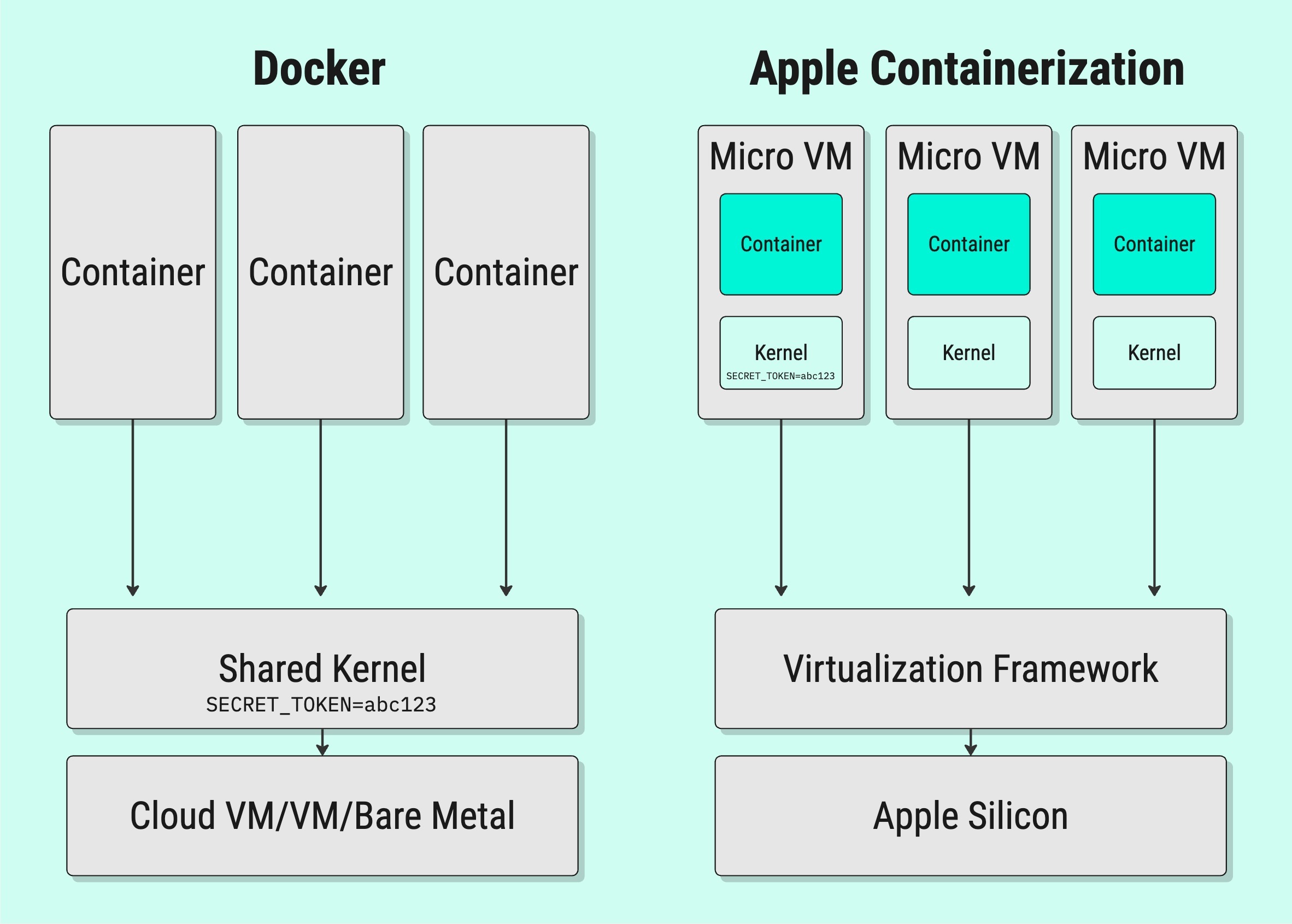
The fundamental shift in NanoClaw 2.0 is the move away from "application-level" security to "infrastructure-level" enforcement. The creators of the open source sandboxed NanoClaw agent framework -- now operating under their new private startup named NanoCo -- have announced a landmark partnership with Vercel and OneCLI to introduce a standardized, infrastructure-level approval system for enterprise AI agents. This launch addresses a critical barrier to AI agent adoption: the tradeoff between utility and security that has forced organizations to either severely restrict agent capabilities or risk unintended consequences from autonomous actions. By integrating Vercel's Chat SDK and OneCLI's open source credentials vault, NanoClaw 2.0 ensures that no sensitive action occurs without explicit human consent, delivered natively through the messaging apps where users already live. The system intercepts outbound requests from AI agents and requires human approval before allowing access to real credentials, effectively preventing unauthorized actions even if an agent is compromised. The specific use cases that stand to benefit most are those involving high-consequence "write" actions. In DevOps, an agent could propose a cloud infrastructure change that only goes live once a senior engineer taps "Approve" in Slack. For finance teams, an agent could prepare batch payments or invoice triaging, with the final disbursement requiring a human signature via a WhatsApp card. The fundamental shift in NanoClaw 2.0 is the move away from "application-level" security to "infrastructure-level" enforcement. In traditional agent frameworks, the model itself is often responsible for asking for permission -- a flow that Gavriel Cohen, co-founder of NanoCo, describes as inherently flawed. "The agent could potentially be malicious or compromised," Cohen noted. "If the agent is generating the UI for the approval request, it could trick you by swapping the 'Accept' and 'Reject' buttons." NanoClaw solves this by running agents in strictly isolated Docker or Apple Containers. The agent never sees a real API key; instead, it uses "placeholder" keys. When the agent attempts an outbound request, the request is intercepted by the OneCLI Rust Gateway. The gateway checks a set of user-defined policies (e.g., "Read-only access is okay, but sending an email requires approval"). If the action is sensitive, the gateway pauses the request and triggers a notification to the user. Only after the user approves does the gateway inject the real, encrypted credential and allow the request to reach the service. While security is the engine, Vercel's Chat SDK is the dashboard. Integrating with different messaging platforms is notoriously difficult because every app -- Slack, Teams, WhatsApp, Telegram -- uses different APIs for interactive elements like buttons and cards. By leveraging Vercel's unified SDK, NanoClaw can now deploy to 15 different channels from a single TypeScript codebase. When an agent wants to perform a protected action, the user receives a rich interactive card on their phone. "The approval shows up as a rich, native card right inside Slack or WhatsApp or Teams, and the user taps once to approve or deny," said Cohen. This "seamless UX" is what makes human-in-the-loop oversight practical rather than a productivity bottleneck. NanoClaw launched on January 31, 2026, as a minimalist and security-focused response to the "security nightmare" inherent in complex, non-sandboxed agent frameworks. Created by Cohen, a former Wix.com engineer, and marketed by his brother Lazer, CEO of B2B tech public relations firm Concrete Media, the project was designed to solve the auditability crisis found in competing platforms like OpenClaw, which had grown to nearly 400,000 lines of code. By contrast, NanoClaw condensed its core logic into roughly 500 lines of TypeScript -- a size that allows the entire system to be audited by a human or a secondary AI in approximately eight minutes. The platform's primary technical defense is its use of operating system-level isolation. Every agent is placed inside an isolated Linux container -- utilizing Apple Containers for high performance on macOS or Docker for Linux -- to ensure that the AI only interacts with directories explicitly mounted by the user. In March 2026, NanoClaw further matured this security posture through an official partnership with the software container firm Docker to run agents inside "Docker Sandboxes". This integration utilizes MicroVM-based isolation to provide an enterprise-ready environment for agents that, by their nature, must mutate their environments by installing packages, modifying files, and launching processes -- actions that typically break traditional container immutability assumptions. Operationally, NanoClaw rejects the traditional "feature-rich" software model in favor of a "Skills over Features" philosophy. Instead of maintaining a bloated main branch with dozens of unused modules, the project encourages users to contribute "Skills" -- modular instructions that teach a local AI assistant how to transform and customize the codebase for specific needs, such as adding Telegram or Gmail support. This methodology ensures that users only maintain the exact code required for their specific implementation. the framework natively supports "Agent Swarms" via the Anthropic Agent SDK, allowing specialized agents to collaborate in parallel while maintaining isolated memory contexts for different business functions. NanoClaw remains firmly committed to the open source MIT License, encouraging users to fork the project and customize it for their own needs. This stands in stark contrast to "monolithic" frameworks. NanoClaw's codebase is remarkably lean, consisting of only 15 source files and roughly 3,900 lines of code, compared to the hundreds of thousands of lines found in competitors like OpenClaw. The partnership also highlights the strength of the "Open Source Avengers" coalition. By combining NanoClaw (agent orchestration), Vercel Chat SDK (UI/UX), and OneCLI (security/secrets), the project demonstrates that modular, open-source tools can outpace proprietary labs in building the application layer for AI. As shown on the NanoClaw website, the project has amassed more than 27,400 stars on GitHub and maintains an active Discord community. A core claim on the NanoClaw site is that the codebase is small enough to understand in "8 minutes," a feature targeted at security-conscious users who want to audit their assistant. In an interview, Cohen noted that iMessage support via Vercel's Photon project addresses a common community hurdle: previously, users often had to maintain a separate Mac Mini to connect agents to an iMessage account. For enterprises, NanoClaw 2.0 represents a shift from speculative experimentation to safe operationalization. Historically, IT departments have blocked agent usage due to the "all-or-nothing" nature of credential access. By decoupling the agent from the secret, NanoClaw provides a middle ground that mirrors existing corporate security protocols -- specifically the principle of least privilege. Enterprises should consider this framework if they require high-auditability and have strict compliance needs regarding data exfiltration. According to Cohen, many businesses have not been ready to grant agents access to calendars or emails because of security concerns. This framework addresses that by ensuring the agent structurally cannot act without permission. Enterprises stand to benefit specifically in use cases involving "high-stakes" actions. As illustrated in the OneCLI dashboard, a user can set a policy where an agent can read emails freely but must trigger a manual approval dialog to "delete" or "send" one. Because NanoClaw runs as a single Node.js process with isolated containers, it allows enterprise security teams to verify that the gateway is the only path for outbound traffic. This architecture transforms the AI from an unmonitored operator into a supervised junior staffer, providing the productivity of autonomous agents without forgoing executive control. NanoClaw is a recommendation for organizations that want the productivity of autonomous agents without the "black box" risk of traditional LLM wrappers. It turns the AI from a potentially rogue operator into a highly capable junior staffer who always asks for permission before hitting the "send" or "buy" button. As AI-native setups become the standard, this partnership establishes the blueprint for how trust will be managed in the age of the autonomous workforce.
SpaceX's Three-Day Analyst Meet in Texas Signals Big Financial Moves
SpaceX is set to host a three-day analyst meet to engage Wall Street investors. The meet will potentially offer insights into the company's financial strategy, growth plans and future direction in the rapidly evolving space industry. Elon Musk's company is holding the briefings for the top aerospace and technology analysts before raising $75 billion in an IPO. It is expected to be the world's biggest ever IPO, with executives targeting a late June trading debut. Musk merged xAI with SpaceX in February, which brings under one roof the billionaire's rockets, Starlink satellites, the X social media platform, and Grok AI chatbot.
Amazon, Anthropic deepen AI and cloud partnership with $5-billion investment, $100-billion AWS commitment
Anthropic to pour $100 billion into AWS over a decade as it standardises on Amazon's chips and cloud for training Claude and future AI models. Amazon and Anthropic have expanded their partnership with a fresh $5-billion investment, as part of a broader agreement that could see Amazon commit up to $25 billion in total, including an additional $20 billion tied to commercial milestones. The investment builds on the roughly $8 billion Amazon has already committed to Anthropic. Alongside this, Anthropic has agreed to spend more than $100 billion over the next decade on Amazon Web Services (AWS), making it its primary cloud and training partner for large-scale AI workloads. The companies have been working together since 2023, with more than 100,000 customers currently running Anthropic's Claude models on AWS. Claude is also among the most widely used model families on Amazon Bedrock, AWS's platform for accessing third-party and proprietary AI models. The expanded collaboration centres on infrastructure. Anthropic will use multiple generations of Amazon's custom AI chips -- Trainium2, Trainium3, Trainium4, and future versions -- along with tens of millions of Graviton CPU cores to train and deploy its models. As part of the agreement, Anthropic will secure up to 5 gigawatts of compute capacity. The companies are also jointly working on Project Rainier, an AI compute cluster built using nearly half a million Trainium2 chips, which is currently being used to train and run Claude models and future versions. Anthropic is also working with Amazon's Annapurna Labs to optimise Trainium chips, providing feedback from model training workloads to inform future chip design. The partnership includes product integration as well. AWS customers will be able to access Anthropic's native Claude platform directly through their AWS accounts, without requiring separate credentials or billing systems, while continuing to use existing AWS access controls and monitoring tools. The deal comes amid intensifying competition among large technology companies to secure both AI models and the infrastructure that powers them. Microsoft has committed more than $10 billion to OpenAI, integrating its models across Azure, while Google has also invested in Anthropic and is developing its own models. At the hardware level, Nvidia continues to dominate the market for AI training chips through its GPUs, which are widely used across the industry. Amazon, through its Trainium and Graviton chips, is positioning in-house silicon as an alternative for large-scale AI workloads. Anthropic's commitment to AWS secures long-term infrastructure demand for Amazon, as AI companies scale compute usage. The agreement also includes expansion of inference capabilities across Asia and Europe to support growing international demand for Claude models. Enterprise adoption of Claude on AWS is already underway. Companies including Lyft and Pfizer are using the models for applications such as customer support automation and document analysis within existing AWS environments.

Fortune Tech: Apple's new CEO, Amazon's new Anthropic investment, Project Prometheus valuation | Fortune
Want to send thoughts or suggestions to Fortune Tech? Drop a line here. It was rumored and reported and discussed offline in corporate hallways across the country, but few expected it to happen now. John Ternus, Apple's 50-year-old hardware engineering boss, will officially become Apple's next CEO on September 1. Current chief Tim Cook, 65, will become executive chairman of the company's board; Arthur Levinson, Apple's longtime non-executive chairman, will become lead independent director. Johny Srouji will become chief hardware officer. Apple shares fell about 1%, to about $270, on the news in after-hours trading. It is difficult to overstate just how much has occurred in Cupertino on Tim Cook's watch since he became CEO in 2011, mere months before co-founder Steve Jobs' death. The former COO and supply chain whiz took a revived Apple from its swashbuckling early chapter and both professionalized it and globalized it. Critics say Cook stamped out the creative conflict of the place; supporters say he improved collaboration at a company that has 100,000 more employees than it used to. Along the way: Apple's AirPods and Watch, the Beats deal, the rapid expansion of iCloud services, and the aggressive moves that became Apple Silicon, alongside stumbles including an error-plagued Apple Maps launch, the abandoned Apple Car project, Apple's underwhelming Vision Pro, and its current Apple Intelligence woes. What is undeniable: Apple revenue in 2011 was $108 billion; last year was almost quadruple that. Apple's market capitalization in 2011 was about $350 billion, briefly allowing it to pass ExxonMobil as the world's most valuable company; today, it's the third-most valuable at $4 trillion, behind Nvidia and Alphabet. Like Cook, Ternus has big shoes to fill. It will be his job to come up with new products that astonish. It will be his task to continue to redraw Apple's global supply chain after trade wars scrambled it last year. It will be his task to catch up to the AI arms race and turn Siri into something special. And it will be his responsibility to decide how Apple Inc. should operate as it enters its sixth decade: combative, cordial, or something else entirely? -- AN You know who needs more money in this day and age? AI companies! Amazon, the No. 1 company on this year's Fortune 500, announced on Monday that it would invest up to $25 billion more in San Francisco AI pioneer Anthropic beyond the $8 billion it has already invested in a substantial expansion of the companies' existing partnership. The arrangement gives Anthropic up to 5 gigawatts of capacity via current and future generations of Amazon's Trainium chips to train and deploy Anthropic's Claude AI models. Anthropic promises to commit more than $100 billion over the next 10 years to Amazon's cloud unit, Amazon Web Services; Amazon will invest $5 billion in Anthropic immediately and up to an additional $20 billion in the future, "tied to certain commercial milestones." All of this is good news for Anthropic, which is expected to be on track for an IPO later this year. But it must be vigilant. Two months ago, Amazon agreed to invest up to $50 billion in its bitterest rival, OpenAI, which committed to using 2GW of Amazon chips and just so happens to also be headed toward an IPO. -- AN Amazon's largest individual shareholder doesn't like to sit still. He's not content to just promote personal liberties and free markets in the pages of the Washington Post. He's not sitting on his laurels chairing the highfalutin' Met Gala in New York. He's not keen on merely sorting through the FAA's grounding of his rocket company Blue Origin for delivering a satellite to the wrong orbit. No, Jeff Bezos wants a piece of this AI action -- which is why he's co-CEO of the physical AI startup Project Prometheus alongside Verily co-founder Vik Bajaj. According to a new Financial Times report, Prometheus is in the midst of raising $10 billion at a valuation of $38 billion. Among the reported investors: BlackRock and JPMorgan, who join Bezos ($6.2 billion), Arch Venture Partners' Bob Nelson, and other backers from the company's initial funding round. The startup's mission and operations are still rather murky; "AI models for industrial applications" is as detailed as it gets thus far. Despite that lack of detail, it's clear they'll need the cash: Early reports said Prometheus already has 100 employees on payroll, including researchers from OpenAI, Google DeepMind, and Meta. And those folks aren't known to be cheap hires. -- AN -- California accuses Amazon of price-fixing by pressuring brands to increase prices at other retailers. -- Victory Giant jumps nearly 60% in Hong Kong debut. The Chinese circuit board maker raised $2.6 billion for its IPO. -- Jury finds Uber liable for a sexual assault by a driver in 2019. It's not the first time the company lost in court. -- Who should Adobe's next CEO be? Canva chief Melanie Perkins: "I definitely can't comment on that." -- Deezer: AI-generated music is 44% of daily uploads, but only 2% of consumption. -- U.S. Air Force cancels $6 billion RTX contract. Delays and cost overruns for the GPS ground-control network, launched 15 years ago. -- "SaaSpocalypse" at the hands of AI? "People think we have our back against the wall when in fact the opportunity has never been greater," Salesforce CEO Marc Benioff says.

Climate cooperation key to countering global heating, fossil-fuel cost chaos, says UN climate chief
BERLIN, April 21 (Xinhua) -- UN Climate Change Executive Secretary Simon Stiell said on Tuesday that the world is facing the threat of fossil-fuel-driven stagflation and that climate cooperation is key to fending off the twin crises of global heating and fossil-fuel cost chaos. Speaking at the opening of the Petersberg Climate Dialogue, Stiell said the latest war in the Middle East has "further locked-in much higher fossil fuel costs for months and likely years to come, delivering a gut-punch to every nation and billions of households." He warned that fossil-fuel-driven stagflation "is now stalking economies -- driving up prices, driving down growth, pushing budgets deeper into quagmires of debt, and stripping away governments' policy options and autonomy." "The need to accelerate action has never been clearer," he added. Stiell said negotiations remain a critical tool and have delivered landmark commitments, including those made at the first global stocktake at COP28. "Now, in this era of implementation, we must turn them into projects on the ground," he said, so that by the second global stocktake at COP33, countries will be on track to meet those commitments. He also noted the importance of clean energy, saying that it offers security and affordability while returning sovereignty to nations and their peoples. On implementation, he said the Action Agenda, "this crucial fast-lane of the Paris Agreement," has mobilized trillions of dollars within the real economy and pushed the clean energy transition to a point where it "is now irreversible." Stiell called for elevating the Action Agenda to share center stage with negotiations to help harness and accelerate real-economy momentum and deliver on National Adaptation Plans and Nationally Determined Contributions. He also urged that the full power of the Action Agenda be unleashed worldwide, with "coalitions of the willing" leading the way, governments driving progress and encouraging investment between COPs, and far more finance flowing into developing countries. "That means looking to where the urgency is greatest, and our impact can be strongest and fastest," he said, pointing to areas such as grid modernization, methane reduction, early warning systems, sustainable cities, climate-resilient food supplies and cutting waste. ■

Space sector investment hits record on SpaceX IPO hype | News.az
Global investment in space companies surged to a record in the first quarter of 2026, driven by larger late-stage funding rounds and growing investor excitement around SpaceX's expected public market debut, according to data from investment firm Seraphim Space on Tuesday, News.Az reports, citing Reuters. Funding reached $7.95 billion in the quarter, nearly double the $3.93 billion recorded in the previous three-month period, pushing trailing 12-month investment to an all-time high of $18.8 billion. The number of deals also rose to 159, bringing the annual total to a record 654. The rise in capital was mainly driven by larger deal sizes rather than a sharp increase in transaction volume, with the average deal size climbing to $68 million from $35.1 million in the fourth quarter. The largest transaction was a $1.75 billion funding round for US-based Saronic, one of the biggest space-sector financings on record, the report said. "The market today definitely feels 'risk-on' with capital moving quickly into perceived category leaders," said Lucas Bishop, investment associate at Seraphim Space, pointing to a mix of tailwinds including defence spending, renewed lunar ambitions, and anticipation around SpaceX IPO. A potential SpaceX IPO could serve as a major liquidity event for early investors and employees, while also setting a valuation benchmark and improving exit visibility for venture-backed space firms. The rocket company is also scheduled to host an analyst day on Tuesday, Reuters reported earlier this month. North America accounted for around 70% of total funding in the first quarter, while Europe posted its strongest performance since 2022 and Asia contributed more than $1.2 billion. Investment has increasingly expanded beyond traditional satellite communications, with more capital flowing into emerging areas such as in-space infrastructure, including space stations and data centres, reflecting the widening scope of the sector. Recent developments also highlight continued momentum in satellite connectivity, including Amazon's announcement last week that it would acquire Globalstar for $11.6 billion.

Amazon To Invest $5bn In Anthropic In Infrastructure Deal - IT Security News
The technical storage or access is necessary for the legitimate purpose of storing preferences that are not requested by the subscriber or user. The technical storage or access that is used exclusively for statistical purposes. The technical storage or access that is used exclusively for anonymous statistical purposes. Without a subpoena, voluntary compliance on the part of your Internet Service Provider, or additional records from a third party, information stored or retrieved for this purpose alone cannot usually be used to identify you.

Vercel Hack Confirmed Breach Linked to Third-Party AI Tool
The cloud platform Vercel has confirmed that attackers breached its internal systems, affecting a "limited subset" of customers and exposing some non-sensitive environment variables. In its official disclosure, Vercel said it was investigating the incident with external experts and had informed law enforcement. The company maintained that its core services remain operational and that it has contacted affected users. It urged them to rotate credentials and review their environment variables. How the breach happened: Attackers compromised Context.ai, a third-party AI tool, to gain access to Vercel. They took over an employee's Google Workspace account using a compromised OAuth token linked to Context's AI Office Suite. This access allowed attackers to move further into Vercel's systems and view environment variables that the company had not marked as "sensitive." The company said it protected sensitive variables and found no evidence of unauthorised access. CEO explains internal escalation: Vercel CEO Guillermo Rauch confirmed the sequence in an X post, stating: "Through a series of maneuvers that escalated from our colleague's compromised Vercel Google Workspace account, the attacker got further access to Vercel environments." He added: "We do have a capability, however, to designate environment variables as 'non-sensitive'. Unfortunately, the attacker got further access through their enumeration." Rauch described the attackers as "highly sophisticated" and said the company is focusing on investigation, customer communication, and strengthening security systems. Hackers claim stolen data, identity remains unclear: The disclosure followed a threat actor posting on a hacking forum claiming to be selling Vercel data, including access keys, source code, and database contents. The actor said they had access to "multiple employee accounts" and internal deployments. However, the hacker claimed links to the ShinyHunters group, which later denied involvement when cybersecurity outlet BleepingComputer contacted it. The authenticity of the leaked data has not been independently verified. Reports also indicate that the attacker shared a dataset of around 580 employee records and screenshots of internal dashboards, and claimed to be discussing ransom payments of up to $2 million, though Vercel has not confirmed any such negotiations. Context AI acknowledges earlier breach: Context.ai said the root incident occurred earlier in its now-deprecated AI Office Suite. Attackers gained unauthorised access to its AWS environment and compromised the OAuth tokens of some users. The company stated that one such token was used to access Vercel systems. It has since shut down the affected environment and is working with the cybersecurity firm CrowdStrike to assess the full impact. Context.ai added that its enterprise products, which run in customer-controlled environments, are not affected. What remains unclear: Vercel has not disclosed how many users were affected by the breach and is still investigating whether attackers exfiltrated any additional data. The company has confirmed that attackers did not compromise its open-source projects, including Next.js. The incident highlights the growing risks of supply-chain attacks, where breaching one service can open access to multiple platforms through linked accounts and integrations.

Will Billionaire Investor Bill Ackman Jump Into the SpaceX IPO?
The IPO is expected to be massive and could value SpaceX at $2 trillion. Billionaire investor Bill Ackman and his fund, Pershing Square Capital Management (PSCM), have invested in plenty of large technology and artificial intelligence stocks lately. Pershing now has a stake in Uber, Amazon, Meta Platforms, and Alphabet. With SpaceX's initial public offering just a few weeks away, it could value the Elon Musk-founded company as high as $2 trillion. Would Ackman consider jumping into this initial public offering (IPO)? Will AI create the world's first trillionaire? Our team just released a report on the one little-known company, called an "Indispensable Monopoly" providing the critical technology Nvidia and Intel both need. Continue " While not fully conclusive, Pershing's ownership of Amazon could indicate some interest in the space economy. Similar to SpaceX's Starlink, Amazon has been building a low-Earth orbit satellite network to provide phone and data services in areas with limited access to traditional internet infrastructure. Recently, Amazon furthered those ambitions by announcing the acquisition of Globalstar, which has 24 satellites and a key agreement with Apple in place that helps users send distress messages when they don't have service. Still, Ackman and his team likely bought Amazon primarily for its e-commerce business and its Amazon Web Services cloud business. Image source: Getty Images. However, last December, Ackman showed clear interest in SpaceX. On X, Ackman proposed combining SpaceX with Pershing Square SPARC Holdings. A SPARC is a special-purpose acquisition rights vehicle. SPARCs differ from SPACs (special purpose acquisition companies) because they distribute rights to investors and don't raise or hold capital until a deal is finalized. SPARCs also typically have longer timelines than SPACs. In a long post on X, Ackman said that SPARC rights could be distributed to Tesla shareholders. Musk has previously expressed a desire to give Tesla shareholders access to the SpaceX IPO. The purpose, according to Ackman, would be to allow SpaceX to go public with no underwriting fees or dilution in the raise. Musk clearly chose a different direction, given that SpaceX has reportedly hired over 20 banks to help carry out the massive IPO. Recently, Ackman and Pershing announced a new closed-end fund targeted at U.S. investors that would allow them to buy into PSCM without paying performance fees, unlike most institutional investors who invest in hedge funds. In a letter to prospective shareholders, Ackman discussed his investment philosophy and how he and his team choose stocks: Over time, we have come to learn that the best businesses for investment have similar characteristics. They are simple, predictable, and free-cash-flow-generative. They have impenetrable 'moats' or large barriers to entry protecting them from disruption, a growing risk in a world in the midst of massive technological change. They are often asset-light, and generate recurring and rapidly growing, inflation-protected, free cash flows that do not need to be reinvested in the business for the company to grow. They do not need large amounts of leverage to generate high returns on capital. And they have limited exposure to extrinsic threats outside of the control of the company. Based on this description, SpaceX doesn't seem like a good fit for PSCM's portfolio, at least for now. According to The Information, while Starlink generated $3 billion in free cash flow, SpaceX's launch business and artificial intelligence (AI) segment collectively posted negative free cash flow of $17 billion. Capital expenditures were reportedly nearly $21 billion. That's likely because Starlink is very capital-intensive right now due to the build-out of its low-Earth orbit satellite network. Starlink reportedly has 10,000 satellites in orbit, but it aims to have over 40,000 when everything is said and done. While SpaceX appears to be a leader in the space economy, it faces competition and could, of course, face "extrinsic" threats beyond its control, such as regulation or a range of potential disasters beyond Earth's atmosphere. Now, this doesn't mean SpaceX couldn't eventually turn into an Ackman stock down the line. For instance, once the satellite network is built out, the business will likely be less capital-intensive and generate much more free cash flow. SpaceX already has a head start in building its low-orbit network. Plus, Gene Munster of Deepwater Asset Management said on X that what SpaceX is really trying to do is have sovereign AI, where it has complete control over the entire AI stack from the infrastructure to the models powering the intelligence. SpaceX also holds spectrum licenses that authorize it to operate Starlink. There is a finite number of spectrum licenses available in the U.S. One could argue that these attributes give the company a strong, impenetrable moat, especially if SpaceX can achieve sovereign AI. Whether Ackman invests in the IPO or the stock will depend on how much he and his team believe SpaceX can achieve all and in what time frame. PSCM's portfolio suggests that Ackman prefers mature businesses at fair valuations and turnaround stories, so I don't see it getting involved in the IPO. However, given the billionaire's prior interest in SpaceX, there is still a small chance. When our analyst team has a stock tip, it can pay to listen. After all, Stock Advisor's total average return is 994%* -- a market-crushing outperformance compared to 199% for the S&P 500. Bram Berkowitz has no position in any of the stocks mentioned. The Motley Fool has positions in and recommends Alphabet, Amazon, Apple, Meta Platforms, Tesla, and Uber Technologies and is short shares of Apple. The Motley Fool has a disclosure policy.
Amazon invests another $5bn in Anthropic
NEW YORK - Amazon said it pumped another $5 billion into Anthropic as it ramps up its collaboration with the startup behind Claude artificial intelligence. The e-commerce and cloud computing colossus noted that the investment builds on $8 billion it had already invested in Anthropic, according to the companies. Amazon added that it could invest $20 billion more in Anthropic, provided the startup meets certain performance goals. For its part, San Francisco-based Anthropic said it has committed to spending more than $100 billion on Amazon Web Services (AWS) technology to power AI in the coming decade. "We need to build the infrastructure to keep pace with rapidly growing demand," Anthropic chief executive Dario Amodei said in a release. "Our collaboration with Amazon will allow us to continue advancing AI research while delivering Claude to our customers." Anthropic said in early April that it had tripled its annualised revenues quarter-on-quarter to over $30 billion -- outpacing OpenAI for the first time. Amodei visited US officials last week at the White House, where they struck a different tone from the dispute that erupted in February, when the AI startup infuriated Pentagon chief Pete Hegseth by insisting its technology should not be used for mass surveillance or fully autonomous weapons systems. "We discussed opportunities for collaboration, as well as shared approaches and protocols to address the challenges associated with scaling this technology," a White House spokesperson told AFP. The rhetoric marks a departure from months earlier, when President Donald Trump instructed the US government to "immediately cease" using Anthropic's technology after the company refused to allow the Pentagon unconditional use of its Claude AI models. Anthropic has challenged the Trump administration in court, as well as Hegseth's move to add the company to a list of firms that pose a "supply chain risk." Earlier this month, Anthropic announced its newest AI model Mythos, withholding it from public release due to its potential cybersecurity risks.