News & Updates
The latest news and updates from companies in the WLTH portfolio.
ASIC, APRA among regulators monitoring Anthropic's Mythos
Australian and Asian financial regulators are taking measures to address the risks posed by Anthropic's artificial intelligence model Mythos, whose vast capabilities to code at a high level have given it a potentially unprecedented ability to identify cybersecurity vulnerabilities. A spokesperson for the Australian Securities and Investments Commission (ASIC) said it was closely monitoring the usage of Mythos along with other regulators to assess possible market implications. "ASIC engages closely with other regulators, government agencies and the financial sector to understand and respond to changing technologies," the spokesperson said, adding that it expects financial services licensees to "be on the front foot" to safeguard customers and clients. Meanwhile, the Australian Prudential Regulation Authority (APRA), the country's banking regulator, said it would "continue to assess the implications of these technological advancements to ensure the ongoing safety and resilience of the financial system". Further afield, the Hong Kong Monetary Authority (HKMA) said it has engaged with major banks and is highly vigilant to the evolving AI-driven cyber threats - such as Mythos - and is about to bring forward a new framework to address the challenge. The city's de facto central bank and banking regulator told Reuters it will introduce a cyber resilience testing framework focused on augmenting banks' response and recovery capabilities, which will help ensure a robust data system for the sector. HKMA will also form a new dedicated public-private sector taskforce to examine, monitor and respond to AI-driven cyber risks. "Some banks are also assessing additional mitigation measures in response to these evolving threats," the regulator said in a statement. South Korea's Financial Supervisory Service (FSS) said it held a meeting with information security officials from financial firms last week to review Mythos-related risks. South Korea's Yonhap news agency reported the Financial Services Commission (FSC) held an emergency meeting on Wednesday with chief information security officers from the FSS, banks and insurers to review the risks, citing unnamed industry sources. The FSC was not immediately available for comment. Separately, Singapore's central bank, the Monetary Authority of Singapore (MAS), said that advances in AI could speed up the discovery and exploitation of software vulnerabilities in IT systems. "Financial institutions need to redouble efforts to strengthen their security defences, proactively identify and close vulnerabilities, and raise vigilance on cyber hygiene, including timely security patching," it said, adding that it was coordinating with the Cyber Security Agency of Singapore to support critical infrastructure operators.

Prometheus rising: Anthropic's frightening new baby is here
Anthropic's Claude Mythos AI finds critical vulnerabilities at a superhuman level, raising global security fears despite "safety-first" claims. Anthropic is a company that's having it every which way. Prudent: it warns about the dangers of the AI products that can be produced. Principled: it tells the Trump administration it will not partake in creating AI software that aids mass surveillance -- a move that earned it an order of excommunication as a "supply chain risk". Despite these high-mast principles, the company now reveals it has produced something bound to concern governments the world over. The new Claude Mythos Preview model has been advertised as the "best-aligned model that we have released to date by a significant margin".

Morningstar considers revamping index construction ahead of SpaceX IPO By Reuters
PROVIDENCE, Rhode Island, April 20 (Reuters) - Investment research and analysis provider Morningstar Inc. is the latest index provider to consider revising its approach to designing its market indexes in light of SpaceX's outsize pending initial public offering. Elon Musk's space transportation and exploration business is on track to issue as much as $75 billion of stock in an initial public offering that could value the company at $1.75 trillion, making it by far the largest IPO ever recorded and raising unprecedented challenges for investors about how and whether to add it to their portfolios. Morningstar, eyeing not only the pending SpaceX launch but also other similarly mammoth deals from companies like Anthropic and OpenAI later this year, said it will introduce what it refers to as an alternative way to gauge liquidity of these "unicorns" immediately following their debuts. This would address what is known as the free float requirement, or the requirement that a new public company have a minimum number of shares publicly available for trading. Morningstar said its CRSP Market Indexes will "undergo enhancements to introduce an alternative liquidity screen", making it possible to add SpaceX and other giant IPOs to these benchmarks more rapidly. The funds that use the CRSP indexes as a portfolio benchmark include Vanguard's $607 billion Total Stock Market ETF. "Index providers must evolve eligibility rules to keep their benchmarks relevant to new market realities," a company spokesman said in an e-mail to Reuters. Morningstar is the latest firm to wrestle with how to deal with this year's crop of pending IPOs from market giants like SpaceX. Current guidelines were established when U.S. IPOs tended to be of smaller companies, often still unprofitable, with limited track records and revenue. Companies like SpaceX, however, are waiting until they are older or much larger to go public, and index and exchange executives say that requires a new approach on their part. Nasdaq plans to alter the rules governing the makeup of its Nasdaq-100 Index to allow companies meeting certain criteria to be added to the mix in a fast-track process. That would cut any delay in adding newly listed companies from several months to only 15 days, Nasdaq told Reuters. Separately, S&P Dow Jones Global Indices is contemplating adjusting its own rules regarding the Standard & Poor's 500-stock index and other products, according to a report from Bloomberg in mid-March. The current S&P rules require 10% of a company's stock to trade freely. A spokesperson for S&P Dow Jones Global Indices declined further comment. Not all investors welcome these moves, however. "The fact that some of these indexes may be lowering their standards in order to include exposure to the explosion of big growth IPOs that nobody wants to miss out on owning, is concerning," said Mark Malek, chief investment officer at Siebert Financial. "Size isn't everything. I look to these index providers to make sure that the stocks they include meet some kind of standard, and I'm not sure that some of the proposed changes will allow for that."

Morningstar considers revamping index construction ahead of SpaceX IPO
PROVIDENCE, Rhode Island, April 20 : Investment research and analysis provider Morningstar Inc. is the latest index provider to consider revising its approach to designing its market indexes in light of SpaceX's outsize pending initial public offering. Elon Musk's space transportation and exploration business is on track to issue as much as $75 billion of stock in an initial public offering that could value the company at $1.75 trillion, making it by far the largest IPO ever recorded and raising unprecedented challenges for investors about how and whether to add it to their portfolios. Morningstar, eyeing not only the pending SpaceX launch but also other similarly mammoth deals from companies like Anthropic and OpenAI later this year, said it will introduce what it refers to as an alternative way to gauge liquidity of these "unicorns" immediately following their debuts. This would address what is known as the free float requirement, or the requirement that a new public company have a minimum number of shares publicly available for trading. Morningstar said its CRSP Market Indexes will "undergo enhancements to introduce an alternative liquidity screen", making it possible to add SpaceX and other giant IPOs to these benchmarks more rapidly. The funds that use the CRSP indexes as a portfolio benchmark include Vanguard's $607 billion Total Stock Market ETF. "Index providers must evolve eligibility rules to keep their benchmarks relevant to new market realities," a company spokesman said in an e-mail to Reuters. Morningstar is the latest firm to wrestle with how to deal with this year's crop of pending IPOs from market giants like SpaceX. Current guidelines were established when U.S. IPOs tended to be of smaller companies, often still unprofitable, with limited track records and revenue. Companies like SpaceX, however, are waiting until they are older or much larger to go public, and index and exchange executives say that requires a new approach on their part. Nasdaq plans to alter the rules governing the makeup of its Nasdaq-100 Index to allow companies meeting certain criteria to be added to the mix in a fast-track process. That would cut any delay in adding newly listed companies from several months to only 15 days, Nasdaq told Reuters. Separately, S&P Dow Jones Global Indices is contemplating adjusting its own rules regarding the Standard & Poor's 500-stock index and other products, according to a report from Bloomberg in mid-March. The current S&P rules require 10 per cent of a company's stock to trade freely. A spokesperson for S&P Dow Jones Global Indices declined further comment. Not all investors welcome these moves, however. "The fact that some of these indexes may be lowering their standards in order to include exposure to the explosion of big growth IPOs that nobody wants to miss out on owning, is concerning," said Mark Malek, chief investment officer at Siebert Financial. "Size isn't everything. I look to these index providers to make sure that the stocks they include meet some kind of standard, and I'm not sure that some of the proposed changes will allow for that."
Amazon and Anthropic expand strategic collaboration
Primary training and cloud provider. Anthropic continues to choose AWS as its primary training and cloud provider for mission-critical workloads. Amazon developers and engineers also have access to build with Claude models to improve customer experiences across Amazon's businesses. This communication contains forward-looking statements that are inherently uncertain and difficult to predict, including statements regarding planned investments, anticipated business activities, the effect of conditions, and expected benefits of the expanded collaboration between Amazon and Anthropic, such as expected developments, performance, scaling, capabilities, customization, offerings, or impacts as a result of the collaboration; the reliability, safety, security, applications, utilization, or effectiveness of artificial intelligence technologies; accessibility of new features, models, and tools; and expected compute capacities, capabilities, performance characteristics, and delivery timing of Trainium chips. We use words such as will, to, believes, expects, intends, anticipates, plans, future, potential, continue, look forward, opportunity, keep, designed and similar expressions, as well as words referring to future outcomes such as train, accelerate, achieve, commit, deliver, power, bring, collaborate, develop, become, build, enable, deploy, provide, invest, use, meet, expand, run, support, lower, improve, offer, next generation, and variations of such words, to identify forward-looking statements. Actual results and outcomes could differ materially for a variety of reasons, including, among others, fluctuations in foreign exchange rates and energy prices, changes in global economic conditions, tariff and trade policies, resource and supply volatility, including for memory chips, and customer demand and spending, inflation, interest rates, regional labor market constraints, world events, the rate of growth of cloud services and new and emerging technologies, the amount that Amazon invests in new business opportunities and the timing of those investments, the mix of products and services sold to customers, competition, management of growth, international growth and expansion, the outcomes of claims, litigation, government investigations, and other proceedings, data center optimization, variability in demand, the degree to which we enter into, maintain, and develop commercial agreements, and proposed and completed acquisitions and strategic transactions. Other risks and uncertainties include, among others, risks related to new products, services, and technologies, security incidents, system interruptions, government regulation and taxation, and fraud. In addition, global economic and geopolitical conditions and additional or unforeseen circumstances, developments, or events may give rise to or amplify many of these risks. More information about factors that potentially could affect Amazon's future business, product development, and financial results is included in Amazon's filings with the Securities and Exchange Commission, including its most recent Annual Report on Form 10-K and subsequent filings.

Cloned Red Wolves: Colossal's Bold Bid to Resurrect a Fading Canine Lineage
Four red wolves now roam a secret refuge, their reddish coats and broad skulls echoing a species long on the brink. Colossal Biosciences, the Dallas-based biotech firm, claims these clones -- born from blood samples of Gulf Coast 'ghost' canids -- carry vital ancestral genes missing from today's captive packs. But skeptics call them coyote hybrids dressed up for headlines. The debate exposes deep rifts in conservation science. Red wolves once prowled from Texas prairies to Pennsylvania forests. Smaller than grays, with coats from russet to cream. Settlers hunted them relentlessly for two centuries. By 1980, the U.S. Fish and Wildlife Service declared them extinct in the wild. Only 14 survivors remained, captured and bred into captivity. Today, about 280 live in zoos under the Association of Zoos and Aquariums' Species Survival Plan. Another 20 or so scrape by in North Carolina's experimental wild population. Inbreeding haunts them all. Coyotes complicated everything. Arriving mid-20th century, they interbred with red wolves, swamping pure lines in a 'hybrid swarm.' Geneticists like Princeton's Bridgett vonHoldt later spotted hope in Louisiana and Texas: 'ghost wolves,' coyote-like animals harboring red wolf DNA fragments -- up to 70% in some cases. These relics trace no descent from the 14 founders. Colossal latched onto that. The company didn't capture wild animals. They used banked blood from the Gulf Coast Canine Project, led by vonHoldt and Michigan Tech's Kristin Brzeski. From those samples, Colossal isolated endothelial progenitor cells -- no tissue biopsies needed. Somatic cell nuclear transfer followed, with dog surrogates carrying the pups. Two litters emerged: Neka Kayda, named 'ghost daughter' by the Karankawa Tribe of Texas; and males Blaze, Ash, Cinder. Neka boasts 70.8% red wolf ancestry from a Cameron Parish female, per Colossal's Foundation site. Colossal's chief animal officer, Matt James, insists the work goes beyond symbolism. 'You can do the same thing much more precisely, much more quickly, much more efficiently, in vitro,' he told MIT Technology Review. The clones could inject 25% more diversity into captive breeding, the firm says, drawing tech from their dire wolf de-extinction push. CEO Ben Lamm even pitched hundreds more wolves to the government for free -- first rebuffed by Biden officials, now eyed under Trump. VonHoldt praises the provocation. 'I love the bold, the shock and awe... Get something out there. Start pushing buttons and start forcing these conversations.' She's on Colossal's advisory board since 2023. Yet tensions simmered. Field ecologist Joey Hinton quit the project over the biotech angle. Surprise rippled through the wolf world; even the AZA learned late. Critics pounce hard. Dr. Joseph Hinton, senior scientist at the Wolf Conservation Center and former Gulf Coast trapper, dismisses the pups outright. 'The cloned "Red Wolves" are not Red Wolves. They were derived from coyotes captured in southwest Louisiana,' he wrote in a April 2025 blog post. He trapped 44 there himself -- no true red wolves among them. Federal rules demand 87.5% lineage from the founders for 'red wolf' status. These clones fall short. Cloning won't stop cars or bullets, Hinton adds. Those kill most wild red wolves. Resources should flow to releases, better fencing, landowner buy-in -- not lab novelties. The AZA SAFE program echoed this: samples came from Gulf Coast canids, not red wolves. Colossal's birthday post for Neka Kayda celebrates a first, but traditionalists see distraction. And politics bites. North Carolina landowners loathe wolves preying on livestock. Federal reintroductions stall. Colossal's pangenome -- mapping canid genomes from museums and zoos -- aims to redefine boundaries. Ghost wolves might qualify as red wolves under new data. Phase three brings CRISPR edits to dial back coyote genes, restore historic traits. Phase four: head-start facilities, then rewilding. Success stories exist. Cloning black-footed ferrets since 2021 added diversity without wild captures. But red wolves differ. Their ghost origins blur species lines. A 2019 National Academies report affirmed red wolves as distinct. Yet hybrids dominate debate. Colossal pushes forward. Neka Kayda turned one in early 2026, thriving with her pack. The firm eyes 2026 papers with vonHoldt, proving clones outpace some 'pure' captives in red wolf markers. Lamm predicts bigger roles ahead. Boom or bust? Clones might bridge gaps until habitats heal. Or they distract from boots-on-ground fixes. One thing clear. Biotech forces conservation to confront its purity obsessions. Function over pedigree. In a world of blurred genomes, red wolves demand adaptation.

Developer tooling provider Vercel discloses breach that exposed some users' data - SiliconANGLE
Developer tooling provider Vercel discloses breach that exposed some users' data A hacker has stolen a limited amount of customer data from Vercel Inc., a major developer tooling provider. The company disclosed the incident late Sunday. Vercel, which received a $9.3 billion valuation last year, provides tools that help developers build web applications. It also operates cloud infrastructure that can be used to host those applications. Vercel's product suite is underpinned by Node.js, a popular open-source development framework. The company stated in a security bulletin that the breach started with an external product called Context.ai. It's a cloud platform that uses artificial intelligence to automate business tasks. Notably, it can be integrated with third-party services such as Google Workspace. According to the security bulletin, a hacker compromised Context.ai and used it to log into a Vercel staffer's Google Workspace account. The compromised account gave the threat actor access to some customers' environment variables. In Vercel deployments, an environment variable is a data structure that holds a single piece of information. That data snippet can be a secret such as a database password or encryption key. Vercel enables customers to secure secrets using a feature called sensitive environment variables. According to the company, the breach only compromised data points that didn't have the feature enabled. The fact that affected customers opted not to use the feature may suggest the compromised data wasn't particularly important, which may help limit the impact of the breach. However, it's also possible some impacted users simply forgot to enable it. Vercel estimates that the number of customers affected by the breach is "quite limited." However, the company noted that other users of Context.ai may also be affected. "Hudson Rock has evidence linking the Context AI breach to an infostealing malware, pinpointing a likely entry point for patient zero," said Aaron Walton, a senior threat intelligence analyst at venture-backed cybersecurity company Expel Inc. "Infostealers have emerged as one of the more consequential threats facing businesses today." The data trove stolen from Vercel reportedly included information about hundreds of employees. The hackers also gained access to a number of application programming interface keys, which serve a similar role to passwords. Some of those API keys are reportedly associated with GitHub repositories. Vercel employees help maintain the GitHub repository for Node.js, the popular development framework that powers the company's product portfolio. The software maker also maintains other open-source projects. Access to open-source projects can enable hackers to launch supply chain attacks with the potential to compromise a large number of developers. In a post on X, Vercel Chief Executive Officer Guillermo Rauch reassured users that "we've analyzed our supply chain, ensuring Next.js, Turbopack, and our many open source projects remain safe for our community." He added that the company has hired Google LLC's Mandiant cybersecurity services business to help it investigate the incident. Vercel is advising customers to replace their non-sensitive environment variables. Additionally, the company is recommending that administrators review activity logs for potential signs of malicious activity. As part of its response to the breach, Vercel has rolled out a dashboard that will make it easier for customers to manage and monitor environment variables.
Anthropic Labs Launches Claude Design Tool for Visual Prototyping
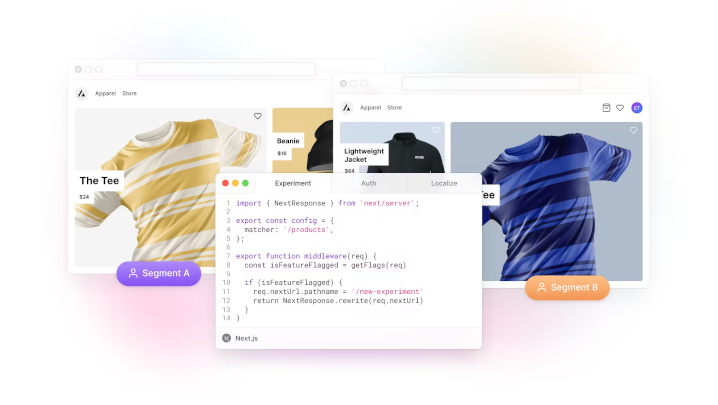
Brand guardrails ship as default for Enterprise, off-by-default pending admin approval. Anthropic enters the crowded AI design space with Claude Design, a tool that lets teams create visual work like interactive prototypes, slide decks, wireframes and marketing collateral through conversation. The product is powered by Claude Opus 4.7, the company's most capable vision model, and is available in research preview for Claude Pro, Max, Team and Enterprise subscribers. According to Anthropic, the tool gives designers more room to explore directions while enabling non-designers to produce polished visual work. Users describe what they need, and Claude generates a first version that can be refined through conversation, inline comments, direct edits or custom sliders. The company said Claude Design can automatically apply a team's design system to every project, maintaining brand consistency across outputs. For Enterprise organizations, the feature is off by default and must be enabled by admins. Anthropic describes the following capabilities for Claude Design: Visual content workflows -- how organizations create, govern and distribute visual content at scale -- is seeing major disruption due to AI tools. The right platform can enable rapid prototyping, automate brand compliance and lead to productivity agains across marketing, design and development teams. Modern AI design platforms ingest and enforce brand systems automatically. Canva's Creative Operating System, for example, integrates brand guidelines, governance controls and AI-powered asset generation within a unified environment, allowing organizations to generate on-brand assets. The move from isolated design tools to integrated creative operating systems reflects how AI automation platforms now integrate with commonly used enterprise applications. These platforms support presentations, video, websites, email and forms within a single canvas. San Francisco-based Anthropic has had a busy two years:

Vercel's security breach started with malware disguised as Roblox cheats
Learn more. This feature uses an automated voice, which may result in occasional errors in pronunciation, tone, or sentiment. Vercel customers are at risk of compromise after an attacker hopped through multiple internal systems to steal credentials and other sensitive data, the company said in a security bulletin Sunday. The attack, which didn't originate at Vercel, showcases the pitfalls of interconnected cloud applications and SaaS integrations with overly privileged permissions. An attacker traversed third-party systems and connections left exposed by employees before it hit the San Francisco-based company that created and maintains Next.js and other popular open-source libraries. Researchers at Hudson Rock said the seeds of the attack were planted in February when a Context.ai employee's computer was infected with Lumma Stealer malware after they searched for Roblox game exploits, a common vector for infostealer deployments. Each of the companies are pinning at least some blame for the attack on the other vendor. Context.ai on Sunday said that breach allowed the attacker to access its AWS environment and OAuth tokens for some users, including a token for a Vercel employee's Google Workspace account. Vercel is not a Context customer, but the Vercel employee was using Context AI Office Suite and granted it full access, the artificial intelligence agent company said. "The attacker used that access to take over the employee's Vercel Google Workspace account, which enabled them to gain access to some Vercel environments and environment variables that were not marked as sensitive," Vercel said in its bulletin. The company said a limited number of its customers are impacted and were immediately advised to rotate credentials. The company, which declined to answer questions, did not specify which internal systems were accessed or fully explain how the attacker gained access to Vercel customers' credentials. Vercel CEO Guillermo Rauch said customer data stored by the company is fully encrypted, yet the attacker got further access through enumeration, or by counting and inventorying specific variables. "We believe the attacking group to be highly sophisticated and, I strongly suspect, significantly accelerated by AI," he said in a post on X. "They moved with surprising velocity and in-depth understanding of Vercel." A threat group identifying themselves as ShinyHunters took responsibility for the attack in a post on Telegram and is attempting to sell the stolen data, which they claim includes access keys, source code and databases. The attacker "is likely an imposter attempting to use an established name to inflate their notoriety," Austin Larsen, principal threat analyst at Google Threat Intelligence, wrote in a LinkedIn post. "Regardless of the threat actor involved, the exposure risk is real." Vercel also warned that the attack on Context's Google Workspace OAuth app "was the subject of a broader compromise, potentially affecting its hundreds of users across many organizations." It published indicators of compromise and encouraged customers to review activity logs, review and rotate variables containing secrets. Context and Vercel said their separate and coordinated investigations into the attack aided by CrowdStrike and Mandiant remain underway.
Polymarket in talks for new investment at US$15 billion valuation
The new deal brings the prediction market startup's value up from US$9 billion last year, when Intercontinental Exchange Inc. (ICE), the parent company of the New York Stock Exchange, took a US$1 billion stake in Polymarket in a blockbuster deal. Polymarket, though, is now worth less than the US$22 billion valuation that its main rival, Kalshi Inc., fetched in a recent US$1 billion fundraising round.
Last year's chaos leads to new rules for Tri-State July 4 celebration
BLUE ASH, Ohio (WKRC) - Changes are coming to Red, White and Blue Ash after an incident last year. Hundreds of juveniles set off fireworks to intentionally cause panic, said police last year. More than a dozen people called 911, fearing there was an active shooter. Police did make some arrests. This year, no one under the age of 18 will be allowed at the Fourth of July celebration without a parent or guardian. Other new safety measures include: * Fenced perimeter with four designated entry and exit points. All entrances will be staffed by security personnel and under camera surveillance * Glendale Milford Road will be closed from E. Lake Forest Dr. to the MadTree property located at 4321 Glendale Milford Rd., beginning at 3:00 p.m. * Additional closures will be implemented along Glendale Milford Rd. as the night progresses. These closures will remain in place until the event has concluded, and traffic has cleared from the area Other changes include: * Restrictions on bags that are in place at Cincinnati stadiums. They must be clear and not exceed the size of 16" x 16" x 8". Small clutches (no larger than 4.5" x6.5") are permitted * Bags will be subject to search * Entrances will open at 3:30 p.m. * No chair drop off prior to entrances opening * No umbrellas "These are significant modifications to the way this event has been carried out in the past," said Blue Ash Communications Coordinator Rachel Murray. "Following an incident at last year's event, we took a close look at ways to enhance both safety and overall guest experience. These updates reflect our commitment to providing a safe, enjoyable experience for all attendees and align with best practices used at major events across the region."

NRG Energy Breaks Below 200-Day Moving Average - Notable for NRG
BNK Invest Inc. provides investment services and information. BNK Invest owns and operates a market news family of websites including DividendChannel, ETFChannel, StockOptionsChannel, and others, which make up an investor community featuring stock message boards, ratings, research, and strategies. BNK Invest caters to investing firms and individual investors internationally.

With planned GPS launch, Space Force turns again to SpaceX amid ULA Vulcan issues
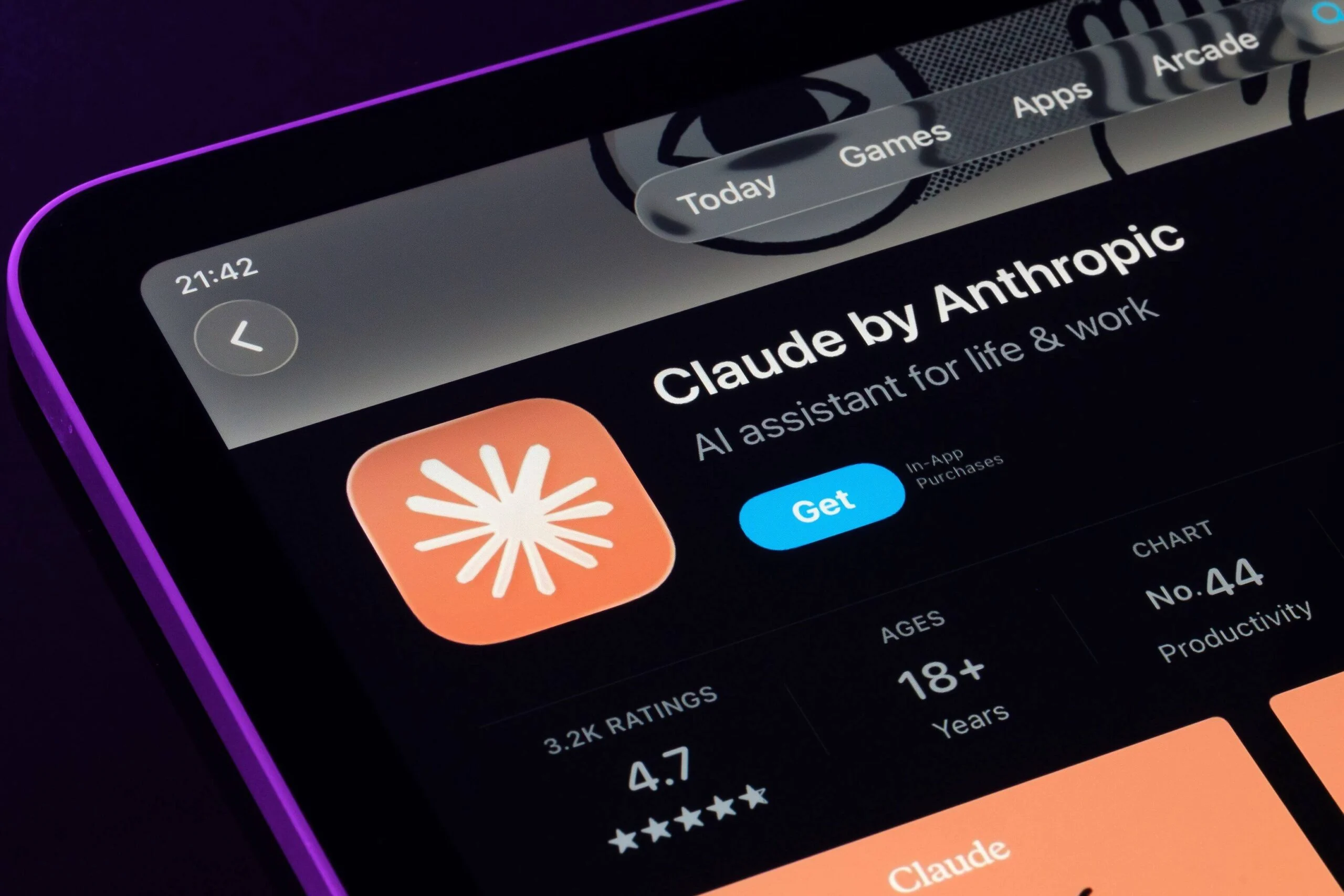
Once again, the Space Force is turning to SpaceX to get its national security hardware into space with a GPS satellite launch planned in the overnight hours early Tuesday. A SpaceX Falcon 9 is aiming to lift off from Cape Canaveral Space Force Station's Space Launch Complex 40 during a 15-minute window that opens at 2:53 a.m. Eastern time on the GPS III-8 mission, headed to medium-Earth orbit.

NSA Accesses Anthropic Model After Pentagon Blacklist - Blockonomi
Anthropic limited Mythos Preview access to about 40 organizations due to offensive cyber capabilities. The National Security Agency has used Anthropic's Mythos Preview despite a Pentagon supply chain risk designation. Axios cited multiple sources who confirmed the agency's access to the model. The report shows internal differences across federal departments over Anthropic technology use. Axios reported that two sources confirmed NSA use of Mythos Preview. One source said the department expanded usage beyond limited internal testing. However, the Pentagon designated Anthropic as a supply chain risk in March. The designation restricted the company's technology in military contracts after a policy dispute. The dispute centered on Anthropic's refusal to loosen safeguards. The company declined to adjust controls linked to autonomous weapons and domestic surveillance systems. As a result, the Pentagon limited procurement pathways for Anthropic products. Still, Axios reported that the NSA accessed Mythos through existing channels. The report did not explain the technical route used for access. However, it confirmed that usage occurred after the risk designation. Axios stated that it remains unclear how the NSA deployed the model. Yet, other authorized organizations have used Mythos to scan systems for vulnerabilities. Anthropic limited Mythos Preview access to about 40 organizations. The company restricted access because of the model's offensive cyber capabilities. Sources told Axios that the NSA relied on the model's security testing features. They did not describe operational outcomes or contract values. The report did not state whether the NSA violated formal procurement rules. It also did not clarify if the usage involved classified systems. The White House has explored options to work with Anthropic despite the ongoing court dispute. Axios reported that discussions took place at senior levels. Anthropic CEO Dario Amodei met White House Chief of Staff Susie Wiles. He also met Treasury Secretary Scott Bessent to discuss government usage. Axios reported that Amodei addressed Mythos access and broader security practices. The outlet cited a source familiar with the meeting. The meeting occurred while the court fight over the Pentagon designation continued. However, officials have not announced any policy change. The White House did not publicly outline next steps. Still, the talks showed active engagement with Anthropic leadership. Anthropic has defended its safeguards in previous statements. The company has said it maintains strict controls over high-risk applications. Pentagon officials have not rescinded the supply chain risk designation. Therefore, formal contract limits remain in place. Axios reported that agency-level adoption may differ from procurement policy. However, it did not provide internal compliance details.
With planned GPS launch, Space Force turns again to SpaceX amid ULA Vulcan issues
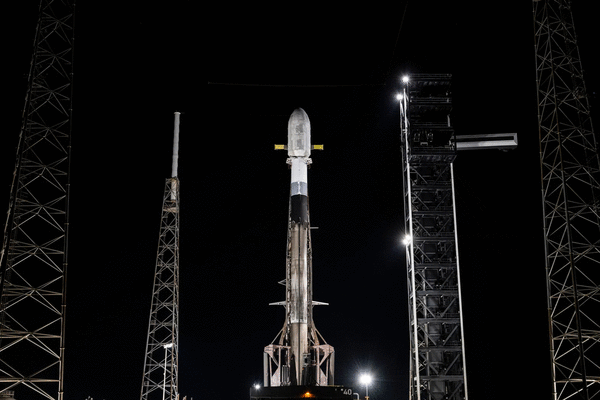
By clicking submit, I authorize Arcamax and its affiliates to: (1) use, sell, and share my information for marketing purposes, including cross-context behavioral advertising, as described in our Privacy Policy , (2) add to information that I provide with other information like interests inferred from web page views, or data lawfully obtained from data brokers, such as past purchase or location data, or publicly available data, (3) contact me or enable others to contact me by email or other means with offers for different types of goods and services, and (4) retain my information while I am engaging with marketing messages that I receive and for a reasonable amount of time thereafter. I understand I can opt out at any time through an email that I receive, or by clicking here Once again, the Space Force is turning to SpaceX to get its national security hardware into space with a GPS satellite launch planned in the overnight hours early Tuesday. A SpaceX Falcon 9 is aiming to lift off from Cape Canaveral Space Force Station's Space Launch Complex 40 during a 15-minute window that opens at 2:53 a.m. Eastern time on the GPS III-8 mission, headed to medium-Earth orbit. The launch comes after a one-day delay because of severe weather Monday morning. Space Launch Delta 45's weather squadron forecasts a 90% chance for good conditions Tuesday, but those chances drop slightly to 85% if delayed to Wednesday morning. The first-stage booster for the flight is making its seventh trip to space and will aim for a recovery landing downrange on the droneship Just Read the Instructions stationed in the Atlantic. This is the last of the GPS III series built by Lockheed Martin. It's heading up to become part of 32 active satellites in orbit at about 11,000 miles altitude, with the most recent having about 15-year lifespan, according to Space Force Col. Stephen Hobbs, commander of Mission Delta 31, who heads up the GPS satellite program. "Closing out the GPS III block is not the end of the story, but rather it's a foundation for what comes next," he said. "We're excited to turn the page and continue advancing our mission with the GPS 3F generation, bringing even greater capability to the joint force and to the global users who rely on this system every single day." The first of the new GPS IIIF satellites is expected to launch in 2027. For now, it's assigned to launch on a ULA Vulcan, but it's possible the Space Force may need to switch it to SpaceX. That's been the move the Space Force has done for this GPS mission as well as three previous, starting with the Rapid Response Trailblazer launch in December 2024 and followed by the GPS III-8 mission in May 2025 and GPS III-9 mission this past January. One benefit of the switch has been testing out how quickly Lockheed Martin and SpaceX can get a satellite ready and into space. It's been only three months since the last SpaceX launch of a GPS satellite, said Anne Mason, SpaceX's director of its National Security Space Launch program. The company has launched nine of the 10 satellites in this GPS III constellation, including four in the last 16 months, "all on accelerated timelines for the Space Force, each time decreasing our rapid response while it's still ensuring safe delivery to orbit." She credited SpaceX's fleet of flight-ready Falcon 9 rockets. "It's important to emphasize that our launch cadence and reliability is only made possible with our laser focus on safety for every national security mission," she said. The satellite, which is the 10th of the GPS III series, has been nicknamed "Hedy Lamarr" by the Space Force, in honor of the Hollywood actress and Florida resident who was also the inventor alongside composer George Antheil of a patented frequency-hopping technology in 1941 that laid the foundation for modern wireless communication. Fang Qian, Lockheed Martin's vice president of its GPS program, said this satellite will feature anti-jam capability that's eight times stronger and three times more accurate than the legacy spacecraft on orbit today. It will also be the first GPS satellite equipped with optical cross-link technology, which for now will be tested with ground stations, but in the future would allow for satellites in the constellation to communicate with one another, a safeguard against interruptions in communication from Earth. It also has a more robust atomic clock that allows for more precision timekeeping. "These payloads go beyond incremental gains and are aimed at establishing a foundation for the next generation IIIF satellites," she said. Lockheed Martin is contracted for the first 22 of up to another 32 satellites in the GPS IIIF series. USSF Col. Ryan Hiserote, the National Security Space Launch program manager and commander of Space Systems Command's System Delta 80, said the GPS constellation serves the military, but is one of the most beneficial to the civilian population. "This system is the gold standard for global navigation, and this launch ensures its continued service for billions of users and guarantees a tactical edge for our war fighters around the world," he said. SpaceX has been the Space Force's go-to launch provider of late, as United Launch Alliance's Vulcan rocket suffered an issue with its boosters on its only flight this year, the USSF-87 mission in February. That mission as well as Tuesday's GPS launch are among those awarded under the NSSL Phase 2 contract, which handed out 48 task orders between fiscal years 2020-2024. All of those missions were targeting launches between 2022-26, but so far only 14 have flown so far. SpaceX, which only received 22 of the 48 contracts, has managed 11 of those with Tuesday's GPS launch marking its 12th. ULA, though, was delayed because of development issues with its Vulcan rocket, a replacement for its Atlas V and Delta IV class of rockets. Vulcan only made its debut in 2024 and didn't receive certification until spring 2025, so its first national security mission came three years late. ULA has since only managed two Vulcan national security launches. The last one, though, saw the nozzle on one of its solid rocket boosters burn through on liftoff, and despite the rocket getting its Space Force payload to orbit, officials said they would halt Vulcan launches until ULA figured out its booster problem. Vulcan's issues are putting a damper on Space Force's needs, said Hiserote. "The Vulcan Anomaly certainly throw a wrench into our plan manifest," he said. "We're continuing to evaluate that. You know, how many we get to this year? I couldn't tell you at this time, so we'll keep everyone apprised of status as much as we can. But you know, we're kind of still investigating that." With Vulcan still tasked with 23 of those Phase 2 launches (one mission -- a nuclear propulsion spacecraft test flight -- has since been canceled), the Space Force has also been handing to SpaceX the lion's share of task orders for the new five-year round of contracts -- Phase 3 -- that began to be awarded in fiscal year 2025. Two years into that contract, SpaceX has been given 12 of 16 task orders total with ULA getting the other four. Blue Origin's New Glenn is technically open for the lucrative orders as well, but its heavy-lift rocket is taking a long track to certification opting for a four-launch approach as opposed to the normal two launches required by the Space Force. But even that path for Blue Origin has hit a bump in the road after this past Sunday's NG-3 mission saw a failure in its upper stage that left its payload in too low of an orbit. The Federal Aviation Administration has since grounded New Glenn after classifying the mission as a "mishap" that requires an investigation. It just adds to the Space Force's potential headaches down the line as it tries to knock out its long list of missions, but with only one active launch provider available at the moment. After Tuesday's launch, the Space Force already has 55 missions among all providers on order through 2029, with at least another 50 missions to be assigned in the next three years. All three of SpaceX, ULA and Blue Origin are expected to eventually cash in on the fully promised amount that tops $13.7 billion under Phase 3's "Lane 2" missions, a more demanding slate of flights for which only SpaceX's Falcon 9, Falcon Heavy, ULA's Vulcan and Blue Origin's New Glenn are eligible. When announced, the Space Force said from that total, it would dole out to SpaceX more than $5.9 billion, ULA more than $5.3 billion and Blue Origin nearly $2.4 billion among more than 54 expected "Lane 2" missions to be awarded through fiscal year 2029. This is on top of a less demanding side set of missions called "Lane 1" worth another $5.6 billion across 30 orders that conceivably opens the door for less proven providers, like Rocket Lab and Firefly Aerospace, on top of the traditional providers. Thus far, though, the Space Force has still awarded all of those missions to SpaceX. The general timeline has been for missions to be flown two to three years after they are awarded. "As the Vulcan anomaly investigation is going on, we are continuing to look at the manifest writ large," Hiserote said. "But as far as predicting out launch dates and things like that for next year and beyond, we're not ready to talk about about that." _____
SpaceX Prods FCC to 'Act Now' to Blunt Europe's 'Protectionist' Satellite Plan
SpaceX is pushing the FCC to go after the European Union over concerns it'll enact new regulations that threaten to block Starlink and other US satellite companies. "The Commission should not wait for the situation to deteriorate further but should act now to establish clear policies that discourage foreign administrations from adopting protectionist policies," the company told the FCC in a letter last week. At issue is the EU's proposed Space Act to regulate EU and non-EU satellite operators, including "giga-constellations" such as Starlink. Last month, FCC Chair Brendan Carr indicated that he views the proposed regulation as protectionist and warned that the commission could respond with "reciprocity" by blocking European satellite companies from the US market. However, SpaceX is urging the FCC to dial up the pressure by codifying the reciprocity threat into actual policy. "If the Commission takes no action until after the EU implements these protectionist policies, it will be left with little option but to impose reciprocal restrictions on EU-licensed satellite operators," the company wrote in an 8-page letter. "By clarifying its market access policies now, the Commission may head off an escalating trade war before it occurs." SpaceX is pushing for tit-for-tat rules, arguing that "the protectionist push in Europe is clear and strong," and might provoke other foreign governments to enact similar policies. "The United States cannot afford to take this concerted effort lightly or to passively wait to see what happens." SpaceX has complained that the EU's Space Act would "impose unnecessarily burdensome obligations," which the company previously flagged as "incorrect, inflexible, or infeasible." This appears to include how EU rules would require Starlink to limit satellite brightness to "at least 7 magnitude," or what SpaceX says is a "technical infeasibility." The draft rules also give the EU the power to conduct on-site inspections, noted Tim Belfall, a director at UK-based Starlink installer Westend WiFi. In its letter, SpaceX says it doesn't want a trade war, only to "preserve" open-access policies for satellite operators. "The clear and growing threat of protectionist policies abroad illustrates that wishful thinking and naïve optimism alone will not achieve this outcome," the letter adds. The company took the hardline approach while alleging that rival US satellite operator Viasat plans to "weaponize protectionist policies abroad against other US operators." SpaceX even urged the FCC to sanction US satellite companies that "advocate for and benefit from protectionist policies" by treating them as foreign providers. "Viasat advances these anticompetitive scare tactics towards an obvious end: to market its own services as an alternative," SpaceX adds. "Viasat peddles 'state-of-the-art, low-cost GSO [geostationary] satellites' that Viasat falsely claims 'can deliver the same speeds and prices to users' as LEO constellations, as well as state sovereign systems (for which Viasat offers turnkey solutions)." Viasat didn't immediately respond to a request for comment. But the company told the commission earlier this month that it's important to distinguish protectionist policies from "legitimate substantive requirements" from foreign regulators. "For example, there are legitimate reasons why a WTO [World Trade Organization] member country might require satellite operators seeking to serve its market to meet orbital safety and sustainability requirements that have not been adopted in the United States (such as limits on aggregate collision risk)," Viasat said. "Certain US operators might not like those requirements, and might be unwilling or unable to comply with them, but that does not mean that those requirements are inherently unreasonable or discriminatory barriers to market access, or that the US should respond by abandoning the WTO presumption." The FCC has been soliciting public comment on the topic as it considers new proposals focused on satellite market access reciprocity. The EU also released an updated draft of the Space Act, which some critics have slammed as being too vague or adding rules that could block US companies from complying.

Explainer-What do we know about Anthropic's Mythos amid rising concerns?
April 20 (Reuters) - Anthropic earlier this month debuted Mythos, its most advanced AI model to date, equipped with sophisticated capabilities and designed for defensive cybersecurity tasks. Mythos' vast capabilities have sparked fears about the threat to traditional software security after the AI startup said the preview had uncovered "thousands" of major vulnerabilities in "every major operating system and web browser." HOW WAS THE MODEL LAUNCHED AND WHO HAD ACCESS TO IT? Anthropic has rolled out Claude Mythos Preview through a controlled initiative called "Project Glasswing", granting access to tech majors including Amazon, Microsoft, Nvidia and Apple. The company also extended access to a group of more than 40 additional organizations that build or maintain critical software infrastructure. WHAT ARE THE CONCERNS AROUND MYTHOS? Experts warned that the model can identify and exploit previously unknown vulnerabilities faster than companies can repair them. Its advanced coding and autonomous capabilities could dramatically accelerate sophisticated cyberattacks, particularly in sectors such as banking that rely on complex, interconnected and often decades-old technology systems, they have said. While debuting Mythos, Anthropic said the model's ability to find software flaws at scale could, if misused, pose serious risks to economies, public safety and national security. U.S. software stocks tumbled on April 9 after the Mythos launch on April 7 reignited fears that advances in AI could disrupt traditional firms. WHAT HAS THE WHITE HOUSE AND REGULATORS SAID ABOUT MYTHOS? The White House has held discussions with Anthropic CEO Dario Amodei about Mythos, with officials saying they talked about collaboration, cybersecurity and balancing AI innovation with safety. The talks were held despite the Pentagon slapping a formal supply-chain risk designation on Anthropic. The U.S. government is planning to make a version of Mythos available to major federal agencies, Bloomberg News has reported. Reuters reported that U.S. Treasury Secretary Scott Bessent and Federal Reserve Chair Jerome Powell held a meeting with CEOs of major U.S. banks to brief them on the potential risks from the model. The model also raised alarm bells in Britain, with authorities holding talks with major banks and cybersecurity officials to assess possible risks. Banks are in close contact with their European regulators regarding Mythos, Christian Sewing, president of the German banking association and CEO of Deutsche Bank, said. (Reporting by Harshita Mary Varghese in Bengaluru)

SpaceX Prods FCC to 'Act Now' to Blunt Europe's 'Protectionist' Satellite Plan
SpaceX is pushing the FCC to go after the European Union over concerns it'll enact new regulations that threaten to block Starlink and other US satellite companies. "The Commission should not wait for the situation to deteriorate further but should act now to establish clear policies that discourage foreign administrations from adopting protectionist policies," the company told the FCC in a letter last week. At issue is the EU's proposed Space Act to regulate EU and non-EU satellite operators, including "giga-constellations" such as Starlink. Last month, FCC Chair Brendan Carr indicated that he views the proposed regulation as protectionist and warned that the commission could respond with "reciprocity" by blocking European satellite companies from the US market. However, SpaceX is urging the FCC to dial up the pressure by codifying the reciprocity threat into actual policy. "If the Commission takes no action until after the EU implements these protectionist policies, it will be left with little option but to impose reciprocal restrictions on EU-licensed satellite operators," the company wrote in an 8-page letter. "By clarifying its market access policies now, the Commission may head off an escalating trade war before it occurs." SpaceX is pushing for tit-for-tat rules, arguing that "the protectionist push in Europe is clear and strong," and might provoke other foreign governments to enact similar policies. "The United States cannot afford to take this concerted effort lightly or to passively wait to see what happens." SpaceX has complained that the EU's Space Act would "impose unnecessarily burdensome obligations," which the company previously flagged as "incorrect, inflexible, or infeasible." This appears to include how EU rules would require Starlink to limit satellite brightness to "at least 7 magnitude," or what SpaceX says is a "technical infeasibility." The draft rules also give the EU the power to conduct on-site inspections, noted Tim Belfall, a director at UK-based Starlink installer Westend WiFi. In its letter, SpaceX says it doesn't want a trade war, only to "preserve" open-access policies for satellite operators. "The clear and growing threat of protectionist policies abroad illustrates that wishful thinking and naïve optimism alone will not achieve this outcome," the letter adds. The company took the hardline approach while alleging that rival US satellite operator Viasat plans to "weaponize protectionist policies abroad against other US operators." SpaceX even urged the FCC to sanction US satellite companies that "advocate for and benefit from protectionist policies" by treating them as foreign providers. "Viasat advances these anticompetitive scare tactics towards an obvious end: to market its own services as an alternative," SpaceX adds. "Viasat peddles 'state-of-the-art, low-cost GSO [geostationary] satellites' that Viasat falsely claims 'can deliver the same speeds and prices to users' as LEO constellations, as well as state sovereign systems (for which Viasat offers turnkey solutions)." Viasat didn't immediately respond to a request for comment. But the company told the commission earlier this month that it's important to distinguish protectionist policies from "legitimate substantive requirements" from foreign regulators. "For example, there are legitimate reasons why a WTO [World Trade Organization] member country might require satellite operators seeking to serve its market to meet orbital safety and sustainability requirements that have not been adopted in the United States (such as limits on aggregate collision risk)," Viasat said. "Certain US operators might not like those requirements, and might be unwilling or unable to comply with them, but that does not mean that those requirements are inherently unreasonable or discriminatory barriers to market access, or that the US should respond by abandoning the WTO presumption." The FCC has been soliciting public comment on the topic as it considers new proposals focused on satellite market access reciprocity. The EU also released an updated draft of the Space Act, which some critics have slammed as being too vague or adding rules that could block US companies from complying.

With planned GPS launch, Space Force turns again to SpaceX amid ULA Vulcan issues
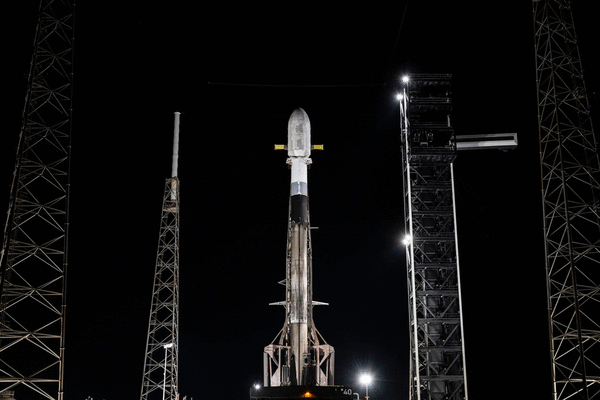
By clicking submit, I authorize Arcamax and its affiliates to: (1) use, sell, and share my information for marketing purposes, including cross-context behavioral advertising, as described in our Privacy Policy , (2) add to information that I provide with other information like interests inferred from web page views, or data lawfully obtained from data brokers, such as past purchase or location data, or publicly available data, (3) contact me or enable others to contact me by email or other means with offers for different types of goods and services, and (4) retain my information while I am engaging with marketing messages that I receive and for a reasonable amount of time thereafter. I understand I can opt out at any time through an email that I receive, or by clicking here Once again, the Space Force is turning to SpaceX to get its national security hardware into space with a GPS satellite launch planned in the overnight hours early Tuesday. A SpaceX Falcon 9 is aiming to lift off from Cape Canaveral Space Force Station's Space Launch Complex 40 during a 15-minute window that opens at 2:53 a.m. Eastern time on the GPS III-8 mission, headed to medium-Earth orbit. The launch comes after a one-day delay because of severe weather Monday morning. Space Launch Delta 45's weather squadron forecasts a 90% chance for good conditions Tuesday, but those chances drop slightly to 85% if delayed to Wednesday morning. The first-stage booster for the flight is making its seventh trip to space and will aim for a recovery landing downrange on the droneship Just Read the Instructions stationed in the Atlantic. This is the last of the GPS III series built by Lockheed Martin. It's heading up to become part of 32 active satellites in orbit at about 11,000 miles altitude, with the most recent having about 15-year lifespan, according to Space Force Col. Stephen Hobbs, commander of Mission Delta 31, who heads up the GPS satellite program. "Closing out the GPS III block is not the end of the story, but rather it's a foundation for what comes next," he said. "We're excited to turn the page and continue advancing our mission with the GPS 3F generation, bringing even greater capability to the joint force and to the global users who rely on this system every single day." The first of the new GPS IIIF satellites is expected to launch in 2027. For now, it's assigned to launch on a ULA Vulcan, but it's possible the Space Force may need to switch it to SpaceX. That's been the move the Space Force has done for this GPS mission as well as three previous, starting with the Rapid Response Trailblazer launch in December 2024 and followed by the GPS III-8 mission in May 2025 and GPS III-9 mission this past January. One benefit of the switch has been testing out how quickly Lockheed Martin and SpaceX can get a satellite ready and into space. It's been only three months since the last SpaceX launch of a GPS satellite, said Anne Mason, SpaceX's director of its National Security Space Launch program. The company has launched nine of the 10 satellites in this GPS III constellation, including four in the last 16 months, "all on accelerated timelines for the Space Force, each time decreasing our rapid response while it's still ensuring safe delivery to orbit." She credited SpaceX's fleet of flight-ready Falcon 9 rockets. "It's important to emphasize that our launch cadence and reliability is only made possible with our laser focus on safety for every national security mission," she said. The satellite, which is the 10th of the GPS III series, has been nicknamed "Hedy Lamarr" by the Space Force, in honor of the Hollywood actress and Florida resident who was also the inventor alongside composer George Antheil of a patented frequency-hopping technology in 1941 that laid the foundation for modern wireless communication. Fang Qian, Lockheed Martin's vice president of its GPS program, said this satellite will feature anti-jam capability that's eight times stronger and three times more accurate than the legacy spacecraft on orbit today. It will also be the first GPS satellite equipped with optical cross-link technology, which for now will be tested with ground stations, but in the future would allow for satellites in the constellation to communicate with one another, a safeguard against interruptions in communication from Earth. It also has a more robust atomic clock that allows for more precision timekeeping. "These payloads go beyond incremental gains and are aimed at establishing a foundation for the next generation IIIF satellites," she said. Lockheed Martin is contracted for the first 22 of up to another 32 satellites in the GPS IIIF series. USSF Col. Ryan Hiserote, the National Security Space Launch program manager and commander of Space Systems Command's System Delta 80, said the GPS constellation serves the military, but is one of the most beneficial to the civilian population. "This system is the gold standard for global navigation, and this launch ensures its continued service for billions of users and guarantees a tactical edge for our war fighters around the world," he said. SpaceX has been the Space Force's go-to launch provider of late, as United Launch Alliance's Vulcan rocket suffered an issue with its boosters on its only flight this year, the USSF-87 mission in February. That mission as well as Tuesday's GPS launch are among those awarded under the NSSL Phase 2 contract, which handed out 48 task orders between fiscal years 2020-2024. All of those missions were targeting launches between 2022-26, but so far only 14 have flown so far. SpaceX, which only received 22 of the 48 contracts, has managed 11 of those with Tuesday's GPS launch marking its 12th. ULA, though, was delayed because of development issues with its Vulcan rocket, a replacement for its Atlas V and Delta IV class of rockets. Vulcan only made its debut in 2024 and didn't receive certification until spring 2025, so its first national security mission came three years late. ULA has since only managed two Vulcan national security launches. The last one, though, saw the nozzle on one of its solid rocket boosters burn through on liftoff, and despite the rocket getting its Space Force payload to orbit, officials said they would halt Vulcan launches until ULA figured out its booster problem. Vulcan's issues are putting a damper on Space Force's needs, said Hiserote. "The Vulcan Anomaly certainly throw a wrench into our plan manifest," he said. "We're continuing to evaluate that. You know, how many we get to this year? I couldn't tell you at this time, so we'll keep everyone apprised of status as much as we can. But you know, we're kind of still investigating that." With Vulcan still tasked with 23 of those Phase 2 launches (one mission -- a nuclear propulsion spacecraft test flight -- has since been canceled), the Space Force has also been handing to SpaceX the lion's share of task orders for the new five-year round of contracts -- Phase 3 -- that began to be awarded in fiscal year 2025. Two years into that contract, SpaceX has been given 12 of 16 task orders total with ULA getting the other four. Blue Origin's New Glenn is technically open for the lucrative orders as well, but its heavy-lift rocket is taking a long track to certification opting for a four-launch approach as opposed to the normal two launches required by the Space Force. But even that path for Blue Origin has hit a bump in the road after this past Sunday's NG-3 mission saw a failure in its upper stage that left its payload in too low of an orbit. The Federal Aviation Administration has since grounded New Glenn after classifying the mission as a "mishap" that requires an investigation. It just adds to the Space Force's potential headaches down the line as it tries to knock out its long list of missions, but with only one active launch provider available at the moment. After Tuesday's launch, the Space Force already has 55 missions among all providers on order through 2029, with at least another 50 missions to be assigned in the next three years. All three of SpaceX, ULA and Blue Origin are expected to eventually cash in on the fully promised amount that tops $13.7 billion under Phase 3's "Lane 2" missions, a more demanding slate of flights for which only SpaceX's Falcon 9, Falcon Heavy, ULA's Vulcan and Blue Origin's New Glenn are eligible. When announced, the Space Force said from that total, it would dole out to SpaceX more than $5.9 billion, ULA more than $5.3 billion and Blue Origin nearly $2.4 billion among more than 54 expected "Lane 2" missions to be awarded through fiscal year 2029. This is on top of a less demanding side set of missions called "Lane 1" worth another $5.6 billion across 30 orders that conceivably opens the door for less proven providers, like Rocket Lab and Firefly Aerospace, on top of the traditional providers. Thus far, though, the Space Force has still awarded all of those missions to SpaceX. The general timeline has been for missions to be flown two to three years after they are awarded. "As the Vulcan anomaly investigation is going on, we are continuing to look at the manifest writ large," Hiserote said. "But as far as predicting out launch dates and things like that for next year and beyond, we're not ready to talk about about that." _____
Apple: Perplexity Computer Ships What Siri Could Not (NASDAQ:AAPL)
Perplexity's win over Siri highlights how Apple is still struggling with its localized AI strategy. Apple, Inc. (AAPL) stock has almost doubled in the past 5 years. For a mature, well-established tech giant, this has been great. That said, as an Apple consumer, I cannot bring myself to justify the integration of AI features/tools into its products. I use a 2025 Dilantha De Silva is an experienced equity analyst and investment researcher with over 10 years in the investment industry. He writes insightful articles for Seeking Alpha, GuruFocus, TipRanks, and ValueWalk, with a significant following on Seeking Alpha. Dilantha's expertise spans across various sectors, with a particular focus on small-cap stocks that are overlooked by Wall Street analysts. He is a CFA Level III candidate and holds qualifications from the Chartered Institute for Securities and Investment (CISI). Dilantha has been featured on CNBC and Bloomberg, and his work has been prominently showcased on Nasdaq, Yahoo Finance, and other leading investment platforms. When not analyzing stocks and writing, Dilantha is involved in private equity transactions, including acquiring and managing businesses. Analyst's Disclosure: I/we have no stock, option or similar derivative position in any of the companies mentioned, and no plans to initiate any such positions within the next 72 hours. I wrote this article myself, and it expresses my own opinions. I am not receiving compensation for it (other than from Seeking Alpha). I have no business relationship with any company whose stock is mentioned in this article. Seeking Alpha's Disclosure: Past performance is no guarantee of future results. No recommendation or advice is being given as to whether any investment is suitable for a particular investor. Any views or opinions expressed above may not reflect those of Seeking Alpha as a whole. Seeking Alpha is not a licensed securities dealer, broker or US investment adviser or investment bank. Our analysts are third party authors that include both professional investors and individual investors who may not be licensed or certified by any institute or regulatory body.