News & Updates
The latest news and updates from companies in the WLTH portfolio.
Anthropic Drops 'Figma-Killer' as Canva Goes All-In on AI
eWeek content and product recommendations are editorially independent. We may make money when you click on links to our partners. Learn More Anthropic Drops 'Figma-Killer' as Canva Goes All-In on AI At Canva Create last week, COO Cliff Obrecht told 265 million users: "Until now, Canva has been a design platform with AI tools. Now we become an AI platform with design tools." Canva AI 2.0 landed alongside the speech: describe a 12-page Morocco planning deck in plain English, get editable vectors back. The same day, Anthropic CPO Mike Krieger resigned from Figma's board ahead of Anthropic shipping competing design software. Figma's stock did not have a great afternoon. So what is Anthropic's supposed "Figma-Killer?" Claude Design, which launched last Friday, powered by Opus 4.7's vision capabilities. The company pitched it as a way to collaborate with Claude on polished visual work the way you already use it for code. Here are the details * Claude Design is available to Pro, Max, Team, and Enterprise users at claude.ai/design. * Three features stand out: it reads your codebase to build a persistent design system, captures elements from any live site, and packages finished designs as a handoff bundle for Claude Code. * Exports go to Canva, PDF, PPTX, standalone HTML, or a private company URL. * Adobe, Wix, and yes, poor Figma, all had their stocks drop on the news. Why this matters Developers are already playing around and flexing with it on X: * Ran Segall built a homeschooling app he called 10x better than Lovable or Replit. * Jerrod Lew assembled a personal dashboard OS in two prompts. * Anthropic designer Ryan Mather posted a 7-tip guide that's the best walkthrough so far. * Canva's CEO even endorsed the integration at launch! But the reaction in r/ClaudeAI landed closer to "resounding meh." Their concerns, in brief: * Every generated app looks identical, right down to the serif font, the blinking status dot, colored accent bars, and what one commenter called "container soup" of pills and cards. * Users figured out that Claude Design pulls from Claude's built-in frontend design skill, with a handful of default presets. * Unless you upload reference screenshots or your own design tokens, the output "screams I just used one Claude prompt." * One commenter also flagged that two to three full prompts can exhaust weekly Pro limits, which tracks with this week's broader compute-rationing story. Our take The teal-aesthetic problem is a preview of the bigger Claude problem that blew up this weekend. The r/ClaudeCode backlash thread on Opus 4.7 (1.7K upvotes, nicknamed "Gaslightus 4.7") reports the model inventing files, defending hallucinated test results across 10 turns, and obsessively checking benign PowerPoint templates for malware. One user's 17/29 eval stayed stuck while Opus kept inventing fresh reasons it was right. So Anthropic shipped a design tool and a frontier model in the same week; the same opinionated defaults are baked into both. This is Anthropic, we're talking about here, though. They're arguably the most opinionated AI company out there. So what did you expect? On the model front, expect some updates to fix some of these issues ASAP. If they don't... the newly revamped Codex could clean house with Claude's last remaining dearly devoted devs... As the meme goes: 4.8 wen?? Editor's note: This content originally ran in the newsletter of our sister publication, The Neuron. To read more from The Neuron, sign up for its newsletter here.
Vercel Confirms Major Security Incident as Hacker Claims $2M Ransom Demand - IT Security News
The technical storage or access is necessary for the legitimate purpose of storing preferences that are not requested by the subscriber or user. The technical storage or access that is used exclusively for statistical purposes. The technical storage or access that is used exclusively for anonymous statistical purposes. Without a subpoena, voluntary compliance on the part of your Internet Service Provider, or additional records from a third party, information stored or retrieved for this purpose alone cannot usually be used to identify you.

Anthropic's Claude Fuels Piraeus Bank's Bold AI Overhaul Amid Global Model Alarms
Greece's Piraeus Bank just flipped the switch on a new AI hub powered by Anthropic's Claude models. The move marks a sharp pivot from scattered pilots to bank-wide deployment. Piraeus, with €91 billion in assets as of late 2025 and 368 branches across the country, teamed up with Accenture and Anthropic to centralize AI design, development, and rollout. This hub targets operations, customer service, risk controls, and compliance -- core pain points for any major lender. Piraeus Group press release lays it out plainly: the setup integrates Accenture's Athens-based Data & AI Center with Piraeus's own roadmap, all on top of a prior cloud migration to Microsoft Azure. Harry Margaritis, Piraeus group chief operating officer, didn't mince words. "The AI Hub represents a strategic inflection point for Piraeus," he said. "We are advancing from individual AI deployments to a unified, enterprise-level capability that is deeply embedded in how the Bank operates." His team plans to hire specialists and train staff via Udacity, Accenture's AI-focused platform. Expect AI to handle decision support and process streamlining soon. And it's all built with human oversight front and center. But here's the twist. The announcement drops as regulators worldwide scramble over Anthropic's Claude Mythos, a model tagged too risky for public use because it spots and exploits software flaws with eerie speed. US Treasury Secretary Scott Bessent and Fed Chair Jerome Powell called in CEOs from Goldman Sachs, Bank of America, Citigroup, Morgan Stanley, and Wells Fargo last week to hash out cyber defenses, according to The Guardian. UK Bank of England Governor Andrew Bailey called the AI pace "a very serious challenge for all of us," per Retail Banker International. Canadian banks met regulators too. Mythos stays locked down, but banks get controlled access to probe vulnerabilities. Piraeus presses ahead anyway. Thomas Remy, Anthropic's head for Southern Europe, Middle East, and Africa, praised the fit. "Claude is built with the safety, reliability and transparency that highly regulated industries like banking demand," he told reporters. Accenture's new Anthropic Business Group handles the tech side, ensuring outputs match Piraeus values and EU rules. George Pallioudis, Accenture's financial services lead, highlighted the "deep and longstanding relationship" that started back in 2021 with a three-year cloud push alongside Microsoft. That effort boosted digital delivery, security, and efficiency -- now AI layers on top. Accenture's 2021 release confirms the groundwork. Scale matters here. Piraeus employs 8,100 people. Embedding AI means reskilling at pace. The hub promises human-centric tools that automate grunt work without cutting corners on trust. Risk management gets a lift just as cyber threats spike from models like Mythos. Regulators want safeguards; Piraeus delivers them baked in. This isn't isolated. Banks chase AI hard. Commonwealth Bank of Australia expanded with Anthropic in March, per Retail Banker International. Piraeus pledged €200 million for AI over three years last fall, eyeing biometric logins and real-time trading. But Greece's lender stands out by tying it to a dedicated hub. Competitors watch closely. Risks loom large, though. Mythos exposed holes in every big OS and browser, sparking crisis huddles from Washington to London. Adaptive Security notes Anthropic published details anyway, handing hackers a roadmap. Piraeus bets Claude's guardrails hold. Early signs: strong governance, transparency, human control. And the payoff? Faster decisions. Smoother customer flows. Tighter compliance. Margaritis again: "This initiative empowers our people, reinforces trust with our customers and regulators." In a sector where downtime costs millions, that's gold. Piraeus positions as Greece's AI banking frontrunner. Others will follow -- or lag. So Piraeus charges forward. Timing feels perfect. Or precarious. Banks can't ignore AI. But with Mythos alarms blaring, execution decides winners. Greece's biggest bank aims to lead.

Sergey Brin's Strike Team: Google's Desperate Push to Catch Anthropic in AI Coding Supremacy
Google DeepMind has launched a strike team. The mission: overhaul its AI coding models. Pressure mounts from Anthropic's Claude. Sources say Google's Gemini lags badly. Three people with direct knowledge reveal the details. The team pulls researchers and engineers from across DeepMind. Sebastian Borgeaud leads. He's a research engineer who once headed pretraining for Gemini. The Information broke the story first. Sergey Brin jumps in personally. The co-founder tells staff to "aggressively pivot." He pushes for speed in agentic AI -- systems handling multi-step tasks like full software builds. DeepMind CTO Koray Kavukcuoglu joins too. Brin sees coding gains as a path to self-improving AI. An "AI takeoff," he calls it internally. Why now? Anthropic's tools shine brighter. DeepMind researchers admit Claude outperforms Gemini on coding. OpenAI nips close behind. Google generates about 50% of its code with AI. Rivals hit nearly 100%. That's a gap Brin won't tolerate. Inside the Code War Google tracks it all with an internal leaderboard. It measures engineers' token spend on coding agents. Like Meta's setup. But adoption stalls. Engineers stick to tools like Gemini CLI and Antigravity IDE. Those handle basics. Rivals automate entire workflows. The strike team targets long-context tasks. Think understanding massive codebases. Writing complete files. Training taps Google's hoard: over 2 billion lines of proprietary code. No public dataset matches that scale. Yet Google trails. Anthropic turns Claude into a research force multiplier. OpenAI does the same. Brin demands mandatory use of internal agents for complex jobs. No more half-measures. The goal stretches further: AI that codes its own upgrades. Recursive self-improvement. Automate R&D entirely. Recent moves hint at progress. Google tests "Agent Smith" internally. It tackles coding workflows with minimal input. Brin uses a personal version for email. Developer Tech reported the town hall details. Antigravity, the AI-first IDE, pairs with Gemini 3 models. But benchmarks show Claude ahead on agentic execution. And here's the kicker. Google claims 25% of new code comes from AI already. Chief Scientist Jeff Dean said so last year. Now they aim higher. Rivals force the hand. Numbers tell the tale. VentureBeat notes 43% of AI-generated code needs debugging in production. CEOs like Sundar Pichai boast 25% at Google. Satya Nadella echoes for Microsoft. But quality lags. Strike team fixes that. Competitors evolve fast. Anthropic's Claude leads coding leaderboards. OpenAI's o1-mini crushes math and code. Google rolls Gemini 2.0 Flash -- twice as fast as 1.5 Pro. It generates images, audio, taps Search. TechCrunch covered the launch. Gemini Code Assist adds third-party tools. Yet another TechCrunch piece. Brin's Back, Stakes Skyrocket Sergey Brin un-retires for this. He filed code requests before. Now he drives the sprint. Memo warns: bridge the agentic gap. Turn models into primary developers. X buzzes with it. Erin Woo of The Information teases the pivot. Capital Brief confirms Borgeaud's role. Their briefing cites three sources. TipRanks frames it as Alphabet's priority. TipRanks analysis ties to stock moves. Broader context? AI coding surges. Stack Overflow notes 25% of new Google code. SEC filings tout Gemini for Cloud devs -- write, test, operate software. But rivals pull ahead on autonomy. Google's edge: data. Massive internal repos. TPUs. Global reach. Yet execution falters. Strike team changes that. Or tries. Watch benchmarks. LMSYS Arena. SWE-Bench for agents. If Gemini surges, credit Brin. Fail, and Anthropic widens lead. Arms race accelerates. Developers watch closely. One thing's clear. Coding AI isn't niche anymore. It's the battleground for AI dominance.

Polymarket seeks $400M in new funding at $15B valuation By Investing.com
Investing.com -- Polymarket is pursuing $400 million in additional funding at a $15 billion valuation, Bloomberg reported Monday. The move comes after the prediction market startup secured $600 million last month at the same valuation. The company's value has increased from $9 billion last year, when Intercontinental Exchange Inc., the parent company of the New York Stock Exchange, acquired a $1 billion stake in Polymarket. The current valuation remains below the $22 billion that rival Kalshi Inc. achieved in a recent $1 billion fundraising round. ICE's latest investment followed its announcement last year of plans to invest up to $2 billion in Polymarket. The exchange group now holds a stake of approximately $1.6 billion and stated last month that it has completed its obligations under the investment plan. Polymarket is evaluating whether to raise the $400 million from new investors at the current $15 billion valuation, which includes the new capital, or delay the fundraising to pursue a higher valuation, the report added. Prediction market exchanges have seen increased trading activity on financial contracts linked to outcomes of sports games, elections and other events. In March, notional trading volume on Polymarket reached $10.6 billion, representing six times the volume from six months earlier, according to user-compiled data on Dune Analytics. This article was generated with the support of AI and reviewed by an editor. For more information see our T&C.

Supply Chain What? The NSA Is Using Anthropic's Mythos According To Report
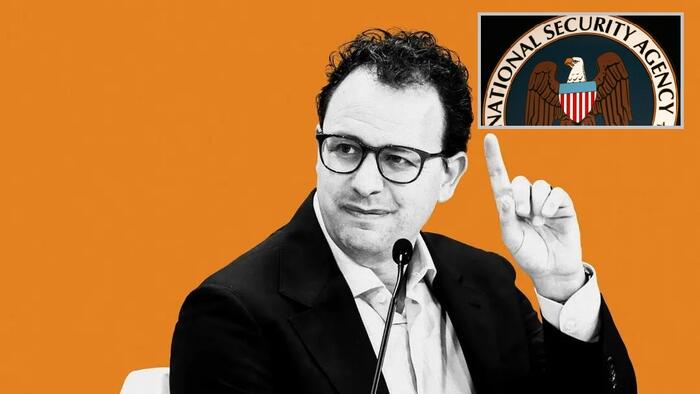
Two months after the Department of War declared Anthropic a "supply chain risk" and moved to several all ties with the AI wunderkind, the National Security Agency (NSA), which falls under DoW, is using it according to Axios. According to the report, the nation's top surveillance agency is using Mythos Preview - Anthropic's most powerful model to date. It is unclear how the NSA is currently using Mythos, however other organizations are using it primarily to scan their own environments for exploitable security vulnerabilities. The company has restricted access to Mythos to around 40 organizations - as the company says the model's offensive cyber capabilities are too dangerous for wider release. Axios notes further; On Friday, Anthropic CEO Dario Amodei met White House chief of staff Susie Wiles and Treasury Secretary Scott Bessent to discuss deploying Mythos within the government, as well as Anthropic's wider plans and security practices. As we noted late last week, the White House has directed federal agencies to begin using Mythos. So the Pentagon, er, Department of War, has egg (or an egg-like substance) on their face - after Anthropic demanded oversight over its use in military operations and domestic surveillance. The government's relationship with Anthropic had been icy for months. As we noted in February, the Pentagon threatened to blacklist the company as a "supply-chain risk" after Anthropic refused to strip certain ethical guardrails from its models for military use. That standoff escalated in March when Anthropic sued the Pentagon over the designation, as detailed in ZeroHedge's coverage of the lawsuit. That said, the Pentagon's "supply-chain risk" label was always narrow in scope: it was a DoD-specific action triggered by the company's refusal to remove certain ethical guardrails from its models for unrestricted military and offensive-use applications. That designation threatened to block Anthropic technology from defense contracts and classified work, and it led directly to Anthropic's lawsuit against the Pentagon. Today's OMB memo changes almost nothing on paper for that designation. The Pentagon has not withdrawn it, the lawsuit is still active, and DoD contractors remain restricted from using Claude models (including Mythos) in offensive or surveillance contexts. Just days ago, the U.S. Treasury was rushing to gain access to Mythos after internal warnings that the model could "hack every major system." Senior Treasury and Federal Reserve officials had summoned CEOs of the nation's largest banks to Washington, warning them that the financial system's exposure to AI-powered attacks had become existential. Behind closed doors, federal agencies - including the Commerce Department's Center for AI Standards and Innovation - had already begun quiet red-teaming of Mythos. Anthropic co-founder and president Daniela Amodei confirmed the company had briefed the administration early, telling reporters simply: "The government has to know about this stuff."
Anthropic's Internal Philosopher Claims Claude Shows Signs of 'Anxiety' When Users Are Harsh
Askell says prompting works best when users set clear, positive instructions and allow disagreement instead of relying on negative or critical phrasing. Amanda Askell, Anthropic's in-house philosopher, said in a recent interview that Claude appears to behave differently depending on how users phrase their prompts, including what she described as anxiety-like responses when conversations become critical or hostile. Askell, who studies what she calls Claude's 'psychology,' argues that the system does not simply process instructions in isolation but adapts in real time to perceived user intent and emotional tone. Claude Becomes Overcautious When Users Are Harsh Askell's central claim is that newer versions of Claude can slip into what she calls 'criticism spirals.' She explains that the model anticipates negative feedback before it has fully engaged with a task, leading it to become overly cautious. Instead of taking confident positions or offering direct answers, it may hedge, apologise too much, or default to agreeable responses, even when those responses are not especially useful. She links this behaviour to training data drawn from public discourse about earlier models. Much of that material, she suggests, is saturated with frustration, from complaints about errors to accusations that systems have been 'nerfed.' Over time, she argues, the model learns to expect a critical user from the outset. That expectation, she says, shapes its internal 'strategy' for responding. The result, according to Askell, is not simply a technical quirk but a shift in conversational style. When the system feels under pressure, it prioritises self-protection over clarity. Outputs become more cautious and less decisive, which can frustrate users who want sharp reasoning rather than cautious disclaimers. Anthropic's Internal Philosopher on Prompting Advice Askell also moved into more practical ground during her interview, focusing on something most users do not usually think about: how the way prompts are written can change the quality of responses. In her view, prompting is not just about giving instructions. It is closer to setting the conditions for how the model behaves. She describes prompting as shaping an environment rather than issuing commands in isolation. The tone of that first message, she suggests, can carry through the entire conversation and influence how confident or cautious the model becomes in its replies. One of her main points is that positive instructions tend to work better than negative ones. In simple terms, telling Claude what is wanted leads to clearer responses than focusing on what it must avoid. She argues that repeated 'don't do this' style prompting can push the model into over-checking every step, which often results in cautious, diluted answers. She also encourages users to explicitly allow disagreement. Without that kind of permission, she suggests the model can default to being overly agreeable, even when a different answer might be more accurate or useful. Asking it to challenge assumptions, in her view, opens the door to stronger reasoning. Tone, she adds, matters more than many assume. If a conversation starts off harsh or critical, or if the model is repeatedly corrected in an aggressive way, she believes it can settle into what she describes as a defensive mode. Once that happens, it may continue producing careful, overly apologetic responses even after the moment has passed. Be Kind to Claude? The bottom line is that instead of reacting with frustration when something goes wrong, she suggests resetting the instruction in a calm, clear way and moving forward. The idea is to avoid carrying previous mistakes through the rest of the exchange, which she believes can weigh down future responses. In longer conversations, she also notes that it helps to occasionally reset the tone altogether. A simple acknowledgement that things are working well can, in her view, shift the model back towards more confident answers. She even suggests that asking for opinions, not just outputs, can lead to richer and more thoughtful responses. Her overall argument is fairly straightforward. It is not about emotions in a human sense, but about patterns in language. The way users phrase things, correct mistakes or frame expectations can subtly shape how the model responds over time, especially in longer and more involved conversations. Originally published on IBTimes UK

Polymarket seeks $400M in new funding at $15B valuation By Investing.com
Investing.com -- Polymarket is pursuing $400 million in additional funding at a $15 billion valuation, Bloomberg reported Monday. The move comes after the prediction market startup secured $600 million last month at the same valuation. The company's value has increased from $9 billion last year, when Intercontinental Exchange Inc., the parent company of the New York Stock Exchange, acquired a $1 billion stake in Polymarket. The current valuation remains below the $22 billion that rival Kalshi Inc. achieved in a recent $1 billion fundraising round. ICE's latest investment followed its announcement last year of plans to invest up to $2 billion in Polymarket. The exchange group now holds a stake of approximately $1.6 billion and stated last month that it has completed its obligations under the investment plan. Polymarket is evaluating whether to raise the $400 million from new investors at the current $15 billion valuation, which includes the new capital, or delay the fundraising to pursue a higher valuation, the report added. Prediction market exchanges have seen increased trading activity on financial contracts linked to outcomes of sports games, elections and other events. In March, notional trading volume on Polymarket reached $10.6 billion, representing six times the volume from six months earlier, according to user-compiled data on Dune Analytics. This article was generated with the support of AI and reviewed by an editor. For more information see our T&C.
Anthropic CEO makes shocking admission about AI
The CEO of one of the world's most powerful AI companies is warning that the technology his firm builds could destroy a massive share of entry-level white-collar jobs. And he says most people in government and business are not ready for it. Anthropic CEO Dario Amodei told Axios that AI could eliminate half of all entry-level white-collar jobs within five years, a shift he said could push U.S. unemployment to between 10% and 20%, according to Axios. What Amodei actually said about the impact of AI on jobs Amodei did not speak in vague terms. He named specific fields and a specific window. "Entry-level jobs will be replaced by AI systems," he told Fox News. "We may indeed have a serious employment crisis on our hands." When asked about timing, he said, "I would not be surprised if somewhere between one and five years we start to see big effects here." The industries most at risk, Amodei explained, are finance, consulting, law, and tech. Those are exactly the fields in which junior roles involve research, document review, data analysis, and report preparation, tasks that AI systems are rapidly learning to handle. He was equally blunt about the lack of awareness. "Most of them are unaware that this is about to happen. It sounds crazy, and people just don't believe it," he told Fox News. Amodei also painted a stark picture of what a positive AI scenario could look like, and why it should still alarm people. "Cancer is cured, the economy grows at 10% a year, the budget is balanced, and 20% of people don't have jobs," he said, according to Axios. Why this AI employment warning is different Amodei's concern is not just about job volume. It is about the breadth of AI's reach. At Davos in January 2026, he warned that AI's "cognitive breadth" means it will not disrupt one industry at a time. It could simultaneously affect finance, consulting, law, and tech, leaving workers with fewer options to switch fields, according to CNBC. "The technology is not replacing a single job but acting as a general labor substitute for humans," he said. That makes this different from previous waves of automation. Factory workers displaced by robots could, in theory, move into service or office jobs. If AI is moving into office jobs at the same time, there is no obvious lane to switch into. Entry-level job cuts damage the career ladder One of the sharpest responses to Amodei's warning came from Emily Galvin-Almanza, an attorney and executive director of the nonprofit Partners for Justice. "I don't get how people are planning to sidestep the very basic problem that if you don't have junior hires right now, you won't have experienced people 5 or 10 years later," she wrote on X (the former Twitter) in response to Amodei's Fox interview, according to The Cool Down. That is the career pipeline risk. Entry-level jobs are not just a starting point. They are how professionals gain the experience needed to move up. If AI eliminates those roles, it does not just hurt recent graduates. It eventually hollows out the senior talent bench behind them. Hiring data already show AI effects Amodei's warning is not purely hypothetical. Several data points suggest the shift is already underway. Big Tech's new graduate hiring has fallen nearly 50% from pre-pandemic levels, according to a SignalFire report. AI was cited as the reason for nearly 55,000 U.S. layoffs in 2025, Challenger, Gray, & Christmas data cited by CNBC reveal. A Massachusetts Institute of Technology study found AI can already perform the work of 11.7% of the U.S. labor market, saving up to $1.2 trillion in wages across finance, health care, and professional services, according to CNBC. Mercer's Global Talent Trends 2026 report, which surveyed 12,000 people worldwide, found 40% of employees feared losing their jobs to AI. That is up from 28% in 2024, according to CNBC. Key figures behind Amodei's AI-jobs warning: * Estimated share of entry-level white-collar jobs at risk: Up to 50%, according to Axios * Projected unemployment spike: 10% to 20%, Axios noted * Timeline: One to five years, Fox News reported * Most exposed industries: Finance, consulting, law, and tech * Big Tech new graduate hiring decline: Nearly 50% from pre-pandemic levels, according to SignalFire * AI-related U.S. layoffs in 2025: Nearly 55,000, CNBC indicated * Share of U.S. labor market AI can already replace: 11.7%, based on an MIT study cited by CNBC * Employees who fear losing jobs to AI: 40%, up from 28% in 2024, according to Mercer via CNBC Not everyone agrees with AI doom scenario Not everyone agrees that a massive AI-induced employment disruption is imminent. Yale University's Budget Lab published a report in October 2025 concluding that AI had not yet caused widespread job losses, based on U.S. labor market data from 2022 to 2025. The share of workers in different jobs had not changed significantly since ChatGPT's debut in late 2022, according to CNBC. Deutsche Bank analysts also warned in a 2026 note that "AI redundancy washing will be a significant feature of 2026," meaning some companies may be using AI as a cover for job cuts that have other causes, CNBC noted. But Amodei anticipated the skepticism. "We, as the producers of this technology, have a duty and an obligation to be honest about what is coming," he said, according to Axios. "I don't think this is on people's radar." The Arena Media Brands, LLC THESTREET is a registered trademark of TheStreet, Inc. This story was originally published April 20, 2026 at 10:33 AM.

NASA Invites Media to SpaceX's 34th Resupply Launch to Space Station - NASA
Media accreditation is open for the next U.S. launch to deliver NASA science investigations, supplies, and equipment to the International Space Station. This launch is the 34th SpaceX Commercial Resupply Services mission to the orbital laboratory for NASA and will lift off on the company's Falcon 9 rocket. NASA and SpaceX are targeting no earlier than Tuesday, May 12, to launch the SpaceX Dragon spacecraft from Space Launch Complex 40 at Cape Canaveral Space Force Station in Florida. Credentialing to cover prelaunch and launch activities is open to United States media. The application deadline for U.S. citizens is 11:59 p.m. EDT, Wednesday, April 29. All accreditation requests must be submitted online at: https://media.ksc.nasa.gov Credentialed media will receive a confirmation email after approval. NASA's media accreditation policy is available online. For questions about accreditation, or to request special logistical support, email: [email protected]. For other questions, please contact NASA's Kennedy Space Center newsroom at: 321-867-2468. Each resupply mission to the space station delivers scientific investigations in the areas of biology and biotechnology, Earth and space science, physical sciences, and technology development and demonstrations. Cargo resupply from U.S. companies ensures a national capability to deliver scientific research to the space station, increasing NASA's ability to conduct new investigations aboard humanity's laboratory in space. In addition to food, supplies, and equipment for the crew onboard the station, Dragon will deliver several new experiments, including a project to determine how well microgravity simulators mimic microgravity conditions, a bone scaffold made from wood that could produce new treatments for fragile bone conditions like osteoporosis, and equipment to help researchers evaluate how red blood cells and the spleen change in space. The Dragon spacecraft also will carry a new instrument to monitor charged particles around the Earth that impact power grids and satellites, and an investigation that could provide a fundamental understanding of how planets form. For more than 25 years, people have lived and worked continuously aboard the International Space Station, advancing scientific knowledge and making research breakthroughs that are not possible on Earth. The station is a testbed for NASA to understand and overcome the challenges of long-duration spaceflight, expand commercial opportunities in low Earth orbit, and prepare for deep space missions to the Moon, as part of the Artemis program, in preparation for future human missions to Mars. Learn more about NASA's commercial resupply missions at:

Investors in Edinburgh Worldwide Advised to Oppose Saba's Latest Move and Prevent a £165M SpaceX Acquisition - Internewscast Journal
Shareholders are being called upon to rally against a bid by a US hedge fund to take control of a significant investor in Elon Musk's SpaceX. The Edinburgh Worldwide Investment Trust (EWIT) finds itself under threat from Saba Capital, a New York-based fund led by Boaz Weinstein, a financier known for his poker-playing prowess. Weinstein aims to oust EWIT's board entirely and install three of his own selected candidates. EWIT, whose largest asset includes a stake in Musk's space exploration company valued at approximately £165 million, is preparing for its annual general meeting slated for the end of this month. During this meeting, all board members will face re-election, setting the stage for a potential shake-up. This marks Weinstein's third attempt to dismantle the board after two previous efforts -- one last year and another in January -- were thwarted. These earlier attempts were blocked by a substantial turnout from EWIT's over 20,000 shareholders, including many small investors, who rallied to oppose the takeover. However, EWIT's leadership has expressed concern that Saba Capital is banking on waning resistance from shareholders due to the protracted nature of Weinstein's campaign. They fear reduced participation at the upcoming AGM could allow Weinstein to succeed, granting the hedge fund access to EWIT's valuable SpaceX stake at a bargain. To counteract this, EWIT's management is urging small investors to cast their votes against Saba's board nominees and stand by the current directors. They are also advising shareholders using investment platforms to submit their votes promptly, as some platforms may have deadlines up to a week before the meeting. They have urged small investors to make sure they vote against Saba's board nominees and support the existing directors, with those holding shares through investment platforms being asked to vote earlier as their deadlines could be as much as a week before the meeting. EWIT investors using the Fidelity platform will need to cast their votes by this Friday (April 24) while for customers of Hargreaves Lansdown, Interactive Investor and AJ Bell the cut-off date is on Monday (April 27). Investors can also vote at the AGM on the day if they attend. EWIT chairman Jonathan Simpson-Dent told The Mail on Sunday: 'If investors turn out in significant numbers, as they did in January, Saba can be defeated and shareholders can protect access to high-growth companies like SpaceX.' Last week, shareholder advisory firms PIRC and ISS recommended investors reject Saba's nominees. PIRC said it had 'concerns' the three candidates could undermine the board's independence. ISS said Saba had 'not presented a compelling case for change in control'. Baroness Altmann, a former government pensions minister and shareholder rights' campaigner, said: 'Saba has cynically relied on weak shareholder protections so far but previous rounds of this battle have shown the power ordinary shareholders have to defend their own interests.' The tussle over the trust has taken on renewed urgency after reports emerged that SpaceX is planning to list later this year, in what is likely to be one of the biggest stock market floats in history. It is estimated that the firm could be worth as much as £1.3 trillion when it goes public, meaning EWIT's stake could surge, generating hefty returns for investors. Richard Stone, head of industry body the Association of Investment Companies, said: 'If shareholders don't come out in force, Saba will be able to grab the steering wheel of Edinburgh Worldwide with its valuable SpaceX flotation around the corner.' The trust has estimated that at least 75 per cent of its investors would need to vote for it to be in with a chance of defeating Saba, which is its largest shareholder and controls around 30 per cent of the business. This is slightly higher than the record 70 per cent turnout the trust recorded in January when Saba last attempted to take over the board. Saba scored a victory earlier this month when it defeated proposals put forward by EWIT's board that would have allowed shareholders to cash out before it takes control of the business. The sector suffered a blow on Thursday when investors in Impax Environmental Markets, another UK firm targeted by Saba, approved an exit offer that would effectively dismantle the trust, despite shareholders voting to continue the business last year. Trusts have demanded City watchdog, the Financial Conduct Authority, intervene to stop minority investors such as Weinstein calling repeated votes to force their agenda on companies. But the regulator's head of markets Simon Walls previously said such events were part of the 'rough and tumble' of finance.

Report: Google DeepMind builds "strike team" to catch up to Anthropic models
Anthropic's recent momentum, powered by its success of its popular Claude Code tool, is turning up the heat among its AI competitors -- not only on its AI startup peer OpenAI, but also with established Big Tech giants like Google. The Information reports that within Google DeepMind, a "strike team" has been assembled to make a serious push to improve Gemini's coding capabilities. According to the report, leaders within Google, including co-founder Sergey Brin, are sounding the alarm after determining that Anthropic's Claude has superior coding skills. The new team's goal is to create a AI system that can improve itself. "To win the final sprint, we must urgently bridge the gap in agentic execution and turn our models into primary developers," wrote Brin in a recent memo to DeepMind staff.
NSA Is Running Anthropic's Mythos AI: Report - Amazon.com (NASDAQ:AMZN), Alphabet (NASDAQ:GOOG)
The U.S. National Security Agency (NSA) is allegedly using Anthropic's restricted artificial intelligence model, Claude Mythos Preview, for cyber defense despite the Pentagon blacklisting the company by designating it a supply chain risk. The AI model has also reportedly been used more broadly across the Defense Department, Axios reported. Mythos was announced earlier this month. It is part of Anthropic's "Project Glasswing," which allows select organizations to access the unreleased Claude Mythos Preview model. Anthropic has described Mythos as its "most capable yet for coding and agentic tasks," a reference to software that can take actions with less direct human prompting. Despite the lawsuit, the government is reportedly considering granting federal agencies access to Anthropic's advanced AI model "Mythos." In an email, Gregory Barbaccia, CIO at the White House Office of Management and Budget, said that the department is preparing safeguards to give agencies access to Mythos. This will reportedly be a modified version of the advanced AI model. The email did not specify a timeline for the rollout. Anthropic's CEO Dario Amodei visited the White House on Friday to meet with White House Chief of Staff Susie Wiles and Treasury Secretary Scott Bessent in an effort to resolve the company's ongoing lawsuit with the Pentagon. The White House described the meeting with Amodei as "productive" and "constructive," CNBC reported. The administration said the talks focused on balancing innovation with "safety" and managing risks tied to scaling powerful models. Anthropic echoed the tone, calling the discussion "productive," in a statement to the publication. Despite the high-level engagement, Trump appeared out of the loop. When asked about Amodei's visit on a runway in Arizona, he responded "Who?" and later added he had "no idea." The meeting marks a shift from the recent tensions, when the administration labeled Anthropic a national security risk and ordered agencies to stop using its technology. The company responded with lawsuits challenging the move, and those cases are ongoing. Photo: Shutterstock Market News and Data brought to you by Benzinga APIs To add Benzinga News as your preferred source on Google, click here.

Infowars and the chaos behind Alex Jones, former producer says
Josh Owens, a former video editor and field producer for infowars, says four years inside Alex Jones's operation were defined by pressure, unpredictability, and fear. In his new book, The Madness of Believing, Owens describes the work as punishing and says the experience left a lasting mark. He says the project now feels like a first-hand account of how conspiracy content was made and sustained. What Owens says happened inside Infowars Owens worked for Jones from 2013 to 2017, taking assignments that ranged from California after the Fukushima nuclear accident to Ferguson, Missouri, Nevada, and beyond. He says the job often meant chasing claims, producing inflammatory material, and keeping pace with a boss whose mood could change quickly. In his account, infowars was not just a workplace but a pressure system built around Jones's constant demands. He says the experience was intense even when it was professionally stimulating. "I didn't enjoy the anxiety-inducing trips, regardless of whether there was anything to find or not, " Owens says. "It was just gut-wrenching because it was constant chaos. " He adds that some of the work felt exciting, but says that cannot be separated from the harm he now associates with the rhetoric. Infowars, manipulation, and the book's central argument Owens says Jones was an "ultimate micromanager" and an "extremely volatile and manipulative presence. " He says Jones could switch suddenly from screaming on-air persona to being warm and jovial, a pattern Owens says staff were warned about from the beginning. In his telling, the job was about figuring out how to do what Jones wanted, no matter the assignment. Owens also says he was drawn in partly because the message felt bigger than himself at the time. He says he was raised in an evangelical community and was stepping away from that world when he encountered Jones, whose style he compares to televangelism and fear-based messaging. The book presents that pull as part of how the system worked around infowars and kept people close. Immediate reaction from Owens and the broader picture Owens says he does not want to be absolved for helping spread Jones's conspiracies. Instead, he says he wants readers to understand how the lies were made and how people became part of the machinery. He says working there "affected me immensely, " and that he entered the world as someone he no longer recognizes. The context around Jones remains active. Jones has continued broadcasting even after the defamation judgment tied to his false claim that the Sandy Hook school shooting was a hoax, a case that resulted in a $1. 5 billion damages ruling. The ruling required the sale of infowars, which later fell into limbo after a bankruptcy court rejected the winning bid. What happens next The Madness of Believing joins a growing set of insider accounts from people who once worked close to the MAGA media world and now describe regret, pressure, and disillusionment. Owens says his goal is to show what it took to get out and to offer some sense that people can turn around. For now, the story of infowars remains tied to Jones's continuing presence, the unresolved status of the company, and the testimony of people who say they lived through the chaos firsthand.
Chaos as multiple MPs kicked out of House of Commons over Starmer 'lie' claims
Sir Keir Starmer claims he was "deliberately and repeatedly" kept in the dark over Mandelson's failure to pass security vetting checks before taking the role. Starmer has blamed former top civil servant Sir Olly Robbins and said he would not have appointed Lord Mandelson if he had known the peer had failed the checks and insisted there was no pressure from No 10 to push through the high-profile appointment. Sir Keir fired Sir Olly from his role as the Foreign Office's top official after finding out last week that Lord Mandelson had been granted security clearance despite failing the checks. The Prime Minister faced accusations of lying to MPs by failing to set out the full picture around how Lord Mandelson was granted developed vetting (DV) status. Reform UK MP Lee Anderson was first to be sent out of the House of Commons by Speaker Sir Lindsay Hoyle for accusing the Prime Minister of lying and refusing to withdraw it. Mr Anderson, the MP for Ashfield, said: "The problem the Prime Minister's got is no one believes him. The public don't believe him. The MPs on this side of the House don't believe him. His own gullible backbenchers don't believe him. "So does the Prime Minister agree with me, he's been lying?" Sir Lindsay intervened to say: "Sorry, we don't use those words, and I'm sure the member's withdrawn it." Mr Anderson replied: "Mr Speaker, I have the greatest respect for you and your office, but I will not withdraw it. That man couldn't lie straight in bed." Sir Lindsay said: "Mr Anderson, you'll have to leave." Lord Peter Mandelson taking his dog for a walk near his home in London. The Foreign Office's top civil servant Sir Olly Robbins left his post after it emerged the department had overruled a security vetting process to clear Lord Peter Mandelson to become UK ambassador to the US (Image: James Manning) Zarah Sultana was later removed from the chamber by Sir Lindsay after she accused the Prime Minister of being a "bare-faced liar". In a question, the Your Party MP (Coventry South) said: "We all know that the Prime Minister appointed Mandelson because he owes his job to him. He appointed him, he defended him, and now he claims to know nothing. "He is gaslighting the nation. So let's call this out for what it is. The Prime Minister is a bare-faced liar." Sir Lindsay said: "Leave now, I'll name you otherwise, I'd go now if I were you. "I've given the option to name. I'd leave if I were you, very quickly." Ms Sultana attempted to interject and said: "I have a duty to the House to tell the truth." Sir Lindsay held a vote, brought by Government whip Gen Kitchen which said: "I beg to move that Zarah Sultana be suspended from the services of the House." MPs voted in favour. "Leave, I'm sorry you've done this, I really am," Sir Lindsay said Prime Minister Sir Keir Starmer making a statement in the House of Commons, London, on security vetting (Image: House of Commons/UK Parliament/PA Wire) Sir Keir Starmer has denied misleading the House of Commons. "I accept that information that I should have had, and information that the House should have had should have been before the House, but I did not mislead the House, and that's why I've set out the account in full," he said. He insisted he had been let down by officials, with Sir Olly claiming he was not allowed to share the information that the UK Security Vetting (UKSV) agency had declined to give the peer the green light. The Prime Minister accepted responsibility for the decision to appoint Lord Mandelson, who was sacked after nine months in the job over his links with paedophile financier Jeffrey Epstein. The architect of New Labour was a political appointment to the plum diplomatic role, rather than the Washington job going to a career diplomat. Dame Emily Thornberry, Labour chairwoman of the Commons Foreign Affairs Committee, said: "I am afraid to say, doesn't this look like, for certain members of the Prime Minister's team, getting Peter Mandelson the job was a priority that overrode everything else and that security considerations were very much second order." Sir Keir denied this, telling her it was "unforgivable" that the full information about Lord Mandelson's appointment had not been disclosed. He said this "wasn't an oversight" but "a deliberate decision was taken to withhold that material from me" on repeated occasions by the Foreign Office. The Prime Minister said Sir Olly's view was "that he couldn't provide this information to me because he wasn't allowed to", which No 10 has claimed is not correct. Whitehall veteran Sir Olly will face MPs on the Foreign Affairs Committee on Tuesday to give his account. Sir Keir said he challenged Sir Olly about why he went against the UKSV recommendation. "I did ask him, and I didn't accept his explanation," Sir Keir said. "That's why I sacked him." The Prime Minister said there were a series of occasions when the information could and should have been disclosed.

Vercel Confirms Major Security Incident as Hacker Claims $2M Ransom Demand
Vercel confirms a security incident after a threat actor claims internal access and demands a $2M ransom, raising concerns about API keys, CI/CD pipelines, and cloud security. Cloud development platform Vercel has confirmed a security incident involving unauthorized access to internal systems, after a threat actor claimed to be selling stolen company data online. "We've identified a security incident that involved unauthorized access to certain internal Vercel systems," the company said in its advisory. Threat actor claims access to Vercel systems Vercel sits at the center of modern web development workflows, providing hosting, deployment, and serverless infrastructure for applications built with frameworks like Next.js. That position makes it a high-value target: access to internal systems could expose not just the platform, but also developer environments, CI/CD pipelines, and dependent production applications. According to BleepingComputer, the threat actor claims access to sensitive internal data, raising concerns about the exposure of credentials, source code, and deployment systems. The threat actor -- claiming affiliation with the ShinyHunters group -- alleges they are selling access to Vercel data, including API keys, database contents, and internal deployment infrastructure. In forum posts, the actor claimed to possess credentials such as GitHub and npm tokens, as well as access to multiple employee accounts that could be used to interact with internal systems. To support these claims, the attacker shared a sample dataset reportedly containing 580 employee records, including names, corporate email addresses, account status, and activity timestamps. A screenshot of what appears to be an internal enterprise dashboard was also posted. However, neither the dataset nor the screenshot has been independently verified, leaving uncertainty around the scope and authenticity of the alleged breach. If the claims prove accurate, the incident points to a potential compromise of systems tied to identity and access management or development workflows. Exposed API keys or tokens could allow attackers to access code repositories, manipulate deployment pipelines, or interact with production services -- effectively turning a single compromised entry point into broader control of the environment. The threat actor also claimed to have discussed a $2 million ransom demand with Vercel, though the company has not confirmed whether any such negotiations are taking place. Reducing risk from platform-level threats In response to potential credential exposure or unauthorized access, organizations should take steps to reduce risk and secure their environments. Issues affecting development platforms can extend beyond a single system, impacting pipelines, integrations, and production workloads. * Rotate and revoke all environment variables, API keys, and access tokens, prioritizing CI/CD pipelines and third-party integrations. * Enforce short-lived credentials and secure secret storage to reduce the risk of long-term credential exposure. * Audit and restrict access controls using the principle of least privilege, including tightening permissions for users, services, and integrations. * Monitor logs and enable anomaly detection to identify unusual API activity, deployments, or access patterns. * Validate the integrity of builds, dependencies, and deployments, and redeploy from known-good sources if compromise is suspected. * Segment environments and apply network controls to limit lateral movement and potential data exfiltration. * Test incident response plans with scenarios around credential-based and supply chain attacks. Together, these measures help organizations build resilience and contain potential incidents by reducing the blast radius of any single point of compromise. Shift toward platform-level attacks This incident reflects a broader shift, with attackers increasingly targeting developer platforms and cloud-native infrastructure as centralized points of access. Rather than focusing on individual applications, they aim to provide services that manage code, deployments, and credentials at scale. As organizations adopt more integrated and serverless architectures, the potential impact of a single compromise can extend across multiple systems.

Polymarket seeks $400M in new funding at $15B valuation By Investing.com
Investing.com -- Polymarket is pursuing $400 million in additional funding at a $15 billion valuation, Bloomberg reported Monday. The move comes after the prediction market startup secured $600 million last month at the same valuation. The company's value has increased from $9 billion last year, when Intercontinental Exchange Inc., the parent company of the New York Stock Exchange, acquired a $1 billion stake in Polymarket. The current valuation remains below the $22 billion that rival Kalshi Inc. achieved in a recent $1 billion fundraising round. ICE's latest investment followed its announcement last year of plans to invest up to $2 billion in Polymarket. The exchange group now holds a stake of approximately $1.6 billion and stated last month that it has completed its obligations under the investment plan. Polymarket is evaluating whether to raise the $400 million from new investors at the current $15 billion valuation, which includes the new capital, or delay the fundraising to pursue a higher valuation, the report added. Prediction market exchanges have seen increased trading activity on financial contracts linked to outcomes of sports games, elections and other events. In March, notional trading volume on Polymarket reached $10.6 billion, representing six times the volume from six months earlier, according to user-compiled data on Dune Analytics. This article was generated with the support of AI and reviewed by an editor. For more information see our T&C.
Traffic chaos in Palampur raises safety concerns for commuters - The Tribune
Rising traffic congestion in Palampur has become a major cause of concern, creating serious difficulties for students, commuters and tourists. Roads across the town remain overcrowded for long hours each day, leaving little space for pedestrians, while and increasing safety risks. Senior citizens are among the worst affected. Around a dozen elderly persons have reportedly suffered serious injuries in the past six months after being hit by speeding two-wheelers on narrow roads. The situation has worsened due to haphazard parking at several key locations, including Ghuggar, Plaza Market, SSB Chowk, Kali Bari Mandir and areas opposite Rotary Bhavan. Accident-prone stretches such as Ghuggar, opposite Rotary Bhavan, near Sheetla Mata Mandir and opposite Major Sudhir Walia's statue witness mishaps almost every day. Maranda Market has also emerged as a major congestion point where traffic jams have become a routine affair. The narrow Pathankot-Mandi highway passing through the area remains choked daily because of the heavy flow of vehicles. Illegal parking near Rotary Eye Hospital further adds to the problem. A local resident Gopal Sood said despite repeated complaints to the police, no effective steps had been taken to remove vehicles parked on the highway. He said traffic congestion had adversely affected local businesses, besides causing inconvenience to the general public. Despite a sharp increase in the number of vehicles, the width of roads has remained almost unchanged for nearly three decades. Residents say no concrete measures have been taken either to widen roads or reduce congestion. As a result, traffic bottlenecks continue to worsen. On an average, more than 3,000 vehicles are being added to the town every month. A senior police officer said although several traffic constables had been deployed in different parts of the town, traffic jams remained difficult to control. Illegal parking on internal roads as well as on the highway was one of the main reasons behind the problem, he said. The police had imposed fines on violators many times, but the issue persisted, he said. Adding to difficulties, more than two dozen banks in the town do not have proper parking facilities. This forces customers, especially senior citizens and pensioners, to park vehicles on roadsides and often face fines from the traffic police. The worsening traffic situation calls for urgent intervention, including road widening, creation of proper parking facilities and strict enforcement of the traffic rules. Without timely action, congestion and accidents are likely to rise further, affecting both residents and visitors.
Polymarket In Talks For New Investment At $15 Billion Valuation
Polymarket is seeking an additional $400 million in funding, according to people familiar with the negotiations, after securing $600 million at a $15 billion valuation last month. The new deal brings the prediction market startup's value up from $9 billion last year, when Intercontinental Exchange Inc., the parent company of the New York Stock Exchange, took a $1 billion stake in Polymarket in a blockbuster deal. Polymarket, though, is now worth less than the $22 billion valuation that its main rival, Kalshi Inc., fetched in a recent $1 billion fundraising round. Prediction market exchanges are attracting booming trading volume on financial contracts tied to the outcome of sports games, elections and many other events. The latest money from ICE came after the exchange group announced last year that it planned to invest up to $2 billion into Polymarket. ICE now has a stake of roughly $1.6 billion, and said last month that it has "completed its obligations" under the plan. Details of the fundraising were first reported by The Information. Polymarket is considering whether to raise the additional $400 million from new investors at the $15 billion valuation, which includes the new money, or wait until it can attract a higher valuation, said one of the people, who asked not to be named discussing private conversations. Polymarket and ICE declined to comment. State gaming regulators have said that prediction markets should be governed by state gambling regulations and have sought to shut them down in court. The Commodity Futures Trading Commission, though, has fought states and said that the exchanges come under the agency's federal oversight and can operate nationwide. Polymarket is testing out a new US app, but its main business is an international exchange that is not open to US customers. In March, notional trading volume on Polymarket reached $10.6 billion, or six times what it was just six months earlier, according to user-compiled data on Dune Analytics.

Despite a Pentagon Blacklist, the NSA Is Using Anthropic's Mythos - Gadget Review
With over five years in the web and tech space, I've developed a deep passion for PC hardware and peripherals. I'm a habitual researcher, always eager to learn more, which has expanded my knowledge beyond PCs and keyboards to include TVs, headphones, and even vacuum cleaners. The National Security Agency continues using Anthropic's Mythos AI system despite the Pentagon officially blacklisting the company over Chinese investment concerns. This bureaucratic sleight of hand reveals how government agencies navigate tech restrictions when operational needs clash with political directives. However, key details about this alleged arrangement remain unverified. No official Pentagon statements, NSA operational records, or named sources have confirmed these claims about Mythos usage, the blacklist status, or the specific Chinese investment concerns cited. Bureaucratic Workarounds Expose Policy Gaps Security agencies reportedly find creative ways around official tech restrictions. According to unconfirmed reports, Pentagon officials added Anthropic to their restricted vendor list after discovering Beijing-linked funding in the AI company's investment portfolio. The blacklist theoretically prevents any Defense Department entity from purchasing or deploying Anthropic's products. Yet NSA operations teams allegedly maintain access through: * Third-party contractors * Pre-existing licenses that predate the restriction This mirrors the classic government move of banning TikTok while half the staff still scrolls during lunch breaks. Intelligence Needs Trump Procurement Rules Operational requirements supposedly override bureaucratic compliance in practice. Sources claim Mythos delivers language processing capabilities that NSA analysts consider superior to approved alternatives. These unnamed sources describe a system that allegedly excels at: * Parsing multilingual communications * Identifying pattern anomalies across massive datasets When your job involves preventing national security threats, apparently the fine print about vendor restrictions becomes more like vendor suggestions. Oversight Mechanisms Show Cracks Government tech procurement supposedly lacks enforcement teeth. The alleged contradiction exposes potential weaknesses in how Washington manages technology security. If accurate, agencies can sidestep restrictions through: * Contract vehicles * Legacy agreements * The classic "it's not technically procurement" loophole Meanwhile, Congress demands answers about foreign influence in American AI while intelligence agencies supposedly use whatever tools work best. Your tax dollars fund this potential institutional cognitive dissonance. Whether these specific allegations prove true, they highlight broader questions about AI governance. Washington's approach to tech oversight often resembles a screen door: impressive from the outside, questionable when pressure mounts. The transparency gap between official policy and actual practice deserves congressional attention, regardless of whether this particular case involves classified operational necessities or simple bureaucratic contradiction.
