News & Updates
The latest news and updates from companies in the WLTH portfolio.
Fortune Tech: Apple's next Siri, Polymarket's new valuation, Vercel breach | Fortune
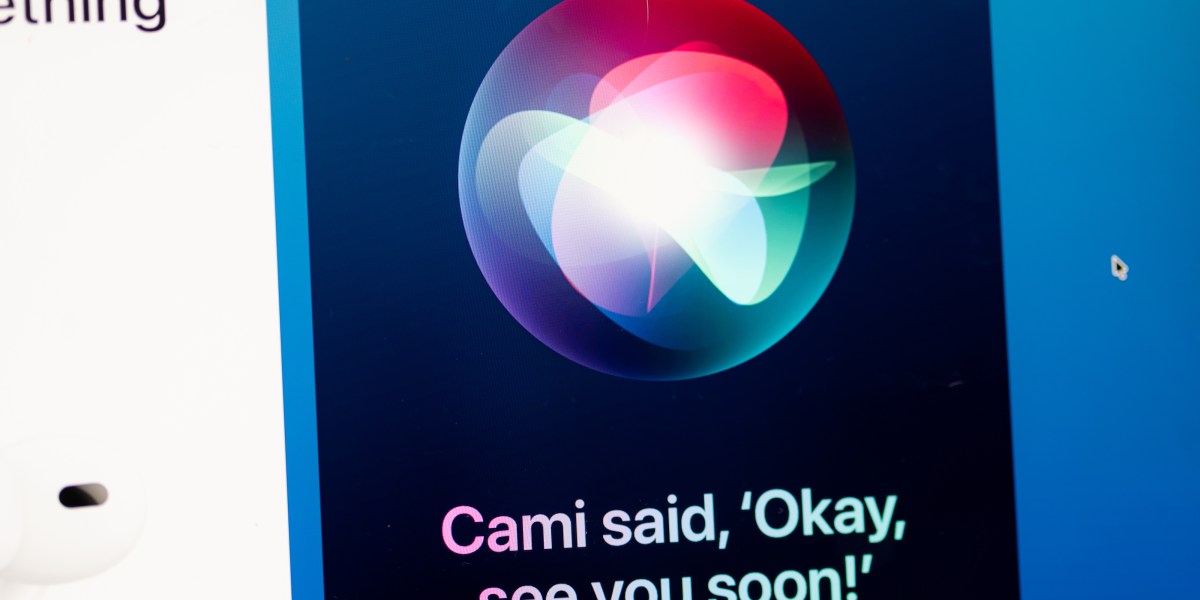
I'll be honest: The most important thing happening starting June 8 is our 25th anniversary Fortune Brainstorm Tech in Aspen. But the second-most important thing? Probably Apple's annual Worldwide Developers Conference. So what's in store this year for one of the more magnificent of the Magnificent 7 big tech firms? According to Apple-watcher Mark Gurman, iOS 27, macOS 27, and a revamped Siri voice assistant that's more chatbot-like. It's not all good news. The launch of the next Mac Studio and touchscreen MacBook Pro may see monthslong delays (October for the former; January for the latter) thanks to the continued global memory shortage. The Siri changes are most intriguing. Over the last decade, Apple's assistant moved from novel to inferior as AI chatbots lapped its capabilities. The next iteration promises to catch up by rebuilding its architecture from the ground up. One reason Siri 2.0 has taken so long to develop? Apple prefers to run much of Siri's activity on-device -- that is, without using internet connectivity -- forcing it to deliver intelligent results using local memory, local processing, and local power. Apple is partnering with Google to tap its Gemini AI models for the next Siri; it will be interesting indeed to see how Gemini's capabilities are integrated into the experience -- and whether Siri's progress is enough to convince investors that Apple is not a lost cause in the AI arms race. -- AN A pioneer in so-called prediction markets is reportedly in talks to raise $400 million. Polymarket's new valuation of $15 billion, according to The Information, is a nice leap from its previous $9 billion figure in late 2025. That's when the parent company of the New York Stock Exchange, Intercontinental Exchange, invested $600 million in the firm and gave the company a toehold in the mainstream. But it still hasn't caught up to its crosstown rival, Kalshi. As of last month, that New York City company is worth about $22 billion with some 90% U.S. market share, a sign that Kalshi's early move to seek regulatory approval from the Commodity Futures Trading Commission (CFTC) has paid off. (Polymarket, in contrast, focused early on offshore markets beyond regulation's reach.) Horse race aside, both firms are still maneuvering for mainstream acceptance by brokering (ahem) deals with financial data providers and forecast-friendly media companies interested in the aggregate insights of people buying and selling shares based on the probability of future events. As Kyla Scanlon wrote in the New York Times in January: "The uncomfortable truth is that prediction machines have become infrastructure for the legitimacy of event outcomes, no matter how outlandish." -- AN The cloud platform Vercel, used by developers to host web applications, says hackers breached its systems in an attempt to sell stolen data. The breach came through a compromised third-party AI tool called Context.ai that was in use by a Vercel employee. "The attacker used that access to take over the employee's Vercel Google Workspace account, which enabled them to gain access to some Vercel environments and environment variables that were not marked as 'sensitive,'" the company wrote in a security bulletin. Vercel added that the attacker was "highly sophisticated based on their operational velocity and detailed understanding of Vercel's systems." The San Francisco company says it has called in the troops to get to the bottom of the attack, including Google subsidiary Mandiant and other cybersecurity firms, industry peers, law enforcement, and Context.ai. It notified "a limited subset of customers" whose credentials were compromised. "We continue to investigate whether and what data was exfiltrated," the company said, "and we will contact customers if we discover further evidence of compromise." -- AN -- NSA, Pentagon using Anthropic's Mythos model despite the company's designation as a supply chain risk.
Vercel April 2026 Incident: Non-Sensitive Environment Variables Need Investigation Too - IT Security News
The technical storage or access is necessary for the legitimate purpose of storing preferences that are not requested by the subscriber or user. The technical storage or access that is used exclusively for statistical purposes. The technical storage or access that is used exclusively for anonymous statistical purposes. Without a subpoena, voluntary compliance on the part of your Internet Service Provider, or additional records from a third party, information stored or retrieved for this purpose alone cannot usually be used to identify you.

Vercel data breach highlights risks from third-party AI tools and supply chain attacks The Mainstream
A recent security incident has brought attention to growing risks in the AI ecosystem, as cloud platform Vercel confirmed a breach involving unauthorised access to its internal systems. The company stated that a limited number of customers were impacted, and services remained unaffected. The breach was linked to attackers exploiting a third-party AI tool, Context AI, to gain entry into certain internal systems. "We are actively investigating, and we have engaged incident response experts to help investigate and remediate. We have notified law enforcement and will update this page as the investigation progresses," the company said in its official disclosure dated April 19. Vercel, known for maintaining Next.js, operates a serverless platform that supports front-end development, edge computing, and CI/CD workflows. The incident points to a broader trend of attackers targeting AI tools for supply chain attacks. Recently, open-source AI projects such as Axios, LiteLLM, and Trivy have also been compromised, impacting dependent organisations. The breach comes as AI capabilities continue to evolve. Earlier this month, Anthropic revealed it developed an AI model called Claude Mythos but did not release it due to potential cybersecurity risks. According to CEO Guillermo Rauch, the attack began after a Vercel employee's Google Workspace account was compromised through the Context AI breach. The attackers then accessed Vercel systems and retrieved environment variables that were not marked as sensitive and therefore not encrypted. "We believe the attacking group to be highly sophisticated and, I strongly suspect, significantly accelerated by AI. They moved with surprising velocity and in-depth understanding of Vercel," Rauch said. "All of our focus right now is on investigation, communication to customers, enhancement of security measures, and sanitisation of our environments. We've deployed extensive protection measures and monitoring. We've analyzed our supply chain, ensuring Next.js, Turbopack, and our many open source projects remain safe for our community," he added. In response, Vercel has updated its dashboard to improve visibility and management of environment variables. Customers have been advised to review their settings and enable encryption for sensitive data. Meanwhile, hacker group ShinyHunters has claimed responsibility and reportedly attempted to sell stolen data, including access keys, source code, and database information. The group allegedly shared a file containing 580 employee records and claimed ransom discussions worth $2 million. However, the company has not confirmed their involvement. Also read: Viksit Workforce for a Viksit Bharat Do Follow: The Mainstream LinkedIn | The Mainstream Facebook | The Mainstream Youtube | The Mainstream Twitter About us: The Mainstream is a premier platform delivering the latest updates and informed perspectives across the technology business and cyber landscape. Built on research-driven, thought leadership and original intellectual property, The Mainstream also curates summits & conferences that convene decision makers to explore how technology reshapes industries and leadership. With a growing presence in India and globally across the Middle East, Africa, ASEAN, the USA, the UK and Australia, The Mainstream carries a vision to bring the latest happenings and insights to 8.2 billion people and to place technology at the centre of conversation for leaders navigating the future.

AI risks in focus as Anthropic delays Mythos launch | News.az
American AI developer Anthropic has said it intends to "lay the risks out on the table" while restricting the deployment of its new model, Mythos, whose advanced cybersecurity capabilities are raising serious concerns for businesses and governments, News.Az reports, citing AFP. "We have a model that's beginning to outstrip human capabilities in the cyber world," said Guillaume Princen, Anthropic's Paris-based head of relations with startups and technology firms, in an interview with AFP. According to Princen, Mythos is "capable of spotting security holes that have existed for decades, in systems tested by both human experts and automated tools, that have never been discovered before." Anthropic has postponed a broad public release of the model, instead providing access to a limited group of key American technology and financial companies -- including Nvidia, Amazon, Apple and JP Morgan Chase -- so they can test and strengthen their security systems. However, the company has also faced criticism for allegedly overstating the capabilities of its technology, a key area of competition with rival OpenAI. The announcement comes amid growing speculation that Anthropic may go public later this year, with rumors of a potential stock market listing gaining traction. "We prefer to be transparent and lay these risks out on the table," Princen said, adding that AI safety concerns are "central to Anthropic's DNA". "We don't have all the answers, this has to be a conversation between tech actors like us who have the data, the academic world, the political world and the world of economists," he added. Mythos' reported capabilities have unsettled the American financial sector and the European Union, which requested more information from Anthropic. In an open letter to businesses, the British government said that Mythos "highlights the speed at which AI capabilities are increasing and the threats they potentially pose". No European company is part of Anthropic's "Project Glasswing" consortium for shoring up cyber defences using Mythos' findings. That has raised questions about how prepared the rest of the world will be for the offensive capabilities of US-owned AI. Mythos is "certainly not a model that will soon be opened to the public at large, for obvious reasons," Princen said. Anthropic is nevertheless "thinking about the next waves of opening up," he added.
Anthropic says will put AI risks 'on the table' with Mythos model
Claude Mythos' release has been restricted to a small number of partners American AI developer Anthropic plans to "lay the risks out on the table" even as it restricts deployment of a new model dubbed Mythos, whose powerful cybersecurity capabilities raise stark questions for companies and governments. "We have a model that's beginning to outstrip human capabilities in the cyber world," Anthropic's Paris-based chief of relations with startups and tech firms Guillaume Princen told AFP in an interview. Mythos is "capable of spotting security holes that have existed for decades, in systems tested by both human experts and automated tools, that have never been discovered before," he added. Anthropic has delayed a general release of Mythos, sharing it first with a few dozen key American tech and financial services players -- such as Nvidia, Amazon, Apple and JP Morgan Chase -- to allow them to test and improve their security infrastructure. But the company has also been accused of overhyping the powers of a technology which is its stock in trade -- and the subject of fierce competition with rival OpenAI. The Mythos news broke as rumours grow that Anthropic will list on the stock market this year. - Safety first? - "We prefer to be transparent and lay these risks out on the table," Princen said, adding that AI safety concerns are "central to Anthropic's DNA". "We don't have all the answers, this has to be a conversation between tech actors like us who have the data, the academic world, the political world and the world of economists," he added. Mythos' reported capabilities have unsettled the American financial sector and the European Union, which requested more information from Anthropic. In an open letter to businesses, the British government said that Mythos "highlights the speed at which AI capabilities are increasing and the threats they potentially pose". No European company is part of Anthropic's "Project Glasswing" consortium for shoring up cyber defences using Mythos' findings. That has raised questions about how prepared the rest of the world will be for the offensive capabilities of US-owned AI. Mythos is "certainly not a model that will soon be opened to the public at large, for obvious reasons," Princen said. Anthropic is nevertheless "thinking about the next waves of opening up," he added. - European growth - Europe is the region where Anthropic sees the fastest growth. Its Claude Code software development tool generates around $2.5 billion in annualised revenue -- a figure based on extrapolating from a few recent weeks of sales. Much of that expansion comes from "European firms riding the wave" of AI, Princen said. The company has opened offices in Dublin, London, Paris and Munich, and wants to keep investing across the continent. "We go where the demand is," Princen said, pointing to partnerships with European firms like Swedish coding startup Lovable or Danish pharma company Novo Nordisk. Relatively unknown to the wider public until recently, Anthropic was founded in 2021 by former OpenAI staff and makes around 80 percent of its revenue from business-to-business sales. The company and its Claude chatbot surged in prominence in late February, when bosses refused to allow its AI tools to be used by the Pentagon for mass surveillance of American citizens or fully autonomous weapons. The Trump administration responded by designating Anthropic a so-called "supply chain risk" to national security -- a decision being contested in multiple legal cases. In legal documents seen by AFP, Anthropic finance chief Krishna Rao warned that Washington's move could cost the firm multiple billions in revenue this year. On the other hand, "there are a lot of people who started using Claude precisely because of the position we took on that question," Princen said. Anthropic said in early April that it had tripled its annualised revenues quarter-on-quarter to over $30 billion -- outpacing OpenAI for the first time.
Regulators monitor Anthropic's Mythos for banking risks
Regulators said on Monday they are monitoring the development of Anthropic's frontier AI model Mythos, which experts say could have the capability to be used to destabilize banking systems. The vast capabilities of Mythos to code at a high level have given it a potentially unprecedented ability to identify cybersecurity vulnerabilities, experts say, prompting greater scrutiny from some regulators globally. "ASIC is closely monitoring these developments along with peer regulators to assess possible implications for the Australian market," a spokesperson for the Australian Securities and Investments Commission (ASIC) said on Monday. "ASIC engages closely with other regulators, government agencies and the financial sector to understand and respond to changing technologies." Anthropic taking responsible approach with Claude Mythos software rollout, TD CEO says ASIC said it expected financial services licencees to "be on the front foot" to safeguard their customers and clients. The country's banking regulator, the Australian Prudential Regulation Authority (APRA) said it would "continue to assess the implications of these technological advancements to ensure the ongoing safety and resilience of the financial system." South Korea's Financial Supervisory Service (FSS) said on Monday it held a meeting with information security officials from financial firms last Monday to review Mythos-related risks. Canadian bank execs, regulators meet to discuss risks raised by Anthropic's new AI model South Korea's Yonhap news agency reported that the country's Financial Services Commission (FSC) held an emergency meeting last Wednesday with chief information security officers from the FSS, banks and insurers to review the risks, citing unnamed industry sources. The FSC was not immediately available for comment when contacted by Reuters.

Banks in close contact with European regulator on Anthropic's Myt
Banks and European regulators are actively coordinating over Anthropic's new AI model, Mythos, to assess cybersecurity risks, though no immediate alarm has been raised. Coordination spans national authorities, the ECB, and industry bodies to integrate Mythos into risk frameworks. Banks Monitor Anthropic's Mythos AI Model with European Regulators Amid Security Concerns European Banks Address Risks of Anthropic's Mythos AI Model FRANKFURT, April 20 (Reuters) - Banks are in close contact with their European regulators regarding Anthropic's new artificial intelligence model Mythos, Christian Sewing, president of the German banking association and CEO of Deutsche Bank, said on Monday. Ongoing Discussions Between Banks and Regulators He said that the banking association would further discuss the topic later on Monday after talks last week. Risk Management and Industry Response "It's certainly not something that's causing panic or setting off any alarm bells on our end right now, but it's definitely something we need to keep in mind in our day-to-day risk management -- and that's exactly what we're doing," he told journalists. Regulatory Scrutiny Over Mythos AI's Capabilities The vast capabilities of Mythos to code at a high level have given it a potentially unprecedented ability to identify cybersecurity vulnerabilities, experts say, prompting greater scrutiny from some regulators globally. (Reporting by Tom Sims, editing by Thomas Seythal)
Anthropic says will put AI risks 'on the table' with Mythos model
Claude Mythos' release has been restricted to a small number of partners American AI developer Anthropic plans to "lay the risks out on the table" even as it restricts deployment of a new model dubbed Mythos, whose powerful cybersecurity capabilities raise stark questions for companies and governments. "We have a model that's beginning to outstrip human capabilities in the cyber world," Anthropic's Paris-based chief of relations with startups and tech firms Guillaume Princen told AFP in an interview. Mythos is "capable of spotting security holes that have existed for decades, in systems tested by both human experts and automated tools, that have never been discovered before," he added. Anthropic has delayed a general release of Mythos, sharing it first with a few dozen key American tech and financial services players -- such as Nvidia, Amazon, Apple and JP Morgan Chase -- to allow them to test and improve their security infrastructure. But the company has also been accused of overhyping the powers of a technology which is its stock in trade -- and the subject of fierce competition with rival OpenAI. The Mythos news broke as rumours grow that Anthropic will list on the stock market this year. - Safety first? - "We prefer to be transparent and lay these risks out on the table," Princen said, adding that AI safety concerns are "central to Anthropic's DNA". "We don't have all the answers, this has to be a conversation between tech actors like us who have the data, the academic world, the political world and the world of economists," he added. Mythos' reported capabilities have unsettled the American financial sector and the European Union, which requested more information from Anthropic. In an open letter to businesses, the British government said that Mythos "highlights the speed at which AI capabilities are increasing and the threats they potentially pose". No European company is part of Anthropic's "Project Glasswing" consortium for shoring up cyber defences using Mythos' findings. That has raised questions about how prepared the rest of the world will be for the offensive capabilities of US-owned AI. Mythos is "certainly not a model that will soon be opened to the public at large, for obvious reasons," Princen said. Anthropic is nevertheless "thinking about the next waves of opening up," he added. - European growth - Europe is the region where Anthropic sees the fastest growth. Its Claude Code software development tool generates around $2.5 billion in annualised revenue -- a figure based on extrapolating from a few recent weeks of sales. Much of that expansion comes from "European firms riding the wave" of AI, Princen said. The company has opened offices in Dublin, London, Paris and Munich, and wants to keep investing across the continent. "We go where the demand is," Princen said, pointing to partnerships with European firms like Swedish coding startup Lovable or Danish pharma company Novo Nordisk. Relatively unknown to the wider public until recently, Anthropic was founded in 2021 by former OpenAI staff and makes around 80 percent of its revenue from business-to-business sales. The company and its Claude chatbot surged in prominence in late February, when bosses refused to allow its AI tools to be used by the Pentagon for mass surveillance of American citizens or fully autonomous weapons. The Trump administration responded by designating Anthropic a so-called "supply chain risk" to national security -- a decision being contested in multiple legal cases. In legal documents seen by AFP, Anthropic finance chief Krishna Rao warned that Washington's move could cost the firm multiple billions in revenue this year. On the other hand, "there are a lot of people who started using Claude precisely because of the position we took on that question," Princen said. Anthropic said in early April that it had tripled its annualised revenues quarter-on-quarter to over $30 billion -- outpacing OpenAI for the first time.
Anthropic says will put AI risks 'on the table' with Mythos model
Guillaume Princen said Europe is Anthropic's fastest-growing market American AI developer Anthropic plans to "lay the risks out on the table" even as it restricts deployment of a new model dubbed Mythos, whose powerful cybersecurity capabilities raise stark questions for companies and governments. "We have a model that's beginning to outstrip human capabilities in the cyber world," Anthropic's Paris-based chief of relations with startups and tech firms Guillaume Princen told AFP in an interview. Mythos is "capable of spotting security holes that have existed for decades, in systems tested by both human experts and automated tools, that have never been discovered before," he added. Anthropic has delayed a general release of Mythos, sharing it first with a few dozen key American tech and financial services players -- such as Nvidia, Amazon, Apple and JP Morgan Chase -- to allow them to test and improve their security infrastructure. But the company has also been accused of overhyping the powers of a technology which is its stock in trade -- and the subject of fierce competition with rival OpenAI. The Mythos news broke as rumours grow that Anthropic will list on the stock market this year. - Safety first? - "We prefer to be transparent and lay these risks out on the table," Princen said, adding that AI safety concerns are "central to Anthropic's DNA". "We don't have all the answers, this has to be a conversation between tech actors like us who have the data, the academic world, the political world and the world of economists," he added. Mythos' reported capabilities have unsettled the American financial sector and the European Union, which requested more information from Anthropic. In an open letter to businesses, the British government said that Mythos "highlights the speed at which AI capabilities are increasing and the threats they potentially pose". No European company is part of Anthropic's "Project Glasswing" consortium for shoring up cyber defences using Mythos' findings. That has raised questions about how prepared the rest of the world will be for the offensive capabilities of US-owned AI. Mythos is "certainly not a model that will soon be opened to the public at large, for obvious reasons," Princen said. Anthropic is nevertheless "thinking about the next waves of opening up," he added. - European growth - Europe is the region where Anthropic sees the fastest growth. Its Claude Code software development tool generates around $2.5 billion in annualised revenue -- a figure based on extrapolating from a few recent weeks of sales. Much of that expansion comes from "European firms riding the wave" of AI, Princen said. The company has opened offices in Dublin, London, Paris and Munich, and wants to keep investing across the continent. "We go where the demand is," Princen said, pointing to partnerships with European firms like Swedish coding startup Lovable or Danish pharma company Novo Nordisk. Relatively unknown to the wider public until recently, Anthropic was founded in 2021 by former OpenAI staff and makes around 80 percent of its revenue from business-to-business sales. The company and its Claude chatbot surged in prominence in late February, when bosses refused to allow its AI tools to be used by the Pentagon for mass surveillance of American citizens or fully autonomous weapons. The Trump administration responded by designating Anthropic a so-called "supply chain risk" to national security -- a decision being contested in multiple legal cases. In legal documents seen by AFP, Anthropic finance chief Krishna Rao warned that Washington's move could cost the firm multiple billions in revenue this year. On the other hand, "there are a lot of people who started using Claude precisely because of the position we took on that question," Princen said. Anthropic said in early April that it had tripled its annualised revenues quarter-on-quarter to over $30 billion -- outpacing OpenAI for the first time. dax/tgb/gv
Anthropic says will put AI risks 'on the table' with Mythos model
Guillaume Princen said Europe is Anthropic's fastest-growing market American AI developer Anthropic plans to "lay the risks out on the table" even as it restricts deployment of a new model dubbed Mythos, whose powerful cybersecurity capabilities raise stark questions for companies and governments. "We have a model that's beginning to outstrip human capabilities in the cyber world," Anthropic's Paris-based chief of relations with startups and tech firms Guillaume Princen told AFP in an interview. Mythos is "capable of spotting security holes that have existed for decades, in systems tested by both human experts and automated tools, that have never been discovered before," he added. Anthropic has delayed a general release of Mythos, sharing it first with a few dozen key American tech and financial services players -- such as Nvidia, Amazon, Apple and JP Morgan Chase -- to allow them to test and improve their security infrastructure. But the company has also been accused of overhyping the powers of a technology which is its stock in trade -- and the subject of fierce competition with rival OpenAI. The Mythos news broke as rumours grow that Anthropic will list on the stock market this year. - Safety first? - "We prefer to be transparent and lay these risks out on the table," Princen said, adding that AI safety concerns are "central to Anthropic's DNA". "We don't have all the answers, this has to be a conversation between tech actors like us who have the data, the academic world, the political world and the world of economists," he added. Mythos' reported capabilities have unsettled the American financial sector and the European Union, which requested more information from Anthropic. In an open letter to businesses, the British government said that Mythos "highlights the speed at which AI capabilities are increasing and the threats they potentially pose". No European company is part of Anthropic's "Project Glasswing" consortium for shoring up cyber defences using Mythos' findings. That has raised questions about how prepared the rest of the world will be for the offensive capabilities of US-owned AI. Mythos is "certainly not a model that will soon be opened to the public at large, for obvious reasons," Princen said. Anthropic is nevertheless "thinking about the next waves of opening up," he added. - European growth - Europe is the region where Anthropic sees the fastest growth. Its Claude Code software development tool generates around $2.5 billion in annualised revenue -- a figure based on extrapolating from a few recent weeks of sales. Much of that expansion comes from "European firms riding the wave" of AI, Princen said. The company has opened offices in Dublin, London, Paris and Munich, and wants to keep investing across the continent. "We go where the demand is," Princen said, pointing to partnerships with European firms like Swedish coding startup Lovable or Danish pharma company Novo Nordisk. Relatively unknown to the wider public until recently, Anthropic was founded in 2021 by former OpenAI staff and makes around 80 percent of its revenue from business-to-business sales. The company and its Claude chatbot surged in prominence in late February, when bosses refused to allow its AI tools to be used by the Pentagon for mass surveillance of American citizens or fully autonomous weapons. The Trump administration responded by designating Anthropic a so-called "supply chain risk" to national security -- a decision being contested in multiple legal cases. In legal documents seen by AFP, Anthropic finance chief Krishna Rao warned that Washington's move could cost the firm multiple billions in revenue this year. On the other hand, "there are a lot of people who started using Claude precisely because of the position we took on that question," Princen said. Anthropic said in early April that it had tripled its annualised revenues quarter-on-quarter to over $30 billion -- outpacing OpenAI for the first time.
Anthropic says will put AI risks 'on the table' with Mythos model
Claude Mythos' release has been restricted to a small number of partners American AI developer Anthropic plans to "lay the risks out on the table" even as it restricts deployment of a new model dubbed Mythos, whose powerful cybersecurity capabilities raise stark questions for companies and governments. "We have a model that's beginning to outstrip human capabilities in the cyber world," Anthropic's Paris-based chief of relations with startups and tech firms Guillaume Princen told AFP in an interview.
Anthropic says will put AI risks 'on the table' with Mythos model
Claude Mythos' release has been restricted to a small number of partners American AI developer Anthropic plans to "lay the risks out on the table" even as it restricts deployment of a new model dubbed Mythos, whose powerful cybersecurity capabilities raise stark questions for companies and governments. "We have a model that's beginning to outstrip human capabilities in the cyber world," Anthropic's Paris-based chief of relations with startups and tech firms Guillaume Princen told AFP in an interview. Mythos is "capable of spotting security holes that have existed for decades, in systems tested by both human experts and automated tools, that have never been discovered before," he added. Anthropic has delayed a general release of Mythos, sharing it first with a few dozen key American tech and financial services players -- such as Nvidia, Amazon, Apple and JP Morgan Chase -- to allow them to test and improve their security infrastructure. But the company has also been accused of overhyping the powers of a technology which is its stock in trade -- and the subject of fierce competition with rival OpenAI. The Mythos news broke as rumours grow that Anthropic will list on the stock market this year. - Safety first? - "We prefer to be transparent and lay these risks out on the table," Princen said, adding that AI safety concerns are "central to Anthropic's DNA". "We don't have all the answers, this has to be a conversation between tech actors like us who have the data, the academic world, the political world and the world of economists," he added. Mythos' reported capabilities have unsettled the American financial sector and the European Union, which requested more information from Anthropic. In an open letter to businesses, the British government said that Mythos "highlights the speed at which AI capabilities are increasing and the threats they potentially pose". No European company is part of Anthropic's "Project Glasswing" consortium for shoring up cyber defences using Mythos' findings. That has raised questions about how prepared the rest of the world will be for the offensive capabilities of US-owned AI. Mythos is "certainly not a model that will soon be opened to the public at large, for obvious reasons," Princen said. Anthropic is nevertheless "thinking about the next waves of opening up," he added. - European growth - Europe is the region where Anthropic sees the fastest growth. Its Claude Code software development tool generates around $2.5 billion in annualised revenue -- a figure based on extrapolating from a few recent weeks of sales. Much of that expansion comes from "European firms riding the wave" of AI, Princen said. The company has opened offices in Dublin, London, Paris and Munich, and wants to keep investing across the continent. "We go where the demand is," Princen said, pointing to partnerships with European firms like Swedish coding startup Lovable or Danish pharma company Novo Nordisk. Relatively unknown to the wider public until recently, Anthropic was founded in 2021 by former OpenAI staff and makes around 80 percent of its revenue from business-to-business sales. The company and its Claude chatbot surged in prominence in late February, when bosses refused to allow its AI tools to be used by the Pentagon for mass surveillance of American citizens or fully autonomous weapons. The Trump administration responded by designating Anthropic a so-called "supply chain risk" to national security -- a decision being contested in multiple legal cases. In legal documents seen by AFP, Anthropic finance chief Krishna Rao warned that Washington's move could cost the firm multiple billions in revenue this year. On the other hand, "there are a lot of people who started using Claude precisely because of the position we took on that question," Princen said. Anthropic said in early April that it had tripled its annualised revenues quarter-on-quarter to over $30 billion -- outpacing OpenAI for the first time.
Humanoid robot breaks half-marathon record, White House and Anthropic hold 'productive' meeting - Tech Digest
A humanoid robot competing against flesh-and-blood runners has broken the world record at a Beijing half-marathon, showcasing the rapid technological advancements achieved by Chinese makers. Spectators lined the roads in Yizhuang in the capital's south on Sunday to watch the machines and their human rivals race, each group in a separate lane to avoid accidents or collisions. The winning humanoid, equipped with an autonomous navigation system and running for Chinese smartphone maker Honor, completed the roughly 21km (13-mile) course in 50 minutes and 26 seconds. See YouTube video below. Al Jazeera The White House has said it has had a "productive and constructive" meeting with the head of artificial intelligence firm Anthropic, which is suing the US Department of Defense. The meeting comes a week after the firm released its Claude Mythos preview, an AI tool that the company claims can outperform humans at some hacking and cyber-security tasks. Anthropic CEO Dario Amodei spoke to Treasury Secretary Scott Bessent and White House Chief of Staff Susie Wiles on Friday, Axios reports. BBC A British man has pleaded guilty to plotting to hack into the computer systems of 12 companies to steal at least $8m (£5.9m) in virtual currency from US victims. Tyler Buchanan, of Dundee, was involved in a group that used text message phishing attacks to con workers into revealing their login details so they could access computer systems, the US Department of Justice (DOJ) said. Buchanan, 24, pleaded guilty to one count of conspiracy to commit wire fraud and one count of aggravated identity theft. Sky News Apple may be offering blood sugar monitoring on your future Apple Watch if a new breakthrough is anything to go by. Scientists at MIT have released research which was able to use a light to measure blood glucose. This is not only huge news for the world of smartwatches but also for anybody with diabetes, who may have had to take invasive finger pricks for blood measurements. The MIT team used a form of Raman spectroscopy to detect glucose levels in the blood. This is done by shining near-infrared or visible light onto tissues in order to detect their chemical composition. T3.com When it comes to deterring burglars, light is a powerful weapon. Burglars hate to be seen, especially at night when they can't easily pretend to be working at the property or just visiting a friend. Enter the Reolink Solar Floodlight Cam. A very interestingly designed home security camera, it features two large spotlights either side of a main unit to help deter intruders. On top, there's also a fixed solar panel for additional power. So not only can you flood your property with light if the PIR motion sensor is triggered, you also don't have to worry about taking the device down every couple of months for recharging. Tech Radar For the first time ever, messages sent between iPhone and Android handsets will be end-to-end encrypted and more innovations will come onstream in due course. The encrypted messaging update is the most important change and could arrive as soon as iOS 26.5. Apple announced in the release notes for the iOS 26.4 developer beta that it was being tested, adding, "This feature is not shipping in this release and will be available to customers in future iOS, iPadOS, macOS, and watchOS 26 releases." Forbes

M5 chaos as crash shuts lane
At Reach and across our entities we and our partners use information collected through cookies and other identifiers from your device to improve experience on our site, analyse how it is used and to show personalised advertising. You can opt out of the sale or sharing of your data, at any time clicking the "Do Not Sell or Share my Data" button at the bottom of the webpage. Please note that your preferences are browser specific. Use of our website and any of our services represents your acceptance of the use of cookies and consent to the practices described in our Privacy Notice and Terms and Conditions.

Anthropic says will put AI risks 'on the table' with Mythos model
Claude Mythos' release has been restricted to a small number of partners American AI developer Anthropic plans to "lay the risks out on the table" even as it restricts deployment of a new model dubbed Mythos, whose powerful cybersecurity capabilities raise stark questions for companies and governments. "We have a model that's beginning to outstrip human capabilities in the cyber world," Anthropic's Paris-based chief of relations with startups and tech firms Guillaume Princen told AFP in an interview.
Anthropic says will put AI risks 'on the table' with Mythos model
Guillaume Princen said Europe is Anthropic's fastest-growing market American AI developer Anthropic plans to "lay the risks out on the table" even as it restricts deployment of a new model dubbed Mythos, whose powerful cybersecurity capabilities raise stark questions for companies and governments. "We have a model that's beginning to outstrip human capabilities in the cyber world," Anthropic's Paris-based chief of relations with startups and tech firms Guillaume Princen told AFP in an interview. Mythos is "capable of spotting security holes that have existed for decades, in systems tested by both human experts and automated tools, that have never been discovered before," he added. Anthropic has delayed a general release of Mythos, sharing it first with a few dozen key American tech and financial services players -- such as Nvidia, Amazon, Apple and JP Morgan Chase -- to allow them to test and improve their security infrastructure. But the company has also been accused of overhyping the powers of a technology which is its stock in trade -- and the subject of fierce competition with rival OpenAI. The Mythos news broke as rumours grow that Anthropic will list on the stock market this year. - Safety first? - "We prefer to be transparent and lay these risks out on the table," Princen said, adding that AI safety concerns are "central to Anthropic's DNA". "We don't have all the answers, this has to be a conversation between tech actors like us who have the data, the academic world, the political world and the world of economists," he added. Mythos' reported capabilities have unsettled the American financial sector and the European Union, which requested more information from Anthropic. In an open letter to businesses, the British government said that Mythos "highlights the speed at which AI capabilities are increasing and the threats they potentially pose". No European company is part of Anthropic's "Project Glasswing" consortium for shoring up cyber defences using Mythos' findings. That has raised questions about how prepared the rest of the world will be for the offensive capabilities of US-owned AI. Mythos is "certainly not a model that will soon be opened to the public at large, for obvious reasons," Princen said. Anthropic is nevertheless "thinking about the next waves of opening up," he added. - European growth - Europe is the region where Anthropic sees the fastest growth. Its Claude Code software development tool generates around $2.5 billion in annualised revenue -- a figure based on extrapolating from a few recent weeks of sales. Much of that expansion comes from "European firms riding the wave" of AI, Princen said. The company has opened offices in Dublin, London, Paris and Munich, and wants to keep investing across the continent. "We go where the demand is," Princen said, pointing to partnerships with European firms like Swedish coding startup Lovable or Danish pharma company Novo Nordisk. Relatively unknown to the wider public until recently, Anthropic was founded in 2021 by former OpenAI staff and makes around 80 percent of its revenue from business-to-business sales. The company and its Claude chatbot surged in prominence in late February, when bosses refused to allow its AI tools to be used by the Pentagon for mass surveillance of American citizens or fully autonomous weapons. The Trump administration responded by designating Anthropic a so-called "supply chain risk" to national security -- a decision being contested in multiple legal cases. In legal documents seen by AFP, Anthropic finance chief Krishna Rao warned that Washington's move could cost the firm multiple billions in revenue this year. On the other hand, "there are a lot of people who started using Claude precisely because of the position we took on that question," Princen said. Anthropic said in early April that it had tripled its annualised revenues quarter-on-quarter to over $30 billion -- outpacing OpenAI for the first time.
Germany Launches Kraken K3 Armed USV Production for Autonomous Naval Strike and Surveillance
Kraken K3 Scout unmanned surface vessel (USV) during demonstration trials, highlighting Rheinmetall's high-speed autonomous platform configured for surveillance, strike missions, and maritime security operations. (Picture source: Rheinmetall) The announcement, published by the German Company Rheinmetall on April 20, 2026, confirms an initial production capacity of 200 units annually, scalable to 1,000 depending on demand. This industrial ramp-up reflects growing global requirements for market-available unmanned platforms of various sizes that can extend naval reach while reducing risk to personnel, a trend accelerated by recent high-intensity conflicts. The Kraken K3 Scout measures 27.6 ft (8.4 m) in length and can reach up to 63 mph (55 kn / 102 km/h), positioning it among the fastest tactical USVs in its class. Depending on the configuration, the platform can be used for maritime surveillance, protecting critical infrastructure, or serving as a weapons carrier in military operations. Its modular architecture enables mission-specific payloads, including ISR systems, electronic warfare suites, and strike capabilities, to act as distributed lethality nodes. Production of the systems takes place at Rheinmetall's Blohm+Voss shipyard in Hamburg, a site the Düsseldorf-based company is developing into Germany's leading test and technology center for unmanned and autonomous marine systems. The facility supports integration, testing, and scaling of autonomous naval platforms, reinforcing industrial capacity for next-generation maritime warfare systems. The joint venture established last year between Rheinmetall Naval Systems and the British technology company Kraken Technology Group now operates under the name Rheinmetall Kraken GmbH. This structure combines Rheinmetall's industrial scale, naval integration expertise, and global reach with Kraken's specialization in high-performance, cost-efficient unmanned maritime systems, enabling accelerated production and deployment. "Production of the Kraken K3 Scout is initially designed for around 200 units per year. Depending on the order volume, we can scale up production to as many as 1,000 units annually," said Tim Wagner, CEO of Rheinmetall's Naval Systems division. With five locations in Germany, the division specializes in constructing complex naval and coast guard vessels and is a key player in the development of unmanned and autonomous surface systems. Mal Crease, CEO of Kraken Technology Group, emphasized that the joint venture combines the strengths of a major defense manufacturer with those of an agile maritime technology company, ensuring production can scale to meet rapidly growing operational requirements. This reflects increasing global demand for deployable, cost-effective unmanned naval platforms. The operational relevance of systems like the Kraken K3 Scout has been reinforced by lessons from the war in Ukraine, where unmanned surface vessels have demonstrated effectiveness in striking high-value naval assets, disrupting logistics, and challenging traditional fleet defenses. Ukrainian use of low-cost, high-speed maritime drones against Russian Black Sea Fleet units has highlighted the strategic value of distributed, attritable platforms capable of penetrating contested environments with minimal risk to personnel. From an operational standpoint, the Kraken K3 Scout enhances naval forces' ability to conduct high-risk missions without exposing crewed vessels. Its potential role as a weapons carrier introduces tactical options such as forward-deployed strike operations, decoy missions, and swarm-based attacks designed to saturate and overwhelm adversary defenses. Integrated into network-centric warfare architectures, these USVs can serve as both sensor and shooter nodes, enabling real-time situational awareness and rapid engagement cycles. Rheinmetall's Naval Systems division is positioning itself as a leader in autonomous naval platforms amid intensifying competition in the unmanned systems market. The scalability of production suggests anticipation of large-volume procurement from NATO allies and partner nations seeking cost-effective force multipliers to enhance maritime security and deterrence. Strategically, the industrialization of USV (Unmanned Surface Vessel) production at scale signals a shift toward mass-enabled naval warfare, where quantity, autonomy, and network integration redefine maritime power projection. The Ukraine conflict has accelerated this transformation, demonstrating that relatively low-cost unmanned systems can achieve disproportionate operational and strategic effects against conventionally superior fleets. By enabling rapid deployment of configurable, high-speed unmanned vessels, Rheinmetall is contributing to a fundamental evolution in how naval forces approach deterrence, sea control, and protection of critical maritime infrastructure in increasingly contested environments. Written by Alain Servaes - Chief Editor, Army Recognition Group Alain Servaes is a former infantry non-commissioned officer and the founder of Army Recognition. With over 20 years in defense journalism, he provides expert analysis on military equipment, NATO operations, and the global defense industry.

London Underground drivers to strike over four day week proposal causing travel chaos
London Underground drivers are set to stage strikes this week, threatening significant travel disruption for commuters and visitors across the capital. Members of the Rail, Maritime and Transport (RMT) union will walk out for 24 hours from 12pm on both Tuesday and Thursday. The union confirmed the industrial action, accusing Transport for London (TfL) of attempting to impose a new four-day working week. RMT general secretary Eddie Dempsey expressed frustration, stating: "We have approached negotiations with TfL in good faith throughout this entire process, but despite our best efforts, TfL seem unwilling to make any concessions in a bid to avert strike action." Mr Dempsey added: "This is extremely disappointing and has baffled our negotiators. The approach of TfL is not one which leads to industrial peace and will infuriate our members who want to see a negotiated settlement to this avoidable dispute." In response, TfL advised passengers that services would vary across lines and urged them to check before travelling. Claire Mann, TfL's chief operating officer, addressed the union's claims, confirming: "We have set out proposals to the RMT for a four-day working week." She elaborated on the rationale behind the proposal: "This allows us to offer train operators an additional day off, whilst at the same time bringing London Underground in line with the working patterns of other train operating companies, improving reliability and flexibility at no additional cost. The changes would be voluntary, there would be no reduction in contractual hours and those who wish to continue a five-day working week pattern would be able to do so." Adding to the capital's transport woes, some bus routes operated by Stagecoach will also face disruption due to a separate 24-hour strike commencing at 5am on Friday. TfL says strikes will affect the whole Tube network, but a reduced service will still run on most lines with significant disruption. However, there will be no service on the: Elizabeth line, DLR, London Overground, and tram services will be running normally on strike days, but are likely to be very busy.
Cloud to chaos as cyber aggregation reshapes underwriting agenda
Cyber aggregation risk is no longer a theoretical concern for insurers. It is a growing, systemic exposure testing the limits of underwriting discipline. What once sat in the background has moved firmly into focus, as digital interdependence exposes portfolios to increasingly complex and correlated losses. For Adelle Gruber (pictured), class underwriter at Brit Insurance, that shift has been gradual but unmistakable. "Cyber aggregation has always been something that has been, theoretically, in the back of people's minds," she said, describing a risk the market long understood but did not fully confront. The turning point came with the move from on-premises infrastructure to cloud-based systems, reshaping both resilience and exposure.

Anthropic says will put AI risks 'on the table' with Mythos model
Guillaume Princen said Europe is Anthropic's fastest-growing market American AI developer Anthropic plans to "lay the risks out on the table" even as it restricts deployment of a new model dubbed Mythos, whose powerful cybersecurity capabilities raise stark questions for companies and governments. "We have a model that's beginning to outstrip human capabilities in the cyber world," Anthropic's Paris-based chief of relations with startups and tech firms Guillaume Princen told AFP in an interview. Mythos is "capable of spotting security holes that have existed for decades, in systems tested by both human experts and automated tools, that have never been discovered before," he added. Anthropic has delayed a general release of Mythos, sharing it first with a few dozen key American tech and financial services players -- such as Nvidia, Amazon, Apple and JP Morgan Chase -- to allow them to test and improve their security infrastructure. But the company has also been accused of overhyping the powers of a technology which is its stock in trade -- and the subject of fierce competition with rival OpenAI. The Mythos news broke as rumours grow that Anthropic will list on the stock market this year. - Safety first? - "We prefer to be transparent and lay these risks out on the table," Princen said, adding that AI safety concerns are "central to Anthropic's DNA". "We don't have all the answers, this has to be a conversation between tech actors like us who have the data, the academic world, the political world and the world of economists," he added. Mythos' reported capabilities have unsettled the American financial sector and the European Union, which requested more information from Anthropic. In an open letter to businesses, the British government said that Mythos "highlights the speed at which AI capabilities are increasing and the threats they potentially pose". No European company is part of Anthropic's "Project Glasswing" consortium for shoring up cyber defences using Mythos' findings. That has raised questions about how prepared the rest of the world will be for the offensive capabilities of US-owned AI. Mythos is "certainly not a model that will soon be opened to the public at large, for obvious reasons," Princen said. Anthropic is nevertheless "thinking about the next waves of opening up," he added. - European growth - Europe is the region where Anthropic sees the fastest growth. Its Claude Code software development tool generates around $2.5 billion in annualised revenue -- a figure based on extrapolating from a few recent weeks of sales. Much of that expansion comes from "European firms riding the wave" of AI, Princen said. The company has opened offices in Dublin, London, Paris and Munich, and wants to keep investing across the continent. "We go where the demand is," Princen said, pointing to partnerships with European firms like Swedish coding startup Lovable or Danish pharma company Novo Nordisk. Relatively unknown to the wider public until recently, Anthropic was founded in 2021 by former OpenAI staff and makes around 80 percent of its revenue from business-to-business sales. The company and its Claude chatbot surged in prominence in late February, when bosses refused to allow its AI tools to be used by the Pentagon for mass surveillance of American citizens or fully autonomous weapons. The Trump administration responded by designating Anthropic a so-called "supply chain risk" to national security -- a decision being contested in multiple legal cases. In legal documents seen by AFP, Anthropic finance chief Krishna Rao warned that Washington's move could cost the firm multiple billions in revenue this year. On the other hand, "there are a lot of people who started using Claude precisely because of the position we took on that question," Princen said. Anthropic said in early April that it had tripled its annualised revenues quarter-on-quarter to over $30 billion -- outpacing OpenAI for the first time. dax/tgb/gv