News & Updates
The latest news and updates from companies in the WLTH portfolio.
Anthropic Announces Major UK Expansion
"The UK combines ambitious enterprises and institutions that understand what's at stake with AI safety with an exceptional pool of AI talent -- we want to be where all of that comes together," said Pip White, Anthropic. Anthropic has announced plans to significantly expand its UK footprint with a new office in London, stepping up its competition with OpenAI. The AI firm's new UK hub in Central London's "Knowledge Quarter" will have space for 800 staff, a notable step up from Anthropic's current base in the capital, home to just 200 employees. In a statement shared with CNBC, Anthropic's head of EMEA North, Pip White, said that the new site would give the company the space to grow, with London already "one of our most important research and commercial hubs outside the US". "The UK combines ambitious enterprises and institutions that understand what's at stake with AI safety with an exceptional pool of AI talent -- we want to be where all of that comes together," said White. The move follows reports last week that the UK Government was trying to take advantage of Anthropic's highly public rift with the Trump administration in an attempt to woo the firm to increase its presence in London, including discussions of a potential dual stock listing. According to the FT, London Mayor Sadiq Khan also reportedly wrote to Anthropic CEO Dario Amodei earlier this year to pitch the capital as a base, saying that London offered a "stable, proportionate and pro-innovation environment", his letter coming a week after Trump hit out at the firm as being run by "left wing nutjobs". While the government have yet to comment, the news that Anthropic is signing a new London lease shows that Labour's efforts are paying off, and perhaps not a moment too soon. Recommended reading Earlier this week, OpenAI announced its own plans for the firm's first permanent office in London, with capacity for 544 staff, with the firm promising a "long-term commitment" to investing in the UK. However, despite OpenAI's stated mission to make the new London base its "greatest research hub outside of the US", the firm has paused plans for its major infrastructure project, Stargate UK, citing concerns around UK energy costs and nascent AI regulations. OpenAI's shelving of Stargate UK has come as a blow to the government's wider AI Action Plan, a potential chink in the UK's relationship with the AI firm that Anthropic could pry open with its slower, sure-footed approach.

DSB to review handling of Tuesday's train chaos - The Copenhagen Post
DSB and Banedanmark are reviewing Tuesday's suspension of nearly all train traffic on Zealand. Banedanmark is investigating how two overhead wires were torn down, likely due to a traction power system fault. DSB faced criticism regarding passenger communication, which Information Chief Tony Bispeskov explained was difficult to provide without a repair timeline. Improving traffic information [...]

SpaceX Buying Spree Inflates Tesla Cybertruck Sales
Sales of Tesla Inc.'s Cybertruck have been propped up in recent months by Elon Musk's other companies, an unusual arrangement that further indicates the polarizing pickup is failing to appeal to everyday buyers. SpaceX, the Musk-led rocket and satellite maker, accounted for 1,279 -- or more than 18% -- of the 7,071 Cybertrucks registered in the U.S. during the fourth quarter, according to registration data that S&P Global Mobility provided to Bloomberg News. The billionaire's other ventures acquired another 60 vehicles during those months. That means almost one in every five Cybertrucks registered during the period were delivered from one part of Musk's sprawling business empire to another. And the purchases, likely exceeding $100 million in value, have continued into this year. The figures reinforce the extent to which consumer demand is faltering only two years after Tesla began delivering the electric pickup. Without those sales to other Musk-run companies -- which included xAI, Boring Co. and Neuralink, in addition to SpaceX -- Cybertruck registrations in the fourth quarter would have fallen 51%. "Tesla is running out of buyers for the Cybertruck," said Sam Fiorani, vice president of global vehicle forecasting for advisory firm AutoForecast Solutions. Tesla, Musk, SpaceX, Boring and Neuralink didn't respond to requests for comment. SpaceX acquired xAI in February. Tesla is under increasing pressure to reverse slumping sales across its lineup as it faces the prospect of a third straight annual decline. Once the undisputed electric vehicle leader, the company was surpassed by China's BYD Co. as the world's top seller of EVs last year. Investors have largely overlooked Tesla's declining auto sales as Musk reorients the company around futuristic pursuits including robotaxis and humanoid robots. But those products are still a ways off from becoming tangible business lines, and shareholders' patience appears to be wearing thin. Since hitting a record high in mid-December, Tesla's stock has lost a fifth of its value. The Cybertruck debuted with great fanfare in late 2023, diversifying Tesla's lineup as a rugged bruiser of a vehicle to counter the sleek Model Y SUV and Model 3 sedan that account for the vast majority of the company's auto sales. Tesla was keen to compete in the lucrative U.S. pickup market dominated by Ford Motor Co., General Motors Co. and Stellantis NV. Musk predicted before the launch that the company would be churning out 250,000 Cybertrucks annually by 2025. He has called it the best product Tesla has ever made. From the outset, however, there were red flags. The Cybertruck's angular design was divisive, and the attention-grabbing vehicle occasionally became the target of ridicule and vandalism when a backlash against Musk swelled last year. The truck was also more expensive than expected, with initial versions fetching more than $100,000, far more than the under-$40,000 starting price tag first touted in 2019. The first Cybertruck registrations by SpaceX began in October of last year, according to S&P Global Mobility data. The sales to Musk-run companies have continued into 2026, with another 158 in January and 67 in February. While the financial terms of the inter-company sales haven't been disclosed, the Cybertruck's current starting price of around $70,000 suggests that SpaceX, xAI, Boring and Neuralink have paid Tesla more than $100 million combined for the vehicles. It's not entirely clear what Musk's other companies are doing with the Cybertrucks, or why an artificial intelligence and social media company would acquire 50 of them. Photos and videos have circulated online showing long rows of idle Cybertrucks on SpaceX property in Texas. The lead engineer for the pickup posted on social media in October that SpaceX was replacing gas-powered support vehicles with trucks. At least some are being used as security vehicles. EV news outlet Electrek reported in December that SpaceX could ultimately buy about 2,000 Cybertrucks. While Tesla has given no indication that it would discontinue the Cybertruck, it's phasing out the slow-selling Model X SUV and Model S sedan, its two oldest vehicles. Musk has indicated the company may look to boost fleet sales to commercial customers in response to questions about Cybertruck's murky prospects. "There's obviously a market there for cargo delivery," he said in January during a Tesla earnings call. "There's a lot of cargo that needs to move locally within a city, and an autonomous Cybertruck could be very useful for that." The sales woes aren't entirely unique to Cybertruck: electric pickups have been a bust within the broadly stalled U.S. EV market. Ford recently decided to convert its electric F-150 Lightning pickup to an extended-range hybrid vehicle. The Cybertruck was still the top-selling battery-powered truck in the U.S. during the first quarter, despite a 45% drop, according to Cox Automotive data. Musk's companies have long been intertwined through financial investments, business agreements and sometimes even shared personnel. XAI uses Tesla Megapack batteries and has integrated its Grok chatbot into Tesla vehicles; Las Vegas conference-goers can ride in Teslas through a Boring-built tunnel; Tesla and SpaceX are collaborating on a planned chip production project. Still, it's unusual for an automaker to unload significant volumes of a single model to an affiliated business with the same CEO. Car manufacturers will sometimes offer new incentives, lower prices or lease vehicles to employees when a model isn't selling well. "It's a way of keeping the plant running when retail demand does not equal production," said Tom Libby, an automotive analyst at S&P Global Mobility.

Starlink user growth accelerates as SpaceX eyes public market debut, report says
April 16 (Reuters) - Starlink, the satellite internet unit of Elon Musk's SpaceX, is seeing a surge in global user growth and app downloads, market research firm Apptopia said in a report, highlighting its role in supporting the parent's expected listing this summer. Global downloads of the Starlink app and monthly active users (MAU) more than doubled in the first quarter from a year earlier. The service has now delivered four consecutive quarters of MAU growth above 100%, the report said on Thursday. SpaceX is expected to go public later this year and investor expectations for the listing hinge heavily on Starlink, seen as the primary driver of the company's targeted valuation of around $1.75 trillion. The business generated an estimated $11.4 billion in revenue last year, the report said. The expansion is being driven by both emerging and mature markets. Brazil recorded one of the fastest growth rates, with MAUs jumping roughly over fivefold from the year earlier. It accounts for about 13% of the global user base, up sharply from less than 5% a year ago. Argentina posted user growth of 159%. Together, the two markets represent more than a fifth of global active users. The U.S., Starlink's largest and highest-margin market, also showed strong momentum. App downloads in the country more than tripled year-over-year to a record 1.2 million in the January-March quarter, indicating an acceleration in subscriber acquisition. The combined strength in both emerging and developed markets suggests Starlink remains in a high-growth phase, after its subscriber base breached the 10-million mark in February. Continued subscriber growth will be key, according to analysts, with public market investors looking at future expansion opportunities, including SpaceX's plans to develop orbital data centers as the next phase of growth for its business. Reporting by Akash Sriram in Bengaluru; Editing by Shilpi Majumdar Our Standards: The Thomson Reuters Trust Principles., opens new tab

Unconventional "Superionic" State Of Matter Could Exist Deep Within Uranus And Neptune
The rest of this article is behind a paywall. Please sign in or subscribe to access the full content. Based on measurements from Earth and up close from the Voyager 2 spacecraft, planetary scientists believe that under atmospheric layers rich in hydrogen and helium, Uranus and Neptune might sport layers of "hot ices" resting above a rocky core. These ices are mainly water ice, methane, and ammonia, though due to the high temperatures and pressures, some weird phase of matter might emerge. The authors of this new research produced quantum physics simulations of what would happen to carbon hydride - a simple carbon-hydrogen molecule - under extreme conditions: pressures from nearly 5 million to nearly 30 million times atmospheric pressure, and temperatures normally found on the surface of the Sun. They found that a superionic material emerges with truly unconventional properties. A superionic substance is a solid-liquid hybrid where one type of atom is in a crystalline lattice, while the other type of atom moves. In this case, the carbon is organized in hexagonal structures, and the hydrogen moves about, but only along a spiral pathway, making this a quasi-one-dimensional superionic state. "This newly predicted carbon-hydrogen phase is particularly striking because the atomic motion is not fully three-dimensional," study author Ronald Cohen, from Carnegie Science, said in a statement. "Instead, hydrogen moves preferentially along well-defined helical pathways embedded within an ordered carbon structure." The existence of such a theorized state of matter might have big implications for the planets. It could affect internal electrical conductivity and magnetism. The magnetic field of Uranus, for example, is a complicated mess. Uranus spins, roughly, on its side, pointing one pole and then the other at the Sun. Its magnetic field is misaligned by 59 degrees, and it doesn't even go through the planet's center. Could the superionic carbon-hydrogen phase help explain that? Understanding the origin of the ice giants' magnetisms might have to pass through some exotic and unconventional substances deep within them. This has also got implications for the many exoplanets out there. Whether similar or not in appearance to our own ice giants, they could have some unexpected state of matter lying within. "Carbon and hydrogen are among the most abundant elements in planetary materials, yet their combined behavior at giant-planet conditions remains far from fully understood," study author Cong Liu, also from Carnegie Science, concluded.

Anthropic Plots Major London Expansion
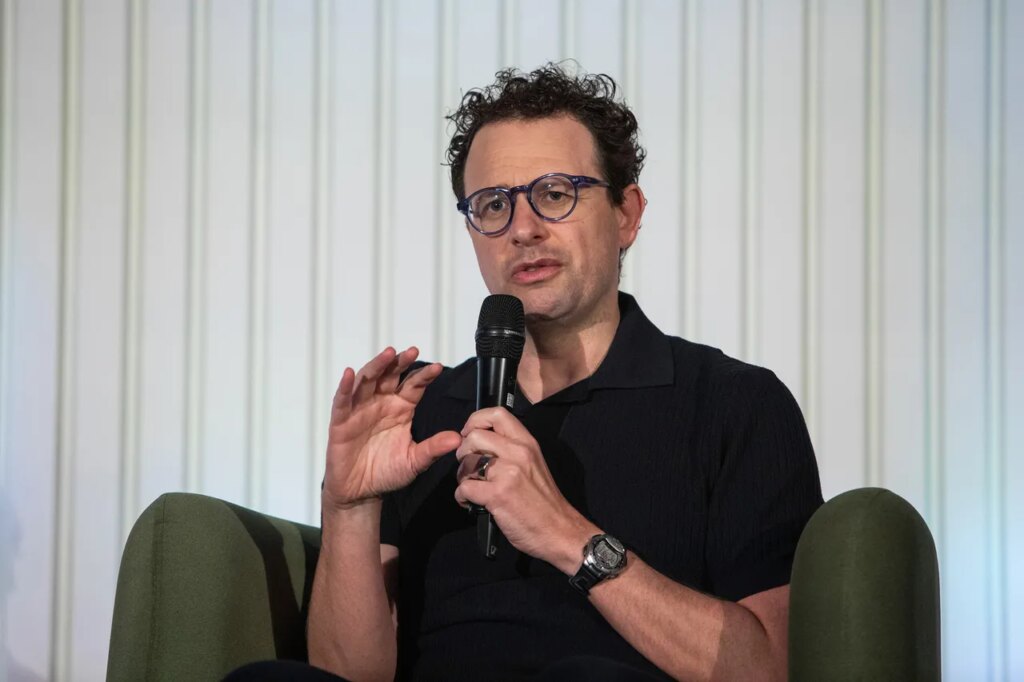
Anthropic is moving into a new London office as it seeks to expand its research and commercial footprint in Europe, setting up a scrap between the leading AI labs for talent emerging from British universities. The company, which opened its first London office in 2023, is moving to the same neighborhood as Google DeepMind, OpenAI, Meta, Wayve, Isomorphic Labs, Synthesia, and various AI research institutions. Anthropic's new, 158,000 square foot office footprint will have space enough for 800 people -- four times its current headcount -- giving it room to potentially outscale OpenAI, which itself recently announced an expansion in London. "Europe's largest businesses and fastest-growing startups are choosing Claude, and we're scaling to match," says Pip White, head of EMEA North at Anthropic. "The UK combines ambitious enterprises and institutions that understand what's at stake with AI safety with an exceptional pool of AI talent -- we want to be where all of that comes together. UK government officials had reportedly attempted to coax Anthropic into expanding its presence in London after the company recently fell out with the US administration. Anthropic refused to allow its models to be used in mass surveillance and autonomous weapon systems, leading to an ongoing legal battle between the AI lab and the Pentagon. As part of the expansion, Anthropic says it will deepen its work with the UK's AI Security Institute, a government body that this week published a risk evaluation of its latest model, Claude Mythos Preview. According to Politico, the UK government is one of few across Europe to have been granted access to the model, which Anthropic has released to only select parties, citing concerns over the potential for its abuse by cybercriminals. The increasing concentration of AI companies in the same London district is an important step in creating a pathway for research to translate into AI products, says Geraint Rees, vice-provost at University College London, whose campus is around the corner from Anthropic's new office. "This cluster didn't emerge from a planning document. It grew because serious researchers and companies understand that proximity isn't a nice-to-have," he said last month, speaking at an event attended by WIRED. "That's how the innovation system actually works. It's not a clean, linear transfer from lab to market. It's messier, richer, more human than that."
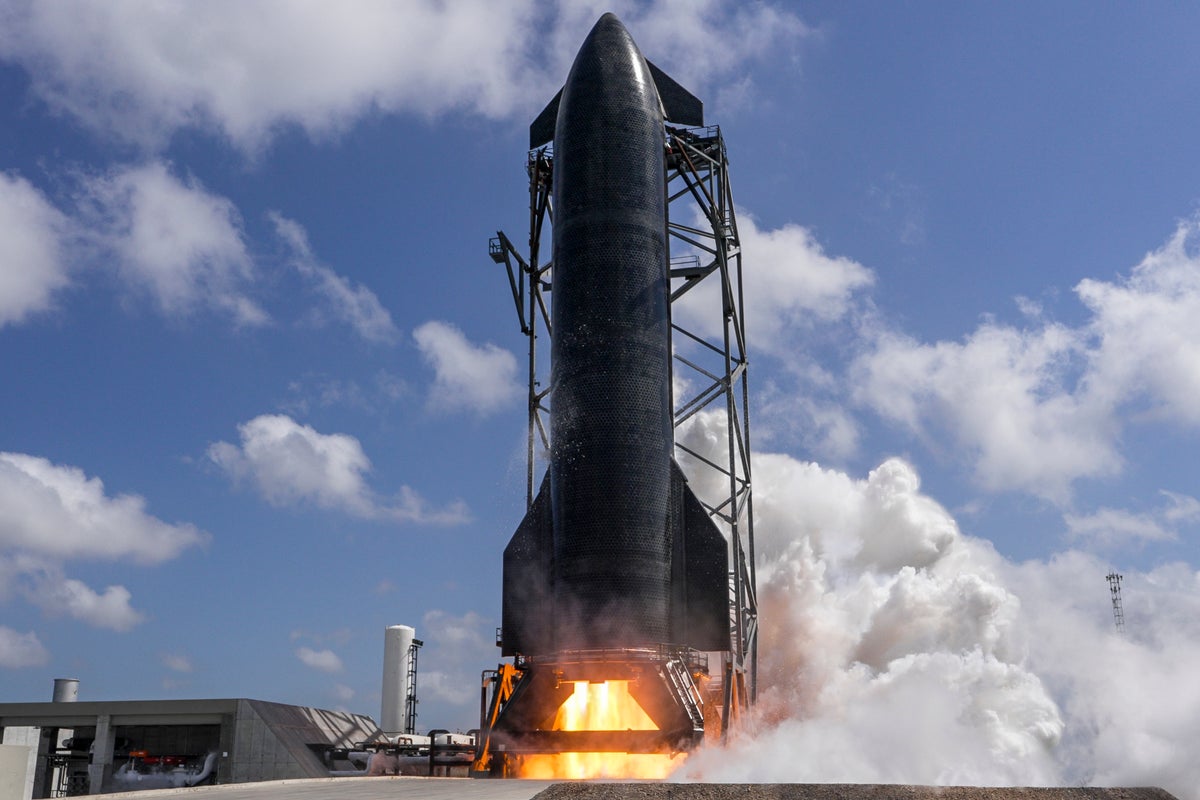
SpaceX fires up world's biggest rocket ahead of crucial flight
SpaceX has completed an important test of what CEO Elon Musk describes as "the most powerful object ever made". The company fired up its Starship megarocket at its Starbase facility in southern Texas on Wednesday, ahead of what will be a landmark flight next month. The static fire of the Super Heavy rocket, which came a day after a similar test of the smaller upper stage rocket, saw its 33 engines light up while the spacecraft remained tethered to the launchpad. When stacked together, the Starship rocket measures 124 metres tall and is capable of carrying more than 100 tons to low Earth orbit, according to Mr Musk. The rocket is crucial to Nasa's plans to return astronauts to the Moon as part of its Artemis program, with SpaceX contracted to develop a lunar lander alongside Jeff Bezos's Blue Origin. The US space agency completed a lunar flyby earlier this month, which saw four astronauts travel to the Moon last week for the first time in more than 50 years. The first crewed mission to the surface of the Moon is expected to take place in late 2028 as part of Artemis IV, though it will depend on the readiness of Starship and Blue Origin's Blue Moon. Nasa has already been forced to push back its lunar ambitions due to delays with Starship's Human Landing System (HLS), with the mission originally scheduled for December 2025. Ahead of the last Starship flight test in October, safety advisers for the US space agency said that fundamental challenges remain with Starship's HLS. Members of the Aerospace Safety Advisory Panel said the next six months of Starship launches will likely determine whether HLS is capable of flying a crew before the end of the decade. Speaking at a Senate Committee hearing in September, former Nasa chief Jim Bridenstine said Starship delays meant the US was likely to fall behind China in the race to the Moon. "Our complicated architecture requires a dozen or more launches in a short time frame, relies on very challenging technologies that have yet to be developed like cryogenic in-space refueling, and still needs to be human rated," he said. "Unless something changes, it is highly unlikely the United States will beat China's projected timeline to the Moon's surface." No date has been set for the next flight test, which will be the 12th suborbital mission for Starship, though Mr Musk indicated on 3 April that it was "4 to 6 weeks away".
Starlink user growth accelerates as SpaceX eyes public market debut, report says
April 16 (Reuters) - Starlink, the satellite internet unit of Elon Musk's SpaceX, is seeing a surge in global user growth and app downloads, market research firm Apptopia said in a report, highlighting its role in supporting the parent's expected listing this summer. Global downloads of the Starlink app and monthly active users (MAU) more than doubled in the first quarter from a year earlier. The service has now delivered four consecutive quarters of MAU growth above 100%, the report said on Thursday. SpaceX is expected to go public later this year and investor expectations for the listing hinge heavily on Starlink, seen as the primary driver of the company's targeted valuation of around $1.75 trillion. The business generated an estimated $11.4 billion in revenue last year, the report said. The expansion is being driven by both emerging and mature markets. Brazil recorded one of the fastest growth rates, with MAUs jumping roughly over fivefold from the year earlier. It accounts for about 13% of the global user base, up sharply from less than 5% a year ago. Argentina posted user growth of 159%. Together, the two markets represent more than a fifth of global active users. The U.S., Starlink's largest and highest-margin market, also showed strong momentum. App downloads in the country more than tripled year-over-year to a record 1.2 million in the January-March quarter, indicating an acceleration in subscriber acquisition. The combined strength in both emerging and developed markets suggests Starlink remains in a high-growth phase, after its subscriber base breached the 10-million mark in February. Continued subscriber growth will be key, according to analysts, with public market investors looking at future expansion opportunities, including SpaceX's plans to develop orbital data centers as the next phase of growth for its business. (Reporting by Akash Sriram in Bengaluru; Editing by Shilpi Majumdar)
Tesla Cybertruck sales inflated: SpaceX bought 1,279 units
New registration data confirms what Electrek has been reporting for six months: Tesla's Cybertruck sales are being propped up by Elon Musk's other companies. SpaceX alone bought 1,279 Cybertrucks in Q4 2025 -- 18% of every Cybertruck registered in the US that quarter. Without those inter-company purchases, Cybertruck registrations would have fallen 51% year-over-year instead of the numbers Tesla reported. The figures come from S&P Global Mobility registration data first reported by Bloomberg's Dana Hull. Of the 7,071 Cybertrucks registered in the US during the fourth quarter, 1,279 went to SpaceX. Another 60 units were registered to Musk's other ventures -- xAI, The Boring Company, and Neuralink -- bringing the Musk-entity total to 1,339 vehicles, or roughly 19% of Q4 registrations. At the Cybertruck's Q4 2025 pricing, that's well over $100 million in revenue that Tesla effectively booked by selling trucks to companies Elon Musk controls. Electrek first reported in October 2025 that truckloads of Cybertrucks were being delivered to SpaceX's Starbase facility and to xAI offices, based on photos and a confirmation from Cybertruck lead engineer Wes Morrill that SpaceX and Tesla were "replacing support fleets" with the vehicle. In December, we estimated SpaceX had bought over 1,000 Cybertrucks -- with the real number potentially reaching 2,000 -- at a cost somewhere between $80 million and $160 million. At the time, we had visual evidence but no registration data to pin down the exact figure. Now we do. SpaceX's 1,279 Q4 purchases land squarely in the middle of that estimate, and the S&P Global Mobility data -- the gold standard for US vehicle registration counts -- confirms the scale of the arrangement. The purchases didn't stop in Q4. According to the same dataset, Musk's companies bought another 158 Cybertrucks in January 2026 and 67 in February 2026. Tesla originally projected 250,000 Cybertrucks sold per year. The current pace, after stripping out the inter-company purchases, is closer to 20,000 -- less than 10% of what Musk told investors to expect. Sam Fiorani of AutoForecast Solutions put it to Bloomberg bluntly: "Tesla is running out of buyers for the Cybertruck." The product has been in structural decline for over a year. The Ford F-150 Lightning outsold the Cybertruck in 2025 before Ford discontinued the Lightning for not selling enough. Tesla has tried raising prices to create artificial urgency, shipping the truck to the Middle East, and suggesting unsold units could be repurposed for cargo delivery. None of it worked. The inventory problem got bad enough that Musk's own companies became Tesla's single largest Q4 customer. One critical caveat: these numbers cover Q4 2025, January, and February 2026 -- a period when the cheapest Cybertruck started at $80,000. On February 19, Tesla launched a new AWD Cybertruck at $60,000 -- the lowest price the truck has ever been offered at -- and cut the Cyberbeast by $15,000 to $100,000. That means the truly interesting test of consumer demand hasn't happened yet. Q2 2026 is the first full quarter where a meaningfully cheaper Cybertruck is available to real buyers. If the new AWD version genuinely opens up demand, the SpaceX-dependent share of sales should collapse. If it doesn't, the Cybertruck story is even worse than the Q4 data suggests -- because Tesla will have cut margins and still needed Musk's companies to hit the numbers. We've been reporting on this since October, and it's satisfying to finally have the S&P Global Mobility number to attach to what was, until today, a story built on truck-spotting and engineer tweets. 1,279 Cybertrucks to SpaceX in a single quarter. The arrangement raises obvious questions about how Tesla accounts for vehicles sold to entities Elon Musk controls. SpaceX is not publicly traded, so those purchases don't get disclosed in the way a fleet deal with Hertz or Uber would. From the outside, it looks like a private company (SpaceX) is absorbing inventory that a public company (Tesla) couldn't move, at prices Tesla set, benefiting Tesla's reported revenue and production numbers during a quarter where Tesla otherwise faced a 51% Cybertruck registration collapse. The $60,000 AWD Cybertruck is the real test. It launched in late February, so Q1 2026 numbers will still be mostly full-price inventory, but Q2 will be the first clean read on whether actual consumers want this truck at a price closer to what Musk originally promised.

Starlink user growth accelerates as SpaceX eyes public market debut, report says
April 16 (Reuters) - Starlink, the satellite internet unit of Elon Musk's SpaceX, is seeing a surge in global user growth and app downloads, market research firm Apptopia said in a report, highlighting its role in supporting the parent's expected listing this summer. Global downloads of the Starlink app and monthly active users (MAU) more than doubled in the first quarter from a year earlier. The service has now delivered four consecutive quarters of MAU growth above 100%, the report said on Thursday. SpaceX is expected to go public later this year and investor expectations for the listing hinge heavily on Starlink, seen as the primary driver of the company's targeted valuation of around $1.75 trillion. The business generated an estimated $11.4 billion in revenue last year, the report said. The expansion is being driven by both emerging and mature markets. Brazil recorded one of the fastest growth rates, with MAUs jumping roughly over fivefold from the year earlier. It accounts for about 13% of the global user base, up sharply from less than 5% a year ago. Argentina posted user growth of 159%. Together, the two markets represent more than a fifth of global active users. The U.S., Starlink's largest and highest-margin market, also showed strong momentum. App downloads in the country more than tripled year-over-year to a record 1.2 million in the January-March quarter, indicating an acceleration in subscriber acquisition. The combined strength in both emerging and developed markets suggests Starlink remains in a high-growth phase, after its subscriber base breached the 10-million mark in February. Continued subscriber growth will be key, according to analysts, with public market investors looking at future expansion opportunities, including SpaceX's plans to develop orbital data centers as the next phase of growth for its business. (Reporting by Akash Sriram in Bengaluru; Editing by Shilpi Majumdar)
Starlink user growth accelerates as SpaceX eyes public market debut, report says By Reuters
April 16 (Reuters) - Starlink, the satellite internet unit of Elon Musk's SpaceX, is seeing a surge in global user growth and app downloads, market research firm Apptopia said in a report, highlighting its role in supporting the parent's expected listing this summer. Global downloads of the Starlink app and monthly active users (MAU) more than doubled in the first quarter from a year earlier. The service has now delivered four consecutive quarters of MAU growth above 100%, the report said on Thursday. SpaceX is expected to go public later this year and investor expectations for the listing hinge heavily on Starlink, seen as the primary driver of the company's targeted valuation of around $1.75 trillion. The business generated an estimated $11.4 billion in revenue last year, the report said. The expansion is being driven by both emerging and mature markets. Brazil recorded one of the fastest growth rates, with MAUs jumping roughly over fivefold from the year earlier. It accounts for about 13% of the global user base, up sharply from less than 5% a year ago. Argentina posted user growth of 159%. Together, the two markets represent more than a fifth of global active users. The U.S., Starlink's largest and highest-margin market, also showed strong momentum. App downloads in the country more than tripled year-over-year to a record 1.2 million in the January-March quarter, indicating an acceleration in subscriber acquisition. The combined strength in both emerging and developed markets suggests Starlink remains in a high-growth phase, after its subscriber base breached the 10-million mark in February. Continued subscriber growth will be key, according to analysts, with public market investors looking at future expansion opportunities, including SpaceX's plans to develop orbital data centers as the next phase of growth for its business.

Starlink user growth accelerates as SpaceX eyes public market debut, report says
April 16 (Reuters) - Starlink, the satellite internet unit of Elon Musk's SpaceX, is seeing a surge in global user growth and app downloads, market research firm Apptopia said in a report, highlighting its role in supporting the parent's expected listing this summer. Global downloads of the Starlink app and monthly active users (MAU) more than doubled in the first quarter from a year earlier. The service has now delivered four consecutive quarters of MAU growth above 100%, the report said on Thursday. SpaceX is expected to go public later this year and investor expectations for the listing hinge heavily on Starlink, seen as the primary driver of the company's targeted valuation of around $1.75 trillion. The business generated an estimated $11.4 billion in revenue last year, the report said. The expansion is being driven by both emerging and mature markets. Brazil recorded one of the fastest growth rates, with MAUs jumping roughly over fivefold from the year earlier. It accounts for about 13% of the global user base, up sharply from less than 5% a year ago. Argentina posted user growth of 159%. Together, the two markets represent more than a fifth of global active users. The U.S., Starlink's largest and highest-margin market, also showed strong momentum. App downloads in the country more than tripled year-over-year to a record 1.2 million in the January-March quarter, indicating an acceleration in subscriber acquisition. The combined strength in both emerging and developed markets suggests Starlink remains in a high-growth phase, after its subscriber base breached the 10-million mark in February. Continued subscriber growth will be key, according to analysts, with public market investors looking at future expansion opportunities, including SpaceX's plans to develop orbital data centers as the next phase of growth for its business. (Reporting by Akash Sriram in Bengaluru; Editing by Shilpi Majumdar)
Starlink user growth accelerates as SpaceX eyes public market debut, report says
April 16 (Reuters) - Starlink, the satellite internet unit of Elon Musk's SpaceX, is seeing a surge in global user growth and app downloads, market research firm Apptopia said in a report, highlighting its role in supporting the parent's expected listing this summer. Global downloads of the Starlink app and monthly active users (MAU) more than doubled in the first quarter from a year earlier. The service has now delivered four consecutive quarters of MAU growth above 100%, the report said on Thursday. SpaceX is expected to go public later this year and investor expectations for the listing hinge heavily on Starlink, seen as the primary driver of the company's targeted valuation of around $1.75 trillion. The business generated an estimated $11.4 billion in revenue last year, the report said. The expansion is being driven by both emerging and mature markets. Brazil recorded one of the fastest growth rates, with MAUs jumping roughly over fivefold from the year earlier. It accounts for about 13% of the global user base, up sharply from less than 5% a year ago. Argentina posted user growth of 159%. Together, the two markets represent more than a fifth of global active users. The U.S., Starlink's largest and highest-margin market, also showed strong momentum. App downloads in the country more than tripled year-over-year to a record 1.2 million in the January-March quarter, indicating an acceleration in subscriber acquisition. The combined strength in both emerging and developed markets suggests Starlink remains in a high-growth phase, after its subscriber base breached the 10-million mark in February. Continued subscriber growth will be key, according to analysts, with public market investors looking at future expansion opportunities, including SpaceX's plans to develop orbital data centers as the next phase of growth for its business. (Reporting by Akash Sriram in Bengaluru; Editing by Shilpi Majumdar)

SpaceX fires up world's biggest rocket ahead of crucial flight
Add Yahoo as a preferred source to see more of our stories on Google. SpaceX has completed an important test of what CEO Elon Musk describes as "the most powerful object ever made". The company fired up its Starship megarocket at its Starbase facility in southern Texas on Wednesday, ahead of what will be a landmark flight next month. The static fire of the Super Heavy rocket, which came a day after a similar test of the smaller upper stage rocket, saw its 33 engines light up while the spacecraft remained tethered to the launchpad. When stacked together, the Starship rocket measures 124 metres tall and is capable of carrying more than 100 tons to low Earth orbit, according to Mr Musk. The rocket is crucial to Nasa's plans to return astronauts to the Moon as part of its Artemis program, with SpaceX contracted to develop a lunar lander alongside Jeff Bezos's Blue Origin. The US space agency completed a lunar flyby earlier this month, which saw four astronauts travel to the Moon last week for the first time in more than 50 years. The first crewed mission to the surface of the Moon is expected to take place in late 2028 as part of Artemis IV, though it will depend on the readiness of Starship and Blue Origin's Blue Moon. Nasa has already been forced to push back its lunar ambitions due to delays with Starship's Human Landing System (HLS), with the mission originally scheduled for December 2025. Ahead of the last Starship flight test in October, safety advisers for the US space agency said that fundamental challenges remain with Starship's HLS. Members of the Aerospace Safety Advisory Panel said the next six months of Starship launches will likely determine whether HLS is capable of flying a crew before the end of the decade. Speaking at a Senate Committee hearing in September, former Nasa chief Jim Bridenstine said Starship delays meant the US was likely to fall behind China in the race to the Moon. "Our complicated architecture requires a dozen or more launches in a short time frame, relies on very challenging technologies that have yet to be developed like cryogenic in-space refueling, and still needs to be human rated," he said. "Unless something changes, it is highly unlikely the United States will beat China's projected timeline to the Moon's surface." No date has been set for the next flight test, which will be the 12th suborbital mission for Starship, though Mr Musk indicated on 3 April that it was "4 to 6 weeks away".
'God of chaos' asteroid Apophis set to pass close to Earth, says NASA
Add Yahoo as a preferred source to see more of our stories on Google. A large asteroid named after a god of chaos is on track for a historic close pass of Earth, according to NASA. The space agency says the "potentially hazardous asteroid" will come closer than many orbiting satellites and should be visible from the Eastern Hemisphere without telescope or binoculars. However, there's no risk of it impacting our planet for at least 100 years. Named Apophis after an Egyptian deity known as the god of chaos and eternal darkness, it's scheduled to pass Earth on 13 April 2029. The European Space Agency is sending a spacecraft to shadow it as it speeds by, while NASA has also redirected its OSIRIS craft to follow the asteroid. NASA says it is "very rare" for an asteroid so large to come this close: it's at least 450m (1,480ft) long - about the height of the Eiffel Tower. It will reach 20,000 miles (32,000km) from the Earth's surface, making it the closest approach by an asteroid of this size that scientists have known about in advance. "It's likely that an event like this has not happened at any time in recorded human history," NASA says. "Without a doubt this is the first time it's happened when humans have had the technology to observe it." Apophis is a remnant from the early formation of our solar system about 4.6 billion years ago and originated in the main asteroid belt between Mars and Jupiter. "Over millions of years, its orbit was changed primarily by the gravitational influence of large planets like Jupiter so that it now orbits the Sun closer to Earth," NASA says. Apophis was discovered in 2004 by astronomers Roy Tucker, David Tholen, and Fabrizio Bernardi at Kitt Peak observatory near Tucson in the US state of Arizona. Mr Tholen told NASA that naming it after the ancient Egyptian god of evil and destruction seemed appropriate name for such a potentially destructive asteroid.
Starlink user growth accelerates as SpaceX eyes public market debut, report says
April 16 : Starlink, the satellite internet unit of Elon Musk's SpaceX, is seeing a surge in global user growth and app downloads, market research firm Apptopia said in a report, highlighting its role in supporting the parent's expected listing this summer. Global downloads of the Starlink app and monthly active users (MAU) more than doubled in the first quarter from a year earlier. The service has now delivered four consecutive quarters of MAU growth above 100 per cent, the report said on Thursday. SpaceX is expected to go public later this year and investor expectations for the listing hinge heavily on Starlink, seen as the primary driver of the company's targeted valuation of around $1.75 trillion. The business generated an estimated $11.4 billion in revenue last year, the report said. The expansion is being driven by both emerging and mature markets. Brazil recorded one of the fastest growth rates, with MAUs jumping roughly over fivefold from the year earlier. It accounts for about 13 per cent of the global user base, up sharply from less than 5 per cent a year ago. Argentina posted user growth of 159 per cent. Together, the two markets represent more than a fifth of global active users. The U.S., Starlink's largest and highest-margin market, also showed strong momentum. App downloads in the country more than tripled year-over-year to a record 1.2 million in the January-March quarter, indicating an acceleration in subscriber acquisition. The combined strength in both emerging and developed markets suggests Starlink remains in a high-growth phase, after its subscriber base breached the 10-million mark in February. Continued subscriber growth will be key, according to analysts, with public market investors looking at future expansion opportunities, including SpaceX's plans to develop orbital data centers as the next phase of growth for its business.
Anthropic Plots Major London Expansion
Anthropic is moving into a new London office as it seeks to expand its research and commercial footprint in Europe, setting up a scrap between the leading AI labs for talent emerging from British universities. The company, which opened its first London office in 2023, is moving to the same neighborhood as Google DeepMind, OpenAI, Meta, Wayve, Isomorphic Labs, Synthesia, and various AI research institutions. Anthropic's new, 158,000 square foot office footprint will have space enough for 800 people -- four times its current headcount -- giving it room to potentially outscale OpenAI, which itself recently announced an expansion in London. "Europe's largest businesses and fastest-growing startups are choosing Claude, and we're scaling to match," says Pip White, head of EMEA North at Anthropic. "The UK combines ambitious enterprises and institutions that understand what's at stake with AI safety with an exceptional pool of AI talent -- we want to be where all of that comes together. UK government officials had reportedly attempted to coax Anthropic into expanding its presence in London after the company recently fell out with the US administration. Anthropic refused to allow its models to be used in mass surveillance and autonomous weapon systems, leading to an ongoing legal battle between the AI lab and the Pentagon. As part of the expansion, Anthropic says it will deepen its work with the UK's AI Security Institute, a government body that this week published a risk evaluation of its latest model, Claude Mythos Preview. According to Politico, the UK government is one of few across Europe to have been granted access to the model, which Anthropic has released to only select parties, citing concerns over the potential for its abuse by cybercriminals. The increasing concentration of AI companies in the same London district is an important step in creating a pathway for research to translate into AI products, says Geraint Rees, vice-provost at University College London, whose campus is around the corner from Anthropic's new office. "This cluster didn't emerge from a planning document. It grew because serious researchers and companies understand that proximity isn't a nice-to-have," he said last month, speaking at an event attended by WIRED. "That's how the innovation system actually works. It's not a clean, linear transfer from lab to market. It's messier, richer, more human than that."

ChatGPT Maker OpenAI Shifts Its Focus to Business Users Amid Anthropic Pressure
The same ChatGPT chatbot that gave OpenAI's chief financial officer Sarah Friar a tilapia recipe for a recent Sunday night dinner at home is also now doing her most mundane tasks at work like summarizing her emails and Slack messages. Friar and other company executives are banking OpenAI's future on more of the latter as it shifts its focus to business-oriented products while shedding some of its consumer offerings as a pathway to profitability. OpenAI says it will introduce a new artificial intelligence model for "high-value professional work" as the company faces heightened competition with rival Anthropic in attracting corporate customers to adopt AI assistants in their workplaces. "You'll see a new model coming from us in short order. We feel very excited about it," Friar said in an interview with The Associated Press. OpenAI boasts of more than 900 million weekly users of its core ChatGPT product, and Friar said about 95% of them "don't pay anything" for the popular chatbot. But while all those interactions build habits and reliance, they also strain the costly computing resources needed to power the company's AI systems and highlight the need for big business customers to help pay the bills. OpenAI, valued at $852 billion, and Anthropic, valued at $380 billion, both lose more money than they make, putting the privately-owned San Francisco-based AI research laboratories in a fierce competition to generate more revenue as they race toward becoming publicly traded on Wall Street. A push to improve performance and sales of OpenAI's business-oriented products -- already Anthropic's bread and butter -- has driven OpenAI to abandon some consumer initiatives, like the AI video generator app Sora. "I think it was a little heartbreaking, but we're like, OK, it's not the main event right now," Friar said. "We need to make sure that our new model that's coming has enough compute." Codenamed Spud, OpenAI says its "smartest model yet" offers "stronger reasoning, better understanding of intent and dependencies, better follow-through and more reliable output in production." It's part of OpenAI's answer to Anthropic's new Claude Mythos, which Anthropic claims is so "strikingly capable" that it is limiting its use to select customers because of its apparent ability to surpass human cybersecurity experts in finding or exploiting computer vulnerabilities. Friar, the former CEO of neighborhood social platform Nextdoor, said business customers accounted for about 20% of OpenAI's revenue when she was hired in 2024 as chief financial officer. She said it's now 40% and expected to account for half of OpenAI's sales by the end of the year. It's a sharp turnaround from late last year, when OpenAI co-founder and CEO Sam Altman was promoting a now-shuttered Sora partnership with Disney, launching a plan to sell ads on ChatGPT and floating the idea of letting ChatGPT engage in erotica with paid adult users. Altman said on the "Mostly Human" podcast earlier this month that a sharper focus was needed -- and Friar agrees. "Tech companies, when they're growing, it's just this natural thing that happens. There's so many cool things you could do," she said, adding that companies can end up doing "really badly" if they do too many things, while "great companies are very good at, in a reasonable period of time, kind of doing that winnowing down and refocusing and it's super painful." Signaling that shift was the hiring three months ago of Slack CEO Denise Dresser to be OpenAI's first chief revenue officer. Dresser said in a recent AP interview that she has been laser-focused on meeting with corporate leaders and positioning OpenAI as the go-to platform for workplaces employing AI agents to automate a variety of computer-based job tasks. "It's really clear to me that companies are past the experimentation phase and they're into using AI to do real work," Dresser said. "Leaders at companies are recognizing that AI is probably the most consequential shift of their lifetime." But those leaders also have a choice, namely Anthropic's Claude that has become widely used by software professionals. Founded in 2021 by a group of ex-OpenAI leaders who said they wanted to prioritize AI safety, Anthropic has positioned itself as the more responsible AI vendor. The distinction drew attention when President Donald Trump's administration punished the startup after a contract dispute over AI use in the military, and Altman used the opportunity to cement OpenAI's own deal with the Pentagon. Consumer interest in Anthropic surged and the company said its annualized revenues hit $30 billion, a higher number than what OpenAI has reported, though they measure it differently. Friar and Dresser declined to reveal OpenAI's latest sales but both have suggested that Anthropic's number is inflated because it doesn't account for revenue it must share with cloud computing providers Amazon and Google. Even so, it remains a tight competition that's also tied to the health of the stock market and the future of the economy. "They're likely quite close," said Luke Emberson, a researcher at nonprofit institute Epoch AI. "Certainly the trends show Anthropic is growing much faster than OpenAI. If that continues, they're likely to cross soon." The urgency led Dresser to send a memo to OpenAI employees on Sunday, first reported by The Verge, that asserted that Anthropic's coding focus "gave them an early wedge" but expressing confidence that OpenAI has the "real structural advantage" as AI usage expands beyond software developers and OpenAI builds enough computing capacity to operate its AI systems. "Their story is built on fear, restriction, and the idea that a small group of elites should control AI," Dresser's memo said of Anthropic. "Our positive message will win over time: build powerful systems, put in the right safeguards, expand access, and help people do more." But for skeptics of the financial viability of AI products like ChatGPT and Claude, the trajectory of both money-losing companies is alarming as smaller startups increasingly become dependent on their AI tools. Anthropic has already imposed rate limits on heavy users, forcing some to wait for hours to use Claude, and both companies have set up service tiers that reward premium payers, said author and AI critic Ed Zitron. "It's what I call the subprime AI crisis," Zitron said. "People built their lives and they built their businesses on top of these companies that, as they try and save money, will start turning the screws." One thing that both AI leaders and critics agree on is that it is an expensive technology, though whether it is worth the cost in electricity-hungry AI computers remains to be seen. "People will say, well, 'Once they go public, they're safe.' That's not true," Zitron said. "Public companies can and will die, especially ones that are dependent on $100 billion to $200 billion every year or so, just to keep breathing."

Apophis Countdown: Asteroid 'God Of Chaos' Will Pass Closer Than Satellites, Visible To Naked Eyes!
A near-Earth asteroid, 99942 Apophis, also dubbed the God of Chaos, will make a terrifyingly close encounter with Earth on April 13, 2029. With a mean diameter of 340 meters (1,115 feet), the asteroid has a long axis of at least 450 meters (1,480 feet). An asteroid of this size and this close passes by Earth once in a few thousand years. Apophis is grouped with Athens, a group of Earth-crossing asteroids with an orbital period that is shorter than 365 Earth days. If its orbital period around the Sun exceeds one year, it will be classified under the Apollo group. Discovered on June 19, 2004, by astronomers Roy Tucker (1951-2021), David Tholen, and Fabrizio Bernardi at Kitt Peak National Observatory near Tucson, Arizona, scientists initially speculated it might impact Earth by either 2029, 2036, or 2068! The potentially hazardous asteroid has since been tracked and its path mapped out meticulously. Apophis will not collide with Earth for at least not the next 100 years. However, in 2029 the NEO will fly closest to the planet by nearly 20,000 miles, or about 32,000 kilometers. That is scarily closer than most satellites in geosynchronous orbit, which is about 22,326 miles, or 36,000 kilometers. In its 2021 study Davide Farnocchia of NASA's Center for Near-Earth Object Studies (CNEOS) stated "A 2068 impact is not in the realm of possibility anymore, and our calculations don't show any impact risk for at least the next 100 years. With the support of recent optical observations and additional radar observations, the uncertainty in Apophis' orbit has collapsed from hundreds of kilometers to just a handful of kilometers when projected to 2029. This greatly improved knowledge of its position in 2029 provides more certainty of its future motion, so we can now remove Apophis from the risk list." The latest calculation of the trajectory of Apophis was done with a 70-meter radio antenna and the Deep Space Network (DSN) to track the asteroid's motion precisely with an accuracy of about 150 meters. The scientists are trying to determine Apophis' spin state to determine its orientation. It will help scientists know if the NEO will cause "asteroid quakes" during the 2029 flyby. For stargazers in the Eastern Hemisphere, the asteroid will be visible even without the aid of a telescope or binoculars. Meanwhile, NASA's spacecraft OSIRIS-REx is on its way to rendezvous with Apophis for study and accompany its flyby in 2029. See Also: Will Doomsday Asteroid 2024 YR4 Impact The Moon In 2032? NASA Shares Update With Latest James Webb Data Cover: ESA

ChatGPT maker OpenAI shifts its focus to business users amid Anthropic pressure
The same ChatGPT chatbot that gave OpenAI's chief financial officer Sarah Friar a tilapia recipe for a recent Sunday night dinner at home is also now doing her most mundane tasks at work like summarizing her emails and Slack messages. Friar and other company executives are banking OpenAI's future on more of the latter as it shifts its focus to business-oriented products while shedding some of its consumer offerings as a pathway to profitability. OpenAI says it will introduce a new artificial intelligence model for "high-value professional work" as the company faces heightened competition with rival Anthropic in attracting corporate customers to adopt AI assistants in their workplaces. "You'll see a new model coming from us in short order. We feel very excited about it," Friar said in an interview with The Associated Press. OpenAI boasts of more than 900 million weekly users of its core ChatGPT product, and Friar said about 95% of them "don't pay anything" for the popular chatbot. But while all those interactions build habits and reliance, they also strain the costly computing resources needed to power the company's AI systems and highlight the need for big business customers to help pay the bills. OpenAI, valued at $852 billion, and Anthropic, valued at $380 billion, both lose more money than they make, putting the privately-owned San Francisco-based AI research laboratories in a fierce competition to generate more revenue as they race toward becoming publicly traded on Wall Street. A push to improve performance and sales of OpenAI's business-oriented products -- already Anthropic's bread and butter -- has driven OpenAI to abandon some consumer initiatives, like the AI video generator app Sora. "I think it was a little heartbreaking, but we're like, OK, it's not the main event right now," Friar said. "We need to make sure that our new model that's coming has enough compute." Codenamed Spud, OpenAI says its "smartest model yet" offers "stronger reasoning, better understanding of intent and dependencies, better follow-through and more reliable output in production." It's part of OpenAI's answer to Anthropic's new Claude Mythos, which Anthropic claims is so "strikingly capable" that it is limiting its use to select customers because of its apparent ability to surpass human cybersecurity experts in finding or exploiting computer vulnerabilities. Friar, the former CEO of neighborhood social platform Nextdoor, said business customers accounted for about 20% of OpenAI's revenue when she was hired in 2024 as chief financial officer. She said it's now 40% and expected to account for half of OpenAI's sales by the end of the year. It's a sharp turnaround from late last year, when OpenAI co-founder and CEO Sam Altman was promoting a now-shuttered Sora partnership with Disney, launching a plan to sell ads on ChatGPT and floating the idea of letting ChatGPT engage in erotica with paid adult users. Altman said on the "Mostly Human" podcast earlier this month that a sharper focus was needed -- and Friar agrees. "Tech companies, when they're growing, it's just this natural thing that happens. There's so many cool things you could do," she said, adding that companies can end up doing "really badly" if they do too many things, while "great companies are very good at, in a reasonable period of time, kind of doing that winnowing down and refocusing and it's super painful." Signaling that shift was the hiring three months ago of Slack CEO Denise Dresser to be OpenAI's first chief revenue officer. Dresser said in a recent AP interview that she has been laser-focused on meeting with corporate leaders and positioning OpenAI as the go-to platform for workplaces employing AI agents to automate a variety of computer-based job tasks. "It's really clear to me that companies are past the experimentation phase and they're into using AI to do real work," Dresser said. "Leaders at companies are recognizing that AI is probably the most consequential shift of their lifetime." But those leaders also have a choice, namely Anthropic's Claude that has become widely used by software professionals. Founded in 2021 by a group of ex-OpenAI leaders who said they wanted to prioritize AI safety, Anthropic has positioned itself as the more responsible AI vendor. The distinction drew attention when President Donald Trump's administration punished the startup after a contract dispute over AI use in the military, and Altman used the opportunity to cement OpenAI's own deal with the Pentagon. Consumer interest in Anthropic surged and the company said its annualized revenues hit $30 billion, a higher number than what OpenAI has reported, though they measure it differently. Friar and Dresser declined to reveal OpenAI's latest sales but both have suggested that Anthropic's number is inflated because it doesn't account for revenue it must share with cloud computing providers Amazon and Google. Even so, it remains a tight competition that's also tied to the health of the stock market and the future of the economy. "They're likely quite close," said Luke Emberson, a researcher at nonprofit institute Epoch AI. "Certainly the trends show Anthropic is growing much faster than OpenAI. If that continues, they're likely to cross soon." The urgency led Dresser to send a memo to OpenAI employees on Sunday, first reported by The Verge, that asserted that Anthropic's coding focus "gave them an early wedge" but expressing confidence that OpenAI has the "real structural advantage" as AI usage expands beyond software developers and OpenAI builds enough computing capacity to operate its AI systems. "Their story is built on fear, restriction, and the idea that a small group of elites should control AI," Dresser's memo said of Anthropic. "Our positive message will win over time: build powerful systems, put in the right safeguards, expand access, and help people do more." But for skeptics of the financial viability of AI products like ChatGPT and Claude, the trajectory of both money-losing companies is alarming as smaller startups increasingly become dependent on their AI tools. Anthropic has already imposed rate limits on heavy users, forcing some to wait for hours to use Claude, and both companies have set up service tiers that reward premium payers, said author and AI critic Ed Zitron. "It's what I call the subprime AI crisis," Zitron said. "People built their lives and they built their businesses on top of these companies that, as they try and save money, will start turning the screws." One thing that both AI leaders and critics agree on is that it is an expensive technology, though whether it is worth the cost in electricity-hungry AI computers remains to be seen. "People will say, well, 'Once they go public, they're safe.' That's not true," Zitron said. "Public companies can and will die, especially ones that are dependent on $100 billion to $200 billion every year or so, just to keep breathing."