News & Updates
The latest news and updates from companies in the WLTH portfolio.
Kraken Confirms IPO Filing as Valuation Drops to $13.3B
Deutsche Börse acquired a stake through a $200 million share purchase. Kraken co-CEO Arjun Sethi confirmed Tuesday that the cryptocurrency exchange has filed confidentially for an initial public offering with the SEC. Sethi made the disclosure at the Semafor World Economy summit in Washington, D.C. The filing had first been submitted around November 2025, shortly after Kraken raised $800 million at a $20 billion valuation. Valuation Slides as IPO Plans Hold An April 2026 investment round valued Kraken at $13.3 billion, roughly a 33% decline from its late-2025 peak. The round involved a $200 million secondary share purchase by Deutsche Börse Group, the operator of the Frankfurt Stock Exchange. The deal gives Deutsche Börse a roughly 1.5% fully diluted stake and is expected to close in Q2 2026. It builds on a strategic partnership announced in December 2025, focused on bridging traditional finance and crypto through trading, custody, and tokenized assets. Kraken had previously paused its public listing plans in March 2026 because of difficult market conditions. Sethi's comments suggest the confidential filing remains active while the company waits for a more favorable window. Sethi Outlines Retail Trading Mission At the summit, Sethi framed Kraken's broader ambition as making institutional-grade tools available to everyday traders. "What they want at the end of the day is what Citadel and Jane Street have, or JPMorgan has, and they want it accessible to them. That's our mission: How do we make all these products open?" Semafor reported, citing Arjun Sethi, Kraken co-CEO. The exchange has made several moves to support that vision, including its acquisition of NinjaTrader for $1.5 billion and securing direct Federal Reserve master account access earlier this year. Those steps position Kraken alongside a growing wave of crypto firms pursuing public listings in 2026. Whether Kraken moves forward with its IPO may depend on how quickly market sentiment recovers in the months ahead. Meanwhile, as Kraken moves towards a public listing, its industry peer, Coinbase, is celebrating 5 years since its 2021 IPO. Since Coinbase's public listing in April 2021, the first time IPO investors were in profit was in July 2025.

NAACP sues Musk's xAI, alleging illegal operation of gas turbines
Add Yahoo as a preferred source to see more of our stories on Google. WASHINGTON, April 14 (Reuters) - The largest U.S. civil rights group on Tuesday sued xAI and a subsidiary, claiming they illegally operated more than two dozen gas turbines in Mississippi to power its Colossus 2 data center, posing a health risk to local residents. The NAACP, represented by Earthjustice and the Southern Environmental Law Center, sued xAI and subsidiary MZX Tech, charging they violated the federal Clean Air Act by running 27 gas-fired turbines before getting necessary air permits for its massive data center that powers xAI's Grok chatbot. Elon Musk's artificial intelligence startup xAI has invested more than $20 billion to build the data center in Southaven with the full backing of Mississippi Governor Tate Reeves, but the facility, as well as Colossus 1 just over the border in Memphis, Tennessee, has met heavy opposition from local communities due to their effect on local air and environmental quality. "By looking to evade clean air laws to operate dirty turbines that emit pollution and known carcinogens, these companies are following a shameful, familiar pattern: asking Black and frontline communities to bear the toxic brunt of 'innovation,'" said Abre' Conner, director of the Center for Environmental and Climate Justice at the NAACP. The NAACP announced its intention to sue xAI and MZX in February because the Clean Air Act requires 60 days of notice ahead of filing a lawsuit. Mississippi regulators held one public hearing that month about permits for those turbines after just a few days of public notice for the hearing, and subsequently approved the permits. xAI was not immediately available for comment. Earthjustice said that xAI's Southaven power plant has the potential to emit more than 1,700 tons of smog-causing nitrogen oxides (NOx) each year, a major source of smog in the greater Memphis area. They are also estimated to emit 180 tons of fine particulate matter, 500 tons of carbon monoxide, and 19 tons of cancer-causing formaldehyde. (Reporting by Valerie Volcovici; editing by David Gaffen)
NAACP sues xAI for alleged Clean Air Act violations in Southaven
Jason Haley of Southaven, MS, gave public comment against the Southaven turbines permit for xAI that MDEQ Permit Board approved later in the meeting. This story will be updated. The NAACP has moved forward with its plans to sue xAI and its affiliate, MZX Tech LLC. On April 14, the NAACP and the Mississippi State Conference of the NAACP filed a lawsuit against the aforementioned companies in the U.S. District Court for the Northern District of Mississippi. The lawsuit comes after a 60-day notice to sue filed by the NAACP on Feb. 13. (Both the lawsuit and the notice were filed by the Southern Environmental Law Center and Earthjustice on behalf of the NAACP and the Mississippi chapter of the NAACP.) The lawsuit alleges xAI has violated the Clean Air Act by operating 27 turbines without a permit at its 2875 Stanton Road facility. The Stanton Road facility is located at the former Duke Energy site. MZX Tech LLC purchased the site and the surrounding 114 acres in July 2025. The lawsuit also alleges that the 27 turbines could potentially emit more than 1,700 tons of smog-forming nitrogen oxides, which would make the xAI power plant the "largest industrial source of nitrogen oxides in the Greater Memphis area." xAI could not immediately be reached for comment. "...Between August and December 2025, Defendants xAI and its wholly owned subsidiary MZX Tech LLC ... installed and began operating twenty-seven polluting gas turbines ... in Southaven, Mississippi, which is in DeSoto County, without an air permit or regard for the health and safety of people living nearby," the lawsuit states. In August 2025, the Mississippi Department of Environmental Quality allowed the use of 16 unpermitted turbines at the Southaven site. That figure increased to 27 in December 2025, according to email correspondence between Arkansas-based Trinity Consultants and MDEQ representatives. In January, the U.S. Environmental Protection Agency (EPA) updated its Clean Air Act regulation. The updated Federal Register outlines that all stationary and combustion turbines require permits, including temporary ones. On March 10, MDEQ approved a Prevention of Significant Deterioration (or PSD) permit for 41 turbines at xAI's Stanton Road power plant. That permit does not include the aforementioned 27 turbines. On April 9, NAACP, along with environmental advocacy groups Young, Gifted & Green and the Safe and Sound Coalition, filed an appeal with the MDEQ permit board regarding the PSD permit approval. Neil Strebig is a journalist with The Commercial Appeal. He can be reached at [email protected], 901-426-0679.

In the Wake of Anthropic's Mythos, OpenAI Has a New Cybersecurity Model -- and Strategy
OpenAI on Tuesday announced the next phase of its cybersecurity strategy and a new model specifically designed for use by digital defenders, GPT-5.4-Cyber. The news comes in the wake of an announcement last week by competitor Anthropic that its new Claude Mythos Preview model is only being privately released for now -- because, the company says, it could be exploited by hackers and bad actors. Anthropic also announced an industry coalition, including competitors like Google, focused on how advances in generative AI across the field will impact cybersecurity. OpenAI seemed to be seeking to differentiate its message on Tuesday by striking a less catastrophic tone and touting its existing guardrails and defenses while hinting at the need for more advanced protections in the long term. "We believe the class of safeguards in use today sufficiently reduce cyber risk enough to support broad deployment of current models," the company wrote in a blog post. "We expect versions of these safeguards to be sufficient for upcoming more powerful models, while models explicitly trained and made more permissive for cybersecurity work require more restrictive deployments and appropriate controls. Over the long term, to ensure the ongoing sufficiency of AI safety in cybersecurity, we also expect the need for more expansive defenses for future models, whose capabilities will rapidly exceed even the best purpose-built models of today." The company says that it has homed in on three pillars for its cybersecurity approach. The first involves so-called "know your customer" validation systems to allow controlled access to new models that is as broad and "democratized" as possible. "We design mechanisms which avoid arbitrarily deciding who gets access for legitimate use and who doesn't," the company wrote on Tuesday. OpenAI is combining a model where it partners with certain organizations on limited releases with an automated system introduced in February, known as Trusted Access for Cyber or TAC. The second component of the strategy involves "iterative deployment," or a process of "carefully" releasing and then refining new capabilities so the company can get real-world insight and feedback. The blog post particularly highlights "resilience to jailbreaks and other adversarial attacks, and improving defensive capabilities." Finally, the third focus is on investments that the company says support software security and other digital defense as generative AI proliferates. OpenAI says that the initiative fits into its broader security efforts, including an application security AI agent launched last month known as Codex Security, a cybersecurity grants program that began in 2023, a recent donation to the Linux Foundation to support open source security, and the "Preparedness Framework" that is meant to assess and defend against "severe harm from frontier AI capabilities." Anthropic's claims last week that more capable AI models necessitate a cybersecurity reckoning have been controversial among security experts. Some say the concern is overstated and could feed a new wave of anti-hacker sentiment -- consolidating power even more with tech giants. Others, though, emphasize that vulnerabilities and shortcomings in current security defenses are well known and really could be exploited with new speed and intensity by an even broader range of bad actors in the age of agentic AI.
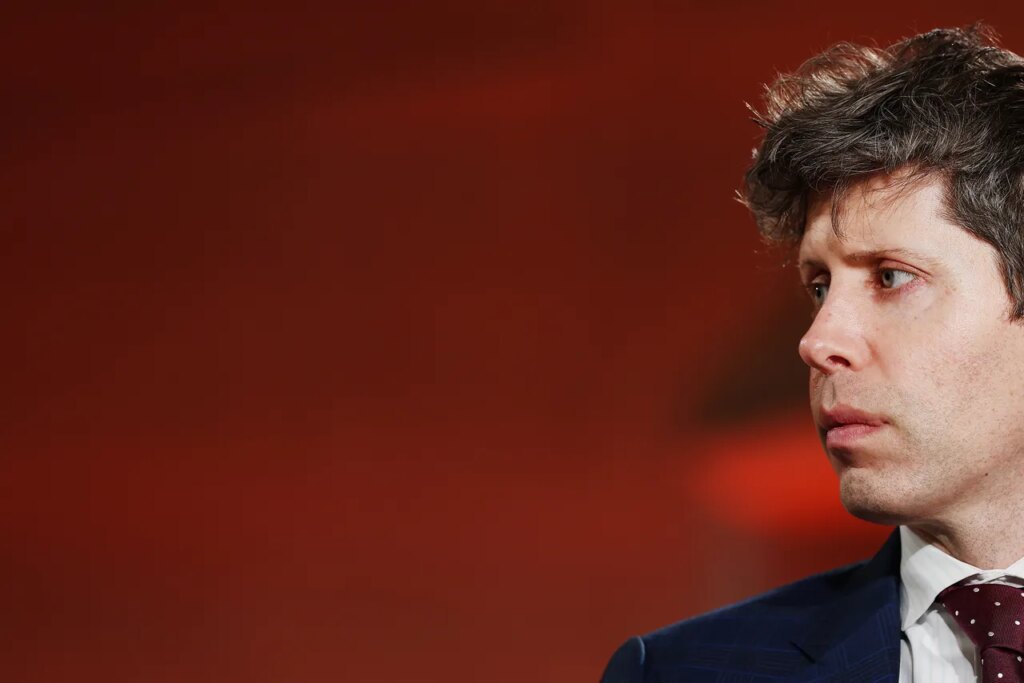
NAACP sues Musk's xAI, alleging illegal operation of gas turbines
WASHINGTON, April 14 (Reuters) - The largest U.S. civil rights group on Tuesday sued xAI and a subsidiary, claiming they illegally operated more than two dozen gas turbines in Mississippi to power its Colossus 2 data center, posing a health risk to local residents. The NAACP, represented by Earthjustice and the Southern Environmental Law Center, sued xAI and subsidiary MZX Tech, charging they violated the federal Clean Air Act by running 27 gas-fired turbines before getting necessary air permits for its massive data center that powers xAI's Grok chatbot. Elon Musk's artificial intelligence startup xAI has invested more than $20 billion to build the data center in Southaven with the full backing of Mississippi Governor Tate Reeves, but the facility, as well as Colossus 1 just over the border in Memphis, Tennessee, has met heavy opposition from local communities due to their effect on local air and environmental quality. "By looking to evade clean air laws to operate dirty turbines that emit pollution and known carcinogens, these companies are following a shameful, familiar pattern: asking Black and frontline communities to bear the toxic brunt of 'innovation,'" said Abre' Conner, director of the Center for Environmental and Climate Justice at the NAACP. The NAACP announced its intention to sue xAI and MZX in February because the Clean Air Act requires 60 days of notice ahead of filing a lawsuit. Mississippi regulators held one public hearing that month about permits for those turbines after just a few days of public notice for the hearing, and subsequently approved the permits. xAI was not immediately available for comment. Earthjustice said that xAI's Southaven power plant has the potential to emit more than 1,700 tons of smog-causing nitrogen oxides (NOx) each year, a major source of smog in the greater Memphis area. They are also estimated to emit 180 tons of fine particulate matter, 500 tons of carbon monoxide, and 19 tons of cancer-causing formaldehyde. (Reporting by Valerie Volcovici; editing by David Gaffen)
NAACP sues Musk's xAI, alleging illegal operation of gas turbines
WASHINGTON, April 14 (Reuters) - The largest U.S. civil rights group on Tuesday sued xAI and a subsidiary, claiming they illegally operated more than two dozen gas turbines in Mississippi to power its Colossus 2 data center, posing a health risk to local residents. The NAACP, represented by Earthjustice and the Southern Environmental Law Center, sued xAI and subsidiary MZX Tech, charging they violated the federal Clean Air Act by running 27 gas-fired turbines before getting necessary air permits for its massive data center that powers xAI's Grok chatbot. Elon Musk's artificial intelligence startup xAI has invested more than $20 billion to build the data center in Southaven with the full backing of Mississippi Governor Tate Reeves, but the facility, as well as Colossus 1 just over the border in Memphis, Tennessee, has met heavy opposition from local communities due to their effect on local air and environmental quality. "By looking to evade clean air laws to operate dirty turbines that emit pollution and known carcinogens, these companies are following a shameful, familiar pattern: asking Black and frontline communities to bear the toxic brunt of 'innovation,'" said Abre' Conner, director of the Center for Environmental and Climate Justice at the NAACP. The NAACP announced its intention to sue xAI and MZX in February because the Clean Air Act requires 60 days of notice ahead of filing a lawsuit. Mississippi regulators held one public hearing that month about permits for those turbines after just a few days of public notice for the hearing, and subsequently approved the permits. xAI was not immediately available for comment. Earthjustice said that xAI's Southaven power plant has the potential to emit more than 1,700 tons of smog-causing nitrogen oxides (NOx) each year, a major source of smog in the greater Memphis area. They are also estimated to emit 180 tons of fine particulate matter, 500 tons of carbon monoxide, and 19 tons of cancer-causing formaldehyde. Reporting by Valerie Volcovici; editing by David Gaffen Our Standards: The Thomson Reuters Trust Principles., opens new tab

NAACP sues Musk's xAI, alleging illegal operation of gas turbines
WASHINGTON, April 14 : The largest U.S. civil rights group on Tuesday sued xAI and a subsidiary, claiming they illegally operated more than two dozen gas turbines in Mississippi to power its Colossus 2 data center, posing a health risk to local residents. The NAACP, represented by Earthjustice and the Southern Environmental Law Center, sued xAI and subsidiary MZX Tech, charging they violated the federal Clean Air Act by running 27 gas-fired turbines before getting necessary air permits for its massive data center that powers xAI's Grok chatbot. Elon Musk's artificial intelligence startup xAI has invested more than $20 billion to build the data center in Southaven with the full backing of Mississippi Governor Tate Reeves, but the facility, as well as Colossus 1 just over the border in Memphis, Tennessee, has met heavy opposition from local communities due to their effect on local air and environmental quality. "By looking to evade clean air laws to operate dirty turbines that emit pollution and known carcinogens, these companies are following a shameful, familiar pattern: asking Black and frontline communities to bear the toxic brunt of 'innovation,'" said Abre' Conner, director of the Center for Environmental and Climate Justice at the NAACP. The NAACP announced its intention to sue xAI and MZX in February because the Clean Air Act requires 60 days of notice ahead of filing a lawsuit. Mississippi regulators held one public hearing that month about permits for those turbines after just a few days of public notice for the hearing, and subsequently approved the permits. xAI was not immediately available for comment. Earthjustice said that xAI's Southaven power plant has the potential to emit more than 1,700 tons of smog-causing nitrogen oxides (NOx) each year, a major source of smog in the greater Memphis area. They are also estimated to emit 180 tons of fine particulate matter, 500 tons of carbon monoxide, and 19 tons of cancer-causing formaldehyde.
NAACP Launches Clean Air Lawsuit Over xAI 'Colossus' Data Center
The NAACP is suing Elon Musk's xAI Corp. for installing a gas plant to power its Colossus 2 data center near Memphis without obtaining the required air permits, potentially putting the nearby, predominately Black community at risk. The organization -- with Earthjustice and the Southern Environmental Law Center acting as legal counsel -- filed its complaint Tuesday in the US District Court for the Northern District of Mississippi. Its lawsuit alleges violations of the federal Clean Air Act and seeks penalties up to $124,400 per day of violation. The NAACP said in its lawsuit that the 27 gas turbines have the potential to emit a significant amount of smog-forming nitrogen oxides above what is allowed by federal law, as well as fine particulate matter and carcinogenic formaldehyde. The data center supports the AI chatbot Grok and operates in Memphis, Tenn., but the gas turbines sit in Southaven, Miss., near communities of color, the complaint says. The lawsuit claims xAI and its subsidiaries began installing and operating combustion turbines on Aug. 1, 2025, at the Southaven site. The Mississippi Department of Environmental Quality said the turbines were exempt from permitting requirements because they were "mobile" and would remain at the location for less than a year. But MDEQ doesn't have the authority to exempt sources of air pollution that are subject to the Clean Air Act's permitting requirements, the lawsuit says. "Absent an appropriate order from this Court, xAI and MZX Tech will continue to emit illegal air pollution as described in this Complaint, which will continue to harm members of the NAACP and NAACP MS," the complaint says. Earthjustice has received funding from Bloomberg Philanthropies, the charitable organization founded by Michael Bloomberg. Bloomberg Law is operated by entities controlled by Michael Bloomberg.

NAACP Takes xAI to Court Over Unlawful Turbines and Health Risks | Headlines
The NAACP is suing xAI and its subsidiary for allegedly operating 27 gas turbines in Mississippi without the necessary permits, a move that could impact local health due to air pollution. The turbines power a data center for xAI's Grok chatbot. Elon Musk's xAI has invested over $20 billion in the data center with support from Mississippi Governor Tate Reeves. However, the facility and a nearby one in Memphis, Tennessee, face criticism for their environmental impact. NAACP's Abre' Conner criticized the companies for shifting the pollution burden onto marginalized communities. The legal proceedings follow a public hearing with minimal notice, which led to permit approval despite potential emissions of harmful pollutants. xAI has yet to comment on the lawsuit, which highlights ongoing tensions between technological advancement and environmental justice.

NAACP sues xAI for alleged Clean Air Act violations in Southaven
Jason Haley of Southaven, MS, gave public comment against the Southaven turbines permit for xAI that MDEQ Permit Board approved later in the meeting. This story will be updated. The NAACP has moved forward with its plans to sue xAI and its affiliate, MZX Tech LLC. On April 14, the NAACP and the Mississippi State Conference of the NAACP filed a lawsuit against the aforementioned companies in the U.S. District Court for the Northern District of Mississippi. The lawsuit comes after a 60-day notice to sue filed by the NAACP on Feb. 13. (Both the lawsuit and the notice were filed by the Southern Environmental Law Center and Earthjustice on behalf of the NAACP and the Mississippi chapter of the NAACP.) The lawsuit alleges xAI has violated the Clean Air Act by operating 27 turbines without a permit at its 2875 Stanton Road facility. The Stanton Road facility is located at the former Duke Energy site. MZX Tech LLC purchased the site and the surrounding 114 acres in July 2025. The lawsuit also alleges that the 27 turbines could potentially emit more than 1,700 tons of smog-forming nitrogen oxides, which would make the xAI power plant the "largest industrial source of nitrogen oxides in the Greater Memphis area." xAI could not immediately be reached for comment. "...Between August and December 2025, Defendants xAI and its wholly owned subsidiary MZX Tech LLC ... installed and began operating twenty-seven polluting gas turbines ... in Southaven, Mississippi, which is in DeSoto County, without an air permit or regard for the health and safety of people living nearby," the lawsuit states. In August 2025, the Mississippi Department of Environmental Quality allowed the use of 16 unpermitted turbines at the Southaven site. That figure increased to 27 in December 2025, according to email correspondence between Arkansas-based Trinity Consultants and MDEQ representatives. In January, the U.S. Environmental Protection Agency (EPA) updated its Clean Air Act regulation. The updated Federal Register outlines that all stationary and combustion turbines require permits, including temporary ones. On March 10, MDEQ approved a Prevention of Significant Deterioration (or PSD) permit for 41 turbines at xAI's Stanton Road power plant. That permit does not include the aforementioned 27 turbines. On April 9, NAACP, along with environmental advocacy groups Young, Gifted & Green and the Safe and Sound Coalition, filed an appeal with the MDEQ permit board regarding the PSD permit approval. Neil Strebig is a journalist with The Commercial Appeal. He can be reached at [email protected], 901-426-0679.
'God of chaos' asteroid to pass close to Earth in 2029
(NEW YORK) -- A rare asteroid will soon be visible to the naked eye in a rare celestial event, according to astronomers. Asteroid 99942 Apophis - named after the Egyptian deity of chaos, darkness and fire - is expected to safely pass close to Earth on April 13, 2029, according to NASA. The asteroid will pass within roughly 20,000 miles of Earth - nearly 12 times closer than the moon's average distance from Earth, and closer than many satellites in geosynchronous orbit - making it one one of the closest approaches ever recorded for an object if its size and a "very rare event," according to NASA. The approach will be visible to observers on the ground in the Eastern Hemisphere, weather permitting, according to NASA. It will be close enough that sky-watchers won't need a telescope or binoculars to see it, astronomers say. When Apophis was first discovered in 2004, it was labeled a potentially hazardous asteroid because of the possibility that it could impact Earth in 2029, 2036 or 2068, according to NASA. After closely tracking the asteroid and its orbit using optical telescopes and ground-based radar, astronomers are now confident that there is no risk of Apophis impacting Earth for at least 100 years. The Earth's gravitational pull could change the asteroid's orbit around the sun as it passes in 2029, making the orbit slightly larger or the orbital period slightly longer, but the risk of impact with Earth will remain the same, NASA says. Its close passage will also afford astronomers around the world the opportunity to learn more about the asteroid. Apophis is the Greek name for the Egyptian god known as Apep. The name was proposed by the astronomers who discovered the asteroid: Roy Tucker, David Tholen and Fabrizio Bernardi of the Kitt Peak National Observatory near Tucson, Arizona. The asteroid is a relic of the early solar system from about 4.6 billion years ago, made of leftover raw material that was never part of a planet or moon, according to NASA. Though its exact size and shape is unknown, it has a mean diameter of about 1,115 feet and a long axis of at least 1,480 feet. Apophis' surface is weathered due to eons of exposure to space weather, including solar wind and cosmic rays, according to the Massachusetts Institute of Technology. Observatories around the world and in space will observe the asteroid's historic approach to Earth in order to better understand its physical properties. NASA has redirected a spacecraft to rendezvous with Apophis shortly after its close approach in 2029, while the European Space Agency is sending a spacecraft to study it. When the April 2029 flyby occurs, Apophis will become a member of the "Apollo" group, the family of asteroids that cross Earth's orbit but that themselves have orbits around the sun that are wider than the Earth's, according to the ESA.

'God of chaos' asteroid to pass close to Earth in 2029 - WEIS | Local & Area News, Sports, & Weather
(NEW YORK) -- A rare asteroid will soon be visible to the naked eye in a rare celestial event, according to astronomers. Asteroid 99942 Apophis - named after the Egyptian deity of chaos, darkness and fire - is expected to safely pass close to Earth on April 13, 2029, according to NASA. The asteroid will pass within roughly 20,000 miles of Earth - nearly 12 times closer than the moon's average distance from Earth, and closer than many satellites in geosynchronous orbit - making it one one of the closest approaches ever recorded for an object if its size and a "very rare event," according to NASA. The approach will be visible to observers on the ground in the Eastern Hemisphere, weather permitting, according to NASA. It will be close enough that sky-watchers won't need a telescope or binoculars to see it, astronomers say. When Apophis was first discovered in 2004, it was labeled a potentially hazardous asteroid because of the possibility that it could impact Earth in 2029, 2036 or 2068, according to NASA. After closely tracking the asteroid and its orbit using optical telescopes and ground-based radar, astronomers are now confident that there is no risk of Apophis impacting Earth for at least 100 years. The Earth's gravitational pull could change the asteroid's orbit around the sun as it passes in 2029, making the orbit slightly larger or the orbital period slightly longer, but the risk of impact with Earth will remain the same, NASA says. Its close passage will also afford astronomers around the world the opportunity to learn more about the asteroid. Apophis is the Greek name for the Egyptian god known as Apep. The name was proposed by the astronomers who discovered the asteroid: Roy Tucker, David Tholen and Fabrizio Bernardi of the Kitt Peak National Observatory near Tucson, Arizona. The asteroid is a relic of the early solar system from about 4.6 billion years ago, made of leftover raw material that was never part of a planet or moon, according to NASA. Though its exact size and shape is unknown, it has a mean diameter of about 1,115 feet and a long axis of at least 1,480 feet. Apophis' surface is weathered due to eons of exposure to space weather, including solar wind and cosmic rays, according to the Massachusetts Institute of Technology. Observatories around the world and in space will observe the asteroid's historic approach to Earth in order to better understand its physical properties. NASA has redirected a spacecraft to rendezvous with Apophis shortly after its close approach in 2029, while the European Space Agency is sending a spacecraft to study it. When the April 2029 flyby occurs, Apophis will become a member of the "Apollo" group, the family of asteroids that cross Earth's orbit but that themselves have orbits around the sun that are wider than the Earth's, according to the ESA.

Crypto exchange Kraken confirms it has confidentially filed for an IPO
Kraken is one of the world's largest crypto exchanges.Tiffany Hagler-Geard | Bloomberg via Getty Images Kraken co-CEO Arjun Sethi said Tuesday that the crypto exchange has confidentially filed for a U.S. initial public offering, confirming CNBC's previous reporting on the matter. Sethi's comments were made at the Semafor World Economy conference in Washington, D.C., the website reported. The executive said Kraken strives to make advanced trading strategies typically reserved for professional investors available to individual investors, according to Semafor. The crypto exchange has reportedly lost more than $6 billion in its valuation. Earlier on Tuesday Bloomberg reported that Deutsche Börse Group has committed to investing $200 million in Kraken in exchange for a 1.5% fully diluted ownership stake, implying a $13.3 billion valuation. In November, Kraken announced an $800 million raise at a $20 billion valuation. Less than a month ago, Kraken froze its IPO plans amid a crypto winter that pushed the price of bitcoin to 40% below its October record. The flagship cryptocurrency has been climbing higher in recent weeks. It rose as high as $76,000 on Tuesday, a level not seen since February, and is now up 9% for the month of April. Rival crypto exchange Gemini Space Station has seen its stock fall nearly 49%, however, shares are up 15% month to date.

Kraken Says No Funds at Risk Despite Insider Data Breach Attempt and Blackmail Threats
Two employees at Kraken improperly accessed support data, leading to an extortion attempt with threats to release internal system footage. Crypto exchange Kraken has disclosed that it is currently facing extortion attempts from a criminal group threatening to release videos allegedly showing its internal systems with client data. The company stated that its systems were not breached, no funds were ever at risk, and it will not comply with or negotiate with the attackers. In the latest post on X, Kraken's Chief Security Officer Nick Percoco confirmed that it identified and shut down two separate instances of inappropriate access, which involved limited client support data. The first incident dates back to February 2025, when a trusted source alerted Kraken to a video circulating on a criminal forum that appeared to reveal access to its client support systems. An internal investigation quickly identified the individual responsible as a member of its support team. The employee's access was immediately revoked, and a full investigation was conducted. Additional security measures were also implemented, and a limited number of affected clients were notified. Following the incident, the exchange began working with industry partners and law enforcement agencies to address broader insider recruitment efforts targeting crypto firms, as well as companies in the gaming and telecommunications sectors. More recently, Percoco said that the company received another tip, along with a new video showing similar unauthorized activity. Kraken again identified the individual involved, terminated their access, conducted a full investigation, and notified the small number of affected users. Across both incidents, approximately 2,000 client accounts, which represent about 0.02% of its user base, were potentially viewed. Shortly after access was revoked in these cases, the company began receiving extortion demands. The attackers threatened to distribute materials related to both incidents to media outlets and on social media platforms if their demands were not met. Kraken reiterated that it will not pay the criminals. Based on intelligence gathered during its investigations and ongoing analysis, the company said there is sufficient evidence to support identifying and arresting those responsible. The exec said that Kraken is currently working with federal law enforcement agencies across multiple jurisdictions to pursue all individuals involved. Due to the active nature of the investigation, Percoco stated that he cannot disclose further details at this time, but encouraged anyone with relevant information to come forward. Coinbase also faced a major security incident in 2025 in which a hacker behind a large-scale data breach laundered millions in stolen crypto while openly mocking investigators. Unlike Kraken's internal misuse case, the attack reportedly involved bribed customer support staff who granted unauthorized access to sensitive user data, including identities, account balances, and transaction histories. The attacker also taunted prominent blockchain investigator ZachXBT through Ethereum transaction messages and posted "L bozo" alongside a meme video. Coinbase said it refused a $20 million ransom demand tied to the stolen data.
NAACP sues xAI for 'unpermitted' gas turbines in Southaven
MEMPHIS, Tenn. -- The NAACP has filed a lawsuit on Tuesday against xAI and its subsidiary, MZX Tech. NAACP said it is suing the companies for their unlawful operation of dozens of unpermitted methane gas turbines to power its Colossus 2 data center in Memphis. The Southern Environmental Law Center and Earthjustice are representing the Mississippi State Conference of the NAACP and the national NAACP. The NAACP's lawsuit was filed in the federal district court for the Northern District of Mississippi. "This lawsuit concerns the already-built, unpermitted power plant and follows a 60-day notice of intent to sue, which is required under the Clean Air Act and was sent to xAI in February," said NAACP. "xAI continues to unlawfully operate its power plant even after receiving the notice letter." According to the NAACP, they are asking the court to declare that xAI has violated the Clean Air Act, force xAI to stop operating unpermitted turbines at its Southaven facility, order xAI to install the best available control technology on the power plant, and assess financial penalties to xAI for every day it violated federal law. According to the suit, NAACP claims that xAI is illegally operating 27 gas turbines without an air permit in Southaven, Mississippi, effectively building a power plant for its Colossus 2 data center, which powers the company's chatbot, Grok. NAACP said that the company's failure to get a permit for its power plant, which is located near homes, schools, and churches, creates added health risks for families in North Mississippi and Memphis and is a violation of the Clean Air Act, which requires major sources of pollution to obtain air permits before being constructed or operated. "A data center should not be a potential death sentence for a community's health. By looking to evade clear air laws to operate dirty turbines that emit pollution and known carcinogens, these companies are following a shameful, familiar pattern: asking Black and frontline communities to bear the toxic brunt of 'innovation,'" said Abre' Conner, NAACP Director of Environmental and Climate Justice. "As we shared since xAI started operating in Memphis, our homes, churches, and playgrounds will not be sacrifice zones for Big Tech's convenience. The NAACP stands firm that true progress cannot be built by ignoring community health and our environment. Our right to clean air is not up for negotiation, especially when companies prove expediency not people is their priority." The association says the Southaven plant has the potential to emit more than 1,700 tons of smog-forming nitrogen oxides (NOx) each year, and that the "illegal turbines" also have the potential to release up to 180 tons of fine particulate matter, 500 tons of carbon monoxide, and 19 tons of formaldehyde, a toxic, cancer-causing chemical, each year. "xAI's continued operation of these turbines without a permit and without adequate pollution controls is not only illegal, it's an insult to families living nearby who for months have expressed serious concerns about how air pollution from the company's personal power plant could impact their health and well-being," SELC Senior Attorney Ben Grillot said. "xAI must be held accountable for its reckless, unlawful actions -- and that's exactly what this lawsuit aims to do." This comes after the Mississippi Department of Environmental Quality approved plans for 41 gas turbines at the xAI facility in Southaven in March. WREG has reached out to xAI for comment.

Kraken Reportedly Confirms Confidential IPO Filing As Valuation Falls To $13.3B
Kraken has confidentially filed for an initial public offering, co-CEO Arjun Sethi said Tuesday at Semafor World Economy in Washington, D.C., confirming earlier reports. The disclosure marks a renewed step toward public markets after earlier plans were paused amid volatile crypto conditions. The San Francisco-based exchange was valued at $13.3 billion in an April funding round, down from a $20 billion peak in late 2025, according to Semafor. The round included backing from major investors such as Citadel Securities and reflected shifting sentiment across digital asset markets. Sethi said Kraken aims to bring institutional-grade trading tools to retail users. He compared the platform's ambitions to services offered by firms like Jane Street and JPMorgan Chase, emphasizing broader access to sophisticated financial products. Earlier reports indicated Kraken had paused IPO plans due to weaker trading volumes and falling crypto prices, though the company has not ruled out a future listing. Market conditions have weighed on recent crypto public offerings, including performance declines among newly listed firms. Kraken also recently secured a master account with the Federal Reserve Bank of Kansas City, granting access to U.S. payment infrastructure, including Fedwire. The move allows direct dollar settlement without intermediary banks, a significant milestone for a crypto-native firm. However, the account does not provide interest on reserves or access to Federal Reserve lending facilities. Kraken's recent extortion scare and Deutsche Börse investment Earlier today, Deutsche Börse disclosed an investment of $200 million in Kraken, acquiring a 1.5% fully diluted stake in Payward Inc via secondary share purchase, pending regulatory approval and expected to close in Q2 2026. The deal deepens an existing partnership announced in December 2025, aimed at integrating traditional financial infrastructure with digital asset markets, including regulated crypto trading, derivatives, tokenized assets, and institutional liquidity services. Separately this week, Kraken disclosed two insider-related security incidents involving support staff who accessed limited client data through internal tools. About 2,000 accounts (0.02%) were affected, though no trading systems or client funds were compromised. The incidents led to an extortion attempt by a criminal group claiming to possess internal videos, which Kraken refused to pay. The company revoked access, identified responsible individuals, notified users, and is cooperating with law enforcement while strengthening controls. The episodes highlight ongoing insider threat risks across crypto firms. Galaxy Digital also reported a separate cybersecurity incident involving unauthorized access to a development environment, though no client data or funds were impacted.

In the Wake of Anthropic's Mythos, OpenAI Has a New Cybersecurity Model -- and Strategy
OpenAI on Tuesday announced the next phase of its cybersecurity strategy and a new model specifically designed for use by digital defenders, GPT-5.4-Cyber. The news comes in the wake of an announcement last week by competitor Anthropic that its new Claude Mythos Preview model is only being privately released for now -- because, the company says, it could be exploited by hackers and bad actors. Anthropic also announced an industry coalition, including competitors like Google, focused on how advances in generative AI across the field will impact cybersecurity. OpenAI seemed to be seeking to differentiate its message on Tuesday by striking a less catastrophic tone and touting its existing guardrails and defenses while hinting at the need for more advanced protections in the long term. "We believe the class of safeguards in use today sufficiently reduce cyber risk enough to support broad deployment of current models," the company wrote in a blog post. "We expect versions of these safeguards to be sufficient for upcoming more powerful models, while models explicitly trained and made more permissive for cybersecurity work require more restrictive deployments and appropriate controls. Over the long term, to ensure the ongoing sufficiency of AI safety in cybersecurity, we also expect the need for more expansive defenses for future models, whose capabilities will rapidly exceed even the best purpose-built models of today." The company says that it has homed in on three pillars for its cybersecurity approach. The first involves so-called "know your customer" validation systems to allow controlled access to new models that is as broad and "democratized" as possible. "We design mechanisms which avoid arbitrarily deciding who gets access for legitimate use and who doesn't," the company wrote on Tuesday. OpenAI is combining a model where it partners with certain organizations on limited releases with an automated system introduced in February, known as Trusted Access for Cyber or TAC. The second component of the strategy involves "iterative deployment," or a process of "carefully" releasing and then refining new capabilities so the company can get real-world insight and feedback. The blog post particularly highlights "resilience to jailbreaks and other adversarial attacks, and improving defensive capabilities." Finally, the third focus is on investments that the company says support software security and other digital defense as generative AI proliferates. OpenAI says that the initiative fits into its broader security efforts, including an application security AI agent launched last month known as Codex Security, a cybersecurity grants program that began in 2023, a recent donation to the Linux Foundation to support open source security, and the "Preparedness Framework" that is meant to assess and defend against "severe harm from frontier AI capabilities." Anthropic's claims last week that more capable AI models necessitate a cybersecurity reckoning have been controversial among security experts. Some say the concern is overstated and could feed a new wave of anti-hacker sentiment -- consolidating power even more with tech giants. Others, though, emphasize that vulnerabilities and shortcomings in current security defenses are well known and really could be exploited with new speed and intensity by an even broader range of bad actors in the age of agentic AI.

XAI sued because of alleged Clean Air Act violations
The NAACP, represented by the Southern Environmental Law Center, filed a lawsuit against Elon Musk's xAI. Samuel Hardiman is an enterprise reporter who focuses on government and politics. He began his career at the Tulsa World where he covered business and K-12 education. Hardiman came to Memphis in 2018 to join the Memphis Business Journal, covering government and economic development. He then served as the Commercial Appeal's city hall reporter and later joined The Daily Memphian in 2023. His current work focuses on the intersection of government, public policy, influence and how public dollars are spent.
CoreWeave Just Scored a Major Anthropic Data Center Deal. Does That Make CRWV Stock a Buy Here?
The CoreWeave logo displayed on a smartphone screen_ Image by Robert Way via Shutterstock_ Artificial intelligence (AI) is fast becoming an infrastructure race, and CoreWeave (CRWV) has found itself right in the middle of it. The company, which started out in crypto, now runs cloud systems built to handle heavy AI workloads, helping businesses scale quickly as demand for computing power surges. That rising demand is now showing up in big deals. CoreWeave recently signed a multi-year data center agreement with Anthropic to support its Claude AI models. The plan is to roll out additional compute capacity over time, using advanced chips from Nvidia (NVDA) across U.S. facilities. The news gave the stock a lift, as investors took it as another sign that CoreWeave is becoming a key player in the AI buildout. The backdrop makes it even more interesting. Anthropic, backed by giants like Amazon (AMZN) and Alphabet (GOOG) (GOOGL), is scaling aggressively, and its partnership adds credibility to CoreWeave's platform. Plus, timing is adding to the momentum. On Apr. 9, Meta Platforms (META) expanded its own AI deal with the company, pointing to strong demand from big tech clients. With deals stacking up and AI spending still on the rise, CoreWeave seems to be in a sweet spot. But after the recent run-up, does this Anthropic deal still make the stock worth buying now? CoreWeave, founded in 2017 and headquartered in Livingston, New Jersey, has rapidly established itself as a leader in GPU-optimized cloud infrastructure. With a market capitalization of $46.2 billion, the company supports the accelerating AI revolution through systems designed for generative AI and large-scale compute workloads. Its mission is to streamline modern AI complexity and empower enterprises to deploy intelligence at scale, positioning CoreWeave as a foundational pillar of next-generation technology. CRWV stock has been riding the same wave as the broader AI trade - fast up, sharp down, and never boring. The company went public in March 2025 at $40 and quickly caught fire, rallying to a high of $187 by June 20. That surge was fueled by a string of AI cloud deals, partnerships, acquisitions, and even a push into federal contracts, putting CoreWeave firmly on investors' radar. But the ride has not been smooth. The stock has since pulled back and now trades $117, still well above its 52-week low of $33.51, but about 37% below its peak. Volatility showed up again when the company issued weaker-than-expected Q1 2026 guidance on Feb. 27, triggering an 18.5% single-day drop, reminding investors how sensitive high-growth AI names can be to outlook changes. Even then, the bigger trend remains strong. CRWV is still up 170.65% over the past 52 weeks and 64.82% year-to-date (YTD). Momentum has picked up sharply in recent weeks, with the stock rising 45.52% in a month and over 38.47% in just the past five days, largely driven by the Anthropic deal news. Technically, trading volumes are rising, signaling strong buying interest, while the 14-day RSI has moved into overbought territory at 74.52, suggesting the rally may be running a bit hot in the near term. Even after the pullback, CoreWeave isn't cheap, priced at 4.66 times forward sales. The market is clearly pricing in aggressive AI-driven growth and a long runway ahead, leaving little room for execution missteps. CoreWeave was growing fast, but much of that growth leaned heavily on a few large customers. The agreement with Anthropic begins to ease that dependence and signals a more diversified growth path. This partnership shows that demand for CoreWeave's infrastructure is widening. By bringing in another major AI player, the company is steadily building a more balanced and resilient business model. It is no longer just about landing big deals - it's about who those deals are coming from. Plus, the move reinforces CoreWeave's credibility in a highly competitive space. Winning over advanced AI labs signals that its platform can meet the growing needs of cutting-edge model development. For investors, that shifts the view from customer concentration risk to a wider growth opportunity. CoreWeave's latest results show a company scaling rapidly with the AI boom. In the fourth quarter of 2025, the company delivered a top-line beat, with revenue hitting $1.57 billion, up 110% year-over-year (YOY), driven by surging GPU demand from hyperscalers like Microsoft (MSFT) and OpenAI. For fiscal 2025, revenue reached $5.1 billion, marking an impressive 168% annual growth. But this is a growth-at-all-costs phase. CoreWeave reported an adjusted net loss of $606 million for the year, as it continues to invest heavily to scale. Still, profitability at the operating level showed strength, with adjusted EBITDA more than doubling to $3.1 billion and margins touching 60%. Even more striking, its backlog surged to $66.8 billion - over four times higher than last year - offering strong visibility into future revenue. The company is clearly building ahead of demand. In Q4 alone, capital expenditures hit $8.2 billion, taking the full-year total to $14.9 billion. That's higher than expected, but reflects its ability to bring infrastructure online faster. It added 260 megawatts of active power in Q4 across 43 data centers, with active power capacity totaling 850 megawatts. However, this rapid expansion is also pushing up costs, with operating expenses rising to $1.66 billion and interest expenses climbing to $388 million due to higher debt. To support this scale-up, CoreWeave has been actively strengthening its balance sheet. It ended 2025 with $4.2 billion in cash, cash equivalents, restricted cash and marketable securities, and raised $2.6 billion through convertible notes, while expanding its credit facility to $2.5 billion. Overall, it secured more than $18 billion in capital during the year, backed by over 200 investment partners and financial institutions. Looking ahead, the management has set a cautious tone for the near term, even as the long-term story remains strong. For Q1, revenue is expected to be between $1.9 billion and $2 billion, slightly below market expectations. Margins are also expected to be under pressure, with adjusted operating income projected in the range of $0 to $40 million. Management has made it clear that Q1 will likely be the lowest point for margins this year. The reason is simple - CoreWeave is still in heavy build-out mode. It plans to deploy $6 billion to $7 billion in infrastructure in just Q1, continuing to bring large amounts of new capacity online. As CFO Nitin Agrawal explained, margins should gradually improve through the year, returning to low double-digit levels by Q4 as new capacity starts generating revenue. For the full year 2026, the company expects revenue to reach between $12 billion and $13 billion. At the same time, it plans a massive $30 billion to $35 billion in capital spending, more than double last year's levels. Importantly, management noted that almost all of this spending is backed by already signed customer contracts, giving strong visibility into future growth. Adjusted operating income for the year is expected to come in between $900 million and $1.1 billion, reflecting both scale and improving efficiency over time. CEO Mike Intrator didn't sugarcoat the situation, making it clear on the earnings call that "Our margins reflect the cost of building tomorrow's revenues." Analysts tracking CoreWeave anticipate fiscal 2026 revenue to be around $12.4 billion, while losses are expected to continue, pegged at -$4.16 per share, widening by 54.7% YOY. The turnaround might start showing in fiscal 2027, when losses are expected to shrink by 8.9% annually and come down to -$3.79 per share. DA Davidson remains positive on CoreWeave, raising its price target to $175 from $125 while keeping a "Buy" rating. The brokerage firm points to the recent Anthropic deal and expanded Meta Platforms partnership as signs that CoreWeave is becoming a preferred cloud provider for leading AI labs driving future compute demand. The consensus rating on CRWV stock remains at "Moderate Buy." Among 32 analysts covering the stock now, 19 advise a "Strong Buy," one suggests a "Moderate Buy," 11 analysts are playing it safe with a "Hold" rating, and the remaining one analyst remains skeptical with a "Strong Sell." Even with the stock sliding, analysts are bullish. The stock has already surpassed the average price target of $117.43, and the Street-high target of $180 suggests that the stock could rise as much as 52.8%.
/The%20CoreWeave%20logo%20displayed%20on%20a%20smartphone%20screen_%20Image%20by%20Robert%20Way%20via%20Shutterstock_.jpg)
Xi calls for closer ties with Spain in face of global 'chaos'
Beijing - China's President Xi Jinping warned against a return to the "law of the jungle" in international relations and called for closer economic ties with Spain as he met Prime Minister Pedro Sanchez on Tuesday, according to Chinese state media. The meeting in Beijing came on the second day of Sanchez's visit as he seeks to position Spain as a bridge between China and the European Union, whose relations with the United States are under strain. Xi told Sanchez the two countries should strengthen cooperation in the face of global "chaos and turmoil" and "a contest between justice and force", according to a readout of the talks from state broadcaster CCTV. "Both China and Spain are principled countries that stand for justice. They should strengthen communication, consolidate mutual trust, and cooperate closely to oppose the world's regression to the law of the jungle," Xi said during talks in the Great Hall of the People. "How a country treats international law and the international order reflects its worldview, its conception of order, its values, and its sense of responsibility," Xi said. Spain and China should "seize opportunities" for cooperation in trade, new energy and technology fields, he said. Sanchez welcomed China's role in seeking to resolve the conflict in the Middle East, after a first round of US-Iranian negotiations in Pakistan ended without an agreement. "The role China can play is important in order to find diplomatic means that end this war and contribute to stability and peace," Sanchez told a news conference after the talks. The Socialist leader said international law in the region "is being violated basically by one country", Israel, which has invaded Lebanon in its latest conflict with Iran-backed Hezbollah. Sanchez referred to "those who commit violations or genocides, which is what we are seeing in Gaza, and let us hope the same does not happen in Lebanon, that crimes do not go unpunished". - 'Unsustainable' trade balance - The two leaders also discussed "the reforms our multilateral system needs to better recognise the multipolar reality of today's world", Sanchez said. The Spanish prime minister is seeking to strengthen economic ties with the world's second-largest economy but called China's trade imbalance with the EU "unsustainable" on Monday. He is on his fourth visit to China in four years and follows a steady flow of Western leaders visiting Beijing in recent months as President Donald Trump's tariffs and unpredictable foreign policy have rattled the US's traditional allies. Spanish government sources said a primary goal of Sanchez's trip is to secure greater market access for agricultural and industrial goods, and to explore joint technology ventures.
