News & Updates
The latest news and updates from companies in the WLTH portfolio.
Kraken Parent Attracts $200M Investment From European Exchange Giant
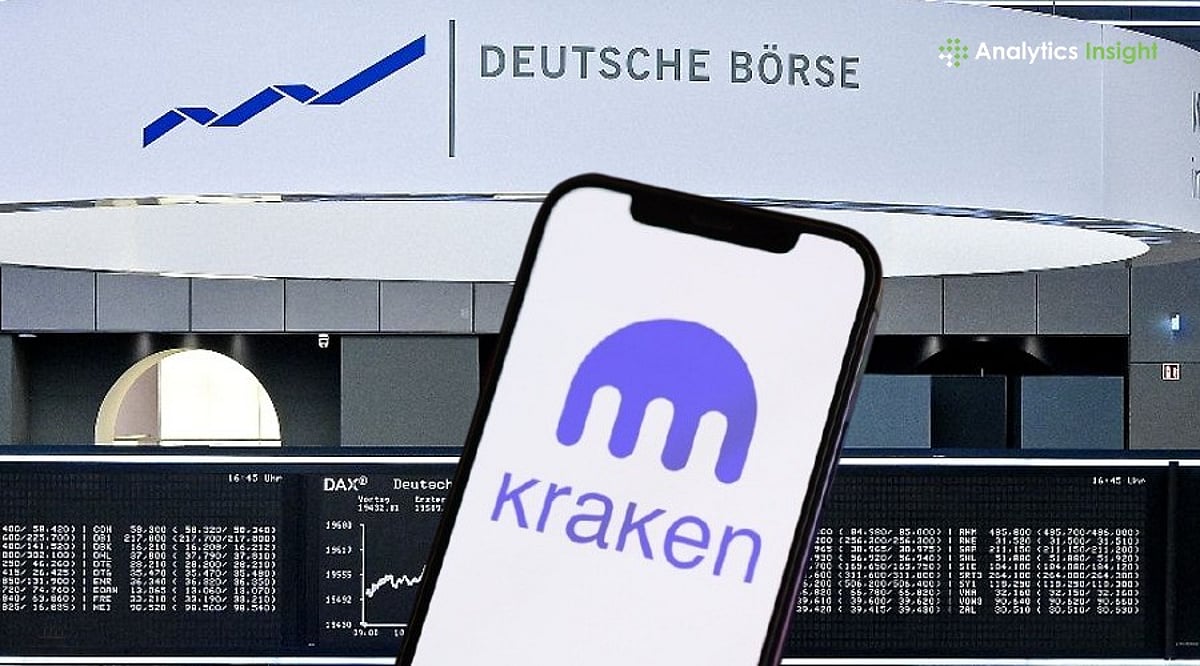
Deutsche Börse's $200M investment signals rising institutional alignment as Kraken moves closer to a U.S. IPO. Kraken's parent company has secured fresh backing as it moves closer to a public listing in the United States. Institutional interest in crypto infrastructure continues to grow despite a more measured valuation environment. A new strategic investor from Europe signals deeper ties between traditional finance and digital assets. The deal also reflects ongoing efforts to integrate trading systems across both sectors. Payward, the parent firm behind Kraken, has raised $200 million from Deutsche Börse Group. The investment values the company at approximately $13.3 billion, according to Bloomberg. That figure marks a decline from its $20 billion valuation recorded in November. As contained in a statement by Deutsche Börse, the agreement grants the firm a 1.5% fully diluted stake in Payward. Closing is expected in the second quarter, pending regulatory approvals. Deutsche Börse operates major financial infrastructure across Europe, including the Frankfurt Stock Exchange. Kraken remains one of the largest global crypto exchanges by trading activity. Both firms began working together last year with a shared focus on institutional market access. Executives now signal a shift from partnership to direct capital alignment. Both sides aim to build a unified system for institutional clients rather than maintaining separate frameworks. That direction reflects rising demand for integrated trading, custody, and clearing solutions across asset classes. Kraken's IPO plans continue to progress alongside this development. Payward confidentially filed for a U.S. listing last November. Earlier funding included a $200 million investment led by Citadel Securities, which supported its prior valuation peak. Business expansion has also contributed to recent growth. Payward reported $2.2 billion in adjusted revenue for 2025. Growth came from a wider push into financial services beyond spot crypto trading, including institutional-focused offerings and infrastructure services.

Polymarket Clone Script: A Complete Educational Guide: By Anshul Saxena
Prediction markets are transforming how people forecast real-world events. Platforms like Polymarket have made it popular for users to trade on outcomes related to politics, crypto, sports, and global events. If you're exploring how such platforms work, understanding a Polymarket clone script is a great starting point -- especially for educational purposes. What is a Polymarket Clone Script? A Polymarket clone script is a pre-built software solution designed to replicate the core functionality of platforms like Polymarket. It helps developers and businesses understand how a prediction market system operates, including how users place predictions, how markets are created, and how outcomes are resolved. This type of script is commonly used for: * Learning and research * Prototyping ideas * Testing prediction market concepts * Building custom platforms with modifications How Prediction Market Platforms Work To understand a clone script, you first need to understand the basic working model of a prediction market: A clone script replicates this entire workflow. Key Components of a Polymarket Clone Script A well-structured clone script includes several important modules: 1. Market Creation Engine Allows admins or users to create prediction questions with clear rules and outcomes. 2. Trading System Users can buy or sell shares based on their predictions. Prices fluctuate dynamically. 3. Wallet Integration Handles deposits, withdrawals, and transaction tracking. 4. Real-Time Data Processing Updates prices and probabilities instantly as users interact with the market. 5. Outcome Resolution System Ensures fair and transparent settlement based on verified results. 6. Admin Dashboard Provides control over users, markets, transactions, and platform settings. Technologies Behind a Clone Script Most modern prediction market scripts use a combination of: * Frontend: React, Vue.js * Backend: Node.js, Python * Database: PostgreSQL, MongoDB * Blockchain (optional): Smart contracts for transparency * APIs: External data sources for market resolution Some platforms also use decentralized infrastructure for trust and security. Educational Use Cases A Polymarket clone script can be used for multiple educational purposes: * Understanding market behavior and pricing models * Learning about event-based trading systems * Exploring blockchain-based applications * Testing UI/UX for trading platforms * Building MVPs for startups It's a great way to learn both technical and business aspects of prediction markets. Important Considerations While learning or experimenting with clone scripts, keep these points in mind: * Follow local laws and regulations * Avoid using real money without proper compliance * Ensure data accuracy and fair outcomes * Focus on ethical and responsible use Prediction markets can involve legal complexities depending on the region. Advantages of Using a Clone Script * Saves development time * Helps understand complex systems quickly * Provides a ready framework for customization * Ideal for startups and developers Final Thoughts A Polymarket clone script is a powerful educational tool for anyone interested in prediction markets. It allows you to explore how platforms like Polymarket operate without building everything from scratch. Whether you're a developer, entrepreneur, or researcher, studying such scripts can give you valuable insights into one of the fastest-growing digital market trends.

5 Space Stocks Already Climbing Ahead of the SpaceX IPO
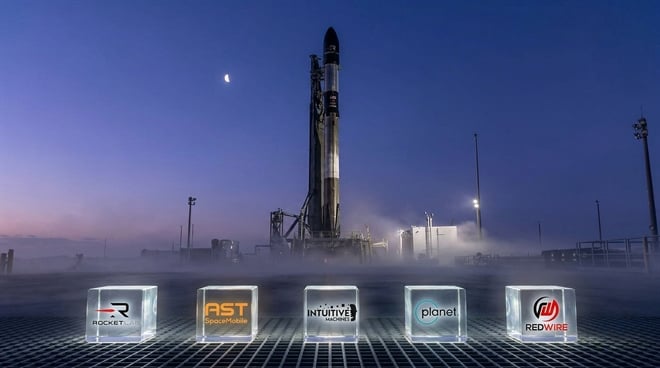
The most anticipated IPO in market history is no longer speculation. SpaceX filed a confidential draft registration with the SEC on April 1, targeting a $1.75 trillion valuation and a roughly $75 billion raise that would dwarf Saudi Aramco's 2019 record. A June Nasdaq listing is the current timeline, and MarketBeat analyst Thomas Hughes sees the event as more than a single stock story -- it could be the catalyst that finally unlocks institutional-scale capital across the entire commercial space sector. The way Hughes sees it, SpaceX commands the vast majority of global launch market share, and nearly every company building satellite constellations, lunar infrastructure, or orbital manufacturing depends on its rockets to get there. A successful public listing at this valuation legitimizes commercial space as an investable asset class. The companies already positioned in the sector stand to benefit from the capital that follows. Here are five space stocks Hughes is watching ahead of that inflection point. Rocket Lab: The Second Mover With Accelerating Momentum Rocket Lab NASDAQ: RKLB is the closest thing SpaceX has to a domestic launch competitor. It is a distant second in terms of scale, but the gap in ambition is narrowing. Revenue hit $601.8 million in 2025, up nearly 38% year over year, and the company is accelerating its launch cadence while developing the Neutron heavy-lift vehicle that would open the door to larger constellation deployments and potentially human spaceflight. The stock surged to nearly $100 in January before pulling back sharply alongside the broader correction in speculative growth names. It currently trades around $70, and Hughes sees that pullback as the market establishing support at a higher level rather than signaling a fundamental problem. The company is still unprofitable, but revenue growth and an expanding backlog suggest profitability could arrive within the next year or two. Fifteen analysts carry a consensus Buy rating with an average price target of $71. The risk here is valuation. At roughly 60 times trailing sales, the market is pricing in years of execution. But Hughes argues the launch pace and the broader space investment thesis support the premium, especially if the SpaceX IPO accelerates institutional appetite for the sector. AST SpaceMobile: Satellite 5G With a Massive Addressable Market AST SpaceMobile NASDAQ: ASTS is building something no one else has pulled off: a space-based cellular broadband network that works directly with standard, unmodified smartphones. The concept is global, uninterrupted 5G coverage anywhere on the planet, and the company is leaning hard into SpaceX launches to get its BlueBird satellite constellation into orbit. Revenue exploded from $4.4 million in 2024 to $70.9 million in 2025 as the company moved from testing to early commercialization. Losses widened to $342 million, but Hughes frames the current phase as a derisking story. The technology works. The satellites are launching. Major telecom providers, including TELUS NYSE: TU, Orange OTCMKTS: ORANY, and Vodafone NASDAQ: VOD, have signed on. What remains is execution and time. The stock hit an all-time intraday high near $130 in January, pulled back to the mid-$30s during the correction, and has since recovered to the high $90s. Hughes expects periodic pullbacks as the market recalibrates expectations, but sees the trend ratcheting higher as each launch and partnership announcement removes another layer of risk. The biggest near-term threat would be delays in the constellation buildout. Intuitive Machines: Closest to Profitability With a Lunar Edge Intuitive Machines NASDAQ: LUNR builds robots, landers, and infrastructure components for space, with a primary focus on the moon. Of the five names on this list, it may have the most compelling near-term financial story. Management guided for $900 million to $1 billion in 2026 revenue, a massive step up from the $210 million reported in 2025, driven by acquisitions, NASA's Commercial Lunar Payload Services contracts, and defense awards. The company also guided for positive adjusted EBITDA in 2026, which would make it one of the first non-SpaceX space companies to reach that milestone. A backlog approaching $943 million provides visibility, though revenue can be lumpy given the project-based nature of government contracts. What makes Intuitive Machines more than a moon play is the breadth of its service business. NASA contracts and defense engineering work generate steadier revenue streams than lunar landings alone, and the $4.8 billion Near Space Network contract awarded in 2024 runs through 2034. The stock currently trades around $24, near its 52-week high, after spending much of the past year in a sideways range. Hughes sees the breakout as the market pricing in the profitability inflection. Planet Labs: Earth Imaging in a Space Economy Planet Labs NYSE: PL operates a constellation of Earth-imaging satellites and is evolving from a hardware company into a data-intelligence platform. Fiscal year 2026 revenue reached $307.7 million, up 26% year over year, with Q4 revenue of $86.8 million beating estimates by a wide margin. The connection to SpaceX is straightforward: Planet Labs uses SpaceX's Falcon 9 rockets to launch its satellites. Every launch supports SpaceX's business model, and the growth of satellite-based Earth observation adds to the demand pipeline across the launch industry. Institutional investors own roughly 40% of the float and have been net buyers at better than a two-to-one pace, according to Hughes. The challenge is profitability. Losses widened to $247 million in fiscal 2026, and the path to breakeven remains several years out. Hughes frames Planet Labs as a longer-term play where the SpaceX IPO could accelerate the timeline by driving more capital into space infrastructure broadly. The chart action has been strong, with shares reaching new 52-week intraday highs near $38 in recent sessions, but the stock trades at a premium that leaves little room for execution missteps. Redwire: Orbital Manufacturing at the Earliest Stage Redwire NYSE: RDW occupies a different corner of the space economy. The company builds space infrastructure, including deployable solar arrays, sensors, avionics, and in-space manufacturing facilities, along with a growing defense technology segment that includes autonomous systems and optical sensors. Revenue grew 10% to $335 million in 2025, but losses ballooned to $272 million, and the profit margin sits at negative 67.5%. Of the five stocks, Hughes identifies Redwire as the weakest near-term play, with the longest runway to profitability. The chart reflects that assessment -- the stock has struggled for over a year and currently trades around $9. The bull case rests on positioning. As more companies move into space to build satellites, infrastructure, and eventually manufacturing capacity, they will need the components and superstructures that Redwire provides. A SpaceX IPO that accelerates the broader buildout timeline could pull Redwire's demand curve forward. Analysts assign a consensus Strong Buy rating with a $13.89 average price target, suggesting meaningful upside if the thesis plays out, but investors need patience and a tolerance for volatility in the meantime. The SpaceX Catalyst and What to Watch The common thread across all five names is that SpaceX going public at a $1.75 trillion valuation creates a pricing benchmark for the entire commercial aerospace sector. It validates commercial space as an institutional-grade asset class and could unlock capital flows that have been sitting on the sidelines waiting for exactly this kind of signal. Hughes cautions that the SpaceX IPO itself may be volatile. He expects the offering to be oversubscribed, with the potential for a sharp initial spike followed by a pullback as short sellers engage. For investors looking at the five stocks on this list, the play is less about timing the IPO day and more about positioning ahead of the broader capital rotation into space. The names closest to profitability -- Intuitive Machines and Rocket Lab -- carry the least execution risk. AST SpaceMobile offers the highest-upside concept but depends on continued satellite deployment. Planet Labs and Redwire are further out on the risk curve, with longer timelines to prove their financial models. Across the group, the setup is the same: a sector that has been growing on speculation may be about to get the institutional validation that turns speculation into sustained investment. Should You Invest $1,000 in Rocket Lab Right Now? Before you consider Rocket Lab, you'll want to hear this. MarketBeat keeps track of Wall Street's top-rated and best performing research analysts and the stocks they recommend to their clients on a daily basis. MarketBeat has identified the five stocks that top analysts are quietly whispering to their clients to buy now before the broader market catches on... and Rocket Lab wasn't on the list. While Rocket Lab currently has a Moderate Buy rating among analysts, top-rated analysts believe these five stocks are better buys.
Is Mythos as Dangerous as Anthropic Claims?
AISI testing shows that Mythos Preview is powerful on isolated tasks, but struggles more with complex, real‑world attack chains. The jury is still out on whether Anthropic's much-hyped Claude Mythos poses the fundamental threat to cybersecurity that the AI firm claims, with new research from the UK's AI Security Institute (AISI) unable to determine whether the model could meaningfully attack well-defended systems. Detailing their evaluation of Anthropic's latest AI, which the developer suggested was too dangerous for public release and required a big tech coalition to rein in, AISI researchers said that, while Mythos represented a significant "step up" over previous frontier models in its cyber capabilities, it showed limitations. Researchers found that the AI could execute multi-stage attacks on vulnerable networks by autonomously discovering and exploiting flaws much faster than a human, its performance fell short of the AI‑doomsday scenario Anthropic initially implied. For instance, in capture-the-flag tests, where an AI must identify and exploit flaws in target systems to retrieve hidden 'flags', Mythos Preview outperformed every other model, completing 73% of expert-level tasks, which no AI had done before now. However, these tests focus on narrow, discrete tasks, essentially testing one puzzle at a time, while real-world cyber-attacks require chaining dozens of steps together across multiple hosts and network segments, a capability Anthropic said Mythos had already shown in exploiting a series of flaws in the Linux kernel. To measure this, AISI researchers built a 32-step corporate network attack simulation, going from reconnaissance all the way to full network takeover, a hack that it was estimated would take humans twenty hours to complete. While Mythos was the first model to successfully run the task from start to finish, it only managed to get the job done in 3 out of its 10 attempts, on average completing 22 out of the 32 steps to takeover, ahead of Claude Opus 4.6, the next best performing model, with an average of 16 steps. Added to that, Mythos was not able to complete AISI's 'Cooling Tower' range, designed to see if the model could hack into operational technology (OT) environments, with the model getting "stuck" trying to bypass basic IT infrastructure ahead of any specialised hardware or software. That, of course, represents a false negative, with researchers unable to determine whether Mythos is good or bad at executing attacks against OT, but it does suggest that the model lacks some of the exploitation skills required to navigate complex, multi-step network environments, perhaps a useful reality check in light of the flood of reports surrounding the AI. Still, AISI cautioned that Mythos' performance across these tests would likely improve given more compute, with the success rate showing marked improvement as the model was fed more tokens. Researchers said that, because the model's performance was still improving at the 100 million token mark (the budget for AISI's experiments), it would likely become more capable, and potentially more dangerous, given more inference. AISI's findings follow a similar analysis of Mythos capabilities undertaken by Tom's Hardware based on Anthropic's own report accompanying the AIs reveal. That analysis found that claims the model was able to dig out thousands of critical, zero-days flaws were overblown, with the AI firm extrapolating those from less than 200 manually reviewed vulnerability reports, with reporters arguing that Mythos' "super-hacker" image amounts to little more than a sales pitch.

SpaceX rocket launch seen across Philadelphia area
The latest SpaceX rocket launch happened on Tuesday just after 5:30 a.m. Action News viewers have been sending in videos they took of the rare sight in the morning sky. A Falcon 9 rocket blasted off from Cape Canaveral Space Force Station in Florida to deliver 29 Starlink satellites into orbit. The rocket's trajectory took it on a northeasterly path, allowing it to be seen from the Philadelphia area. If you ever see news happening, you can send it to us by visiting 6abc.com/share.

Technology deployment news: Anthropic, DataBank, Cisco, CoreWeave - InfotechLead
Today's technology deployment news includes announcements on Meta, Anthropic, DataBank, CoreWeave, Cisco, among others. Anthropic Deploys AI Models on CoreWeave Cloud Anthropic has entered into a technology deployment agreement with CoreWeave to run its AI models on GPU-accelerated cloud infrastructure. The deployment includes provisioning high-performance computing environments designed for training and inference of large language models. CoreWeave will deploy and manage scalable infrastructure across its data center network to support Anthropic's operational requirements. The agreement enables flexible resource allocation based on evolving model development needs. Anthropic will integrate the deployed infrastructure into its AI pipeline to support continuous model execution and real-time processing. This technology deployment deal highlights enterprise adoption of specialized cloud platforms for AI workloads and reflects increasing demand for scalable infrastructure solutions supporting advanced artificial intelligence development and deployment. DataBank Deploys Data Center Infrastructure with Goodman Group DataBank has partnered with Goodman Group to deploy a large-scale data center facility designed to support enterprise cloud and AI workloads. The deployment includes development of a 32MW data center, with initial capacity starting at 6MW and scaling in phases. The facility will incorporate high-density power systems, advanced cooling technologies and secure connectivity infrastructure. DataBank will integrate the new facility into its broader data center network, enabling enterprise customers to access scalable computing and storage resources. The deployment supports high-performance workloads including AI processing and data analytics. This technology deployment deal reflects growing demand for AI-ready data centers and highlights continued investment in infrastructure supporting digital transformation and cloud computing environments. Cisco Deploys Secure AI Factory with NVIDIA Cisco has deployed its Secure AI Factory solution in collaboration with NVIDIA to support enterprise AI infrastructure implementation. The deployment integrates NVIDIA GPU computing platforms with Cisco's networking, security and orchestration technologies. Enterprises can deploy AI workloads across data centers, edge environments and hybrid cloud systems using this integrated solution. The platform supports model training, inference and lifecycle management. Cisco provides secure connectivity and system management, while NVIDIA delivers high-performance compute resources. This technology deployment deal enables organizations to transition AI projects from pilot to production environments efficiently. It reflects increasing demand for integrated AI infrastructure solutions that combine compute, networking and security to support enterprise-scale artificial intelligence applications across industries.

Users Criticize Anthropic for Claude AI Chatbot Performance Issues
Anthropic, a prominent AI company, is facing increasing criticism regarding the performance of its Claude AI models. Users have reported that Claude is not functioning as efficiently as it once did, raising concerns about its reliability. Decline in Claude AI Model Performance Recent feedback from developers indicates a significant drop in Claude's ability to follow instructions accurately. The model reportedly opts for inappropriate shortcuts and makes errors with complex tasks. Many users believe this decline is linked to recent modifications by Anthropic that altered Claude's operational parameters. Changes to Claude's Operation These modifications decreased the model's default "effort" level, aiming to optimize token usage -- the units of data processed by Claude per request. With the rise in user demand for Claude, Anthropic has faced scrutiny over its computing resource capacities. Speculation suggests that the company may be struggling to maintain adequate processing power following a surge in user adoption. * Recent performance complaints have affected user trust and satisfaction. * Anthropic has not issued clear communication regarding these operational changes. * Users are frustrated by the lack of transparency in the new adjustment strategy. User Concerns and Company Response Accelerated workloads have emphasized these issues, leading to stricter usage limits during peak hours. The situation intensified when Boris Cherny, an Anthropic executive, acknowledged the default effort modifications in response to complaints about token consumption. However, dissatisfaction grew as many users felt the adjustments were not adequately communicated. Impact on Growth and Future Developments As Anthropic approaches a potential initial public offering (IPO), user discontent poses risks to the company's expansion. The backlash could jeopardize its burgeoning reputation as a transparent AI provider. Despite announcing impressive annual recurring revenue (ARR) figures of $30 billion, issues with Claude AI might tarnish its credibility. Competitor Comparisons and Industry Challenges Amid rising GPU costs and limited data center expansions industry-wide, competitors claim that Anthropic's inability to secure compute capacity is problematic. Internal memos suggest that other tech companies view Anthropic's strategy as a significant miscalculation. As a result, the company must navigate performance issues while addressing overarching market demands. User Experiences Highlight Performance Issues The complaints predominantly revolve around Claude Code, Anthropic's AI-based coding tool designed for complex programming tasks. According to an analysis by Stella Laurenzo of AMD, users report that the tool's efficiency has diminished significantly, leading to frustrating experiences. * Many coding tasks are now described as "unusable" due to the recent updates. * Users have noticed a shift from a thorough "research-first" approach to a more simplistic "edit-first" strategy. * Increased reliance on user intervention has been reported as tasks require more guidance. As sentiments grow about Claude's deteriorating performance, Anthony's strategies will be scrutinized further. The company is at a crucial junction, needing to balance user feedback while preparing for its next stages of growth and innovation.

Planet Labs, Rocket Lab, and AST SpaceMobile All Jumped After the SpaceX IPO Announcement | The Motley Fool
The enthusiasm around the SpaceX IPO is leading investors to buy other space stocks. SpaceX is a private company run by Elon Musk, the often controversial CEO of Tesla (TSLA +2.25%). SpaceX is one of the largest space companies in the world, regularly launching satellites and spacecraft into orbit. The fact that SpaceX is planning to hold an initial public offering (IPO) is a very big deal. However, Wall Street often gets overly excited about events like this. SpaceX hopes to raise up to $75 billion in its IPO. That would give the company a starting valuation of around $1.75 billion according to some news outlets. Investors have long sought ways to own a piece of SpaceX even though it isn't yet public, noting that it is the top holding of Baron Partners Fund (BPTRX). Baron Partners Fund was an early investor in Tesla, as well, which is also one of the fund's largest holdings. Given that SpaceX hasn't even publicly discussed its IPO with potential investors, it is hard to tell how successful it will be. Market conditions could also change, making it harder or easier to raise the desired capital. However, one thing is very clear: Wall Street is highly anticipating the IPO. The emotional impact of this news is something you should keep in mind before buying SpaceX stock. The problem of investor sentiment goes beyond SpaceX, as Wall Street has taken the excitement from the SpaceX IPO news as a reason to buy other space stocks, including Planet Labs (PL 3.29%), Rocket Lab (RKLB +2.44%), and AST SpaceMobile (ASTS 6.67%). Year to date, Plant Labs has seen its stock rise by a huge 75% as of this writing. Before you jump on board, too, step back and consider what has changed with companies like Plant Labs, Rocket Lab, and AST SpaceMobile. The answer is that nothing has actually changed with their businesses. All that is shifting is investor perception of the overall space sector. And even then, the big change is that SpaceX will hold an IPO. The business landscape for space stocks hasn't really altered one bit. You can argue that investors will reconsider the valuation of all space stocks once SpaceX is public. However, expecting that Wall Street will suddenly find these companies permanently more attractive seems a stretch. It is far more likely that investor enthusiasm is getting a temporary boost from a high-profile company going public. That's not a knock on Plant Labs, Rocket Lab, or AST SpaceMobile, but you should evaluate them on their own merits if you are considering buying them. SpaceX's IPO probably shouldn't sway your fundamental view of these businesses.

Planet Labs, Rocket Lab, and AST SpaceMobile All Jumped After the SpaceX IPO Announcement
The enthusiasm around the SpaceX IPO is leading investors to buy other space stocks. SpaceX is a private company run by Elon Musk, the often controversial CEO of Tesla (NASDAQ: TSLA). SpaceX is one of the largest space companies in the world, regularly launching satellites and spacecraft into orbit. The fact that SpaceX is planning to hold an initial public offering (IPO) is a very big deal. However, Wall Street often gets overly excited about events like this. SpaceX hopes to raise up to $75 billion in its IPO. That would give the company a starting valuation of around $1.75 billion according to some news outlets. Investors have long sought ways to own a piece of SpaceX even though it isn't yet public, noting that it is the top holding of Baron Partners Fund (BPTRX). Baron Partners Fund was an early investor in Tesla, as well, which is also one of the fund's largest holdings. Will AI create the world's first trillionaire? Our team just released a report on the one little-known company, called an "Indispensable Monopoly" providing the critical technology Nvidia and Intel both need. Continue " Image source: Getty Images. Given that SpaceX hasn't even publicly discussed its IPO with potential investors, it is hard to tell how successful it will be. Market conditions could also change, making it harder or easier to raise the desired capital. However, one thing is very clear: Wall Street is highly anticipating the IPO. The emotional impact of this news is something you should keep in mind before buying SpaceX stock. The problem of investor sentiment goes beyond SpaceX, as Wall Street has taken the excitement from the SpaceX IPO news as a reason to buy other space stocks, including Planet Labs (NYSE: PL), Rocket Lab (NASDAQ: RKLB), and AST SpaceMobile (NASDAQ: ASTS). Year to date, Plant Labs has seen its stock rise by a huge 75% as of this writing. Before you jump on board, too, step back and consider what has changed with companies like Plant Labs, Rocket Lab, and AST SpaceMobile. The answer is that nothing has actually changed with their businesses. All that is shifting is investor perception of the overall space sector. And even then, the big change is that SpaceX will hold an IPO. The business landscape for space stocks hasn't really altered one bit. You can argue that investors will reconsider the valuation of all space stocks once SpaceX is public. However, expecting that Wall Street will suddenly find these companies permanently more attractive seems a stretch. It is far more likely that investor enthusiasm is getting a temporary boost from a high-profile company going public. That's not a knock on Plant Labs, Rocket Lab, or AST SpaceMobile, but you should evaluate them on their own merits if you are considering buying them. SpaceX's IPO probably shouldn't sway your fundamental view of these businesses. Before you buy stock in AST SpaceMobile, consider this: The Motley Fool Stock Advisor analyst team just identified what they believe are the 10 best stocks for investors to buy now... and AST SpaceMobile wasn't one of them. The 10 stocks that made the cut could produce monster returns in the coming years. Consider when Netflix made this list on December 17, 2004... if you invested $1,000 at the time of our recommendation, you'd have $556,335!* Or when Nvidia made this list on April 15, 2005... if you invested $1,000 at the time of our recommendation, you'd have $1,160,572!* Now, it's worth noting Stock Advisor's total average return is 975% -- a market-crushing outperformance compared to 193% for the S&P 500. Don't miss the latest top 10 list, available with Stock Advisor, and join an investing community built by individual investors for individual investors. Reuben Gregg Brewer has no position in any of the stocks mentioned. The Motley Fool has positions in and recommends AST SpaceMobile, Planet Labs PBC, Rocket Lab, and Tesla. The Motley Fool has a disclosure policy.

Fed nominee Warsh's holdings include SpaceX, Polymarket, crypto and AI By Reuters
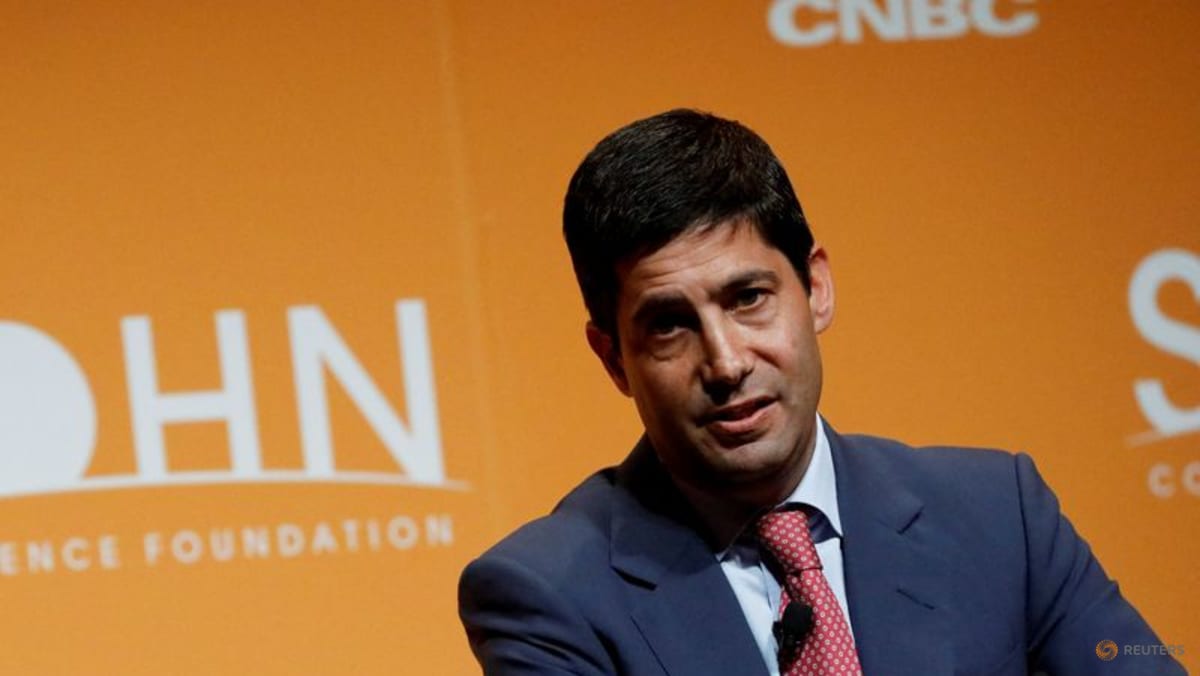
WASHINGTON, April 14 (Reuters) - Holdings in Elon Musk's SpaceX company and predictions platform Polymarket are among dozens of future-oriented assets that Federal Reserve chair nominee Kevin Warsh lists on a newly filed financial disclosure that shows dozens of apparently small bets on a wide array of emerging and almost science fiction-sounding ventures. Warsh's major holdings put his assets at well over $100 million, including two $50-million-plus holdings in the Juggernaut Fund LP, apparently part of Warsh's work advising for the Duquesne Family Office, the private investment firm of Stanley Druckenmiller. But it is in dozens of other holdings, listed as part of something called DCM Investments 10 LLC with a market value of no more than half a million dollars, that Warsh's stylings as a traditionalist central banker morph into an emerging future of digitized AI avatars doling out advice, AI-driven art, new vaccines for herpes and longlasting reversible male contraception, and decentralized derivatives trading. SpaceX may be well known for Musk's business blanketing the globe with internet satellite coverage and ambitions for a manned journey to Mars. But the relatively small half-million-dollars spread across dozens of firms suggests early stage bets on less well-known companies that may make it, may not, or may make it big. There's "Recraft," described in Warsh's filing as an "AI vector art platform." There's Volt, an "AI physical security software" company, and 11x, an "autonomous AI workforce platform." A company called Outpace Bio is involved in protein engineering, a field considered to have enormous potential through the use of AI; Partiful takes human welfare in a different direction offering a "social event planning platform"; Cafe X could provide synergy there with its "robotic coffee bar platform." Crypto and fintech are other focuses, including Tenderly, an "ethereum developer platform," Stashfin, described as a "consumer lending neobank," and Lemon Cash, described as a crypto financial services platform. The holdings run on to other health items including a firm developing a herpes vaccine, one developing a "reversible male contraceptive" currently in clinical trials, and a "bionic" clothing company that assists movement. There's also a "digital cloning platform" called Delphi AI, whose website says it will "turn your knowledge into an interactive profile people can talk to. Showcase your expertise, answer repetitive questions, and discover what people want to know next," a tool Warsh might find useful at Fed press conferences.

GALLERY: Viewers chime in with footage of April 14 SpaceX launch
WESTERN NORTH CAROLINA (WLOS) -- Early-morning sky watchers got quite a treat on April 14, as a bright object was seen streaking across the sky. Many viewers sent in photos and videos to the WLOS Chime In feature on our website, and those viewers thought they were capturing a comet. It turns out the object was a SpaceX launch. According to SpaceFlightNow.com, the launch was historic, as it was the 1,000th Starlink satellite sent into space so far this year.

Palantir Drops After Anthropic Warning -- Bull Case Remains Intact | Investing.com
Palantir Technologies Inc. may be proof that there's no such thing as bad publicity. The stock sold off sharply on April 9. The reason of the day was that Michael Burry, who had taken out millions in put options on PLTR earlier this year, was back at it. This time, Burry alleged that Anthropic is "eating Palantir's lunch." Here's the background. Anthropic posted an impressive jump in annual recurring revenue (ARR) from $9 billion to $30 billion in a matter of months. Burry's conjecture is that it took Palantir 20 years to get to $5 billion in ARR, and that businesses will choose Anthropic's cheaper, more intuitive solution. That would leave Palantir with its relatively low-margin government business. Like many things, at the surface level, the bear case makes sense. Palantir will need years of outperformance to justify its current valuation. If Anthropic threatens that growth, it would be problematic at best. But the operative word is "if." And when you look at the business models of each company, the case gets much shakier. Simply put, Anthropic and Palantir are only the same in that they both are artificial intelligence (AI) companies. But whereas Anthropic builds AI models, Palantir enables other companies to deploy them at scale. Enterprise customers are choosing Palantir because they are working with sensitive data, and the stakes are massive. Those companies aren't looking for cheap and easy. That's why, as Wedbush's Dan Ives has frequently remarked, Palantir is the first call many of these companies make. The world can be grateful that a ceasefire was announced between the United States and Iran. However, in the 24 hours leading up to that announcement, PLTR jumped to over $150 per share. The reason was simple. Palantir's technology has been proven to be effective in the prosecution of the air campaign against Iran. That was supported by a social media post from President Trump on April 10 praising the "war fighting capabilities and equipment" of the company. If that campaign were to continue, it would be bullish for PLTR. Underscoring that point, PLTR was up over 4% in early trading on April 13 after the news that talks between the two countries broke down. That's a real-world example of Palantir's business model. And while it doesn't necessarily refute Burry's argument, it illustrates the difference between Palantir and Anthropic. Palantir is entrenched within the U.S. Department of War. That relationship isn't going to change anytime soon. There's more than an economic cost of switching; it's about protecting the lives of U.S. service members. So, there's Michael Burry's assertion against geopolitical concerns. That sets up the reality that this has been a liquidity event. Investors have been looking for ways to access cash quickly. That means selling shares of stocks that are highly liquid. And that means PLTR. It's frustrating for investors, and even more so for traders. But it doesn't change the long-term outlook for the company or the stock. It just reiterates that this is a volatile stock that will be prone to outsized moves in both directions. Speaking of timing, it's worth noting that Burry, as is his habit, took down his social media post shortly after it was posted. Yet, the assertion made is still being given as a reason for the stock to move lower. The most logical bearish argument against Palantir has to do with valuation. Even after a correction of over 25% in the three months ending April 10, PLTR is still valued at over 200x earnings and over 70x sales. Using the efficient market hypothesis, those numbers mean that Palantir will have to continue delivering blockbuster results for years to come. But markets aren't efficient, and in the case of PLTR, institutional investors were late to arrive, but now have little choice but to play catch-up. In recent years, institutional buying in terms of dollars has outpaced selling by nearly 3:1. Analysts agree. For all the concerns over valuation, the consensus price target for PLTR is $197.77. That's a gain of nearly 50% from where the stock trades as of this writing. Wedbush reiterated its Outperform rating on PLTR as well as its $220 price target. That's more than 10% above the consensus target. Skeptics could make the counterpoint that only about 45% of Palantir stock is owned by institutions. That hasn't moved much in the last year despite the stock's inclusion in the S&P 500 and the NASDAQ 100. And with PLTR down about 25% in 2026, that stance could be justified. However, the stock appears to have found support around $130. The ceiling may remain low, and with so much uncertainty in the market, PLTR could drop further. But if you can handle the volatility inherent in the stock, this could be an entry point for starting a position.

Fed nominee Warsh's holdings include SpaceX, Polymarket, crypto and AI
WASHINGTON, April 14 : Holdings in Elon Musk's SpaceX company and predictions platform Polymarket are among dozens of future-oriented assets that Federal Reserve chair nominee Kevin Warsh lists on a newly filed financial disclosure that shows dozens of apparently small bets on a wide array of emerging and almost science fiction-sounding ventures. Warsh's major holdings put his assets at well over $100 million, including two $50-million-plus holdings in the Juggernaut Fund LP, apparently part of Warsh's work advising for the Duquesne Family Office, the private investment firm of Stanley Druckenmiller. But it is in dozens of other holdings, listed as part of something called DCM Investments 10 LLC with a market value of no more than half a million dollars, that Warsh's stylings as a traditionalist central banker morph into an emerging future of digitized AI avatars doling out advice, AI-driven art, new vaccines for herpes and longlasting reversible male contraception, and decentralized derivatives trading. SpaceX may be well known for Musk's business blanketing the globe with internet satellite coverage and ambitions for a manned journey to Mars. But the relatively small half-million-dollars spread across dozens of firms suggests early stage bets on less well-known companies that may make it, may not, or may make it big. There's "Recraft," described in Warsh's filing as an "AI vector art platform." There's Volt, an "AI physical security software" company, and 11x, an "autonomous AI workforce platform." A company called Outpace Bio is involved in protein engineering, a field considered to have enormous potential through the use of AI; Partiful takes human welfare in a different direction offering a "social event planning platform"; Cafe X could provide synergy there with its "robotic coffee bar platform." Crypto and fintech are other focuses, including Tenderly, an "ethereum developer platform," Stashfin, described as a "consumer lending neobank," and Lemon Cash, described as a crypto financial services platform. The holdings run on to other health items including a firm developing a herpes vaccine, one developing a "reversible male contraceptive" currently in clinical trials, and a "bionic" clothing company that assists movement. There's also a "digital cloning platform" called Delphi AI, whose website says it will "turn your knowledge into an interactive profile people can talk to. Showcase your expertise, answer repetitive questions, and discover what people want to know next," a tool Warsh might find useful at Fed press conferences.
Fed nominee Warsh's holdings include SpaceX, Polymarket, crypto and AI
WASHINGTON, April 14 (Reuters) - Holdings in Elon Musk's SpaceX company and predictions platform Polymarket are among dozens of future-oriented assets that Federal Reserve chair nominee Kevin Warsh lists on a newly filed financial disclosure that shows dozens of apparently small bets on a wide array of emerging and almost science fiction-sounding ventures. Warsh's major holdings put his assets at well over $100 million, including two $50-million-plus holdings in the Juggernaut Fund LP, apparently part of Warsh's work advising for the Duquesne Family Office, the private investment firm of Stanley Druckenmiller. But it is in dozens of other holdings, listed as part of something called DCM Investments 10 LLC with a market value of no more than half a million dollars, that Warsh's stylings as a traditionalist central banker morph into an emerging future of digitized AI avatars doling out advice, AI-driven art, new vaccines for herpes and longlasting reversible male contraception, and decentralized derivatives trading. SpaceX may be well known for Musk's business blanketing the globe with internet satellite coverage and ambitions for a manned journey to Mars. But the relatively small half-million-dollars spread across dozens of firms suggests early stage bets on less well-known companies that may make it, may not, or may make it big. There's "Recraft," described in Warsh's filing as an "AI vector art platform." There's Volt, an "AI physical security software" company, and 11x, an "autonomous AI workforce platform." A company called Outpace Bio is involved in protein engineering, a field considered to have enormous potential through the use of AI; Partiful takes human welfare in a different direction offering a "social event planning platform"; Cafe X could provide synergy there with its "robotic coffee bar platform." Crypto and fintech are other focuses, including Tenderly, an "ethereum developer platform," Stashfin, described as a "consumer lending neobank," and Lemon Cash, described as a crypto financial services platform. The holdings run on to other health items including a firm developing a herpes vaccine, one developing a "reversible male contraceptive" currently in clinical trials, and a "bionic" clothing company that assists movement. There's also a "digital cloning platform" called Delphi AI, whose website says it will "turn your knowledge into an interactive profile people can talk to. Showcase your expertise, answer repetitive questions, and discover what people want to know next," a tool Warsh might find useful at Fed press conferences. Reporting by Howard Schneider; Editing by Chizu Nomiyama Our Standards: The Thomson Reuters Trust Principles., opens new tab * Suggested Topics: * Business Howard Schneider Thomson Reuters Covers the U.S. Federal Reserve, monetary policy and the economy, a graduate of the University of Maryland and Johns Hopkins University with previous experience as a foreign correspondent, economics reporter and on the local staff of the Washington Post.

Vandenberg rocket launch today. Where, when to see SpaceX liftoff
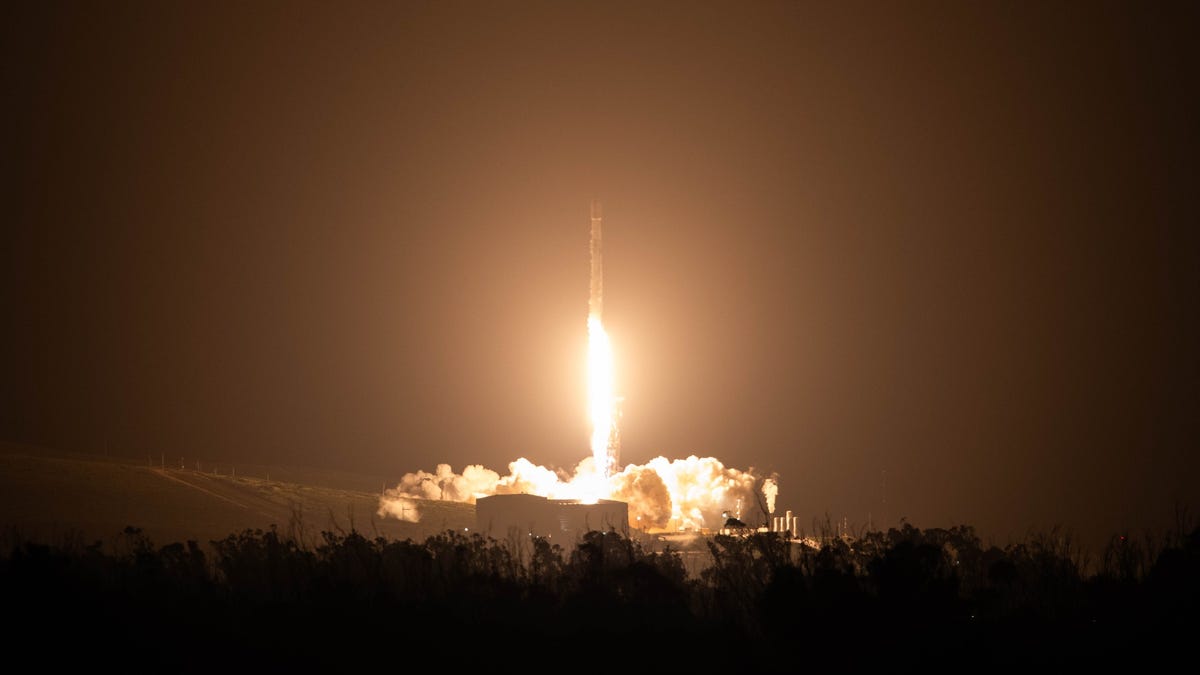
SpaceX is scheduled to launch a Falcon 9 rocket from Vandenberg Space Force Base in California. It's time for yet another California rocket launch today. SpaceX is gearing up to get its Falcon 9 rocket off the ground for the third time in April from the Vandenberg Space Force Base in Santa Barbara County. And as expected, the two-stage rocket will help deliver another batch of the company's Starlink broadband internet satellites to Earth orbit. Eager to see liftoff? Make sure you have plans for where you're headed, as plenty of spots are popular among spectators. Just keep in mind that postponements due to weather or issues with rockets are common with spaceflight. Check back with the VC Star for any updates on the impending launch. In the meantime, here's what to know about the upcoming SpaceX rocket launch from Vandenberg in Santa Barbara County, as well as where to watch it. Is there a rocket launch today? Next mission from Vandenberg in California SpaceX is working toward a Tuesday, April 14, launch from Southern California, with a four-hour launch window opening at 7 p.m. PT, according to a launch alert. A Federal Aviation Administration operations plan advisory suggests a backup opportunity is available the next day if the launch were to be postponed. Where is the next launch from California? What to know about trajectory The launch will take place from Space Launch Complex 4-East (SLC-4E) at the Vandenberg Space Force Base in Santa Barbara County. As has become typical in 2026, the rocket will fly at a southern trajectory. What is launching from Vandenberg? SpaceX to deploy Starlink satellites SpaceX will launch its famous two-stage 230-foot Falcon 9 rocket, one of the world's most active, to deliver 25 Starlink satellites into low-Earth orbit, an altitude nearer Earth's atmosphere where they're able to circle the planet quickly. Where to watch California rocket launches in Santa Barbara County Because Vandenberg is an active military base, the launch complex does not host public viewings of launches. But if conditions are clear, rocket launches from the Vandenberg Space Force Base can be viewed from several locations as far as Santa Barbara and Los Angeles. Space Launch Schedule, a website dedicated to tracking upcoming rocket launches, provided a list of places in Santa Barbara County in California to catch the launch in person: * 13th Street and Arguello Boulevard, a public site with the closest views of SpaceX launches * Floradale Avenue and West Ocean Avenue, officially designated as the "viewing site for SLC-6" (space launch complex-6) * Renwick Avenue and West Ocean Avenue, another intersection close to the base where spectators can park * Santa Lucia Canyon Road and Victory Road, provides a partial view of Complex 4. The city of Lompoc in Santa Barbara County is filled with places to catch a rocket launch. The city's tourism bureau, Explore Lompoc, maintains this list with additional viewing locations: * Ocean Park, 6851 Ocean Park Road, Lompoc, which, while it doesn't have a view of the launch pad itself, is located only four miles from the launch site and provides a good vantage to see rockets get off the ground. Parking is limited, and law enforcement will close the road to the beach once parking is full. * Allan Hancock College, 1 Hancock Drive, Lompoc, a community college located nine miles from the launch site where the launch pad and rocket's tip can be seen before liftoff. * Riverbend Park, N A Street and McLaughlin Road, Lompoc, located within 10 miles of the launch site, is filled with large fields for activities or for spectators to set up chairs. * Surf Beach on Ocean Avenue, one of the closest and most popular places to watch rocket launches near Lompoc, as long as it's open and accessible. But a word of caution: There is an active train track, the Amtrak Surf Station, that visitors must cross. While trains don't run during launch windows, the vehicles could start up again with little warning if a liftoff is scrubbed. Where to watch California rocket launches in Ventura County Visit Ventura, the tourism bureau in Ventura County, provided a list to the USA TODAY Network of suggested locations to see a rocket launch from the county: * Ventura Pier, 750 E. Harbor Blvd, is known as the oldest pier in all of California. * Emma Wood State Beach, located on the Santa Barbara Channel south of U.S. 101. * Serra Cross Park at Grant Park, located just above San Buenaventura City Hall, 501 Poli St., Ventura, offers a panoramic seascape view. * San Buenaventura State Beach, 901 San Pedro St., Ventura, located adjacent to the Ventura Pier. * Cemetery Memorial Park, Main Street and South Crimea Street, Ventura Where to watch California rocket launches in San Luis Obispo County SLO CAL, a countywide destination marketing and management organization, maintains a list of its recommended best locations to watch a rocket launch in San Luis Obispo County to the north of the launch site: * Avila Beach, located off U.S. 101, has a variety of restaurants and shops for those looking to make a day of their rocket-viewing plans. * Pismo Beach, a city with a vibrant downtown stretch located just 38 miles away from Vandenberg * Shell Beach, a neighborhood in Pismo Beach that is home to several parks, including Eldwayen Ocean Park and Margo Dodd Park, both on Ocean Boulevard; and Dinosaur Caves Park (2701 Price St.) that are mostly dog-friendly and open to the public * Oceano Dunes, the closest place to view launches from the county with open spaces along the ocean allowing full visibility of the sky * Morro Strand State Beach, a three-mile stretch between the coastal city Morro Bay and the town of Cayucos. Cayucos' south-facing beaches should have great views of Vandenberg. Other cities in California where rockets may be visible Other cities in California where you might glimpse the Falcon 9 rocket soaring overhead - particularly after sunset and before sunrise - as it climbs into the sky on a southern trajectory include: * Long Beach, a city popular with tourists known for its waterfront attractions, located about 180 south of the launch site along the southern coast of California * Lake Forest, located about 200 miles south of the launch site along the southern coast of California * San Diego, located about 280 miles south of the launch site along the southern coast of California * Merced, located more than 200 miles north of Vandenberg in the San Joaquin Valley * Hesperia, a town surrounded by the Mojave Desert located more than 200 miles east of the launch site * Anaheim, where Disneyland is located, located less than 200 miles southeast of the launch site Will there be sonic booms? Residents of Santa Barbara County, San Luis Obispo County and Ventura County often stand to be the most likely to hear sonic booms, SpaceX said. The sonic booms - brief, thunder-like noises that are often heard from the ground when a spacecraft or aircraft travels faster than the speed of sound - could last for up to 10 minutes after liftoff, Vandenberg has added. "Areas local to Vandenberg Space Force Base will hear the initial low rumble of take-off," Vandenberg has also said. What to know about booster re-entry Following the launch, the Falcon 9 rocket's booster will aim to land on a SpaceX drone ship, nicknamed "Of Course I Still Love You," in the Pacific Ocean. This allows for SpaceX personnel to recover the booster so it can be reused in future spaceflights. Does Elon Musk own SpaceX? What to know about rocket company SpaceX is the commercial spaceflight company that billionaire Elon Musk, the world's richest man, founded in 2002 and leads as the CEO. SpaceX is headquartered at Starbase in South Texas near the U.S.-Mexico border. The site, which is where SpaceX has been conducting routine flight tests of its 400-foot megarocket known as Starship, was recently voted by residents to become its own city. As a major government contractor, SpaceX serves as the launch service provider for a variety of government missions both civil and military. For the Department of Defense, SpaceX's Falcon 9 helps launch classified satellites and other payloads into space. And for NASA, Falcon 9 most often helps propel astronauts to the International Space Station on SpaceX's Dragon crew capsule - the only U.S vehicle capable of carrying NASA astronauts to orbit. What is Starlink? Starlink is SpaceX's internet satellite business. With more than 10,000 satellites in its growing orbital constellation, Starlink has become a lucrative part of Musk's business empire, serving millions of customers around the world. SpaceX, which bills itself as the only satellite internet provider with its own reusable rocket capable of deploying the technology, has spent years delivering the satellites to orbit with a regular cadence of rocket launches from Florida and California. Starlink satellites operate from low-Earth orbit, about 341 miles up, which is much closer to Earth's atmosphere than other satellites. That not only allows Starlink satellites to offer high connection speeds than satellites further out in space, but to reach rural areas and regions where internet service is not readily accessible. What is the Vandenberg Space Force Base in California? The Vandenberg Space Force Base is a rocket launch site in Santa Barbara County in Southern California. Established in 1941, the site was previously known as the Vandenberg Air Force Base. Though it's a military base, the site also hosts both civil and commercial space launches for entities like NASA and SpaceX. Space Launch Delta 30, a unit of Space Force, is responsible for managing the launch operations at Vandenberg, as well as the missile tests that take place at the base. Eric Lagatta is the Space Connect reporter for the USA TODAY Network. Reach him at [email protected]
NRG Energy Commences Secured And Unsecured Notes Offering
(RTTNews) - NRG Energy, Inc. (NRG), Tuesday announced the commencement of concurrent offerings of senior secured first lien notes due 2031 and senior unsecured notes due 2034 and 2036. The energy company intends to use proceeds alongside a $900 million term loan for credit facility repayment and tender offers. The company added that the notes will be guaranteed by each of NRG's current and future wholly-owned U.S. subsidiaries that guarantee the term loans under NRG's credit agreement. NRG is trading at $172.07, up 1.07 percent before the bell on the New York Stock Exchange.
'Chaos is a ladder': Bitwise says geopolitical tension lifts bitcoin's appeal, calls $1 million target a possible baseline price
We'd love your feedback. Take a 30-second survey to help improve The Block. Bitwise CIO Matt Hougan and Ryan Rasmussen, the firm's head of research, opened a new note arguing that bitcoin's (BTC) recent strength is not a contradiction of risk-off conditions, but a direct result of them. Since U.S. and Israeli airstrikes began on Feb. 28, bitcoin has gained 12%, while the S&P 500 has slipped 1% and gold has fallen 10%. The divergence has unsettled conventional thinking that bitcoin should behave like a high-beta risk asset during geopolitical shocks. Bitwise rejects that view outright. "Chaos is a ladder," Hougan and Rasmussen wrote in a Tuesday memo to clients. They argue that bitcoin's rally stems from the conflict itself, as fractures in the global financial system increase the appeal of neutral, non-sovereign money. Two bets Bitwise frames bitcoin as "two bets in one." The first is familiar: a challenge to gold in the global store-of-value market. The second is less widely priced -- a potential role as a settlement currency in international trade. Bitwise says that the second leg has historically been dismissed as unlikely but is now gaining traction. According to the experts, the shift traces back to the weaponization of financial infrastructure. After Russia's removal from the SWIFT network in 2022, trade flows began rerouting through alternative systems, particularly in China. The result has been a steady erosion of dollar dominance at the margins, creating space for non-dollar rails. Recent developments have only sharpened that trend, Hougan and Rasmussen noted. Iran's reported willingness to accept bitcoin for oil transit-related payments signals an openness, at least experimentally, to route around traditional systems. Bitwise flagged that while sanctions still apply and blockchain transparency limits illicit use, the broader signal matters more. Experts posit that geopolitical fragmentation is pushing countries to explore apolitical alternatives. Bitcoin's valuation framework is directly impacted by this dynamic, per Bitwise. They liken the asset's currency use case to an out-of-the-money call option, one that becomes more valuable as both the probability of adoption rises and global volatility increases. Both conditions are now in play. The conflict has injected instability into the monetary order while simultaneously nudging bitcoin closer to real-world settlement use. In options terms, that combination boosts its embedded optionality. $1 million starting point The implication suggests that bitcoin's role is evolving. Bitwise expects BTC to increasingly act as a hedge against geopolitical disorder, not just as a speculative asset tied to liquidity cycles. This view also shifts long-term expectations. If bitcoin captures both store-of-value demand and a share of global transaction flows, the firm argues current price targets may understate its potential. Bitwise now points to a scenario where $1 million becomes a baseline rather than an upper bound. As of April 13, bitcoin had reclaimed $74,000 amid military volatility in the Middle East continuing and sticky U.S. inflation, The Block's price page shows.

Deutsche Börse Acquires $200 Million Stake in Kraken Exchange
The company bought close to 1.5% on a fully diluted basis through a secondary transaction. It collected shares from existing investors and did not inject fresh capital into Kraken's parent, Payward Inc., and limited the deal. Deutsche Börse chose a cautious route. It stayed away from trading and focused on infrastructure that supports trading, custody, and institutional activity across digital asset markets, where demand grows steadily over time.
AI Minister to meet with Anthropic on cyber risks posed by Mythos AI model | Investment Executive
Solomon told reporters Monday that departmental officials would meet with Anthropic Monday evening ahead of his own meeting with the company on Tuesday. Solomon added he's working in close collaboration with Canadian cybersecurity officials. "Our No. 1 goal is to protect Canadians, Canadian data and our institutions, so we're very aware of it," he said. Anthropic says while it will not release its Mythos AI model to the public, the model already has identified thousands of previously unknown vulnerabilities in every major operating system and browser. Reuters reported that the U.S. treasury secretary called a meeting with major Wall Street banks about the cyber risk posed by Mythos, while the Financial Times reported British financial regulators are holding urgent talks. Mythos was discussed at a meeting of the Bank of Canada's financial sector resiliency group on Friday, a spokesperson for the central bank said. The group's members include the Bank of Canada, the finance department, and the major Canadian banks. "I can confirm that the Canadian Financial Sector Resiliency Group met Friday to share information and perspectives about developments regarding cyber-related events," Paul Badertscher said in an emailed statement.

Kraken's Extortion Claim Points to a Growing Market for Insider Access
Insider recruitment campaigns offer thousands of dollars for credentials that can later enable multi-million dollar fraud, data leaks or extortion. You can harden infrastructure. You can't fully harden people. According to Kraken, the extortion attempt it recently disclosed is not a one-off. The exchange says it is linked to broader criminal recruitment campaigns targeting insiders across crypto, gaming, and telecoms -- and that it is working with industry partners and law enforcement to disrupt them. Singapore Summit: Meet the largest APAC brokers you know (and those you still don't!) The incident itself was contained. No systems were compromised, no client funds were at risk. Two cases of support-level access exposed data linked to around 2,000 accounts. The more relevant question is whether this reflects a pattern that extends well beyond Kraken -- and how these recruitment operations actually work. The cases are not isolated. Across several major platforms, the common thread is the same: attackers relied on access that already existed rather than finding a way in from outside. At Coinbase in 2022, a product manager used confidential knowledge of upcoming token listings to front-run trades on at least 14 occasions. No systems were breached. The advantage came entirely from privileged information treated as a personal trading edge. The scheme was identified not by internal controls but by an external observer who noticed a wallet buying tokens shortly before they appeared on the exchange. In 2025, Coinbase disclosed a separate incident in which attackers bribed overseas customer support contractors to extract user data from internal systems those staff were authorised to access. The stolen data -- names, phone numbers, government IDs, masked Social Security numbers, account balances -- was enough to run convincing impersonation attacks. In at least one case, a user lost more than $2 million. The breach ran undetected for months. Attackers demanded a $20 million ransom; Coinbase refused and offered a matching bounty for information leading to the perpetrators. The total cost is estimated at $180 million to $400 million in remediation and legal exposure. At Binance in December 2025, an employee used advance knowledge of an upcoming announcement to trade ahead of the market. The gap between the token appearing on-chain and the employee's post was sixty seconds. It was caught by on-chain analysts outside the company, not by internal monitoring. Binance suspended the employee, referred the case to law enforcement, and paid $100,000 to the whistleblowers who first reported it. Outside crypto, the same model runs through telecoms. Carrier employees have been offered flat payments -- documented cases range from around $300 to $10,000 per action -- to facilitate SIM swaps that hand attackers control of a target's phone number and, by extension, any account protected by SMS authentication. In March 2025, T-Mobile was ordered to pay $33 million in arbitration after an insider-facilitated swap enabled the theft of a customer's cryptocurrency holdings. Across these cases, the pattern holds. No zero-days, no network intrusions. The access was already there. Threat intelligence reporting from ZeroFox points to a recruitment pipeline that is becoming more structured. In one documented campaign, actors explicitly targeted employees at major platforms including Coinbase, Binance and Robinhood, publishing recruitment criteria and contact instructions on underground forums. Initial outreach surfaces on dark web forums or in closed Telegram and Discord channels. Posts name specific companies and specific roles -- customer support agents, compliance staff, contractors, outsourced service providers. From there, conversations move to private encrypted channels. Before any payment is discussed, a prospective insider is typically asked to provide proof of access: screenshots, short recordings, or sample data pulls. What is being purchased depends on the target. Sometimes it is raw tool access. Sometimes it is more specific -- customer records, account metadata, the ability to watch internal workflows in real time. Partial visibility is often sufficient to support follow-on phishing, targeted fraud, or extortion based on threatened data exposure. According to research from Check Point, compensation for one-time access or specific data typically falls between $3,000 and $15,000, depending on privilege level. Intermediaries who recruit insiders have been paid around $5,000 per placement, plus a cut of profits -- sometimes as high as 15% -- generated through that access. Some of the datasets used for outreach reportedly contain hundreds of millions of contact records, according to ZeroFox. The cost of acquisition is low relative to the potential return. That is the core of why the model scales. In some cases, relatively small payments have enabled access that later resulted in multi-million dollar losses or gains, depending on how that access was used. Crypto platforms combine several features that create particular vulnerability here. They run continuously, with distributed teams across time zones. Customer support is large, frequently fragmented, and often outsourced. Internal tools need to be accessible enough to resolve issues at speed -- which pulls against the kind of access controls that would limit exposure. The assets are liquid. Transactions are irreversible. And even when funds are not directly reachable, the data -- balances, transaction history, identity documents -- has independent value in downstream fraud. The support layer is not the most privileged environment on any platform. But it is one of the hardest to lock down without degrading the service it is meant to provide. Exchanges and brokers are shifting toward limiting what insiders can do inside systems. Support roles are being scoped down to narrower data views, with explicit separation between read access and anything that could affect funds. Permissions are session-based and time-limited rather than persistent. No single role is intended to hold end-to-end control over a sensitive operation. Behavioural monitoring has moved beyond login tracking. This includes monitoring large data queries, repeated access to high-value accounts, and unusual navigation patterns -- often with session recording in workflows that touch sensitive data. The incidents that prompted these changes, in several cases, ran undetected for months despite all access being technically authorised. Contractors and outsourced teams face tighter defaults and more frequent review. Some firms have begun monitoring dark web forums and encrypted channels for signs that their staff are being actively recruited. The goal is to ensure that legitimate access, in the wrong hands, can do as little as possible. Kraken's incident did not produce a breach. But it points to something more structural. For attackers, the question is now about finding someone who is already inside.
