News & Updates
The latest news and updates from companies in the WLTH portfolio.
Kraken review 2026: A strong platform for active traders
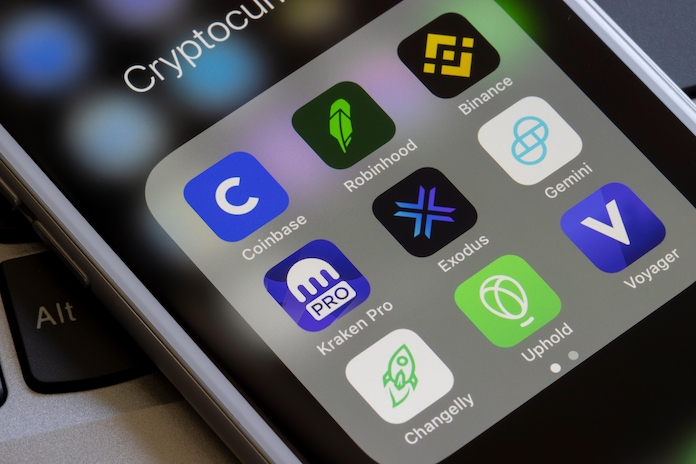
Kraken launched in 2011, which in crypto years makes it practically ancient. That staying power means the exchange has weathered market downturns, regulatory shifts, and the collapse of competitors that once looked untouchable. What remains is a platform with a well-earned reputation for security, competitive fees, and enough depth to grow with you, whether you're buying your first coin or placing your hundredth trade. However, longevity alone doesn't make Kraken the right fit for everyone. The platform charges higher beginner trading fees than competitors such as OKX, eToro, and Robinhood, and it offers no insurance for crypto holdings and no coverage from the Federal Deposit Insurance Corporation (FDIC) for cash balances. Here's what we found after putting Kraken through its paces. Kraken is a U.S.-based cryptocurrency exchange that launched in San Francisco in 2011 and has grown into one of the most widely used crypto exchanges in the world, serving retail and institutional users across more than 190 countries. It operates across 48 U.S. states, with Maine and New York being the two exceptions. The platform runs two distinct products under one login: the standard Kraken app for simple crypto buying and selling, and Kraken Pro, a full trading interface with a live order book, advanced charting, and a range of order types used by institutional traders. This allows you to stay within the same ecosystem as you learn. Beyond crypto, you can trade more than 11,000 stocks and exchange-traded funds (ETFs) directly on the platform, something very few dedicated crypto exchanges offer. Add futures, margin trading, and staking to that mix, and Kraken covers more ground than most competitors in a single account. Since it began operating, Kraken has never lost customer funds to a security breach. In an industry where major platforms have collapsed or been compromised with little warning, that kind of track record is noteworthy. Here's what you get when you open a Kraken account. Kraken supports trading on more than 200 cryptocurrencies. The standard Kraken app keeps this simple: select a coin, enter a dollar amount, and confirm. In our testing, the all-in cost came to 2% per trade, made up of a 1% spread and a 1% trading fee. Kraken Pro unlocks a fuller set of tools from the same account. You get a live order book showing real-time buy and sell activity, integrated charting, and order types beyond basic market orders. A limit order, for example, lets you set the exact price you're willing to pay rather than accepting whatever the market offers at that moment. Stop-loss, stop-limit, take-profit, and trailing stop orders are also available. Recurring orders let you schedule automatic crypto purchases at set intervals. This lets you buy a fixed dollar amount of any coin on a set schedule, regardless of price. That approach, known as dollar-cost averaging, smooths out the impact of market swings without requiring you to constantly monitor prices. Staking on Kraken returned to U.S. users in 2025 after a regulatory pause. This feature lets you earn passive income on crypto you already hold. When you stake a coin, you're lending it to help verify transactions on its blockchain network, and in return, the network pays you a reward. You don't need to do anything actively once it's set up. Kraken supports staking on more than 20 assets, including bitcoin, ethereum, solana, polkadot, cardano, and cosmos, with rates published directly on its staking page for each one. You can choose between flexible staking, which lets you unstake at any time, or bonded staking, which locks your coins for a period in exchange for higher returns. Rewards pay out weekly after Kraken deducts a commission, so the rates listed on the staking page reflect what the network pays before that cut. Kraken charges 30% commission for flexible staking and 25% or lower for bonded staking, depending on your staked balance. For example, solana showed a 3.37% reward for flexible staking and 6.85% for bonded when we checked. After Kraken's 30% commission on flexible staking, your net flexible return comes to roughly 2.36%. After the 25% commission on bonded staking, the net bonded return is roughly 5.14%. Kraken lets U.S. users trade more than 11,000 stocks and ETFs commission-free, putting it in a category very few dedicated crypto exchanges occupy. Through Kraken Pro, stock trading runs 24 hours a day, Monday through Friday, which is a wider window than the standard market hours most brokerages offer. Your stock holdings on Kraken receive protection from the Securities Investor Protection Corporation (SIPC) for up to $500,000, including up to $250,000 for cash in your brokerage portfolio. However, your crypto holdings and any cash balance outside the brokerage portfolio don't carry the same government-backed protection. Crypto futures let you speculate on a cryptocurrency's price direction without buying it. You make a bet on whether the price will go up or down. Kraken offers leverage up to 50x on major cryptocurrencies, meaning a $100 deposit gives you the buying power of $5,000. Margin trading works similarly but applies to buying and selling orders without involving futures contracts. When you trade on margin, Kraken lends you funds to trade more than your balance allows, up to 10x leverage. In both cases, leverage cuts both ways. A 10% move in your favor on a 10x trade doubles your money. A 10% move against you wipes it out. That's why these trading tactics work for experienced traders who understand these products. Kraken+ is a subscription that costs $4.99 per month and waives the trading fee on up to $10,000 in monthly trades through the standard Kraken app. This applies to instant buys, sells, recurring orders, and conversions. It doesn't apply to Kraken Pro trades, which use their own fee schedule. The 1% spread still applies, so your all-in cost drops from about 2% to 1% per trade. That puts you in line with some of the lowest simple-mode fees available, matching OKX and eToro at 1% and just above Robinhood at 0.85%. The Kraken app covers the basics well: buying, selling, portfolio tracking, and account management. It holds 4.7 stars on the App Store and 4.5 stars on Google Play. If you want the full trading experience on your phone, the Kraken Pro app delivers that too, with the order book, charting tools, and advanced order types all accessible on mobile. It's well rated in its own right, sitting at 4.7 on the App Store and 4.6 on Google Play. We hand-tested about a dozen crypto platforms, and Kraken earned the top spot in our ranking with a 4.9/5 rating. Here's where it pulls ahead of the competition. Kraken has never lost customer funds to a security breach since it launched in 2011, and unlike many exchanges that make similar claims, Kraken has third-party audits to back it up. Independent security firms have reviewed and certified its infrastructure, confirming it meets rigorous standards for how it protects user data and manages risk. The platform also stores the vast majority of customer assets in offline cold storage, held in secure facilities with 24/7 armed guard surveillance. On top of that, Kraken publishes quarterly proof-of-reserves audits, conducted by The Network Firm, an independent registered CPA firm. The process uses a Merkle tree, a cryptographic structure that lets each user verify that Kraken actually holds their funds without exposing anyone else's account details. And while some platforms publish only the asset side, Kraken discloses both assets and client liabilities in every report to prove solvency. The most recent report, covering December 31, 2025, showed reserve ratios above 100% for all major assets. Both the standard Kraken app and Kraken Pro display the full cost of a trade before you confirm it. On the standard app, you see the spread and trading fee broken out separately. On Kraken Pro, the fee is shown based on your current volume tier. You're never surprised after the fact, which isn't the case with every exchange we used. Kraken Pro's base rates of 0.25% for makers and 0.4% for takers put it among the most competitive advanced platforms. Maker orders, which sit in the order book waiting to be filled, typically cost less than taker orders, which execute immediately against existing orders. These fees sit well below Coinbase Advanced, which starts at 0.6% and 1.2%, respectively. On a $10,000 maker trade, that's $25 at Kraken versus $60 at Coinbase. OKX is cheaper at 0.08% maker and 0.10% taker, but Kraken still offers strong value for active traders who want competitive fees alongside a long security track record. Fees drop further as your 30-day trading volume grows, reaching 0% for makers at the highest tier. Volume from the standard Instant Buy interface doesn't count toward your Kraken Pro tier, so building those discounts requires trading through Pro directly. Kraken Learn is a structured library of articles and videos organized by experience level, covering everything from basic blockchain concepts to advanced trading mechanics. For newer users working their way up to Kraken's more advanced features, having a structured learning resource built into the platform makes the learning curve noticeably easier to manage. Every platform has trade-offs, and Kraken's are worth knowing before you commit. The biggest gap in Kraken's offering is the absence of any insurance layer. The exchange carries no FDIC coverage on cash balances and no crypto insurance against platform-level losses. FDIC coverage, which is standard at Coinbase, eToro, and Gemini, protects your dollar balance up to $250,000 if the bank holding those funds fails. Coinbase and Gemini also carry crime insurance covering a portion of crypto holdings against theft or a security breach. Kraken is transparent about this, and its security setup is genuinely strong. But if the absence of that safety net matters to you, Coinbase or Gemini might be better fits. The standard Kraken app charges a 1% trading fee on top of a 1% spread, bringing the all-in cost to about 2% per trade. That's not the worst rate among popular crypto platforms, but it's meaningfully higher than OKX at a flat 1% spread, eToro at a flat 1% fee, and Robinhood at 0.85%. On a $1,000 purchase, you pay $20 at Kraken, $10 at OKX or eToro, and $8.5 at Robinhood. The cost adds up for anyone buying frequently without switching to Kraken Pro. Funding via debit card costs $0.25 plus 3.75% per transaction, which works out to about $38 on a $1,000 deposit before you've made a single trade. Bank transfers via Automated Clearing House (ACH), the standard U.S. electronic transfer method, are free and give you instant buying power so you can trade before the transfer fully settles. That makes the debit card fee hard to justify for most users. Kraken doesn't operate in Maine or New York. If you live in either state, the platform isn't an option, regardless of how well it fits your needs. In that case, Coinbase and eToro are among the alternatives available to you. What you pay on Kraken depends almost entirely on which interface you use, and the difference between the two builds up over time. In our testing, the standard app applied a 1% trading fee plus a 1% spread. You see the full breakdown before you confirm, so the 2% all-in cost is transparent up front. That said, it's on the higher end compared to most crypto platforms we used. Kraken+ subscribers can bring that down to 1% by waiving the trading fee on up to $10,000 in monthly trades for $4.99 per month. The subscription pays for itself once you trade more than around $500 per month, since the 1% you save on that amount covers the subscription cost. Kraken Pro uses a maker-taker fee structure where fees drop as your 30-day trading volume grows. Makers pay less because their activity adds liquidity to the market. Here's how the schedule works at a few key levels: The full schedule includes higher tiers that reach 0% maker and 0.05% taker fees for monthly volumes above $500 million. Kraken supports several ways to move money in and out. Here's what each method costs. Most crypto withdrawals carry a flat network fee that covers the cost of processing the transaction on the blockchain. Fees for the three most traded assets: Keep in mind that these fees shift with network conditions, so confirm the current fee on the withdrawal page before sending. Kraken doesn't suit every type of user, and three situations stand out where a different platform makes more sense: You live in Maine or New York, you want insurance coverage on your holdings, or the 2% beginner-mode cost is a deal breaker. Here are the better fits for each. Coinbase is the most practical alternative for users in Maine or New York since it operates in all 50 states. It also covers cash balances with FDIC insurance and carries crime insurance on a portion of crypto holdings, filling two of the gaps that Kraken leaves open. The trade-off is cost. Advanced Trade fees start at 0.6% for makers and 1.2% for takers, two to three times what Kraken Pro charges. But for first-time buyers, Coinbase's onboarding is among the most guided and beginner-friendly of any exchange we tested. eToro charges a flat 1% on every trade, with no additional fees, which immediately cuts the all-in cost in half compared to Kraken's standard app. It offers FDIC coverage for cash balances, charges no fees for debit card deposits, and is available in most U.S. states except Nevada and Hawaii. The platform also has a social investing layer that lets you follow and mirror the trades of more experienced users, which makes it a natural fit for beginners who want a less technical starting point. Gemini covers cash balances with FDIC insurance and holds commercial crypto insurance for a portion of hot wallet holdings, making it one of the strong alternatives for people who put protection first. It operates in all 50 states and has never reported a breach resulting in customer fund losses. Gemini ActiveTrader fees start at 0.6% for makers and 1.2% for takers, which is higher than Kraken Pro, but if coverage and availability are your main criteria, Gemini delivers on both. Kraken's minimum deposit varies by funding method. ACH transfers and domestic wire transfers start at $1, debit card deposits require at least $10, and international wire transfers require between $4 and $100, depending on the provider. Each cryptocurrency also carries its own minimum deposit. For example, bitcoin requires at least 0.0001 BTC, ethereum 0.004 ETH, and solana 0.01 SOL. Yes. Kraken reports to the IRS and sends 1099 forms to eligible U.S. users, so any staking rewards or trading gains count as taxable income. Kraken has built-in tools to help you track your activity, and if you're a Kraken+ subscriber, you also get access to Koinly, a dedicated crypto tax platform, at no extra cost. In our hands-on testing, we opened an account, got verified in under 10 minutes, and were able to start trading the same day. Kraken's automated verification usually completes within a few hours, though some accounts may take one to two business days if additional documents are needed. Our Kraken review is based on hands-on testing and independent research across five categories. We scored each category independently with no input from or compensation by Kraken. Fees and security carry the most weight in our overall rating, reflecting what matters most to the average user.

Kalesh At Eatery: Rs 80 Thali Billed As Rs 130; Customer Complaint Sparks Assault On Manager And Staff, Chaos Erupts
Billing Dispute Turns Violent Over ₹80 Thali, Staff Injured as Restaurant Chaos Erupts The local restaurant, which everyone knows, has two main components that produce its typical sound. The space became a violent conflict zone as people fought over their shopping disputes. A billing dispute, which started with a 50 rupee difference between two parties, developed into an emergency situation, which resulted in staff members getting injured and the business losing its public image. A customer expected to pay 80 rupees for a thali meal but received a 130 rupee bill. The restaurant added unauthorized premium side dishes and bottled water to the customer's bill, which they had not requested. The customer who objected to the restaurant's secret charge information system began an argument about moral pricing, which became a physical attack against the hotel manager and restaurant staff. Hidden Billing Issues: Understanding the "Hidden Item" Problem in Restaurants The core of this dispute arises from restaurants engaging in deceptive menu practices that display a basic price to attract customers but then charge them more through aggressive upselling. The price increase from ₹80 to ₹130 in this specific situation constitutes a 63% hike that the business imposes on its customers. Restaurants frequently include items that resemble free additions but actually constitute extra charges through the covert provision of additional butter and particular sauces and brand-name water bottles that customers did not request. Hidden Charges Create Trust Issues and Lead to Public Disputes The environment creates multiple obstacles, which make diners suspect they have been cheated. The hospitality industry depends on transparency as its fundamental principle, and businesses that choose to sacrifice transparency for short-term financial gain face dangerous "kalesh," which disturbs public order and results in court cases against both sides. Billing Disputes Turning Into Violence: Why It Must Be Avoided The situation begins with a valid complaint about price overcharging but ends when the consumer resorts to physical violence, which crosses all social and legal boundaries. The customer who attacked the staff members at the establishment changed their status from a "billing scam" victim to a criminal offender through their violent actions. Consumer Disputes: Importance of Staying Calm and Using Legal Options in Billing Issues Modern consumers need to acquire conflict de-escalation skills as a fundamental requirement. The proper process for dealing with an inflated restaurant bill that the restaurant refuses to correct needs to be handled through either the National Consumer Helpline or a police complaint instead of using violence through a brawl. Restaurant Billing Disputes, Customer Trust, and Safe Conflict Resolution in Hospitality Industry Establishment owners need to understand that their aggressive billing methods will lead to customer dissatisfaction, which will escalate into a dangerous situation. Businesses should never treat a ₹50 profit as valuable enough to risk worker safety through violent incidents that could result in their permanent closure due to unsafe business practices. People need to watch their money while also keeping their composure when unexpected billing errors occur.
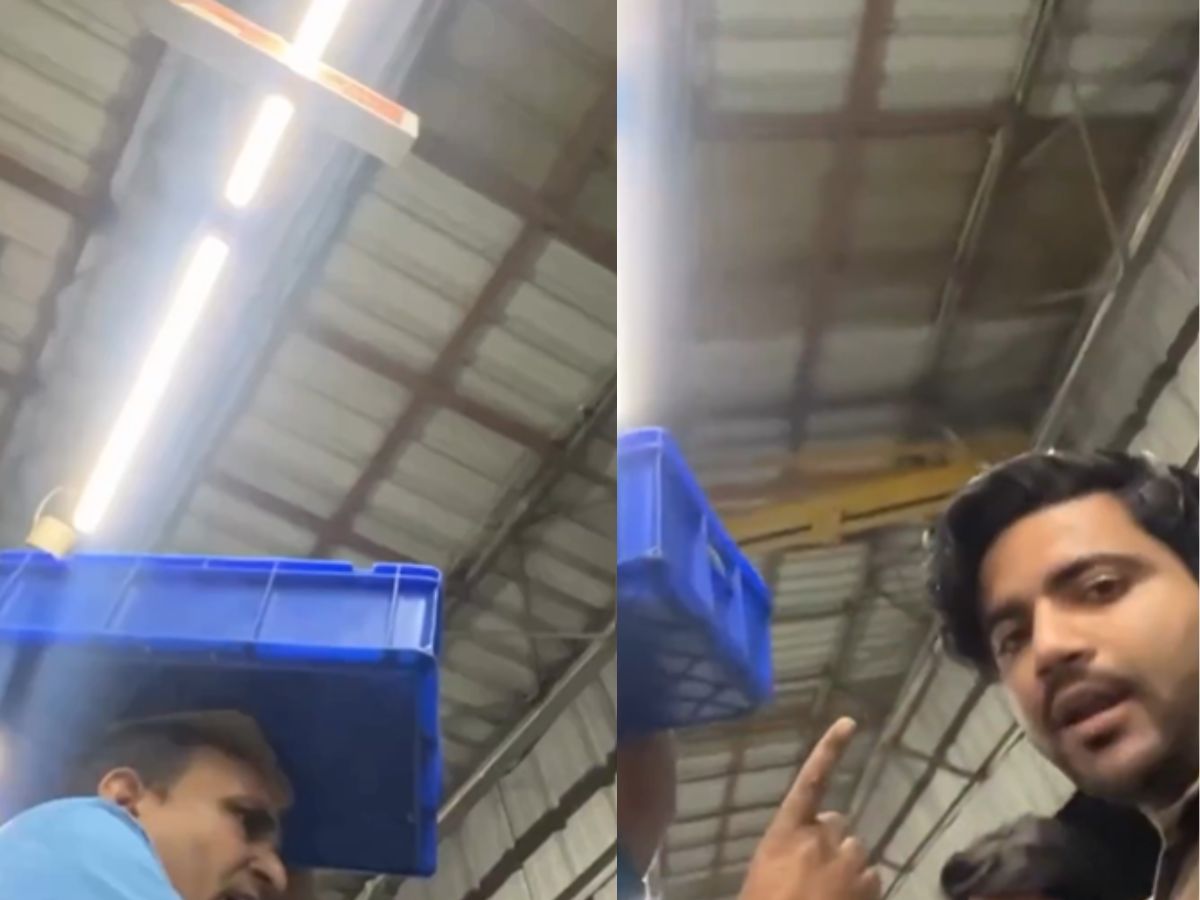
PSNI warn of 'slow moving convoy of tractors' causing traffic chaos in Belfast ahead of fuel protests
A PSNI spokesman said: 'Police are advising of delays leaving Belfast country-bound on the Sydenham by-pass due to slow moving traffic. 'Road users are advised to avoid if possible and to leave extra time for their journey'. A slow-moving convoy of tractors has caused traffic disruption in Belfast as several fuel protests are expected to be held in Northern Ireland. Northern Ireland Health Minister Mike Nesbitt has asked protesters not to block roads, warning that the lives of those seeking medical treatment could be put at risk. Traffic clogged up on the Sydenham bypass near Belfast City Airport around noon, hours after passengers were warned there may be traffic disruption and to leave more time for travel. Tractors travelled down the bypass in the direction of Bangor towards City Airport, with some cars undercutting them on the cycle route to get past on the inside. A PSNI spokesperson said: "Police are advising of delays leaving Belfast country-bound on the Sydenham by-pass due to slow moving traffic. "Road users are advised to avoid if possible and to leave extra time for their journey." Mr Nesbitt said he would be concerned if roads were blocked. He said: "Just engage in legitimate legal protest. "Today, as is the case every day, there will be well over 100,000 engagements or interactions between the HSC and the public. "Thousands and thousands of them depend on the workforce getting from A to B, or for patients or service users getting from B to A in a timely manner. "Ultimately, the logic to that is disruption threatens life. "My plea is let the health and social care system work as it is supposed to work." Ulster Unionist leader Jon Burrows said there should be an emergency meeting of the Stormont powersharing Executive to discuss rising fuel prices. He said: "When people block roads for whatever purpose, it has a lot of unintended consequences. "Right now there will be emergency services who will struggle to get to calls, there will be key workers who will not be able to get to work." Mr Burrows added: "I understand the concern about the cost of fuel, about the cost of living crisis, but we need to have calm leadership and cool heads. "I would ask the people involved in blocking roads to stop. "This Executive needs to stand up and deliver in terms of convening an emergency meeting to decide what we are going to do about the cost-of-living crisis." The Belfast disruption comes after similar demonstrations south of the border disrupted fuel supplies, port operations and traffic in city centres and on motorways for a week. Although blockades at Ireland's only oil refinery and elsewhere were cleared at the weekend, smaller protests continued on motorways around Dublin on Monday - and a protest is due to be held at Leinster House on Tuesday, to coincide with a confidence vote in the government. First Minister Michelle O'Neill and deputy First Minister Emma Little-Pengelly last week wrote to Prime Minister Sir Keir Starmer urging him to bring forward a package of support measures for people in the region. They asked Westminster to look at reducing fuel duty, targeted support for hauliers, farmers and small and medium enterprises, and a comprehensive cost-of-living support package. The cost of petrol, diesel and marked gas oil ("green diesel") has soared since the war in Iran. The US and Israel began bombing Iran on February 28, after which the Iranians began an effective blockade of vital trading route the Strait of Hormuz, disrupting energy and fuel supplies. Protests were expected to take place across Northern Ireland today at 2pm over fuel costs. They will reportedly take place on Westlink, Belfast, M1 at Sprucefield, Nutts Corner, Sandyknowes Roundabout, Larne Harbour, Ballygawley Roundabout, Toome and Omagh town centre. But it is unclear who is organising the protests - the Ulster Farmers' Union has said it has had "no involvement" in the organisation of 'planned fuel protests' and its chair has called on members not to take part on Tuesday. And the PSNI have said they are aware of the reports of the protests and are monitoring the situation. Earlier Agriculture Minister Andrew Muir urged potential protestors to "think twice" about their actions, with demonstrations anticipated in up to eight locations. Mr Muir added: "Your actions will actually disadvantage those you proport to stand for in terms of the farming community. "They will then have real challenges in terms of brining livestock to mart and slaughter and in relation to milk tankers. "We had issues last week in the Republic where people were struggling to get to cancer appointments, to be able to care for loved ones. "That is not a situation we want to see." Meanwhile East Londonderry MLA Claire Sugden called for more support for farmers and households with fuel costs, saying the burden is "not optional". "People were already dealing with a high cost of living, and this sudden increase in fuel prices has made things even more difficult," the former Justice Minister said. "For many households, it is not about cutting back anymore, it is about whether they can afford to heat their home or get through the week." A post from NI Direct added: 'Protests are planned at a number of locations in Northern Ireland over the next few days. 'You should allow extra time for journeys due to potential traffic disruption. 'Information on any traffic issues will be available on the website: https://trafficwatchni.com/twni/

Deutsche Börse Invests $200M in Kraken and Enters Crypto Infrastructure Race
Deal signals deeper convergence between regulated exchanges and digital asset infrastructure Deutsche Börse Group has invested $200 million in Payward, Inc., the core market infrastructure of the cryptocurrency exchange Kraken, acquiring a 1.5% fully diluted stake in the U.S.-based crypto exchange operator. The investment was executed through a secondary share purchase and is expected to close in the second quarter, pending regulatory approval. Partnership Expands Into Core Market Infrastructure The deal formalizes a strategic partnership first outlined in late 2025 and marks a further step by Deutsche Börse into digital asset infrastructure. The major European exchange operator is expanding into crypto trading, custody, settlement, collateral management, and tokenized assets, with the aim of building services that allow institutional clients to access both traditional financial markets and crypto through a single integrated system. Kraken, one of the largest global crypto exchanges, provides the market infrastructure and liquidity layer for the collaboration, particularly for institutional clients in Europe and the United States. Both firms said the partnership is designed to improve cross-market liquidity and reduce friction between traditional financial systems and blockchain-based assets. Traditional and Digital Markets Continue to Converge The investment reflects an accelerating convergence between established exchange groups and crypto-native platforms as institutions increase exposure to digital assets. In Europe, this shift is being supported by clearer regulatory frameworks, including the Markets in Crypto-Assets Regulation (MiCA), which is encouraging larger financial institutions to engage directly with digital asset infrastructure. Deutsche Börse Group has been steadily building its digital asset strategy around integrating traditional securities infrastructure with tokenized markets. The goal is to create systems that can support both conventional financial instruments and blockchain-based assets within a unified market framework. For Kraken, the partnership adds institutional credibility and strengthens its position in regulated markets, potentially expanding access to banks, asset managers, and other traditional financial participants that have been cautious about crypto-native exchanges. Why This Matters The deal between Deutsche Börse and Kraken reflects a structural shift in global markets, where crypto is increasingly being integrated into core financial infrastructure rather than treated as a separate system. This convergence is expected to heighten competition among major exchanges and speed up the adoption of tokenized assets within regulated financial markets. Explore DailyCoin's trending crypto scoops now: Japanese Banks Report 60% Cost Savings Using XRP Over SWIFT Quantum-Safe Bitcoin, No Soft Fork: a New Workaround Arrives

Kraken is actively being extorted by criminals threatening to release the top crypto exchange's internal data
Kraken says it is facing an active extortion attempt, with attackers threatening to leak internal data unless demands are met. Kraken says it is being extorted by a criminal group threatening to release internal material after two support staff members improperly accessed limited customer data. In a security update published by chief security officer Nick Percoco on X, the crypto exchange said it identified two cases of inappropriate access to client support data, revoked access, notified affected users, and later received demands tied to videos allegedly showing internal systems with customer information visible. Kraken said its core systems were never breached, funds were never at risk, and roughly 2,000 accounts, or about 0.02% of clients, were potentially viewed. Even so, the incident sharpens a growing problem for crypto platforms. The highest-value security failure is not always a wallet exploit or infrastructure breach. It can begin inside the support layer, where limited customer context is enough to make the next message, call, or verification request feel legitimate. That distinction changes the nature of the threat. The issue is less about direct theft from exchange infrastructure and more about whether authentic internal access can be turned into a trust weapon against users. The exposed information may have included some client account data, though Kraken has not publicly detailed the full field-level scope. In crypto, a small amount of real support information can be operationally valuable to criminals even when the exchange's trading and custody systems remain secure. The broader backdrop gives that risk more weight. In its 2025 Transparency Report, released on March 19, Kraken said it handled 7,957 law enforcement and regulatory data requests in 2025, up 16.5% year over year, spanning 13,082 accounts across 74 countries. That report was part of a larger trust narrative around compliance, operational maturity, and financial-system integration. Days later, the conversation changed. The issue has moved from how often outside authorities ask for data to how securely internal access is controlled in the first place. For users, the concern is straightforward. The exchange may have secured wallets and core systems, yet the path to harm can still run through support, where a criminal only needs enough context to sound real. Kraken's phrasing is precise. The company said there was no breach of its systems and no risk to funds. It also said two insiders had inappropriately accessed limited client support data, one linked to an incident flagged in February 2025 and another tied to a more recent video showing similar activity. Across both incidents, Kraken says about 2,000 accounts were potentially viewed. Soon after access was terminated, the company says it began receiving extortion demands threatening disclosure to media outlets and on social media. The attack chain described here is operational rather than cinematic. Someone inside a support environment sees information they should not be using that way, records or shares evidence of access, and a criminal group uses that material as leverage. That sequence suggests a repeatable attack path. A code exploit often depends on a specific bug. Insider recruitment scales through incentives, pressure, and weak access design. Check Point Research said in late 2025 that cybercriminals were openly seeking insiders at major crypto exchanges including Coinbase, Binance, Kraken, and Gemini, with typical offers ranging from $3,000 to $15,000 for access or information. Kraken's own statement says the company has been collaborating with partners and law enforcement to investigate insider recruitment efforts affecting other sectors as well, including gaming and telecoms. That places the exchange inside a larger pattern where customer-service and support operations have become a common pressure point across industries that rely on high-trust interactions and large pools of personal data. Crypto has already seen what that pattern can look like once it moves from access to exploitation. In May 2025, Coinbase disclosed that overseas support agents had been bribed to copy customer information, with attackers then attempting to impersonate the company and trick users into transferring funds. CryptoSlate later reported that law enforcement made an arrest tied to the Coinbase insider extortion case, which affected nearly 70,000 customers. Kraken's disclosure is much smaller by account count, yet the significance lies elsewhere. The incident reinforces the same mechanism. User-facing danger often arrives after the initial access event, when criminals begin contacting customers armed with real names, internal-looking references, and enough background to engineer urgency. The support layer has a special role inside crypto because it sits at the point where users are already vulnerable. Locked accounts, delayed withdrawals, tax forms, identity checks, device changes, and password resets create conditions where customers expect to be asked for confirming details. That is exactly why compromised support access is so valuable. It gives attackers the ability to mimic a legitimate workflow rather than invent one from scratch. For people with Bitcoin exposure and little interest in security jargon, the practical takeaway is direct. A serious risk can arrive as a convincing support interaction, built on authentic internal context, even while the exchange's wallets and matching systems remain secure. Bitcoin's market behavior suggests traders are treating this as a contained exchange-security issue rather than a system-wide shock. As of press time, CryptoSlate's Bitcoin page shows BTC at $71,806, up 0.41% over 24 hours, up 7.43% over seven days, and up 3.45% over 30 days, with $39.82 billion in daily volume and 59% market dominance. Bitcoin continues to trade inside a broader macro and flow regime where ETF positioning, liquidity conditions, and risk appetite are carrying more weight than a single exchange's internal security event. Price resilience, however, should not be confused with irrelevance. Some consequences show up first in operations and user behavior, then feed into reputation, acquisition costs, and compliance overhead later. The strongest near-term consequence is a trust tax on support interactions. Exchanges facing this class of threat typically respond by narrowing access privileges, increasing verification friction, segmenting internal tooling, and documenting more activity across help desks and vendor relationships. Those steps are rational. They also make the user experience slower and more rigid. A customer trying to restore access or confirm account activity may end up facing more questions, longer delays, and fewer discretionary workarounds from support agents. That is where a security event becomes tangible for a mainstream user. The damage is measured less by a one-day move in BTC and more by a gradual decline in how natural and safe exchange interactions feel. The wider cyber backdrop supports that interpretation. In its April 2026 release, the FBI said Americans reported more than $11 billion in cryptocurrency-related losses in 2025, while phishing, spoofing, and extortion remained among the most common complaint categories. Separately, Mandiant's M-Trends 2026 report said global median attacker dwell time rose to 14 days from 11 days a year earlier, with cyber espionage and North Korean IT-worker cases showing a median dwell time of 122 days. Those figures do not map one-to-one onto Kraken's case, yet they point in the same direction. The operating environment favors patient intrusions, social engineering, and access monetization. Crypto exchanges are operating inside that same environment while also carrying the added burden of irreversible transactions and a user base accustomed to phishing attempts. That leaves Bitcoin in a familiar position. The asset itself can stay resilient while the rails around it face renewed scrutiny. Centralized platforms remain a major access point for buying, selling, and storing BTC, especially for newer users. When support functions become a recognized attack surface, confidence in those rails weakens even if confidence in Bitcoin itself holds steady. That distinction grows more important as exchanges continue trying to present themselves as mature financial infrastructure. Kraken has been expanding beyond crypto, including into equities and ETFs, and its transparency report was part of a broader effort to show institutional-grade discipline. Incidents like this one pull the market back to a more basic question, whether the human layer is being secured with the same intensity as the balance sheet and wallet architecture. Kraken says affected users have already been notified, access has been terminated, and the company believes there is sufficient evidence to support identification and arrest of those responsible. If no leaked videos surface, no further data appears, and no visible wave of impersonation attempts emerges, the incident may settle into the category of a narrow but instructive security disclosure. That outcome would still leave an imprint on how exchanges think about support operations, outsourced labor, and privileged access. ANOT possibility is escalation through downstream fraud. This path deserves the closest attention because it is where user harm can widen quickly. Once criminals have real support context, even from a limited number of accounts, they gain material for convincing follow-up messages. That can include references to account issues, location data, identity checks, or service cases, depending on what was visible. Every exposed field does not need to be itemized to grasp the point. Authentic fragments make impersonation stronger. Coinbase's experience in 2025 already showed how insider access can become the starting point for a broader social-engineering campaign aimed directly at customers. Kraken's disclosure revives that concern, especially because the company itself tied the incident to broader insider recruitment efforts across sectors. There is also a third layer that deserves close coverage over time, the reputational and structural response. If insider recruitment is becoming a durable criminal market, exchange defenses will shift toward tighter role segmentation, more surveillance inside support tools, stronger contractor controls, and stricter outbound communication rules. That will affect staffing models and vendor relationships across the sector. It could also create a clearer divide between exchanges that treat support as a low-margin operational necessity and those that treat it as a core trust function. For public-facing crypto businesses, that difference may shape everything from user retention to institutional partnerships. A platform that secures reserves and internal wallets while leaving support exposed is still leaving a critical flank open. For now, Kraken's disclosure works best as a warning about where the next wave of crypto security failures may surface. The image of a hacker breaking through code still dominates public imagination. A more realistic threat in many cases looks quieter, more human, and more scalable. A recruited insider, a support console, a short clip of internal access, and an extortion note can move the risk from infrastructure to trust in a matter of hours. Bitcoin's price can keep climbing while that shift unfolds. Users, exchanges, and the companies trying to turn crypto platforms into mainstream financial utilities still face the same conclusion.

NRG's Lightning Power launches tender offer for $1.5B notes By Investing.com
HOUSTON - NRG Energy's (NYSE:NRG) subsidiary Lightning Power has initiated a tender offer to purchase all of its outstanding $1.5 billion in 7.250% senior secured notes due 2032, according to a press release statement. The move comes as parent company NRG, with a market capitalization of $36.5 billion, trades up nearly 80% over the past year, though InvestingPro analysis suggests the stock is currently overvalued relative to its Fair Value. The company is offering $1,063.75 per $1,000 principal amount for notes tendered by the early deadline of April 27, 2026. This includes a $50 early tender payment. Notes tendered after that date but before the May 12, 2026 expiration will receive $1,013.75 per $1,000 principal amount. NRG maintains a current ratio of 1.64, indicating solid liquidity to manage its $16.6 billion total debt load as it restructures these obligations. Lightning Power is simultaneously soliciting consents to amend the indenture governing the notes. The proposed amendments would eliminate substantially all restrictive covenants, certain affirmative covenants, and events of default. The company also seeks to release all guarantees and collateral securing the notes. The covenant amendments require consent from holders of a majority of the outstanding notes, while the release of guarantees and collateral requires consent from at least 66.67% of noteholders. Lightning Power stated it intends to exercise its right under the indenture to redeem up to 10% of the notes' aggregate initial principal amount in two separate redemptions at 103% of principal, plus accrued interest. The company noted there is no assurance any notes will be redeemed. Noteholders may withdraw tendered notes until April 27, 2026. Settlement for notes tendered by the early deadline is expected within three business days after April 27, 2026. The tender offer is subject to several conditions, including a financing condition. The offer is not contingent on any minimum principal amount being tendered. Citigroup Global Markets and Santander US Capital Markets are serving as lead dealer managers for the transaction. In other recent news, NRG Energy has launched debt offerings to refinance its obligations, issuing senior secured first lien notes due 2031 and senior unsecured notes due 2034 and 2036. The notes will be guaranteed by NRG's current and future wholly-owned U.S. subsidiaries. Jefferies has raised its price target on NRG Energy to $199, maintaining a Buy rating, and anticipates a significant new gas turbine project announcement in 2026. Wolfe Research has upgraded NRG Energy's stock rating to Outperform, highlighting the company's strong cash flow from its Texas market operations and recent asset acquisitions. Goldman Sachs has reinstated coverage with a Buy rating, noting the LS Power asset acquisition as a transformative move that doubled NRG's generation capacity and diversified its business profile. Additionally, affiliates of LS Power priced a public offering of 14.3 million shares at $164.00 per share, generating gross proceeds of approximately $2.35 billion, although NRG will not receive any proceeds from this sale. This article was generated with the support of AI and reviewed by an editor. For more information see our T&C.

Kraken Targeted in Extortion Attempt After Two Insider Access Incidents | LeapRate | Online Trading Industry News, Broker Intelligence & Fintech Analysis
Cryptocurrency exchange Kraken has disclosed that it is being targeted by an extortion attempt from a criminal group threatening to release videos of its internal systems unless demands are met. Kraken's chief security officer, Nick Percoco, said in a post on X that it follows two separate incidents in which rogue employees gained inappropriate access to limited client support data. The first incident was identified in February 2025, when Kraken received a tip from a trusted source about a video circulating on a criminal forum appearing to show access to its client support systems. The employee involved was identified, their access was immediately revoked, a full investigation was conducted and a limited number of affected clients were notified. A second, more recent incident followed a similar pattern. Another tip, accompanied by a new video showing comparable activity, led Kraken to quickly identify a second individual, terminate their access and notify the small number of affected clients. Across both incidents, approximately 2,000 client accounts, representing 0.02 percent of Kraken's total client base, were potentially viewed. Shortly after the second individual's access was terminated, the extortion demands began. The criminals threatened to distribute materials from both incidents to media outlets and on social media. Kraken's Chief Security Officer Nick Percoco stated unequivocally that the firm will not pay and will not negotiate with the individuals involved. Kraken said it is actively working with federal law enforcement across multiple jurisdictions and believes sufficient evidence exists to support the identification and arrest of those responsible. The firm noted that similar insider recruitment efforts are targeting gaming and telecommunications organisations as well as crypto companies.

NRG Energy launches debt offerings to refinance obligations By Investing.com
HOUSTON - NRG Energy Inc. (NYSE:NRG) announced Monday the launch of concurrent debt offerings consisting of senior secured first lien notes due 2031 and senior unsecured notes due 2034 and 2036, according to a press release statement. The move comes as the company manages total debt of $16.6 billion against a market capitalization of $36.5 billion. The notes will be guaranteed by NRG's current and future wholly-owned U.S. subsidiaries that guarantee term loans under the company's credit agreement. The secured notes will be backed by a first priority security interest in property and assets owned by NRG and the guarantors. NRG plans to use proceeds from the offerings, combined with proceeds from a proposed $900 million term loan B, to repay a portion of outstanding borrowings under its revolving credit facility. The funds will also be used to pay the tender price for a concurrent tender offer through its subsidiary Lightning Power LLC for Lightning's outstanding 7.250% senior secured notes due 2032. Remaining proceeds will cover transaction fees, expenses and premiums, with any surplus allocated to general corporate purposes, which may include repurchasing, repaying or redeeming other debt of NRG, Lightning or their subsidiaries.The debt refinancing comes amid strong stock performance, with shares delivering a 79.7% return over the past year. According to InvestingPro analysis, the stock currently appears overvalued relative to its Fair Value. Investors seeking deeper insights can access NRG's comprehensive Pro Research Report, one of 1,400+ available for US equities. The completion of each offering is not conditioned upon the completion of the other offerings or the term loan B. The tender offer is being made separately pursuant to its own terms and conditions. The notes are being offered only to qualified institutional buyers under Rule 144A and to non-U.S. persons outside the United States under Regulation S. The securities have not been registered under the Securities Act of 1933. NRG provides electricity, natural gas and smart home solutions to eight million customers across North America and operates approximately 25 gigawatts of power generation. In other recent news, NRG Energy has been the focus of several significant developments. Goldman Sachs reinstated coverage of NRG Energy with a Buy rating, highlighting the acquisition of LS Power assets as transformative for the company's business profile. This transaction has doubled NRG's generation capacity and increased its exposure to natural gas and the PJM region. Wolfe Research also upgraded NRG Energy's stock rating to Outperform, noting the company's strong free cash flow from its retail and generation business in Texas. Jefferies raised its price target for NRG Energy stock to $199, maintaining a Buy rating, and expects the company to announce a major new combined cycle gas turbine project by 2026. Meanwhile, affiliates of LS Power have priced a secondary offering of 14.3 million NRG shares at $164 each, generating approximately $2.35 billion in gross proceeds for the selling stockholders. NRG Energy will not receive any proceeds from this sale, as the shares were part of the consideration for the LS Power acquisition. These recent developments have positioned NRG Energy as a company with increased capacity and strategic growth potential. This article was generated with the support of AI and reviewed by an editor. For more information see our T&C.
LOOK: Possible SpaceX Falcon 9 sightings in Upstate
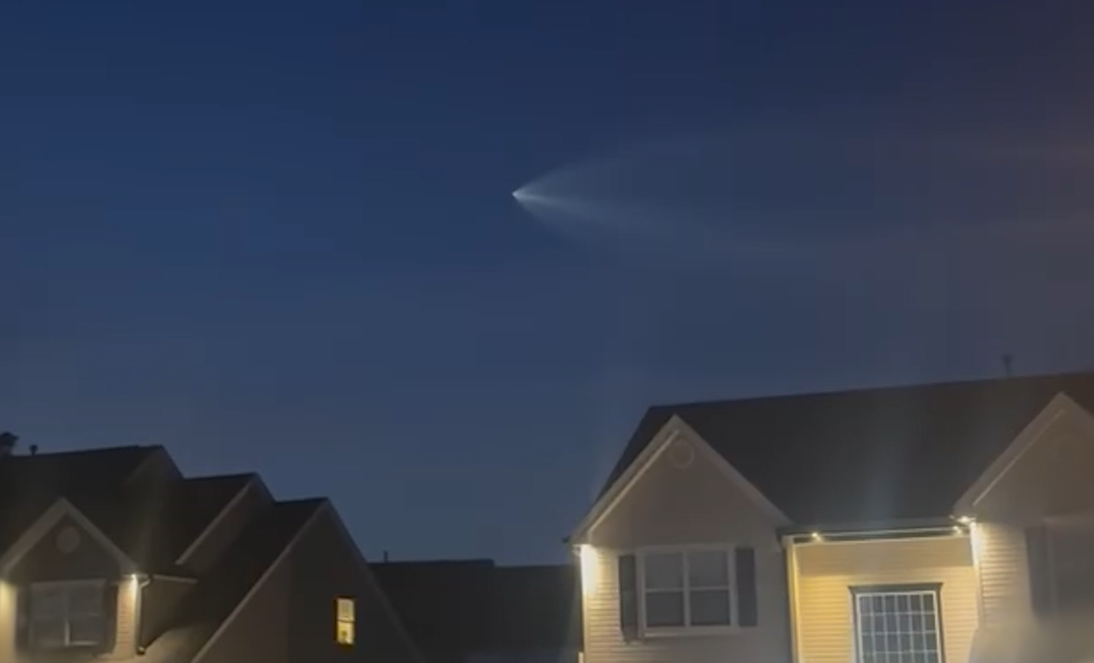
GREENVILLE, S.C. (FOX Carolina) - Several residents are seeing what is likely SpaceX Falcon 9 over Upstate skies early Tuesday morning. FOX Carolina received several photos and videos that looked similar to how the rocket launch would appear in the sky. According to SpaceX, a Starlink satellite with a Falcon 9 rocket launched from Cape Canaveral Space Force Station around 5:23 a.m. If you have photos or videos you wish to share, submit them here.

Citi's Best Quarter In A Decade Came From Chaos Trading
Citigroup's profit and revenue jumped as cross-asset volatility lifted trading and underwriting, though the bank warned geopolitical uncertainty could cool dealmaking later. Citigroup just posted its strongest quarterly revenue in a decade, as geopolitical tension and tech-stock whiplash pushed clients to trade more and companies to raise capital. What does this mean? Citi said first-quarter profit jumped 42% to $5.8 billion on $24.6 billion of revenue. Its markets business did the heavy lifting: revenue there rose 19% to $7.2 billion, with equities trading up 39% and fixed income up 13% as cross-asset volatility picked up. Investment banking was solid too, with revenue up 15% - equity underwriting fees surged 64% and M&A advisory rose 19%, even as debt underwriting slipped. Management warned that if uncertainty drags on, dealmak..

NRG Energy launches debt offerings to refinance obligations By Investing.com
HOUSTON - NRG Energy Inc. (NYSE:NRG) announced Monday the launch of concurrent debt offerings consisting of senior secured first lien notes due 2031 and senior unsecured notes due 2034 and 2036, according to a press release statement. The move comes as the company manages total debt of $16.6 billion against a market capitalization of $36.5 billion. The notes will be guaranteed by NRG's current and future wholly-owned U.S. subsidiaries that guarantee term loans under the company's credit agreement. The secured notes will be backed by a first priority security interest in property and assets owned by NRG and the guarantors. NRG plans to use proceeds from the offerings, combined with proceeds from a proposed $900 million term loan B, to repay a portion of outstanding borrowings under its revolving credit facility. The funds will also be used to pay the tender price for a concurrent tender offer through its subsidiary Lightning Power LLC for Lightning's outstanding 7.250% senior secured notes due 2032. Remaining proceeds will cover transaction fees, expenses and premiums, with any surplus allocated to general corporate purposes, which may include repurchasing, repaying or redeeming other debt of NRG, Lightning or their subsidiaries.The debt refinancing comes amid strong stock performance, with shares delivering a 79.7% return over the past year. According to InvestingPro analysis, the stock currently appears overvalued relative to its Fair Value. Investors seeking deeper insights can access NRG's comprehensive Pro Research Report, one of 1,400+ available for US equities. The completion of each offering is not conditioned upon the completion of the other offerings or the term loan B. The tender offer is being made separately pursuant to its own terms and conditions. The notes are being offered only to qualified institutional buyers under Rule 144A and to non-U.S. persons outside the United States under Regulation S. The securities have not been registered under the Securities Act of 1933. NRG provides electricity, natural gas and smart home solutions to eight million customers across North America and operates approximately 25 gigawatts of power generation. In other recent news, NRG Energy has been the focus of several significant developments. Goldman Sachs reinstated coverage of NRG Energy with a Buy rating, highlighting the acquisition of LS Power assets as transformative for the company's business profile. This transaction has doubled NRG's generation capacity and increased its exposure to natural gas and the PJM region. Wolfe Research also upgraded NRG Energy's stock rating to Outperform, noting the company's strong free cash flow from its retail and generation business in Texas. Jefferies raised its price target for NRG Energy stock to $199, maintaining a Buy rating, and expects the company to announce a major new combined cycle gas turbine project by 2026. Meanwhile, affiliates of LS Power have priced a secondary offering of 14.3 million NRG shares at $164 each, generating approximately $2.35 billion in gross proceeds for the selling stockholders. NRG Energy will not receive any proceeds from this sale, as the shares were part of the consideration for the LS Power acquisition. These recent developments have positioned NRG Energy as a company with increased capacity and strategic growth potential. This article was generated with the support of AI and reviewed by an editor. For more information see our T&C.
Kraken insider extortion reveals remote work security blind spot
Kraken cryptocurrency exchange has reported an insider security breach that puts the spotlight on the vulnerabilities inherent to remote-first working models. On April 13, Nick Percoco, the chief security officer at Kraken, announced two instances of unauthorized access affecting 2,000 client accounts, representing 0.02% of its total user base. The first case was identified in February 2025 after an external tip helped pinpoint the attack vector as a member of the exchange's support team. Although Kraken implemented additional security controls following the initial incident, those measures proved insufficient to prevent a second breach, which was again identified through an external tip. The exchange identified the individual responsible and revoked their access to customer databases. Despite these actions, Kraken continues to receive extortion threats from individuals claiming to hold customer information. "Shortly after access was terminated, we began receiving extortion demands. The criminals threatened to distribute materials from both the February 2025 incident and the recent incident to media outlets and on social media if we did not comply. We will not pay these criminals," Percoco stated. The Kraken security incident has exposed a critical vulnerability in remote-first working models. Moreover, criminal forums actively target remote employees because they are easier to approach anonymously, harder to supervise, and in some cases more economically vulnerable than on-site staff. Percoco noted that the exchange is currently working closely with law enforcement and industry partners to disrupt rogue insider recruitment efforts targeting remote employees. He also highlighted that insider threats are prevalent across other sectors, with gaming and telecommunications organizations particularly at risk given their highly distributed, remote-oriented workforces. Furthermore, these industries have normalized distributed privileged access, often without the monitoring infrastructure needed to keep pace with evolving attack capabilities. In Kraken's case, the security controls implemented after the first breach were insufficient to prevent a second incident, thus confirming the need for a layered monitoring architecture. Kraken now has a clear opportunity to build more robust security monitoring systems that can support its remote-first model at scale. With a valuation of approximately $13.3 billion and a recent $200 million investment from Deutsche Börse Group, as Finbold reported, the exchange has the financial capacity to strengthen its security system as a priority.
NRG Energy launches debt offerings to refinance obligations By Investing.com
HOUSTON - NRG Energy Inc. (NYSE:NRG) announced Monday the launch of concurrent debt offerings consisting of senior secured first lien notes due 2031 and senior unsecured notes due 2034 and 2036, according to a press release statement. The move comes as the company manages total debt of $16.6 billion against a market capitalization of $36.5 billion. The notes will be guaranteed by NRG's current and future wholly-owned U.S. subsidiaries that guarantee term loans under the company's credit agreement. The secured notes will be backed by a first priority security interest in property and assets owned by NRG and the guarantors. NRG plans to use proceeds from the offerings, combined with proceeds from a proposed $900 million term loan B, to repay a portion of outstanding borrowings under its revolving credit facility. The funds will also be used to pay the tender price for a concurrent tender offer through its subsidiary Lightning Power LLC for Lightning's outstanding 7.250% senior secured notes due 2032. Remaining proceeds will cover transaction fees, expenses and premiums, with any surplus allocated to general corporate purposes, which may include repurchasing, repaying or redeeming other debt of NRG, Lightning or their subsidiaries.The debt refinancing comes amid strong stock performance, with shares delivering a 79.7% return over the past year. According to InvestingPro analysis, the stock currently appears overvalued relative to its Fair Value. Investors seeking deeper insights can access NRG's comprehensive Pro Research Report, one of 1,400+ available for US equities. The completion of each offering is not conditioned upon the completion of the other offerings or the term loan B. The tender offer is being made separately pursuant to its own terms and conditions. The notes are being offered only to qualified institutional buyers under Rule 144A and to non-U.S. persons outside the United States under Regulation S. The securities have not been registered under the Securities Act of 1933. NRG provides electricity, natural gas and smart home solutions to eight million customers across North America and operates approximately 25 gigawatts of power generation. In other recent news, NRG Energy has been the focus of several significant developments. Goldman Sachs reinstated coverage of NRG Energy with a Buy rating, highlighting the acquisition of LS Power assets as transformative for the company's business profile. This transaction has doubled NRG's generation capacity and increased its exposure to natural gas and the PJM region. Wolfe Research also upgraded NRG Energy's stock rating to Outperform, noting the company's strong free cash flow from its retail and generation business in Texas. Jefferies raised its price target for NRG Energy stock to $199, maintaining a Buy rating, and expects the company to announce a major new combined cycle gas turbine project by 2026. Meanwhile, affiliates of LS Power have priced a secondary offering of 14.3 million NRG shares at $164 each, generating approximately $2.35 billion in gross proceeds for the selling stockholders. NRG Energy will not receive any proceeds from this sale, as the shares were part of the consideration for the LS Power acquisition. These recent developments have positioned NRG Energy as a company with increased capacity and strategic growth potential. This article was generated with the support of AI and reviewed by an editor. For more information see our T&C.
NRG's Lightning Power launches tender offer for $1.5B notes By Investing.com
HOUSTON - NRG Energy's (NYSE:NRG) subsidiary Lightning Power has initiated a tender offer to purchase all of its outstanding $1.5 billion in 7.250% senior secured notes due 2032, according to a press release statement. The move comes as parent company NRG, with a market capitalization of $36.5 billion, trades up nearly 80% over the past year, though InvestingPro analysis suggests the stock is currently overvalued relative to its Fair Value. The company is offering $1,063.75 per $1,000 principal amount for notes tendered by the early deadline of April 27, 2026. This includes a $50 early tender payment. Notes tendered after that date but before the May 12, 2026 expiration will receive $1,013.75 per $1,000 principal amount. NRG maintains a current ratio of 1.64, indicating solid liquidity to manage its $16.6 billion total debt load as it restructures these obligations. Lightning Power is simultaneously soliciting consents to amend the indenture governing the notes. The proposed amendments would eliminate substantially all restrictive covenants, certain affirmative covenants, and events of default. The company also seeks to release all guarantees and collateral securing the notes. The covenant amendments require consent from holders of a majority of the outstanding notes, while the release of guarantees and collateral requires consent from at least 66.67% of noteholders. Lightning Power stated it intends to exercise its right under the indenture to redeem up to 10% of the notes' aggregate initial principal amount in two separate redemptions at 103% of principal, plus accrued interest. The company noted there is no assurance any notes will be redeemed. Noteholders may withdraw tendered notes until April 27, 2026. Settlement for notes tendered by the early deadline is expected within three business days after April 27, 2026. The tender offer is subject to several conditions, including a financing condition. The offer is not contingent on any minimum principal amount being tendered. Citigroup Global Markets and Santander US Capital Markets are serving as lead dealer managers for the transaction. In other recent news, NRG Energy has launched debt offerings to refinance its obligations, issuing senior secured first lien notes due 2031 and senior unsecured notes due 2034 and 2036. The notes will be guaranteed by NRG's current and future wholly-owned U.S. subsidiaries. Jefferies has raised its price target on NRG Energy to $199, maintaining a Buy rating, and anticipates a significant new gas turbine project announcement in 2026. Wolfe Research has upgraded NRG Energy's stock rating to Outperform, highlighting the company's strong cash flow from its Texas market operations and recent asset acquisitions. Goldman Sachs has reinstated coverage with a Buy rating, noting the LS Power asset acquisition as a transformative move that doubled NRG's generation capacity and diversified its business profile. Additionally, affiliates of LS Power priced a public offering of 14.3 million shares at $164.00 per share, generating gross proceeds of approximately $2.35 billion, although NRG will not receive any proceeds from this sale. This article was generated with the support of AI and reviewed by an editor. For more information see our T&C.
What you should do to avoid flight chaos this summer
Add Yahoo as a preferred source to see more of our stories on Google. US president Donald Trump's blockade of the Strait of Hormuz has sparked further concerns of long-term disruption to the flow of fuel through the vital global shipping route. Airlines were leading the stock market falls in London on Monday as worries deepened over the supply and cost crunch for jet fuel. The rising fuel prices continue to cast doubt on Britons' summer travel plans, which are becoming more vulnerable to air fare increases or outright cancellations. Airport Council International Europe has said European airports could face jet fuel shortages within a few weeks if the key shipping route remains closed. In a letter to the European Commission, the group said its concerns had been intensified by the approach of the peak summer season, "when air travel enables the whole tourism ecosystem upon which many [EU] economies rely". Several airlines have echoed these concerns, with Ryanair admitting that it cannot rule out risks to fuel supplies at some airports if the Strait of Hormuz remains closed into May or June. When could air fares rise? Several British airlines, including Ryanair and easyJet, have signalled that a rise in air fares is likely to occur at the end of summer. Peter Forbes, the director of aviation consultancy Alan Stratford and Associates, said: "There's enough fuel in the UK for around two months. After that, there has been concern about what might happen." Many European airlines have already introduced higher costs for travellers. Scandinavian airline SAS cancelled more than 1,000 flights this month and confirmed it was temporarily increasing prices due to rising jet fuel costs. A spokesperson for Ryanair said: "We don't expect any near-term fuel shortages, but the situation is fluid. At present our fuel suppliers can guarantee supply to mid-end May. If the Iran war finishes soon, then supply will not be disrupted. If the closure of the Hormuz Straits continues into May or June, then we cannot rule out risks to fuel supplies at some airports in Europe. "With jet oil prices doubling during March, we expect all airlines will pass on these higher costs in the form of higher air fares post Easter and later this summer." What flights could be affected? Longer-haul flights could be more susceptible to air fare hikes, with carriers like Air France-KLM raising ticket prices on their longer journeys. Air New Zealand has lifted fares on long-haul trips by $90NZD (£40), while Australian airline Qantas has announced it is increasing the price of international flights. Mr Forbes said there was a possibility that the European Union's tankering rules could also affect the air fares of flights departing EU countries. Due to regulations that came into force last year, airlines have been banned from tankering, where airlines load extra fuel at an airport where prices are lower. British and other non-EU airlines only have to abide by the provisions when departing EU airports. If regulations aren't lifted, Mr Forbes said there is a possibility that air fares for flights leaving EU countries could become more expensive. What should travellers do? Travel experts are urging customers to keep informed about the conflict in the Middle East and stay up to date with any communications about travel bookings. Travellers have also been advised to buy insurance for any flight they have and make sure they understand what they are covered for. Airlines have warned that cancellations are possible, with Ryanair chief executive Michael O'Leary saying this week that the airline was considering cutting 10 per cent of flights. They have urged customers to book their trips immediately to avoid rising air fares. A Ryanair spokesperson said: "We urge all passengers to book their flights (and holidays) as soon as possible and then they will be insulated from inevitable air fare and accommodation cost increases after Easter and later this summer." Kenton Jarvis, the chief executive of EasyJet, said: "The reality is, as you look further forward, and the hedges start reducing in size, I think the message would be book as early as possible, because that will start feeding in at some stage."
Did you see it? SpaceX launch visible over parts of NJ this morning
If you were up early and had your eyes on the sky, you might have caught a rare sight in New Jersey -- a SpaceX rocket launch. The Falcon 9 lifted off from Cape Canaveral, Florida, at 5:33 a.m., its northeast trajectory making it visible along the East Coast. By the time it reached the Garden State, it was likely in the "jellyfish phase," where sunlight illuminates the exhaust plume against a darker sky, creating a glowing, jellyfish-like effect. Some News 12 viewers reported spotting the bright object shortly after launch and wondering what they saw. While not frequent, a few SpaceX launches are visible over New Jersey each year, depending on trajectory. The next is scheduled for this evening from Vandenberg Space Force Base in California.
Cyclone Vaianu Travel Chaos Hits New Zealand North Island as Dangerous Storm Disrupts Tourism and Coastal Movement - Travel And Tour World
New Zealand's tourism corridors were thrown into sudden turmoil on April 12, 2026, as Cyclone Vaianu made landfall near the Maketu Peninsula, unleashing a powerful and dangerous weather system that authorities described as life-threatening. The storm rapidly escalated into a major disruption event for domestic travel, forcing evacuations, grounding flights, and cutting power to thousands of homes across the North Island. According to official updates from government-backed meteorological and emergency agencies, the cyclone's intensity and scale triggered the highest level of alerts, creating widespread uncertainty for both residents and travelers. The situation unfolded dramatically through Sunday, with emergency services racing against time to manage flooding, wind damage, and coastal threats while tourism activities came to an abrupt halt in several regions. As the cyclone approached land, authorities initiated urgent evacuations across vulnerable coastal and low-lying areas, including mandatory orders affecting hundreds of residents in the Whakatane District. Government emergency management systems, supported by the New Zealand Defence Force, mobilized quickly to relocate people from high-risk zones, many of which are also popular with domestic tourists and seasonal visitors. The evacuation process highlighted the vulnerability of travel-heavy coastal regions, where holiday homes, camping sites, and short-term rentals are concentrated. Travelers found themselves caught in rapidly changing conditions, with roads becoming hazardous and access routes restricted. The evacuation orders were not only a safety measure but also a stark reminder of how extreme weather events can instantly transform tourist destinations into crisis zones. Air travel across the North Island suffered a severe blow as more than 90 flights operated by Air New Zealand were cancelled, most of them regional services connecting smaller destinations. These cancellations stranded passengers, disrupted travel itineraries, and created a ripple effect across the country's tourism network. Regional turboprop services, which are crucial for linking remote and scenic destinations, were particularly affected, leaving travelers with limited alternatives. Ground transportation also faced disruptions, as heavy rainfall and strong winds made several routes unsafe or temporarily inaccessible. Tourism operators reported a sharp decline in bookings and movement as the cyclone intensified, with many visitors opting to delay or cancel trips altogether. The storm's impact extended beyond transport into critical infrastructure, with around 5,000 homes losing electricity at the peak of the event, according to official figures. Although restoration efforts brought power back to some areas, thousands remained affected during the most intense phase of the cyclone. For the travel sector, this meant disruptions to accommodation services, communication systems, and essential facilities relied upon by tourists. Hotels, lodges, and holiday parks in affected regions struggled to maintain operations, while emergency services worked continuously to respond to more than 100 incidents related to flooding and storm damage. The loss of power and infrastructure strain further compounded the challenges faced by travelers navigating the crisis. Cyclone Vaianu delivered a combination of extreme weather elements that significantly heightened travel risks across the North Island. Wind gusts reached up to 130 kilometers per hour, capable of causing structural damage and making outdoor movement dangerous. In Whangarei, rainfall exceeded 100 millimeters within 24 hours, leading to flash flooding and waterlogged roads. Along the coast, wave heights surged beyond six meters, raising serious concerns about coastal inundation and erosion. These conditions forced authorities to issue red-level warnings, the highest alert category, urging people to avoid unnecessary travel and remain indoors. For tourists, the dramatic weather conditions not only disrupted plans but also posed direct safety threats, especially in coastal and scenic areas known for outdoor activities. While the cyclone's trajectory shifted slightly eastward, sparing major urban centers like Auckland from the worst-case scenario, officials emphasized that the threat remained severe. Government emergency agencies warned that coastal flooding risks persisted due to the combination of high tides and heavy swells, creating dangerous conditions even after the initial landfall. Emergency Management Minister Mark Mitchell noted through official channels that although some regions experienced slightly less intensity than forecast, the system continued to pose significant dangers throughout Sunday afternoon. This cautious stance reflected the unpredictable nature of cyclones and the need for ongoing vigilance, particularly in areas still exposed to strong winds and rising المياه levels. The cyclone's impact is expected to have lasting consequences for New Zealand's travel and tourism industry, especially in the North Island. The sudden halt in travel movement, combined with cancellations and safety concerns, disrupted peak travel flows and affected businesses reliant on visitor activity. Adventure tourism operators, coastal resorts, and regional attractions experienced immediate setbacks as conditions forced closures and limited access. The situation also highlighted the growing challenges posed by climate-driven extreme weather events, which are increasingly influencing travel patterns and risk assessments. For many travelers, Cyclone Vaianu became a stark example of how quickly a planned trip can turn into an emergency situation. According to government-backed forecasts, weather conditions are expected to gradually improve as Cyclone Vaianu moves down the island toward Hawke's Bay, with a projected exit by Sunday evening. However, authorities cautioned that the aftermath could still bring localized hazards, including residual flooding, damaged infrastructure, and unstable coastal conditions. Travelers have been advised to monitor official updates and avoid affected areas until safety assessments are completed. The cyclone's scale and impact have already drawn comparisons to Cyclone Gabrielle in 2023, underscoring the seriousness of the event and its implications for future travel planning in New Zealand. Cyclone Vaianu has reinforced a critical message for travelers and the tourism industry alike that extreme weather preparedness is no longer optional but essential. As climate patterns evolve, destinations once considered stable are increasingly vulnerable to sudden and severe disruptions. The events of April 12 serve as a powerful reminder that travel safety depends not only on planning but also on real-time awareness and responsiveness to official guidance. For New Zealand, a country celebrated for its natural beauty and outdoor experiences, the cyclone has exposed the delicate balance between tourism and environmental risk, leaving both authorities and travelers rethinking how to navigate an uncertain future.

Deutsche Börse Invests $200M in Kraken: A Major Institutional Crypto Milestone - Blockonomi
Kraken achieved a historic milestone in March by securing the first Federal Reserve master account granted to a digital asset bank The Frankfurt Stock Exchange operator, Deutsche Börse, has made a significant $200 million investment in American cryptocurrency platform Kraken. This strategic acquisition provides Deutsche Börse with a 1.5% fully diluted ownership interest in Payward Inc., the parent corporation behind Kraken. The transaction assigns a market value of approximately $13.3 billion to Kraken. The investment structure involves acquiring existing shares through a secondary market exchange rather than a primary capital raise. The relationship between these two financial powerhouses dates back to December 2025, when they initially unveiled a strategic alliance. This collaboration aimed to create seamless integration between conventional financial infrastructure and emerging digital asset ecosystems, particularly targeting institutional participants throughout Europe. According to Deutsche Börse's announcement, this equity investment significantly strengthens their existing partnership. The expanded collaboration now encompasses regulated cryptocurrency services, tokenization initiatives, derivatives products, and institutional liquidity solutions spanning multiple geographic markets. Deutsche Börse has systematically developed its digital asset capabilities over recent years. The organization launched a dedicated institutional cryptocurrency trading venue in 2024. By March 2025, the company rolled out cryptocurrency custody and settlement infrastructure via its Clearstream division. Additionally, it integrated support for euro and dollar-denominated stablecoins in post-transaction processing through a partnership with Societe Generale-FORGE. Regulatory authorities must still approve the transaction, with completion anticipated during the second quarter of 2026. Kraken previously disclosed intentions to pursue a public market listing in November 2025. Simultaneously, the company secured $800 million in funding, which included a $200 million contribution from Citadel Securities. However, the initial public offering timeline has been postponed. Management cited adverse market circumstances as the primary factor. While an IPO remains under consideration, the company will wait for more favorable conditions before proceeding. Deutsche Börse represents just one example of traditional financial institutions pivoting toward digital assets. In March 2026, the corporation that owns the New York Stock Exchange made an equity investment in cryptocurrency platform OKX. Nasdaq similarly announced a strategic partnership with Payward Inc. during the same period. These developments demonstrate how established exchange operators are assuming more prominent positions within the cryptocurrency sector, with particular emphasis on serving institutional clientele. In a groundbreaking development during March 2026, Kraken achieved distinction as the inaugural digital asset banking institution to obtain a master account with the U.S. Federal Reserve. While significant, this achievement prompted questions from external observers regarding transparency protocols and potential financial stability implications. The Deutsche Börse-Kraken agreement remains pending final regulatory clearance before achieving closure.
NRG Energy, Inc. Announces Offerings of Senior Secured Notes and Senior Unsecured Notes
The Notes will be guaranteed by each of NRG's current and future wholly-owned U.S. subsidiaries that guarantee the term loans under NRG's credit agreement. The Secured Notes will be secured by a first priority security interest in the same collateral that is pledged for the benefit of the creditors under NRG's credit agreement and existing senior secured notes, which collateral consists of a substantial portion of the property and assets owned by NRG and the guarantors. NRG intends to use the net proceeds from the Offerings, together with the net proceeds of its proposed new term loan B in an aggregate principal amount of $900 million (the "New TLB"), to repay a portion of the outstanding borrowings under the NRG revolving credit facility and to pay the tender price of a substantially concurrent tender offer (the "Tender Offer") through its wholly-owned subsidiary, Lightning Power, LLC ("Lightning"), for Lightning's outstanding 7.250% senior secured notes due 2032 (the "Lightning Notes"), to pay estimated transaction fees, expenses and premiums and, the remainder, if any, for general corporate purposes, which may include the repurchase, repayment, prepayment or redemption of other debt of NRG, Lightning or any of their respective subsidiaries. The consummation of the Secured Notes Offering is not conditioned upon the completion of the Unsecured Notes Offering or the New TLB or vice versa. The Tender Offer is being made only by and pursuant to the terms and conditions of the related offer to purchase and consent solicitation statement. The Offerings are not conditioned upon the completion of the Tender Offer or the tender of any specific amount of the Lightning Notes. The Notes and related guarantees are being offered only to qualified institutional buyers in reliance on Rule 144A under the Securities Act of 1933, as amended (the "Securities Act"), and, outside the United States, to persons other than "U.S. persons" in compliance with Regulation S under the Securities Act. The Notes and related guarantees have not been registered under the Securities Act or the securities laws of any other jurisdiction and may not be offered or sold in the United States absent registration or an applicable exemption from the registration requirements. This press release does not constitute an offer to sell any security, including the Notes, nor a solicitation for an offer to purchase any security, including the Notes. NRG does not intend to file a registration statement for the resale of the Notes. Nothing contained herein shall constitute an offer to purchase or the solicitation of an offer to sell any Lightning Notes in the Tender Offer.
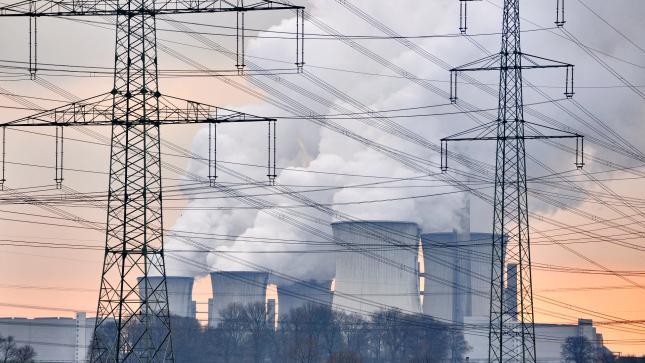
NRG Energy, Inc. Announces Cash Tender Offer and Consent Solicitation for any and all of Lightning Power, LLC's outstanding 7.250% Senior Secured Notes due 2032
NRG Energy, Inc. (NYSE:NRG) announced today that its wholly-owned subsidiary, Lightning Power, LLC ("Lightning"), has commenced an offer to purchase for cash (the "Tender Offer") any and all of Lightning's outstanding 7.250% senior secured notes due 2032 (the "Notes"), of which $1,500 million aggregate principal amount is currently outstanding. In conjunction with the Tender Offer, Lightning is also soliciting consents (the "Consent Solicitation") to adopt certain proposed amendments to the indenture governing the Notes (the "Indenture") to (1) eliminate substantially all of the restrictive covenants and certain affirmative covenants and events of default and related provisions therein (the "Proposed Amendments") and (2) release all of the guarantees of and the collateral securing the Notes (the "Release"). The Proposed Amendments require the consent of holders of a majority in aggregate principal amount of the outstanding Notes (the "Covenant Requisite Consents") and the Release requires the consent of holders of at least 66/% in aggregate principal amount of the outstanding Notes (the "Release Requisite Consents").