News & Updates
The latest news and updates from companies in the WLTH portfolio.
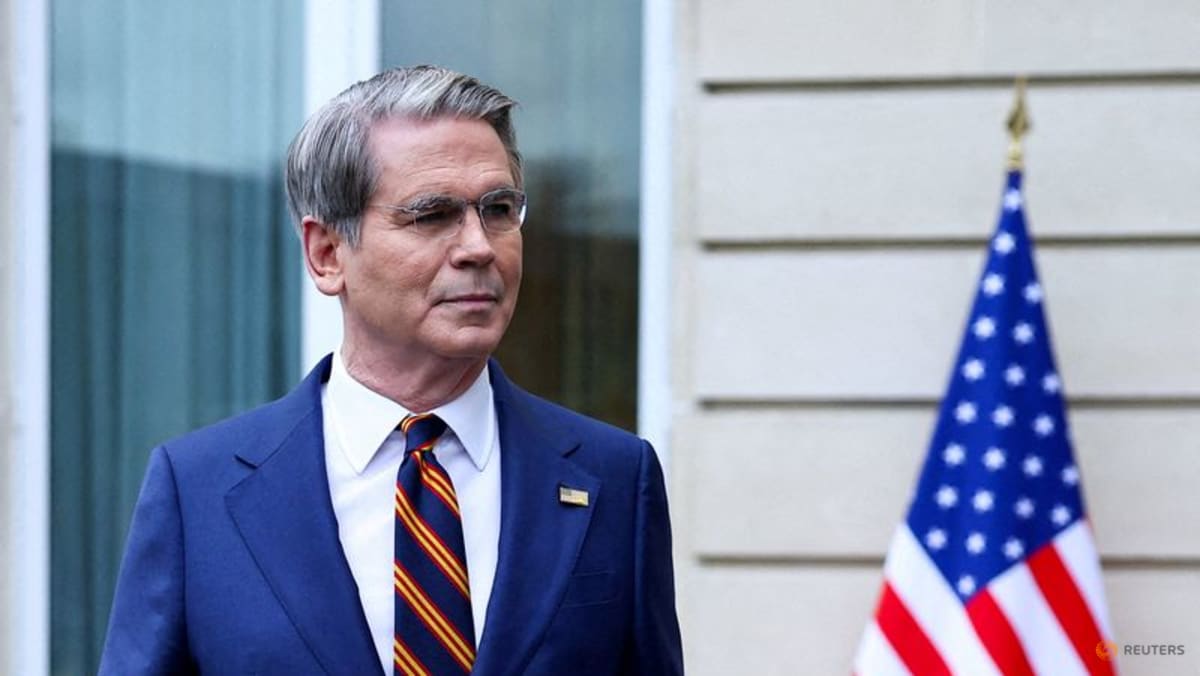
Bessent, Powell warn bank CEOs about Anthropic model risks, Bloomberg News reports
April 9 (Reuters) - U.S. Treasury Secretary Scott Bessent and Federal Reserve Chair Jerome Powell convened an urgent meeting with bank executives on Tuesday to warn them about the cyber risks raised by Anthropic's latest AI model, Bloomberg News reported, citing sources. The meeting at the Treasury Department in Washington aimed to ensure banks are aware of potential risks posed by Anthropic's Mythos and similar models, and are taking steps to defend their systems, the report said on Thursday. Reuters could not immediately verify the report. Reporting by Carlos Méndez in Mexico City; Editing by Sumana Nandy Our Standards: The Thomson Reuters Trust Principles., opens new tab

Palantir stock plunges after 'Big Short' investor Michael Burry says Anthropic is eating its lunch
For the Street, the concern isn't a social media post, but the specific data Burry cited. He pointed to Anthropic's explosive growth, noting its climb from $9 billion to $30 billion in annual recurring revenue (ARR) in just months. That's proof that businesses are pivoting toward "easier, cheaper, [and more] intuitive" solutions, he said. This isn't a new crusade for Burry. He has been consistently bearish on Palantir. Around September 2025, he disclosed a significant short position through long-dated put options on the company, forecasting a multiyear decline. "PLTR can have government, which is low margin and small," Burry wrote in the deleted post, noting that while Anthropic is scaling at lightning speed, "it took $PLTR 20 years to get to $5 Billion." Burry's thesis rests on the idea that Palantir is less of a high-growth tech firm and more of a low-margin consulting business. He argues that Palantir's model relies on sending its own staff, known as Forward Deployed Engineers (FDE), to live and work inside a customer's office for months at a time to maintain its systems. According to Palantir's 10-K filing, these deployments are often categorized under "professional services," a tier in which the company essentially charges for human labor, rather than just a product. https://finance.yahoo.com/news/palantir-stock-plunges-after-big-short-investor-michael-burry-says-anthropic-is-eating-its-lunch-171120431.html

Bessent, Powell warn bank CEOs about Anthropic model risks, Bloomberg News reports By Reuters
Risk Disclosure: Trading in financial instruments and/or cryptocurrencies involves high risks including the risk of losing some, or all, of your investment amount, and may not be suitable for all investors. Prices of cryptocurrencies are extremely volatile and may be affected by external factors such as financial, regulatory or political events. Trading on margin increases the financial risks. Before deciding to trade in financial instrument or cryptocurrencies you should be fully informed of the risks and costs associated with trading the financial markets, carefully consider your investment objectives, level of experience, and risk appetite, and seek professional advice where needed. Fusion Media would like to remind you that the data contained in this website is not necessarily real-time nor accurate. The data and prices on the website are not necessarily provided by any market or exchange, but may be provided by market makers, and so prices may not be accurate and may differ from the actual price at any given market, meaning prices are indicative and not appropriate for trading purposes. Fusion Media and any provider of the data contained in this website will not accept liability for any loss or damage as a result of your trading, or your reliance on the information contained within this website. It is prohibited to use, store, reproduce, display, modify, transmit or distribute the data contained in this website without the explicit prior written permission of Fusion Media and/or the data provider. All intellectual property rights are reserved by the providers and/or the exchange providing the data contained in this website. Fusion Media may be compensated by the advertisers that appear on the website, based on your interaction with the advertisements or advertisers.

SpaceX posted nearly $5 billion loss in 2025, The Information reports By Reuters
April 9 (Reuters) - Elon Musk's IPO-bound SpaceX posted a loss of nearly $5 billion in 2025 on revenue of more than $18.5 billion, The Information reported on Thursday, citing sources. Reuters could not immediately verify the report. SpaceX did not immediately respond to a Reuters' request for comment outside regular business hours. * The loss includes Musk's artificial intelligence startupxAI, which SpaceX acquired in February, according to the report. * SpaceX is the world's most active launch company and hasset out ambitions to make interplanetary travel viable. It hasalso outlined plans to deploy artificial intelligence datacenters in orbit. * The company, which confidentially filed for a U.S. listingin March, generated about $8 billion in profit last year onrevenue of $15 billion to $16 billion, Reuters reported inJanuary. * SpaceX is seeking a public listing at a potentialvaluation of more than $1.75 trillion.

Bessent, Powell warn bank CEOs about Anthropic model risks, Bloomberg News reports
April 9 : U.S. Treasury Secretary Scott Bessent and Federal Reserve Chair Jerome Powell convened an urgent meeting with bank executives on Tuesday to warn them about the cyber risks raised by Anthropic's latest AI model, Bloomberg News reported, citing sources. The meeting at the Treasury Department in Washington aimed to ensure banks are aware of potential risks posed by Anthropic's Mythos and similar models, and are taking steps to defend their systems, the report said on Thursday. Reuters could not immediately verify the report.
SpaceX: A Rocketing Ambition amid Financial Hurdles | Technology
SpaceX, led by Elon Musk, faced a nearly $5 billion loss in 2025 despite generating over $18.5 billion in revenue. The loss factors in its acquisition of xAI. As the leading launch company, SpaceX aims for interplanetary travel and AI data centers, targeting a $1.75 trillion valuation for its IPO. Elon Musk's SpaceX, on the brink of an IPO, reported a significant financial setback, with nearly $5 billion in losses for 2025 despite a robust revenue stream of more than $18.5 billion, according to sources cited by The Information. Reuters has yet to verify these claims, and attempts to secure comments from SpaceX were unsuccessful outside of regular hours. Notably, the financial loss incorporates SpaceX's acquisition of xAI, Musk's AI venture, acquired earlier in February. SpaceX, the leading global launch service provider, envisions interplanetary travel and establishing AI data hubs in orbit. Confidential filings suggest expectations of a U.S. listing valuing the firm at over $1.75 trillion, following last year's reported profits of about $8 billion on revenues of $15 to $16 billion.

Colossal hospice scheme cost California millions, officials say amid intensifying Trump feud
LOS ANGELES -- Twenty-one people are facing charges as part of a massive hospice fraud scheme that prosecutors say bilked California's medical system out of $267 million. Attorney General Rob Bonta on Thursday announced the results of an investigation called Operation Skip Trace. Five principal conspirators were arrested on suspicion of a host of felonies, including insurance fraud, money laundering, conspiracy and identity theft for their alleged role in a sophisticated hospice scam operating across Southern California.

Anthropic Model Scare Sparks Urgent Bessent, Powell Warning to Bank CEOs
Treasury Secretary Scott Bessent and Federal Reserve Chair Jerome Powell summoned Wall Street leaders to an urgent meeting on concerns that the latest artificial intelligence model from Anthropic PBC will usher in an era of greater cyber risk. Bessent and Powell assembled the group at Treasury's headquarters in Washington on Tuesday to make sure banks are aware of possible future risks raised by Anthropic's Mythos and potential similar models, and are taking precautions to defend their systems, according to people familiar with the matter who asked not to be identified citing the private discussions. A representative for the Treasury didn't immediately respond to a request for comment. A spokesperson for the Fed declined to comment. The previously unreported meeting, arranged on short notice, is another sign that regulators consider the possibility of a new breed of cyber attacks as one of the biggest risks facing the financial industry. All the banks summoned to the meeting are classified as systemically important by top regulators, meaning their stability is a priority for the global financial system. Anthropic's Mythos is a more powerful system that the AI firm has said is capable of identifying and then exploiting vulnerabilities in every major operating system and web browser when directed by a user to do so. Get the Tech Newsletter bundle. Get the Tech Newsletter bundle. Get the Tech Newsletter bundle. Bloomberg's subscriber-only tech newsletters, and full access to all the articles they feature. Bloomberg's subscriber-only tech newsletters, and full access to all the articles they feature. Bloomberg's subscriber-only tech newsletters, and full access to all the articles they feature. Plus Signed UpPlus Sign UpPlus Sign Up By continuing, I agree to the Privacy Policy and Terms of Service. Regulators' caution about the power of the model in hackers' hands echoes Anthropic's own prudence. Anthropic has limited the release of it to just a few major technology and finance firms at first. Those companies, which include Amazon.com Inc. and Apple Inc. as well as JPMorgan Chase & Co., are part of "Project Glasswing," which will work to secure the most important systems before other similar AI models become available. Anthropic has said that it has been in discussions prior to its recent release with US officials about Mythos and its "offensive and defensive cyber capabilities." Chief executive officers summoned to the meeting with the Fed and Treasury include Citigroup Inc.'s Jane Fraser, Morgan Stanley's Ted Pick, Bank of America Corp.'s Brian Moynihan, Wells Fargo & Co.'s Charlie Scharf, and Goldman Sachs Group Inc.'s David Solomon, said the people. JPMorgan's Jamie Dimon was unable to attend, the people said. Spokespeople for the banks declined to comment. A representative for Anthropic had no immediate comment. Anthropic has separately been battling the Trump administration in court. The Pentagon had labeled the company as a supply-chain risk, a designation that Anthropic has opposed. Earlier this week, a federal appeals court declined, at least for now, Anthropic's request that it put a pause to the Pentagon's designation.

Anthropic and OpenAI target big businesses with enterprise-grade controls and lower pricing - SiliconANGLE
Anthropic and OpenAI target big businesses with enterprise-grade controls and lower pricing Artificial intelligence leaders Anthropic PBC and OpenAI Group PBC are stepping up their efforts to compete for the enterprise, making their most advanced agentic tools more accessible to the largest organizations. In its update today, Anthropic revealed new "organization-wide controls" to help corporate teams deploy its autonomous Claude Cowork service. Meanwhile, OpenAI took a different path, slashing the cost of the "Pro" subscription to access its popular Codex programming tools. Anthropic said Claude Cowork is getting a variety of new administrative tools designed to help organizations manage its rollout. Claude Cowork, first announced in January, is an autonomous AI agent that's able to handle complex, multistep tasks on employee's computers. Unlike standard chatbots that just answer questions, it's more like a proactive teammate, capable of organizing files, creating reports and documents and running browser tasks, rather than just talking about them. While Claude Cowork is every bit as good as Claude Code at writing software, most early adopters can be found in non-engineering departments such as marketing, financial and legal teams, where they're using it to help with project updates and research tasks. To facilitate this reality, Anthropic has introduced role-based access controls for Enterprise subscribers, which enable admins to choose exactly which Cowork capabilities employees can access. There are also new group spend limits to support per-team budgeting, delivering the cost predictability that financial teams need. On the technical side, the company is enhancing observability by expanding Cowork's OpenTelemetry support. This means companies can now monitor Claude events such as tool calls and file modifications directly within their security information and event management pipelines. In addition, the company announced a new Zoom Model Context Protocol connector that allows Claude Cowork to pull meeting summaries and action items into its workflows, and more precise controls for other MCP connectors. Not to be outdone, OpenAI is pushing to entice the heaviest enterprise users to engage with Codex, its rival to Claude Code. The company is lowering the barrier to entry with the availability of a new $100 per month Pro plan, effectively slashing the cost of its most premium subscription in half. The new tier is aimed at Codex power users, offering five times as much usage as the existing $20 pricing tier. It's aimed at professional developers who keep finding themselves hitting limits during intensive coding sessions, and it dramatically undercuts the cost of rival coding services. For instance, the top-tier subscriptions of Claude Code and Google LLC's Gemini Code Assist both start at $200 per month. In addition to the lower costs, Pro Codex users will also be able to access experimental preview features enabled by OpenAI's latest frontier models, including GPT-5.4 Pro. Today's updates underline the strategic shift as AI's top model makers scramble to sign up more enterprises in the belief that businesses will ultimately become a major source of revenue in the years to come. They're fighting tooth and nail to win over customers, and that means they cannot only compete on model performance, but also areas such as utility and integration. The biggest beneficiaries are enterprises themselves. With Anthropic helping to solve the logistical headaches and OpenAI perhaps kicking off a deflationary trend in AI compute, it becomes easier for big businesses to adopt the most powerful AI agents and start accelerating automation.

SpaceX: Navigating Billion-Dollar Losses with IPO Hopes | Headlines
In a significant financial revelation, Elon Musk's SpaceX, heading towards an IPO, reported an almost $5 billion loss amidst a revenue stream exceeding $18.5 billion for 2025. According to sources cited by The Information, this loss factors in xAI, the artificial intelligence firm that SpaceX acquired back in February of the same year. Efforts to independently verify this report have not yet been successful, with Reuters unable to confirm the details at present.

Elon Musk's xAI Sues Colorado Over AI Anti-Discrimination Law
Elon Musk's artificial intelligence company xAI sued Colorado to block a new state law requiring tech companies to establish safeguards to prevent discrimination by autonomous tools in certain employment decisions, among others. In a lawsuit filed in federal court Thursday, xAI argued that the law "severely burdens" the development of AI tools and violates the Constitution's First Amendment by requiring developers to "embed the state's preferred views into the very fabric of AI systems." "Its provisions prohibit developers of AI systems from producing speech that the state of Colorado dislikes, while compelling them to conform their speech to a state-enforced orthodoxy on controversial topics of great public concern," lawyers for xAI said in the complaint. "This attempted coercion is unconstitutional." The suit comes shortly after the White House sent a proposed legislative plan to lawmakers last month as a framework on how to regulate AI, preempting a growing number of state measures. Tech industry leaders and venture capital firms have been vocal in supporting a national standard for AI oversight, but the proposal would need to get enough support in Capitol Hill. Colorado is among the statesBloomberg Terminal that passed measures to restrict AI, with the state's legislation set to take effect in coming months. President Donald Trump's framework calls for online safeguards for children, less stringent permitting requirements so data centers can generate power on site and preventing censorship. But it has also been seen as a way to undercut state legislation. A representative for Colorado's attorney general declined to comment, while xAI didn't respond to a request for comment. Colorado's algorithmic bias lawBloomberg Terminal seeks to regulate the way businesses use AI tools in high-stakes decisions affecting employment, health care, housing and other areas. It will require transparency notices from employers, as well as bias assessments and monitoring from developers of AI technology and the businesses and government entities deploying those tools to aid with decisions such as hiring and firing. The measure is the first state law of its kind and has been in the works for years. The law is set to take effect June 30. Musk's xAI, maker of the Grok chatbot, argues in its suit that the law is overly broad and redundant, as state and federal laws"prohibiting intentional discrimination in employment, housing, education, finance, and other decisions" already exist. The suit was reported earlier by the Financial Times. The case is xAI v. Weiser, 1:26-cv-01515, US District Court, District of Colorado.

This is the Real Reason to Invest in the SpaceX IPO, According to 1 Wall Street Analyst
Most investors are focused on the launch business and Starlink, but the company may be worth more than the sum of its parts. The hype machine is running at full speed ahead of SpaceX's IPO. The space company, founded by Elon Musk, has confidentially filed with the Securities and Exchange Commission (SEC) to go public and is poised to be the biggest listing in history. Major news outlets suggest that SpaceX is looking to raise roughly $75, targeting a valuation of between $1.75 trillion and $2 trillion. But investors are missing out on the most important reason to invest in the SpaceX IPO, according to one Wall Street analyst. Will AI create the world's first trillionaire? Our team just released a report on the one little-known company, called an "Indispensable Monopoly" providing the critical technology Nvidia and Intel both need. Continue " Image source: Getty Images. It seems the SpaceX IPO has gone viral even before it has been officially announced, sending space-age investors into a frenzy. And there are plenty of reasons to be bullish. After all, SpaceX had revenue estimated at between $15 billion and $16 billion in 2025, resulting in EBITDA (earnings before interest, taxes, depreciation, and amortization) of $8 billion. Driving those solid financial results is the SpaceX launch business, which has already conducted 635 successful Falcon rocket launches. Then there's the Starlink satellite internet business, which has more than 10,000 satellites in orbit, providing internet service to more than 9 million users. While those money-generating businesses are reasons to be optimistic, they are only two pieces of a much bigger puzzle, according to veteran tech analyst Gene Munster, managing partner at Deepwater Asset Management. In a post on X, Munster wrote: Investors looking at the SpaceX IPO are focused on the launch business and Starlink subscribers. They're missing the real story. SpaceX, through its constellation of Elon (Musk)-controlled entities, has quietly assembled the only set of assets capable of building a fully sovereign AI. Sovereign AI is each country's ability to develop and harness AI for the betterment of its society. The market could be worth as much as $600 billion by 2030, according to global management consulting firm McKinsey & Company. Munster posits the company has four pillars needed to offer the full stack of sovereign AI. SpaceX's launch monopoly and high-margin logistics business form the first pillar, giving the company the resources to deploy "compute and data centers into orbit." xAI, which merged with SpaceX early this year, provides critical artificial intelligence (AI) infrastructure. The second pillar is Starlink's hyperscale network, which Muster says also serves as a global internet service provider (ISP). This allows SpaceX to control the flow of compute, either on the ground or in orbit, without relying on other providers. The third pillar is Grok, xAI's frontier model trained on "a proprietary, high-velocity data asset (X)" that offers "a real-time data advantage," according to Munster. The final pillar is the Terafab, Musk's upcoming high-performance semiconductor fabrication facility, a joint venture between Tesla and SpaceX. The purpose of the venture is to solve the current "chip bottleneck" and produce 1 terawatt (1 trillion watts) of compute capacity per year -- more than the current worldwide total combined. Munster opines, "If vertical integration is the path to capturing margin in the intelligence economy (and we believe it is), then SpaceX has the most compelling structural advantage of any company in the world." He also says it's hard to put a value on the opportunity. Plenty will have to go right for SpaceX to achieve Munster's vision. If it does, the sky is the limit. When our analyst team has a stock tip, it can pay to listen. After all, Stock Advisor's total average return is 946%* -- a market-crushing outperformance compared to 190% for the S&P 500. Danny Vena, CPA has positions in Tesla. The Motley Fool has positions in and recommends Tesla. The Motley Fool has a disclosure policy.

Sources: SpaceX lost just under $5B last year while generating more than $18.5B in revenue; the loss figure includes xAI
Ben Bajarin / @benbajarin: I liked the $AMZN shareholder letter. I take point 4 with a grain of salt (trn is largely AWS as a customer and Anthropic). Points 5 and 6 are most important for the "durability" of the cycle debate. https://www.aboutamazon.com/ ... Jassy's shareholder letter is making Amazon's return on AI CAPEX even more clear: - Most of the AWS CAPEX for 2026 is already backed by customer commitments - AWS could be growing even faster than 24% with more capacity. Multiple customers have asked to buy all Graviton CPU supply for 2026 - AWS AI annualized revenue is over $15 billion as of Q1 26 - $20 billion in annual chip rental revenue (translates to $50 billion in equivalent sales if selling externally) and growing triple digits y/y

Well-timed bets on Polymarket tied to the Iran war draw calls for investigations from lawmakers
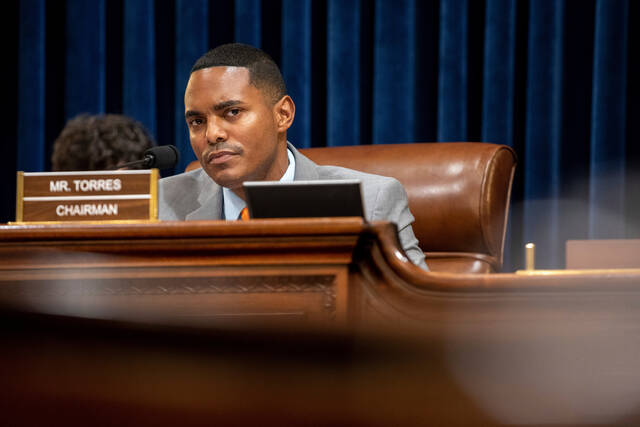
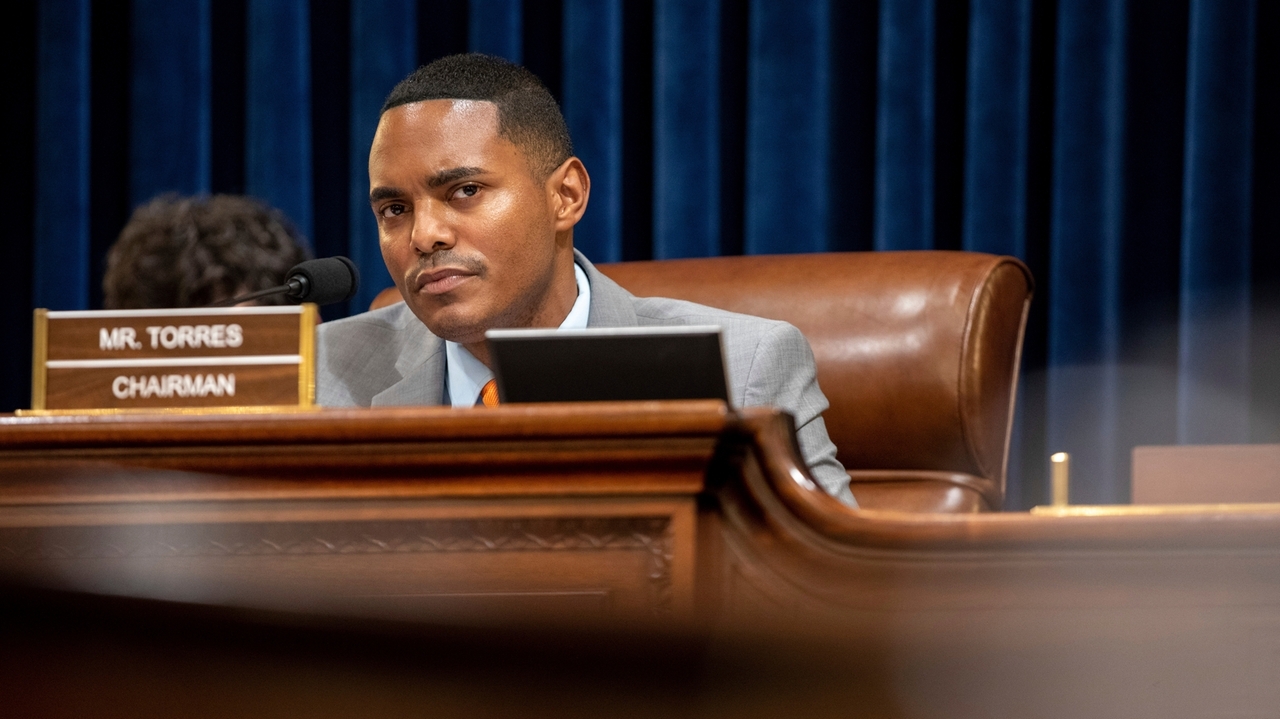
NEW YORK -- Calls are increasing inside Congress for investigations into the prediction market platform Polymarket after the latest instance where groups of anonymous traders made strategic, well-timed bets on a major geopolitical event hours before it occurred. On Wednesday, The Associated Press reported that at least 50 brand new accounts on Polymarket placed substantial bets on a U.S.-Iran ceasefire in the hours, even minutes, before President Donald Trump announced the ceasefire late Tuesday on social media. These were the sole bets made on Polymarket through these accounts. In January, an anonymous Polymarket user made a $400,000 profit by betting that Venezuelan leader Nicolas Maduro would be out of office, hours before Maduro was captured. In the hours before the start of the Iran war, another account made roughly $550,000 in a series of trades effectively betting that the U.S. would strike Iran and that Ayatollah Ali Khamenei would be removed from office. Such prescient wagers have raised eyebrows -- and accusations that prediction markets are ripe for insider trading. And the issue goes beyond these three geopolitical events, according to at least one report. Researchers at Harvard University released a paper last month where, using public blockchain data, they estimated that $143 million in profits have been made on Polymarket by individuals who potentially had insider information about events ranging from Taylor Swift's engagement to the awarding of the Nobel Peace Prize last year. Rep. Ritchie Torres, D-N.Y who sits on the House Financial Services Committee as well as the subcommittee on digital assets and financial technology, sent a letter Thursday to the Commodity Futures Trading Commission demanding the regulator review and investigate these well-timed trades. The CFTC regulates the derivatives markets, which includes prediction markets. "This pattern raises serious concerns that certain market participants may have had access to material nonpublic information regarding a market-moving geopolitical event," Torres wrote. The letter was shared exclusively with The AP. "What is the statistical likelihood that of anyone other than an insider trader placing a winning bet 12 minutes before a market-moving presidential announcement," Torres said in an interview with AP. "There are two answers: God, or an insider trader. And something tells me that God it not placing bets around Donald Trump's posts on Truth Social. " Prediction market platforms like Kalshi and Polymarket allow their users to bet on everything from whether it will rain in Phoenix, Arizona next week to whether the Federal Reserve will raise or lower interest rates. At this time, U.S. residents have limited access to Polymarket, which was banned from the U.S. in 2022. The company has moved to reenter the country by acquiring a CFTC-licensed exchange and clearinghouse, giving it a legal pathway to start offering contracts domestically. The company has begun a limited rollout in the U.S. Polymarket also operates a separate, crypto-based platform offshore that remains outside U.S. jurisdiction. That platform accounts for most of its activity. Sen. Richard Blumenthal, D-Connecticut, sent a letter to Polymarket on Thursday demanding the company explain why it continues to allow trades on war and violence as well as whether the company is making any efforts to keep insiders from trading on the platform. "Polymarket has become an illicit market to sell and exploit national security secrets unlike any in history, and by extension a potential honeypot for foreign intelligence services watching for those same suspicious bets and wagers," Blumenthal wrote. Republicans have also criticized these platforms and called for bans on these sorts of bets. There are at least two bills pending in Congress co-signed by both parties, one in the House and one in the Senate. "We don't want to imagine a world where America's adversaries use prediction markets to anticipate our next move," said Rep. Blake Moore, R-Utah, after the release of the AP's findings on the ceasefire wagers. Polymarket did not immediately reply to a request for comment. The stakes are high for both Kalshi and Polymarket as they seek approval to operate in the U.S. and nationwide, particularly in the lucrative sports betting market. Kalshi, which is already regulated in the U.S., and its executives have a goal of making the company the nation's dominant prediction market. Kalshi has also leaned heavily into sports, which critics have said effectively makes it a sports betting platform that dabbles in event-based contracts on the side. Both companies have also announced partnerships with sports teams and even news organizations to broaden their reach as well. The AP has an agreement to sell U.S. elections data to Kalshi. The competition also carries political overtones. Donald Trump Jr. is an investor in Polymarket through his venture capital firm, 1789 Capital, and separately serves as a paid strategic adviser to Kalshi.
Anthropic claims its new AI model too risky to release to public | Watch News Videos Online
An artificial intelligence (AI) company says it has completed a new model that is so capable that the public cannot be allowed to use it. It's the same company that refused to let the U.S. government use its AI to target weapons. Anthropic's projected revenue has shot up from USD$9 billion to $30 billion this year. Nathaniel Dove looks at whether the announcement is marketing -- or a warning.

CFO Anthony Armstrong leaves xAI, the Information reports
April 9 - Anthony Armstrong, named xAI's CFO in October, has departed the company as part of a broader wave of senior exits, the Information reported on Thursday, citing two people familiar with the matter. Armstrong, who previously worked as a Morgan Stanley banker and advised Elon Musk during the acquisition of social media platform X, was reporting to Bret Johnsen, the Information had reported in February. Johnsen was the finance chief of the combined company following xAI and SpaceX's record-setting merger. xAI did not immediately respond to Reuters' request for comment. Armstrong was leading the finance operations for both xAI and X, the Financial Times had reported in October. He was responsible for steering the social media business back to financial stability following an exodus of advertisers after Musk relaxed its content moderation standards, the report said. SpaceX is planning a highly anticipated initial public offering seeking to raise $75 billion, valuing the space company at as much as $1.75 trillion, Reuters has previously reported. It outlined details of the IPO at a meeting with its team of bankers on Monday, telling them it plans to earmark a large portion of shares for retail investors and will host 1,500 of them at an event in June. (Reporting by Juby Babu in Mexico City; Editing by Shreya Biswas)

This is the Real Reason to Invest in the SpaceX IPO, According to 1 Wall Street Analyst | The Motley Fool
Most investors are focused on the launch business and Starlink, but the company may be worth more than the sum of its parts. The hype machine is running at full speed ahead of SpaceX's IPO. The space company, founded by Elon Musk, has confidentially filed with the Securities and Exchange Commission (SEC) to go public and is poised to be the biggest listing in history. Major news outlets suggest that SpaceX is looking to raise roughly $75, targeting a valuation of between $1.75 trillion and $2 trillion. But investors are missing out on the most important reason to invest in the SpaceX IPO, according to one Wall Street analyst. It seems the SpaceX IPO has gone viral even before it has been officially announced, sending space-age investors into a frenzy. And there are plenty of reasons to be bullish. After all, SpaceX had revenue estimated at between $15 billion and $16 billion in 2025, resulting in EBITDA (earnings before interest, taxes, depreciation, and amortization) of $8 billion. Driving those solid financial results is the SpaceX launch business, which has already conducted 635 successful Falcon rocket launches. Then there's the Starlink satellite internet business, which has more than 10,000 satellites in orbit, providing internet service to more than 9 million users. While those money-generating businesses are reasons to be optimistic, they are only two pieces of a much bigger puzzle, according to veteran tech analyst Gene Munster, managing partner at Deepwater Asset Management. In a post on X, Munster wrote: Investors looking at the SpaceX IPO are focused on the launch business and Starlink subscribers. They're missing the real story. SpaceX, through its constellation of Elon (Musk)-controlled entities, has quietly assembled the only set of assets capable of building a fully sovereign AI. Sovereign AI is each country's ability to develop and harness AI for the betterment of its society. The market could be worth as much as $600 billion by 2030, according to global management consulting firm McKinsey & Company. Munster posits the company has four pillars needed to offer the full stack of sovereign AI. SpaceX's launch monopoly and high-margin logistics business form the first pillar, giving the company the resources to deploy "compute and data centers into orbit." xAI, which merged with SpaceX early this year, provides critical artificial intelligence (AI) infrastructure. The second pillar is Starlink's hyperscale network, which Muster says also serves as a global internet service provider (ISP). This allows SpaceX to control the flow of compute, either on the ground or in orbit, without relying on other providers. The third pillar is Grok, xAI's frontier model trained on "a proprietary, high-velocity data asset (X)" that offers "a real-time data advantage," according to Munster. The final pillar is the Terafab, Musk's upcoming high-performance semiconductor fabrication facility, a joint venture between Tesla and SpaceX. The purpose of the venture is to solve the current "chip bottleneck" and produce 1 terawatt (1 trillion watts) of compute capacity per year -- more than the current worldwide total combined. Munster opines, "If vertical integration is the path to capturing margin in the intelligence economy (and we believe it is), then SpaceX has the most compelling structural advantage of any company in the world." He also says it's hard to put a value on the opportunity. Plenty will have to go right for SpaceX to achieve Munster's vision. If it does, the sky is the limit.

Anthropic weighs building its own AI chips- Reuters By Investing.com
Investing.com-- Anthropic is considering designing its own artificial intelligence chips amid a shortage of processors needed to power advanced AI, Reuters reported on Thursday. The plans are still in early stages, and Anthropic may still decide to only buy AI chips over designing them, Reuters reported, citing people with knowledge of the matter. Get more breaking news on the biggest AI firms by subscribing to InvestingPro Anthropic- which is backed by several major tech firms, including Alphabet and Amazon, uses a host of different chips to run its flagship AI model Claude. The company had earlier this week signed a long-term deal with Google (NASDAQ:GOOGL) and Broadcom Inc (NASDAQ:AVGO) for AI chips, specifically Google's Tensor Processing Units. Anthropic's consideration of building in-house AI chips comes amid similar discussions at other major tech firms, including Meta Platforms Inc (NASDAQ:META) and OpenAI.
Well-timed bets on Polymarket tied to the Iran war draw calls for investigations from lawmakers
NEW YORK -- Calls are increasing inside Congress for investigations into the prediction market platform Polymarket after the latest instance where groups of anonymous traders made strategic, well-timed bets on a major geopolitical event hours before it occurred. On Wednesday, The Associated Press reported that at least 50 brand new accounts on Polymarket placed substantial bets on a U.S.-Iran ceasefire in the hours, even minutes, before President Donald Trump announced the ceasefire late Tuesday on social media. These were the sole bets made on Polymarket through these accounts. In January, an anonymous Polymarket user made a $400,000 profit by betting that Venezuelan leader Nicolas Maduro would be out of office, hours before Maduro was captured. In the hours before the start of the Iran war, another account made roughly $550,000 in a series of trades effectively betting that the U.S. would strike Iran and that Ayatollah Ali Khamenei would be removed from office. Such prescient wagers have raised eyebrows -- and accusations that prediction markets are ripe for insider trading. And the issue goes beyond these three geopolitical events, according to at least one report. Researchers at Harvard University released a paper last month where, using public blockchain data, they estimated that $143 million in profits have been made on Polymarket by individuals who potentially had insider information about events ranging from Taylor Swift's engagement to the awarding of the Nobel Peace Prize last year. Rep. Ritchie Torres, D-N.Y who sits on the House Financial Services Committee as well as the subcommittee on digital assets and financial technology, sent a letter Thursday to the Commodity Futures Trading Commission demanding the regulator review and investigate these well-timed trades. The CFTC regulates the derivatives markets, which includes prediction markets. "This pattern raises serious concerns that certain market participants may have had access to material nonpublic information regarding a market-moving geopolitical event," Torres wrote. The letter was shared exclusively with The AP. "What is the statistical likelihood that of anyone other than an insider trader placing a winning bet 12 minutes before a market-moving presidential announcement," Torres said in an interview with AP. "There are two answers: God, or an insider trader. And something tells me that God it not placing bets around Donald Trump's posts on Truth Social. " Prediction market platforms like Kalshi and Polymarket allow their users to bet on everything from whether it will rain in Phoenix, Arizona next week to whether the Federal Reserve will raise or lower interest rates. At this time, U.S. residents have limited access to Polymarket, which was banned from the U.S. in 2022. The company has moved to reenter the country by acquiring a CFTC-licensed exchange and clearinghouse, giving it a legal pathway to start offering contracts domestically. The company has begun a limited rollout in the U.S. Polymarket also operates a separate, crypto-based platform offshore that remains outside U.S. jurisdiction. That platform accounts for most of its activity. Sen. Richard Blumenthal, D-Connecticut, sent a letter to Polymarket on Thursday demanding the company explain why it continues to allow trades on war and violence as well as whether the company is making any efforts to keep insiders from trading on the platform. "Polymarket has become an illicit market to sell and exploit national security secrets unlike any in history, and by extension a potential honeypot for foreign intelligence services watching for those same suspicious bets and wagers," Blumenthal wrote. Republicans have also criticized these platforms and called for bans on these sorts of bets. There are at least two bills pending in Congress co-signed by both parties, one in the House and one in the Senate. "We don't want to imagine a world where America's adversaries use prediction markets to anticipate our next move," said Rep. Blake Moore, R-Utah, after the release of the AP's findings on the ceasefire wagers. Polymarket did not immediately reply to a request for comment. The stakes are high for both Kalshi and Polymarket as they seek approval to operate in the U.S. and nationwide, particularly in the lucrative sports betting market. Kalshi, which is already regulated in the U.S., and its executives have a goal of making the company the nation's dominant prediction market. Kalshi has also leaned heavily into sports, which critics have said effectively makes it a sports betting platform that dabbles in event-based contracts on the side. Both companies have also announced partnerships with sports teams and even news organizations to broaden their reach as well. The AP has an agreement to sell U.S. elections data to Kalshi. The competition also carries political overtones. Donald Trump Jr. is an investor in Polymarket through his venture capital firm, 1789 Capital, and separately serves as a paid strategic adviser to Kalshi.
Anthropic weighs building its own AI chips- Reuters By Investing.com
Investing.com-- Anthropic is considering designing its own artificial intelligence chips amid a shortage of processors needed to power advanced AI, Reuters reported on Thursday. The plans are still in early stages, and Anthropic may still decide to only buy AI chips over designing them, Reuters reported, citing people with knowledge of the matter. Get more breaking news on the biggest AI firms by subscribing to InvestingPro Anthropic- which is backed by several major tech firms, including Alphabet and Amazon, uses a host of different chips to run its flagship AI model Claude. The company had earlier this week signed a long-term deal with Google (NASDAQ:GOOGL) and Broadcom Inc (NASDAQ:AVGO) for AI chips, specifically Google's Tensor Processing Units. Anthropic's consideration of building in-house AI chips comes amid similar discussions at other major tech firms, including Meta Platforms Inc (NASDAQ:META) and OpenAI.