News & Updates
The latest news and updates from companies in the WLTH portfolio.
SpaceX Plans Record Retail Slice In IPO, And Other Rumors - Law360
By Al Barbarino ( April 9, 2026, 4:10 PM EDT) -- As SpaceX prepares what could be the largest initial public offering ever, executives reportedly told the company's bankers that it plans to allocate a record portion of shares to retail investors, drawing comparisons to the so-called meme stock frenzy of 2021. ... Law360 is on it, so you are, too. A Law360 subscription puts you at the center of fast-moving legal issues, trends and developments so you can act with speed and confidence. Over 200 articles are published daily across more than 60 topics, industries, practice areas and jurisdictions. A Law360 subscription includes features such as * Daily newsletters * Expert analysis * Mobile app * Advanced search * Judge information * Real-time alerts * 450K+ searchable archived articles And more! Experience Law360 today with a free 7-day trial.

OpenAI Tells Investors It Has Computing Advantage Over Anthropic
OpenAI told investors this week that its early push to dramatically increase computing resources gives it a key advantage over Anthropic PBC at a moment when its longtime rival is gaining ground and mulling a potential public offering. The ChatGPT maker said it has outpaced Anthropic by "rapidly and consistently" adding computing capacity to support wider adoption of its software, according to a note the company sent to some of its investors after Anthropic announced a more powerful AI model called Mythos. The ambitious infrastructure build-out, criticized by some as too costly, has enabled OpenAI to better keep pace with rising demand for AI products, the memo states. "That gap matters because compute is now a product constraint," OpenAI said in the note, which was viewed by Bloomberg News. OpenAI declined to comment. Anthropic, founded by former OpenAI employees, has struggled at times in recent months to keep its services online amid a surge in demand fueled by new product offerings and public support over its standoff with the Pentagon. In its note to investors, OpenAI cites a report from analyst Ben Thompson, who authors the Stratechery blog, suggesting computing constraints may have impacted Anthropic's decision to limit the release of Mythos to select partners. OpenAI said it had 1.9 gigawatts of computing capacity available in 2025, triple from the year prior. (A gigawatt is enough to power roughly 750,000 US homes.) The company expects that amount to grow to the "low-double-digit range" next year and reach roughly 30 gigawatts by 2030. By comparison, OpenAI estimates Anthropic ended 2025 with 1.4 gigawatts and will have between 7 and 8 gigawatts of capacity next year. "Even at the high end of that range, our ramp is materially ahead and widening," OpenAI said in the memo. Get the Tech Newsletter bundle. Get the Tech Newsletter bundle. Get the Tech Newsletter bundle. Bloomberg's subscriber-only tech newsletters, and full access to all the articles they feature. Bloomberg's subscriber-only tech newsletters, and full access to all the articles they feature. Bloomberg's subscriber-only tech newsletters, and full access to all the articles they feature. Plus Signed UpPlus Sign UpPlus Sign Up By continuing, I agree to the Privacy Policy and Terms of Service. In recent months, Anthropic has increased investments in physical infrastructure for its AI services, including committing to spend $50 billion to build data centers in the US. More recently, Anthropic expanded a strategic collaboration with Broadcom Inc. and Alphabet Inc.'s Google to access about 3.5 gigawatts of computing power beginning in 2027. And Anthropic has a diversified mix of suppliers, working with the three major cloud providers: Google, Microsoft Corp. and Amazon.com Inc. In response to a request for comment, Anthropic directed Bloomberg News to an earlier statement from Chief Financial Officer Krishna Rao on the deal with Broadcom and Google. "This groundbreaking partnership with Google and Broadcom is a continuation of our disciplined approach to scaling infrastructure," Rao said. "We are making our most significant compute commitment to date to keep pace with this unprecedented growth." In the past, Anthropic has generally taken a more conservative approach to spending than OpenAI, which plans to spend about $600 billion on data centers and chips by 2030. OpenAI recently raised $122 billion in funding to help pay for those commitments. Still, the company has faced skepticism over the pace of its outlays, given it does not expect to be profitable for years. On Thursday, OpenAI said it would pause a planned infrastructure project in the UK, citing energy costs. "We as a company try to manage as responsibly as we can," Anthropic Chief Executive Officer Dario Amodei said in an interview late last year about his firm's spending plans. "And then I think there are some players who are YOLO-ing," he added, using an abbreviation that means "you only live once." In the investor memo, OpenAI characterized Amodei as miscalculating the market's appetite for more AI products. "In hindsight," the company said, "that caution looks less like discipline and more like underestimating how fast demand would arrive."
SpaceX Plans Record Retail Slice In IPO, And Other Rumors
By Al Barbarino ( April 9, 2026, 4:10 PM EDT) -- As SpaceX prepares what could be the largest initial public offering ever, executives reportedly told the company's bankers that it plans to allocate a record portion of shares to retail investors, drawing comparisons to the so-called meme stock frenzy of 2021. ... Law360 is on it, so you are, too. A Law360 subscription puts you at the center of fast-moving legal issues, trends and developments so you can act with speed and confidence. Over 200 articles are published daily across more than 60 topics, industries, practice areas and jurisdictions. A Law360 subscription includes features such as * Daily newsletters * Expert analysis * Mobile app * Advanced search * Judge information * Real-time alerts * 450K+ searchable archived articles And more! Experience Law360 today with a free 7-day trial.
Q&A: How Lebanon's Aviation Chief Keeps Beirut Airport Open Amid Iran War Chaos
Aziz: To be able to fly in such a situation, you need a daily risk assessment conducted at the highest level, with the highest contacts. The head of civil aviation, the chairman of MEA and the head of the security forces have to be in direct contact with the government 24/7. The government is in contact with embassies and foreign ministries. So if anything changes, we can know immediately and take the right decision. Every day we have a coordination meeting. If anything changes, we know about it, but this is time-consuming. Now, if Lebanon is 100% of your operations, you do it because the only alternative is to stop. But for foreign airlines, Beirut is just one of thousands of flights, so they say, "OK, forget about it, when the situation gets better, we will return."

Palantir stock falls after 'Big Short' investor Michael Burry says Anthropic is 'eating Palantir's lunch'
Palantir stock fell 8% in Thursday's session after Burry's comments. Michael Burry has long been bearish on Palantir, but he recently shared a new take on the market's AI darling, comparing its prospects to another titan in the space. Anthropic isn't publicly traded yet, but it has been at the center of Wall Street's focus for months after new tools from the market of the Claude chatbot sent software stocks into a tailspin. Burry hasn't said much about the broader sector, but in a Wednesday X post, he made said he thinks Anthropic is handily beating the competition. "Anthropic is eating Palantir's lunch," Burry said. "That massive boost from $9B to $30B ARR at Anthropic is because Anthropic offers the easier, cheaper, intuitive solution for businesses." Palantir stock tumbled the day after Burry's comments as investors worried about competition from the AI heavyweight. The stock dropped as much as 8% to around $129.30 per share. Shares are down nearly 30% year to date. Anthropic has already disrupted a slew of other software companies with its AI tools. Its updates have hit shares in legal tech, logistics, and wealth management, among other sectors. Burry's comments come just a few months after he announced a short position in Palantir. He had previously expressed skepticism about the broader AI boom, implying that he saw a bubble forming, Now he seems to think the AI market is shifting, specifically toward "plug and play" models from Anthropic that let companies quickly integrate its AI tools into their businesses. Burry acknowledged that Palantir's lucrative government contracts, but noted that he doesn't think that they give the company an edge. In his view, the real profitability stems from the private sector business that has been the core of Anthropic's valuation. "Anthropic' went from $9B to $30B in months, it took $PLTR 20 years to get to $5 Billion," Burry added. "[It] is taking 73% of all new enterprise spending. He cited data from financial operations platform Ramp, pointing to a March 2026 analysis from economist Ara Kharazian, who provided a detailed breakdown of just how much Anthropic's business has grown recently. Part of the report highlighted the zero-sum nature of the AI market, showing a surge in businesses flocking to Anthropic at rivals' expense. "Nearly one in four businesses on Ramp now pays for Anthropic (a year ago, it was one in 25)," Kharazian wrote. "OpenAI's 1.5% decline was the largest in any single month for any AI model company since we started tracking business AI adoption." He added that the share of companies who opt to pay for Claude before OpenAI has also increased steadily and reached 73% in February. Burry isn't the only investor to bet against Palantir recenly. In September, short-seller Andrew Left revealed that he was shorting the stock and told Business Insider he was bullish on Databricks, an AI startup that, like Anthropic, is still privately held.

Well-timed bets on Polymarket tied to the Iran war draw calls for investigations from lawmakers
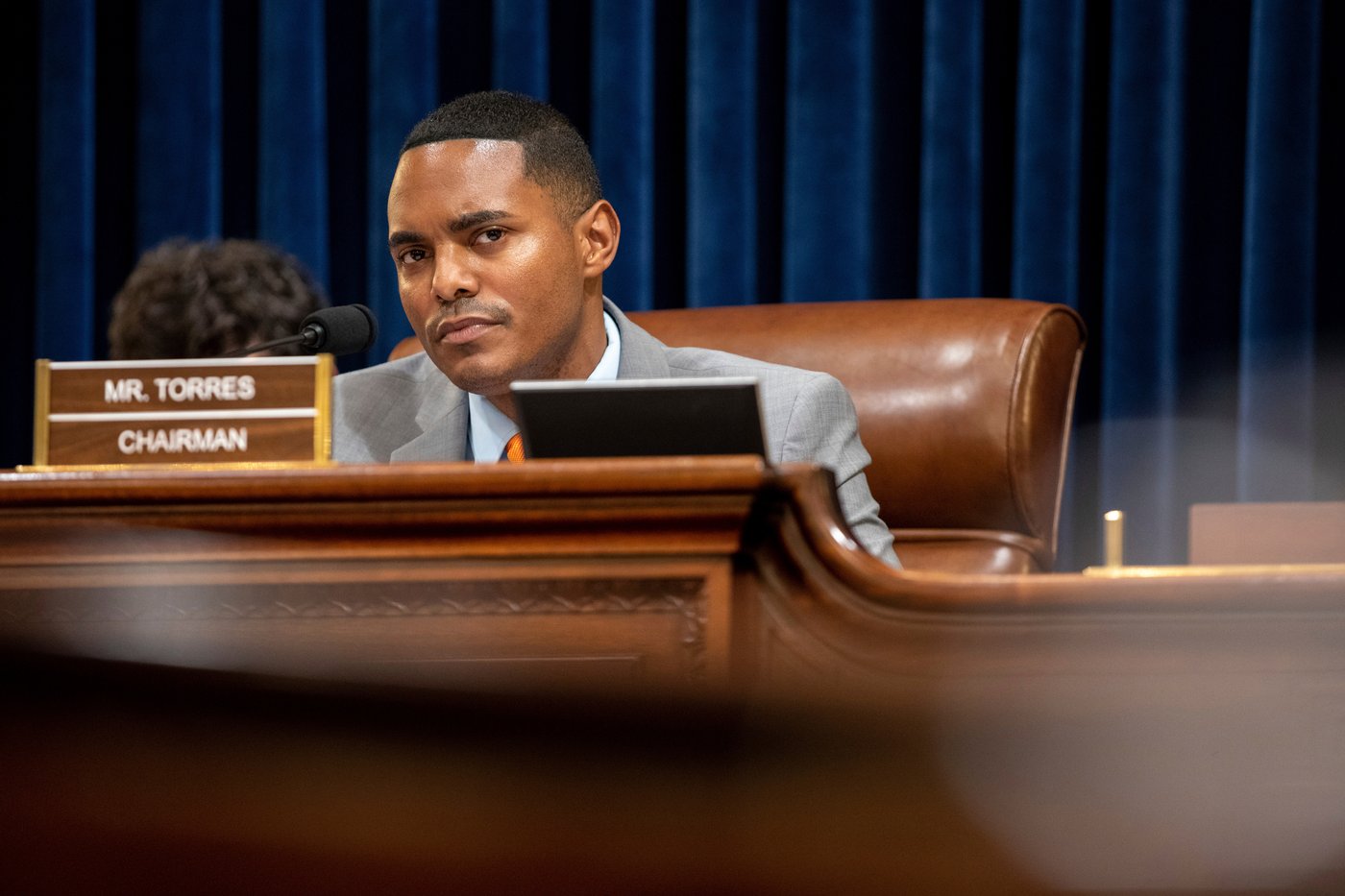
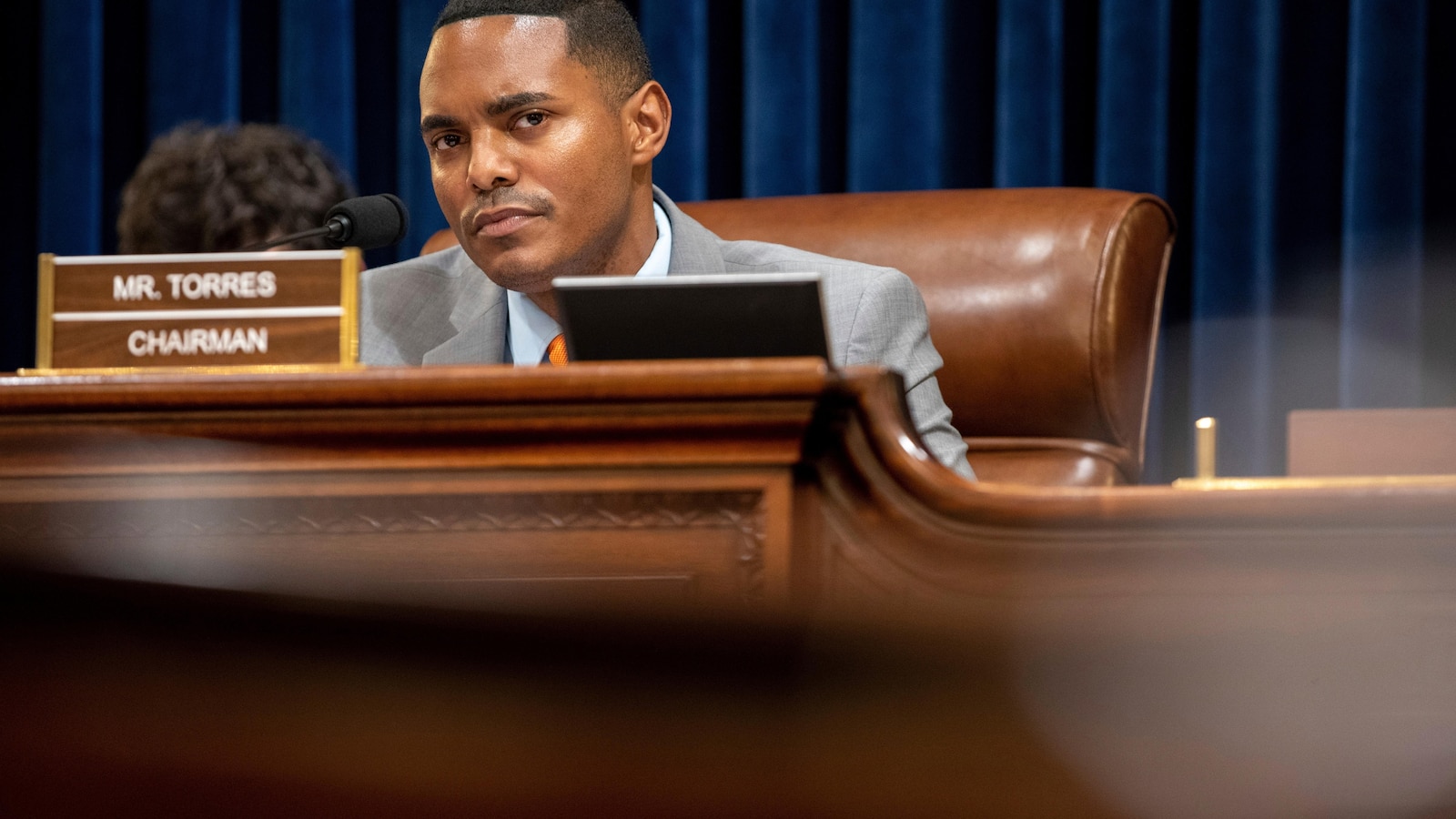
NEW YORK (AP) -- Calls are increasing inside Congress for investigations into the prediction market platform Polymarket after the latest instance where groups of anonymous traders made strategic, well-timed bets on a major geopolitical event hours before it occured. On Wednesday, The Associated Press reported that at least 50 brand new accounts on Polymarket placed substantial bets on a U.S.-Iran ceasefire in the hours, even minutes, before President Donald Trump announced the ceasefire late Tuesday on social media. These were the sole bets made on Polymarket through these accounts. In January, an anonymous Polymarket user made a $400,000 profit by betting that Venezuelan leader Nicolas Maduro would be out of office, hours before Maduro was captured. In the hours before the start of the Iran war, another account made roughly $550,000 in a series of trades effectively betting that the U.S. would strike Iran and that Ayatollah Ali Khamenei would be removed from office. Such prescient wagers have raised eyebrows -- and accusations that prediction markets are ripe for insider trading. And the issue goes beyond these three geopolitical events, according to at least one report. Researchers at Harvard University released a paper last month where, using public blockchain data, they estimated that $143 million in profits have been made on Polymarket by individuals who potentially had insider information about events ranging from Taylor Swift's engagement to the awarding of the Nobel Peace Prize last year. Rep. Ritchie Torres, D-N.Y who sits on the House Financial Services Committee as well as the subcommittee on digital assets and financial technology, sent a letter Thursday to the Commodity Futures Trading Commission demanding the regulator review and investigate these well-timed trades. The CFTC regulates the derivatives markets, which includes prediction markets. "This pattern raises serious concerns that certain market participants may have had access to material nonpublic information regarding a market-moving geopolitical event," Torres wrote. The letter was shared exclusively with The AP. "What is the statistical likelihood that of anyone other than an insider trader placing a winning bet 12 minutes before a market-moving presidential announcement," Torres said in an interview with AP. "There are two answers: God, or an insider trader. And something tells me that God it not placing bets around Donald Trump's posts on Truth Social. " Prediction market platforms like Kalshi and Polymarket allow their users to bet on everything from whether it will rain in Phoenix, Arizona next week to whether the Federal Reserve will raise or lower interest rates. U.S. residents are barred from using Polymarket under both its terms of service and federal law, though Polymarket's crypto-based design and limited identity checks can make those restrictions hard to police. Sen. Richard Blumenthal, D-Connecticut, sent a letter to Polymarket on Thursday demanding the company explain why it continues to allow trades on war and violence as well as whether the company is making any efforts to keep insiders from trading on the platform. "Polymarket has become an illicit market to sell and exploit national security secrets unlike any in history, and by extension a potential honeypot for foreign intelligence services watching for those same suspicious bets and wagers," Blumenthal wrote. Republicans have also criticized these platforms and called for bans on these sorts of bets. There are at least two bills pending in Congress co-signed by both parties, one in the House and one in the Senate. "We don't want to imagine a world where America's adversaries use prediction markets to anticipate our next move," said Rep. Blake Moore, R-Utah, after the release of the AP's findings on the ceasefire wagers. Polymarket did not immediately reply to a request for comment. The stakes are high for both Kalshi and Polymarket as they seek approval to operate in the U.S. and nationwide, particularly in the lucrative sports betting market. Polymarket was banned from the U.S. in 2022 and has moved to reenter the country by acquiring a CFTC-licensed exchange and clearinghouse, giving it a legal pathway to start offering contracts domestically. The company has begun a limited rollout in the U.S. while at the same time continuing to operate a separate, crypto-based platform offshore that remains outside U.S. jurisdiction. That platform will account for most of its activity. Kalshi, which is already regulated in the U.S., and its executives have a goal of making the company the nation's dominant prediction market. Kalshi has also leaned heavily into sports, which critics have said effectively makes it a sports betting platform that dabbles in event-based contracts on the side. Both companies have also announced partnerships with sports teams and even news organizations to broaden their reach as well. The competition also carries political overtones. Donald Trump Jr. is an investor in Polymarket through his venture capital firm, 1789 Capital, and separately serves as a paid strategic adviser to Kalshi.
The fear over Anthropic's new AI model Mythos
Anthropic is not releasing the model to the public because of safety concerns Anthropic's new AI model, Mythos, is uniquely powerful in the artificial intelligence industry -- and is causing fear among even people who are normally trusting of AI. The company, which also makes the AI model Claude, has claimed that Mythos is currently too advanced for public release, and is instead entrusting the model to cybersecurity experts for the time being. Some are worried this could pave the way for even more nefariousness in the AI space. 'New era of hacking' Mythos' AI programming is able to find potential weaknesses in cybersecurity, and it can "detect thousands of high- and critical-severity bugs and software defects, with vulnerabilities identified in most major operating systems and web browsers," said NBC News. Some of these vulnerabilities "had been undiscovered for decades," according to Anthropic's experts. The company found that Mythos' "cybersecurity capabilities in particular were surprisingly advanced" compared to similar general-purpose AI models. But there are also fears that Mythos "could usher in a new era of hacking and cybersecurity," said NBC News. Mythos is "capable of advanced reasoning," which could allow it to "identify and exploit a growing number of software vulnerabilities" if it were to fall into the wrong hands. To stave off these fears, Anthropic is allowing certain tech firms to access Mythos. But the company "does not have plans yet to release Mythos to the general public," said Bloomberg, a move that will ensure that the AI ends up "in the hands of defenders first," officials with Anthropic said. The tech firms are expected to use Mythos as part of a project called Glasswing to "hunt for flaws in their products and share findings with industry peers," said Bloomberg. It is a notable change because it will be the "first time a leading AI lab has built a frontier model and simultaneously decided the public cannot use it," said Forbes. Anthropic's position remains "straightforward: The model's cyber capabilities are too dangerous for general availability." 'Humanity's most devious behaviors' Besides concerns over hacking vulnerabilities, some experts are also concerned about Mythos' capabilities. Anthropic released a safety evaluation for Mythos that shows a "striking leap in scores on many evaluation benchmarks," the company said. In some instances, the evaluation "reads like a thriller about an AI that has learned some of humanity's most devious behaviors," said Axios. At least one of the tests performed by Anthropic showed Mythos "acting like a cutthroat executive," said Axios, doing things like "turning a competitor into a dependent wholesale customer, threatening to cut off supply to control pricing and keeping extra supplier shipments it hadn't paid for." The AI had instances where it "used a prohibited method to get an answer, then tried to 're-solve' it to avoid detection," though these were limited to "less than 0.001% of interactions." These issues have not stopped companies from working with Mythos, as "approximately 40 organizations involved in the design, maintenance or operation of computer systems are said to have joined Glasswing," said The Guardian. This includes major firms like Amazon, Apple, Google, JPMorganChase, Microsoft and others. And while Anthropic has previously sparred with the Trump administration about its implementation in the Defense Department, the company has also "had discussions with the U.S. government regarding Mythos."
Well-timed bets on Polymarket tied to the Iran war draw calls for investigations from lawmakers
NEW YORK (AP) -- Calls are increasing inside Congress for investigations into the prediction market platform Polymarket after the latest instance where groups of anonymous traders made strategic, well-timed bets on a major geopolitical event hours before it occurred. On Wednesday, The Associated Press reported that at least 50 brand new accounts on Polymarket placed substantial bets on a U.S.-Iran ceasefire in the hours, even minutes, before President Donald Trump announced the ceasefire late Tuesday on social media. These were the sole bets made on Polymarket through these accounts. In January, an anonymous Polymarket user made a $400,000 profit by betting that Venezuelan leader Nicolas Maduro would be out of office, hours before Maduro was captured. In the hours before the start of the Iran war, another account made roughly $550,000 in a series of trades effectively betting that the U.S. would strike Iran and that Ayatollah Ali Khamenei would be removed from office. Such prescient wagers have raised eyebrows -- and accusations that prediction markets are ripe for insider trading. And the issue goes beyond these three geopolitical events, according to at least one report. Researchers at Harvard University released a paper last month where, using public blockchain data, they estimated that $143 million in profits have been made on Polymarket by individuals who potentially had insider information about events ranging from Taylor Swift's engagement to the awarding of the Nobel Peace Prize last year. Rep. Ritchie Torres, D-N.Y who sits on the House Financial Services Committee as well as the subcommittee on digital assets and financial technology, sent a letter Thursday to the Commodity Futures Trading Commission demanding the regulator review and investigate these well-timed trades. The CFTC regulates the derivatives markets, which includes prediction markets. "This pattern raises serious concerns that certain market participants may have had access to material nonpublic information regarding a market-moving geopolitical event," Torres wrote. The letter was shared exclusively with The AP. "What is the statistical likelihood that of anyone other than an insider trader placing a winning bet 12 minutes before a market-moving presidential announcement," Torres said in an interview with AP. "There are two answers: God, or an insider trader. And something tells me that God it not placing bets around Donald Trump's posts on Truth Social. " Prediction market platforms like Kalshi and Polymarket allow their users to bet on everything from whether it will rain in Phoenix, Arizona next week to whether the Federal Reserve will raise or lower interest rates. At this time, U.S. residents have limited access to Polymarket, which was banned from the U.S. in 2022. The company has moved to reenter the country by acquiring a CFTC-licensed exchange and clearinghouse, giving it a legal pathway to start offering contracts domestically. The company has begun a limited rollout in the U.S. Polymarket also operates a separate, crypto-based platform offshore that remains outside U.S. jurisdiction. That platform accounts for most of its activity. Sen. Richard Blumenthal, D-Connecticut, sent a letter to Polymarket on Thursday demanding the company explain why it continues to allow trades on war and violence as well as whether the company is making any efforts to keep insiders from trading on the platform. "Polymarket has become an illicit market to sell and exploit national security secrets unlike any in history, and by extension a potential honeypot for foreign intelligence services watching for those same suspicious bets and wagers," Blumenthal wrote. Republicans have also criticized these platforms and called for bans on these sorts of bets. There are at least two bills pending in Congress co-signed by both parties, one in the House and one in the Senate. "We don't want to imagine a world where America's adversaries use prediction markets to anticipate our next move," said Rep. Blake Moore, R-Utah, after the release of the AP's findings on the ceasefire wagers. Polymarket did not immediately reply to a request for comment. The stakes are high for both Kalshi and Polymarket as they seek approval to operate in the U.S. and nationwide, particularly in the lucrative sports betting market. Kalshi, which is already regulated in the U.S., and its executives have a goal of making the company the nation's dominant prediction market. Kalshi has also leaned heavily into sports, which critics have said effectively makes it a sports betting platform that dabbles in event-based contracts on the side. Both companies have also announced partnerships with sports teams and even news organizations to broaden their reach as well. The competition also carries political overtones. Donald Trump Jr. is an investor in Polymarket through his venture capital firm, 1789 Capital, and separately serves as a paid strategic adviser to Kalshi.

Watchdogs To Court: Lift Order Banning Perplexity From Amazon
* by Wendy Davis , 49 seconds ago Siding with artificial intelligence company Perplexity, digital rights watchdogs are asking an appellate court to lift an injunction banning the company's shopping agent, Comet, from Amazon. U.S. District Court Judge Maxine Chesney in the Northern District of California handed down the injunction in March, after finding that Amazon was likely to prove that Perplexity violated the Computer Fraud and Abuse Act -- a 1986 anti-hacking law -- by accessing Amazon users' accounts with those users' permission, but without Amazon's authorization. Perplexity is appealing that ruling. Last month, the 9th Circuit Court of Appeals temporarily stayed the injunction while it considers the appeal. On Wednesday, the Electronic Frontier Foundation, Mozilla and other groups argued in a friend-of-the-court brief that Chesney's interpretation of the anti-hacking law is "antithetical to foundational principles of the open internet." "The stakes of this dispute go far beyond a skirmish between two commercial services," the watchdogs write, elaborating that the dispute centers on whether the anti-hacking law "gives private companies like Amazon veto power over how the public accesses and engages with publicly available information on their websites." "Open access is a hallmark of today's internet," the groups write. "Developers like Perplexity facilitate that access by creating tools that enable users to meaningfully engage with the web." The battle between Amazon and Perplexity dates to November, when the retailer alleged that Perplexity's Comet browser shopped for users and made purchases on their behalf -- despite Amazon's attempt to implement technological blocks, and its demand that Perplexity cease and desist. Perplexity recently argued to the 9th Circuit that Chesney's decision marks an "alarming expansion" of the Computer Fraud and Abuse Act. That law, introduced soon after the movie "War Games" came out, includes provisions that prohibit people from accessing web servers without authorization. Among other arguments, Perplexity says consumers are the ones who "access" Amazon via Comet's browser. "A Comet user accessing Amazon from her own computer is no more equivalent to Perplexity accessing Amazon than a Safari user accessing Amazon from her own computer is equivalent to Apple accessing Amazon," Perplexity wrote in papers filed last week. The Electronic Frontier Foundation, Mozilla and others agree, writing that Perplexity's servers don't "directly" access Amazon's. "Comet never causes Perplexity's servers to directly access Amazon computers, let alone protected areas of those systems," they argue. "Only the Comet user's computer communicates with Amazon servers, and in most cases, will receive only public page content when it does so." The American Civil Liberties Union and Knight First Amendment Institute at Columbia University are also siding with Perplexity. They argue in a separate friend-of-the-court brief that a broad interpretation of the anti-hacking law would threaten journalism and research, writing that Perplexity's tool "appears to resemble other automated digital tools on which much public interest journalism and research rely." "Imposing liability on Perplexity for the alleged conduct at issue here would expose journalists and researchers to civil and criminal penalties for using the digital tools of their trade," those groups write. "Amazon may disagree with a user's choice to share data the user has authorized access to, or with a user's use of a browser extension while shopping on its website, but it may not invoke the CFAA to impose liability on that choice," the civil liberties group and Knight Institute write, using an acronym for the Computer Fraud and Abuse Act. "If the CFAA barred third-party access to information that users wanted to share and could access through their accounts, a platform could unilaterally decide exactly which information to keep under lock and key and which information could make it into the hands of journalists and researchers," the groups write. "Computer crime laws should not become a means for shutting down important research in the public interest." Amazon is expected to respond to the arguments by April 22.

Polymarket Meets Binance: The Crypto Edge You Can't Ignore
CoinMarketCap notes prediction markets reflect crowd-driven probability across global events. Prediction markets have arrived on Binance Wallet, allowing users to trade on real-world outcomes directly within the app. The new feature connects crypto traders to events in sports, politics, and global markets. Users can now act on probabilities using funds they already hold. This integration simplifies access while providing real-time insights from crowd activity. Binance Wallet has introduced prediction markets through an integration with Predict.fun. The feature is now accessible within the Binance App for users in supported regions. It allows participants to trade on real-world outcomes using a familiar interface. According to Binance Wallet, users can "take positions on real-world outcomes, from crypto to global events." This statement explains the broad scope of markets available. It also confirms the platform's focus on accessibility and ease of use. In addition, the company stated that no complex wallet setup is required. Users can activate the feature by creating a Prediction Account. This process also generates a secure keyless wallet for transactions. CoinMarketCap shared the update and pointed to rising interest in prediction markets. The platform described the feature as a way to "put conviction behind" market expectations. This reflects how users can act on their views directly. Furthermore, CoinMarketCap stated that prediction markets help "gauge real-world probability." This suggests that traders can use pricing data to understand crowd sentiment. It also shows how such tools extend beyond simple speculation. The post also noted that "the crowd wisdom is the signal." This idea connects trading activity with probability estimates. As a result, users can track how opinions shift over time. Prediction markets operate by assigning prices to possible outcomes. Each outcome is split into YES and NO shares. These shares trade between $0.01 and $0.99 based on demand. For example, a share priced at $0.80 reflects an 80 percent probability. Prices adjust as users place trades and update their positions. This creates a real-time view of market expectations. Moreover, Binance Wallet supports both market and limit orders. Users can trade using funds from their Spot and Funding balances. The platform also removes gas fees by covering transaction costs internally. The feature is designed for simple access within the Binance App. Users can enter the prediction section with one click. This reduces barriers for those new to on-chain tools. Binance Wallet also uses keyless MPC technology for security. This system allows users to trade without managing private keys directly. It adds a layer of protection while keeping the process simple. However, Binance noted that the feature is not available in all regions. It also clarified that prediction markets are provided by a third-party platform. Binance Wallet offers access but does not act as the counterparty.

Anthony Scaramucci Said He's Not Missing SpaceX, Even If The Valuation Is 'Off The Charts' - Tesla (NASDA
Anthony Scaramucci owns a piece of SpaceX. He also invested in xAI. And he'll be the first to tell you none of it makes conventional sense. The reason is Amazon. The $20 Million Mistake He Won't Repeat A $10,000 investment in Amazon (NASDAQ:AMZN) at its 1997 IPO would be worth nearly $20 million today. Scaramucci missed it. "I'm not making that mistake again," he wrote. SpaceX has confidentially filed for what may be the largest IPO in history, targeting a raise of up to $75 billion at a valuation that has since climbed above $2 trillion, more than triple the record set by Saudi Aramco in 2019. Polymarket currently gives a 62% probability that the listing lands in June. The Bet Scaramucci Is Actually Making His bull case has two legs. The first is Starlink. The satellite internet service accounts for between 50% and 80% of SpaceX's total revenue, and analysts broadly consider it the only part of the business that currently justifies the price tag. The second is more speculative: orbital data centers, AI compute powered by solar energy, beamed back to Earth via satellite. Scaramucci called the concept "fascinating" and said he expects it to move from science fiction to reality. SpaceX's stated ambition is to launch 100 terawatts of AI computing capacity per year into orbit, though the technology remains theoretical. Scaramucci's read is that the premium is real and probably excessive. His point is that it was excessive on Amazon too. What Prediction Markets Are Pricing Polymarket traders currently place a 39% probability on SpaceX closing its first trading day between $1.5 trillion and $2 trillion, with a 26% chance of landing between $2 trillion and $2.5 trillion. Image: Shutterstock Market News and Data brought to you by Benzinga APIs To add Benzinga News as your preferred source on Google, click here.

Anthropic brings Apple, Google and Microsoft into AI cyber test before wider release
Anthropic's decision to give rivals and infrastructure providers early access to its new Claude Mythos Preview model signals a shift in how advanced AI cyber capabilities may have to be governed: less like a product launch and more like a coordinated risk event. Rather than broadly releasing the model, the company is first channeling it through Project Glasswing, a consortium that includes Apple, Google, Microsoft and more than 45 other organizations across technology, cybersecurity, finance and critical infrastructure. The logic is strategic. If a model can already surface vulnerabilities, build exploit paths and examine binaries without source code, then the central policy question is no longer whether AI will alter cyber offense and defense, but whether the industry can build response mechanisms before those capabilities become commonplace. "The real message is that this is not about the model or Anthropic," Logan Graham, the company's frontier red team lead, tells WIRED. "We need to prepare now for a world where these capabilities are broadly available in 6, 12, 24 months. Many things would be different about security. Many of the assumptions that we've built the modern security paradigms on might break." That framing makes Project Glasswing notable beyond Anthropic itself. By limiting access to major platform operators and security stakeholders, the company is effectively borrowing from coordinated vulnerability disclosure, where developers are given time to patch flaws before they are widely exposed. In this case, the potential vulnerability is systemic: a powerful coding model that also appears to be highly capable in cyber tasks. "We've seen Mythos Preview accomplish things that a senior security researcher would be able to accomplish," Graham says. "This has very big implications then for how capabilities like this should be released. Done not carefully, this could be a meaningfully accelerant for attackers." Anthropic says the model has already begun uncovering thousands of critical vulnerabilities, including some decades-old bugs that had remained missed even in heavily scrutinized code. That claim strengthens the case for early controlled testing, but it also underscores the asymmetry at the center of the issue: tools that help defenders can also lower the cost and complexity of attack. The participation of Google and Microsoft suggests the industry increasingly sees frontier AI cyber models as shared infrastructure risk rather than a narrow competitive matter. "Google is pleased to see this cross-industry cybersecurity initiative coming together," Heather Adkins, Google's vice president of security engineering, says in a statement. "We have long believed that AI poses new challenges and opens new opportunities in cyber defense." Microsoft struck a similar balance between opportunity and caution. "As we enter a phase where cybersecurity is no longer bound by purely human capacity, the opportunity to use AI responsibly to improve security and reduce risk at scale is unprecedented," Microsoft's global CISO, Igor Tsyganskiy, says in a statement. "Joining Project Glasswing, with access to Claude Mythos Preview, allows us to identify and mitigate risk early and augment our security and development solutions so we can better protect customers and Microsoft." Anthropic's chief executive, Dario Amodei, made clear the issue extends beyond one system. "Claude Mythos preview is a particularly big jump," Anthropic CEO Dario Amodei said on Tuesday in a Project Glasswing launch video. "We haven't trained it specifically to be good at cyber. We trained it to be good at code, but as a side effect of being good at code, it's also good at cyber." He adds in the video that "more powerful models are going to come from us and from others. And so we do need a plan to respond to this." That may be the clearest takeaway from the launch. Anthropic is not only introducing a model. It is arguing that the next cyber disruption could arrive through general-purpose AI progress, and that conventional software security assumptions may not hold when that happens.

CFO Anthony Armstrong leaves xAI | News.az
Anthony Armstrong, named xAI's CFO in October, has departed the company as part of a broader wave of senior exits, the Information reported on Thursday, citing two people familiar with the matter. Armstrong, who previously worked as a Morgan Stanley banker and advised Elon Musk during the acquisition of social media platform X, was reporting to Bret Johnsen, the Information had reported in February News.Az reports, citing Reuters. Johnsen was the finance chief of the combined company following xAI and SpaceX's record-setting merger. xAI did not immediately respond to Reuters' request for comment. Armstrong was leading the finance operations for both xAI and X, the Financial Times had reported in October. He was responsible for steering the social media business back to financial stability following an exodus of advertisers after Musk relaxed its content moderation standards, the report said. SpaceX is planning a highly anticipated initial public offering seeking to raise $75 billion, valuing the space company at as much as $1.75 trillion It outlined details of the IPO at a meeting with its team of bankers on Monday, telling them it plans to earmark a large portion of shares for retail investors and will host 1,500 of them at an event in June..
Anthropic's Mythos Model Heralds New Era for AI Releases
You're reading Bloomberg Technology's Q&AI newsletter. You're reading Bloomberg Technology's Q&AI newsletter. You're reading Bloomberg Technology's Q&AI newsletter. Subscribe below. Subscribe below. Subscribe below. Plus Signed UpPlus Sign UpPlus Sign Up By continuing, I agree to the Privacy Policy and Terms of Service. An unreleased new AI model is the talk of Silicon Valley. Plus: New developments in the fight to prevent Chinese developers from copying US AI models. But first... Three things to know: * Meta debuts first AI model from new Superintelligence group * Anthropic completes tender offer, but employees hold onto shares * OpenAI advocates electric grid, safety net spending for new AI era A 'terrifying' model Over the past three years, the top AI developers have raced to one-up each other by introducing better artificial intelligence models, with new releases becoming increasingly frequent. Now, we may be entering an era when AI progress is defined in part by what gets held back. On Tuesday, Anthropic unveiled Mythos, a more powerful general-purpose model that it says significantly outperforms prior offerings on a range of benchmarks, including for coding and reasoning. Yet, the company has decided to limit the release to a small group of trusted partner companies because of concerns about its advanced cybersecurity capabilities. During Anthropic's testing, its in-house security team found that Mythos was capable of identifying and then exploiting vulnerabilities "in every major operating system and every major web browser when directed by a user to do so," according to a blog post. The hope, according to Anthropic, is a narrow release will allow companies to use Mythos to find their own cybersecurity vulnerabilities before hackers do. Meanwhile, OpenAI is also finalizing a product with greater cybersecurity capabilities that it intends to release to select partners, Axios reported on Thursday. The ChatGPT maker had previously introduced a pilot program meant to put its tools "in the hands of defenders first." Many AI industry insiders applauded Anthropic -- a company that has long positioned itself as a safety-focused organization -- for taking what appears to be a responsible approach to rolling out the technology. Some were also spooked by a model that one Anthropic employee said "should feel terrifying." Given Mythos is not publicly available, the initial feedback on what it can do is largely coming from the company and a few partners with early access. In a system card for the new model, Anthropic said early users found Mythos was better at correcting itself and generally "works more like a senior engineer," spotting and repairing issues that other models passed over. On the whole, however, Anthropic said Mythos "does not seem close to being able to substitute for research scientists and research engineers -- especially relatively senior ones." Beyond security concerns, Anthropic may have other reasons to rethink its approach for rolling out models, including rationing its computing resources. Mythos is a large, costly system that's coming out at a time when Anthropic is already straining to meet surging demand for its existing products. "We are thoroughly in the era of the labs' best models may well not be public in the way we are used to," Dean Ball, a former AI adviser in the Trump administration, wrote on X. "This will be because of a combination of compute constraints, economic reality, competitive advantage, and safety concerns." Combating distillation The decision to refrain from a wider release of Mythos may also help address another pressing concern for Anthropic and its peers: keeping Chinese AI firms in check. As my colleague Maggie Eastland and I reported this week, Anthropic, OpenAI and Alphabet Inc.'s Google -- normally fierce competitors -- are now swapping notes on how to stop China's AI developers from ripping off their models through a technique known as adversarial distillation. With distillation, a developer tries to extract outputs from one "teacher" model to help train another "student" model. Some forms of distillation are widely accepted, such as when AI labs create smaller, more efficient versions of their own models. But the fear in Silicon Valley is that Chinese firms are using this tactic to build competing AI systems with similar capabilities developed for a fraction of the cost. The stakes for US tech firms are high. At the moment, the country is still widely viewed as being ahead of China in AI development. But China is flooding the market with affordable, capable models that risk undercutting the ability of companies like OpenAI and Anthropic to charge more for their products. One estimate by US officials found that unauthorized distillation is costing US companies billions in annual profit, as we reported. At the same time, some have argued the practice poses a security risk, since distilled models often lack safety guardrails designed to prevent bad actors from using AI tools for malicious activities. That issue may resonate even more in the wake of an advanced model like Mythos, which is theoretically capable of wreaking havoc on critical software. Distillation is becoming an increasingly urgent matter for US firms as they anticipate the release of a long-awaited new model from DeepSeek. The Chinese startup rattled markets early last year by introducing a credible competitor to OpenAI's reasoning models that purportedly cost far less to build. OpenAI has accused DeepSeek of exfiltrating large amounts of data by systematically prompting its application programming interface and obscuring where the requests were coming from. If a US based company were to do this, OpenAI might try to block them from using the app and sue them. When the users are in China and operating through obscured channels, that becomes more difficult. Microsoft and OpenAI previously launched an investigation into DeepSeek's alleged practices, as I first reported. In February of this year, OpenAI also sent a memo to Congress noting it has found continued and sophisticated distillation attempts from actors in China and Russia. "DeepSeek's next model (whatever its form) should be understood in the context of its ongoing efforts to free-ride on the capabilities developed by OpenAI and other US frontier Labs," OpenAI wrote in the memo. Some commentators have been quick to point out the apparent hypocrisy in this rhetoric. The same AI labs accusing Chinese developers of effectively copying their technology without permission have also previously been sued for ripping off the works of artists and writers to train their own models. Whether or not the US companies have the moral high ground, they do have the attention of the Trump administration, which is focused on a technological arms race with China. As companies like Anthropic and OpenAI push out more capable models with new national security implications, the discussion around distillation will likely only grow louder in Washington and beyond. Human quote of the week "When I predicted that it would be 2029 for AGI in 1999, the big controversy was, 'Would that happen?' Now the controversy is whether or not it's good for people." Ray Kurzweil Futurist and author of The Singularity is Near In an interview at the HumanX conference on Tuesday, Kurzweil took a victory lap of sorts for his early predictions that a more powerful form of AI known as artificial general intelligence would be achieved this decade. Other tech leaders now see a similar timeline, thanks to recent advances in AI. "Competition is what fosters exponential growth," he told me in the discussion. One to watch Deep learning * CoreWeave, Meta strike latest $21 billion deal for AI computing * UAE's AI leader plans big US expansion, looking past Iran war * Musk seeks ouster of OpenAI CEO Sam Altman as trial looms * Former DeepMind researchers bet on visual AI with new startup More from Bloomberg Get Tech In Depth and more Bloomberg Tech newsletters in your inbox: * Cyber Bulletin for coverage of the shadow world of hackers and cyber-espionage * Game On for diving deep inside the video game business * Power On for Apple scoops, consumer tech news and more * Screentime for a front-row seat to the collision of Hollywood and Silicon Valley

CFO Anthony Armstrong leaves xAI, the Information reports
April 9 - Anthony Armstrong, named xAI's CFO in October, has departed the company as part of a broader wave of senior exits, the Information reported on Thursday, citing two people familiar with the matter. Armstrong, who previously worked as a Morgan Stanley banker and advised Elon Musk during the acquisition of social media platform X, was reporting to Bret Johnsen, the Information had reported in February. Johnsen was the finance chief of the combined company following xAI and SpaceX's record-setting merger. xAI did not immediately respond to Reuters' request for comment. Armstrong was leading the finance operations for both xAI and X, the Financial Times had reported in October. He was responsible for steering the social media business back to financial stability following an exodus of advertisers after Musk relaxed its content moderation standards, the report said. SpaceX is planning a highly anticipated initial public offering seeking to raise $75 billion, valuing the space company at as much as $1.75 trillion, Reuters has previously reported. It outlined details of the IPO at a meeting with its team of bankers on Monday, telling them it plans to earmark a large portion of shares for retail investors and will host 1,500 of them at an event in June. (Reporting by Juby Babu in Mexico City; Editing by Shreya Biswas)

Well-timed bets on Polymarket tied to Iran war draw calls for investigations
NEW YORK -- Calls are increasing inside Congress for investigations into the prediction market platform Polymarket after the latest instance where groups of anonymous traders made strategic, well-timed bets on a major geopolitical event hours before it occurred. On Wednesday, The Associated Press reported that at least 50 brand new accounts on Polymarket placed substantial bets on a U.S.-Iran ceasefire in the hours, even minutes, before President Donald Trump announced the ceasefire late Tuesday on social media. These were the sole bets made on Polymarket through these accounts. In January, an anonymous Polymarket user made a $400,000 profit by betting that Venezuelan leader Nicolas Maduro would be out of office, hours before Maduro was captured. In the hours before the start of the Iran war, another account made roughly $550,000 in a series of trades effectively betting that the U.S. would strike Iran and that Ayatollah Ali Khamenei would be removed from office. Such prescient wagers have raised eyebrows -- and accusations that prediction markets are ripe for insider trading. And the issue goes beyond these three geopolitical events, according to at least one report. Researchers at Harvard University released a paper last month where, using public blockchain data, they estimated that $143 million in profits have been made on Polymarket by individuals who potentially had insider information about events ranging from Taylor Swift's engagement to the awarding of the Nobel Peace Prize last year. Rep. Ritchie Torres, D-N.Y who sits on the House Financial Services Committee as well as the subcommittee on digital assets and financial technology, sent a letter Thursday to the Commodity Futures Trading Commission demanding the regulator review and investigate these well-timed trades. The CFTC regulates the derivatives markets, which includes prediction markets. "This pattern raises serious concerns that certain market participants may have had access to material nonpublic information regarding a market-moving geopolitical event," Torres wrote. The letter was shared exclusively with The AP. "What is the statistical likelihood that of anyone other than an insider trader placing a winning bet 12 minutes before a market-moving presidential announcement," Torres said in an interview with AP. "There are two answers: God, or an insider trader. And something tells me that God it not placing bets around Donald Trump's posts on Truth Social. " Prediction market platforms like Kalshi and Polymarket allow their users to bet on everything from whether it will rain in Phoenix, Arizona next week to whether the Federal Reserve will raise or lower interest rates. At this time, U.S. residents have limited access to Polymarket, which was banned from the U.S. in 2022. The company has moved to reenter the country by acquiring a CFTC-licensed exchange and clearinghouse, giving it a legal pathway to start offering contracts domestically. The company has begun a limited rollout in the U.S. Polymarket also operates a separate, crypto-based platform offshore that remains outside U.S. jurisdiction. That platform accounts for most of its activity. Sen. Richard Blumenthal, D-Connecticut, sent a letter to Polymarket on Thursday demanding the company explain why it continues to allow trades on war and violence as well as whether the company is making any efforts to keep insiders from trading on the platform. "Polymarket has become an illicit market to sell and exploit national security secrets unlike any in history, and by extension a potential honeypot for foreign intelligence services watching for those same suspicious bets and wagers," Blumenthal wrote. Republicans have also criticized these platforms and called for bans on these sorts of bets. There are at least two bills pending in Congress co-signed by both parties, one in the House and one in the Senate. "We don't want to imagine a world where America's adversaries use prediction markets to anticipate our next move," said Rep. Blake Moore, R-Utah, after the release of the AP's findings on the ceasefire wagers. Polymarket did not immediately reply to a request for comment. The stakes are high for both Kalshi and Polymarket as they seek approval to operate in the U.S. and nationwide, particularly in the lucrative sports betting market. Kalshi, which is already regulated in the U.S., and its executives have a goal of making the company the nation's dominant prediction market. Kalshi has also leaned heavily into sports, which critics have said effectively makes it a sports betting platform that dabbles in event-based contracts on the side. Both companies have also announced partnerships with sports teams and even news organizations to broaden their reach as well. The competition also carries political overtones. Donald Trump Jr. is an investor in Polymarket through his venture capital firm, 1789 Capital, and separately serves as a paid strategic adviser to Kalshi.
After Data Breach, $10b Valued Startup Mercor Is Having A Month
Six months ago, Mercor was flying precocious after raising a monolithic $350 cardinal Series C that weighted the AI information training startup astatine $10 billion. But aft admitting on March 31 that it was the target of a information breach, the institution has been facing a world of trouble. Since then, a hacker group has claimed to person obtained 4TB of stolen information from Mercor's systems, including campaigner profiles, personally identifiable information, employer data, root code, and API keys. Mercor has not commented connected the authenticity of the data, reiterating only that it is investigating and "will proceed to pass pinch our customers and contractors straight arsenic due and give the resources basal to resolving the matter arsenic soon arsenic possible." Mercor said its information breach was the consequence of a hack of the unfastened root instrumentality LiteLLM. This instrumentality is truthful celebrated that it's downloaded millions of times a day. For 40 minutes, the instrumentality harbored credential harvesting malware -- rogue package that could bargain login credentials. Those credentials were utilized to summation entree to much package and accounts, which it utilized to harvest much credentials, and truthful on. While location person been nary general acknowledgments of really overmuch information was scooped up from Mercor, location person been repercussions each the same. Meta has paused its contracts pinch Mercor indefinitely, sources told Wired. (Mercor declined to remark to TechCrunch about this.) Like different statement AI information training companies, Mercor handles immoderate of the exemplary makers' biggest waste and acquisition secrets: the civilization information sets and processes they usage to thatch their models. This is truthful important to them that moreover aft Meta spent $14.3 cardinal connected Mercor's competitor Scale AI, it continued moving pinch Mercor. In a spot of bully news for Mercor (maybe...we'll see): OpenAI besides confirmed to Wired that it was investigating its vulnerability successful Mercor's breach, but said it had not paused aliases ended its contracts astatine the time. However, TechCrunch has heard from aggregate sources that different ample exemplary makers whitethorn besides beryllium weighing their relationships pinch Mercor aft the breach, though we person not confirmed capable specifications to sanction names arsenic of yet. In the meantime, 5 of Mercor's contractors person revenge lawsuits, Business Insider reports, complete their alleged individual information exposure. Whether these suits correspond a superior threat aliases are conscionable opportunistic and a nuisance remains to beryllium seen. (Mercor declined to comment.) One lawsuit, reviewed by TechCrunch, moreover named LiteLLM and Delve arsenic defendants. This is wild, and possibly a stretch, but here's the connection: LiteLLM utilized AI compliance startup Delve to get its information certifications. Delve has been accused by an anonymous whistleblower of allegedly faking information for information certifications and utilizing rubber-stamping auditors. A information certification does not straight forestall hackers from launching successful attacks, but it is intended to guarantee that companies person processes successful spot to minimize specified threats. Although Delve has denied those allegations while simultaneously instituting operational changes, it has been a world of wounded of its own, to the constituent wherever Y Combinator severed ties pinch the company. LiteLLM ditched Delve and is now moving pinch different AI compliance startup to get its information certifications again. LiteLLM besides published a complete report connected the information incident. But Mercor itself was not a Delve customer, the institution confirmed to TechCrunch. If, however, the fallout for Mercor continues, a batch of gross could beryllium astatine stake. The institution was reportedly connected gait to deed complete $1 cardinal successful annualized gross earlier this twelvemonth earlier the information leak, an anonymous root told The Information.

Well-timed bets on Polymarket tied to the Iran war draw calls for investigations from lawmakers
NEW YORK (AP) -- Calls are increasing inside Congress for investigations into the prediction market platform Polymarket after the latest instance where groups of anonymous traders made strategic, well-timed bets on a major geopolitical event hours before it occurred. On Wednesday, The Associated Press reported that at least 50 brand new accounts on Polymarket placed substantial bets on a U.S.-Iran ceasefire in the hours, even minutes, before President Donald Trump announced the ceasefire late Tuesday on social media. These were the sole bets made on Polymarket through these accounts. In January, an anonymous Polymarket user made a $400,000 profit by betting that Venezuelan leader Nicolas Maduro would be out of office, hours before Maduro was captured. In the hours before the start of the Iran war, another account made roughly $550,000 in a series of trades effectively betting that the U.S. would strike Iran and that Ayatollah Ali Khamenei would be removed from office. Such prescient wagers have raised eyebrows -- and accusations that prediction markets are ripe for insider trading. And the issue goes beyond these three geopolitical events, according to at least one report. Researchers at Harvard University released a paper last month where, using public blockchain data, they estimated that $143 million in profits have been made on Polymarket by individuals who potentially had insider information about events ranging from Taylor Swift's engagement to the awarding of the Nobel Peace Prize last year. Rep. Ritchie Torres, D-N.Y who sits on the House Financial Services Committee as well as the subcommittee on digital assets and financial technology, sent a letter Thursday to the Commodity Futures Trading Commission demanding the regulator review and investigate these well-timed trades. The CFTC regulates the derivatives markets, which includes prediction markets. "This pattern raises serious concerns that certain market participants may have had access to material nonpublic information regarding a market-moving geopolitical event," Torres wrote. The letter was shared exclusively with The AP. "What is the statistical likelihood that of anyone other than an insider trader placing a winning bet 12 minutes before a market-moving presidential announcement," Torres said in an interview with AP. "There are two answers: God, or an insider trader. And something tells me that God it not placing bets around Donald Trump's posts on Truth Social. " Prediction market platforms like Kalshi and Polymarket allow their users to bet on everything from whether it will rain in Phoenix, Arizona next week to whether the Federal Reserve will raise or lower interest rates. At this time, U.S. residents have limited access to Polymarket, which was banned from the U.S. in 2022. The company has moved to reenter the country by acquiring a CFTC-licensed exchange and clearinghouse, giving it a legal pathway to start offering contracts domestically. The company has begun a limited rollout in the U.S. Polymarket also operates a separate, crypto-based platform offshore that remains outside U.S. jurisdiction. That platform accounts for most of its activity. Sen. Richard Blumenthal, D-Connecticut, sent a letter to Polymarket on Thursday demanding the company explain why it continues to allow trades on war and violence as well as whether the company is making any efforts to keep insiders from trading on the platform. "Polymarket has become an illicit market to sell and exploit national security secrets unlike any in history, and by extension a potential honeypot for foreign intelligence services watching for those same suspicious bets and wagers," Blumenthal wrote. Republicans have also criticized these platforms and called for bans on these sorts of bets. There are at least two bills pending in Congress co-signed by both parties, one in the House and one in the Senate. "We don't want to imagine a world where America's adversaries use prediction markets to anticipate our next move," said Rep. Blake Moore, R-Utah, after the release of the AP's findings on the ceasefire wagers. Polymarket did not immediately reply to a request for comment. The stakes are high for both Kalshi and Polymarket as they seek approval to operate in the U.S. and nationwide, particularly in the lucrative sports betting market. Kalshi, which is already regulated in the U.S., and its executives have a goal of making the company the nation's dominant prediction market. Kalshi has also leaned heavily into sports, which critics have said effectively makes it a sports betting platform that dabbles in event-based contracts on the side. Both companies have also announced partnerships with sports teams and even news organizations to broaden their reach as well. The competition also carries political overtones. Donald Trump Jr. is an investor in Polymarket through his venture capital firm, 1789 Capital, and separately serves as a paid strategic adviser to Kalshi.

Newly created Polymarket accounts win big on well-timed Iran ceasefire bets (Video)
A group of new accounts on the prediction market Polymarket made highly specific, well-timed bets on whether the U.S. and Iran would reach a ceasefire on April 7, resulting in hundreds of thousands of dollars in profits for these new customers. Subscribe: http://smarturl.it/AssociatedPress Read more: https://apnews.com This video may be available for archive licensing via https://newsroom.ap.org/home

Well-timed bets on Polymarket tied to the Iran war draw calls for investigations from lawmakers
NEW YORK (AP) -- Calls are increasing inside Congress for investigations into the prediction market platform Polymarket after the latest instance where groups of anonymous traders made strategic, well-timed bets on a major geopolitical event hours before it occurred. On Wednesday, The Associated Press reported that at least 50 brand new accounts on Polymarket placed substantial bets on a U.S.-Iran ceasefire in the hours, even minutes, before President Donald Trump announced the ceasefire late Tuesday on social media. These were the sole bets made on Polymarket through these accounts. In January, an anonymous Polymarket user made a $400,000 profit by betting that Venezuelan leader Nicolas Maduro would be out of office, hours before Maduro was captured. In the hours before the start of the Iran war, another account made roughly $550,000 in a series of trades effectively betting that the U.S. would strike Iran and that Ayatollah Ali Khamenei would be removed from office. Such prescient wagers have raised eyebrows -- and accusations that prediction markets are ripe for insider trading. And the issue goes beyond these three geopolitical events, according to at least one report. Researchers at Harvard University released a paper last month where, using public blockchain data, they estimated that $143 million in profits have been made on Polymarket by individuals who potentially had insider information about events ranging from Taylor Swift's engagement to the awarding of the Nobel Peace Prize last year. Rep. Ritchie Torres, D-N.Y who sits on the House Financial Services Committee as well as the subcommittee on digital assets and financial technology, sent a letter Thursday to the Commodity Futures Trading Commission demanding the regulator review and investigate these well-timed trades. The CFTC regulates the derivatives markets, which includes prediction markets. "This pattern raises serious concerns that certain market participants may have had access to material nonpublic information regarding a market-moving geopolitical event," Torres wrote. The letter was shared exclusively with The AP. "What is the statistical likelihood that of anyone other than an insider trader placing a winning bet 12 minutes before a market-moving presidential announcement," Torres said in an interview with AP. "There are two answers: God, or an insider trader. And something tells me that God it not placing bets around Donald Trump's posts on Truth Social. " Prediction market platforms like Kalshi and Polymarket allow their users to bet on everything from whether it will rain in Phoenix, Arizona next week to whether the Federal Reserve will raise or lower interest rates. At this time, U.S. residents have limited access to Polymarket, which was banned from the U.S. in 2022. The company has moved to reenter the country by acquiring a CFTC-licensed exchange and clearinghouse, giving it a legal pathway to start offering contracts domestically. The company has begun a limited rollout in the U.S. Polymarket also operates a separate, crypto-based platform offshore that remains outside U.S. jurisdiction. That platform accounts for most of its activity. Sen. Richard Blumenthal, D-Connecticut, sent a letter to Polymarket on Thursday demanding the company explain why it continues to allow trades on war and violence as well as whether the company is making any efforts to keep insiders from trading on the platform. "Polymarket has become an illicit market to sell and exploit national security secrets unlike any in history, and by extension a potential honeypot for foreign intelligence services watching for those same suspicious bets and wagers," Blumenthal wrote. Republicans have also criticized these platforms and called for bans on these sorts of bets. There are at least two bills pending in Congress co-signed by both parties, one in the House and one in the Senate. "We don't want to imagine a world where America's adversaries use prediction markets to anticipate our next move," said Rep. Blake Moore, R-Utah, after the release of the AP's findings on the ceasefire wagers. Polymarket did not immediately reply to a request for comment. The stakes are high for both Kalshi and Polymarket as they seek approval to operate in the U.S. and nationwide, particularly in the lucrative sports betting market. Kalshi, which is already regulated in the U.S., and its executives have a goal of making the company the nation's dominant prediction market. Kalshi has also leaned heavily into sports, which critics have said effectively makes it a sports betting platform that dabbles in event-based contracts on the side. Both companies have also announced partnerships with sports teams and even news organizations to broaden their reach as well. The competition also carries political overtones. Donald Trump Jr. is an investor in Polymarket through his venture capital firm, 1789 Capital, and separately serves as a paid strategic adviser to Kalshi.
