News & Updates
The latest news and updates from companies in the WLTH portfolio.
NRG Energy to Report First Quarter 2026 Financial Results on May 6, 2026 | Weekly Voice
HOUSTON-(BUSINESS WIRE)-NRG Energy, Inc. (NYSE:NRG) plans to report its first quarter 2026 financial results on Wednesday, May 6, 2026. Management will present the results during a conference call and webcast at 9:00 a.m. EST (8:00 a.m. CST). The company will issue a press release regarding the first quarter 2026 financial results prior to the conference call, and it will be available on the NRG website at www.nrg.com. The live webcast and presentation materials can be accessed at investors.n

Nuclear reactor designer X-Energy files for proposed Nasdaq IPO By Investing.com
X-Energy has on Wednesday filed for a proposed Nasdaq IPO under the ticker "XE." The company describes itself as: "X-energy is a leading designer of advanced nuclear reactor technology (commonly referred to as small modular reactors, "SMRs") and manufacturer of advanced nuclear fuels. We believe these scalable, power generation technologies help satisfy historically unprecedented electricity demand growth, driven by the development of AI and associated data center infrastructure. Total demand for new electricity generation is expected to increase globally by 7,626 TWh from 2023 to 2030 and the challenges associated with meeting this demand have led policymakers and industry leaders to recognize nuclear energy, particularly advanced nuclear, as a key component to address this need." J.P. Morgan, Morgan Stanley, Jefferies, and Moelis & Company will serve as lead underwriters. Cantor, UBS Investment Bank, TD Securities, Guggenheim Securities, and Wolfe | Nomura Alliance are also among underwriters.
Nuclear reactor designer X-Energy files for proposed Nasdaq IPO
X-Energy has on Wednesday filed for a proposed Nasdaq IPO under the ticker "XE." The company describes itself as: "X-energy is a leading designer of advanced nuclear reactor technology (commonly referred to as small modular reactors, "SMRs") and manufacturer of advanced nuclear fuels. We believe these scalable, power generation technologies help satisfy historically unprecedented electricity demand growth, driven by the development of AI and associated data center infrastructure. Total demand for new electricity generation is expected to increase globally by 7,626 TWh from 2023 to 2030 and the challenges associated with meeting this demand have led policymakers and industry leaders to recognize nuclear energy, particularly advanced nuclear, as a key component to address this need." J.P. Morgan, Morgan Stanley, Jefferies, and Moelis & Company will serve as lead underwriters. Cantor, UBS Investment Bank, TD Securities, Guggenheim Securities, and Wolfe | Nomura Alliance are also among underwriters.

NRG Energy to Report First Quarter 2026 Financial Results on May 6, 2026
HOUSTON--(BUSINESS WIRE)-- NRG Energy, Inc. (NYSE: NRG) plans to report its first quarter 2026 financial results on Wednesday, May 6, 2026. Management will present the results during a conference call and webcast at 9:00 a.m. EST (8:00 a.m. CST). The company will issue a press release regarding the first quarter 2026 financial results prior to the conference call, and it will be available on the NRG website at www.nrg.com. The live webcast and presentation materials can be accessed at investors.nrg.com by clicking the "presentations and webcasts" link. A replay of the webcast will be available on the site for those unable to listen in real time. About NRG NRG is a leading provider of electricity, natural gas, and smart home solutions to eight million customers across North America. The company operates a customer-first platform supported by a diversified supply strategy and the safe, reliable operation of approximately 25 GW of power generation. NRG plays a meaningful role in competitive energy markets, and our innovative team is creating the flexible and affordable solutions that households and large businesses need today and in the future. Visit nrg.com for more information, and connect with us on Facebook, Instagram, LinkedIn, and X. View source version on businesswire.com: https://www.businesswire.com/news/home/20260408373342/en/ Media [email protected] Investors Brendan Mulhern 609.524.4767 [email protected]
Nuclear reactor designer X-Energy files for proposed Nasdaq IPO By Investing.com
X-Energy has on Wednesday filed for a proposed Nasdaq IPO under the ticker "XE." The company describes itself as: "X-energy is a leading designer of advanced nuclear reactor technology (commonly referred to as small modular reactors, "SMRs") and manufacturer of advanced nuclear fuels. We believe these scalable, power generation technologies help satisfy historically unprecedented electricity demand growth, driven by the development of AI and associated data center infrastructure. Total demand for new electricity generation is expected to increase globally by 7,626 TWh from 2023 to 2030 and the challenges associated with meeting this demand have led policymakers and industry leaders to recognize nuclear energy, particularly advanced nuclear, as a key component to address this need." J.P. Morgan, Morgan Stanley, Jefferies, and Moelis & Company will serve as lead underwriters. Cantor, UBS Investment Bank, TD Securities, Guggenheim Securities, and Wolfe | Nomura Alliance are also among underwriters.
xAI's Memphis Water Treatment Plant 'on an Indefinite Pause' - 512 Pixels
Part of xAI's deal with the city of Memphis included an $80 million greywater facility designed to reduce the amount of water the company needs for cooling its data centers. The Mid-South sits atop the Memphis Sand Aquifer that provides us with some of the very best water in the country. It is our best natural resource by far, and one that many people have worked hard to protect. Ground was broken on the plant in October, but as of today, work has stopped. Samuel Hardiman at The Daily Memphian broke the news: Work on xAI's planned, promised and under-construction water-recycling facility has been paused, the project's engineer told The Daily Memphian on Wednesday, April 8. "We are on an indefinite pause while we review the best way to execute this project, the most efficient way to execute this project," Mark Carroll, Colossus Water Recycling engineer, said in an interview Wednesday. Carroll said the company decided to pause construction a week ago and told project stakeholders about it Wedneday. A company spokesperson had previously said The Daily Memphian's reporting [that the project had been paused] was "false" but declined to say why. Hardiman goes on: "XAI has invested substantially in this, this project. I mean, you've driven by the site, you've seen that this was not blowing smoke up anyone's skirt," Carroll said. "We have been going at this project full bore. So this is not something where xAI promised something and didn't intend to carry through." He went on to say that he doesn't actually know what the company's plans are for the site. Memphis Mayor Paul Young said that the city would "use every lever we have to make sure this project moves forward."
Anthropic launches Claude Managed Agents for businesses
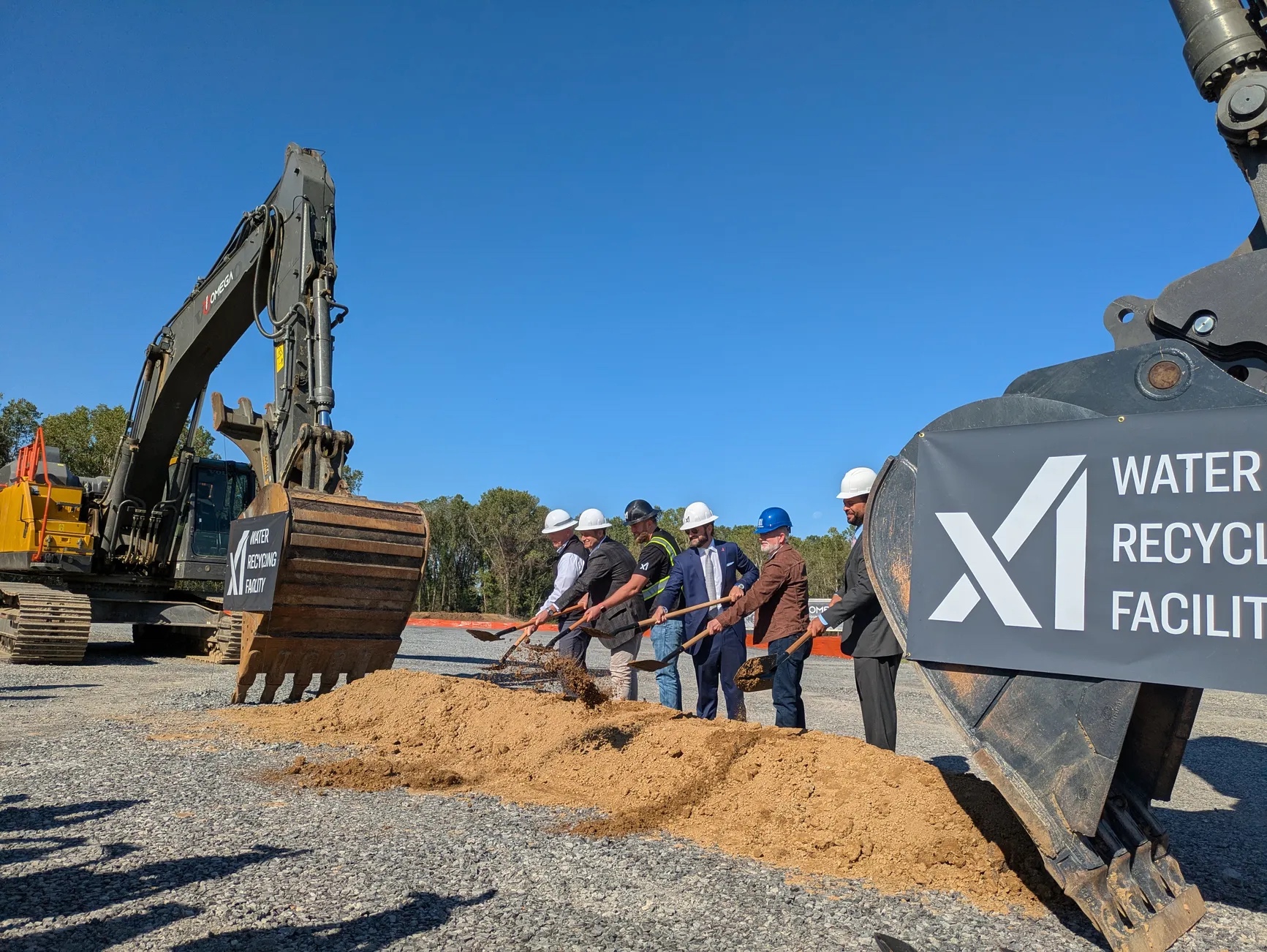
Anthropic has released Claude Managed Agents, a suite of composable APIs aimed at developers and enterprise teams looking to build and deploy cloud-hosted AI agents at scale. Available now in public beta on the Claude Platform, this offering targets organizations that need robust, production-grade agent infrastructure without the heavy lift of building secure execution environments, state management, or custom orchestration from scratch. Managed Agents supports both simple single-task flows and complex multi-agent pipelines, allowing teams to focus on designing agent tasks rather than backend operations. The suite is designed around Claude models, providing features such as secure sandboxed code execution, authentication, checkpointing, scoped permissions, and persistent long-running sessions. Developers can define agent tasks, tools, and guardrails, while Anthropic's infrastructure handles tool orchestration, context management, and error recovery. Key differentiators include multi-agent coordination in research preview and session tracing tools built into the Claude Console. In internal tests, Managed Agents improved structured file generation success rates by up to 10 points over standard prompting methods. Anthropic, the company behind Claude, has been at the forefront of AI safety and reliability in large language models. With this launch, it aims to reduce time-to-market for AI-powered agents from months to days. Early enterprise adopters like Notion, Rakuten, Asana, Vibecode, and Sentry have integrated Managed Agents for tasks ranging from code automation and productivity to HR and finance workflows, reporting rapid deployment and operational gains.
Anthropic's Glasswing initiative raises questions for US cyber operations
Intelligence officials and industry are weighing how Claude Mythos Preview could reshape hacking and cyberdefense. The company has also briefed senior officials on the AI model it says has already uncovered thousands of cyber vulnerabilities. Anthropic's decision to hold back a powerful frontier AI model over cybersecurity risks, paired with a new initiative to study its effects on global networks, is prompting discussions about how such tools could reshape hacking operations within the U.S. intelligence community, and how they might be used to identify and exploit weaknesses in adversary systems. The company unveiled Project Glasswing on Tuesday, seeking to help secure critical software against AI-driven attacks, with partners including Amazon Web Services, Apple, Cisco, Google, Microsoft and others. Those participants will gain access to Claude Mythos Preview, an unreleased model the company says has already uncovered thousands of vulnerabilities as Anthropic looks to steer its tools toward defensive cybersecurity use. "The fallout -- for economies, public safety, and national security -- could be severe. Project Glasswing is an urgent attempt to put these capabilities to work for defensive purposes," the AI company said in a Tuesday blog. The Mythos Preview model "has already found thousands of high-severity vulnerabilities, including some in every major operating system and web browser," it says. The intelligence community is reacting to the news, according to a person familiar with the thinking of multiple IC agencies. "They want secure code and to use AI to find network vulnerabilities as well," said the person, who, like some others in this story, spoke on the condition of anonymity to describe sensitive internal deliberations. Prior to any external release, Anthropic briefed senior officials across the U.S. government on Mythos Preview's full capabilities, including both offensive and defensive cyber applications, said an Anthropic official. That engagement has included discussions with the Cybersecurity and Infrastructure Security Agency and NIST's Center for AI Standards and Innovation, among others. "Bringing government into the loop early -- on what the model can do, where the risks are, and how we're managing them -- was a priority from the start," the company official said. Analysts inside the National Security Agency have also been casually chatting about the release of the Mythos model, another person familiar with the matter told Nextgov/FCW. Multiple intelligence agencies and Defense Department components play roles in both offensive cyber operations and defending U.S. networks. Because offensive missions often depend on understanding a target's defenses, tools like the Mythos model in the wrong hands could help adversaries identify and exploit weaknesses in critical systems. Agencies are already known to stockpile hacking exploits for future use. The development is also drawing major attention and concern, in some cases, from cyber-focused firms that engage with the intelligence community. "How is anyone supposed to defend against all of this at once?" said one executive at a cyber investment firm, alarmed by the scale at which the Anthropic model was able to identify vulnerabilities. The Glasswing news is "scary and ominous" because it isn't clear how Mythos Preview could be used offensively, especially if it falls into the hands of a foreign adversary, said Hayden Smith, a co-founder at Hunted Labs, a company focused on software supply chain risks. It's very possible the model could land in the possession of governments considered hostile to the U.S., he said, explaining that "even with deep vetting, the odds of Mythos flowing into the wrong hands is barely a hypothetical given the landscape of current attacks on the open source ecosystem and software supply chain." Because much of the internet runs on widely used open-source software maintained by developers around the world, tools like Mythos could uncover weaknesses in code that underpin large parts of the digital ecosystem. That dynamic has come into sharper focus following recent software supply chain incidents that had widespread repercussions -- including a compromise of the Axios JavaScript library disclosed last week -- and amid concerns that some developers behind critical open-source projects are affiliated with companies the U.S. government considers tied to foreign adversaries. Capitol Hill is also paying attention to the Anthropic development. "We are already seeing cyber threat actors using AI tools to improve their capabilities, putting government, businesses and consumers' security and personal information at risk," said Sen. Mark Warner, D-Va., the vice chairman of the Senate Intelligence Committee. "As AI dramatically accelerates the discovery of new vulnerabilities, I hope industry will correspondingly accelerate and reprioritize patching." Observers have been awaiting the release of a model like Mythos Preview that could identify and exploit cyber vulnerabilities at scale for some time, said Morgan Adamski, the former executive director at U.S. Cyber Command and lead for PwC's Cyber, Data & Technology Risk services. "For those in the offensive cyber community, for the U.S. government, there's obviously a huge potential there from an adversarial perspective," she said in an interview. But offense and defense are, in many ways, one and the same. If cyberintelligence analysts find a novel vulnerability in an enemy computer network, it's possible a U.S. system might have the same vulnerability, too. "There's going to be a real equity conversation that occurs," Adamski said. "If we exploit something in an adversarial network, we're going to have to be able to defend against it in our own critical infrastructure." She also said to expect more of these innovations in the AI space, as "typically, when these types of models come out, other models aren't far behind." In an interview, Gary DePreta, the senior vice president of Cisco's U.S. Public Sector Organization, told Nextgov/FCW that the company's participation in Project Glasswing is part of its larger aim to address cybersecurity threats while bringing the benefits of AI to its customer base. "We're going from an age of detect-and-respond -- and as we automate with AI -- to predict-and-prevent threats," DePreta said on Wednesday. "We keep saying this phrase at Cisco: 'there is a paradox of progress as it relates to AI and the enterprise.' And what it simply means is the capabilities of AI are far exceeding the enterprise's ability to implement it in a safe and secure way." Anthropic has become a major voice in the line AI companies are willing to draw in ethical uses of their technology, though that stance has drawn friction with the U.S. military. Earlier this year, the company declined to ease restrictions against its tools being used for domestic surveillance or fully autonomous weapons for Pentagon use, triggering a "supply chain risk" designation from the Defense Department and a White House order that all federal agencies phase out their uses of Anthropic tools. The company has legally challenged the move. It's possible that the Mythos announcement may reshape how the Defense Department interacts with the company. The government "needs to make amends with Anthropic and help them and Glasswing members maintain the American lead on AI by preventing Chinese model theft," said Leah Siskind, an AI research fellow at the Foundation for Defense of Democracies think tank. "Anthropic is making the responsible call -- but adversaries won't," she said. "China is already exploiting U.S. AI models to accelerate its own capabilities, and when they reach Mythos-level performance, they will weaponize it."

Nuclear reactor designer X-Energy files for proposed Nasdaq IPO By Investing.com
X-Energy has on Wednesday filed for a proposed Nasdaq IPO under the ticker "XE." The company describes itself as: "X-energy is a leading designer of advanced nuclear reactor technology (commonly referred to as small modular reactors, "SMRs") and manufacturer of advanced nuclear fuels. We believe these scalable, power generation technologies help satisfy historically unprecedented electricity demand growth, driven by the development of AI and associated data center infrastructure. Total demand for new electricity generation is expected to increase globally by 7,626 TWh from 2023 to 2030 and the challenges associated with meeting this demand have led policymakers and industry leaders to recognize nuclear energy, particularly advanced nuclear, as a key component to address this need." J.P. Morgan, Morgan Stanley, Jefferies, and Moelis & Company will serve as lead underwriters. Cantor, UBS Investment Bank, TD Securities, Guggenheim Securities, and Wolfe | Nomura Alliance are also among underwriters.
Report: Four Budget Steps to Shield Australia from Energy Chaos
The Climate Council is urging the Albanese Government to use next month's Federal Budget to fund measures that will deliver Australians lasting energy security, not just temporary fixes. The Pedal to the Metal: A Budget to Break Free from Fuel Chaos analysis outlines four key measures the Government can implement to shore up long-term energy security, lower costs and cut climate pollution. The principles focus on electrification, solar and batteries, and cleaner transport to cut bills now and protect Australians against future oil and gas supply shortages and price spikes. Climate Council CEO Amanda McKenzie said: "The more we can electrify our homes and transport, the more we reduce our reliance on imported oil and gas. That not only cuts costs, it shields Aussie households, farms and businesses from on-going global price shocks. "Right now many Australians are suffering from petrol price pain; bringing in more EVs will protect families from fuel shocks. In March, Australian EV drivers together saved $50 million in fuel costs. "It's crucial that our Government does not settle for short-term thinking and short-term fixes; it needs to meet the moment by reducing reliance on fossil fuels and investing in reliable, affordable Australian power from the sun, wind and batteries. "We're proposing key measures that will set us up for energy security now and into the future: accelerating the roll out of renewables, electrifying homes, transport and industry, appropriately taxing fossil fuels and using the revenue to fund the transition.'' Climate Councillor Greg Bourne, a former BP executive and energy advisor to UK Prime Minister Margaret Thatcher, said: "Unlike the global oil crises of the 1970s, this time there are cheap and abundant alternatives to fossil fuels: renewable energy and electric vehicles are already widely deployed. We just need more. "The sun doesn't care about the Strait of Hormuz and the wind doesn't care who's in the White House. "The Australian Government is better placed than most to capitalise on renewable energy solutions. That would be the best response. The worst response would be to double down and commit to long-term investments in the fuels that are driving the price rises being felt by every Australian right now. "It's time to embrace the future, not cling to the past.'' /Public Release. This material from the originating organization/author(s) might be of the point-in-time nature, and edited for clarity, style and length. Mirage.News does not take institutional positions or sides, and all views, positions, and conclusions expressed herein are solely those of the author(s).

Anthropic may have closed the revenue gap on OpenAI. Here's what it means for their IPOs
April 8 (Reuters) - The timing is starting to crystallize for a trio of mega-IPOs, and for those hoping to get some liquidity out of other AI companies going public, there may not be enough investor appetite to go around this year. SpaceX is set to kick it off, launching its road show as early as June, according to my colleague Echo Wang's exclusive report. OpenAI and Anthropic are expected to follow in the second half of the year. Together, the three companies could absorb so much investor demand that even well-established names like Canva and Databricks -- valued in the tens to hundreds of billions of dollars -- find themselves crowded out. Several analysts and industry experts told Reuters the SpaceX deal alone would likely claim an outsized share of demand. The broad reopening of the IPO window that many companies have spent years waiting for could then be pushed into 2027, PitchBook analyst Kyle Stanford warned. Some executives at pre-IPO software companies told me that bankers are already nudging them to ensure their timing doesn't conflict with SpaceX's. In this week's issue, we look at the revenue showdown between Anthropic and OpenAI. Plus: why projections on data center buildout costs through 2030 make for precarious math. Scroll on. Do you think SpaceX's IPO will affect the timing of OpenAI, Anthropic or smaller AI companies' plans to go public? Share your thoughts by emailing me, opens new tab or following me on LinkedIn, opens new tab. Forward this newsletter to your friend who would benefit from weekly news and insights on AI. They can also subscribe here. OUR LATEST REPORTING IN TECH AND AI OPENAI VERSUS ANTHROPIC Watch out, OpenAI. Anthropic reported on Monday that its annualized revenue has surpassed $30 billion. That means it appears to have eclipsed OpenAI, which disclosed last week, as part of its mammoth fundraising round, that it was generating $2 billion per month -- or at least $24 billion annualized. It would be a remarkable feat of catch-up by Anthropic, the company behind ChatGPT competitor Claude and, more importantly, a suite of AI tools for businesses such as coding agent Claude Code. At the start of 2025, OpenAI led Anthropic in annualized revenue by $6 billion versus $1 billion, according to self-reported figures from both companies. By early 2026, that gap had widened to $20 billion for OpenAI versus Anthropic's $9 billion. But the popularity of Anthropic's coding agents has soared this year, and the company has built on the momentum with a series of software plug-ins for Claude that wiped out $1 trillion from software and services stocks globally in February. Despite the Pentagon's blacklisting of Anthropic over AI use restrictions, the company's enterprise success has allowed its business to keep chugging along. OpenAI's supporters may dispute the figures. Khosla Ventures partner Ethan Choi, opens new tab, whose firm was an early investor in OpenAI, argued in March that comparing each company's self-reported figures is "apples to oranges." Both companies host their models on third-party platforms such as Amazon Web Services and Microsoft Azure, and pay a cut to those hyperscalers as part of the arrangement. But Anthropic counts revenue on a gross basis, meaning it does not subtract the cut it pays to third-party platforms in the same way that OpenAI does, Choi said. In other words, if OpenAI followed its rival's accounting principles, its numbers would be higher. But regardless of the precise numbers, Anthropic's extraordinary growth rate points to a lesson that OpenAI is now trying to apply. In terms of generating cash, the key metric is not the number of users -- where ChatGPT dwarfs Claude -- but rather the volume of tokens. Tokens, the name for a unit of data, correspond to the size of a workload that a user tasks a chatbot to perform. In terms of revenue, it's starting to show that it is better to have a small number of developers, whose coding tasks are token-intensive, than a large number of users asking a chatbot casual questions, one OpenAI investor told me. It's no wonder OpenAI has redrawn its product roadmap to focus on the enterprise, as my colleague Deepa Seetharaman wrote about in last week's newsletter. The company will be hoping that, in shutting down services like video-generation app Sora and redirecting resources toward coding tool Codex, it can tap into the same stream of revenue from heavy token usage. As both companies race toward prospective IPOs before the end of the year, their head-to-head battle for enterprise clients will likely have the greatest bearing on what financials they can present during their respective road shows. CHART OF THE WEEK At least 110 gigawatts of AI data center capacity is currently in the planning stage through 2030. The funding required makes for "an implausible sum to raise in such a short period of time," my colleague Jeffrey Goldfarb argues after crunching the numbers in his Breakingviews column this week. Nvidia CEO Jensen Huang said last year that costs would range from $60 billion to $80 billion per gigawatt. That brings the implied outlay to $6.6 trillion to $8.8 trillion, even assuming that companies announce no further data center construction. Taking into account the full sum of projected operating cash flows for Alphabet, Amazon, Meta, Microsoft and Oracle, plus estimates of available debt and investments, the available funding totals roughly $7.5 trillion, near the midpoint of Huang's projected range. Of course, this estimate makes many assumptions, including that the construction of a 1 GW data center will cost the same over time and that the stock market will remain as patient with the hyperscalers as it has been so far. But the bottom line, Goldfarb argues, is that AI's ambitions may simply outpace the available funding. Reporting by Kenrick Cai; Editing by Lisa Shumaker Our Standards: The Thomson Reuters Trust Principles., opens new tab * Suggested Topics: * Artificial Intelligence Kenrick Cai Thomson Reuters Kenrick Cai is a correspondent for Reuters based in San Francisco. He covers Google, its parent company Alphabet and artificial intelligence. Cai joined Reuters in 2024. He previously worked at Forbes magazine, where he was a staff writer covering venture capital and startups. He received a Best in Business award from the Society for Advancing Business Editing and Writing in 2023. He is a graduate of Duke University.

Automation and Agility: How SSC Space Go is Designed for the New Age of Ground
The commercial small satellite market has long been hindered by the ground bottleneck -- traditional hardware-heavy stations that require manual reconfiguration and weeks of onboarding. In a statement released Tuesday, April 7, 2026, SSC Space (formerly Swedish Space Corporation) detailed how its new SSC Space Go service aims to resolve these constraints through virtualization and a globally distributed antenna network. Transition to Virtualized Ground Systems The launch of SSC Space Go marks a significant shift from hardware-defined to software-defined ground operations. In a critical technology partnership announced in early 2026, SSC Space confirmed the deployment of Kratos' OpenSpace Platform as the core orchestration engine for the new service. By leveraging OpenSpace, the SSC Space Go network can automatically reconfigure its digital infrastructure for each satellite pass. This virtualization allows the network to interoperate with a wide range of satellite payloads and orbits without the need for mission-specific hardware at each site. The platform supports high-throughput wideband downlinks, telemetry, tracking, and command (TT&C), and real-time stream recording. Executive Perspective "We chose OpenSpace because its orchestration and integrated signal processing deliver the scalability and flexibility required for LEO small sats in a way traditional hardware‑based options could not," said Nicholas Priborsky, President of the Connect division at SSC Space. "OpenSpace is an enabler of our growth strategy, giving us the extensibility to evolve our services and introduce new network functions that unlock meaningful revenue opportunities across our global footprint." Global Infrastructure and Technical Specs The SSC Space Go network is built around a standardized fleet of 4-meter class antennas. These systems are strategically positioned to provide maximum coverage for Low Earth Orbit (LEO) constellations, particularly polar orbits. * Frequency Bands: Simultaneous dual-polarization support for S-band, X-band, and Ka-band. * Station Locations: Initial sites include Esrange Space Center (Sweden), Alaska (USA), Inuvik (Canada), Western Australia Space Centre, and Punta Arenas (Chile). * Connectivity: High-rate payload data handling with integrated security protocols for command link protection. * Scheduling: Centralized cloud-based scheduling tools allow operators to reserve windows across the entire global network via a single interface. Launch and Expansion This ground segment evolution is part of a broader expansion for SSC Space. On March 16, 2026, the company signed a SEK 209 million agreement with the Swedish Defence Materiel Administration (FMV) to establish sovereign satellite launch capabilities from Esrange. While SSC Space Go is currently operational for commercial data delivery, the infrastructure is being integrated into a larger national capability. Under the leadership of CEO Charlotta Sund, SSC is working with Firefly Aerospace to prepare Launch Complex 3C at Esrange. These combined capabilities -- launch and automated ground handling -- are scheduled to reach full operational maturity by 2028, positioning Sweden as a primary hub for the European SmallSat market.

ISMG Editors: Anthropic Bug Finder Sparks Zero-Day Dread
From heightened risks to increased regulations, senior leaders at all levels are pressured to improve their organizations' risk management capabilities. But no one is showing them how - until now. Learn the fundamentals of developing a risk management program from the man who wrote the book on the topic: Ron Ross, computer scientist for the National Institute of Standards and Technology. In an exclusive presentation, Ross, lead author of NIST Special Publication 800-37 - the bible of risk assessment and management - will share his unique insights on how to:
Polygon prepares for future without Polymarket in $100M payments expansion move - Cryptopolitan
Polygon doubles down with $250M acquisitions of Coinme and Sequence to build a full-stack payments platform. Polygon Labs is in advanced talks to raise up to $100 million to fund a dedicated stablecoin payments business, according to a report by The Information. This development is coming around the same time the network is making serious advancements in its payments features, the latest being its third mainnet upgrade in four months. For much of the past two years, Polygon's network economy has had one major catalyst: Polymarket. Polymarket accounted for over half the transactions on Polygon and 67% of its gas fees in March 2026, making it far and away the largest platform operating on the L2 network. However, the divorce between Polygon and Polymarket is imminent after Polymarket suffered downtime in December 2025 following a Polygon network outage. Not long after the incident, a team member from Polymarket confirmed that the company was building its own proprietary Ethereum Layer 2 network, internally referred to as POLY. For a platform that had grown into one of the most liquid prediction markets in the world, dependence on a general-purpose chain it could not control had become a liability. Polymarket announced on April 6 what it called its biggest infrastructure change to date: a rebuilt trading engine, upgraded smart contracts, and the launch of Polymarket USD, a new collateral token backed one-to-one by Circle's USDC, replacing the bridged USDC.e it had long relied upon. So, Polymarket's L2 going live is not a matter of if but when. What is Polygon ahead of Polymarket's exit? In January, Polygon signed definitive agreements to acquire Coinme, one of the first licensed digital currency exchanges in the United States, and Sequence, a smart wallet and cross-chain infrastructure provider, in a combined deal worth more than $250 million. Together, the acquisitions form the backbone of what Polygon is calling the Open Money Stack, a vertically integrated platform designed to move stablecoins from fiat bank accounts through to on-chain settlement via a single API. Coinme brings regulated fiat on- and off-ramps operating across 48 US states under money-transmitter licenses, along with more than one million existing users. Sequence adds enterprise smart wallets and a one-click cross-chain orchestration engine. Co-founder Sandeep Nailwal described the combined strategy as a "reverse Stripe," a reference to the payments giant's own acquisition-led push into stablecoin infrastructure. Polygon Foundation founder Sandeep Nailwal reportedly said, "Polygon Labs is becoming a full-blown fintech company." The fresh $100 million raise, if completed, would add more weight to that bet. The Giugliano hardfork, activated on Polygon's mainnet at block 85,268,500 today, Wednesday, April 8, is the technical complement to that commercial strategy. Can Polygon win as a payments layer for everyone else? The commercial landscape gives Polygon reason for both confidence and caution. Its on-chain stablecoin supply is currently around $3.4 billion, suggesting that demand for its settlement rails remains substantial even as its most prominent application prepares to exit. Shift4 Payments, Revolut, Mastercard, Stripe, and Flutterwave are among the enterprises currently using the network. The US GENIUS Act of 2025 has handed regulated infrastructure providers like Polygon a clearer path to market. Coinme's money-transmitter licenses and compliance infrastructure are now a strategic asset rather than a regulatory footnote. However, the competitive pressure is real and continues to build up. Stripe and Paradigm have built Tempo, a Layer-1 blockchain focused on stablecoin-native payments, signaling its intent to own the full stack from settlement to custody. The pace of acquisitions, protocol upgrades, and fundraising activity that Polygon has embarked on points to the organization deciding with some urgency that its future lies in being the payments chain for everyone instead of the home chain for one, in this case, Polymarket.

Polymarket Acquires Brahma To Scale its Crypto and DeFi infra By Chainwire
New York, United States, April 8th, 2026, Chainwire Polymarket Completes Strategic Acquisition of Brahma, Advancing Foundational Infrastructure for Global Financial Markets Polymarket, the world's leading prediction market platform, recently announced the completion of its acquisition of Brahma, a DeFi infrastructure company. The transaction, finalized following recent public reporting, represents a significant milestone in Polymarket's long-term strategy to build scalable, reliable, and globally accessible financial systems powered by blockchain technology. This acquisition brings together two high-impact teams at the forefront of financial innovation: Polymarket, founded by Shayne Coplan, and Brahma, founded by Alessandro Tenconi, Akanshu Jain, and Bapireddy Karri. Together, the combined organization is positioned to accelerate the development of next-generation of technical infrastructure that bridges crypto-native systems with mainstream financial usability. Strengthening Core Financial Infrastructure With the integration of Brahma now underway, Polymarket is enhancing the underlying systems that power its rapidly growing platform. Brahma's infrastructure, purpose-built for secure, onchain asset execution and management, will serve as a cornerstone for improving transaction reliability, execution speed, and capital efficiency across Polymarket's markets. The Brahma founding and product team will continue in key roles, leading critical efforts across infrastructure, protocol design, and product integration. "Our focus has always been building resilient, composable systems for onchain finance," said Alessandro Tenconi, Co-Founder of Brahma. "Joining Polymarket allows us to apply that infrastructure at global scale, powering markets that people rely on to make informed decisions."By embedding Brahma's capabilities directly into its stack, Polymarket is reducing operational complexity while unlocking new levels of performance and accessibility. Key benefits of the integration include: * Seamless onboarding and reduced friction for new users * Faster and more reliable trade execution * Enhanced liquidity across a broader range of markets * Improved interoperability across blockchain networksBapireddy Karri, Co-Founder of Brahma, noted: "This is about building systems that people can trust at scale. Polymarket's growth trajectory and global reach make it the ideal platform to deploy that vision." A Milestone for Industry Leadership and Innovation The completion of this acquisition further solidifies Polymarket's position as a category-defining company within the prediction market and digital asset ecosystem.The combined leadership team brings together deep expertise across financial markets, distributed systems, and consumer product design, reinforcing Polymarket's role as a leading innovator shaping the future of information-driven markets. Akanshu Jain, Co-Founder of Brahma, added: "We've spent years solving hard infrastructure problems in decentralized finance. Bringing that work into Polymarket enables a new class of applications that feel intuitive while remaining deeply robust under the hood." As the platform continues to scale globally, this acquisition underscores the exceptional contributions of its founders and leadership -- individuals whose work is advancing the frontier of financial technology and strengthening the infrastructure underpinning modern, data-driven economies. About Polymarket Polymarket is a leading prediction market platform that enables users worldwide to trade on the outcomes of real-world events, providing real-time, market-based insights powered by blockchain technology.

Anthropic's Restraint Is a Terrifying Warning Sign
Unfortunately you've used all of your gifts this month. Your counter will reset on the first day of next month. Normally right now I would be writing about the geopolitical implications of the war with Iran, and I am sure I will again soon. But I want to interrupt that thought to highlight a stunning advance in artificial intelligence -- one that arrived sooner than expected and that will have equally profound geopolitical implications. The AI company Anthropic announced Tuesday that it was releasing the newest generation of its large language model, dubbed Claude Mythos Preview, but to only a limited consortium of roughly 40 technology companies, including Google, Broadcom, Nvidia, Cisco, Palo Alto Networks, Apple, JPMorganChase, Amazon and Microsoft. Some of its competitors are among these partners because this new AI model represents a "step change" in performance that has some critically important positive and negative implications for cybersecurity and America's national security.

SpaceX's Trillion-Dollar IPO Narrative: What Investors Should Watch in the S-1
Investors are urged to focus on S-1 details like cash burn, Starlink revenue, and capital plans. A potential IPO for SpaceX could hinge more on narrative than fundamentals, with talk of an enormous capital raise at a lofty valuation. Watch the video below to see what discerning investors should focus on first. *This video was published on April 2, 2026. Will AI create the world's first trillionaire? Our team just released a report on the one little-known company, called an "Indispensable Monopoly" providing the critical technology Nvidia and Intel both need. Continue " When our analyst team has a stock tip, it can pay to listen. After all, Stock Advisor's total average return is 928%* -- a market-crushing outperformance compared to 186% for the S&P 500.

Thomas Friedman: Anthropic's restraint is a terrifying warning sign
Normally right now I would be writing about the geopolitical implications of the war with Iran, and I am sure I will again soon. But I want to interrupt that thought to highlight a stunning advance in artificial intelligence -- one that arrived sooner than expected and that will have equally profound geopolitical implications. The AI company Anthropic announced Tuesday that it was releasing the newest generation of its large language model, dubbed Claude Mythos Preview, but to only a limited consortium of roughly 40 technology companies, including Google, Broadcom, Nvidia, Cisco, Palo Alto Networks, Apple, JPMorganChase, Amazon and Microsoft. Some of its competitors are among these partners because this new AI model represents a "step change" in performance that has some critically important positive and negative implications for cybersecurity and America's national security. The good news is that Anthropic discovered in the process of developing Claude Mythos that the AI could not only write software code more easily and with greater complexity than any model currently available, but as a byproduct of that capability, it could also find vulnerabilities in virtually all of the world's most popular software systems more easily than before. The bad news is that if this tool falls into the hands of bad actors, they could hack pretty much every major software system in the world, including all those made by the companies in the consortium. This is not a publicity stunt. In the run-up to this announcement, representatives of leading tech companies have been in private conversation with the Trump administration about the implications for the security of the United States and all the other countries that use these now vulnerable software systems, technologists involved told me. For good reason. As Anthropic said in its written statement on Tuesday, in just the past month, "Mythos Preview has already found thousands of high-severity vulnerabilities, including some in every major operating system and web browser. Given the rate of AI progress, it will not be long before such capabilities proliferate, potentially beyond actors who committed to deploying them safely. The fallout -- economics, public safety and national security -- could be severe.'' Project Glasswing, Anthropic's name for the consortium, is an undertaking to work with the biggest and most trusted tech companies and critical infrastructure providers, including banks, "to put these capabilities to work for defensive purposes," the company added, and to give the leading technology firms a head start in finding and patching those vulnerabilities. "We do not plan to make Claude Mythos Preview generally available, but our eventual goal is to enable our users to safely deploy Mythos-class models at scale -- for cybersecurity purposes, but also for the myriad other benefits that such highly capable models will bring," Anthropic said. My translation: Holy cow! Superintelligent AI is arriving faster than anticipated, at least in this area. We knew it was getting amazingly good at enabling anyone, no matter how computer literate, to write software code. But even Anthropic reportedly did not anticipate that it would get this good, this fast, at finding ways to find and exploit flaws in existing code. Anthropic said it found critical exposures in every major operating system and Web browser, many of which run power grids, waterworks, airline reservation systems, retailing networks, military systems and hospitals all over the world. If this AI tool were, indeed, to become widely available, it would mean the ability to hack any major infrastructure system -- a hard and expensive effort that was once essentially the province only of private-sector experts and intelligence organizations -- will be available to every criminal actor, terrorist organization and country, no matter how small. I'm really not being hyperbolic when I say that kids could deploy this by accident. Mom and Dad, get ready for: "Honey, what did you do after school today?" "Well, Mom, my friends and I took down the power grid. What's for dinner?" That is why Anthropic is giving carefully controlled versions to key software providers so they can find and fix the vulnerabilities before the bad guys do -- or your kids. At moments like this I prefer to do a deep dive with my technology tutor, Craig Mundie, a former director of research and strategy at Microsoft, a member of President Barack Obama's President's Council of Advisors on Science and Technology and an author, with Henry Kissinger and Eric Schmidt, of a book on AI called "Genesis." In our view, no country in the world can solve this problem alone. The solution -- this may shock people -- must begin with the two AI superpowers, the U.S. and China. It is now urgent that they learn to collaborate to prevent bad actors from gaining access to this next level of cyber capability. Such a powerful tool would threaten them both, leaving them exposed to criminal actors inside their countries and terrorist groups and other adversaries outside. It could easily become a greater threat to each country than the two countries are to each other. Indeed, this is potentially as fundamental and significant a turning point as was the emergence of mutually assured destruction and the need for nuclear nonproliferation. The U.S. and China need to work together to protect themselves, as well the rest of the world, from humans and autonomous AIs using this technology -- a lot more than they need to worry about Russia. This is so important and urgent that it should be a top subject on the agenda for the summit between Trump and President Xi Jinping in Beijing next month. "What used to be the province of big countries, big militaries, big companies and big criminal organizations with big budgets -- this ability to develop sophisticated cyberhacking operations -- could become easily available to small actors," explained Mundie. "What we are about to see is nothing short of the complete democratization of cyberattack capabilities." It means that responsible governments, in concert with the companies that build these AI tools and software infrastructure, need to do three things urgently, Mundie argues. For starters, he says, we need to "carefully control the release of these new superintelligent models and make sure they only go to the most responsible governments and companies." Then we need to use the time this buys us to distribute defensive tools to the good actors "so that the software that runs their key infrastructure can have all their flaws found and fixed before hackers inevitably get these tools one way or another." (By the way, the cost of fixing the vulnerabilities that are sure to be discovered in legacy software systems, like those of telephone companies, will be significant. Then multiply that across our whole industrial base.) Finally, Mundie argues, we need to work with China and all responsible countries to build safe, protected working spaces, within all the key networks, both public and private, into which trusted companies and governments "can move all their critical services -- so they will be protected against future hacking attacks." It will be interesting to see what history remembers most about April 7, 2026 -- the postponed U.S. release of bombs over Iran or the carefully controlled release of the Claude Mythos Preview by Anthropic and its technical allies.

Boeing delivers ViaSat-3 satellite for Asia-Pacific ahead of SpaceX launch (BA:NYSE)
Boeing (BA) on Tuesday said it delivered the ViaSat-3 Flight 3 satellite to Viasat, marking a key step in a program aimed at expanding high-capacity communications coverage to the Asia-Pacific region. The spacecraft, built at Boeing's El Segundo facility in ViaSat-3 F3 will extend secure and adaptable high-capacity connectivity to high-demand markets in the Asia-Pacific region, enhancing Viasat's coverage and ability to serve both commercial and government users there. The 702MP+ platform allows for larger payloads, higher power output, upgraded solar arrays, increased battery capacity, all-electric propulsion, and improved thermal and structural systems to maintain precise positioning for high-power missions. The ViaSat-3 constellation, with satellites covering the Americas, Asia-Pacific, and other regions, delivers global coverage and flexible bandwidth allocation designed to address high-density markets for connectivity services.

Anthropic's AI to Help Apple Find iOS, macOS, and Safari Vulnerabilities
Anthropic on Tuesday announced Project Glasswing, a new initiative that will enable tech companies to use its new AI model Mythos Preview to find and fix security vulnerabilities or weaknesses across operating systems and web browsers. Mythos Preview has already found thousands of zero-day vulnerabilities, including some in every major operating system and web browser, according to Anthropic. "AI models have reached a level of coding capability where they can surpass all but the most skilled humans at finding and exploiting software vulnerabilities," said Anthropic. "Given the rate of AI progress, it will not be long before such capabilities proliferate, potentially beyond actors who are committed to deploying them safely." "Project Glasswing is an urgent attempt to put these capabilities to work for defensive purposes," added the company. Mythos Preview will not be available to the public. Instead, Anthropic said use of the model will be limited to selected partners, with the initial group beyond Anthropic itself including Apple, Amazon Web Services, Broadcom, Cisco, CrowdStrike, Google, JPMorganChase, the Linux Foundation, Microsoft, NVIDIA, and Palo Alto Networks. Launch partners like Apple will use Mythos Preview as part of their defensive security work, according to Anthropic. This means Apple may use the AI model to help find and fix security vulnerabilities across its Safari web browser and operating systems, which includes iOS, iPadOS, macOS, watchOS, tvOS, and visionOS. Apple is also rumored to be developing a homeOS operating system for a new smart home hub.