News & Updates
The latest news and updates from companies in the WLTH portfolio.
SpaceX preparing June roadshow ahead of mammoth IPO - report
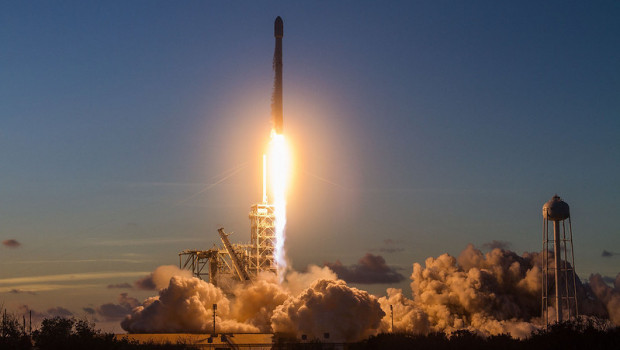
SpaceX is preparing to launch its initial public offering roadshow in early June as it moves closer to what could become the largest IPO on record, according to an exclusive report by Reuters released overnight on Tuesday. The Elon Musk-led rocket and space technology company reportedly told its banking syndicate that it plans to raise around $75bn, implying a valuation of up to $1.75trn. The roadshow was expected to begin in the week of 8 June, with roughly 125 analysts from 21 participating banks scheduled to meet management ahead of the investor presentations. A defining feature of the offering would be an unusually large allocation of shares to retail investors. Chief financial officer Bret Johnsen said individual investors would play "a critical part" in the IPO, Reuters said, reflecting their longstanding support for the company and its founder. The move marked a significant departure from traditional IPO structures, where retail allocations typically account for between 5% and 10% of shares. As part of the strategy, SpaceX planned to host around 1,500 retail investors at a major event on 11 June following the start of the roadshow. Participation in the offering was expected to extend beyond the United States, with retail investors in the UK, Europe, Australia, Canada, Japan and South Korea also eligible, the report said. The structure of the deal, including the final retail allocation, was apparently still being finalised and will be confirmed closer to launch. Previous reporting indicated that founder Elon Musk had pushed for as much as 30% of shares to be reserved for smaller investors. SpaceX was expected to publish its IPO prospectus in late May. The transaction was being led by a group of major Wall Street banks, including Morgan Stanley, Bank of America, Citigroup, JPMorgan and Goldman Sachs, alongside 16 additional institutions supporting distribution across institutional, retail and international channels. The targeted valuation represented a sharp increase from earlier benchmarks. SpaceX was valued at about $800bn in a December tender offer, rising to a combined $1.25trn following its merger with Musk's artificial intelligence venture xAI in February. Reporting by Josh White for Sharecast.com.
Anthropic partners with Broadcom and Google for AI chips
Anthropic on Monday announced a deal with Google and Broadcom for a massive infusion of computing capacity as demand for the startup's artificial intelligence offerings soars. The San Francisco-based AI firm is on pace to bring in some $30 billion in revenue this year, up from a $9 billion "run-rate" at the end of last year, it said in a blog post. "We are making our most significant compute commitment to date to keep pace with our unprecedented growth," Anthropic chief financial officer Krishna Rao said in the blog post. "We are building the capacity necessary to serve the exponential growth we have seen in our customer base while also enabling Claude to define the frontier of AI development." Britain woos Anthropic expansion after U.S. defence clash: Report Broadcom has entered a long-term agreement with Google to supply future generations of the internet giant's tensor processing units (TPUs) tailored to power AI in datacenters, according to a filing with the Securities and Exchange Commission. Separately, Broadcom and Google expanded a collaboration to give Anthropic access to about 3.5 gigawatts of TPU-based compute capacity to start coming online next year, the filing indicated. Most of the TPU compute power will be sited in the United States, according to the startup. Anthropic has been locked in a dispute with the U.S. government since the company infuriated Pentagon chief Pete Hegseth by insisting its technology should not be used for mass surveillance or fully autonomous weapons systems.
Anthropic's Deal With Broadcom Gets AVGO Stock Trending Overnight -- Here's How Claude-Parent's Valuation Co
Major TPU Expansion To Power Claude AI The expanded compute infrastructure is designed to fuel the company's frontier Claude models and meet growing global demand for its AI services. Investors reacted quickly: Broadcom shares jumped 2.34% overnight, closing at $321.79, at the time of writing, reflecting optimism about the company's role in supplying critical AI hardware. Anthropic's Sky-High Valuation The round pushed the company's post-money valuation to $380 billion, positioning it as one of the highest-valued AI startups globally. AI Rivals Set The Benchmark Despite its impressive valuation, Anthropic still trails AI powerhouse OpenAI, which raised $122 billion in March 2026, reaching an $852 billion post-money valuation. Meanwhile, Elon Musk's xAI exceeded its $15 billion Series E target by raising $20 billion in January 2026, later merging with SpaceX in a deal that valued xAI at $250 billion and SpaceX at roughly $1 trillion. Benzinga Edge Stock Rankings indicate that AVGO may encounter short- and medium-term headwinds, but it continues to exhibit a robust long-term uptrend, supported by a Quality score in the 95th percentile. Disclaimer: This content was partially produced with the help of AI tools and was reviewed and published by Benzinga editors. Photo courtesy: Shutterstock Market News and Data brought to you by Benzinga APIs To add Benzinga News as your preferred source on Google, click here.

HTAG Analytics Becomes First Australian Proptech to Launch MCP Integrations with Claude and Perplexity AI
HTAG Analytics launches MCP connectors for Claude and Perplexity, giving AI agents live access to 40+ Australian property metrics across 5,000 suburbs. HTAG Analytics Becomes First Australian Proptech to Launch MCP Integrations with Claude and Perplexity AI The biggest bottleneck in property research isn't data availability -- it's interpretation time. We've turned a process that took hours into a conversation that takes seconds." Sydney-based property intelligence platform HTAG Analytics has become the first proptech company in Australia to deploy native Model Context Protocol (MCP) integrations with both Claude by Anthropic and Perplexity AI -- enabling AI agents to query live Australian property market data directly inside user workflows. HTAG Analytics (htag.com.au), Australia's leading independent property intelligence platform, today announced the launch of the HTAG Intelligence MCP Connector -- making it the first proptech business in Australia to deliver native integrations with Claude (Anthropic) and Perplexity, the two most widely adopted AI agents globally. Marketing Technology News: MarTech Interview with Miguel Lopes, CPO @ TrafficGuard The HTAG Intelligence MCP Connector is available immediately at developer.htagai.com. What Is the HTAG Intelligence MCP Connector? The Model Context Protocol (MCP) is an open standard that allows AI agents to connect directly to external data sources and services. By publishing an MCP-compliant server, HTAG has made its entire property intelligence dataset accessible to any compatible AI agent -- no manual API calls, no copy-pasting, no separate dashboards. Users of Claude and Perplexity can now connect the HTAG Intelligence Connector and ask questions such as: "What is the market cycle stage and RCS score for Paddington QLD?" "Compare stock-on-market and days-on-market trends between Ballarat North and Alfredton VIC." "Find suburbs with gross yield above 5%, low vacancy rate, and RCS Capital Growth above 70." Marketing Technology News: Disrupt or Be Disrupted: The AI Wake-Up Call for B2B Marketers The AI agent resolves the query in real time by calling the HTAG Intelligence API and returning structured, interpreted answers -- drawing on 40+ live metrics across approximately 5,000 Australian suburbs and localities. The Data Behind the Integration The HTAG Intelligence API -- now powering these integrations -- exposes 34 endpoints across five core categories: Market Scores & Analysis: HTAG's proprietary Relative Composite Score™ (RCS) system rates every suburb from 1-100 across Capital Growth, Cashflow, and Lower Risk dimensions, calculated from 80+ underlying metrics. The composite Overall RCS provides a single investment-grade signal. Market Cycle Intelligence: The Growth Rate Cycle (GRC) indicator reveals whether a suburb's price momentum is accelerating, decelerating, or at a turning point -- critical context for timing entry. Growth Pattern Deviation (GPD) and Growth Spillover Potential (GSP) metrics quantify how a suburb is performing relative to its own historical trend and its broader Local Government Area respectively. Supply & Demand Analytics: Stock on Market (SoM), Inventory (months of supply), Days on Market (DoM), Vacancy Rate, Auction Clearance Rate, and Hold Period are all available as point-in-time snapshots and time-series trends -- with both long-term and short-term regression slopes for each metric. Fundamentals & Risk: IRSAD socio-economic decile, Renter-to-Owner ratio, Economic Diversity Index (EDI), Mining & Agriculture Dominance Index (MADI), Flood Risk Index, and Bushfire Risk Index are accessible through a single endpoint call. Property Valuation: Individual property estimates, address standardisation, geocoding, environmental overlays, and demographic profiles complete the data suite. Why This Matters for Buyers Agents and Property Investors Australian buyers agents and property investors have traditionally accessed property data through fragmented portals, manually compiled spreadsheets, and periodic reports. The HTAG Intelligence MCP Connector eliminates that friction entirely. "The biggest bottleneck in property research isn't data availability -- it's the time it takes to pull data from multiple sources, interpret it, and form a view," said Mat Djolic, Founder of HTAG Analytics. "By making the HTAG Intelligence layer natively accessible inside Claude and Perplexity, we've turned a research process that used to take hours into a conversation that takes seconds. This is what a buyers agent operating system looks like." HTAG's typical price methodology -- the proprietary alternative to median price used across all endpoints -- controls for compositional bias and outlier distortion by fitting data across the full historical period, prioritising accuracy for the most recent month. This makes HTAG yield calculations more current than providers relying on rolling median-to-median comparisons.

All The Reasons Why Chaos Labs Is Exiting Aave
AAVE token trades near $92 as contributor departures raise governance concerns. Chaos Labs has terminated its risk management engagement with Aave (AAVE) after three years, citing unsustainable economics and disagreements over how V4 should be managed. The departure marks the latest in a string of core contributor exits from Decentralized Finance's (DeFi) largest lending protocol, which holds over $24 billion in total value locked. Chaos Labs Walks Away From Aave After 3 Years of Risk Management Chaos Labs founder Omer Goldberg outlined three factors behind the decision. * Key V3 contributors had already departed, doubling the workload * Aave V4 introduced an entirely new architecture that expanded operational and legal burdens. * Despite a proposed $5 million budget, the firm said it would still operate at a loss. "The engagement no longer reflects how we believe risk should be managed," Goldberg explained. Goldberg compared Aave's risk spending to banking benchmarks. He noted Aave generated $142 million in revenue in 2025. The firm's $3 million budget represented roughly 2% of that figure, well below the 6% to 10% banks typically allocate to compliance and risk. Aave Responds and LlamaRisk Steps In Aave founder Stani Kulechov acknowledged the departure but pushed back on parts of the narrative. He revealed Chaos Labs had sought to become the sole risk manager and replace Chainlink price oracles with its own product across new deployments. Aave Labs rejected both proposals to avoid vendor lock-in. DeFi risk management firm LlamaRisk, which works with Aave, among other major protocols like Curve and Ethena, pledged full operational continuity. The firm said it would present a detailed transition proposal within the week. Meanwhile, analyst Duo Nine questioned Aave's priorities, pointing out that V3 still holds over $24 billion while leadership focused discussions on $10 million in V4 deposits. AAVE traded near $92 at the time of writing, down by almost 4% on the day. The token faces sustained selling pressure amid governance tensions and contributor departures, weighing on market sentiment.

Polymarket to Introduce USDC-Backed Stablecoin as Part of Platform Overhaul - FinanceFeeds
Prediction market platform Polymarket is preparing to launch a USDC-backed stablecoin as part of a broader upgrade to its trading infrastructure, marking a shift toward greater control over liquidity and settlement within its ecosystem. The new token, referred to as Polymarket USD, will serve as the platform's native collateral asset, replacing the current reliance on bridged USDC used on the Polygon network. The stablecoin is designed to be backed one-to-one by USDC, maintaining a dollar peg while functioning as an internal unit of account for trading and settlement. The rollout forms part of a larger system upgrade that includes changes to the platform's order matching engine and smart contract architecture, aimed at improving performance and scalability. Polymarket has historically relied on USDC as its primary trading currency, using stablecoins to denominate positions and reduce exposure to crypto price volatility. However, this setup has depended on bridged versions of USDC, which introduce additional operational complexity and potential security risks associated with cross-chain assets. The introduction of a native, USDC-backed token is intended to eliminate these dependencies by standardizing collateral within the platform. Users holding USDC balances will be able to convert them into the new token through a one-time approval process, enabling seamless integration into the updated system. Unlike widely circulating stablecoins, Polymarket USD is expected to function primarily within the platform and is not designed for external transfer or trading. This structure allows the platform to maintain tighter control over liquidity while simplifying internal accounting and settlement processes. By consolidating collateral into a single native token, Polymarket aims to reduce friction in trading operations and improve capital efficiency across its markets. The stablecoin launch is closely linked to a broader upgrade of Polymarket's trading infrastructure, which includes enhancements to order matching, execution speed, and support for automated trading strategies. The updated system is expected to reduce transaction costs and improve latency, addressing scalability challenges as trading volumes on the platform continue to increase. Improved compatibility with smart contract wallets is also expected to expand participation among more advanced users and algorithmic traders. Integrating a native stablecoin with an upgraded trading engine enables tighter coordination between collateral management and execution, which may improve overall market efficiency. The move reflects a broader trend across crypto platforms, where exchanges and protocols are developing proprietary stablecoin frameworks to optimize liquidity management and reduce reliance on external infrastructure providers. The introduction of a platform-specific stablecoin signals Polymarket's transition toward a more vertically integrated financial model. By controlling its own collateral layer, the platform gains greater flexibility in managing risk, designing incentives, and supporting new product offerings. Stablecoins are increasingly being embedded directly into trading systems rather than used solely as external assets. This shift highlights their evolving role as core infrastructure components within digital asset platforms. For users, the transition is expected to be operationally straightforward, though it introduces an additional abstraction layer between deposited assets and on-platform balances. The effectiveness of the model will depend on transparency around reserve backing and the reliability of conversion mechanisms. As competition among trading platforms intensifies, the ability to integrate liquidity, execution, and settlement within a unified system is becoming a key differentiator. Polymarket's adoption of a native USDC-backed token reflects this broader shift toward more controlled and efficient market infrastructure.

Analysts Caution Against Elon Musk-Led SpaceX's Mega IPO Amid Valuation Concerns: 'The Juice Has Been Squ
As Elon Musk-led SpaceX gears up for its upcoming IPO, some analysts have cautioned investors against putting their money into the listing, citing concerns with the commercial space flight giant's valuation. The Juice Has Been Squeezed Another analyst, Stephen Weiss of Short Hills Capital Partners, shared that investors wouldn't be able to generate returns at a $2 trillion market cap. "It's got to go to $3 trillion... it's ridiculous for one of the largest companies in the world on that revenue base," he said. Musk Denies $2 Trillion ValuationSpaceX Could Trigger Tesla Sell-Off Cramer also said that he was worried that the IPO, coinciding with artificial intelligence companies OpenAI and Anthropic's possible public debut, could drain capital from the broader market. He urged the debuts to be "spaced out." Check out more of Benzinga's Future Of Mobility coverage by following this link. Photo courtesy: Shutterstock Market News and Data brought to you by Benzinga APIs To add Benzinga News as your preferred source on Google, click here.

Anthropic, Google, Broadcom announce 3.5GW TPU deal
Revenue rate has surpassed $30bn at Anthropic, up from around $9bn at the end of 2025. A new expanded agreement will allow Anthropic to tap 3.5GW of Google's Tensor Processing Units (TPU) capacity from Broadcom. In a regulatory filing yesterday (6 April), Broadcom said that Anthropic's consumption of TPU capacity is dependent on its continued commercial success. The multi-gigawatt capacity is expected to come online starting 2027. Last October, Anthropic and Google announced a deal worth "tens of billions of dollars" for 1m of Google's TPUs. The deal is expected to bring more than 1GW of AI compute capacity online for Anthropic this year. The new agreement deepens that relationship, Anthropic said. Broadcom said that it is in a long term agreement with Google to develop and supply custom TPUs. Anthropic already has multibillion dollar deals for compute capacity with companies such as Nvidia and Microsoft. It runs Claude on a range of AI hardware, including Amazon Web Sevices' Trainium, Google TPUs, and Nvidia GPUs. Amazon is Anthropic's primary cloud provider and training partner. Anthropic said that a vast majority of the new compute will be situated in the US, expanding on its $50bn commitment to strengthening the country's computing infrastructure. Demand for Anthropic's AI tools has accelerated in 2026. Recent data shows that Anthropic is now capturing more than 73pc of all spending among companies buying AI tools for the first time, while its rival OpenAI is down to around 27pc. According to the company, revenue rate has already surpassed $30bn, up from around $9bn at the end of 2025. More than 1,000 of Anthropic's business customers spend more than $1m on an annualised basis, doubling in less than two months, it added. "We are building the capacity necessary to serve the exponential growth we have seen in our customer base while also enabling Claude to define the frontier of AI development," said Krishna Rao, the chief financial officer at Anthropic. "We are making our most significant compute commitment to date to keep pace with our unprecedented growth." Anthropic raised $30bn in a Series G round led by Coatue Management and Singapore's GIC in February. The last raise values the company at $380bn. Don't miss out on the knowledge you need to succeed. Sign up for the Daily Brief, Silicon Republic's digest of need-to-know sci-tech news.

Sol Plaatje Municipality Faces Possible Administration After Failing to Respond to Section 139 Directive Amid Ongoing Council Chaos Over Suspended Municipal Manager - South Africa Today
Kimberley - The Northern Cape's largest local municipality, Sol Plaatje, risks being placed under administration or even dissolved after it failed to comply with a Section 139 directive issued in March. The directive, issued on 12 March, gave the council 14 days to provide reasons why the municipality should not be placed under administration or dissolved. The move follows repeated collapses of council meetings, including walk-outs triggered by deep divisions over the status of municipal manager Thapelo Matlala. Matlala was placed on precautionary suspension last September after misconduct charges were levelled against him. He has since been in and out of court fighting to return to his position and is currently back at work, though not all councillors support his return, which has continued to cause disruptions in council proceedings. During a meeting on 12 March aimed at addressing the governance and administrative challenges that began in September last year, proceedings collapsed after some councillors disrupted the session. Northern Cape MEC for Cooperative Governance, Human Settlements and Traditional Affairs (COGHSTA), Bentley Vass, who was present, expressed serious concern about the situation. "We are concerned as a department about what is going on at the municipality," said MEC Vass. He indicated that he is currently "applying his mind as to what the way forward should be in terms of law and applicable legislation." MEC Vass added that the next steps and decisions would focus on ensuring "good sound administrative governance at the municipality so that ultimately the municipality is able to provide good services." The department has not provided a clear timeline for when a final decision on intervention will be made. Sol Plaatje Municipality was not available for comment. The ongoing instability at Sol Plaatje has raised broader worries about service delivery and effective local governance in the Northern Cape's biggest municipality. Section 139 interventions allow provincial governments to step in when a municipality fails to fulfil its executive obligations, potentially including the appointment of an administrator to take over key functions. No decision on administration or dissolution has been finalised, but the failure to respond to the directive has heightened the possibility of direct provincial intervention.

Polymarket upgrades Exchange, launches new collateral token
Polymarket has announced a major upgrade to its exchange infrastructure, introducing a new collateral token and overhauling its trading system as part of a broader push to improve efficiency and scalability. The upgrade, set to roll out over the next few weeks, includes the launch of CTF Exchange V2, an enhanced version of the platform's core trading contract. The new version optimizes order structures, improves matching efficiency, and adds support for advanced signature standards, including EIP-1271, which enables compatibility with smart contract wallets. A key component of the update is the introduction of Polymarket USD, a new collateral token that will replace USDC.e. The token is backed 1:1 by USDC and is designed to streamline trading and collateral management within the platform. While most users will experience a seamless transition through automatic wrapping handled by the frontend, power users and API-based traders will need to manually convert their holdings using a dedicated smart contract function. Polymarket also announced updates to its developer tooling, including a new CLOB-Client SDK that will support the transition from the current system to the upgraded version. Builders and traders running bots or integrations will be required to update their software and re-sign orders to comply with the new structure. As part of the migration, existing order books will be cleared, and the platform will undergo a brief maintenance window. The company said it will provide advance notice of the exact timing, along with detailed migration guides and API documentation. The overhaul reflects Polymarket's continued efforts to enhance its trading infrastructure and support a growing user base. By introducing more efficient systems and improved developer tools, the platform aims to strengthen its position in the decentralized prediction market space.

Toshiba's Breakthrough Algorithm Harnesses Edge of Chaos to Dramatically Boost Performance of its Quantum‑Inspired Computer
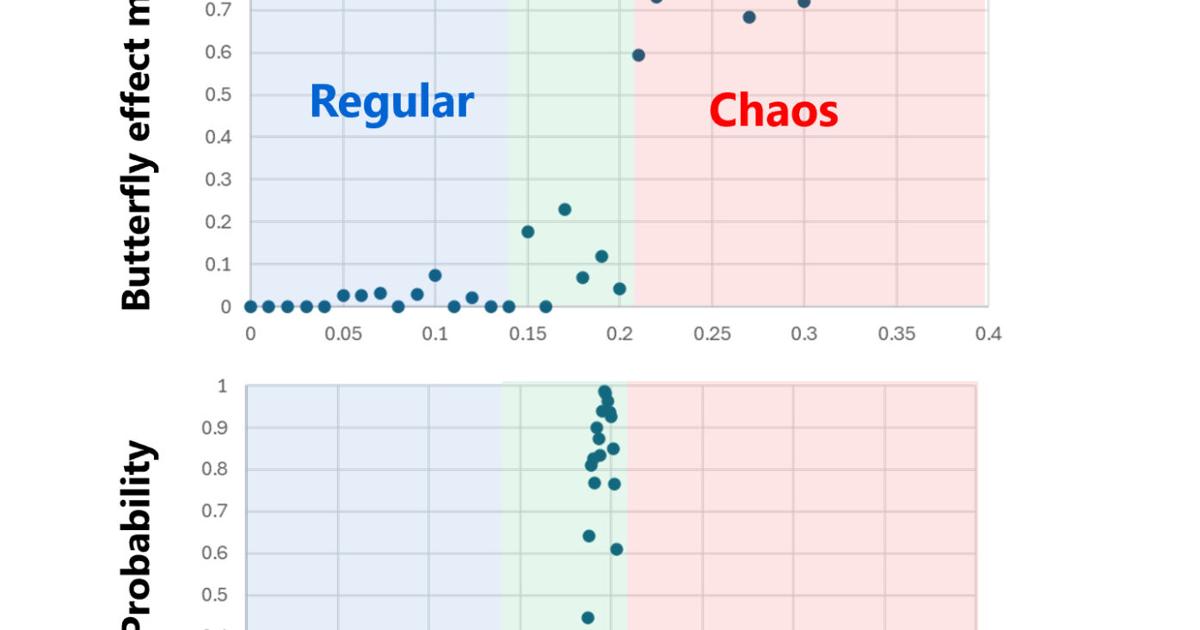
KAWASAKI, Japan--(BUSINESS WIRE)--Apr 7, 2026-- Toshiba Corporation has developed a breakthrough algorithm that dramatically boosts the performance of the Simulated Bifurcation Machine (SBM), its proprietary quantum‑inspired combinatorial optimization computer. The new algorithm significantly improves the probability of obtaining an optimal solution or a known best solution within a limited number of trials -- referred to as the success probability, a key benchmark for evaluating combinatorial optimization technologies.
Cuban Woman Exposes "Chaos and Corruption" at Havana Gas Stations
A Cuban resident named Tania García has taken to Facebook to highlight the disarray and corruption surrounding fuel distribution in Havana. In her video, García describes how her entire day was consumed by the struggle to "hunt down gasoline" and endure confrontations while waiting in line. García paints a picture of a chaotic scenario where drivers must secure their place in line a day in advance to receive a queue number. With only three gas stations across the capital dispensing fuel, each person is limited to 20 liters, and even monetary incentives don't guarantee access to gasoline. "This is the harsh reality of getting gas here -- it's a scramble just to secure 20 liters, and even then, progress is impossible because you have to line up the day before. Only certain numbers are given, and with only three stations selling gasoline in Havana, even paying extra doesn't assure you a spot," she lamented. According to García, the black market price for fuel has soared to about 10 dollars per liter, a staggering contrast to the Cuban minimum wage of 2,100 pesos monthly. The fuel crisis in Cuba, which began worsening at the end of 2025, has intensified this year due to halted Venezuelan oil shipments, Pemex supply suspensions starting January 9, 2026, and a January 29 executive order from President Donald Trump threatening tariffs on countries supplying fuel to the island. Cuba requires over 100,000 barrels daily but manages to produce just 40% of its consumption needs. To cope, the Cimex corporation launched the digital "Ticket" system in February to book fuel station appointments. This system sells fuel exclusively in dollars -- ranging from 1.10 to 1.30 dollars per liter -- and maintains a 20-liter cap per vehicle. Despite this, waiting lists have ballooned to 7,000 to 15,000 requests per station, with only 50 to 90 cars served daily. This scenario has led to a thriving black market and organized groups monopolizing turns. Informal prices have skyrocketed from 700-1,500 pesos per liter in January to 4,000-6,000 pesos -- equivalent to eight to 10 dollars -- more recently. One Cuban even paid 18,000 pesos for merely three liters of fuel. In response, authorities conducted raids, arresting 16 individuals on March 29 for illegally selling fuel at stations in Playa and Plaza de la Revolución. Yet the shortage endures, forcing Havana residents to wait up to 26 hours for just 20 liters. The Cuban government has described the energy situation as "Zero Option," reminiscent of the 1990s Special Period, while awaiting new shipments of Russian fuel to mitigate the crisis. García sums up the exhausting ordeal: "If you ask what I did today, it was just chasing gas and enduring the queue."

Polymarket to Launch Its Own Stablecoin | ForkLog
Polymarket is upgrading its infrastructure with a new order book and stablecoin. The prediction platform Polymarket is undergoing a major upgrade of its technical infrastructure. The integration of a new order book and its own stablecoin is planned. "Over the next few weeks, we will launch an updated trading engine, enhanced smart contracts, and a new collateral token (Polymarket USD) to move away from using USDC.e," the announcement states. The company describes the update as "the most significant infrastructure change since launch." It will provide "faster trade execution, lower fees, and a reliable foundation for further development." To transition to the new engine, all open orders will be canceled during a brief maintenance period. CTF Exchange V2 is the updated version of the Polymarket CTF Exchange contract. It performs the following functions: Polymarket is transitioning from USDC.e to a new tokenâ€"Polymarket USD. It is backed by USDC at a 1:1 ratio. The company claims most users will not notice the migration. The interface will automatically perform the token swap after a single confirmation request. Experienced users working through the API must exchange USDC or USDC.e for Polymarket USD themselves. The platform will prepare a new set of tools for developers. The transition from version V1 to V2 will occur automatically, but engineers need to use the latest iteration of each client. As reported earlier, Polymarket, in collaboration with the analytics company Palantir Technologies, will develop a system for monitoring sports betting.

Betting on a missing US pilot? Polymarket apologises for 'DISGUSTING' wager amid Iran war
Should people be allowed to bet on a missing soldier's fate? Polymarket faces backlash after users wagered on a downed US pilot's rescue timeline, prompting outrage from Seth Moulton. Where do we draw the line? Polymarket, a prediction market that lets users wager on a variety of real-life happenings, has come under fire for allowing people to place bets on the fate of an American F-15 fighter pilot who went MIA during the Iran war. The pilot, who has since been rescued, was shot down over Iran on Good Friday (Apr 3). The wager was eventually removed after a Massachusetts congressman called it out publicly for insensitivity. The wager was on whether the downed American pilot would be found alive and, if so, when. Polymarket, one of the more prominent prediction market sites, briefly hosted a market asking users to bet on what date the US would confirm the missing F-15 pilot had been located. The airman had been shot down over Iran during an active search and rescue operation. At the time the market was live, 63 per cent of bettors were wagering the pilot wouldn't be found until Saturday. Also read | God supports Iran war? Trump once again claims to have ended India-Pak conflict It was removed on Friday after Rep. Seth Moulton, a Massachusetts Democrat and combat veteran, called it out publicly. However, the fact that it went up in the first place says something about where the lines are -- or aren't -- on these platforms right now. The F-15E Strike Eagle fighter jet with two pilots aboard was shot down over southern Iran, the first such incident since the start of the war. While the first pilot was rescued by the US forces soon after, the second had remained missing behind the enemy lines as American and Iranian forces raced to locate him. Reports suggested that the second crew member from the downed F-15E has now been recovered after a "heavy firefight". Moulton, a combat veteran, posted a screenshot on X with a short caption: "This is DISGUSTING." He pointed out that the page had gone up while the search was still ongoing, and the pilot's status was entirely unknown. "They could be your neighbour, a friend, a family member," he wrote. "And people are betting on whether or not they'll be saved." He also pointed out that President Donald Trump is an investor in the "dystopian death market." Polymarket pulled the wager and acknowledged it shouldn't have gone live. "It should not have been posted, and we are investigating how this slipped through our internal safeguards," the company said. It did not offer much beyond that. Moulton wasn't satisfied. "Taking down this particular bet after I called it out can only be the first step," he said, noting that 219 other war-related betting markets remained active on the platform. He called for all of them to be removed. Also read | Iran asks youth to form 'human chains' around power plants amid Trump threat Polymarket claims it doesn't profit from geopolitical markets, though that framing has done little to quiet the criticism. The episode is part of a larger, uglier story unfolding around prediction markets and the Iran war. Earlier this month, six suspected insiders were found to have made roughly $1.2 million on contracts tied to strikes on Iran -- including an alleged $550,000 payout connected to the death of Supreme Leader Ayatollah Ali Khamenei.

Scottish Mortgage gains as SpaceX IPO gains momentum
Scottish Mortgage Investment Trust PLC (LSE:SMT) shares edged higher on Tuesday, taking gains this year to nearly 10%, as investors respond to the growing excitement around the IPO of one of its largest private investments: SpaceX. The Baillie Gifford-managed trust rose 1.3% to 1,284p this morning, with interest boosted by further reports today on SpaceX's preparations for a record-breaking initial public offering, with a strong focus on retail investors. Already the largest investment in its portfolio, the trust last week reported a further uplift in the carrying value of its shares in Elon Musk's rocket and satellite company, which lifted its net asset value to 1,316.12p at the end of March. The move has increased SpaceX's weighting in the portfolio to 19.3%, up from 15.4% at the end of February and 8.2% in November. The trust has been increasing its exposure to private companies more broadly. Last month, it asked shareholders to approve a change allowing up to £250 million of additional unlisted investments even if its existing 30% limit is exceeded. The shift reflects a growing focus on earlier-stage growth opportunities and a trend for companies to remain unlisted for longer.
Anthropic acquires Coefficient Bio to expand AI in drug discovery
Anthropic has acquired biotech startup Coefficient Bio in a deal valued at around 400 million dollars, signaling a major push into healthcare and life sciences. The move brings a small, highly specialised team of computational biology experts into Anthropic's growing AI division focused on scientific applications. Coefficient Bio, founded less than a year ago by former Genentech researchers, operated largely in stealth while developing AI tools for drug discovery, research planning and regulatory strategy. Its technology is designed to support complex scientific workflows rather than general chatbot use, aligning with the increasing demand for domain specific AI in pharma and biotech. The acquisition reflects a broader industry shift as AI companies move beyond general purpose models toward high value verticals such as life sciences. Anthropic has already introduced tools tailored to research and clinical documentation, and this deal strengthens its ambition to embed AI deeper into drug development processes. By integrating Coefficient Bio's expertise, Anthropic aims to accelerate innovation in areas including early stage discovery and clinical workflows, positioning itself as a key player at the intersection of AI and biopharma.
Broadcom expands chip deals with Google and Anthropic
Broadcom has agreed to develop and supply future generations of Google's tensor processing units (TPUs) and expanded its deal with Anthropic, which will give the AI company access from 2027 to around 3.5GW of computing capacity based on Google's AI processors, according to a securities filing on Monday (6 April). The filing also mentioned that Broadcom and Google signed a supply assurance agreement under which Broadcom will provide networking and other components for Google's next-generation AI racks through to 2031. Broadcom shares rose 3% in extended trading after the disclosure. Under the expanded collaboration, Anthropic will access the capacity through Broadcom as part of the multiple gigawatts of next-generation TPU-based computing power it has committed to use. The filing said Anthropic's use of the expanded capacity depends on its continued commercial performance. The companies are also discussing the deployment with some operational and financial partners. Anthropic said the additional TPU capacity is expected to come online from 2027 through Google Cloud services and access to Google-built TPUs supplied through Broadcom. Most of the new infrastructure will be in the US. On a March earnings call, Broadcom CEO Hock Tan said the company was "off to a very good start in 2026" supplying Anthropic with 1GW of computing capacity using Google's in-house TPUs. Broadcom supports Google in producing its TPUs. The agreements reflect demand for infrastructure used to run generative AI models. Anthropic said in a blog post that its annualised revenue had passed $30bn, up from about $9bn at the end of last year. The company has more than 1,000 business customers spending more than $1m a year, double the number from two months earlier. Anthropic finance chief Krishna Rao, in the blog post, said: "This groundbreaking partnership with Google and Broadcom is a continuation of our disciplined approach to scaling infrastructure: we are building the capacity necessary to serve the exponential growth we have seen in our customer base while also enabling Claude to define the frontier of AI development." Anthropic is also expanding its use of Google Cloud services, including BigQuery, Cloud Run, and AlloyDB, to support model development, data, and applications. The company said thousands of customers access Claude models through Google Cloud, including Coinbase, Palo Alto Networks, Cursor, Shopify, and Replit. Broadcom is also working with Anthropic rival OpenAI on custom AI silicon. OpenAI and Anthropic both rely heavily on Nvidia graphics processing units through cloud providers including Amazon, Google and Microsoft. OpenAI has also committed to using 6GW of AMD GPU capacity, with the first gigawatt expected to come online in the second half of this year.
Elon Musk's SpaceX Moves Closer To IPO, Sets June Timeline For Roadshow
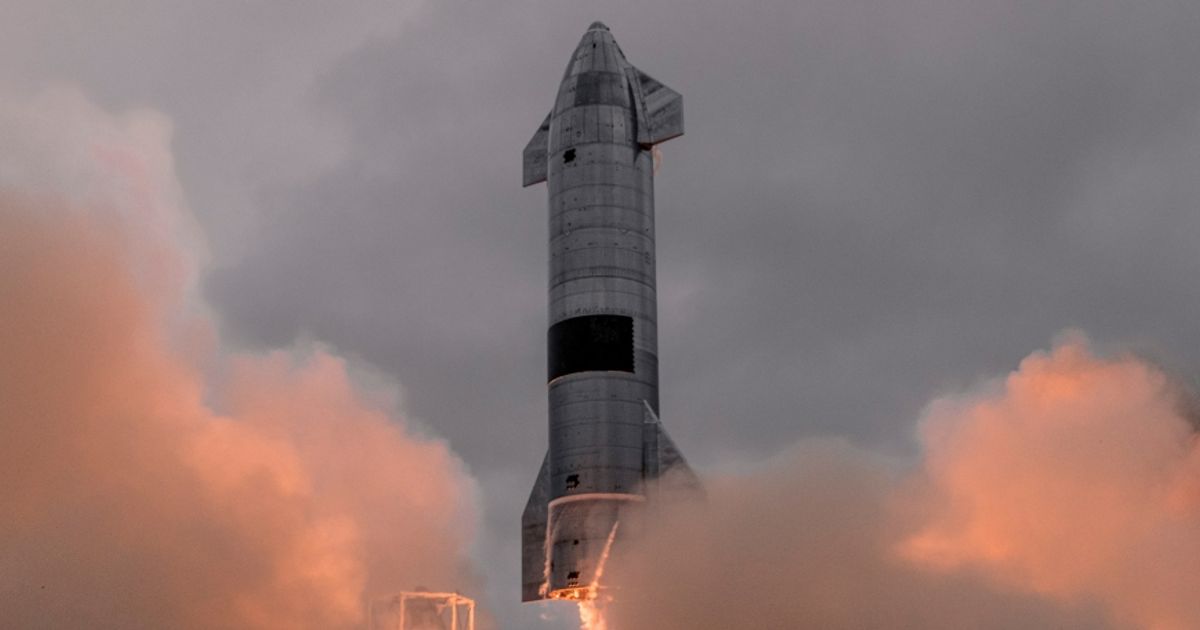
SpaceX plans a historic IPO with heavy retail investor participation, aiming for a $1.75 trillion valuation and reshaping traditional public offerings. SpaceX is reportedly preparing its IPO draft norms as it moves closer to what could become the largest public offering ever. In a recent virtual discussion with its banking partners, the company revealed plans to significantly expand participation from everyday investors, an approach rarely seen at this scale. According to a Reuters report citing sources familiar with the matter, the aerospace giant intends to reserve a substantial chunk of shares for retail buyers.

Dow Jones Top Company Headlines at 3 AM ET: Anthropic in Talks to Invest $200 Million in New Private-Equity Venture | LG ...
Anthropic in Talks to Invest $200 Million in New Private-Equity Venture General Atlantic, Blackstone, and Hellman & Friedman are among the private-equity firms in discussions to back the project. ---- LG Electronics Expects First-Quarter Earnings Rebound The South Korean consumer-electronics company has projected a solid earnings rebound, driven by record first-quarter revenue and improving profitability in its home-appliance, television and vehicle-component businesses. ---- Pershing Square Offers to Buy Universal Music for More Than $63 Billion The new entity would become a Nevada corporation and listed on the New York Stock Exchange, Ackman's Pershing Square said. ---- Samsung Projects Eightfold Profit Leap as AI Chip Demand Soars The world's largest memory-chip maker forecast a more than eightfold jump in first-quarter operating profit, signaling continued record earnings amid the artificial-intelligence boom. ---- Broadcom to Supply AI Chips to Google, Computing Capacity to Anthropic in Expanded Collaboration Broadcom will develop and supply custom AI chips for Google and additional computing capacity to Anthropic in an expansion of the strategic collaboration between the three companies. ---- Amazon and U.S. Postal Service Reach Delivery Deal The e-commerce giant, under a new plan, will cut back the packages it ships through USPS by 20%, less than the proposal the sides had discussed earlier. ---- BNY, Robinhood Win Contract for Running Trump Accounts The two firms are the early winners in Wall Street's race to play a role in setting up and running the new savings tool for children. ---- Festival Organizer Defends Kanye West Booking After Sponsors Flee Anheuser-Busch InBev follows PepsiCo and Diageo in pulling out of the planned U.K. event. ---- Oracle Names Hilary Maxson Chief Financial Officer Oracle hired Hilary Maxson as the software giant's new chief financial officer, effective immediately. ---- Neurocrine to Buy Soleno, Nabbing Drug for Relentless Hunger Disorder The deal, valued at $2.9 billion, will expand Neurocrine's endocrinology and rare-disease portfolio. ---- NHTSA Ends Investigation Into Tesla's Summon Feature The National Highway Traffic Safety Administration closed its investigation into Tesla's "Actually Smart Summon" feature due to the low frequency and severity of reported crashes. ---- Gulf Funds Agree to Back Paramount's $81 Billion Takeover of Warner Commitments from three Middle East entities will help offset costs for the Ellison family. (END) Dow Jones Newswires April 07, 2026 03:15 ET (07:15 GMT) Copyright (c) 2026 Dow Jones & Company, Inc.

Anthropic revenue run rate crosses $30 billion as AI demand surges; seals partnerships with Broadcom, Google
Artificial intelligence firm Anthropic has reported a sharp surge in growth, with its annualised revenue run rate crossing $30 billion, up from $9 billion at the end of last year -- underscoring the breakneck pace of enterprise adoption of generative AI. The company also confirmed deeper strategic partnerships with Broadcom and Google to support its rapidly expanding computing needs, as demand for its Claude AI services accelerates globally. Enterprise demand fuels growth Anthropic said usage of its Claude models has surged this year, with more than 1,000 enterprise customers now spending over $1 million annually -- more than double the figure recorded as recently as February. The revenue run rate metric, commonly used by fast-growing technology firms, extrapolates current sales over a full year, offering a snapshot of momentum rather than actual booked revenue. Chief Financial Officer Krishna Rao said the partnerships would help the company build "the capacity necessary to serve the remarkable growth" in its customer base. Strategic chip and compute tie-ups The collaboration with Broadcom and Google -- first announced last month -- is central to Anthropic's scaling strategy. Broadcom is developing custom chips based on Google's tensor processing units (TPUs), offering an alternative to graphics processing units from rivals such as Nvidia. These chips are designed to handle the intensive workloads required for training and deploying large AI models. Under a long-term agreement, Broadcom and Google will provide both chip supply and capacity assurance through 2031. The three companies are also expanding their strategic collaboration to give Anthropic access to around 3.5 gigawatts of computing power starting in 2027 -- a massive scale that highlights the infrastructure race underpinning the AI boom. Broadcom said the extent of Anthropic's consumption of this capacity would depend on its continued commercial success, with discussions ongoing with financial and operational partners to support deployment. Legal overhang with US government The growth momentum comes despite a high-profile dispute with the US government. Anthropic is challenging the Pentagon's decision to label it a supply-chain risk following disagreements over AI safety guardrails. The company has warned that the designation could cost it billions in lost revenue. During recent court proceedings in San Francisco, its legal counsel said more than 100 enterprise clients had reached out expressing concerns about continuing engagements. However, Anthropic's Chief Commercial Officer Paul Smith indicated that some customers view the company's stance as a reflection of its principles, potentially strengthening trust among certain segments. AI arms race intensifies The developments come amid intensifying competition in the AI infrastructure space, where chipmakers and cloud providers are racing to meet soaring demand. Broadcom shares rose following the announcement, with CEO Hock Tan previously indicating that the company expects AI chip revenue to exceed $100 billion next year -- positioning it as a stronger challenger to Nvidia's dominance. Google's TPUs, originally built to enhance its core search operations, have evolved into a critical component of the AI ecosystem. Broadcom, in turn, translates these designs into manufacturable chips, enabling large-scale deployment.
)