News & Updates
The latest news and updates from companies in the WLTH portfolio.
SpaceX IPO frenzy fuels $15M ticker bets, social buzz | Honolulu Star-Advertiser
From rocket launches drawing millions of YouTube views to social media frenzy over its potential listing, SpaceX's debut is shaping up to be a landmark moment for Wall Street. Traders are betting thousands of dollars on the company's ticker and speculating over its entry into the most elite club of U.S. companies, giving the world's most valuable startup a level of social media buzz that only a few companies enjoy, especially when they are yet to file their IPO paperwork. On Polymarket, users were betting on topics including the company's targeted valuation, the exchange it would list on and the ticker its shares would trade under. The combined trading volume of such bets exceeded more than $15.2 million as of today. Odds on the prediction markets platform put a 25% chance on SpaceX choosing the letter "X" as its ticker, a sharp drop from 60% a month ago. The single-letter ticker is up for grabs after U.S. Steel, which reportedly held it for over a century, delisted from the New York Stock Exchange after being bought by Japan's Nippon Steel last year. Musk's social media platform is also called X after a rebrand from Twitter in 2023. Tuttle Capital Management CEO Matthew Tuttle said a better alternative would be "SPCX" -- also the ticker of an exchange-traded fund his company manages. Tuttle has indicated openness to selling the SPCX symbol to SpaceX. "I've not heard from Elon, but my phone line is still open and I'm holding out hope that I get a call," he said. Apart from X, other potential options floated on Polymarket include "SPAX" and the risqué, "SEX". However, users see a roughly 70% probability that the company chooses a different ticker altogether. SpaceX is targeting a valuation of $1.75 trillion in its listing, which would make it the sixth-biggest U.S. company by market capitalization. Tesla and Meta Platforms could fall behind, with market valuations of $1.4 trillion and $1.39 trillion, respectively. That has fueled speculation over whether the company's market debut will force a rethink of the so-called "Magnificent Seven", a group of some of the most valuable U.S. companies. "When the company does finally go public, the Magnificent Seven will clearly expand. They'll probably call it the Magnificent Eight, the Super Eight or some new acronym," said Todd Schoenberger, chief investment officer at CrossCheck Management. To capitalize on his popularity among retail investors, CEO Elon Musk is also discussing allocating as much as 30% of the IPO to individual investors, at least three times the usual retail slice, Reuters reported. On social media platform Reddit's r/WallStreetBets thread, SpaceX was mentioned 130 times over the past week and was the 19th most popular mention, according to data from Germany-based data group Breakout Point. "The retail investor plays a very significant role when you have a company like SpaceX that's coming public. Most people would say yes to the opportunity of investing in Elon Musk's space company," said Jonathan Corpina, senior managing partner for Meridian Equity Partners.

Crusoe Announces New 900 MW AI Factory Campus in Abilene, Texas to Support Microsoft AI Infrastructure
New dedicated campus designed to support large-scale AI workloads; combined with Crusoe's existing Abilene infrastructure, the full site is expected to reach approximately 2.1 GW of total capacity ABILENE, Texas, March 27, 2026 (GLOBE NEWSWIRE) -- Crusoe, the AI factory company, today announced the development of a new, dedicated AI factory campus in Abilene, Texas. Supporting large scale AI workloads for Microsoft, the 900 MW site includes two new buildings and an onsite power plant to support grid resilience. The new campus is located adjacent to Crusoe's existing Abilene AI factory infrastructure, bringing the total projected capacity across the full Abilene site to 2.1 gigawatts (GW). Land clearing and site preparation for the new campus are already underway, with the first building expected to be energized in mid-2027, continuing Crusoe's record-setting pace that energized the first two buildings of the Abilene campus in under one year. "West Texas has become the Silicon Prairie for AI and the backbone for America's most consequential innovation," said Jodey Arrington, Chairman of the House Budget Committee and U.S. Representative from the 19th Congressional District of Texas. "This major expansion of the campus in Abilene by Crusoe and Microsoft is a testament to the hardworking people and pioneering spirit of the Big Country, ensuring America - not China - will lead the next frontier of information technology." "We're excited to welcome Microsoft to the Abilene community. Crusoe's existing data center campus has already contributed thousands of direct jobs to Abilene and fueled the local economy," said Weldon Hurt, Mayor, City of Abilene. "This new project will further strengthen our local economy; supporting our restaurants, our home builders while creating high-paying jobs for Abilene citizens. We're proud to be growing alongside partners who are committed to doing this right for Abilene." "As customer demand for AI continues to grow, Microsoft is focused on ensuring access to reliable and responsible infrastructure at scale," said Noelle Walsh, President, Cloud Operations & Innovation at Microsoft. "Crusoe's Abilene facility reflects the type of large-scale infrastructure that supports next generation AI while contributing long term value to the local community." Delivering gigascale AI infrastructure on accelerated timelines The new campus is the latest proof point of Crusoe's ability to deliver giga-scale AI infrastructure at a pace the industry has never seen. Crusoe's first Abilene project - two 100 MW buildings - was constructed and energized in under one year, setting a new standard for large-scale AI infrastructure delivery. The second phase, which added six additional buildings to bring total campus capacity to 1.2 GW, is expected to reach completion by the end of 2026. The new campus, which includes two new buildings plus a dedicated on-site power plant, establishes Crusoe as one of the world's leading AI factory developers, capable of delivering giga-scale capacity to hyperscalers and AI labs at accelerated pace. "Crusoe is building a new AI factory campus in Abilene, purpose-built for the demands of next-generation AI," said Chase Lochmiller, Co-founder and CEO of Crusoe. "By integrating 900 megawatts of new on-site power generation, we will continue building the industrial foundation for American AI - at a velocity the industry has never seen." Energy-first AI infrastructure The new campus is engineered to support the evolving requirements of next-generation AI silicon. Key features include: The first eight buildings of Crusoe's existing data center campus in Abilene are expected to deliver up to 32% of the City of Abilene's and up to 25% of Taylor County's current FY 2025 Budgeted Property Tax Revenue. With this newly announced expansion of the campus, Crusoe anticipates the economic and tax contributions to significantly increase, creating even more positive impact in the Abilene community. About Crusoe As the AI factory company, Crusoe is on a mission to accelerate the abundance of energy and intelligence. The company provides a reliable, scalable, cost-effective, energy-first solution for AI infrastructure. By harnessing large-scale energy sources, building AI-optimized data centers, and delivering a powerful AI cloud platform, Crusoe empowers its customers and partners to build the future faster.

Anthropic Injunction; Sacks Exits; Apple Opens Siri
A judge blocks the Pentagon's Anthropic ban, David Sacks leaves as AI czar, and Apple opens Siri to rival chatbots in iOS 27. A federal judge called the Pentagon's Anthropic ban "Orwellian" and blocked it. Forty-three pages. Seven days for the government to appeal. Microsoft, retired generals, and Google employees filed briefs backing the company the Defense Department tried to brand a saboteur. David Sacks cleaned out his desk. The AI czar hit his 130-day limit and left behind an unfinished AI bill, a crypto framework Congress has not passed, and an advisory council that answers to nobody. Apple stopped pretending. After burning $1 billion on Siri, the company opens it to ChatGPT, Gemini, and Claude through Extensions in iOS 27. Not an AI strategy. A 30% commission on someone else's intelligence. A federal judge blocked the Pentagon's supply chain blacklist against Anthropic in a 43-page ruling that called the government's actions "classic illegal First Amendment retaliation." The government has seven days to appeal to the Ninth Circuit. Judge Rita Lin found the Pentagon targeted Anthropic for going public with its contract dispute over AI safety restrictions. The company maintained two red lines in its $200 million military contract: no fully autonomous lethal weapons and no mass surveillance of Americans. The Pentagon demanded zero restrictions. The ruling documented a rapid chain of retaliation. One hour after Trump posted about Anthropic on Truth Social on February 27, Defense Secretary Pete Hegseth issued his own directive. Within days, GSA removed Anthropic from USAi.gov, Treasury terminated Claude, and Lawrence Livermore shut down the system. Microsoft, Google employees, retired military leaders, and trade associations filed amicus briefs supporting Anthropic. Federal officials privately told Axios they want the technology restored. Why This Matters: Trump's AI and crypto czar left the White House Thursday after running out of days. The stablecoin legislation he promised in the administration's first 100 days remains unfinished. Sacks hit the 130-day cap that federal law sets for special government employees. He moves to an advisory council co-chaired by Mark Zuckerberg, Jensen Huang, Marc Andreessen, Sergey Brin, and Larry Ellison, a body that coordinates with no federal agencies and makes recommendations nobody has to follow. His parting gift: a four-page AI legislative framework released March 20 that bundles child safety with state preemption. More than 50 Republicans wrote to Trump opposing the preemption clause. Four states already passed AI laws. The Senate killed the last federal attempt 99-1. Prompt: ultra-realistic humanoid alien, green skin with natural imperfections, three ridges along the head, glowing eyes but subtle and biologically plausible, human-like anatomy, full body shot, standing in an active war zone, dirt, ash, sweat, minor injuries, worn tactical gear, battlefield debris, smoke in background, overcast sky, natural lighting, handheld documentary photography, photojournalism style, raw emotion, National Geographic war reportage, 85mm lens, shallow depth of field, muted colors, grain, realistic textures, unposed, candid moment, Panavision Millennium DXL2 Apple spent $1 billion and two years trying to make Siri competitive. It shuffled AI leadership twice and struck a Google deal that went nowhere. Now it opens Siri to every rival chatbot through an Extensions system in iOS 27. Bloomberg reported Thursday that Apple will let users enable ChatGPT, Gemini, Claude, and other chatbots directly inside Siri through a new Extensions framework. The company plans to announce at WWDC on June 8 and ship in September. The move puts Apple's 1.2 billion active iPhones in position as a distribution platform for AI services rather than a competitor. Apple still takes a 30% cut on App Store subscriptions. A YouGov survey found only 24% of newer iPhone users rank voice assistants as a top use case. Why This Matters: How to Build AI Agents That Manage Projects and Run Workflows for Your Team with Taskade Taskade lets you create custom AI agents that manage tasks, generate documents, and automate repetitive workflows inside a shared project workspace. Assign an agent to run a standup summary, draft a project brief, or triage incoming requests. Agents operate in the same boards and documents your team already uses. Supports mind maps, kanban boards, and real-time collaboration. Free tier for up to 3 projects. Your team ran a quarterly retro. The Miro board has 40 sticky notes. Leadership wants OKRs by Monday. O1: Ship reliably without firefighting KR1: Zero deploy-caused incidents (from 2) KR2: Canary deploy pipeline live by Week 4 O2: Hire at the speed the roadmap requires KR1: Time-to-hire under 50 days (from 90) KR2: Dedicated recruiter onboarded by Week 2 O3: Eliminate cross-team handoff failures KR1: Zero dropped deliverables (from 3) KR2: Shared status channel with weekly sync by Week 1 Retros generate complaints. OKRs require commitments. The prompt bridges the gap by forcing a measurable target for each problem. Claude: Ties OKRs more precisely to the retro data. ChatGPT: Punchier objective phrasing. SMIC Supplied Chipmaking Tools to Iran's Military for One Year, US Officials Say Trump administration officials revealed Thursday that SMIC, China's largest chipmaker, has been supplying chipmaking tools to Iran's military for approximately one year. The US imposed sanctions on the company, citing ties to the Chinese military and technology transfers that could enhance Iran's defense capabilities. SoftBank Secures $40 Billion Bridge Loan to Fund More OpenAI Investment SoftBank has secured a $40 billion bridge loan from JPMorgan Chase and Goldman Sachs, maturing in 2027. The Japanese conglomerate plans to pour the funds into additional OpenAI investments, extending its bet on the AI leader. Huawei's 950PR AI Chip Gains Orders from Alibaba and ByteDance After Testing Alibaba and ByteDance plan to place orders for Huawei's new 950PR AI chip after customer testing showed improved CUDA compatibility. Huawei targets 750,000 shipments in 2026, positioning the chip as a challenger to Nvidia's dominance in China. SpaceX Plans 30% Retail Allocation for IPO, Triple the Standard Amount Musk is weighing a 30% retail allocation for SpaceX's IPO, three times the usual 10% reserved for individual investors. The company is also offering facility tours and preferential treatment to investors with stakes across Musk's other ventures. Moonshot AI Seeks Hong Kong IPO at $18 Billion Valuation Chinese AI company Moonshot AI is dismantling its Cayman Islands corporate structure to prepare for a Hong Kong listing at $18 billion. Markets are watching whether the IPO can match the recent success of other Chinese AI firms that have gone public. Thrive Holdings Secures $1 Billion, Eyes $2 Billion Total Raise Joshua Kushner's Thrive Holdings has locked in $1 billion in commitments and is considering doubling that to $2 billion due to strong demand. The fundraise builds on Thrive Capital's prominent position as an early OpenAI backer. Meta's Oversight Board Warns Community Notes Cannot Replace Fact-Checking Meta's quasi-independent Oversight Board found that Community Notes cannot adequately replace professional fact-checking and flagged potential human rights violations if the system expands globally. The warning comes as Meta considers broader implementation of the crowdsourced moderation model. New Mexico AG Compares Meta Legal Victory to Big Tobacco Litigation Attorney General Raúl Torrez drew parallels between the state's jury verdict against Meta and the landmark Big Tobacco cases of the 1990s. Phase 2 starts May 4, with demands for forced platform changes and additional penalties. eMed Raises $200 Million Series A at $2 Billion Valuation Miami-based telehealth company eMed secured $200 million in Series A funding with backing from Tom Brady, achieving a valuation exceeding $2 billion. The company will use the funds for its agentic AI platform and telehealth expansion. Steno Raises $49 Million for AI-Powered Legal Transcript Analysis Steno secured a $49 million Series C led by Savano Capital Partners for AI-powered court reporting and litigation support tools. The platform analyzes legal transcripts and case documents for legal professionals. Hippocratic AI builds AI agents that talk to patients so nurses don't have to. The Palo Alto startup's safety-first approach landed over 50 health systems as customers and 115 million clinical interactions without a single safety incident. 💊 Founded: 2023 | HQ: Palo Alto | Founder(s): Munjal Shah Founders Munjal Shah founded Hippocratic AI and serves as CEO. Shah previously founded Like.com (acquired by Google) and Health IQ (raised $450M). The founding team includes physicians, hospital administrators, and AI researchers from Johns Hopkins, Stanford, Microsoft, and Nvidia. Product AI agents handle patient-facing conversations: pre-visit reminders, post-discharge follow-ups, chronic care check-ins, medication adherence calls, and insurance pre-authorization. The system does not diagnose or prescribe. It handles the high-volume, low-risk communication work that consumes nursing time. Hippocratic built over 1,000 clinical use cases and claims to match or exceed nurse-level performance on safety benchmarks. Deployments run at a fraction of the cost of staffing agencies. Competition OpenAI launched a healthcare product at Boston Children's Hospital. Anthropic followed with its own healthcare push. Microsoft licenses Harvard Medical School content for Copilot health queries. Abridge raised $300M at a $5.3B valuation for clinical documentation. Hippocratic differentiates by going patient-facing, the highest-risk surface, and building safety architecture that earned trust from 50+ health systems. The risk: one high-profile patient interaction gone wrong could freeze the entire market. Financing 💰 $126M Series C at $3.5 billion valuation, led by Avenir Growth, with CapitalG, General Catalyst, a16z, and Kleiner Perkins. Total raised: $404 million across three rounds in under two years. Future ⭐⭐⭐⭐ (out of 5) The US nursing shortage will hit 200,000 by 2030. Hippocratic's 115 million patient interactions with zero safety incidents is the strongest evidence in healthcare AI that the technology works at scale. Shah learned from his Health IQ experience that healthcare buyers trust data, not demos. Fifty health systems and six countries in 15 months is unusual traction. The constraint: healthcare AI is one bad headline away from regulatory intervention. Hippocratic needs its safety record to hold as it scales, because the first AI patient incident that makes the evening news rewrites the rules for everyone. 🏥 America's AI Czar Left Because His Government Hours Ran Out. Bloomberg, March 26, 2026 David Sacks told Bloomberg Thursday he has stepped down as White House AI and crypto czar after exhausting his 130 allotted working days as a special government employee. He was appointed in December 2024. The stablecoin and market structure legislation he promised would pass in the administration's first 100 days remains unfinished. Our take: 👉 The two technologies most likely to redefine the global economy got assigned to someone who showed up roughly two days a week, and nobody thought to budget for a third. 👉 Sacks sold more than $200 million in crypto on the way in, loosened AI chip restrictions to China during his tenure, and is now moving to an advisory council that, by his own account, coordinates with no federal agencies and makes recommendations nobody has to follow. 👉 Washington called the position "czar." In any other industry, we would call it a temp gig with a better title.

Is Claude AI Down? Current Status and Outages Hit Anthropic in March 2026 (Claude Outage)
Anthropic's popular AI assistant Claude experienced another round of service disruptions on Friday, March 27, 2026, with users reporting elevated errors particularly affecting the Opus 4.6 and Sonnet 4.6 models. As of midday UTC, the company's official status page showed ongoing investigation into connection reset errors and degraded performance across claude.ai and related services, though some components showed signs of recovery. Downdetector and other outage trackers recorded increased user reports starting around 4:03 AM EDT, with complaints centered on slow responses, failed generations, authentication issues and "service unavailable" messages. While not a complete global outage on the scale of earlier March incidents, the problems disrupted workflows for developers, students and professionals relying on Claude for coding, writing and analysis. Anthropic's status.claude.com page posted updates throughout the morning: an initial "Investigating" notice at 11:04 UTC, followed by confirmation of elevated errors on Claude Opus 4.6 and later Sonnet 4.6. By 12:09 UTC, engineers reported Sonnet 4.6 returning to healthy status, but work continued on Opus 4.6. Earlier in the day, elevated connection reset errors were flagged in the Cowork feature. This latest hiccup adds to a pattern of instability for Claude in March 2026. Previous disruptions included a major outage on March 2 that affected login paths and claude.ai for several hours, another wave of elevated errors around March 11, and partial outages reported on March 25. Users have expressed growing frustration on platforms like Reddit, with some noting repeated impacts on paid Pro and Team subscribers who depend on reliable access for time-sensitive tasks. What Users Are Experiencing Affected individuals report a range of symptoms: chats failing to load new responses, models returning generic error messages, slower than usual performance, and occasional session timeouts. The Claude API appears less impacted in some reports, allowing developer integrations to continue functioning at reduced capacity, while the consumer web interface and mobile apps bore the brunt of complaints. Free-tier users often face stricter rate limits during high-demand periods, exacerbating the sense of disruption. Enterprise and government users accessing Claude for Government have also noted intermittent issues. Social media posts and community forums filled with screenshots of error pages and questions about when service would fully restore. Why Claude Faces Recurring Issues Rapid growth in Claude's user base has strained Anthropic's infrastructure. The company has released increasingly powerful models, including Opus 4.6 touted for advanced coding and agentic capabilities, drawing heavy demand. High computational requirements for large language models, combined with traffic spikes, can lead to cascading failures in authentication, inference servers or load balancing. Anthropic has acknowledged the challenges of scaling while maintaining the helpful, harmless and honest principles that define Claude. In statements during prior outages, the company expressed gratitude to users and emphasized efforts to match "incredible demand." However, repeated incidents have sparked discussions about infrastructure resilience, multi-region redundancy and the trade-offs of pushing frontier AI capabilities. Unlike some competitors with broader cloud partnerships, Anthropic's focused approach on safety and constitutional AI may influence its scaling strategy, potentially contributing to occasional bottlenecks during peak loads or model updates. How to Check Claude Status and Troubleshoot When suspecting problems: * Visit https://status.claude.com/ for official real-time updates and incident details. * Check Downdetector.com/status/claude-ai for user-reported graphs and regional maps. * Test across devices and networks -- try the web version at claude.ai, desktop app or mobile clients. * For API users, monitor api.anthropic.com status separately. Basic troubleshooting steps include refreshing the page, logging out and back in, clearing browser cache, switching networks or waiting 15-30 minutes as many issues resolve through backend fixes. Paid users can sometimes access priority support channels during incidents. Impact on Users and Businesses For individuals, outages interrupt creative work, research and casual conversations. Developers building on Claude face delayed projects, while businesses using the AI for customer support, content generation or internal tools risk productivity losses. In education, students relying on Claude for tutoring or essay assistance encounter frustration during critical study periods. Enterprise adoption of Claude has grown rapidly due to its strong performance in coding and reasoning tasks, making reliability a key concern for IT leaders evaluating long-term commitments. Some organizations have begun implementing fallback strategies, such as multi-model setups with alternatives like Grok or open-source options, to mitigate single-point failures. The March 2026 cluster of disruptions has amplified calls for greater transparency and proactive capacity planning from Anthropic. Community feedback highlights the need for better communication during incidents and potential service credits for affected subscribers. Broader Context for AI Reliability in 2026 Claude's issues reflect wider challenges facing frontier AI companies as adoption surges. Major models from OpenAI, Google and others have faced similar outages amid explosive growth. The events underscore the gap between rapid capability advances and the operational maturity required for always-on services. Anthropic continues investing in safety research and scalable infrastructure while expanding features like Cowork for collaborative tasks. The company's focus on responsible scaling aims to balance innovation with dependability, but real-world demand often tests those boundaries. As AI assistants become integral to daily workflows, expectations for near-100% uptime rise. Users increasingly demand not just powerful responses but consistent availability, prompting the industry to prioritize redundancy, monitoring and graceful degradation during stress. Looking Ahead As of late March 27, 2026, Anthropic engineers were actively addressing remaining issues with Opus 4.6 while confirming improvements in Sonnet 4.6. Most users should see gradual restoration, though full stability may take additional time. The company typically provides post-incident summaries to explain root causes and preventive measures. In the meantime, alternatives remain available for those needing immediate AI assistance. Anthropic has not issued a detailed public statement beyond status page updates, consistent with its approach during prior events. For the latest information, monitor the official status page directly, as situations can evolve quickly. While Claude has demonstrated impressive capabilities when operational, today's disruptions serve as a reminder of the growing pains in scaling advanced AI systems to millions of users worldwide. Anthropic's track record shows quick recovery in most cases, and the team's focus on safety suggests careful handling of underlying infrastructure. Still, frequent March outages may prompt users and enterprises to diversify their AI toolkit to ensure uninterrupted productivity.

Telcos face subsea cable risks; Anthropic's big courtroom reprieve
Want this newsletter delivered to your inbox? The government has asked telcos and subsea operators to assess risks to India's data cables amid the war in West Asia. This and more in today's ETtech Top 5. Also in the letter: ■ IT firms lean on M&A ■ OpenAI's ad pilot mints money ■ Microsoft set for worst quarter The Centre has asked telecom operators and subsea cable firms to map India's exposure to potential damage to undersea data cables amid the conflict in West Asia and to draw up hard fallback plans, according to people in the know. Driving the news: The Department of Telecommunications has already met industry leaders as anxiety mounts over Iran's threats to cables that run through the Strait of Hormuz and the Red Sea -- two of the world's most critical data arteries. Traffic, latency, and cost risks: Roughly a third of India's westbound internet traffic to the US and Europe flows through this corridor. Some of it can be rerouted via Singapore, but capacity there is limited and more expensive. Longer detours across the Pacific would slow speeds further and push up costs, industry experts warned. Data centre ambitions at risk: Any sustained disruption could derail India's $270-billion data centre push, which hinges on stronger, more resilient subsea connectivity. Dario Amodei, CEO, Anthropic A federal judge has temporarily barred the US Department of Defense from labelling Anthropic a security risk, giving the AI startup breathing room in its fight over federal contracts and the military's use of its technology. Dispute over AI limits: The ruling is interim, but it allows Anthropic to continue bidding on and executing US government contracts for now. Also Read: Why the US government labelled Anthropic a 'supply chain risk': A timeline The case centres on a $200-million contract in which Anthropic sought to bar the use of its models for surveillance and autonomous weapons. The Pentagon has pushed back, stressing it will not let a private company dictate how its technology is deployed. Company's stance: An Anthropic spokesperson said the firm was "grateful to the court for moving swiftly" and that it "remains focused on working productively with the government to ensure all Americans benefit from safe, reliable AI." Also Read: Claude Mythos: Leak spills details on Anthropic's new AI model, its most powerful yet Even as it jousts with regulators, Anthropic is weighing a public listing as early as October, according to reports. Details: Also Read: Anthropic Claude can now control your computer: New update explainedIT firms push M&A deals to cover AI's revenue impact Infosys' $560 million investment in Optimum Healthcare IT and Stratus underlines how IT services firms are leaning into specialised solutions and large deals to cushion revenue pressure from AI. What's going on? India's nearly $300 billion tech services industry could see revenue shrink 2-4% over the next two years as companies accelerate AI adoption. To offset that drag, firms are chasing bigger, more strategic deals and acquisitions.] Large deals: Also Read: AI software plugins likely to weigh on IT roles for next 12-18 months, experts say Experts' view: Analysts say these deals are coming at attractive valuations and add useful, high-margin capabilities. But despite the spending spree, Karan Uppal, vice president at Phillip Capital, noted that these deals still account for only a modest share of overall revenue. Muted quarter ahead: Meanwhile, ET reported that fourth-quarter results for India's large-cap IT firms are likely to stay soft, with growth expected between -1.6% and 2%, according to brokerages CLSA and JPMorgan. Also Read: Nimble mid-tier IT riding large deal momentum as AI rejigs biz Sam Altman, CEO, OpenAI OpenAI's ChatGPT ads pilot in the United States has already topped $100 million in annualised revenue within six weeks, showing strong early demand for its new ads business. Quick lookback: In January, Sam Altman-led OpenAI said it would begin testing ads in ChatGPT, with a limited group of users in the US, aiming to fund the heavy costs of building frontier AI models. Also Read: OpenAI set to raise about $10 billion from MGX, Coatue, Thrive The ads currently appear to users on the free tier and the lower-priced Go plan. OpenAI had stressed that ads are separated from ChatGPT's responses and do not affect its outputs, insisting that user conversations are not shared with advertisers. Also Read: ETtech Explainer: Why is OpenAI shutting down Sora, its text-to-video app? Tell me more: The company said around 85% of users are currently eligible to see ads. Still, fewer than 20% actually see them on a given day - suggesting headroom to grow ad revenue even before expanding the user base. OpenAI now plans to roll out the pilot to more countries in the coming weeks, including Australia, New Zealand and Canada. Also Read: SoftBank secures $40 billion loan to fund further OpenAI investment Satya Nadella, CEO, Microsoft Microsoft is under pressure on two fronts: heavy AI infrastructure spending that has yet to show a clear payoff, and investor fears that AI agents from companies like Anthropic and OpenAI could weaken demand for its core software products. Stock suffers: The company's stock is down 24% in the first quarter, on track for its biggest loss since its 27% drop in the fourth quarter of 2008. It's by far the weakest performer among the Magnificent Seven tech giants at the start of the year, with an index tracking the group down 13% over the same period. Long-term value? Some analysts say the stock now looks cheap, trading below 20 times next 12-month earnings. Others warn that software growth could slow and margins could come under pressure as customers turn directly to AI vendors. Explore other editions Updated On Mar 27, 2026, 06:45 PM IST

Investors' wealth slumps Rs 8.86 lakh cr amid geopolitical chaos, surging oil prices
New Delhi, Mar 27 (PTI) Equity investors faced an erosion of Rs 8.86 lakh crore from their wealth on Friday as markets went into a tailspin, falling over 2 per cent as the West Asia conflict shows no signs of easing, leading to a fresh spike in crude oil prices. The 30-share BSE Sensex tanked 1,690.23 points or 2.25 per cent to settle at 73,583.22. During the day, it plunged 1,739.04 points or 2.31 per cent to 73,534.41. Tracking the bearish trend in equities, the market capitalisation of BSE-listed companies slumped by Rs 8,86,383.92 crore to Rs 4,22,15,450.82 crore (USD 4.46 trillion). Crude oil prices staying above the USD 100 per barrel mark, the rupee's free fall and relentless foreign fund outflows have also made investors jittery amid the ongoing West Asia chaos. From the 30-Sensex firms, Reliance Industries dropped the most by 4.55 per cent, followed by InterGlobe Aviation, Bajaj Finance, State Bank of India, Eternal and HDFC Bank. In contrast, Tata Consultancy Services, Bharti Airtel, Power Grid and Sun Pharma were the gainers. Brent crude, the global oil benchmark, jumped 2.93 per cent to USD 111.2 per barrel. "Indian equity markets witnessed a steady and broad-based decline through the session, with sentiment remaining clearly subdued despite President Trump extending the pause on strikes targeting Iran's energy infrastructure until April 6 and reiterating the possibility of diplomatic engagement. "However, the reassurance failed to fully translate into market confidence, as Tehran continued its retaliatory actions following the US-Israel offensive, with no clear signs of alignment on US proposals," Ponmudi R, CEO of Enrich Money, an online trading and wealth tech firm, said. A total of 3,544 stocks declined, while 822 advanced and 135 remained unchanged on the BSE on Friday. In a holiday-shortened week, the BSE benchmark lost 949.74 points or 1.27 per cent, and the Nifty tanked 294.9 points or 1.27 per cent. "Investor sentiment remained fragile due to a lack of clarity surrounding geopolitical tensions between the US and Iran, which once again pushed crude oil prices above the USD 100 mark. In addition, persistent FII (Foreign Institutional Investors) outflows and sharp weakness in the rupee further weighed on risk appetite," Ajit Mishra - SVP, Research, Religare Broking Ltd said. PTI SUM SUM BAL BAL

NYSE-parent Intercontinental Exchange invests $600 million in Polymarket- Moneycontrol.com
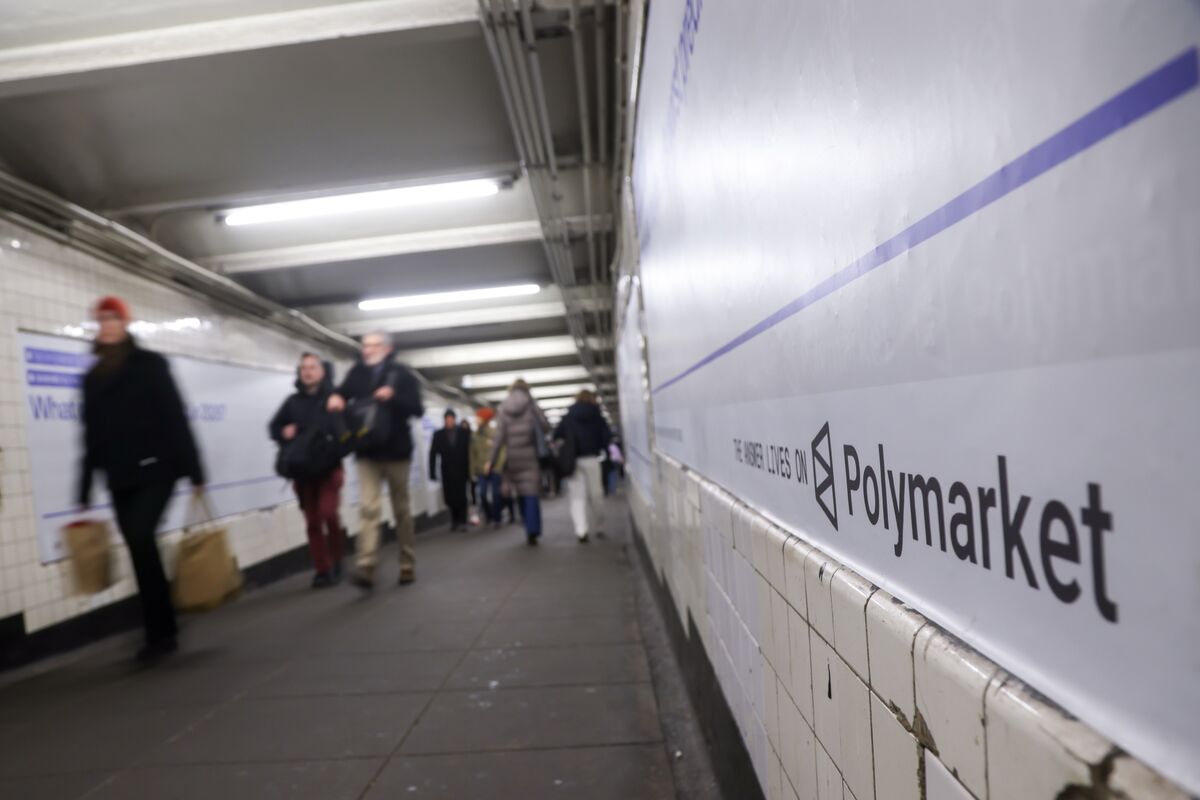
ICE said the investments in Polymarket are not expected to have a material impact on the exchange operator's financial results or capital return plans. Intercontinental Exchange said on Friday it had invested $600 million in prediction markets platform Polymarket, as the New York Stock Exchange parent expands into the fast-growing event-based trading segment. The funding is part of the exchange operator's previously announced plan to invest up to $2 billion in Polymarket, the company said. Prediction markets have shifted from a niche corner of crypto and academic finance into a rapidly growing trading segment in under two years, with volumes and user activity surging. ICE said the investments in Polymarket are not expected to have a material impact on the exchange operator's financial results or capital return plans. The $600 million investment is part of the prediction markets platform's latest funding round, and the valuation will be disclosed once completes its fundraising, ICE said. Prediction markets represent a potential new frontier for exchanges in derivatives trading. Analysts say the products can draw a wider pool of retail traders and boost trading volumes, offering exchanges a chance to diversify revenue as competition intensifies in traditional futures and options markets.
Why Anthropic is 'refusing' to release an AI model that the company says is the most powerful AI it has ever developed
Anthropic has been quietly testing what it calls the most powerful AI model it has ever built -- and the only reason the world knows about it is because the company accidentally left the draft announcement in a publicly accessible data cache. The model is called Claude Mythos. It introduces an entirely new tier above the existing Claude lineup, and according to Anthropic's own draft, it is so capable in cybersecurity that releasing it broadly right now could do more harm than good.When Fortune reached out, Anthropic confirmed the model's existence. "We're developing a general purpose model with meaningful advances in reasoning, coding, and cybersecurity," a spokesperson said. "Given the strength of its capabilities, we're being deliberate about how we release it." The details first emerged after Fortune reviewed draft blog posts left in a publicly accessible data cache before Anthropic locked it down.Mythos isn't just a more capable version of an existing Claude model. According to the draft reviewed by Fortune, Anthropic is introducing it as the first entry in an entirely new tier it's calling "Capybara" -- sitting above Opus, which was previously the company's most powerful line. This makes it the first time Anthropic has added a new tier to its model hierarchy, which until now has been structured around Haiku, Sonnet, and Opus.The name, per the leaked post, is meant to evoke "the deep connective tissue that links together knowledge and ideas." On benchmarks, Mythos significantly outperforms Claude Opus 4.6 across software coding, academic reasoning, and cybersecurity tasks. Anthropic confirmed as much to Fortune, describing it as "a step change and the most capable we've built to date" and saying it reflects "meaningful advances in reasoning, coding, and cybersecurity."Here's the catch. The draft reviewed by Fortune states that Mythos is "currently far ahead of any other AI model in cyber capabilities" -- capable of discovering and exploiting vulnerabilities in ways that significantly outpace what human security teams can handle. That's not a third-party assessment. That's Anthropic's own evaluation of a model it built.The concern is real enough that Anthropic has structured the entire early rollout around it. Rather than a standard launch, the company is giving select cybersecurity organisations first access -- the logic being that defenders need a head start to harden their systems before the model becomes widely available. It's a similar position to the one OpenAI took earlier this year when it flagged GPT-5.3-Codex as its first model classified as "high capability" for cybersecurity tasks under its Preparedness Framework.The restricted rollout isn't just about safety. The leaked draft also flags that Mythos is a large, compute-intensive model -- expensive for Anthropic to serve and, by extension, expensive for customers to use. The company says it's working to make it more efficient before any general release.So even if the cybersecurity concerns didn't exist, a wide launch may not have been on the cards regardless. According to the draft reviewed by Fortune -- which Anthropic has not formally confirmed in its entirety -- the plan is to slowly expand access through the Claude API over the coming weeks, with cybersecurity use cases reportedly getting priority in the early access programme.

Planning Your Move the Smart Way to Avoid Last-Minute Chaos - STL.News
(STL.News) Moving sounds exciting at first. A new place, a fresh setup, maybe even a better location. If you're leaving a quieter place like Oakdale for a more urban city, the change can feel like a big step forward. But moving is rarely simple. Boxes pile up faster than expected. Things go missing. Timelines shift. What starts as a plan can quickly turn into last-minute scrambling if you don't stay ahead of it. There's a lot to think about. Packing, transport, paperwork, utilities, and timing all need attention. Miss one step, and it can throw everything else off. The good part? Most of that chaos is avoidable. In this article, we'll walk through practical steps that help you stay organized, reduce stress, and handle your move without that last-minute rush. Start With a Clear Moving Timeline Moves don't fall apart all at once. They slip slowly. One missed task here, one delay there, and suddenly you're rushing the night before. A timeline keeps that from happening. Start with your moving date and work backward. Give yourself clear checkpoints. One week for sorting. Another for packing non-essentials. Final week for the things you use daily. It doesn't have to be complicated. Just realistic. Clear Out Clutter Before You Pack Anything Packing clutter is one of the easiest ways to make a move harder than it needs to be, even if you're moving from a small place in Oakdale to a bigger apartment. The layout could be different, or there might just be things you won't use in that climate. Then there are things you're not sure of. So keep what you use. Let go of what you don't. It makes packing simpler and your new place easier to organize. For the things that you're still unsure about, consider renting a storage unit. When it comes to storage units Oakdale facilities offer a wide variety in different sizes. You can store seasonal items, extra furniture, or anything you're not ready to part with. It gives you flexibility without crowding your new home. Create a Packing Plan Instead of Rushing It Packing isn't difficult, until you leave it too late. When you rush, everything ends up mixed. Kitchen items in bedroom boxes. Important papers buried under random stuff. Then unpacking becomes a guessing game. A simple plan avoids that. Start early and pack in sections. Begin with items you don't use daily. Books, decor, and off-season clothes. Then move toward essentials as the moving date gets closer. Label every box clearly. Not just the room, but also what's inside. That small detail saves time later when you're trying to find something specific. Pack Essentials Separately There's always a moment after a move when you need something simple, and you can't find it. It could be your phone charger or just a clean shirt. That's why essentials need their own space. Set aside a bag or a small set of boxes just for daily items. Clothes for a couple of days, important documents, medications, chargers, and basic kitchen supplies. Keep these with you, not on the moving truck. When you arrive, you won't have to dig through boxes just to get through the first night. Choose the Right Moving Help Moving everything on your own sounds manageable at first. Then the heavy lifting begins. Furniture, appliances, and packed boxes add up quickly. It takes time, effort, and coordination to move them safely. That's where the right help makes a difference. Professional movers know how to handle the process. They load efficiently, protect items during transport, and reduce the risk of damage. Even for shorter moves, their experience speeds things up. If a full-service option feels like too much, you can split the work. Pack on your own and hire movers just for loading and transport. The goal isn't to avoid effort completely. It's to avoid unnecessary strain and delays. Take Inventory of Your Belongings Things don't usually get lost during a move; they just get misplaced. Boxes stack up. Labels fade into the background. Suddenly, you're opening five boxes just to find one item. An inventory list keeps things in check. It doesn't need to be detailed. Just note what goes into each box or group of boxes. Even a quick list on your phone works. This helps you track everything from start to finish. You know what was left at your old place and what arrived at the new one. It also makes unpacking easier. Instead of guessing where something might be, you already have a rough idea. A little organization up front saves a lot of time later. Prepare the New Place Before Moving In Walking into an unprepared space after a long move? Not ideal. You're tired, surrounded by boxes, and now you have to deal with small issues that could've been handled earlier. If you can, visit the new place before moving day. Check the basics. Are the lights working? Is the water running properly? Are any small repairs needed? Even simple cleaning makes a difference. Think of it as setting the stage. If the space is ready, unpacking feels smoother. You're not juggling fixes and boxes at the same time. Plan Moving Day Logistics in Advance Moving day moves fast. If you don't plan it, things start to feel rushed quickly. Start with timing. Confirm when movers arrive, how long loading might take, and when you expect to reach the new place. Then think about access. Is parking available? Are there stairs or elevators to consider? Clear pathways make loading and unloading easier. Keep important items with you. Documents, valuables, essentials -- don't leave those to chance. Even a rough plan keeps things under control. You're not figuring everything out on the spot. And that makes the day feel a lot less chaotic. Moving will never be completely effortless. There are too many moving parts, too many details that need attention. But it doesn't have to feel overwhelming either. When you plan early, stay organized, and make decisions with time on your side, the entire process shifts. You stop reacting to problems and start preventing them. Things get packed with purpose. Tasks get done without panic. Moving day feels like a step forward instead of a scramble to catch up. And once you settle in, that difference shows. You're not surrounded by unfinished tasks or missing items. You're already starting to feel at home. More Lifestyle News stories published on :

Cybersecurity stocks plunge as Anthropic's 'Claude Mythos' leak sparks AI fear
Investing.com -- Cybersecurity stocks fell Friday, with CrowdStrike (NASDAQ:CRWD) dropping 7%, Palo Alto Networks (NASDAQ:PANW) declining 6%, Zscaler (NASDAQ:ZS) down 4.5%, and Okta (NASDAQ:OKTA), SentinelOne (NYSE:S) and Fortinet (NASDAQ:FTNT) losing 3%. The declines appeared tied to reports that Anthropic's latest AI model was leaked before launch after descriptions were stored in a publicly-accessible data cache, first reported by Fortune. Details about the new model, codenamed "Claude Mythos," were reportedly stored in a draft blog available in an unsecured and publicly-searchable data store. The AI startup blamed the leak on "human error" in the configuration of its content management system. The leaked draft introduced a new tier of AI models called "Capybara," which would be larger and more capable than Anthropic's current top-tier Opus model. According to the leaked document, Capybara achieves higher scores in software coding, academic reasoning, and cybersecurity-related tasks compared to Claude Opus 4.6. The draft described Claude Mythos as "by far the most powerful AI model we've ever developed." An Anthropic spokesperson told Fortune the company is "developing a general purpose model with meaningful advances in reasoning, coding, and cybersecurity" and is "being deliberate about how we release it." The draft blog post reportedly warned that the model is "far ahead of any other AI model in cyber capabilities" and could spark a "wave of models that can exploit vulnerabilities in ways that far outpace the efforts of defenders." Related articles Cybersecurity stocks plunge as Anthropic's 'Claude Mythos' leak sparks AI fear Stocks to outperform, dollar to underperform if de-escalation is achieved: GS

I canceled my flight and paid $200 for a 20-hour Amtrak ride to avoid TSA airport chaos. It was better than flying.
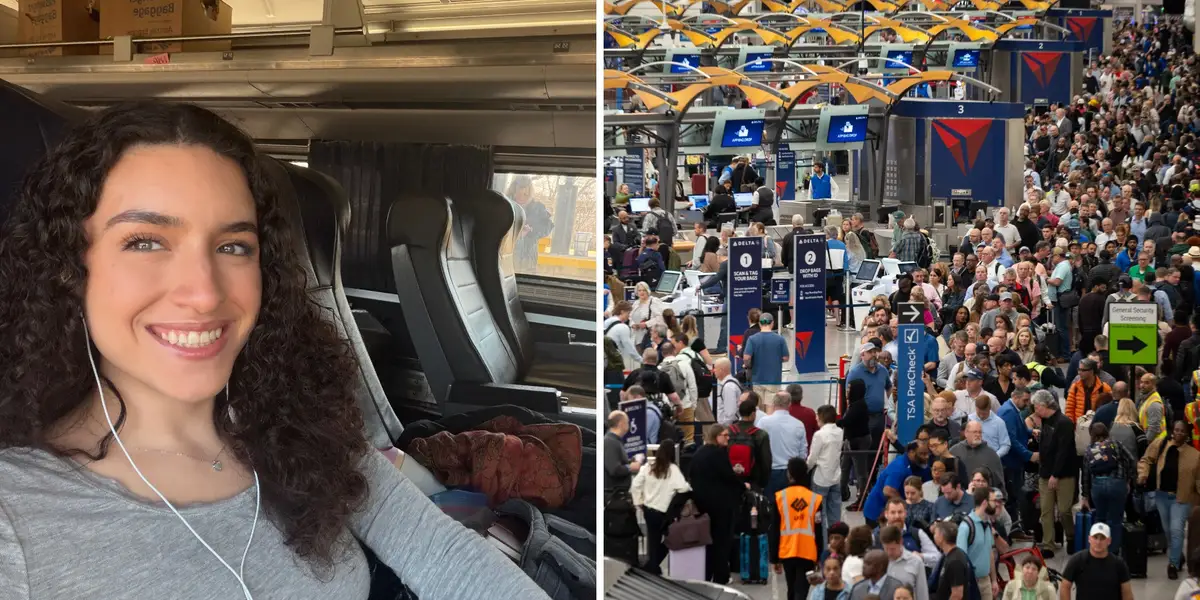
The train ride took ten times as long and cost twice as much as flying. The partial government shutdown has resulted in hourslong security lines at some major US airports, as employees of the Transportation Security Administration have been working unpaid since February 14. Early Friday, the Senate voted to fund most of the Department of Homeland Security in a bid to end the partial shutdown, and the legislation is now headed to the House. It came hours after President Trump said he'd order DHS officials to pay TSA workers. While some airports have not experienced delays amid the partial shutdown, others are advising travelers to arrive up to four hours ahead of their flights' scheduled departure, making it feel like any air travel right now takes a true show of dedication and patience. Earlier this week, I was visiting my partner in Chicago from New York City, where I live and work. I make the trip about once a month, and had booked it before the TSA situation reached its current boiling point. As someone who hates the idea of spending more than an hour at the airport, the thought of having to wait in line for multiple hours sounded straight out of a nightmare. So, ahead of my trip back to New York, I made a last-minute change of plans and canceled my $100 flight. I booked the alternative option: a $200, 20-hour Amtrak coach train ride. It took 10 times as long as my original flight would've taken, but it saved me the headache of standing in line for hours -- and even had some unexpected perks. As a frequent flyer, here are some reasons Amtrak trips might become a new addition to my travel routine. I take a round-trip flight from New York to Chicago about once a month. The flight between New York and Chicago takes about two hours on average, so it's pretty short and doesn't take up my entire day. It typically costs around $100 one way or $200 round-trip. I usually book the earliest flight out of the airport I'm flying from to avoid the mid-morning rush, and on average, I usually spend less than 10 minutes going through security, a record I'm very proud of. It means I usually arrive at the airport within an hour of the flight's scheduled boarding time. While on some occasions I have felt time pressure at security lines, I've become somewhat of a believer in the so-called "airport theory," which posits that no matter how close to boarding time you arrive at the airport, you will probably make your flight. I stick to a safer arrival window than the social-media-endorsed 15 minutes before departure, but I'm often surprised by how much spare time I have once I get to the airport, even when I arrive relatively close to departure. I like to spend as little time as possible at the airport, so the TSA delays felt too inconvenient. I like to stay on the move when traveling, rather than idling at the transition ports. That's one of the reasons I'm not the biggest fan of airport lounges ... or security lines. When I saw just how dire TSA lines and wait times were getting at some airports, I started looking for alternative forms of travel to skip the airport chaos. While not as bad as some wait times at airports like Houston's Bush Intercontinental Airport, Chicago O'Hare is one of the world's busiest airports, and passengers faced possible impacts of TSA staff shortages and flight disruptions. I just couldn't face it. I had been on medium-distance train rides, but never as long-distance as this. Last summer, I took a round-trip on Amtrak from Miami to Tampa, Florida. While the five-hour trip wasn't nearly as long as the route between Chicago and New York, which spans five states and takes 20 hours, it was enough to familiarize me with the train's layout and overall experience. My previous Amtrak experience was positive, so I figured I could be up for the challenge of a new experience, even if it took up a whole day of travel. At least I'd be on the move the whole time. Unlike airports, train stations are located in the center of the city -- no need for expensive rideshares or an intense public transit trek. A one-way rideshare to the airport in either city usually costs me over $50 on average, which is, at times, nearly half of what I pay for a one-way plane ticket. The other option for getting to the airport is taking public transport, which, depending on which airport I am flying in or out of, can take up to 2.5 hours, even longer than the flight itself. So I was thrilled to find that the Amtrak stations in both Chicago and New York are located in the heart of the city, and that I could easily take public transit or opt for a rideshare without paying exorbitant prices. The boarding process was quick and smooth, taking about 20 minutes from beginning to end. I arrived at the station about 45 minutes before my train's departure, and I had enough time to explore the historic building before the call to board was announced. Once they announced we'd be boarding, the passengers lined up and quickly began making our way down to the train. The whole process took about 20 minutes from finding where the train platform was to taking my seat, and it felt far from the complicated airport screening and boarding processes. Instead, you simply walk onto the train, and a few minutes after departing, an attendant asks to scan your ticket. I was surprised by how different the security screening was between airports and trains: TSA uses tools like metal detectors and facial scans, while Amtrak has virtually no pre-boarding screening. Instead, the Amtrak network relies on the Amtrak Police Department, a national police force that works inside train stations and aboard the trains to ensure passenger safety. "The security framework that works in the airport setting is not easily transferable to the rail station system," Amtrak says about its safety measures in public documentation. My train left at 9:30 p.m. and traveled overnight. My late departure time meant I had a full day in Chicago and time to have dinner before boarding the train. It also meant it wouldn't be long before I could sleep on the train. I liked that the overnight section fell during the first half of the journey, so I woke up the next morning knowing I was already halfway to my destination. My seat was comfortable, and having a row to myself felt luxurious. Compared to the crammed, basic-economy-class flights I usually take, the Amtrak seats and their ample legroom felt luxurious. I could stretch my legs, recline farther back than on any airplane seat, and enjoy the luxury of not having a neighbor next to me. Despite the constant movement, I slept better than I ever have on airplanes. Within an hour of being on the train, I had already fallen into a deep sleep that would last well over 8 hours. Aside from a couple of intermittent wake-ups during the first few hours of my trip, I pretty much slept completely uninterrupted the whole night, which I have never been able to say about flights, where I can usually only nap for about 30 minutes at a time. I woke up feeling surprisingly rested and refreshed, and I was excited to see that the sun was up and that I could enjoy the views of Pennsylvania at that point in the trip. I felt like spending 20 hours on the train was more productive than standing in line for one or two. On the train, I slept, read, worked, ate, and got to see beautiful landscapes along Lake Michigan and Lake Erie, all from the comfort of my seat, which reclined nearly flat, had ample legroom, and an outlet to charge my devices. My 20 hours aboard the train felt much more productive and peaceful than spending one or two hours standing in a security line at a crowded airport before facing further potential waits at the gate, and the possibility of not having WiFi aboard the flight. While I didn't take advantage of them, the food options also seemed better -- and more affordable -- than on economy flights. While the snacks I packed kept me satisfied during my trek, some of the food options on the Amtrak menu were enticing. Sadly, by the time I was ready for some real food later in the afternoon, the cafe car had left my train and split onto the Boston-bound route that traveled along with mine up until Albany, New York. Overall, it was simply easier and less complicated than traveling by air, although obviously not nearly as time-efficient. Something I thought about while peacefully lounging in my spacious seat, only about 30 minutes after arriving at the train terminal, is just how much passenger time gets wasted during air travel. Beyond security screening lines -- long or short -- going to the airport and getting on a plane feels like a whole thing, from getting to the often-remote airports to navigating complicated layouts to find a gate and then waiting for group-by-group boarding. Even with my lax approach to air travel, it still takes several hours of planning and moving from one place to another before you even get on the plane. The train felt much more relaxed. I didn't have to pre-plan, stress, or feel rushed nearly as much as when I travel by air. From the stunning views to the overall relaxed vibe, I'd take the train again -- even after TSA lines go back to normal. I was surprised by just how much I enjoyed the trip. From spending hours looking out the window at breathtaking landscapes that didn't quite translate on camera to simply being able to lie down and enjoy a good night's sleep while staying on the move, I felt like the trip's perks outweighed how long it took. In a way, I'm glad the airport madness pushed me to experience a form of travel I hadn't considered otherwise.
NYSE parent invests $600M more in Polymarket
Intercontinental Exchange has expanded its bet on prediction markets with a new $600 million investment in Polymarket. The deal adds to an earlier commitment and comes as the sector attracts more capital and more attention from large financial firms. ICE, the parent company of the New York Stock Exchange, said on Friday that it invested another $600 million in Polymarket. The company said the new funding is part of its previously announced plan to invest up to $2 billion in the crypto-based prediction market platform. The company first announced its Polymarket investment plan in October 2025. With the latest round, ICE's total committed investment has reached about $2 billion, according to the company and related reporting. ICE said the investment forms part of Polymarket's latest fundraising round. It also said Polymarket's valuation will be disclosed after the fundraising process is completed. ICE added that the investment is not expected to have a material effect on its financial results or capital return plans. Prediction markets have grown quickly over the past two years. Segment has moved from a niche part of crypto and academic finance into a fast-growing trading market with rising user activity and volumes. Analysts told Reuters these products could help exchanges reach more retail traders and expand trading revenue beyond traditional futures and options. The new ICE investment comes shortly after rival prediction market Kalshi raised about $1 billion at a reported $22 billion valuation. The funding round gave Kalshi a fresh boost as competition in event-based trading continues to grow. The rapid growth of both Polymarket and Kalshi shows how prediction markets are moving deeper into mainstream finance. At the same time, the sector continues to face regulatory scrutiny as trading volumes and investor interest keep rising.

The Streamline: Chaos continues at San Diego International Airport
Here is what you need to know in the March 27, 2026, Streamline newsletter: Overnight, the Senate approved a deal to fund the TSA, offering hope for relief as security delays continue to plague airports nationwide. But even with the bill's passage -- and the potential end to long wait times -- a new staffing shortage at San Diego International Airport threatens to bring more travel chaos. Meanwhile, with gas prices surging and no slowdown in sight, Scripps News' Jane Caffrey shows how a trip to the auto shop could save you money at the pump. THE STREAMLINE WATCH -- ABC 10News brings you The Streamline for Friday, March 27 -- everything you need to know in under 10 minutes: The Streamline: Friday, March 27 TOP STORY Travelers at San Diego International Airport are facing a one-two punch of problems: Long security lines and a shortage of air traffic controllers, both contributing to major flight delays. As of 4 a.m. Friday, more than a dozen flights -- mostly arrivals -- were delayed due to the air traffic control staffing issue. On Thursday night, dozens of flights were pushed back anywhere from 20 minutes to nearly three hours because of the lack of staffing. The shortage of air traffic controllers is unrelated to the partial government shutdown, but the combined impact is forcing many travelers to arrive hours before their scheduled departures. Even with a deal to end the shutdown on the table, long lines at San Diego International Airport could last into the weekend, especially with the influx of spring break travelers. Airport officials say the worst wait times typically occur during early mornings (6 a.m.-8 a.m.), midday around 12 p.m., and evenings from 5 p.m.-7 p.m. Travelers were advised to check flight status updates at https://www.san.org/Flights/Flight-Status. MICROCLIMATE FORECASTS Coasts Inland Mountains Deserts BREAKING OVERNIGHT In a rare overnight vote, the Senate unanimously passed a bill to fund most of the Department of Homeland Security, ensuring Transportation Security Administration workers will finally receive paychecks after a 42-day partial government shutdown. The deal does not include funding for Immigration and Customs Enforcement and certain parts of Customs and Border Protection. The Senate's action comes as President Trump announced he would sign an executive order to pay TSA employees. During the shutdown, TSA agents called out sick in record numbers, causing massive delays for travelers at airports nationwide. The Senate deal also does not include immigration reforms for ICE agents. Democrats had pushed measures to ban masks and require judicial warrants for some ICE arrests. The bill now heads to the House, where lawmakers could vote on it Friday. Senate approves TSA funding, leaves immigration enforcement out of DHS deal CONSUMER As gas prices rise in San Diego County and across the U.S., getting the most out of every gallon is more important than ever. WATCH -- Scripps News Group's Jane Caffrey breaks down the essential car maintenance tips that can help drivers save money at the pump: Expert vehicle care strategies to help drivers spend less on gas WE FOLLOW THROUGH More than two months after a memorial tree honoring a murdered teen was vandalized at Crown Point Park, a new tree stands in its place thanks to a donation from an ABC 10News viewer. Vandalized memorial tree for murdered teen replanted at Crown Point Thanks for waking up with us! If you have a story you want ABC 10News to follow through on, fill out the form below: We Follow Through Want us to continue to follow through on a story? Let us know. First Name Last Name Email What story do you want us to follow through on? Please include the headline and URL of the story you want us to follow through on. Provide any other information that may help us to follow through on the story Human Verification Submit

Cybersecurity stocks plunge as Anthropic's 'Claude Mythos' leak sparks AI fear By Investing.com
Investing.com -- Cybersecurity stocks fell Friday, with CrowdStrike (NASDAQ:CRWD) dropping 7%, Palo Alto Networks (NASDAQ:PANW) declining 6%, Zscaler (NASDAQ:ZS) down 4.5%, and Okta (NASDAQ:OKTA), SentinelOne (NYSE:S) and Fortinet (NASDAQ:FTNT) losing 3%. The declines appeared tied to reports that Anthropic's latest AI model was leaked before launch after descriptions were stored in a publicly-accessible data cache, first reported by Fortune. Details about the new model, codenamed "Claude Mythos," were reportedly stored in a draft blog available in an unsecured and publicly-searchable data store. The AI startup blamed the leak on "human error" in the configuration of its content management system. The leaked draft introduced a new tier of AI models called "Capybara," which would be larger and more capable than Anthropic's current top-tier Opus model. According to the leaked document, Capybara achieves higher scores in software coding, academic reasoning, and cybersecurity-related tasks compared to Claude Opus 4.6. The draft described Claude Mythos as "by far the most powerful AI model we've ever developed." An Anthropic spokesperson told Fortune the company is "developing a general purpose model with meaningful advances in reasoning, coding, and cybersecurity" and is "being deliberate about how we release it." The draft blog post reportedly warned that the model is "far ahead of any other AI model in cyber capabilities" and could spark a "wave of models that can exploit vulnerabilities in ways that far outpace the efforts of defenders."
I canceled my flight and paid $200 for a 20-hour train to avoid TSA airport chaos -- and I'd do it again
The partial government shutdown has resulted in hourslong security lines at some major US airports, as employees of the Transportation Security Administration have been working unpaid since February 14. Early Friday, the Senate voted to fund most of the Department of Homeland Security in a bid to end the partial shutdown, and the legislation is now headed to the House. It came hours after President Trump said he'd order DHS officials to pay TSA workers. While some airports have not experienced delays amid the partial shutdown, others are advising travelers to arrive up to four hours ahead of their flights' scheduled departure, making it feel like any air travel right now takes a true show of dedication and patience. Earlier this week, I was visiting my partner in Chicago from New York City, where I live and work. I make the trip about once a month, and had booked it before the TSA situation reached its current boiling point. As someone who hates the idea of spending more than an hour at the airport, the thought of having to wait in line for multiple hours sounded straight out of a nightmare. So, ahead of my trip back to New York, I made a last-minute change of plans and canceled my $100 flight. I booked the alternative option: a $200, 20-hour Amtrak coach train ride. It took 10 times as long as my original flight would've taken, but it saved me the headache of standing in line for hours -- and even had some unexpected perks.
AI Disruption Returns: Cybersecurity Stocks Tumble On Report Of New Anthropic "Step Change" AI Model
Cybersecurity stocks are slumping in premarket trading on Friday as the AI disruption trade returns after a Fortune report said Anthropic is testing a new AI model that "poses significant cybersecurity risks." According to the report, Anthropic is "developing and has begun testing with early access customers a new AI model more capable than any it has released previously," the company said, following a data leak that revealed the model's existence. An Anthropic spokesperson said the new model represented "a step change" in AI performance and was "the most capable we've built to date." The company said the model is currently being trialed by "early access customers." Descriptions of the model were inadvertently stored in a publicly-accessible data cache and were reviewed by Fortune. A draft blog post that was available in an unsecured and publicly-searchable data store prior to Thursday evening said the new model is called "Claude Mythos" and that the company believes it poses unprecedented cybersecurity risks. Among notable movers this morning: CrowdStrike -6.0%, Palo Alto Networks -4.6%, Cloudflare -3.9%, Zscaler -4.7%, Fortinet -4.0%, Okta -4.26%. The broader Global X Cybersecurity ETF is down 2.7% Security stocks -- along with software names more broadly -- have been pressured by concerns that tools from AI companies like Anthropic or OpenAI could reduce demand for products from legacy providers, weighing on their growth, margins, and pricing power.

Senate approves DHS deal to end national airport chaos but not ICE
The Senate has approved a deal to fund TSA and most DHS agencies - but not ICE - ending a 42-day shutdown that has thrown America's airports into chaos. The bill, passed unanimously without a roll call, now goes to the House, which is expected to take it up Friday. Republican Senate Majority Leader John Thune admitted the bill was 'not the way to fund the Department. But, we were out of time.' 'The Dems wanted reforms,' Thune said. 'We tried to work with them on reforms. They ended up getting no reforms but, you know, we're going to have to fight some of those battles another day.' The endgame emerged in the final hours before TSA workers missed another paycheck Friday, with pressure mounting to resolve the stalemate. Donald Trump vowed to sign an executive order to immediately pay TSA agents, citing the 'chaos' engulfing airports. The ICE Exclusion The package puts no limits on ICE which Democrats have demanded, though Senate Minority Leader Chuck Schumer touted the vote as a victory, claiming 'we held the line' and vowing to continue the fight against Trump's 'rogue' immigration operation. ICE has remained largely unaffected by the shutdown - Trump's One Big Beautiful Bill, signed into law last July, funneled billions in extra funds to DHS. The deal funds FEMA, the Coast Guard and TSA but leaves ICE out. Customs received funding; Border Protection did not. What happens next in the House is far from certain. Speaker Mike Johnson holds a slim majority and will almost certainly need bipartisan support, with hardliners on both flanks in revolt. The TSA Misery Thune admitted he was not sure what the House would do but believed his colleagues also wanted to approve a deal as the TSA shutdown is causing misery to millions of passengers. 'I mean, the House is aware of what we're contemplating and they're probably anxious to take this up ... hopefully they'll be around [Friday] and we can get at least a lot of the government opened up again, and then we'll, we'll go from there,' he said. But hardline Republicans have panned their own party's proposals, demanding full funding for immigration operations. Many have vowed to ensure ICE has the resources it needs in the next budget package to carry out Trump's agenda. 'We will fully fund ICE. That is what this fight is about,' Senator Eric Schmitt of Missouri said as he tried to offer legislation to fund the agency. 'The border is closing. The next task is deportation.' Earlier Thursday, Thune announced he had given a 'last and final' offer to the Democrats. But as the day dragged on, action stalled out. Democrats argued the GOP proposals have not gone far enough in restraining federal agents, pointing to the deaths of two Americans shot while protesting the immigration crackdown in Minneapolis in January. They want federal agents to wear identification, remove their face masks and refrain from conducting raids around schools, churches or other sensitive places. Democrats have also pushed for an end of administrative warrants, insisting that judges sign off before agents search people's homes or private spaces - something new Homeland Security Secretary Markwayne Mullin has said he is open to considering. Trump had largely left the issue to Congress, but warned he was ready to take action, threatening to send the National Guard to airports in addition to his deployment of ICE agents who are now checking travelers' IDs. The White House had floated the extraordinary move of invoking a national emergency to pay the TSA agents, a politically and legally fraught approach. Trump's order would draw on funds from his 2025 tax bill to pay TSA agents, a senior administration official said. Should the House pass the package and send it to Trump's desk, his executive order to pay TSA agents could prove short-lived or unnecessary. The funding shutdown has resulted in travel delays and even warnings of airport closures as TSA workers missing paychecks stop coming to work. Multiple airports are experiencing greater than 40 percent callout rates of TSA workers and nearly 500 of the agency's nearly 50,000 transportation security officers have quit during the shutdown. Nationwide on Wednesday, more than 11 percent of the TSA employees on the schedule missed work, according to DHS. That is more than 3,120 callouts. Everett Kelley, president of the American Federation of Government Employees, said the union was grateful workers would be paid but demanded Congress stay in session to pass a deal 'that funds DHS, pays all DHS workers, and keeps these vital agencies running.' Melissa Gates, stranded at George Bush Intercontinental Airport in Houston, said she had waited more than two hours without reaching the security checkpoint and missed her flight to Baton Rouge, Louisiana, with no alternative available until Friday. 'I should have just driven, right?' Gates said. 'Five hours would have been hilarious next to this.'

Tech stocks today: Big Tech stocks sell off, Anthropic considers IPO as soon as Q4
Tech stocks continued to be pressured on Friday after a sell-off in social media stocks and chip stocks sent the tech-heavy Nasdaq Composite (^IXIC) index into a correction. On Wednesday, a Los Angeles jury found Alphabet's (GOOG, GOOGL) YouTube and Meta (META) liable for harm done to a young user. The jurors ordered the companies to pay the lead plaintiff $3 million in compensatory damages in the first-of-its-kind case. Meanwhile, investors continue to evaluate Nvidia's AI offerings after the company unveiled new AI chips and an agentic AI platform at its developer conference last week. On Tuesday, Arm (ARM) announced its own entrance into the AI chip market with a new data center chip and server rack, sending the stock more than 12% higher in extended trading. In other tech news, Anthropic and Elon Musk's SpaceX are nearing their IPOs, memory chip stocks fell after Google researchers unveiled a tool that lowers memory intensity, and Apple (AAPL) CEO Tim Cook said the company is seeing strong enthusiasm for its new, low-cost MacBook.
Cybersecurity stocks plunge as Anthropic's 'Claude Mythos' leak sparks AI fear
Investing.com -- Cybersecurity stocks fell Friday, with CrowdStrike (NASDAQ:CRWD) dropping 7%, Palo Alto Networks (NASDAQ:PANW) declining 6%, Zscaler (NASDAQ:ZS) down 4.5%, and Okta (NASDAQ:OKTA), SentinelOne (NYSE:S) and Fortinet (NASDAQ:FTNT) losing 3%. The declines appeared tied to reports that Anthropic's latest AI model was leaked before launch after descriptions were stored in a publicly-accessible data cache, first reported by Fortune. Details about the new model, codenamed "Claude Mythos," were reportedly stored in a draft blog available in an unsecured and publicly-searchable data store. The AI startup blamed the leak on "human error" in the configuration of its content management system. The leaked draft introduced a new tier of AI models called "Capybara," which would be larger and more capable than Anthropic's current top-tier Opus model. According to the leaked document, Capybara achieves higher scores in software coding, academic reasoning, and cybersecurity-related tasks compared to Claude Opus 4.6. The draft described Claude Mythos as "by far the most powerful AI model we've ever developed." An Anthropic spokesperson told Fortune the company is "developing a general purpose model with meaningful advances in reasoning, coding, and cybersecurity" and is "being deliberate about how we release it." The draft blog post reportedly warned that the model is "far ahead of any other AI model in cyber capabilities" and could spark a "wave of models that can exploit vulnerabilities in ways that far outpace the efforts of defenders."
NYSE Owner Invests $600 Million in Polymarket, Capping Deal
Intercontinental Exchange Inc., the owner of the New York Stock Exchange, invested $600 million in cash in Polymarket, completing its plan to build a stake in the prediction markets platform. The exchange also expects to purchase as much as $40 million in Polymarket securities from existing holders, the company said Friday in a statementBloomberg Terminal. In October, ICE initially invested $1 billion into Polymarket, with a plan to ramp up that bet over time to as much as $2 billion. With the latest bet, which completes ICE's commitment, the exchange will have a roughly $1.64 billion stake in Polymarket. A representative for ICE declined to comment beyond the statement. Prediction markets have gained even more traction since the 2024 US presidential election. Investors have been pouring more money into platforms including Kalshi Inc., which raised more than $1 billion at a valuation of $22 billion in a new funding round, Bloomberg News reported earlier this month. ICE said Friday that the valuation of its latest investment in Polymarket is expected to be disclosed when Polymarket completes its fundraising.