News & Updates
The latest news and updates from companies in the WLTH portfolio.
Cybersecurity stocks plunge as Anthropic's 'Claude Mythos' leak sparks AI fear By Investing.com
Investing.com -- Cybersecurity stocks fell Friday, with CrowdStrike (NASDAQ:CRWD) dropping 7%, Palo Alto Networks (NASDAQ:PANW) declining 6%, Zscaler (NASDAQ:ZS) down 4.5%, and Okta (NASDAQ:OKTA), SentinelOne (NYSE:S) and Fortinet (NASDAQ:FTNT) losing 3%. The declines appeared tied to reports that Anthropic's latest AI model was leaked before launch after descriptions were stored in a publicly-accessible data cache, first reported by Fortune. Details about the new model, codenamed "Claude Mythos," were reportedly stored in a draft blog available in an unsecured and publicly-searchable data store. The AI startup blamed the leak on "human error" in the configuration of its content management system. The leaked draft introduced a new tier of AI models called "Capybara," which would be larger and more capable than Anthropic's current top-tier Opus model. According to the leaked document, Capybara achieves higher scores in software coding, academic reasoning, and cybersecurity-related tasks compared to Claude Opus 4.6. The draft described Claude Mythos as "by far the most powerful AI model we've ever developed." An Anthropic spokesperson told Fortune the company is "developing a general purpose model with meaningful advances in reasoning, coding, and cybersecurity" and is "being deliberate about how we release it." The draft blog post reportedly warned that the model is "far ahead of any other AI model in cyber capabilities" and could spark a "wave of models that can exploit vulnerabilities in ways that far outpace the efforts of defenders."
Cybersecurity stocks plunge as Anthropic's 'Claude Mythos' leak sparks AI fear
Investing.com -- Cybersecurity stocks fell Friday, with CrowdStrike (NASDAQ: CRWD) dropping 7%, Palo Alto Networks (NASDAQ: PANW) declining 6%, Zscaler (NASDAQ: ZS) down 4.5%, and Okta (NASDAQ: OKTA), SentinelOne (NYSE: S) and Fortinet (NASDAQ: FTNT) losing 3%. The declines appeared tied to reports that Anthropic's latest AI model was leaked before launch after descriptions were stored in a publicly-accessible data cache, first reported by Fortune. Details about the new model, codenamed "Claude Mythos," were reportedly stored in a draft blog available in an unsecured and publicly-searchable data store. The AI startup blamed the leak on "human error" in the configuration of its content management system. The leaked draft introduced a new tier of AI models called "Capybara," which would be larger and more capable than Anthropic's current top-tier Opus model. According to the leaked document, Capybara achieves higher scores in software coding, academic reasoning, and cybersecurity-related tasks compared to Claude Opus 4.6. The draft described Claude Mythos as "by far the most powerful AI model we've ever developed." An Anthropic spokesperson told Fortune the company is "developing a general purpose model with meaningful advances in reasoning, coding, and cybersecurity" and is "being deliberate about how we release it." The draft blog post reportedly warned that the model is "far ahead of any other AI model in cyber capabilities" and could spark a "wave of models that can exploit vulnerabilities in ways that far outpace the efforts of defenders."

OpenAI is reportedly working with Pentagon to hash out guardrails amid Anthropic standoff over AI safety
OpenAI CEO Sam Altman said the company is working with the Pentagon to negotiate safety guardrails for AI models used in the battlefield, which comes as one of its top competitors, Anthropic, is at a standoff with the government. According to a memo obtained by several media outlets, Altman told staff OpenAI believes "that AI should not be used for mass surveillance or autonomous lethal weapons, and that humans should remain in the loop for high-stakes automated decisions. These are our main red lines." Anthropic, the company behind the AI chatbot Claude, was one of several firms that received a $200 million contract from the Department of Defense for "agentic workflows." Since then, tensions between Anthropic and the Pentagon have reportedly risen as the startup insists on surveillance restrictions. The government's attack on Venezuela last month that led to the capture of President Nicolás Maduro reportedly involved the use of Anthropic's Claude AI models for planning, which caused the startup to push back on the alleged violation of its terms of use. Anthropic has until 5:01 p.m. ET on Friday to reach a deal with the Pentagon, which has threatened consequences against the company if it doesn't allow the government unrestricted use.

NYSE-parent Intercontinental Exchange invests $600 million in Polymarket
March 27 (Reuters) - Intercontinental Exchange (ICE.N), opens new tab said on Friday it had invested $600 million in prediction markets platform Polymarket, as the New York Stock Exchange parent expands into the fast-growing event-based trading segment. The funding is part of the exchange operator's previously announced plan to invest up to $2 billion in Polymarket, the company said. Prediction markets have shifted from a niche corner of crypto and academic finance into a rapidly growing trading segment in under two years, with volumes and user activity surging. ICE said the investments in Polymarket are not expected to have a material impact on the exchange operator's financial results or capital return plans. The $600 million investment is part of the prediction markets platform's latest funding round, and the valuation will be disclosed once completes its fundraising, ICE said. Prediction markets represent a potential new frontier for exchanges in derivatives trading. Analysts say the products can draw a wider pool of retail traders and boost trading volumes, offering exchanges a chance to diversify revenue as competition intensifies in traditional futures and options markets. Reporting by Manya Saini in Bengaluru; Editing by Anil D'Silva and Leroy Leo Our Standards: The Thomson Reuters Trust Principles., opens new tab

NYSE-parent Intercontinental Exchange invests $600 million in Polymarket
March 27 (Reuters) - Intercontinental Exchange said on Friday it had invested $600 million in prediction markets platform Polymarket, as the New York Stock Exchange parent expands into the fast-growing event-based trading segment. The funding is part of the exchange operator's previously announced plan to invest up to $2 billion in Polymarket, the company said. Prediction markets have shifted from a niche corner of crypto and academic finance into a rapidly growing trading segment in under two years, with volumes and user activity surging. ICE said the investments in Polymarket are not expected to have a material impact on the exchange operator's financial results or capital return plans. The $600 million investment is part of the prediction markets platform's latest funding round, and the valuation will be disclosed once completes its fundraising, ICE said. Prediction markets represent a potential new frontier for exchanges in derivatives trading. Analysts say the products can draw a wider pool of retail traders and boost trading volumes, offering exchanges a chance to diversify revenue as competition intensifies in traditional futures and options markets. (Reporting by Manya Saini in Bengaluru; Editing by Anil D'Silva and Leroy Leo)
Anthropic Thinks AI Might Destroy the Economy. It's Building It Anyway.
Today's podcast is an interview with one of the cofounders of the AI company Anthropic, Jack Clark. One thing I'm trying to do with the subject of artificial intelligence is offer a balance of perspectives on an issue that tends to receive mostly one-sided coverage. Some people are certain that AI is a bubble; some are certain it is not. Some are certain that AI will destroy millions of jobs; some are certain that it will not. I want listeners of this show to feel like every time they hear an intelligent take on one side of this issue, the next episode they'll hear a countervailing take. Two weeks ago, you heard the investor and writer Paul Kedrosky argue that AI was an economic bubble. But if any single data point pierces that narrative, it's this. From December 2025 to this month, March 2026, Anthropic has more than doubled its annual recurring revenue, from $9 billion to nearly $20 billion. According to several analysts, there is no record of any company growing this fast at this scale. Now, I don't need Jack Clark or anybody at Anthropic to read me a corporate statement about the company's revenue growth. I can read that myself. What I wanted to do today is ask questions that only someone in Jack's position can answer. If Anthropic's executives believe that AI might be as dangerous as nuclear weapons, what right does any private business have to build this sort of thing for profit? How does the company balance its reputation as the industry leader in caution and safety with its other reputation as one of the fastest developers of this technology? And if artificial intelligence has the capacity to produce a country of geniuses in a data center -- as Anthropic's CEO insists -- why do Americans overall say that they disapprove of artificial intelligence more than just about every other institution and individual in the world? Subscribe to our YouTube channel here . If you have questions, observations, or ideas for future episodes, email us at [email protected]. Host: Derek Thompson Guest: Jack Clark Producer: Devon Baroldi

Intercontinental Exchange Announces New $600 Million Investment in Polymarket
ATLANTA & NEW YORK--(BUSINESS WIRE)--Mar 27, 2026-- Intercontinental Exchange, Inc. (NYSE: ICE), one of the world's leading providers of financial market technology and data powering global capital markets, today announced that, as part of its previously announced investment arrangement with Polymarket, ICE has completed a new $600 million direct cash investment in Polymarket, which is part of an equity capital fundraising by Polymarket. ICE also expects to make purchases of up to $40 million of Polymarket securities from certain existing holders.

SpaceX's listing stirs up social media hype, ticker bets
From rocket launches drawing millions of YouTube views to social media frenzy over its potential listing, SpaceX's debut is shaping up to be a landmark moment for Wall Street. Traders are betting thousands of dollars on the company's ticker and speculating over its entry into the most elite club of US companies, giving the world's most valuable startup a level of social media buzz that only a few companies enjoy, especially when they are yet to file their IPO paperwork. On Polymarket, users were betting on topics including the company's targeted valuation, the exchange it will list on and the ticker its shares would trade under. The combined trading volume of such bets exceeded more than $15.2 million, as of Friday. Odds on the prediction markets platform put a 25% chance on SpaceX choosing the letter "X" as its ticker, a sharp drop from 60% a month ago. The single-letter ticker is up for grabs after U.S. Steel, which reportedly held it for over a century, delisted from the New York Stock Exchange after being bought by Japan's Nippon Steel last year. Musk's social media platform is also called X after a rebrand from Twitter in 2023. Tuttle Capital Management CEO Matthew Tuttle said a better alternative would be "SPCX" - also the ticker of an exchange traded fund his company manages. Tuttle has indicated openness to selling the SPCX symbol to SpaceX. "I've not heard from Elon, but my phone line is still open and I'm holding out hope that I get a call," he said. Apart from X, other potential options floated on Polymarket include "SPAX" and the risqué, "SEX". However, users see a roughly 70% probability that the company chooses a different ticker altogether. FROM MAGNIFICENT SEVEN TO SUPER EIGHT? SpaceX is targeting a valuation of $1.75 trillion in its listing, which would make it the sixth biggest U.S. company by market capitalization. Tesla and Meta Platforms could fall behind, with market valuations of $1.4 trillion and $1.39 trillion, respectively. That has fueled speculation over whether the company's market debut will force a rethink of the so-called "Magnificent Seven", a group of some of the most valuable U.S. companies. "When the company does finally go public, the Magnificent Seven will clearly expand. They'll probably call it the Magnificent Eight, the Super Eight or some new acronym," said Todd Schoenberger, chief investment officer at CrossCheck Management. To capitalize on his popularity among retail investors, CEO Elon Musk is also discussing allocating as much as 30% of the IPO to individual investors, at least three times the usual retail slice, Reuters reported. "The retail investor plays a very significant role when you have a company like SpaceX that's coming public. Most people would say yes to the opportunity of investing in Elon Musk's space company," said Jonathan Corpina, senior managing partner for Meridian Equity Partners.
Report: SpaceX's record IPO may grant preferential access to retail investors and Tesla shareholders
A federal judge in Northern California has granted a preliminary injunction blocking the Pentagon from labeling Anthropic a national security supply chain risk. The ruling temporarily prevents the Defense Department from restricting the AI company's access to federal contracts amid a dispute over its refusal to allow certain military and surveillance uses of its technology. The designation could also have shifted lucrative government work toward competitors, including OpenAI. Earlier this month, Anthropic, the company behind Claude, sued 17 federal agencies and their heads, alleging the government exceeded its statutory authority.

Senate Passes DHS Funding Bill To End 40-Day Shutdown, Airport Chaos - Conservative Angle
At 2:22 a.m. EST, the Senate unanimously passed a spending bill to fund the Department of Homeland Security after a 40-day shutdown that disrupted airport security and sparked travel chaos for millions of Americans. The bill, which excludes funding for Immigration and Customs Enforcement and Customs and Border Protection, still needs House approval and President Trump's signature. The overnight breakthrough came as airport TSA lines worsened nationwide this week, with TSA agents calling out sick or quitting due to missed paychecks. Unpaid TSA agents have been calling out by the hundreds at major airports so far, including Atlanta, Baltimore, Houston, and New York, sparking long checkpoint lines. The funding lapse has led to 480 TSA workers resigning. The breakthrough also came after President Trump added pressure on Thursday (read here), saying he would sign an order to fund TSA officers' paychecks. "I am going to sign an Order instructing the Secretary of Homeland Security, Markwayne Mullin, to immediately pay our TSA Agents in order to address this Emergency Situation, and to quickly stop the Democrat Chaos at the Airports," Trump wrote in a Truth Social post on Thursday. Senate Majority Leader John Thune (R-S.D.) said, "Hopefully they'll be around, and we can get at least a lot of the government opened up again, and then we'll go from there." Thune blamed unhinged Democrats for the airport chaos: "President Trump should never have had to step in to rescue TSA workers and U.S. air travel. We are here because, thanks to Democrats' determined refusal to reach an agreement, there will be no Homeland Security funding bill this year." Democrats have widely objected to passing a DHS spending bill that includes funding for ICE and CBP. This is mostly because the president has used those federal agencies to deport illegal aliens, the very ones that Democrats let in through disastrous open borders to build a new voting bloc in their aspirations of a one-party rule nation, just like the insanity in California, Maryland, and other deeply blue states. Punchbowl News explained there were "no winners" in this six-week standoff. "Who won the Senate standoff? No one, in truth. Nothing really changed. Both sides wanted to have this fight, so it happened. It was another example of how little moderation is left in the Trump era, where the first instinct is to go to war," the outlet wrote in a morning note.

NYSE parent ICE invests another $600 million in Polymarket, expanding bet on prediction markets
We'd love your feedback. Take a 30-second survey to help improve The Block. Intercontinental Exchange has injected another $600 million into Polymarket, extending its push into the fast-growing prediction market sector. The New York Stock Exchange parent firm said the investment forms part of its previously agreed funding arrangement with Polymarket, following an initial $1 billion investment made in October 2025 from a planned $2 billion. ICE also signaled it may acquire up to $40 million of Polymarket securities from existing holders, adding to its exposure as the company completes its participation in the platform's broader fundraising round, according to a Friday announcement. Financial terms, including valuation, were not disclosed and are expected to be revealed once the fundraising closes. ICE said the transaction is not expected to materially impact its financial results or capital return plans. Traditional market operators are moving deeper into prediction markets, which are platforms like Polymarket and Kalshi that allow users to trade on the outcome of real-world events, from elections to geopolitical developments. Polymarket has emerged as a central venue in the sector, drawing rising trading activity alongside heightened scrutiny over market integrity and the use of information tied to sensitive events. The additional funding lands as competition intensifies. Both Polymarket and rival platforms have explored fundraising rounds at valuations as high as $20 billion, a sign of growing institutional appetite for the space even as federal and state regulators debate oversight.

Myanmar Fuel Prices Hit Record High as Chaos Follows New Junta Caps
Fuel prices in Myanmar surged to their highest level since the 2021 coup on Friday as gas stations again ran dry. The price of premium diesel in Yangon jumped overnight from 4,820 kyats to 6,085 kyats (about US$ 1.30) per liter. Octane 95 rose from 3,850 to 4,975 kyats, while Octane 92 increased from 3,610 to 4,450 kyats, according to regime-controlled media. Octane 95 was selling at 765 kyats, Octane 92 at 655 kyats, and premium diesel at 705 kyats per liter in January 2021, just days before the putsch. The regime's Energy Minister tightened fuel controls again on Tuesday, limiting motorists to two refueling trips (45 liters) per week as shortages driven by war in the Middle East deepened. Taxis were permitted 110 liters, trucks 150, micro/minibuses 110 and tractors 250 liters per week, with buses, ambulances and other public vehicles exempted. However, the latest restrictions failed to quell chaos at gas stations, with reports of vehicles queuing for hours or even overnight for fuel that runs dry a few hours after the pumps open. The regime initially imposed an odd-even rationing system on March 7, allowing private cars to refill on alternate days. It remains unclear whether that system is still in effect. A Yangon taxi driver said the soaring fuel prices and hours-long waits at gas stations had hit his income so hard that it was no longer worth staying on the road. "I had to stop working for two days," he said. "The price of octane is now nearing 5,000 kyats and there are still limits on how much we can buy. All we can do is monitoring the situation and hope it improves." The fuel shortages is also impacting other sectors, doubling transportation costs, with a knock-on effect on basic necessities. Agriculture is also suffering as tractors run out of fuel needed for harvesting and replanting. However, the fuel crunch has not dampened the regime's campaign of deadly airstrikes on civilian targets. While domestic airlines have cut flights amid a shortage of aviation fuel, the junta has launched a series of bombing raids, deploying up to eight warplanes per sortie and killing dozens of civilians. The regime has kept its jets flying by confiscating fuel from civilian airlines and bypassing international sanctions, Blood Money reported on Thursday. The financial watchdog called on ASEAN, the EU, UK and other international bodies to cut off the regime's access to jet fuel supporting ongoing war crimes against civilians.

Mishkin's Extra Shift: Kraken 4, Lightning 3 - OT
Radio broadcaster Dave Mishkin recaps Tampa Bay's overtime loss against Seattle on Thursday For most of regulation, the Lightning decisively controlled play. That helped them rally from a 3-1 deficit (for the third straight contest). They were unable to find a fourth goal, however, and eventually lost the game in overtime. Not only did the Lightning outshoot Seattle, 33-19, but they also owned a staggering shot attempt advantage of 74-34. From the second period on, the edge was 54-20. But compared to last week's matchup in Seattle -- a 6-2 Lightning win -- the Kraken delivered a much better performance. The Kraken played with high compete, a quality evidenced by their ability to protect the front of their net. They blocked 27 shots in the game. They also generated more scoring chances than they did in the first meeting. Their strongest stretch in this game came in the latter part of the first period into the early minutes of the second. Seattle opened the scoring at 15:18 of the first, moments after the Lightning completed a successful penalty kill -- Emil Lilleberg skated out of the box directly to the bench as the Kraken countered through the neutral zone. Freddy Gaudreau set up Brandon Montour on the right side of the ice, and Montour cut in front to finish an in-alone chance. Less than two minutes later, one of Seattle's successful blocks led to a fortunate bounce for the Lightning. Ryan Lindgren got his stick on Brandon Hagel's attempt from the top of the right circle, but the puck deflected directly to an open Anthony Cirelli at the back post. Cirelli finished his shot at 17:01 for his 20th goal of the season. The Kraken tallied another goal off the rush before the first period ended, however. Chandler Stephenson got loose down the left wing and delivered a centering pass to Kaapo Kakko in the slot. Kakko one-timed the puck past Andrei Vasilevskiy at 18:12. When Bobby McMann converted on a rebound at 3:35 of the second period, the Lightning trailed by two. But similar to Tuesday's game against Minnesota, Jake Guentzel tallied a key goal soon after his team fell behind, 3-1. As the Kraken attempted to change defensemen, Darren Raddysh reversed the puck up the ice to Guentzel, who converted on a breakaway at 5:56. On Tuesday, the Lightning tied the game at three with a second-period power-play goal from Raddysh. In this game, they knotted the score at three with a Corey Perry second-period PPG. Guentzel set up Perry in the slot, and Perry roofed his shot into the top of the net at 10:18. Over the final 29:42 of regulation, the Lightning dictated nearly all of the play. That was especially true in the third period, a frame in which they out-attempted the Kraken, 24-7. Philipp Grubauer made several key saves in the second half of regulation to prevent the Lightning from grabbing a lead, and the Kraken continued to consistently block shots. Overtime had a scrambly, wide-open feel. After a centering pass from Berkly Catton to Montour didn't connect, Nikita Kucherov attempted to poke the puck forward. But Shane Wright forced it back to Montour at the bottom of the left circle. Hagel had broken his stick and attempted to get a new one from the bench, which created a three-on-two for Seattle. Montour snapped a left-circle shot through Vasilevskiy's pads at 2:47. For most of the night, the Lightning's process was strong, and they played well enough to have gotten a better result. But the early deficit meant that a rally was needed just to secure the point they got. And it was an important point, one that increased the Lightning's season total to 94. Of their final 11 regular-season games, eight will be played within the Atlantic Division. They continue the homestand on Saturday afternoon against Ottawa, a team they haven't seen since Opening Night.

First Qatar Supply Shock, Now Cyclone Chaos Slams Major Australian LNG Plants
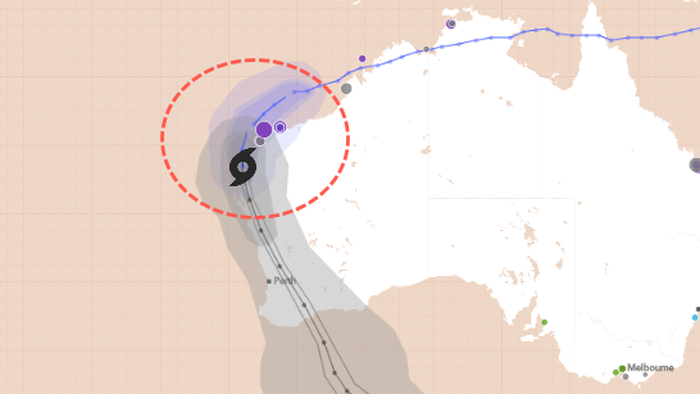
In a troubling overnight development that could further deepen the Gulf energy shock, especially in global LNG markets, a tropical cyclone has disrupted operations at three major Australian LNG facilities, which together account for roughly 8.4% of global supply. The timing is alarming: Iranian strikes have already knocked out about 17% of Qatar's LNG export capacity, with repairs potentially taking years. The Australian outages now add near-term supply risks for buyers, particularly in Asia and Europe, who are already panicking and scrambling for new supplies. Tropical Cyclone Narelle is bearing down on Western Australia's coastline and has sparked major disruptions across three of Australia's top LNG facilities, including Gorgon, Wheatstone, and North West Shelf (as per Bloomberg): * Woodside Energy Group Ltd.'s North West Shelf export plant in Western Australia had a production interruption due to severe Tropical Cyclone Narelle, according to a company spokesperson. * Meanwhile, Chevron Corp. said one of the three production units at its Gorgon plant was shut, as well as a platform that feeds its Wheatstone facility and domestic gas production. * Following the closure of the Strait of Hormuz and Iranian strikes damaging the world's largest liquefaction plant in Qatar, Australia has become the second-largest LNG exporter, with the US in the top spot. "Temporary shut-ins at Australian LNG plants come at the worst time for LNG buyers looking to replace supply from Qatar," said Josh Runciman, lead analyst for Australian gas at the Institute for Energy Economics and Financial Analysis. "LNG spot prices are likely to increase on the back of the shut-ins, leading to further pain for buyers." MST Marquee analyst Saul Kavonic warned the cyclone "will exacerbate gas market tightness in Asia and Europe, especially if it takes more than a matter of days to normalize Australian production levels again." Asian LNG prices have soared by 90% since the conflict in the Middle East erupted in late February, and the conflict is set to enter its first month. In Europe, natural gas prices have doubled since the start of the conflict. The big question now is whether Australia's Gorgon, Wheatstone, and North West Shelf facilities, which together accounted for roughly half of the country's LNG exports last month and about 8.4% of global trade, can resume operations quickly once the cyclone passes. Any meaningful storm damage would risk extending outages, further tightening the global LNG market in crisis, and compounding supply woes for buyers in Asia and Europe. Amid the chaos, one country stands to benefit (read here).
SpaceX's listing stirs up social media hype, ticker bets
From rocket launches drawing millions of YouTube views to social media frenzy over its potential listing, SpaceX's debut is shaping up to be a landmark moment for Wall Street. Traders are betting thousands of dollars on the company's ticker and speculating over its entry into the most elite club of US companies, giving the world's most valuable startup a level of social media buzz that only a few companies enjoy, especially when they are yet to file their IPO paperwork. On Polymarket, users were betting on topics including the company's targeted valuation, the exchange it will list on and the ticker its shares would trade under. The combined trading volume of such bets exceeded more than $15.2 million, as of Friday. Odds on the prediction markets platform put a 25% chance on SpaceX choosing the letter "X" as its ticker, a sharp drop from 60% a month ago. The single-letter ticker is up for grabs after U.S. Steel, which reportedly held it for over a century, delisted from the New York Stock Exchange after being bought by Japan's Nippon Steel last year. Musk's social media platform is also called X after a rebrand from Twitter in 2023. Tuttle Capital Management CEO Matthew Tuttle said a better alternative would be "SPCX" - also the ticker of an exchange traded fund his company manages. Tuttle has indicated openness to selling the SPCX symbol to SpaceX. "I've not heard from Elon, but my phone line is still open and I'm holding out hope that I get a call," he said. Apart from X, other potential options floated on Polymarket include "SPAX" and the risqué, "SEX". However, users see a roughly 70% probability that the company chooses a different ticker altogether. FROM MAGNIFICENT SEVEN TO SUPER EIGHT? SpaceX is targeting a valuation of $1.75 trillion in its listing, which would make it the sixth biggest U.S. company by market capitalization. Tesla and Meta Platforms could fall behind, with market valuations of $1.4 trillion and $1.39 trillion, respectively. That has fueled speculation over whether the company's market debut will force a rethink of the so-called "Magnificent Seven", a group of some of the most valuable U.S. companies. "When the company does finally go public, the Magnificent Seven will clearly expand. They'll probably call it the Magnificent Eight, the Super Eight or some new acronym," said Todd Schoenberger, chief investment officer at CrossCheck Management. To capitalize on his popularity among retail investors, CEO Elon Musk is also discussing allocating as much as 30% of the IPO to individual investors, at least three times the usual retail slice, Reuters reported. "The retail investor plays a very significant role when you have a company like SpaceX that's coming public. Most people would say yes to the opportunity of investing in Elon Musk's space company," said Jonathan Corpina, senior managing partner for Meridian Equity Partners.
Construction chaos grips Gulshan-e-Iqbal
What began as a long-overdue infrastructure upgrade has turned into a prolonged ordeal for residents of Gulshan-e-Iqbal Block 13-D, where dug-up roads, stalled work, and mounting frustration have made daily life a struggle. For seven months, the area has resembled a construction zone frozen in time - with no clear end in sight. The development work, initiated under the Karachi Infrastructure Development Company Limited, included installation of new sewerage lines and a modern drainage system in Block 13-D/2. Simultaneously, Sui Southern Gas Company began laying new pipelines. The project started in September 2025 but remains incomplete, with all activity coming to a halt over the past two months. Residents report that one track of the road is blocked by large mounds of dirt, rendering it completely unusable, while the other remains uneven and hazardous. The situation has effectively turned the locality into a "war zone," with access becoming increasingly difficult. Sources indicate that the contractor suspended work, citing a surge in project costs and demanding a 25 per cent increase in the original estimate. Authorities have forwarded the request to an international financial institution for approval, but no decision has been made so far - leaving the project in limbo. The fallout has been severe. Thousands of residents are grappling with traffic chaos, persistent dust, and rising health concerns, including respiratory and infectious diseases. Locals say poor planning and lack of coordination have compounded their misery. Frustrated citizens have appealed to the Government of Sindh to take immediate notice, terming the delay a case of gross negligence. They demand accountability for those responsible and urgent completion of the project, so the neighbourhood can finally return to normalcy.

NYSE-parent Intercontinental Exchange invests US$600 million in Polymarket
Intercontinental Exchange said on Friday it had invested $600 million in prediction markets platform Polymarket, as the New York Stock Exchange parent expands into the fast-growing event-based trading segment. The funding is part of the exchange operator's previously announced plan to invest up to $2 billion in Polymarket, the company said. Prediction markets have shifted from a niche corner of crypto and academic finance into a rapidly growing trading segment in under two years, with volumes and user activity surging. ICE said the investments in Polymarket are not expected to have a material impact on the exchange operator's financial results or capital return plans. The $600 million investment is part of the prediction markets platform's latest funding round, and the valuation will be disclosed once completes its fundraising, ICE said. Prediction markets represent a potential new frontier for exchanges in derivatives trading. Analysts say the products can draw a wider pool of retail traders and boost trading volumes, offering exchanges a chance to diversify revenue as competition intensifies in traditional futures and options markets.

US Senate moves to end airport chaos
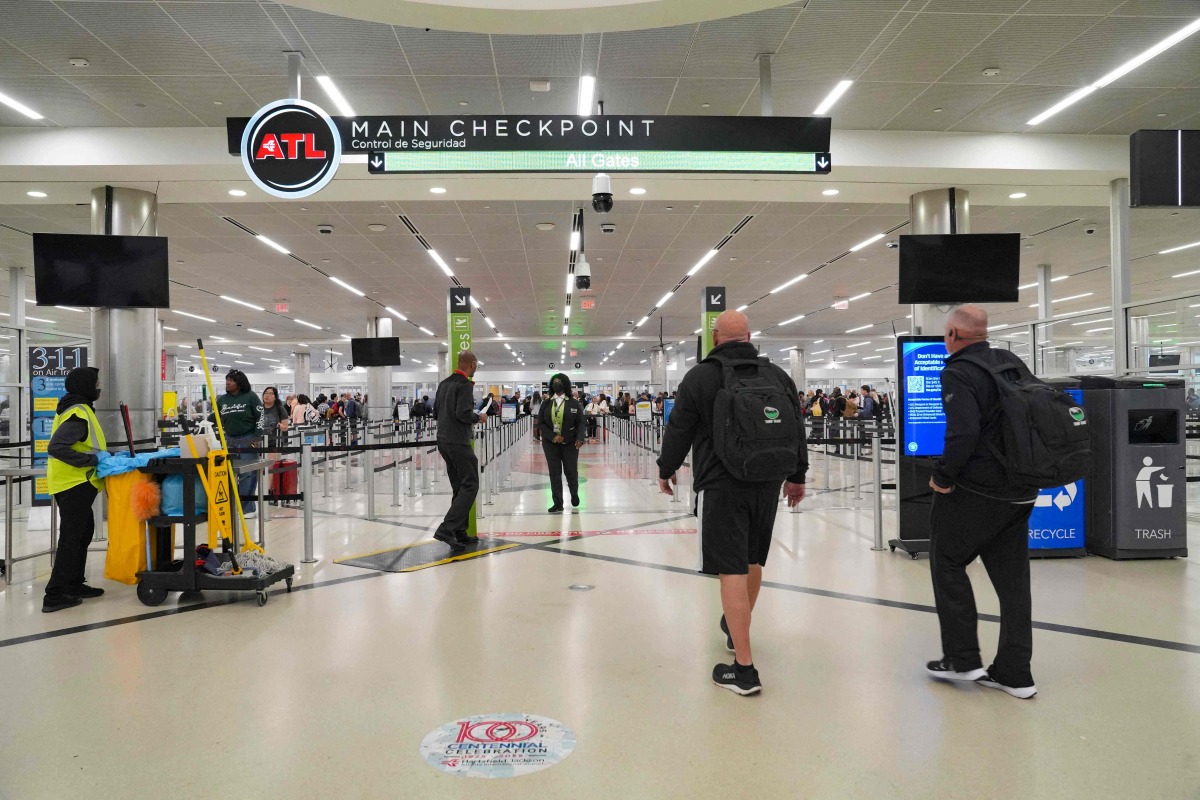
Washington, United States: The US Senate moved Friday to end a budget standoff that has forced thousands of airport security staff to work without pay and caused long delays at airports. A lapse in government funding has left Transportation Security Administration (TSA) staff -- who screen passengers, baggage and cargo -- working without pay since mid-February. Airports in several cities have warned travelers to arrive hours earlier than usual because of long security lines. The funding dispute centered on demands by opposition Democrats for reforms of the Immigration and Customs Enforcement (ICE) authority, which has faced nationwide criticism of its aggressive tactics against undocumented immigrants and for the killings of two US citizens this year. Senators voted in favor of a bill shortly after 2:00 am (0600GMT) to fund all of Department of Homeland Security (DHS) -- which is the TSA's parent agency -- except ICE and Border Patrol, for 2026. The bill would provide funding for the TSA, the Coast Guard and the Federal Emergency Management Agency, among other agencies. It must now be passed by the House. More than 300 TSA staff have quit and unscheduled absences have surged since the shutdown began, leading to extended travel delays and airports struggling to screen travelers. The federal government began deploying ICE agents to assist in providing security, drawing sharp criticism from Democrats, rights activists and some Republicans, who warn ICE personnel are not trained for such work and that it risks escalating tensions in already stressed environments. President Donald Trump, who promised on Thursday to pay airport security officers, previously said he would not sign a funding deal unless Congress also passes a contentious bill to overhaul how citizens register to vote in US elections.
Trump's Iran extension, DHS funding deal, Anthropic's injunction and more in Morning Squawk
The Senate reached a deal early this morning that would fund most of the Department of Homeland Security, a sign of progress toward ending the department's shutdown. The bill will now head to the House of Representatives, where it could get a vote as soon as today. The package does not include funding for Immigration and Customs Enforcement, exactly what Democrats have been calling for, though it also doesn't include the changes to ICE's enforcement practices that Democrats wanted. The agreement comes as the partial government shutdown forces Transportation Security Administration agents to work without pay, causing long security lines at airports. Trump said yesterday that he would bypass Congress and issue an executive order to "immediately" pay TSA workers.

NYSE Parent Invests Another $600 Million in Polymarket as Prediction Market Volume Soars
Polymarket receives a $600 million investment from the parent company of the New York Stock Exchange. The Intercontinental Exchange, the parent company of the New York Stock Exchange, has invested another $600 million in Polymarket, one of the leading crypto-based prediction markets. The move comes just after Kalshi, Polymarket's competitor, closed a $1 billion investment round, putting the company's valuation at $22 billion. It's worth noting that, with this, ICE's investment totals about $2 billion, with its first pre-money investment announced in October 2025. Not only does this provide operational capital for the firm, but it also validates prediction markets as a source of crowd-sourced event probabilities for institutional usage that could span far beyond betting.