News & Updates
The latest news and updates from companies in the WLTH portfolio.
SpaceX plans early morning rocket launch from Vandenberg Space Force Base
SpaceX plans to launch another Falcon 9 rocket from Vandenberg Space Force Base early Monday morning, March 30. The 57-minute launch window opens at 3:20 p.m., according to the aerospace company. A livestream of the launch is expected to begin about 15 minutes before liftoff. The rocket's first stage booster will land on a droneship in the Pacific Ocean about eight minutes after liftoff. SpaceX calls this mission Transporter-16. The rocket will be carrying 119 payloads into orbit, consisting of cubesats, microsats, a reentry vehicle, orbital transfer vehicles, and other hosted payloads. If Monday's launch is scrubbed, SpaceX says it has a backup launch window at the same time on Tuesday, March 31.

Law Seeks to Ban Public Officials From Making Polymarket Bets on Upcoming Bloodshed, Because Apparently We Live in a Complete Dystopia
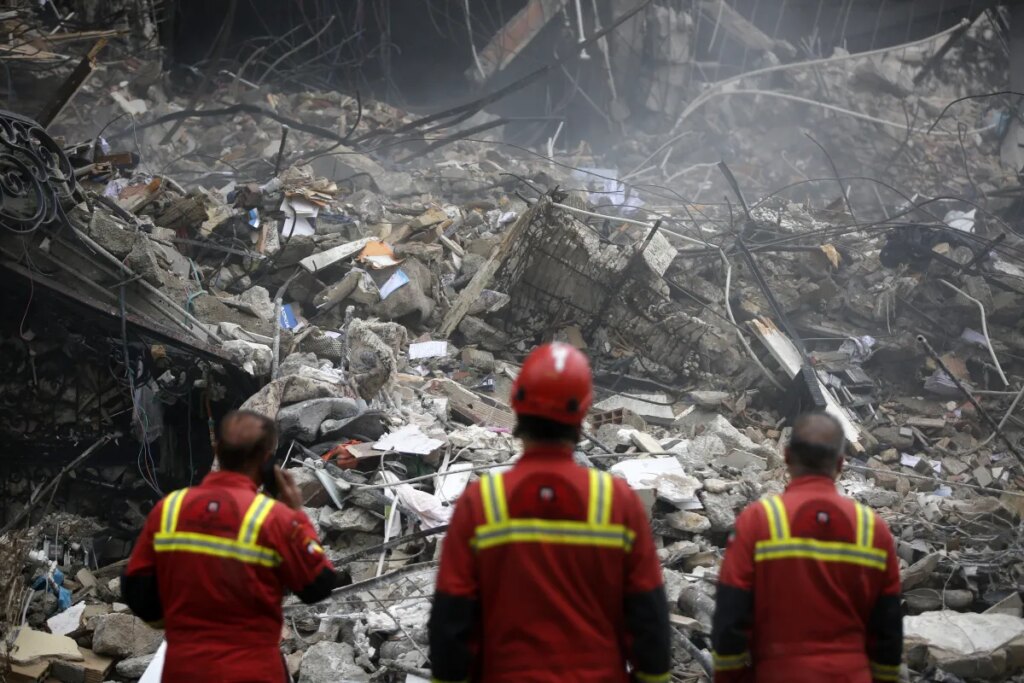
Bad news, war profiteers: efforts are underway in the US to ban public officials from placing Polymarket and Kalshi bets based on inside information -- including ghoulish wagers on the death and destruction they know will follow military action. Proposed to the US senate on Thursday, the new legislation would effectively ban any public official from placing wagers on prediction markets using nonpublic information. The individuals covered include employees at government agencies, regulatory workers, congressional staffers -- and, of course, lawmakers and the president. Should the bill pass, penalty fines would start off at $500, but could be as much as double the profit made on successful bets. As Indiana senator Todd Young told the New York Times, prediction markets "create incentives for elected officials or other well-placed public individuals to change their behavior." Young is a Republican sponsor of the bill, which he hopes will "cut down on any such incentives or temptations that those who hold positions of public trust might harbor." As these gambling platforms have exploded in popularity over the past few months, incidents like the one Young describes have become the norm. Both the US attack on Venezuela and the ongoing US war on Iran have had their own prediction market scandals, strongly suggesting that people with advanced knowledge of the deadly campaigns are cashing in. Don't be fooled into thinking lawmakers are experiencing a rare bout of moral clarity, however. For the bill's sponsors, it's less about the ethics of war gambling and more about practicing good operational security. "It's an operational risk," Michigan senator Elissa Slotkin told the NYT. A former CIA officer and renowned national security hawk, Slotkin is the key Democrat-party sponsor of the bill. "If you're just hanging out on one of these sites, and suddenly you see a bunch of people placing large bets on military action, that is a tell that we're about to take military action," she said. While it remains to be seen how popular the bipartisan bill is in the senate, it would be a rare show of self-restraint for the nation's elected officials, who have yet to address a long-running gap in regulation on similar stock market profiteering. More on prediction markets: Polymarket Announces New Bar For Degenerate War Profiteers
Law Seeks to Ban Public Officials From Making Polymarket Bets on Upcoming Bloodshed, Because Apparently We Live in a Complete Dystopia
Bad news, war profiteers: efforts are underway in the US to ban public officials from placing Polymarket and Kalshi bets based on inside information -- including ghoulish wagers on the death and destruction they know will follow military action. Proposed to the US senate on Thursday, the new legislation would effectively ban any public official from placing wagers on prediction markets using nonpublic information. The individuals covered include employees at government agencies, regulatory workers, congressional staffers -- and, of course, lawmakers and the president. Should the bill pass, penalty fines would start off at $500, but could be as much as double the profit made on successful bets. As Indiana senator Todd Young told the New York Times, prediction markets "create incentives for elected officials or other well-placed public individuals to change their behavior." Young is a Republican sponsor of the bill, which he hopes will "cut down on any such incentives or temptations that those who hold positions of public trust might harbor." As these gambling platforms have exploded in popularity over the past few months, incidents like the one Young describes have become the norm. Both the US attack on Venezuela and the ongoing US war on Iran have had their own prediction market scandals, strongly suggesting that people with advanced knowledge of the deadly campaigns are cashing in. Don't be fooled into thinking lawmakers are experiencing a rare bout of moral clarity, however. For the bill's sponsors, it's less about the ethics of war gambling and more about practicing good operational security. "It's an operational risk," Michigan senator Elissa Slotkin told the NYT. A former CIA officer and renowned national security hawk, Slotkin is the key Democrat-party sponsor of the bill. "If you're just hanging out on one of these sites, and suddenly you see a bunch of people placing large bets on military action, that is a tell that we're about to take military action," she said. While it remains to be seen how popular the bipartisan bill is in the senate, it would be a rare show of self-restraint for the nation's elected officials, who have yet to address a long-running gap in regulation on similar stock market profiteering.
Smuggled drugs fuel chaos inside Ohio prisons
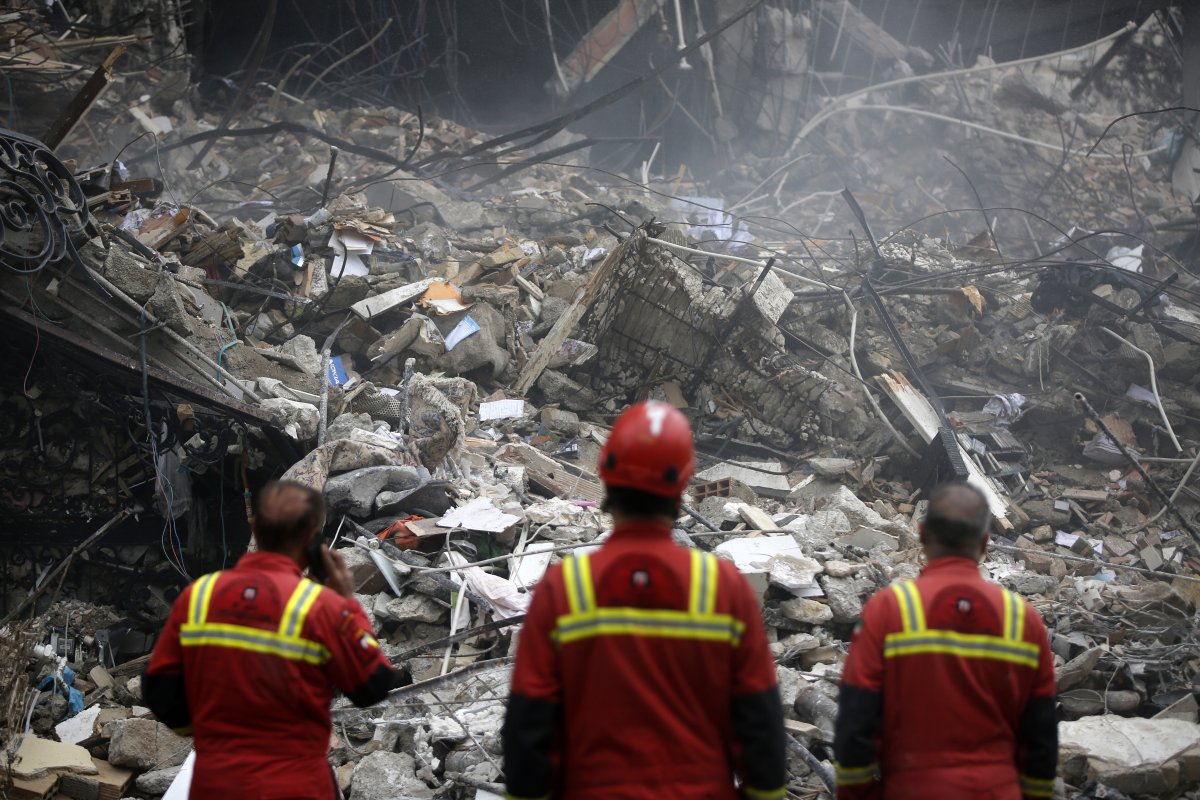
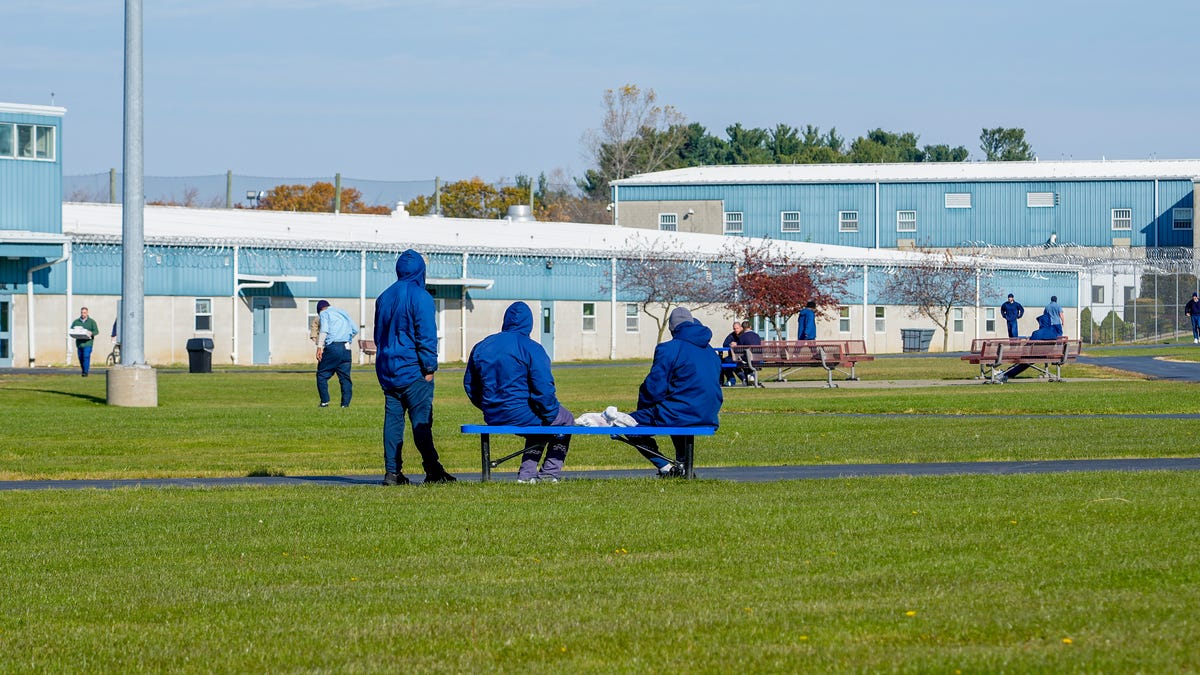
Addictive drugs soaked in confetti-sized hits are being smuggled in, tossed over fences and dropped in by drones. Why can't prison officials stop it? * Drug-soaked paper, known as K2, is now the most common drug found in Ohio prisons. * Fatal overdoses from K2 are rising, but the state likely undercounts them due to detection difficulties. * Despite millions spent on security, drugs are smuggled in by staff, visitors, and drones. * Staff and contractors suspected of smuggling often resign without facing criminal charges. Jayson Murphy lit the speck of paper and inhaled, holding the smoke in his lungs as long as he could. His cellmate, John Jenkins, purchased the drug-soaked paper from another incarcerated man at Lebanon Correctional Institution, a state prison notorious for substance abuse and violence. The drug was their escape from the cockroaches, the bad food, the brutality of their life in prison. The friends laughed themselves to sleep in their bunks that October evening in 2024. The next morning, Jenkins set his dirty laundry outside the cell and tapped Murphy's leg. But Murphy, 50, didn't move. "Oh man, my cellie is dead," Jenkins recalled telling a corrections officer. A crime lab detected potent synthetic drugs, that incarcerated users call K2, in the partially burnt paper found near Murphy's body. Authorities closed their criminal investigation the moment the coroner ruled the death an overdose, abandoning any effort to determine how the drug entered the prison. "I feel like they think, 'OK, he made a choice to get high. So that's that,' you know, instead of looking deeper into the root of the issues," said Amber Hall, Murphy's sister. "How are these things happening? Why are they happening more often? Why is this normal?" Drug-soaked paper, sold in confetti-sized hits, is now the most commonly found drug in Ohio prisons, fueling violence and accounting for more deaths than any other substance, according to a yearlong investigation by The Marshall Project - Cleveland, Columbus Dispatch, Cincinnati Enquirer, Akron Beacon Journal and Canton Repository. The highly addictive drug is smuggled in by staff and visitors, tossed over fences and dropped in by drones. Wide-ranging and unpredictable side effects include vomiting, twitching, convulsing, aggression and psychosis. Jenkins said nearly all 150 men in his cellblock smoke paper. He described a scene from "The Walking Dead" -- men passing out or shuffling around, grunting with burn holes in their clothes. Reporters reviewed hundreds of autopsy, police and court records, hours of prison surveillance footage and data on more than 56,000 drug seizures inside Ohio prisons since 2020. They interviewed prison employees, incarcerated people, families, prosecutors, coroners, forensic scientists, lawmakers, inspectors and smugglers. The investigation found tens of millions of tax dollars spent on tighter security, including taller perimeter fences, anti-drone technology and the electronic delivery of mail. Yet an unknown number of employees and contractors continue to sneak significant amounts of drugs through the front entrance with little consequence. Workers suspected of smuggling often resigned without facing charges, records showed. Murphy was among at least 13 people incarcerated in Ohio who fatally overdosed on K2 in 2024, up from just three the year before, according to available autopsy and toxicology reports. Coroners say they are struggling to identify K2 and other chemicals that evade detection in standard toxicology tests, causing state prison officials to undercount fatal overdoses, the news outlets found after reviewing dozens of death investigations. "At the end of the day, they're still someone's dad, brother, son," said Hall. "And they have people that care about them." Corrections officers are doling out an unprecedented level of discipline. From 2020 to 2024, records show that rule violations for drug use and possession doubled from 10,308 to 20,799, despite only a 6% uptick in the state prison population. Prison officials attribute the spike to new drug detection methods. Nearly half of all drugs found in Ohio prisons are suspected to be K2 paper or other synthetic drugs, state records show. "There is an infestation of narcotics in prisons all over Ohio," said Chris Mabe, president of the union that represents state prison workers. The suspected drugs officers find are rarely tested due to cost and potential exposure. It's impractical to investigate every case, a state official said. Nonetheless, the contraband found is used to discipline incarcerated people. Drug-soaked paper is the most troubling development within state prisons in 30 years, said Annette Chambers-Smith, director of the Ohio Department of Rehabilitation and Correction, who is stepping down to take a job in the governor's office. When it's not available, desperation and untreated addiction drive incarcerated people to wipe up floor wax and bug spray with toilet paper, and then smoke it. People will even smoke dead cockroaches soaked in insecticide, Chambers-Smith said. In some prisons, the floors aren't waxed anymore. "It's crazy," Chambers-Smith said. "Who else is going to smoke wax? I don't notice that happening out in the community." Smoking paper is a uniquely prison thing. The common chemicals and synthetic compounds are hard to detect. The paper is easy to smuggle and hide. Smugglers can make up to $5,000 for each delivery, which can vary in size and often includes other types of drugs. People who unbundle and sell the packages inside prison walls make even more. One man incarcerated at Ross Correctional Institution bragged on a text-messaging system used to communicate with people on the outside that he could make $12,000 in two or three days, according to messages obtained by the highway patrol. His collaborators could make a half-million dollars in two or three years. "It's a gold mine here," he texted. "F--- THE LAW," the man wrote in another message, declaring open season for drug dealing in Ohio prisons. "I GOT 28 TO LIFE. IM NEVEGONE STOP HUSTLIN TILL I GET HOME OR THEY KILL ME." Synthetic cannabinoids flood Ohio prisons Even before drug-soaked paper began to overrun facilities in 2018, addiction and drug use were devastating Ohio prisons. Chambers-Smith said more than 80% of incarcerated people have a history of substance abuse. Corrections officers significantly increased the use of Narcan in 2024 to counter suspected opioid overdoses. But there is no antidote for widely circulating synthetic cannabinoids, which killed more people in Ohio prisons than fentanyl that year, autopsy records show. These mind-altering substances appeared on the shelves of U.S. head shops about 20 years ago. The drug was sold as incense or potpourri -- often in colorful packaging with names like Spice or K2 and with often-ignored warning labels that said, "not for human consumption." Public health departments and poison control centers fielded emergency calls and sounded alarms. By 2011, federal regulators and lawmakers in states including Ohio started banning the drug. These drugs are primarily manufactured overseas. In 2019, the Chinese government outlawed synthetic cannabinoids. But clandestine labs continued to produce the ingredients as manufacturing shifted to the U.S., said Derek Maltz, who led the Drug Enforcement Administration in 2025. Synthetic cannabinoids are seemingly tailored for prisons. The drug is soaked into paper, sometimes disguised as court documents, magazines and books. It enters prisons in full sheets or tiny pieces, often packaged in balloons that can be swallowed. The product is ultimately sold in hits that users smoke or ingest. "I've never seen anything like it," said Tim Wade, who has served time in six prisons in the past decade. "It's different. People are getting rich off it. You can't stop it because you can't detect it. There's no test for it." When Wade first smoked K2, also called tune, he was told he threw his commissary box at his cellmate while barking like a dog. "You mess with someone on tune," Wade said, "you're liable to get attacked." He said he eventually quit, but it wasn't easy. Inside Ohio prisons, multiple eyewitnesses described people smearing feces on walls, constantly talking to themselves, and refusing to shower or eat after prolonged use. Some are "like that permanently now," Wade said. "They ain't coming out of it." Jenkins, 36, remains incarcerated at Lebanon Correctional Institution. He continued to smoke paper after reporting the death of his cellmate, Murphy. "That tune is the devil. It turns you into something that you really ain't," he said. The last time he used the drug, he said it felt like his heart was going to explode -- a scare that finally got him to kick the habit. One morning in February 2023, Steven Grant found his cellmate, Willis Crutcher, still slumped over in a chair from the night before. He was dead, his skin cold and tight. A toxicology test found methamphetamine, fentanyl and K2 in Crutcher's system. Packing up his belongings fell on Grant, who called Crutcher's mother to share details of her son's death. "That was probably the worst part," Grant, 48, said, "talking to her on the phone because she didn't know that he even smoked the tune, you know what I mean? And I hated to be the one to tell her that." Incarcerated people, workers and independent inspectors said some K2 users will visit the prison infirmary in the morning until the effects wear off and be back at it that evening. "We got inmates that go to prison who were straight arrows and clean. And when they leave prison, they're addicts," said Ohio Rep. Mark Johnson, a Chillicothe Republican, who has two state prisons in his district. "There is something wrong with this puzzle." A game of Whac-A-Mole Prisons are struggling to stem the flow of drugs across the country and in Ohio, where officials in recent years have spent tens of millions of tax dollars on tighter security and new strategies. "It's like Whac-A-Mole," state prison director Chambers-Smith said of the multi-front war on prison drugs. "[W]hen you shut down one lane, another one tries to open up." Along with higher fencing and drone detection systems, Chambers-Smith wants more than 14 drug-sniffing dogs, which take time to train, to cover 28 prisons. In the meantime, prison investigators have deployed mobile units that detect unauthorized cellphone signals and airport-style body scanners that check incarcerated people as they return from visits or outside work. The scanners use low-dose X-ray imaging. "A person can be scanned 1,000 times and be under the amount of radiation someone can be exposed to in a year," state prison officials said in a September press release. But they're not used on staff despite more than 180 state prison employees and private vendors suspected of smuggling drugs or contraband since 2020. Some of them admitted to smuggling for weeks or months before getting caught at the main entrance with drugs tucked into their underwear, according to investigative files. The most significant change is how Ohio prisoners receive their mail. Mailrooms had become a primary entry point for drug-soaked paper. In 2021, staff at each prison began scanning and photocopying thousands of letters each month. By 2023, the department opened a center in Youngstown to streamline the process. Now, the 158,000 letters sent to Ohio prisons each year are scanned. Incarcerated people receive them digitally on state-issued tablets, which are also used for emails, phone calls and video visits. Monitoring all that communication, including 60 million annual phone calls lasting 833 million minutes, is a monumental job. In 2025, the department began piloting artificial intelligence at 10 prisons to help investigators search for keywords and follow up on tips. Lawmakers allocated $1 million to expand the program in 2026. But incarcerated dealers and their collaborators often speak in code to keep a step ahead of investigators. And last year, prison investigators said they found at least 1,000 illegal cellphones. Mobile units can detect illegal phones, allowing officials to see phone numbers but not hear the conversations. State prisons are under constant watch by thousands of cameras and employees. Yet drone operators continue to drop drugs into prison yards, even where netting has been installed. People chuck packets over fences or shoot them out of potato cannons -- homemade launchers. Visitors conceal drugs in their bags, bodies or clothing, even under press-on fingernails. Sometimes they're caught, but often the smugglers get away with it. "You can get a whole lot of Suboxone strips in the palm of your hand, worth thousands upon thousands of dollars. Same with the K2 -- it's so small and easily carried. It's really pretty simple math," said one man, who has been incarcerated for nearly two decades and asked not to be named because of safety concerns. Suboxone, which is abused by some incarcerated users, is prescribed for opioid addiction. Drug testing is difficult, costly Of the 176 deaths recorded in Ohio prisons in 2024, officials only linked 10 to fatal overdoses. But toxicology and autopsy reports show that drug use likely caused or contributed to at least 20 deaths: 13 from K2, five from amphetamines like meth, and one each from fentanyl or alcohol. And that's probably an undercount since standard testing isn't designed to detect many chemicals in drug-soaked paper, and additional testing can be costly. Unable to confirm suspected overdoses, coroners often list an undetermined cause of death or point to a chronic disease in a person's medical history. Some coroners go further than others to get answers. In November 2024, Eric Thompson, 33, died while sitting on the bunk in his single cell at Lorain Correctional Institution. Jaleel McCray, 36, died a month later in the middle of a phone call. Lorain County Coroner Frank P. Miller III found nothing of note in their medical histories. He sent each man's blood and urine to a forensic toxicology lab in Indianapolis for the standard $300 screening, plus $200 for synthetic cannabinoid testing. No hits. Undeterred, Miller applied for free testing at the nonprofit Center for Forensic Science Research & Education near Philadelphia, a cutting-edge operation with the latest instruments and a library of known substances. Both men had, in fact, died of the same synthetic cannabinoid, the center found. "It really was invaluable to us that they were able to screen our material and find that," said Miller. Warren County Coroner Russell Uptegrove, who examines bodies from two state prisons, increasingly has had to send samples to specialty labs. "I've heard about people trying to spray things with ant killer or some sort of pesticide or some sort of chemicals," said Uptegrove. "But, again, unless you know specifically what kind of chemical, that's not going to show up on routine toxicology testing." Jessica Toms manages the drug chemistry section at the Ohio Bureau of Criminal Investigation, which has grown from six chemists to three dozen in her 20-year career. Originally, lab testing revealed more common drugs like cocaine and meth, she said. "And now just the volume of designer drugs has exploded." Toms and her team are often telling crime labs in other states when they find something new. "Unfortunately, Ohio is at the forefront of some of these new substances. So, we're seeing some of these things first, and then telling the DEA, 'This is what we've seen. You should be aware of this,'" she said. The smuggling economy: 'A hell of a temptation' A concentration of users and dealers drives demand behind bars, making prisons fertile ground for the lucrative drug market. "Who would want to stop that?" said Grant, who has been incarcerated for more than three decades. "I mean, you're already in prison. You got less risk. What are they gonna do, ride you to another prison where you're going to do the same thing?" Workers can make a month's salary for smuggling just once. "That's a hell of a temptation, don't you think?" Grant said. "It takes a lot of morals and self decency to say, 'yeah, I'm cool on that.'" Grant's solution? Punish everyone who smuggles, sells and uses drugs in prison. "That's the only way things are really going to change. You have to have consequences. There are none." For many, the reward outweighed the risk. Travis Fletcher worked for Aramark at Mansfield Correctional Institution in early 2021 when an incarcerated kitchen worker serving time for drug trafficking offered him $2,500 to smuggle in "some little things." Struggling to pay his bills, Fletcher drove to Akron to pick up pre-packaged Suboxone strips and a box of court papers soaked in K2. "I can promise u 100,000 cash by christmas," the incarcerated kitchen worker texted, three days before Fletcher got busted. Generally, smugglers are paid by dealers via online money apps, such as Cash App, Venmo or Apple Pay. Instead of getting paid, Fletcher pleaded guilty and was given four years of probation. In some instances, employees conspire with each other to bring in contraband. At the start of their shifts, corrections officers walk through metal detectors. Another officer working the front desk checks their bags and might run a hand wand over their coworker's body. It's like going through airport security, but you might be on a first-name basis with the agent checking you. Corrections Officer Brenda Dixson worked the front entry desk at Northeast Ohio Correctional Center and would allow registered nurse Jodi Johnson to pass through with drugs and other contraband, according to federal court records. The two women pleaded not guilty and are awaiting trial on drug trafficking charges. Acting on an internal tip, prison investigator Scott Nagy worked with a federal drug task force to catch the two on Oct. 18, 2025. The prison is owned and operated by CoreCivic, a publicly traded, for-profit company. It declined a request for records that would shed light on the case. In a 2025 hearing on a prison security bill, lawmakers asked William R. Cokonougher, a sergeant at Ross Correctional Institution, what prison reform is needed most. "It's going to be drug interdiction, 100%," Cokonougher said, without hesitation. "We need to put more measures in place to combat these drugs. Like I said, it's killing inmates. It's causing staff to OD." Mark Johnson, the state representative, said he believes that the government -- not private contractors -- should handle all functions inside high-security prisons, including food service. Ohio started contracting with Aramark for food service in 2013 under Gov. John Kasich to save money. "We have people who are from behind the walls of prison getting their friends to apply for work here," Johnson said. "They know all the signs and everything when they get there. They're not really going to work to serve food. They're going in there to serve drugs up." An Aramark spokesperson did not respond to detailed questions. State prison officials have banned more than 200 Aramark employees from prison property since 2020 for suspected smuggling or inappropriate relationships, which often go hand in hand. Like former staff put on a do-not-rehire list, they rarely face criminal charges. And as soon as one of them gets removed from the job, incarcerated people are busy finding replacements. "I need somebody to come out here and work in this prison for Aramark," an incarcerated dealer wrote on a monitored messaging system in May 2024, just two days after his Aramark contact got busted. "Can you knock a white girl for us in Chillicothe Ohio, a smart one. To bring me drugs in the kitchen where I work." Few answers for families Katherine Dixon, 24, holds a heart-shaped pendant etched with "always in my heart." Inside is a portion of her father's cremated remains. When she gets married in October, Dixon plans to wear the pendant and leave a front-row seat open for her dad, Aaron Dixon. "I always imagined my dad walking me down the aisle," she said. In August 2024, Aaron called Katherine, the oldest of his seven children, from inside Chillicothe Correctional Institution. They made plans to attend her little sister's high school graduation together -- if he managed to get out in time. "He said, 'I love you,' and that he'd call me the next day," Katherine Dixon said. That night, an officer asked Aaron Dixon's cellmate if his bunkie was OK. He hopped off the top bunk to find Dixon slumped forward, blue and cold. The autopsy said Aaron Dixon suffered from heart disease and died of a synthetic cannabinoid overdose. Patrol investigators found a wire and a burnt electrical outlet in the cell -- a telltale sign of smoking drugs. As the listed next of kin, Katherine Dixon got the call from the prison about his death. In the weeks that followed, she said she placed multiple calls to the coroner, which yielded little information about exactly what happened. Prison officials told her that he suffered a heart attack. She learned the true cause months later when a reporter called and shared the autopsy and toxicology reports with her. "Wait, did you say that he overdosed?" Katherine Dixon said on the phone. She and her sister Hannah sobbed when they finally reviewed the medical reports. A heart attack seemed easier to accept. "It feels different because passing away due to a drug overdose, it's something you don't want to hear about a family member. It just breaks you inside," Katherine Dixon said. Aaron Dixon, who was serving seven years for drug possession and burglary, started using drugs as a teenager. With a family history of addiction, he had little success controlling his cravings. He landed in jails, bar fights, homeless shelters, prisons and trouble. When her father got locked up, Katherine Dixon was hopeful that he would finally get clean. "I thought he was going to be safe in prison." This article was published in partnership with The Marshall Project, a nonprofit news organization covering the U.S. criminal justice system. Sign up for The Marshall Project's newsletters, and follow them on Instagram, TikTok, Reddit and Facebook.
How does Anthropic limit Claude peak usage?
Anthropic tightened Claude session limits during peak demand Anthropic adjusted Claude's session limits in response to rapidly rising usage. The update is aimed at discouraging demand from spiking during peak hours and, in turn, managing compute strain created by the model's growing popularity. The changes are operational: instead of leaving usage policy untouched, Anthropic told users that peak-time access would be structured so that customers consume their allotted usage faster when demand is highest. The intent is to make the system more predictable under load -- effectively using pricing/allowance mechanics to smooth traffic. This matters because Anthropic's compute capacity is a hard constraint in any large-scale deployment. As more users adopt Claude, the company can't simply "add demand" without addressing infrastructure bottlenecks. Tightened limits are one of the most direct levers available. It also connects to other signals in the provided stories: Anthropic's momentum with paying consumers has been described as surging, while the company has also faced broader competitive and compliance pressure. In that environment, keeping service quality and uptime stable becomes crucial not only for user experience but also for business continuity. Key takeaways: For users, the implication is to plan around availability if they rely on Claude for work, since capacity constraints will show up first in session rules rather than slower, degraded model performance.

Elon Musk's xAI loses final co-founder Ross Nordeen
The final co-founder of Elon Musk's artificial intelligence startup xAI, Ross Nordeen, has left the company, marking the complete departure of its original founding team. His exit signals a potential turning point for xAI, especially as it comes while Musk restructures his business empire ahead of a possible SpaceX Initial Public Offering (IPO). Ross Nordeen was one of the 11 co-founders who launched xAI in 2023 alongside Elon Musk. Before joining xAI, he worked at Tesla and was considered a trusted member of Elon Musk's inner circle. At xAI, Nordeen played a crucial role in executing Musk's vision and was often described as his "right-hand" operator in managing day-to-day operations. His departure follows a broader wave of exits within the company. Since early 2026, most of xAI's co-founders, including key technical leaders, have left. With Nordeen's exit, all 11 original co-founders are now gone, highlighting significant internal changes. This wave of departures points to broader structural shifts as Musk reorganizes the company. A key driver of these changes is the integration of xAI into Musk's wider business ecosystem. Earlier in 2026, SpaceX acquired xAI, bringing together Musk's artificial intelligence, space, and social media ventures under one umbrella. This move is part of a broader strategy to unify technologies such as AI, satellite infrastructure, and computing power. READ: SpaceX IPO leaves Axiom Space's former CEO wary of being 'duped' (March 26, 2026) The restructuring has led to leadership changes, layoffs, and team reorganizations. Some departments, particularly those focused on experimental AI tools like image and video generation, have reportedly been scaled back or refocused. These changes suggest Musk is narrowing xAI's priorities as he prepares the company for its next phase. At the same time, Elon Musk has been recruiting new talent from other AI firms to strengthen xAI's capabilities. This indicates that while the original founding team has departed, the company is entering a new phase with a different leadership structure and a potentially revised strategy. As Musk consolidates his companies and prepares for a major IPO, xAI is being reshaped to fit into a broader vision that combines AI development with space infrastructure and global technology ambitions. READ: Indian American entrepreneur Aman Gottumukkala joins xAI (March 16, 2026) Meanwhile, Elon Musk is gearing up for a potential SpaceX IPO, which could become one of the largest public listings ever. Integrating xAI into SpaceX is considered a way to enhance the company's valuation and strengthen its appeal to investors, positioning it as a combined AI and space technology powerhouse. Despite its ambitious goals and high valuation, xAI has struggled to keep pace with competitors such as OpenAI and Anthropic. Musk has acknowledged that the company was "not built right" initially and has said it is being rebuilt from the ground up. The recent departures and restructuring efforts appear to be part of that rebuilding process.

Telangana Budget Session: BRS MLAs Suspended Amid Assembly Chaos, MLA Faces Ethics Probe
The Telangana Legislative Assembly witnessed major upheavals during its budget session, resulting in the two-day suspension of Bharat Rashtra Samithi (BRS) MLAs and a separate disciplinary inquiry into another party member. A ruling party Minister moved a formal motion citing deliberate attempts by the opposition (BRS) to halt the session. The Speaker of the Telangana Legislative Assembly, Gaddam Prasad Kumar, formally announced the suspension of the members for two days. ALSO READ: Kerala Polls: Congress Assures Indira Guarantees To Be Fulfilled Like Telangana, Karnataka; What Are 5 Promises? In a separate incident, the Assembly officially adopted a motion to refer BRS MLA Padi Kaushik Reddy to the House Committee on Ethics. This disciplinary measure was prompted by an incident involving his alleged "unethical behaviour" toward senior legislative member Kadiyam Srihari. Minister Sridhar Babu strongly condemned Reddy's actions on the floor of the House.

Border cops brace for Easter travel chaos
BMA Commissioner Dr Michael Masiapato says travellers must follow the rules this Easter. BORDER GUARDS gear up for massive Easter rush with extended hours and tougher checks as millions prepare to travel. The Border Management Authority (BMA) has unveiled its 2026 Easter Operational Plan, warning travellers to follow the rules or face the consequences. To manage the rush, operating hours at several border posts will be extended, with some ports, including key crossings into Botswana, Mozambique and Lesotho, running for 24 hours on peak days, while others will open earlier and close later to ease congestion and improve the flow of travellers. Speaking during the announcement on Sunday, 29 March, BMA Commissioner Dr Michael Masiapato said the plan aims to keep things moving smoothly while clamping down on crime. "As the Border Management Authority, we are once again gathered here to present the Easter Festive Season Plan which aims to ensure the efficient, secure and seamless movement of people and goods across South Africa's 71 ports of entry during the Easter period. "This plan reflects the Authority's commitment for the robust implementation of border law enforcement functions while enabling legitimate travel, tourism and trade during one of the busiest periods on the country's national calendar." The busiest period is expected between 31 March and 9 April, with authorities bracing for massive volumes. "During these peak periods we expect significant traveller and traffic volumes potentially reaching double the baseline and exceeding 25 000 travellers per day at the busiest ports of entry," he said. ALSO READ | Maskandi star hits back at haters with new EP! Last year alone, over 1 million movements were recorded in just 10 days, and officials expect even higher numbers this year. To deal with the pressure, more boots will be on the ground. "This includes increased processing capacity, streamlined border checks, and ensuring a smooth and reinforced security to facilitate safe and efficient traveller movement while preventing illegal activities," he said. Authorities are also working with different departments and partners to boost operations, from social workers protecting vulnerable travellers to tourism safety officers managing movement. But Masiapato made it clear this is not just about convenience - it's about control. "On immigration, the BMA will intensify the detection and proper processing of undocumented travellers, strengthening access control measures at all ports of entry, and taking firm action against corruption. "Immigration requirements remain strict. All travellers must present a valid machine-readable passport with at least two blank pages. Visa conditions must be adhered to and parents travelling with minors must present unabridged birth certificates or authorised affidavits," he said. Travellers are also urged to plan ahead and cooperate with officials to avoid delays. "Members of the public are encouraged to plan their journeys in advance, comply with all legal requirements and cooperate fully with border officials," Masiapato said.

Tom Cotton slams Democrats' 'temper tantrum' for fueling TSA chaos amid funding fight
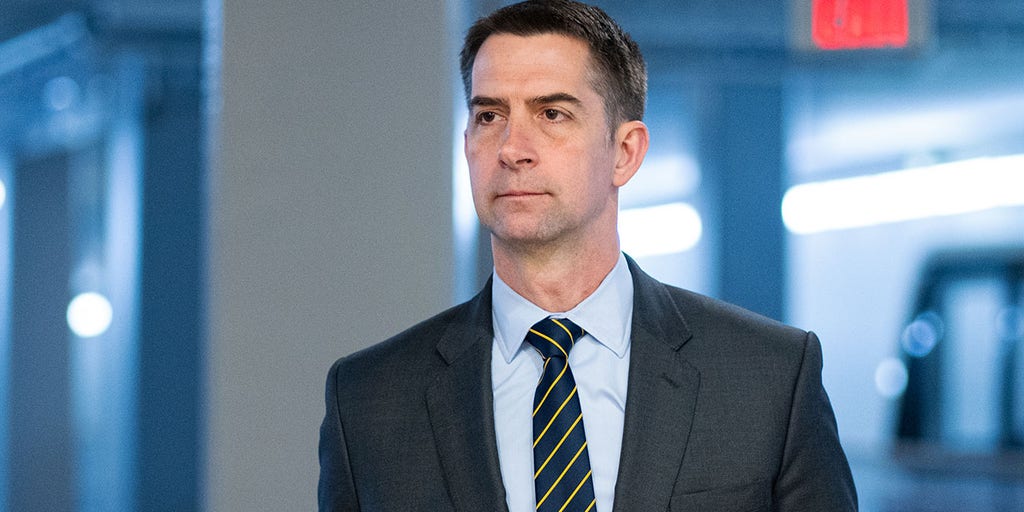
Sen. Tom Cotton, R-Ark., discusses Democrats' opposition to funding DHS, the prospect of ground operations in Iran and more on 'Fox News Sunday.' Sen. Tom Cotton, R-Ark., blasted travel chaos gripping airports nationwide as a direct result of Democrats' "temper tantrum" over immigration policy, as the ongoing standoff snarls TSA operations and disrupts millions of passengers nationwide. "The reason we're at this impasse is that Democrats are using long TSA lines to throw a temper tantrum about deportations of violent criminal illegal aliens and funding of ICE and Border Patrol," Cotton said on "Fox News Sunday." The Arkansas Republican argued the disruptions are not the result of funding shortfalls, but reiterated they stem from a deliberate political fight over immigration, accusing Democrats of shifting demands and prolonging the standoff as airport delays drag on nationwide. DHS SHUTDOWN BREAKTHROUGH COMES AT COST FOR REPUBLICANS AS FUNDING FIGHTS NEARS END He added that Democrats are pushing for reforms that would prevent ICE agents from wearing masks -- a push most Republicans oppose. "The reason why ICE officers wear masks is because radical left-wing Democrats will dox them and then their street militias will terrorize their wives and their kids at their houses," Cotton said. "That's why the Democrats are inflicting long TSA lines on the American people." SEE IT: TRAVELERS SOUND OFF AS ICE AGENTS DEPLOYED TO AIRPORTS AS SHUTDOWN NEARS 40 DAYS The partisan gridlock has prompted a lengthy partial government shutdown that has led to TSA agents calling in sick while missing paychecks, lapses in staffing and hours-long wait times at major airports across the U.S. Travelers at major airports have voiced their disquiet to Fox News in recent days. CLICK HERE TO DOWNLOAD THE FOX NEWS APP "Anyone who votes for a Democrat after this should be shipped out of the country," one frustrated traveler at Houston's George Bush Intercontinental Airport told Fox News Digital. "It's the division. Everyone should be unified and working together instead of just picking teams..." said another.
Bahrain Faces Severe Travel Chaos After Over 120 Flights Are Cancelled By Gulf Air and Royal Jordanian Affecting Routes to Riyadh, Kuwait, Dubai, Abu Dhabi, Singapore, Bangkok, London, Istanbul, Mumbai, Delhi, Bengaluru, and More Major Cities Across the World - New Update - Travel And Tour World
Bahrain International Airport (OBBI) has recently faced widespread operational challenges, leading to extensive flight disruptions that have affected travelers across Asia, the Middle East, and Europe. Over a three-day period, more than 120 departures were cancelled, impacting destinations including Mumbai, Delhi, Hyderabad, Bengaluru, Chennai, Goa, Cochin, Thiruvananthapuram, Riyadh, Jeddah, Medina, Kuwait City, Dubai, Abu Dhabi, Doha, Singapore, Bangkok, Manila, Male, London, Athens, Istanbul, Larnaca, and Baku. These Bahrain flight cancellations have disrupted travel plans for both business and leisure passengers, forcing airlines to adjust schedules and travelers to seek alternatives. Total Cancellations: 120+ flights Most cancellations occurred during high-traffic periods in the afternoon and late evening, particularly from 2 PM to 11 PM local time, affecting both regional and long-haul routes. Repeated cancellations for the same destinations, including Indian cities and major Middle Eastern hubs, indicate systematic operational constraints rather than isolated disruptions. The data also shows the following: The Bahrain flight cancellations have created significant challenges for travelers. Passengers experienced extended waiting times at terminals, last-minute notifications of cancellations, and difficulty securing alternative flights. These disruptions have had a pronounced effect on transit passengers relying on OBBI departures to connect to further destinations. The operational issues at Bahrain International Airport have contributed to Manama airport disruptions and increased Middle East airline delays across Gulf airlines. The following points summarize the broader impact: Passengers impacted by Bahrain flight cancellations should consider: Bahrain International Airport is undergoing a challenging period of operational strain. The combination of high passenger demand, repeated flight cancellations, and disruptions to both regional and international routes underscores the complexities of airport management in the Gulf. These Bahrain flight cancellations highlight the need for contingency planning and flexible travel arrangements. Airlines, airport authorities, and passengers must remain vigilant as schedules adjust and services stabilize across the Gulf and beyond.

Yahoo CEO Jim Lanzone on 'the white whale of turnarounds' and turning to AI -- licensed from Anthropic
Internet trailblazer Yahoo is exploring technology's next frontier with Scout, an answer engine powered by artificial intelligence. Scout seems insightful, based on its response to a question posed by The Associated Press about why one of Silicon Valley's brightest stars faded away a decade ago. "Yahoo's journey illustrates how a company with an early advantage can disappear without continuous innovation," Scout explained, while also providing hyperlinks to other websites supporting its thesis. Scout may have to come up with a different interpretation if Yahoo CEO Jim Lanzone can leverage AI to expand upon a worldwide audience of 700 million users who have stuck with the company's finance, sports, news, fantasy and email services, despite a history of folly that nearly destroyed a brand once synonymous with the internet. Yahoo has "always been the white whale of turnarounds for me,' said Lanzone, who has a track record for salvaging internet wrecks. "I always thought I could do something with this thing." Lanzone, 55, finally got his chance after the private equity firm Apollo Global Management paid $5 billion to take over Yahoo in September 2021 -- a fraction of its peak $125 billion market value reached during the dot-com boom's giddy days in early 2000. Apollo's acquisition came after Verizon Communications bought Yahoo's online operations in 2017 and then bungled an attempt to blend those services into AOL, another internet pioneer. Verizon never would have gotten the chance to buy Yahoo's online operations if not for the company's perpetual blundering under seven different CEOs in 16 years. Although Yahoo's checkered past didn't destroy the company, it left a stigma that makes it unlikely that it will ever come close to what it once was, said Jeremy Ring, who was among Yahoo's first employees when he began selling ads for the service from his New York apartment in 1996. "Even though Yahoo isn't what it once was, it hasn't turned into a Blockbuster or Radio Shack story either," said Ring, who delved into the company's ups and downs in a 2018 book, "We Were Yahoo!" "What is going to enable them to compete against all the bigger companies using AI? I am not convinced all the best engineers in the world are suddenly going to come work at Yahoo." Lanzone's renovation efforts initially focused on shedding Yahoo's dysfunctional parts. The teardown included jettisoning some of Yahoo's advertising technology, selling publishers such as TechCrunch and Rivals and closing down AOL's internet dial-up service in a move that cut off its final 500 users. As it stands now, Yahoo is "very profitable" and bringing in billions of dollars in revenue, Lanzone said, while declining to be more specific. Once he got the cleanup work down, Lanzone began overhauling what remained -- a process that has resulted in an upgrade of Yahoo's popular fantasy sports division and a major overhaul of its email service that still ranks as the second largest on the web behind Google's Gmail. With the recent introduction of Scout to its 250 million users in the U.S., Yahoo is leaning into the AI movement with the hope that the s technology will simplify online search and produce more personal results tailored to each user's interests. Lanzone is also hoping Scout turns into a flywheel, continually spinning traffic through its other services. Yahoo will be competing against a familiar foil in Google, which remains the same formidable force that spelled the company's demise 20 years ago and has been progressively layering more AI into its search engine with its Gemini technology. As if that isn't daunting enough, Yahoo also will be vying against other popular AI chatbots such as OpenAI's ChatGPT and Anthropic's Claude in addition to answer engines such as Perplexity. In a tacit admission that it's behind the curve, Yahoo is running Scout on AI technology licensed from Anthropic. Unlike other AI chatbots and answer engines, Scout doesn't simulate human conversations so users can "have a fake personal relationship with it," Lanzone said. "The product is very unique, even though we didn't invent AI in the first place." Yahoo's pursuit of more online search traffic has been largely an exercise in futility since the late 1990s, a descent that started just a few years after Stanford University graduate students Jerry Yang and David Filo founded the company as the internet's first comprehensive directory of websites. But as the internet began to play a bigger role in entertainment and commerce, Yahoo shifted its focus from sending traffic elsewhere to building an all-purpose website that people wouldn't want to leave. That strategic pivot opened the door for two other Stanford University graduate students, Larry Page and Sergey Brin, to create a search engine called Google. After turning down a chance to buy Google for just $1 million in 1998, Yahoo poured even more resources into creating a one-stop destination while paying so little attention to search that it turned to another company to provide that technology in 2000. Yahoo not only hired Google as its search engine but also promoted its brand on its website. By 2002, Yahoo was offering to buy Google for $3 billion, but Page and Brin wanted $5 billion. The negotiating impasse launched Google on a trajectory toward an internet empire now valued at $3.7 trillion under corporate parent Alphabet Inc. Yahoo went through a revolving door of seven CEOs, including former Google executive Marissa Mayer, on a quixotic quest to catch up in search before finally ending its 21-year existence as a publicly traded company with its ill-fated sale to Verizon for $4.5 billion. Along the way, Yahoo rejected a $44.6 billion takeover bid from Microsoft in 2008 before finally agreeing to license the software maker's Bing search engine. If Yahoo's bet on Scout pays off, Lanzone concedes it could lead to the company returning to the stock market more than 30 years after completing a 1996 initial public offering that intensified the dot-com fever gripping investors back then. Lanzone believes another Yahoo IPO could still get people excited. "We still have one of the biggest audiences on the internet, and that audience has been pretty loyal through a lot of ups and downs," he said. "If we just 'super-serve' them, good things will happen."

Amid considerable security chaos and inaction by relevant authorities | Robberies escalate dramatically in Deir Ezzor city
Deir Ezzor province: SOHR activists have reported an unprecedented escalation of thefts and armed robberies targeting public and private property in Deir Ezzor city. This has sparked broad public anger over the security authorities' failure to curb a phenomenon that has been threatening the safety and lives of the city's residents for months. SOHR activists have reported that the neighborhoods of Al-Qusour, Al-Sina'a and Sheikh Yassin experienced scores of "organized robberies" targeting homes and shops. Residents confirmed that thefts are no longer limited to nighttime hours but now they are committed in broad daylight, amid a complete absence of strict security measures or effective patrols to deter perpetrators. Ironically, criminals are moving comfortably, exploiting what locals call a "deliberate laxity" by authorities supposed to be responsible for the area's security. This dramatic escalation coincides with sever economic hardship and extreme poverty in the city, as well as the massive destruction of infrastructure and lack of street lighting in most neighborhoods. These factors have turned the city into a breeding ground for organized crime. Residents of Deir Ezzor demand urgent intervention by relevant authorities to prosecute the gangs plundering their property. They warn that continued collapse of the security system has made many to think of displacement or closing their shops for fear of losses. However, these demands remain unheeded.

Congress Says Pakistan Becoming A 'Dalaal' Exposes Colossal Failure Of Modi Government's Foreign Policy
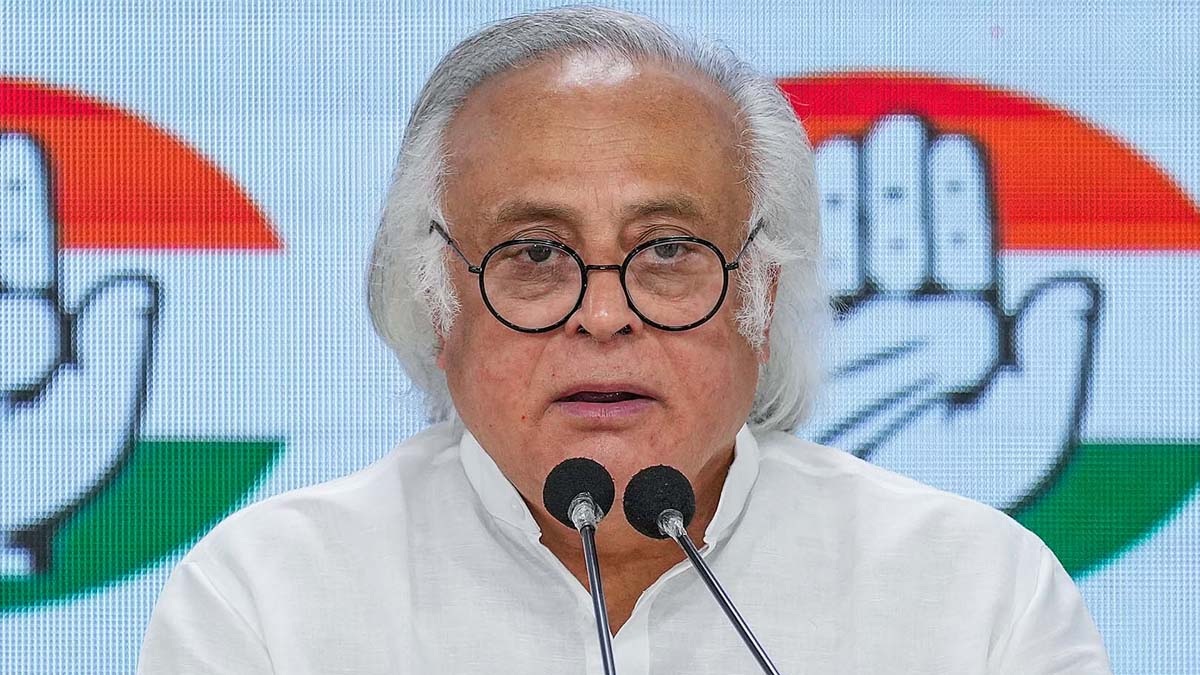
The Congress on Sunday launched a sharp attack on Prime Minister Narendra Modi, alleging that his government's foreign policy has suffered a major setback, with the United States treating him as "only as a pliant pushover" while Pakistan has allegedly gained renewed diplomatic relevance despite India's military success in Operation Sindoor. Congress Alleges Modi's Foreign Policy Narrative Is Unravelling The opposition party said the developments marked the "unravelling" of Modi's heavily "personality-driven foreign policy" and claimed that the image of the prime minister as a global statesman had taken a serious hit. Congress general secretary (communications) Jairam Ramesh took to X to criticise the government, saying Modi's efforts to win favour with Washington had failed to deliver any real diplomatic advantage for India. "He's only seen as a pliant pushover," Ramesh posted on X, as the Congress intensified its attack on the Centre over what it described as the diminishing effectiveness of India's foreign policy messaging. The party also said that the "self-styled Vishwaguru" now stood exposed as a "Vishwaphoney", arguing that the government's carefully cultivated global narrative had collapsed under recent geopolitical developments. Jairam Ramesh Links Trade Deal and US Ties to Diplomatic Weakness Ramesh further alleged that Modi had attempted to "appease" the United States on multiple fronts but had failed to secure diplomatic leverage in return. According to the Congress leader, even what he termed Modi's "betrayal" of Indian farmers through a trade deal that allegedly opened Indian agriculture markets to unprecedented US access did not help India gain stronger standing with Washington. His remarks came as the Congress continued to question why the US under President Donald Trump appeared to be giving Pakistan greater relevance on the international stage despite India's recent military assertiveness. Congress Says Pakistan's Growing Role Reflects India's Diplomatic Setback Defending its position on Pakistan's mediation role in West Asia, the Congress said there was "nothing new" in Islamabad being used by Washington, arguing that the US has relied on Pakistan in different strategic situations since 1981. Ramesh painted a bleak picture of Pakistan, describing it as a state where democratic institutions remain weak and the economy is deeply fragile. "Pakistan is a country where democracy is a farce to be reckoned with, whose economy is a basket case, dependent on a lifeline extended by the IMF and few other donors like China and Saudi Arabia and has for decades been known as a haven for terrorists who perpetrate attacks not only on its neighbours but in different parts of the world," he said. He also noted that successive American administrations had previously taken a tougher line on Pakistan. "It is a country that was dealt with very strictly by Presidents Clinton, Bush, Obama, and Biden. Now, after having been isolated following its terror offensive in Mumbai in Nov 2008, Pakistan has acquired a new acceptance," he said. 'Dalaal' Remark and Trump's Role Come Under Fire The Congress said Pakistan's renewed acceptability in diplomatic circles reflected a serious failure by the Modi government in shaping the post-Operation Sindoor narrative. "That Pakistan has become - in the words of the learned Dr. S. Jaishankar - a 'dalaal' is a reflection of the colossal failure of the Modi government's foreign policy, diplomatic engagement and narrative management following India's striking military success in Operation Sindoor," Ramesh said. He also squarely blamed US President Donald Trump for contributing to Pakistan's current standing, despite repeatedly referring to Modi as his "good friend". "President Donald Trump, who calls Modi his 'good friend', has contributed heavily to Pakistan's current respectability," Ramesh said, while questioning how the prime minister allowed such a diplomatic shift to take place even as he frequently highlighted his ties with the White House. With the Congress framing Pakistan's rising relevance and Washington's posture as a direct embarrassment for the Modi government, the political attack signals that foreign policy may become a sharper point of contest in the aftermath of Operation Sindoor.
Holiday chaos after airport strikes confirmed in Brit holiday hotspot
Hundreds of thousands of Brits heading for some much-needed Easter sun abroad may face devastating disruption after a major hotspot for UK travellers announced massive walkouts at its airports. Check-in staff, baggage handlers and aircraft assistants are just some of those who are set to walk out in the following days and weeks in several Canary Island airports, which could see flights cancelled, massive delays and queues. The strikes are expected to impact both South and North airports in Tenerife, which welcomes nearly 3 million British tourists a year, as well as Lanzarote, Gran Canaria and Fuertaventura, as reported by local news outlet Canarian Weekly The walkouts are expected to devastate key services for airlines such as easyJet, Jet2 and AER Lingus, as well as several others. More than 1500 airport employees are expected to walk out, according to reports, with several unions across the Canary Islands furious at ongoing breaches of pay and below-standard working conditions. Last-ditch talks reportedly broke down between unions and employers this week, with the Unión General de Trabajadores (UGT) in the Canary Islands warning that there will be "two parallel strikes" unless an 11th-hour solution is found. Major airports on Tenerife and Gran Canaria will see industrial action take place between the 2nd and the 6th April. Separate walkouts are scheduled three times a day on Mondays, Wednesdays and Fridays all next week. The strikes are not the only headache that British tourists have faced travelling to the Canary Islands in recent weeks, with Storm Therese causing devastation across the archipelago, but especially on UK favourite Tenerife, where an 'emergency situation' was declared following landslides and flooding. Furthermore, the islands have also been hit by dozens of earthquakes, in what has been described as a rare tectonic phenomenon called a seismic swarm. A seismic or earthquake swarm takes place when a series of earthquakes occur in a local area over days, months, or years without one single, dominant mainshock. The Canary Island of Tenerife first experienced this swarm effect in February this year, seeing more than 100 quakes being felt across the island.

Tragic Ram Navami Chaos: Two Hacked to Death in Jharkhand
Two individuals, Prince Kumar and Abhishek Kumar, were allegedly hacked to death during Ram Navami processions in Jharkhand's Hazaribag district. Both victims died after being attacked with sharp weapons. No arrests have been made, and police investigations are ongoing. Two individuals were tragically hacked to death during the Ram Navami processions in Jharkhand's Hazaribag district, according to officials. Prince Kumar and Abhishek Kumar, both 21, lost their lives in separate incidents at Jhanda Chowk in the town police station area around midnight. Police are still investigating the incident, and no arrests have been reported thus far.

High Oil Prices, TSA Chaos Keep Americans Home This Summer
As Americans approach the summer months, high oil prices and travel uncertainties have prompted many to reconsider their vacation plans. The ongoing geopolitical tensions, particularly the conflict in Iran, have impacted travel dynamics, causing anxiety among potential travelers. Impact of High Oil Prices on Travel Current circumstances indicate that soaring oil prices have significantly influenced travel budgets. The cost of gas has reportedly increased by $1 per gallon over the past month. With predictions that prices could continue to rise, many travelers are left weighing their options. * Oil Price Trends: The Strait of Hormuz, a vital oil shipping route, remains under blockade due to geopolitical unrest. * Domestic Travels: High fuel costs may deter longer trips, influencing travelers to explore local options instead. * Economic Concerns: The burden of inflated prices is likely to restrict family budgets for vacations. Shifting Vacation Preferences Surveys reveal that a growing number of Americans are opting for staycations. Data shows that 43% of regular international travelers reduced their overseas trips last year due to personal issues and economic uncertainty. Instead, domestic travel could be a more viable option. Popular destinations within the U.S. are becoming appealing alternatives, especially with upcoming events like the World Cup where many matches will occur in U.S. cities. Travel Chaos and Economic Uncertainty TSA-related delays and frustrations add another layer of concern for motorists and travelers alike. The recent spike in diesel prices could lead to higher goods costs, further straining budgets. * Concerns About Travel: Tightened security processes at airports may deter some travelers. * Impact of Economic Circumstances: Families might prioritize local adventures over international trips. Future Outlook for Travel With the turbulent economic landscape and evolving travel norms, more people are leaning towards local experiences. Domestic travel is likely to gain traction, appealing to families seeking affordable and convenient vacation alternatives. As one professional noted, the 2026 travel sentiment closely mirrors the past when the term 'staycation' gained popularity during economic downturns. This summer poses a unique challenge for Americans torn between planning trips and managing their finances amid high oil prices and anxieties regarding safe travel. With careful consideration and planning, many may choose to explore their own backyards while keeping a watchful eye on the global landscape.

'OMG It's A Ghost': Mid-Air Chaos On Bengaluru-Varanasi IndiGo Flight As 'Possessed' Passenger Tries Emergency Exit, Plane Circles Before Safe Landing
Panic broke out onboard an IndiGo flight from Bengaluru to Varanasi on Saturday night when a passenger, claiming to be possessed by a ghost, allegedly attempted to open the emergency exit door mid-air. The alarming incident forced the pilot to abort landing at the last moment, with the aircraft circling before safely touching down at Lal Bahadur Shastri International Airport. IndiGo Flight scare: First Alarm 15 Minutes After Takeoff Flight 6E-185 had departed Bengaluru around 8:15 PM, bound for Varanasi, when the first signs of trouble emerged. Approximately 15 minutes into the journey, Mohammad Adnan, a passenger from Mau district in Uttar Pradesh, allegedly tried to tamper with the emergency exit door. Quick action by alert cabin crew prevented any immediate danger. Adnan reportedly claimed it was a mistake and remained calm for the rest of the early part of the flight after being warned by staff. IndiGo Flight scare: Mid-Air Panic During Final Approach Tension escalated dramatically just minutes before landing. Around 10:20 PM, while the aircraft was flying at a low altitude of roughly 500 feet, Adnan again approached the emergency exit and attempted to open it. Passengers were left terrified during the critical landing phase. The pilot acted swiftly, aborting the landing and taking the plane back into the air to avoid potential risk. After circling briefly, the aircraft successfully landed at 10:35 PM, with passengers and crew relieved that the situation was resolved safely. IndiGo Flight scare: Passenger Claims 'Ghost Possession' Following the landing, Adnan was detained by airline security personnel and handed over to the Central Industrial Security Force (CISF). Police were informed, and a case was registered against him. During questioning, Adnan initially claimed he did not understand why he had acted that way. Later, he told officials he was "possessed by a ghost" and that he had recently returned from a holiday in Goa, unaware that the handle he pulled operated the emergency exit door. IndiGo Flight scare: Authorities Investigate Police at Phulpur station confirmed that a case has been registered based on a complaint by the airline's security manager. Adnan remains in custody while further investigation is underway. His family from Mau has been informed and is reportedly on their way to Varanasi. Passengers praised the cabin crew for their quick response, which prevented what could have turned into a serious mid-air disaster.

Apple UK Age Verification Chaos: Users Face Failed Scans, Rejected Passports, and Forced Content Filters
Stand against censorship and surveillance: join Reclaim The Net. Apple's iOS 26.4 age verification system is failing UK users who don't have a credit card or photocard driving license, leaving them with no way to prove they're adults on devices they've owned for years. The system arrived without warning, without explanation, and without any apparent consideration for the people who don't fit Apple's narrow assumptions about what a British adult looks like. No Warning, No Communication Apple sent no email. Included no mention of age verification in the iOS 26.4 release notes it shared publicly. Unless you'd been following the developer beta track, where the feature appeared in February or reading Reclaim The Net's earlier coverage, the first you knew about it was a prompt on your screen after restarting your phone. That's how 35 million UK iPhone users found out their devices now require identity documents to function normally. A "Confirm You Are 18+" label appeared at the top of Settings, and anyone who couldn't or wouldn't comply got silently downgraded. Apple's Web Content Filter switched on, blocking websites across Safari and every third-party browser. Communication Safety is activated, scanning images and videos in Messages and FaceTime for nudity. Features that worked fine the day before now require government-approved proof of adulthood. A company that controls what software runs on every iPhone it sells decided overnight that UK users needed to hand over identity documents to keep using the devices they already paid for. And it didn't bother to tell them it was coming. Locked Out With No Path Forward Reclaim The Net has heard from numerous UK readers who've been locked out since the update landed on March 24. One reader, a 67-year-old retired teacher, has used Apple products since 2009. She doesn't drive and has never owned a credit card, paying for everything with a debit card from the same bank for over 30 years. Apple rejects debit cards entirely. Her iPhone now blocks certain apps, filters her web browsing, and scans her messages for nudity. Another reader let his driving license lapse years ago and doesn't carry a credit card. His Apple Account is 13 years old, likely five years short of the 18-year threshold Apple uses for automatic verification. He tried scanning his passport, only to discover Apple won't accept UK passports at all. A third reader, a 74-year-old in Edinburgh, doesn't own a passport, a driving license, or a credit card. She has no path through Apple's system whatsoever. Her phone now decides which websites she's allowed to visit. These aren't edge cases. Millions of UK adults don't carry credit cards. The UK has no national ID card. Plenty of people, particularly the elderly, those with health conditions, and those who simply never learned to drive, don't hold a photocard driving license. Apple built a verification system around documents that a significant portion of the adult population doesn't have, then gave those people no alternative and no warning. Older UK driving licenses, the paper ones issued before the photocard format launched in 1998, don't appear to be scannable. Apple's system requires a photocard, which means anyone still carrying a valid paper license, perfectly legal and accepted elsewhere in the UK, can't use it. People with disabilities or health conditions that prevent them from driving or traveling may hold none of the accepted documents. Apple's support documentation acknowledges no alternative for these users. It simply tells them to contact Apple Support, which, based on reports from the Apple Community forums, often results in a support agent insisting passports are accepted when they aren't. Users who had automatic updates enabled, which Apple actively encourages, woke up to the verification prompt with no chance to opt out. The only way to avoid iOS 26.4 is to manually disable automatic updates and stay on an older version, giving up future security patches in the process. Even for users with valid documents, the system is buggy. Reports across Apple's support forums and Reddit describe driving license scans failing repeatedly with no error message, just silence. Apple Chose This Apple frames the verification as compliance with the UK's Online Safety Act, and the prompt tells users that "UK law requires you to confirm you are an adult." That's untrue. The Online Safety Act targets platforms and adult content sites, not operating systems or app stores. Device-level age verification isn't a legal requirement. Apple chose to go beyond what the law demands and then told users the law made them do it. Ofcom, the UK communications regulator, of course, praised the move. The people paying the price are the adults Apple didn't think about when it designed this system, forced to either take out financial products they don't want, hunt down documents they don't have, or accept that the phone in their pocket now treats them like a child.

Yahoo CEO Jim Lanzone on 'the white whale of turnarounds' and turning to AI -- licensed from Anthropic | Fortune
Internet trailblazer Yahoo is exploring technology's next frontier with Scout, an answer engine powered by artificial intelligence. Scout seems insightful, based on its response to a question posed by The Associated Press about why one of Silicon Valley's brightest stars faded away a decade ago. "Yahoo's journey illustrates how a company with an early advantage can disappear without continuous innovation," Scout explained, while also providing hyperlinks to other websites supporting its thesis. Scout may have to come up with a different interpretation if Yahoo CEO Jim Lanzone can leverage AI to expand upon a worldwide audience of 700 million users who have stuck with the company's finance, sports, news, fantasy and email services, despite a history of folly that nearly destroyed a brand once synonymous with the internet. Yahoo has "always been the white whale of turnarounds for me,' said Lanzone, who has a track record for salvaging internet wrecks. "I always thought I could do something with this thing." Lanzone, 55, finally got his chance after the private equity firm Apollo Global Management paid $5 billion to take over Yahoo in September 2021 -- a fraction of its peak $125 billion market value reached during the dot-com boom's giddy days in early 2000. Apollo's acquisition came after Verizon Communications bought Yahoo's online operations in 2017 and then bungled an attempt to blend those services into AOL, another internet pioneer. Verizon never would have gotten the chance to buy Yahoo's online operations if not for the company's perpetual blundering under seven different CEOs in 16 years. Although Yahoo's checkered past didn't destroy the company, it left a stigma that makes it unlikely that it will ever come close to what it once was, said Jeremy Ring, who was among Yahoo's first employees when he began selling ads for the service from his New York apartment in 1996. "Even though Yahoo isn't what it once was, it hasn't turned into a Blockbuster or Radio Shack story either," said Ring, who delved into the company's ups and downs in a 2018 book, "We Were Yahoo!" "What is going to enable them to compete against all the bigger companies using AI? I am not convinced all the best engineers in the world are suddenly going to come work at Yahoo." Lanzone's renovation efforts initially focused on shedding Yahoo's dysfunctional parts. The teardown included jettisoning some of Yahoo's advertising technology, selling publishers such as TechCrunch and Rivals and closing down AOL's internet dial-up service in a move that cut off its final 500 users. As it stands now, Yahoo is "very profitable" and bringing in billions of dollars in revenue, Lanzone said, while declining to be more specific. Once he got the cleanup work down, Lanzone began overhauling what remained -- a process that has resulted in an upgrade of Yahoo's popular fantasy sports division and a major overhaul of its email service that still ranks as the second largest on the web behind Google's Gmail. With the recent introduction of Scout to its 250 million users in the U.S., Yahoo is leaning into the AI movement with the hope that the s technology will simplify online search and produce more personal results tailored to each user's interests. Lanzone is also hoping Scout turns into a flywheel, continually spinning traffic through its other services. Yahoo will be competing against a familiar foil in Google, which remains the same formidable force that spelled the company's demise 20 years ago and has been progressively layering more AI into its search engine with its Gemini technology. As if that isn't daunting enough, Yahoo also will be vying against other popular AI chatbots such as OpenAI's ChatGPT and Anthropic's Claude in addition to answer engines such as Perplexity. In a tacit admission that it's behind the curve, Yahoo is running Scout on AI technology licensed from Anthropic. Unlike other AI chatbots and answer engines, Scout doesn't simulate human conversations so users can "have a fake personal relationship with it," Lanzone said. "The product is very unique, even though we didn't invent AI in the first place." Yahoo's pursuit of more online search traffic has been largely an exercise in futility since the late 1990s, a descent that started just a few years after Stanford University graduate students Jerry Yang and David Filo founded the company as the internet's first comprehensive directory of websites. But as the internet began to play a bigger role in entertainment and commerce, Yahoo shifted its focus from sending traffic elsewhere to building an all-purpose website that people wouldn't want to leave. That strategic pivot opened the door for two other Stanford University graduate students, Larry Page and Sergey Brin, to create a search engine called Google. After turning down a chance to buy Google for just $1 million in 1998, Yahoo poured even more resources into creating a one-stop destination while paying so little attention to search that it turned to another company to provide that technology in 2000. Yahoo not only hired Google as its search engine but also promoted its brand on its website. By 2002, Yahoo was offering to buy Google for $3 billion, but Page and Brin wanted $5 billion. The negotiating impasse launched Google on a trajectory toward an internet empire now valued at $3.7 trillion under corporate parent Alphabet Inc. Yahoo went through a revolving door of seven CEOs, including former Google executive Marissa Mayer, on a quixotic quest to catch up in search before finally ending its 21-year existence as a publicly traded company with its ill-fated sale to Verizon for $4.5 billion. Along the way, Yahoo rejected a $44.6 billion takeover bid from Microsoft in 2008 before finally agreeing to license the software maker's Bing search engine. If Yahoo's bet on Scout pays off, Lanzone concedes it could lead to the company returning to the stock market more than 30 years after completing a 1996 initial public offering that intensified the dot-com fever gripping investors back then. Lanzone believes another Yahoo IPO could still get people excited. "We still have one of the biggest audiences on the internet, and that audience has been pretty loyal through a lot of ups and downs," he said. "If we just 'super-serve' them, good things will happen."

Death, strikes, long queues: Fuel chaos continues across Bangladesh
Truck driver runs over pump manager in Narail over fuel dispute Chaos over fuel continued in several areas today (29 March), with reports of hoarding, transport shortages, rising fares, pump closures, and even the death of a filling station manager in Narail over a dispute. In Narail Sadar, Nahid Sardar, 35, manager of Tanvir Filling Station, was killed after being run over by a truck on the Kalna-Jessore highway. His colleague, Jihadul Molla, 29, was critically injured in the incident. According to filling station employees, the truck driver, Sujat Ali, arrived late on Saturday night seeking fuel. A dispute over supply escalated into threats against Nahid. Around 2:10am, Nahid and Jihadul left the station on a motorcycle, only to be chased and struck by the truck. Officer-in-Charge of Tularampur Highway Police Station, Sheikh Sekendar Ali, confirmed that Nahid's body had been sent to the district hospital morgue. Law enforcers later arrested Sujat Ali from Jashore. RAB-6 commanding officer Major ATM Fazle Rabbi said the arrest followed a tip-off and a coordinated operation. All filling stations in Narail were shut indefinitely as owners protested Nahid's death. Saiful Islam Hitru, joint convener of the Narail Pump Owners Association, said ten pumps in the district had been closed. Regarding the incident, Syed Sajjadul Karim Kabul, convener of the Bangladesh Petrol Pump Dealers, Distributors, Agents and Petrol Pump Owners Association, warned that disorder was escalating. He cited queue-breaking, political influence, and aggressive public behaviour as major concerns. Kabul added that the government's deployment of "tag officers" and BGB personnel at depots might take time to show effectiveness but said increased oversight would ultimately help owners. Closed pumps, long queues in Dhaka In Dhaka, some pumps remained closed while others had long queues of cars and motorcycles. At Trust Filling Station in Tejgaon, vehicles stretched nearly a kilometre from Jahangir Gate by 3pm. Drivers reported waiting since 10am, while bikers queued in light drizzle. In Paribagh, one pump was shut and the other crowded, and Rahman and Co at Kataban on Elephant Road had 50-60 cars waiting, with fuel unavailable until the next supply arrived. Mohammad Nazmul Haque, president of Bangladesh Petroleum Dealers, Distributors, Agents and Petrol Pump Owners Association, said the problem lies with consumers trying to buy more out of panic. He said the government's supply volumes mirrored last year's allocations and alleged that some pump owners and social media content creators were fuelling the panic. Fare hikes in Chattogram Transport woes worsened in Chattogram, with passengers reporting fare hikes and vehicle shortages. CNG-run auto-rickshaws and buses charged higher fares across several upazilas. On Kaptai Road, fares rose from Tk30-40 to Tk70-100, while routes from Karnaphuli to Anwara Chatori Chowmuhani doubled from Tk100 to Tk200. Some drivers cited long queues at fuel pumps as the cause, though union leaders insisted there was no actual shortage of vehicles. Md Khorshed Alam, general secretary of the Chattogram-Rangamati Bus-Minibus Workers Union, said higher passenger pressure at the start of the week was the likely reason for delays. Mohammad Shahjahan, joint general secretary of the Bangladesh Road Transport Owners Association, said bus operations had fallen by about 30% due to fuel challenges. At Fossil Petrol Pump in Muradpur, daily octane sales have doubled from 2,500-3,000 litres to around 6,000 litres since the Middle East conflict began. Despite normal monthly allocations, stock ran out on Saturday, forcing pumps to ration supply and leaving many customers empty-handed. Rural stations faced a sharper crisis, with daily demand surging fourfold. Mohammad Moin Uddin, member secretary of the Chattogram division of the Bangladesh Petroleum Dealers, Distributors, Agents and Petrol Pump Owners Association, said most pumps now have tag officers monitoring operations. He questioned where the fuel was going, noting that some customers return to queues within hours of purchasing fuel. "With hundreds of vehicles in line, it is impossible for staff to track everyone," he said, adding that workers also face public anger when unable to supply fuel. Indefinite strikes in 8 northern districts Satkhira's pumps also struggled. Many were closed, while others had long queues. Authorities said fuel would be supplied only after arrival from the depot. Tajul Islam, additional deputy commissioner, said Upazila Nirbahi Officers were working to appoint officers at all pumps to manage the situation. Northern districts faced additional disruption after workers' unions in eight districts of Rangpur division launched an indefinite strike, protesting mobile court fines and jail terms imposed on three workers. Fuel supply to these districts has been halted since morning, affecting deliveries from the Parbatipur railway oil depot in Dinajpur. In Faridpur, authorities found around 54,000 litres of fuel at two filling stations that had suspended sales, displaying "No fuel" signs during a mobile court drive. The mobile court fined one of the establishments Tk50,000 for the offence. Meanwhile, law enforcement seized 12,613 litres of illegally hoarded diesel from a Mongla depot in Khulna early Sunday. The joint operation involved the Coast Guard, Navy, police, and local administration.
