News & Updates
The latest news and updates from companies in the WLTH portfolio.
Kuwait Aviation Surge: How Smart Moves Turned Regional Chaos Into New Route Opportunities! - Travel And Tour World
The ongoing Middle Eastern tensions have brought about changes in flight operations which Kuwait City currently uses to maintain its travel connections that serve families and business travelers and leisure tourists. The passengers at the airport report that flights can still be booked, most flights operate according to their planned times, and the airport security processes provide a predictable experience for travelers, which all occurs during the Gulf airspace period of uncertainty. The residents and visitors find comfort in their ability to complete check-in and security procedures and board their flights without facing significant interruptions which has become their expected experience during a time when news reports cover flight diversions and rerouted planes and increased travel costs. According to the Federation of Travel and Tourism Offices in Kuwait, airline bookings and travel procedures across carriers have remained accessible and smooth, supported by close coordination between operators and state authorities. The Directorate General of Civil Aviation (DGCA), Kuwait's civil aviation authority, oversees all civil aviation activity, regulating safety and security standards for airports, pilots and aircraft, and managing operations at Kuwait International Airport. Sector representatives indicated that this integrated oversight, coupled with regular communication among stakeholders, has underpinned operational readiness and helped maintain an orderly travel experience during what they describe as exceptional circumstances. Industry voices have highlighted the leading role of Kuwait Airways in maintaining service continuity, with the national carrier working alongside private airlines to stabilise capacity and keep core routes available. This joint effort has helped prevent sharp cuts in connectivity at a time when some regional carriers have adjusted schedules or reconsidered route economics in response to airspace advisories and higher operating costs. Officials suggested that the focus has been on sustaining daily life for travellers, ensuring students can reach universities, workers can commute on overseas rotations and holidaymakers can still reach key leisure destinations rather than retreating from the market. Airlines across West Asia have been asked by regulators to avoid certain conflict-affected airspaces, prompting detours, longer flight times and higher fuel costs across the wider region. Kuwait has not been immune to these pressures, yet local coordination has allowed carriers to adjust routings while keeping passenger journeys largely intact. Sector stakeholders pointed out that proactive planning, including the use of alternative corridors and close liaison with neighbouring states, has helped preserve schedules and reassure travellers who might otherwise fear widespread cancellations. In this context, Kuwait's cooperation with Saudi Arabia has taken on added importance. The federation of travel and tourism offices has praised Riyadh for opening its airports as an alternative gateway for passengers travelling to and from Kuwait, giving travellers extra options when direct routings are constrained. For tourists, this has translated into creative itineraries, such as combining a city break in Kuwait City with onward journeys via Saudi hubs without sacrificing overall trip quality or safety. While Kuwait's aviation sector has previously faced criticism over infrastructure bottlenecks and competitive pressure from larger Gulf hubs, ongoing efforts to upgrade facilities and refine operations have started to bear fruit in the current stress test. Kuwait International Airport handled around 14.93 million passengers in 2025, reflecting sustained travel momentum and stable demand despite only marginal growth over the previous year. Travel data indicate that outbound and inbound flows remained well balanced, with over 7.6 million departures and 7.3 million arrivals recorded, supporting both outbound leisure travel and inbound tourism and business visits. Stakeholders suggested that the present crisis has accelerated efforts to strengthen Kuwait's aviation backbone: refining scheduling, investing in service quality and pressing ahead with regulatory and infrastructure improvements that had sometimes lagged. The DGCA's role in setting safety, security and operational standards has given airlines, ground handlers and tourism offices a common framework as they respond to shifting regional conditions, enabling smoother coordination around check-in, security screening and boarding during peak periods. For travellers, the most tangible benefit has been continuity: flights continue to operate, airport processes remain familiar, and new alternatives via partner hubs offer flexibility rather than disruption. Travel agencies in Kuwait have reported that passengers are still able to access a wide range of destinations, particularly across Europe and key Asian markets, even as routings adjust to avoid certain airspaces. Families heading for summer holidays, medical trips or religious journeys have been able to plan with a degree of confidence, helped by stable monthly passenger volumes that exceeded 900,000 during peak 2025 months. Tourism operators note that this sense of reliability is vital for Kuwait's appeal as both a point of origin and a short-stay destination. With Kuwait Airways and private carriers maintaining schedules, visitors can still incorporate Kuwait City into multi-stop Gulf itineraries, combining its cultural sites, shopping and seafront promenades with onward flights to other GCC or international destinations. Industry observers believe that such resilience, visible to travellers in the form of functioning routes and predictable timings, enhances Kuwait's reputation as a practical and dependable gateway, even if it does not yet match the scale of neighbouring mega-hubs. Within the sector, there has been a clear emphasis on upholding fair competition and avoiding practices that might undermine long-term confidence in Kuwait's aviation market. The federation has urged airlines, travel agencies and service providers to act responsibly by maintaining transparent pricing, supporting flexible rebooking where needed and avoiding abrupt service withdrawals, so that passengers perceive continuity rather than volatility. These messages align with broader calls from aviation experts for structural reforms to ensure Kuwait's network remains attractive for international carriers over the coming years, even as regional rivals invest heavily in expansion. At the same time, the DGCA's regulatory role is seen as central to confidence-building. By enforcing safety and operational standards across all civil aviation activity, the authority provides travellers and airlines with assurance that Kuwait's skies are being managed carefully, an especially important factor when regional risk perceptions are heightened. Industry figures have indicated that such consistent oversight helps avoid improvisation at individual airline level and supports a coherent national response to evolving advisories and security assessments. For many passengers passing through Kuwait City, what ultimately matters is that holidays go ahead, reunions happen on time and business meetings are not indefinitely postponed. Travel professionals in the country have described a determination across the sector to prioritise that human dimension, working long hours to rebook affected itineraries, reroute flights and keep customers informed while preserving as much normality as possible in the airport experience. The aviation sector in Kuwait uses its current operational period to handle risks while demonstrating its ability to function as a dependable travel gateway for both residents and visitors to the country. The airport staff at Kuwait International Airport determine operational success through their assessment of each on-time flight and safe passenger return which they consider to be essential proof of the city's ongoing global connectivity and readiness for future travel.

Polymarket Shows 59% Chance Ethereum Drops From #2 in 2026
Ethereum may lose its #2 spot as Solana gains ground. Market signals, stablecoins, and network activity reshape rankings. Ethereum's hold on the crypto rankings is starting to feel pressure. For nearly a decade, it has comfortably sat behind Bitcoin in the number two spot. But now, other networks are catching up, and investors are watching closely. Shifts in trading activity, stablecoin flows, and network performance are changing how people see Ethereum's advantage. Polymarket data shows growing bets that a change may be coming soon. Bitcoin remains the dominant crypto. At press time, it is trading around $66,500 and it has a market cap of $1.33 trillion. The scarcity is still fueling the demand and there are only approximately one million coins between the 21 million limit and the end. Stablecoins are becoming larger than ever. Tether (USDT) is approaching a market cap of over $185 billion and an amount of 42 billion every day. This massive turnover demonstrates that investors are looking to be safer and consider the riskier altcoins. USDC is also commanding interest. It trades at $0.9997 with a $77.7 billion market cap. Its regulatory compliance and monthly attestations make it a preferred choice for institutional flows. Other tokens show mixed trends. BNB remains flat near $611, held back by regulatory uncertainty. XRP rises to $1.33 as legal clarity encourages trading, though concentrated supply adds risk. Ether is traded at the value of $1,992 with a market value of 240 billion. The volume increased by 46 percent in 24 hours but the price continues to find it difficult to surpass the $2000 mark. Ethereum does not have a limit to supply in Bitcoin, which is of concern among those investors who want rare assets. Staking returns are declining, and day-to-day DeFi activities are subdued. The inflows of ETFs are still moderate but not high, which demonstrates the interest of institutional actors. On-chain data reveals that the development activity has decreased following an earlier peak in this year. Ether is continuing to drive significant upgrades. The objective of the PeerDAS and Zero-Knowledge Proofs is to enhance throughput and minimize the costs. Another way that Ethereum Foundation is strengthening the concept of decentralization is by setting up a regime free of central authority in the future. AI is helping too. Reports suggest hundreds of thousands of lines of code were generated in just weeks to speed up roadmap development. Read Also: Polymarket Shows 85% Odds the Crypto CLARITY Act Passes in 2026 Solana is drawing recognition as a serious challenger. Its fast transactions and low fees are attracting both DeFi projects and stablecoin activity. Daily transaction volumes are nearly 30 times higher than Ethereum's, showing strong adoption. Stablecoin minting on Solana is growing rapidly, including $2 billion in USDC. This strengthens network liquidity and positions Solana as a real competitor. While Solana's market cap is around $47 billion, it leads attention in prediction markets. There are ambivalent responses in the community. It is said that the probability of that is potentially high, but another significant price increase would enable Solana to surpass Ethereum. The investors are closely monitoring upgrades, flows of the stablecoins, and network metrics. The rankings may be ready for a shake-up.

Easter travel chaos as Spain strikes hit Irish passengers at 12 airports
As many as 12 major airports in Spain are preparing for strike action(Image: Getty Images) Irish travellers flying to and from Spain this Easter are set to face some of the most widespread industrial action at airports the country has witnessed in years, with as many as 12 major airports preparing for days of strikes by ground handlers and ancillary staff. Spain's three largest trade unions have confirmed final plans for thousands of Groundforce employees, which oversees much of the logistics for airports and a host of airlines, to walk out from Monday, 30th March. The unions have deliberately chosen the first genuinely busy weekend of the year - as millions head off for the Easter holiday - to cause maximum disruption to their Groundforce parent company Air Europa, amid an ongoing dispute over pay and job security. The unions have also made clear they are prepared to pursue strike action throughout the summer if their demands are not met. The strikes by ground handling staff will begin early on Monday, 30th March and will affect all operations at: Madrid-Barajas, Barcelona-El Prat, Alicante, Valencia, Málaga, Bilbao, Palma de Mallorca, Ibiza, Las Palmas, Tenerife, Lanzarote and Fuerteventura. There are further 24-hour actions involving baggage handlers on 28th March (today) and 29th March, as well as on 2nd April and 6th April. Up to 3,000 ramp, baggage and cargo agents will walk off the job in three daily shifts - early morning 5am-7am, 11am to 5pm, and 10pm to midnight - in actions designed to keep traffic moving through airports, but at a significantly reduced pace. Travellers at these airports should brace themselves for considerable delays or cancellations - and inevitably, any disruption will have a knock-on effect across airports in Ireland and throughout Europe. Groundforce may not handle all or even the majority of luggage at the 12 main airports - however, ground handling operations are so precisely coordinated in modern airports that any disruption in one area will swiftly affect others. Baggage handlers from rival companies and staff from other departments may also down tools in solidarity as the unions seek to ramp up pressure, reports the Irish Mirror. Irish travellers can take certain steps to minimise the risk of delays and disruption - if you're able to manage with hand luggage only, this could help you sidestep the problems at the baggage carousels in Spain's busiest airports. Irish passengers should also keep a very close eye on guidance from their airlines and the latest updates on arrivals and departures from Cork, Shannon and Dublin Airports. British holidaymakers face considerably bleaker prospects - these industrial actions coincide with the introduction of the new Entry Exit System (EES) for non-EU nationals across Spain's international airports. British holidaymakers could face a nightmare trying to enter and exit Spain this Easter, as strike action by airport staff combines with the challenges of rolling out a brand new visa, passport and border control system.

How to buy OpenAI and Anthropic stocks from India: A complete guide
Synopsis: A Wall Street fund just gave Indian retail investors the closest thing to owning shares in the world's two most talked-about AI companies Antropic & Open Ai. Here is everything you need to know. Every week, thousands of Indian investors search for the same thing how to buy OpenAI. They type it into Google, ask friends, scroll through Reddit threads. They get the same answer every time. You cannot. OpenAI is private. Anthropic is private. There is no stock to buy. Until now, that answer was completely true. However, something changed in mid-March 2026. A fund called the Fundrise Innovation Fund listed on the New York Stock Exchange under the ticker symbol VCX. It holds stakes in OpenAI, Anthropic, SpaceX, and nearly 28 other high-growth private companies. Moreover, Indians can buy it today right from their phone through an app called IndMoney. The fund's debut sent shockwaves through markets. Its shares surged over 1,300% above their net asset value. Trading halted multiple times due to extreme volatility. On one single day, shares jumped 39% to reach $265 each. Investors clearly want in. The question for Indian buyers is simple should you? This article explains exactly what VCX is, how you can buy it from India, what it costs, and what risks you must understand before putting a single rupee into it. Fundrise launched VCX nearly five years ago as a private vehicle. It invested quietly in Silicon Valley's most valuable private companies. Then, around March 19, 2026, it took the fund public on the New York Stock Exchange. Suddenly, anyone with a brokerage account could own a piece of the same portfolio that venture capitalists spent years chasing. The fund holds Anthropic as its largest position at 20.7%. Anthropic builds Claude the AI assistant you are probably familiar with. It competes directly with OpenAI on safety-first AI development and large language models. OpenAI, the maker of ChatGPT, sits at 9.9% of the fund. Together, these two AI giants make up nearly a third of the entire portfolio. Beyond AI, VCX also holds Databricks, the enterprise data platform giant, at 17.7%. It holds Anduril Industries an AI-powered defense company at 6.9%. SpaceX, Elon Musk's rocket company, makes up 5% of the fund. Furthermore, the portfolio includes Ramp, Canva, Epic Games, Stripe, and over a dozen other private startups. The fund uses what it calls a multi-stage strategy. It buys into companies early, holds them through growth, and continues holding even after they go public. Its heaviest focus is artificial intelligence and machine learning, which represents 43.8% of its total portfolio. Data infrastructure makes up most of the rest. "VCX gives Indian retail investors the closest thing to owning OpenAI and Anthropic without needing to be a venture capitalist." So why did the stock surge over 1,300% above its net asset value? Simple demand for AI investments far outpaced the limited number of VCX shares available to trade. Most of the fund's shares remain locked up for six months after the listing. Investors who bought before February 20, 2026, cannot sell yet. As a result, the tiny tradable float exploded in price. Consequently, you are paying a massive premium to own what the fund actually holds. You cannot buy OpenAI or Anthropic shares directly. Both companies are private. US securities law restricts retail investors from purchasing pre-IPO shares. However, since VCX trades on the NYSE as a public fund, any Indian investor can buy it through a platform that offers US stock trading. IndMoney, one of India's most popular US stock platforms, lists VCX and supports fractional shares starting at roughly $1 about ₹94 at current rates. Here is the step-by-step process to buy it. 1. Download IndMoney Get the app on iOS or Android. Sign up with your mobile number or email. Complete KYC digitally using your PAN, Aadhaar, bank proof, and a selfie. 2. Open a US Stocks Account Inside the app, go to "US Stocks" or "Global Investments." Open a free dedicated US stocks account. This creates a linked USD wallet for you. 3. Fund Your Account via LRS Transfer INR from your Indian bank to your IndMoney US stocks wallet. IndMoney handles the LRS process automatically. Select the purpose code for equity investment. Your bank may ask for Form A2. Processing takes 1-3 business days. Under RBI's Liberalised Remittance Scheme, you can send up to USD 250,000 per financial year. 4. Search and Buy VCX In the US Stocks section, search for "Fundrise Innovation Fund" or ticker VCX. Hit Buy. Enter the amount in USD or INR. Fractional shares are allowed even $10 buys a slice of the fund. Trades execute during NYSE hours: 7:30 PM to 2:00 AM IST. 5. Monitor and Sell Anytime Your VCX holding appears in your IndMoney US stocks portfolio. Sell during market hours. Proceeds go back to your USD wallet. Convert to INR whenever you wish. The minimum investment is effectively about ₹94 the cost of a single fractional share worth $1. You do not need to be an accredited investor. You do not need offshore bank accounts or complex legal structures. Additionally, IndMoney is registered with SEBI, so the platform operates within India's legal framework. The fund charges a management fee of 1.85% per year, deducted from its assets. IndMoney charges low or zero brokerage on US trades in most cases, though a small currency conversion spread applies. TCS (Tax Collected at Source) applies on LRS remittances the rate varies between 0% and 20% depending on the amount. Importantly, you can claim TCS credit when you file your income tax return. Taxation is straightforward for Indian residents, but you must report it correctly. India and the US share a Double Taxation Avoidance Agreement (DTAA). Therefore, you pay tax only in India on your VCX gains. You must file ITR-2 or ITR-3. Report foreign assets in Schedule FA. Report capital gains in Schedule CG and any dividends in Schedule OS. Convert all USD amounts to INR using the SBI TT buying rate on the date of each transaction. IndMoney provides ready-made tax reports inside the app find them under Wallet Balance or your Profile section. If you remit large amounts or have complex income, consult a chartered accountant. The rules around TCS and foreign asset reporting can trip up first-time investors. The fund's 1,300% premium to NAV is the single biggest red flag here. When you buy VCX today, you pay not just for the underlying assets you pay for the crowd's excitement about those assets. If market sentiment shifts, that premium can collapse fast. The fund's underlying holdings in OpenAI, Anthropic, and SpaceX do not change. However, the price you pay for them can drop sharply. Extreme premium to NAV: VCX recently traded over 1,300% above its net asset value. You are paying a steep markup. If the premium collapses, your investment can fall hard even if the underlying companies perform well. High volatility: 85% of the fund's holdings are in private, illiquid tech companies. One bad quarter across the AI sector can cause large swings in the fund's price. Liquidity and valuation risk: Private stakes in companies like OpenAI and Anthropic are difficult to value and impossible to sell quickly. The fund itself trades on NYSE, but the assets underneath it do not. Currency risk: USD-to-INR fluctuations directly affect your returns. A stronger rupee shrinks your gains in rupee terms. Closed-end fund structure: Unlike mutual funds, you cannot redeem VCX shares at NAV. You can only sell on the open market at whatever price buyers offer that day. No guarantee of returns: This fund is speculative. You could lose your entire investment. Past performance does not predict future results. Furthermore, the lockup period adds another layer of concern. Roughly 100,000 early investors in the fund cannot sell their shares until six months after the March 2026 listing. When that lockup lifts, they may sell in large volumes. That selling pressure could push the price down significantly for anyone who bought during the frenzy. In short, VCX is not a safe or conservative investment. It is a high-risk, high-reward bet on AI's future packaged in a structure that ordinary Indians can now access for the first time. Nevertheless, the risks are real and deserve serious attention before you commit money. If you decide to explore it, start with a small amount you can afford to lose entirely. Download IndMoney, open the US stocks account, and check the live VCX price and NAV before making any decision. The app has in-app chat support for any questions about the LRS process or your account setup. The door to OpenAI and Anthropic is open for Indian investors perhaps for the first time ever. Whether walking through it makes sense depends entirely on how much risk you can stomach.

F1 Regulators Reportedly Reconsidering 2026 Engine Rules After Japanese GP Chaos
Formula 1's governing body, the FIA, is reportedly reconsidering 2026 engine regulations after the Japanese Grand Prix that saw Ollie Bearman crash into the barriers with a force of 50Gs. Following this, the FIA reportedly agreed that a 50-50 power split between the internal combustion engine and the hybrid unit may have been a mistake. Since the start of the 2026 F1 season early this month in Australia, several drivers have been calling out the new regulations. The concerns often surround excessive dependence on electrical energy and the management of this. Several drivers also raised concerns over the way power is deployed in comparison to those in a super clipping stage, and the repercussions that could occur when closely following a car. This was the case with Ollie Bearman's crash in Suzuka earlier today. During Lap 23 of the Japanese GP, he closed in on Alpine driver Franco Colapinto on Turn 11 for an overtake. At the exit of the turn, Colapinto's A526 F1 car started harvesting after it ran out of battery. Bearman, on the other hand, had more battery power available in his VF-26 and was deploying it for an overtake. Read More from MotorBiscuit: This led to a significant speed difference between the two cars, pushing Bearman to make an emergency maneuver by swerving abruptly to avoid crashing into Colapinto. His Haas then went over the grass, hitting the brake markers before spinning out and crashing into the barriers at high speed. FIA Reversal After Horrific 50G Crash? While Bearman escaped serious injuries, the other drivers have raised safety concerns, including the Grand Prix Drivers' Association, urging FOM and the FIA to explore solutions. Now, according to F1 journalist Thomas Maher, the Suzuka incident has forced the FIA to explore short-term and long-term changes in the sport, mainly regarding the way power is delivered by the power units. He shared on X: "I'm hearing some interesting admissions off the back of Suzuka - namely, that there's a growing awareness within the FIA that the 50/50 split has been the wrong direction. "It's understood that, in the short-term, energy deployment limits are being looked at while, longer-term, a change in the ICE vs. electrical split. "Getting the drivers and teams in alignment is a hurdle to clear, with the teams not all agreeing with their drivers on the issues, but there is an awareness now that changes are needed." What this means in regards to how the powertrain could change is unknown. Maybe energy harvesting at the front axle, too? While it would be too early to say at this stage, it is likely that the FIA would explore this angle seriously for the long term. Regardless of the solution, implementing changes won't be an easy task since the teams and drivers will have to be on the same page. Not to mention the extensive research and testing these power units go through in their development phase, which means a suitable fix will take a while to arrive on the race track. Power unit manufacturers will also have to agree, considering their already substantial investment into the current regulations and interest in staying close to automotive industry trends. The positive point is that the FIA has acknowledged the problem and is now working on solutions to make F1 faster and safer.
Use Apple's Journal App to Organize the Chaos of Your Daily Life
Apple's Journal app offers a streamlined way to bring order to the chaos of daily life by combining the reflective nature of journaling with the efficiency of digital organization. As highlighted by Leon's Affirmations, the app's features, such as iCloud syncing and advanced search functionality, make it easy to access and manage your entries across devices. For instance, the ability to create multiple journals allows users to separate personal reflections from work-related notes, making sure clarity and focus in every aspect of life. This digital-first approach not only simplifies the process of tracking your thoughts and goals but also provides a secure and accessible way to document your journey. Dive into this breakdown to explore how the Journal app can enhance your daily routine. Learn how to use features like Apple Pencil integration for handwritten notes, automatic dating for tracking progress over time and privacy settings like Face ID to keep your entries secure. You'll also gain insight into organizing your journals by category, incorporating visual elements like photos or sketches and integrating journaling into your morning and evening routines. By the end, you'll have a clear understanding of how to make journaling a practical and rewarding part of your life. Traditional paper journals have long been a trusted medium for recording thoughts and ideas. However, they come with inherent limitations that can hinder their practicality in today's fast-paced world. Apple's Journal app addresses these challenges by offering a digital alternative that is both versatile and accessible. By transitioning to a digital platform, you gain the ability to securely store your entries, access them on multiple devices and organize them with minimal effort. This shift not only enhances convenience but also ensures your thoughts are always within reach. The Journal app is equipped with a range of features designed to make journaling both intuitive and efficient. These tools cater to users with varying needs, from casual note-takers to dedicated journalers. These features work together to create a versatile platform that adapts to your unique journaling style, making it easier to document and reflect on your life. Browse through more resources below from our in-depth content covering more areas on productivity. The Journal app's flexibility allows you to tailor your journaling practice to suit your specific needs and lifestyle. Whether you're using it as a personal diary, a professional planner, or a creative outlet, the app adapts to your preferences seamlessly. This level of customization ensures that the app fits effortlessly into your daily routine, making it a valuable tool for both personal and professional use. Consistency is key to maximizing the benefits of the Journal app. By integrating it into your daily routine, you can stay organized, focused and reflective. Here are some practical ways to use the app throughout your day: This structured approach not only enhances productivity but also helps you maintain a clear and organized mindset. The Journal app offers several advantages that make it a compelling alternative to traditional paper journals. Its digital capabilities address many of the limitations associated with physical notebooks. These benefits make the Journal app an ideal choice for anyone seeking a modern, efficient journaling solution that aligns with today's digital lifestyle. While the Journal app is a robust and versatile tool, there are areas where it could be further enhanced to improve the user experience. Some potential updates include: Incorporating these features would make the app even more versatile and user-friendly, appealing to a broader audience. As Apple continues to innovate, the Journal app is poised to evolve with new features and enhancements. Events like the Worldwide Developers Conference (WWDC) often serve as a platform for unveiling updates that improve functionality and usability. Users can look forward to advancements that will further solidify the app's position as a leading tool for digital journaling. With Apple's commitment to user-centric design, the Journal app is likely to remain a valuable resource for organizing and reflecting on life in a digital age. Disclosure: Some of our articles include affiliate links. If you buy something through one of these links, Geeky Gadgets may earn an affiliate commission. Learn about our Disclosure Policy.

Who are the Houthis? How rebel group could disrupt global trade amid Strait of Hormuz chaos
The Houthis, a Yemeni rebel group known for its attacks on shipping, have joined the Iran war just as it enters its fifth week. Their involvement escalates a rapidly worsening conflict that has already placed global oil supplies in a chokehold amid the blockade of the Strait of Hormuz and reports of an impending ground invasion by US troops. Backed by Iran, the Houthis had stayed out of the conflict until they launched attacks on Israel on Saturday. They carried out a second attack within 24 hours of the first on Sunday and vowed to continue fighting until US-Israeli "aggression" is ended on all fronts. However, with a history of bombing maritime trade routes and disrupting shipping lanes, experts told The Independent that their entry into the fray will add further pressure on an already-stretched region with global effects. We look at who the Houthis are below and what their impact could be on the Strait of Hormuz in particular. Who are the Houthis? The Yemeni rebel group was formed in the 1990s as a political-religious Shia movement orchestrating a series of guerrilla wars against Yemen's national army. They currently control significant parts of northwestern Yemen, including its capital Sana'a, after seizing it following the country's 2014 civil war when they forced the government to step down. A Saudi-led, western-backed coalition took over, which the Houthis have spent years fighting with the assistance of Iran, before a UN-brokered deal in 2022. A Saudi and UAE bombing campaign against Houthi targets was launched in 2015 and drew criticism over civilian deaths, leading to calls for the UK to cease arms exports to Saudi Arabia. The war is estimated to have killed around 400,000 people, many who died through famine after Saudi Arabia's restriction of ports through which Yemen imported 90 per cent of its food, which humanitarian groups considered a major driving factor of the crisis. Often mistakenly considered a proxy group, the Houthis have their own political aims and agendas outside of those affiliated with Iran, which provides it with weapons, training and technical support. The Houthis, along with Gaza's Hamas and Lebanon's Hezbollah, form part of Iran's "axis of resistance" - a military alliance built over four decades to oppose Israeli and American power in the Middle East. What impact could they have on the Strait of Hormuz? The Houthis are skilled at maritime warfare having disrupted shipping routes before, most recently during Israel's war on Gaza in 2024. They launched systematic attacks on commercial ships associated with Israel transiting through Bab el-Mandeb, a key gateway to the Suez Canal, in the Red Sea, forcing the vessels to be rerouted. At the time, traffic through the Suez Canal dropped sharply, insurance costs surged and global supply chains slowed down. The International Monetary Fund said that trade through the Suez Canal fell by 50 per cent from the year before in the first two months of 2024, while trade through the Panama Canal fell by 32 per cent. Major shipping firms rerouted vessels to go past the Cape of Good Hope in South Africa instead, adding an additional 10-14 days on to journeys. The Houthis involvement in the conflict will impact the blockade over the Strait of Hormuz in two distinct ways, according to Neil Quilliam, a Chatham House expert specialising in energy policy, geopolitics and foreign affairs. "First, it will add further pressure on shipping in the region, as it will effectively close off passage through Bab al-Mandab and incur even higher transport costs and compromise Saudi Arabia's ability to export crude to Asia. "Second, the additional pressure on Bab al-Mandab will likely allow Iran to ease the passage of vessels Tehran deems friendly through the Strait of Hormuz and extract much needed revenue." Closure or disruption of two of the world's main strategic waterways could be catastrophic for world trade with energy supplies potentially cut off. On Saturday, a report by the European Union's maritime security body warned ships to avoid entering Yemeni territorial waters as the Houthis could resume "attacks on merchant ships" in the Red Sea and Gulf of Aden, The European Union Naval Force Aspides advised ships to avoid Yemeni territorial waters amid an increased risk of attack. The report assessed the threat level as "high" for Israeli-linked vessels and as "medium" for vessels not linked to Israel or the United States.
Who are the Houthis? How rebel group could disrupt global trade amid Strait of Hormuz chaos
Add Yahoo as a preferred source to see more of our stories on Google. The Houthis, a Yemeni rebel group known for its attacks on shipping, have joined the Iran war just as it enters its fifth week. Their involvement escalates a rapidly worsening conflict that has already placed global oil supplies in a chokehold amid the blockade of the Strait of Hormuz and reports of an impending ground invasion by US troops. Backed by Iran, the Houthis had stayed out of the conflict until they launched attacks on Israel on Saturday. They carried out a second attack within 24 hours of the first on Sunday and vowed to continue fighting until US-Israeli "aggression" is ended on all fronts. However, with a history of bombing maritime trade routes and disrupting shipping lanes, experts told The Independent that their entry into the fray will add further pressure on an already-stretched region with global effects. We look at who the Houthis are below and what their impact could be on the Strait of Hormuz in particular. Who are the Houthis? The Yemeni rebel group was formed in the 1990s as a political-religious Shia movement orchestrating a series of guerrilla wars against Yemen's national army. They currently control significant parts of northwestern Yemen, including its capital Sana'a, after seizing it following the country's 2014 civil war when they forced the government to step down. A Saudi-led, western-backed coalition took over, which the Houthis have spent years fighting with the assistance of Iran, before a UN-brokered deal in 2022. A Saudi and UAE bombing campaign against Houthi targets was launched in 2015 and drew criticism over civilian deaths, leading to calls for the UK to cease arms exports to Saudi Arabia. The war is estimated to have killed around 400,000 people, many who died through famine after Saudi Arabia's restriction of ports through which Yemen imported 90 per cent of its food, which humanitarian groups considered a major driving factor of the crisis. Often mistakenly considered a proxy group, the Houthis have their own political aims and agendas outside of those affiliated with Iran, which provides it with weapons, training and technical support. The Houthis, along with Gaza's Hamas and Lebanon's Hezbollah, form part of Iran's "axis of resistance" - a military alliance built over four decades to oppose Israeli and American power in the Middle East. What impact could they have on the Strait of Hormuz? The Houthis are skilled at maritime warfare having disrupted shipping routes before, most recently during Israel's war on Gaza in 2024. They launched systematic attacks on commercial ships associated with Israel transiting through Bab el-Mandeb, a key gateway to the Suez Canal, in the Red Sea, forcing the vessels to be rerouted. At the time, traffic through the Suez Canal dropped sharply, insurance costs surged and global supply chains slowed down. The International Monetary Fund said that trade through the Suez Canal fell by 50 per cent from the year before in the first two months of 2024, while trade through the Panama Canal fell by 32 per cent. Major shipping firms rerouted vessels to go past the Cape of Good Hope in South Africa instead, adding an additional 10-14 days on to journeys. The Houthis involvement in the conflict will impact the blockade over the Strait of Hormuz in two distinct ways, according to Neil Quilliam, a Chatham House expert specialising in energy policy, geopolitics and foreign affairs. "First, it will add further pressure on shipping in the region, as it will effectively close off passage through Bab al-Mandab and incur even higher transport costs and compromise Saudi Arabia's ability to export crude to Asia. "Second, the additional pressure on Bab al-Mandab will likely allow Iran to ease the passage of vessels Tehran deems friendly through the Strait of Hormuz and extract much needed revenue." Closure or disruption of two of the world's main strategic waterways could be catastrophic for world trade with energy supplies potentially cut off. On Saturday, a report by the European Union's maritime security body warned ships to avoid entering Yemeni territorial waters as the Houthis could resume "attacks on merchant ships" in the Red Sea and Gulf of Aden, The European Union Naval Force Aspides advised ships to avoid Yemeni territorial waters amid an increased risk of attack. The report assessed the threat level as "high" for Israeli-linked vessels and as "medium" for vessels not linked to Israel or the United States.
Honey Singh's Mumbai Concert Chaos: Fan Climbs Gate, Abuses Security; Attendees Allege Stampede-Like Situation
Chaos At Yo Yo Honey Singh's Mumbai Concert As Female Fan Climbs Gate, Abuses SecuritY Concerts and chaos seem to go hand in hand these days. Several shocking incidents have been reported at some of the biggest shows in India. After Arpit Bala's controversial spitting video, another disturbing clip has surfaced online. It is time from Yo Yo Honey Singh's much-talked-about Mumbai concert, held at MMRDA Grounds in BKC on Saturday (March 28). In the video, a female fan is seen attempting to enter the venue by climbing the gate and hurling abuses at the security team as they try to control the situation. Meanwhile, several other attendees have expressed disappointment over the poor management.

Who are the Houthis? How rebel group could disrupt global trade amid Strait of Hormuz chaos
Add Yahoo as a preferred source to see more of our stories on Google. The Houthis, a Yemeni rebel group known for its attacks on shipping, have joined the Iran war just as it enters its fifth week. Their involvement escalates a rapidly worsening conflict that has already placed global oil supplies in a chokehold amid the blockade of the Strait of Hormuz and reports of an impending ground invasion by US troops. Backed by Iran, the Houthis had stayed out of the conflict until they launched attacks on Israel on Saturday. They carried out a second attack within 24 hours of the first on Sunday and vowed to continue fighting until US-Israeli "aggression" is ended on all fronts. However, with a history of bombing maritime trade routes and disrupting shipping lanes, experts told The Independent that their entry into the fray will add further pressure on an already-stretched region with global effects. We look at who the Houthis are below and what their impact could be on the Strait of Hormuz in particular. Who are the Houthis? The Yemeni rebel group was formed in the 1990s as a political-religious Shia movement orchestrating a series of guerrilla wars against Yemen's national army. They currently control significant parts of northwestern Yemen, including its capital Sana'a, after seizing it following the country's 2014 civil war when they forced the government to step down. A Saudi-led, western-backed coalition took over, which the Houthis have spent years fighting with the assistance of Iran, before a UN-brokered deal in 2022. A Saudi and UAE bombing campaign against Houthi targets was launched in 2015 and drew criticism over civilian deaths, leading to calls for the UK to cease arms exports to Saudi Arabia. The war is estimated to have killed around 400,000 people, many who died through famine after Saudi Arabia's restriction of ports through which Yemen imported 90 per cent of its food, which humanitarian groups considered a major driving factor of the crisis. Often mistakenly considered a proxy group, the Houthis have their own political aims and agendas outside of those affiliated with Iran, which provides it with weapons, training and technical support. The Houthis, along with Gaza's Hamas and Lebanon's Hezbollah, form part of Iran's "axis of resistance" - a military alliance built over four decades to oppose Israeli and American power in the Middle East. What impact could they have on the Strait of Hormuz? The Houthis are skilled at maritime warfare having disrupted shipping routes before, most recently during Israel's war on Gaza in 2024. They launched systematic attacks on commercial ships associated with Israel transiting through Bab el-Mandeb, a key gateway to the Suez Canal, in the Red Sea, forcing the vessels to be rerouted. At the time, traffic through the Suez Canal dropped sharply, insurance costs surged and global supply chains slowed down. The International Monetary Fund said that trade through the Suez Canal fell by 50 per cent from the year before in the first two months of 2024, while trade through the Panama Canal fell by 32 per cent. Major shipping firms rerouted vessels to go past the Cape of Good Hope in South Africa instead, adding an additional 10-14 days on to journeys. The Houthis involvement in the conflict will impact the blockade over the Strait of Hormuz in distinct two ways, according to Neil Quilliam, a Chatham House expert specialising in energy policy, geopolitics and foreign affairs. "First, it will add further pressure on shipping in the region, as it will effectively close off passage through Bab al-Mandab and incur even high transport costs and compromise Saudi Arabia's ability to export crude to Asia. "Second, the additional pressure on Bab al-Mandab will likely allow Iran to ease the passage of vessels Tehran deems friendly through the Strait of Hormuz and extract much needed revenue." Closure or disruption of two of the world's main strategic waterways could be catastrophic for world trade with energy supplies potentially cut off. On Saturday, a report by the European Union's maritime security body warned ships to avoid entering Yemeni territorial waters as the Houthis could resume "attacks on merchant ships" in the Red Sea and Gulf of Aden, The European Union Naval Force Aspides advised ships to avoid Yemeni territorial waters amid an increased risk of attack. In a report published on Saturday, it assessed the threat level as "high" for Israeli-linked vessels and as "medium" for vessels not linked to Israel or the United States.
Lakdikapul Traffic Chaos: Auto Drivers Clash with Police Over Gas Shortage, Long Queues Cause Jam
Tension gripped the city as a Lakdikapul gas shortage traffic jam led to a clash between auto drivers and police, causing severe congestion near fuel stations. The Lakdikapul gas shortage traffic jam unfolded when long queues of autos lined up at gas bunks, disrupting traffic movement and forcing police to intervene. According to reports: The situation quickly escalated into a major Lakdikapul gas shortage traffic jam. Traffic police at Lakdikapul took action to restore order: However, their efforts met resistance from drivers. Auto drivers reportedly expressed anger, stating: The incident created panic among commuters in the area. The Lakdikapul gas shortage traffic jam raised concerns about: The Lakdikapul gas shortage traffic jam highlights the growing challenges faced by commuters and drivers in Hyderabad. Authorities are expected to address fuel supply issues and improve traffic management to prevent such clashes in the future.

Did You Miss It? Billion-Dollar Verdict, Teen Party Chaos & Trump's Iran Warning
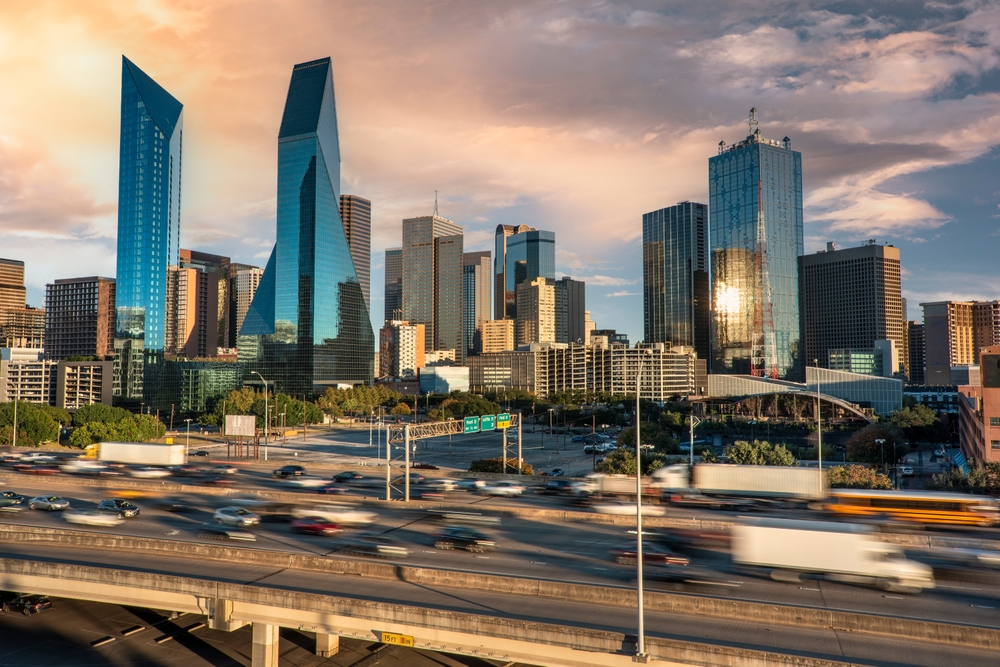
Traffic moves along a major freeway near downtown Dallas | Image by Cavan-Images/Shutterstock High-profile criminal cases, escalating tensions abroad, and major policy and development battles defined the week across Texas and beyond. From a billion-dollar jury verdict in Dallas to a chaotic teen house party in Celina and renewed warnings from President Donald Trump toward Iran, the headlines reflected a mix of local shock, national security concerns, and political maneuvering. Here are the key stories readers may have missed. Major Crime Cases Dominate Headlines: Why It Matters Several high-profile cases captured attention this week, from a massive civil judgment in Dallas to violent incidents and shocking criminal allegations across North Texas. Trump Issues Stark Warning As Iran Tensions Rise: Why It Matters Tensions involving Iran escalated this week, with military developments and strong warnings from President Donald Trump signaling continued instability and global security concerns. Texas Development And Economic Shifts: Why It Matters Major development projects continue to shape North Texas, with one high-profile project collapsing while another -- tied to Elon Musk -- moves closer to reality. Political Battles Intensify In Texas: Why It Matters Texas political tensions remain high as the Senate runoff approaches and state leaders push new policies targeting foreign influence and economic security. Law Enforcement And Public Safety: Why It Matters Law enforcement efforts continued to target violent offenders and organized crime, with major operations removing suspects from North Texas communities. Federal Policy & Economic Pressure: Why It Matters Ongoing disruptions tied to federal funding and airport security have sparked renewed debate over the role of government in transportation safety, with some calling for privatization of the TSA. : Why It Matters Changes in sports media continue to reshape how fans engage with coverage, as longtime voices weigh in on the future of the industry.
The March Reckoning: How Iran War Fears, Tariff Chaos, and a Fragile Rally Collided to Gut Wall Street
The stock market didn't just stumble in late March 2026. It cratered. In the span of a few brutal sessions, the Nasdaq Composite plunged into correction territory, the S&P 500 shed trillions in market capitalization, and the Dow Jones Industrial Average posted its worst weekly decline since the banking panic of early 2023. Investors who had spent the first quarter riding a tentative recovery from last year's tariff-induced volatility found themselves staring at screens filled with red -- and wondering whether the worst was over or just beginning. The proximate cause was geopolitical. Escalating tensions between the United States and Iran, including credible reports of military mobilization in the Persian Gulf and a breakdown in back-channel diplomatic communications, sent crude oil futures surging past $105 a barrel and triggered a flight to safety that overwhelmed equity markets. But as Business Insider reported, the sell-off was not simply a war scare. It was the violent convergence of multiple stress fractures that had been building beneath the surface of an increasingly fragile market for months. Start with tariffs. The Trump administration's aggressive trade posture, which had already rattled markets in 2025, intensified in early 2026 with a fresh round of levies targeting European automotive imports and expanded restrictions on Chinese semiconductor equipment. Corporate earnings calls throughout February were laced with warnings about margin compression. Supply chain managers at major industrials described a planning environment that was, in the words of one Caterpillar executive, "essentially ungovernable." Retailers flagged rising input costs they could no longer absorb without passing them to consumers. Then came the inflation data. The February Consumer Price Index, released in mid-March, showed core inflation ticking back up to 3.4% year-over-year -- a number that effectively killed any remaining hopes for a Federal Reserve rate cut before summer. Fed Chair Jerome Powell, speaking at a scheduled event in Chicago just days before the sell-off accelerated, struck a tone that traders described as notably hawkish. "We will not be pressured by short-term market movements into premature action," Powell said, a line that ricocheted through trading desks and cable news chyrons within minutes. So the setup was already precarious when the Iran headlines hit. And the market's reaction was swift, indiscriminate, and punishing. The Nasdaq, heavily weighted toward growth and technology stocks that are most sensitive to interest rate expectations, fell more than 12% from its February high, crossing the technical threshold that defines a correction. The S&P 500 dropped roughly 8.5% over the same period. The Dow, buoyed slightly by its exposure to defense contractors and energy firms, fared marginally better but still posted significant losses. According to Business Insider, the breadth of the selling was remarkable -- at one point, more than 90% of S&P 500 constituents were trading below their 50-day moving averages, a level of market-wide distress not seen since the COVID crash of March 2020. Mega-cap technology stocks, the very names that had powered the market's recovery from the 2025 tariff shock, bore the heaviest losses. Apple fell 14% in eight trading days. Nvidia, still the market's most closely watched AI proxy, gave back nearly 18%. Microsoft, Amazon, and Alphabet all dropped between 10% and 15%. The concentration risk that strategists had been warning about for two years -- the danger of a market whose gains were driven by a shrinking handful of enormous companies -- was no longer theoretical. It was showing up in 401(k) statements. The selling pressure wasn't confined to equities. Credit spreads widened sharply, with high-yield bond spreads jumping more than 80 basis points in a week. The VIX, Wall Street's so-called fear gauge, spiked above 35, a level that typically signals genuine panic rather than ordinary volatility. Treasury yields, paradoxically, moved in both directions -- the 10-year yield initially dropped as investors piled into safe havens, then reversed higher as traders priced in the inflationary impact of a potential Middle East conflict on energy prices. It was the kind of whipsaw that makes even seasoned fixed-income traders uneasy. Retail investors, who had been net buyers throughout the early-year rally, turned net sellers for the first time since October 2025, according to data from Vanda Research. Options market activity pointed to aggressive hedging, with put-to-call ratios on the S&P 500 reaching levels last seen during the regional banking crisis. Margin calls began circulating. Not catastrophic ones -- not yet -- but enough to force liquidation in some leveraged positions. But here's what made this sell-off different from the garden-variety corrections that punctuate every bull market: the absence of a clear policy backstop. In previous episodes of market stress -- the COVID crash, the 2022 inflation scare, the tariff turbulence of 2025 -- investors could point to either the Federal Reserve or the White House as a potential source of relief. The Fed could cut rates. The administration could walk back trade threats. There was always an off-ramp, real or imagined, that allowed dip-buyers to justify stepping in. This time, the Fed was boxed in by sticky inflation. And the White House, far from seeking to calm markets, appeared to be doubling down. President Trump, in a Truth Social post that landed during Asian trading hours, declared that "the Fake News media is trying to create a panic" and that "our military strength will bring PEACE and PROSPERITY." Markets in Tokyo and Hong Kong promptly fell another 2%. The corporate response was telling. Several major companies, including Boeing and General Motors, delayed planned bond issuances. IPO activity, which had been showing signs of recovery after a dismal 2025, froze entirely. Two SPACs that had been scheduled to close mergers in late March pushed their timelines into the second quarter. The capital markets machinery that depends on confidence and predictability was grinding to a halt. Defense stocks were the obvious exception. Lockheed Martin, Raytheon parent RTX, and Northrop Grumman all surged, with Lockheed gaining more than 11% in the week the broader market was falling apart. Energy names rallied too -- ExxonMobil and Chevron both hit 52-week highs -- though analysts cautioned that an actual military conflict would introduce as much downside risk to global demand as upside to crude prices. Gold, predictably, soared. The metal crossed $2,500 an ounce for the first time, a psychological milestone that drew front-page coverage and further reinforced the narrative of a market in crisis. Bitcoin, which some had positioned as "digital gold," initially sold off with other risk assets before mounting a modest recovery -- a pattern that continued to frustrate crypto advocates who argue for its role as a hedge. Wall Street's strategists scrambled to update their outlooks. Morgan Stanley's Mike Wilson, who had turned cautiously bullish in January, reversed course and warned clients to reduce equity exposure. Goldman Sachs cut its year-end S&P 500 target by 200 points. JPMorgan's Marko Kolanovic -- long one of the Street's most prominent bears -- offered the grim observation that "the risk premium embedded in equities is still insufficient given the range of possible outcomes in the Middle East." And yet. Not everyone was selling. Berkshire Hathaway's 13F filing, which landed in the middle of the turmoil, revealed that Warren Buffett's firm had been adding to positions in energy and consumer staples during the first quarter. Bridgewater Associates, Ray Dalio's firm, was reportedly increasing its allocation to inflation-protected securities and commodities. Some of the smartest money in the world was not running for the exits. It was repositioning. The question consuming trading floors, pension fund boardrooms, and financial media was straightforward but unanswerable: Is this a correction within a bull market, or the beginning of something worse? History offers ambiguous guidance. The average stock market correction -- defined as a decline of 10% or more from a recent peak -- lasts about four months and results in a total drawdown of roughly 13%, according to data compiled by Yardeni Research. Most corrections don't become bear markets. But the ones that do tend to be accompanied by exactly the kind of macro deterioration that was visible in March 2026: rising inflation, tightening financial conditions, geopolitical instability, and deteriorating corporate earnings momentum. The earnings picture was especially concerning. First-quarter earnings season, set to begin in mid-April, was shaping up to be the weakest in two years. Analysts had been cutting estimates throughout March, with the consensus S&P 500 EPS forecast falling from $62 per share to $58 in just three weeks. Tariff-exposed sectors -- industrials, consumer discretionary, materials -- faced the steepest downgrades. Technology, which had been expected to deliver double-digit earnings growth on the back of AI-related spending, was now projected to grow in the mid-single digits at best. The AI trade itself, which had been the market's dominant narrative for more than two years, was showing cracks that predated the Iran crisis. Spending on AI infrastructure remained enormous -- Microsoft, Google, and Amazon had collectively committed more than $180 billion in capital expenditure for 2026 -- but the revenue payoff remained frustratingly elusive for most companies. A widely circulated Goldman Sachs research note from early March had questioned whether the return on AI investment would ever justify the capital deployed, drawing comparisons to the fiber-optic buildout of the late 1990s. The note didn't cause the sell-off. But it contributed to a growing sense that the AI story, while real, had been priced for perfection in a world that was delivering anything but. Small-cap stocks, often viewed as a barometer of domestic economic health, were in outright bear market territory. The Russell 2000 had fallen more than 22% from its November 2025 high, weighed down by rising borrowing costs and weakening consumer spending. Regional banks, which make up a significant portion of the small-cap index, were under particular pressure as commercial real estate losses continued to mount and deposit competition squeezed net interest margins. Consumer confidence data released in the final week of March confirmed what retailers had been signaling for weeks. The Conference Board's Consumer Confidence Index dropped to 87.4, its lowest reading since the summer of 2023. The "expectations" component of the index -- which measures how consumers feel about the future -- fell even more sharply, hitting levels historically associated with recession. Was a recession actually coming? The bond market was sending mixed signals. The yield curve, which had been inverted for a record-breaking stretch, had finally normalized -- but in the ominous way that often precedes downturns, with long-term yields rising faster than short-term yields as inflation expectations climbed. The Atlanta Fed's GDPNow model, a real-time estimate of economic growth, was tracking first-quarter GDP at just 0.8%, down from 2.1% at the start of the year. The labor market, long the economy's strongest pillar, was showing its first meaningful signs of softening. Weekly jobless claims had ticked above 240,000 for three consecutive weeks. The February jobs report, while still showing positive payroll growth, revealed a troubling shift in composition -- most of the gains were concentrated in government and healthcare, while private-sector hiring in cyclical industries was essentially flat. None of this meant a recession was inevitable. The U.S. economy has a long history of absorbing shocks that look devastating in real time and proving more resilient than forecasters expect. Consumer balance sheets, while stretched, were not overleveraged by historical standards. Corporate balance sheets, particularly among large-cap companies, remained healthy. And the labor market, even in its weakened state, was still generating enough job growth to support household spending. But the margin for error had narrowed dramatically. And the Iran situation introduced a variable that no economic model could reliably forecast. By the final trading day of March, the S&P 500 had recovered slightly from its lows, posting a modest bounce that technical analysts attributed to short-covering rather than genuine buying conviction. The Nasdaq remained firmly in correction territory. The Dow was down roughly 7% for the month. Trading volumes were elevated, volatility was entrenched, and the mood on Wall Street was one of grim watchfulness. April would bring earnings season, another Fed meeting, and whatever came next in the Persian Gulf. For investors, the calculus was brutally simple: either the geopolitical tensions would de-escalate and the market would find a floor, or they wouldn't, and the correction would deepen into something far more painful. There was no middle ground. No soft landing for a market caught between inflation, war risk, and the slow unwinding of the most crowded trades in a generation. The March sell-off wasn't a surprise. It was a reckoning that had been building in plain sight, ignored by a market that had convinced itself the only direction was up. Now the bill had arrived. And no one was quite sure who would end up paying it.

A Court Just Blocked the Pentagon's Anthropic Ban. Here's What That Means.
A district court judge in California issued a preliminary injunction blocking the Pentagon's declaration of Anthropic as a "supply chain risk" -- but the company is still in deep trouble. On Thursday, Judge Rita F. Lin of the District Court for the Northern District of California temporarily halted a directive from President Trump that banned federal agencies from using artificial intelligence technology developed by Anthropic. The federal judge in San Francisco further ordered a preliminary injunction against the United States Department of Defense (DoD) after it labeled the company a "supply chain risk." The Pentagon's move came in late February after the AI developer refused to loosen its restrictions on the use of its technology, with Anthropic insisting its Claude AI model be excluded from mass domestic surveillance and use in fully autonomous weapons. The designation from the Pentagon, made under a rarely-used procurement authority, would have forced contractors working with the DoD -- including nearly all American major tech companies -- to avoid using Anthropic's tools. Anthropic subsequently filed a lawsuit arguing that the designation violated its First Amendment and due process rights and caused significant business impact -- a claim that the court upheld in the initial stages of litigation. "At bottom, Anthropic has shown that these broad punitive measures were likely unlawful and that it is suffering irreparable harm from them. Numerous amici have also described wide-ranging harm to the public interest," Lin wrote in a 43-page ruling. The ruling will pause the government's ban until the court decides the merits of the underlying case. Lin's opinion noted that the supply chain risk designation is typically reserved for foreign intelligence agencies, companies with ties to those agencies, and terrorist groups, rather than American companies. "These broad measures do not appear to be directed at the government's stated national security interests," Lin wrote. "If the concern is the integrity of the operational chain of command, the Department of [Defense] could just stop using Claude." The federal court judge added that the "measures appear designed to punish Anthropic" for openly disagreeing with the Pentagon. The DoD's lawyers had argued that Antropic's actions made it untrustworthy and that the supply chain risk was intended to limit how the military could employ its AI models. The Pentagon's team also suggested that Anthropic might update Claude to endanger national security -- a move that Lin said was "both contrary to law and arbitrary and capricious." Anthropic Won Its Court Case -- but Won't Come Out Ahead Anthropic welcomed the ruling. "We're grateful to the court for moving swiftly, and pleased they agree Anthropic is likely to succeed on the merits," the company wrote in a media release. "While this case was necessary to protect Anthropic, our customers, and our partners, our focus remains on working productively with the government to ensure all Americans benefit from safe, reliable AI." Experts at AI security provider Suzu Labs explained that it is necessary to examine the finer details of the ruling. "The Pentagon lost the court case and the procurement tool," said Michael Bell, founder and CEO at Suzu Labs, in an email to The National Interest. "A federal judge found the supply chain risk designation was retaliation, not a security determination, and cited the Pentagon's own records. That precedent constrains every future use of the same authority against domestic companies. The tool was built for foreign adversaries. Now it's been tested in court against a domestic company, and it failed." However, it is hard to see if there is a real winner in the Anthropic-Pentagon fracas. "The real issue isn't who won the lawsuit. It's that frontier AI capability on classified networks was disrupted for over a month while this played out. From an operational standpoint, that's the failure worth examining," Aaron Colclough, VP of operations at Suzu Labs, told The National Interest via email. "Single-vendor dependency in critical systems is a known risk in security, and this case shows it applies to defense AI procurement too," Colclough added. "When one contract dispute can degrade classified network capability for weeks, the architecture is wrong. The fix isn't better contracts with one provider or clearer legal precedent. It's qualified redundancy: multiple providers, interoperable where possible, with clear use terms negotiated before anyone gets access to classified infrastructure." Bell suggested that even as the headlines call this a victory for Anthropic, it isn't. Instead, it is clear that both sides made mistakes, and military AI readiness will suffer as a result. "Anthropic got the injunction but lost the business relationship. The $200 million contract is functionally dead," warned Bell. Despite Anthropic's court victory, it is unlikely that anyone at the Pentagon will champion working with a company that sued it -- certainly not until there is a change at the top. It is certainly possible that the company could find a way back with a future presidential administration and leadership within the Pentagon. However, that won't be for two years at the earliest -- several lifetimes for a fast-moving technology like AI. The US Armed Forces Just Want AI Tools That Work The feud between Anthropic isn't limited to one department or agency. President Donald Trump issued an executive order that phased out the company's AI technology across all federal agencies. Bell warned that this was a separate action, and that Lin's narrow ruling doesn't touch it. "Meanwhile, the warfighter lost capability. For over a month, frontier AI on classified networks was degraded or disrupted while both sides fought in court and on cable news," Bell explained. "The rush to onboard replacement providers is happening, but classified infrastructure accreditation takes months, not weeks. The warfighter doesn't care who won the argument. They care whether the tools work." Anthropic likely won't be the only AI developer to put guardrails on its technology, and how it may be used. That could be both a problem and an opportunity. "Competition solves this. Court rulings don't," said Bell. "Get more qualified providers on classified networks, negotiate terms clearly before deployment, and stop letting single-vendor dependency turn contract disputes into national security crises." About the Author: Peter Suciu Peter Suciu has contributed to dozens of newspapers, magazines and websites over a 30-year career in journalism. He regularly writes about military hardware, firearms history, cybersecurity, politics, and international affairs. Peter is also a contributing writer for Forbes and Clearance Jobs. He is based in Michigan. You can follow him on Twitter: @PeterSuciu. You can email the author: [email protected].

SpaceX IPO buzz grows as Wall Street watches closely
By Niket Nishant and Shashwat Chauhan From rocket launches drawing millions of YouTube views to social media frenzy over its potential listing, SpaceX's debut is shaping up to be a landmark moment for Wall Street. Traders are betting thousands of dollars on the company's ticker and speculating over its entry into the most elite club of US companies, giving the world's most valuable start-up a level of social media buzz that only a few companies enjoy, especially when they are yet to file their initial public offering (IPO) paperwork. On Polymarket, users were betting on topics including the company's targeted valuation, the exchange it would list on and the ticker its shares would trade under. The combined trading volume of such bets exceeded more than $15.2m since Friday. Odds on the prediction markets platform put a 25% chance on SpaceX choosing the letter "X" as its ticker, a sharp drop from 60% a month ago. The single-letter ticker is up for grabs after US Steel, which reportedly held it for over a century, delisted from the New York Stock Exchange after being bought by Japan's Nippon Steel last year. Musk's social media platform is also called X after a rebrand from Twitter in 2023. Tuttle Capital Management CEO Matthew Tuttle said a better alternative would be "SPCX" -- also the ticker of an exchange traded fund his company manages. Tuttle has indicated openness to selling the SPCX symbol to SpaceX. "I've not heard from Elon, but my phone line is still open and I'm holding out hope that I get a call," he said. Apart from X, other potential options floated on Polymarket include "SPAX" and the risqué, "SEX." However, users see a roughly 70% probability that the company chooses a different ticker altogether. Market valuation SpaceX is targeting a valuation of $1.75-trillion in its listing, which would make it the sixth biggest US company by market capitalisation. Tesla and Meta Platforms could fall behind, with market valuations of $1.4-trillion and $1.39-trillion, respectively. That has fuelled speculation over whether the company's market debut will force a rethink of the so-called "Magnificent Seven", a group of some of the most valuable US companies. "When the company does finally go public, the Magnificent Seven will clearly expand. They'll probably call it the Magnificent Eight, the Super Eight or some new acronym," said Todd Schoenberger, chief investment officer at CrossCheck Management. To capitalise on his popularity among retail investors, CEO Elon Musk is also discussing allocating as much as 30% of the IPO to individual investors, at least three times the usual retail slice, Reuters reported. On social media platform Reddit's r/WallStreetBets thread, SpaceX was mentioned 130 times over the past week and was the 19th most popular mention, according to data from Germany-based data group Breakout Point. "The retail investor plays a very significant role when you have a company like SpaceX that's coming public. Most people would say yes to the opportunity of investing in Elon Musk's space company," said Jonathan Corpina, senior managing partner for Meridian Equity Partners.

Did You Miss It? Billion-Dollar Verdict, Teen Party Chaos & Trump's Iran Warning
Major development projects in Texas continue to shape the region, with one collapsing and another tied to Elon Musk moving closer to reality. High-profile criminal cases, escalating tensions abroad, and major policy and development battles defined the week across Texas and beyond. From a billion-dollar jury verdict in Dallas to a chaotic teen house party in Celina and renewed warnings from President Donald Trump toward Iran, the headlines reflected a mix of local shock, national security concerns, and political maneuvering. Here are the key stories readers may have missed. Major Crime Cases Dominate Headlines: Why It Matters Several high-profile cases captured attention this week, from a massive civil judgment in Dallas to violent incidents and shocking criminal allegations across North Texas. Trump Issues Stark Warning As Iran Tensions Rise: Why It Matters Tensions involving Iran escalated this week, with military developments and strong warnings from President Donald Trump signaling continued instability and global security concerns. Texas Development And Economic Shifts: Why It Matters Major development projects continue to shape North Texas, with one high-profile project collapsing while another -- tied to Elon Musk -- moves closer to reality. Political Battles Intensify In Texas: Why It Matters Texas political tensions remain high as the Senate runoff approaches and state leaders push new policies targeting foreign influence and economic security. Law Enforcement And Public Safety: Why It Matters Law enforcement efforts continued to target violent offenders and organized crime, with major operations removing suspects from North Texas communities. Federal Policy & Economic Pressure: Why It Matters Ongoing disruptions tied to federal funding and airport security have sparked renewed debate over the role of government in transportation safety, with some calling for privatization of the TSA. : Why It Matters Changes in sports media continue to reshape how fans engage with coverage, as longtime voices weigh in on the future of the industry.
Smuggled drugs fuel chaos inside Ohio prisons
Addictive drugs soaked in confetti-sized hits are being smuggled in, tossed over fences and dropped in by drones. Why can't prison officials stop it? * Drug-soaked paper, known as K2, is now the most common drug found in Ohio prisons. * Fatal overdoses from K2 are rising, but the state likely undercounts them due to detection difficulties. * Despite millions spent on security, drugs are smuggled in by staff, visitors, and drones. * Staff and contractors suspected of smuggling often resign without facing criminal charges. Jayson Murphy lit the speck of paper and inhaled, holding the smoke in his lungs as long as he could. His cellmate, John Jenkins, purchased the drug-soaked paper from another incarcerated man at Lebanon Correctional Institution, a state prison notorious for substance abuse and violence. The drug was their escape from the cockroaches, the bad food, the brutality of their life in prison. The friends laughed themselves to sleep in their bunks that October evening in 2024. The next morning, Jenkins set his dirty laundry outside the cell and tapped Murphy's leg. But Murphy, 50, didn't move. "Oh man, my cellie is dead," Jenkins recalled telling a corrections officer. A crime lab detected potent synthetic drugs, that incarcerated users call K2, in the partially burnt paper found near Murphy's body. Authorities closed their criminal investigation the moment the coroner ruled the death an overdose, abandoning any effort to determine how the drug entered the prison. "I feel like they think, 'OK, he made a choice to get high. So that's that,' you know, instead of looking deeper into the root of the issues," said Amber Hall, Murphy's sister. "How are these things happening? Why are they happening more often? Why is this normal?" Drug-soaked paper, sold in confetti-sized hits, is now the most commonly found drug in Ohio prisons, fueling violence and accounting for more deaths than any other substance, according to a yearlong investigation by The Marshall Project - Cleveland, Columbus Dispatch, Cincinnati Enquirer, Akron Beacon Journal and Canton Repository. The highly addictive drug is smuggled in by staff and visitors, tossed over fences and dropped in by drones. Wide-ranging and unpredictable side effects include vomiting, twitching, convulsing, aggression and psychosis. Jenkins said nearly all 150 men in his cellblock smoke paper. He described a scene from "The Walking Dead" -- men passing out or shuffling around, grunting with burn holes in their clothes. Reporters reviewed hundreds of autopsy, police and court records, hours of prison surveillance footage and data on more than 56,000 drug seizures inside Ohio prisons since 2020. They interviewed prison employees, incarcerated people, families, prosecutors, coroners, forensic scientists, lawmakers, inspectors and smugglers. The investigation found tens of millions of tax dollars spent on tighter security, including taller perimeter fences, anti-drone technology and the electronic delivery of mail. Yet an unknown number of employees and contractors continue to sneak significant amounts of drugs through the front entrance with little consequence. Workers suspected of smuggling often resigned without facing charges, records showed. Murphy was among at least 13 people incarcerated in Ohio who fatally overdosed on K2 in 2024, up from just three the year before, according to available autopsy and toxicology reports. Coroners say they are struggling to identify K2 and other chemicals that evade detection in standard toxicology tests, causing state prison officials to undercount fatal overdoses, the news outlets found after reviewing dozens of death investigations. "At the end of the day, they're still someone's dad, brother, son," said Hall. "And they have people that care about them." Corrections officers are doling out an unprecedented level of discipline. From 2020 to 2024, records show that rule violations for drug use and possession doubled from 10,308 to 20,799, despite only a 6% uptick in the state prison population. Prison officials attribute the spike to new drug detection methods. Nearly half of all drugs found in Ohio prisons are suspected to be K2 paper or other synthetic drugs, state records show. "There is an infestation of narcotics in prisons all over Ohio," said Chris Mabe, president of the union that represents state prison workers. The suspected drugs officers find are rarely tested due to cost and potential exposure. It's impractical to investigate every case, a state official said. Nonetheless, the contraband found is used to discipline incarcerated people. Drug-soaked paper is the most troubling development within state prisons in 30 years, said Annette Chambers-Smith, director of the Ohio Department of Rehabilitation and Correction, who is stepping down to take a job in the governor's office. When it's not available, desperation and untreated addiction drive incarcerated people to wipe up floor wax and bug spray with toilet paper, and then smoke it. People will even smoke dead cockroaches soaked in insecticide, Chambers-Smith said. In some prisons, the floors aren't waxed anymore. "It's crazy," Chambers-Smith said. "Who else is going to smoke wax? I don't notice that happening out in the community." Smoking paper is a uniquely prison thing. The common chemicals and synthetic compounds are hard to detect. The paper is easy to smuggle and hide. Smugglers can make up to $5,000 for each delivery, which can vary in size and often includes other types of drugs. People who unbundle and sell the packages inside prison walls make even more. One man incarcerated at Ross Correctional Institution bragged on a text-messaging system used to communicate with people on the outside that he could make $12,000 in two or three days, according to messages obtained by the highway patrol. His collaborators could make a half-million dollars in two or three years. "It's a gold mine here," he texted. "F--- THE LAW," the man wrote in another message, declaring open season for drug dealing in Ohio prisons. "I GOT 28 TO LIFE. IM NEVEGONE STOP HUSTLIN TILL I GET HOME OR THEY KILL ME." Synthetic cannabinoids flood Ohio prisons Even before drug-soaked paper began to overrun facilities in 2018, addiction and drug use were devastating Ohio prisons. Chambers-Smith said more than 80% of incarcerated people have a history of substance abuse. Corrections officers significantly increased the use of Narcan in 2024 to counter suspected opioid overdoses. But there is no antidote for widely circulating synthetic cannabinoids, which killed more people in Ohio prisons than fentanyl that year, autopsy records show. These mind-altering substances appeared on the shelves of U.S. head shops about 20 years ago. The drug was sold as incense or potpourri -- often in colorful packaging with names like Spice or K2 and with often-ignored warning labels that said, "not for human consumption." Public health departments and poison control centers fielded emergency calls and sounded alarms. By 2011, federal regulators and lawmakers in states including Ohio started banning the drug. These drugs are primarily manufactured overseas. In 2019, the Chinese government outlawed synthetic cannabinoids. But clandestine labs continued to produce the ingredients as manufacturing shifted to the U.S., said Derek Maltz, who led the Drug Enforcement Administration in 2025. Synthetic cannabinoids are seemingly tailored for prisons. The drug is soaked into paper, sometimes disguised as court documents, magazines and books. It enters prisons in full sheets or tiny pieces, often packaged in balloons that can be swallowed. The product is ultimately sold in hits that users smoke or ingest. "I've never seen anything like it," said Tim Wade, who has served time in six prisons in the past decade. "It's different. People are getting rich off it. You can't stop it because you can't detect it. There's no test for it." When Wade first smoked K2, also called tune, he was told he threw his commissary box at his cellmate while barking like a dog. "You mess with someone on tune," Wade said, "you're liable to get attacked." He said he eventually quit, but it wasn't easy. Inside Ohio prisons, multiple eyewitnesses described people smearing feces on walls, constantly talking to themselves, and refusing to shower or eat after prolonged use. Some are "like that permanently now," Wade said. "They ain't coming out of it." Jenkins, 36, remains incarcerated at Lebanon Correctional Institution. He continued to smoke paper after reporting the death of his cellmate, Murphy. "That tune is the devil. It turns you into something that you really ain't," he said. The last time he used the drug, he said it felt like his heart was going to explode -- a scare that finally got him to kick the habit. One morning in February 2023, Steven Grant found his cellmate, Willis Crutcher, still slumped over in a chair from the night before. He was dead, his skin cold and tight. A toxicology test found methamphetamine, fentanyl and K2 in Crutcher's system. Packing up his belongings fell on Grant, who called Crutcher's mother to share details of her son's death. "That was probably the worst part," Grant, 48, said, "talking to her on the phone because she didn't know that he even smoked the tune, you know what I mean? And I hated to be the one to tell her that." Incarcerated people, workers and independent inspectors said some K2 users will visit the prison infirmary in the morning until the effects wear off and be back at it that evening. "We got inmates that go to prison who were straight arrows and clean. And when they leave prison, they're addicts," said Ohio Rep. Mark Johnson, a Chillicothe Republican, who has two state prisons in his district. "There is something wrong with this puzzle." A game of Whac-A-Mole Prisons are struggling to stem the flow of drugs across the country and in Ohio, where officials in recent years have spent tens of millions of tax dollars on tighter security and new strategies. "It's like Whac-A-Mole," state prison director Chambers-Smith said of the multi-front war on prison drugs. "[W]hen you shut down one lane, another one tries to open up." Along with higher fencing and drone detection systems, Chambers-Smith wants more than 14 drug-sniffing dogs, which take time to train, to cover 28 prisons. In the meantime, prison investigators have deployed mobile units that detect unauthorized cellphone signals and airport-style body scanners that check incarcerated people as they return from visits or outside work. The scanners use low-dose X-ray imaging. "A person can be scanned 1,000 times and be under the amount of radiation someone can be exposed to in a year," state prison officials said in a September press release. But they're not used on staff despite more than 180 state prison employees and private vendors suspected of smuggling drugs or contraband since 2020. Some of them admitted to smuggling for weeks or months before getting caught at the main entrance with drugs tucked into their underwear, according to investigative files. The most significant change is how Ohio prisoners receive their mail. Mailrooms had become a primary entry point for drug-soaked paper. In 2021, staff at each prison began scanning and photocopying thousands of letters each month. By 2023, the department opened a center in Youngstown to streamline the process. Now, the 158,000 letters sent to Ohio prisons each year are scanned. Incarcerated people receive them digitally on state-issued tablets, which are also used for emails, phone calls and video visits. Monitoring all that communication, including 60 million annual phone calls lasting 833 million minutes, is a monumental job. In 2025, the department began piloting artificial intelligence at 10 prisons to help investigators search for keywords and follow up on tips. Lawmakers allocated $1 million to expand the program in 2026. But incarcerated dealers and their collaborators often speak in code to keep a step ahead of investigators. And last year, prison investigators said they found at least 1,000 illegal cellphones. Mobile units can detect illegal phones, allowing officials to see phone numbers but not hear the conversations. State prisons are under constant watch by thousands of cameras and employees. Yet drone operators continue to drop drugs into prison yards, even where netting has been installed. People chuck packets over fences or shoot them out of potato cannons -- homemade launchers. Visitors conceal drugs in their bags, bodies or clothing, even under press-on fingernails. Sometimes they're caught, but often the smugglers get away with it. "You can get a whole lot of Suboxone strips in the palm of your hand, worth thousands upon thousands of dollars. Same with the K2 -- it's so small and easily carried. It's really pretty simple math," said one man, who has been incarcerated for nearly two decades and asked not to be named because of safety concerns. Suboxone, which is abused by some incarcerated users, is prescribed for opioid addiction. Drug testing is difficult, costly Of the 176 deaths recorded in Ohio prisons in 2024, officials only linked 10 to fatal overdoses. But toxicology and autopsy reports show that drug use likely caused or contributed to at least 20 deaths: 13 from K2, five from amphetamines like meth, and one each from fentanyl or alcohol. And that's probably an undercount since standard testing isn't designed to detect many chemicals in drug-soaked paper, and additional testing can be costly. Unable to confirm suspected overdoses, coroners often list an undetermined cause of death or point to a chronic disease in a person's medical history. Some coroners go further than others to get answers. In November 2024, Eric Thompson, 33, died while sitting on the bunk in his single cell at Lorain Correctional Institution. Jaleel McCray, 36, died a month later in the middle of a phone call. Lorain County Coroner Frank P. Miller III found nothing of note in their medical histories. He sent each man's blood and urine to a forensic toxicology lab in Indianapolis for the standard $300 screening, plus $200 for synthetic cannabinoid testing. No hits. Undeterred, Miller applied for free testing at the nonprofit Center for Forensic Science Research & Education near Philadelphia, a cutting-edge operation with the latest instruments and a library of known substances. Both men had, in fact, died of the same synthetic cannabinoid, the center found. "It really was invaluable to us that they were able to screen our material and find that," said Miller. Warren County Coroner Russell Uptegrove, who examines bodies from two state prisons, increasingly has had to send samples to specialty labs. "I've heard about people trying to spray things with ant killer or some sort of pesticide or some sort of chemicals," said Uptegrove. "But, again, unless you know specifically what kind of chemical, that's not going to show up on routine toxicology testing." Jessica Toms manages the drug chemistry section at the Ohio Bureau of Criminal Investigation, which has grown from six chemists to three dozen in her 20-year career. Originally, lab testing revealed more common drugs like cocaine and meth, she said. "And now just the volume of designer drugs has exploded." Toms and her team are often telling crime labs in other states when they find something new. "Unfortunately, Ohio is at the forefront of some of these new substances. So, we're seeing some of these things first, and then telling the DEA, 'This is what we've seen. You should be aware of this,'" she said. The smuggling economy: 'A hell of a temptation' A concentration of users and dealers drives demand behind bars, making prisons fertile ground for the lucrative drug market. "Who would want to stop that?" said Grant, who has been incarcerated for more than three decades. "I mean, you're already in prison. You got less risk. What are they gonna do, ride you to another prison where you're going to do the same thing?" Workers can make a month's salary for smuggling just once. "That's a hell of a temptation, don't you think?" Grant said. "It takes a lot of morals and self decency to say, 'yeah, I'm cool on that.'" Grant's solution? Punish everyone who smuggles, sells and uses drugs in prison. "That's the only way things are really going to change. You have to have consequences. There are none." For many, the reward outweighed the risk. Travis Fletcher worked for Aramark at Mansfield Correctional Institution in early 2021 when an incarcerated kitchen worker serving time for drug trafficking offered him $2,500 to smuggle in "some little things." Struggling to pay his bills, Fletcher drove to Akron to pick up pre-packaged Suboxone strips and a box of court papers soaked in K2. "I can promise u 100,000 cash by christmas," the incarcerated kitchen worker texted, three days before Fletcher got busted. Generally, smugglers are paid by dealers via online money apps, such as Cash App, Venmo or Apple Pay. Instead of getting paid, Fletcher pleaded guilty and was given four years of probation. In some instances, employees conspire with each other to bring in contraband. At the start of their shifts, corrections officers walk through metal detectors. Another officer working the front desk checks their bags and might run a hand wand over their coworker's body. It's like going through airport security, but you might be on a first-name basis with the agent checking you. Corrections Officer Brenda Dixson worked the front entry desk at Northeast Ohio Correctional Center and would allow registered nurse Jodi Johnson to pass through with drugs and other contraband, according to federal court records. The two women pleaded not guilty and are awaiting trial on drug trafficking charges. Acting on an internal tip, prison investigator Scott Nagy worked with a federal drug task force to catch the two on Oct. 18, 2025. The prison is owned and operated by CoreCivic, a publicly traded, for-profit company. It declined a request for records that would shed light on the case. In a 2025 hearing on a prison security bill, lawmakers asked William R. Cokonougher, a sergeant at Ross Correctional Institution, what prison reform is needed most. "It's going to be drug interdiction, 100%," Cokonougher said, without hesitation. "We need to put more measures in place to combat these drugs. Like I said, it's killing inmates. It's causing staff to OD." Mark Johnson, the state representative, said he believes that the government -- not private contractors -- should handle all functions inside high-security prisons, including food service. Ohio started contracting with Aramark for food service in 2013 under Gov. John Kasich to save money. "We have people who are from behind the walls of prison getting their friends to apply for work here," Johnson said. "They know all the signs and everything when they get there. They're not really going to work to serve food. They're going in there to serve drugs up." An Aramark spokesperson did not respond to detailed questions. State prison officials have banned more than 200 Aramark employees from prison property since 2020 for suspected smuggling or inappropriate relationships, which often go hand in hand. Like former staff put on a do-not-rehire list, they rarely face criminal charges. And as soon as one of them gets removed from the job, incarcerated people are busy finding replacements. "I need somebody to come out here and work in this prison for Aramark," an incarcerated dealer wrote on a monitored messaging system in May 2024, just two days after his Aramark contact got busted. "Can you knock a white girl for us in Chillicothe Ohio, a smart one. To bring me drugs in the kitchen where I work." Few answers for families Katherine Dixon, 24, holds a heart-shaped pendant etched with "always in my heart." Inside is a portion of her father's cremated remains. When she gets married in October, Dixon plans to wear the pendant and leave a front-row seat open for her dad, Aaron Dixon. "I always imagined my dad walking me down the aisle," she said. In August 2024, Aaron called Katherine, the oldest of his seven children, from inside Chillicothe Correctional Institution. They made plans to attend her little sister's high school graduation together -- if he managed to get out in time. "He said, 'I love you,' and that he'd call me the next day," Katherine Dixon said. That night, an officer asked Aaron Dixon's cellmate if his bunkie was OK. He hopped off the top bunk to find Dixon slumped forward, blue and cold. The autopsy said Aaron Dixon suffered from heart disease and died of a synthetic cannabinoid overdose. Patrol investigators found a wire and a burnt electrical outlet in the cell -- a telltale sign of smoking drugs. As the listed next of kin, Katherine Dixon got the call from the prison about his death. In the weeks that followed, she said she placed multiple calls to the coroner, which yielded little information about exactly what happened. Prison officials told her that he suffered a heart attack. She learned the true cause months later when a reporter called and shared the autopsy and toxicology reports with her. "Wait, did you say that he overdosed?" Katherine Dixon said on the phone. She and her sister Hannah sobbed when they finally reviewed the medical reports. A heart attack seemed easier to accept. "It feels different because passing away due to a drug overdose, it's something you don't want to hear about a family member. It just breaks you inside," Katherine Dixon said. Aaron Dixon, who was serving seven years for drug possession and burglary, started using drugs as a teenager. With a family history of addiction, he had little success controlling his cravings. He landed in jails, bar fights, homeless shelters, prisons and trouble. When her father got locked up, Katherine Dixon was hopeful that he would finally get clean. "I thought he was going to be safe in prison." This article was published in partnership with The Marshall Project, a nonprofit news organization covering the U.S. criminal justice system. Sign up for The Marshall Project's newsletters, and follow them on Instagram, TikTok, Reddit and Facebook.
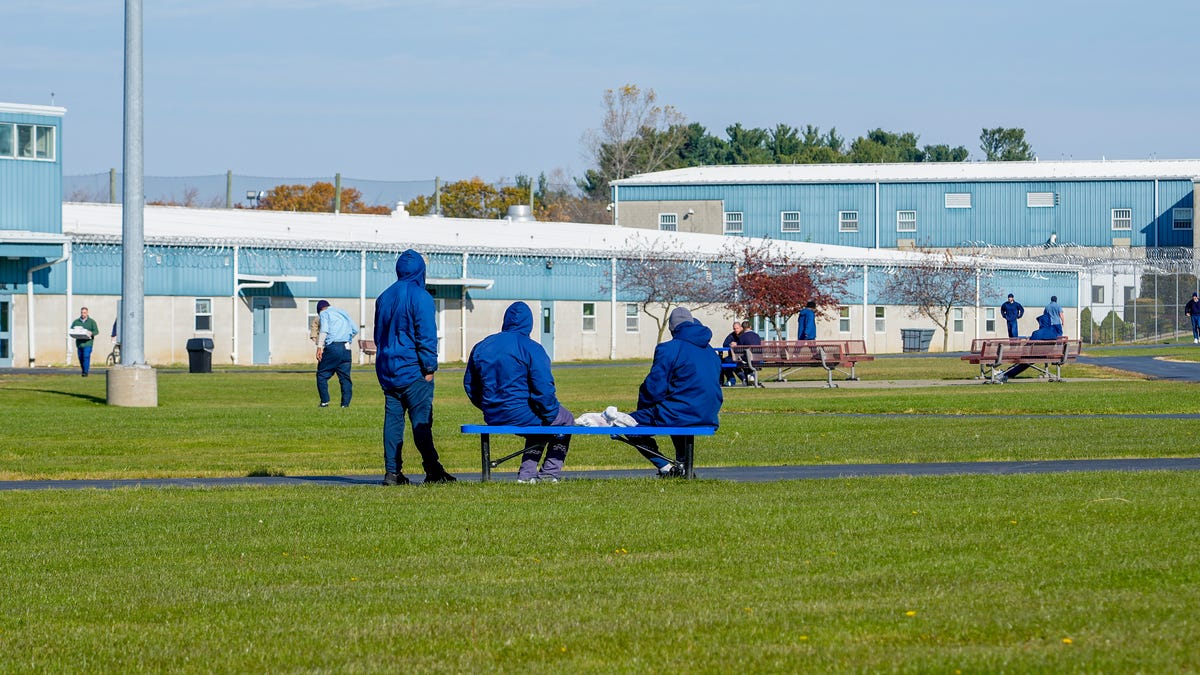
Smuggled drugs fuel chaos inside Ohio prisons
Addictive drugs soaked in confetti-sized hits are being smuggled in, tossed over fences and dropped in by drones. Why can't prison officials stop it? * Drug-soaked paper, known as K2, is now the most common drug found in Ohio prisons. * Fatal overdoses from K2 are rising, but the state likely undercounts them due to detection difficulties. * Despite millions spent on security, drugs are smuggled in by staff, visitors, and drones. * Staff and contractors suspected of smuggling often resign without facing criminal charges. Jayson Murphy lit the speck of paper and inhaled, holding the smoke in his lungs as long as he could. His cellmate, John Jenkins, purchased the drug-soaked paper from another incarcerated man at Lebanon Correctional Institution, a state prison notorious for substance abuse and violence. The drug was their escape from the cockroaches, the bad food, the brutality of their life in prison. The friends laughed themselves to sleep in their bunks that October evening in 2024. The next morning, Jenkins set his dirty laundry outside the cell and tapped Murphy's leg. But Murphy, 50, didn't move. "Oh man, my cellie is dead," Jenkins recalled telling a corrections officer. A crime lab detected potent synthetic drugs, that incarcerated users call K2, in the partially burnt paper found near Murphy's body. Authorities closed their criminal investigation the moment the coroner ruled the death an overdose, abandoning any effort to determine how the drug entered the prison. "I feel like they think, 'OK, he made a choice to get high. So that's that,' you know, instead of looking deeper into the root of the issues," said Amber Hall, Murphy's sister. "How are these things happening? Why are they happening more often? Why is this normal?" Drug-soaked paper, sold in confetti-sized hits, is now the most commonly found drug in Ohio prisons, fueling violence and accounting for more deaths than any other substance, according to a yearlong investigation by The Marshall Project - Cleveland, Columbus Dispatch, Cincinnati Enquirer, Akron Beacon Journal and Canton Repository. The highly addictive drug is smuggled in by staff and visitors, tossed over fences and dropped in by drones. Wide-ranging and unpredictable side effects include vomiting, twitching, convulsing, aggression and psychosis. Jenkins said nearly all 150 men in his cellblock smoke paper. He described a scene from "The Walking Dead" -- men passing out or shuffling around, grunting with burn holes in their clothes. Reporters reviewed hundreds of autopsy, police and court records, hours of prison surveillance footage and data on more than 56,000 drug seizures inside Ohio prisons since 2020. They interviewed prison employees, incarcerated people, families, prosecutors, coroners, forensic scientists, lawmakers, inspectors and smugglers. The investigation found tens of millions of tax dollars spent on tighter security, including taller perimeter fences, anti-drone technology and the electronic delivery of mail. Yet an unknown number of employees and contractors continue to sneak significant amounts of drugs through the front entrance with little consequence. Workers suspected of smuggling often resigned without facing charges, records showed. Murphy was among at least 13 people incarcerated in Ohio who fatally overdosed on K2 in 2024, up from just three the year before, according to available autopsy and toxicology reports. Coroners say they are struggling to identify K2 and other chemicals that evade detection in standard toxicology tests, causing state prison officials to undercount fatal overdoses, the news outlets found after reviewing dozens of death investigations. "At the end of the day, they're still someone's dad, brother, son," said Hall. "And they have people that care about them." Corrections officers are doling out an unprecedented level of discipline. From 2020 to 2024, records show that rule violations for drug use and possession doubled from 10,308 to 20,799, despite only a 6% uptick in the state prison population. Prison officials attribute the spike to new drug detection methods. Nearly half of all drugs found in Ohio prisons are suspected to be K2 paper or other synthetic drugs, state records show. "There is an infestation of narcotics in prisons all over Ohio," said Chris Mabe, president of the union that represents state prison workers. The suspected drugs officers find are rarely tested due to cost and potential exposure. It's impractical to investigate every case, a state official said. Nonetheless, the contraband found is used to discipline incarcerated people. Drug-soaked paper is the most troubling development within state prisons in 30 years, said Annette Chambers-Smith, director of the Ohio Department of Rehabilitation and Correction, who is stepping down to take a job in the governor's office. When it's not available, desperation and untreated addiction drive incarcerated people to wipe up floor wax and bug spray with toilet paper, and then smoke it. People will even smoke dead cockroaches soaked in insecticide, Chambers-Smith said. In some prisons, the floors aren't waxed anymore. "It's crazy," Chambers-Smith said. "Who else is going to smoke wax? I don't notice that happening out in the community." Smoking paper is a uniquely prison thing. The common chemicals and synthetic compounds are hard to detect. The paper is easy to smuggle and hide. Smugglers can make up to $5,000 for each delivery, which can vary in size and often includes other types of drugs. People who unbundle and sell the packages inside prison walls make even more. One man incarcerated at Ross Correctional Institution bragged on a text-messaging system used to communicate with people on the outside that he could make $12,000 in two or three days, according to messages obtained by the highway patrol. His collaborators could make a half-million dollars in two or three years. "It's a gold mine here," he texted. "F--- THE LAW," the man wrote in another message, declaring open season for drug dealing in Ohio prisons. "I GOT 28 TO LIFE. IM NEVEGONE STOP HUSTLIN TILL I GET HOME OR THEY KILL ME." Synthetic cannabinoids flood Ohio prisons Even before drug-soaked paper began to overrun facilities in 2018, addiction and drug use were devastating Ohio prisons. Chambers-Smith said more than 80% of incarcerated people have a history of substance abuse. Corrections officers significantly increased the use of Narcan in 2024 to counter suspected opioid overdoses. But there is no antidote for widely circulating synthetic cannabinoids, which killed more people in Ohio prisons than fentanyl that year, autopsy records show. These mind-altering substances appeared on the shelves of U.S. head shops about 20 years ago. The drug was sold as incense or potpourri -- often in colorful packaging with names like Spice or K2 and with often-ignored warning labels that said, "not for human consumption." Public health departments and poison control centers fielded emergency calls and sounded alarms. By 2011, federal regulators and lawmakers in states including Ohio started banning the drug. These drugs are primarily manufactured overseas. In 2019, the Chinese government outlawed synthetic cannabinoids. But clandestine labs continued to produce the ingredients as manufacturing shifted to the U.S., said Derek Maltz, who led the Drug Enforcement Administration in 2025. Synthetic cannabinoids are seemingly tailored for prisons. The drug is soaked into paper, sometimes disguised as court documents, magazines and books. It enters prisons in full sheets or tiny pieces, often packaged in balloons that can be swallowed. The product is ultimately sold in hits that users smoke or ingest. "I've never seen anything like it," said Tim Wade, who has served time in six prisons in the past decade. "It's different. People are getting rich off it. You can't stop it because you can't detect it. There's no test for it." When Wade first smoked K2, also called tune, he was told he threw his commissary box at his cellmate while barking like a dog. "You mess with someone on tune," Wade said, "you're liable to get attacked." He said he eventually quit, but it wasn't easy. Inside Ohio prisons, multiple eyewitnesses described people smearing feces on walls, constantly talking to themselves, and refusing to shower or eat after prolonged use. Some are "like that permanently now," Wade said. "They ain't coming out of it." Jenkins, 36, remains incarcerated at Lebanon Correctional Institution. He continued to smoke paper after reporting the death of his cellmate, Murphy. "That tune is the devil. It turns you into something that you really ain't," he said. The last time he used the drug, he said it felt like his heart was going to explode -- a scare that finally got him to kick the habit. One morning in February 2023, Steven Grant found his cellmate, Willis Crutcher, still slumped over in a chair from the night before. He was dead, his skin cold and tight. A toxicology test found methamphetamine, fentanyl and K2 in Crutcher's system. Packing up his belongings fell on Grant, who called Crutcher's mother to share details of her son's death. "That was probably the worst part," Grant, 48, said, "talking to her on the phone because she didn't know that he even smoked the tune, you know what I mean? And I hated to be the one to tell her that." Incarcerated people, workers and independent inspectors said some K2 users will visit the prison infirmary in the morning until the effects wear off and be back at it that evening. "We got inmates that go to prison who were straight arrows and clean. And when they leave prison, they're addicts," said Ohio Rep. Mark Johnson, a Chillicothe Republican, who has two state prisons in his district. "There is something wrong with this puzzle." A game of Whac-A-Mole Prisons are struggling to stem the flow of drugs across the country and in Ohio, where officials in recent years have spent tens of millions of tax dollars on tighter security and new strategies. "It's like Whac-A-Mole," state prison director Chambers-Smith said of the multi-front war on prison drugs. "[W]hen you shut down one lane, another one tries to open up." Along with higher fencing and drone detection systems, Chambers-Smith wants more than 14 drug-sniffing dogs, which take time to train, to cover 28 prisons. In the meantime, prison investigators have deployed mobile units that detect unauthorized cellphone signals and airport-style body scanners that check incarcerated people as they return from visits or outside work. The scanners use low-dose X-ray imaging. "A person can be scanned 1,000 times and be under the amount of radiation someone can be exposed to in a year," state prison officials said in a September press release. But they're not used on staff despite more than 180 state prison employees and private vendors suspected of smuggling drugs or contraband since 2020. Some of them admitted to smuggling for weeks or months before getting caught at the main entrance with drugs tucked into their underwear, according to investigative files. The most significant change is how Ohio prisoners receive their mail. Mailrooms had become a primary entry point for drug-soaked paper. In 2021, staff at each prison began scanning and photocopying thousands of letters each month. By 2023, the department opened a center in Youngstown to streamline the process. Now, the 158,000 letters sent to Ohio prisons each year are scanned. Incarcerated people receive them digitally on state-issued tablets, which are also used for emails, phone calls and video visits. Monitoring all that communication, including 60 million annual phone calls lasting 833 million minutes, is a monumental job. In 2025, the department began piloting artificial intelligence at 10 prisons to help investigators search for keywords and follow up on tips. Lawmakers allocated $1 million to expand the program in 2026. But incarcerated dealers and their collaborators often speak in code to keep a step ahead of investigators. And last year, prison investigators said they found at least 1,000 illegal cellphones. Mobile units can detect illegal phones, allowing officials to see phone numbers but not hear the conversations. State prisons are under constant watch by thousands of cameras and employees. Yet drone operators continue to drop drugs into prison yards, even where netting has been installed. People chuck packets over fences or shoot them out of potato cannons -- homemade launchers. Visitors conceal drugs in their bags, bodies or clothing, even under press-on fingernails. Sometimes they're caught, but often the smugglers get away with it. "You can get a whole lot of Suboxone strips in the palm of your hand, worth thousands upon thousands of dollars. Same with the K2 -- it's so small and easily carried. It's really pretty simple math," said one man, who has been incarcerated for nearly two decades and asked not to be named because of safety concerns. Suboxone, which is abused by some incarcerated users, is prescribed for opioid addiction. Drug testing is difficult, costly Of the 176 deaths recorded in Ohio prisons in 2024, officials only linked 10 to fatal overdoses. But toxicology and autopsy reports show that drug use likely caused or contributed to at least 20 deaths: 13 from K2, five from amphetamines like meth, and one each from fentanyl or alcohol. And that's probably an undercount since standard testing isn't designed to detect many chemicals in drug-soaked paper, and additional testing can be costly. Unable to confirm suspected overdoses, coroners often list an undetermined cause of death or point to a chronic disease in a person's medical history. Some coroners go further than others to get answers. In November 2024, Eric Thompson, 33, died while sitting on the bunk in his single cell at Lorain Correctional Institution. Jaleel McCray, 36, died a month later in the middle of a phone call. Lorain County Coroner Frank P. Miller III found nothing of note in their medical histories. He sent each man's blood and urine to a forensic toxicology lab in Indianapolis for the standard $300 screening, plus $200 for synthetic cannabinoid testing. No hits. Undeterred, Miller applied for free testing at the nonprofit Center for Forensic Science Research & Education near Philadelphia, a cutting-edge operation with the latest instruments and a library of known substances. Both men had, in fact, died of the same synthetic cannabinoid, the center found. "It really was invaluable to us that they were able to screen our material and find that," said Miller. Warren County Coroner Russell Uptegrove, who examines bodies from two state prisons, increasingly has had to send samples to specialty labs. "I've heard about people trying to spray things with ant killer or some sort of pesticide or some sort of chemicals," said Uptegrove. "But, again, unless you know specifically what kind of chemical, that's not going to show up on routine toxicology testing." Jessica Toms manages the drug chemistry section at the Ohio Bureau of Criminal Investigation, which has grown from six chemists to three dozen in her 20-year career. Originally, lab testing revealed more common drugs like cocaine and meth, she said. "And now just the volume of designer drugs has exploded." Toms and her team are often telling crime labs in other states when they find something new. "Unfortunately, Ohio is at the forefront of some of these new substances. So, we're seeing some of these things first, and then telling the DEA, 'This is what we've seen. You should be aware of this,'" she said. The smuggling economy: 'A hell of a temptation' A concentration of users and dealers drives demand behind bars, making prisons fertile ground for the lucrative drug market. "Who would want to stop that?" said Grant, who has been incarcerated for more than three decades. "I mean, you're already in prison. You got less risk. What are they gonna do, ride you to another prison where you're going to do the same thing?" Workers can make a month's salary for smuggling just once. "That's a hell of a temptation, don't you think?" Grant said. "It takes a lot of morals and self decency to say, 'yeah, I'm cool on that.'" Grant's solution? Punish everyone who smuggles, sells and uses drugs in prison. "That's the only way things are really going to change. You have to have consequences. There are none." For many, the reward outweighed the risk. Travis Fletcher worked for Aramark at Mansfield Correctional Institution in early 2021 when an incarcerated kitchen worker serving time for drug trafficking offered him $2,500 to smuggle in "some little things." Struggling to pay his bills, Fletcher drove to Akron to pick up pre-packaged Suboxone strips and a box of court papers soaked in K2. "I can promise u 100,000 cash by christmas," the incarcerated kitchen worker texted, three days before Fletcher got busted. Generally, smugglers are paid by dealers via online money apps, such as Cash App, Venmo or Apple Pay. Instead of getting paid, Fletcher pleaded guilty and was given four years of probation. In some instances, employees conspire with each other to bring in contraband. At the start of their shifts, corrections officers walk through metal detectors. Another officer working the front desk checks their bags and might run a hand wand over their coworker's body. It's like going through airport security, but you might be on a first-name basis with the agent checking you. Corrections Officer Brenda Dixson worked the front entry desk at Northeast Ohio Correctional Center and would allow registered nurse Jodi Johnson to pass through with drugs and other contraband, according to federal court records. The two women pleaded not guilty and are awaiting trial on drug trafficking charges. Acting on an internal tip, prison investigator Scott Nagy worked with a federal drug task force to catch the two on Oct. 18, 2025. The prison is owned and operated by CoreCivic, a publicly traded, for-profit company. It declined a request for records that would shed light on the case. In a 2025 hearing on a prison security bill, lawmakers asked William R. Cokonougher, a sergeant at Ross Correctional Institution, what prison reform is needed most. "It's going to be drug interdiction, 100%," Cokonougher said, without hesitation. "We need to put more measures in place to combat these drugs. Like I said, it's killing inmates. It's causing staff to OD." Mark Johnson, the state representative, said he believes that the government -- not private contractors -- should handle all functions inside high-security prisons, including food service. Ohio started contracting with Aramark for food service in 2013 under Gov. John Kasich to save money. "We have people who are from behind the walls of prison getting their friends to apply for work here," Johnson said. "They know all the signs and everything when they get there. They're not really going to work to serve food. They're going in there to serve drugs up." An Aramark spokesperson did not respond to detailed questions. State prison officials have banned more than 200 Aramark employees from prison property since 2020 for suspected smuggling or inappropriate relationships, which often go hand in hand. Like former staff put on a do-not-rehire list, they rarely face criminal charges. And as soon as one of them gets removed from the job, incarcerated people are busy finding replacements. "I need somebody to come out here and work in this prison for Aramark," an incarcerated dealer wrote on a monitored messaging system in May 2024, just two days after his Aramark contact got busted. "Can you knock a white girl for us in Chillicothe Ohio, a smart one. To bring me drugs in the kitchen where I work." Few answers for families Katherine Dixon, 24, holds a heart-shaped pendant etched with "always in my heart." Inside is a portion of her father's cremated remains. When she gets married in October, Dixon plans to wear the pendant and leave a front-row seat open for her dad, Aaron Dixon. "I always imagined my dad walking me down the aisle," she said. In August 2024, Aaron called Katherine, the oldest of his seven children, from inside Chillicothe Correctional Institution. They made plans to attend her little sister's high school graduation together -- if he managed to get out in time. "He said, 'I love you,' and that he'd call me the next day," Katherine Dixon said. That night, an officer asked Aaron Dixon's cellmate if his bunkie was OK. He hopped off the top bunk to find Dixon slumped forward, blue and cold. The autopsy said Aaron Dixon suffered from heart disease and died of a synthetic cannabinoid overdose. Patrol investigators found a wire and a burnt electrical outlet in the cell -- a telltale sign of smoking drugs. As the listed next of kin, Katherine Dixon got the call from the prison about his death. In the weeks that followed, she said she placed multiple calls to the coroner, which yielded little information about exactly what happened. Prison officials told her that he suffered a heart attack. She learned the true cause months later when a reporter called and shared the autopsy and toxicology reports with her. "Wait, did you say that he overdosed?" Katherine Dixon said on the phone. She and her sister Hannah sobbed when they finally reviewed the medical reports. A heart attack seemed easier to accept. "It feels different because passing away due to a drug overdose, it's something you don't want to hear about a family member. It just breaks you inside," Katherine Dixon said. Aaron Dixon, who was serving seven years for drug possession and burglary, started using drugs as a teenager. With a family history of addiction, he had little success controlling his cravings. He landed in jails, bar fights, homeless shelters, prisons and trouble. When her father got locked up, Katherine Dixon was hopeful that he would finally get clean. "I thought he was going to be safe in prison." This article was published in partnership with The Marshall Project, a nonprofit news organization covering the U.S. criminal justice system. Sign up for The Marshall Project's newsletters, and follow them on Instagram, TikTok, Reddit and Facebook.
xAI Loses All 11 Cofounders as Musk Admits Startup Broke
Ross Nordeen walked out of xAI on Friday, the last of eleven cofounders to leave Elon Musk's AI startup since its founding. The company carries a $250 billion valuation and access to one of the largest GPU clusters on Earth. None of that was enough. The exodus accelerated after SpaceX acquired xAI i Elon Musk said earlier this month that xAI "was not built right first time around." That admission came from a CEO who rarely apologizes and almost never concedes failure in public. It landed as the most honest assessment anyone at xAI had offered in months, because Ross Nordeen walked out on Friday, and he was the eleventh cofounder to leave. Every researcher Musk assembled in 2023 to build his challenger to OpenAI and Anthropic is gone. Eight of them since January alone. The company carries a $250 billion valuation. None of them stayed.

Alex Kurtzman Breaks Silence On STAR TREK's Uncertain Future Amid Paramount Skydance Chaos
While the Star Trek franchise has found success on television in recent years, it's currently in something of a transitional period. Despite moving on from the "NuTrek" streaming era to a shift in focus to theatrical titles, it looked like Starfleet Academy might be an indication of what's next...until it was cancelled after two seasons. Strange New Worlds will end after Season 5, and the Star Trek 4 movie starring Chris Pine, Zachary Quinto, and Zoe Saldaña has finally been abandoned. A Starfleet origin movie from Seth Grahame-Smith and Toby Haynes was first mentioned in 2024, but more recently, Jonathan Goldstein and John Francis Daley were tapped to helm a big-screen reboot. Much of the uncertainty surrounding Star Trek has been blamed on Skydance's acquisition of Paramount Pictures last summer. Now, with the company setting its sights on a $110 billion purchase of Warner Bros. Discovery, will the long-running sci-fi series be lost in the shuffle? Alex Kurtzman has been overseeing Star Trek on TV, but his contract with CBS Studios and Paramount ends this year. In a recent interview with TrekMovie.com (before Starfleet Academy's cancellation), the filmmaker shared what he knows about the Trekdom's future. "What I can tell you, honestly, is that it's not just what does Skydance want with Star Trek TV. Skydance also just bought Warner Bros. And so you have an unbelievable amount [Laughs] -- like, it's almost inconceivable amount of organizational things to decide, right? They are in the middle of -- it's not just drinking from one firehose, there's probably ten thousand hoses." "And so everything is just happening slower as a result of this massive time of transition. And that is not exclusive to Star Trek. That's across the board," Kurtzman continued. "And at the same time, they're moving as quickly as they can and should, because they want to be thoughtful and methodical." Despite making plans to move on from Star Trek's lengthy stint as a streaming property, Paramount Skydance clearly values what Kurtzman has done in recent years. He confirmed, "Yes, I've had conversations with them about the future of Star Trek. Yes, we've gotten nothing but support. Yes, there have been specific shows that have been discussed. And we'll see." "I'm truly at the beginning of the conversation with them now. And so I hesitate to say anything to you, because I don't have anything to report yet. But I can report that the conversations are happening." Kurtzman later said that those will be "new shows" as well as "the shows we already have," though something has clearly changed since this conversation took place, because Starfleet Academy is now no more. Similar to Disney's plan to bring Star Wars back to theaters, that's clearly Paramount Skydance's main goal for Star Trek. The franchise has never quite found the same level of success in film as a certain Galaxy Far, Far Away, so the pressure will be on any creatives to help change that.