News & Updates
The latest news and updates from companies in the WLTH portfolio.
See photos of the early Tuesday SpaceX launch of a GPS III satellite from Florida
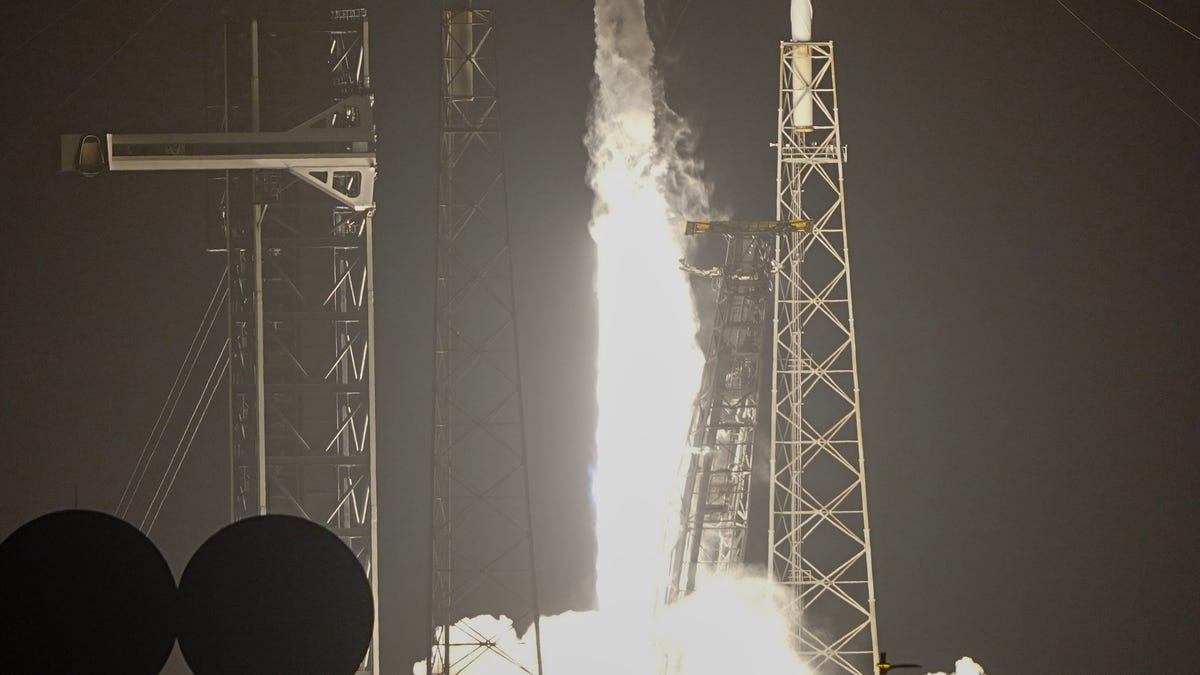
After weather delayed the liftoff a day, a SpaceX rocket launched into the Florida night carrying the latest GPS III satellite for the Space Force. Launch occurred 2:53 a.m. Tuesday, April 21 from Launch Complex 40 in Cape Canaveral Space Force Station. The mission, known as GPS III-8 SV 10, carried the latest GPS III satellite to orbit. "I continue to be amazed by the professionalism, discipline and dedication of the men and women in this mission. Every day, they deliver the world's most trusted positioning, navigation and timing signal to billions of users across the globe," said USSF Col. Stephen A. Hobbs, Mission Delta 31 commander, Combat Forces Command (CFC) during a prelaunch media briefing. "Their work is quiet, precise and absolutely essential, and they do it with a level of excellence that makes me proud to serve alongside them." Partners from Space System Command, SpaceX, to Lockheed Martin came together to make this mission and launch possible. SV 10 is the 10th and final satellite in the Lockheed Martin-built GPS III manifest. It also marks the quickest turn around time between launches of the satellites, GPS III SV 9 launching in January. "With each GPS launch, the constellation becomes stronger and with SV 10, that is the 10 GPS III satellite that is equipped with a anti-jam capability that's eight times stronger and three times more accurate than legacy spacecraft that's on orbit today," said Vice President, Global Positioning System at Lockheed Martin Fang Qian. Even though it is the final satellite in the GPS III series, SV 10 has new technology onboard. This includes an optical crosslink payload which proves as a testing ground ahead of the IIIF satellites. Qian said that SV 10 will also feature a digital atomic clock which may incorporate accurate timekeeping for the upcoming IIIF satellites. "Lockheed Martin is dedicated to Space Force's effort to strengthening the GPS constellation and delivering these critical positioning, navigation and timing capabilities to the world and our military and civilian users," said Qian. SpaceX announced this launch was the last Falcon 9 landing for the Just Read the Instructions drone ship. Going forward, the drone ship will be dedicated to Starship operations. According to SpaceX, Just Read the Instructions supported 156 Falcon 9 landings and has been in operation since 2015. When is the next Florida rocket launch? The next launch from Florida is set for no earlier than 10:21 a.m. Monday, April 27 from Pad 39A at NASA's Kennedy Space Center. The launch is a rare one: A SpaceX Falcon Heavy rocket carrying a Viasat broadband satellite to geosynchronous transfer orbit. The last time the Space Coast saw a Falcon Heavy launch was the Oct. 2024 Europa Clipper mission for NASA. Expect to see the rocket's two side boosters come back for a landing at Cape Canaveral Landing Zones 2 and 40, giving off twin sonic booms. Brooke Edwards is a Space Reporter for Florida Today. Contact her at [email protected] or on X: @brookeofstars.
Chaos In Heart And Brain
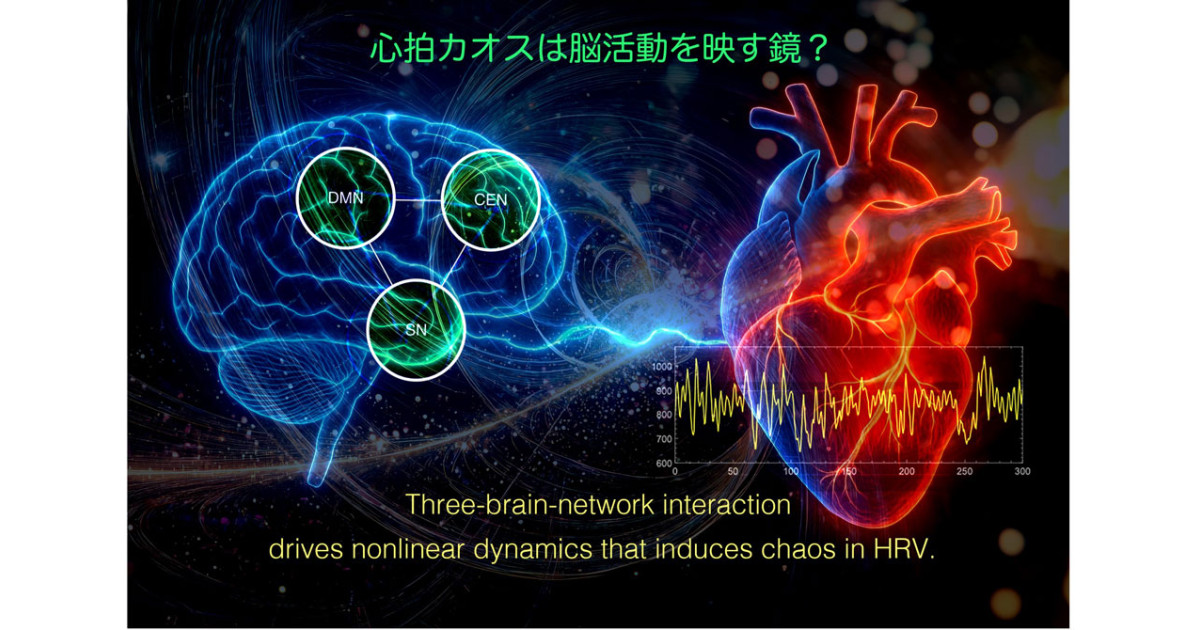
Kyoto, Japan -- A team of researchers at Kyoto University has demonstrated that the chaotic component of heartbeat variability is uniquely sensitive to cognitive brain activity. Conventional hear rate variability, HRV, indices show no consistent response, whereas chaos-based measures reveal clear and reproducible changes, providing a new non-invasive indicator of brain-heart interaction. HRV is widely used as an indicator of autonomic nervous system function. However, its ability to reflect higher-order brain activity has remained unclear. In this study, the researchers applied nonlinear analysis and chaos theory to examine heartbeat dynamics under cognitive load. The researchers had participants perform cognitive tasks designed to engage higher-order brain functions. They then analyzed heartbeat signals using both conventional HRV indices -- such as time-domain and frequency-domain measures -- and chaos-based metrics derived from nonlinear dynamics. The results revealed a clear contrast. Conventional HRV measures showed little or no consistent response to cognitive activity, yet chaos-based indices exhibited distinct and reproducible changes associated with task engagement. "One of the most striking findings of our study is that only chaos responded under cognitive load," says team leader Ken Umeno. "It suggests that chaotic dynamics provide a sensitive window into brain-heart coupling that conventional measures cannot capture." These findings indicate that chaotic fluctuations in heartbeat variability are not merely noise, but instead encode meaningful physiological information related to central nervous system activity. The study establishes chaos as a quantitative marker of system-level integration between the brain and cardiovascular system. The research was conducted in collaboration with Toshiba Information Systems Corporation, whose expertise in signal processing and data analysis contributed to the identification of subtle nonlinear patterns in physiological data. This collaboration highlights the importance of interdisciplinary approaches combining engineering and life sciences. These findings have potential applications in mental health, stress monitoring, neurorehabilitation, and human-machine interaction. Because HRV can be measured non-invasively, chaos-based analysis may enable continuous monitoring of cognitive and physiological states in clinical and real-world environments. Beyond its immediate implications, the study provides a foundation for international research collaboration. The Kyoto University team is actively seeking partnerships with medical institutions and research organizations worldwide to validate and extend these findings across diverse populations and clinical settings, including intensive care, neurological disorders, and psychiatric conditions. /Public Release. This material from the originating organization/author(s) might be of the point-in-time nature, and edited for clarity, style and length. Mirage.News does not take institutional positions or sides, and all views, positions, and conclusions expressed herein are solely those of the author(s).View in full here.
Musk bought $1.4 billion SpaceX shares last year, The Information reports
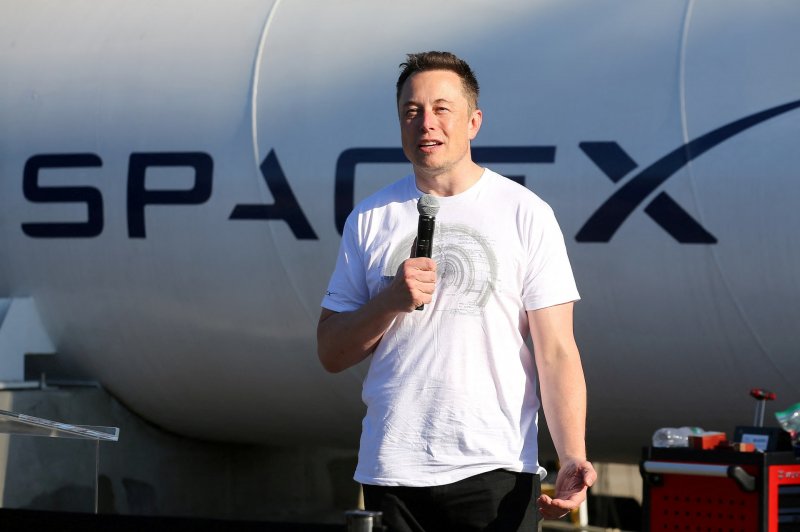
April 21 (Reuters) - Elon Musk increased his stake in SpaceX last year by purchasing $1.4 billion worth of stock from current and former employees, The Information reported on Tuesday. The secondary stock purchase, made through Musk's trust, was disclosed in a draft of SpaceX's confidential IPO prospectus, the report said. SpaceX also approved a plan last month that would award the billionaire CEO 60 million additional shares if the company's market capitalization climbs from $1.1 trillion to as high as $6.6 trillion and the firm completes an ambitious plan of building data centers in space to supply compute for AI developers, The Information said. The stock would vest as SpaceX increases its market cap in $500 billion increments, according to the Information. Reuters could not immediately verify the report. SpaceX did not immediately respond to a request for comment. The company, which confidentially filed for a U.S. listing in March, generated about $8 billion in profit last year on revenue of $15 billion to $16 billion, Reuters reported in January. SpaceX plans to use a dual-class equity structure that gives Class B shareholders 10 votes each, Reuters reported on Tuesday, concentrating power with Musk and a handful of other insiders, while Class A shares sold to public investors will carry one vote each. (Reporting by Chandni Shah in Bengaluru; Editing by Janane Venkatraman and Mrigank Dhaniwala)

This "Magnificent Seven" Stock Will Be a Big Winner from the SpaceX IPO (Hint: It's Not Tesla)
Alphabet looks like a good "backdoor" way to invest in SpaceX before its IPO. What's the key common denominator between SpaceX and Tesla (NASDAQ: TSLA)? That's an easy question. The answer, of course, is Elon Musk. The world's richest person founded SpaceX and runs Tesla. Musk will soon pad his enormous wealth even more. SpaceX plans to go public in the next few months at a valuation reported to be near $2 trillion. Musk won't be the only early investor to make a lot of money from the space technology company's IPO. One "Magnificent Seven" stock will also be a big winner. But it's not Tesla. Will AI create the world's first trillionaire? Our team just released a report on the one little-known company, called an "Indispensable Monopoly" providing the critical technology Nvidia and Intel both need. Continue " Image source: Getty Images. Although Musk has a personal stake in SpaceX, Tesla hasn't invested in the company. However, Google parent Alphabet (NASDAQ: GOOG) (NASDAQ: GOOGL) made a smart early bet on SpaceX that's about to pay off big-time. In 2015, Alphabet (then named Google) invested around $900 million in SpaceX, alongside Fidelity (NYSE: FNF). At the time, SpaceX was valued at roughly $12 billion, giving Google a 7.5% stake in the space tech company. Over the last 11 years, SpaceX has issued more shares, diluting Google's position somewhat. However, a recent regulatory filing in Alaska revealed that Google still owned 6.11% of SpaceX at the end of 2025. Assuming the company hasn't sold any of its shares since then and SpaceX's IPO valuation is $2 trillion, its stake will be worth roughly $122.2 billion. Let's put Google's bet on SpaceX into perspective. An initial investment of $900 million, growing to $122.2 billion, yields a nearly 136x return. This increase translates to a compound annual growth rate of roughly 56.3%. Google's investment in SpaceX appears to be its best deal since the acquisition of YouTube in 2006. That's saying a lot. Alphabet isn't just scoring from what's on track to be the biggest IPO stock ever based on market cap. The company will also receive multiple ancillary benefits from SpaceX securing additional capital to fund its expansion plans. For example, SpaceX's Starlink unit is a Google Cloud customer. SpaceX inked a deal with Google Cloud in 2021 that allows it to install ground stations at Google data centers. These ground stations connect to Starlink satellites. Starlink provides satellite internet service to many areas around the world that would otherwise have no internet access. More internet access means more people will use applications hosted on Google Cloud. Even better, the more people globally who have internet access, the more users of Google Search and YouTube there are. Alphabet's Android ecosystem could also benefit as more mobile devices are used in emerging markets -- especially there. Alphabet wins in two ways from the SpaceX IPO. It will score a huge financial victory as the space stock's soaring valuation gives Alphabet a one-time earnings windfall. The company also wins strategically, as Starlink's growth (fueled by additional capital raised in the IPO) expands internet usage. Is Alphabet a good "backdoor" way of investing in SpaceX before the IPO? I think so. However, I also believe that Alphabet is a smart pick even without its bet on SpaceX. Google Cloud is the fastest-growing of the top three cloud service providers. Google Search and YouTube continue to dominate their respective markets. Google Gemini consistently ranks among the most powerful AI models. Alphabet is poised to be one of the top players in the smart glasses market. The company's Waymo unit is the leader in autonomous ride-hailing. Some might quibble about Alphabet's $4.1 trillion market cap. However, its valuation is easier to justify than SpaceX's. I suspect we'll soon see arguments that SpaceX should replace Tesla in the Magnificent Seven. Alphabet, though, will remain as magnificent as ever. The Motley Fool Stock Advisor analyst team just identified what they believe are the 10 best stocks for investors to buy now... and Alphabet wasn't one of them. The 10 stocks that made the cut could produce monster returns in the coming years. Consider when Netflix made this list on December 17, 2004... if you invested $1,000 at the time of our recommendation, you'd have $524,786!* Or when Nvidia made this list on April 15, 2005... if you invested $1,000 at the time of our recommendation, you'd have $1,236,406!* Now, it's worth noting Stock Advisor's total average return is 994% -- a market-crushing outperformance compared to 199% for the S&P 500. Don't miss the latest top 10 list, available with Stock Advisor, and join an investing community built by individual investors for individual investors. Keith Speights has positions in Alphabet. The Motley Fool has positions in and recommends Alphabet and Tesla. The Motley Fool has a disclosure policy.

Amazon investing up to $25bn in Anthropic AI infrastructure deal
This latest investment is in addition to the $8bn Amazon has already contributed to the organisation. In line with a strategy to expand AI infrastructure, Amazon has announced plans to invest up to $25bn into Anthropic, $5bn now and as much as $20bn in the future. To date Amazon has invested $8bn in Anthropic and the AI start-up has also committed to spending more than $100bn over the next 10 years on Amazon's cloud technologies. This will include current and future generations of Trainium, which is Amazon's custom silicon and tens of millions of Graviton cores, Amazon's CPU chip. Additionally, Anthropic will secure up to five gigawatts of capacity to train and power their AI models, including significant Trainium3 capacity which is expected to come online this year. Commenting on the announcement, Andy Jassy, the CEO of Amazon, said, "Anthropic's commitment to run its large language models on AWS Trainium for the next decade reflects the progress we've made together on custom silicon, as we continue delivering the technology and infrastructure our customers need to build with generative AI." The news is hot on the heels of Anthropic's plans to release Mythos, the platform's latest model, to UK financial institutions. The model was launched as part of a limited release earlier this month, with access granted to big businesses and financial organisations to bolster their security and reportedly, Mythos vastly outperforms other AI models in vulnerability detection and exploitation. Amazon has been investing heavily in AI infrastructure as of late, with a $50bn contribution to a recent OpenAI funding round that closed at $110bn. As part of the round, Nvidia invested $30bn and SoftBank invested $30bn. The investment brought OpenAI from a $500bn valuation to a $730bn pre-money valuation. OpenAI also has an additional deal with Amazon in which the organisation will utilise 2GW of computing capacity powered by Amazon's in-house Trainium chips. Don't miss out on the knowledge you need to succeed. Sign up for the Daily Brief, Silicon Republic's digest of need-to-know sci-tech news.

Elon Musk boosts SpaceX stake with $1.4 billion purchase | News.az
Elon Musk increased his stake in SpaceX last year by purchasing $1.4 billion worth of stock from current and former employees, News.Az reports, citing The Information. The secondary stock purchase, carried out through Musk's trust, was disclosed in a draft of SpaceX's confidential IPO prospectus, the report said. SpaceX also approved a plan last month to award the billionaire CEO 60 million additional shares if the company's market capitalization rises from $1.1 trillion to as high as $6.6 trillion, and if it completes an ambitious project to build data centers in space designed to provide computing power for artificial intelligence developers. According to the report, the shares would vest in stages as SpaceX's market value increases in $500 billion increments.
Amazon (AMZN) Stock Surges on Massive $125B Anthropic AI Deal - Blockonomi
This strategic move follows Amazon's prior commitment earlier this year to invest as much as $50 billion in OpenAI. Amazon is significantly escalating its commitment to artificial intelligence infrastructure. The e-commerce and cloud computing giant revealed plans to pour up to $25 billion into Anthropic, the artificial intelligence company responsible for developing the Claude language model -- marking one of the most substantial investments in the ongoing AI arms race. The financial structure involves an immediate $5 billion infusion, followed by an additional $20 billion contingent upon reaching specific commercial targets. Combined with Amazon's earlier $8 billion commitment to Anthropic, the total potential investment could reach $33 billion. As part of the arrangement, Anthropic has committed to channeling more than $100 billion into Amazon Web Services throughout the coming ten years. The AI company will utilize AWS as its principal training platform and cloud infrastructure provider for critical operational workloads. Amazon.com, Inc., AMZN The comprehensive agreement encompasses both existing and forthcoming iterations of Amazon's proprietary Trainium AI chip technology, tens of millions of Graviton CPU processors, and access to as much as 5 gigawatts of computing capacity. Anthropic projects bringing approximately 1 gigawatt of Trainium2 and Trainium3 capacity operational before year's end. Amazon CEO Andy Jassy characterized the chip collaboration as evidence of "progress we've made together on custom silicon," noting that Trainium delivers "high performance at significantly lower cost for customers." The revised agreement enables AWS customers to integrate Anthropic's comprehensive Claude Platform directly through their current AWS accounts. The streamlined access eliminates requirements for additional credentials, separate contracts, or independent billing arrangements. This represents a substantial simplification for enterprise clients already operating workloads on AWS infrastructure who wish to incorporate Claude capabilities without administrative complications. Anthropic CEO Dario Amodei emphasized growing market demand. "Our users tell us Claude is increasingly essential to how they work, and we need to build the infrastructure to keep pace with rapidly growing demand." Both organizations also revealed plans to expand international inference infrastructure throughout Asia and Europe to accommodate Claude's expanding worldwide customer network. Amazon has maintained transparency regarding its AI expenditures. The corporation anticipates spending approximately $200 billion on capital investments throughout this year, with the majority directed toward AI-focused infrastructure development. While Amazon's proprietary AI solutions, such as Nova, haven't achieved the same market attention as competitors, the company has strategically positioned itself as the foundational infrastructure provider for the artificial intelligence revolution, hosting and enabling third-party models rather than exclusively promoting its own offerings. The Anthropic partnership arrives on the heels of Amazon's previous declaration to invest up to $50 billion in OpenAI, the organization behind ChatGPT. This positions Amazon among the select few corporations simultaneously making substantial investments across multiple leading AI research laboratories. AMZN increased roughly 2.7% in after-hours trading, reaching $254.80 following the partnership disclosure. The stock had advanced 7.6% year-to-date through Monday's closing bell and gained 43% throughout the preceding twelve months. Anthropic indicated its immediate priorities include launching enhanced model capabilities in coding and design disciplines as it strives to establish competitive advantages in the intensifying AI marketplace.
Vercel data breach exposes SA developer community
Vercel - the US-based company behind Next.js, one of the most widely used web frameworks on the internet - has disclosed a security incident in which attackers gained access to internal systems via a compromised third-party artificial intelligence (AI) tool. The cloud-based platform automates deployment from code repositories, delivers sites via a global edge network for speed, and provides tools like serverless functions and preview environments, making it a popular choice for developers using React and similar technologies. According to Google, Vercel is used in South Africa and operates a data centre in Cape Town, as part of its Edge Network, ensuring low-latency hosting for local users. "We've identified a security incident that involved unauthorised access to certain internal Vercel systems," says the company in a statement. "We are actively investigating, and we have engaged incident response experts to help investigate and remediate. We have notified law enforcement and will update this page as the investigation progresses. The company says it initially identified a limited subset of customers whose non-sensitive environment variables stored on Vercel (those that decrypt to plaintext) were compromised. "We reached out to that subset and recommended an immediate rotation of credentials. We continue to investigate whether and what data was exfiltrated and we will contact customers if we discover further evidence of compromise. We've deployed extensive protection measures and monitoring. Our services remain operational." According to the company, the incident originated with a compromise of Context.ai, a third-party AI tool used by a Vercel employee. It explains that the attacker used that access to take over the employee's Vercel Google Workspace account, which enabled them to gain access to some Vercel environments and environment variables that were not marked as "sensitive". Environment variables marked as "sensitive" in Vercel are stored in a manner that prevents them from being read, and "we currently do not have evidence that those values were accessed," says the company. "We assess the attacker as highly-sophisticated based on their operational velocity and detailed understanding of Vercel's systems. We are working with Mandiant, additional cyber security firms, industry peers and law enforcement. We have also engaged Context.ai directly to understand the full scope of the underlying compromise. "In collaboration with GitHub, Microsoft, npm and Socket, our security team has confirmed that no npm packages published by Vercel have been compromised. There is no evidence of tampering, and we believe the supply chain remains safe." Lotem Finkelstein, research VP at Check Point Software Technologies, says while Vercel has stated that a limited number of customers were directly affected, the broader implications for organisations relying on Next.js are significant and still developing. He notes that given Next.js sees approximately six million weekly downloads, the potential blast radius for organisations is significant, and the story is still actively developing. "This is not a theoretical risk but an active security incident involving a widely used library, which significantly increases the potential impact," Finkelstein says. "Given its broad adoption, even a single compromise can quickly translate into large-scale exposure across organisations, so organisations need to make sure the right security measures are in place to prevent any exposure related to this library. "What makes incidents like this particularly challenging is the lack of immediate visibility - many organisations are not fully aware of where and how such dependencies are embedded across their environments, which can delay detection and response at scale."

See photos of the early Tuesday SpaceX launch of a GPS III satellite from Florida
Add Yahoo as a preferred source to see more of our stories on Google. After weather delayed the liftoff a day, a SpaceX rocket launched into the Florida night carrying the latest GPS III satellite for the Space Force. Launch occurred 2:53 a.m. Tuesday, April 21 from Launch Complex 40 in Cape Canaveral Space Force Station. The mission, known as GPS III-8 SV 10, carried the latest GPS III satellite to orbit. "I continue to be amazed by the professionalism, discipline and dedication of the men and women in this mission. Every day, they deliver the world's most trusted positioning, navigation and timing signal to billions of users across the globe," said USSF Col. Stephen A. Hobbs, Mission Delta 31 commander, Combat Forces Command (CFC) during a prelaunch media briefing. "Their work is quiet, precise and absolutely essential, and they do it with a level of excellence that makes me proud to serve alongside them." Partners from Space System Command, SpaceX, to Lockheed Martin came together to make this mission and launch possible. SV 10 is the 10th and final satellite in the Lockheed Martin-built GPS III manifest. It also marks the quickest turn around time between launches of the satellites, GPS III SV 9 launching in January. "With each GPS launch, the constellation becomes stronger and with SV 10, that is the 10 GPS III satellite that is equipped with a anti-jam capability that's eight times stronger and three times more accurate than legacy spacecraft that's on orbit today," said Vice President, Global Positioning System at Lockheed Martin Fang Qian. When to see a Florida Launch Is there a launch today? NASA, SpaceX, Blue Origin launch schedule in Florida Even though it is the final satellite in the GPS III series, SV 10 has new technology onboard. This includes an optical crosslink payload which proves as a testing ground ahead of the IIIF satellites. Qian said that SV 10 will also feature a digital atomic clock which may incorporate accurate timekeeping for the upcoming IIIF satellites. "Lockheed Martin is dedicated to Space Force's effort to strengthening the GPS constellation and delivering these critical positioning, navigation and timing capabilities to the world and our military and civilian users," said Qian. SpaceX announced this launch was the last Falcon 9 landing for the Just Read the Instructions drone ship. Going forward, the drone ship will be dedicated to Starship operations. According to SpaceX, Just Read the Instructions supported 156 Falcon 9 landings and has been in operation since 2015. When is the next Florida rocket launch? The next launch from Florida is set for no earlier than 10:21 a.m. Monday, April 27 from Pad 39A at NASA's Kennedy Space Center. The launch is a rare one: A SpaceX Falcon Heavy rocket carrying a Viasat broadband satellite to geosynchronous transfer orbit. The last time the Space Coast saw a Falcon Heavy launch was the Oct. 2024 Europa Clipper mission for NASA. Expect to see the rocket's two side boosters come back for a landing at Cape Canaveral Landing Zones 2 and 40, giving off twin sonic booms. Brooke Edwards is a Space Reporter for Florida Today. Contact her at [email protected] or on X: @brookeofstars. This article originally appeared on Florida Today: Photos of Tuesday's SpaceX launch from Cape Canaveral carrying a GPS III satellite

See photos of the early Tuesday SpaceX launch of a GPS III satellite from Florida
After weather delayed the liftoff a day, a SpaceX rocket launched into the Florida night carrying the latest GPS III satellite for the Space Force. Launch occurred 2:53 a.m. Tuesday, April 21 from Launch Complex 40 in Cape Canaveral Space Force Station. The mission, known as GPS III-8 SV 10, carried the latest GPS III satellite to orbit. "I continue to be amazed by the professionalism, discipline and dedication of the men and women in this mission. Every day, they deliver the world's most trusted positioning, navigation and timing signal to billions of users across the globe," said USSF Col. Stephen A. Hobbs, Mission Delta 31 commander, Combat Forces Command (CFC) during a prelaunch media briefing. "Their work is quiet, precise and absolutely essential, and they do it with a level of excellence that makes me proud to serve alongside them." Partners from Space System Command, SpaceX, to Lockheed Martin came together to make this mission and launch possible. SV 10 is the 10th and final satellite in the Lockheed Martin-built GPS III manifest. It also marks the quickest turn around time between launches of the satellites, GPS III SV 9 launching in January. "With each GPS launch, the constellation becomes stronger and with SV 10, that is the 10 GPS III satellite that is equipped with a anti-jam capability that's eight times stronger and three times more accurate than legacy spacecraft that's on orbit today," said Vice President, Global Positioning System at Lockheed Martin Fang Qian. Even though it is the final satellite in the GPS III series, SV 10 has new technology onboard. This includes an optical crosslink payload which proves as a testing ground ahead of the IIIF satellites. Qian said that SV 10 will also feature a digital atomic clock which may incorporate accurate timekeeping for the upcoming IIIF satellites. "Lockheed Martin is dedicated to Space Force's effort to strengthening the GPS constellation and delivering these critical positioning, navigation and timing capabilities to the world and our military and civilian users," said Qian. SpaceX announced this launch was the last Falcon 9 landing for the Just Read the Instructions drone ship. Going forward, the drone ship will be dedicated to Starship operations. According to SpaceX, Just Read the Instructions supported 156 Falcon 9 landings and has been in operation since 2015. When is the next Florida rocket launch? The next launch from Florida is set for no earlier than 10:21 a.m. Monday, April 27 from Pad 39A at NASA's Kennedy Space Center. The launch is a rare one: A SpaceX Falcon Heavy rocket carrying a Viasat broadband satellite to geosynchronous transfer orbit. The last time the Space Coast saw a Falcon Heavy launch was the Oct. 2024 Europa Clipper mission for NASA. Expect to see the rocket's two side boosters come back for a landing at Cape Canaveral Landing Zones 2 and 40, giving off twin sonic booms. Brooke Edwards is a Space Reporter for Florida Today. Contact her at [email protected] or on X: @brookeofstars.
See photos of the early Tuesday SpaceX launch of a GPS III satellite from Florida
After weather delayed the liftoff a day, a SpaceX rocket launched into the Florida night carrying the latest GPS III satellite for the Space Force. Launch occurred 2:53 a.m. Tuesday, April 21 from Launch Complex 40 in Cape Canaveral Space Force Station. The mission, known as GPS III-8 SV 10, carried the latest GPS III satellite to orbit. "I continue to be amazed by the professionalism, discipline and dedication of the men and women in this mission. Every day, they deliver the world's most trusted positioning, navigation and timing signal to billions of users across the globe," said USSF Col. Stephen A. Hobbs, Mission Delta 31 commander, Combat Forces Command (CFC) during a prelaunch media briefing. "Their work is quiet, precise and absolutely essential, and they do it with a level of excellence that makes me proud to serve alongside them." Partners from Space System Command, SpaceX, to Lockheed Martin came together to make this mission and launch possible. SV 10 is the 10th and final satellite in the Lockheed Martin-built GPS III manifest. It also marks the quickest turn around time between launches of the satellites, GPS III SV 9 launching in January. "With each GPS launch, the constellation becomes stronger and with SV 10, that is the 10 GPS III satellite that is equipped with a anti-jam capability that's eight times stronger and three times more accurate than legacy spacecraft that's on orbit today," said Vice President, Global Positioning System at Lockheed Martin Fang Qian. Even though it is the final satellite in the GPS III series, SV 10 has new technology onboard. This includes an optical crosslink payload which proves as a testing ground ahead of the IIIF satellites. Qian said that SV 10 will also feature a digital atomic clock which may incorporate accurate timekeeping for the upcoming IIIF satellites. "Lockheed Martin is dedicated to Space Force's effort to strengthening the GPS constellation and delivering these critical positioning, navigation and timing capabilities to the world and our military and civilian users," said Qian. SpaceX announced this launch was the last Falcon 9 landing for the Just Read the Instructions drone ship. Going forward, the drone ship will be dedicated to Starship operations. According to SpaceX, Just Read the Instructions supported 156 Falcon 9 landings and has been in operation since 2015. When is the next Florida rocket launch? The next launch from Florida is set for no earlier than 10:21 a.m. Monday, April 27 from Pad 39A at NASA's Kennedy Space Center. The launch is a rare one: A SpaceX Falcon Heavy rocket carrying a Viasat broadband satellite to geosynchronous transfer orbit. The last time the Space Coast saw a Falcon Heavy launch was the Oct. 2024 Europa Clipper mission for NASA. Expect to see the rocket's two side boosters come back for a landing at Cape Canaveral Landing Zones 2 and 40, giving off twin sonic booms. Brooke Edwards is a Space Reporter for Florida Today. Contact her at [email protected] or on X: @brookeofstars.
Exclusive-Musk and Insiders to Retain Voting Control of SpaceX After IPO, Filing Shows
NEW YORK, April 20 (Reuters) - SpaceX plans to cement founder Elon Musk's control after its IPO, granting him and a small group of insiders super-voting shares that will outweigh other investors, according to excerpts of the company's IPO filing reviewed by Reuters. The prospectus, which was confidentially filed this month, provides fresh details of the company's financials and corporate governance. Upon completion of the offering, Musk will stay on as chief executive officer, chief technical officer, and will serve as chairman of SpaceX's nine-member board of directors. Though Musk was paid $54,080 last year, according to the excerpts, he stands to gain billions in equity after the company's stock market debut. SpaceX is targeting a listing valuation of roughly $1.75 trillion with a $75 billion raise, which would make it the largest initial public offering in history. President and Chief Operating Officer Gwynne Shotwell received $85.8 million in total compensation last year, Reuters previously reported, while Chief Financial Officer Bret Johnsen was paid $9.8 million. ANALYST DAY Some of the executives are driving Musk's IPO ambitions with three days of meetings planned this week for Wall Street analysts, starting with a tour and briefings at SpaceX's Starbase launch facility in Boca Chica, Texas. The filing excerpts show SpaceX will use a dual-class equity structure that gives Class B shareholders 10 votes each, concentrating power with Musk and a handful of other insiders, while Class A shares sold to public investors will carry one vote each. They also outline provisions that could limit shareholders' ability to influence board elections or pursue certain legal claims, forcing disputes into arbitration instead and restricting where they can be brought. While such structures are common among founder-led technology companies, they limit public shareholders' ability to influence strategy or challenge management. FIRST LOOK AT FINANCIALS The filing gives investors the first look at SpaceX's financial health, especially after Musk combined the rocket maker with his social media and AI company xAI this year. The combined company ended 2025 with about $24.8 billion in cash on hand, and had total assets of $92 billion against total liabilities of $50.8 billion. Its satellite internet business Starlink generated billions in profit last year, helping to offset heavy losses inherited when it bought founder Elon Musk's social media and artificial intelligence company xAI this year, the excerpts show. SpaceX swung to a $4.94 billion consolidated loss in 2025 on revenue of $18.67 billion as it invested heavily in xAI's artificial intelligence infrastructure, from a $791 million profit and $14.02 billion in revenue the year before. It lost $4.63 billion on $10.4 billion in revenue in 2023. AI SPENDING Its losses stem from an almost fivefold increase in capital spending over two years to $20.74 billion last year, more than half of that on AI spending. The company's successful Starlink satellite internet service is subsidizing much of that spending, generating $4.42 billion in operating profit but accounting for less than a quarter of its total capital expenditures. Capital expenditure at the AI segment surged to $12.7 billion from $5.6 billion the prior year, pushing SpaceX's total capex above $20.7 billion, more than double the prior year. That remains a fraction of spending by the largest technology companies on AI infrastructure: Meta, with a comparable market capitalization of about $1.7 trillion, had capital expenditure of $72 billion in 2025. The Information previously reported some aspects of the financials. SpaceX did not immediately respond to a request for comment. (Reporting by Echo Wang; Writing by Dawn Kopecki; Editing by Clarence Fernandez)

Vercel breach, ZionSiphon targets water infrastructure, Bluesky DDoS - IT Security News
The technical storage or access is necessary for the legitimate purpose of storing preferences that are not requested by the subscriber or user. The technical storage or access that is used exclusively for statistical purposes. The technical storage or access that is used exclusively for anonymous statistical purposes. Without a subpoena, voluntary compliance on the part of your Internet Service Provider, or additional records from a third party, information stored or retrieved for this purpose alone cannot usually be used to identify you.

Flex It Your Way with Agility+ - a more flexible and accessible way to drive a new Mercedes-Benz - paultan.org
If you're looking to purchase a new Mercedes-Benz vehicle but don't want to be confined to the limitations of a conventional hire purchase agreement, you'll be able to Flex It Your Way with Agility+, an innovative repayment plan that provides you with lower monthly repayments and exceptional flexibility for your new Mercedes-Benz. Agility+, which is offered by Mercedes-Benz Financial Malaysia, is a one-stop solution that offers a host of benefits and pluses beyond the usual financing plan. For a start. it offers a lower, more affordable monthly repayment, because you're not paying for the entire car, but just what you're planning to use. The beauty of Agility+ is that it takes away the risk of potentially low residuals, or resale value, of your car. That's because with Guaranteed Future Value, you are only paying for a proportion of the vehicle's value, based on the tenure and mileage you select. For example, a Guaranteed Future Value of RM100,000 for a RM300,000 vehicle means you'll only be paying RM200,000 over the course of your tenure. At the end of your tenure, Agility+ provides extra flexibility in how you want to conclude your agreement options, either by opting to Settle, Extend or Return the car. If you wish to keep the car, pick Settle and pay the remaining residual value and take full ownership of it, or choose Extend to cover the remaining residual value over the following few years. Return means you simply hand the car back to Mercedes-Benz. With this option, you'll be able to upgrade to a new Mercedes-Benz model every three to five years. The company is also offering extra perks with Agility+ in the form of a one-year extended warranty and four compact service packages. You also get MobilityPlus, which guarantees a replacement car should your car need more than 48 hours to undergo routine servicing or a warranty claim. With monthly repayments from as low as RM2,288 for an A 200 Sedan and from RM2,688 for a GLA 200 Nightfall, Flex It Your Way with Agility+ is definitely the more flexible and accessible way to drive a new Mercedes-Benz. Find out all about Flex It Your Way with Agility+ and its offers here.

How I'm playing the SpaceX IPO | RiskHedge
Elon Musk's rocket launch company could go public as early as June. It'll be the biggest IPO in history. Estimates put SpaceX's valuation at $1.75 trillion. That would instantly rank it among the 10 largest companies in the world. SpaceX would be worth more than Meta Platforms (META) and Tesla (TSLA). On the surface, SpaceX's valuation borders on insanity. But markets don't price companies based on where they are today. Markets price on potential. And SpaceX's potential is sky high because it plans to build... But once you look at what's happening with artificial intelligence (AI) infrastructure here on Earth, it makes sense. Data centers powering modern AI are some of the most resource-hungry buildings on the planet. Meta is building a campus spanning more than 4 million square feet -- roughly the size of a major airport terminal. Inside, these facilities are packed with tens of thousands of server racks... hundreds of thousands of AI chips... and enough networking gear and cables to rival a small industrial city. They consume extraordinary amounts of electricity. ChatGPT consumes enough energy to power 4.4 million US homes every day. Data centers also generate tremendous amounts of heat. A single data center can easily burn through a billion gallons of water a year just for cooling -- enough to drain the entire Central Park Reservoir. Running data centers requires constant upgrades to surrounding infrastructure. New land. Permits. Transmission lines. Power plants. And water that may already be in short supply. And that's before you run into dreaded NIMBYs: the "not in my back yard" folks. People may love using AI tools, but they feel differently when a giant data center breaks ground next door. A data center in orbit can tap directly into the largest power source available: the sun. It works 24/7/365. No land required. No NIMBYs. No competing with homes or factories for electricity. Space is also a cold -455 degrees Fahrenheit. This eases one of the biggest data center costs: cooling. Put it all together, and you should take the idea of data centers in space seriously. In 2025, SpaceX set a new annual record with more than 170 launches. It carried over 2,600 tons of cargo into space. Elon is basically running an orbital "FedEx." Every big tech firm wanting to send data centers into space will have to pay SpaceX. But there are many smaller, under-the-radar disruptors who will profit just as much. Once you start considering all the things an orbital data center would require, you realize an entire support economy must form around it. You're not just tossing servers into orbit and flipping a switch. The hardware has to survive launch and then assemble itself properly in orbit. Then comes maintenance. On Earth, if a server breaks, a technician walks over and swaps the part. In space, every repair becomes a mission. And hardware never lasts forever. Parts fail. Systems age. Technology moves on. Some equipment will need to be upgraded or safely brought back down to Earth. That creates demand for a whole new class of space businesses. Think companies that build robotic arms and docking systems to connect modules in orbit... and companies that provide repair services, logistic stations, and docking equipment. These companies already exist. I've met with some of them. The best ones are positioned to see the kind of spectacular "0 to 1" growth that only a whole new sector can bring. First, a breakthrough makes something new possible. Then the infrastructure gets built around it -- and a whole new ecosystem of companies emerges to support it. SpaceX is making it possible to one day move data centers off Earth with its rapid launch schedule... and we could soon witness a new class of businesses forming to build, maintain, and operate that infrastructure in orbit. As the IPO gets closer, I expect more attention -- and investor money -- will flood into emerging space stocks. It's one of the key areas I'm focusing my attention right now. If you'd like to stay on top of the investment opportunities that could come from this, I write a free weekly letter called The Jolt.

Musk bought $1.4B of SpaceX stock from employees, IPO filing shows By Investing.com
Investing.com -- Elon Musk purchased $1.4 billion worth of SpaceX stock from current and former employees last year, according to The Information, which cited a draft of the company's confidential IPO prospectus. The purchase was made through Musk's trust, the document shows. The filing also reveals a compensation plan that would award Musk tens of millions of shares if SpaceX's market capitalization increases by trillions of dollars. The valuation at which Musk bought the stock last year remains unclear, according to the report. This article was generated with the support of AI and reviewed by an editor. For more information see our T&C.

Xebia powers scalable enterprise AI with NVIDIA, and Anthropic
Advancing enterprises from isolated AI experiments to scalable, production‑grade execution through a tightly integrated ecosystem of infrastructure, enterprise‑ready models, and disciplined engineering Xebia, a global AI-first, digital transformation, and engineering partner, announced strategic partnerships with NVIDIA, and Anthropic reinforcing its commitment to advancing enterprises from isolated AI experiments to scalable, production‑grade execution through a tightly integrated ecosystem of infrastructure, enterprise‑ready models, and disciplined engineering that delivers measurable results. This approach is further anchored in Xebia's focus on sovereign and responsible AI, enabling enterprises to retain control over their data, ensure regulatory compliance, and operationalize AI within secure, governed environments. Through its collaboration with NVIDIA, Xebia enables production-grade AI by combining high-performance compute with NVIDIA's AI software stack, including NIM microservices and AI Blueprints. This allows enterprises to deploy secure, cloud-agnostic AI systems with built-in observability and lifecycle management, ensuring reliability at scale across hybrid environments. Additionally, this collaboration supports sovereign AI architectures, giving organizations flexibility to deploy AI workloads across geographies while maintaining data residency and compliance requirements At the application layer, Xebia has launched a Claude-powered enterprise GenAI ecosystem in collaboration with Anthropic. As an authorized reseller of Claude, Xebia enables organizations to deploy advanced generative AI solutions supported by governance frameworks, accelerators, and industry-specific use cases. The ecosystem incorporates guardrails, ethical AI practices, and robust governance to ensure safe and transparent deployment of generative AI across enterprise functions. Early implementations demonstrate significant impact, including up to 50-70% reduction in time-to-insight, 5x faster underwriting processes in insurance, and real-time enterprise knowledge systems that reduce decision-making cycles from hours to seconds. "AI is no longer about having access to the latest models, it's about what you do with them. The real challenge, and opportunity, lies in turning potential into production in a way that is secure, governed, and outcome‑focused," said Anand Sahay, CEO, Xebia. "By working closely with NVIDIA, and Anthropic, we're helping organizations move from promising experiments to engineered intelligence that delivers lasting value at scale."

Musk bought $1.4 billion SpaceX shares last year, The Information reports
April 21 (Reuters) - Elon Musk increased his stake in SpaceX last year by purchasing $1.4 billion worth of stock from current and former employees, The Information reported on Tuesday. The secondary stock purchase, made through Musk's trust, was disclosed in a draft of SpaceX's confidential IPO prospectus, the report said. SpaceX also approved a plan last month that would award the billionaire CEO 60 million additional shares if the company's market capitalization climbs from $1.1 trillion to as high as $6.6 trillion and the firm completes an ambitious plan of building data centers in space to supply compute for AI developers, The Information said. The stock would vest as SpaceX increases its market cap in $500 billion increments, according to the Information. Reuters could not immediately verify the report. SpaceX did not immediately respond to a request for comment. The company, which confidentially filed for a U.S. listing in March, generated about $8 billion in profit last year on revenue of $15 billion to $16 billion, Reuters reported in January. SpaceX plans to use a dual-class equity structure that gives Class B shareholders 10 votes each, Reuters reported on Tuesday, concentrating power with Musk and a handful of other insiders, while Class A shares sold to public investors will carry one vote each. (Reporting by Chandni Shah in Bengaluru; Editing by Janane Venkatraman and Mrigank Dhaniwala)
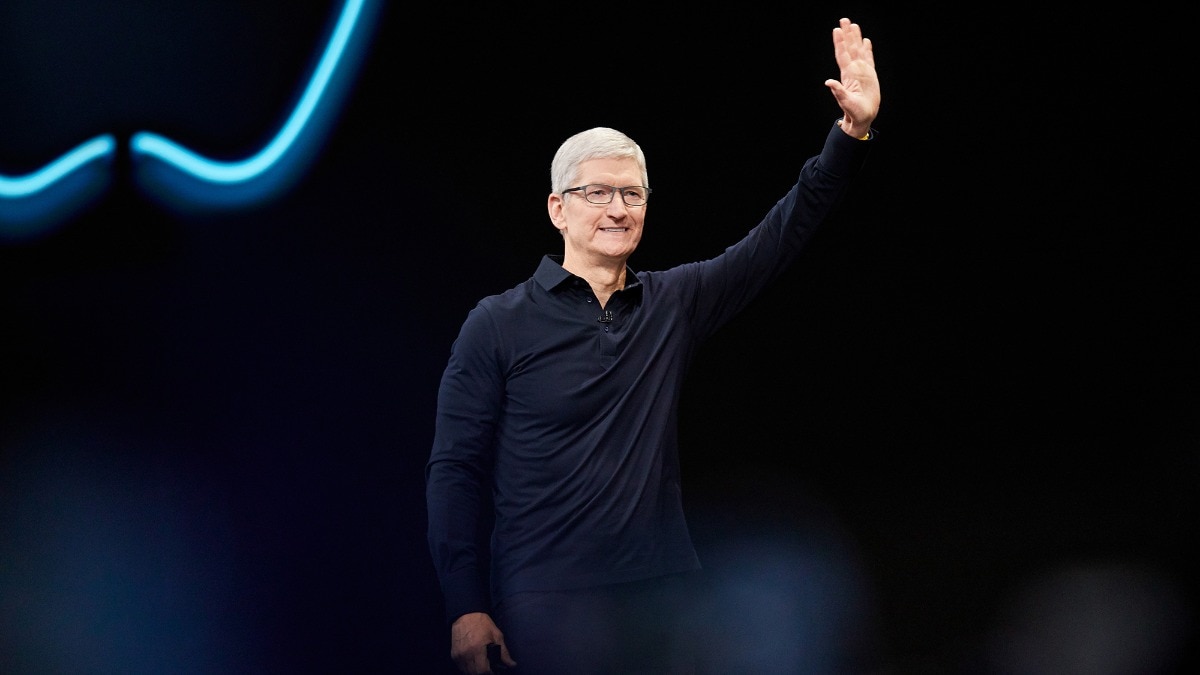
Tim Cook's legacy as Apple CEO is stability in middle of chaos, that stability is now worth $4 trillion
How do you measure success? If you were to ask this question to outgoing Apple CEO Tim Cook, he might answer with just one word -- quietly. That is because Cook has made "quietly" a defining feature of Apple in the last 15 years. The company has grown quietly quarter after quarter since Cook took the reins in 2011. It has turned into a behemoth, this giant that crushes its revenue targets again and again. And unlike most other tech giants, which make noise on a daily basis in this way or that, Apple keeps doing it quietly. That is the legacy of Tim Cook. In 2011, when I was at the Times Of India, I wrote about Cook taking the baton from Steve Jobs, who was stepping away from an active role because of his cancer. Many people said many things about the transition. Being a tech journalist I too chimed in. In one of the pieces arguing how Apple would miss Jobs, I wrote that under Tim Cook "it can be more difficult for Apple to come up with unique, groundbreaking products and services." Fifteen years later as I look back, I believe I got it mostly right. Tim Cook, who will hand over the CEO chair to John Ternus on September 1, has been different, very very different compared to Jobs. Under him Apple has also been, like I had predicted, unable to come with unique and groundbreaking products. Except M series chipsets, which essentially build on A series in the iPhone that Jobs started. Other than that AirPods and the Apple Watch have been great successes, but they were most definitely imagined and conceived during the Jobs era. Numbers do tell a story But looking back I also believe that I missed, or couldn't have predicted, the way Tim Cook has quietly gone about solidifying Apple into this company that can execute year after year with the precision of a Swiss watch. Apple might not have been able to recreate another iPhone or iPod under Cook, but in the last 15 years it has been due to Tim Cook that the company has become a household name with its products reaching millions of people. The iPhone might have debuted nearly 30 years ago, but even now it sets the hearts racing every September when the new variants drop. The modern Mac might be a legacy gadget created nearly 40 years ago, but in 2026 it is still surging and defining the personal computer space, something that MacBook Neo showed just a few weeks ago. This is the legacy of Tim Cook. Of course, if you ask a McKinsey analyst to define success, she would most likely talk about numbers. And Tim Cook has numbers on his side. When he stepped into the big shoes, Apple had a revenue of around $108 billion. In 2026, its annual revenue is over $416 billion. To put in context, this is bigger than the entire GDP of Pakistan. Or almost 70 per cent of India's total forex reserves. In 2011, Apple was making an annual profit of nearly $25 billion. In 2026, the figure is around $110 billion, making it one of the most profitable companies in corporate history. In 2011, Apple had a market capitalisation of around $350 billion. In 2026, it is a $4 trillion company! Doing boring but reassuring things But as a tech journalist -- and not as a financial journalist -- I find numbers boring. I believe the true legacy of Tim Cook has been the way he has kept Apple focussed, while internally giving it a culture that makes the company seem like an oasis of stability in the middle of Sam Altman-style chaos. In the last 15 years, the world has undergone some big changes. It is the middle of an era where everything is sifting under our feet. There are big political changes, geo-political changes, big social changes, changes in the way economies work. There are changes also in the supply chain, in the technology within our devices. The arrival of AI is shifting and shaking everything in the world of tech. In the middle of these big changes, Tim Cook has kept Apple steady. There has been no pivot to the metaverse, similar to what Mark Zuckerberg did. No leadership fights similar to OpenAI dramas. Not even big ticket layoffs. There has been no big AI shift, similar to what Microsoft has done. Unlike Windows, which has become a hotchpotch of new AI and old legacy features, the main appeal of the MacBook has been its old-fashioned software, which is quiet in the way it works and solid. Apple has been remarkably averse to changes. Its devices keep their design and looks for years, before there is some tweak. The Apple TV, that tiny gadget that you can connect to your television, looks the same as it did in 2010. The Apple software, although now more feature rich, keeps the basics similar to how they were 10 years ago. Whenever there have been changes, in most instances, these changes have been "quiet" changes. A nip and tuck here and there, a new feature added or removed as unobtrusively as possible. Instead, under Tim Cook Apple has mostly focussed its energies on perfecting what it already has, in a way that adds to the stability. The company has spent much time and many resources in making its devices as robust as possible so that consumers can use them for years in the best possible manner. At the same time, it has spent energy on keeping prices steady. One of the most remarkable things I have seen done by any tech company is the price of the vanilla iPhone in India. From 2020, when the company launched iPhone 12 to 2024 when it launched the iPhone 16, it kept the price same at Rs 79,900 even though the forex rate climbed, the supply chain shifted, components became more expensive and overall there was inflation all around. Only last year the company moved to a new higher price -- by Rs 3000 -- but then also doubled the storage, effectively making the new phone Rs 7,000 cheaper than the similar iPhone 16! No wonder Apple has nearly 10 per cent market share in the Indian phone market despite not having budget phones in its portfolio. This too is the legacy of Tim Cook. Finally, there is the quiet legacy of how Cook has made Apple a company that focuses on its work, instead of noise. Unlike Elon Musk companies, Cook and Apple do not pick political fights, neither with the US nor with China. They keep it steady, and at least outwardly, principled. Apple doesn't swing wildly on matters like immigrant workers, environment, or user privacy depending on which way winds are blowing. Apple doesn't chase the latest hot trend, just because the rest of the world is going crazy about it. In that sense, unlike many tech companies that nowadays work in prophetic mode with a mission to save humanity, Apple and Cook focus on selling their iPhones and Mac. We, the consumers, find it reassuring. Siri is not a failure, Vision Pro is None of this is to say that Cook and Apple have not faced failures. They have. Although, I don't think a dumb Siri is a failure. Or missing on AI is a failure. For a company like Apple, fixing Siri or getting on board with AI is going to be easy once it decides to go all-in on it. AI and Siri are failures only because, I believe, Apple is not yet entirely convinced that it warrants the attention others are willing to give. Apple is a hardware company that makes the best products in the categories where it plays. It doesn't want to spend $100 billion dollars on a smarter chatbot. Instead, the one failure that I see is the Vision Pro. Apple probably saw what Mark Zuckerberg was doing with the metaverse and got carried away due to the conviction with which Zuckerberg was burning money. So, it too went big on virtual reality. But neither for Zuckerberg nor for Apple, the move has turned out to be a success. Then there are a few missed opportunities. I believe, and I am fully aware of the fact that I am sitting lazily in the armchair of a journalist, Apple could have made two devices: a television and a gaming console. It has the ecosystem, it has the hardware knowhow, and it has a brand. It could have made a gaming console similar to Xbox or PlayStation. And two, a television would have tied up extremely well with everything that the company currently does. It could have been a perfect Apple ecosystem device. But in the big picture these are mere smudges, not even blemishes. The last 15 years, on the whole, have been glorious for Apple. That is the legacy of Tim Cook. Steve Jobs gave the company its creative spark, a kernel of genius and a bevy of spectacular products. Tim Cook has shaped Apple into a brand that executes this vision to delight and serve millions and millions of users -- steadily, assuringly, without changing. In a world full of chaos and changes, that counts for something.
See photos of the early Tuesday SpaceX launch of a GPS III satellite from Florida
After weather delayed the liftoff a day, a SpaceX rocket launched into the Florida night carrying the latest GPS III satellite for the Space Force. Launch occurred 2:53 a.m. Tuesday, April 21 from Launch Complex 40 in Cape Canaveral Space Force Station. The mission, known as GPS III-8 SV 10, carried the latest GPS III satellite to orbit. "I continue to be amazed by the professionalism, discipline and dedication of the men and women in this mission. Every day, they deliver the world's most trusted positioning, navigation and timing signal to billions of users across the globe," said USSF Col. Stephen A. Hobbs, Mission Delta 31 commander, Combat Forces Command (CFC) during a prelaunch media briefing. "Their work is quiet, precise and absolutely essential, and they do it with a level of excellence that makes me proud to serve alongside them." Partners from Space System Command, SpaceX, to Lockheed Martin came together to make this mission and launch possible. SV 10 is the 10th and final satellite in the Lockheed Martin-built GPS III manifest. It also marks the quickest turn around time between launches of the satellites, GPS III SV 9 launching in January. "With each GPS launch, the constellation becomes stronger and with SV 10, that is the 10 GPS III satellite that is equipped with a anti-jam capability that's eight times stronger and three times more accurate than legacy spacecraft that's on orbit today," said Vice President, Global Positioning System at Lockheed Martin Fang Qian. Even though it is the final satellite in the GPS III series, SV 10 has new technology onboard. This includes an optical crosslink payload which proves as a testing ground ahead of the IIIF satellites. Qian said that SV 10 will also feature a digital atomic clock which may incorporate accurate timekeeping for the upcoming IIIF satellites. "Lockheed Martin is dedicated to Space Force's effort to strengthening the GPS constellation and delivering these critical positioning, navigation and timing capabilities to the world and our military and civilian users," said Qian. SpaceX announced this launch was the last Falcon 9 landing for the Just Read the Instructions drone ship. Going forward, the drone ship will be dedicated to Starship operations. According to SpaceX, Just Read the Instructions supported 156 Falcon 9 landings and has been in operation since 2015. When is the next Florida rocket launch? The next launch from Florida is set for no earlier than 10:21 a.m. Monday, April 27 from Pad 39A at NASA's Kennedy Space Center. The launch is a rare one: A SpaceX Falcon Heavy rocket carrying a Viasat broadband satellite to geosynchronous transfer orbit. The last time the Space Coast saw a Falcon Heavy launch was the Oct. 2024 Europa Clipper mission for NASA. Expect to see the rocket's two side boosters come back for a landing at Cape Canaveral Landing Zones 2 and 40, giving off twin sonic booms. Brooke Edwards is a Space Reporter for Florida Today. Contact her at [email protected] or on X: @brookeofstars.