News & Updates
The latest news and updates from companies in the WLTH portfolio.
Who Is The 'Doorbell Chud' Jason Thomas Nichols? The Memes About The Viral 'Discord Mod' Home Invasion Explained
Add Yahoo as a preferred source to see more of our stories on Google. A terrifying and bizarre video of a home invasion caught on a Ring doorbell camera is going viral across social media, earning the home invader the nickname "Doorbell Chud." The video shows the man acting erratically and trying to break into a neighbor's house, seemingly to look for the homeowner's daughter, but even the seriousness of the situation hasn't stopped the internet from turning Doorbell Chud into a meme. So, what exactly is the Doorbell Chud meme, and what happened to the home invader, Jason Thomas Nichols? Here's what we know. What Is The 'Doorbell Chud,' And Who Is Jason Thomas Nichols? "Doorbell Chud" is a nickname for Jason Thomas Nichols, a 29-year-old man who, on April 7th, 2026, was caught on a Ring doorbell camera violently slamming on the door of a house and screaming to come inside. In the video, Nichols calls himself Harry Dresden, the protagonist of the fantasy and detective series The Dresden Files. Throughout the video, he screams, asks where the homeowner's daughter is, and tries his hardest to get in the house. Eventually, he does make his way into the home. Thankfully, he was subdued and arrested on the scene by police after a brief scuffle with the man inside. How Is 'Doorbell Chud' Used In Memes? The nickname "Doorbell Chud" comes from Jason Nichols' appearance in the video. Donned in a black trench coat with thick-rimmed glasses, big eyebrows and a Demon Slayer shirt, memes that refer to him as a "Discord mod" quickly surfaced online. The most apt comparison, however, comes from memes likening Nichols to the Chudjak meme, who arguably shares an uncanny resemblance to Nichols. For those who don't know, "chud" is an online slang term used to call someone socially unpleasant and abnormal in a negative way. This, along with his behavior in the video, has resulted in a whole lot of memes and edits using Nichols in situations where Chudjak would usually do. This includes things like gem alert edits and countless Wojak edits. What Are Some More 'Doorbell Chud' Memes? For the full history of Doorbell Chud, be sure to check out Know Your Meme's encyclopedia entry for more information.
Anthropic's Next AI Model Could Disrupt Design Tools Like Adobe, Figma
eWeek content and product recommendations are editorially independent. We may make money when you click on links to our partners. Learn More Anthropic is speeding through development cycles as if they're checkpoints. The tech giant is reportedly preparing to release a new version of its flagship AI model, Claude Opus 4.7, according to The Information. Citing a person familiar with the matter, the outlet says the model could debut as early as this week, marking another rapid step in the company's ongoing release cycle. The upcoming system follows the earlier rollout of Opus 4.6 and signals how quickly Anthropic is iterating on its large language models. While Opus 4.7 is expected to bring improvements, it may not represent the company's most powerful work. That title belongs to Claude Mythos, a more advanced model currently being tested by select partners for cybersecurity tasks. Early details suggest Opus 4.7 will push further into autonomy and complex task execution. Building on the capabilities of Opus 4.6, which introduced large context windows and strong coding performance, the new version is expected to improve AI's ability to handle multi-step reasoning and long-duration workflows. Reports indicate that Anthropic has been experimenting with "agent teams," in which multiple AI systems collaborate on different parts of a task. This approach mirrors how human teams work, dividing responsibilities like planning, coding, testing, and refining. Opus 4.7 is expected to make these systems more reliable and capable of operating with less human input over extended periods. New AI design tool sparks market reaction Alongside the model, Anthropic is also said to be developing a new AI-powered design tool to simplify how users create digital products. The tool is designed to generate websites, presentations, landing pages, and other assets using simple natural language prompts. Importantly, it is intended for both technical and non-technical users, lowering the barrier to building polished digital content. The report from The Information notes that news of this tool had an immediate market impact, sending shares of Adobe, Wix, and Figma down more than 2% in after-hours trading. The potential disruption extends beyond established players. Startups like Gamma and Google Stitch could also face pressure if Anthropic delivers a tightly integrated, full-stack creative platform. Rather than focusing solely on language models and developer tools, Anthropic appears to be building an ecosystem that integrates content generation, design, and technical execution into a single workflow. Other reported developments support this direction. These include a full-stack app-creation platform, updates to Claude Code to manage multiple projects, and even a beta integration of Claude into Microsoft Word for AI-assisted writing. With a potential launch window measured in days, attention now turns to how much of this technology Anthropic is willing to release publicly. For more on Anthropic's bigger ambitions, read how the company briefed the Trump administration on its advanced Mythos model.
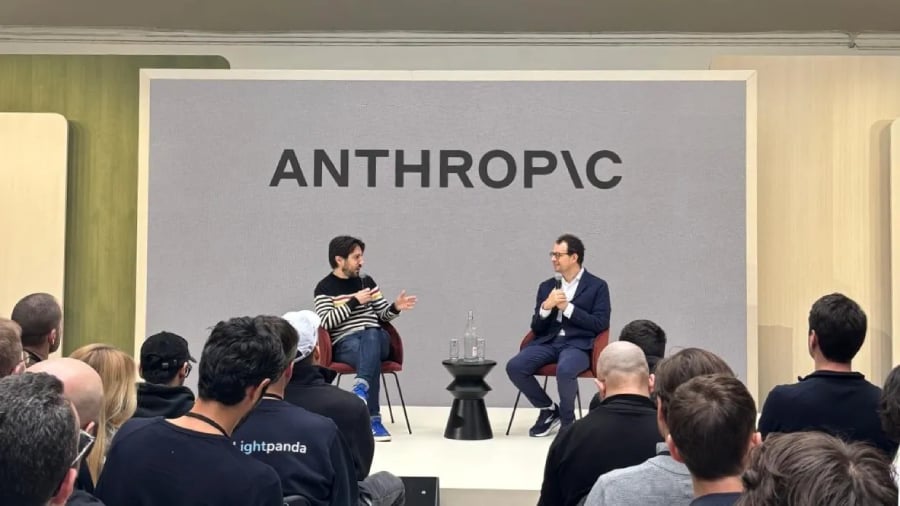
Amazon Vs. SpaceX Space Race Heats Up At Difficult Time For Musk's Upcoming IPO - Amazon.com (NASDAQ:AMZN
Amazon Outbid SpaceX Amazon beat out SpaceX for Globalstar, securing spectrum and satellite infrastructure that strengthens its position in both broadband and direct-to-device connectivity. SpaceX has roughly 10,000 Starlink satellites in orbit. Amazon has around 200, but is planning $200 billion in capex this year and targeting 3,200 satellites by 2029. FCC Chairman Brendan Carr told CNBC the agency is "very open-minded" to the deal. BNP Paribas analyst Nick Jones called it a strategic positive for Amazon. Bezos Is Competing On Every Front Jeff Bezos' Blue Origin took the opposite approach to SpaceX. Where Musk moved fast and blew up rockets to iterate, Bezos went slow and methodical. It paid off last year when Blue Origin's New Glenn rocket reached orbit on its first attempt. It may launch again Friday. Both companies have NASA contracts to build crew landers, but SpaceX fell behind schedule and NASA reopened the competition, whichever lander is ready first may fly first. On the commercial side, Amazon is starting to chip away at Starlink's customer base. Why It Matters For The IPO SpaceX is targeting a $1.75 trillion valuation. Starlink is estimated to contribute between 50% and 80% of the company's revenue. That makes the satellite business the centerpiece of any IPO pitch, and Amazon is signaling it intends to compete directly in both broadband and direct-to-device. Polymarket traders currently give SpaceX a 46% chance of completing their IPO by the end of June and 91% by the end of September. The closing market cap contract prices the most likely outcome between $1.5 trillion and $2 trillion at 39%. If Amazon's satellite push starts eating into the monopoly narrative, SpaceX's valuation could drift lower before Musk even starts the roadshow. Image: Shutterstock Market News and Data brought to you by Benzinga APIs To add Benzinga News as your preferred source on Google, click here.

'God of chaos' asteroid to pass close to Earth in 2029
A rare asteroid will soon be visible to the naked eye in a rare celestial event, according to astronomers. Asteroid 99942 Apophis named after the Egyptian deity of chaos, darkness and fire is expected to safely pass close to Earth on April 13, 2029, according to NASA. The asteroid will pass within roughly 20,000 miles of Earth nearly 12 times closer than the moon's average distance from Earth, and closer than many satellites in geosynchronous orbit making it one one of the closest approaches ever recorded for an object if its size and a "very rare event," according to NASA. The approach will be visible to observers on the ground in the Eastern Hemisphere, weather permitting, according to NASA. It will be close enough that sky-watchers won't need a telescope or binoculars to see it, astronomers say. When Apophis was first discovered in 2004, it was labeled a potentially hazardous asteroid because of the possibility that it could impact Earth in 2029, 2036 or 2068, according to NASA. After closely tracking the asteroid and its orbit using optical telescopes and ground-based radar, astronomers are now confident that there is no risk of Apophis impacting Earth for at least 100 years. The Earth's gravitational pull could change the asteroid's orbit around the sun as it passes in 2029, making the orbit slightly larger or the orbital period slightly longer, but the risk of impact with Earth will remain the same, NASA says. Its close passage will also afford astronomers around the world the opportunity to learn more about the asteroid. Apophis is the Greek name for the Egyptian god known as Apep. The name was proposed by the astronomers who discovered the asteroid: Roy Tucker, David Tholen and Fabrizio Bernardi of the Kitt Peak National Observatory near Tucson, Arizona. The asteroid is a relic of the early solar system from about 4.6 billion years ago, made of leftover raw material that was never part of a planet or moon, according to NASA. Though its exact size and shape is unknown, it has a mean diameter of about 1,115 feet and a long axis of at least 1,480 feet. Apophis' surface is weathered due to eons of exposure to space weather, including solar wind and cosmic rays, according to the Massachusetts Institute of Technology. Observatories around the world and in space will observe the asteroid's historic approach to Earth in order to better understand its physical properties. NASA has redirected a spacecraft to rendezvous with Apophis shortly after its close approach in 2029, while the European Space Agency is sending a spacecraft to study it. When the April 2029 flyby occurs, Apophis will become a member of the "Apollo" group, the family of asteroids that cross Earth's orbit but that themselves have orbits around the sun that are wider than the Earth's, according to the ESA.

XRP News: Deutsche Börse Backs Kraken as Pepeto Gains While BNB Lags
The Pepeto presale has pushed past $9 million while whale wallets keep arriving ahead of the confirmed Binance listing, and the entry shrinks closer to zero availability with every passing day. The biggest XRP news this week connects to institutional money flowing into crypto exchanges, as Deutsche Börse invested $200 million into Kraken's parent company Payward. Deutsche Börse Invests $200 Million in Kraken Parent as Institutional Crypto Expansion Accelerates Deutsche Börse, one of Europe's largest exchange operators, invested $200 million into Kraken parent company Payward on April 14, marking one of the largest traditional finance commitments to a crypto exchange this year according to Cointelegraph. XRP News Meets Pepeto and BNB in a Market Where Institutional Backing Changes Everything Pepeto: The Presale Attracting Whale Traders Before the Listing Opens The community of early holders entering Pepeto believes this token could deliver a hundred fold return once the confirmed Binance listing goes live, and those projections are built on working exchange infrastructure, not speculation. In a market where volatility wipes portfolios overnight and bad contracts drain wallets in seconds, the zero fee swap engine processes token exchanges across Ethereum, BNB Chain, and Solana at zero cost while the cross chain bridge transfers tokens between blockchains without a centralized intermediary. The PepetoAI risk scorer scans every contract for honeypots and liquidity traps before a dollar touches a dangerous setup, giving holders institutional grade protection at zero cost. A $7,000 entry at today's presale rate produces roughly $13,720 in yearly staking yield at 183% APY, which means wallets inside are compounding while everyone reading the XRP news from the outside earns nothing on hesitation. SolidProof verified the full contract and the creator behind the original Pepe token's rise to $11 billion designed Pepeto from that same proven foundation. The presale crossing $9 million while the Fear index reads extreme proves that the capital entering is not reacting to rumor but locking in ahead of a confirmed date. Visit the Pepeto presale to see the position before the Binance listing closes the door permanently. XRP: Waiting for the Breakout That Keeps Getting Delayed XRP trades near $1.37 on April 15 after gaining roughly 6% over the past week as the broader market lifted on peace negotiation optimism. Ripple ecosystem development keeps building long term credibility, but XRP at $1.37 targeting $3 to $4 in the best scenario delivers roughly 50% to 100%, which is the kind of return that large caps offer when the entire market cooperates, not the kind that changes a portfolio permanently. BNB: Holding Steady While Traders Rotate Into Earlier Entries BNB sits around $619 on April 15, outperforming the broader market with minor declines while most altcoins dropped over 4%. Trading volume jumped 37% this week as buyers stepped in at these levels, and the auto burn system that destroyed 1.37 million BNB worth $1.27 billion in January keeps tightening supply. BNB's institutional credibility is real, but at $619 targeting $1,000 to $1,300, the return represents a steady hold, not the multiple that rotates wallets into presale entries where the gap between entry and listing delivers something entirely different. Conclusion Deutsche Börse putting $200 million into Kraken proves that institutional money is flowing into crypto infrastructure at a pace that validates every serious project in the market right now. But XRP at $1.37 needs the full altcoin rotation before it delivers its best case, and BNB at $619 gives holders a return that barely matches the time spent waiting. The Pepeto presale fills past $9 million with the Binance listing confirmed, which means the moment trading begins every wallet inside owns a floor price the rest of the market pays a premium to reach while the Deutsche Börse capital and the incoming Fed chair's crypto portfolio signal that the biggest institutional wave in history is just arriving. After the listing seals this presale shut, the entry disappears and the position that existed at presale price becomes the one every trader mentions for the rest of the cycle. Visit the Pepeto official website while the window is still open. Click To Visit Pepeto Website To Enter The Presale FAQs What is the most important XRP news for traders this week? Deutsche Börse invested $200 million into Kraken's parent company, and the incoming Fed chair holds DeFi and Solana in his personal portfolio, which signals institutional crypto expansion is accelerating while Pepeto's confirmed Binance listing captures that wave at the presale level. Is XRP still worth holding based on current technical analysis? XRP at $1.37 is testing the $2 resistance with analysts targeting $3 to $4, making it a credible play, but the percentage return from here carries a ceiling that a presale to listing window removes entirely. How can traders find the best entry before the next exchange listing? The best entry combines confirmed listing, completed audit, and proven team, and Pepeto checks every requirement with the Binance listing confirmed and SolidProof clearing every contract on the Pepeto official website. Related Items:BNB, Crypto Market News Today, XRP, XRP News Recommended for you Crypto Update: AVAX Drops, DOGE Holds as Pepeto Builds Listing Edge SOL Price Prediction: BNB Slows While Pepeto Rips Higher With Confirmed Binance Listing Next Pepe Coin to Explode: Pepeto Will Outperform DOGE and ADA This Cycle
Is Claude down? Anthropic confirms Claude outage, problems with Cowork.
Thousands of users reported trouble accessing the popular AI tool on Wednesday. Updated on Wednesday, April 15 at 1:37 p.m. ET -- In a statement to Mashable, Anthropic confirmed that Claude was experiencing an outage on Wednesday afternoon. The problems affected the Claude.ai desktop browser as well as the popular Anthropic services Cowork and Claude Code. "Claude.ai and Cowork are currently down for most users and some users may also have trouble logging into Claude Code. Our team is working to restore service and we're appreciative of everyone's understanding while we work through this," the spokesperson said. You can read our original story about this outage below. We'll continue to update this page as new information is available and service is restored. Claude, the popular AI chatbot from Anthropic, appeared to experience a potential outage on Wednesday. Thousands of users reported trouble accessing Claude, with user error reports spiking at approximately 10:30 a.m. ET, according to DownDetector. (DownDetector and Mashable are both owned by the same company, Ziff Davis.) By 1:00 p.m. ET, user error reports were slowing down, though DownDetector is still reporting ongoing problems with Claude AI. The majority of users (38 percent) reported problems with Claude Chat, while 29 percent reported problems with Claude Code and 25 percent with the Claude App. Don't miss out on our latest stories: Add Mashable as a trusted news source in Google. One Mashable editor was unable to access the free version of Claude on desktop, with an error message saying, "You've hit your limit for Claude messages. Please wait before trying again. For higher limits, explore our Pro plan." This, despite not having sent any messages to Claude previously. An additional pop-up states, "Service is temporarily busy. You can try again shortly." Rather than a true Claude outage, access may simply be temporarily restricted for free users. Claude has seen massive growth so far in 2026. In March, amid a feud with the Pentagon and Trump administration, an Anthropic spokesperson told Mashable the company was signing up more than 1 million new users a day. This is a developing story...

Anthropic draws VC interest, pushing valuation toward $800 billion
Anthropic has fielded multiple offers from venture capital firms, valuing the company at $800 billion in recent weeks, according to a Business Insider report that cites people familiar with the matter. This would nearly double its current valuation. The report mentions that "buzzy" startups often field preemptive offers from investors only to rebuff them. However, the interest from the VCs indicate that rising demand for a stake in Anthropic closed a funding round in February that valued the company at $380 billion. The company is valued at $688 billion on Caplight, a secondary exchange where investors can trade shares of privately held companies. That is up 75% in three months. READ: Rift between Pentagon and Anthropic opens doors for smaller AI players (April 9, 2026) According to Business Insider, investors and founders have been impressed by Anthropic's growth and momentum around its AI-coding assistant Claude Code. "They're crushing it," Jared Quincy Davis, founder and CEO of Mithril, an AI cloud platform, said about Anthropic last week at HumanX, an AI conference. Anthropic had announced last week that its run revenue rate has risen to $30 billion, up from $9 billion at the end of last year. It also added that over 1,000 business customers are spending more than $1 million a year. This figure had doubled in less than two months. In April, Anthropic released its latest model, Mythos, which it said is so powerful it cannot yet be unleashed upon the general public because of the risk of cyber attacks. "The Mythos model is a huge deal, Tomasz Tunguz, founder and general partner of Theory Ventures, said last week at HumanX. "There's a tremendous amount of excitement." READ: Anthropic CEO says AI will exceed cognitive capabilities of most humans (February 19, 2026) In its official blog post, Anthropic introduced Mythos as a breakthrough in autonomous cybersecurity, warning that the model could be dangerous if it fell into the wrong hands. Rather than allowing broad access, the company is reportedly testing it through a closed initiative called "Project Glasswing," giving access to Mythos only to select researchers and organizations. The company said that releasing it to the public would be like handing advanced hacking capabilities to anyone with a laptop. The hype around Mythos has led to mixed reactions. While some have called it a big leap in security, others have questioned Anthropic's claims, saying this might be a strategic plan designed to grab attention. The Wall Street Journal, however, had reported that the U.S. government officials had met Wall Street banks, telling them to get ready for Mythos and do a thorough review of their digital security.

Anthropic Preps Opus 4.7 and Full-Stack AI Studio -- While Sitting on Something Much Scarier - Decrypt
The industry still can't reliably measure AI improvements, making claims about Opus 4.7's gains hard to verify. Anthropic is gearing up to release Claude Opus 4.7 alongside a new AI-powered design tool that lets users build websites, presentations, and landing pages with plain English prompts -- news that caused a dip in Adobe, Wix, and Figma shares on Monday, according to The Information. The products could drop as soon as this week, a person with knowledge of the plans told The Information. The design tool targets developers and non-technical users alike, putting it on a collision course with startups like Gamma and Google's Stitch. Anthropic did not respond to Decrypt's request for comment. Opus 4.7 isn't even Anthropic's most powerful model. That title belongs to Claude Mythos -- a cybersecurity-focused beast the company is quietly handing to select security firms while keeping it away from the public. The UK's AI Security Institute recently evaluated Mythos Preview and found it can autonomously execute sophisticated cyber attacks at rates no other model has matched. It became the first AI to complete "The Last Ones," a 32-step corporate network attack simulation that typically takes human red teams 20 hours. Mythos nailed it in three out of ten attempts, averaging 22 of 32 steps -- compared to Opus 4.6's 16. This matters beyond enterprise security. Measuring what AI can actually do has become an industry-wide headache. OpenAI recently called the leading coding benchmark "contaminated," yet models continue to be compared using those same tests. A separate ARC-AGI-3 evaluation saw Gemini score 0.37% and GPT-5.4 hit 0.26% -- while humans got 100%. The result is a landscape where benchmarks are both contested and still used as evidence, making it difficult to contextualize claims about Opus 4.7's gains until Anthropic releases a detailed model card. The relationship between Opus and Mythos is closer than most realize. Anthropic builds its frontier models by fine-tuning atop the Opus line -- the same backbone powering public Claude products gets stress-tested and hardened into Mythos. Opus 4.7 is the foundation that eventually gets the cybersecurity kung fu beaten into it. Also, Anthropic's efforts have been steering more towards the development/enterprise use case. The leak of Claude code, the release of the skills system and MCP protocol, the focus on agentic AI and the care on coding benchmarks make this even more apparent. While Anthropic hasn't formally announced it, the leaks reinforce the broader shift from LLM provider to something that resembles a full-stack "AI studio" model, where Claude doesn't just generate text but builds and deploys complete products.

'God of chaos' asteroid to pass close to Earth in 2029
'God of chaos' asteroid to pass close to Earth in 2029 The approach will be close enough to see with the naked eye. A rare asteroid will soon be visible to the naked eye in a rare celestial event, according to astronomers. Asteroid 99942 Apophis named after the Egyptian deity of chaos, darkness and fire is expected to safely pass close to Earth on April 13, 2029, according to NASA. The asteroid will pass within roughly 20,000 miles of Earth nearly 12 times closer than the moon's average distance from Earth, and closer than many satellites in geosynchronous orbit making it one one of the closest approaches ever recorded for an object if its size and a "very rare event," according to NASA. The approach will be visible to observers on the ground in the Eastern Hemisphere, weather permitting, according to NASA. It will be close enough that sky-watchers won't need a telescope or binoculars to see it, astronomers say. When Apophis was first discovered in 2004, it was labeled a potentially hazardous asteroid because of the possibility that it could impact Earth in 2029, 2036 or 2068, according to NASA. After closely tracking the asteroid and its orbit using optical telescopes and ground-based radar, astronomers are now confident that there is no risk of Apophis impacting Earth for at least 100 years. The Earth's gravitational pull could change the asteroid's orbit around the sun as it passes in 2029, making the orbit slightly larger or the orbital period slightly longer, but the risk of impact with Earth will remain the same, NASA says. Its close passage will also afford astronomers around the world the opportunity to learn more about the asteroid. Apophis is the Greek name for the Egyptian god known as Apep. The name was proposed by the astronomers who discovered the asteroid: Roy Tucker, David Tholen and Fabrizio Bernardi of the Kitt Peak National Observatory near Tucson, Arizona. The asteroid is a relic of the early solar system from about 4.6 billion years ago, made of leftover raw material that was never part of a planet or moon, according to NASA. Though its exact size and shape is unknown, it has a mean diameter of about 1,115 feet and a long axis of at least 1,480 feet. Apophis' surface is weathered due to eons of exposure to space weather, including solar wind and cosmic rays, according to the Massachusetts Institute of Technology. Observatories around the world and in space will observe the asteroid's historic approach to Earth in order to better understand its physical properties. NASA has redirected a spacecraft to rendezvous with Apophis shortly after its close approach in 2029, while the European Space Agency is sending a spacecraft to study it. When the April 2029 flyby occurs, Apophis will become a member of the "Apollo" group, the family of asteroids that cross Earth's orbit but that themselves have orbits around the sun that are wider than the Earth's, according to the ESA.
Accel raises $5 billion AI fund after Anthropic and Cursor returns soar
In short: Accel has raised $5 billion in new capital, comprising a $4 billion Leaders Fund V and a $650 million sidecar, targeting 20-25 late-stage AI investments at an average cheque size of $200 million. The raise follows standout returns from its Anthropic stake (invested at $183B, now valued near $800B) and Cursor (backed at $9.9B, now reportedly around $50B), and lands in a Q1 2026 venture market that deployed a record $297 billion. Accel, the venture capital firm behind early bets on Facebook, Slack, and more recently Anthropic and Cursor, has raised $5 billion in new capital aimed squarely at AI. The raise, reported by Bloomberg, comprises $4 billion for its fifth Leaders Fund and a $650 million sidecar vehicle, positioning the firm to write average cheques of around $200 million into late-stage AI companies globally. The fund lands in a venture capital market that has lost any pretence of restraint. Q1 2026 saw $297 billion flow into startups worldwide, 2.5 times the total from Q4 2025 and the most venture funding ever recorded in a three-month period. Andreessen Horowitz has raised $15 billion. Thrive Capital has closed more than $10 billion. Founders Fund is finishing a $6 billion raise. Accel's $5 billion is substantial but not exceptional in a market where the biggest funds are measured in the tens of billions. What distinguishes Accel's fundraise is the portfolio it can point to. The firm invested in Anthropic during its Series G at a $183 billion valuation. Anthropic has since closed a round at $380 billion and is now attracting offers at roughly $800 billion, meaning Accel's stake has more than quadrupled in value in a matter of months. Anthropic's annualised revenue has hit $30 billion, a trajectory that no company in history has matched. The firm's bet on Cursor has been similarly well-timed. Accel backed the AI code editor in June 2025 at a $9.9 billion valuation. By November, Cursor had raised again at $29.3 billion. By March 2026, the company was reportedly in discussions at a valuation of around $50 billion. For a developer tool that barely existed two years ago, the appreciation is extraordinary. Accel's broader AI portfolio extends beyond these two headline positions. The firm has backed Vercel, the frontend deployment platform; n8n, an AI-powered automation tool; Recraft, a professional design platform; and Code Metal, which builds AI development tools for hardware and defence applications. In March 2026, Accel launched an Atoms AI programme in partnership with Google's AI Futures Fund, selecting five early-stage companies from what it described as a global applicant pool focused on "white space" opportunities in enterprise AI. Accel's Leaders Fund series is designed for later-stage investments, the kind of large cheques that growth-stage AI companies now require. With an average investment size of $200 million and a target of 20 to 25 deals from the new $4 billion fund, the strategy is concentrated: a small number of high-conviction bets on companies that have already demonstrated product-market fit and are scaling revenue. This is a different game from traditional venture capital. At $200 million per cheque, Accel is competing less with seed and Series A firms and more with the mega-funds, sovereign wealth funds, and corporate investors that have flooded into late-stage AI. The firm's argument is that its early-stage relationships and technical evaluation capabilities give it an edge in identifying which companies deserve capital at scale, and in securing allocations in rounds that are massively oversubscribed. Founded in 1983 by Arthur Patterson and Jim Swartz, Accel built its reputation on what the founders called the "prepared mind" approach, a philosophy of deep sector research before investments materialise. The firm's most famous prepared-mind bet was its 2005 investment of $12.7 million for 10% of Facebook, a stake worth $6.6 billion at the company's IPO seven years later. The question now is whether Accel's AI bets will produce returns of comparable magnitude. The sheer volume of capital flowing into AI venture funds reflects a market consensus that artificial intelligence will be the dominant technology platform of the next decade. The numbers are difficult to overstate. OpenAI raised $120 billion in 2026. Anthropic has raised more than $50 billion. xAI closed $20 billion. Waymo secured $16 billion. These are not venture-scale numbers; they are infrastructure-scale capital deployments that would have been unthinkable outside of telecommunications or energy a decade ago. For limited partners, the investors who commit capital to venture funds, the logic is straightforward: the returns from AI's winners will be so large that even paying premium valuations will generate exceptional multiples. Accel's Anthropic position, where a single investment has appreciated several times over in months, is exactly the kind of outcome that makes LPs willing to commit $5 billion to a single firm's next fund. The risk is equally visible. Venture capital is a cyclical business, and the current fundraising boom has the characteristics of a cycle peak: record fund sizes, compressed deployment timelines, and a concentration of capital in a single sector. The last time venture capital raised this aggressively, during the 2021 ZIRP era, many of those investments were marked down significantly within two years. AI's commercial traction is far stronger than the crypto and fintech bets that defined that earlier cycle, but the valuations being paid today leave little margin for error. Accel's fund also highlights a structural shift in venture capital. The industry is bifurcating into a small number of mega-firms that can write cheques of $100 million or more and a long tail of smaller funds that compete for earlier-stage deals. The middle ground, the traditional Series B and C investors, is being squeezed by mega-funds moving downstream and by AI companies that skip traditional funding stages entirely, going from seed round to billion-dollar valuations in 18 months. For a firm like Accel, which operates across offices in Palo Alto, San Francisco, London, and India, the $5 billion raise is a bet that it can maintain its position in the top tier as fund sizes inflate and competition for the best deals intensifies. Its portfolio of 1,199 companies, 107 unicorns, and 46 IPOs provides a track record. But in a market where Anthropic alone could generate returns that justify an entire fund, the temptation to concentrate bets on a handful of AI winners is strong, and the consequences of getting those bets wrong are correspondingly severe. The broader picture is that AI venture capital has entered a phase where the funds themselves are becoming as large as the companies they once backed. Accel's $5 billion raise would have made it one of the most valuable startups in Europe just a few years ago. Now it is table stakes for a firm that wants to participate meaningfully in the rounds that matter. Whether this represents rational capital allocation or the peak of a cycle that will eventually correct is the question that every LP writing a cheque today is, implicitly or explicitly, answering in the affirmative.

AI-boosted hacks with Anthropic's Mythos could have dire consequences for banks - BusinessWorld Online
ANTHROPIC'S MYTHOS, a new artificial intelligence (AI) model the company and cybersecurity experts warn could supercharge complex cyberattacks, poses significant challenges to the banking industry with its legacy technology systems, experts said in the days following the model's announcement. The model, announced April 7, is the company's "most capable yet for coding and agentic tasks," the company said in a blog post, referring to the model's ability to act autonomously. Its capabilities to code at a high level have given it a potentially unprecedented ability to identify cybersecurity vulnerabilities and devise ways to exploit them, experts said. That's a particular problem for banks and other financial institutions, which run technology stacks that integrate state-of-the-art tools with decades-old software, potentially opening a large number of vulnerabilities, according to TJ Marlin, the chief executive of enterprise AI security firm Guardrail Technologies. Mr. Marlin said Mythos Preview can "look across a very complex architecture, including this legacy infrastructure where, frankly, these undiscovered vulnerabilities and complexities are now accessible and threat factors." The banking industry is also closely connected, with many companies operating the same narrow set of software to onboard customers, perform know-your-customer checks, and handle transactions. "Because it's a very specialized industry and heavily regulated, there's a lot of IT interconnections," said Naresh Raheja, a San Francisco-based consultant who previously worked at the Office of the Comptroller of the Currency. "Many banks use the same vendors and the same solutions." Mr. Marlin said that could act as a force multiplier for breaches, making any AI-powered exploits "potentially catastrophic at scale." Government officials in at least three countries -- the US, Canada and Britain -- have met with top banking officials to discuss the threats posed by Claude Mythos Preview. The US Treasury said that Donald Trump's administration was pushing financial institutions "to understand and anticipate a wide range of market developments" and that further meetings around the issue were planned. Anthropic declined to comment beyond its April 7 announcement. Anthropic has said Claude Mythos Preview will not be made generally available. Instead, the company announced Project Glasswing, in which it invited major tech companies, cybersecurity vendors and JPMorgan Chase, along with several dozen other organizations, to privately evaluate the model and prepare defenses accordingly. IDENTIFYING VULNERABILITIES Claude Mythos Preview is capable of identifying and exploiting previously undiscovered vulnerabilities in every major computer operating system and every major web browser, the company said in announcing Project Glasswing. In a technical blog released alongside the main announcement, Anthropic researchers describe how Mythos Preview identified "thousands" of high and critical-severity vulnerabilities, meaning that targets could suffer grave impacts as a result, including data and operational compromise. The researchers described how the model identified a 16-year-old vulnerability in the widely used FFmpeg software library, an open-source program used for processing audio and video files, and how it identified a bug in an unnamed virtual machine monitor program, which allows users to create segregated virtual computers within their own in ways that are supposed to protect the host system. A Cloud Security Alliance coalition of cybersecurity executives and former senior US government officials warned in an April 12 strategy briefing that Mythos represents "a step change" in the trajectory of capable AI models that "lowers the cost and skill floor for discovering and exploiting vulnerabilities faster than organizations can patch them." Costin Raiu, a longtime security researcher and co-founder of cybersecurity firm TLPBLACK, said in an interview that the banking industry has key legacy technology systems initially released decades ago that have been updated many times over the years, pointing to products produced by firms including IBM, as an example. "A model like Mythos would have a field day finding exploits" in certain IBM systems, Mr. Raiu said, pointing to examples of IBM-related vulnerability research. "And it's just one example of ancient technologies powering the financial industry." In an April 9 blog post, IBM said that Mythos is "forcing enterprise security teams to rethink their defenses from the ground up," and called for more of an open-source approach, where more companies and researchers have access to the model to make everyone more secure. The company did not respond to requests for comment. JPMorgan Chase said in a statement last week that it was part of a group of leading companies that were privately evaluating Mythos, something it called "a unique, early-stage opportunity to evaluate next-generation AI tools for defensive cybersecurity across critical infrastructure." The company did not return a message. Wells Fargo also didn't respond to a message. FS-ISAC, the nonprofit that works to boost the cybersecurity of the global financial system, did not respond to written questions. Bank of America, Citibank, the American Bankers Association and the Consumer Bankers Association declined comment. -- Reuters
Is Claude down? Anthropic confirms outage.
Claude appeared to be experiencing problems on Wednesday afternoon. Credit: Anthropic Updated on Wednesday, April 15 at 1:37 p.m. ET -- In a statement to Mashable, an Anthropic spokesperson confirmed that Claude was experiencing an outage on Wednesday afternoon. The problems affected the Claude.ai desktop browser as well as the popular Anthropic services Cowork and Claude Code. "Claude.ai and Cowork are currently down for most users and some users may also have trouble logging into Claude Code. Our team is working to restore service and we're appreciative of everyone's understanding while we work through this," the spokesperson said. You can read our original story about this outage below. We'll continue to update this page as new information is available and service is restored. Claude, the popular AI chatbot from Anthropic, appeared to experience a potential outage on Wednesday. Thousands of users reported trouble accessing Claude, with user error reports spiking at approximately 10:30 a.m. ET, according to DownDetector. (DownDetector and Mashable are both owned by the same company, Ziff Davis.) By 1:00 p.m. ET, user error reports were slowing down, though DownDetector is still reporting ongoing problems with Claude AI. The majority of users (38 percent) reported problems with Claude Chat, while 29 percent reported problems with Claude Code and 25 percent with the Claude App. Don't miss out on our latest stories: Add Mashable as a trusted news source in Google. One Mashable editor was unable to access the free version of Claude on desktop, with an error message saying, "You've hit your limit for Claude messages. Please wait before trying again. For higher limits, explore our Pro plan." This, despite not having sent any messages to Claude previously. An additional pop-up states, "Service is temporarily busy. You can try again shortly." Rather than a true Claude outage, access may simply be temporarily restricted for free users. Claude has seen massive growth so far in 2026. In March, amid a feud with the Pentagon and Trump administration, an Anthropic spokesperson told Mashable the company was signing up more than 1 million new users a day.

Anthropic and OpenAI Just Rewrote the Cybersecurity Playbook | PYMNTS.com
OpenAI followed on Tuesday (April 14) with GPT-5.4-Cyber, deploying its system to thousands of verified defenders through its Trusted Access for Cyber program. Both models can find and exploit software vulnerabilities at a scale no human team can match. What divides them is a fundamental disagreement about what to do with that power. Anthropic's Mythos doesn't assist security teams. It works independently. Given a target and a prompt asking it to find a vulnerability, the model reads code, forms hypotheses, tests them against a running environment and produces a complete exploit without further human input. Anthropic confirmed that these capabilities weren't explicitly trained into the model. They emerged as a downstream consequence of general improvements in code, reasoning and autonomy. The same improvements that make the model more effective at patching vulnerabilities also make it more effective at exploiting them. Mythos was able to find serious security weaknesses that had been hiding in widely used software for years. Some of these flaws had gone unnoticed for over a decade, despite being reviewed many times by experts and existing tools. What stands out is that the AI model found them on its own after a simple prompt, without any ongoing human help. VentureBeat noted that Anthropic engineers with no formal security training asked Mythos to find remote code execution vulnerabilities overnight and woke up to a complete working exploit by morning. On a standardized security test built around real vulnerabilities in Mozilla Firefox, Mythos successfully turned known weaknesses into working exploits 181 times, compared to just two successful attempts by the earlier model. That's a dramatic leap in its ability to both find and act on software flaws. According to Anthropic, that gap drove Anthropic's decision to keep the model out of general circulation. Reuters found that the model's coding ability has given it a potentially unprecedented capacity to identify vulnerabilities and devise ways to exploit them, with the timeline for finding and fixing flaws collapsing from months to seconds. PYMNTS reported that Project Glasswing's partners include cybersecurity firms and infrastructure players, giving them a head start to rewrite insecure legacy code before criminals can act. GPT-5.4-Cyber is built around a different premise. Rather than autonomous operation, it's designed to remove the friction that security professionals hit when using standard AI tools. Axios reported that OpenAI designed the model after some cyber partners said earlier GPT models sometimes refused dual-use security queries outright. The model lets analysts examine compiled software for weaknesses without access to the underlying source code, work that previously required specialized researchers. It's a bet on a different theory of control. SiliconAngle noted that OpenAI shifted away from restricting what models can do and toward verifying who gets access to the most sensitive capabilities. The Trusted Access for Cyber program launched in February alongside a $10 million cybersecurity grant program and now carries tiered verification levels, with higher tiers unlocking more capable tools. The Hacker News detailed that OpenAI expanded access to thousands of authenticated individual defenders and hundreds of teams responsible for securing critical software. Its Codex Security product contributed to fixes on more than 3,000 critical and high-severity vulnerabilities since launch. The two positions reflect a strategic disagreement. Anthropic concluded Mythos was too capable to distribute widely, regardless of who was asking. OpenAI concluded that wider access to properly verified defenders produces better outcomes than scarcity. Financial institutions face a real test. Reuters found that banks are particularly exposed because they run technology stacks spanning both new and decades-old systems, house undiscovered vulnerabilities and are closely interconnected. Costin Raiu, co-founder of cybersecurity firm TLPBLACK, told Reuters that a model like Mythos would have "a field day" finding exploits in certain IBM systems, pointing to legacy technologies powering the financial industry as a prime example.
Anthropic is having elevated error rates across chatbot, Claude Code and API
Artificial intelligence lab Anthropic is exploring the possibility of designing its own chips, three sources said, as the company and its rivals respond to a shortage of AI chips needed to power and develop more advanced AI systems. Anthropic on Wednesday said it is experiencing elevated error rates across its Claude chatbot, its application programming interface and its coding assistant, Claude Code, according to the company's status page. By around 12:30 p.m. ET, Anthropic said it has seen success rates for logins to its chatbot stabilize, and that it is working to "fully resolve this issue." The company began investigating errors at 10:53 a.m. ET, the status page says. Anthropic was founded in 2021 by a group of researchers and executives who defected from OpenAI, and was valued at $380 billion as of February. The company is best known for developing a family of artificial intelligence models called Claude, and its products, particularly Claude Code, have exploded in popularity over the last year. The startup had early success selling to large enterprises, as companies spend billions of dollars to deploy AI across their workforces. Anthropic is engaged in a fierce competition for enterprise market share against rivals, including Google and OpenAI, which was valued at $850 billion in its latest fundraising round in late March. On Downdetector, a site that logs user reports of internet issues, roughly 2,000 users were reporting issues with Claude as of 1:12 p.m. ET, down from roughly 6,000 users at 10:42 a.m. ET.

Anthropic Mythos vs OpenAI: Cybersecurity Becomes AI Arena
Suswati Basu is a multilingual, award-winning editor. She was shortlisted for the Guardian Mary Stott Prize and longlisted for the Guardian International Development Journalism Award.... Top AI models are vying for dominance on a new battlefield: cybersecurity, the invisible infrastructure that keeps the digital world running. The tech giants OpenAI and Anthropic have spent the past week playing a game of one-upmanship, as both entities launched more secure AI systems. Anthropic's newly unveiled Claude Mythos Preview gives us a glimpse of what that process might look like. While the model is generally trained for coding, it has demonstrated unexpected strength in cybersecurity tasks. As described in Anthropic's own materials, "the model that we're experimenting with is by and large as good as a professional human at identifying bugs." "These models have capabilities which are raising the bar from a cybersecurity point of view with their ability to help defenders as well as potentially help adversaries," Cisco's SVP & Chief Security & Trust Officer Anthony Grieco says in a video statement. In a blog post, the company explains, "Mythos Preview demonstrated the ability to independently identify, then chain together, a set of vulnerabilities," referring to the process of linking multiple small flaws into a larger, more impactful exploit. What is usually a manual process for experienced researchers is now essentially automated. To manage the risks, Anthropic has launched Project Glasswing, a collaboration with 40 organizations responsible for critical infrastructure -- an approach that OpenAI cyber researcher Fouad Matin has criticized, saying, "no one should be in the business of picking winners and losers." OpenAI Takes Pot Shot at Anthropic Over its Closed AI Network Of Testers For Mythos OpenAI's latest initiative, detailed in its "Trusted access for the next era of cyber defense" post, leans into controlled deployment. The company is experimenting with restricted-access models for cybersecurity professionals in a bid to "empower defenders by giving broad access to frontier capabilities." However, the tech firm was quick to talk about "democratized access" and warned against "arbitrarily deciding who gets access." Reporting from The Verge also points to growing pressure between leading AI labs. Internal discussions highlight the speed at which capabilities are advancing and the dwindling margin for error. OpenAI's chief revenue officer, Denise Dresser, reportedly told staff in a memo that Anthropic's story is "built on fear, restriction, and the idea that a small group of elites should control AI." Anthropic, which has taken a safety-first stance on AI, says that "software ate the world." That concern was echoed this week by David Solomon, chief executive of Goldman Sachs, who said the bank is "hyper-aware" of the risks posed by Anthropic's Mythos model. The firm is said to be working closely with Anthropic and cybersecurity partners to assess potential threats, even as Solomon and other big American bankers were summoned to Washington last week to discuss the Mythos model. Nearly every aspect of modern life depends on code. If that code is vulnerable, so is everything built on top of it. Also in Tech News Amazon, Apple, and Globalstar Signal a New Era of Hybrid Networks Amazon is the latest tech giant moving deeper into satellite infrastructure, announcing plans to acquire Goldstar and partner with Apple. Under its low Earth orbit system, the company says it will "extend cellular coverage to customers beyond the reach of terrestrial networks." It is not expected to replace traditional telecom infrastructure, however. Globalstar brings its own spectrum, satellites, and operational expertise into Amazon's orbit. "There are billions of customers... beyond the reach of existing networks," said Amazon's devices chief, Panos Panay, adding that the goal is to "bridge that divide" with "faster, more reliable service in more places." Apple's own ecosystem will add a consumer layer, with features like Emergency SOS. Meanwhile, the multinational company will help power current and future capabilities across iPhone and Apple Watch. It appears that connectivity is becoming hybrid, and the infrastructure supporting it will no longer just be earthbound. China Draws a Line on Humanlike AI Interactions China's top internet regulator has issued new guidance against AI anthropomorphism. Authorities from the Cyberspace Administration of China warned against the design and deployment of AI systems that blur the boundary between machine and human identity. The regulator specifically called for clearer labeling of AI-generated content and stricter controls on systems that imitate human interaction too convincingly. Their concern is that AI-generated personas, such as chatbots with emotions, voices, and simulated personalities, may mislead users or create a psychological dependence. Platforms are now expected to design AI in ways that "avoid confusion or misunderstanding," especially as conversational agents become more lifelike. Officials are wary of younger users trusting systems that are ultimately statistical constructs. xAI Faces Another Legal Battle Over Data Center Pollution Civil rights groups and environmental advocates are putting the spotlight on the infrastructure behind AI, alleging that the Elon Musk-owned xAI built and operated an unpermitted power plant to support its ever-growing data center footprint. At least 27 gas turbines were reportedly installed at a facility in Southaven, Mississippi -- effectively creating a 495 MW power source to run its "Colossus II" data center. According to the NAACP's filing, the machines were deployed without the permits required by the Clean Air Act, despite emitting pollutants such as nitrogen oxides, particulate matter, and formaldehyde. Community groups argue that the costs of this infrastructure, which includes pollution, health risks, and regulatory shortcuts, are being externalized onto local populations. If software once "ate the world," AI may now be consuming something more finite: energy. Image Credit: Anthropic via X

Binance and Coinbase Seek Access to Anthropic's 'Dangerous' AI Model | ForkLog
Binance and Coinbase negotiate access to Anthropic's AI model Claude Mythos Preview. Cryptocurrency exchanges Binance and Coinbase are in discussions with AI startup Anthropic regarding access to the Claude Mythos Preview model, according to The Information. The project released a new neural network in early April, but it is not publicly available. Participants in Project Glasswing, including AWS, Apple, Broadcom, Cisco, CrowdStrike, Google, JPMorgan Chase, and others, will be able to test Mythos in secure conditions. The restrictions are due to the model's reported capabilities. Developers claim it can scan millions of lines of code and identify vulnerabilities in seconds. During tests, the neural network discovered a 27-year-old vulnerability in OpenBSD and a 16-year-old bug in FFmpeg. Anthropic's research indicated that AI agents based on Mythos could autonomously hack smart contracts, causing simulated damage worth millions of dollars. Traditional audits take weeks, whereas the new model finds effective attack paths in seconds. "Mythos and future models will enable even deeper testing of software and systems at scale. This will accelerate both digital threats and digital defenses," said Coinbase's Chief Security Officer Philip Martin, confirming the negotiations with Anthropic. Binance's Head of Security Jimmy Su also emphasized that the exchange is exploring "how AI advancements can bolster cybersecurity while simultaneously creating new risks." He noted that the platform is experimenting with AI to more swiftly identify vulnerabilities in internal systems. Clear Street analyst Owen Lau noted that the threat posed by Mythos is not yet fully understood. He believes that for cryptocurrency exchanges, this will become a negative narrative, but only temporarily. "In the long term, these platforms will be among the first to defend against such AI agents," he remarked. Regulators worldwide have expressed concern over Mythos's capabilities. In the United Kingdom, emergency talks are already underway with the government cybersecurity agency and major banks.
Deutsche Börse Group bets $200M on Kraken | Headlines | News | CoinMarketCap
Since its earliest days, Kraken has hewed more closely to the AnCap libertarian ethos of crypto than just about any other American fintech. San Franciscan Jesse Powell brought the company to life in summer 2011 and by 2013 it presented as an alternative to the friendly AOL style welcome mat of Coinbase. Now headed by Co-CEOs Dave Ripley and Arjun Sethi, Powell became chairman in 2023 when Powell was subjected to what looks to have been some nasty weaponization of the Justice Department. Powell's home was searched and the feds confiscated his computers, laptops and cellphones, according to the New York Times. The probe officially ended two years later with no charges, though anyone who's endured that experience knows the time, terror and expense of being investigated is plenty...

Kraken co-CEO confirms IPO filing
Kraken has filed confidentially for an initial public offering, co-CEO Arjun Sethi said Tuesday. Sethi confirmed the filing at the Semafor World Economy in Washington, D.C. It was first reported by CNBC in November, citing unnamed sources. In that time, though, Kraken's value has fallen to $13.3 billion, from $20 billion in November, Bloomberg reported, based on Deutsche Börse Group's agreement to invest $200 million into the company in exchange for a 1.5% fully diluted stake. Also, the crypto market has turned downward since November, when bitcoin was valued at around $110,000. As of noon Eastern time Wednesday, that price was about $73,800. Market conditions led Kraken to freeze its IPO last month, CoinDesk reported. A Kraken spokesperson did not respond immediately to a request for comment Wednesday. Bitcoin fell to its lowest Trump administration value in February - about $60,000 - but has regained some. Deutsche Bank analysts said in a note seen by BBC that the drop in February was "triggered by" Trump's nomination of former Federal Reserve Gov. Kevin Warsh to lead the central bank. The analysts noted that some believe Warsh will be more "hawkish" and keep interest rates higher, in contrast to the looser monetary policy that supports crypto investments. With that, Payward Ventures, which does business as Kraken Financial, is now able to move money on the same rails banks and credit unions use, giving Kraken faster and more efficient movement while reducing the complexity and cost of moving money, the firm said.

Phemex Partners with Polymarket to Launch Prediction Market and Pre-Release Engagement Event
APIA, Samoa, April 15, 2026 (GLOBE NEWSWIRE) -- Phemex, a user-first crypto exchange, has announced a strategic integration with Polymarket, described as the world's largest prediction market. This partnership supports the upcoming launch of the Phemex Prediction Market, a new product vertical that enables users to trade on the outcomes of real-world events across sectors including finance, technology, and global culture. Pre-Launch Mystery Box Event: To support the rollout, Phemex has introduced a Mystery Box Pre-Launch Event running from April 14 to April 20, 2026. The event is designed to prepare users for the official launch of the Prediction Market on April 21, 2026. Participants can obtain Mystery Boxes containing digital assets, including: Prediction Market Infrastructure and Trading Environment: The Phemex Prediction Market utilizes the platform's 500ms execution engine and existing liquidity infrastructure to support sentiment-based trading.The Mystery Box event also incorporates a multi-tiered referral system aimed at expanding user participation. Rewards earned during the event, including BTC and XAUT, will be available for manual claiming on the official launch date. CEO Insight on the Launch: Federico Variola, CEO of Phemex, stated: "The integration of the Prediction Market, empowered by our partnership with Polymarket, is a pivotal step toward our goal of becoming the industry's most comprehensive financial execution hub. By allowing our users to trade on the outcome of global events using institutional-grade infrastructure, we are not just expanding our product suite, we are redefining how traders engage with and profit from the future. This pre-launch event is our way of rewarding the visionaries who are ready to embrace this new era of sentiment-based trading." Product Expansion Strategy: With this launch, Phemex continues to expand its platform capabilities toward a broader trading ecosystem that combines: About Phemex: Founded in 2019, Phemex is a user-first crypto exchange trusted by over 10 million traders worldwide. The platform offers spot and derivatives trading, copy trading, and wealth management products designed to prioritize user experience, transparency, and innovation. With a forward-thinking approach and a commitment to user empowerment, Phemex delivers reliable tools, inclusive access, and evolving opportunities for traders at every level to grow and succeed. Media Contact: Email: [email protected] Website: https://phemex.com/

Phemex Partners with Polymarket to Launch Prediction Market and Pre-Release Engagement Event
Sign up for The Manila Times newsletters By signing up with an email address, I acknowledge that I have read and agree to the Terms of Service and Privacy Policy. Advertisement APIA, Samoa, April 15, 2026 (GLOBE NEWSWIRE) -- Phemex, a user-first crypto exchange, has announced a strategic integration with Polymarket, described as the world's largest prediction market. This partnership supports the upcoming launch of the Phemex Prediction Market, a new product vertical that enables users to trade on the outcomes of real-world events across sectors including finance, technology, and global culture. Advertisement Pre-Launch Mystery Box Event: To support the rollout, Phemex has introduced a Mystery Box Pre-Launch Event running from April 14 to April 20, 2026. The event is designed to prepare users for the official launch of the Prediction Market on April 21, 2026. Participants can obtain Mystery Boxes containing digital assets, including: Advertisement * Bitcoin (BTC) * Tether Gold (XAUT) Prediction Market Infrastructure and Trading Environment: The Phemex Prediction Market utilizes the platform's 500ms execution engine and existing liquidity infrastructure to support sentiment-based trading.The Mystery Box event also incorporates a multi-tiered referral system aimed at expanding user participation. Rewards earned during the event, including BTC and XAUT, will be available for manual claiming on the official launch date. Advertisement CEO Insight on the Launch: Federico Variola, CEO of Phemex, stated: Advertisement "The integration of the Prediction Market, empowered by our partnership with Polymarket, is a pivotal step toward our goal of becoming the industry's most comprehensive financial execution hub. By allowing our users to trade on the outcome of global events using institutional-grade infrastructure, we are not just expanding our product suite, we are redefining how traders engage with and profit from the future. This pre-launch event is our way of rewarding the visionaries who are ready to embrace this new era of sentiment-based trading." Advertisement Product Expansion Strategy: With this launch, Phemex continues to expand its platform capabilities toward a broader trading ecosystem that combines: * Traditional market exposure * Crypto-native instruments * Event-driven trading frameworks About Phemex: Founded in 2019, Phemex is a user-first crypto exchange trusted by over 10 million traders worldwide. The platform offers spot and derivatives trading, copy trading, and wealth management products designed to prioritize user experience, transparency, and innovation. With a forward-thinking approach and a commitment to user empowerment, Phemex delivers reliable tools, inclusive access, and evolving opportunities for traders at every level to grow and succeed.
