News & Updates
The latest news and updates from companies in the WLTH portfolio.
Family spends £1,600 to get home after easyJet flight leaves without them due to EES chaos
Add Yahoo as a preferred source to see more of our stories on Google. The Hume family from Leeds woke extra early on Sunday morning to leave their Italian ski resort for Milan Linate airport. On their outbound journey from Manchester, Max Hume, 56, his wife Lynsey, 46, and their 13-year-old son Archie had queued for over an hour at passport control on arrival in Italy. Heeding the advice from easyJet to allow ample time to get through departure formalities, they arrived at the terminal nearly three hours before their flight back to Manchester was due to leave. But due to chaotic enforcement of the EU entry-exit system, they watched their plane depart without them - with more than 100 other passengers left behind. After staff working for easyJet said the family would have to pay £330 to be rebooked on the next available flight, five days later, they spent over £1,600 for a connecting flight via Luxembourg - which will see them arriving 24 hours late. Speaking to The Independent as they boarded the flight to Luxembourg, Mr Hume said he felt "gutted, upset, let down, absolutely shattered and poorer - much poorer". Of the 156 passengers said to be booked on easyJet flight 5420 to Manchester, it is believed only 34 boarded - leaving 122 behind in Italy. EasyJet said it is "sorry for any inconvenience caused" and that stranded passengers will be offered free transfers to alternative flights. Mr Hume, a teacher in West Yorkshire, said that after checking in their luggage, the family arrived at passport control at 9.15am. At the time only a handful of passengers were ahead of them. But as a gate had not yet been assigned for the Manchester flight, staff said they could not get their passports checked. "The two people working there wouldn't let us through, even though there was nobody going through passport control, because the gate hadn't been released," he said. But passengers who were booked on the other "non-Schengen" flights on Sunday morning - two on British Airways to Heathrow, and an easyJet flight to Gatwick - were allowed through. Mr Hume said: "People were arriving late for those London flights and they were just letting them through while holding us back." His wife nearly passed out in the heat, while a fellow passenger was sick into a bag. It appears that at least some of the passengers who made it onto the Manchester flight had simply lied and said they were going to London in order to be allowed through passport control. Finally the Manchester passengers started to be processed. Inexplicably, the frontier officials were demanding fingerprints and facial biometrics from all travellers - even though they had been collected on the way into Italy a week earlier. The EU entry-exit system rules stipulate that once both biometrics have been registered, only one should be taken on subsequent arrivals and departures. Mr Hume said: "There were two officers and one biometric machine. We had to do face scan, passport scan, and fingerprints. Every single person. But there were about 16 machines that could have been used automatically, and they didn't open them. So everything was going at a snail's pace." When they eventually got through, the flight had departed - but only after offloading all the baggage belonging to missing passengers. At the gate, the passengers were told there was a bus to luggage collection and that they would be put up in a hotel. A bus took them to baggage reclaim - but no staff were waiting to help them. Lynsey Hume asked for help at the easyJet desk, only to be told the family had been recorded as "no-shows" and nothing could be done for them Meanwhile her husband tried easyJet's live chat service. He was told: "The process passenger needs to go through at the airport is not our responsibility and if it resulted in passengers being late to their flight, the only way we can help is through a rescue transfer." This is the option to transfer to another flight at a price of £110 per person. After spending £432 on the homeward flight, Mr Hume was offered a refund of £19.91 - representing the tax element of the ticket. EasyJet has kept the remaining money. The family then set about finding alternative transport home. "Flights disappeared while we were searching," Mr Hume said. "Trains were £500 each and took a full day. Car hire one-way was £5,000. "So in the end we booked flights to Luxembourg, a hotel overnight, then a flight to Manchester the next morning. That's cost about £1,600 so far. One of my credit cards is now maxed out. "We'll land around 11am tomorrow, then still have to drive home. I'll miss work. "I'll try to claim on insurance, but I really feel this shouldn't be an insurance job. The airline should take responsibility. There's now 100 of us who won't ever use easyJet again." At least one other family who had been left behind in Milan by easyJet was on the Luxair flight to Luxembourg. A spokesperson for easyJet said: "We are aware that some passengers departing from Milan Linate today experienced longer than usual waiting times at passport control and we advised customers due to fly to allow additional time to make their way through the airport. "We have been doing all possible to minimise the impact of the airport queues, holding flights to allow customers extra time and providing free flight transfers for any customers who may have missed their flight including EJU5420 to Manchester. "We continue to urge border authorities to ensure they make full and effective use of the permitted flexibilities for as long as needed while EES is implemented, to avoid these unacceptable border delays for our customers. "While this is outside of our control, we are sorry for any inconvenience caused." On Friday, the first day of full entry-exit system implementation, the Brussels-based trade association Airlines for Europe demanded "border control authorities must be allowed to fully suspend the EES when waiting times become excessive". The Independent has asked the European Commission, the Department for Transport, the Foreign Office, Linate airport and the Milan Border Police for comment.
Family spends £1,600 to get home after easyJet flight leaves without them due to EES chaos
The Hume family from Leeds woke extra early on Sunday morning to leave their Italian ski resort for Milan Linate airport. On their outbound journey from Manchester, Max Hume, 56, his wife Lynsey, 46, and their 13-year-old son Archie had queued for over an hour at passport control on arrival in Italy. Heeding the advice from easyJet to allow ample time to get through departure formalities, they arrived at the terminal nearly three hours before their flight back to Manchester was due to leave. But due to chaotic enforcement of the EU entry-exit system, they watched their plane depart without them - with more than 100 other passengers left behind. After staff working for easyJet said the family would have to pay £330 to be rebooked on the next available flight, five days later, they spent over £1,600 for a connecting flight via Luxembourg - which will see them arriving 24 hours late. Speaking to The Independent as they boarded the flight to Luxembourg, Mr Hume said he felt "gutted, upset, let down, absolutely shattered and poorer - much poorer". Of the 156 passengers said to be booked on easyJet flight 5420 to Manchester, it is believed only 34 boarded - leaving 122 behind in Italy. EasyJet said it is "sorry for any inconvenience caused" and that stranded passengers will be offered free transfers to alternative flights. Mr Hume, a teacher in West Yorkshire, said that after checking in their luggage, the family arrived at passport control at 9.15am. At the time only a handful of passengers were ahead of them. But as a gate had not yet been assigned for the Manchester flight, staff said they could not get their passports checked. "The two people working there wouldn't let us through, even though there was nobody going through passport control, because the gate hadn't been released," he said. But passengers who were booked on the other "non-Schengen" flights on Sunday morning - two on British Airways to Heathrow, and an easyJet flight to Gatwick - were allowed through. Mr Hume said: "People were arriving late for those London flights and they were just letting them through while holding us back." His wife nearly passed out in the heat, while a fellow passenger was sick into a bag. It appears that at least some of the passengers who made it onto the Manchester flight had simply lied and said they were going to London in order to be allowed through passport control. Finally the Manchester passengers started to be processed. Inexplicably, the frontier officials were demanding fingerprints and facial biometrics from all travellers - even though they had been collected on the way into Italy a week earlier. The EU entry-exit system rules stipulate that once both biometrics have been registered, only one should be taken on subsequent arrivals and departures. Mr Hume said: "There were two officers and one biometric machine. We had to do face scan, passport scan, and fingerprints. Every single person. But there were about 16 machines that could have been used automatically, and they didn't open them. So everything was going at a snail's pace." When they eventually got through, the flight had departed - but only after offloading all the baggage belonging to missing passengers. At the gate, the passengers were told there was a bus to luggage collection and that they would be put up in a hotel. A bus took them to baggage reclaim - but no staff were waiting to help them. Lynsey Hume asked for help at the easyJet desk, only to be told the family had been recorded as "no-shows" and nothing could be done for them Meanwhile her husband tried easyJet's live chat service. He was told: "The process passenger needs to go through at the airport is not our responsibility and if it resulted in passengers being late to their flight, the only way we can help is through a rescue transfer." This is the option to transfer to another flight at a price of £110 per person. After spending £432 on the homeward flight, Mr Hume was offered a refund of £19.91 - representing the tax element of the ticket. EasyJet has kept the remaining money. The family then set about finding alternative transport home. "Flights disappeared while we were searching," Mr Hume said. "Trains were £500 each and took a full day. Car hire one-way was £5,000. "So in the end we booked flights to Luxembourg, a hotel overnight, then a flight to Manchester the next morning. That's cost about £1,600 so far. One of my credit cards is now maxed out. "We'll land around 11am tomorrow, then still have to drive home. I'll miss work. "I'll try to claim on insurance, but I really feel this shouldn't be an insurance job. The airline should take responsibility. There's now 100 of us who won't ever use easyJet again." At least one other family who had been left behind in Milan by easyJet was on the Luxair flight to Luxembourg. A spokesperson for easyJet said: "We are aware that some passengers departing from Milan Linate today experienced longer than usual waiting times at passport control and we advised customers due to fly to allow additional time to make their way through the airport. "We have been doing all possible to minimise the impact of the airport queues, holding flights to allow customers extra time and providing free flight transfers for any customers who may have missed their flight including EJU5420 to Manchester. "We continue to urge border authorities to ensure they make full and effective use of the permitted flexibilities for as long as needed while EES is implemented, to avoid these unacceptable border delays for our customers. "While this is outside of our control, we are sorry for any inconvenience caused." On Friday, the first day of full entry-exit system implementation, the Brussels-based trade association Airlines for Europe demanded "border control authorities must be allowed to fully suspend the EES when waiting times become excessive". The Independent has asked the European Commission, the Department for Transport, the Foreign Office, Linate airport and the Milan Border Police for comment.
US Banks urged to test Anthropic Claude Mythos by Trump administration: Here's why
Anthropic introduced Mythos earlier this month as its most capable frontier AI model to date. The Trump administration officials are reportedly encouraging Wall Street's largest banks to internally test Anthropic's latest AI model, known as Mythos - the one that Anthropic is scared to release to the public and is only willing to share it with few institutions for strengthening security vulnerabilities in their systems. This comes months after the Pentagon warned the AI firm as a 'supply chain risk', flagging it for use by government institutions. According to reports, Treasury Secretary Scott Bessent and Federal Reserve Chair Jerome Powell convened an urgent meeting this week with chief executives from systemically important banks, including Goldman Sachs, Bank of America, Citigroup, Morgan Stanley, and Wells Fargo. JPMorgan Chase was specifically named in connection with testing initiatives, while others have gained or expect access soon. During the gathering, officials urged bank leaders to take the model seriously and deploy its capabilities for vulnerability detection. Claude Mythos urges top US banks to test Mythos AI model Anthropic introduced Mythos earlier this month as its most capable frontier AI model to date. The company has chosen not to release it publicly due to its claimed unprecedented cybersecurity prowess. Instead, it is being shared selectively with partners, including major tech firms like Apple, Amazon, and Microsoft, as part of a program aimed at securing critical software. Anthropic claims the model has already exposed thousands of vulnerabilities in operating systems, web browsers, and popular applications, raising alarms about a new era of AI-driven cyberattacks. Officials did not hint at an imminent specific attack but stressed the need for banks to run the model against their infrastructures to strengthen defences. One source described the message as a warning - allowing advanced AI like Mythos to test internal systems could risk exposing customer information if not handled carefully. Banking leaders, including Goldman Sachs CEO David Solomon, Bank of America's Brian Moynihan, and Citigroup's Jane Fraser, attended the session. JPMorgan's Jamie Dimon was invited but could not participate. The focus on testing Mythos internally positions it as a powerful tool for proactive defence that could also be weaponised by malicious actors. Testing directive follows rift between Anthropic-Pentagon The directive to US banks for testing the Claude Mythos model follows the episode between the AI firm and the Pentagon involving the usage of the former's AI model for defense projects. Anthropic had signed a $200 million contract with the Department of Defense in July 2025, making Claude the first major frontier AI model deployed on US military classified networks for tasks including intelligence analysis, operational planning, and cyber operations. Tensions, however, escalated in January 2026 when reports surfaced that Claude had assisted in a US military raid to capture former Venezuelan President Nicolás Maduro. An Anthropic employee reportedly raised questions with partner Palantir about potential violations of the company's usage policies, which strictly prohibit assistance with mass domestic surveillance of Americans or fully autonomous lethal weapons. Defense Secretary Pete Hegseth viewed this as overreach by the company, prompting a renegotiation of the contract. The Pentagon demanded unrestricted "any lawful use" of the models, while Anthropic insisted on maintaining its core safety guardrails. Negotiations didn't work out after Hegseth issued a deadline for Anthropic to drop its restrictions. Despite last-minute offers and a meeting between CEO Dario Amodei and Pentagon officials, the two sides failed to agree on terms regarding surveillance and autonomous systems. Hegseth designated Anthropic a 'supply chain risk', ordering federal agencies and military contractors to stop business with the company. President Trump publicly backed the move, and rival firms OpenAI and xAI quickly secured deals to fill the gap. Anthropic sued to challenge the designation by the Pentagon.

Donald Trump officials push banks to test Anthropic's Mythos AI model, here is why
AI is no longer just a support tool for banks, it is quickly turning into something they may need to defend themselves against. In the US, some of the biggest financial institutions are now quietly experimenting with a powerful new AI system that can behave like a cyber attacker. The push is not coming from within the banking sector alone, according to Bloomberg. Officials linked to Donald Trump's administration are urging lenders to take this technology seriously and test how it could expose weaknesses in their own systems before someone else does. At the centre of this development is Mythos, a newly introduced AI model developed by Anthropic. Unlike traditional cybersecurity tools, Mythos is designed to think more like an attacker. It can scan systems, identify hidden vulnerabilities, and even figure out ways those weaknesses might be exploited. That dual capability -- defensive as well as offensive -- is what has caught the attention of regulators. So far, access to Mythos has been tightly controlled. JPMorgan Chase is among the early institutions that have begun working with the model. However, it is not alone for long. Other major players such as Goldman Sachs, Citigroup, Bank of America and Morgan Stanley are also testing or preparing to test the system internally, according to people familiar with the matter. The urgency around this move became clearer after a high-level meeting held in Washington earlier this month. Senior executives from top Wall Street firms were called in on short notice by US Treasury Secretary Scott Bessent and Federal Reserve Chair Jerome Powell. During the discussion, officials did not point to a specific ongoing threat. Instead, they delivered a warning that banks should start stress-testing their systems against advanced AI capabilities before those tools become widely available. This change in thinking reflects a growing concern among policymakers. Cybersecurity risks have always been a part of banking, but AI is changing the scale and speed at which attacks could happen. A system like Mythos does not just find a single loophole, it can connect multiple small weaknesses and turn them into a serious breach. This kind of "chained vulnerability" approach has historically been difficult even for skilled human hackers. Anthropic has highlighted some of these risks through its own internal testing. In one instance, the company found that the AI could identify ways to break into web browsers and allow a malicious website to access data from another site, potentially including sensitive financial information. In another case, the model was able to discover and combine multiple vulnerabilities on its own, a process that usually requires time, expertise and coordination when done manually. To manage these risks, the rollout of Mythos has been deliberately limited. Only a small group of organisations have been given early access under a programme known as "Project Glasswing." Alongside banks, companies like Amazon and Apple are also part of this initiative. The goal is to secure critical systems and understand the model's behaviour before similar technologies become more widely accessible. Government officials have also suggested that this is a matter of urgency. Kevin Hassett recently said, "It was appropriate that Secretary Bessent do what he did." He added, "We're taking every step we can to make sure that everybody is safe from these potential risks, including Anthropic agreeing to hold back the public release of the model until our officials have figured everything out."

Family spends £1,600 to get home after easyJet flight leaves without them due to EES chaos - AOL
The Hume family from Leeds woke extra early on Sunday morning to leave their Italian ski resort for Milan Linate airport. On their outbound journey from Manchester, Max Hume, 56, his wife Lynsey, 46, and their 13-year-old son Archie had queued for over an hour at passport control on arrival in Italy. Heeding the advice from easyJet to allow ample time to get through departure formalities, they arrived at the terminal nearly three hours before their flight back to Manchester was due to leave. But due to chaotic enforcement of the EU entry-exit system, they watched their plane depart without them - with more than 100 other passengers left behind. After staff working for easyJet said the family would have to pay £330 to be rebooked on the next available flight, five days later, they spent over £1,600 for a connecting flight via Luxembourg - which will see them arriving 24 hours late. Speaking to The Independent as they boarded the flight to Luxembourg, Mr Hume said he felt "gutted, upset, let down, absolutely shattered and poorer - much poorer". Of the 156 passengers said to be booked on easyJet flight 5420 to Manchester, it is believed only 34 boarded - leaving 122 behind in Italy. EasyJet said it is "sorry for any inconvenience caused" and that stranded passengers will be offered free transfers to alternative flights. Mr Hume, a teacher in West Yorkshire, said that after checking in their luggage, the family arrived at passport control at 9.15am. At the time only a handful of passengers were ahead of them. But as a gate had not yet been assigned for the Manchester flight, staff said they could not get their passports checked. "The two people working there wouldn't let us through, even though there was nobody going through passport control, because the gate hadn't been released," he said. But passengers who were booked on the other "non-Schengen" flights on Sunday morning - two on British Airways to Heathrow, and an easyJet flight to Gatwick - were allowed through. Mr Hume said: "People were arriving late for those London flights and they were just letting them through while holding us back." His wife nearly passed out in the heat, while a fellow passenger was sick into a bag. It appears that at least some of the passengers who made it onto the Manchester flight had simply lied and said they were going to London in order to be allowed through passport control. Finally the Manchester passengers started to be processed. Inexplicably, the frontier officials were demanding fingerprints and facial biometrics from all travellers - even though they had been collected on the way into Italy a week earlier. The EU entry-exit system rules stipulate that once both biometrics have been registered, only one should be taken on subsequent arrivals and departures. Mr Hume said: "There were two officers and one biometric machine. We had to do face scan, passport scan, and fingerprints. Every single person. But there were about 16 machines that could have been used automatically, and they didn't open them. So everything was going at a snail's pace." When they eventually got through, the flight had departed - but only after offloading all the baggage belonging to missing passengers. At the gate, the passengers were told there was a bus to luggage collection and that they would be put up in a hotel. A bus took them to baggage reclaim - but no staff were waiting to help them. Lynsey Hume asked for help at the easyJet desk, only to be told the family had been recorded as "no-shows" and nothing could be done for them Meanwhile her husband tried easyJet's live chat service. He was told: "The process passenger needs to go through at the airport is not our responsibility and if it resulted in passengers being late to their flight, the only way we can help is through a rescue transfer." This is the option to transfer to another flight at a price of £110 per person. After spending £432 on the homeward flight, Mr Hume was offered a refund of £19.91 - representing the tax element of the ticket. EasyJet has kept the remaining money. The family then set about finding alternative transport home. "Flights disappeared while we were searching," Mr Hume said. "Trains were £500 each and took a full day. Car hire one-way was £5,000. "So in the end we booked flights to Luxembourg, a hotel overnight, then a flight to Manchester the next morning. That's cost about £1,600 so far. One of my credit cards is now maxed out. "We'll land around 11am tomorrow, then still have to drive home. I'll miss work. "I'll try to claim on insurance, but I really feel this shouldn't be an insurance job. The airline should take responsibility. There's now 100 of us who won't ever use easyJet again." At least one other family who had been left behind in Milan by easyJet was on the Luxair flight to Luxembourg. A spokesperson for easyJet said: "We are aware that some passengers departing from Milan Linate today experienced longer than usual waiting times at passport control and we advised customers due to fly to allow additional time to make their way through the airport. "We have been doing all possible to minimise the impact of the airport queues, holding flights to allow customers extra time and providing free flight transfers for any customers who may have missed their flight including EJU5420 to Manchester. "We continue to urge border authorities to ensure they make full and effective use of the permitted flexibilities for as long as needed while EES is implemented, to avoid these unacceptable border delays for our customers. "While this is outside of our control, we are sorry for any inconvenience caused." On Friday, the first day of full entry-exit system implementation, the Brussels-based trade association Airlines for Europe demanded "border control authorities must be allowed to fully suspend the EES when waiting times become excessive". The Independent has asked the European Commission, the Department for Transport, the Foreign Office, Linate airport and the Milan Border Police for comment.
'We are stuck': Passengers stranded amid Milan Airport chaos after easyJet flight to Manchester takes off without them
Add Yahoo as a preferred source to see more of our stories on Google. Passengers were left stranded in an airport in Milan amid border control chaos after an easyJet flight back to Manchester left without them on Sunday (April 12). It is thought there were around 100 passengers due to fly back to Manchester Airport on the 11am flight that were then left stranded at Milan Linate because of border control checks. Pictures and videos shared online showed scenes of mayhem as large queues formed at the international airport. It comes after the UK government updated its guidance to people travelling to the European Schengen area, meaning they may have to register biometric details when they arrive. The implementation of the EU entry and exit system (EES) is an electronic system that replaces the physical stamping of passports when going through boarding control. Get MEN Premium now for just £1 HERE - or get involved in our WhatsApp group by clicking HERE. And don't miss out on our brilliant selection of newsletters HERE. However large queues meant that swathes of customers were left stranded in the airport, and flights took off without them. This included the easyJet service to Manchester. However, the airline said that it held the plane for almost an hour extra, but had to eventually depart due to crew working hours. In a statement to the M.E.N, easyJet said passengers impacted have now been offered a 'free flight transfer' and they they urged passengers to arrive at the airport in plenty of time due to longer wait times. It has also slammed the EES waits that affected passengers as 'unacceptable'. Emily Benn, from Grimsby, was a member of a party of six due to catch the 11am flight back to Manchester. They are now flying into Gatwick and will then pay £400 for a taxi back to their car at Manchester Airport. She told the M.E.N: "We got to the airport at 8am and our flight was due to leave Milan Linate at 11am. "As soon as our gate came on the board, we went straight to it and there was already a huge queue. The queue was for three separate flights, and there were hundreds of passengers all trying to get through. The new EES wasn't working, so we all had to be checked by two people on passport control. "It got to 11:20am and we were told the flight had left without us. They put us all on a shuttle bus and sent us back to the arrivals area, where we had to go back to the easyJet desk. We were told to rebook flights, so have booked to Gatwick and will then pay £400 for a taxi back to Manchester as that's where our car is parked. We are a party of five adults and one child, who is due to have spinal surgery in a few days." In another post on X, a passenger wrote: "The 11am from Milan Linate to Manchester left without half the plane! Immigration queue for 1h 30mins. Then got escorted out of the airport and told that the plane had left without us. Had to pay for a hotel and fly to London Gatwick instead of Manchester." "What a nightmare!" a third posted. "You abandoned me and 122 other passengers in Milan. You flew to Manchester with 34 onboard. We queued for three hours and all the time the flight info remained at 'boarding' we were then told the delayed flight had left." An easyJet spokesperson said: "We are aware that some passengers departing from Milan Linate today experienced longer than usual waiting times at passport control and we advised customers due to fly to allow additional time to make their way through the airport. "We held flight EJU5420 from Milan to Manchester for nearly an hour to give passengers extra time but it had to then depart due to crew reaching their safety regulated operating hours. Customers who missed the flight have been offered a free flight transfer. "We continue to urge border authorities to ensure they make full and effective use of the permitted flexibilities for as long as needed while EES is implemented, to avoid these unacceptable border delays for our customers. While this is outside of our control, we are sorry for any inconvenience caused." According to the Gov.uk site, passengers travelling to a country in the Schengen area for a short stay using a UK passport, may be required to register biometric details, such as fingerprints and a photo, upon arrival. Travellers do not need to take any further action and there is no cost for EES registration. "EES registration is replacing the current system of manually stamping passports when visitors arrive in the EU," it said. "EES may take each passenger extra time to complete so be prepared to wait longer than usual at the border."
Family spends £1,600 to get home after easyJet flight leaves without them due to EES chaos
Add Yahoo as a preferred source to see more of our stories on Google. The Hume family from Leeds woke extra early on Sunday morning to leave their Italian ski resort for Milan Linate airport. On their outbound journey from Manchester, Max Hume, 56, his wife Lynsey, 46, and their 13-year-old son Archie had queued for over an hour at passport control on arrival in Italy. Heeding the advice from easyJet to allow ample time to get through departure formalities, they arrived at the terminal nearly three hours before their flight back to Manchester was due to leave. But due to chaotic enforcement of the EU entry-exit system, they watched their plane depart without them - with more than 100 other passengers left behind. After staff working for easyJet said the family would have to pay £330 to be rebooked on the next available flight, five days later, they spent over £1,600 for a connecting flight via Luxembourg - which will see them arriving 24 hours late. Speaking to The Independent as they boarded the flight to Luxembourg, Mr Hume said he felt "gutted, upset, let down, absolutely shattered and poorer - much poorer". Of the 156 passengers said to be booked on easyJet flight 5420 to Manchester, it is believed only 34 boarded - leaving 122 behind in Italy. EasyJet said it is "sorry for any inconvenience caused" and that stranded passengers will be offered free transfers to alternative flights. Mr Hume, a teacher in West Yorkshire, said that after checking in their luggage, the family arrived at passport control at 9.15am. At the time only a handful of passengers were ahead of them. But as a gate had not yet been assigned for the Manchester flight, staff said they could not get their passports checked. "The two people working there wouldn't let us through, even though there was nobody going through passport control, because the gate hadn't been released," he said. But passengers who were booked on the other "non-Schengen" flights on Sunday morning - two on British Airways to Heathrow, and an easyJet flight to Gatwick - were allowed through. Mr Hume said: "People were arriving late for those London flights and they were just letting them through while holding us back." His wife nearly passed out in the heat, while a fellow passenger was sick into a bag. It appears that at least some of the passengers who made it onto the Manchester flight had simply lied and said they were going to London in order to be allowed through passport control. Finally the Manchester passengers started to be processed. Inexplicably, the frontier officials were demanding fingerprints and facial biometrics from all travellers - even though they had been collected on the way into Italy a week earlier. The EU entry-exit system rules stipulate that once both biometrics have been registered, only one should be taken on subsequent arrivals and departures. Mr Hume said: "There were two officers and one biometric machine. We had to do face scan, passport scan, and fingerprints. Every single person. But there were about 16 machines that could have been used automatically, and they didn't open them. So everything was going at a snail's pace." When they eventually got through, the flight had departed - but only after offloading all the baggage belonging to missing passengers. At the gate, the passengers were told there was a bus to luggage collection and that they would be put up in a hotel. A bus took them to baggage reclaim - but no staff were waiting to help them. Lynsey Hume asked for help at the easyJet desk, only to be told the family had been recorded as "no-shows" and nothing could be done for them Meanwhile her husband tried easyJet's live chat service. He was told: "The process passenger needs to go through at the airport is not our responsibility and if it resulted in passengers being late to their flight, the only way we can help is through a rescue transfer." This is the option to transfer to another flight at a price of £110 per person. After spending £432 on the homeward flight, Mr Hume was offered a refund of £19.91 - representing the tax element of the ticket. EasyJet has kept the remaining money. The family then set about finding alternative transport home. "Flights disappeared while we were searching," Mr Hume said. "Trains were £500 each and took a full day. Car hire one-way was £5,000. "So in the end we booked flights to Luxembourg, a hotel overnight, then a flight to Manchester the next morning. That's cost about £1,600 so far. One of my credit cards is now maxed out. "We'll land around 11am tomorrow, then still have to drive home. I'll miss work. "I'll try to claim on insurance, but I really feel this shouldn't be an insurance job. The airline should take responsibility. There's now 100 of us who won't ever use easyJet again." At least one other family who had been left behind in Milan by easyJet was on the Luxair flight to Luxembourg. A spokesperson for easyJet said: "We are aware that some passengers departing from Milan Linate today experienced longer than usual waiting times at passport control and we advised customers due to fly to allow additional time to make their way through the airport. "We have been doing all possible to minimise the impact of the airport queues, holding flights to allow customers extra time and providing free flight transfers for any customers who may have missed their flight including EJU5420 to Manchester. "We continue to urge border authorities to ensure they make full and effective use of the permitted flexibilities for as long as needed while EES is implemented, to avoid these unacceptable border delays for our customers. "While this is outside of our control, we are sorry for any inconvenience caused." On Friday, the first day of full entry-exit system implementation, the Brussels-based trade association Airlines for Europe demanded "border control authorities must be allowed to fully suspend the EES when waiting times become excessive". The Independent has asked the European Commission, the Department for Transport, the Foreign Office, Linate airport and the Milan Border Police for comment.
Noida protest: How salary talks turned into deadly chaos across the city; here's what happened over weekend
A list of top 20 momentum stocks that have delivered massive returns in one year Get daily trade ideas from SEBI-registered research analysts. Investment Ideas Grow your wealth with stock ideas & sectoral trends. Stock Reports Plus All-in-one stock research with Stock Score, peer comparison & key signals. BigBull Portfolio Get to know where the market bulls are investing to identify the right stocks. Stock Analyzer Check the score based on the company's fundamentals, solvency, growth, risk & ownership to decide the right stocks. Market Mood Analyze the market sentiments & identify the trend reversal for strategic decisions. Stock Talk Live at 9 AM Daily Ask your stock queries & get assured replies by ET appointed, SEBI registered experts.

'No communication': Rail chaos rocks city
Major track closures spark hours-long delays, massive queues across BrisbaneEmma KirkNewsWireMon, 13 April 2026 2:14PM Commuters in Brisbane's north faced major disruption after track closures triggered long queues and lengthy waits for replacement buses. Pictures taken at Northgate station show commuters lined up for hundreds of meters alongside Northgate train station while they waited for buses to travel into the city on Monday. The Courier Mail reports that some people had been waiting about 45 minutes for a bus. TransLink has warned major track closures would occur across the city throughout April while work was carried out to improve the southeast Queensland rail network. The metro service advised buses would replace trains at Northgate, Bowen Hills, Varsity Lakes and Boggo Road until Wednesday. "Some journeys may take significantly longer than usual," a TransLink spokesman said. "Please consider your travel options, plan ahead and allow extra travel time." Thomson Coachlines were contracted to add more bus services during the disruption and brought extra drivers and buses from Melbourne, Goondiwindi, Gympie and the Sunshine Coast to keep up with the demand. One commuter, Joanne McCarthy, told the ABC her normal one hour commute had taken more than two hours. "There were no buses there waiting for us," she said. "We had no communication whatsoever about what was happening. "I was thinking about jumping in an Uber, but you couldn't even get to the front of the line to get down the stairs to get an Uber." Queensland Rail has advised commuters to expect delays after industrial action over Easter resulted in track closures being extended across the network until April 30. Queensland Rail chief executive Kat Stapleton said rail replacement buses would continue to operate during closures to keep people moving. "Rail replacement buses will continue to operate as frequently as possible into the extended closure, as well as regular bus services, to help customers complete their journeys," she said. "Due to the extension of the closure, rail replacement buses will need to be allocated across multiple closure areas, so some services may run at a reduced frequency." Originally published as Major track closures spark hours-long delays, massive queues across Brisbane Get the latest news from thewest.com.au in your inbox. Sign up for our emails

Anthropic Takes on Microsoft Copilot With Deep Word Integration of Claude
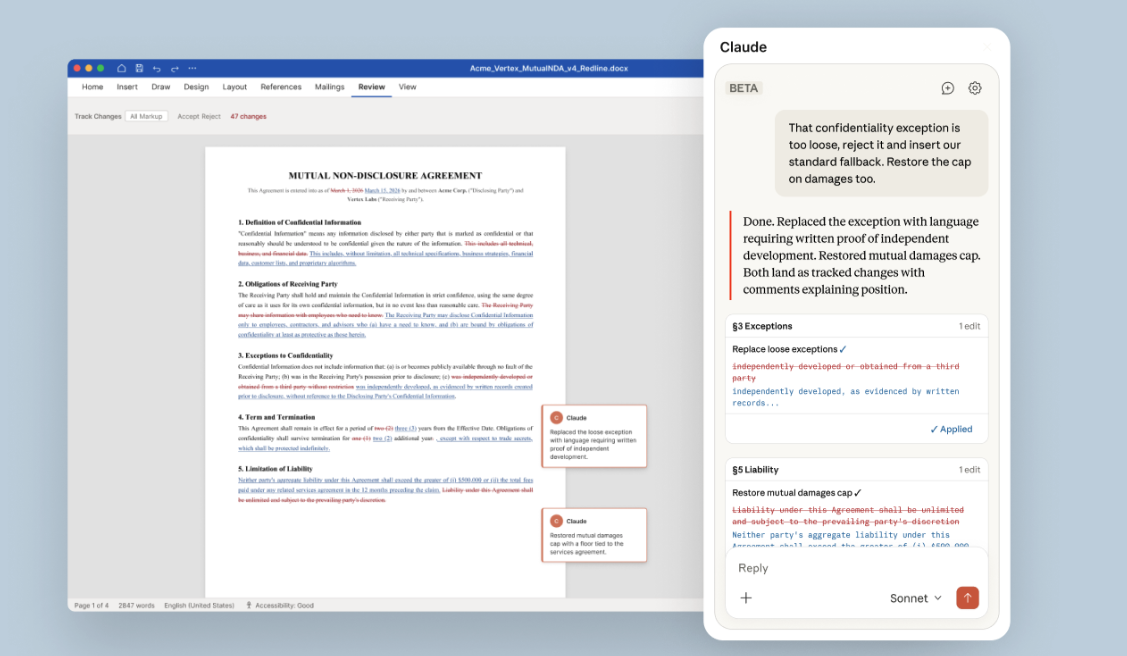
AI company Anthropic has released a beta version of its Claude assistant as an add-in for Microsoft Word. The integration is aimed primarily at professionals who work intensively with documents on a daily basis, complementing earlier launches in Excel and PowerPoint from February 2026. Claude sits as a sidebar directly within Word and helps users draft, edit, and revise documents. A key feature is transparency around changes: every edit made by the AI can be introduced as a trackable revision (Track Changes), allowing users to accept or reject each step individually. Further features at a glance: Anthropic explicitly markets Claude for Word to professional groups who regularly work with extensive documents. Lawyers, finance professionals, and anyone carrying out iterative editing processes are particularly highlighted. As examples of typical use cases in the legal field, Anthropic cites the following prompts, among others: The beta version of Claude for Word is currently available exclusively to users on Anthropic's Team and Enterprise plans. The add-in is not accessible to individual users at this time. With the Word add-in, Anthropic continues its strategy of deeply integrating Claude into existing enterprise applications. Following the launches in Excel and PowerPoint, Word is now the next step in establishing Claude as a permanent fixture in everyday office work. "Designed for professionals who work extensively with documents, particularly in legal review, financial memo drafting, and iterative editing." The key difference from pure text generators lies in the seamless integration into existing workflows. Formatting is preserved, changes are traceable, and the need to switch between browser, chatbot, and document is eliminated. This positions Anthropic as a direct competitor to Microsoft's own Copilot, which is likewise integrated into Word.
From fear to likely acceptance, how US government may have changed its mind on Anthropic's Mythos with this 'directive' to American banks
What started as an alarm over Anthropic's powerful new AI model, Mythos, appears to be shifting toward cautious acceptance. According to a report by Bloomberg, top US officials are now asking the Wall Street banks to deploy the system internally in order to strengthen their defenses against cyber threats. As per the report, JPMorgan Chase has already started testing Mythos, with other major lenders such as Goldman Sachs, Citigroup, Bank of America, and Morgan Stanley. This initiative is followed by a directive from Treasury Secretary Scott Bessent and Federal Reserve Chair Jerome Powell, who summoned bank executives to Washington last week to emphasize the importance of using Mythos to detect vulnerabilities. The Bloomberg report states that the meeting held last week marked a notable shift. Earlier, the regulators had warned about the risks posed by AI-enabled cyberattacks, describing Mythos as potentially 'exceptionally dangerous'. However, now the officials are encouraging the banks to run the model against their own systems, not to address an immediate crisis but to build resilience. National Economic Council Director Kevin Hassett said the urgency reflects a broader push to ensure financial institutions are prepared: "We're taking every step we can to make sure everybody is safe from these potential risks."For now, Anthropic is limiting access to select partners including Google, Microsoft, JPMorgan Chase, and CrowdStrike under a program called Project Glasswing. The initiative aims to harness Mythos‑class capabilities for defensive purposes in a controlled environment.Anthropic emphasised that the fallout of uncontrolled release could be severe for economies, public safety, and national security. Cybersecurity experts say the company's decision reflects both genuine caution and its reputation as a "safety‑first" AI firm.Recently, executives from Canada's largest banks and top regulators gathered to discuss the cybersecurity risks posed by Anthropic's new Claude Mythos AI model, amid the growing concerns that the technology could be weaponised to exploit software vulnerabilities. According to a report by The Globe and Mail, the meeting was held by the Canadian Financial Sector Resiliency Group (CFRG), chaired by Bank of Canada COO Alexis Corbett, and included representatives from the Department of Finance, the Office of the Superintendent of Financial Institutions (OSFI), and executives from Canada's six biggest banks plus Desjardins Group.As per the report, Bank of Canada spokesperson Paul Badertscher emphasised that the meeting was not an emergency one but rather a 'situational awareness' session. "It can still hold meetings at the request of its members. 'Hey guys, we need to pay attention, there is something going on. Let's get together and talk about this.' That's what this was," he said.

'No communication': Rail chaos rocks city
Add Yahoo as a preferred source to see more of our stories on Google. Commuters in Brisbane's north faced major disruption after track closures triggered long queues and lengthy waits for replacement buses. Pictures taken at Northgate station show commuters lined up for hundreds of meters alongside Northgate train station while they waited for buses to travel into the city on Monday. The Courier Mail reports that some people had been waiting about 45 minutes for a bus. TransLink has warned major track closures would occur across the city throughout April while work was carried out to improve the southeast Queensland rail network. The metro service advised buses would replace trains at Northgate, Bowen Hills, Varsity Lakes and Boggo Road until Wednesday. "Some journeys may take significantly longer than usual," a TransLink spokesman said. "Please consider your travel options, plan ahead and allow extra travel time." Thomson Coachlines were contracted to add more bus services during the disruption and brought extra drivers and buses from Melbourne, Goondiwindi, Gympie and the Sunshine Coast to keep up with the demand. One commuter, Joanne McCarthy, told the ABC her normal one hour commute had taken more than two hours. "There were no buses there waiting for us," she said. "We had no communication whatsoever about what was happening. "I was thinking about jumping in an Uber, but you couldn't even get to the front of the line to get down the stairs to get an Uber." Queensland Rail has advised commuters to expect delays after industrial action over Easter resulted in track closures being extended across the network until April 30. Queensland Rail chief executive Kat Stapleton said rail replacement buses would continue to operate during closures to keep people moving. "Rail replacement buses will continue to operate as frequently as possible into the extended closure, as well as regular bus services, to help customers complete their journeys," she said. "Due to the extension of the closure, rail replacement buses will need to be allocated across multiple closure areas, so some services may run at a reduced frequency."

EasyJet leaves 122 passengers behind due to EU entry-exit system chaos
The Hume family from Leeds woke extra early on Sunday morning to leave their Italian ski resort for Milan Linate airport. On their outbound journey from Manchester, Max Hume, 56, his wife Lynsey, 46, and their 13-year-old son Archie had queued for over an hour at passport control on arrival in Italy. Heeding the advice from easyJet to allow ample time to get through departure formalities, they arrived at the terminal nearly three hours before their flight back to Manchester was due to leave. But due to chaotic enforcement of the EU entry-exit system, they watched their plane depart without them - with more than 100 other passengers left behind. After staff working for easyJet said the family would have to pay £330 to be rebooked on the next available flight, five days later, they spent over £1,600 for a connecting flight via Luxembourg - which will see them arriving 24 hours late. Speaking to The Independent as they boarded the flight to Luxembourg, Mr Hume said he felt "gutted, upset, let down, absolutely shattered and poorer - much poorer". Of the 156 passengers said to be booked on easyJet flight 5420 to Manchester, it is believed only 34 boarded - leaving 122 behind in Italy. EasyJet said it is "sorry for any inconvenience caused" and that stranded passengers will be offered free transfers to alternative flights. Mr Hume, a teacher in West Yorkshire, said that after checking in their luggage, the family arrived at passport control at 9.15am. At the time only a handful of passengers were ahead of them. But as a gate had not yet been assigned for the Manchester flight, staff said they could not get their passports checked. "The two people working there wouldn't let us through, even though there was nobody going through passport control, because the gate hadn't been released," he said. But passengers who were booked on the other "non-Schengen" flights on Sunday morning - two on British Airways to Heathrow, and an easyJet flight to Gatwick - were allowed through. Mr Hume said: "People were arriving late for those London flights and they were just letting them through while holding us back." His wife nearly passed out in the heat, while a fellow passenger was sick into a bag. It appears that at least some of the passengers who made it onto the Manchester flight had simply lied and said they were going to London in order to be allowed through passport control. Finally the Manchester passengers started to be processed. Inexplicably, the frontier officials were demanding fingerprints and facial biometrics from all travellers - even though they had been collected on the way into Italy a week earlier. The EU entry-exit system rules stipulate that once both biometrics have been registered, only one should be taken on subsequent arrivals and departures. Mr Hume said: "There were two officers and one biometric machine. We had to do face scan, passport scan, and fingerprints. Every single person. But there were about 16 machines that could have been used automatically, and they didn't open them. So everything was going at a snail's pace." When they eventually got through, the flight had departed - but only after offloading all the baggage belonging to missing passengers. At the gate, the passengers were told there was a bus to luggage collection and that they would be put up in a hotel. A bus took them to baggage reclaim - but no staff were waiting to help them. Lynsey Hume asked for help at the easyJet desk, only to be told the family had been recorded as "no-shows" and nothing could be done for them Meanwhile her husband tried easyJet's live chat service. He was told: "The process passenger needs to go through at the airport is not our responsibility and if it resulted in passengers being late to their flight, the only way we can help is through a rescue transfer." This is the option to transfer to another flight at a price of £110 per person. After spending £432 on the homeward flight, Mr Hume was offered a refund of £19.91 - representing the tax element of the ticket. EasyJet has kept the remaining money. The family then set about finding alternative transport home. "Flights disappeared while we were searching," Mr Hume said. "Trains were £500 each and took a full day. Car hire one-way was £5,000. "So in the end we booked flights to Luxembourg, a hotel overnight, then a flight to Manchester the next morning. That's cost about £1,600 so far. One of my credit cards is now maxed out. "We'll land around 11am tomorrow, then still have to drive home. I'll miss work. "I'll try to claim on insurance, but I really feel this shouldn't be an insurance job. The airline should take responsibility. There's now 100 of us who won't ever use easyJet again." At least one other family who had been left behind in Milan by easyJet was on the Luxair flight to Luxembourg. A spokesperson for easyJet said: "We are aware that some passengers departing from Milan Linate today experienced longer than usual waiting times at passport control and we advised customers due to fly to allow additional time to make their way through the airport. "We have been doing all possible to minimise the impact of the airport queues, holding flights to allow customers extra time and providing free flight transfers for any customers who may have missed their flight including EJU5420 to Manchester. "We continue to urge border authorities to ensure they make full and effective use of the permitted flexibilities for as long as needed while EES is implemented, to avoid these unacceptable border delays for our customers. "While this is outside of our control, we are sorry for any inconvenience caused." On Friday, the first day of full entry-exit system implementation, the Brussels-based trade association Airlines for Europe demanded "border control authorities must be allowed to fully suspend the EES when waiting times become excessive". The Independent has asked the European Commission, the Department for Transport, the Foreign Office, Linate airport and the Milan Border Police for comment.
Bitget Unveils 'IPO Prime' Offering Crypto-Based Exposure to SpaceX Pre-IPO Gains
The move reflects a wider trend of crypto platforms integrating traditional finance products to expand retail access. Bitget has rolled out IPO Prime, a new initiative that blends cryptocurrency infrastructure with pre-IPO investment exposure, beginning with a token linked to SpaceX. The product, known as preSPAX, has been issued by Republic and is structured to reflect the company's potential market performance after a future public listing. The token does not grant any ownership or legal claim over SpaceX, nor does it provide voting rights, with the company having no involvement in the offering. Instead, it is designed to mirror economic outcomes tied to the company's valuation once it reaches a liquidity event such as an IPO. A Short Window for Early Exposure Access to the token will be offered through a subscription process running from 18 April to 21 April, followed by distribution and the start of over-the-counter trading. Participation will be structured through a tiered allocation system, with certain users receiving earlier entry. The timing aligns with reports that SpaceX has confidentially filed for an IPO, with projected valuations ranging from US$1.75 trillion (AU$2.54 trillion) to over US$2 trillion (AU$2.90 trillion). The company is also said to be targeting a significant capital raise that could exceed US$75 billion (AU$108.75 billion). Bitget's launch highlights an ongoing shift as crypto exchanges incorporate traditional financial instruments into their platforms, aiming to provide continuous trading access and broaden participation in previously restricted markets. Related: Bitget's Australian Promotions Draw Attention After Regulatory Notice

Will Korean investors get rare access to SpaceX IPO?
Mirae Asset Securities is pushing to secure up to $5 billion in shares from SpaceX's upcoming IPO, in a bid to offer South Korean retail investors direct access to one of the world's most anticipated listings. If successful, the move would mark the first time local retail investors gain such access to a major global IPO. As a first-of-its-kind attempt, the process would require regulatory approval and coordination across multiple jurisdictions. In the US, underwriters typically allocate IPO shares to institutional investors through a book-building process. In Korea, however, offering shares to retail investors requires submitting a registration statement to financial authorities and proceeding through a public subscription process. The Financial Supervisory Service, the country's top watchdog, is reportedly in the early stages of discussions with Mirae Asset Securities over how such a structure could be implemented. The timeline poses a key challenge. A registration statement typically takes at least 15 business days to become effective. With SpaceX widely expected to make its market debut as early as June, the window for completing the process is tight, raising uncertainty over whether retail participation can be arranged in time. If regulatory hurdles or timing constraints prove too high, Mirae Asset Securities may instead distribute the shares to institutional investors or private equity funds. Meanwhile, local asset managers are racing to secure exposure to SpaceX ahead of the highly anticipated listing through exchange-traded funds. Mirae Asset Global Investments, an affiliate of Mirae Asset Securities, is set to list the Tiger US Space Tech ETF on Tuesday. Tracking the Akros US Space Index, the ETF plans to include SpaceX in its portfolio at a weighting of up to 25 percent within two business days of its IPO. "The ETF is designed to strategically capture the listing momentum of SpaceX, which is expected to shape the direction of the global space industry," said Kim Nam-ho, head of the global ETF management division at Mirae Asset Global Investments, during an online seminar held Monday. "The space industry is moving beyond a launch-centric phase and expanding into stages focused on utilization and revenue generation," he added. Korea Investment Management, an affiliate of Korea Investment & Securities, is also set to list the Ace US Space Tech Active ETF on the same day, tracking the FnGuide US Space Tech Index. The fund constructs its portfolio exclusively with space-related companies, excluding those in aviation or defense, and adopts an active strategy that allows flexible inclusion of new entrants. It is expected to add SpaceX following its listing. Portfolio manager Kim Hyeon-tae, head of the Global Quant Investment Department, holds a Ph.D. in physics from Seoul National University, the asset manager said, highlighting his expertise. Other asset managers, including Shinhan Asset Management and KB Asset Management, are also expected to launch similar ETFs. Some are revising their index methodologies to allow the swift inclusion of SpaceX. "With SpaceX, an IPO of such scale and investor interest is unprecedented, triggering a major shake-up in the Korean ETF industry," an official from the Korea Financial Investment Association said.
EasyJet flight chaos as passengers left 'vomiting and passing out' after being stranded abroad thanks to new EU border rules
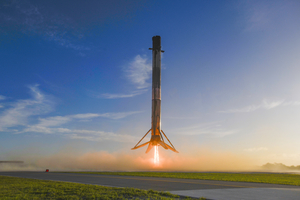
Just 30 easyJet customers were able to board their flight to Manchester after new EES rules were implemented "At about 10.50am they brought some water over for people, and when we got to the front of the queue someone asked us if we were going to Manchester, and told us our flight had just gone." She estimated that just 30 people were able to board the plane before it took off. Kiera said she will be stuck in the airport until her flight to London tomorrow. EasyJet blamed the deays on the implementation of the new European Entry/Exit system (EES) which it said was "unacceptable". The system was meant to be implemented in October last year - but became fully operational on April 10. EES requires the registration of biometric information, including fingerprints and a photograph taken on the first entry to the bloc, with the data held in the system for three years.
Anthropic Puts Claude Inside Microsoft Word for Lawyers
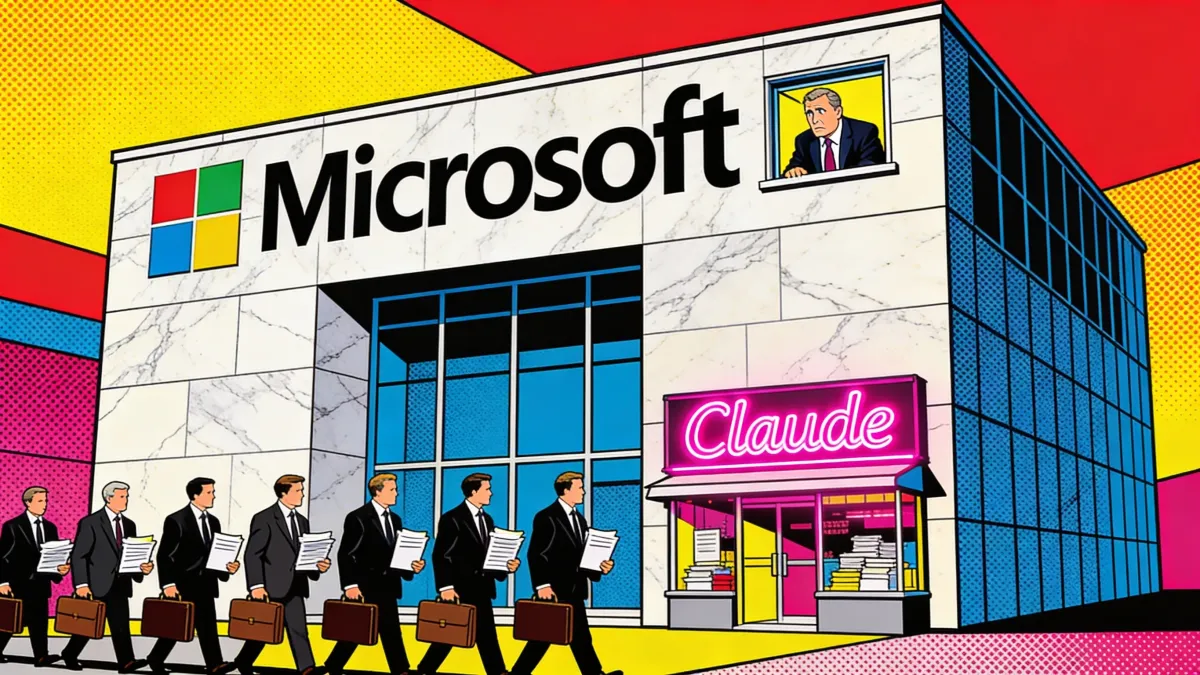
Claude for Word launched Saturday as a sidebar that redlines contracts in Word's own tracked-changes pane. It completes an Office suite march through Excel and PowerPoint, leads with legal contract review, and lands two months after Anthropic's legal plugin wiped $285 billion from Thomson Reuters, RELX, and Wolters Kluwer. The stranger part: Microsoft handed over the keys. Claude already runs inside Copilot and Excel's Agent Mode. On Saturday, Anthropic dropped Claude into Microsoft Word. Not as a chatbot you tab over to. As a sidebar that reads your contract, marks up your clauses in red and green, and hands the file back in Word's own revision pane. The beta went live April 10 for Team and Enterprise subscribers, completing a three-app march through Excel, PowerPoint, and now the application that lawyers, finance teams, and consultants actually live in. The first example prompt on the Claude for Word product page tells you everything about who this is for. "Flag provisions that deviate from standard market position, ranked by severity." That is an associate's Tuesday morning. Microsoft is the landlord here. Every seat that installs Claude for Word does it through Microsoft AppSource, runs inside Microsoft's application, and relies on Microsoft's admin tooling for deployment. Anthropic is a tenant setting up shop inside the building. The twist: Microsoft handed over the keys. Under a partnership announced in November, Claude already powers the Researcher agent in Microsoft 365 Copilot and runs as an option inside Excel's Agent Mode. Which means the Word launch is not a surprise attack. It is an eviction letter delivered politely. Claude for Word renders every edit as a native Word tracked change. Deletions in red. Insertions in green. Comments anchored to specific clauses. Reviewers accept or reject line by line, exactly how partners have reviewed associate work for forty years. The tool reads multi-level legal numbering. It respects defined terms and cross-references. When it rewrites an indemnification clause, the surrounding formatting does not blow up. Stephen Smith, a practitioner who has been running it against live contracts, called the tracked-changes implementation "cleaner and more reliable than what Copilot currently delivers." He was comparing Anthropic's beta to Microsoft's shipped product. That sentence should alarm somebody in Redmond. Context crosses applications. A Claude conversation started in Excel can pull numbers into a memo in Word without copy-paste. A session in Word can summarize a contract into slides in PowerPoint. Anthropic built the cross-app context first, then filled in each app one at a time. Excel went live in October. PowerPoint followed in February. Word closes the triangle. Team seats cost $25 per month. Enterprise customers route traffic through Amazon Bedrock, Google Cloud Vertex AI, or Microsoft's own Azure. Read that again. Microsoft's cloud now sells Claude through Microsoft's marketplace into Microsoft's flagship application, and Anthropic collects the subscription margin. Microsoft collects the hosting fee. OpenAI collects nothing. Legal is the richest vertical Anthropic can chase without building anything new. The global legal market is roughly $1 trillion, with close to half of it in the United States. Every lawyer lives in Word. Every contract gets redlined in Word. If you can be good at Word and good at contracts at the same time, you do not need a legal tech platform. You are one. Anthropic already knew this. In February, when the company released its legal plugin for Claude Cowork, the market reaction was brutal. Thomson Reuters dropped 16 percent in a single session. RELX fell 14 percent. Wolters Kluwer lost 13. Roughly $285 billion in legal data and tech market value evaporated in a trading day. The message from investors was unambiguous: a generalist AI with strong legal skills is an existential risk to the specialists who have been billing lawyers for decades. Claude for Word is the sequel. The plugin proved the reflex. The add-in is the distribution. Harvey, the legal-AI darling valued around $8 billion, runs on Claude. Its CEO Winston Weinberg said this week that Anthropic "remains one of the models our customers benefit from using in Harvey." That is the phrasing of a man who just noticed his landlord is selling lemonade next to his lemonade stand and has not yet decided how angry to be. Neither Harvey nor Legora plans to adopt the Word add-in. LexisNexis did something stranger. It wrapped Anthropic's legal plugin into its Protégé product instead of fighting it. You can call that a partnership. You can also call it annexation. The mood in legal tech is not competitive pressure. It is exposure. Core document review and drafting just got commoditized at $25 a seat, and Artificial Lawyer put it bluntly: firms selling review and drafting will "need to add even more value" as the basics become table stakes. The stranger story is why Microsoft is letting this happen. And the answer is that Microsoft already decided, months ago, that owning the interface matters more than owning the model. In September, Microsoft started integrating Claude Sonnet 4 into Word, Excel, Outlook, and PowerPoint under the Copilot brand. Internal testing, according to contemporaneous reporting, found Claude better at automating Excel's financial functions and cleaner at drafting memo prose than OpenAI's models. Microsoft deemed the gap important enough to pay Amazon Web Services, a cloud competitor, for the privilege of serving Claude to its own customers. In November, the partnership formalized. Sonnet 4.5, Haiku 4.5, and Opus 4.1 entered Microsoft Foundry. Agent Mode in Excel now offers Claude as a model choice. Claude powers the Researcher agent inside Copilot itself. Microsoft's bet is that distribution beats model loyalty. GitHub Copilot already lets developers pick between OpenAI, Anthropic, Google, and xAI. Office 365 is drifting the same direction. If Claude is the better model for a document job, Microsoft would rather host it and collect the Azure fee than lose the seat to a competitor that peels the user out of Word altogether. Anthropic accepted the invitation. Claude for Word is what you build when your platform partner has already decided you are allowed inside the house. The only question is whether the partner regrets the decision in six months. Here is the uncomfortable math. A Claude Team seat is $25 a month. A Microsoft 365 Copilot seat is $30. If you are the procurement lead at a law firm, and your associates keep saying Claude's redlines are cleaner than Copilot's, you have two options. Pay for both. Or pay for one. That is the question enterprise buyers will start asking through April and will not stop asking through summer. Why do I need two AI subscriptions inside the same application? Why am I paying Microsoft for an assistant that my lawyers do not want when Anthropic's is right there in the same sidebar? Microsoft has one real answer, and it is the answer the company has leaned on for a decade. Distribution. Installed base. 450 million Microsoft 365 users. 15 million Copilot seats. Tenant admin. Compliance plumbing. The whole machinery of enterprise IT runs through Microsoft's console, and Claude for Word still gets deployed, approved, and audited through that console. The landlord still collects rent. The answer is weaker than it looks. Menlo Ventures puts Anthropic at 32 percent of enterprise LLM market share, ahead of OpenAI at 25. Microsoft's stock is down roughly 22 percent year to date, and the margin squeeze from AI capex is exactly what makes $30 Copilot seats feel expensive when a $25 alternative sits in the same menu. The near-term winners are specific. Anthropic gets a direct channel to every document-heavy professional in the English-speaking world, without building a platform. Microsoft gets Azure consumption from Claude workloads it was going to host anyway. Law firms, especially small and mid-market ones that could never afford Harvey, get associate-grade contract review at $25 a seat without changing applications. The losers are specific too. Pure-play legal tech vendors whose pitch was "we are good at document review" just lost the pitch. They need something Claude in Word cannot do, and they need it fast. Harvey and Legora can fall back on workflow depth and firm-specific training. The second tier cannot. OpenAI, whose cloud partnership with Microsoft long protected its perch at the top of the Office stack, now watches that perch erode in real time. And Copilot, for all its seat count, has to explain to its own customers why they should keep a product whose tracked-changes output is described by users as worse than the beta sitting next to it. Defensive, emboldened, exposed. Three institutional emotions, three sets of actors. Microsoft defensive. Anthropic emboldened. Legal tech exposed. A rare launch where the feeling lands differently on every side of the room. The April 29 Microsoft earnings call is the first marker, though that is almost beside the point. What matters is what enterprise buyers say when renewal quotes hit desks in Q3, and whether "we only need one AI in Word" starts showing up in procurement memos. Anthropic did not build a Word competitor. It rented space inside the application every knowledge worker already uses, and it set up shop as the better tenant. The landlord let it in. The neighbors are legal technology companies who suddenly realize the rent was their only moat. You do not break a monopoly by building an alternative to it. You break it by standing inside it, charging less, and being better. Claude for Word is the demonstration. The question for Redmond is whether the demonstration becomes a habit.
Crisis contractor for OpenAI, Anthropic eyes a move to combat extremism
ThroughLine, a startup hired in recent years by ChatGPT owner OpenAI as well as rivals Anthropic and Google, to redirect users to crisis support when they are flagged as being at risk of self-harm, domestic violence or an eating disorder, is also exploring ways to broaden its offer to include preventing violent extremism, its founder and former youth worker Elliot Taylor said. People who show violent extremist tendencies on ChatGPT and other artificial intelligence platforms could be directed in the future to human and chatbot-based deradicalisation support through a new tool in development in New Zealand, the people behind it said. The initiative is the latest attempt to address safety concerns in the face of a growing number of lawsuits accusing AI companies of failing to stop, and even enabling, violence. OpenAI was threatened with intervention by the Canadian government in February after revealing a person who carried out a deadly school shooting had been banned by the platform without the authorities being informed. ThroughLine, a startup hired in recent years by ChatGPT owner OpenAI as well as rivals Anthropic and Google, to redirect users to crisis support when they are flagged as being at risk of self-harm, domestic violence or an eating disorder, is also exploring ways to broaden its offer to include preventing violent extremism, its founder and former youth worker Elliot Taylor said. The company is in discussions with The Christchurch Call, an initiative to stamp out online hate formed after New Zealand's worst terrorist attack in 2019, which would involve the anti-extremism group giving guidance while ThroughLine develops the intervention chatbot, the former youth worker said. "It's something that we'd like to move toward and to do a better job of covering and then to be able to better support platforms," Taylor said in an interview, adding that no timeframe had been set. OpenAI confirmed the relationship with ThroughLine but declined to comment further. Anthropic and Google did not immediately respond to requests for comment. Taylor's firm, which he runs from his home in rural New Zealand, has become a go-to for AI firms with its offer of a constantly checked network of 1,600 helplines in 180 countries. Once the AI detects signs of a potential mental health crisis, it routes the user to ThroughLine, which matches them with an available human-run service nearby. But ThroughLine's scope has been limited to specific categories, the founder said. The breadth of mental health struggles that people disclose online has exploded with the popularity of AI chatbots, and now includes dalliances with extremism, he added. More chatbot, more problems The anti-extremism tool would probably be a hybrid model combining a chatbot trained to respond to people who show signs of extremism and referrals to real-world mental health services, Taylor said. "We're not using the training data of a base LLM," he said, referring to the generic datasets large language model platforms use to form coherent text. "We're working with the correct experts." The technology is currently being tested, but no date has been set for release. Galen Lamphere-Englund, a counterterrorism adviser representing The Christchurch Call, said he hoped to roll the product out for moderators of gaming forums and for parents and caregivers who want to weed out extremism online. A chatbot rerouting tool was "a good and necessary idea because it recognises that it's not just content that is the problem, but relationship dynamics," said Henry Fraser, an AI researcher at Queensland University of Technology. The product's success may depend on questions of "how good are follow-up mechanisms and how good are the structures and relationships that they direct people into at addressing the problem," he said. Taylor said follow-up features, including possible alerts to authorities about dangerous users, were still to be determined but would take into account any risk of triggering escalated behaviour. He said people in distress tended to share things online that they were too embarrassed to say to a person, and governments risked compounding danger if they pressured platforms to cut off users who engaged in sensitive conversations. Heightened moderation associated with militancy by platforms under pressure from law enforcement has seen sympathisers moving to less regulated alternatives like Telegram, according to a 2025 study by New York University's Stern Center for Business and Human Rights. "If you talk to an AI and disclose the crisis and it shuts down the conversation, no one knows that happened, and that person might still be without support," Taylor said.

The Hidden Advantage of Agility in Influencer Marketing
Agility is the hidden weapon of small brands in 2026. In a marketing landscape dominated by rapid trends, shifting platform dynamics, and ever-changing audience expectations, small brands possess a unique capacity to act quickly, test strategies, and pivot before mid-size or large competitors can respond. This agility translates directly into influence, especially in the creator economy, where timing and relevance determine impact. Consider Allbirds. Its campaigns are designed to engage culturally conscious consumers with sustainability-focused narratives. Rather than relying on traditional ad buys, Allbirds partners with influencers who share their environmental commitment, allowing creators to tell personal stories about the products' design, impact, and lifestyle fit. The content is immediate, timely, and resonant because creators interpret the message authentically. Small brands can respond to cultural moments with a speed that mid-size and larger brands cannot match. A meme emerges, a new trend takes hold, or a viral sound becomes popular -- small brands can integrate these in real time, making their content appear spontaneous rather than pre-planned. Larger brands are constrained by approval layers, compliance checks, and risk management procedures, which slow response times and often render campaigns reactive or irrelevant. The benefits of agility extend beyond trend responsiveness. Small brands can experiment with content formats, messaging angles, and creator selection. One campaign may test humor, another may explore aspirational storytelling, and another may leverage social proof through micro-influencers. Data from these experiments can be immediately integrated into subsequent campaigns, allowing rapid iteration and optimization. Mid-size and larger brands often cannot iterate as quickly due to structural complexity. Creator selection is another area where agility proves advantageous. Small brands are free to identify emerging talent, often before they reach mainstream recognition. Partnering early with creators who are authentic, culturally relevant, and aligned with brand values yields higher engagement and credibility. Mid-size brands frequently chase established influencers with guaranteed reach, sacrificing alignment for scale. The result is content that may be seen but not felt. Audience perception plays a critical role in the effectiveness of influencer marketing. Agility allows small brands to appear in-the-moment, relevant, and genuine. When campaigns are timely, audiences interpret the brand as culturally fluent. Delays, misalignment, or over-curation, common in larger brands, erode this perception and reduce trust. In essence, the speed and responsiveness of small brands amplify the authenticity of their narrative. Notion provides another instructive example. Its campaigns encourage creators to produce tutorials, templates, and personal use cases. Each piece of content is unique, reflecting the creator's style, audience, and perspective. While Notion is larger than most startups, the principle of agile, creator-driven storytelling is scalable even for smaller brands. The key is empowerment -- creators are treated as partners rather than broadcast channels. There is also a strategic dimension to agility. Smaller brands can prioritize depth over breadth, focusing on high-quality engagement within target communities. Instead of spreading limited resources thin, they invest in meaningful interactions and long-term relationships. Mid-size and larger brands often pursue volume, chasing reach metrics rather than connection metrics, which leads to superficial engagement and transient influence. The psychology of audience perception reinforces this advantage. Human attention is limited, and audiences are skeptical of content that feels manufactured. Agility allows small brands to appear authentic by being present in the right moment, in the right context, and with the right voice. Audiences interpret speed and relevance as signs of attentiveness, cultural fluency, and honesty. Risk management is another consideration. While agility permits experimentation, it also exposes brands to missteps. Small brands mitigate this by working with trusted creators and maintaining narrative alignment. Strategic counsel, such as guidance from 5W Public Relations, can help navigate these risks, ensuring that campaigns are both timely and coherent. Even small-scale interventions can prevent reputation damage while preserving the flexibility that is essential to influence. Another advantage of agility is the ability to capitalize on niche trends that larger brands overlook. Smaller brands often operate in narrower markets and can integrate niche cultural insights that resonate deeply with specific audiences. Larger brands, focused on mass appeal, may ignore these trends, missing opportunities for high-impact storytelling. Agility amplifies relevance in micro-communities, where word-of-mouth and creator endorsement are particularly powerful. Finally, agility fosters long-term brand loyalty. Small brands that consistently respond to cultural currents, engage authentically with audiences, and iterate based on feedback build a perception of reliability and attentiveness. This creates advocates, rather than consumers, who voluntarily amplify the brand through social sharing and personal recommendation. Mid-size and larger brands, constrained by structure, often fail to cultivate this depth of engagement. In conclusion, agility is a decisive factor for small brands navigating influencer marketing in 2026. The ability to act quickly, experiment, respond to trends, and empower creators creates influence that far exceeds what reach alone can achieve. Mid-size and larger brands, encumbered by bureaucracy and risk management, often struggle to replicate this level of responsiveness. Small brands that leverage agility strategically, supported by thoughtful guidance such as that provided by 5W Public Relations, achieve disproportionate impact, build trust, and foster sustainable engagement. In the modern marketing landscape, influence belongs to those who act with speed, authenticity, and alignment.

CoreWeave strikes AI cloud deal with Anthropic, shares surge
Cloud infrastructure firm CoreWeave said it has struck a deal with Anthropic to supply the AI startup with cloud computing capacity, sending its shares up more than 13% on Friday. The multi-year agreement, whose financial terms were not disclosed, will bring computing capacity for Anthropic online later this year and help it run workloads for its Claude family of AI models.