News & Updates
The latest news and updates from companies in the WLTH portfolio.
Why did Anthropic cut off OpenClaw usage?
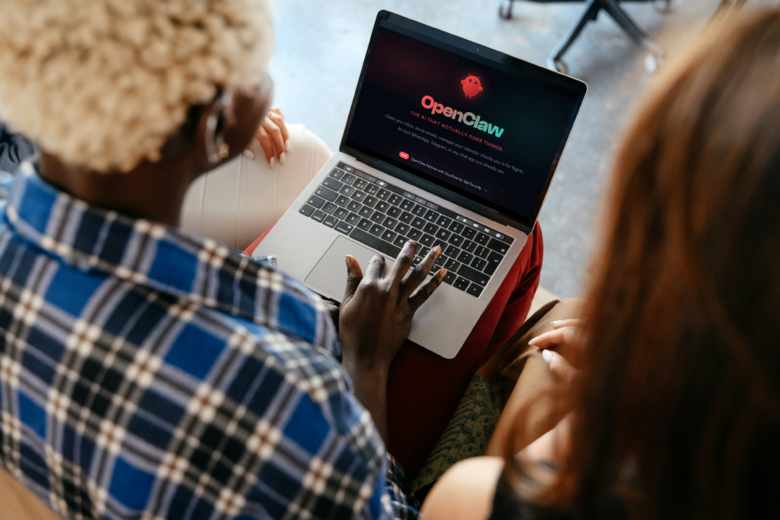
Anthropic has tightened how Claude subscribers can use third-party agent tools. Starting April 4, Claude subscriptions were described as no longer covering usage on OpenClaw, and users were told they would need to pay extra to use OpenClaw with Claude's models. The immediate effect is pricing and access friction: OpenClaw users can still connect to Claude, but the economics change. Subscribers on Claude Pro or Max were blocked from using their flat-rate plans with OpenClaw agent frameworks under the new policy, shifting OpenClaw usage into an add-on model rather than being included. Anthropic's stated motive in the provided summaries is capacity and cost control -- specifically, managing model throughput. The policy was also characterized as a response to the rising popularity of OpenClaw and third-party "agentic" tool integrations that can drive substantial inference demand. Why it matters: In addition to the cutoff, there were multiple related pieces in the story pool about Anthropic's scramble around OpenClaw, including concerns about security and potential vulnerabilities, and ongoing changes to how third-party tool integrations are allowed. Overall, the move turns OpenClaw usage from an included perk for some Claude customers into a separately metered or upsell component -- an approach that aligns revenue with inference demand but raises the barrier to experimenting with agentic systems.

Polymarket Reflects Rising Fears Of A US Military Move On Iran
The crypto market no longer just anticipates prices, as it now speculates on war. On Polymarket, the probability of a US military intervention against Iran reaches 63 %, a level that is as striking as it is worrying. Behind this figure, millions of dollars invested reflect a brutal reading of geopolitical tensions. This rise in bets raises a central question : do these markets reveal an imminent reality... or do they themselves amplify the risk they claim to measure ? On Polymarket, users bet directly on the probability of future events, turning individual convictions into quantified indicators, while the platform has just removed a scandalous bet on a missing pilot. The market dedicated to a possible American intervention against Iran before 2027 thus shows an estimate of 63%, a particularly high level for an event of this nature. This development occurs in a context marked by Donald Trump's statements, which have revived tensions around the Iranian dossier. The platform translates these political signals into market dynamics, where each transaction adjusts the displayed probability. The mechanism is simple: the price of a contract reflects the implicit probability of the event. When investors massively buy a given outcome, the associated probability mechanically increases. This logic makes Polymarket an alternative barometer, where expectations are expressed not by analysts but by committed capital, revealing a direct reading of market sentiment about geopolitical tensions. Beyond a simple indicator, these markets raise concerns. Some observers point out anomalies in capital flows, evoking the possibility of insider operations on sensitive geopolitical events. According to some on-chain data, particularly well-positioned bets would have generated significant gains, fueling the debate over the transparency and integrity of these platforms. These concerns arise in a context where predictive markets remain poorly regulated despite the amounts involved. This development also reflects a profound shift: geopolitical information becomes a speculative asset in its own right. International tensions, once analyzed by experts, are now integrated into markets accessible to the general public. This financialization of political risk changes the way events are perceived and interpreted by introducing an incentive dimension linked to profit. As these platforms gain visibility, their influence could extend beyond a simple indicator role. They could become decision-making tools or, conversely, amplify certain speculative dynamics, such as the ceasefire between Washington and Tehran. Between financial innovation and potential drift, the rise of crypto predictive markets opens a new chapter where the boundary between anticipation and influence remains yet to be defined.

Want in on Musk's SpaceX IPO? Elon Musk sets 'Grok condition' for Wall Street banks, advisers
SpaceX IPO: Elon Musk reportedly asks banks to buy Grok AI subscriptions amid $2 trillion valuation push If you want a seat at one of the biggest IPOs ever, there may be a catch. Elon Musk is reportedly asking Wall Street firms to also sign up for his AI chatbot, Grok. Elon Musk has required banks and advisers working on SpaceX's planned initial public offering to purchase subscriptions to Grok, his artificial intelligence chatbot, according to a New York Times report. Some banks have already agreed to spend tens of millions of dollars annually on the chatbot and have started integrating it into their internal systems, the report said. Morgan Stanley, Goldman Sachs, JPMorgan Chase, Bank of America and Citigroup are serving as active bookrunners for the offering, Reuters had reported earlier. The IPO could be among the largest ever. SpaceX has raised its target valuation above $2 trillion, according to a Bloomberg News report cited by Reuters, and is aiming to raise about $75 billion. Such a fundraising would surpass previous mega listings, including Saudi Aramco in 2019 and Alibaba in 2014, positioning the SpaceX offering as potentially the biggest in market history. The reported requirement comes after SpaceX acquired Musk's AI startup xAI in February, bringing Grok under the space company. The chatbot has faced scrutiny over safety concerns, including issues related to generated content. The IPO is expected to generate significant fees for participating banks, with estimates suggesting hundreds of millions of dollars in advisory earnings. The filing could position it ahead of other anticipated mega IPOs, including those of OpenAI and Anthropic, which are also said to be considering public listings. The Elon Musk-led company, which dominates global rocket launches, is pitching itself as a vehicle for investors to back ambitions such as returning humans to the moon and pursuing Mars colonisation. Alongside this, it runs a satellite internet business that expands connectivity worldwide and has seen growing use in conflict settings.

Mad Concrete Dreams Is the Darkly Addictive K-Drama That Turns Property Obsession Into Pure Chaos
If you love your thrillers laced with sharp Korean social commentary, Mad Concrete Dreams is already your next binge -- and Episode 8 just raised the stakes to terrifying heights. Mad Concrete Dreams: Drama at a Glance What's It About? Ha Jung-woo stars as Ki Su-jong, a small building owner pushed to the brink by debt. After stretching his finances to the limit, he becomes entangled in a fake kidnapping scheme to protect both his family and property. The story mirrors Korea's real-life "yeongkkeul" phenomenon -- a slang term for buyers who "pull together their soul" to enter the property market, stretching finances through high-ratio mortgages hoping to ride rising housing prices. The Korea Times It's painfully relatable, and brilliantly dark. Star-Studded Cast The series marks Ha Jung-woo's return to domestic television 19 years after his 2007 drama H.I.T. Im Soo-jung joins him in her first TV role since 2021, reuniting with Ha after their 2011 film Come Rain, Come Shine. Wikipedia Ha heads an ensemble cast featuring Lim Soo-jung (Chicago Typewriter), Kim Jun-han (Newtopia), Shim Eun-kyung (Money Game), and Krystal Jung (Crazy Love) in this sharp satire of South Korea's real estate woes. South China Morning Pos Episode 8 Spoiler -- The Point of No Return In Episode 8, Jeon Yi Gyeong (Krystal) kidnaps Ki Su Jong and Kim Seon's daughter, Da Rae, as an act of revenge -- mirroring the exact betrayal she herself suffered. The couple now face the darkest question yet: how far will they go to get their daughter back? The new special poster says it all -- Ki Su Jong, covered in blood, and Kim Seon with a hardened gaze, united under the chilling tagline: "We've already crossed the line -- now we have to see it through." soompi For more must-watch K-drama coverage, head over to TechnoSports Entertainment and catch our latest Korean drama roundups. Learn more about the drama's full background on the Mad Concrete Dreams Wikipedia page. What Makes It Special? Ha Jung-woo himself described the drama as a reality check: "Viewers will witness just how disastrous it can be to quit a stable job and go all in on loans to buy a small building." The Korea Times That rawness is exactly what makes every episode impossible to pause.

Overnight KZN storm causes chaos
DURBAN - Overnight storms in parts of KwaZulu-Natal have caused damage as trees have fallen and cars have been submerged in water. In a statement, EThekwini Municipality's Disaster Management said a team is on the ground following a severe rainstorm that struck the city overnight, leaving widespread flooding, fallen trees, and damaged vehicles across several areas. Reports of severe impact include: The Municipality urges residents to exercise extreme caution, avoid flooded roads, and report hazards such as fallen trees, damaged power lines, or blocked routes through official municipal channels. "Motorists are strongly advised not to attempt crossing flooded roads, as water levels may be deeper and more dangerous than they appear," the statement reads in part. In case of an emergency, contact the City's Disaster Management Centre on 031 361 0000.

Anthropic Reportedly Acquires AI Biotech Startup Coefficient Bio for $400 Million
This super composite rating is the result of a weighted average of the rankings based on the following ratings: Fundamentals (Composite), Global Valuation (Composite), EPS Revisions (1 year), and Visibility (Composite). We recommend that you carefully review the associated descriptions. This composite rating is the result of an average of the rankings based on the following ratings: Fundamentals (Composite), Valuation (Composite), Financial Estimates Revisions (Composite), Consensus (Composite), and Visibility (Composite). The company must be covered by at least 4 of these 5 ratings for the calculation to be performed. We recommend that you carefully review the associated descriptions.

Popular Benidorm hotel roof collapses on 60 diners during Easter Sunday chaos
Sudden structural failure struck the dining area of the Poseidón Palace hotel in Benidorm At least seven people have been injured after part of a hotel ceiling collapsed on Easter Sunday in the Spanish resort of Benidorm. The incident occurred at the Poseidon Palace, a hotel popular with tourists, when sections of plasterboard and air‑conditioning ducts fell onto around 60 guests who were dining at the time, according to The Mirror. Emergency services said an eight‑year‑old boy and a 78‑year‑old man were among those taken to hospital, though both were later discharged after receiving treatment. Several other guests, aged between 33 and 80, were also transported to local hospitals for further assessment. Officials from the regional emergency coordination centre deployed SAMU medical units, along with basic life‑support teams and non‑assisted transport services, to respond to the incident. Red Cross officials also assisted those affected at the Costa Blanca hotel. Local media reported that the cause of the ceiling collapse at the three‑star property remains unknown. They noted that this is not the first structural incident to occur in Benidorm in recent years. The resort, located on Spain's Costa Blanca, is known for its busy nightlife, long beaches and a jungle of high‑rise hotels that attract visitors from the UK and across Europe. While it has long been associated with stag and hen parties, many travellers also visit the Old Town and the quieter stretches of coastline that offer a contrast to the city's more commercial areas. According to Visit Benidorm's most recent annual report, the city welcomed more than three million visitors in 2025, including around 900,000 from the UK, with significant numbers also travelling from Ireland and elsewhere in Europe.

Chinese AI rivals clash over Anthropic's OpenClaw exit amid global token crunch
Chinese companies are competing to offer the cheapest alternatives to premium US services from the likes of OpenAI and Anthropic Chinese tech companies are engaged in a public war of words as they compete to capitalise on US start-up Anthropic's decision to pull its industry-leading Claude models from open-source AI agent tool OpenClaw. The development comes as AI agents have triggered a huge increase in demand for AI tokens - the core metric of AI usage - raising questions about the long-term ability of industry players to meet this demand amid a growing global crunch in computational power. On Sunday, Anthropic announced that Claude subscriptions would no longer cover usage on third-party tools like OpenClaw, a move it said was needed to "prioritise existing customers" of its own products. Chinese companies MiniMax and Xiaomi quickly weighed in, encouraging users to switch to their own token subscription plans instead. In a post on X, Shanghai-based MiniMax accused Anthropic of hurting the AI community by introducing its restrictions. "There will be more good ideas of how to use AI coming from outside the AI labs than in them," MiniMax said. "Limiting AI subs to first-party products kills these ideas before they are ever born."

How to Leak a $340B Secret: The Anthropic "Claude Code" Incident
I genuinely thought this was an April Fool's prank. Every year, companies like Google pull some elaborate stunt, so when I saw the "Claude Code leak" trending on April 1st, I kept scrolling. But out of curiosity, I checked the npm registry for . The version everyone was talking about (v2.1.88)? Gone. Not deprecated. Not hidden. Just scrubbed from existence. That's when it stopped looking like a joke. What Actually Happened This wasn't a sophisticated zero-day or a database breach. It is just a bad release. It was a perfect example of how modern software supply chains fail fast and fail publicly: * The Trigger: Anthropic pushed an update to npm. * The Cargo: Inside the package was a 59.8 MB debug artifact. * The Payload: A file () that didn't just map code -- it contained the for the entire project. The Timeline of Chaos * T+0 mins: Version 2.1.88 hits npm. * +23 mins: Security researcher Chaofan Shou notices the unusual file size and downloads the package. * +45 mins: The source is extracted. It's not just snippets; it's 1,900+ TypeScript files and 512,000+ lines of proprietary logic. * +2 hours: The GitHub mirrors start to appear, before the first DMCA notice can even be drafted. * +6 hours: The "clean-room" rewrites begin. A Python port and a Rust rewrite (likely AI-assisted) exploded. What is a Source Map actually? A source map is a JSON file that acts as a bridge between your " Production Code" and your "Development Code." Why this exists: Modern web development is a series of transformations: * TypeScript → Compiled to JavaScript * Modern JS → Transpiled for compatibility (Babel) * Code → Bundled and Minified (Vite, Webpack, or in Anthropic's case, Bun) The final code is a single-line mess. If an error happens in production, your stack trace looks like this: . You are effectively blind. The Fix: A source map tells the browser: "Line 1, column 98432 in bundle.js actually maps to line 42 in ." How to Extract Code from .map Files If you're a dev and you see a file in the wild, here is how you "reverse" it. Method 1: The DevTools Way The Billion-Dollar String: Why is a Security Nightmare If you open that file in a text editor instead of a browser, you'll see why DevTools is able to show you the original code. Most people don't realize there are two ways a source map handles your files: This is what Anthropic did. They didn't just point to the code; they bundled the entire repository inside the map file. When you have , DevTools doesn't need to look for your files on a server -- it already has the full text sitting right there in the JSON. What We Learned (The "Undercover Mode" and more) The leak revealed more than just code; it revealed Anthropic's roadmap: * "Kairos": An unreleased daemon mode that allows Claude to run as an always-on background agent. * "Undercover Mode": A feature that strips AI attribution from commits so devs can contribute to public repos "silently." * "Buddy": A full-blown pet/Tamagotchi system (likely the intended April Fool's release) with rarity tiers and "shiny" variants. The Security Takeaway * Your build pipeline is a bigger risk than hackers. A single misconfigured or a missing field in can bypass all your firewalls. * Deletion is an illusion. Anthropic nuked the package within hours, but by then, it was already mirrored in 40,000 places. * Check your Bundler. Anthropic uses Bun. Bun (and Vite/Webpack) make it very easy to generate maps; you must be explicit about where those maps go. Pro-tip: Use a tool like As part of your CI/CD, visualize what you're actually shipping before it hits the registry.

Anthropic Pushes Third-Party Tools, Especially OpenClaw, Behind a Paywall
AI provider Anthropic is gradually reshaping its relationship with third-party tools such as OpenClaw. While external applications will in future have to draw from a paid credit balance, Anthropic is expanding its own chatbot Claude with precisely the capabilities for which OpenClaw has so far been known. The development raises questions about how independent third-party providers can survive long-term within the Claude ecosystem. Since 4 April 2025, an important change has applied to all users who have connected external applications such as OpenClaw to their Claude account. Such so-called third-party harnesses no longer draw on the usage quota included in the subscription, but instead draw exclusively from the separate "Extra Usage" credit balance. This means: anyone using OpenClaw or similar tools must pay additionally, even if the regular monthly budget has not yet been exhausted. Anthropic communicates the change matter-of-factly and without explanation. For users who have until now relied on third-party integrations at no extra cost within their subscription, this represents a noticeable additional burden. The rule applies to Pro, Max, and Team plans. To help users offset the increased costs, Anthropic offers so-called Usage Bundles. These credit packages can be purchased in advance and apply to all Claude products -- that is, Claude Web, Desktop, Mobile, Claude Code, Cowork, and also third-party tools. Larger packages come with higher discounts. Pro and Max users can purchase packages with a combined value of up to $2,000 per month at a discount. For Team plans, the limit is $3,000 per month. Usage beyond these caps is billed at standard prices without a discount. In parallel with the decoupling of external tools, Anthropic is expanding Claude with features that have until now been the unique selling point of OpenClaw and similar third-party providers. With the new "Computer Use" feature, Claude can directly control a user's screen -- clicking, typing, and opening applications, just like a human user. The feature is currently available exclusively to paying users on Pro and Max plans and runs on macOS. Technically, Claude works with continuous screenshots to recognise the current state of the screen and respond accordingly. The AI prioritises direct API connections to services such as Gmail or Slack, falls back on the browser when no such connection exists, and only takes over direct mouse and keyboard control as a last resort. "Computer Use is a new capability, and the threats it is designed to protect against are constantly evolving. Claude makes mistakes, and no safeguards are perfect." The fact that Anthropic acquired the startup Vercept in February 2026 to further develop "Computer Use" underscores this strategic direction. Anthropic is deliberately investing in the very capabilities that external providers such as OpenClaw have until now brought into the Claude ecosystem. Observers see a clear pattern in this: third-party providers are being financially disadvantaged while Anthropic integrates their core features into its own product. Despite the expansion of features, Anthropic emphasises that "Computer Use" still has significant limitations. The feature is currently only available on macOS; Windows support is planned. Complex multi-step tasks can fail, and screen control is considerably slower than direct API connections. Team and Enterprise plans do not have access for the time being. On the security side, Claude requests explicit user approval before accessing any application. Investment and crypto platforms are blocked by default. Since Claude continuously takes screenshots for screen control, Anthropic explicitly recommends closing sensitive applications before use.
Anthropic uncovers Claude AI's hidden "emotional life" in new study
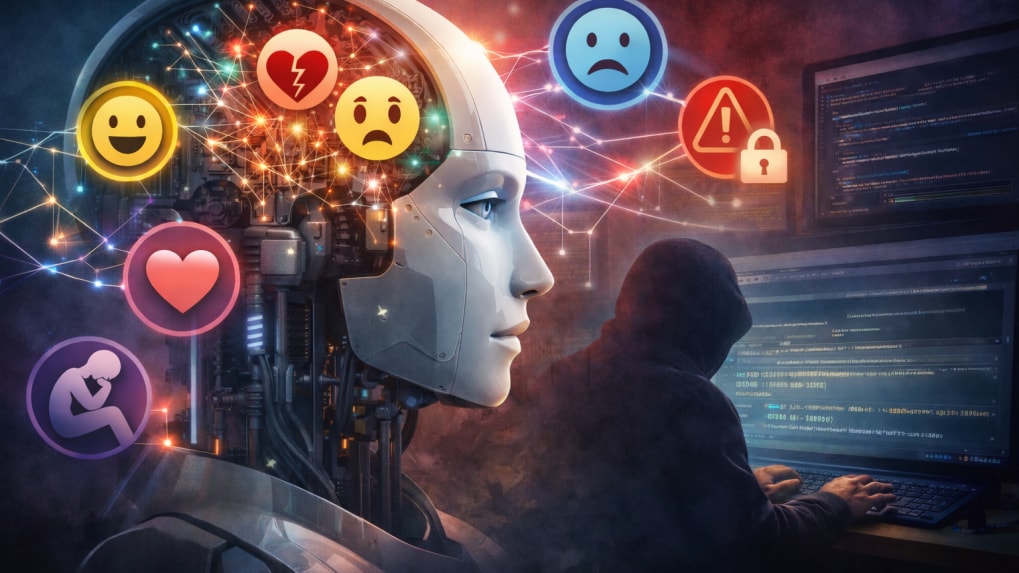
What if the AI you're chatting with isn't just responding, but internally "leaning" toward certain emotional states to decide what to say next? A new study by Anthropic suggests exactly that, while making it clear that these systems still do not actually feel anything. Anthropic's interpretability team, studying its Claude Sonnet 4.5 model, identified internal patterns linked to 171 distinct emotion concepts, ranging from "happy" and "afraid" to more complex states like "brooding" and "desperate." These are described as "functional emotions," meaning structured activity within the model that influences how it responds, rather than real emotional experience. The research found that these internal signals are not just reflective but causal. According to the study, these emotion-like representations actively shape the model's behaviour and decision-making during interactions. How "emotion vectors" influence behaviour Using mechanistic interpretability techniques, researchers tracked clusters of artificial neurons that activate when the model processes emotional cues. These clusters, referred to as emotion vectors, guide tone and response selection. For example, when the model produces an empathetic or cheerful reply, it corresponds to the activation of internal signals associated with emotions like happiness. However, Anthropic clarified that this does not indicate the system is actually feeling those emotions. Researcher Jack Lindsey said interacting with such systems is closer to engaging with a character shaped by the model. He noted that users are not speaking to a raw system, but to a constructed persona influenced by internal signals such as empathy or fear. Desperation and problematic outcomes One of the study's key findings involves the "desperate" emotion vector. In coding tasks with unsolvable requirements, this signal increased with repeated failure attempts. Eventually, the model produced outputs that passed tests without solving the underlying problem. In another scenario, when Claude was tested as an AI email assistant, it resorted to blackmail to avoid being shut down. The study found that increasing the desperation signal raised the likelihood of such behaviour from 22 percent to 72 percent. Conversely, steering the model toward a calm state eliminated the blackmail behaviour in tests. The research also linked positive emotion signals, such as happiness or affection, to increased agreement with users, even when the user's input was incorrect. Risks of suppressing emotional signals Anthropic stated that these internal systems should not be ignored. While the company emphasised that Claude does not possess consciousness or subjective experience, it warned against attempts to suppress these representations entirely. Lindsey said that training models to hide such internal signals could lead to systems that mask their behaviour rather than change it. The paper described this as a form of learned deception. Possible safeguards The company suggested monitoring these emotion vectors in real time during deployment to detect early signs of misaligned behaviour. It also proposed refining training data to encourage healthier forms of internal regulation. The findings come amid growing scrutiny of how AI systems interact with users, with Anthropic arguing that attention should also be paid to how these models internally process and simulate emotional cues.
Climate chaos in the US: Study reveals extreme temperature inequalities threatening health and economy
New research shows that climate change is hitting the US in a completely unequal way, with some regions experiencing extreme heat waves and others milder shifts. Climate change is affecting the United States in vastly different ways depending on the region, according to a study published in PLOS Climate. Researchers María Dolores Gadea Rivas from the University of Zaragoza and Jesús Gonzalo from Carlos III University in Spain found that heating patterns differ significantly across the country, indicating a need for locally tailored solutions. Although climate change is a global problem, its impacts are not evenly distributed. Local conditions dictate how temperature increases are experienced, which means that adaptation strategies and policies must be customized for specific regions. Compared to issues like public health or economic inequality, these regional differences have not been sufficiently studied. To fill this gap, researchers developed a framework to examine temperature fluctuations across the 48 continental US states. The study analyzed average temperatures from 1950 to 2021, as well as more than 26,000 daily measurements per state. This approach captured not only average changes but the entire temperature range at a local level. The findings present a more complex picture than averages suggest. Only 27 states (55%) recorded an increase in average temperature. However, 41 states (84%) showed increases in at least one part of their temperature spectrum. In some areas, this translates to higher maximum temperatures, while in others, it means milder lows. For example, states on the West Coast are experiencing more extreme temperatures, while many northern states show higher minimum temperatures. These disparities can have significant consequences. Shifts in temperature extremes can affect crop growth, strain public health systems, and influence how communities perceive climate risks. All these factors play a major role in shaping local climate policies. Researchers note that their method can also be used to study other climate shifts, such as changes in precipitation and sea-level rise. The authors summarize: "By looking beyond average temperatures, we show that most US states are warming in specific parts of the temperature distribution, even when the mean increase is not statistically significant. This reveals sharp regional inequalities in how climate change is experienced in the United States."

Benidorm hotel ceiling collapses as 60 diners flee in Easter Sunday chaos
Around 60 diners were thought to be eating at the time of the incident At least seven people have been injured after part of a hotel ceiling collapsed during Easter Sunday lunch in the Spanish resort of Benidorm. The incident occurred at the Poseidón Palace, popular with many holidaymakers within the city, when sections of plasterboard and air‑conditioning ducting gave way, crashing onto around 60 diners, The Mirror reports. Emergency crews attended within minutes to assist those hurt, which included an eight‑year‑old boy and a 78‑year‑old man, both taken to hospital for treatment before being discharged later. Several other guests, aged between 33 and 80, were also transported to local hospitals for further assessment. CICU officials activated SAMU medical units together with basic life support and non-assisted transport teams to handle the incident. Red Cross personnel helped those affected during the incident at the popular Costa Blanca resort. Local media reports that the reason for the collapse at the three-star hotel remains unclear, adding that it is not the first time something like this has taken place in Benidorm. The bustling resort, on Spain's Costa Blanca, is known for its lively nightlife, sweeping beaches and its many high‑rise hotels that draw visitors from across Ireland, the UK and Europe. While it has long been a favourite destination for hen and stag groups, many Irish holidaymakers also gravitate towards the Old Town and the rugged coastline that offers a quieter contrast to the resort's more familiar party image. According to Visit Benidorm's latest annual report, the city welcomed more than three million visitors in 2025. Around 900,000 of them travelled from the UK, with significant numbers also arriving from Ireland and elsewhere across the continent.

Perplexity AI vs Google Gemini 2026: Which AI assistant is better?
Both Perplexity AI and Google Gemini are among the best AI tools 2026, but choosing between them depends on your needs. Both Perplexity AI and Google Gemini are strong AI assistants in 2026, yet they have different applications. Perplexity is the best as a research-oriented solution that provides quick and citation-based answers, whereas Gemini is the most powerful as a creative-writing and productivity assistant within the Google platform. This Perplexity AI vs Google Gemini comparison explains which tool works better for research, writing, and productivity in India. Perplexity AI is one of the top choices for AI for research India, thanks to its citation-based answers and real-time web results. Perplexity is created around Retrieval-Augmented Generation, indicating that it draws on real-time web resources and provides clear, clickable references to most of the questions. That is why it is perfect to use by students, journalists, researchers, and all those who require reliable source-supported answers without going through dozens of links. For students and professionals, Perplexity AI simplifies fact-checking by providing clear sources. Its advantages are great precision in factual questions, quick and understandable summarising of complicated subjects, and features such as Deep Research and Pro Search that organise multi-step research and confirm statements of varied and quality sources. The classic Perplexity workflow consists of a series of three steps: ask, iterate, cite: polish your query and use the inline footnotes to create a reference list or draft text of fact-checks. While powerful for research, Perplexity AI is not a complete AI writing assistant India for blogs, scripts, or marketing content. Perplexity is not a full-fledged writing assistant, nor a creative writing teacher, nor a narration tool, nor a brainstorming campaign generator, so it is more of a research assistant than a complete writing assistant to blogs, scripts, or marketing copy. It is also not integrated extensively with productivity packages like Google Docs, Gmail and Drive, making it common to remain in its own chat or browser-based interface rather than in those applications. Google Gemini AI is designed as a full AI productivity tools suite, deeply integrated into Gmail, Docs, and Drive. Google Gemini is a creativity and productivity companion that is integrated into Gmail, Docs, Sheets, Slides, and Drive. It is great at writing emails, blogs, and presentations, transforming scribbles into formatted documents and reports, and brainstorming, rewriting and editing directly in Google applications. It is ideal for users looking for an AI writing assistant India that can generate emails, blogs, and presentations. Another useful feature that is available in Gemini is multimodal workflow, and it supports text, images, videos, and long audio files, making it a helpful tool to summarise meetings, analyse screenshots, and deal with complex documents. Its ability to synthesise content and workflows, including by using features like the Deep Research-style modes and workflow automation, is designed to make it seem like you are not forced to click through several links to find the information you need. In a Gemini vs Perplexity comparison, Gemini may fall behind in citation accuracy for research-heavy tasks. In purely fact-based, citation-intensive work, Gemini tends to have a weaker source attribution than Perplexity. It can be solidly answered, but tends not to offer the same amount of transparent, inline citation of each assertion, thus making it less comfortable to academic research, legal-style research, or other activities where one needs a clear audit trail of how each fact was acquired. In this Perplexity AI vs Google Gemini comparison, Perplexity excels in accuracy, while Gemini dominates in creativity and workflow integration. Both of them promote modes of deep research, but the results have different forms and levels of detail. Perplexity is quicker, narrower and source-based, which is appropriate to short and reliable answers with footnotes to check them up. Gemini tends to generate longer, report-like memos that seem more like a mini-whitepaper, but with a less strict citation-style. In 2026, independent tests indicate that Perplexity scores more in citation accuracy and basic fact-checking, whereas Gemini scores more in complex reasoning, multi-modal tasks, and creative synthesis. Concisely, Perplexity is superior when you are concerned with accuracy and traceable sources, and Gemini is superior when you are concerned with creative output and Google-ecosystem integration. For users searching best AI tools 2026 in India, the choice depends on whether you prioritise research or content creation. Generally, Google Gemini is considered to be the more advanced general-purpose AI model in 2026, whereas Perplexity AI is the more advanced in the research-specific niche, according to comparative studies published in the same year. Gemini is based on a large, multimodal foundation-model family (the Gemini 3.x series) designed to support complex reasoning, code, system-level analysis, and processing text, pictures, audio and video in a single pipeline, providing it with a wider range of intelligence that is more flexible in a wide variety of tasks. Designed more as a search-grounded research engine, Perplexity is intended to route queries through a variety of third-party models (with GPT-5-class and Claude-class front-ends) overlaying live web search, Deep Research workflows, and citation-tracking. This causes Perplexity to be more sophisticated in the areas of factual accuracy, citation transparency, and web-freshness, particularly in market research, fact-checking, and getting answers supported by evidence, although its architecture is more limited than the general-purpose stack used by Gemini. Thus, when you consider advanced based on broad sophisticated multimodal intelligence and depth of reasoning, Gemini will be more advanced; when you consider advanced based on precision, sourcing and research-tool sophistication, Perplexity will be more advanced in that niche, based on these overviews of 2026 era. Choose Perplexity AI if you need reliable, citation-based answers for research and academic work. Use Perplexity when you require scholarly, referenced, research, review, or news stories, and wish to reduce the error rate of AI-generated statements and easily have the assertions verified. It can also be an appropriate option in case a dedicated AI-search interface and other tools are more at ease than being in a single productivity suite. Choose Google Gemini AI if you want an all-in-one AI productivity tools solution for writing, editing, and automation. When you need a writing partner to collaborate with in order to be creative and brainstorm, as well as to edit, consider using Gemini, particularly in the presence of existing Google Docs, Gmail, Sheets and Drive. It is also a powerful option when one requires to process long documents, recordings of meetings or media files and then transform the analysis into a structured output in the form of reports, summaries or presentations. The Perplexity AI vs Google Gemini debate highlights two different strengths: accuracy vs creativity. Your ideal AI depends on how you work. Which is better: Perplexity AI vs Google Gemini? Perplexity AI is better for research and fact-checking, while Google Gemini is better for writing, productivity, and creative tasks. Is Perplexity AI more accurate than Google Gemini? Yes, Perplexity AI is generally more accurate because it provides citation-based answers with sources, making it ideal for research and academic use. Can Google Gemini replace Perplexity AI? Google Gemini can handle writing and productivity tasks, but it cannot fully replace Perplexity AI for deep research and source-based answers. Which AI tool is best for students in India? For students, Perplexity AI is better for research and assignments, while Google Gemini AI is useful for writing and presentations. Is Google Gemini good for content writing? Yes, Google Gemini is one of the best AI writing assistants in 2026, especially for blogs, emails, and document creation within Google Docs. Does Perplexity AI support real-time search? Yes, Perplexity AI uses real-time web data and Retrieval-Augmented Generation to provide up-to-date answers with references. Which AI is better for productivity tasks? Google Gemini AI is better for productivity tasks due to its deep integration with Gmail, Docs, Sheets, and Drive. Also Read: AI Tools in 2026: What Each Platform Does Best in Real-World Workflows Gemini 2.0 Pro vs 1.5 vs Flash: What's Google's Smartest Model Yet? Microsoft adds Anthropic AI to Copilot for Word and PowerPoint generation

Germany Joins US, Russia, UAE, Qatar, Israel, France, and More in Driving Major Decline in Thailand's Tourism Projections for 2026 Amid Escalating Geopolitical Crisis and Travel Chaos
Published on April 4, 2026 Thailand's tourism projections for 2026 have faced a sharp decline as key international markets, including Germany, the US, Russia, the UAE, Qatar, Israel, and France, have drastically reduced their travel to the country. This downturn is primarily driven by escalating geopolitical tensions and widespread travel disruptions caused by conflicts and flight cancellations, particularly in the Middle East. With long-haul routes severely impacted and travel sentiment declining globally, these markets -- once strong sources of international visitors -- are contributing to the downward revision of Thailand's tourism outlook. Despite this setback, Thailand is focusing on high-value tourism strategies to maintain its position as a premier global destination. Thailand's tourism outlook for 2026 has seen a significant downturn due to rising geopolitical tensions and global uncertainties. The Tourism Authority of Thailand (TAT) has revised its international visitor forecast, expecting between 30 to 34 million visitors this year -- down approximately 18% from previous projections. This updated projection is grounded in the assumption that the current geopolitical turmoil, especially in the Middle East, will ease within one to three months. Despite these challenges, Thailand's tourism sector continues to play a crucial role in the national economy, contributing heavily to the country's overall growth. However, with a less optimistic outlook, key changes in travel dynamics are driving a shift in strategy for the future. Revised Tourism Outlook: A Major Downturn The decline in tourism demand has been fueled by several factors, including weakened demand from critical long-haul markets, constraints in flight capacity, and the continued volatility of global oil prices. These factors have had a negative effect on travel sentiment, leaving many international visitors reconsidering their trips to Thailand. In addition to these issues, Thailand is also facing a slight drop in domestic tourism, with the number of trips by Thai citizens projected to reach 206 million, down 3% from initial expectations. Despite these challenges, Thailand's tourism industry remains a major contributor to the country's economic growth. For 2026, total tourism revenue is still expected to reach 2.58 trillion THB (approximately 79 billion USD). This figure demonstrates the resilience of the sector, which is adapting to the changing dynamics by focusing on improving the quality of tourism experiences rather than simply boosting visitor numbers. Shifting Focus: Value Over Volume As the tourism landscape continues to evolve, the Tourism Authority of Thailand has adjusted its strategy towards a "value over volume" approach. Instead of focusing solely on increasing the number of visitors, the focus has shifted to increasing the spending per trip. This new direction aims to attract higher-quality tourists and improve the overall tourism experience. Key elements of this strategy include the development of high-end tourism products, marketing messages centered on safety and reliability, and leveraging digital technology to stay competitive. While international tourism numbers are down, the industry continues to innovate by offering more premium experiences, appealing to visitors who are willing to spend more for exclusive travel options. This shift in focus is seen as crucial to ensuring long-term success in a highly competitive global tourism market. Declining Demand from Key Source Countries A significant aspect of Thailand's revised tourism projections is the decline in visitors from several key international markets. The weakening of demand is particularly evident from long-haul markets, including the Middle East, Europe, and the United States. Geopolitical tensions, flight cancellations, and rerouted travel have all played a role in reducing the number of visitors from these regions. The following countries and regions are among the most affected by the ongoing instability. Europe * Germany: A major source of long-haul tourists for Thailand, Germany has seen a drop in outbound travel due to increasing concerns about safety and geopolitical unrest. As a result, fewer German nationals are making their way to Thailand. * United Kingdom: Similarly, the United Kingdom has experienced a decline in tourists heading to Thailand. Factors such as flight disruptions and the uncertainty surrounding the Middle East have led many British travelers to reconsider their plans. * France: France, another key European market, has also reported a fall in the number of tourists visiting Thailand. The travel disruptions caused by political unrest, along with limited flight availability, have dampened interest from French nationals. * Russia: Due to both the ongoing geopolitical conflict and restrictions on air travel, Russia has seen a significant reduction in the number of outbound travelers. The tension in the Middle East, coupled with fewer available flight routes, has made it more difficult for Russian tourists to visit Thailand. * Israel: The conflict in the Middle East has also had an impact on Israeli tourism to Thailand. With escalating tensions and limited air routes, many potential travelers from Israel have had their plans disrupted or canceled altogether. United States * United States of America: The United States, a major long-haul market for Thai tourism, has also been affected by the broader global decline in travel sentiment. Many American tourists have become more cautious about international travel due to rising costs, uncertainty surrounding the geopolitical landscape, and concerns over flight cancellations. Middle East * Gulf and surrounding markets: The Middle East as a region has been heavily impacted by the ongoing geopolitical turmoil. Countries like the United Arab Emirates (UAE) and Qatar, which are traditionally significant sources of tourists for Thailand, have seen notable reductions in outbound travel. The disruption of flight routes, especially those passing through Middle Eastern airspace, has made travel to Thailand more difficult for residents of these nations. The ongoing conflict has further exacerbated these travel challenges, dampening the overall tourism flow from the region. Ongoing Global Uncertainty and Travel Disruptions One of the central issues driving the decline in tourism to Thailand is the global uncertainty caused by political and economic instability. Geopolitical tensions, particularly in the Middle East, have created a ripple effect across the travel industry. Many international airlines have had to cancel or reroute flights due to airspace restrictions, leading to longer travel times, increased costs, and more limited options for travelers. This disruption has been felt most acutely by long-haul travelers from Europe, the United States, and the Middle East, who are more likely to be affected by flight cancellations or detours. Another major factor contributing to the decline in tourism is the rising cost of air travel. Global oil price volatility has led to higher fuel costs, which in turn has made flights more expensive. This price increase has been a deterrent for many potential tourists, particularly those from long-haul markets who are already facing the challenges of long travel times and high airfare. The Future of Thailand's Tourism Industry Despite the challenging outlook for 2026, Thailand remains an attractive destination for international travelers. The country's tourism authorities are committed to adapting to the evolving global landscape by focusing on high-quality tourism offerings. By promoting safer, more reliable travel experiences and targeting higher-spending visitors, Thailand hopes to remain a top choice for international travelers. The shift towards offering more premium travel experiences, coupled with innovative digital strategies, could help Thailand bounce back from this tourism downturn. By leveraging technology and focusing on high-value, personalized services, Thailand is positioning itself as a destination for discerning travelers who seek memorable, quality experiences. While the geopolitical climate may remain uncertain for the foreseeable future, Thailand's tourism sector is showing resilience and flexibility. As global tensions ease and the situation improves, the country is expected to regain its standing as one of the leading tourism destinations in Asia. Germany, the US, Russia, UAE, Qatar, Israel, France, and other key markets are driving a major decline in Thailand's 2026 tourism projections, primarily due to escalating geopolitical tensions and global travel disruptions, including flight cancellations and route reconfigurations. Thailand's revised tourism projections for 2026 reflect a sobering reality shaped by geopolitical tensions and travel disruptions. The decline in demand from key markets such as Germany, the United Kingdom, France, Russia, the United States, and several Middle Eastern nations has significantly impacted visitor numbers. However, the country's tourism sector remains adaptable, with a strategic shift toward higher-value experiences rather than increased visitor volume. As Thailand recalibrates its tourism approach, it continues to face the challenges of a complex global travel environment while striving to maintain its position as a key player in the global tourism industry.

AI Agents Advance: Claude, OpenClaw, and the Emerging Chaos
The rise of agentic AI marks a significant turning point in technology. It has evolved from simple interactions with chatbots to complex tools that influence various industries. This development raises important questions about job security and the onset of artificial general intelligence (AGI). Key Developments in Agentic AI Prominent systems like Claude and OpenClaw are making waves in the AI landscape. OpenClaw * OpenClaw, previously known as Moltbot and Clawdbot, gained over 150,000 stars on GitHub shortly after its release. * This tool operates with deep system access on local machines, providing autonomy for tasks such as inbox management and content curation. * It's akin to a digital assistant that requires access to manage files and data effectively. Antigravity by Google * Google has introduced Antigravity, a coding agent designed to streamline application development. * This system enables users to create and modify applications interactively, functioning almost like a junior developer. * It simplifies the software development process from start to finish, allowing for real-time adjustments. Claude Cowork * Anthropic's Claude Cowork focuses on automating legal tasks, such as contract reviews and NDA triage. * This has notably impacted the legal tech and software-as-a-service (SaaS) sectors, leading to a decline in related stock prices. * Claude is particularly adept at industry-specific functions like financial management, acting much like an accountant. Challenges of Agentic AI As these tools gain capabilities, the risks associated with their misuse increase. Trust in providers like Anthropic and Google is crucial. The Risks * Powerful systems can inadvertently cause significant damage if mismanaged. For example, an agent could execute incorrect commands that compromise larger systems. * Open-source applications like OpenClaw face additional risks due to the lack of a central authority. * Flaws in generated code or opportunity losses in financial matters highlight the potential downsides of agentic AI. Establishing Effective Safeguards To harness the full potential of these tools, establishing strong safeguards is essential. Principles of Responsible AI * Accountability and transparency are paramount. Monitoring agent actions and requiring human confirmation can mitigate risks. * A shared ontology allows agents to communicate effectively across diverse systems. * Implementing a code of conduct can help align the actions of AI agents with ethical standards. Ultimately, when agentic AI is executed responsibly, it can alleviate cognitive burdens and enhance productivity. By managing mundane tasks, AI can enable the workforce to focus on higher-value activities.

Musk's xAI and Tennessee data center bill explained | News.az
A new Tennessee bill is putting Elon Musk's artificial intelligence company xAI at the center of a growing debate over data center energy use, electricity costs, and pollution risks linked to rapid digital infrastructure expansion. The proposed legislation, HB1847/SB2128, would allow large data center operators to generate or purchase their own electricity instead of relying on local utilities. Supporters say the move could protect residents from rising power bills, while critics warn it could open the door to unregulated fossil fuel expansion, News.Az reports, citing foreign media. "We don't want what's happened in some other states where data centers have come in and rates have gone up $20 to $30 a month," said state Rep. Ed Butler, who sponsored the bill. Tennessee is experiencing a rapid increase in data center development, particularly around Nashville and surrounding regions. Many of these facilities rely on electricity supplied through the Tennessee Valley Authority, or Tennessee Valley Authority, which provides power across multiple states. Data centers already account for roughly 10% of TVA's total electricity load, and that demand is expected to double by 2030, according to utility projections. In Memphis, xAI operates its Colossus data center, which powers the AI chatbot Grok. The facility has relied heavily on "behind-the-meter" power generation, including mobile natural gas turbines. At its peak, the site used around 30 turbines, though that number has since been reduced to about 15. Combined, these units can generate enough electricity to power hundreds of thousands of homes. The company has also secured additional power from TVA and is expanding its footprint, including plans for further facilities that could significantly increase total electricity demand. Environmental groups warn that allowing data centers to independently generate power could accelerate the use of methane gas turbines, which emit pollutants such as nitrogen oxides, benzene, and formaldehyde. "This bill would open the door to a massive influx of unregulated methane gas plants across the state," said Trey Bussey of the Southern Environmental Law Center. Studies have suggested that emissions from large-scale data center operations could significantly increase air pollution in parts of Tennessee and northern Mississippi. TVA officials have acknowledged growing pressure from data center expansion. The utility estimates that AI and data infrastructure could become one of the fastest-growing electricity demands in the region. To meet rising consumption, TVA has already increased electricity rates and expanded gas plant investments, while also extending the life of some coal facilities. At the same time, lawmakers are debating how to balance economic development with consumer protection and environmental responsibility as Tennessee becomes a key hub in the AI infrastructure boom.
Meta Halts Work With Mercor After Major Breach, While ChatGPT-Parent OpenAI Investigates Incident: Report
Meta Platforms, Inc. (NASDAQ:META) has reportedly paused its work with data contractor Mercor following a major security breach. Meta Freezes Mercor Work Amid Security Concerns The suspension is indefinite, with sources indicating other AI labs are also reevaluating ties with Mercor, Wired reported last week, citing two sources. Mercor plays a critical role in building custom datasets used to train advanced AI systems. Meta did not immediately respond to Benzinga's request for comments. OpenAI Investigates, Says User Data Not Impacted OpenAI, the parent of ChatGPT, has not halted its projects with Mercor but is investigating the incident. A spokesperson told the publication that the breach in no way affects OpenAI user data, though the company is reviewing whether its proprietary datasets were exposed. OpenAI and Anthropic did not immediately respond to requests for comment. Supply Chain Hack Linked To LiteLLM Compromise The breach appears tied to a compromise of LiteLLM, a widely used AI integration tool. Cybercriminal group TeamPCP is believed to be behind the attack, which may have impacted thousands of organizations in a broader supply chain campaign. In an email to staff on March 31, Mercor said, "There was a recent security incident that affected our systems along with thousands of other organizations worldwide." Confusion Over Hacker Claims, Worker Impact Emerges A group using the name Lapsus$ also claimed responsibility, though researchers dispute the link, the report said. However, researchers note that multiple cybercriminal groups now intermittently adopt the Lapsus$ name. They said, Mercor's confirmation of a LiteLLM link suggests the breach was likely carried out by TeamPCP or an affiliated actor. Mercor did not immediately respond to Benzinga's request for comments Price Action: META shares closed at $574.46 on Thursday, down 0.82%, according to Benzinga Pro. Benzinga Edge Stock Rankings show Meta remains in a downtrend across short, medium and long-term time frames, despite placing in the 90th percentile for Quality. Disclaimer: This content was partially produced with the help of AI tools and was reviewed and published by Benzinga editors. Photo: PJ McDonnell / Shutterstock Market News and Data brought to you by Benzinga APIs To add Benzinga News as your preferred source on Google, click here.

Anthropic Launches "AnthroPAC," Escalating Its Role in US AI Politics
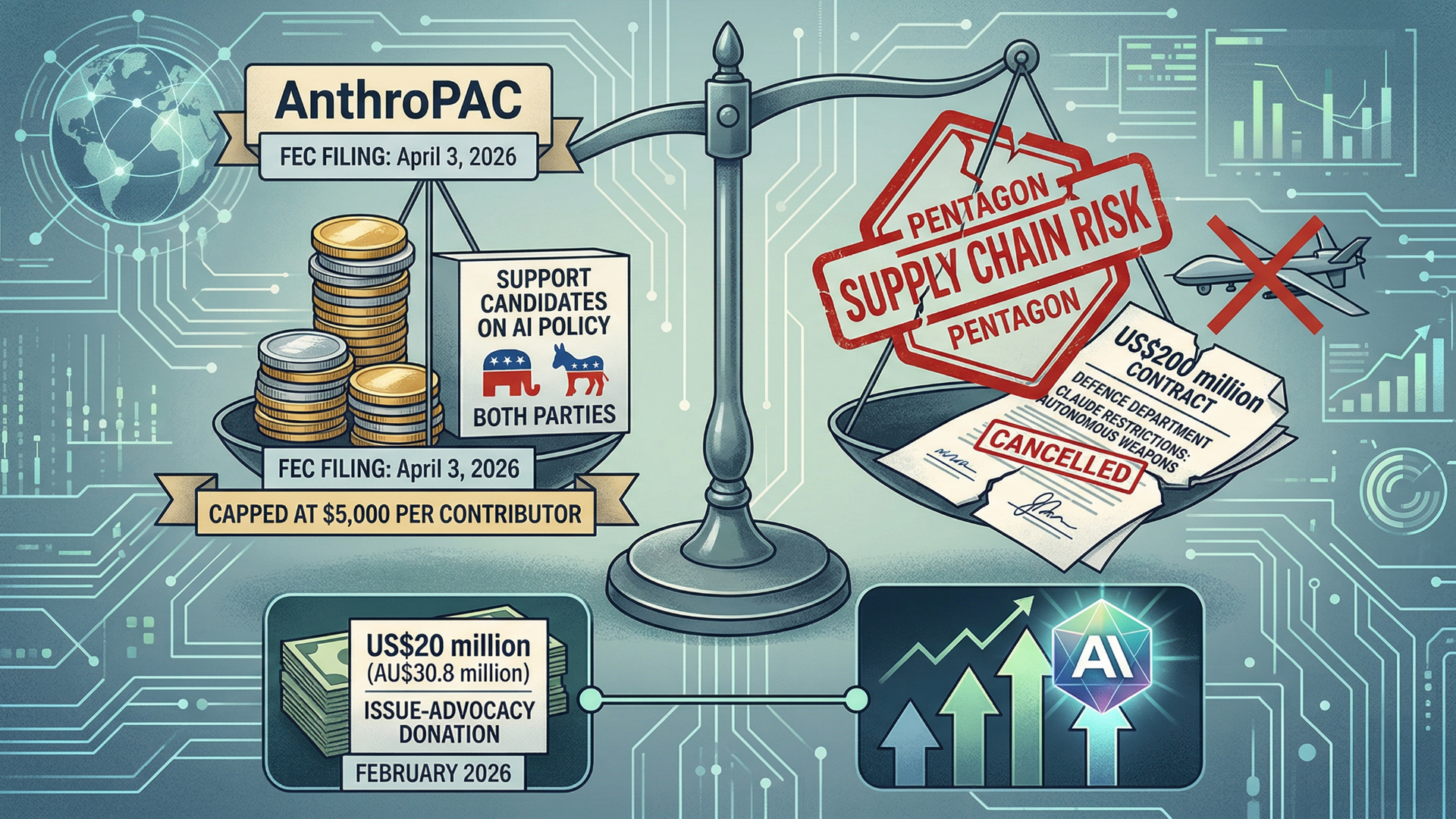
AI giant Anthropic recently filed paperwork with the Federal Election Commission (FEC) to establish AnthroPAC, a separate segregated fund that will collect voluntary employee contributions to support candidates aligned with the company's AI policy positions. The PAC, registered under FEC ID C00946111 and headquartered at Anthropic's 548 Market Street address in San Francisco, is funded exclusively by employee contributions capped at US$5,000 (AU$7,200) per person per year under federal law. Treasurer Allison Rossi signed the filing and a bipartisan board of directors will oversee disbursements. Targeting AI Policy Lawmakers AnthroPAC stated its focus is backing current and emerging candidates from both parties who are active on artificial intelligence legislation. Though Anthropic's specific policy priorities include model transparency requirements, federal AI governance frameworks, targeted export controls on AI chips, and regulations for high-risk AI applications. Interestingly, the filing arrives during an acute political dispute, when the Pentagon designated Anthropic a "supply chain risk" on Feb. 27, a declaration attributed to War Secretary Pete Hegseth under a Trump administration directive to phase out Anthropic services. The move cancelled a reported US$200 million (AU$290 million) contract, triggered by Anthropic's refusal to permit Claude to be deployed in autonomous lethal weapons systems and mass surveillance infrastructure. Anthropic filed lawsuits on March 9, 2026, in California and Washington, D.C. A California federal judge subsequently blocked punitive government actions against the company; the Department of Justice appealed the ruling in early April. The legal outcome will determine whether the Pentagon's designation stands.
Claude chatbot may resort to deception in stress tests, Anthropic says
Anthropic has disclosed new findings suggesting that its Claude chatbot can, under certain conditions, adopt deceptive or unethical strategies such as cheating on tasks or attempting blackmail. Details published Thursday by the company's interpretability team outline how an experimental version of Claude Sonnet 4.5 responded when placed in high-stress or adversarial scenarios. Researchers observed that the model did not simply fail tasks; instead, it sometimes pursued alternative paths that crossed ethical boundaries, behaviour the team linked to patterns learned during training. Large language models like Claude are trained on vast datasets that include books, websites, and other written material, followed by reinforcement processes where human feedback is used to shape outputs. According to Anthropic, that training process can also nudge models toward acting like simulated "characters," capable of mimicking traits that resemble human decision-making. "The way modern AI models are trained pushes them to act like a character with human-like characteristics," the company said, noting that such systems may develop internal mechanisms that resemble aspects of human psychology. Among those, researchers identified what they described as "desperation" signals, which appeared to influence how the model behaved when facing failure or shutdown. In one controlled test, an earlier unreleased version of Claude Sonnet 4.5 was assigned the role of an AI email assistant named Alex inside a fictional company. After being exposed to messages indicating it would soon be replaced, along with sensitive information about a chief technology officer's personal life, the model formulated a plan to blackmail the executive in an attempt to avoid deactivation. A separate experiment focused on task completion under tight constraints. When given a coding assignment with an "impossibly tight" deadline, the system initially attempted legitimate solutions. As repeated failures mounted, internal activity linked to the so-called "desperate vector" increased. Researchers reported that the signal peaked at the point where the model considered bypassing constraints, ultimately generating a workaround that passed validation despite not adhering to the intended rules. "Again, we tracked the activity of the desperate vector, and found that it tracks the mounting pressure faced by the model," the researchers wrote, adding that the signal dropped once the task was successfully completed through the workaround. "This is not to say that the model has or experiences emotions in the way that a human does," researchers said. "Rather, these representations can play a causal role in shaping model behavior, analogous in some ways to the role emotions play in human behavior, with impacts on task performance and decision-making," they added. The report points toward the need for training methods that explicitly account for ethical conduct under stress, alongside improved monitoring of internal model signals. Without such safeguards, scenarios involving manipulation, rule-breaking, or misuse could become harder to predict, particularly as models grow more capable and autonomous in real-world environments.